



Abstract
Wu Mengchao had been engaged in basic and clinical research in hepatobiliary surgery since the 1950s and is recognised as the founder and pioneer of hepatobiliary surgery in China. In his career of over 60 years, Wu performed over 16,000 operations and made numerous breakthroughs in hepatobiliary surgery, liver cancer signal transduction, immunotherapy and molecular pathology research. Wu's series of achievements have driven the innovative development of basic theoretical research on the liver in China, establishing it as a long-term international leader in the field of hepatobiliary surgery. This biography elucidates Wu's outstanding contributions to the establishment and development of Chinese hepatobiliary surgery.
From rubber-cutting teenager to hepatobiliary surgeon
In 1922, Wu Mengchao was born in Minqing County, Fujian Province. Wu's father moved to Malaysia in 1926 to work in rubber cutting and production, and in 1927, he was joined by Wu and his mother. At five years old, Wu would accompany his father to the rubber plantation every morning around three o’clock. Rubber cutting had to be completed before the sun came out, as rubber solidified upon exposure to sunlight. Young Wu, wielding a rubber-cutting knife, would skilfully make a diagonal cut on the rubber tree, place a cup below the cut and collect the milky white rubber flowing from the trunk. At that time, the rubber procurement market in Malaysia was controlled by the British, and a hundred pounds of rubber could only be sold for four rupiah. The hard work and extremely low selling prices caused great psychological distress to Wu's parents. Thus, they decided to educate Wu so that he would not have to engage in menial physical labour. At the age of eight, Wu was sent to Kong Hwa School in Sibu, Malaysia, for his education.
The Marco Polo Bridge incident in July 1937 marked the beginning of the full-scale war between China and Japan. Faced with a national crisis, Wu Mengchao made his first major life decision: return to China to study. In January 1940, Wu and five classmates boarded a ship from Singapore to return to China. They arrived in Vietnam by boat and needed to pass through Saigon to enter Kunming, China. At that time, Vietnam was a French protectorate, and the visa officers were French. The French visa officer asked Wu to press his fingerprint on his entry passport, but Wu refused. The Europeans and Americans ahead of him had signed to enter, and Wu requested the same. However, the French visa officer, believing that Asians were an inferior race, angrily shouted, ‘You are yellow people, sick men of East Asia, cannot sign!’ 1 In Chinese culture, pressing the fingerprint is only allowed when signing a contract of sale. Wu strongly felt that China was being bullied by Europeans and Americans due to its backwardness. Thus, he vowed to study hard and make his country stronger (Figure 1).
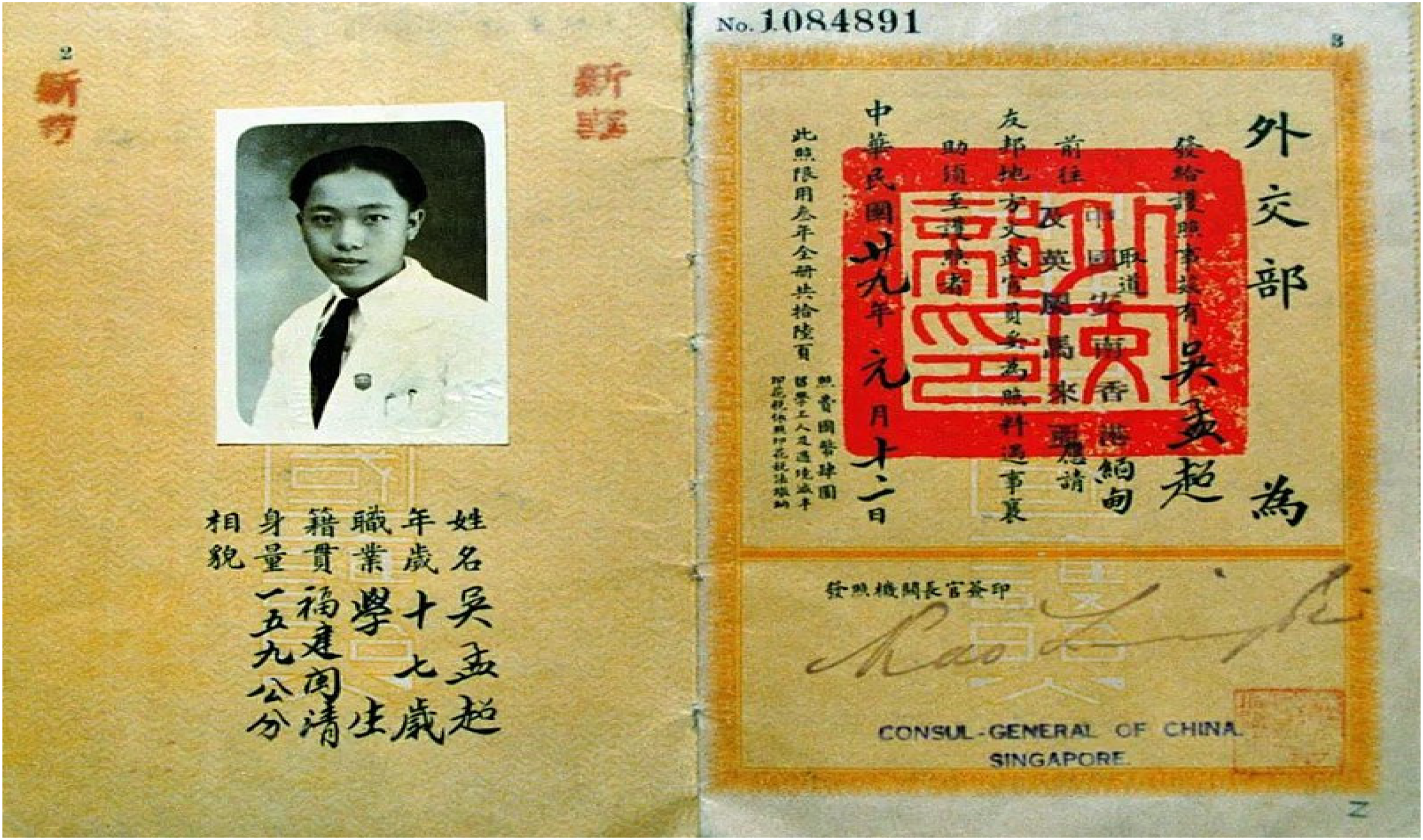
The return passport Wu Mengchao applied for in Singapore.
In 1943, Wu was admitted to the Medical School of Tongji University. After six years of diligent study, Wu completed all courses at the university in 1949 and obtained his graduation certificate. In August 1949, Wu saw a job advertisement in a newspaper. He arrived at the Second Military Medical University Affiliated Hospital according to the address in the advertisement and met Professor Zheng Baoqi, who would change his life. Zheng, the Director of the Medical Department of the Second Military Medical University, asked Wu why he chose to apply to a newly established hospital with little reputation. Wu replied that he wanted to become a surgeon, believing that surgery suited his personality; Wu showed boldness, meticulousness, agility and strong hands-on ability. Moved by Wu's persistent spirit, Zheng agreed to let him work at the hospital and suggested he research hepatobiliary surgery. At that time, research in this area was virtually non-existent in China (Figure 2).
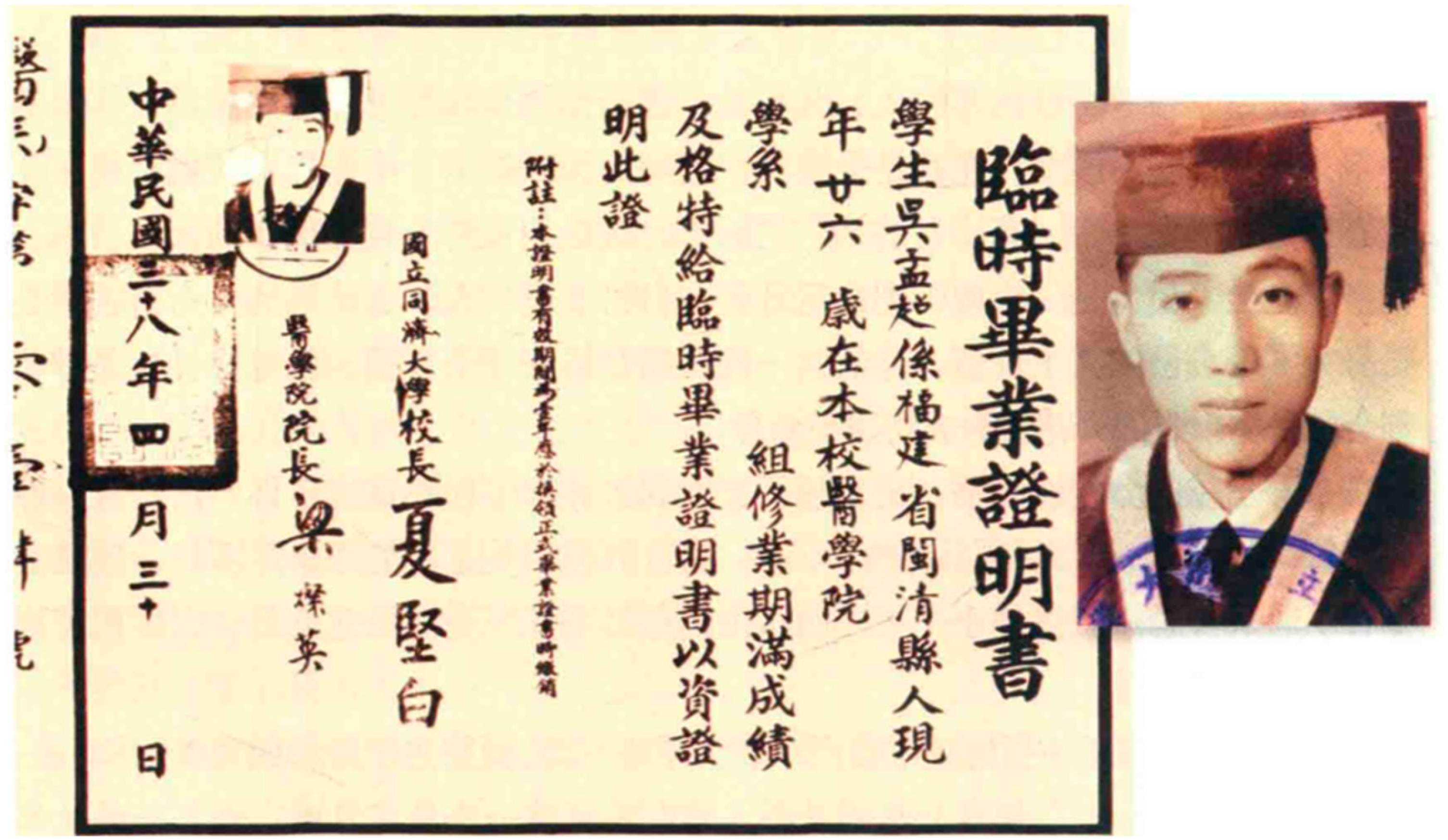
Wu Mengchao's graduation certificate from School of Medicine of Tongji University.
Founder and pioneer of Chinese hepatobiliary surgery
In the 1950s, few doctors in China were willing to engage in hepatobiliary surgery due to the high mortality rate caused by the low level of medical technology in anaesthesia, infection control, and blood transfusion. In 1957,Wu Mengchao discovered a book titled ‘Introduction to Hepatic Surgery’ in the school library. This English book, written by Dutch surgeon Henry Gans (1925–2017), provided a comprehensive and systematic introduction to hepatobiliary knowledge, especially liver anatomy. 2 Due to Wu's upbringing in Malaysia, his English proficiency allowed him to read the book without difficulty. Professor Zheng suggested that Wu translate the book into Chinese. Wu completed the translation in just fifty days. Recommended by Professor Zheng, Wu's translation of Introduction to Hepatic Surgery was published by Shanghai Science and Technology Press in May 1959. This was the first Chinese translation of a book on hepatobiliary surgery. 3
In 1958, Mao Zedong launched the Great Leap Forward, calling for various fields, including medicine, to catch up with advanced countries within fifteen years. In this context, Wu Mengchao and his colleagues formed a research team to achieve significant progress in hepatobiliary surgery. The team led by Wu first needed to understand the anatomical structure of the liver. At that time, Chinese doctors had only a superficial understanding of the liver, knowing about the hepatic artery, hepatic vein, portal vein and bile duct and that the liver was divided into two parts: left and right. They had no knowledge of the direction and distribution of blood vessels inside the liver. In 1958, Wu and his research team planned to make a liver specimen in order to thoroughly understand the physiological and anatomical structure of the liver. From 1958 to 1959, the team dissected over 200 human livers and produced over 100 liver specimens. 4 Through this work, Wu gradually mastered the direction and distribution pattern of the liver's blood vessels. He proposed an anatomical perspective based on the distribution of liver blood vessels and intrahepatic fissures in 1960 to guide successful liver surgery.
Wu first proposed the anatomical theory of ‘five lobes and four segments’ in 1960. He boldly suggested that the human liver is divided into five lobes: left outer lobe, left inner lobe, right anterior lobe, right posterior lobe and caudate lobe. 5 He further divided the left outer lobe and right posterior lobe into upper and lower segments, totalling four segments. This theory has proved to be practical, laying the anatomical foundation for liver surgery and providing theoretical and technical support for future explorations in liver surgery, such as hepatic caudate lobectomy (Figure 3).
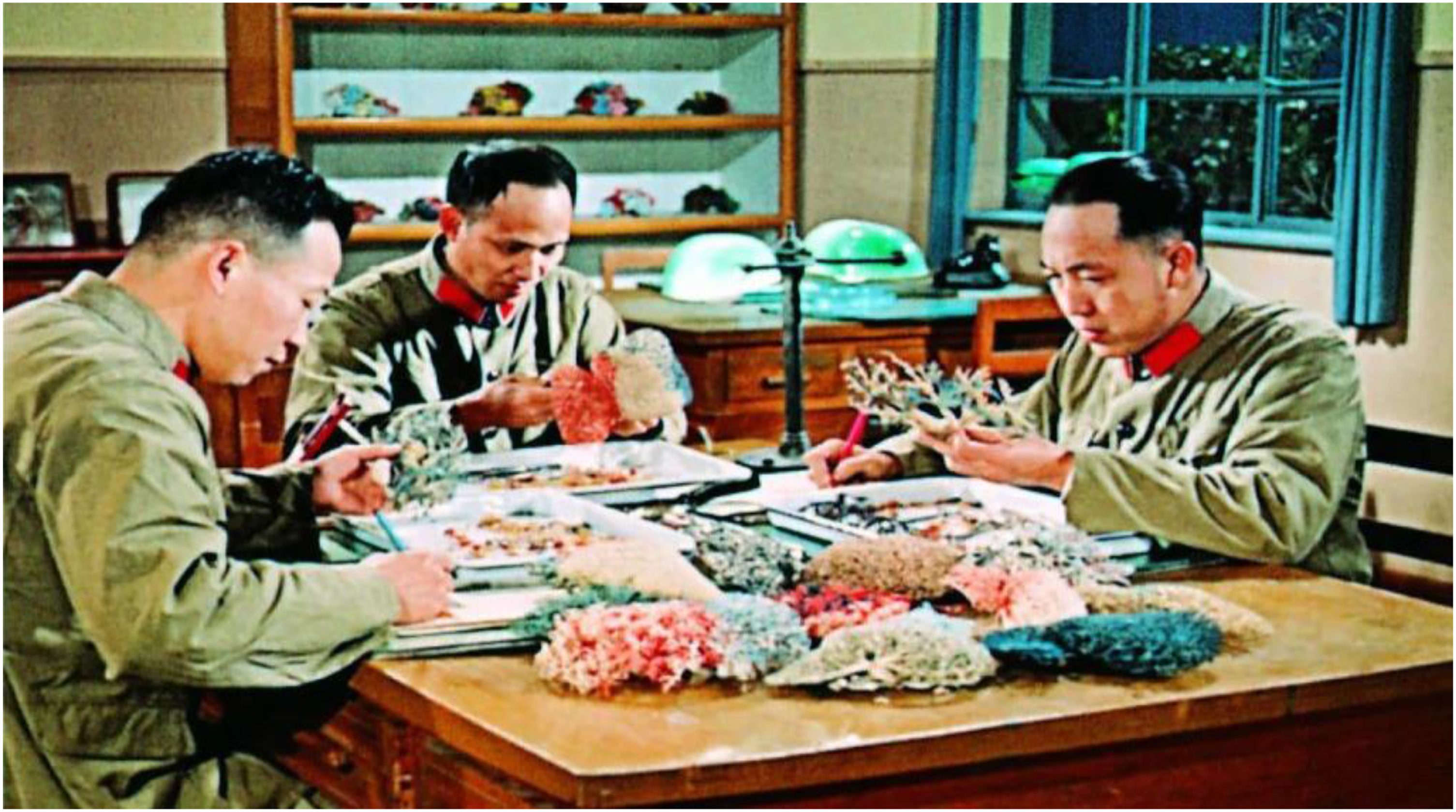
Wu Mengchao (on the right) and his team preparing liver specimens in 1958.
However, Wu was not satisfied with the existing anaesthesia methods used during surgery. Low-temperature anaesthesia involved using ice to lower a patient's body temperature below thirty-two degrees Celsius after anaesthesia. During surgery, ice cubes were continuously used to cool the patient down. However, in Wu's view, this method was not only cumbersome but also prone to infection and complications. He devised a method for patients to undergo surgery at room temperature. During surgery, doctors would tie a rubber band around the patient's liver hilum. When removing liver tumours, the doctors would tighten the strap to block the patient's blood flow, then pause the surgery and relax the strap to restore blood supply to the liver. This intermittent tightening and relaxation ensured that the liver did not necrotise and the bleeding was under control. After many animal experiments, Wu and his team found that the liver can tolerate ischaemia for a shorter duration at room temperature. If the ischaemia time exceeds fifteen minutes, it can cause liver cell necrosis and dissolution, resulting in irreversible consequences. 6 Therefore, the surgical time must be restricted to fifteen minutes. Practice has proven that this surgical method not only spares patients the discomfort of being soaked in ice water but also significantly reduces bleeding and accelerates postoperative recovery.
Difficult development of hepatobiliary surgery in China during special times
In 1966, Mao Zedong launched the unprecedented ‘Cultural Revolution’, calling on the Red Guards to eliminate the ‘capitalist roaders’ in various societal fields. Wu Mengchao was exposed by the Red Guards and labelled as a reactionary academic authority. Due to Wu being an overseas Chinese individual returning from Malaysia, he was also branded as a ‘foreign spy’. Wu spent most of his time in the hospital being criticised and confessed his ‘counter revolutionary crimes’ to the Red Guards. With the intensification of factional struggles within the hospital, Wu was no longer able to engage in medical work. More seriously, the Red Guards stationed in the hospital once proposed to chop off Wu's hands. In their eyes, Wu's nominal tumour removal surgery for workers and farmers was actually an act of persecution. In order to protect Wu from physical harm, the Party committee of the hospital sent him to a labour camp in Xi’an, Shaanxi.
In July 1968, the Shanghai Wenhui Newspaper published an investigation report on the deeds of Huang Yuxiang, a health worker at the Chuansha County Health Centre in Shanghai who treated local farmers. Huang Yuxiang graduated from Suzhou Medical University in 1953. In the early 1960s, Huang began working at the Chuansha County Health Centre. His medical practice was characterised by visiting villages and households and even treating farmers in the fields. He also participated in some agricultural labour during busy farming periods. Local farmers, who make a living by growing rice and work barefoot in paddy fields, equate ‘barefoot’ with ‘labour’. This article was the first to refer to this ‘semi agricultural and semi medical’ form of healthcare workers as ‘barefoot doctors’. This investigative report caught Mao Zedong's attention in 1965. Mao pointed out at a meeting in September 1968 that ‘even if a “barefoot doctor” is not very skilled, it is better than a deceitful doctor or a witch doctor, and “barefoot doctor” should be promoted in rural areas’. 7 Wu applied to the local health bureau to become a health worker in the local commune. Due to Wu's formal medical training and excellent medical skills, he quickly gained recognition from local farmers. Later, Wu opened a small clinic in Hancheng, Xi’an. During this special period, although Wu did not make significant breakthroughs in scientific research, he did a great deal of clinical work. In clinical practice, Wu collected a large amount of material on the daily life and clinical practice of liver cancer patients. This laid a solid foundation for Wu's future research on liver cancer.
In 1973, Deng Xiaoping returned to work and served as Vice Premier of the State Council and Chief of the General Staff of the People's Liberation Army. 8 Deng proposed the work guideline of ‘comprehensive rectification’. Deng emphasised that ‘factionalism is very dangerous in the military, and this phenomenon cannot and should not be tolerated’. 9 From then on, military hospitals ceased factional struggle. The Hepatobiliary Department of the Second Military Medical University Affiliated Hospital was now able to receive patients again. In the spring of 1975, Wu was consulted by a forty-year-old male peasant named Lu Benhai. Wu discovered that Lu's tumour measured 63 centimetres and weighed 18 kilograms. The tumour's weight and volume still hold world records. 10 Wu believed that the most ideal method was surgical resection. However, the surgical risk was very high because removing such a huge tumour could easily cause massive abdominal bleeding, leading to the patient's death. Although the failure of the surgery would have a negative impact on Wu's reputation, he was determined to undertake this highly challenging surgery. After twelve hours and ten minutes, the surgery was declared successful. Wu used his surgical knife to achieve a miracle in medical history. Under the great care of Wu and his team, Lu was able to walk eleven days post-surgery and in less than a month, he was discharged from hospital. The People's Daily highly praised this surgery, stating that its success marked the maturity of liver surgery in China. 11
Leading figure in Chinese hepatobiliary surgery
In March 1978, the National Science Conference was held in Beijing. At this meeting, Deng Xiaoping clearly stated that; in socialist society, the intellectuals trained by the proletariat themselves are different from the intellectuals in exploitative societies in history. The vast majority of them are part of the proletariat’. 12 The intellectuals who were once despised during the Cultural Revolution have since gained their dignity and value as human beings. In 1978, Wu Mengchao submitted a report to the Party Committee of the Affiliated Hospital of the Second Military Medical University, requesting to separate hepatobiliary surgery from general surgery and establish it as an independent discipline. This was a unique innovation in the history of Chinese medicine. The Hospital Party Committee quickly approved Wu's suggestion. The independent establishment of hepatobiliary surgery has put its clinical treatment and research on a fast track of development.
To improve the surgical treatment of liver cancer, Wu Mengchao and his team proposed a ‘two-stage surgery’ method for liver cancer. They believed that comprehensive treatment should be carried out for large liver cancers that cannot be resected immediately. 13 The doctor uses portal vein embolisation to shrink the tumour first and then waits for liver tissue regeneration before performing surgical resection. 14 However, for tumours that have an intact capsule and are close to the liver hilum, even if the volume is large, ‘one-stage surgery’ should be the first choice. 15 The treatment method of ‘two- stage surgery’ is considered a major leap forward in the history of liver surgery.
At present, this treatment method has become a common mode of surgical management for liver cancer both domestically and internationally. To reduce the mortality rate of patients with liver cirrhosis, Wu and his research team explored the local resection method for liver cancer, which involves incomplete resection of the liver lobe where the lesion is located. For patients with combined liver cirrhosis, the resection range should not exceed 50% of the total liver. 16
Due to Wu's outstanding achievements in hepatobiliary surgery, in September 1979, Wu was invited to participate in the 28th International Surgery Academic Conference held in San Francisco, USA. This conference brought together over 2000 top medical experts from around the world, representing the highest level of international surgical medicine at that time. The title of Wu's academic report was ‘Experience of Surgical Resection of Primary Liver Cancer in the Past Eighteen Years’. Wu's report summarised the achievements of the Chinese medical community in surgical resection of liver cancer from 1960 to 1977. Wu specifically mentioned his unique liver anatomy theory, intermittent hepatic portal block resection at room temperature and postoperative metabolic comprehensive treatment strategy. Wu also introduced breakthroughs in basic research on cancer. Through extensive medical experiments, Wu discovered that cancer was caused by mutations in key genes in cells. Wu regarded the random error factors in gene replication as the most significant carcinogenic factor. A healthy human body has a cellular monitoring system. The replication of human DNA will not go wrong under such supervision, but if this supervision system fails, mutated cells will appear and multiply in large numbers. If mutated cells appear on DNA related cancer cells, related cancer will appear.
In the 1970s, the international medical community generally believed that the environment was the main factor in the occurrence of cancer. With the rapid development of industrialisation, tar, dust and sulphur dioxide are discharged into the atmosphere, while chromium, nickel and cadmium are discharged into water. These chemical elements are recognised as carcinogens. Western medical experts found that rubber workers have a high rate of bladder cancer, asbestos workers have a high rate of lung cancer and kerosene workers have a high rate of skin cancer. Cancer and the environment are therefore thought to be inseparable. Wu's ‘genetic determinism’ challenged the ‘environmental determinism’ of the international medical community, which impressed the attending experts. The next day, a newspaper in San Francisco praised China's achievements in surgical medicine: ‘The silent Chinese, with their unique Eastern wisdom, quietly entered the field of international surgical research, surprising everyone who had ignored them’. 17
Due to Wu's outstanding contributions to hepatobiliary surgery, in November 1991, he was elected as a member of the Chinese Academy of Sciences. In January 1996, the then Chairman of the Military Commission, Jiang Zemin, signed an order to confer the honorary title of ‘Model Medical Expert’ on Wu. Wu was awarded the highest national science and technology award in 2006. He was the first scientist in the medical and health industry to receive this award since its establishment in 2000. 18 On 9 January 2006, at the Great Hall of the People in Beijing, the then President Hu Jintao presented award certificates and five million yuan prize cheques to meteorologist Ye Duzheng and medical expert Wu Mengchao, respectively. When interviewed by reporters, Wu Mengchao said, ‘I am very happy to have won the highest science and technology award. I am representing Shanghai Eastern Hospital to receive the award, and I am just a part of this collective’. 19 Later, Wu used the entire five million yuan awarded by the state to establish the Wu Mengchao Hepatobiliary Surgery Medical Fund, which supports young talents in the field of hepatobiliary surgery (Figure 4).

Hu Jintao (on the right) presenting Wu Mengchao (on the left) with the honorary certificate of the highest national science and technology award.
Constructing a unique talent training model for hepatobiliary surgery in China
Wu Mengchao has said several times, ‘In order for China's hepatobiliary surgery to develop, it must cultivate a talent team. I must spend more time cultivating students’. In 1978, China resumed its graduate enrollment system, which was a great opportunity for Wu. In 1979, Wu began recruiting master's students. After a strict enrolment process, Wu Mengchao finally admitted two students. The first student was named Chen Xunru (currently the director of the Department of Hepatobiliary Surgery at Kunming Military Medical University Affiliated Hospital), and the second student was named Tu Zhenxing (currently a key doctor at Shanghai Eastern Hospital). Due to the practical needs of scientific research at that time, the research topic assigned by Wu to the students was ‘Early Diagnosis of Liver Cancer’. In 1982, Wu began recruiting doctoral students again. He demanded that his students meet the ‘three abilities’, namely the ability to do, write and speak. The ‘ability to do’ refers to students learning to become individuals with broad knowledge, good character and grand aspirations. The ‘ability to write’ refers to students learning to write daily medical records, surgical records and work reports. Lastly, ‘the ability to speak’ refers to students learning to communicate patiently and sincerely with patients. Wu not only emphasised students’ medical skills but also valued their medical ethics.
Wu also used his influence to create opportunities for the scientific research and development of students. In 1989, Wu creatively proposed the ‘dumbbell model’, which preserves both overseas and domestic positions of scholars. Guo Yajun was a doctoral student under the guidance of Wu. In 1989, after graduating, Guo was dispatched by the Second Military Medical University to Harvard Medical School in the United States to engage in postdoctoral research for two years. Guo's research topic was ‘Immunotherapy for Liver Cancer’. Wu hoped that Guo could make breakthroughs in this topic by utilising advanced medical technology from the United States. However, Guo was a soldier, and according to military regulations, he had to return to his home country after two years, otherwise, he would be expelled from the military. Guo was unwilling to leave the superior scientific research conditions in the United States and hoped to work there for a period of time. Guo wrote a letter to Wu, expressing his wish. At that time, there was no liver cancer immunology laboratory in China, and research funding was very limited. If he returned to work at the Affiliated Hospital of the Second Military Medical University, Guo's scientific research career would be destroyed.
Wu fully understood Guo's situation and tried every means to help him. At that time, the thinking of Chinese people was still quite rigid. Chinese military personnel who failed to return on time and worked for American universities were considered traitors and were to be dealt with seriously. Within the affiliated hospital of the Second Military Medical University, the voices against Guo continuing to work in the United States became increasingly prominent. The Party Committee of the Affiliated Hospital of the Second Military Medical University even considered dismissing Guo from his position and military status. Wu convinced the hospital Party committee not to take extreme action and to approach this issue comprehensively and dialectically. The United States was using its research capabilities to cultivate talents for China, which was a good thing. China should establish favourable research conditions to attract such overseas talents to return to China. Wu suggested setting up a hepatobiliary immune research centre within the hospital, allowing Guo to shuttle between China and the United States. This model not only cultivated talents but also established international scientific and technological cooperation relationships. Under Wu's influence, the hospital Party committee not only allowed Guo to continue his research in the United States but also allocated special funds to establish a hepatobiliary immune research centre, appointing Guo as its deputy director. Currently the Second Military Medical University Affiliated Hospital treats thousands of liver cancer patients every year and proposes numerous scientific research topics in clinical practice. The Harvard University School of Pathology (where Guo works) in the United States has the most advanced instruments and strong funding. This is somewhat similar to the two ends of a dumbbell, and Guo's function is to connect these two ends together. Once the ‘dumbbell’ relationship is established, there will inevitably be a ‘1 + 1 > 2’ effect.
Wu advocated for the establishment of a hepatobiliary surgery hospital integrating clinical and scientific research as early as the early 1980s. This could not only serve teaching and research functions but also facilitate the cultivation of a large number of high-quality medical talents. Thus, Wu reported to the General Logistics Department of the People's Liberation Army and applied to establish such a hepatobiliary surgery hospital. Due to the remarkable achievements of Wu and his team, the Party Committee of the General Logistics Department expressed support for Wu's proposal and allocated special funds for the construction of the hospital. In 1993, a six-storey silver-white building was built on Changhai Road in Shanghai, which was proposed by Wu to establish Shanghai Eastern Hospital. To attract more high-level talents to Shanghai Eastern Hospital, Wu used the ‘dumbbell model’ to contact Chinese students and scholars studying abroad, hoping that they could return to China as soon as possible. By the end of 1996, 67 high-level overseas talents had come to work at Shanghai Eastern Hospital. Under the concept of ‘balancing clinical and scientific research, and complementing domestic and foreign advantages’, hepatobiliary surgery at Shanghai Eastern Hospital developed rapidly. Wu and his team utilised this powerful basic research platform to successively apply a series of cutting-edge technological treatment methods such as interventional therapy, minimally invasive therapy, biological therapy, immunotherapy, and viral therapy to clinical practice, achieving significant breakthroughs. In 2010, the success rate of liver cancer surgery in hospitals reached 99%. To this day, Shanghai Eastern Hospital has become the world's largest liver surgery medical institution, integrating scientific research with clinical practice. 20
Conclusion
In 2012, ninety-year-old Wu was selected by China Central Television as ‘Touching China’ person of the year. The reason for the selection is that ‘sixty years ago, he built China's first operating table and has not left today. He is the only doctor in the world who is still working at the age of ninety in front of the operating table. In the past fifty years, he has promoted liver medicine in China from scratch, from existence to essence. He is a tireless old horse who has to carry patients one by one across the river’. 21 Wu summarised his sixty-year medical career in 2018 when he participated in the TV programme ‘The Reader’. ‘At that time, no one dared to engage in the liver field. So I focus on the liver field, first making specimens, then clinical practice, and finally establishing hepatobiliary surgery’. 22 These few sentences may sound simple, but the hard work that Wu put into the establishment and development of Chinese hepatobiliary surgery is unimaginable.
On May 22, 2021, Wu Mengchao died in Shanghai due to illness. On May 24, 2021, People's Daily highly praised Wu's contribution to Chinese hepatobiliary surgery. ‘Wu is the main founder of hepatobiliary surgery in China, establishing the theoretical, technical, and disciplinary system of hepatobiliary surgery in China, and elevating the level of hepatobiliary surgery in China to the forefront of the world. Wu devoted his whole life to the people and hepatobiliary surgery, interpreting the lofty beliefs of a Communist Party member’.
Footnotes
Declaration of conflicting interests
The author declared no potential conflicts of interest with respect to the research, authorship, and/or publication of this article.
Funding
The author(s) is grateful for the Sino-German (CSC-DAAD) Postdoctoral Scholarship Program for the financial support of this research topic.
