



Abstract
Elvis Presley (1935–1977) is an iconic figure in modern pop culture. Although many of his medical conditions have been the subject of extensive speculation, less is known about his ophthalmological problems, including steroid-induced glaucoma caused by a life-long use of steroids, both prescribed and self-administered, and secondary angle closure glaucoma most likely due to anterior uveitis. Further, he had an episode of acute angle closure glaucoma in 1971 that was treated with a subconjunctival injection of a mydriatic agent or, less likely, a paracentesis combined with an iridotomy. David Meyer, MD, was Presley's main ophthalmologist from 1971 until the latter's death in 1977.
Introduction
Elvis Aaron Presley, an American icon, was born on January 8, 1935, in Tupelo, and died on August 16, 1977 in Memphis. Despite being deceased almost half a century, he remains immensely popular throughout the world. Aside from his dynamic performances and record-breaking sales, this charismatic singer was known for leading a highly unhealthy lifestyle, which included widespread abuse of prescription drugs. Medical specialists and others often have speculated about Presley's health, medical issues, and the cause of death.1–3 While the official cause of death is listed as cardiac arrest,2,4 some believe it resulted from a drug overdose.5–7 Despite this keen interest, there is relatively little known about his ophthalmological history and how it might have affected his life. We focus here on the glaucoma of Elvis Presley.
General health
Presley practically never smoked and rarely drank alcohol.2,8 His eating habits, on the other hand, were very unhealthy, and he had a preference for high-fat foods. In addition, he suffered from insomnia, and abused prescription drugs, particularly amphetamines, barbiturates, and opioids.2,8
Presley experienced a life-threatening hospitalization in 1973 that was thought to be due to Cushing's syndrome; it was reportedly caused by a six-week course of Demerol (pethidine), an opioid pain medication, along with substantial cortisone injections that were administered to alleviate his back and neck pain.2,9 Presley continued to take steroids intermittently from 1973 until his death, administered by physicians as well as himself.1,2,10
Eyes
At 23 years of age, Presley passed an ophthalmological examination, included a colour vision test, during his general qualifying medical examination for the military. 11 He had a visual acuity of 20/20 without correction in each eye.
George Nichopoulos MD (1927-2016), Presley's personal physician and internist from 1970 until his death in 1977, indicated that Presley suffered from ‘Reiter's syndrome’ (currently known as reactive arthritis; the earlier name is considered offensive due to its namesake, Hans Reiter (1881-1969), a Nazi physician who was responsible for horrific war crimes during World War II), 12 which had caused glaucoma ‘at an earlier age than was normally experienced’. 2 He also opined that this condition [glaucoma] ‘plagued Elvis throughout his life’.
Presley also was diagnosed with iritis [anterior uveitis (AU)] in both September 1970 and then again March 1971.2,8 Later that month, Presley was diagnosed with secondary glaucoma in the right eye.2,13 He was attended by two ophthalmologists: Spencer Thornton, MD (1929-2019), from Nashville and, later for a second opinion, David Meyer, MD (1938-2019) Figure 1, who flew in from Memphis. 2 Presley experienced a ‘terrible pain’ in his right eye that, according to Meyer, ‘felt like a marble, stone hard,’ and the cornea of the eye appeared ‘steamy-looking, totally opaque.’ Meyer also observed ‘a pupil that has no movement’ and he estimated intraocular pressure (IOP) to be over 80 mm Hg (normal range = 10–21 mm Hg). 2 According to Nichopoulos, Meyer suggested the following: ‘We can do one of two things: we can make a hole in your iris, which is surgery; or I can give you an injection of steroids immediately and dilate your eye so we can break this open’. 2 After Meyer was reassured that Presley would be able to sit still, he administered an intramuscular Demerol injection for the pain and a topical anaesthetic to the eye. He then placed an eyelid speculum and inserted a needle into the eye. Nichopoulos as well as Joyce Bova (Presley's girlfriend at the time) wrote that then ‘a long needle full of steroids was injected directly into Elvis's eyeball'.2,13 The IOP ‘almost immediately began to drop in Elvis's eye,’ and ‘within a few hours, Elvis's condition was greatly improved.’ After this procedure, Presley was admitted to Nashville's Baptist hospital, where he spent three days for secondary glaucoma – according to Lamar Fike (lighting director and bodyguard of Presley) in his left eye. 14
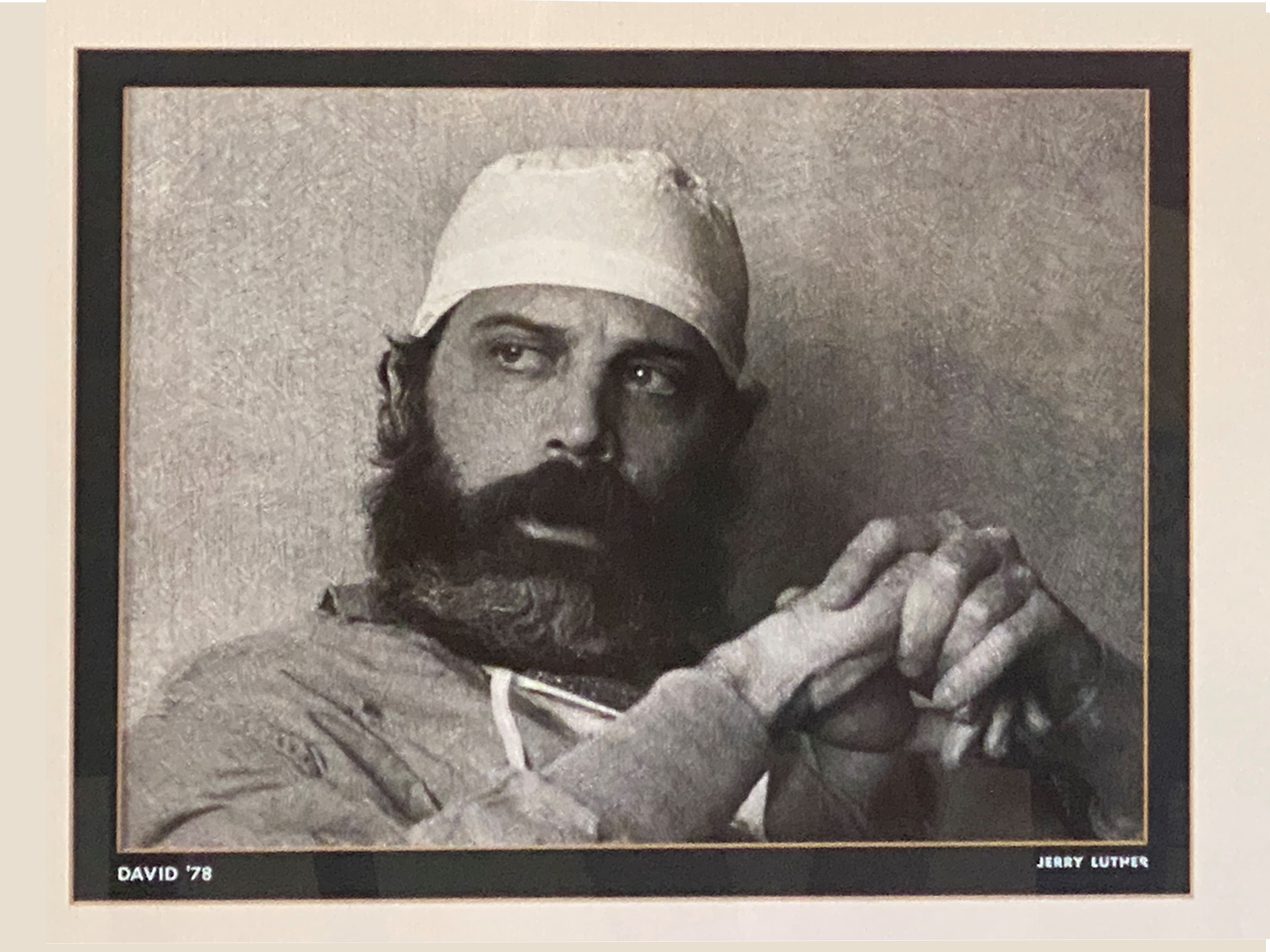
David Meyer, MD. 15
According to Nichopoulos, the above intervention took place on a bed in a hotel room in Nashville. 2 Bova described the location differently, and indicated that it was situated in a room at Presley's home in Memphis, which had been specially arranged for the occasion. 13 She noted ‘a strange-looking contraption for the purpose of examining his eyes’. A 161-page private investigation of Presley's medical and drug history crafted by the law firm Neal & Harwell, indicates that treatment took place in a hotel room and Presley later recuperated at home. 16 It was there where ‘Dr Meyer continued to check his eyeball pressure daily (they even set up machines to check the pressure at Graceland)’. At that time, Meyer explained about the necessary post-operative medication and how to use, if needed, the oxygen tank he was leaving. 13
During the 1973 hospitalisation, Meyer found glaucoma in both eyes, despite Presley having used eye drops every day. 2 The condition was labelled as ‘eyesight-threatening’. 8 Presley expressed concerns about the glaucoma and ‘this was Elvis’ major worry, rather than all of the other drug induced problems and his brush with death’. 16
According to former girlfriend Linda Thompson, around the end of 1974 one of Presley's doctors suggested marijuana to lower IOP. 17 She claims that Presley tried it for three months, hoping that it ‘would keep him from going blind.'
Discussion
The most important and widely recognized risk factor for glaucoma is elevated IOP. There is a well-established relationship between steroid usage and steroid-induced glaucoma. 18 In the case of Presley, IOP may have been increased from repeated use of corticosteroids either in the form of eye drops, pills, or even injections, whether prescribed or self-medicated. When used in sufficiently high doses or for prolonged time periods, the glucocorticoids would possibly have led to damage of the optic nerve head and consequent visual field loss. In addition, episodes of AU (acute uveitis) can also cause a rise in IOP. Although many cases of AU are considered idiopathic, there is a well-established association with systemic autoimmune disease. 19 Some of these conditions have been associated with HLA-B27. Systemic autoimmune diseases encompass the seronegative spondyloarthropathies, including reactive arthritis. Regardless of the cause, the cornerstone of AU treatment involves (topical) steroids, which can independently lead to an increase in IOP. This condition, known as secondary glaucoma, can eventually result in blindness if left untreated.
Apart from the steroid- and uveitis-induced glaucoma explained above, the sources mention another type of glaucoma: acute angle-closure glaucoma. In this type of glaucoma, the anterior chamber angle in the front of the eye—where the trabecular meshwork drains the aqueous humour—suddenly becomes blocked, resulting in an instantaneous and substantial increase in IOP (Figure 2). It could be primary, as typically occurs in patients with hyperopia. However, the acute and unilateral presentation in a patient with chronic AU is most likely due to a pupillary block mechanism with a secluded pupil. A seclusio pupillae develops due to posterior synechiae that extend 360 degrees around the pupillary border, preventing aqueous humour from accessing the trabecular meshwork to drain from the eye and thus causing an elevation in IOP. The entrapment of aqueous humour also causes anterior bowing of the iris, a so-called iris bombe, which blocks the chamber angle, leading to secondary angle closure. A secluded pupil fits Meyer's description of the pupil having no movement and aligns with his proposed treatment of dilating the eye to break it open. Therefore, it is plausible that Meyer administered an injection of mydricaine, a combination of atropine sulphate and adrenaline, (mydriatic agents), to break the synechiae, and procaine hydrochloride, an anaesthetic. 20 In the same shot, a depot of steroids to treat inflammation would have been administered, as was common practice those days. These kind of injections are usually given subconjunctivally, which would appear to a non-specialist as ‘an injection straight into the eye.’ However, an intraocular injection of steroids would have elevated IOP by expanding the intraocular volume, further exacerbating the situation. Although less likely, another scenario is that Meyer conducted a paracentesis – making a small incision in the cornea with a slitting knife or needle – to withdraw aqueous humour, which would have resulted in an immediate reduction of IOP. 21 Furthermore, he could have also performed an iridotomy, a procedure to create a small opening in the peripheral iris, as a more enduring solution to address the acute condition. This would be the ‘surgical hole in the iris’ mentioned by Meyer, serving as a bypass for aqueous humour to reach the anterior part of the eye. To perform a paracentesis, it might have been possible in a hotel room, but conducting an iridotomy without a slit lamp or other necessary medical equipment would have been very challenging, especially given the opaque cornea that would obscure a proper view. Another, more plausible possibility is that Presley's eye later underwent an iridectomy in an operation room of the Nashville Baptist Hospital. Regardless of the precise location and sequence of events, Presley appeared to have responded courageously during this highly stressful and painful ophthalmological emergency. Irrespective of the aetiology, an acute glaucoma attack is precisely what occurred in March of 1971. We cannot relate the mentioned oxygen therapy to the treatment of acute glaucoma.
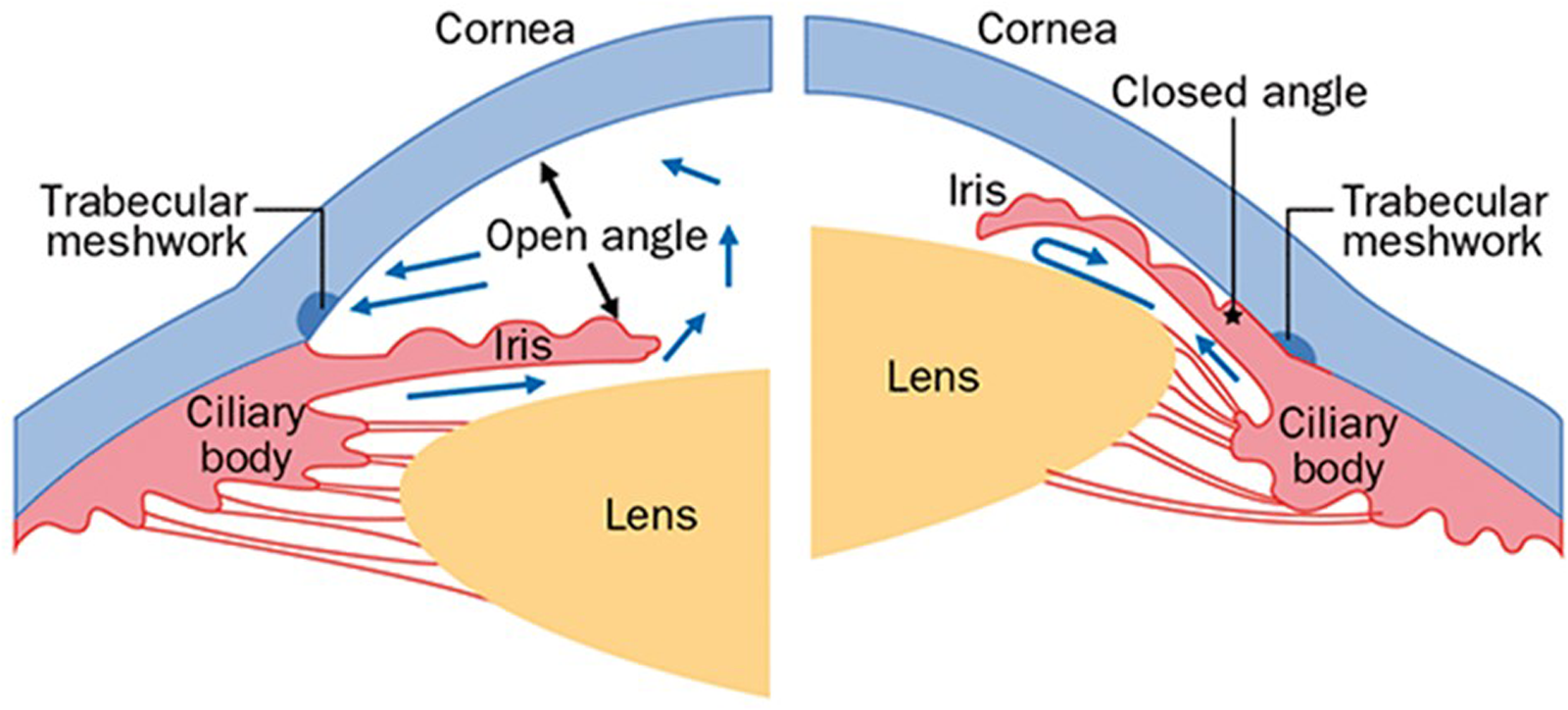
Schematic diagram of an open angle (left) and angle-closure glaucoma (right). In a normal eye with an open angle, aqueous humour produced in the ciliary body travels from the posterior chamber behind the iris to the anterior chamber in front of the iris, where it is drained through the chamber angle by the trabecular meshwork. In an eye with angle-closure, aqueous humour is unable to reach the trabecular meshwork due to various reasons. In Presley's case, the most likely scenario is that anterior uveitis caused adhesions between the posterior iris and the lens capsule (posterior synechiae). Once these adhesions have formed completely around the 360 degrees of the iris, this pupillary block will acutely obstruct the outflow path of the aqueous humour, leading to a subsequent rise in intraocular pressure. Disrupting these adhesions and/or creating a hole in the iris will restore aqueous humour drainage. Figure taken from Wiggs and Pasquale, 2017. 22
It seems less likely that Presley smoked marijuana for several months, since he was known to be strictly against the use of ‘street drugs,’ as opposite to prescription drugs, and marijuana was not legal those days.1,2 In addition, he hardly ever smoked in his life.
Conclusion
It seems that more than one underlying mechanism could have caused glaucoma in Presley. Steroids and AU may have contributed to a lifelong rise in IOP, even in the presence of an open chamber angle. Nevertheless, considering the history of acute glaucoma, angle closure must have played a role as well – at least in one eye – making secondary angle closure due to inflammation the most likely scenario. IOP in this ophthalmological emergency was lowered by breaking a pupillary block either through a subconjunctival injection of a mydriatic agent, or – less likely – a paracentesis combined with an iridotomy. Although glaucoma can lead to serious vision loss and even blindness, nothing can be said about the impact on Presley's daily life and performances due to the lack of additional information, i.e., medical records indicating visual acuity or visual field examination.
Footnotes
Acknowledgements
Jeroen Boereboom, dear friend and arbitrarily the greatest fan of Elvis Presley alive brought the music as well as the eye problems of the King to my attention. Furthermore, we are indebted to many people for their kind reactions and/or valuable discussions during our quest. This paper does not necessarily reflect their opinions and any mistakes are ours. We thank Joyce Bova, Trevor Cajiao, Jorge Calzada, Michel van Erp, Neil Handley, Elizabeth Hodapp, Sally Hoedel, Suzan Jacobs, Tish Henley Kirk, Lynn Meyer, Robb Meyer, Azing Moltmaker, Spencer Leigh, Donna Presley, Bruce Shields, Marijn Vis, and – last but not least – Eric van Rooij.
Declaration of conflicting interests
The authors declared no potential conflicts of interest with respect to the research, authorship, and/or publication of this article.
Funding
The authors received no financial support for the research, authorship, and/or publication of this article.
