




Abstract
Vera Mikhailovna Danchakova (1877–1950), also written in English as Danchakoff and in German as Dantschakoff, was the first woman to graduate with a PhD in Russia. She was a person of many interests and a strong passion for teaching and social justice that may have interfered with her pioneering stem cell research and cell biology, which was far ahead of its time. Danchakova significantly contributed to the unitarian theory of haematopoiesis along with its founder Alexander A. Maximow. She studied the origin of blood cells, the differentiation of tissues and organs in the process of embryonic development of animals, the formation of germ cells and the effect of hormones on the development of organisms. She discovered the role of stem cells in the laying of new tissues, the proof of the extragonadal origin of primary germ cells in birds and the development of methods for transplanting tissues into live embryos. She has been named ‘the mother of stem cells’ for her investigations of progenitors of cells.
A discovery? It may be luck, but it comes only after hard work, for only after years of work is one prepared to draw the inference when the luck throws an observation in one's way. Vera M. Danchakoff. Woman Doctor Blazes New Trail to Immunity from Disease. The Sun, New York, November 9, 1919.
Introduction
In the 20th century, along with dramatic progress in medical treatment and surgery, a cell-based regenerative therapy had been proposed. The first case of implementation of cell-based therapy appears to have occurred in the 1970s. 1 In 1984, Gallico et al. 2 reported the successful treatment of burns using autologous cultured human epithelium. Eventually, advances in stem cell therapy resulted in cardiac regeneration, from preclinical studies with skeletal myoblast transplantation in mice to the first stem cell treatment for myocardial ischaemia in 2001.3,4 Clinically relevant myocardial regeneration studies were to follow, including those in children.5,6
Improvements in the field of cardiac stem cell therapy are inextricably linked with the fundamental research on stem cells that goes back to the first half of the 20th century. The term ‘stem cell’ (‘Stammzelle’) has appeared in the medical literature as early as the end of the 19th century.7,8,9 However, Alexander Maximow, 10 Dantschakoff, 11 Neumann, 12 and others started using this term to describe the pluripotent precursor of the blood cells after the turn of the century. With Maximow's introduction of this term in 1908 in Berlin, it has become widely used and that year went down in history as the beginning of stem cell research. 13 Vera Danchakova was among the pioneers of stem cell research and made a major contribution to cell biology. She expanded the understanding of the role of stem cells in cell differentiation, regeneration of tissues and immunological reactions to heterogenic components. For her detailed investigations on this, highly controversial at that time, she earned the title of ‘mother of stem cells’. 26
Early life and education
Vera Mikhailovna Danchakova (1877–1950), also written in English as Danchakoff and in German as Dantschakoff, was born on 9 March 1877 into a family of a state councillor and philologist Mikhail Grigorovskiy in St Petersburg, Russia. Although the correct Russian spelling is Danchakova, all three spellings were used in her scientific publications. During her early years, Vera demonstrated outstanding skills in painting and music, so her parents planned a musical education for their daughter. Despite this, Vera decided to pursue an academic career and moved to Switzerland in 1897 in order to study medicine at Lausanne University. There is no information available on what influenced her in this decision. Her first student research was dedicated to the histology of reptiles’ epiphysis and she was awarded de Cérenville prize.14,15 The time she spent abroad allowed her to master German and French enabling her to publish in international journals. In 1902, her year of graduation, she had a daughter, who later became a scientific researcher and conducted embryological studies together with her mother.
Eventually, Danchakova returned to Russia and in 1903 graduated in medicine from Kharkov Imperial University. During 1903–1904, she worked at the Imperial Institute of Experimental Medicine in St Petersburg, where she studied hepatic cirrhosis in rabbits. 16 In 1905, Danchakova moved to Yekaterinoslav (modern Dnipro), where she worked at the regional hospital, gaining practical experience, and collecting data for her doctoral dissertation. Upon her return to St Petersburg, she began to work under the guidance of the prominent scientist Alexander A. Maximow (1874–1928).34,35 Apparently, recognizing her abilities and talent, Maximow allowed her to work on her doctoral dissertation in his histological laboratory at the Imperial Military Medical Academy.17,18 Danchakova demonstrated that in the spinal cord of infected animals there had always been pathological changes in the neurofibrils and the severity of these changes depended on the duration of the disease. She also predicted the importance of lymphocytes in developing embryonic tissues, which are able to undergo developmental cycles in an adult organism under specific circumstances in rabies. 19 These findings allowed Danchakova to successfully defend her Doctor of Medicine thesis at the Imperial Military Medical Academy in 1907 (Figure 1). A short productive period of work with Maximow influenced the subsequent scientific interests of Danchakova making her a life-long supporter of the unitary theory of haematopoiesis, which postulated that all blood cells developed from a single progenitor stem cell.
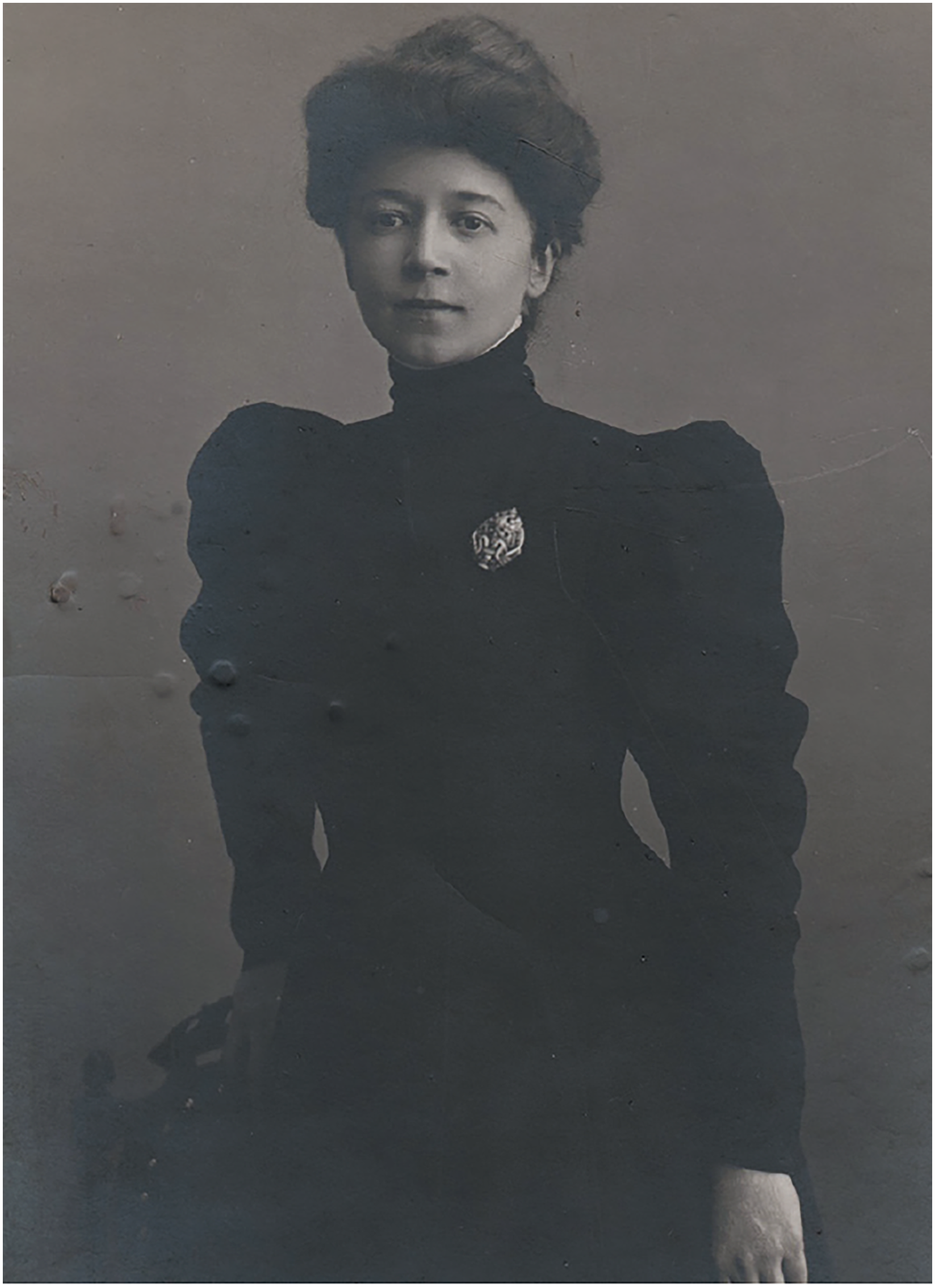
Vera M. Danchakova with a Doctorate Badge after defence of her dissertation at the Imperial Military Medical Academy, St Petersburg, Russia. From the archives of the Military Medical Academy, St Petersburg, Russia.
Further employment and experience abroad
During the subsequent years, Danchakova became an active participant in international meetings of biology and medicine. Her first visit to the USA occurred in 1907 with the Russian group at the VII World Zoological Congress. Among 12 members of the group, she was the only woman. In a brief overview of this scientific event, the congress participants remembered a ‘vivacious little lady from St Petersburg – Dr Dantchakoff, who can tell all that can be told about blood corpuscles’. 21 In 1908, she delivered a lecture dedicated to the histogenesis of blood cells at Lausanne University and, by doing so, she became the first Russian female Doctor of Medicine to introduce research results at a European university. 17
In her search for the title of assistant professor in the Department of Histology in 1908, she gave a lecture at Moscow University. 19 The faculty council made a positive decision on Danchakova's candidacy, but the then minister of Education, Alexander N. Schwartz (1848–1915), who was an opponent of female education and who had previously prevented women from being selected for university positions, did not approve her appointment. For this reason, Danchakova wrote a letter of complaint to the Senate of the university about her harassment and that of other Russian women, but the complaint was rejected and teaching at the university became unattainable for her. However, Danchakova became a histology and embryology lecturer at Moscow Female Medical Institute in 1910.14,22
In the autumn of 1914, Vera received a research grant and a scholarship from the Rockefeller Foundation to work in the USA. It allowed her to continue research at the Rockefeller Institute for Medical Research and eventually in the anatomy laboratory at Columbia University as an assistant professor. By 1919, she was a full professor of Anatomy at Columbia's College of Physicians and Surgeons. During this period of scientific work, Danchakova (Figure 2) focused on embryonic haematopoiesis, blood cell regeneration in adult animals and a study on the possibility of tumour transformation of stem cells.20,22,23,24 She also started to actively use a tissue culture method, which had been proposed by Maximow, and later went on to produce pioneering studies on embryonic tissue cultivation in vivo on chorion-allantois. In the article ‘The differentiation of cell as a criterion for cell identification, considered in relation to the small cortical cell of the thymus’ published in 1916 Danchakova showed that the thymus epithelial bud can be colonized by wandering cells of mesenchymal origin. In this paper, she demonstrated the ability of the thymic cortical cells to intensively differentiate into plasma cells in response to low-dose X-ray exposure. This research raised the question about the impact of the microenvironment on cell differentiation. 25 Graft-versus-host disease was also a phenomenon of interest to Danchakova. In 1916, she and James B. Murphy (1884–1950) independently described severe spleen enlargement after the injection of the chick embryo with adult lymphocytes. Later this observation led to the understanding of lymphocyte migration.26,27
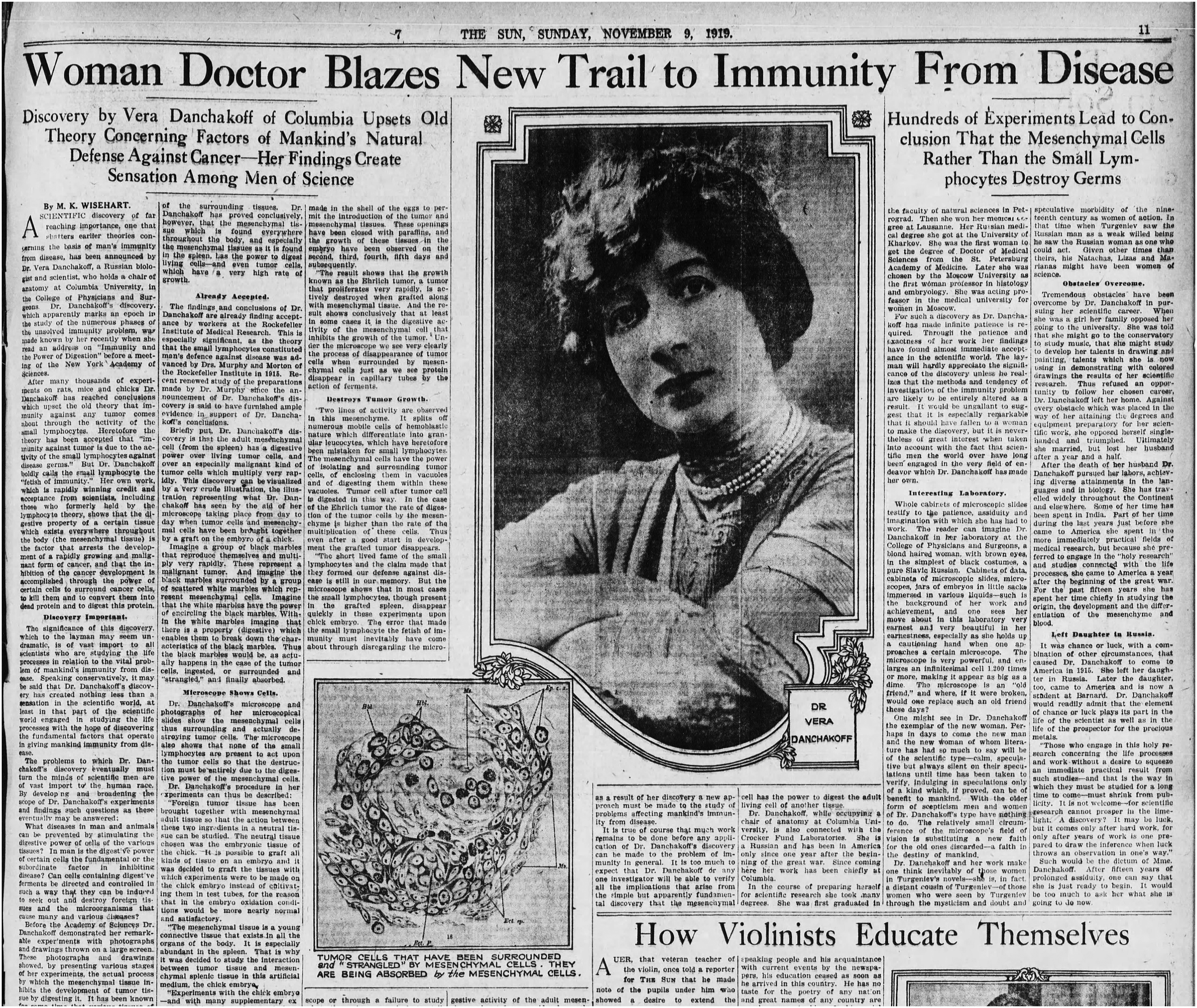
Newspaper article on Vera M. Danchakova. Wisehart, M.K. “Woman Doctor Blazes New Trail to Immunity From Disease”. The Sun, New York, 9 November 1919, Section 7, Page 11.
While living in the USA, Danchakova also worked as a researcher at Eli Lilly pharmaceutical company and was active in social processes, maintaining ties with Russian emigrants (including the family of a composer and pianist Sergei Prokofiev (1891–1953)). She was a correspondent of the Moscow newspaper ‘Utro Rossii’ (Russian Morning) in New York. Beginning in 1920 she participated in the American Relief Administration and published on the difficulties encountered by scientists in Russia during World War I and after the revolution of 1917. She contributed to fundraising and preparing food supplies for Russia during the famine of 1921–1922.28,29 In 1923, Danchakova became a member of the Russian academic group in the USA, which was created by Russian scientists, and compatriots, including one of her mentors, Alexander A. Maximow, whom Vera Mikhailovna helped to emigrate from Russia. 30 In May 1920, she wrote to the Chicago University professor Robert Bensley (1857–1956) that Maximow planned to leave the homeland in the coming summer and asked her about an appointment that he could obtain in the USA. Consequently, in January or February 1922, Maximow made a dramatic escape from St Petersburg with his wife, foster son and sister, crossing the Gulf of Finland by ice to Helsinki. In April 1922, Maximow became a professor of the Department of Anatomy at the University of Chicago. 20
As an integral part of the Russian émigré community, Danchakova's family, distinguished by special hospitality, arranged wonderful dinners and invited friends and colleagues to his summer cottage in Woods Hall, Massachusetts. Being a talented pianist, Vera participated in the musical evenings with professional singers Juan (1866–?) and Olga Codina. Their daughter Lina (1897–1989), whom Danchakova looked after quite frequently during her parents’ trips, later became the wife of Sergei Prokofiev. 29
Return to the USSR
Despite a productive and comfortable life in the USA, Danchakova decided to accept the invitation to return to the USSR from Mikhail Pokrovsky (1868–1932), the chief of the newly organized Soviet People's Commissariat of Education. They met in 1924 during her visit to the Soviet Union. In addition, Soviet science experienced a shortage of experimental scientists working at the intersection between biology and medicine. Upon returning from the Soviet Union to the United States, she began to implement a programme of distance learning, emulating those of American universities and published several articles on this topic.14,17,22,31
In 1926, Danchakova permanently returned to Moscow and never managed to implement her American experience of distance higher education. The Soviet Union was immersed in solving economic and political problems. The same year she was appointed director of the laboratory of experimental morphogenesis at Timiryazev State Research Institute, Moscow. As an enterprising organizer, Vera managed to get land plots for the laboratory construction and she also established her own poultry farm to have a constant supply of chicken embryos.14,20
US citizenship allowed Danchakova to travel to Europe to purchase the necessary laboratory equipment, access special literature and participate in scientific events and experiments. A fact that serves as an additional illustration of her personality is that in 1929 she drove her car from Berlin to Russia.22,32
In the autumn of 1930, when she went to Germany to discuss with her publishing house the first research publication of the laboratory of experimental morphogenesis, the administration of the Timiryazev State Research Institute launched a campaign to remove her from the post of head of the laboratory. In February 1931, immediately after returning from a business trip, Vera Mikhailovna Danchakova was removed from her leadership position, and her attempts to change this were unsuccessful. Unable to fight the administration of the institute, she decided at the end of 1932 to leave the Soviet Union again. Vera moved to Heidelberg, and then to Paris to continue her series of experiments. She repeatedly tried to get a visa to enter the USSR to meet her daughter, and although this issue was discussed at the highest level of the country's government, Vera never received permission to return to the USSR.14,20,22
In 1934, Danchakova accepted an invitation to head the Department of Histology and Embryology at the Kaunas University, Lithuania, where she worked till 1937 (Figures 3 and 4). At this period her research undertakings were dedicated to the influence of male and female sex hormones on sex differentiation in embryogenesis. As the result of experiments carried out on rhesus monkeys, which included prenatal administration of male sex hormones, she concluded that the structure of the external genitalia in fetuses and newborns of higher vertebrates of genetically female gender depends on the exogenous concentration of androgens and the time during which the fetus is exposed to these hormones.22,33
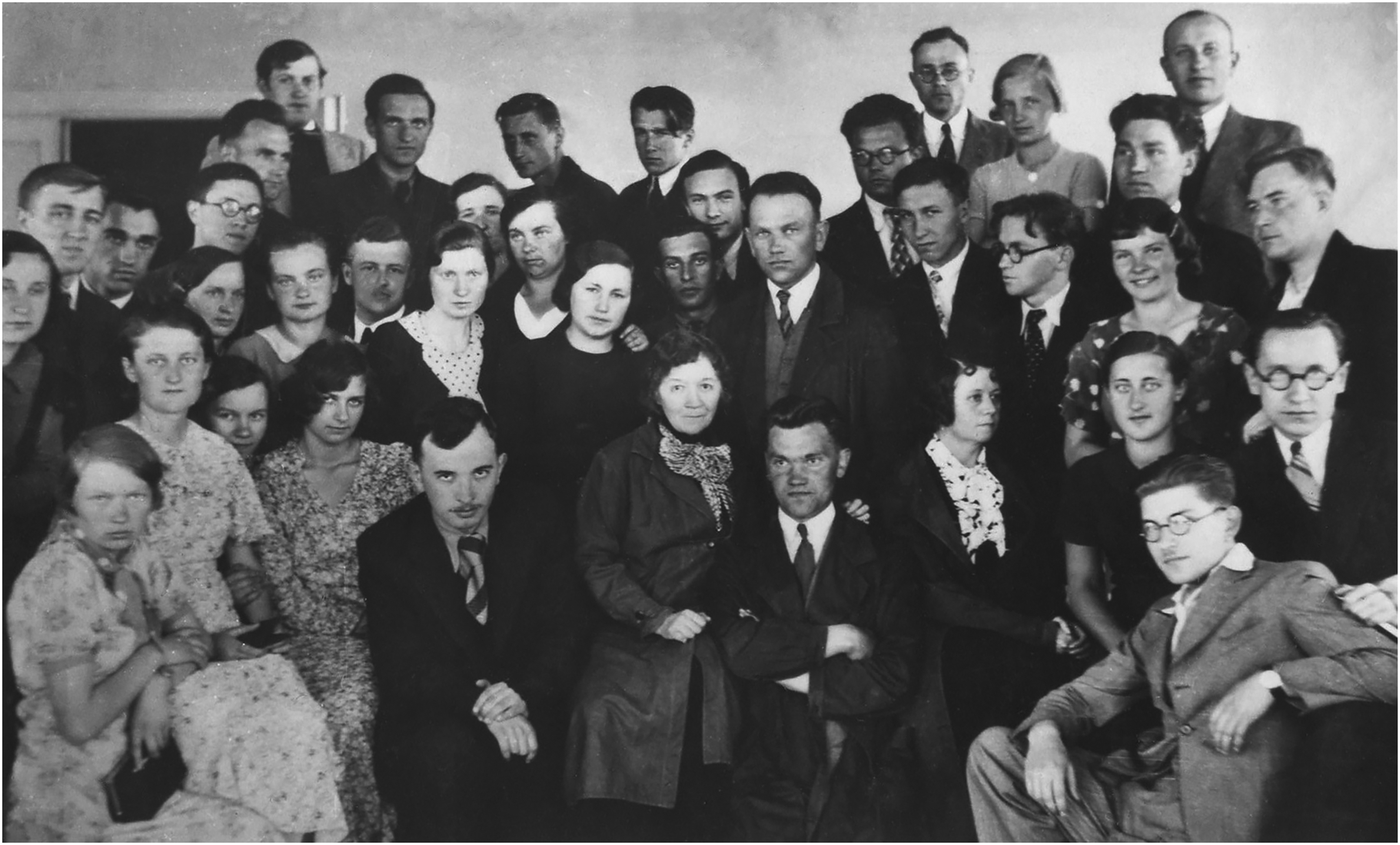
Vera M. Danchakova with staff and medical students in the Medical Faculty auditorium after giving her invited lecture upon arrival in Kaunas. From the archives of the Department of Histology and Embryology, Lithuanian University of Health Sciences, Kaunas, Lithuania.
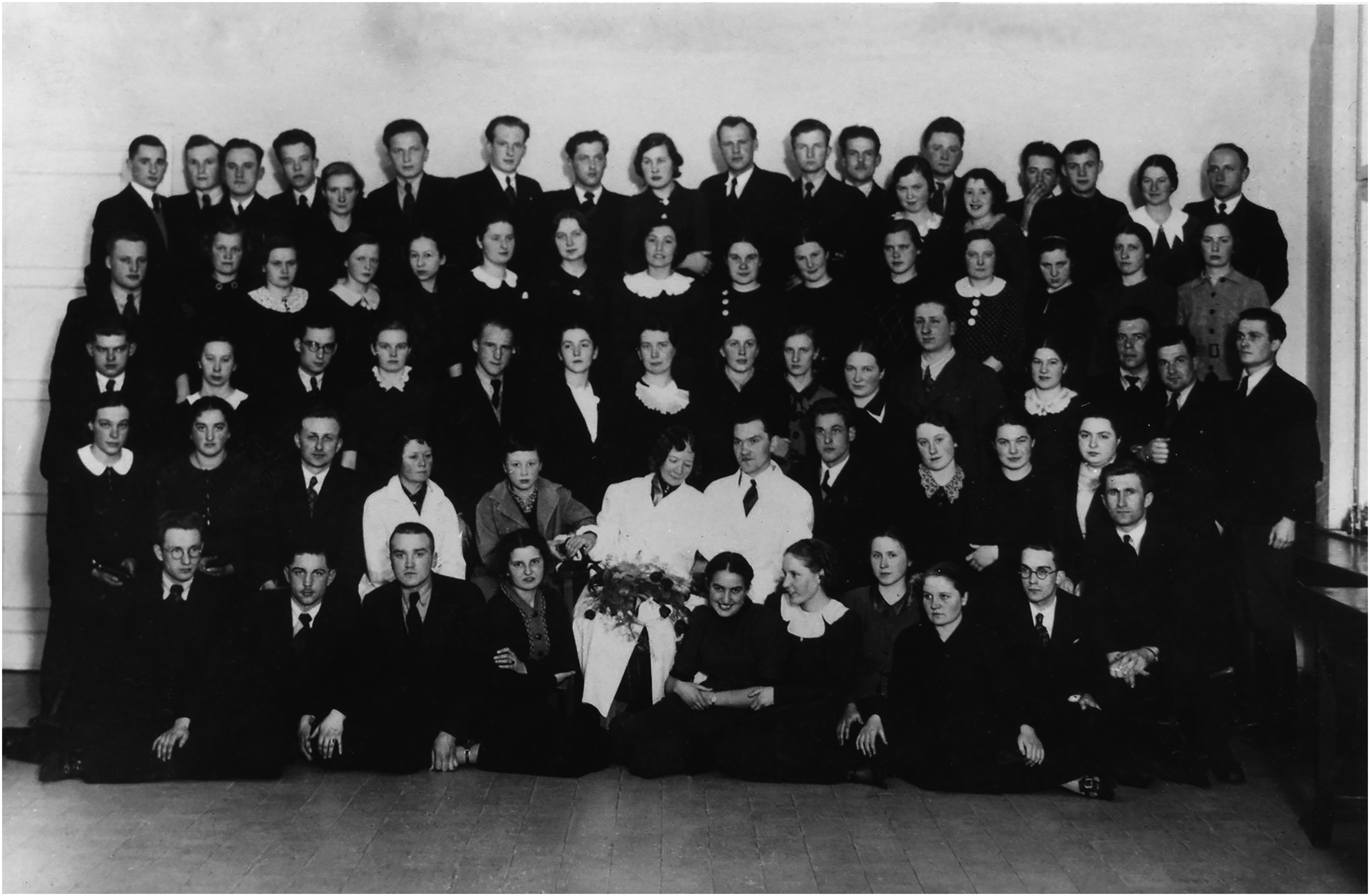
Vera M. Danchakova with staff and medical students in Kaunas in 1935. From archives of the Department of Histology and Embryology, Lithuanian University of Health Sciences, Kaunas, Lithuania in 1935.
Unfortunately, there is no certain information on Danchakova's location immediately before, during and after the Second World War. Danchakova died in Lausanne of a spinal cord tumour on 22 September 1950. The disease came unexpectedly and led to a quick death. At this time her daughter Vera was forced to renounce her US citizenship in order to stay with her family in the USSR. Because of the “Iron Curtain” she could neither say goodbye to her dying mother nor bury her.14,20 So ended the story of one of the greatest pioneers in stem cell research.
Footnotes
Author contributions
AZ and IK contributed to conceptualization, original draft, and proofreading; IB contributed to proofreading and images; TF contributed to proofreading.
Declaration of conflicting interests
The authors declared no potential conflicts of interest with respect to the research, authorship, and/or publication of this article.
Funding
The authors received no financial support for the research, authorship, and/or publication of this article.
