




Abstract
This paper examines Drs Julius and Edwin van Millingen, father and son physicians from a Constantinople-based Levantine family. They thrived in late 19th-century Ottoman Constantinople, a period of modernization aimed at survival amid decline. The profiles of Millingen family members set an exemplary case of the Levantine families who preferred to settle and pursue their careers in the Ottoman capital, particularly for generations in the Pera (Beyoglu) bourgeoisie, associated with the prominent industrial and literate centers in Europe. Dr Julius Michael van Millingen (1800–1878) was physician and companion to Lord Byron (1788–1824), and served as the private physician of the Sultan Abdulmecid (1839–1861), and the Queen Mother, Bezm-i Alem Valide Sultan (1807–1853) at the Imperial Ottoman Palace. He published considerable writings on balneology, then. His son, Dr Edwin van Millingen (1850–1900), an Istanbul-born ophthalmologist, worked at top hospitals, taught at the Imperial School of Medicine, and collaborated with the Société Impériale de Médecine. He reported on common ophthalmological diseases, with detailed statistics and meticulously organized tabular data. The multicultural lives of this Levantine family offer a unique glimpse into 19th-century Turkish medical history, reflecting close ties with Western medical centers.
Keywords
Introduction: Istanbul as a global city and the Levantine community
The Ottoman Empire was a centre of intellectual, cultural, professional, mercantile, maritime, and military realms for transactions and exchange between East and West through the ages, 1 for better or worse. Not surprisingly, the Capital of three empires, Constantinople (today's Istanbul) was one of the centres of attraction as a promising venue for seafarers, traders, artists, politicians, adventures, literati, and health professionals to reside in, earn a living, and settle down. 2 The activities of foreign settlers in the Ottoman Empire, over the centuries, also supported the modernization, and urbanization of the Empire by keeping pace with the prominent centres of commerce, trade, education, and art in Europe particularly during the rise of the bourgeoisie in the 19th century. 3
Capitulations refer to privileges granted to foreign countries to protect their subjects’ vital rights, such as commerce, travel, and personal and religious freedoms. Although the term implies reciprocity, Ottoman capitulations were unilateral privileges initially granted to France and later to other states. Nevertheless, the Ottomans had commercial and social expectations in offering these privileges. Homes of these foreigners enjoyed legal immunity, overseen by consuls. France was the first country to benefit from the capitulations, followed by other European powers such as the United Kingdom, Germany, the Austro-Hungarian Empire, and various Italian governments, including the Republic of Venice, the Kingdom of Naples, the Grand Duchy of Tuscany, the Kingdom of Sardinia, and the Kingdoms of Sicily. As a result, these foreigners preserved their vital rights and remained largely outside the jurisdiction of the kadıs. The commercial advantages provided by the capitulations allowed small merchant groups to grow into significant economic colonies. The capitulations were designed to ensure the security of the property and lives of non-Muslim residents in Muslim states, to whom Sharia law could not be applied. 4
During the Tanzimat period (1839–1876) in the Ottoman Empire, as the scope of capitulations expanded, the empire entered both a continuous reform era and a period of crisis, heralding its decline. 5 The arrival of a universal legal system and the 1838 Free Trade Agreement (Baltalimanı Serbest Ticaret Anlasmasi) provided a foundation for the emergence of modern economic and financial institutions in the public and private sectors, enabling port cities like Istanbul, Izmir, and Thessaloniki to gradually become wealthier. 6 As European economies spread, port cities developing in the lands of the East initially housed populations primarily engaged in trade. In the 19th century, these cities rapidly modernized, and their new populations became “agents of change.” These cities were nodes in a network-based world order. Local authorities had relatively weak governance and formulated policies to keep economic activities as liberal as possible. The diverse communities of different races, religions, and languages that had to coexist to conduct commercial activities created a multi-ethnic port city population. They fostered a culture of coexistence based on modernization. 7 Eastern Mediterranean port cities were connected to external markets and the hinterlands through transportation and communication means such as steamships, railways, and newspapers. These cities had contact with the political and economic elites established in Northwestern Europe and the newly emerging national elites. 8 The extensive administrative and financial changes in the 19th century primarily affected port cities, and practices for controlling public spaces were first implemented in these cities. 9 These eastern Mediterranean port cities harboured a demographic community called Frankish or Levantine, according to Ottoman sources, who played a considerable role in the economic and social growth of the Ottoman Empire, particularly during the 19th century. Starting from the 14th century, capitulations were granted to Genoese, Florentine, and Venetian merchants, and in the following centuries, to French and UK merchants and commercial companies. 10
The term “Levantine” which originally meant someone born in the East before the 19th century, acquired the meaning of a European born in the Ottoman Empire after this period. 11 The presence of European colonies in the Near East, especially in Istanbul, dates back to the early Ottoman era. The presence of the Levantine community in Istanbul is rooted in the settlement of Italian colonies in the Byzantine Empire for commercial reasons, and the history of the Levantines in Istanbul intersects with the history of the Latin Church. 12 Over time, the European population in the Ottoman Empire increased, particularly due to the capitulations. Eventually, all these settled Europeans began to be collectively referred to as Levantines. 13 The Levantines were spread out across various regions, spoke different languages, and were integrated into different administrative systems. 14
At the beginning of the 19th century, health professions in the Ottoman Empire, primarily medicine, surgery, dentistry, and pharmacy, were predominantly practiced by minorities and foreigners known as Frankish (i.e. European Christians). 15 Since the Tanzimat period, doctors were educated either at the newly established medical faculty in Istanbul or at major medical schools in Europe. The medical faculties in Pisa, Italy, and later in Paris, France, emerged as popular educational centres, especially for wealthy Ottoman families. Among the Ottoman doctors and pharmacists who graduated from the Pisa Medical Faculty in the first half of the 19th century were Dr Etienne Karatheodori (1789–1867) (graduated in 1818), his cousin Dr Constantine Karatheodori (1802–1879) (1827), Dr Hagop Davoud (1837), Kevork Sinapian (pharmacist, 1841), his son Vicen Sinapian (pharmacist, 1841), and his other son Dr Gaspard Sinapian (1814–1872) (1843), along with Joseph Chichman (physician, 1853), and Dr A. Vuccino. (1829–1893) 16
The Millingen family
Belonging to an English family of Dutch origin, Dr Edwin van Millingen (1850–1900) lived and practised medicine in Istanbul during the 19th century. To understand the portrait of a Levantine family from Constantinople, it is helpful to have a closer view of the biographies of its members. The father, Dr Julius Michael van Millingen (1800–1878), was a doctor of medicine who had been a physician to Lord Byron (1788–1824) 17 and accompanied him during the Greek War of Independence in 1823–1824. 18 However, Dr J. Millingen arrived in Greece as a member of the London Greek Committee, and he was employed first as Byron's physician and later as the staff surgeon by Byron, who helped him set up a hospital there. Historical records describe Dr Julius Millingen, together with his colleague Dr Bruno (dates unknown) seeking Byron's permission for bleeding and for applying leeches to manage Byron's fever at the Greek front, where he eventually died. 19 Dr Millingen wrote his memoirs of the Greek War in two volumes, 20 the second volume of this work was never published; this volume was destroyed in the 1865 Istanbul Fire, together with his library and all his possessions. 21 The Hocapasa fire in 1865 destroyed around 3000 buildings. This fire impacted such a vast area that it enabled many new roads and construction projects in the city and a Street Reform Commission was established after the fire. 22 According to Millingen's son, the fire in question occurred in 1870, not 1865. He confirms that this fire left them with nearly nothing, and his father's books were all destroyed. 23
Based on the sources of that time we learn that Dr Julius M. Millingen lived and practised medicine in the Ottoman Empire after 1830s. 24 He was appointed as a physician to the Ottoman Palace during the rule of Sultan Mahmud II (1808–1839), the reformist sultan of the Ottoman Empire at the beginning of the 19th century. J. M. Millingen was also the private physician of the Sultan Abdülmecid (1839–1861), the successor of Mahmud II, and of his mother, Bezm-i Alem Valide Sultan (1807–1853).25 He was renowned for his treatment of the Queen Mother, who suffered from chronic rheumatism, by recommending of balneological cure 26 at Yalova spa in the vicinity of Istanbul, a pastoral venue famous for its hot springs since Byzantine times but which had sunk into oblivion since then. After J. Millingen's encouragement of the therapeutical effect of its alkaline waters, Yalova became a popular thermal resort to be extensively visited thereafter. Dr Millingen inspected that place and scrupulously published about its medical and therapeutic benefits at the time. 27 According to a document dating back to 1848, he was commissioned, by the Sultan, to work on a method for the improvement of bread for the Ottoman Navy without increasing the expenses. 28
He was the author of several books such as the Medallic History of Napoleon (London, 1819)29,30; The Army Medical Officer’s Manual (London 1819); Memoirs on the Affairs of Greece (London 1830); Curiosities of Medical Experience (London 1837) 31 ; and Aphorisms on the Treatment of Management of the Insane (London 1840).32,33 He was one of the founding members of the Imperial Society of Medicine (Société Impérial de Médecine) in the Ottoman Empire that had been established in Istanbul by foreign doctors after the Crimean War (1853–1855) in 1856. 34 Dr Julius Millingen was chosen as the treasurer, replacing Dr Pardo, of the Society on 11 September 1857 35 and was re-elected to that post on 15 February 1858; he also served at the Editorial Board of its monthly journal the Gazette Medicale d’Orient for two periods. 36
Dr Julius Millingen published a couple of scientific articles in the Gazette Médicale d’Orient (GMO). The first of them was an analytical essay on smallpox vaccination regarding its application, success, and immunological effect. He concluded the article by proposing the scientific reproduction of smallpox serum at that time. 37 In this article, he also mentions Lady Mary Wortley Montagu's (1689–1762) observations about the variolation practiced in Edirne in 1717. He adds that Montagu's son was inoculated by that traditional method and was protected from the smallpox epidemic, later. Millingen rightly criticized the empirical features of that method, which caused the transfer of organic fluids via inoculation from man to man together with the pathological ones such as syphilitic disease and scrofula. 38 He wrote a long essay on the Turkish bath from hygienical and balneological point of view. 39 Julius van Millingen translated an article of Sir James Young Simpson (1811–1870), the Scottish obstetrician who introduced chloroform for pain relief in childbirth, on the treatment of amenorrhea. 40
Dr Julius Millingen had three sons and a daughter, 41 he took special care of their education. His elder son, Alexander van Millingen (1840–1915) studied abroad and worked as a professor of history at Robert College (Istanbul), and as the pastor of the Union Church * at Pera (Beyoglu), a district highly resided by the Levantines, 42 in Constantinople. He wrote and contributed to several books on the historical and religious sites of Istanbul and the history of Byzantine art. 43
Dr Edwin van Millingen
Edwin van Millingen was born as the youngest son of Dr Julius van Millingen 44 in Istanbul in 1851 where he received his preliminary education. He was one of the first students of the Robert College ** together with his elder brother, Julius Robert Millingen b. 1849). 45 Around the age of 16, he developed a great interest in the formation of visual organs through his desire for anatomical examination of both human and animal eyes. This fact was noticed by a friend of his father who sent young Millingen to Würzburg (Germany) to study medicine. After a brilliant education, he graduated as a doctor of medicine and went to Vienna to specialize in diseases of the eye, ear, nose, and throat. He studied under Professor Adam Politzer (1835–1920) and he later became an assistant to him. Politzer *** used to keep at his office the anatomical preparation made by Dr Millingen, who was the inventor of injections into the Eustachian tube. Millingen's method invented for the treatment of otological diseases is mentioned and described by Millingen's name in Politzer's book.
On his return to Istanbul, he established an ophthalmological and otological clinic in Pera. He later moved the clinic to La Paix Hospital in Şişli, where he worked for years. In 1895, he opened a clinic at the St-George mission in Galata, treating patients diligently until his death. His therapeutic methods and surgical skills led to rapid success. Fluent in French, German, and Italian, he became the honorary physician for English, French, German, and Italian hospitals in Istanbul. 46 He also worked at the Imperial Naval Hospital for a couple of years. 47 His success and active career earned him a solid reputation as a leading specialist in the Ottoman Empire. Dr Edwin van Millingen frequently visited hospitals, treating many patients. A dedicated clinician and researcher, he studied medical literature and contributed to scientific publications in the UK, France, and Germany. Almost every year he paid a visit to the clinics of Germany, Austria, and the UK to update his professional knowledge and skills by visiting his professors and celebrated colleagues. He was a charitable person ready to help his poor patients, most of whom owed their sight to him.
Scientific activities and works of Dr Edwin van Millingen
He was one of the oldest members of Société Impériale de Médecine in Istanbul. He was elected as a member of this scientific society by the nomination of Drs Abdullah Bey (Karl Edouard Hammerschmidt by birth), de Castro, Nouridjan, and Pardo in April 1872. Among his first publications in the Gazette Médicale d’Orient (GMO), there was, in 1872, a presentation on trachoma in Constantinople and a study on granular ophthalmia in 1882. 48 Edwin van Millingen had also written a report covering the years 1880 and 1881 for the Eye Hospital in Istanbul. 49 He regularly contributed to the scientific sessions of the Society also by presenting case histories on rare ocular diseases. He was also the author of a surgical procedure for trichiasis and ocular endogalvanocautery. 50
In 1890 he participated in the 10th International Congress of Medicine in Berlin, as the delegate of Société Impériale de Médecine. On his way home, he published a long report in the succeeding issues of the GMO. His report about that congress is quite elucidative to understand the contemporary topics of discussion in medicine at the time. Among the participants of the meeting inaugurated by Robert Virchow (1821–1916), were many famous clinicians from around the wrold. Millingen reported on Joseph Lister's (1827–1912) paper on antiseptic surgery, bacteriological novelties, the theory of suppuration caused by leucocytes, and Ilya Metchnikoff's (1845–1916) theory on phagocytes and the principle of surgical dressing and antiseptic chemicals, Koch's presentation on the recent advancements in bacteriology (Figures 1 to 4). 51

Cover page of the case report written by Dr Millingen. Dr Edwin van Millingen, a tri-annual report of 5703 cases of eye diseases seen and treated in private practice at Constantinople in 1877, 1878 and 1879, Constantinople, (1880). Accessed on 02.08.2024.
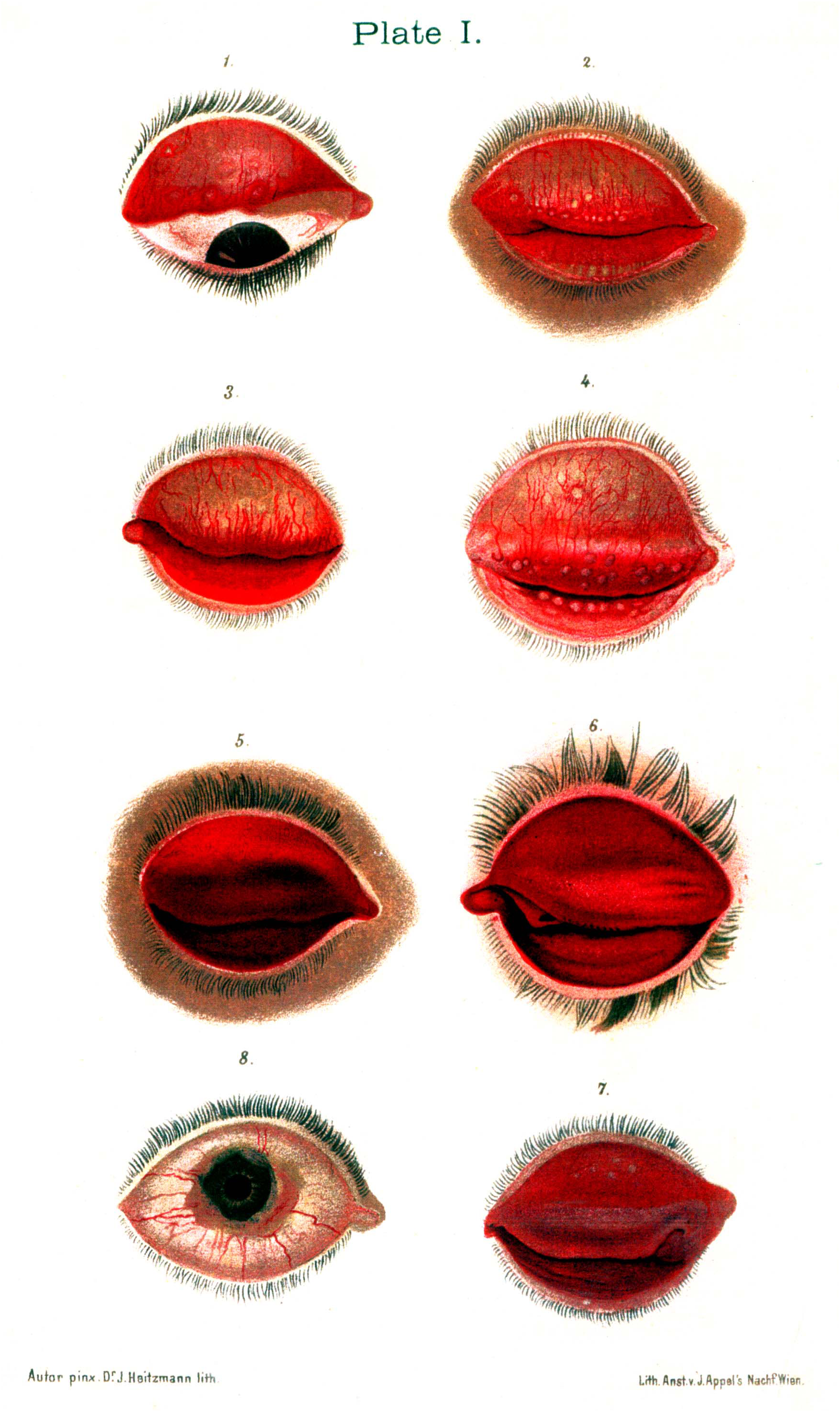
Some figures from the case report written by Dr Millingen. Dr Edwin van Millingen, a tri-annual report of 5703 cases of eye diseases seen and treated in private practice at Constantinople in 1877, 1878, and 1879, Constantinople (1880). Accessed on 02.08.2024.

Julius van Millingen, courtesy to Gideon Cumming.
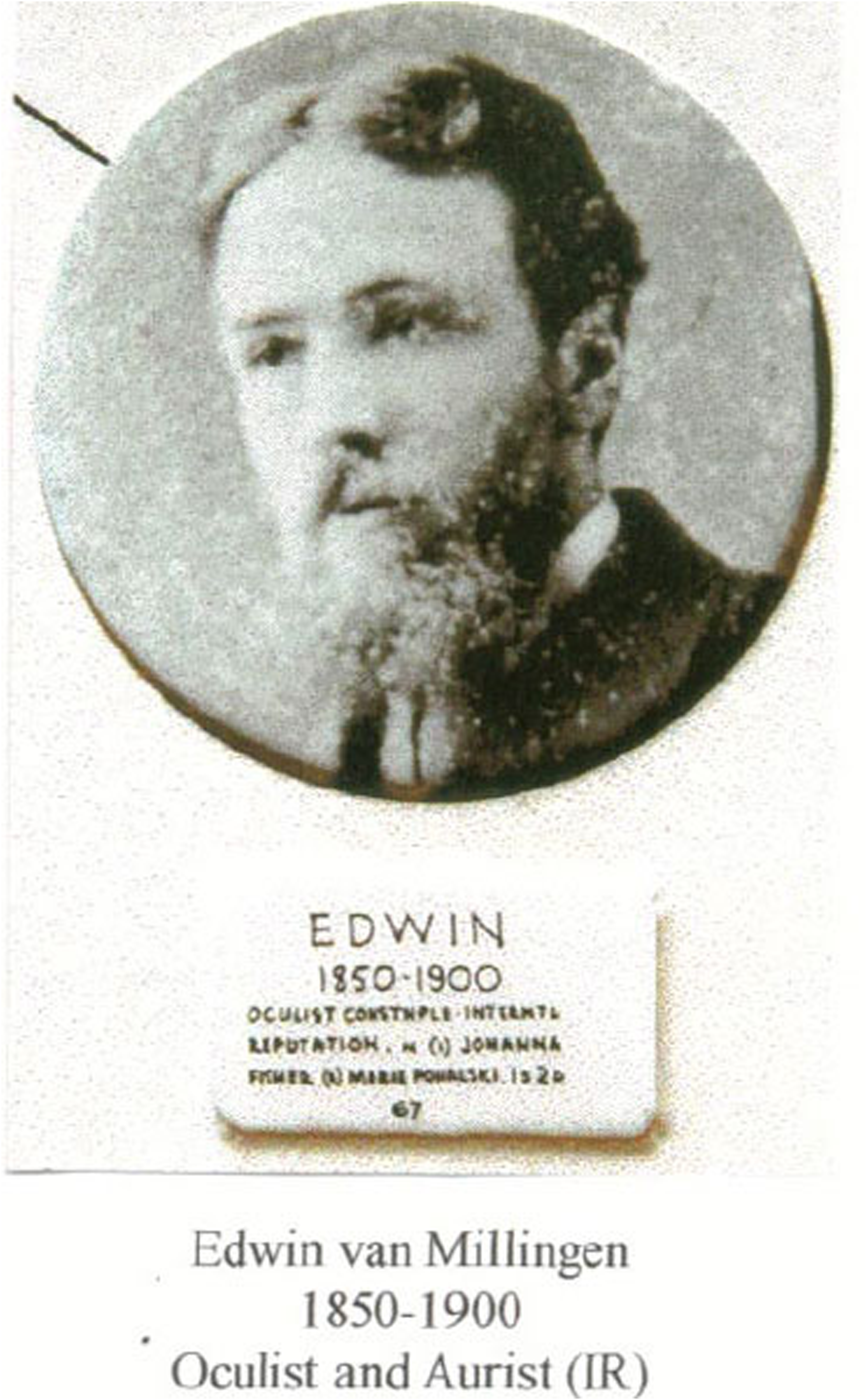
Edwin van Millingen, https://www.levantineheritage.com/vanmillingen.htm. Accessed on 02.08.2024.
Dr Edwin van Millingen also enjoyed the favour of the Imperial Palace. He took part in the 11th International Congress on Medicine in Rome in 1894 representing the Ottoman State. 52
By an Imperial decree, he was sent to Crete to treat Mahmud Celaleddin Pasha (1836–1884), the Governor, who had been suffering from his eyes. On his return, he was appointed as the oculist and aurist of the Imperial Palace, and finally, he worked as the professor of ophthalmology at the Imperial School of Medicine in Istanbul. 53
He was decorated with the orders of Mecidiye, Osmaniye, and Couronne d'Italie. He inherited from his father the Ottoman Imperial Order of Merits (Nishan-ı Iftihar) with brilliants, on which he was permitted by the Sultan to wear.
In his private life, Edwin Millingen was a model father, fond of his children (two sons and two daughters). He was a strong-willed, firm, punctual, and disciplined man, also talented in art. He used to make oil paintings, play violin and flute very well, and loved sporty life. He was interested in galvanoplasty. 54 After the death of Dr Edwin van Millingen in 1900, Sultan Abdulhamid II (reigned 1876–1909) ordered that his four children be granted with an annual pension in recompense for their father's services to the Ottoman Empire. 55
Dr Millingen's report on some ophthalmological cases in Istanbul
In the late 19th century, as in the West, statistics were an important source of data in the Ottoman medical world, and the statistics of many hospitals in Istanbul were being recorded. 56 This growing interest in data collection is reflected in the work of medical professionals, who wanted to document their clinical experiences. Paralelly, Edwin Van Millingen arranged the most important cases that came under his notice, during the seventh, eighth and nineth years of his practice in Istanbul in a book called A Tri-annual Report of 5703 Cases of Eye Diseases seen and treated in his private practice at Constantinople in 1877, 1878, and 1879. In this book, there is also a tabular analysis of 1118 cases treated at the Imperial Naval Hospital with water-coloured pictures and a woodcut. The book (20 × 13 cm in size) consists of 32 pages with two plates. In the introduction, he states that he has given special attention to the granular ophthalmia, known as Egyptian ophthalmia at that time, which was widely spread among the poorer classes of Istanbul. He has also reported on the cataract operations done through von Graefe's method under proper hospital care. He adds that the lack of a special eye infirmary was greatly felt in the Capital, and he consequently induced to establish the first Civil Eye Infirmary ever created in Turkey. This infirmary was possibly the private clinic founded by him at Pera and operated intensely since 1880.
After the introduction, he provides a tabular view of cases seen and treated during the years 1877, 1878, and 1879. The cases have been classified based on their location on the eye, such as conjunctiva, cornea, iris and choroid, sclerotic, retina and optic nerve, lens, vitreous body, eyeball, refraction, muscles and nerves, lachrymal organs, orbital cavity, eyelids. The number of cases reported is 5703. This is followed by the general view of the more important operations on the eye performed during the same years mentioned above. The operations have been shown again in the same manner, according to the part of the organ. The total number of operations is 593, of which 451 cases were reportedly successful, 128 imperfect, and 11 unsuccessful. After that, there is a chart of cases treated over 18 months at the Imperial Ottoman Naval Hospital. 57 The cases were similarly classified, with the author adding observations on eye diseases, particularly of the conjunctiva, cornea, sclera, choroid, and lens, along with case histories. The book concludes with two chromolithograph plates by Dr Julius Heitzmann (1847–1922) of Vienna.
Millingen reports that Granular conjunctivitis is the most prevalent eye complaint in the Levant, and it extends to all classes, but chiefly among the poor. It makes rapid and extensive progress in schools and orphanages. Out of 200 inmates of the St-Joseph orphanage, he finds 98 suffering from trachoma and 20 from follicular conjunctivitis, or vesicular granulations. 58 Millingen gives very attentive clinical observation and explains anatomical and pathological appearance and development. The prognosis of the disease is depicted by coloured plates where vascularization of the cornea and cicatrization of conjunctiva and cornea have been demonstrated significantly. 59
He conducted experiments on rabbits but found them unaffected by contagion. He then extended his experiments to the healthy conjunctiva of diseased and incurable eyes in humans. His goal was to see if contact between granular and healthy conjunctiva could reproduce disease. He transplanted small portions of granular conjunctiva to healthy tissue, but all attempts to produce the disease through inoculation were unsuccessful. 60 Millingen attempted to transplant a rabbit's cornea to a diseased human eye, but the cornea did not adhere and detached shortly after the operation.
Millingen compares current thinking about trachoma, as expressed in the current medical literature with his own experience, and confirms some concepts, but refutes others. He is aware of the contagious character of the disease, but naturally, he did not know the pathological agent of trachoma, which is Chlamydia trachomatis, 61 discovered by the bacteriologists later in the 20th century.
What stands out in his works is his extensive use of contemporary medical and surgical literature on ophthalmology, compared with his findings in Istanbul. His clinical observations were supported by case histories written from a purely medical and scientific perspective. During a Society discussion, he criticized Dr Huseyin Hulki Bey's (1862–1894) treatment of trichiasis by referencing medical papers from its first application in the U.S.A. in 1883 and his practice in Istanbul since 1888, also introducing new techniques for treating distichiasis and partial trichiasis. 62
Conclusion
Levantines played a very active role in the economic and social development of the Ottoman Empire throughout the 19th century. They benefited from the capitulations and the commercial and legal privileges that the sultans unilaterally granted to foreign merchants. Levantines were essentially a population group descended from European merchants who lived on Ottoman lands with foreign passports. They adopted the local culture by remaining in touch with the West and gradually became a significant factor in the modernization and Westernization of Ottoman urban society. The Millingen family represents a good example of this community through their lives and works in scientific, medical, artistic, literary, and cultural fields. Father and son Dr Millingens, along with their peers, have contributed to the professionalism in medicine through their achievements, and left their mark on the intellectual heritage of the late Ottoman era, at the Mare Nostrum.
Footnotes
Acknowledgements
We would like to thank Professor Nuran Yildirim and the late Professor Afife Batur for their valuable and insightful support. We are grateful to Mr Gideon Cumming for generously sharing his resources and family history with us. We would like to express our sincere gratitude to the anonymous reviewers for their valuable feedback and constructive comments.
Author Contributions
Conceptualization and design: Yesim Isil Ulman, Ceren Gülser İlikan Rasimoğlu. Data collection and archival research: Yesim Isil Ulman. Data analysis and interpretation: Yesim Isil Ulman, Ceren Gülser İlikan Rasimoğlu. Manuscript writing: Yesim Isil Ulman, Ceren Gülser İlikan Rasimoğlu. Review and editing: All authors contributed to the critical revision of the manuscript. Final approval of the version to be published: All authors reviewed and approved the final manuscript.
Declaration of conflicting interests
The authors declared no potential conflicts of interest with respect to the research, authorship, and/or publication of this article.
Funding
The authors received no financial support for the research, authorship, and/or publication of this article.
