




Abstract
Charles Sumner was an outspoken abolitionist and Republican United States Senator from Massachusetts from 1851 to 1874. In 1856, at the height of the national debate about slavery before the Civil War, Sumner was assaulted in the Senate chamber by a Democratic congressman from South Carolina. Preston Brooks attacked Sumner by striking him on the head and neck over 30 times using his walking cane as a weapon. After the attack, Sumner lost consciousness and was carried out of the Senate chamber. Though he recovered over the week following the attack, Sumner did not return full-time to his Senate seat until December 1859 due to the sequelae of his injuries. Historians have debated the cause of Sumner's prolonged disability, with several suggesting that he was experiencing post-traumatic stress disorder. Although diagnosis cannot be made definitively, the details of Brooks’ assault and Sumner's subsequent medical history suggest that Sumner's documented symptoms during his three-year recovery were likely the result of a traumatic brain injury.
Keywords
Introduction
The caning of Charles Sumner (1811–1874) in May of 1856 is a chapter of American history that highlights the emotions that surrounded the debate over slavery in the decade prior to the Civil War. On May 20, Sumner, an ardent Republican abolitionist from Massachusetts, delivered an impassioned speech on the Senate floor critical of pro-slavery members of Congress. He was especially censorious of Andrew Pickens Butler (1796–1857) of South Carolina and Stephen A. Douglas (1813-1861) of Illinois for their support of the Kansas-Nebraska Act, which permitted the expansion of slavery in new states. 1 Preston S. Brooks (1819–1857), a Democratic member of the House of Representatives representing South Carolina, was related to Butler and took offense at Sumner's comments. On May 22, Brooks assaulted Sumner in the Senate chamber by striking him multiple times with his walking cane. 2 Sumner sustained several injuries to his head and neck and did not return full-time to the Senate until December 1859. 3 Southerners assumed that Sumner was feigning injury and had only remained away from the Senate to highlight the outrageous nature of the beating. Historians have suggested that Sumner did not come back to the Senate for three years due to post-traumatic stress disorder (PTSD). 4 This article reviews the assault on Sumner and analyzes his medical history to characterise his injuries and their long-term impact.
Background
Charles Sumner was born in Boston on 6 January 1811. His father was a Harvard-educated lawyer and abolitionist. Charles also graduated from Harvard Law School in 1834 before practicing law in Boston and serving as a part-time lecturer at Harvard Law School. During a trip to Europe in 1838, he acquired his father's passion for the antislavery movement after observing cross-racial social dynamics that differed significantly from those in the United States. After Sumner returned to Boston, he continued his law practice and became politically active. In 1851, he was elected to the US Senate, a position he held until his death in 1874 (Figure 1).5–7
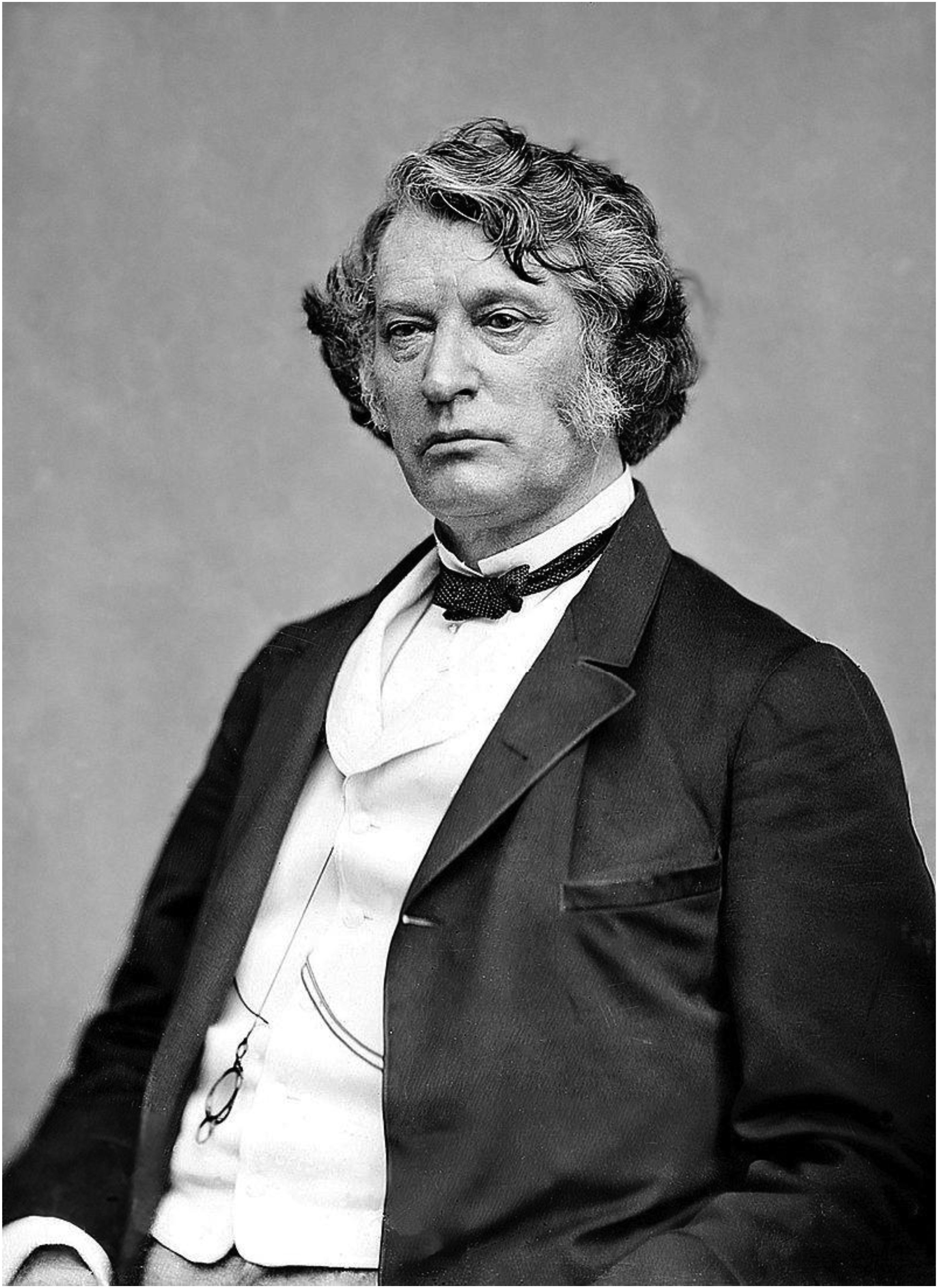
Charles Sumner, c.1860–1875. https://loc.gov/pictures/resource/cwpbh.00477/
In the decades leading up to the Civil War, Congress debated a series of legislative efforts to expand or restrict slavery in both existing and prospective states. The Kansas-Nebraska Act of 1854 was pivotal in this debate, as it established Kansas and Nebraska as US territories and granted settlers the right to determine the legality of slavery through popular vote. 8 This legislation resulted in substantial migration of both proslavery and antislavery settlers into these territories, frequently resulting in bloody conflict. The term “Bleeding Kansas” emerged in this era to emphasise the armed conflict and deaths that occurred between 1854 and 1861 as proslavery advocates and abolitionists fought before the statehood vote.9,10
Caning of Sumner
By 1856, passions in Congress peaked, highlighted by Charles Sumner in his speech entitled “Crime Against Kansas.” On May 19 and 20, Sumner spoke on the Senate floor, condemning the Kansas-Nebraska bill and its authors, Stephen A. Douglas and Andrew P. Butler. Sumner referred to Butler's support for slavery as a “harlot…to whom he has made his vows, and who, though ugly to others, is always lovely to him; though polluted in the sight of the world, is chaste in his sight”. 1 On Thursday, May 22, two days after the speech, Preston Brooks entered the Senate chamber as Sumner sat working at his desk. Brooks, a congressman from South Carolina and a cousin of the aged Butler, was deeply compelled by the code duello to defend the honour of his family and native state against Sumner's verbal attacks. After Sumner did not apologise for his remarks, Brooks concluded that the senator must be punished. 11 Approaching Sumner, Brooks began to beat him on the back of the head with his walking cane for approximately one minute while an accomplices held back onlookers. As Sumner stumbled out of his chair onto the floor, Brooks’ assault continued until his cane splintered into multiple pieces. Brooks then left the chamber accompanied by colleagues while Sumner was left unconscious, bleeding on the Senate floor (Figure 2). 12
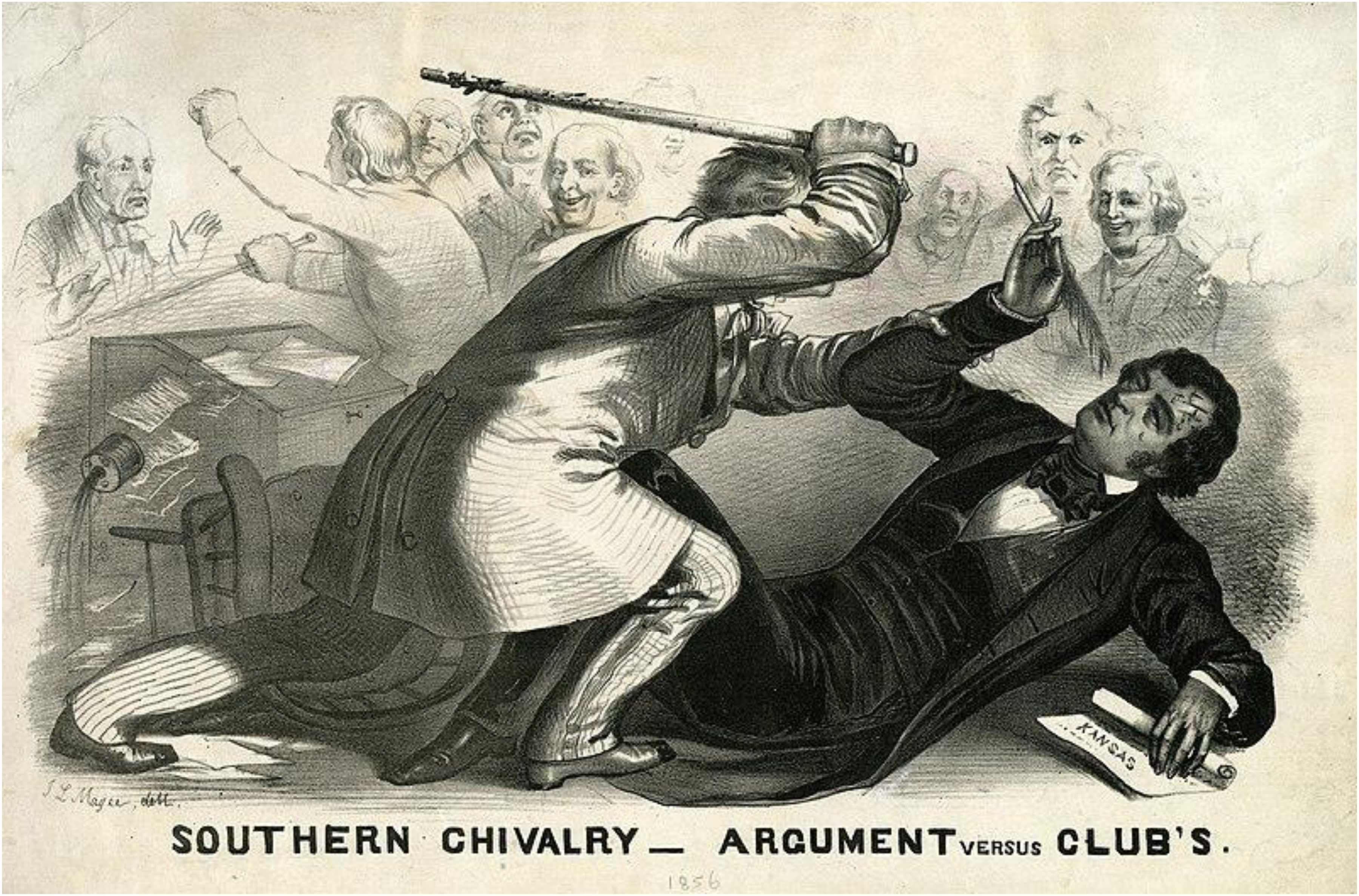
Political cartoon entitled Southern Chivalry- argument versus clubs 1856 https://en.wikipedia.org/wiki/Caning_of_Charles_Sumner#/media/File:Southern_Chivalry.jpg.
Sumner was carried out of the chamber to an anteroom, where he recovered consciousness. With assistance, he returned to his home, where he was noted to have lacerations and bruises on his head, neck, face, arms, and hands. Sumner sustained three lacerations, one approximately 2 1/4 inches, one just under 2 inches, and a third smaller cut. The two larger lacerations, one above the left ear and one above the right ear, had exposed bone at their base. The initial injuries were documented and treated by Dr Cornelius Boyle (1817–1878), who was the first physician to attend to Sumner after the beating. 13 Dr Boyle used collodion, a nitrocellulose solution, to close the lacerations. On Saturday, May 24, Sumner's brother arrived in Washington, D.C., and dismissed Dr Boyle, who was a Southern sympathiser. Boyle never reexamined Sumner but often minimised the severity of the injuries based on his initial examination.14–16
Three days after the caning, Sumner developed fever and reported continued pain around the lacerations and was placed on bed rest under the care of Boston physician Dr Marshall S. Perry (1805–1859). On initial evaluation, Dr Perry thought Sumner's pulse was feeble but indicated that the incisions were healing well. Perry examined Sumner on Wednesday, six days after the beating, and documented a fever of 104°F and a heart rate over 100 beats per minute. The left laceration was healing well, but the laceration over the right ear was surrounded by cellulitis, and pus drained from the wound when opened by Dr Perry. Sumner was ill for three additional days, but following incision and drainage, slowly started to recover. His right head wound was opened a second time to drain pus, but eventually healed by secondary intention over several weeks. 14 By Friday, May 30, when Dr Perry assumed that Sumner would continue to improve, he called in Dr Harvey Lindsly (1804–1889) and Dr Thomas Miller (1806–1873) as consultants. Dr Perry returned to Boston, leaving Dr Miller in charge, who stopped seeing Sumner on Saturday, the 31st. During this “recovery” period, Sumner developed severe head and neck pain, which was treated with opium and further bed rest. After his lacerations healed, Sumner continued to experience pain in his head and neck, difficulty walking due to lower extremity weakness, and poor balance. Sumner returned to his home in Boston, where he wrote two political letters that were published in June. He later appeared in Washington on June 25 at the grand jury hearing charging Preston Brooks with assault. 17 Sumner was described in press reports as recovering but appearing debilitated. 18
Following the caning, the event was investigated by both the House and Senate in an attempt by Republican congressmen to censure Preston Brooks (Figure 3). Dr Boyle testified to a House committee investigating the caning, stating that Sumner's injuries were superficial and that he fully expected Sumner to have an uneventful recovery and expeditious return to the Senate chamber. 19 This testimony was highly publicised by the Southern press as proof that Sumner was fabricating his injuries. 15 The Republicans countered this effort by presenting evidence from Dr Lindsly's consultation that Sumner was too ill to “resume his duties in the Senate." 20 The controversy persisted during Brooks’ trial in July, where testimony and subsequent news reports suggested that Sumner was “playing sick” for political purposes. 21 However, Dr Caspar Wistar (1801–1867) of Philadelphia presented a contrasting assessment after evaluating Sumner in July. In his report, Dr Wistar stated that Sumner's “circulation [was] feeble, and in fact every vital power alarmingly sunken. At that time, his steps were feeble and tottering, as in extreme old age; he complained of constant pain in the back and lower extremities—in the latter it was a tired and weary sensation; and he had a sense of constriction and pressure about the head." 14 Despite this clinical presentation, Dr Wistar could not find an anatomic diagnosis to explain Sumner's persistent pain, leg weakness, and difficulty with balance. Instead, Dr Wistar simply recommended that the Senator retreat to the mountains to recover.

Preston Brooks, 1856. https://www.loc.gov/pictures/item/2017658955/
On August 3, Sumner arrived in the Allegheny Mountain borough of Cresson, Pennsylvania, where he continued to suffer from tachycardia, difficulty sleeping, weight loss, difficulty eating, and pain and pressure in the back of his head. He also reported continued difficulty ambulating due to weakness and poor balance. He was cared for by Dr R.M.S. Jackson (1815–1865) of the Allegheny Mountain Health Institute, who examined Sumner and concluded that he had sustained an injury to the brain and spinal cord. After several weeks in the mountains, Sumner improved but experienced ongoing pain exacerbated by strenuous activity and sudden movement. When he walked slowly and carefully, he did so without falling and without significant worsening of his back and neck pain. 14 By early September, Sumner returned from the mountains and re-established care with Dr Perry. Once back in Washington, the public controversy about Sumner's health continued to unfold in the press. By the end of October, Sumner was pressured by his Republican colleagues to return to Boston to support candidates running for re-election. When he appeared in Boston on November 3, he was able to speak to a crowd with “a weak voice, and apparently with great physical exertion." 22 By December 1856, Sumner's doctors did not recommend his return to the Senate, but despite this, the Massachusetts legislature re-elected him by an overwhelming majority. 23 Throughout this period, Sumner's vacant Senate chair continued to serve as a “perpetual speech” for the righteousness of his fight for abolition. 24
Publicity covering the Brooks–Sumner affair was reignited following the announcement of the brief illness and sudden death of Preston Brooks on 27 January 1857. After developing what appeared to be a routine upper respiratory infection, Brooks suffered acute bronchospasm, resulting in death from hypoxia.25,26 Brooks’ death came as a shock to both sides of the political aisle. He was celebrated as a martyr by the Southern press, but Northern sympathisers suggested that Brooks’ sudden death was guided by the hand of God.27,28
On February 26, Sumner appeared briefly in the Senate for a critical vote on a tariff bill. While seated in the Senate, he seemed well, but when he arose to walk, his pain and difficulty with balance were apparent. 29 On 7 March 1857, he sailed to Europe at the strong urging of his physicians to continue his recovery. The two-week ocean voyage allowed Sumner to rest, and upon his arrival in Le Havre, France, the pain in his back and legs had lessened considerably. 30 Over the next several months while traveling in Europe, Sumner still experienced occasional exacerbations of his pain and walking difficulties with vigorous activity. Still, he continued to affirm his commitment to return to the Senate. Against the advice of his physicians, Sumner returned to Washington in December 1857, convinced that he needed to return to the Senate or surrender his seat. 31 Unfortunately, his symptoms frequently recurred as he became more active in Senate debates. 32
After a period of rest and limited activity in Boston over Christmas 1857, Sumner returned to Washington in February 1858 but restricted his legislative participation to essential votes. During this time, he controlled his symptoms by spending lengthy periods sitting and reading in libraries. However, excessive physical exertion continued to result in relapses, including on April 10 when he collapsed after hurrying to the Senate. With the assistance of bystanders, he returned home by carriage.19,32
After this relapse, he consulted with Dr Wistar and Dr Perry, who recommended a leave of absence from his Senate work and a return to Europe for extended rest. 32 Sumner first traveled to France in May 1858, where he consulted with the famed physician, Dr Charles Édouard Brown-Séquard (1817–1894), who first described the eponymous hemiparaplegic syndrome (Figure 4). Dr Brown-Séquard concluded that Sumner's intense headaches with concentration and significant pain in his legs with ambulation were the result of a cerebral injury with partial lower extremity paralysis. 33 Dr Brown-Séquard assumed that these symptoms could be attributed to excess fluid around the brain and that reducing the fluid using a counterirritant (in this instance, iatrogenic skin burns applied to the back) would lead to recovery. 33 Sumner's burn treatments were complicated by angina pectoris in July 1858, which was subsequently treated with rest, opiates, and discontinuation of the burn therapies. In August, Sumner continued to experience recurrent chest pain with walking and reported worsening pain by November.19,34 He remained in Europe through the spring of 1859 while experiencing occasional back and leg pain, particularly when climbing stairs. In May 1859, three years after the caning, his symptoms began to improve significantly, except when walking too briskly. 32 In November, with recovery in sight, he sailed back to the United States. He returned to the Senate and gave his first major speech in four years on 4 June 1860, entitled “The Barbarism of Slavery." 35
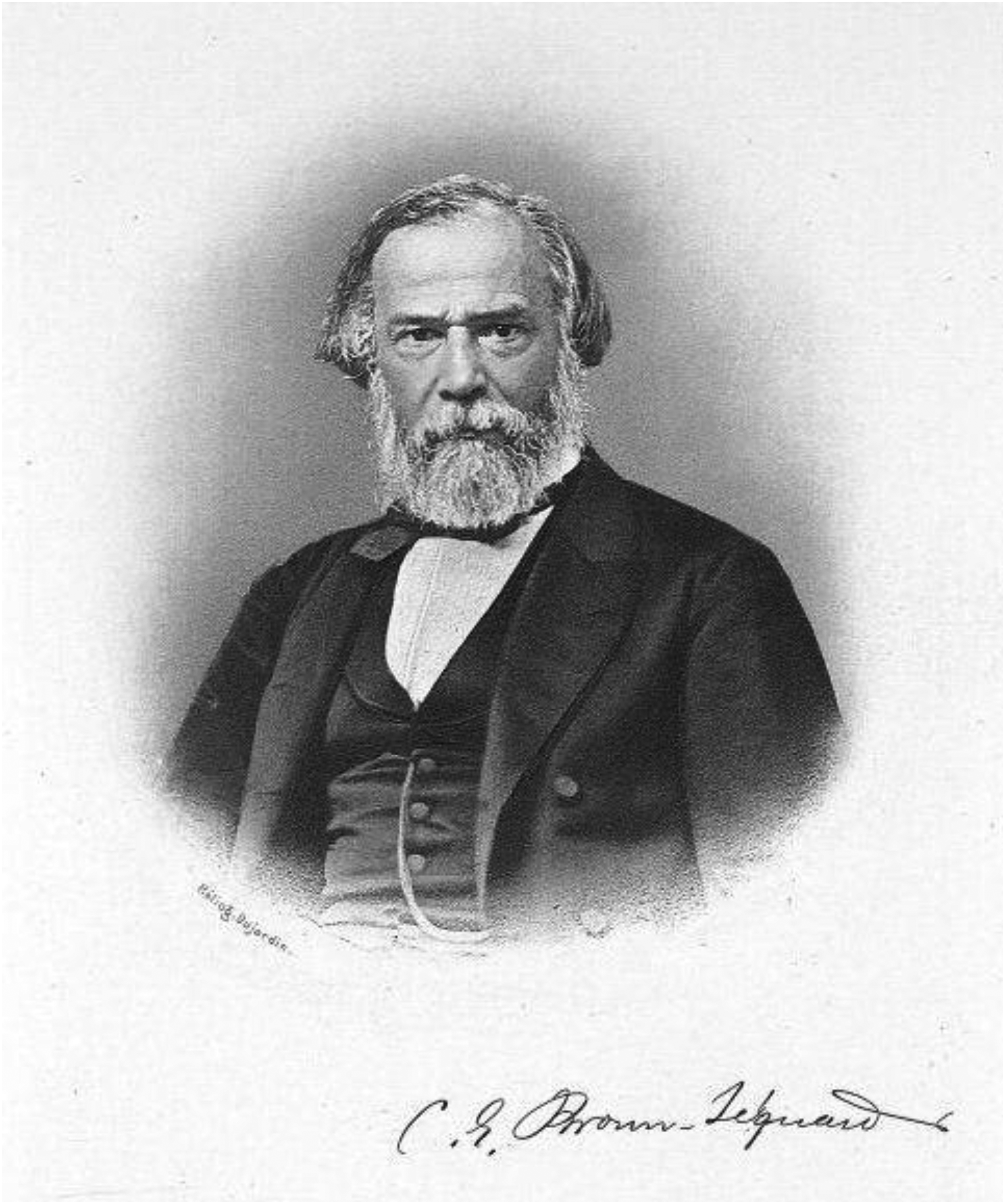
Charles-Édouard Brown-Séquard, c.1880
Subsequent biography
Charles Sumner went on to have a prolific career in the US Senate. On his return to Congress, his oratory was no less ardent, as he was a vocal opponent of compromise concerning the spread of slavery. As the Civil War began, Sumner aggressively supported the immediate abolition of slavery. He also advocated enlisting Black soldiers in the Union Army and establishing the Freedmen's Bureau. Sumner met with Lincoln frequently, encouraging the President to emancipate enslaved individuals in Confederate states; following the signing of the Emancipation Proclamation, this policy was initiated on 1 January 1863.36,37 After the Civil War, Sumner was one of a group of “Radical Republicans” who advocated for immediate enfranchisement of formerly enslaved people. He was a vocal opponent of Democratic President Andrew Johnson's moderate approach to reintegration of the Southern states, instead arguing that rebellious states should be considered territories and be required to reapply for statehood. After Johnson vetoed these efforts, the Republicans impeached him, famously failing to convict the President by a single vote.36,38
In March 1869, Ulysses S. Grant (1822–1885) was inaugurated as the President. A Republican, one of Grant′s early foreign policy goals included the annexation of Santo Domingo (today the Dominican Republic). As the chair of the Senate Foreign Relations Committee, Sumner led a successful effort to block the annexation. This action precipitated an open conflict between Sumner and the President, culminating in Sumner's removal as committee chair in March 1871. 39 Conflict between Grant and Sumner persisted over the next three years as Sumner's health declined. He had a history of cardiovascular disease and died of a myocardial infarction on 11 March 1874. 40 Following Sumner's death, an autopsy was completed with Dr Brown-Séquard in attendance. A brief report about the autopsy states that no abnormality was noted on post-mortem exam by Brown-Séquard. 41 No other documentation of the autopsy findings is available, but post-mortem exams of the mid-1800s were routinely simply gross exams without microscopic evaluation. 42
Analysis of Sumner's injuries
Although historians have suggested that PTSD contributed to Sumner's prolonged infirmity, every physician who followed the Senator's clinical course suspected a cerebral or spinal cord injury. Dr Boyle, who treated Sumner immediately after the injury, was the sole physician who thought Sumner would recover quickly. After treating his lacerations immediately after the caning, Boyle had no further medical contact with Sumner. In contrast, Drs. Perry, Wistar, Brown-Séquard, Lindsly, Miller, and Jackson were all impressed with the severity of pain experienced by Sumner, especially in the back of the head, lumbar spine, and legs. In addition, each of Sumner's physicians noted the difficulty Sumner had with ambulation, his increased pain when walking briskly, and his lack of balance. Over three years, Sumner's symptoms seemed to wax and wane but appeared to slowly improve with “rest” as the only specific therapy that proved effective. The use of “burns” by Dr Brown-Séquard was controversial at the time and has no physiological backing to expect any therapeutic benefit.
Sumner's constellation of symptoms suggests a neurological injury inflicted by Preston Brooks’ walking cane. Constructed of gutta-percha, Brooks’ cane featured a gold head affixed to the upper end. Gutta-percha is a gum resin derived from the Sapotaceae family of trees native to Malaysia, and becomes a rigid and dense material when fashioned into a walking stick. 43 Brooks delivered an estimated 30 blows to Sumner's head and neck before the cane shattered. The forces generated by this type of cane were clearly sufficient to cause a traumatic brain injury (TBI), emphasised by Sumner's loss of consciousness during the assault.
With the limitations of historical review and in the absence of advanced imaging, however, Sumner's symptoms are difficult to localize to a single lesion or anatomic location. Following the caning, Sumner was confined to bed for several days by his physicians. Cranial bleeding following traumatic injury has been reported to occur in a delayed fashion, potentially resulting in the autonomic instability, chronic headaches, and cognitive difficulties described by Sumner's contemporaries. 44 However, during this period of bed rest, there are no reports by Sumner's physicians describing focal neurological deficits classically associated with cerebral, cerebellar, or brainstem bleeding, such as oculomotor palsies, facial paralysis, dysphagia/dysarthria, or respiratory dysfunction. Furthermore, cranial bleeding as a structural cause of his symptoms would also be less likely to present with the fluctuating symptoms experienced by Sumner.
As he attempted to recover, Sumner's motor symptoms also seemed wholly confined to the bilateral lower extremities. During a return to the Senate in February 1857, Sumner appeared well when seated at his desk, but his difficulties became evident as soon as he attempted to walk. 19 Given the somatotopic arrangement of the lateral corticospinal tract in the spinal cord, it is unlikely that a lesion in the cervical spine would affect the lower extremities bilaterally without impairing the upper extremities. Although Sumner's motor deficits appear to localize to the thoracic spine, structural abnormalities of the spine, such as arachnoiditis or a post-traumatic syrinx, do not explain Sumner's recurrent headaches and cognitive difficulties.45–47 Labyrinthine concussion is an alternative diagnosis that may explain Sumner's dizziness and difficulty with balance, but is often accompanied by sensorineural hearing loss, which was not documented by his treating physicians. 48
Given the difficulty localising Sumner's injury based on contemporary reports, it is most likely that Sumner suffered from severe post-concussion syndrome (PCS), sometimes called “persisting symptoms after concussion.” PCS is characterised by a collection of nonspecific neurological symptoms, including headache, fatigue, sleep disturbance, and difficulty concentrating, for more than three months following the initial injury. 49 In this case, Sumner's chronic headaches and cognitive disturbances may be best explained by PCS following a TBI, resulting in vestibular dysfunction that affected his lower extremities and gait. With sufficient rest, it is possible that these symptoms could have abated after several years. The absence of abnormal anatomic findings on Sumner's autopsy is congruent with PCS, although a small traumatic lesion could have been missed on gross examination of the brain.
Historians have previously cited PTSD as a possible cause behind Sumner's protracted absence from the Senate. 24 Though Sumner exhibited several symptoms of PTSD, including increased mood reactivity and alterations in cognition, this diagnosis alone does not account for his chronic pain, lower extremity weakness, or difficulties with balance. 50 Contemporary neurological research has since suggested that traumatic brain injury increases the risk of developing PTSD. 51 In one study of 1566 patients with a history of mild TBI, 26% reported severe postconcussion symptoms, and 9.8% experienced PTSD symptoms. Among those with PTSD and severe postconcussive symptoms, 33% were unable to return to work within six months of injury. 52 Furthermore, a meta-analysis of 31 studies found that the prevalence of PTSD after TBI in civilian populations was 15.6%. 53 The management of traumatic brain injuries and comorbid psychiatric disorders was poorly understood in 1856, likely contributing to accusations that Sumner was malingering for political gain. Sumner, for his part, may have fueled the skepticism by filling his letters to friends and colleagues with verbose descriptions of his suffering. 19
This assessment admittedly ventures into “retrospective diagnosis,” with all its accordant challenges.54–56 Ontologically, “traumatic brain injury” certainly did not exist as a named condition in 1859, any more than PTSD did, and did not merge into medical argot until the 1970s. Yet, contemporary clinicians such as Brown-Séquard and Silas Weir Mitchell were actively investigating neuropathology during this era.57,58 More importantly, regardless of the terminology, patients were certainly suffering. Thus, while the terms PTSD or postconcussion syndrome are anachronistic at face value, the constellation of symptoms they embody remain as apodictic in 1860 as they do today. Though the assembled evidence cannot verify our conclusions with complete accuracy nor can any modern provider diagnose postconcussion syndrome with complete certainty, critiques centering around irrelevance of retrospective diagnosis overlook the central issue. 59 Assigning a more accurate diagnosis admittedly does not change the historical events that transpired, but it does help explain what happened, and why. In this case, it continues to exonerate Sumner from accusations of malingering for political gain, elucidates what prolonged his convalescence, and determines how he made a complete, if delayed, recovery.
Conclusion
On 22 May 1856, Preston Brooks assaulted Charles Sumner on the floor of the US Senate, delivering in excess of 30 blows to Sumner's head and neck with his walking cane. Sumner sustained multiple injuries due to the assault and did not return to full-time service in the Senate for three years. Although PTSD symptoms may have contributed to Sumner's postcaning clinical course, this diagnosis does not account for the entirety of the symptoms observed by his treating physicians. Ultimately, the exact nature of Sumner's injuries cannot be confirmed, but the medical evidence supports the conclusion that Sumner suffered a mild traumatic brain injury and postconcussive symptoms that resulted in a prolonged recovery period.
Footnotes
Acknowledgements
The authors thank Justin Barr, MD, PhD, for his review of the manuscript and assistance with manuscript preparation.


Author contributions
Concept and design was by TNP and JMK; drafting of the manuscript by EJB and TNP; and supervision by TNP. All the authors were involved in critical revision of the manuscript for important intellectual content.
Funding
The authors received no financial support for the research, authorship, and/or publication of this article.
Declaration of conflicting interests
The authors declared no potential conflicts of interest with respect to the research, authorship, and/or publication of this article.