



Abstract
This article addresses the question of whether a shift to a self-chosen marriage partner means that traditional cultural norms stressing family influence on spouse selection have been weakened by inroads of modern norms of greater individual autonomy in the marriage process. Using a representative sample of 1552 married young adults (aged 20–34) in Greater Jakarta, we explore the courtship processes and the degree of parental role involved in spouse selection. Although only 4% of the respondents cited that their marriage was arranged by others, over half of the respondents reported their parents or in-laws played a major role in their marriage decision. Our multivariate analysis suggests that tertiary educated respondents are those most likely to report their parents playing a major role. We reflect on the prevailing cultural norms to discuss the centrality of family in studying the interactions between marriage, education, and social mobility in modern Indonesia.
Rises in age at first marriage and accompanying shifts to self-choice marriage are two notable aspects of the rapid change in the patterns of family formation in Asia (Jones et al., 2011; Malhotra and Tsui, 1996; Raymo et al., 2015). Although the phenomenon of increasing age at marriage is well researched (Jones et al., 2011; Malhotra, 1997; Situmorang, 2011; Thornton and Fricke, 1987), less is known about the societal dynamics and the cultural specificities involved in the shift towards self-choice marriage.
The degree of family influence on spouse selection varies widely across different societies in Asia. For example, there is a long and persistent tradition of arranged marriage in Hindu areas in South Asia. A 2006–2008 study of recently married 15–24-year-old women in six Indian states observed that 70% of respondents had a family-arranged marriage, with no effective say in the choice of spouse, and a further 24% reported having a semi-arranged marriage (Jejeebhoy et al., 2013). In contrast, in Malay South East Asia, the broad trend indicates a ‘revolutionary’ departure away from family-arranged marriage (Jones, 2004). As Jones (2004: 14) points out, about 40 to 50 years ago ‘very early, universal and family-arranged marriage’ was the dominant marriage model in Malay South East Asia, yet the current trend suggests a prevalence of self-choice marriage among young adults. Although there is scholarly consensus that a remarkable transformation in regards to young people’s agency in marriage in Indonesia has been taking place, statistics on the prevalence of arranged versus self-choice marriage in urban Indonesia remain scant.
At the macro level, the literature has pointed to the extended duration between puberty and entry into marriage as one pertinent explanation of diminishing parental control over spouse selection (Ghimire et al., 2006; Smith-Hefner, 2005; Thornton and Fricke, 1987). As educational opportunities expand for both boys and girls, young people face prolonged periods of time in schooling, increasing prospects of employment and meaning a greater likelihood of living away from the parental home. As such, they have more opportunities to meet their future spouse and engage in self-initiated courtships (Thornton and Fricke, 1987). These educational and employment trends that are conducive of delayed and/or self-choice marriage are evident throughout Asia. Beyond the explanation of prolonged transition to marriage, however, the shift towards self-choice marriage highlights a fundamental ideational and normative change in intergenerational relations within the family in Asia.
This article questions whether the shift to self-choice marriage implies that cultural norms stressing family influence on spouse selection have been weakened by inroads of modern norms of greater individual autonomy in the marriage process. Using a representative sample of married young adults in Greater Jakarta (N = 1603), we explore the courtship processes, such as how individuals met their spouses, duration of dating, and the degree of parental involvement in spouse selection. We suggest that although arranged marriage is no longer the norm in urban Indonesia, parental influence in spouse selection remains strong, particularly among educated young adults.
Background
…It had already been a great offence against the morals and customs of my country that we girls went out to study and had therefore to leave home every day to attend school. You see the adat (traditional law) of our country strongly forbids young girls to go outside their home. We were not allowed to go anywhere else—and the only education institution with which our little town is blessed is just an ordinary public elementary school for Europeans. In my twelfth year, I was ordered to stay home—I had to be put into the ‘box’. I was locked up in the house, totally separated from the outside world which I could not return unless it was at the side of a husband, a complete stranger chosen for us by our parents and to whom we are married off literally without our knowledge. (Kartini in Coté and Mohamad, 2005: 3)
Yet the varying degrees of parental influence over spouse selection that continue to exist in the diverse cultural settings in contemporary Asia provide evidence against such a dichotomy. As argued by Malhotra and Tsui (1996: 477), traditional and modern norms ‘tend to coexist’ in marriage practices throughout Asia. A recent paper has questioned the binary conceptualisation of arranged vis-à-vis self-choice marriage. In categorising marriage data from three East Asian societies – Japan, Korea, and Taiwan – Tsutsui (2013) has shown that while significant numbers of marriages can be classified as either arranged or love marriages, a considerable proportion are more appropriately classified as ‘transitional cases’. Under these ‘transitional’ categories, Tsutsui refers to marriages where ‘the couple’s first meeting is initiated by free will but with strong parental intervention regarding the decision to marry’, and also marriages where the ‘first meeting is arranged by parents or kin, but the couple maintains free will’ (Tsutsui, 2013: 257). Our current article speaks to this broader scholarship indicating transitional phases in the spouse selection process in Asia. We are particularly interested in examining the association between education – a proxy for socio-economic background – and patterns of entry into marriage among young adults in Greater Jakarta.
The demise of arranged marriage has been largely attributed to changes in education and employment patterns in Asia. Yet, it veils a more complex and overarching ideational shift in female agency, gender relations, and intergenerational dynamics within the specific cultural contexts of the region. At the societal level, the degree of individual autonomy in marriage practices is subject to class, ethnic, religion, and regional variations within Indonesia. Among Javanese Muslims, the shift to self-choice marriage particularly reflects an important change in the role of children, especially of daughters, in the marriage process. Smith-Hefner (2005) points out that in the 1950s and 1960s, middle and upper class adolescent girls were subjected to strict parental confinement until their parents found suitors who ticked all the boxes in the three requirements broadly described as bibit, bebet, bobot (pedigree, social rank, and personal quality). In this period, popular practice did not require daughters’ consent for parents to marry them off. Daughters were often subjected to varying degrees of parental pressure to marry the chosen suitor. A study of marriage and intergenerational dynamics in Central Java in the mid-1980s found that a considerable 20.3% of women felt that they had had no input in their marriage decision (Williams, 1990: 71).
At the individual level, Williams’ study further found that higher education of individuals and of parents, urban residence, more recent time of marriage, second or higher order marriage, age at marriage, and gender were found to be significant predictors of greater individual autonomy in spouse selection. Such findings are in line with the general consensus in the literature suggesting a positive relationship between education and individual autonomy in spouse selection (Thornton and Fricke, 1987).
As demonstrated in this article, however, the involvement of parents in spouse selection is more nuanced than a simple dichotomy of total control on one hand and no involvement on the other. When these nuances are taken into account, the positive association between education and self-choice marriage becomes less clear cut. Recall that Smith-Hefner’s review of changes in the historical courtship and marriage patterns in Muslim Java emphasises that the practice of strict parental control in spouse selection was particularly relevant for the middle and upper class. In the contemporary settings of urban Java, arranged marriage is no longer popular, yet cultural norms that highly value family’s consent in spouse selection are still very evident. Young couples in courtship tend to consult their parents and extended families and seek family approval for their chosen romantic partner prior to proceeding into marriage.
Parental influence, in contrast to control, continues to shape the marriage decisions of young people. This places a new meaning on the term self-choice marriage. For example, in the contemporary urban middle-class context (see Nilan, 2008), factors that are commonly deemed as important by parents when considering their children’s choice of partners in their first marriage include: professing the same religion; having similar or same ethnic backgrounds; having reputable parents; coming from a ‘good’ family; having completed similar education levels as one’s own child; for male suitors – having a steady job and being financially responsible; and because of the stigma attached to divorce, having never been married. Sometimes physical attributes (e.g. long-haired males), fashion style (e.g. tattoos), work environment (e.g. working in the entertainment industry as a celebrity), and lifestyle choices may incite objections from parents that eventually jeopardise the union. Couples who do not attain the blessing of their parents but still insist on marrying are referenced as performing kawin lari. Similar to eloping, the literal translation for kawin lari is getting married on the run. Bennett’s (2005a) anthropological work on the practice of ‘clandestine’ courtship among single women in Lombok illustrates how parental influence shapes the romantic processes of young people.
On one hand, we might expect that respondents with higher levels of education would have more ‘autonomy’ in the spouse selection process. Since individuals with higher levels of education are likely to be older when they marry, they are more likely to be at a stage where they have become more financially and emotionally independent from their parents. Older age at first marriage further implies that an individual would have spent a longer time in the marriage market and may have had multiple romantic unions before marrying. In addition, Malhotra (1997) suggests that higher education might lead to a greater tendency to self-choice marriage as education may impart modern ideas, including ideas about romantic love. In the current context, through their access to information and communication technology, young people at the higher end of the education spectrum are also more receptive to global influences and trends pertaining to personal relationships. But if we acknowledge that strong parental influence and the need to get the blessing of parents for spouse selection somewhat limit a young person’s autonomy in the marriage process, then higher education and older age at first marriage may not necessarily lead to greater ‘autonomy’.
In the context of Jakarta, we hypothesise that the degree of parental influence in spouse selection is positively related to education. Parental influence on spouse selection is expected to increase with education level because first, it is common for young people to stay at their parental home until they get married, and second, there is a positive association between age at first marriage and education level. In addition, when education is interpreted as a proxy for social class and/or as a tool for upward social mobility, and when the costs of investment in education are largely borne by parents, it is expected that parents have a role to play in shaping the process of assortative mating among young educated adults. In a similar vein, among the urban middle class, when holding expensive weddings is a common practice to display a family’s social standing and parents are shouldering much of the costs of such celebrations, gaining the blessings and/or support of parents in spouse selection is an implicit intergenerational contract (Simandjuntak, 2011). The parent-child relationship among families of different socio-economic backgrounds may also be mediated by the family size differentials across socio-economic groups.
Method
The data used are from the 2010 Greater Jakarta Transition to Adulthood Study. Face-to-face interviews were conducted with 3006 men and women aged 20–34 living in Jakarta and the adjacent cities of Bekasi and Tangerang. The interviews used a standardised questionnaire to collect a wide range of information on young adults’ demographic and social characteristics, as well as information about their past and current education and work experience. In addition, information was also collected on attitudes and values, as well as use of Internet and other media.
To ensure a representative sample, the sampling procedure involved a two-stage cluster sample using the Probability Proportional to Size (PPS) method. First, 60 Kelurahan (Urban Villages) were selected using PPS and then five neighbourhoods (Rukun Tetangga, RT) were chosen within each selected Kelurahan by systematic random sampling. The 300 selected RT were then censused and a sample of 11 eligible respondents (aged 20–34) was selected by random sampling for each RT from this census. Complementing the survey, in-depth interviews were carried out with 80 randomly selected men and women from the survey sample.
In this article, we focus on the survey component of our study, and use both the complete survey sample (N = 3006) and a sub-sample of 1552 currently married respondents for some of the analyses. Initially, survival analysis is conducted using data on all respondents to compare and contrast the rate of progression into marriage and into leaving the parental home among young adults in different education categories. Following this, patterns of pre-marital courtship are compared for the different education groups among currently married respondents. We use descriptive statistics to depict the dating process and duration among young adults, the prevalence of self-choice and arranged marriages, and the degree of ‘autonomy’ in the process of spouse selection in non-arranged marriages. Logistic regression is used to explore the predictors of individual autonomy in spouse selection.
Dependent variable
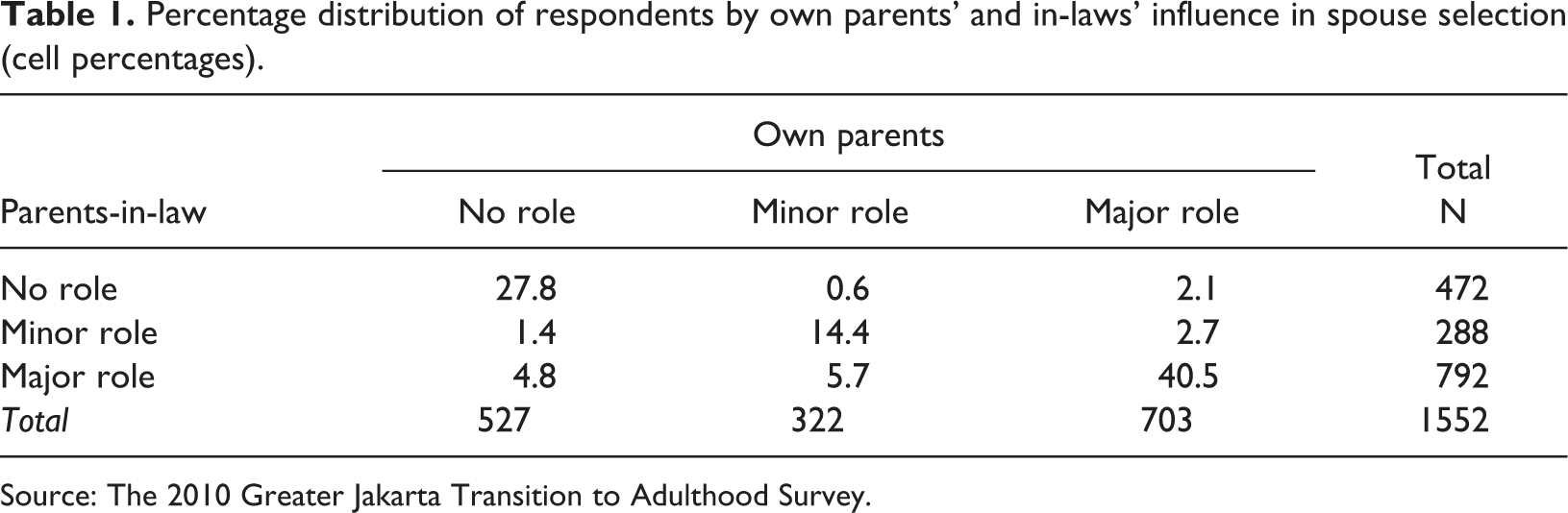
The questionnaire included a range of questions regarding the respondent’s autonomy in spouse selection. Two questions were used to construct our dependent variable. The first question asked respondents what role their own parents played during the spouse selection process, with the possible answers being ‘no role’, ‘minor role’, or ‘major role’. The second question asked the same thing about the role of the parents-in-law. The binary dependent variable used in the logistic regression is coded 1 if both the parents and parents-in-law had ‘no role’ (28%) in spouse selection and 0 otherwise (Table 1).
Percentage distribution of respondents by own parents’ and in-laws’ influence in spouse selection (cell percentages).
Source: The 2010 Greater Jakarta Transition to Adulthood Survey.
Independent variables
Controlling for gender, age group, and religion, we test the hypothesis that higher levels of education are associated with a higher degree of parental influence in spouse selection.
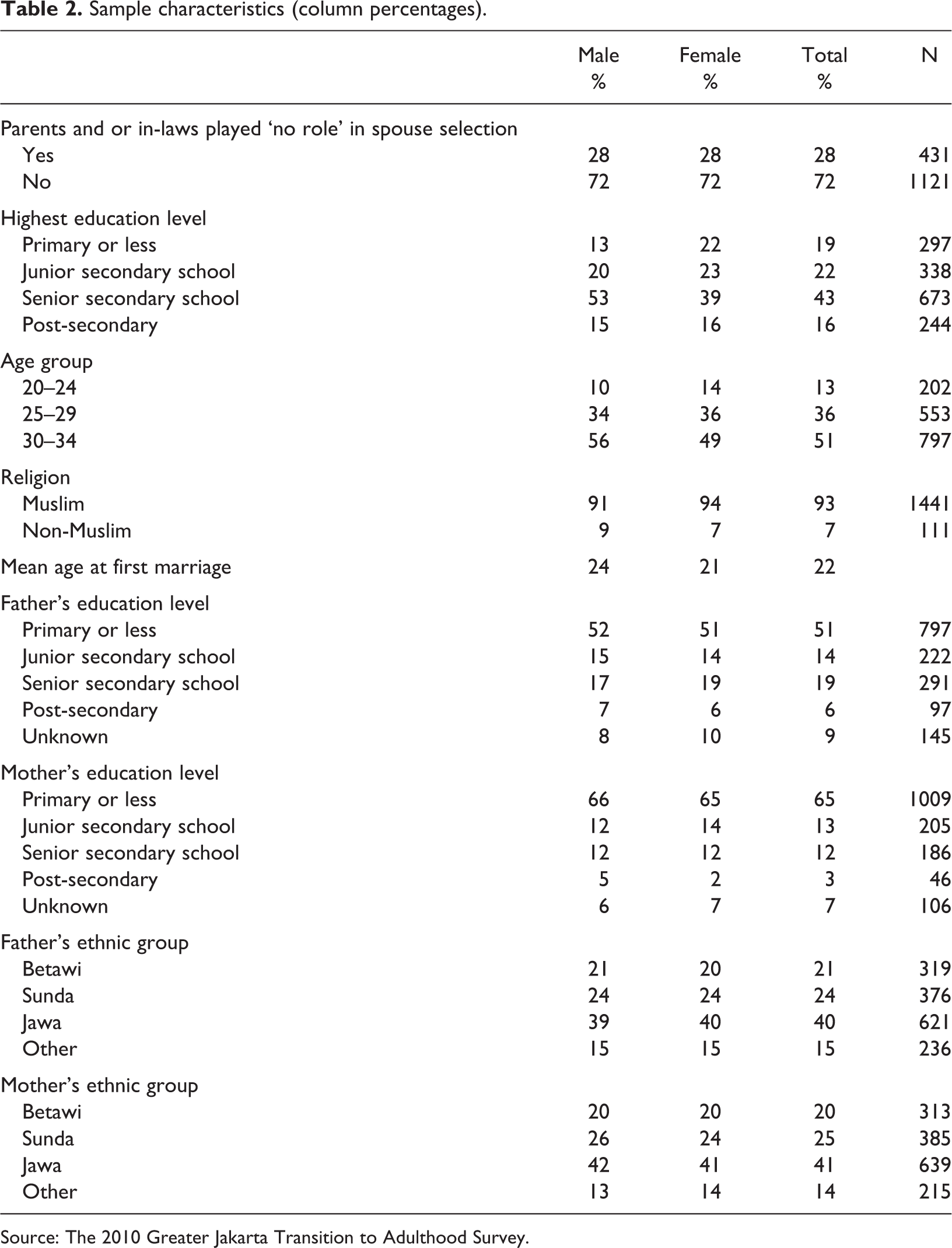
Table 2 outlines our analytical sample characteristics. The largest educational category is senior high school (52%). This is interesting given that the largest educational group for the respondents’ parents is primary schooling. The mean age at marriage for young adults in our sample is 24. Muslims are somewhat over-represented in our analytical sample, with data from the Population Census 2010 indicating that 87% of young adults in Greater Jakarta were Muslims (BPS-Statistics Indonesia, 2010). The majority of respondents, about 40%, had Javanese mothers or fathers. Overall, about 85% of the respondents reported that their parents were either Javanese, Sundanese (of West Java origins), or Betawi (of Greater Jakarta origin). Further, as our analysis focuses on currently married young adults only, our sample is skewed towards those in the oldest age category in the data set (30–34).
Sample characteristics (column percentages).
Source: The 2010 Greater Jakarta Transition to Adulthood Survey.
Findings
Survival analysis: Transition into leaving parental home and first marriage
Figures 1 –4 outline the progression into first marriage and leaving the parental home by education level for all men and women in our survey sample. As expected, tertiary educated young adults experience the slowest rate of progression into marriage. Though the graduation of survival curves by education in regards to transition to first marriage is clear (Figures 1 and 2), this is not the case for the survival curves for leaving the parental home (Figures 3 and 4). For example, at age 25, 60% of women with senior high school qualifications have already married compared to only 30% of tertiary educated women. The gap by education level in the proportion that had left their parental home is smaller at age 25, 58% for senior high school and 49% for tertiary graduates.
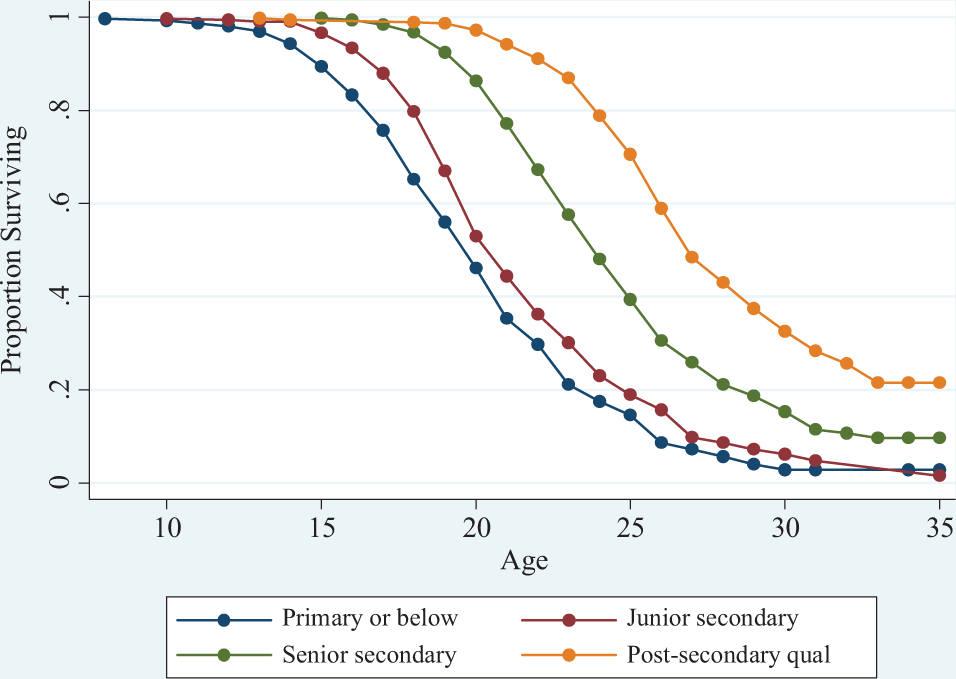
Transition to first marriage by education level (women).
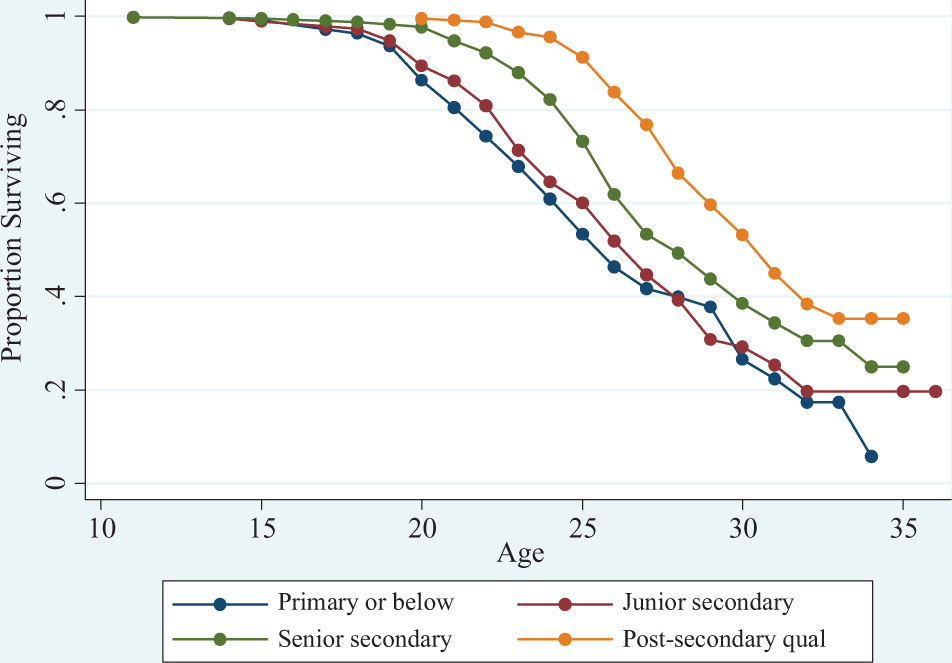
Transition to marriage by education level (men).
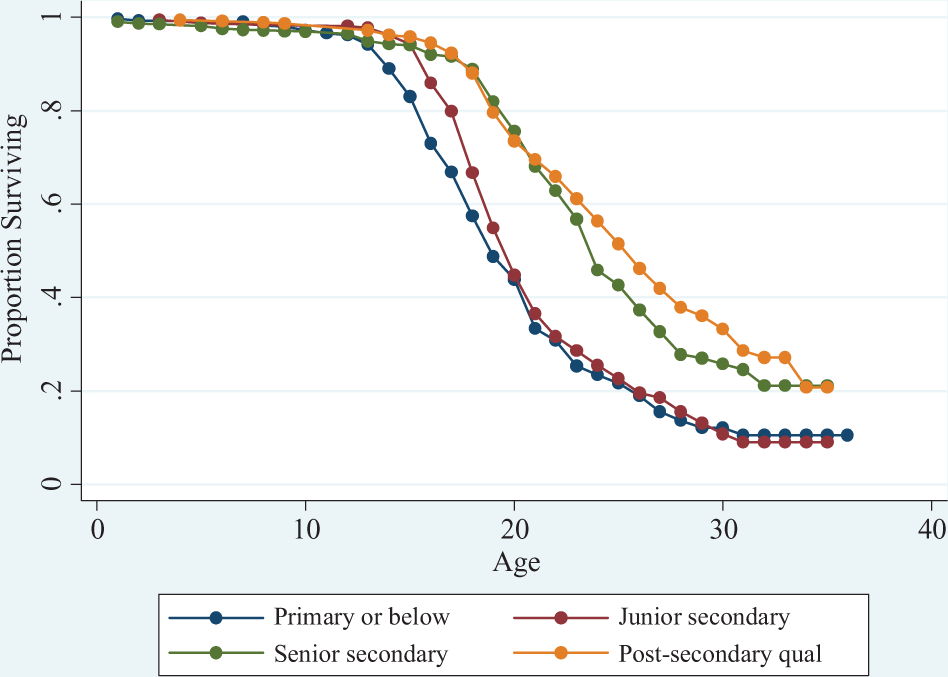
Transition to leaving parental home by education level (women).
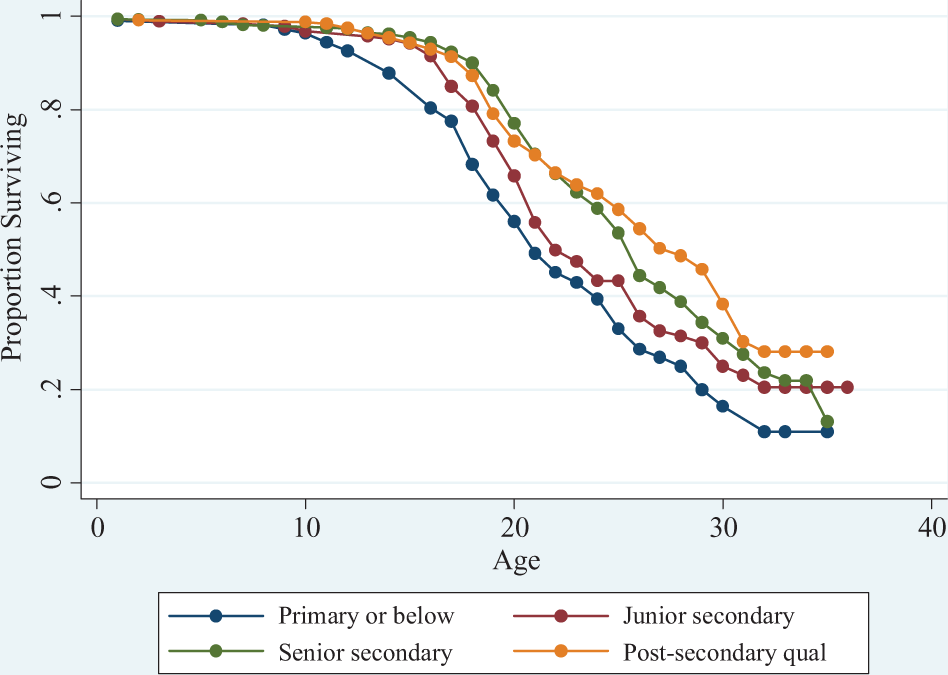
Transition to leaving parental home by education level (men).
In general, the sequence of leaving the parental home and first marriage is not clear cut among young adults in Greater Jakarta. Some people left home before marrying while some couples continued to stay with parents after marriage for financial reasons or because of cultural preference and norms regarding filial living arrangements. A closer examination of our data set indicates that among females, 44% left home before marriage, 21% left home the same year they married, and 35% left after marrying. For males, the equivalent percentages, are 60%, 21%, and 20%. In other words, women were more likely to spend some time living in their parental home (with their spouse) after their first marriage. In practice, it is not uncommon for both men and women to co-reside with their parents or in-laws following marriage. Men and women with lower levels of education were more likely to have left home before marriage. This could be partly explained by a selection effect. Those with lower levels of education are also more likely to be migrants to Jakarta, who left their home to migrate during their teens or early 20s (McDonald et al., 2013).
Courtship patterns
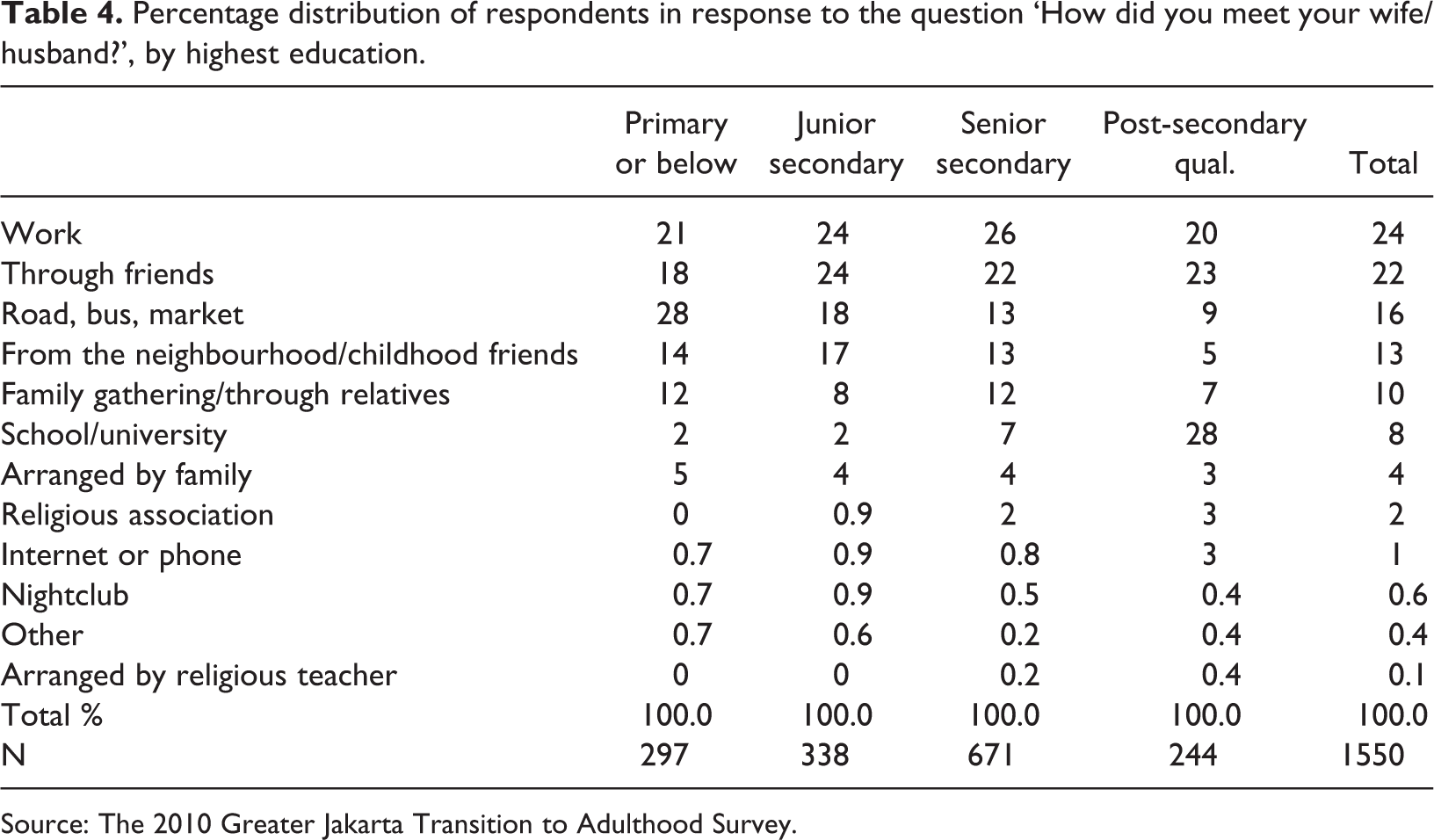
In general, we found that the courtship and dating patterns of young adults in our sample are indicative of the popular practice of self-choice marriage. Over 85% of currently married young adults had either dated, or had dated and were engaged with their current spouse (Table 3). Almost a quarter of the respondents met their current spouse at work (Table 4). Other popular channels of meeting spouses are through friends, the extended family network, the neighbourhood, and by chance in a public place. Only around 4% of respondents had an arranged marriage.
Percentage distribution of respondents by pre-marital courtship and education level.
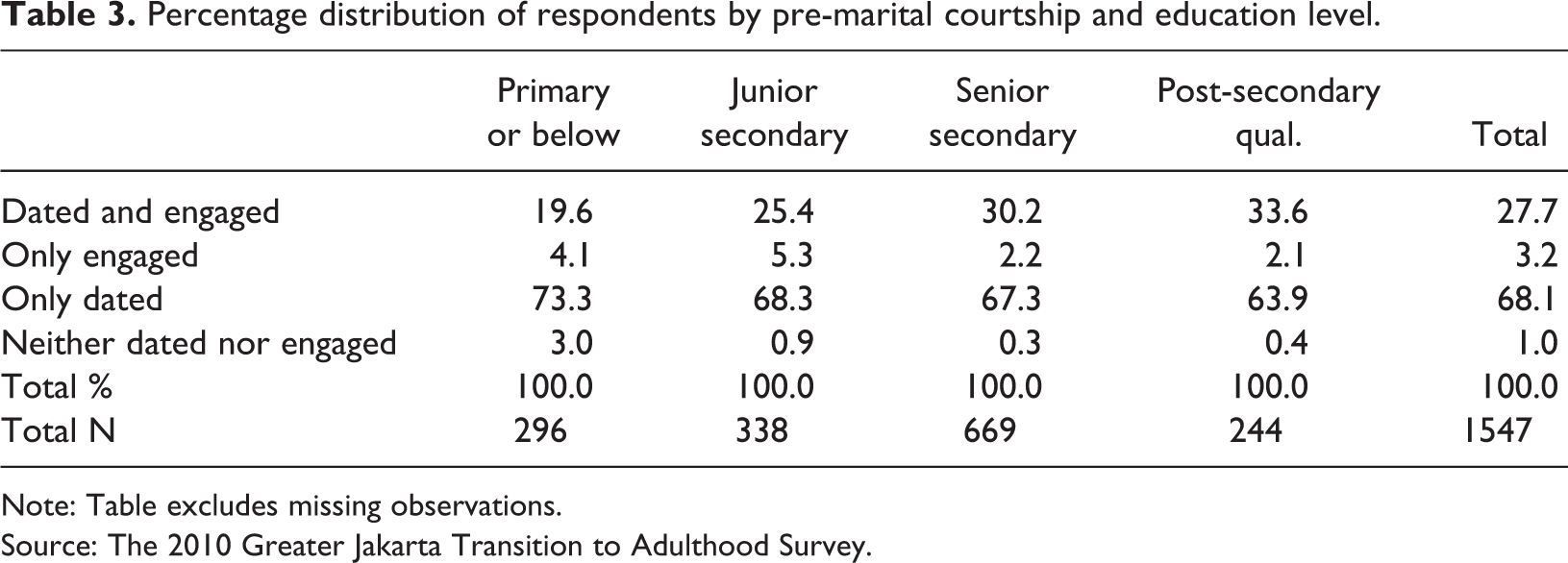
Note: Table excludes missing observations.
Source: The 2010 Greater Jakarta Transition to Adulthood Survey.
Percentage distribution of respondents in response to the question ‘How did you meet your wife/husband?’, by highest education.
Source: The 2010 Greater Jakarta Transition to Adulthood Survey.
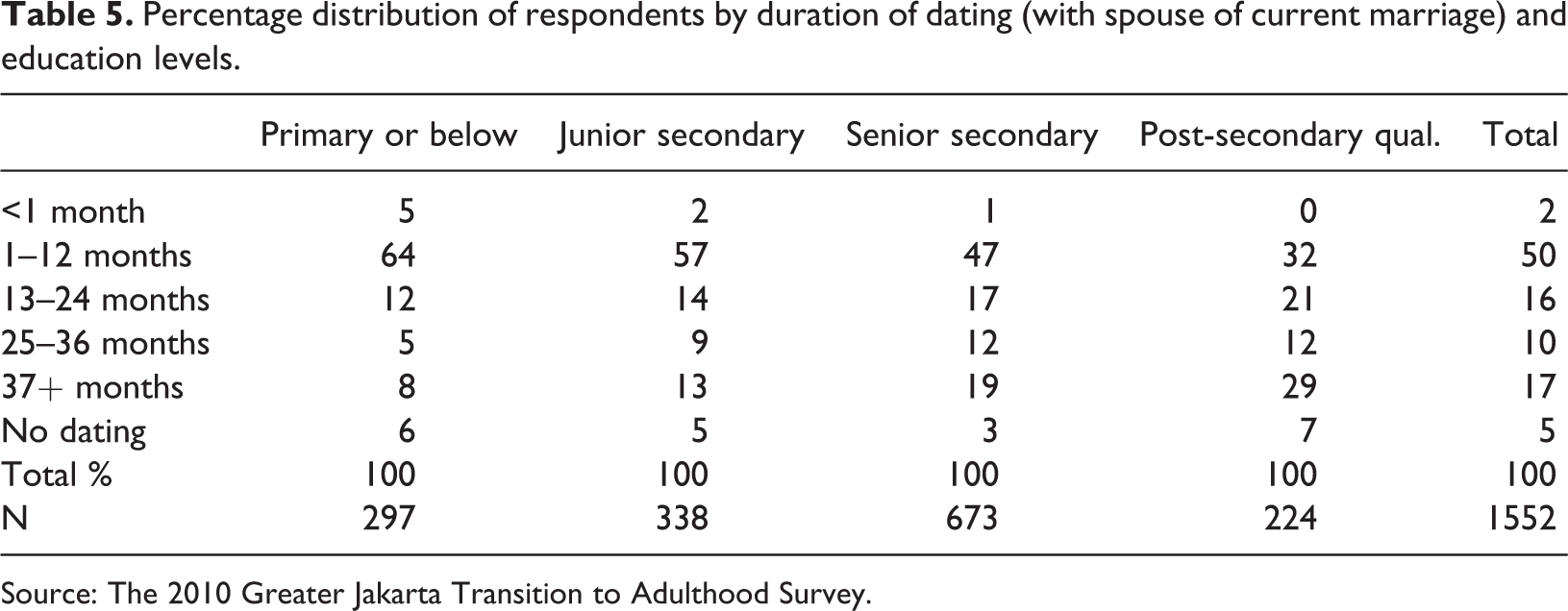
The overall trends are indicative of the prevailing norms of ‘self-choice’ marriage; however, tabulation of courtship patterns by educational level suggests that different dynamics in the marriage market are at play for young adults in different segments of society (Table 5). The survival analysis showed that tertiary educated young adults are the group showing the slowest progression into first marriage relative to others with a lower level of educational attainment. Correspondingly, this is reflected in the data on dating duration which show that tertiary educated respondents are the group most likely to date longer. These results support the proposition that extended schooling prolongs the duration of young people’s interaction in the marriage market.
Percentage distribution of respondents by duration of dating (with spouse of current marriage) and education levels.
Source: The 2010 Greater Jakarta Transition to Adulthood Survey.
A tabulation showing where the respondents first met their current spouse shows interesting patterns between educational groupings (Table 4). Overall, work and friend networks are two of the common channels for meeting current spouses for respondents across educational groupings (18–26%). Respondents with a primary school qualification or less are most likely to have met their spouse ‘by chance’ (28%), which includes meeting them on the road, on a bus, and so on. Only 9% of tertiary graduates met their spouses ‘by chance’. As expected, the most common way for tertiary graduates to meet their spouse was through school or university (28%). Across the educational groupings, the proportion of respondents who had an arranged marriage is small, ranging from 3% for tertiary graduates to 5% for primary school graduates.
Parental influence in spouse selection
At the outset, the courtship patterns outlined above support the argument that self-choice marriage dominates transition to marriage patterns among young adults in our sample. But, recall that a tabulation of the respondents’ perception of their parental influence in the spouse selection process suggests that more than half of the respondents reported their parents or in-laws as having a major role (Table 1). We test the hypothesis that highly educated respondents are less likely to report having had independence and autonomy in their spouse selection relative to respondents with lower education attainments.
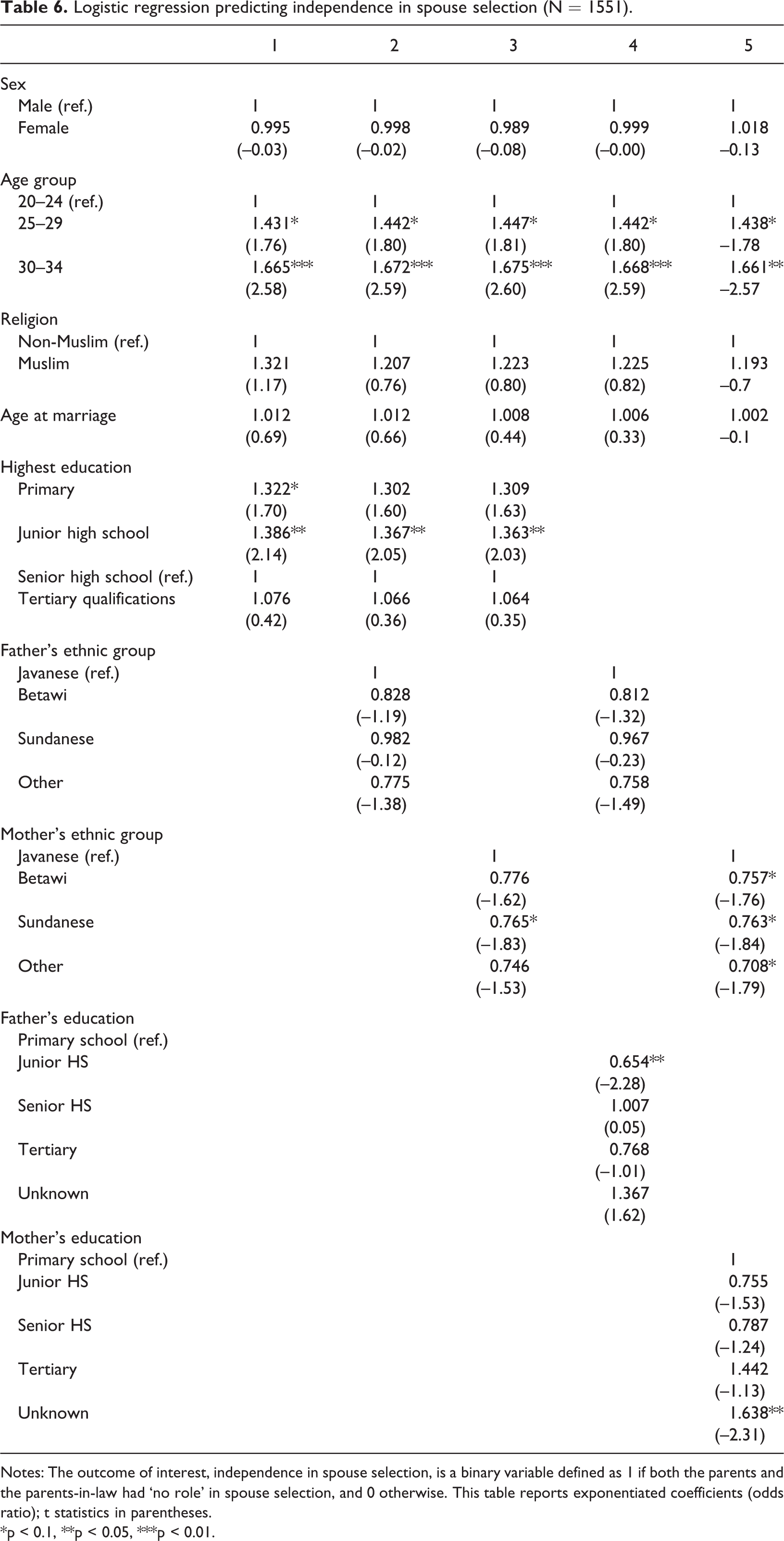
Table 6 outlines the results of a logistic regression predicting the likelihood of a respondent reporting having complete independence in their spouse selection process, defined as both the parents and the parents-in-law having ‘no role’ in spouse selection. The first model shows the effect of the respondents’ demographic characteristics as well as their own level of education. We found no significant differences in the likelihood of reporting independence in spouse selection between Muslims and non-Muslims. While men and women do not appear to differ in their likelihood of reporting independence in spouse selection, we find those in their early 20s are significantly less likely to report having had independence in terms of their spouse selection compared to older married respondents. Such findings are unexpected, given the hypotheses on the declining role of third-parties in young adults’ transition into marriage, and that younger cohorts are more likely to gain more agency and autonomy in choosing who to marry. However, we note that the results could also reflect a recall effect. Given that younger respondents would have married more recently, they may have a better recollection of the influence of their parents and parents-in-law before the marriage. But on the whole, given the ages of our respondents, we speculate that the recall bias is relatively small in this issue. Instead, such results are indicative of a selection issue. In the capital of Jakarta, the majority, about 58%, of young adults aged 20–24 were numerated as never having been married (BPS-Statistics Indonesia, 2011).
Logistic regression predicting independence in spouse selection (N = 1551).
Notes: The outcome of interest, independence in spouse selection, is a binary variable defined as 1 if both the parents and the parents-in-law had ‘no role’ in spouse selection, and 0 otherwise. This table reports exponentiated coefficients (odds ratio); t statistics in parentheses.
*p < 0.1, **p < 0.05, ***p < 0.01.
In terms of the main variable of interest – education level – we use senior high school graduates as our reference category as they make up the largest proportion of respondents in our analytical sample. As predicted, we find that compared to those who completed senior high school, those with the lowest level of education (primary school or less) and those who only went to junior high school were more likely to report complete independence in their spouse selection process. The difference is significant, at the 10% and 5% levels respectively.
In Models 2 and 3, we added parents’ ethnicity as a control variable. When ethnicity of parents was added, the only significant difference that remained was between junior and upper secondary school graduates.
Assuming that education is a proxy for socio-economic status, we expect that replacing the respondent’s own education attainment with that of their father and mother will generate similar results (Models 4 and 5). As mother and father’s education are likely to be highly correlated to one another, and they are both likely to also be highly correlated to a respondent’s own education attainment, we run separate models for both father’s and mother’s education. The direction of the relationship is as expected, with higher levels of education generally being associated with a lower likelihood of independence and autonomy in spouse selection. However, for father’s education, the only significant effect was for fathers with a junior high school qualification, versus the reference group whose fathers had primary school or less education. For the mother’s education, the likelihood of reporting independence is significantly higher for those who reported their mother’s education ‘unknown’ relative to those in the reference group.
We assume that a respondent who reported ‘don’t know’ in the parental education option would have a relatively distant or non-existing relationship with their biological parent in question. Under this assumption, we may interpret that these respondents are more likely to report independence in spouse selection.
Alternatively, we could assume that respondents from lower socio-economic families are also more likely to report not knowing their parental education. In this case, the results are supportive of the proposition that a higher level of parental education is positively associated with the likelihood of a respondent reporting parental influence in spouse selection.
Discussion
In this article, we explore the purported shift to self-choice marriage among young adults in Greater Jakarta. We examine patterns in leaving the parental home, transition to first marriage, patterns of courtship, and parental influence in spouse selection among a sample of young adults across education segments.
A number of results emerge from our analysis. First, using survival analysis, we showed that the rate of progression into first marriage among young adults in Greater Jakarta decelerates as education level increases. Respondents at the higher end of the education spectrum were also more likely to leave their parental homes at older ages.
Second, a descriptive analysis of courtship patterns among currently married young adults in our survey suggests the prevalence of self-initiated courtships leading to self-choice marriage. On average, tertiary educated respondents reported relatively longer dating durations. This is in line with the idea that extended schooling and the associated protracted duration in the marriage market would increase young people’s chance of meeting romantic partners. Our results suggest that self-initiated premarital courtship predominates across all education segments. The incidence of arranged marriage among currently married young adults of different educational attainments ranged between 3% and 5%.
Third, using multivariate analysis, we explore the predictors of subjective measures of parental influence in spouse selection. Controlling for gender and age group, the likelihood of a respondent reporting that his or her parents/in-laws had a major influence in their spouse selection process increases with education. On one hand, if we were to equate reporting no parental influence in spouse selection with higher individual autonomy in marriage, then such results contrast with the finding that higher education is associated with higher autonomy in spouse selection. On the other hand, such findings support the alternative hypothesis that reporting a higher degree of parental influence is not the same as reporting parental selection in the marriage decisions among educated young people.
At the outset, the results may seem counter-intuitive as it might be expected that education would have a modernising effect and lead to a greater tendency towards ‘self-choice’ marriage. Yet, the results are reflective of prevailing cultural norms in intergenerational relations and of the persistent centrality of family in key life decisions among the educated middle class in urban Indonesia. A higher education level may increase an individual’s autonomy in spouse selection from the child’s perspective, however it can also signal higher parental investment in their children. In the context of young adults in Greater Jakarta, higher levels of education are generally associated with a longer time spent dependent on parents for financial support, and as shown by our survival analysis, a longer time spent living with parents.
If higher education is taken as a proxy for higher levels of parental financial and emotional investment in their children, parents may want to have more say in their child’s future, including in their choice of spouse, and accordingly, in ensuring the social standing of the family in generations to come. In this manner, the idea of marriage as a household strategy extends beyond the class-specific context as had been elicited in past ethnographic studies in rural Indonesia (see Wolf, 1990). From the children’s perspectives, the long-standing practice of filial piety would warrant that young adults at the receiving end of a relatively high parental investment are more likely to consider and acknowledge their parents’ inputs when making their marriage decisions. On this note, further exploration of our dataset suggests a positive association between subjective measurements of parent-child relationship and education level. For example, about 28% of respondents with diploma qualifications and 22% of those with bachelor’s degrees agreed or strongly agreed with the statement, ‘I am still very emotionally dependent on my parents’. In contrast, only 14% of primary school graduates responded so. 1
Our results suggest that spouse selection among modern young adults in Indonesia is far more complex than the simple matter of arranged marriage in the description of ‘traditional’ behaviour. The cultural context of Javanese and Sundanese societies in past centuries has always given young women and men some leeway in negotiating marriage arrangements, even when parents exerted executive authority for spousal choice and marriage took place in the early to mid-teenage years. The high rates of divorce found in traditional societies are evidence of the ultimately decisive option for unhappy young people to abandon their parents’ choice. This did not stop parents from following the social norms for early marriage, and nor did it force them to acknowledge teenage preferences. It took the spread of education over the teenage years to place parents in the situation where they were no longer deciding their offspring’s childhood needs but increasingly recognising the decision-making powers of young adult sons, and even more, daughters. Although family-arranged marriage is no longer the norm and parents are increasingly taking a step back when it comes to their children’s marriage decisions, the unrelenting importance of parental opinions and approval, and more generally, family endorsement of a young adult’s union, are normative features in the current model of ‘self-choice’ marriage.
An analysis of our in-depth interviews complements the general trends from the survey findings. First and foremost, parental influence in young adults’ transition into marriage is ascertained through their roles as funds providers for wedding celebrations. This seems to be the case for all married respondents across the socio-economic spectrum. In some cases, we encountered respondents, particularly males but also females, who had very little say in whether they will hold wedding celebrations: Pesta, yang ngatur itu keluarga perempuan. Sebenernya sih saya gak mau dipestain, mas, karena keluarga dia sodaranya yang lurah Tangerang pengen dipestain. (The wedding party…it’s all organised by the wife’s side of the family…The truth is, I didn’t want a party, brother [to interviewer], but her family and a relative who was village head in Tangerang wanted to have a party). (Supriyanto, married male, respondent ID 27) Ada kan di kampong mah hajatan gitu. Keinginan orang tua kan orang tua saya mah relasinya banyak, jadi pada nyambungan. (There was a communal celebration back in my village. It was the wish of my parents since they have a lot of relatives, so it was a time for them to connect together). (Ijah, married female, respondent ID 112) ‘Belum ya saya kan masih tinggal sama keluarga, masih jadi satu’ (Not yet [I am not yet independent], I still live with my family, and still living as one family). (Erni, married female, respondent ID 116)
Insights from in-depth interviews further indicate that married respondents who migrated to Jakarta independently from their parents are more likely to report having a sense of independence than married respondents whose parents are living in Greater Jakarta. However, in all cases, respondents interviewed expressed that they continue to depend upon their parents for approval (Ind: persetujuan) in their spouse selection processes. This is in line with the narratives voiced by the majority of the respondents who continued to seek advice from their parents for major life decisions (Ind: keputusan besar). Our findings are in line with the argument that in rapidly modernising Asia, robust filial obligations and practices of collective familial interests continue to shape intergenerational relations in families (Croll, 2006; Frankenberg et al., 2002).
Finally, we note the limitations of our analysis. First, our exploratory multivariate analysis of parental influence on spouse selection is limited to currently married young adults. We have effectively ignored young adults who are delaying their entry into marriage due to a range of reasons, including factors related to family objections. Second, in relation to the sample bias, our measure of subjective parental influence in spouse selection cannot ascertain whether it is merely a formal thing for parents to endorse their child’s choice, or whether there is a real chance that the parent is going to say ‘no’. On one hand, we can assume that in many cases it is more likely to be a formality than a reality. The idea that obtaining parental endorsement is largely a process of formality also resonates well with the idea of class-segmented meanings and practices in transition to marriage. Yet, we do not know for certain because we did not collect any information on cases where the parent said no and the marriage did not take place. Third, our conclusions are limited by the scope of our sample. The nature, patterns, and processes of transition to adulthood in Indonesia are diverse for young adults from different socio-economic backgrounds living in the hundreds of sub-regions of the vast archipelago. A demographic account looking into the regional dimensions of marriage transition in Indonesia will be a fruitful area of research in future studies.
In the contemporary settings, young adults in romantic relationships were often found living at home, so their parents were aware of the growing ties with a potential partner, and they were also aware of their own marginal role in their child forming a relationship. Young women whose parents tried to exert powers of protection over them could turn to secret liaisons, sometimes lasting for years. In such cases, there might be hope that the arrival of a grandchild would overcome parents’ disapproval of a secret union. For marriages to be carried out in the legal institutions of the state, there is pressure to ensure that the bride is represented by her parents or guardians, and as marriages take place at older ages, this implies that the more mature groom will be better prepared and more aware of the need to negotiate good relations with the prospective in-laws. The married young adults of Jakarta report a wide range of experiences in their arrangement of unions, and those who remain single often describe the near misses they have encountered as they attempt to find partners. In most cases, the role of parents can be far more important than the literature on changing arrangement of marriage may imply. This is particularly the case if the couple are from different religious faiths, in which case the family, and indeed the whole community, may attempt to prevent the marriage. Future research on the dynamics of family influence on young adults’ family formation would benefit from in-depth insights from respondents in the marriage market.
Footnotes
Declaration of Conflicting Interests
The author(s) declared no potential conflicts of interest with respect to the research, authorship, and/or publication of this article.
Funding
The author(s) disclosed receipt of the following financial support for the research, authorship, and/or publication of this article: The Greater Jakarta Transition to Adulthood Study is funded by the Australian Research Council, Ford Foundation, WHO and the National University of Singapore.
1.
Controlling for age group and sex, we noted that respondents with bachelor’s degrees were 1.3 times more likely than primary school graduates to either agree or strongly agree with this statement (p < 0.1).