



Abstract
Widely forgotten and underestimated within the Nazi milieu is the lynching (Lynchjustiz) committed against downed Allied airmen. This violence originated as a form of communal self-defence against, and retribution for, the devastating bombing and strafing raids. The Nazi regime then attempted to harness this violence to combat the enemy. By analysing the so-called ‘flyer trials’ it aids in better understanding the mistreatment of downed American airmen in Germany during the Second World War (e.g. what groups within German society were prone to committing violence against downed airmen as well as determining their motivation for committing these often brutal offences).
The crimes of which these persons were convicted were brutal, vicious, and unfeeling, and while American sympathy may be aroused at the prospect of hanging women and old men, it must always be remembered that halfway measures will never impress upon the people of Germany that their actions have been unlawful and degenerate. The deterrent effect of punishment must be great enough to prevent forever crimes that are an abomination in the eyes of men and blasphemy in the sight of God.
During the afternoon of 29 August 1944, two American airmen parachuted safely to the ground after their bomber was hit by flak during a mission over Germany. Upon landing near Trebur, they were quickly captured by German civilians and driven to the town of Groß-Gerau, where enraged civilians savagely beat the flyers with fists, sticks, metal pipes, shovels, and virtually anything at hand. The inhabitants of Groß-Gerau were especially hostile because 29 individuals had been killed in a bombing raid a few nights earlier, and the Allied airmen who landed nearby interrupted their funeral. As soon as the chief of the local security police (SiPo) was notified of the two downed airmen, he asked of his two subordinates, both of whom stated that the airmen should be taken into police custody, ‘Why haven’t they been beaten to death?!’ 2 The police chief then grabbed each of the airmen from the melee conducted by the crowd of civilians and led him to the courtyard of the city hall, as the irate civilian crowd continued to beat the aviators. Barring civilians (including the two aforementioned subordinate police officers) from the courtyard, the police chief ordered the windows and doors facing the courtyard closed. Only two other men – a 24-year-old member of the National Socialist Motor Corps (NSKK), a German paramilitary organization affiliated with the Nazi Party, and a German soldier who asked to be permitted to participate – were allowed in the courtyard; both men were fully aware of the implications of the events that were about to occur. The police chief then ordered these two men, as his superior had ordered him, to beat the airmen to death. The men were happy to oblige, each using iron bars to mercilessly and consciously murder the aviators. 3
After the war, on 3 August 1945, a United States war crime tribunal in Munich tried the police chief, the NSKK member, and the soldier, along with four civilians (two of whom were women) for their role in these atrocities. The two men who killed the airmen, along with the police chief, received the sentence of death by hanging. Three of the civilians, including the two women, received one-year imprisonment, while the fourth civilian received a 15-year sentence. 4
Brutal stories similar to this were not unique; however, they are mostly forgotten in popular memory. From 1943 to 1945, instances of mob mentality were abundant throughout Nazi Germany and occupied Europe, as individuals sought revenge for personal and material loss. Nazi officials branded this type of violence as ‘lynch justice’ (Lynchjustiz). 5 While the mistreatment of downed Allied airmen occurred throughout Europe, it was most prominent in Nazi Germany. All levels of society were involved in the violence committed against downed Allied airmen and portrayed a brutal aspect of the war that needs further clarification and analysis. Influenced by Nazi propaganda, a significant portion of the German population viewed Anglo-American airmen as terror flyers, gangsters of the air, and child murderers (see Figure 1). Influenced by Nazi propaganda, a significant portion of the German population viewed Anglo-American airmen as terror flyers, gangsters, and child murderers. 6

‘Roosevelt’s strafers against women and children. North American? – Murder American’
While a few historians have focused mainly on one leading case (known as the Rüsselsheim massacre), where German civilians and political officials ruthlessly beat eight airmen, six of whom were executed and two of whom managed to escape, the topic remains largely overlooked and the actual extent of the mistreatment of Allied flyers is drastically underestimated. 7 Historians commonly agree that the number of cases involving Lynchjustiz against downed Anglo-American airmen in Germany during the Second World War totalled roughly 350; yet, no significant research has verified or refuted this supposition. 8 In addition, the clarification as to whether the 350 cases resulted in death or combined assaults and killings is unknown. According to military historian James J. Weingartner, ‘from the summer of 1943 until the end of the war, over 200 (and perhaps many more) downed American and British airmen may have been murdered by German civilians, military personnel, or police and party officials’. 9 Popular German historian Jörg Friedrich claimed that in the last year of the war alone ‘[m]ore than one hundred pilots were lynched’. 10 Historian Barbara Grimm’s suggestion, based on German historian Ralf Blank’s analysis, that roughly 350 downed Allied airmen experienced Lynchjustiz in Germany has since been the standard used by historians. 11 Despite using little archival evidence to support Blank’s and Grimm’s claims, historians have repeatedly cited these estimates. While scholars have indicated the need to know more about the extent of airmen mistreated in Germany, none have attempted that assessment until now.
Building upon the lack of research on the topic, Austrian historian Georg Hoffmann is the latest to study the mistreatment of airmen, specifically American flyers shot down in Austria and Hungary, during the Second World War. Hoffmann concluded that throughout all of Europe there were roughly 1,000 cases (including both murders and assaults) of Lynchjustiz against American airmen. 12 Moreover, he concluded that even more cases of mistreatment occurred in Austria and Hungary (roughly 600) than in Germany (roughly 350). 13 Despite assuming that the historiographical standard of 350 cases in Germany was accurate, Hoffmann’s study offered an improved attempt at analyzing these incidents. Although it is impossible to determine the exact number of Allied flyers who experienced Lynchjustiz, due to a lack of remaining evidence, a more accurate assessment is needed. Furthermore, an improved historical analysis of these events is vital to understand their impact and significance.
In determining the extent of popular violence against airmen, Hoffmann is the first to include the mistreated victims who survived. Furthermore, he is the first to analyse the perpetrators who carried out these acts of violence. Their backgrounds and societal positions are key to understanding not only the phenomenon’s origins but also how it persisted. Scholars have not attempted, however, to determine the extent of violence in Germany or address the symbolic meaning and appropriateness of the term lynching. However, most cases of Lynchjustiz occurred in Germany, as most airmen were shot down in that country, propaganda and personal experiences with bombing and strafing raids greatly influenced the hostility of its populace, and downed airmen lacked aid and escape routes. 14
The post-war trials for justice notoriously prosecuted high-ranking Nazi officials and highlighted their crimes against humanity. However, the ‘lesser’ war crime trials (e.g. the Dachau trials (1945–8), the Hamburg-Ravensbruck trials (1946–8), and the Wuppertal trials in 1946) were each significant as well; these not only aid the understanding of how and why events occurred under the Nazi regime, but also allow for a closer evaluation of the ‘ordinary’ Germans accused of war crimes. 15 Although often overshadowed by the Nuremberg trials, these trials focused on specific issues and prosecuted lower-ranking war criminals. In addition, the war crime tribunals were directed by single nations. For example, the US government administered trials throughout its occupied sectors of West Germany and Austria (though mostly held in Dachau) and focused on war crimes committed against American military personnel and civilians throughout Germany and its formerly occupied territories. Similarly, the British government administered trials, for example in Hamburg and Wuppertal, which focused largely on crimes committed against British forces. The same appropriation of powers was exhibited in the Hague trials, which were administered by the Dutch and focused on crimes and atrocities explicitly committed in the Netherlands.
Meanwhile, the Dachau trials consisted of over 400 trials that prosecuted over 1,500 ‘lesser’ war criminals with American airmen representing the largest group of victims (nearly 40 per cent). The remaining trials dealt with crimes against Americans and Europeans at various concentration camps (e.g. Mauthausen, Flossenburg, Buchenwald, Mühldorf, and Dora-Nordhausen), the Malmedy Massacre (the execution of 84 POWs during the Battle of the Bulge), and the Skorzeny trial, which dealt with German soldiers wearing United States military uniforms during a false flag operation.
Concentrating specifically on the flyer trials – held in numerous locations, although mainly at Dachau – the following quantitative and qualitative analysis helps to better understand these relatively unknown proceedings. This article examines the accused perpetrators involved in the killings (their ages, careers, motivations, and political positions), as well as how the atrocities were committed and how many downed airmen were involved. Furthermore, the process of sentencing perpetrators is analysed. 16 The flyer trials provide an attempt to discern the identity of war criminals, as well as the attitudes of the German population towards downed American flyers. Although the flyer trials surely do not describe every instance pertaining to the lynching of downed airmen, they represent the largest known collection of documents pertaining to this topic. Therefore, they provide a valuable opportunity to shed light on these largely forgotten war crimes.
A vast amount of evidence exists to demonstrate the applicability of the term lynching to the violence perpetrated against downed American airmen during the Second World War. Nevertheless, a difficulty remains in separating ordered, and often premeditated, murders from sanctioned (though often impulsive and voluntary) acts of murder. Adding to the difficulty was the increased nationalism and wartime atmosphere that created indistinct societal boundaries between civilian and government roles, where civilians could commit acts upon the wishes of the state and where state representatives could be considered in a civilian role (e.g., soldiers home on leave were occasionally involved in the violence against downed airmen). Looking at lynching in the USA, similar difficulty exists in determining the status of perpetrators, for example, a member of the KKK – a paramilitary group – could also act in the role of a state official or police official (such as a mayor or police officer). Despite this, the incidents involving the mistreatment and killing of downed American airmen represent a state-sanctioned summary justice carried out by all levels of society and fostered by radicalized propaganda. Furthermore, the violence often reflected a strong desire for revenge, as well as planned and directed orders from local government officials. 17 However, there are a few documented cases that describe German civilians and soldiers aiding downed airmen. If caught, these individuals faced prison sentences or being sent to concentration camps.
A Brief Overview of the United States Trials against ‘Lesser’ War Criminals
The war crime investigations were complicated by a lack of qualified personnel and resources, the inability to locate alleged perpetrators and witnesses, the unwillingness of Germans to cooperate with investigators, and an increasing pressure by the American public and other Allied nations to swiftly bring war criminals to justice. Beginning already in August of 1944, Army group commanders were instructed by the Supreme Headquarters Allied Expedition Force (SHAEF), commanded by General Dwight D. Eisenhower and in charge of all Allied forces in Northwest Europe, to report alleged war crimes committed against American nationals. The commanders were expected to create a detailed list, which included the location, date, and brief description of the incident, as well as possible perpetrators, victims, and witnesses. Commanders were not tasked, however, with actually investigating or gathering any additional evidence.
While the primary goal during the war was to defeat the enemy, collecting any information about possible war crimes would aid in the future prosecution of criminals. Reports quickly exceeded military and government officials’ expectations, as the scale and extent of Nazi atrocities were drastically underestimated. It became clear that only the most malicious crimes could proceed to trial. During the war, no trials were held out of fear that reprisals would be committed against American POWs. Given the extended time between when the violence, e.g. Lynchjustiz, occurred and when these crimes were discovered and investigated, several years often passed before a case was brought to trial. Even once a trial was finished, which took on average three days, the official review and approval of the sentences lasted an average of 15 weeks due to the volume of cases. 18 This greatly impeded the process of bringing the criminals to justice, especially in a swift manner, as well as hindered the ability to understand the extent and frequency of Lynchjustiz.
As American troops advanced throughout Europe, beginning in the summer of 1944, the increased number of atrocities became evident, for example with the discovery of massacres (e.g. the Malmedy Massacre) and eventually the concentration camps. However, instances of Lynchjustiz were far more difficult to uncover, as perpetrators and witnesses obviously refused to discuss such crimes and physical evidence often had long disappeared. It became increasingly evident, however, that the crimes were not just ‘committed by the German military forces in the battlefield’, but rather ‘more crimes [were] committed by German civilian[s] . . . over a long period of time’, according to Lieutenant Colonel Joseph C. Breckenridge (Chief of the Twelfth Army Group War Crimes Office). 19 The mounting extent of war crimes not only forced investigators to look beyond the battlefields for atrocities but also required that the United States military broaden the meaning of what designated a war crime. Therefore, General Omar Bradley expanded the applicability to violence committed against ‘persons or property, which outrage common justice or involve moral turpitude, committed in connection with military operations or occupation with or without orders or sanctions of governments or commanders’. 20 Thus, investigators primarily sought individuals who ordered or directed crimes ‘without regard to . . . the capacity in which they acted’. 21
Immediately after the war, the United States established the National War Crimes Office (NWCO) in Washington D.C., which along with the Judge Advocate General (JAG) of the Army was responsible for investigating and trying all war crimes against American nationals and any crimes that occurred within the US zone of occupation. The same was done by the other Allied nations in their respective zones. Trials were permitted by the fall of 1945; however, understaffed investigating teams were tasked with not only uncovering new crimes but also assisting prosecutors in preparing their cases for trial. The investigations were also hindered by political pressure, as Americans demanded swift retribution after crimes committed against American nationals, such as the Malmedy Massacre and the lynching of airmen, became more public. Prompt results were therefore insisted on; the quickest and easiest way was to focus on members of Nazi organizations, such as the Nazi Party, SS, SD, and the Gestapo, which the Charter of the International Military Tribunal (IMT) deemed illegal in the fall of 1945. 22
Further impeding the investigations was the lack of qualified personnel. Few had professional training and numerous claims circulated among the German public about the use of improper interrogation methods. Although no such evidence corroborated these claims, the US Army did investigate the accusations. This further hindered the abilities of investigators to uncover atrocities, however, as witnesses were even less likely to collaborate with the occupiers through force. While many of the men recruited to be investigators (often known as the ‘Thirty-Niners’) 23 were refugees who had left Europe before the war and were allegedly fluent in German, comparison of the German interviews and witness statements to the English translations indicate numerous inaccuracies in content. Moreover, analysis of the investigation documents indicates that the investigators (and even the entire system of war crime proceedings) never fully comprehended the ‘basic structure of the Third Reich, let alone the mechanisms of its policies’. 24
Despite the surrender of Germany on 7 May 1945, the war crime investigation teams suffered a major loss of personnel in the aftermath of the Axis defeat in Europe, as the War Department redeployed many soldiers to the Pacific Theater or back to the United States. Nevertheless, the investigations focused on three main tasks: namely to prosecute the perpetrators of mass atrocities and violence against American nationals, interview American POWs for possible information regarding crimes, and screen war crimes enclosures which detained suspected criminals, the most well known of which was located at the former Dachau concentration camp. At the end of 1945, the US Army held over 15,000 individuals who were suspected of war crimes or arrested for membership in Nazi organizations. However, the investigations that involved these individuals were quickly processed, and thousands were extradited to other occupied zones to stand trial for crimes committed in their respective zone or against their nationals. By September of 1947, just a few months before the conclusion of the United States war crime trials, the number of individuals detained had diminished to 600, and by December of 1947, there were no war crime suspects in American custody (see Chart 1). 25
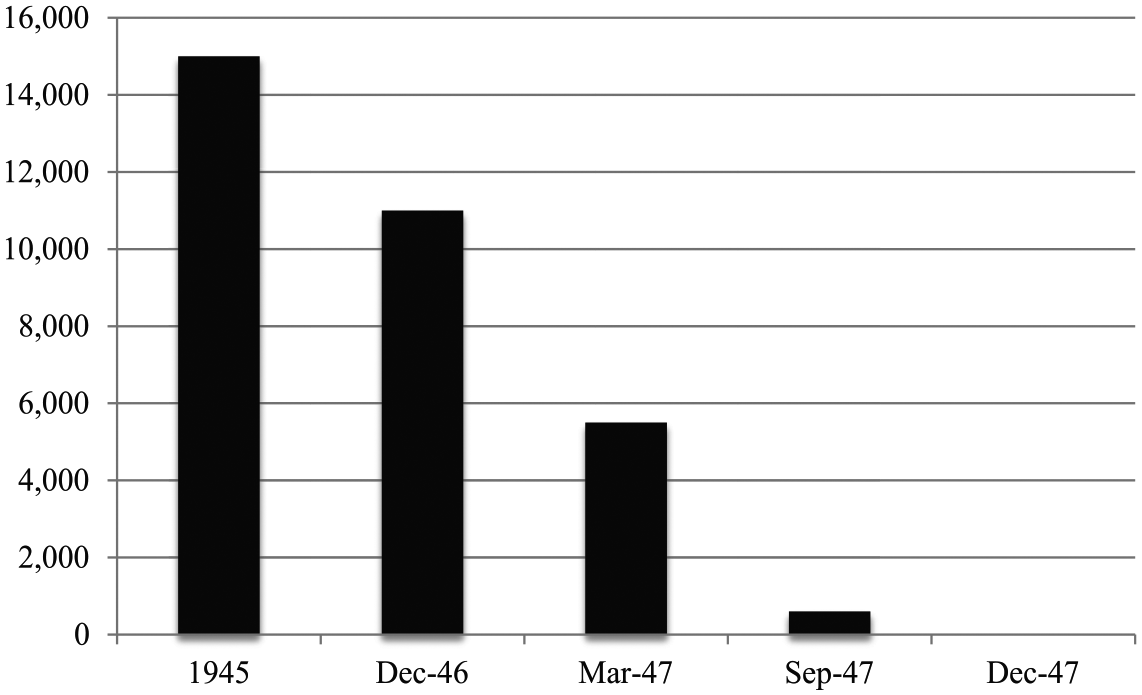
Suspects in American custody.
The task of carrying out these investigations was left to the Third Army stationed at Dachau and the Seventh Army posted near Ludwigsburg. There were 19 War Crime Investigation Teams (WCIT) responsible for completing these goals within the US zone of occupation; however, three WCIT were sent to Le Havre, Cherbourg, and Antwerp to question American POWs before they left the continent for the United States. This quickly became a daunting task, as the sheer volume of POWs (some 90,000 Americans) held in Europe during the war overwhelmed the drastically understaffed and inexperienced personnel. A report by the NWCO indicated, however, that little useful information was obtained about war crimes. 26
By the end of 1946, it had largely been determined what crimes against American nationals (e.g. airmen) would be brought to trial, as the pressure to finally prosecute the accused increased, as well as the necessity to reduce the number of suspects in American custody. Thus, given the circumstances that hindered the investigations and trials, it is no surprise that so few instances of Lynchjustiz were discovered. Targeting members of illegal organizations, especially the Alte Kämpfer, allowed investigators to fulfil the United States’ goals of punishing individuals who violated laws of war, re-educate Germans about the atrocities of the Nazi regime, and support the denazification and democratization process of Germany. The average number of trials gradually increased from three a month in 1945 to four in 1946; however, the greatest increase occurred in 1947 when flyer trials averaged seven per month (see Charts 2 and 3).
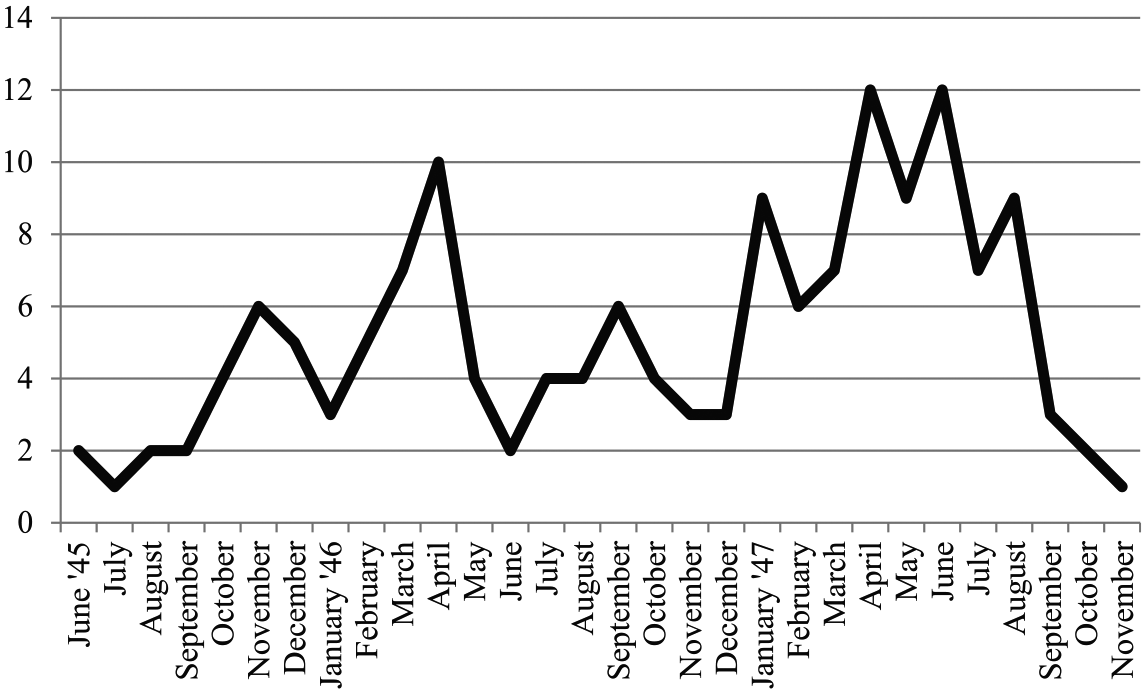
Flyer trials held by month.
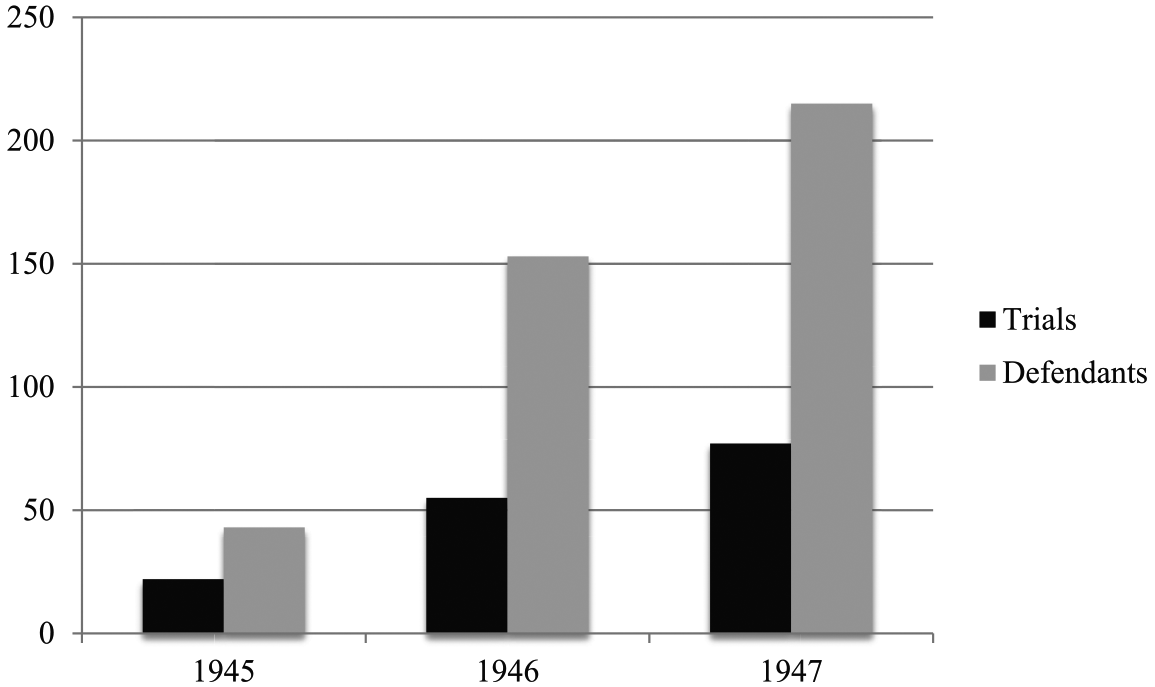
Number of flyer trials and defendants by year.
The flyer trials were held throughout the United States zone of occupation, depending on location of the crime and availability of courts, as well as the assigned Army personnel, the accused, witnesses, and even audiences. Throughout the first year after the war, the majority of the trials were either held at Dachau or Ludwigsburg, as these were the two locations of the WCIT headquarters. By mid-1946, however, all war crime investigations and trials were taken over by the 7708 War Crimes Group, which relocated the remaining trials to Dachau. In order to get through the cases scheduled for trial as quickly as possible, the United States consolidated the 848 cases that involved all ‘lesser’ war criminals into 460 trials – these became known as the ‘Dachau trials’. It was thus possible to have over seventy defendants combined in one trial. Ultimately, the United States’ goals of occupation shifted from punishing Germans for war crimes to enabling a self-sustaining economy and the growth of a democratic political system, which had a direct impact on the war crime trials. As a result, the 7708 War Crimes Group was officially disbanded in July of 1947. Open cases were handed over to West German officials in order to alleviate the insurmountable task of finding, investigating, and trying accused perpetrators of war crimes; however, the West German government rarely prosecuted perpetrators and the majority of those convicted by the American military courts were released from prison by the mid-1950s. As historian Lisa Yavnai noted, ‘the release of convicted war criminals became a bargaining chip in the negotiations between the United States and West Germany over the latter’s integration into Western defense plans’. 27 However, the release of war criminals not only hindered the German public from accepting responsibility for the crimes of the Nazi regime but it also impeded the understanding and discourse of Lynchjustiz committed against American airmen.
Despite their attempts to shed light on the ‘lesser’ war criminals of the Second World War, the Dachau trials as a whole did little to advance the understanding of the ‘Final Solution’ or Lynchjustiz committed against downed American airmen. This missed opportunity could have aided in educating the German public, and even the world, about the Holocaust and atrocities committed against Allied servicemen, which could have furthered the historical narrative by placing, for example, Lynchjustiz within the broader aspect of Nazi atrocities. However, after the fall of 1946, the likelihood of uncovering additional crimes committed against American airmen became remote as the United States faced the looming Cold War (with the Soviet Blockade of West Berlin beginning in 1948 and the Korean War beginning in 1950); Germany also sought to quickly move on from its Nazi past.
The Flyer Trials
Analysing 164 flyer trials held between 1945 to 1947 regarding airmen mistreated in Germany reveals that 464 perpetrators were charged with ‘deliberately and wrongfully encourag[ing], aid[ing], abet[ting], and participat[ing] in committing assaults upon (or killing of) a . . . surrendered prisoner of war’. 28 The victims included 320 American airmen: 73 per cent were killed and 27 per cent survived the mistreatment. 29 Furthermore, over 50 per cent of the aviators’ identities remain unknown because many of the cases did not provide a name, serial number, or rank. In numerous cases, airmen’s bodies were never recovered. This indicates the extent that Nazi officials took to cover up these known crimes. This made it often necessary for the prosecutors to rely on circumstantial evidence in post-war trials and to include witness testimonies that relied on hearsay evidence. Additionally, local Germans were rather uncooperative in the criminal investigations after the war, and this hindered determining the identity and nationality of the flyers and the perpetrators. Finally, it often thwarted the possibility of uncovering additional cases.
At first glance, this suggests that the courts sought to punish swiftly perpetrators who were long-standing members of the Nazi Party. This correlated with the large percentage of perpetrators tried in 1945 and 1946 who were members of the Nazi Party (50 per cent). By 1947, this percentage increased to nearly 74 per cent, as the pressure increased to bring criminals to justice for crimes committed against American nationals, as well as to bring the trials to a close (see Charts 4 and 5). Furthermore, 61 per cent of the accused had been members of the Nazi Party before 1933 (see Table 1), which clearly indicates the war crime trials pursued the so-called ‘old fighters’ (Alte Kämpfer). 30
Information pertaining to tried perpetrators.


Perpetrators tried by year who were members of illegal organizations.
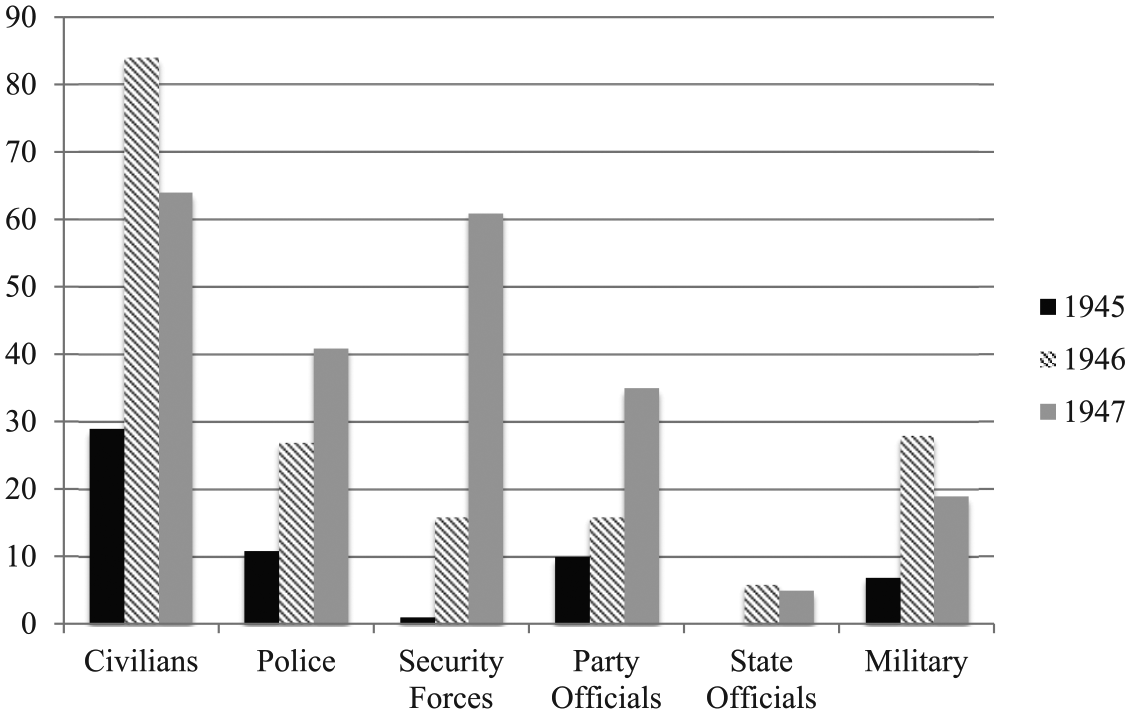
Trials arraigned against perpetrator groups by year.
While historians have indicated that roughly less than 7 per cent of the German population belonged to the Nazi Party up to 1939, the Alte Kämpfer represented at least 30.5 per cent of the accused in the post-war crime trials. 31 Thus, these perpetrators on trial represented a very small segment of the overall German population. Although it appears that the Alte Kämpfer were actively involved in ordering and personally carrying out Lynchjustiz, countless perpetrators, especially civilians, were not brought to justice for their participation in the violence. After the war, the difficulty in finding perpetrators persisted, as many disappeared into hiding or individuals refused to reveal known instances of Lynchjustiz.
At the time of the trials, perpetrators’ ages ranged between 19 and 72 years old, with the average age being 45 (see Chart 6). The increased role and influence of the Nazi Party agenda and propaganda are discernible. Accordingly, the perpetrators were often ardent supporters of the regime who had joined the Nazi Party before Hitler had come to power. Regarding the role of women in the atrocities committed against downed airmen, seven women (less than 2 per cent of all known perpetrators) were tried, although the number of undocumented women (and even men) involved is undoubtedly higher. Numerous trials, along with personal accounts from aviators, recounted the increased brutality suffered at the hands of civilian crowds. Witnesses reported that these mobs could include hundreds of individuals and often consisted of a large percentage of women. 32

Breakdown of perpetrators by age.
Austrian historian Georg Hoffmann’s important book on this subject categorized perpetrators as instigators (Stimmungsmacher/innen), who promoted and condoned the lynching of airmen (Fliegerlynchjustiz), or followers (Mitläufer) who were often provoked by the ‘Bystander Effect’. 33 This follows, however, the designated categories of the denazification process, which according to German historian Lutz Niethammer resulted in creating a Mitlaüferfabrik, literally a ‘factory to produce followers’. 34 Thus, using these categories resulted in focusing blame on a small group of Nazi elites. It is more beneficial to categorize the perpetrators into six main groups (civilians, police, security forces, Party officials, military personnel, and state officials) that represent the broader German society. 35
Each group had unique motives that influenced their actions. As seen in Chart 7, civilians represent a large number of perpetrators tried with 39 per cent. Closer examination indicates that they overwhelmingly represented the number of assaults committed against downed airmen with 70 per cent (see Chart 8). 36

Groups tried for their involvement in Lynchjustiz (by percentage).

Percentage of perpetrators involved in Lynchjustiz.
The civilians acted primarily out of rage and distress as a direct response to the devastating bombing and strafing raids, an emotional situation that Party officials, bolstered by Nazi propaganda, used to their advantage, inciting the public to seek revenge. The second largest group was the police (e.g. Krip, Orpo, Gendarmerie, and Rural and Auxiliary police forces), which represented 17.25 per cent of perpetrators. Individuals of this group were often acting on orders from Party officials and security force members. Members of security forces, which consisted of SS, SD, and Gestapo, represented 16.81 per cent of perpetrators; however, the greatest disparity between involvement in killings and assaults within a single group existed with the security forces. Members were far more likely to resort to killing downed airmen. Party officials (e.g. county and district Nazi Party leaders – Kreisleiter and Ortsgruppenleiter), who represented 13.14 per cent of perpetrators, were most likely to be indoctrinated and radicalized by the Nazi regime. Party officials and members of security forces were prosecuted mainly for passing on orders to mistreat and kill downed airmen, although their active participation in carrying out the violence was common. Military personnel and state officials (e.g. non-Party government officials) represented the smallest groups of perpetrators with 11.63 per cent and 2.15 per cent, respectively. With regard to military personnel, this corresponds to the widespread belief among the United States military during the war, and reiterated by downed flyers in post-war interviews, that the military, particularly the Luftwaffe, offered the best option for safety. 37 A sense of camaraderie existed between the Luftwaffe and Allied airmen. Nevertheless, soldiers who mistreated and killed downed airmen often did so out of revenge for lost family members (most likely to occur when soldiers were home on leave) or out of fear of retaliation for not following orders. Overall, Nazi Party members who were represented in every group and were most likely to be found guilty of direct involvement in killing downed American aviators. Nevertheless, the significant role of civilians involved in killings (27.94 per cent) should not be underestimated. 38
Authorized mistreatment of downed Allied flyers did not merely occur within the pre-Second World War boundaries of Germany but rather throughout Europe, as airmen were shot down in nearly every European country. Furthermore, the violence was not unique to American flyers. Airmen from every Allied nation experienced mistreatment. Although the overwhelming majority of aviators were shot down over Germany (see Chart 9), flyers were frequently brought from other countries to Germany (if they were not initially killed) in order to be interrogated at the Luftwaffe interrogation centre (Dulag Luft) in Oberursel. 39

Top five countries in Europe where American Airmen were shot down.
Before May and June of 1944, assaults committed against downed flyers consistently outnumbered instances of homicide. In fact, from August of 1943 until May of 1944, assaults consistently increased. The level of both killings and assaults reached a climax between July and August of 1944. Unsurprisingly, this rise in violence was connected to the increase in Allied bombing raids at this time (see Charts 10 40 and 11 41 ).
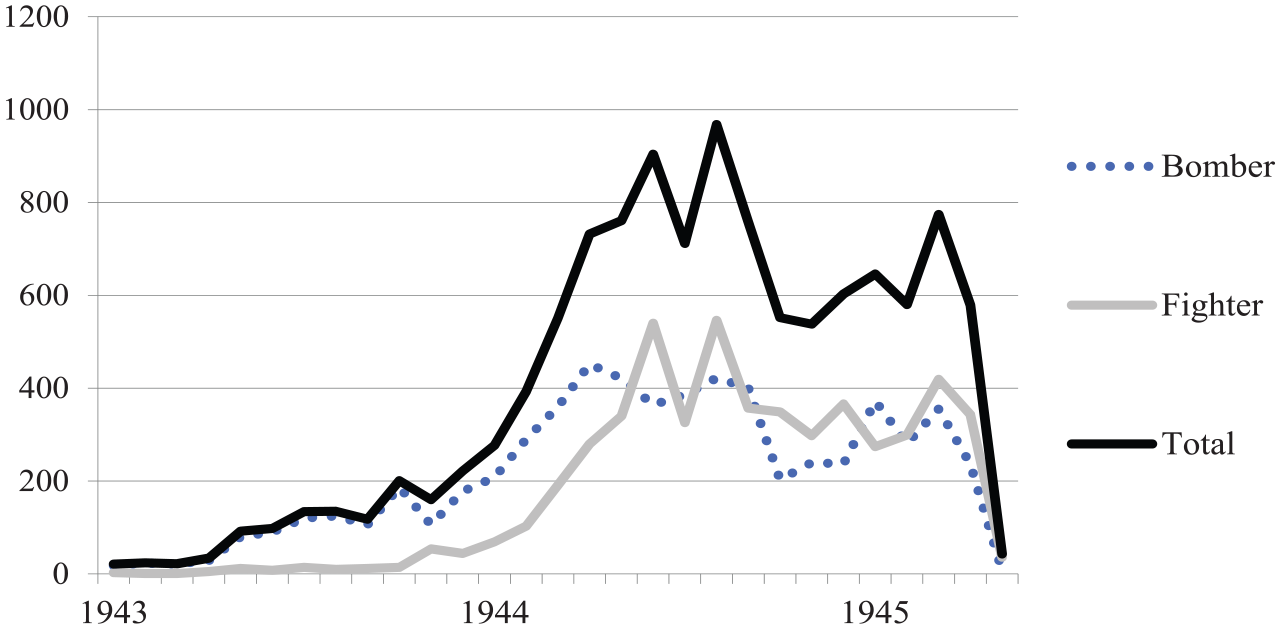
American Airplanes lost in the European theatre.

Lynchjustiz committed against downed airmen in Germany.
In particular, the drastic increase in the participation of civilians in mistreating downed airmen (see Chart 12) 42 following Goebbels’ article from May of 1944 is quite telling. 43 It indicated, arguably, the initial effectiveness of Nazi propaganda, as well as the extreme degree of radicalization in the war. During the last two years of the war Joseph Goebbels successfully persuaded Hitler to engage German society in what he called ‘total war’. Prior to this, Hitler had been weary of committing to total war given his experiences of the First World War. In this environment of total war, the regime attempted to harness the outrage of the German population by condoning and permitting Lynchjustiz. This is best exemplified by Heinrich Himmler’s order in August of 1943 that the German police should not prevent the mistreatment of downed Allied airmen by German civilians – and Joseph Goebbels’ May 1944 article in the Völkischer Beobachter, which publicly validated Lynchjustiz. 44 Moreover, a few days after Goebbels’s article was published, Martin Bormann sent a secret circular to high-ranking Nazi Party officials – e.g. regional Nazi Party leaders (Gauleiter) and county Nazi Party leaders (Kreisleiter) – that indicated German citizens would not legally be held accountable by the regime for their involvement in committing Lynchjustiz against downed Allied airmen. 45 By March of 1945, a secondary surge in violence occurred, namely by civilians and security forces. This was mainly due to the final call by the German government to fight to the death.

Groups involved in Lynchjustiz.
The most widely known incident that involved reprisal killings of downed flyers by German civilians is the Rüsselsheim massacre. 46 American prosecutors charged 11 German civilians with beating eight downed aviators (six of whom died from their injuries) on 26 August 1944. 47 After parachuting and landing near Osnabruck, these eight flyers were captured and taken to Dulag Luft in Oberursel for interrogation (nearly two hundred miles away). However, before they reached Oberursel, two German military guards marched the flyers through the town of Rüsselsheim between 9:00 a.m. and 10:00 a.m. With the citizens ‘still in an excited condition’, following the ‘longest and most destructive’ bombing raid they experienced during the war, they quickly began to gather around the airmen. 48 Slurs and insults quickly led demands for reprisal by civilians, including women, who shouted, ‘Beat them to pieces!’, ‘Beat them to death!’, ‘They are the ones, they are the ones who were here last night! They are the terrorizers of last night! Kill the dogs!’ 49
According to the prosecution’s report, the flyers were bleeding after being struck countless times by rocks, shovels, hammers, and other foreign objects. ‘Perpetrators badly beat one flyer such that by the time the group neared the end of the Taunusstrasse . . . a piece of stone was sticking in his skull.’ 50 After continuing down various streets in downtown Rüsselsheim in an attempt to avoid the deadly onslaught, the flyers struggled to seek refuge. Eventually, their walk reduced to a crawl, huddling together on the ground for protection. The propaganda chief of Rüsselsheim administered the final blows, for those who were still alive, with a shot to the head. After experiencing roughly two hours of constant torture and beatings, Hitler Youth members removed their bodies, some still showing signs of life, to the local cemetery where they were buried later that afternoon. Perpetrators gave no forethought as to what might happen if these bodies were identified as each airman still wore their uniforms and dog tags. While two men received 15-year imprisonments and the nine remaining perpetrators, including the two women, were sentenced to death, only five men were actually executed. The remaining criminals were paroled by January 1954, after serving roughly eight and a half years.
A similar incident occurred on the German island of Borkum, located in the North Sea. This case involved a group of captured flyers being marched through a gauntlet of terror and resulted in the death of seven American flyers on 4 August 1944. The bomber crew was initially interrogated by the flak battalion, which was then ordered to march the airmen to the airport. This was standard protocol since the Luftwaffe had jurisdiction over downed airmen; however, the crew was not marched directly to the airport but rather purposely through a densely populated part of town. It was predetermined to ‘expose the unarmed prisoners to assaults by civilians’, following Goebbels’s decree ordering police not to interfere with civilians attacking downed airmen. 51 As the group was marched down one of the town’s main streets, a group of 80 to a hundred men belonging to the Reich Labor Force (RAD) ‘formed two lines . . . through which the flyers had to march. . . . The RAD men shouted and beat the flyers with spades . . . and kicked them . . . the guards did not interfere.’ 52 Afterwards, the airmen faced a ruthless crowd of civilians incited by the town mayor. Eventually, after being paraded through the streets and experiencing severe beatings, a German soldier shot each airman in the back of the head in front of the sports field. 53 Fifteen men were tried, resulting in five receiving death sentences, one life imprisonment, and nine receiving prison sentences ranging from two to twenty-five years. 54 The mayor and three members of the flak battalion were executed by the end of 1948; however, the remaining perpetrators were paroled by 1952.
Although just being an Allied flyer was more than enough justification for German reprisals, race, ethnicity, and religion also played a role in the treatment of downed airmen. Throughout the flyer trials, these three aspects were particularly mentioned as a further justification for killing the airmen. While only a few cases involved such reasoning for just mistreating downed flyers, this seems extremely disproportionate to the overall number of airmen mistreated and it is expected to increase with future research.
One example of race as a factor that emerged in a flyer trials indicated that on 20 July 1944, two flyers parachuted safely and were captured by the police in Moosinning. The district Nazi Party leader (Kreisleiter) demanded that the police deliver the airmen to the local Party headquarters; however, this was initially refused for unknown reasons. After a heated discussion with the Luftwaffe commander of the local airfield, the district leader’s demands were fulfilled, at least partially; he received one flyer, an African American, allegedly for interrogation. 55 Here, the power and influence of the Party officials became evident. Immediately after leaving the police station with the airman, the perpetrators escorted the flyer to the edge of town and executed him. 56 Of the two men tried, the district leader received death by hanging while the other man was acquitted for lack of evidence. An example of how race was used to portray American airmen can be seen in Figure 2. 57

‘Negro terror flyers over the art-city of Munich – also a symbol of this war’.
Ethnicity and religion, particularly if a flyer was Jewish, was also an essential determining factor in airmen’s treatment. Cases are known of POWs who were taken to concentration camps (e.g. Berga) because they were presumed to be Jewish. 58 An example of this from the flyer trials took place near Hausen, Germany, where several flyers were shot down on 21 November 1944. The local Nazi Party group leader (Ortsgruppenleiter) along with a man connected with the German Labor Front (DAF) immediately set out to find the downed airmen: ‘an hour later they came to the . . . tavern . . . and washed their bloody hands’. After showing off their newly acquired loot (e.g. a compass, patches, and a watch) stolen from the airman, they stated to a woman, ‘we have killed an American flyer. He was a Jew.’ 59 Downed flyers that were not Jewish also faced being sent to concentration camps, including the nearly 200 downed airmen imprisoned in Buchenwald in the fall of 1944. 60
Although the mistreatment of downed airmen was widespread, the majority of tried incidents occurred in Western and Central Germany (see Figure 3). The Western Allies had an advantage in investigating within these regions since they were under American and British occupation after the war. In addition, these regions also experienced the most flight traffic during the air war. Regardless of where the targets were within Germany (the largest targeted region being the Ruhr), the Eighth Air Force (based in England) flew mostly over the western and northwestern regions while the Fifteenth Air Force (based in Italy) flew mainly over the southern, southwestern, and even southeastern regions.
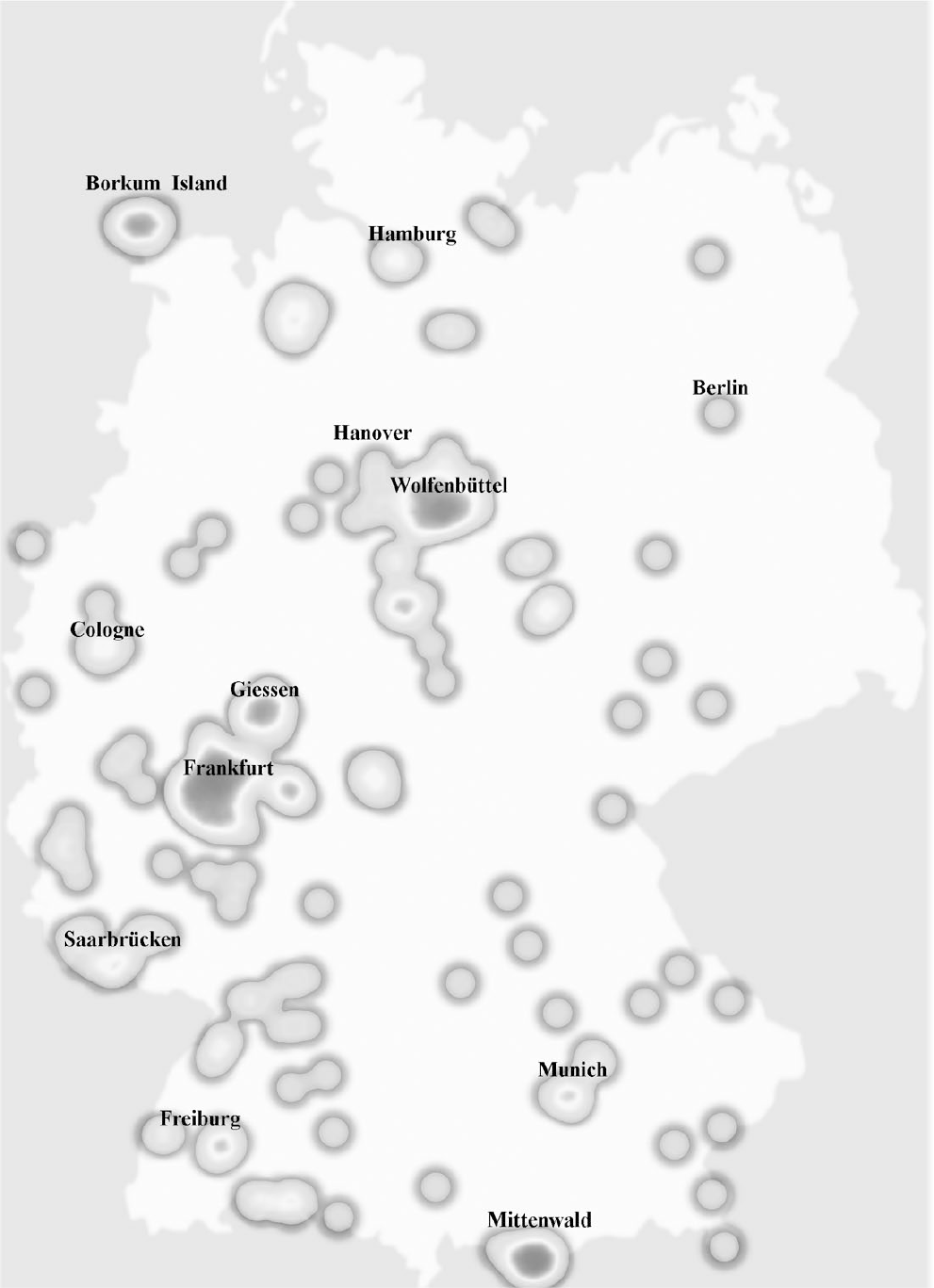
Map of known Lynchjustiz cases in Germany (darker areas indicate a significant increase in mistreated airmen, according to the Flyer Trials).
Trial Sentencing
Although the Allies’ often rushed to judgement and investigations occasionally lacked thoroughness (due to the overwhelming number of potential cases as well as a lack of evidence, leads, and a willingness of witnesses to get involved), the swift punishment of criminals by the Allied war crime trials between 1945 and 1947, and by German authorities thereafter, was due to two main reasons. One was the mercilessly troubled relationship between the United States and the Soviet Union after the war, which resulted in the US government becoming less focused on punishing Germans. The second reason was the desire of the newly formed Federal Republic of Germany, after it was founded in 1949, to begin to move on from its Nazi past. 61
The largest percentage of sentences resulted in death by hanging with 27.7 per cent of those tried (see Chart 13). However, due to a large number of perpetrators receiving pardons during the early establishment of the Federal Republic of Germany, the average criminal (including nearly 25 per cent of those who received death sentences) served roughly seven years in prison. 62 The number of convicted perpetrators who were executed nearly doubled each year from 1945 to 1947 (see Charts 14 and 15). Moreover, as many accused were interned in camps immediately following the war, convicted perpetrators were able to deduct their time served in the camps from their sentences. Numerous convicted perpetrators were therefore released following their convictions. By 1955, the Federal Republic of Germany paroled the majority of war criminals due in part to various pressure groups throughout the United States and Germany. 63 In total, over 14 per cent of convicted perpetrators were acquitted (see Chart 16). It also should be remembered that the number of people who were actually put on trial was still only a fraction of the number of people who were involved in the violent crimes.

Distribution of sentences (by percentage).

Overall sentences by year.

Number of death sentences and executions by year.

Number of perpetrators acquitted by group.
Civilians primarily argued that the trauma they experienced from the bombing and strafing raids, along with the relentless Nazi propaganda, influenced their acts of spontaneous revenge against downed Allied airmen. The violence perpetrated mainly by Party officials and security forces was far more likely to be premeditated. The most common defence among the remaining groups was the notion that they were following orders and had they not done so they could have faced prison or death. Ironically, however, Goebbels argued in 1944 that ‘it is not provided in any military law that a soldier in the case of a despicable crime is exempt from punishment because he blames his superior, especially if the orders of the latter are in evident contradiction to all human morality and every international usage of warfare’. 64 The police as well as the Gendarmerie and Volkssturm, in particular, claimed this defence, redundantly stating ‘they were under the jurisdiction of the SS’ and, therefore, had to obey orders. 65
A further development that came out of the witness statements of the flyer trials was the forging of documents after downed airmen were killed in order to justify and conceal the true actions. German perpetrators often reported that airmen were allegedly shot while attempting to escape. Whether the Foreign Affairs Office meant this strictly for propaganda purposes in case news of the numerous killings became public or if this was some warped justification of perpetrators’ personally questionable morals is not exactly clear. It is likely, however, that both reasons played a role. Their actions were often premeditated and knowingly deceitful. The overwhelming majority of cases detailed that airmen were shot while attempting to escape, which leads to a concern regarding the accuracy of the statistics relating to the number of mistreated airmen during the war.
The analysis of the war crimes trials, USAAF mission statistics, and the existing historiography indicates that there are more cases of violence against downed airmen still to be uncovered. German historian Ralf Blank set the historiographical standard, stating 350 66 Anglo-American flyers were mistreated in Germany during the war. 67 Yet, this is likely far too implausible given the fact that there were more than 85,000 casualties in Europe among American flyers (over 38,000 in Germany alone) – of which over 32,000 were Killed in Action (KIA) and nearly 36,000 were interned as Prisoners of War (POWs), according to a United States military statistical report from 1950. 68 In a July 2013 report by the US Department of Defense’s Prisoner of War/Missing Personnel Office (DPMO) and the Joint POW/MIA Accounting Command (J-PAC), 73,674 American servicemen from the Second World War were still considered missing. 69 Over 20,000 of these men represent flyers. Although the degree of Lynchjustiz against these aviators remains uncertain, the possibility is overwhelming. 70 Moreover, the likelihood that some airmen considered KIA also experienced Lynchjustiz is certain.
Historian Georg Hoffmann concludes that in Austria and Hungary there were roughly 600 mistreated American airmen, which included 130 killed. 71 He estimates the total number of cases in Europe to be roughly one thousand. 72 Yet, the increased number of airmen downed in Germany compared to Austria (roughly seven times as many), as well as the extended duration of the air war in Germany (Austria was consistently targeted after mid-1944) results in the likelihood of more airmen being mistreated in Germany.
The possibility of additional instances of violence and mistreatment is certain. In fact, referencing the index of American war crime trials reveals that the US military opened nearly 300 additional investigations, which included over 400 airmen mistreated in Germany. Due to the lack of evidence and insufficient participation of witnesses, as well as the inability to apprehend the accused, the US military was forced to close the cases. Of the nearly 4,000 war crime cases opened for investigation, over 3,000 were closed, according to historian Lisa Yavnai. 73 The percentage of these investigations that contained crimes against airmen is uncertain; however, the dark figure of crime is high, especially since the ‘special treatment’ (Sonderbehandlung) of downed airmen has mostly been forgotten and ignored throughout the historiography. 74 Adding the known cases of ‘special treatment’, for example the airmen imprisoned and mistreated in Fresnes Prison (south of Paris) and Saint-Gilles Prison (Brussels), to the number of airmen revealed in the flyer trials and Hoffmann’s results on Austria and Hungary, results in over 1,100 known American airmen mistreated as alleged terrorists or spies. Including the certain cases of Lynchjustiz and ‘special treatment’ committed against all Allied airmen throughout Europe, 3,000 cases of mistreatment is a conservative estimate.
As Yavnai argues, the German public viewed the war crime trials as illegal and the ‘convicted war criminals as “prisoners of war”’. 75 The German public even argued that ‘the convicted war criminals had not violated existing German law during the war and therefore their convictions were ex-post facto in nature’. 76 Furthermore, German criminal law required that defendants know the illegality of their alleged acts; yet, as Holocaust historian Rebecca Wittmann explains, ‘this led, in Nazi trials, to a perverse result: the more a defendant claimed that he believed in and identified with the Nazi worldview, the less likely he was to be convicted. In turn, . . . the more remorse he showed, the more likely he was to be convicted.’ 77 According to German historian Norbert Frei, the mindset during the Adenauer administration was ‘an increasing prevalent theory limiting the blame for Nazi crimes to the narrow band of top Nazi leaders’. 78 The issues surrounding coming to terms with the Nazi past continued throughout the history of Germany and still linger until today. 79 The relatively minimal number of convictions and lack of punishment for perpetrators in the postwar era is similar to the results of the German denazification tribunals (Spruchkammern). Of the roughly 3.6 million people (out of over 13 million) determined to have belonged to the Nazi Party or a Nazi organization, only roughly 9,500 were sentenced to prison, of which only 300 remained incarcerated by 1949. 80
Despite the Western Allies investigating numerous additional cases, they were no longer willing to prosecute the thousands of Germans suspected of war crimes after 1950. Furthermore, as the Allies began to release and reduce the sentences of convicted and imprisoned Germans, it was unlikely that Germans would assume the daunting task that the Allies had abandoned. The lack of ‘sufficient political will’, according to historian David Cohen, from the Western Allies and Germany hindered attempts to obtain justice. 81 In comparing how the Federal Republic of Germany and the German Democratic Republic dealt with the history of Lynchjustiz committed against downed Allied airmen within their regions, the extent of Lynchjustiz cases during the war in East Germany and post-war trials that focused on these crimes remains unknown. Many cases were never investigated or brought to trial and the documents that existed were either destroyed or their location is unknown. According to Günther Wieland (former prosecutor for the Attorney General Office of the German Democratic Republic), ‘the number of punishments dismissed in the German Democratic Republic greatly exceeded those in the Federal Republic of Germany’. 82 Nevertheless, more research is needed on the history of Lynchjustiz in not only Germany but also Europe.
Conclusion
The war crime trials along with the denazification process show the great difficulty of an effective judicial response coinciding with a political reintegration process. Ultimately, the postwar crime trials allowed for an immediate judicial response to the Nazi crimes and helped delegitimize the Third Reich by re-educating and reorientating the German public. Although even Harold Zink, the former Chief Historian for the United States High Commissioner in Germany, stated ‘the achievement [of the postwar crime trials] seems small indeed’, 83 their importance, as Yavnai describes, ‘rested in their timing rather than the completeness of evidence or historical narrative’. 84
Despite the widespread direct and indirect involvement of German society in the war crimes, Francis Biddle and Geoffrey Lawrence (American and British judges at the Nuremberg trials) remained opposed to the ‘blanket-guilt theory’. This was common among post-war trials. 85 Although the fact that many sentenced perpetrators received reduced or commuted sentences, the end goal, as stated by Colonel C. Robert Bard (United States war crime tribunal judge), of asserting ‘the deterrent effect of punishment . . . great enough to prevent forever crimes that are an abomination in the eyes of men and blasphemy in the sight of God’ did, to an extent, materialize. 86
Although the flyer trials do not describe every instance of downed American airmen being mistreated, they represent the largest known collection of documents pertaining to this topic. Therefore, they provide a critical opportunity to establish a foundation for understanding the details and extent of these atrocities and this will hopefully lead to future studies. The fundamental message learned from the numerous ‘lesser’ war crimes trials is the ‘absence of “normal” human decency, humanity, compassion, and conscience . . . through the Nazi period’. 87
Taking into consideration the possibility of airmen abused in POW and concentration camps and during death marches at the end of the war, along with the conservative estimate that 3,000 Allied airmen experienced Lynchjustiz, it is likely that roughly one out of every ten Allied airman was mistreated. 88 While a small minority of Allied airmen were subjected to Lynchjustiz, these instances are very significant, as they not only shed light on overlooked crimes, but also help to better understand the social milieu within Nazi Germany and the interaction between the German public and downed Allied airmen. German civilians played an unsettlingly significant role in the mistreatment of downed Allied flyers and shared similar responsibility with police, Party officials, and security forces.
German citizens’ personal experiences in the war, the influence their experiences had on their attitude toward the Nazi regime, their previous familiarity with the United States and Britain, their religious and moral principles, as well as the phase of the war were all influential in the treatment of downed Allied airmen. Representing a further attribute of this total war, Lynchjustiz not only offered a final attempt to defend the collapsing Third Reich, but also provided an ancillary attempt for citizens to sooth public anger, put fear in the minds of Allied airmen flying over Germany, and seek revenge against the new enemy in their midst.
Footnotes
Funding
The author(s) received no financial support for the research, authorship, and/or publication of this article.