



Abstract
Argemone mexicana (Mexican prickly poppy) is a hardy plant widely distributed in arid and disturbed landscapes. It has long been valued in traditional medicine across Asia, Africa, and the Americas, while also playing an important ecological role. However, its toxic potential, particularly in relation to epidemic dropsy, raises significant public health and forensic concerns. A comprehensive narrative review was conducted using published literature. A. mexicana contributes to soil stabilization, erosion control, and pollinator support. Ethnomedicinal practices report its use in dermatological, gastrointestinal, respiratory, hepatic, and inflammatory disorders. Scientific studies confirm diverse activities, including antimicrobial, antioxidant, anti-inflammatory, hepatoprotective, antidiabetic, anticancer, and antiviral effects, largely attributed to isoquinoline alkaloids. Conversely, toxic alkaloids such as sanguinarine are implicated in epidemic dropsy, with characteristic forensic and autopsy findings and global public health implications. A. mexicana represents a dual entity—an ecologically valuable and pharmacologically promising plant with serious toxicological risks. Sustainable conservation, rigorous scientific validation, strict regulatory control, and forensic vigilance are essential to safely harness its therapeutic potential while protecting public health.
Introduction
Wilderness landscapes, characterized by their untamed beauty and biodiversity, often conceal botanical treasures with profound ecological significance and medicinal potential. Among these natural wonders is Argemone mexicana, a plant that not only contributes to the intricate web of ecosystems but also holds secrets to traditional medicinal practices.
The harmonious relationship between nature’s intricacies and human well-being is exemplified in A. mexicana, commonly known as the Mexican prickly poppy or flowering thistle. This plant has intrigued scientists and herbalists alike for its adaptability and diverse applications. While its striking yellow blooms serve a crucial ecological function, its bioactive compounds have been harnessed in traditional medicine for centuries.
Ecological Significance of A. mexicana
Adaptability and Habitat
A. mexicana is a hardy, herbaceous perennial that thrives in arid and disturbed environments. It exhibits remarkable adaptability to adverse conditions, making it a resilient component of various ecosystems. The plant is commonly found in dry grasslands, wastelands, roadsides, and other marginal lands, where it establishes itself with ease. 1 This ability to grow in inhospitable environments plays a crucial role in soil stabilization, preventing erosion and contributing to landscape resilience.
Pollination and Biodiversity Support
The vibrant yellow flowers of A. mexicana attract a myriad of pollinators, including bees, butterflies, and other beneficial insects, thereby supporting the local pollination network. This enhances not only the reproductive success of A. mexicana but also the overall health of surrounding plant communities. By providing nectar and pollen resources, it fosters biodiversity and strengthens ecological interactions. 1
Soil Improvement and Conservation
Another crucial ecological contribution of A. mexicana is its role in soil improvement. Due to its deep taproot system, the plant helps break up compacted soil layers, improving aeration and water infiltration. Moreover, its presence in degraded lands can facilitate soil restoration, making it a valuable species for ecological rehabilitation projects. 1
Medicinal Potential of A. mexicana
Traditional Uses
A. mexicana has been deeply rooted in folk medicine across many cultures. In traditional practices, its roots are infused for easing parturition pains in women and for treating persistent skin ailments. In French Guinea, root or stem decoctions are used against vesicular calculus, as eyewash, mouthwash for toothache, and as anti-inflammatory lotions. Seeds serve as emetics and cathartics, while flowers act as mild narcotics. Powdered roots are traditionally administered against tapeworm infestations.1, 2
In Africa, especially Gambia, leaf infusions are used for coughs and as sedatives. The plant’s latex, noted for its mildly corrosive property, is applied externally on warts, chancres, eczema, and indolent ulcers. The yellow juice is valued for treating jaundice, skin eruptions, dropsy, and conjunctivitis. In India, especially Konkan and Rajasthan, the juice is consumed with milk to treat leprosy, or rubbed externally to relieve rheumatic pain. Its seeds are smoked or burnt in Delhi to relieve toothaches and prevent dental caries, while their oil is used for skin diseases, ulcers, headaches, and even herpetic lesions. In Mexico, the plant is regarded as an antidote for snake venom. Collectively, these uses highlight the versatility of A. mexicana in folk remedies, spanning dermatological, gastrointestinal, respiratory, and neurological conditions.1, 2
Phytochemical Composition and Pharmacological Activities
Scientific investigations have confirmed the presence of several bioactive compounds in A. mexicana, contributing to its pharmacological potential. The key compounds include:
Research has demonstrated that A. mexicana extracts exhibit significant antimicrobial activity against various bacterial and fungal strains.1, 3
Potential Applications in Modern Medicine
The therapeutic importance of A. mexicana lies in the extraordinary diversity of its biological activities. Traditional uses across continents have been substantiated by modern scientific investigations, demonstrating effects that range from wound healing and infection control to anticancer, antidiabetic, and even neuropharmacological potential. The following sections summarize the major pharmacological activities under 21 specific domains.
Role in Wound Repair and Tissue Regeneration
The latex and leaf extracts of A. mexicana have been consistently shown to promote wound closure and accelerate epithelial repair. In vivo studies on animal models revealed enhanced collagen deposition and contraction rates comparable to nitrofurazone, a standard wound-healing agent. Fractions derived from petroleum ether and butanol were particularly effective, validating the traditional practice of applying plant sap to cuts, ulcers, and chronic skin lesions. 4
Antimicrobial Defense Against Bacteria and Fungi
The plant displays a broad antimicrobial spectrum. Methanolic and chloroform extracts inhibit bacterial pathogens such as Staphylococcus aureus, Pseudomonas aeruginosa, Salmonella typhi, and E. coli. Isolated alkaloids like N-demethyloxysanguinarine exert bactericidal action at remarkably low concentrations. Antifungal activity has also been documented against dermatophytes (Trichophyton mentagrophytes), food pathogens (Alternaria alternata), and fruit-rotting fungi. The efficacy against oral microbes (Streptococcus mutans and Porphyromonas gingivalis) highlights potential applications in dental hygiene. 5
Antioxidant Shield Against Free Radical Damage
Extracts from leaves, roots, and flowers are rich in flavonoids and phenolic compounds, conferring strong antioxidant properties. Assays such as DPPH and ABTS have confirmed high radical-scavenging activity, particularly in ethanolic and methanolic extracts. Flowers demonstrated the most potent effect, correlating with high flavonoid content. These antioxidants may prevent lipid peroxidation, DNA damage, and protein degradation, offering protection against diseases driven by oxidative stress. 6
Relief in Pain, Inflammation, and Fever
Inflammation and pain relief are among the most cited folkloric uses of A. mexicana. Laboratory models confirm that extracts reduce carrageenan-induced paw edema in rats, relieve pain in hot-plate and writhing tests, and lower fever in pyretic models. Active compounds such as β-amyrin, isorhamnetin derivatives, and amino acids like cysteine stabilize membranes and suppress inflammatory mediators. These effects justify its use for rheumatism, ulcers, and febrile conditions. 7
Protection of Liver and Hepatic Functions
Hepatoprotective properties of A. mexicana have been repeatedly validated in toxin-induced liver injury models. Aqueous and methanolic extracts significantly reduce elevated liver enzymes (AST, ALT, ALP) in animals exposed to carbon tetrachloride. Histological studies reveal restoration of hepatic tissue, confirming its regenerative effect. Traditional remedies for jaundice, where latex or whole plant powder is given orally, thus have a clear pharmacological basis. 8
Regulation of Blood Sugar and Antidiabetic Effects
Extracts from aerial parts of A. mexicana reduce fasting blood glucose levels in both alloxan- and streptozotocin-induced diabetic rats. Alongside hypoglycemia, they improve lipid metabolism, reduce plasma urea and creatinine, and restore body weight. These findings highlight its role as a natural hypoglycemic agent with additional benefits for kidney and metabolic health. 9
Anticancer and Cytotoxic Properties
The plant demonstrates promising anticancer potential. Methanolic and ethanolic extracts suppress the growth of human cancer cell lines, including HeLa, MCF-7, and HL-60. Isolated alkaloids such as chelerythrine and sanguinarine induce apoptosis rather than necrosis, a favorable mechanism for anticancer agents. Other compounds like angoline and protopine have shown moderate to strong cytotoxic effects, suggesting that the plant could serve as a source of novel chemotherapeutic leads. 10
Antiviral Actions with Emphasis on HIV Inhibition
Methanolic extracts of A. mexicana yield alkaloids such as 6-acetonyl dihydrochelerythrine, which inhibit HIV replication in lymphocyte-based assays. Broader screenings have also confirmed the plant’s ability to reduce viral loads in human T-cell lines. These results provide pharmacological evidence for its traditional role as an immune-strengthening herb. 11
Fertility Regulation and Reproductive Effects
Seeds of A. mexicana contain isoquinoline alkaloids (protopine, berberine, dihydropalmatine) that interfere with spermatogenesis and reduce Leydig cell function. Animal studies demonstrate significant reductions in sperm count and motility, with protopine showing the strongest effect. These findings reveal contraceptive potential, though concerns regarding toxicity necessitate careful evaluation before practical applications. 12
Antiallergic and Antistress Potential
Water extracts of the stem significantly reduce eosinophil and leukocyte counts in animal models, supporting their use in asthma and allergic conditions. The plant also exhibits antistress properties, attenuating stress-induced biochemical changes, which aligns with its traditional application as a mild sedative and relaxant. 13
Effects on Blood Vessels: Vasoconstriction and Relaxation
Methanolic extracts from aerial parts induce relaxation of rodent aortic rings by counteracting norepinephrine-induced constriction. This vasorelaxant activity, mediated partly by adrenergic receptors, suggests potential therapeutic roles in hypertension and vascular disorders. 14
Nematicidal Activity Against Plant Parasites
Extracts of A. mexicana immobilize juvenile stages of nematodes such as Meloidogyne incognita, reducing their penetration into host plants. Seed oil has been shown to kill larvae within minutes, highlighting its potential as a botanical pesticide in agriculture. 15
Allelopathic Influence on Seed Germination and Growth
Leaf and root extracts negatively affect germination rates and seedling growth of crops such as wheat, black gram, and rapeseed. The inhibitory effect is dose-dependent and linked to allelochemicals stored in the plant, indicating ecological interactions that may influence soil productivity. 16
Antihelmintic Action on Parasitic Worms
Both aqueous and alcoholic extracts of leaves exhibit significant antihelmintic activity against worms such as Ascaridia galli and Pheretima posthuma. Activity is dose-dependent, with complete immobilization observed at higher concentrations. 17
Larvicidal Potential Against Mosquito Vectors
Petroleum ether extracts of seeds and leaves are highly effective against mosquito larvae, particularly Aedes aegypti and Culex quinquefasciatus. LC50 values recorded in laboratory studies confirm strong larvicidal action, suggesting the plant’s utility in controlling vector-borne diseases such as dengue and malaria. 18
Lousicidal Effects on Ectoparasites
Aqueous extracts of A. mexicana demonstrated around 70% mortality in lice species in experimental tests, indicating its potential as a natural lousicidal agent for ectoparasite management. 19
Molluscicidal Impact on Aquatic Snails
Alkaloids like sanguinarine and protopine impair protein and nucleic acid metabolism in snail tissues, causing mortality in species such as Lymnaea acuminata. These properties are significant for controlling intermediate hosts of parasitic diseases like fascioliasis. 20
Central Nervous System Modulation
Ethyl acetate and methanolic extracts demonstrate CNS depressant activity in mice. They prolong barbiturate-induced sleep, reduce locomotor activity, and exhibit analgesic effects. These results correspond with traditional use as a sedative and suggest potential in treating anxiety or insomnia. 21
Potential Role in Managing Drug Withdrawal
Isoquinoline alkaloids such as protopine and allocryptopine reduce morphine withdrawal symptoms in experimental animals. This points to possible therapeutic applications in addiction medicine, especially for opioid dependence. 22
Ethnobotanical and Conservation Considerations
While A. mexicana has immense ecological and medicinal value, it is essential to ensure its sustainable use and conservation. Overharvesting and habitat destruction pose potential threats to its availability in certain regions. Therefore, strategies for conservation and sustainable harvesting should be prioritized. 23
Ethnobotanical Integration with Modern Science
Integrating traditional knowledge with modern scientific approaches offers a pathway to unlocking A. mexicana’s full potential. Collaborations between ethnobotanists, pharmacologists, and conservationists can help in:
Standardizing traditional remedies for wider healthcare applications.
Developing sustainable harvesting techniques to preserve wild populations.
Encouraging cultivation programs to meet medicinal demands without ecological disruption.
International Applications and Forensic Significance
A. mexicana or the Mexican prickly poppy, has been associated with numerous public health emergencies worldwide because to its deadly alkaloids, chiefly sanguinarine and dihydrosanguinarine. These substances cause pandemic dropsy, a disorder arising from the ingestion of food oils contaminated with argemone oil.
Global Incidents of Argemone Oil Poisoning
Although predominantly occurring in India, instances of argemone oil poisoning have been documented in Mauritius, Fiji, South Africa, and Nepal. The contamination of mustard oil with argemone oil in these areas has resulted in epidemics of dropsy, marked by symptoms such as edema, heart issues, and, in severe instances, mortality. 24
Forensic Investigations and Autopsy Findings
Forensic research has recorded the pathological findings in lethal instances of argemone oil intoxication. Autopsies frequently disclose systemic edema, engorged organs, and hemorrhages. These data are essential for forensic pathologists in ascertaining the cause of death in suspected poisoning incidents.
Analytical Detection Methods
Identifying argemone oil contamination in consumable oils is essential for public health and forensic inquiries. Advanced analytical methods, including high-performance thin-layer chromatography (HPTLC), gas chromatography–mass spectrometry (GC–MS), and Fourier-transform infrared spectroscopy (FT-IR), have been utilized to identify and quantify hazardous alkaloids in oil samples. These technologies improve the sensitivity and specificity of detection, assisting in the prevention of adulteration and supporting legal actions against offenders. 25
Indian Context and Forensic Implications
In the Indian context, A. mexicana poisoning, primarily through mustard oil adulteration, remains a persistent public health and forensic challenge, particularly in agrarian states like Haryana, Telangana, and Uttar Pradesh. Recent autopsy-based studies highlight plant/aluminum phosphide poisonings comprising 15%–20% of fatal cases, with organophosphorus dominant at 77.77% but plant toxins like Argemone implicated in dropsy outbreaks mimicking multi-organ failure. Dahiya et al. 26 reported 216 poisoning autopsies in Haryana, where suicidal ingestion by young rural males (76.27%) peaked in monsoons (43.52%), underscoring economic stressors driving adulteration-related deaths; non-specific autopsy findings (edema, congestion) necessitate advanced toxicology like HPTLC/GC–MS for sanguinarine detection. Guntheti 27 analyzed 16 paraquat cases in Telangana (similar bipyridyl toxicity profile), noting 93.75% suicidal fatalities from respiratory/multi-organ failure, emphasizing unregulated agrochemical access paralleling Argemone risks.26, 27
Various literature reinforces these patterns: Deokar et al. 28 advocate metabolomics/toxicogenomics for plant toxin biomarkers, enabling precise alkaloid profiling in viscera to differentiate dropsy from phosphide/rodenticide poisonings (e.g., zinc phosphide in 75% Karnataka DSH cases). Deokar et al. 29 highlight legal evolution under FSSAI 2006, where forensic metabolomics aids prosecution in adulteration trials, as in Jatropha curcas pediatric clusters (vomiting/diarrhea akin to dropsy). K et al. 31 documented rodenticide DSH in Karnataka females (100% menstrual-phase suicides), mirroring Argemone’s endothelial damage; Nigam et al. 30 reported six Jatropha child poisonings with GI toxicity resolving via lavage/IV fluids, stressing plant forensics in rural India. These studies call for JIAFM-guided curricula on toxicogenomics, surveillance, and PMDD-linked suicides to curb 80.93% suicidal plant poisonings.28–31
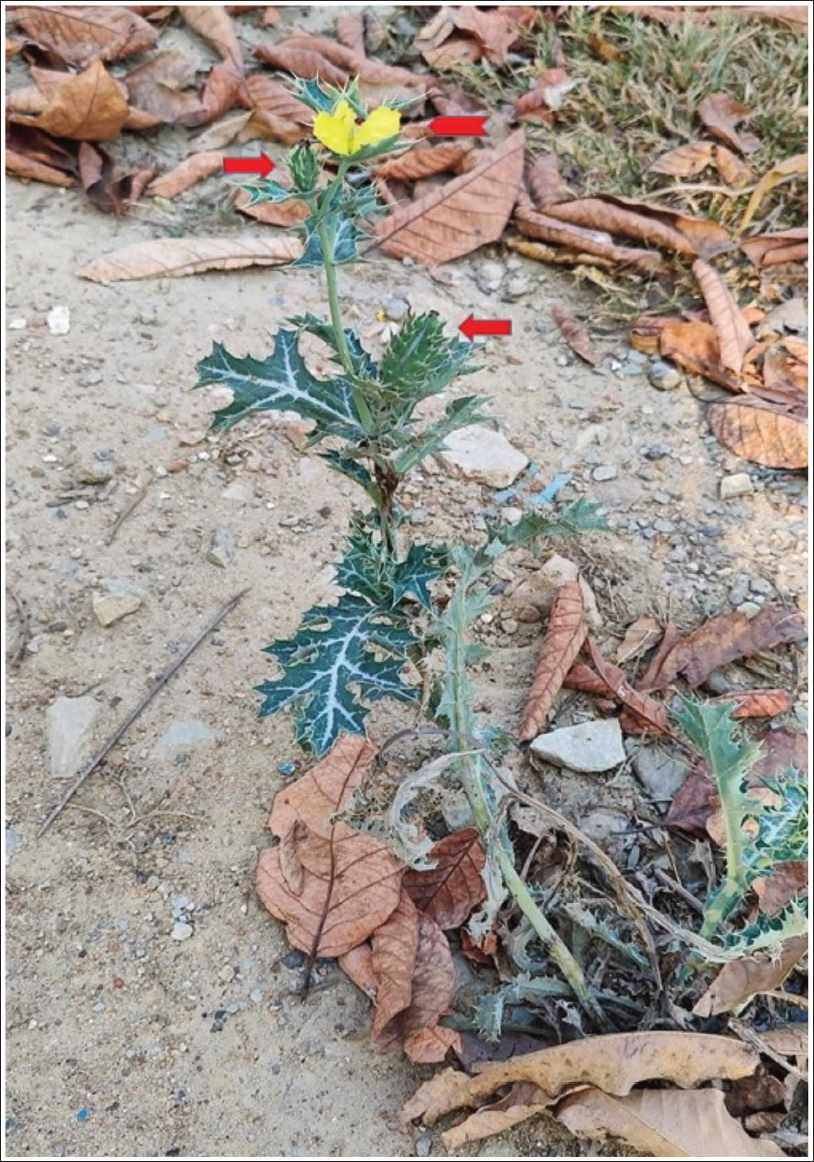
Showing Plant of Argemone mexicana with Yellow Flower and Fruits.
Legal and Regulatory Implications
The repeated cases of argemone oil adulteration highlight the necessity for rigorous regulatory procedures and public awareness initiatives. Forensic evidence acquired through analytical techniques is crucial in legal proceedings against individuals or entities implicated in food adulteration, therefore acting as a deterrent to such acts.
Integrating forensic perspectives into the examination of A. mexicana underscores its toxicological relevance and accentuates the necessity of interdisciplinary strategies in tackling public health issues related to plant-derived toxins.
Future Research Directions
To harness the therapeutic potential of A. mexicana safely, future studies should focus on:
By exploring these research domains, we can enhance our comprehension of the equilibrium between the therapeutic advantages and potential hazards linked to A. mexicana, facilitating its secure incorporation into contemporary medical practices.
Conclusion
A. mexicana represents a critical nexus between ecology, traditional medicine, and public health. Ecologically, it aids soil stabilization, prevents erosion, and supports pollinator diversity in arid environments. Ethnomedicinal use highlights its application in managing skin, respiratory, digestive, and inflammatory conditions, with several pharmacological effects attributable to its isoquinoline alkaloids. However, these same compounds are responsible for serious toxicity, including epidemic dropsy, giving the plant significant forensic and medicolegal relevance. Consequently, A. mexicana must be viewed as both a beneficial ecological resource and a public health risk, necessitating sustainable conservation, cautious medicinal use, and strict regulatory control to balance its potential benefits against safety concerns.
Footnotes
Declaration of Conflicting Interests
The authors declared no potential conflicts of interest with respect to the research, authorship, and/or publication of this article.
Ethical Approval
NA.
Funding
The authors received no financial support for the research, authorship, and/or publication of this article.
Informed Consent
NA.
