



Abstract
The MSME sector plays a vital role in the Indian economy, contributing nearly 30% to GDP and generating employment across industries (Ministry of MSME, 2021). Acknowledging people as a key source of competitive advantage (Wujarso et al., 2023), organizations increasingly focus on attracting and retaining skilled talent (Chambers et al., 1998; Martin, 2008; Moroko & Uncles, 2008; Zivnuska et al., 2001). Employer branding has emerged (Lievens et al., 2007; Moroko & Uncles, 2008) as an important talent management tool (Backhaus & Tikoo, 2004). While large firms possess structured employer branding systems, MSMEs face challenges due to low market visibility and limited resources (Das et al., 2024; Łazorko, 2023). Existing models reflect large firm’s context creating a gap in understanding the applicability to MSMEs (Collins & Kehoe, 2009). This article explores how employer branding approaches in MSMEs differ from large organizations, drawing on established models (Backhaus & Tikoo, 2004; Gaddam, 2008) and theories (Psychological Contract [Rousseau, 1989], Signalling Theory [Spence, 1973]).
The micro, small and medium enterprises (MSMEs) sector plays a vital role in the Indian economy, contributing nearly 30% to the country’s GDP and employing millions of people across various industries (Ministry of MSME, 2021). However, these firms often struggle with high attrition rates, skill shortages and intense competition from larger organizations. While large corporations often have well-established employer brands, mid-sized firms in India, particularly MSMEs, face significant challenges in building and sustaining an attractive employer brand (Das & Chaudhary, 2024; Łazorko, 2023; Sharma et al., 2017). These firms typically operate with limited resources, making it imperative for them to strategically leverage employer branding to remain competitive in talent acquisition and retention.
The concept of employer branding has gained popularity and attention in the world of human capital management lately (Lievens et al., 2007; Moroko & Uncles, 2008), a term introduced many years ago by Ambler and Barrow in 1996. Organizations now see employer branding as a vital tool for talent management. It involves creating an appealing and unique identity to attract and retain talent (Backhaus & Tikoo, 2004).
A well-defined employer branding strategy can serve as a differentiator, enabling MSMEs to attract skilled professionals, enhance employee engagement and improve workforce retention. By creating a compelling employer value proposition (EVP), MSMEs can position themselves as desirable employers despite their size constraints (Chhabra & Sharma, 2014).
Employer branding influences various elements of talent management, including hiring, engagement and retention. A strong employer brand not only attracts top talent but also creates a sense of belonging and motivation among existing employees (Mosley, 2014). It has emerged as a strategic imperative for talent attraction and retention in today’s competitive labour market (Backhaus & Tikoo, 2004; Theurer et al., 2018). While employer branding strategies have been assessed and studied extensively in large firms, there is a notable gap in understanding how these models translate in the context of a small firms. Most employer branding models and frameworks such as those proposed by Backhaus and Tikoo (2004) and Mosley (2007) study employer branding for large firms where there is existence of a structured employer value propositions (EVP), capable HR resources and market visibility, which are generally absent in an MSME set-up.
Employer branding literature suggests that the success of branding depends on the formalization of the value proposition and alignment of the HR and marketing functions of an organization (Backhaus & Tikoo, 2004; Mosley, 2007).
This article aims to understand employer branding as a concept and answer the following question:
How does the employer branding approach of MSMEs differ from that of large organizations based on structure, messaging and implementation to influence talent attraction and retention?
To lay a strong conceptual foundation, this study draws upon two established employer branding models—Backhaus and Tikoo (2004) and Gaddam (2008)—to explain the relationship between employer branding and its impact on talent attraction and retention. These models provide structured insights into both external and internal facets of employer branding, including EVPs, brand communication and employee alignment. This article aims to bridge the theoretical gap by applying these models in the context of MSMEs and propose a framework more applicable from a practitioner’s perspective based on the operational realities. The study offers an adaptive model for MSMEs integrated with the well-established Backhaus and Tikoo employer branding model. The article weaves in two key theoretical lenses: (a) The psychological contract (Rousseau, 1989), which is particularly relevant in the MSME context, where HR policies may not be formally defined and most of the employer–employee relationship is governed by trust, transparency and informal agreements (Conway & Briner, 2009; De Vos et al., 2003). Employer branding in such an environment is experienced rather than documented. (b) The signalling theory (Spence, 1973) explains how MSMEs can convey vital information about their values, culture and work environment to potential talent in the absence of larger recognition as a brand. Signals such as leadership behaviour, testimonials, social media and storytelling become critical indicators of the organizational culture and employee experience (Cable & Turban, 2003; Lievens & Highhouse, 2003).
Studies like ‘Employer Branding on the Creation of Anticipatory Psychological Contract’ show how early brand signals shape the employee expectations before joining an organization, while Alzaid and Dukhaykh (2023) empirically validate the relational psychological contract’s mediation of employer branding into retention.
For MSMEs, such informal signalling often replaces the benefits of organized branding strategies and becomes a critical factor in talent perception and decision-making.
The article suggests that MSMEs need not replicate the corporate employer branding frameworks and models to compete for talent considering the unique environment MSMEs operate in. The proposed adaptive employer branding model for MSMEs can provide actionable insights for MSME owners, leaders, policymakers and HR practitioners to create and build a differentiated employer branding strategy for practical applications in Indian MSMEs. This article contributes to the growing body of research on talent attraction and retention in MSMEs.
The study is anchored on the psychological contract theory and signalling theory, which offer critical perspectives on how perceived expectations and employer cues influence employee behaviour and decision-making. Together, these frameworks guide the research inquiry and help contextualize employer branding within the unique dynamics of MSMEs.
The Concept of Employer Branding
Employer branding is a strategy to improve an organization’s reputation as an attractive workplace (Backhaus & Tikoo, 2004). Mid-sized firms often face challenges with brand identification, impacting their ability to attract top talent (Collins & Kanar, 2013). Effective employer branding can increase employee happiness and dedication, enhancing organizational performance (Theurer et al., 2018). It involves both external communication with potential hires and internal communication that aligns employees with the organization’s values and objectives (Mosley, 2014). Various studies indicate that a strong employer brand reduces employee turnover and increases engagement (Wilden et al., 2010).
Employees select an organization based on their perception of alignment with the organization’s culture and values (Cable & Judge, 1994). Organizational compatibility as a match between an applicant’s personality, values and beliefs and the organization’s culture, values and norms is the focus today, which has moved beyond the job itself and the necessary skills, knowledge and abilities (Morley, 2007). The search for the highest paying job today includes finding an employer who offers a suitable work culture, experience and growth opportunities (Mosley, 2014). Therefore, employer branding becomes key for retaining, motivating and engaging employees, leading to higher productivity (Tanwar & Prasad, 2016). Job seekers today often use corporate reputation when applying for a new job (Sivertzen et al., 2013, p. 474), and it has been proven by various sources (Alniacik et al., 2014; Chhabra & Sharma, 2014; Davies, 2008) that a strong employer brand attracts more talented applicants.
The positive outcomes that employer branding has on an organization are shown in Gaddam’s (2008) ‘Employer Brand Model’ (Figure 1), which identifies that commitment, retention, performance, satisfaction, attraction and loyalty can all be linked back to the employer brand. The model is supported by recognizing that employer branding increases employee morale and satisfaction, which in turn improves attraction and retention (Allen et al., 2010). The employer brand should be present in every part of the employment experience and should promote an employment package, including career development, working environment, benefits, and social and mental satisfaction, to retain employees (Gaddam, 2008).
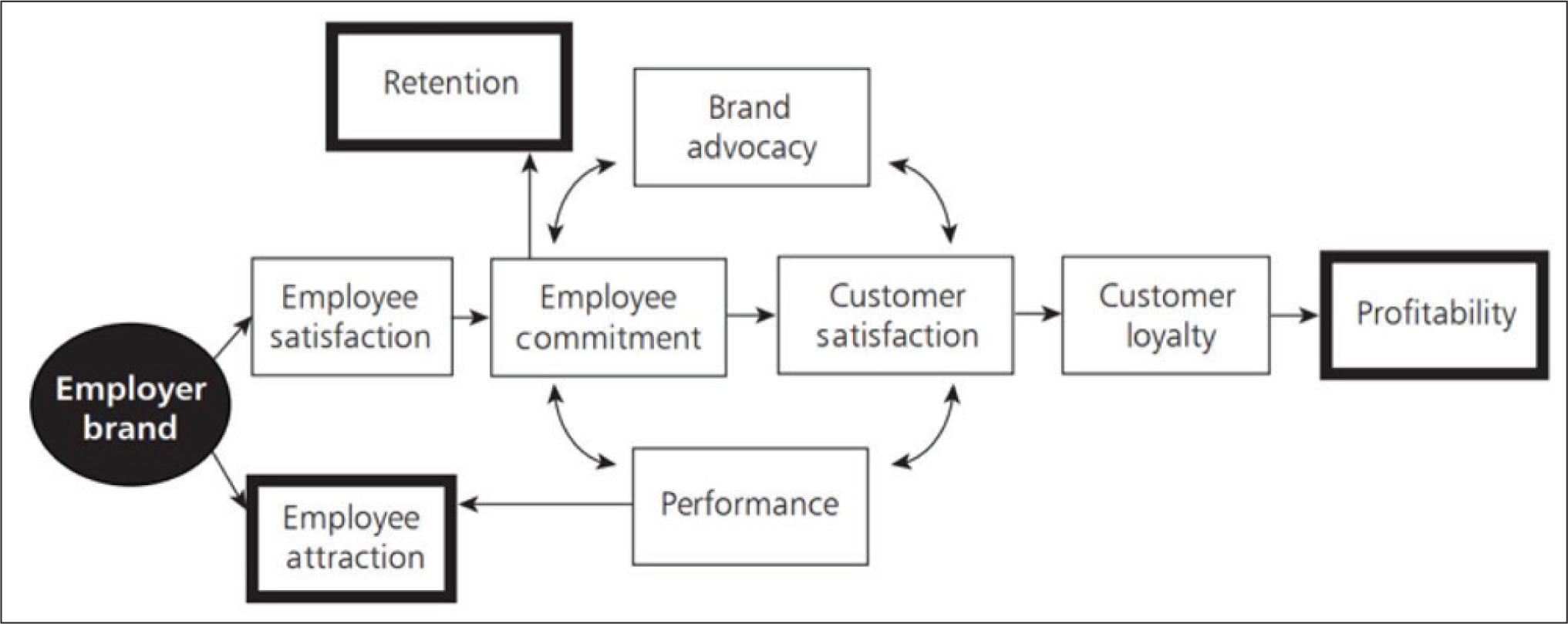
Backhaus and Tikoo (2004) analysed employer branding to show its role in attracting and retaining employees. They identified two key outcomes—brand associations and brand loyalty—and highlighted three essential elements for creating an employer brand: organizational culture, identity and a unique value proposition. Their model aims to simplify understanding the concept and emphasizes the crucial link between marketing and human resources in implementing employer branding.
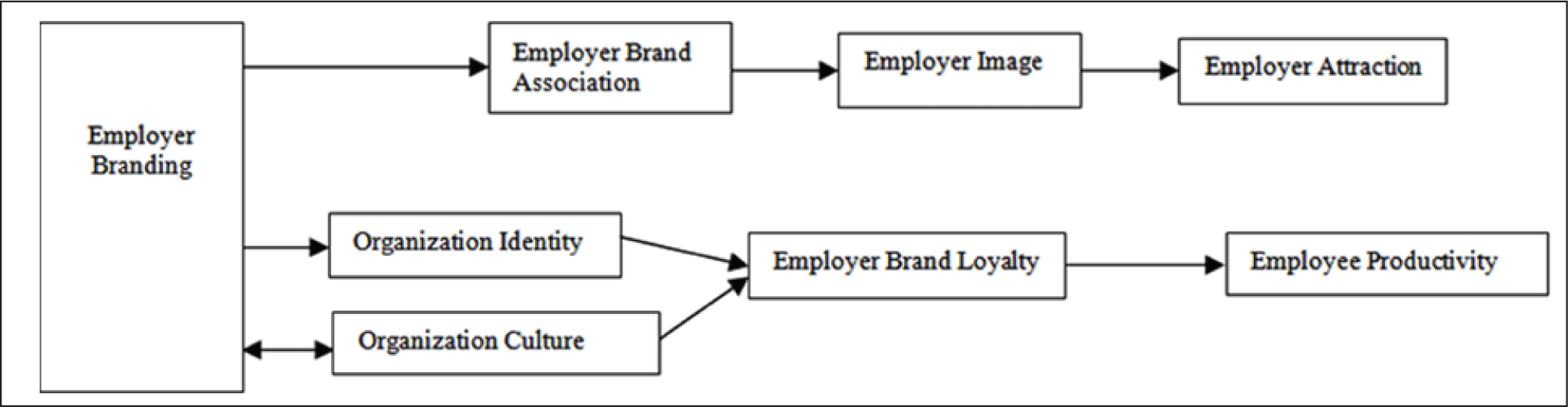
The first phenomenon shows how employer branding creates an employer image. The employer image is built thanks to brand associations that come from employer branding practices. These brand associations affect the image of the company as an employer and impact candidates’ application.
The second phenomenon proposed by Backhaus and Tikoo (2004, p. 508) also shows that employer branding practices influence employees’ loyalty (see Figure 2). Here, it is focused on internal branding/marketing. The new recruits and current employees are exposed to the EVP developed by the employer branding, and the goal is to make them ‘committed to the set of values and organisational goals established by the firm’ (Backhaus & Tikoo, 2004, p. 502). It is considered as the employer brand loyalty, which is comparable to organizational commitment (Backhaus & Tikoo, 2004, p. 508).
Defined as ‘a targeted, long-term strategy to manage awareness and perceptions of employees, potential employees, and related stakeholders with regards to a particular organisation’ (Dabirian et al., 2019), employer branding is utilized as a strategy to attract top talent and is essential for acquiring, developing and retaining employees (Amelia & Nasution, 2016; Backhaus & Tikoo, 2004; Barrow & Mosley, 2005; Gaddam, 2008; Mandhanya & Shah, 2010; Martin et al., 2011).
It is important for companies to be known for their positive attributes, not only for their products or services but also for their culture and dynamics. This helps attract and retain the talent necessary for organizational success (Backhaus & Tikoo, 2004). Multinational companies practice employer branding through job fairs, workplace surveys (Joo & McLean, 2006), advertisements and hiring experienced employer branding managers. For family businesses, employer branding is critical as many of these businesses depend on non-family employees for their operation and continuity (Pimentel et al., 2018).
The employer branding process can direct the organization’s internal processes and transmit symbolic significance, enabling current employees to connect with the brand. This enhances employee engagement and loyalty while reinforcing the company’s identity and values. When an organization constantly meets the beliefs of its employees through its employer brand, employees are more likely to exhibit increased loyalty, which can lead to higher retention rates (Alshathry et al., 2017). Through internal branding efforts, employees can understand the brand and can associate with it and develop an attitude in favour of the brand.
Employer branding encompasses two critical dimensions: it functions as a key driver for attracting potential talent and simultaneously acts as a source of sustained motivation for existing employees to stay with the employer with a long-term commitment (Deepa & Baral, 2019; Theurer et al., 2018). Both prospective candidates and current employees are stakeholders in the employer branding process.
The concept consists of two approaches: (a) external branding and (b) internal branding.
Internal branding is defined as a set of well-defined strategic activities of an organization to ensure the employees buy in intellectually as well as emotionally (Mahnert & Torres, 2007).
External employer brand is an employer’s image of an organization, which is how outsiders perceive it as an employer. In contrast, the internal employer brand represents the organization’s identity or, in other words, the insider perceptions of employer attributes (Lievens & Slaughter, 2016).
The process of employer branding can be broken into three phases:
Defining and clearly articulating the EVP along with stating the unique requisites and creating the employer brand, which is what the organization is willing to offer. Defining the external marketing strategy of employer branding by determining how the communiqué of the value proposition will be executed outside of the organization (for potential candidates, for broader public, for recruitment agencies). Defining the internal marketing strategy for branding by determining how the communiqué of the value proposition will be done inside of the organization and how the assurances of the offer will be executed (Backhaus & Tikoo, 2004; Lievens & Highhouse, 2003).
Employer Branding in MSMEs
Large firms gain publicity due to their size, resources, products and services they can provide to customers; however, MSMEs have limited exposure and are less familiar in the market. Research establishes that reputation and brand dynamics are more critical for MSMEs rather than large firms (Ewerlin & Süß, 2016). Employer branding is particularly relevant in small and medium-sized enterprises (SMEs) and holds significant potential for organizational success (Tumasjan et al., 2020). Most employer branding literature assume that branding is successful only if it is done in a formalized manner in alignment with HR and marketing, and further define and articulate a clear EVP (Backhaus & Tikoo, 2004). The EVP acts as a tool for aligning employee experience with brand promise across the employee life cycle (Mosley, 2007). While this works for large firms with brand equity and various resources, SMEs usually lack brand recognition, structured processes or HR branding programmes with an intensive budget (Barrow & Mosley, 2005; Martin et al., 2011). However, they can rely on personal touch, emphasizing workplace culture and employee engagement. Their branding may highlight unique values and close-knit environments appealing to candidates seeking a more intimate work setting (Choudhary & Joshi, 2025)
Comparison with Other Ecosystems
Employer branding has been predominantly researched in developed economies such as the United States, the United Kingdom and Western Europe, where organizations typically will have a well-developed and structured HR function, highly formalized talent acquisition processes and strong well-defined corporate brands (Backhaus & Tikoo, 2004; Lievens & Highhouse, 2003). In this environment, employer branding strategies talk about structured EVP campaigns, data driven talent acquisition and digital talent marketing processes (Sivertzen et al., 2013; Theurer et al., 2018). In European MSMEs, employer branding often leverages CSR and sustainability signals as differentiators (Mölk, 2018), while in Indian MSMEs, founder reputation and image, local community engagement and word of mouth act as primary signals of organizational attractiveness.
In matured economies, employer branding is typically strategized and formalized using well-articulated EVPs, evolved HR systems and globally established employer brands that promote talent attraction (Berthon et al., 2005; Sparrow & Makram, 2015).
In contrast, in emerging economies like India, MSMEs operate with limited resources and low brand awareness; what helps them in the employer branding journey is relational leadership, psychological contract fulfilment and their reputation in the community, which is central to their employer branding success (Budhwar & Varma, 2011, Monteiro et al., 2020; Pattanayak et al., 2023). Authenticity and relational trust play a compensating role in visibility and institutional support (Budhwar & Varma, 2011; Monteiro et al., 2020). Due to these contextual differences, there is a dire need for developing localized employer branding frameworks, which adapt the realities which fit the MSMEs’ unique environment (Pattanayak et al., 2023; Theurer et al., 2018).
Theoretical Background
To dive deeper and understand and conceptualize employer branding in MSMEs, this article draws on two key theoretical lenses, discussed in the following sub-sections.
Psychological Contract Theory
Introduced by Rousseau (1989), this theory emphasizes the implicit expectations and perceives mutual obligations between the employer and employee. From a theoretical standpoint, the psychological contract literature forms the basis of EVP attributes (Backhaus & Tikoo, 2004). Unlike a legal agreement, this contract includes perceived promises related to job security, career progression, work–life balance and organizational culture (Guest, 2004). This theory becomes specifically relevant for MSMEs where formal HR policies may not be available and most of the employer–employee relationship is governed by trust, transparency and informal agreements (Conway & Briner, 2009; De Vos et al., 2003). In these environments, employer branding is lived rather than documented. The value proposition is experienced through daily interactions and not particularly following a structured communication process. In the traditional concept, a psychological contract is an employee’s promised loyalty to the organization in exchange for job security (Hendry & Jenkins, 1997), whereas the trend today, which includes flexibility, there is a new form of psychological contract where the employer promises additional skills and development in exchange for effort (Baruch, 2004).
Signalling Theory (Spence, 1973)
Employees often lack complete information about a company; the information a company shares are interpreted as signals about the company. These signals are thereafter used to draw conclusions about the company (Connelly et al., 2011). This framework explains how SMEs convey information about their value system, culture and work environment to potential talent in the absence of the existence of a strong brand and recognition. In the context of employer branding signals, such as leadership behaviour, employee testimonials, social media activity and storytelling become indicators of the organizational culture and employee experience (Cable & Turban, 2003; Lievens & Highhouse, 2003). Such informal signalling often substitutes traditional branding channels and becomes vital in the talent decision-making process.
Propositions
Drawing on a comprehensive review of the existing literature on talent management in the MSMEs environment, this article presents three theoretical propositions:
Proposition 1A: The greater the authenticity and positive image of the leader in an MSME, the stronger the psychological contract and informal employer branding.
Unlike large firms where employer branding is formalized through structured campaigns, planned budgets and standardized messaging (Backhaus & Tikoo, 2004), MSMEs bank upon authenticity and relational leadership to attract and retain talent (Storey at al., 2009). The closeness and direct access between employees and founders facilitate trust, visibility and informality, which forms a brand perception (Barrett & Mayson, 2008), and proximity to founders and leaders in small firms makes this central to employer brand experience (Zhang, 2022). These factors build a high level of trust, psychological safety and perceived support, contributing to positive employer brand perceptions (Monteiro et al., 2020). Leadership behaviour in SMEs is visible and influential unlike in large firms, where employer brand is an abstract construct managed by HR and marketing departments; in MSMEs, it is personified through actions and values of the leader (Zhang et al., 2022). Leadership visibility and authentic storytelling build trust and enhance the perceived employer brand credibility in MSMEs (Junça & Dias, 2023; Monteiro et al., 2020). Founders or first-level leaders are visible and accessible, making leadership the central channel through which the employer brand is projected (Storey et al., 2009). Their values, behaviour and thought processes often serve as symbolic representations of the organizational culture. The leader plays a disproportionately influential role in forming the employer brand compared to large organizations (Storey et al., 2009) and tends to exhibit a strong founder-led culture, where the leaders’ actions and interactions are highly visible to both internal and potential employees (Barrett & Mayson, 2008). Authenticity and trustworthiness in leadership behaviour enhances employee’ perception of mutual obligation and fairness which are the core components of the relational psychological contract (Rousseau, 1995).
Various studies show that the personality, thought process, background, values and everyday behaviour of leaders in MSMEs influence the internal culture and act as a symbolic and strategic cue for external employer branding (Leitch et al., 2013). In early stages of the organization, in many cases, the founder’s vision becomes indistinguishable from the organization identity (Dalpiaz et al., 2014), while the involvement of leaders in daily operations provides a sense of transparency and psychological safety, thereby enhancing the credibility of the brand (Rousseau, 1995). When the leader models inclusive behaviour and communicates regularly with accessibility to employees, they create an impression of a purpose-driven workplace, something which attracts younger generation of talent (Martin et al., 2011; Theurer et al., 2018).
Employees in MSMEs frequently cite integrity, vision and mentorship of founders as their key reasons for staying or joining (Knox & Freeman, 2006), which has a spillover effect on external communication as well because leaders are the face of the company on social media and other events (Tumasjan et al., 2020). From a theoretical lens, the signalling theory (Spence, 1973) provides insights into how leadership behaviour serves as a visible cue to prospective employees about how it may be like to work in an organization (Cable & Turban, 2003). These signals are potent when employees interact directly with leaders, which is true in most SMEs. The leadership brand therefore is a linchpin of branding in SMEs. The values, visibility and conduct of founders act as cultural anchors internally and send out signals of trust, externally differentiating SMEs in the competitive market, especially in India, where personalization and social proximity have immense value (Budhwar & Varma, 2011).
Leadership and founder brand form the core of the proposed model, integrated with the conceptual framework of the Bakhaus and Tikoo employer branding model (2004), which outlines a dual-stage branding process, namely external brand building followed by internal brand loyalty. In the MSME context, leadership influences both these stages simultaneously by being a custodian of the internal culture and the communicator for creating the external brand.
Authentic EVP resonates with talent that is more purpose driven than material rewards (Knox & Freeman, 2006; Tumasjan et al., 2020) as MSMEs are able to personalize experiences and build a relationship within their local community. Authenticity here is critical as prospective employees rely heavily on informal signals such as word of mouth, testimonials and direct interactions rather than formal hiring campaigns (Martin et al., 2011), and employees act as brand carriers not because of formal ambassador programmes but because of an intrinsic alignment with the organization’s values and leadership style (Tong & Kang, 2025; Zhang et al., 2022).
Proposition 1B: The clearer and stronger the contextualized informal EVP communication, the greater the impact on the psychological contract and informal employer branding.
In MSMEs, unlike in large firms, where EVPs are formalized and structured systematically, SMEs offer unique value through autonomy, learning, flexibility and close team environments, forming an authentic EVP that appeals to purpose-driven talent (Knox & Freeman, 2006; Tumasjan et al., 2020). They tend to make their EVPs more grounded and authentic through employee experiences. While the EVPs may not be documented in glossy brochures or various portals, they are embedded in the day-to-day culture and operations of the firm (Backhaus & Tikoo, 2004) and experienced through informal interactions and relational dynamics (Tumasjan et al., 2020). In the employer branding literature, the concept of ‘authenticity’ gained traction as a crucial differentiator in the talent markets, which emerges naturally considering the direct line of sight into leadership behaviour, organizational challenges and impact of employee contributions (Moroko & Uncles, 2008).
A contextualized and informal EVP communication plays a critical role in shaping the relational psychological contract in an MSME, because employees rely more on daily interactions, leader cues and lived experiences than on formal HR systems (Rousseau, 1995). When employees receive clear, authentic and meaningful signals consistently about growth, trust and support, they form stronger relational expectations that extend beyond the written employment contract (Conway & Briner, 2009).
Symbolic attributes such as culture and identity hold more sway in shaping the employer brand perception rather than common factors like salary (Lievens & Highhouse, 2003). Authentic EVP is also the narrative anchor in the storytelling process and is amplified by employees who voluntarily share their experiences and become the informal brand ambassadors (Ambler & Barrow, 1996). The balance between what is promised and what is delivered makes the brand genuine. This viewpoint supports the Backhaus and Tikoo model (2004), which emphasize on integrating internal and external brand messaging to enhance psychological attachment and productivity. Gaddam’s model (2008) also underscores the value of emotional resonance and soft attributes in EVP communication, stressing the importance of personalized, human-centric value delivery in smaller firms.
Proposition 1C: The greater the authenticity and positive image of the leader in an MSME, the stronger the internal brand impacting employee advocacy and informal brand ambassadorship.
Studies show that employees interpret brand cues from leadership behaviour, forming stronger attachment and organizational pride when leaders are viewed as credible and value-driven (Morhart et al., 2009). These positive leader–employee relationships enhance affective commitment, which directly increases voluntary brand-supporting behaviours such as advocacy and ambassadorship (Kimpakorn & Tocquer, 2009).
In MSMEs, employees closely associate their work experience with the leader’s behaviour and personal values, making leadership authenticity a core driver of internal employer branding (Eddleston, 2008). When employees perceive the leader as fair, ethical and supportive, it strengthens their emotional attachment to the organization and motivates them to champion its identity (Men & Bowen, 2017). Such trust-based relationships not only enhance internal brand commitment but also translate into spontaneous employee advocacy and informal brand ambassadorship. Authentic leadership significantly predicts employee identification and positive brand-related behaviours (Walumbwa et al., 2008).
Belief and trust in leadership promote employee advocacy and informal ambassadorship, which builds the brand reputation in the outside world.
Organizational hierarchies in MSMEs are usually flat, communication channels are more direct and employees take on multifaceted roles, including that of a brand ambassador. Unlike structured programmes in a large firm where brand advocacy is planned, strategized and orchestrated through campaigns and incentives, SMEs tend to organically promote their workplace through their culture, value system and daily interactions, word of mouth, referrals and social media activity (Ambler & Barrow, 1996; Moroko & Uncles, 2008).
The proximity between leadership and employees along with a sense of ownership generates a natural alignment with the organizational identity, thereby building the internal brand, which results in a sense of pride and loyalty. When employees share experiences, behind-the-scenes stories, milestones or their own development and reflections at workplace, the prospective talent can relate to these narratives authentically than carefully curated messaging (Cable & Turban, 2003). Specially in India, where job seekers heavily rely on word of mouth, alumni networks and informal conversations to assess an organization’s attractiveness, peer advocacy acts as a powerful form of employer branding (Sengupta et al., 2015). This also aligns with the signalling theory, where these communications become a credible signal of the organizational culture and values. In the external branding pathway, employees (current and former), customers or even vendors serve as informal brand ambassadors and act as credible sources of employer brand signals, sharing positive experiences through word of mouth, social media or personal networks, which give authentic visibility to potential candidates (Collins & Stevens, 2002; Spence, 1973). Backhaus and Tikoo’s (2004) framework and Gaddam’s model (2008) both accentuate the employees’ role in the branding process, where the framework says that employees are not only recipients of internal branding but also play a role in external branding.
Proposition 1D: The greater the founder involvement in narrative-based communication such as founder stories and growth journeys, the stronger the impact on psychological contract and employer branding.
In MSMEs, the narrative style of communication through storytelling, podcasts and social media enhances employee relatability as a substitute of formal branding campaigns. Stories about company culture, leadership journey and team experiences help convey the actual feelings of employees and become a central signalling tool (Martin et al., 2011). Founder-led MSMEs leverage storytelling to express organizational journey, its mission and its culture. These stories not only engage internal stakeholders but also signal authenticity to potential candidates (Gill, 2015). A study by Martin et al. (2011) talks about how stories of leadership resilience during the formative journey of the founder increased retention and external admiration for MSME brands. Storytelling serves as a powerful tool to convey the culture, values and identity of the organization and, when particularly driven by founders or tenured employees, serves as a compelling vehicle for brand communication that feels personal, thus creating emotional resonance (Martin et al., 2011).
Narratives about the challenges when building the business and employee contribution become key artefacts of the employer brand, humanizing the organization and creating emotional connections with internal and prospect employees (Gill, 2015).
From the theoretical lens, storytelling also aligns with the signalling theory, which suggests that parties rely on observable cues to make inferences in the absence of an environment with imperfect information. When employees and founders narrate and recount real-life episodes of team bonding, stories emphasizing ethics and integrity or a crisis response, it adds depth to the brand (Cable & Turban, 2003). Employees and job seekers may trust the anecdotal evidence and peer narratives when assessing a prospective employer. Storytelling is not merely a supplementary communication tactic but a central element of the employer branding strategy (Gill, 2015).
Proposition 1E: The stronger the promotion of agile communication by the founder, the greater the impact on psychological contract and employer branding.
Agile communication enables MSMEs to take quick decisions, maintain transparency and effectively engage employees, thus enhancing brand effectiveness,
Agility in communication has emerged as a characteristic in building a robust employer brand especially in SMEs. Due to their smaller size and flatter hierarchies, MSMEs can adapt communication strategies more swiftly and personally compared to large firms, which are burdened with rigid protocols (Boxall & Purcell, 2022). Agile communication manifests in multiple manners. MSMEs have a very approachable leadership, where communication is direct and therefore allows for real-time feedback, faster response times and personal engagement (Bacon & Hoque, 2005). This environment builds a perception of transparency and attentiveness, which contributes positively to the brand perception (Rynes et al., 1991). MSMEs can tailor and experiment with their branding efforts for talent attraction like video messages by founders, personalised job descriptions or interactive social media posts (Auer et al., 2021; Chauhan & Kathuria, 2024; Nazeer et al., 2024) as they are not bound by formal branding guidelines, allowing them to iterate their communication strategies quickly based on candidate response (Guzman et al., 2013). Agile communication is crucial for reinforcing the psychological contract through prompt and transparent communication, signalling their reliability and integrity, thereby strengthening mutual trust (Conway & Briner, 2009).
Agile communication serves as an impactful tool for crafting an authentic employer brand specifically for MSMEs that lack marketing budgets and formal HR structures. Small firms frequently engage in narrative-driven relational outreach through platforms such as WhatsApp, LinkedIn and Instagram. This kind of communication is more immediate, interactive and personalized, often involving the founder or employees directly in talent outreach (Collins & Han, 2004; Knox & Freeman, 2006). These agile story-based exchanges serve as brand signals (Spence, 1973). These signals communicate cultural fit, leadership accessibility and meaningful work factors that are valued more than compensation by purpose-driven roles in smaller firms (Berthon et al., 2005). Agile communication facilitates continuous reinforcement of the brand by dialogue among employee and leadership in contrast to large firms that depend on formal HR interventions. MSMEs can leverage flexible, real-time interactions to transmit values and align employee expectations with organizational culture (Backhaus & Tikoo, 2004; Theurer et al., 2018). This trust-based communication flow helps maintain the psychological contract, resolve conflicts and reduce the risk of employer brand dissonance (Rousseau, 1995).
Proposition 1F: The greater the founder involvement in local community presence, the stronger the impact on psychological contract and external branding.
In MSMEs, connect and integration with local communities build the brand in the network, where stakeholders perceive the brand with authenticity and trust.
Employer branding in the MSME context is not confined to organizational walls; rather, it is deeply embedded within the local or industry-specific community ecosystems in which these firms operate. Due to their size, geographical concentration and often niche market focus, MSMEs frequently develop symbiotic relationships with their local communities, which in turn shape and reflect their employer brand (Bacon & Hoque, 2005).
While large firms rely on media, advertisements and recruitment campaigns, MSMEs find their talent through local networks, industry associations, alumni connections or vocational institutes (Edwards & Ram, 2006). The embeddedness within the community enables them to develop a reputation not only as a business but also as employers (Lai et al., 2017). The founder’s active participation in local events like engaging in CSR activities or partnering with NGOs or sponsoring educational programmes can significantly enhance their brand visibility (Spence & Essoussi, 2010). These initiatives send our indirect signals to prospective employees about the values, ethical standards and overall culture of the organization (Cable & Turban, 2003). The signalling theory is specifically relevant here as it explains how such community involvement acts as a surrogate for more formalized branding efforts (Spence, 1973).
Multiple studies have shown that locally embedded MSMEs can attract and retain talent in alignment with their culture and values (Barrett & Mayson, 2008; Harney & Dundon, 2006). Community presence by founders and leaders provides informal visibility and furthermore acts as a filter that helps potential employees evaluate the organizational fit before they begin their formal employment process (Williamson et al., 2010). Applicants may get to hear from peers and neighbours about the firm’s inclusiveness, leadership ethics or responsiveness to employee needs, which powerfully influence the perception. These details are seldom captured in a job description or any other official document (Berthon et al., 2005).
Proposition 2: The greater the dependence on informal employer branding practices in SMEs, the stronger the importance of the psychological contract.
The psychological contract theory is specifically salient in MSMEs where formal HR practices are limited (Rousseau, 1995) and relational dynamics and mutual trust form the value proposition (Conway & Briner, 2009). MSMEs lack formal processes and legal frameworks as seen in large firms, which makes them rely heavily on the perceived fulfilment of the psychological contracts. Moreover, when leadership is accessible and there is transparent communication, it only strengthens the perception of fairness and integrity, which is the core tenet of the psychological contract (De Vos et al., 2003). Also, because many MSMEs operate in close-knit teams, breaches to the informal expectation can be more damaging to the brand than large firms (Coyle-Shapiro & Shore, 2007). Ensuring consistent communication of the brand in MSMEs involves external marketing along with internal alignment and fulfilment of expectations reinforced by leadership credibility and an open culture (Martin et al., 2011). When the employee perceives and the employer delivers the unwritten promises, they feel more engaged and loyal, which are key drivers of retention (Cullinane & Dundon, 2006). In smaller organizations, word of mouth, social proof and personal networks are a common source of recruitment and fulfilment of the psychological contract, which contribute heavily to the brand reputation in the external talent market (Breaugh & Starke, 2000; Theurer et al., 2018).
Proposition 3: The greater the dependence on informal employer branding practices in SMEs, the stronger the reliance on signalling mechanisms to shape internal and external employer brand perceptions.
The signalling theory suggests that employers send signals that prospective candidates use to infer about the work environment and organizational values and culture. In MSMEs, this becomes critical as they usually lack brand visibility compared to large firms (Cable & Turban, 2003; Spence, 1973). The founder’s communications style, conduct and public behaviour along with employee testimonials, informal brand advocacy and storytelling emerge as central signalling mechanisms (Cable & Turban, 2003; Lievens & Highhouse, 2003). When the founder posts regularly on LinkedIn, features in magazines and speaks at events, they send out strong signals about leadership values and company culture (Gill, 2015). When employees share positive experiences at workplace, they act as informal ambassadors and function as extensions of the employer brand (Moroko & Uncles, 2008). These signals act as compensatory mechanisms in the absence of mainstream visibility and create a credible image of the organization for internal and external stakeholders. In social settings like India, where trust, culture, emotions and relationship are paramount in decision-making, these mechanisms strongly influence a candidate’s perception of the brand and organization (Budhwar & Varma, 2011).
Proposed Employer Branding Model for MSMEs
Building on the above-mentioned propositions and theoretical insights from the MSME context, this article proposes an adaptive employer branding model tailored specifically to the structural and cultural realities of small enterprises. Considering MSMEs operate in environments that pose distinct contextual challenges, including resource limitations, informal structures and closely interconnected teams (Galanaki et al., 2023), traditional employer branding strategies largely developed for and by large organizations become ineffective or unsustainable for them (Monteiro et al., 2020).
The proposed model is composed based on the impact of the propositions as antecedents that define how employer branding unfolds within the MSME setting. The model conceptualizes how SMEs engage in informal but effective employer branding through context-specific practices. This framework adapts, extends and integrates with the foundational elements of Backhaus and Tikoo’s (2004) model of employer brand image, EVP and internal branding processes to align with the operational realities of SMEs.
Explanation of the Model
Theoretical Foundation
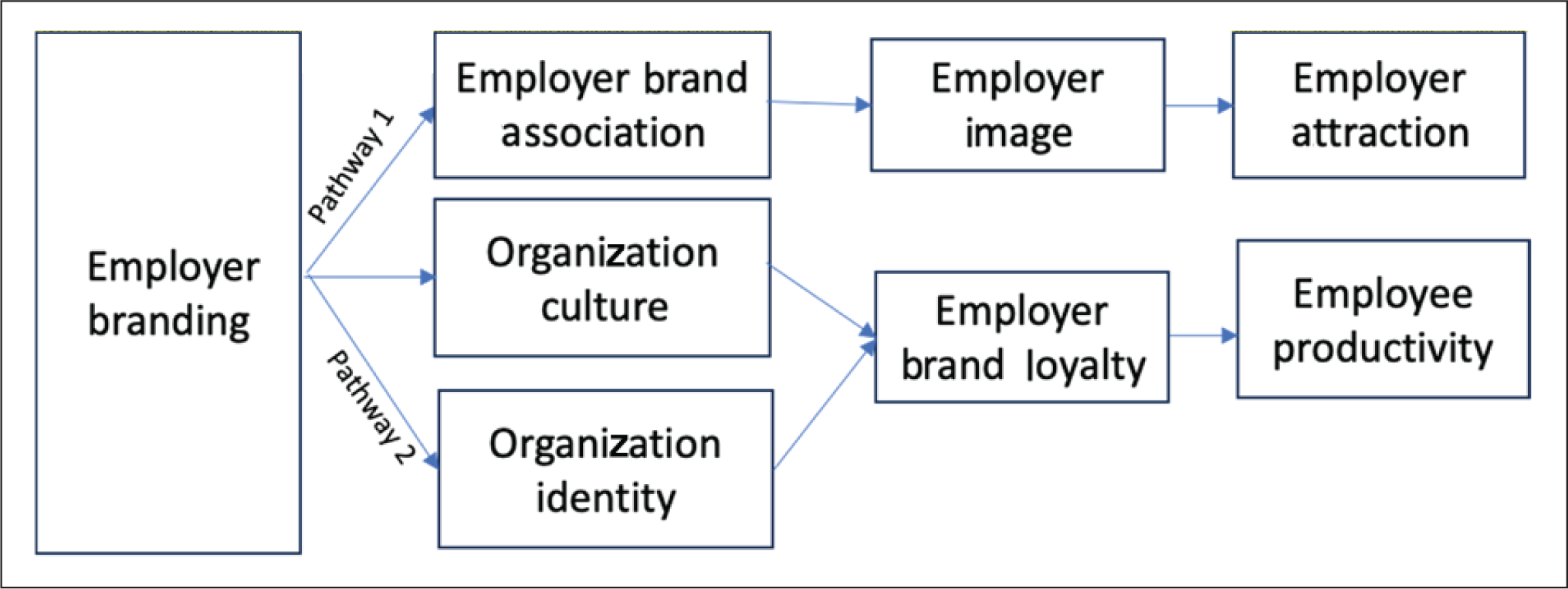
Backhaus and Tikoo (2004) conceptualized their model in two pathways:
Internal branding: Shaping existing employees’ values and beliefs and institutionalizing the employer brand in their behaviour (brand loyalty). External branding: Attracting potential candidates for job roles (brand image).
Their model, however, draws form the marketing study and assumes that formalized HR systems, marketing budgets and structured communication mechanisms existed. This model was typically designed in a large firm context.
Antecedents: Proposition 1 (A–F)
In MSMEs, where a formalized and structured process is a concern considering their limited resources, employer branding emerges through the antecedents. In the model, the six antecedents, Propositions 1A–1F, collectively express the relational and authenticity-based foundation of employer branding in MSMEs. These antecedents create an environment through which the leaders, employees and community network jointly towards projecting the organization’s image in the market. Essentially, these antecedents become the major factors influencing the employer branding process in the unique setting of an MSME compared to formal branding practices in large firms.
Linking Antecedents to Theoretical Pathways
Path 1: Psychological Contract—Internal Branding
The antecedents, specifically leadership-driven brand, contextualized EVP and employee advocacy, satisfy the implicit expectations in the minds of employees. Accessibility to leadership, open and transparent communication, flat structures, agile decision-making and authenticity contribute to strengthening the psychological contract with the current employees. The EVP also enables the organization to build the culture and strengthen the value system in the organization. When employees perceive that the implicit promises of growth, fairness and inclusion are fulfilled, they in turn reciprocate with loyalty and commitment (De Vos et al., 2003; Pattanayak et al., 2023).
Path 2: Signalling Theory—External Branding
Narrative-based communication, agile communication and community visibility send out signals about an organization’s culture and leadership reputation, creating an image about the organization. The signals enable the potential employees to form a perception of the credibility and trustworthiness of the organization (Lievens & Highhouse, 2003; Wilden et al., 2010) and reduce information asymmetry for job seekers, especially in the case of MSMEs where brand familiarity and visibility are anyways low.
Employer Branding Outcomes
When both the psychological contract and the positive signalling mechanisms work effectively influenced by the antecedents, they reinforce the employer brand construct which results in the following:
Brand association: Employees positively associate themselves with the brand. They associate the organization with trust, growth opportunities, great leadership and values that are deep rooted. Organization’s culture: Internalisation of the value system, leadership commmunication and fulfilment of the psychological contract build a strong organisation culture that promotes belongingness and growth. Organization’s identity: A collaborative alignment of ‘who we are’ as an organization builds the identity, integrating the external and internal images of the organization.
Integration with Backhaus and Tikoo Framework
The proposed adaptive model (Figure 3) integrates with the Backhaus and Tikoo model by replacing the formalized branding strategies with authenticity- and trust-based signalling, producing similar engagement outcomes (Zhang et al., 2022). In MSMEs, the internal brand is co-created by the leadership and employee interactions, while external brand emerges organically through customer trust and social visibility (Budhwar & Varma, 2011; Monteiro et al., 2020).
Proposed Adaptive Employer Branding Model for MSMEs Integrated with Backhaus and Tikoo’s Conceptual Framework of Employer Branding.
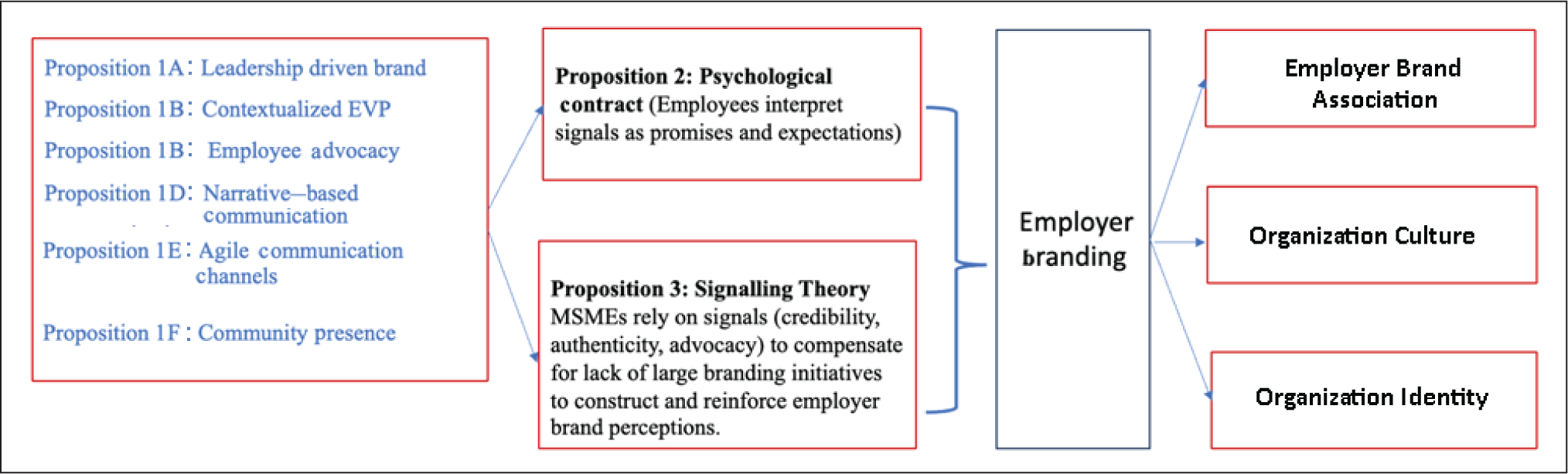
While preserving the cynical link between brand associations, organization’s culture and organization’s identity in the original model of Backhaus and Tikoo (2004) (Figure 4), the proposed model situates it within a relationship-driven, resource-constrained environment of MSMEs. This integration provides an empirically grounded extension of the employer branding theory for emerging markets, which needs to be studied in contextual settings (Pattanayak et al., 2023; Theurer et al., 2018). The focus is shifted from institutional branding to relational authenticity, aligning with contemporary research, which highlights purpose-driven, socially embedded employer brands (Junça & Dias, 2023).
Application of the Model
MSMEs need not replicate employer branding models designed for large firms. They can leverage their own strengths to build their image and reputation in the market by replacing formalised strcuture wiht informal relational attributes (Table 1). The model portrays a road map to build employee brands organically using their internal strengths such as authenticity and leadership credibility instead of expensive campaigns. Founders as custodians of the employer brand can easily shape their identity and visibility through social media and community visibility, aligning personal values and workplace behaviour with the organization’s culture. A contextualized EVP driving growth, belongingness, flexibility and benefits over pay enables the MSME to attract purpose-driven candidates, thereby strengthening the internal brand and encouraging employee advocacy, which act as strong brand ambassadors as potential employees trust first-hand experiences.
Integration of the Models.

The model guides MSMEs to use low-cost tools (LinkedIn, WhatsApp and Instagram) for better reach and story-based communication. The community play a critical part for MSMEs; therefore, participating in and building the community network strengthens credibility.
Implication on Theory
The proposed model contributes to the theoretical advancement of employer branding by extending existing large-firm frameworks into the underexplored MSME context. It foregrounds the importance of relational dynamics, informal signalling and psychological contract formation as central theoretical mechanisms shaping employer brand perceptions in small firms. The integration of Backhaus and Tikoo’s (2004) model with psychological contract theory and signalling theory provides a novel conceptual architecture that recognizes the non-formalized, leader-centric nature of MSME employment relationships. This reconceptualization expands employer branding theory beyond its traditional structural and marketing-oriented roots, offering a more nuanced understanding of how brand meanings are constructed in resource-constrained contexts. The model opens new theoretical pathways for examining how informal cues, leadership narratives and community presence function as brand-building substitutes for formal HR systems, an area that remains insufficiently addressed in the existing literature.
Implication on Practice
The proposed adaptive employer branding model offers multiple actionable insights for MSME owners, founders and HR practitioners. First, it highlights that employer branding in small firms is less a function of formal HR systems and more an outcome of leadership behaviour, relational dynamics and consistent informal signalling. This underscores the need for MSME leaders to consciously cultivate authenticity, transparent communication and value-driven interactions, as these behaviours directly shape employee perceptions and the psychological contract.
Second, the model suggests that MSMEs can strengthen their employer brand without large financial investments by leveraging contextualized EVPs, storytelling, employee advocacy and community presence. These practices, when embedded into daily operations, create a coherent narrative that attracts talent aligned with the firm’s culture and growth vision.
Third, by recognizing the central role of psychological contracts in small firms, practitioners are encouraged to systematically manage implicit expectations related to learning, growth, autonomy and trust. Addressing these relational elements can significantly enhance retention and commitment, particularly in resource-constrained environments.
Finally, the framework provides a structured yet flexible pathway for MSMEs to professionalize their employer branding efforts while staying true to their unique identity. Leaders can use it as a diagnostic tool to identify gaps, evaluate current branding signals and develop targeted interventions that strengthen both internal culture and external reputation.
In summary, this article challenges the prevailing assumption that employer branding is primarily the domain of large enterprises and argues for a more inclusive, size-sensitive perspective. It invites further inquiry into how micro and small enterprises build their reputation as employers through non-traditional but highly effective means. The conceptual innovation lies not in creating a new theory, but in reinterpreting existing constructs through a lens that reflects the operational and cultural nuances of the MSME sector.
Limitations
As a conceptual exploration, this article is subject to certain limitations. The proposed framework and insights are derived from an in-depth review of the existing literature, theoretical grounding and contextual understanding of MSME environments; however, the study does not include empirical data or primary research. The absence of interviews, surveys or case studies limits the ability to test or validate the model across different sectors or geographies.
Furthermore, while the article presents a theoretically informed model tailored to MSMEs, the variability within the sector itself presents challenges. MSMEs differ widely in terms of size, formality, ownership structure, industry and regional culture. Therefore, the generalizability of the conceptual framework across all MSME contexts must be approached with caution. Future research can build on this foundation by empirically testing the framework in diverse organizational settings using both qualitative and quantitative methods.
Another limitation lies in the evolving nature of employer branding itself. As labour markets, candidate expectations and digital technologies evolve, the strategies discussed may require regular re-examination and adaptation. Hence, the model should be seen as a dynamic and adaptable foundation rather than a prescriptive blueprint.
The limitations of this study also point towards its most valuable opportunity: the potential for future empirical validation.
While this study does not offer empirical generalizability, it lays the groundwork for a stream of future research that could meaningfully inform both academic understanding and managerial practice in employer branding within the MSME ecosystem.
Scope for Future Research
Future studies could empirically test the adaptive employer branding model to validate its pathways and assumptions across diverse MSME contexts, which could include comparative studies across firm sizes, industry sectors and stages of business maturity. Longitudinal research would be particularly valuable to examine how psychological contracts evolve over a period of time in small firms and how leadership signals influence retention trajectories. Comparative studies between MSMEs and large organizations can further clarify boundary conditions, identifying which elements of branding are universally applicable and which are uniquely shaped by firm size and resource constraints. Lastly, scholars may investigate how founders’ identities, values and leadership styles interact with cultural norms to co-create employer brand meaning, enriching theoretical discourse on founder-imprinted cultures.
Footnotes
Declaration of Conflicting Interests
The authors declared no potential conflicts of interest with respect to the research, authorship and/or publication of this article.
Funding
The authors received no financial support for the research, authorship and/or publication of this article.