




Abstract
This study analyses the relationship between pay satisfaction and commitment to the organization, as well as the effects of talent management (TM; alignment, talent competency, and job autonomy) on organizational commitment. A sample of 220 respondents, including administrative workers from various departments, hotel managers, and other staff, was analyzed using one-way ANOVA and hierarchical regression analysis (80 from Skyline Resort and 140 from Radisson Blu Hotel). The study shows that TM considerably impacts an employee’s organizational commitment. Furthermore, pay satisfaction serves as a partial mediator between TM and organizational commitment. The study emphasizes the importance of employee satisfaction in achieving organizational success. The study has significantly contributed to understanding Human Resource Management (HRM) procedures in the Indian hospitality business. Companies should assess and improve employee job satisfaction while implementing suitable HRM practices. Those who finally quit the organization typically have lower levels of commitment than those who stay, demonstrating that attitudes are a reliable indicator of commitment behavior.
Introduction
The willingness of employees to invest their time and effort into finishing the duties assigned to them is critical to the success of any firm. This behavior facilitates the smooth operation of the organization even if it is neither required nor regulated (Colbert, 2004). Talent management (TM) has become a hot topic. The number of publications and books about TM has significantly increased in recent years as organizations increasingly see it as a high-priority issue worldwide (Kravariti et al., 2025). According to Agina et al. (2025), effective TM is crucial in determining an organization’s success and is essential for survival. In addition to the three previously described streams of thought, we recognize and add a fourth line of developing TM ideas that emphasizes the identification of critical roles with the capacity to differently alter the firm’s competitive advantage (Abid et al., 2025). The latter strategy informs our theoretical advancement. Our theoretical viewpoint is consistent with compensation considerations and has a huge impact on individual employees. Wages and salaries are the main means of income for the majority of people, and they may also be used as important indicators of a person’s success in life or social position (Peters & Jetten, 2023). Pensions and health insurance benefits have a huge impact on the well-being and financial security of employees and their families. As a result, it should come as no surprise that workers have attempted to influence these decisions in a variety of ways, including through unions, government control of remuneration decisions and the court system. As a result, it is critical to understand how people are affected by (and respond to) particular compensation decisions (Despard, 2023). They must be content with their total compensation because this could affect their attitudes and behaviors. Research has conclusively established that pay discontent can have significant and unfavorable effects on various employee outcomes (Almomani et al., 2022). According to Siripipatthanakul et al. (2022), employee unhappiness with remuneration, for example, might increase employee theft and cause attrition. Due to this, there is still “a disturbing lack of clarity regarding the meaning, its reach, and overall objectives of talent management” (Lewis & Heckman, 2006), even though TM has become more and more popular since 2007. In addition to the problems underlying the idea’s definition, these writers contend that a concerning absence of conceptual advances has limited the amount of academic work on the topic and its utility in real-world applications (Lewis & Heckman, 2006). Accordingly, there is currently a gap between theory and practice, and there is also very little agreement on the concept of TM and the constructs that form its foundation (Thunnissen, 2016). Both practitioners and academics now frequently discuss TM as one of the most essential issues in people management and development. The links between TM and organizational success are still unclear, even though managers seem to understand the significance of TM (Montero Guerra & Danvila-Del Valle, 2024). In this featured piece that was invited, I make the case that many talent management thinkers have a limited understanding of performance, which contributes to the inability to manage and develop talent properly. This study fills a critical gap in the literature by examining the link between pay satisfaction (PS), organizational commitment (OC), and TM practices. This study attempts to gain a better understanding of the crucial roles that TM and PS play in employees’ loyalty to the hotel industry.
Literature Review and Hypotheses Development
Resource-based View of the Firm
According to the resource-based view (RBV; Barney, 1991), firms can employ intellectual and actual assets to accomplish their business goals. If these assets have value, are distinctive, and are challenging to replicate, they can be the foundation for the company’s competitiveness (Amit & Schoemaker, 1993). As a result, they have an impact on organizational results and business performance. Resources are stockpiles of easily available factors that a corporation owns or controls. A range of additional assets of the company and binding mechanisms, such as the internet, reward systems, and confidence between administration and labor, contribute to the transformation of resources into finished goods or services. These resources include transferable know-how (e.g., patents and licenses), economic or material assets, personnel, and so on (Amit & Schoemaker, 1993). Managers are concerned with developing a collection of tangible and intangible resources whose economic returns can be appropriated by the firm by focusing on the firm as the relevant unit of analysis. The fundamental tenet of this viewpoint, also known as the RBV of the firm, is that the firm may generate economic rents by pooling various complementary and specialized resources and capabilities that are scarce, long-lasting, difficult to trade, and difficult to imitate. Therefore, from the standpoint of resources, a company’s strategic assets have worth beyond what they add to the production process (Ferreira & Ferreira, 2025). Although the RBV has been significant and pertinent to the area of Strategic Human Resource Management (SHRM), researchers have identified features of the approach that are critical yet difficult to address in study and practice. This research broadens the RBV by examining some of its problematic characteristics via the viewpoint of complexity (Colbert, 2004).
The firm’s RBV serves as the foundation for this investigation. RBV (Barney, 1991) states that when a company has resources that are uncommon, valuable, hard to replicate, and difficult to replace, it can maintain a competitive edge. These resources can be intangible (organizational and managerial systems) or tangible (financial and physical assets). Among these, human resources are particularly critical because they embody firm-specific knowledge and capabilities that competitors cannot easily replicate (Lindblom & Martins, 2022). In the context of the hospitality industry, employees represent a strategic asset rather than merely an operational cost (Helfat et al., 2023). TM practices such as structured development programs, career progression systems, and performance management are mechanisms through which organizations develop and strengthen this strategic human capital (AlQershi et al., 2022). However, RBV also implies that merely possessing talented employees is insufficient. The firm must create conditions that allow these human resources to remain committed and motivated so that their capabilities translate into sustained organizational value (Pham et al., 2023). This is where PS becomes theoretically relevant. Compensation systems are part of the firm’s strategic resource configuration. When employees perceive pay as fair and rewarding, it strengthens their attachment to the organization and reduces the risk of losing valuable talent (Wulandari et al., 2024). In this sense, PS acts as a mechanism that helps retain and fully utilize strategic human capital. Without fair compensation, even well-designed TM practices may fail to generate long-term commitment, thereby weakening the firm’s ability to appropriate the value created by its human resources (Sypniewska et al., 2023). By positioning PS as a mediator, this study extends RBV beyond the traditional argument that “talent creates advantage.” Instead, it demonstrates that the value of talent is realized only when supported by complementary HR practices, particularly compensation systems that reinforce employee commitment. Thus, the study contributes to the RBV literature by empirically showing how internal HR mechanisms interact to transform human capital into sustained OC within a service-driven industry like hospitality (Srivastava & Rao, 2025).
Talent Management
Gallardo-Gallardo and Thunnissen (2016) identify the talent pool, or those with an opportunity for succession who constitute a guarantee of the company’s future performance. Meyers et al. (2013) have been the main areas of focus for the conceptualization of talent. When considering these high-potential groups as strategic groups (Lewis & Heckman, 2006), the resource dependency theory views them as fundamental. We believe TM represents an innovative route to organizational efficiency or a comprehensive, all-encompassing approach to human resources and business planning. This improves the capacity and efficiency of those with abilities that can now as well as in the future have a substantial impact on the organization as a whole. Furthermore, it intends to increase the overall performance in the workforce, allowing everyone to realize their full potential.
Although this concept of talent is open-ended, it strikes a careful balance between current performance and growth. Performance has long been the focus of assessment and administration. It focuses on past events and now, whereas prospective is concerned with the prospects for the future. In our view, the possibility exists, can be found, and can be realized (Agina et al., 2025).
Pay Satisfaction
Men ranked money fifth in significance among the top 10 job choices, while women placed it seventh (Siripipatthanakul et al., 2022). Although neither men nor women considered money the most important, pay was a crucial consideration, the top priority in other people’s preferences. Over-pay has grown in importance for people globally (Bahuguna et al., 2023). In organizations, managers use money to entice, keep, and encourage workers (Alananzeh et al., 2023). PS is crucial because pay discontent promotes turnover, unionization efforts, and immoral or abnormal behavior (Yildiz & Esmer, 2023). Money is both an indicator of worth and an instrument for commerce. Money, however, means different things to different people. Consumer experience is absolute, whereas financial happiness is relative (Hsee et al., 2009). People struggling financially tend to be obsessed with money (Valk & Yousif, 2023). The meaning of money is a concept that academics cannot ignore when attempting to understand PS (Ghaderi et al., 2023).
Organizational Commitment
Around the world, academics have shown great interest in job-related attitudes such as OC and satisfaction. Dedicated and pleased employees frequently provide excellent work that increases organizational productivity (McDonnell et al., 2016). OC is currently defined as an individual’s affiliation and participation in a specific organization. The most generally used strategy for business dedication in the literature defines commitment as an expressive or emotional relationship to the company, in which the firmly invested individual aligns with, engages in, and values belonging to the firm (Wong, 2025). OC is the extent to which a person feels connected to and actively involved in an organization. Last but certainly not the least, a lesser-known but equally effective technique has been to define commitment as a belief in one’s obligation to the organization (Jooss et al., 2024).
Talent Management and Organizational Commitment
TM research has primarily focused on the financial aspect of employment in order to maximize shareholder wealth (Collings, 2014). An inadequate understanding of TM methods has been caused by the failure to take into account either the non-economic value of these procedures or the interests of hotel sector personnel (Gallardo- Gallardo & Thunnissen, 2016; Thunnissen, 2016). Different approaches have been used to conceptualize and assess OC. The two experiments discussed here were carried out to examine various facets of a three-component commitment model that combines these multiple conceptualizations. The paradigm states that the affective components of the organization are the employees’ emotional connections, verification, and participation with it (Ribeiro et al., 2022). The continuance element deals with commitment in light of the expenses workers connect with quitting the company (Chigeda et al., 2022). The normative feature also relates to employees’ sense of duty to stay with the company (Martela, 2023). The study of commitment to the organization has recently received much attention (Luna-Arocas, 2023). However, like many other organizational psychology topics, commitment has been conceptualized and evaluated in a variety of ways. Highly committed workers are the least likely to quit the company, according to every interpretation of engagement found in the literature (Sypniewska et al., 2023). Nevertheless, this similarity may not be as important as the differences among the different conceptualizations of commitment. These differences pertain to the psychological state that commitment represents, the risk factors that contributed to its formation, and the expected behavior (apart from staying) after commitment. Therefore, if employers give their goals more serious thought, workers will be more engaged and contribute more to the company (Collings, 2014). According to Kumar and Raghavendran (2013), staff members who understand the importance of their work and how it affects consumers are more devoted to their employers. Because of this, the business must show an interest in learning about employees’ interests and work habits. What is the best for and the most beneficial to the industry? Organizations with valuable employees who are not dedicated will have access to talented but not committed workers. In companies with high commitment but low value, on the other hand, personnel results will be merely average (Luna-Arocas & Morley, 2015). If employees are treated properly and feel that their skills and abilities are respected at work, they will perform better (Bjorkman et al., 2013). As a result, workers who receive a variety of financial and non-financial incentives will feel more a part of the company (Boxall, 2013; Rounak & Misra, 2022). Also, remember that employee and corporate management perspectives on talent may vary. If these ideas are not in line, the corporation may not have the desired impact on the organizational behavior of its personnel (Sonnenberg et al., 2014).
Similar to this, there is a current tendency for people to change employment as alternative job offers better suit their skills and preferences (Bidwell & Briscoe, 2010). If the relationship’s commitment mediates, high-potential employees are less likely to leave the company (Malik et al., 2017). As a result, employees who believe they are recognized as talents inside the company are more committed than those who do not think they are recognized or unaware of it (Shah et al., 2024). TM practices and initiatives are intended to draw in, select, hire, develop, and keep talent. Since these individuals will produce the best results, organizations must place additional emphasis on talent development and retention in addition to the first three areas (Gul et al., 2023). Talented individuals are more employable, which makes them more likely to leave the company and find better employment. People have referred to this as dysfunctional turnover. Work commitment thus becomes a crucial factor in personnel management as a retention strategy. Measured by how much an organization’s members identify with it and participate in its activities, OC focuses on retention as well as turnover (Camilleri et al., 2024). Employee commitment affects how much they want to grow the company (Ampofo et al., 2023; Luna-Arocas, 2023; Raziq et al., 2025). From the above argument, the following hypotheses were derived:
H1: Talent management positively affects the organization’s commitment.
Talent Management, Pay Satisfaction, and Organizational Commitment
Numerous organizational characteristics, such as autonomy, variety, identity, and feedback, have been linked to PS. Since they assist in meeting other human demands that money does not, non-monetary characteristics like flexibility would be related to PS (Hayat & Afshari, 2022). This is merely one of the elements that highlight the stronger link. According to Otoo and Rather (2024), PS is the mismatch between what workers think they should be paid and what they actually receive. As a result, the employee’s perception of a rich talent development environment will directly affect their level of PS by offsetting the employee’s evaluation of the organization’s effective TM practices. So, there are favorable connections between key job aspects and pay-level satisfaction (Otoo & Rather 2024). According to the specialized literature, organizations should adopt various compensation structures based on the contribution anticipated from their workforce (Fulmer et al., 2023). These days, the term “total reward” is employed, and it encompasses both monetary and non-monetary. Compensation is the “agreement” that people enter into with organizations in exchange for their labor (Kaliannan et al., 2023). Additionally, in organizations that use TM, executives use feedback to assess their staff’s performance to help them improve inside the company (Shah et al., 2024). By clearly understanding what the company will pay them for according to the effort they put in, the employee will be more satisfied with their compensation in this way. In the development processes, this issue is discussed with the manager, which is seen as fairer (Luna-Arocas, 2023). TM cultures can focus on individual talent by promoting an autonomy/empowerment and fairness culture. Consequently, there is a strong and positive correlation between these organizational characteristics and PS (Wen et al., 2022). Employees view a highly motivating job as a reward unto itself. These authors discover and confirm a favorable correlation between job characteristics and PS, indicating that workers with high job motivating potential are less concerned about wage issues since it helps them reach their full potential (Luna-Arocas, 2023). According to Ghaderi et al. (2023), increasing organizational success calls for extrinsic and intrinsic rewards to be given at ever-increasing levels. According to a recent study, professional development opportunities were the primary motivator driving corporate efforts to maintain the loyalty of exceptional individuals (Shahzad & Khan, 2023). As a result, to secure commitment to develop talent retention strategies, the global perspective of total reward, which encompasses financial and non-financial rewards, is more than necessary (Camilleri et al., 2024).
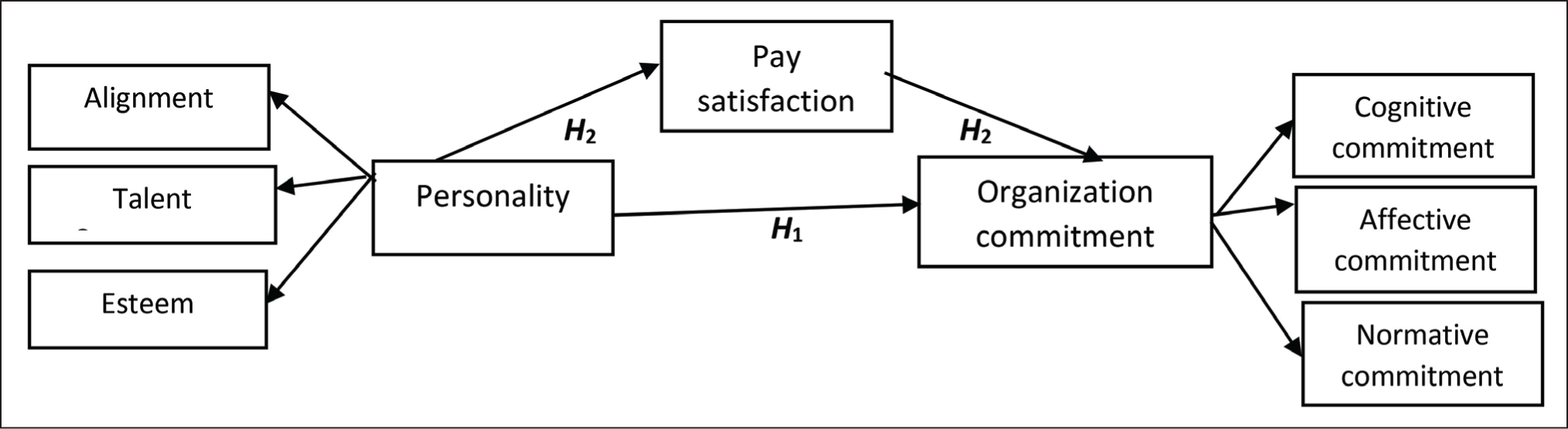
There is some proof that commitment, which includes a declared wish to stay with the company, is highly and negatively correlated with turnover. Therefore, it is expected that people who are highly committed to an organization’s aims and willing to expend a considerable deal of work in that direction would likely stick with the company in an endeavor to promote the attainment of such highly regarded goals (Bahuguna et al., 2023). Certain situations call for measures of PS that may not be as good a predictor of turnover as OC. For instance, as the person possibly is unhappy with their wages or supervisor, an intense dedication toward the organization’s objectives overcomes such unhappiness in the choice to keep participating (Berber & Gasic, 2024). In other situations, such as when a worker’s salary is significant to them and the worker is highly unsatisfied with it, the employee may choose to participate based more on their level of contentment with different aspects of their employment than their level of devotion (Malik & Singh, 2014). A group can only continue to function effectively if its members participate and exhibit the required organizational behaviors (Lakshminarayanan 2017; Patwardhan et al., 2018). Key outcomes, including job satisfaction, employee recruitment, retention of staff, effectiveness, adaptability, collaboration, skill acquisition, and other factors, may be directly influenced by compensation. The efficacy of other human resource activities, including recruiting, selection, training, and development, may be facilitated or constrained by its influence, which can also be indirect (Çavuş et al., 2025). In either scenario, compensation is a crucial strategic sector due to its high costs and possible considerable impacts on attitudes, behaviors, and organizational success (Fulmer et al., 2023). Furthermore, several studies have found that the payment system impacts the organization’s willingness to let people leave (Rodrigue & Cox, 2024). However, in this relationship with employee dedication and loyalty, it turns out that money is not the only factor that matters. In a similar spirit, Patwardhan et al. (2018) claim that employees are loyal to the business if their ambitions align with the company’s objectives. Companies must employ innovative and alluring talent recruitment tactics, given the lack of valuable talent in the marketplace. Compensation is a crucial strategic sector in either scenario due to its high costs and possible considerable impacts on attitudes, behaviors, and organizational success (Alhajaj & Ahmad, 2024) (Figure 1). The following hypothesis was proposed:
H2: Pay satisfaction positively mediates the relationship between TM and OC.
Conceptual Model.
Methodology
Sample
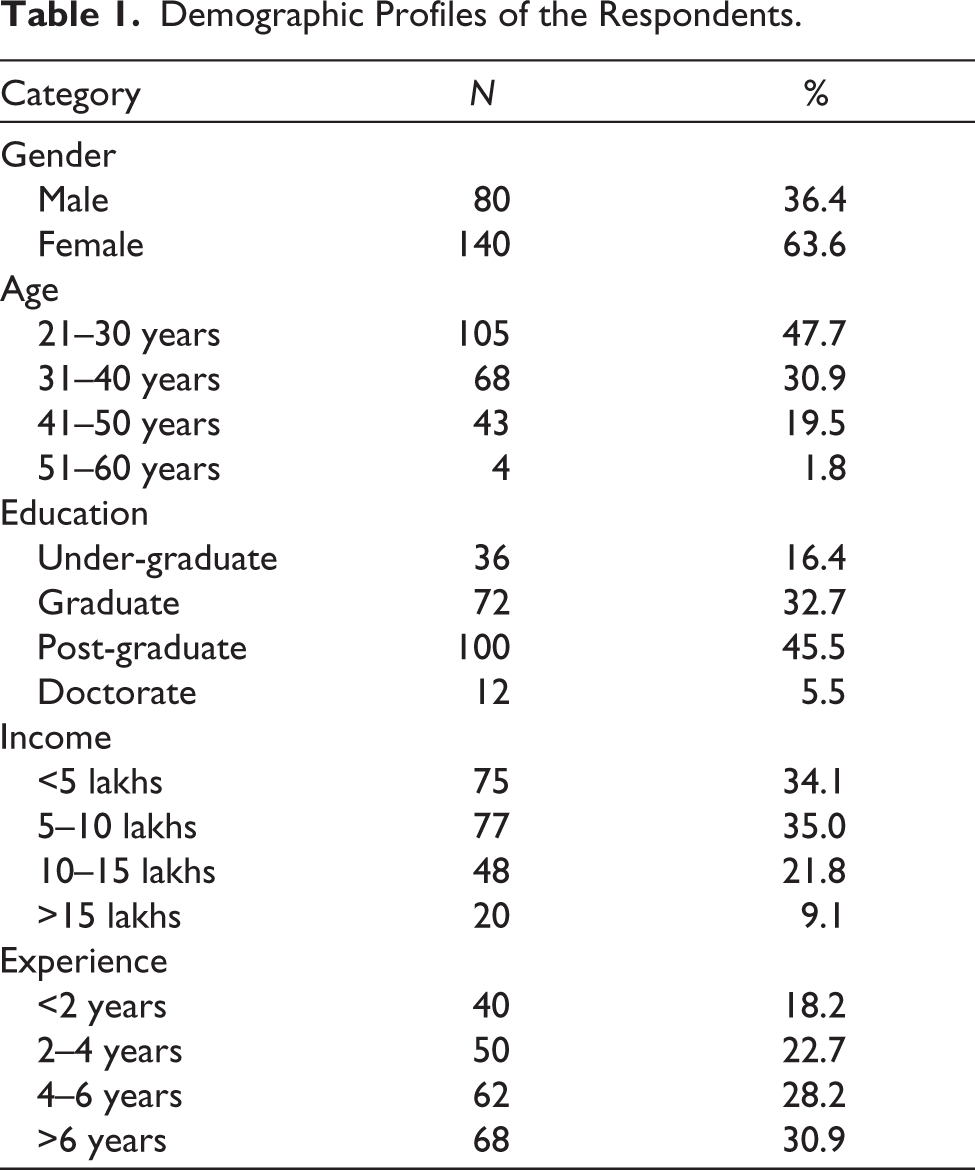
The study was conducted in two leading hospitality organizations in Indore, Madhya Pradesh: Skyline Resort and Radisson Blu Hotel. These hotels were purposively selected because they represent structured, professionally managed, and high-performing establishments within the regional hospitality sector. Both operate with formalized HR systems, diversified departmental structures, and standardized compensation practices, making them suitable settings for examining TM and OC in a service-intensive environment. The study is not comparative; rather, the two hotels were treated as part of a single hospitality context to enhance data variability while maintaining industry consistency. The target population comprised full-time employees across managerial, supervisory, and administrative roles in both hotels. To guarantee representation across departments and levels of hierarchy, stratified random sampling was used. In the first stage, employees were categorized into strata based on their job position (e.g., HR managers, department heads, administrative staff, and operational personnel). In the second stage, respondents were randomly selected from each stratum using a random number method to minimize selection bias and improve representativeness. Initially, 600 employees (300 from each hotel) were identified as the accessible population. However, due to limited accessibility, time constraints, and voluntary participation conditions, 220 usable responses were obtained (80 from Skyline Resort and 140 from Radisson Blu Hotel) (Table 1).
Demographic Profiles of the Respondents.
Measurement
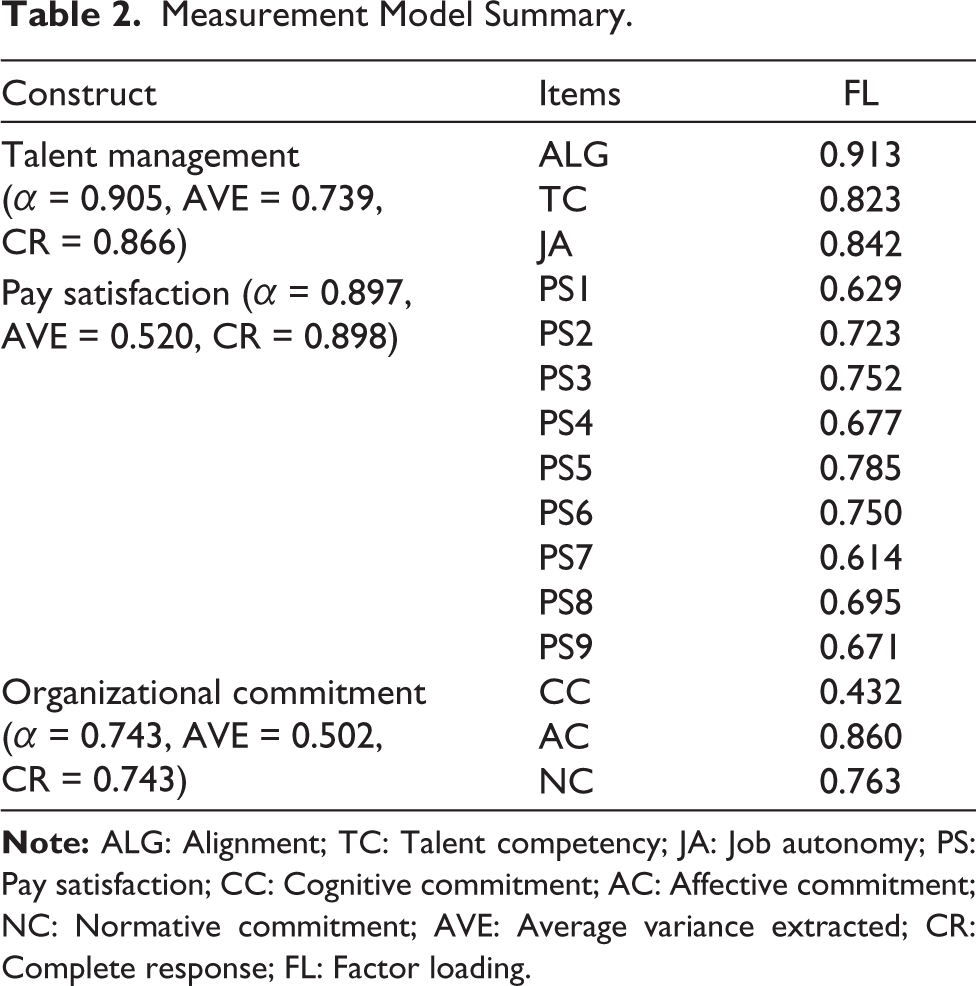
SEM examined the measurement models using the specified variables’ CFA. Table 2 shows that the three components produced positive results for variance extracted and composite reliability. The CFA’s reliability calculations exhibit scale dependability, all above the 0.70 cut-off figure. Thus, the CFA promotes reliability, convergent validity, and the overall measurement model. The alignment, talent competency, and job autonomy scale is adopted. Initially, a nine-item PS survey created by Heneman and Schwab (1985) was thought to be used. The three characteristics of OC are normative commitment (NC), affective commitment (AC), and cognitive commitment (CC). There are five components in each of these three sub-dimensions. Five measures of CC, AC, and NC were first created by Allen and Meyer (1990).
Common Method Bias
“Common method bias” was investigated statistically using Harman’s one-factor test. Exploratory factor analysis was used to examine each of the 39 items that represented the study variables. The findings indicated that no single factor could adequately account for the diversity across these variables, as only 29.73% of the variation could be assigned to a single factor. Therefore, it suggests that “common method bias” is not a significant worry in this research.
Analysis and Result
Validity and Reliability of Measurement Model
SEM examined the measurement models using the specified variables’ CFA. Then, in order to validate the study assumptions, we constructed many SEM models using AMOS software (version 23). Table 2 shows that the three components produced positive results for variance extracted and composite reliability. The AVE and CR value measures the internal consistency of a measure in the same way that the coefficient α does. The CFA’s reliability calculations exhibit scale dependability, all above the 0.70 cut-off figure. Thus, the Confirmatory Factor Analysis (CFA) promotes reliability, convergent validity, and the overall measurement model.
Measurement Model Summary.
One-way ANOVA for Verifying Significant Effects of Demographic Profiles on the Study’s Main Construct
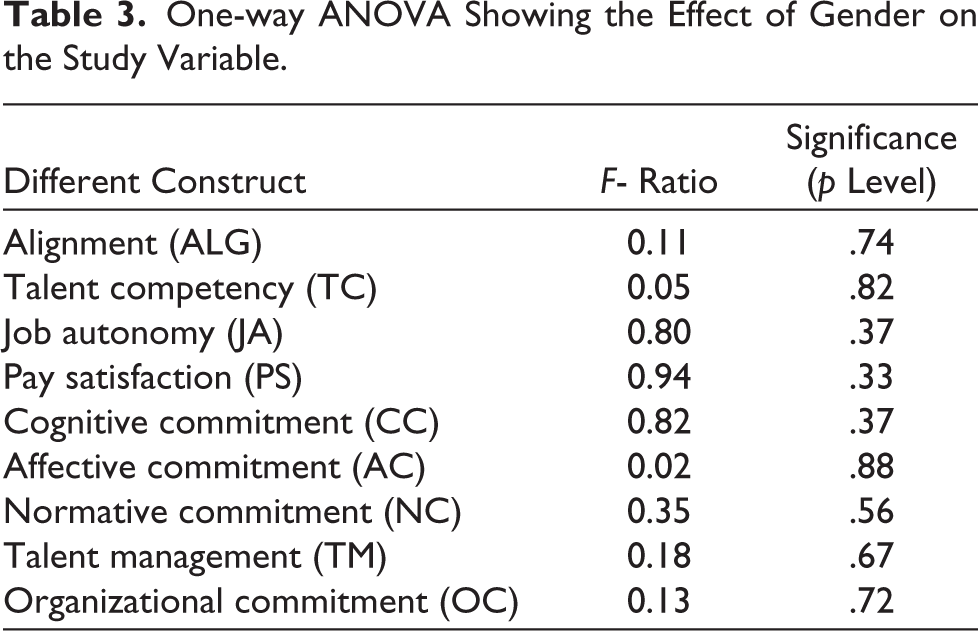
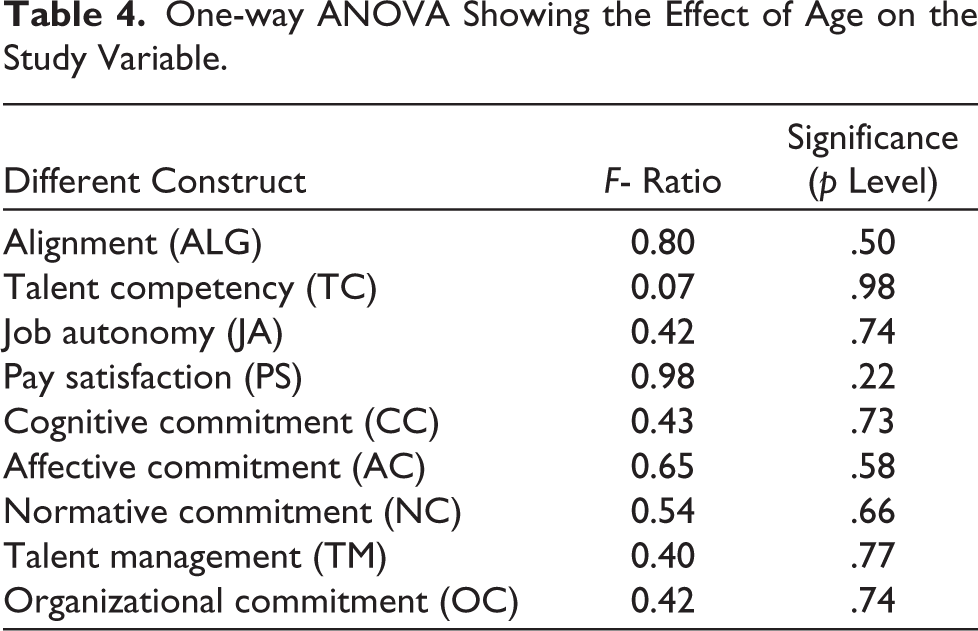
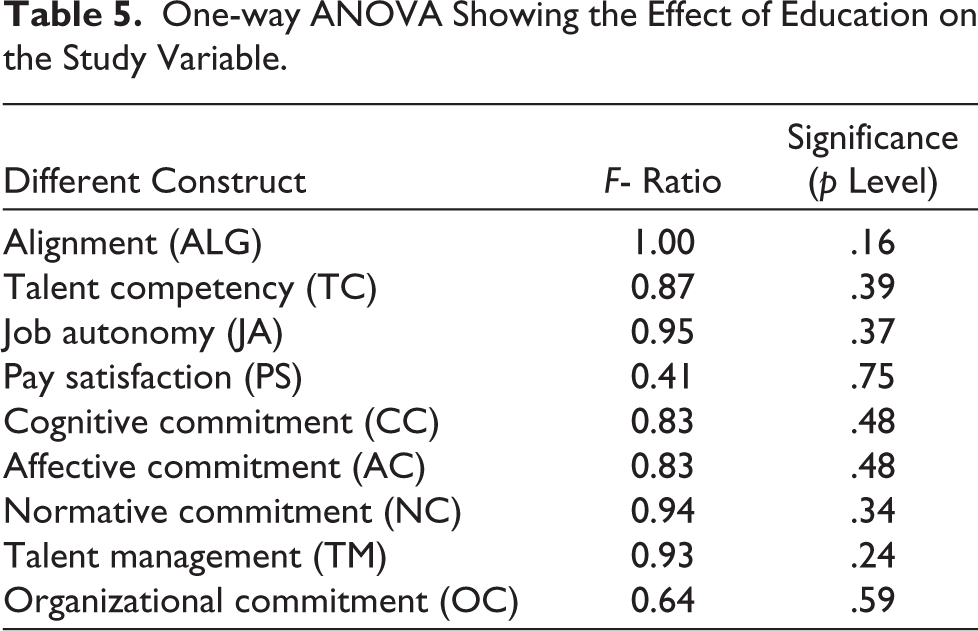
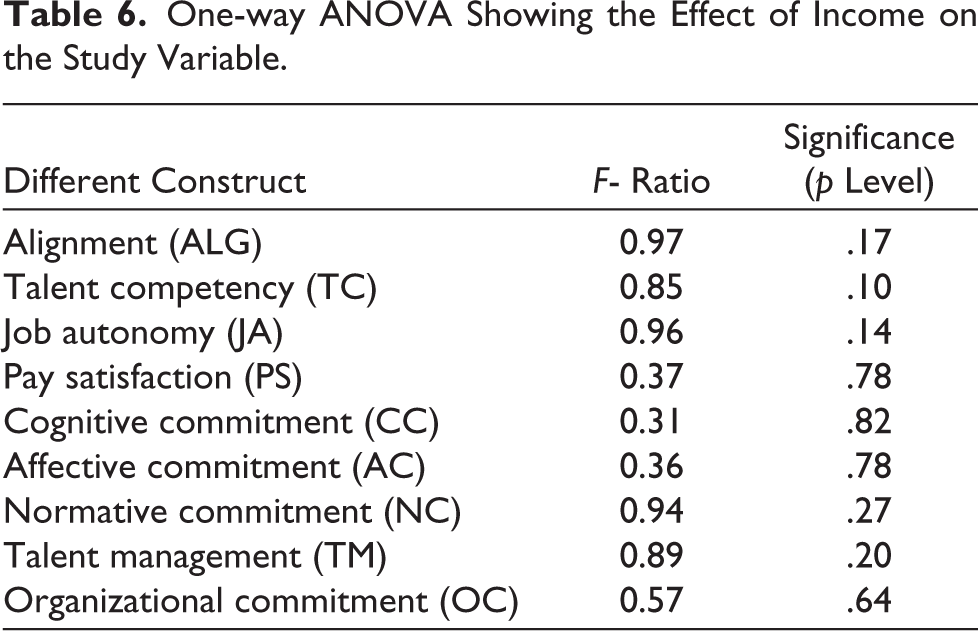
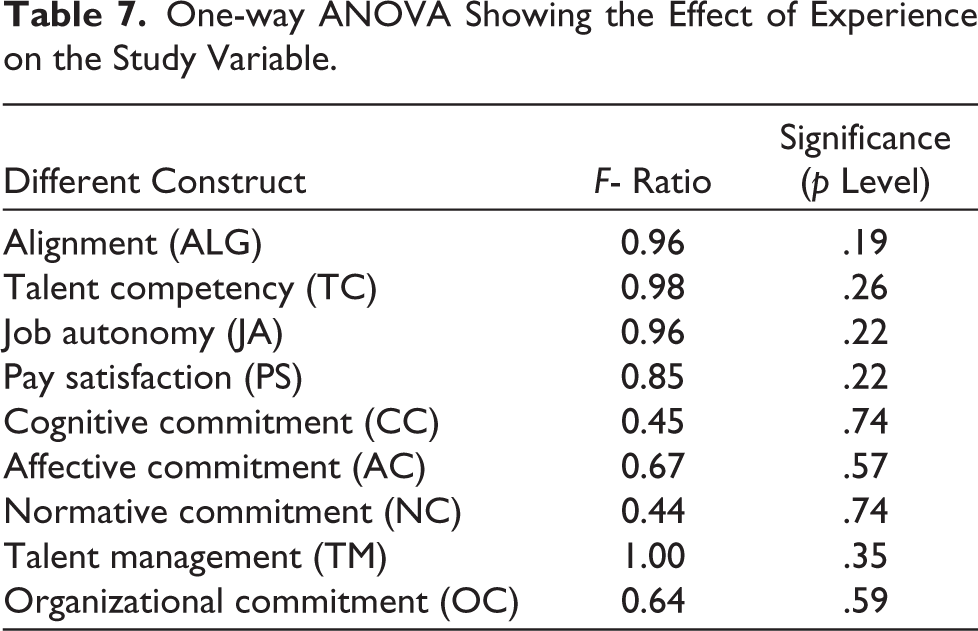
This section of the data analysis displays the analysis of variance (ANOVA) done on all employee responses from the hotel industry for all sample profile analysis components. ANOVA was utilized since the effects of each parameter were studied separately. Tables 3 to 7 indicate how gender, age, education, income, and experience affect the research constructs used in the current investigation. An ANOVA analysis of the respondents’ demographic profiles revealed that this attribute did not affect other research elements (Tables 3–8).
One-way ANOVA Showing the Effect of Gender on the Study Variable.
One-way ANOVA Showing the Effect of Age on the Study Variable.
One-way ANOVA Showing the Effect of Education on the Study Variable.
One-way ANOVA Showing the Effect of Income on the Study Variable.
One-way ANOVA Showing the Effect of Experience on the Study Variable.
Linear Regression Analysis Results.
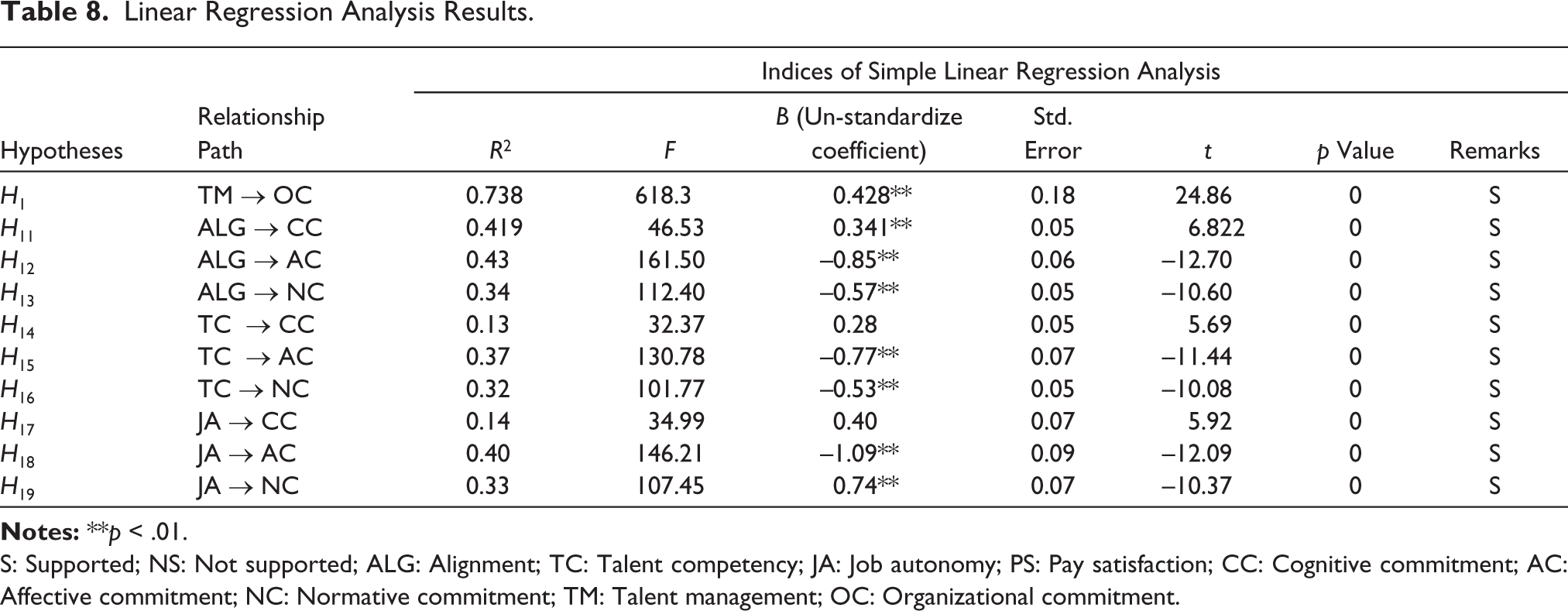
S: Supported; NS: Not supported; ALG: Alignment; TC: Talent competency; JA: Job autonomy; PS: Pay satisfaction; CC: Cognitive commitment; AC: Affective commitment; NC: Normative commitment; TM: Talent management; OC: Organizational commitment.
Research Hypotheses Test Through Linear Regression Analysis
The results of the linear regression analysis are reported in Table 8. Figure 1 shows experimentally validated accuracy hypotheses based on newly gathered primary data. Tables 8 and 9 reveal that all TM practices were organizational solid commitment and PS indicators. The hypotheses are supported by the regression analysis results at the 5% level. Regression analysis was used to evaluate the first hypothesis and establish if the most important factors influencing employee loyalty to the company are the direct effects of TM strategies. According to Table 8, the R2 value was influenced by TM and every other sub-construct (adjusted R = 0.738, F = 618.3, p < .05). Seventy-three percent of the difference in performance may be explained by these TM aspects, according to an R2 value of 0.738. The current study supported H1, as indicated by the results in Table 9.
Mediator Procedure
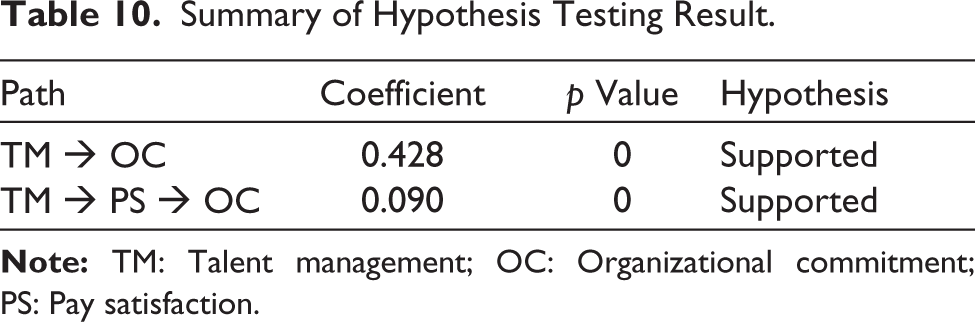
Next, the mediation effect was examined (Tables 6 and 10). The study used a user-defined estimand in AMOS 23 with 5,000 bootstrap samples to test the mediation hypothesis in addition to the one that was previously mentioned. A statistically significant indirect influence of PS between TM and OC was found (TM⃠PS⃠OC: [H2] = 0.090, 95% Boot-LLCI = 0.055, Boot-ULCI = 0.147). The results revealed a significant indirect effect of Talent Management (TM) on Organizational Commitment (OC) through Pay Satisfaction (PS) (β = 0.090, 95% CI [0.055, 0.147]). The link between TM and OC is partially mediated by PS. Thus, H2 was supported by the study.
Summary of the Mediation Effect.

Summary of Hypothesis Testing Result.
Conclusion
The outcomes of this study provide persuasive evidence that TM plays a critical role in influencing employee organizational commitment through a comprehensive analysis of empirical data and theories linked to TM, PS, and OC. The regression analysis shows a substantial relationship between TM and OC.
The linear regression analysis results highlight TM’s importance as a strong PS and OC driver. The exceptionally low p values (p = 0) of regression analysis illustrate the statistical robustness of these findings, supporting the assumptions. According to the calculated R2 value, TM and its sub-constructs explain more than half of the variation in employee performance. This indicates how TM significantly impacts the employees’ overall OC.
Furthermore, mediation effect analysis sheds light on the role of PS in mediating the relationship between TM and OC. The data show that PS partially mediates this relationship, offering a better understanding of how TM affects OC. Because employees are vulnerable to the effects of TM, these findings are particularly pertinent in the hospitality sector. In summary, this study highlights the importance of effective human resource management in the corporate sector and broadens our understanding of TM’s pivotal role in influencing PS and OC.
Discussion and Implications
This study attempts to better understand the role that TM and PS play in employee loyalty to the company in the context of the hotel industry. This implies that both economic and non-economic factors need to be taken into account in order to achieve organizational success. It is now widely acknowledged that a company’s human capital can give it a competitive edge and that TM policies directly affect this capital (Delery & Shaw, 2001). Our research demonstrates that, although through salary satisfaction, employee talent, thinking competencies, job autonomy, and TM strategy alignment all have a direct impact on employees’ OC. McDonnell et al. (2016) state that this study also shows how important it is to include PS in the employee retention equation, even though it is neither the only nor the most important motivating factor. The conceptual model of the partial mediation relationship with PS actually produces better results and provides a clearer understanding of the role that money plays in the organization. This study backs up the idea that, in addition to money’s extrinsic motivating power, other intrinsic motivators associated with TM should be employed.
Additionally, in line with previous studies, a positive relationship between PS and TM perception has been found. This emphasizes how important it is to understand how an employee’s perception of TM positively correlates with pay. The results clearly demonstrate that attitudes are a good predictor of behavior when it comes to commitment; individuals who finally leave the organization are typically less dedicated than those who stay. This requires drawing in people who share the organization’s values. In order to give them the skills they need and to empower them as much as their roles permit, the staff also needs to be evaluated and developed (developing TM). But above all, workers should possess TM competence or talent mentality. The ability to draw in, recognize, nurture, and keep top talent is the basis of this approach. This talent paradigm highlights the significance of PS to businesses as a source of favorable impressions and how these perceptions can affect how individuals are perceived to perform on an individual level. The method does not assume that pursuing PS as the main key to OC is required.
On the other hand, it suggests that both PS and OC may be impacted (directly and indirectly) if we develop and execute a comprehensive TM system and subsequently cause TMC in employees. Overall, the study’s conclusions suggest that, when determining whether or not to stay in this type of organizational setting, an individual’s general opinions about the company may be more significant than their more specific opinions about a particular position. It is important to keep in mind, nevertheless, that these findings came from a sample of hotel industry employees. OC might be more important in the decision to join because of the organization’s structure and objectives.
Theoretical Implications
This study does more than merely establish that TM has an impact on OC. It offers a deeper explanation by identifying the process through which this relationship unfolds within the hospitality industry. In particular, the result that PS acts as a partial mediator enriches the theoretical understanding of how TM translates into stronger commitment. From the perspective of the RBV, talent is considered a strategic asset that can generate a sustained competitive advantage. However, the findings of this study indicate that talent initiatives alone may not be enough to foster commitment unless employees feel fairly and adequately compensated. In simple terms, TM initiatives create the foundation for value, but PS strengthens employees’ emotional attachment to the organization. By doing so, the study connects RBV with concepts from organizational behavior, such as equity and social exchange, to better explain the TM–OC link. Furthermore, the presence of partial mediation reveals that TM affects commitment in two ways: directly, through development opportunities, recognition, and career advancement, and indirectly, through employees’ satisfaction with pay. This integrated explanation advances the theory by emphasizing that OC emerges from a combination of HR practices and employee perceptions, especially in labor-intensive service settings like hospitality.
Managerial Implications
For hospitality managers, these findings offer practical and industry-relevant directions. To begin with, strengthening TM practices—such as systematic training programs, clear career advancement opportunities, and recognition linked to performance—can directly enhance employees’ sense of belonging and commitment to the organization. The finding that PS plays a partial mediating role also suggests that talent initiatives alone may not deliver optimal results if employees feel that compensation is inequitable or insufficient. Given the nature of hospitality work—characterized by extended hours, rotating shifts, and high emotional demands—fair and transparent pay policies, prompt incentives, service-based bonuses, and performance-driven rewards are especially important. Compensation should therefore be viewed not merely as a routine administrative matter but also as a strategic tool that strengthens and supports TM efforts. Moreover, because PS only partially explains the link between TM and commitment, managers must also consider other influencing factors such as work–life balance, effective leadership, and a positive organizational culture. An integrated and well-aligned HR system, rather than isolated HR practices, will be more successful in fostering sustained OC in the hospitality sector.
Limitations and Scope for Future Research
Given the limits of the study, it may have been more relevant to investigate subjects other than OC. To confirm the association, more studies on the impact of people management strategies on turnover intention may be conducted. Additionally, if the sample had included upper-level employees, particularly those in the sales force, where performance-based pay is clearly defined—the study might have been more pertinent. It would have been better to choose a sample that was more representative of businesses that prioritize different performance-based pay systems, such as organization-based pay for performance, group pay for performance, and individual pay for performance. Future research may concentrate on how employee perceptions of the share of individual, collective, and organizational compensation have changed over time. The effects of demographic variables including age, gender, and years of experience on attitude were not investigated in this study. These previously indicated factors can be the topic of future comparison studies. Cross-sectional designs have been used almost exclusively in the macro-HR sector. Given the potential for systematic bias in HR measurements, further research using longitudinal designs is necessary to generate more a trustworthy proof of the causal relationship between TM and OC. Businesses need to come up with innovative strategies to attract and keep employees as the global economy expands and the demographics of the workforce shift. Benefits, holidays, and a fair salary are no longer sufficient. Top performers respect an organization’s goals and seek out chances for experiences and career advancement that have a global influence. Employee performance is influenced by their skills, aptitudes, and level of motivation. Compared to those who lack these attributes, motivated employees are more likely to significantly contribute to their organizations’ success. Employee motivation, skill development, and retention are expected to be crucial to company success.
Footnotes
Declaration of Conflicting Interests
The authors declared no potential conflicts of interest with respect to the research, authorship, and/or publication of this article.
Funding
The authors received no financial support for the research, authorship, and/or publication of this article.