



Abstract
In Africa, social capital (SC) is an important resource for the informal economy. It substitutes the limited formal business support systems as factor inputs for enterprise development. This article investigates the effect of Burt’s structural holes theory of social capital in the context of the Ethiopian informal economy. Data were collected from street entrepreneurs in Addis Ababa using multiple name generators constructed on the basis of entrepreneurs’ frequent interaction with people related to resources needed for entrepreneurial activities. Social network analyses and statistical procedures of instrumental variables estimation were used to analyse the data. By controlling the potential endogeneity problem between structural holes and enterprise outcomes, the findings of the study show that entrepreneurs’ dense network structure, which lacks structural holes, has a significant negative effect on entrepreneurial outcome. Accordingly, policies that aim at supporting informal entrepreneurs need to consider the benefits of social contacts while taking into account the downside of being excessively embedded in dense networks.
Since the 1970s and 1980s, the importance of social capital (SC) to entrepreneurship and entrepreneurial performance has been widely recognised (Portes & Landolt, 2000). Indeed, the scholarly works by Bourdieu (1986), Coleman (1988) and Putnam (1993) have inspired the basic line of enquiry on SC as a cause, outcome and process of development. The logic behind the spirit of SC is that since economic activity is embedded in society, entrepreneurs develop SC through building contacts that provide them with information as well as material and non-material supports (Bähr & Abraham, 2016; Chen & Volker, 2016; Getahun, 2017). The SC concept denotes the notion that social bonds and the resources embedded within them comprise a significant value that can be leveraged for individual or collective gain (Bourdieu, 1986; Burt, 2005; Coleman, 1988). Burt (1992) indicated that entrepreneurs need three kinds of capital to establish enterprises—financial, human and social. Among these resources, SC is a key element in small business development. The presence or absence of SC is thus likely to shape the nature of entrepreneurial activities and outcomes (Anderson & Miller, 2002; Nee, Liu, & Della Posta, 2017).
There are several competing measures and indicators of SC. This is the result of unsettled issues related to the theoretical construct of SC. Given the conceptual and measurement problems of SC, Grootaert and Van Bastelaer (2001) drew a distinction between structural and cognitive forms of SC. Structural SC refers to objective and externally evident structures including networks, associations and institutions. Cognitive SC, in contrast, comprises of subjective and intangible facets including attitudes, norms of behaviour, shared values, reciprocity and trust (Grootaert & Van Bastelaer, 2001). The potential role of SC in entrepreneurial outcomes, however, comes from social networks (SN) (Coleman, 1988; Geleta, 2014; Portes, 1998). This is because SNs facilitate expectations and trustworthiness among actors in a network (Coleman, 1988). Networks also generate valuable outcomes through norms and trust. The SC of a particular individual is therefore the amount of networks possessed by that person through his/her close or distant relationships (Hoang & Yi, 2015; Pena-López & Sánchez-Santos, 2017).
The SNs are personal relationships that are built when entrepreneurs interact with each other in families, the work places, the neighbourhoods, local associations and a range of meeting places (Granovetter, 1985). They affect entrepreneurial opportunities and outcomes as they connect individuals with other people not only in their neighbourhood but also outside their environs through the contacts of friends and acquaintances (Burt, 1992; Granovetter, 1985). Many scholars (e.g., Burt, 1992; Greve, 1995; Greve & Salaff, 2003; Uzzi, 1996, 1997) used SN analysis to study the relationship between networks and entrepreneurial outcomes. The main premises of these studies were that entrepreneurs use their connections to develop and expand their enterprises. The SNs indeed encourage entrepreneurs to take risks and enhance business success under the conditions of uncertainty. They provide benefits of joint problem solving, information exchange and resource sharing (Uzzi, 1996). The SNs also enlarge entrepreneurs’ asset base because entrepreneurs can use their relations to connect with other people to share resources, identify opportunities and develop entrepreneurial skills (Gilchrist & Kyprianou, 2011). The SNs further provide entrepreneurs three types of benefits—information, influence and solidarity (Adler & Kwon, 2002).
Compared to the formal economy, SNs are critical to the informal economy where they substitute the limited formal support systems in access to and management of factor inputs, such as physical capital, financial capital, human capital and other productive infrastructures (Nordman, 2016). Indeed, informality is a vital feature of urban labour markets in the world with millions of workers earning their livelihoods out of it (ILO, 2013). The sector is a marginal economy providing income for the urban poor (Hallam, Zanella, & Lijerón, 2017). The operators of the sector are described as poor people who work part-time in various non-farm income generating activities and self-employed people who produce goods for sale, purchase goods for resale or offer services (Webster & Fidler, 1996). According to the ILO (2013) estimates, the share of informal employment outside agriculture to the total non-agricultural employment accounts for about 50 per cent of the global labour force and more than 90 per cent of the micro- and small enterprises worldwide. According to the Ministry of Labour and Social Affairs (2015) report, the informal sector accounts for about 34 per cent of the urban employment in Ethiopia in 2013 and the majority of these informal sector operators earn their livelihoods from microenterprises. 1
In the current situation of state crisis in LDCs, neo-liberal informal sector literature has also focused on the potential role of SNs in substituting the awkward and inefficient regulatory framework of the informal sector (Berrou & Combarnous, 2012). To establish the values of SNs to economic efficiency in Africa, therefore, emphasis should be given to the informal sector and the mechanisms of its operation (Meagher, 2005). Indeed, in informal sector studies, there has been recognition of the role of SNs in the operation of the economy. Scholars have acknowledged the importance of indigenous ethnic and religious networks in providing an environment of cohesion and shared norms capable of organising business pursuits outside the formal system (Meagher, 2005). Characterised as informal associations and communal networks, SNs serve informal entrepreneurs independently of the state control and are able to respond more effectively to the economic and social needs of small entrepreneurs as a substitute to malfunctional state institutions (Sherifat, 2011).
Nowadays, there is a consensus that exploring the nature of informal entrepreneurs’ SNs and their returns is necessary to improve the understanding of African markets and informal institutions (Fafchamps, 2011). Yet, apart from some studies (e.g., Berrou & Combarnous, 2011; Getahun & Odella, 2014; Van Staveren & Knorringa, 2007), the contributions of SNs in the African informal sector have been rarely investigated. This is partly due to the fact that studies of networks and entrepreneurship rest on the ability to collect relevant network data which are missing in most African countries (Berrou & Combarnous, 2012). In addition, in the field of networks and entrepreneurship, many of the literature have focused exclusively in developed countries with large-scale enterprises and formal employment contexts (Hoang & Antoncic, 2003). Moreover, though there is growing literature on the theoretical and empirical issues concerning SNs and entrepreneurship, debates are still prevalent on the contribution of networks in entrepreneurial outcomes (Stuart & Sorenson, 2007). Researchers in the field (e.g., Berrou & Combarnous, 2011; Xiao & Tsui, 2007) have thus shown the need for more empirical considerations in diverse country contexts as SC is an endogenous phenomenon which varies from one context to another.
Given that the informal sector constitutes the largest share of the urban labour force in Ethiopia, examining the effect of networks on entrepreneurial outcomes is an important yet under-investigated research area. This study thus contributes to the network and entrepreneurship literature in three important ways. First, whereas the existing network studies have mainly focused on developed countries with large-scale industries and inter-firm networks as well as formal employment conditions, this study is based on new and original survey of an Ethiopian informal sector where SC studies are rarely available. Second, the study is based on hard-to-reach population in which sampling is difficult and quantitative analysis is very limited. Third, unlike earlier empirical studies which gave attention to enterprise growth and labour market outcomes, in this study profit is taken as a proxy for entrepreneurial outcome. This is so because the success of enterprises depends on the ability to make profits. Earning a profit is indeed important as profitability influences entrepreneurs’ potential to secure their livelihoods for survival. It is also critical to enterprise growth and long-term survivability.
Informal Entrepreneurs’ Social Networks in Ethiopia
In the informal sector, ethnic and family identification is one way of forming SNs (Kristiansen, 2004). In Africa city, case studies show that extended family networks span the rural–urban divide and become important sources of livelihood security and support for entrepreneurs (Beall, 2001). In terms of poverty alleviation, it is known that the urban poor call on close relations with family and friends as a form of social security. The urban poor typically have greater proportion of strong and dense networks and these networks are used to ensure them against urban shocks and stresses. In African countries, the collectivist culture of the society and strong family ties are sources of social protection for the poor (Meagher, 2005). In Ethiopia too, the collective cultural outlook in general and the conditions of informal entrepreneurs in particular favour strong family and friendship ties for continued entrepreneurship (Getahun, 2015). Hofstede’s (1984) study on national cultures shows that Ethiopia has a collectivistic tradition characterised by an intense and close pledge to members of a group and high level of trust within and between groups. Such collectivist cultures focus on group obligation and interpersonal harmony and foster strong relations where everybody takes responsibility for members of their group (Hofstede, 1984). Based on strong connections, individuals are more likely to be treated and perceived as in-group members and more strongly identified within the in-group. In such types of cultures, individuals foresee in-group members to display a higher level of trust and are under moral and social pressures to act in the interests of the group (Ma, Huang, & Shenkar, 2011). Reflecting on the Ethiopian collectivist culture, Poluha (2004) talks of mahiberawi nuro, in which one must participate in community and in-group tasks to be a meaningful member of society. She states that:
Life in Ethiopia is dependent on your neighbors and friends; you must live social life or mahiberawi nuro (literally meaning collective life) and do so through membership in various social associations (e.g. solidarity groups, redistributive groups, work groups, religious groups, funeral associations). When you yourself or a member of your family becomes sick or die your association will help you manage socially, financially and morally … they are your social security.
The aforementioned axiom shows that the central functions of family, friendship and neighbourhood collectives in Ethiopia are care and social security, and obligations are not imposed upon members but rather depend on love, reciprocity and trust. In Ethiopia, opportunities for own saving are limited partly due to low per capita income. With dismal institutional support to help entrepreneurs enter into the labour market, migrants to cities in Ethiopia thus often turn to their family, friendship and ethnic networks to access physical capital, information on market opportunities, suppliers and customers (Getahun, 2015). Indeed, migration to Ethiopian cities is not only based on individual decision-making but also is a collective responsibility of both rural and rural households. Thus, most migrants up on arrival to cities do not suffer that much from problems of disorientation. Instead, family and friendship networks operate in such a way that new comers are provided with accommodation and other supports in finding employment (Baker, 1992). Though new migrants are provided with the needed assistance, they are expected to contribute economically to support urban households they live in and/or their rural families. The quick and easy means is self-employment in informal street activities such as selling of lottery tickets, electric equipment, kitchenware, used clothes, shoes, cigarettes, newspapers, etc., (Getahun, 2015).
Newly arrived migrants are further assisted in the search for urban employment by the already established friendship or kin networks. This directly or indirectly determines the type of future employment conditions that migrants will have. It is also clear that rural skills have little bearing on neither the type of urban employment nor the income level achieved (Baker, 1992; Getahun, 2015; Mano, Yamano, Suzuki, & Matsumoto, 2011). Thus, urban contacts are vital in determining the ultimate employment and economic position that a person attains (Baker, 1992). In Ethiopia, notwithstanding the presence of several microfinance institutions providing credit for the urban poor, informal entrepreneurs are excluded from such services as they are working outside the purview of government regulations (Getahun, 2015). For financing enterprises, therefore, entrepreneurs have to depend largely on family and co-ethnic resources rather than loans from government institutions. For example, a survey made by Haftu, Tseahye, Teklu and Tassew (2009) indicates that about 89 per cent of the start-up capital for micro-entrepreneurs comes from friends and relatives. A study by Getahun (2015) on informal activities in Addis Ababa also indicates that about 93 per cent of entrepreneurs obtained start-up capital from their close relatives and friends. Indeed, those who do not have kin members in the city rely on others of their own ethnic group as a substitute.
In Ethiopia, there are also several local institutions which meet the social and economic needs of many groups, including labour-exchange societies which are rural-based and religious associations which include both rural and urban sectors (Arega & Wubliker, 2015; Baker, 1992; Caudell, Rotolo, & Grima, 2015; Hoddinott, Dercon, & Krishnan, 2009; Kebede & Butterfied, 2009). For migrants in Addis Ababa, there are two important types of associations which fulfil important socio-economic functions: the equb (saving association) and the iddir (a funeral society). The equb is a rotating savings association where members pay a fixed amount of money each week or month into a fund and then cast lots to decide who should take the collected money (Baker, 1992; Caudell et al., 2015; Hoddinott et al., 2009; Kebede & Butterfied, 2009). A person who has won the lottery once cannot obtain again until all members receive their turn. Equb provides an ideal network for collecting cash for entrepreneurs requiring capital for business start-up and thereby expansion (Bisrat, Kostas, & Feng, 2012). The equb system indeed operates on the basis of mutual trust and members are mostly of family and co-ethnic who have confidence to each other. Equb thus provides an excellent platform for saving money within the security of family and ethnic networks (Kedir & Ibrahim, 2011). Iddir is a voluntary association that serves as economic and social insurance at times of death and other calamities (Kebede & Butterfield, 2009). Members of iddir contribute a fixed sum of money, weekly or monthly, and in return obtain financial and other support for funerals. Members are expected to attend the interment of diseased families and to participate in mourning. The iddir is a vital part of urban life and allows members the chance to affirm and endorse their commitment to kinship solidarity (Arega & Wubliker, 2015; Léonard, 2013).
Informal entrepreneurs work as independent self-employed persons with no employees. When needed, they employ members of their extended family without any wage. They do so not only because of lack of market intermediaries that channel information but also because they consider family labour to be more reliable and offer flexibility that are difficult to find on the labour market (Nordman, 2016). In reality, the returns from microenterprises are also very low and hence owners are unable to hire employees outside of their family (Getahun, 2015). Entrepreneurs also use family labour in their businesses since the family expects to be given jobs in microenterprises as the extended family originally helped to start the business and want to be rewarded for that effort once the enterprise is operational (Nordman, 2016). Moreover, informal entrepreneurs depend largely on ethnic networks to establish relations of mutual aid, partnership and cooperation with fellow entrepreneurs in the process of production and sharing of markets or the exchange of customers (Getahun, 2015). They also maintain regular suppliers for the purchase of goods, raw materials and equipment through their family and ethnic networks. In case of relations with municipality and police regarding inspection for access to public markets and/or working shades, they directly or indirectly draw on their ethnic ties (Getahun, 2015).
Such family and kinship networks are able to enforce social norms of behaviour, which in turn lower transaction costs in business relationships and reduce risks when systems such as efficient contract enforcement are not given publicly (Nordman, 2016). Dense and strong ties are helpful to penalise opportunistic behaviour and encourage cooperative ones (Nordman, 2016). Family and friendship networks also reduce uncertainties about market opportunities and increase the productivity of employees particularly of family labour which needs less supervision by the owner (Nordman, 2016). Reliance on dense family and friendship networks indeed shows the presence of trust among actors in a network. Trust is important for entrepreneurs as it speeds up decision-making and conserves ‘cognitive resources’ (Uzzi, 1997). Successful entrepreneurs are those who can build networks of trust, and this trust assist them in creating legitimacy within the market (Welter & Smallbone, 2006). Likewise, Lyon (2000) states that trust is a necessary condition for the expansion of private enterprises in conditions where actors cannot rely on formal institutions.
Overall, in the context of the Ethiopian informal sector, entrepreneurs greatly depend on the presence of densely knitted family and kinship ties. Indeed, the entrepreneurial effects of these family and kinship networks on entrepreneurs differ for enterprises in the formal and informal economies (Nordman, 2016). The effects of dense family and kinship networks on entrepreneurs also differ for enterprises in the formal and informal economies. These networks may be more critical in the informal economy, where it substitutes for limited formal support mechanisms in access to and management of factor inputs of entrepreneurship, than the formal sector (Nordman, 2016). The question here is thus ‘Do these dense family and kinship ties result in positive entrepreneurial outcomes for informal entrepreneurs?’ By examining the effect of such strong family and kinship ties on entrepreneurial outcomes, the results of this study will thus help to underscore the need for policymakers to identify and try efficient informal networks and develop support policies for vulnerable informal sector entrepreneurs. A better understanding of the effect of informal entrepreneurs’ networks on enterprise performance can also lead to the identification of policies that complement existing networks that already serve the needs of informal entrepreneurs and to policies that can substitute for networks that simply are not reaching informal entrepreneurs.
Theory and Hypothesis
An important insight of the SC theory is that entrepreneurs’ actions and outcomes can be predicted by the position individuals occupy in a network of relationships (Xiao & Tsui, 2007). The way in which networks bear influence depends on the structural characteristics of the network (Jackson, 2014). There are several ways by which features of network structure have been shown to produce tangible benefits (Barnes, Kalberg, Pan, & Leung, 2016). One variant of the SC approach is the structural holes theory of Burt (1992, 1997, 2000). According to Burt (1992), the effects of networks depend on the extent to which relationships are transitive, that is, the extent to which if node i is linked to node j, and j is linked to k, then i is linked to k. The frequency with which transitivity is present affects the extent to which connections reach out to new nodes and shapes information transmission (Jackson, 2014).
Burt (1992, 2000) distinguishes between two types of network structures that can create SC: closure and structural holes. The former is characterised by a network of densely connected people with the aim to enhance collective action. The argument is that well-connected entrepreneurs centrally embedded in networks benefit from increased access to information and resources (Borgatti, Jones, & Everett, 1998). When enclosed in cohesive ties, entrepreneurs also benefit from a normative environment that facilitates trust and cooperation between actors in a network (Coleman, 1988). Well-connected and centrally located entrepreneurs in networks can have increased opportunities to mobilise these benefits in pursuing their enterprise goals. Such type of network composition has been positively linked to economic productivity (Abbasi, Wigand, & Hossain, 2014; Greve, Benassi, & Sti, 2010). The dark side of network closure, however, is that it potentially limits the diversity of information that enters a group, as well as an entrepreneur’s freedom to pursue ideas outside the norms of the group (Burt, 1992).
An alternative network mechanism associated with SC is the notion of structural holes (Burt, 1992). Structural holes are gaps in the network structure across which there are no connections between individuals or groups. Entrepreneurs whose networks bridge the holes are brokers and they have the potential to connect the structural gaps (Burt, 2005). The SC is thus created by a network in which people can ‘broker’ the linkages between disjointed pieces. Stovel, Golub and Milgrom’s stabilising brokerage (2011) define brokers as intermediary links in social, economic or political relations who facilitate the diffusion of valued resources that would otherwise be difficult to obtain. Entrepreneurs who exhibit the brokerage position can get creative ideas and are more likely to look for solutions for business problems (Burt, 2000). In other words, entrepreneurs with less dense networks are hypothesised to have a greater diversity of information and a greater freedom to act. Thus, brokerage is a source of alternative ways of thinking and behaving (Burt, 1992, 2000, 2001).
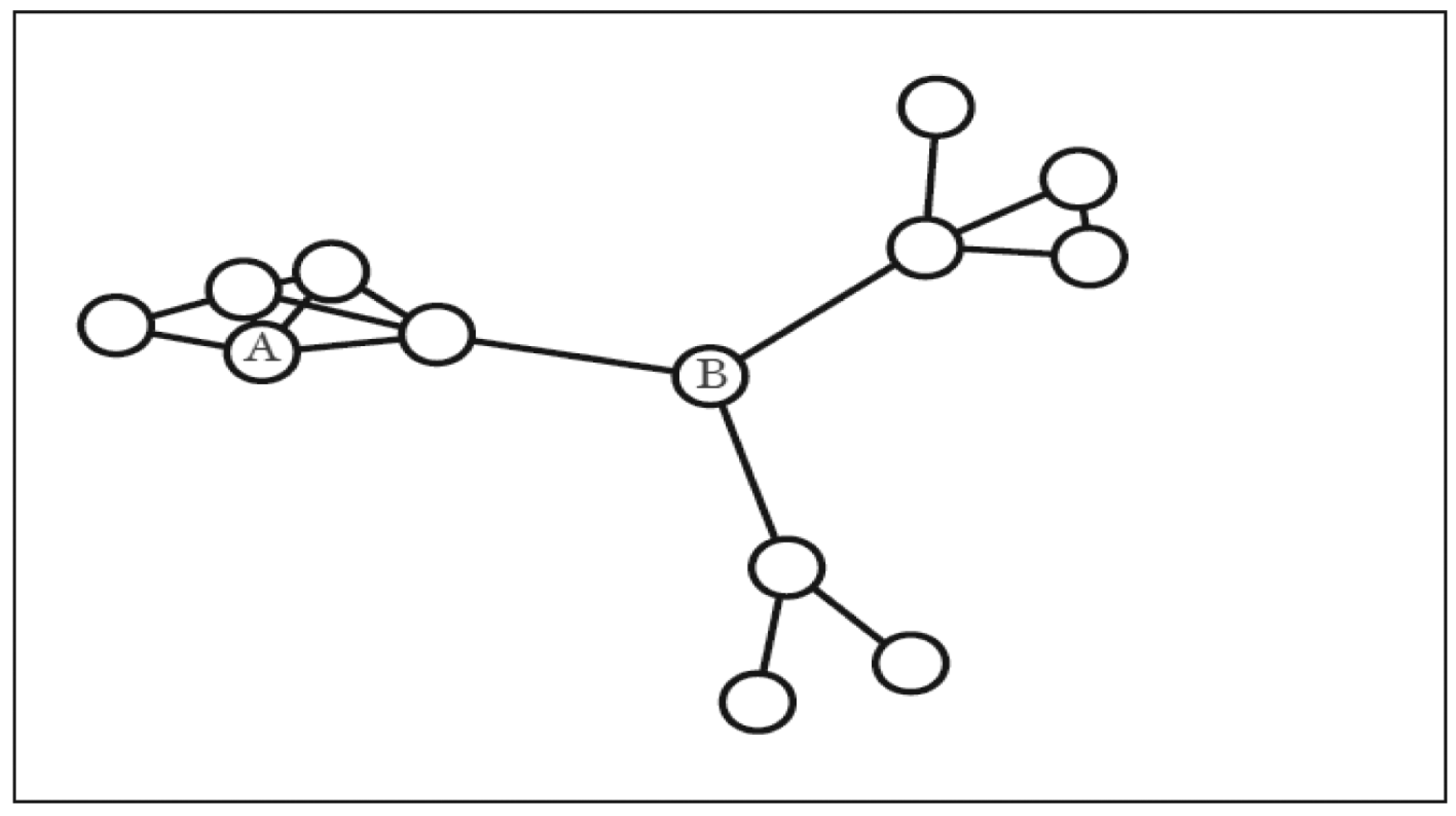
Figure 1 shows a hypothetical network structure of two entrepreneurs. In this hypothetical network structure, entrepreneur A and entrepreneur B occupy different types of network positions with different ways for SC generation. Entrepreneur A occupies a closed or denser network position (lacking structural holes) than entrepreneur B. Entrepreneur A’s norm-enforcing social structure may lead to a social context with high trust and support. However, entrepreneur A receives more redundant information than entrepreneur B. In contrast, entrepreneur B’s ‘horizon-expanding network’, which span structural holes (Burt, 1992), leads to access to a greater diversity of information and greater freedom from unwanted social pressure than entrepreneur A.
At the individual level, network brokerage is argued to positively affect enterprise performance by providing access and control benefits over information and resources (Burt, 1992). This was supported by a large body of empirical evidences (e.g., Burt, 2002; Burton, Wu, & Prybutok, 2010; Greve et al., 2010; Janhonen & Johanson, 2011; Klyver & Terjesen, 2007). Yet, other studies point to a dark side of brokerage and underscore the advantage of closure in networks (e.g., Barnes et al., 2016; Batjargal, 2010; Bizzi, 2013; Gargiulo & Benassi, 2000; Krackhardt, 1999; Stovel & Shaw, 2012; Xiao & Tsui, 2007), emphasising that the pressures associated with brokerage can place constraints on actors and potentially having a negative effect on enterprise performance. This controversy suggests that context is important in network studies. However, the majority of available empirical evidences come from socially homogenous populations in corporate and organisational settings, limiting a broader understanding of how context matters in the relationship between SC and entrepreneurial outcomes (Barnes et al., 2016; Batjargal, 2010; Burt & Burzynska, 2017; Xiao & Tsui, 2007).
The argument goes in a way that while brokers succeed in the market and in societies with market-like cultures, a collectivistic environment should reward those whose behaviours are ‘consonant’ with the context’s values (Xiao & Tsui, 2007). Brokerage is individualistic in nature to the extent that it starts from the principle of an independent self and puts priority on individual targets rather than collective goals (Xiao & Tsui, 2007). Collectivistic cultures, like in Ethiopia, are thus not only intolerant of brokering behaviours but also punish them if they act in such fashion (Ma et al., 2011). As discussed in second section, informal entrepreneurs in Ethiopia are heavily embedded in a collectivistic and dense family and kinship networks. The basic social fabric of collectivistic societies is that dense networks are usually the permanent groups against to the temporary and flexible groups of less dense ties, which have structural holes. Thus, the benefits of structural holes would be less likely realised in the Ethiopian informal entrepreneurs’ context. In other words, the dense family network of informal entrepreneurs may contribute more positively to entrepreneurial outcomes than structural holes. I, therefore, propose that informal entrepreneurs’ dense networks, which lack structural holes, has a significant positive effect on entrepreneurial outcomes in the informal economy of Ethiopia.
Methodology
Research Design
This study aims to investigate the effect of informal entrepreneurs’ networks on entrepreneurial outcomes. Accordingly, emphasis is given to examine entrepreneurs’ interpersonal relationships, particularly business support contacts. Entrepreneurs’ networks is measured in tangible terms by the number and density of social links that an entrepreneur maintains with a group of agents in the market sphere, that is, relations with resource providers, suppliers, customers and other fellow entrepreneurs (Berrou & Combarnous, 2011). Such analysis of entrepreneurs’ network provides useful insight to the study of networks and entrepreneurship.
There are two approaches in SN studies: whole network and egocentric network analyses (Chung, Hossain, & Davis, 2005). In the ‘whole network’ analysis, networks are investigated from a socio-centred viewpoint that has indeed a pre-defined set of actors and relations between them (Odella, 2006). In a whole network design, a researcher begins with a set of nodes and then measures all of the ties among those nodes (Marsden, 2005). This approach is used when there is a pre-defined and compete list of actors. In contrast, an ‘ego-centred network’ analysis conceptualises networks to decouple the social context in which individuals are embedded and is based on ‘methodological individualism’ (Chung et al., 2005). It is composed of a focal actor (ego), the ego’s direct contacts (alters) and the ties between them (Giannella & Fischer, 2016; Odella, 2006). In ego-network analysis, a person (respondent) that a researcher is interested in is referred to as an ‘ego’ (in the case of this study informal entrepreneurs) and the persons referred by an ‘ego’ (an entrepreneur) as his/her affiliate, advisor, friend or relative are known as ‘alters’ (Marsden, 2005). To obtain network data, I thus followed an ego-centred design. This is because there was no a complete list of informal sector entrepreneurs in Addis Ababa and hence the boundaries of informal entrepreneurs were impossible to define to go for whole network analysis.
Empirical Setting and Sampling
This study was conducted in Addis Ababa which is the capital and the primate city of Ethiopia. With a population of about 3 million, Addis Ababa accounts for about 25 per cent of the entire urban population of the country (CSA, 2013). Data were collected from street entrepreneurs as they represent the most visible form of informal workers. Street entrepreneurs were not, however, recorded in government statistics. This has created a problem in getting a sampling frame for the study. Since there was no list from which samples can be drawn using conventional sampling techniques, a combination of ‘time–space’ (Muhib et al., 2001) and ‘random-walk’ (Singh, 2007) procedures were used.
Multi-stage sampling procedures were applied to draw samples. First, the author consulted informants in the city to gather information about street entrepreneurs and their spatial distribution. Based on consultation, a 2-day tour was organised in the 10 sub-cities of Addis Ababa to identify street-vending cluster sites. Following the tour, 10 cluster sites (one from each sub-city) were identified purposively. Once cluster sites were identified, the author observed the date and time when vendors concentrated in these areas. Street entrepreneurs were thus found working in all days of a week and from 5
After space–time arrangements were set, samples were drawn using systematic random-walk 2 technique. In so doing, specific random procedures were followed depending on the nature of the cluster site. The procedure involves taking the first road right or left of the sample site and then interviewing every 2nd, 5th, 7th or 10th street entrepreneur or interviewing every vendor after a 2, 5, 7 or 10 feet walk right or left of the road. The application of this procedure and the number of samples drawn have varied from one cluster site to another depending on the pattern, size and density of vendors in each location. As ethnicity and gender matter in networks, the sampling procedure has addressed ethnic and gender variables. Samples were then drawn from the three dominant ethnic groups—Amhara, Oromo and Gurage, as they account for about 84 per cent of the population of the city (CSA, 2013). Sampling was conducted in such a way that first vendors from one ethnic group comprising men and women were sampled followed by other ethnic groups using the same procedure. At the time of sampling, if every 2nd, 5th, 7th or 10th vendor was not from the ethnic group or gender that was intended to be sampled, the next person was selected. I have used the following formula to determine the sample size:


Where n is the sample size, p is the estimated percentage of the target population and SE is the standard error. As the number of street entrepreneurs is unknown, I have used the results of previous studies to determine representative sample size. A study on informality in Addis Ababa by Fransen and van Dijk (2008) showed that employment in informal enterprises accounts for about 26 per cent of total employment. I assumed that from 26 per cent of informal enterprise operators, 20 per cent might be accounted by street entrepreneurs. I also presumed a confidence level of 95 per cent and a confidence interval of 5 per cent of the target population figure. With this assumption, the minimum representative sample size was found to be 246. While sampling, eight samples were added and the total sample sizes for the study became 254 (refer to Appendix I for the distribution of samples).
Data Collection
Data were collected using questionnaire. The questionnaire consisted of entrepreneurs’ dataset and network dataset. Network data were collected by the name generator and interpreter’s instruments. Name generators are a set of questions that egos are asked to draw alters from an ego’s network with the aim to identify members of personal networks (Marsden, 2005). Burt (1984) recommends that network surveys should include multiple name generators as they can help to clearly identify relationships and improve data reliability. Multiple name generators also create opportunities to study the organisation of diverse types of interactions (Burt, 1984). They also help to increase the recalling capacity of respondents by raising multiple questions related to the operation of enterprises. Thus, to define the networks of informal entrepreneurs, nine name generator questions were designed based on regular interaction of entrepreneurs related to resources needed and obtained for the purpose of undertaking their enterprises.
Name generators are open-ended in nature and this will lead to extended surveys (Marsden, 2005). To limit the interview time, the number of alters that an ego can mention to each name generator question were limited to five. This is because mentioning five names is enough to observe the true connections among actors in a network (Burt & Ronchi, 1994). Naming five names is also the cost-effective number of socio-metric citations to record (Merluzzi & Burt, 2013). However, naming the aforementioned five names leads to redundancy (Yang, Wu, Lei, & Yang, 2009). Respondents were given a 12-month time frame to recall alters. After collecting a maximum of five names for each of the nine name generators, respondents were asked the 10th question with the aim to name the most important persons (from those mentioned on the nine name generators) who helped them in the various stages of enterprise development and in their day-to-day enterprise-related activities. This helps me to accurately demarcate the core networks of entrepreneurs. The core networks were identified with the question, who were the most important persons in your business in the last 12 months? For this question, a total of 785 alters with an average of 3.09 were mentioned (Table 1). Once alter names for core networks were obtained, respondents were asked to indicate whether the pairs of alters mentioned are (a) strangers or (b) know each other.
Variables and Measures

Where Pij is the proportion of i’s relations invested in contact j and
Distribution of Samples Who Named at Least One Alter per Item and the Total Number, Mean and Standard Deviation of Alters Mentioned, N = 254

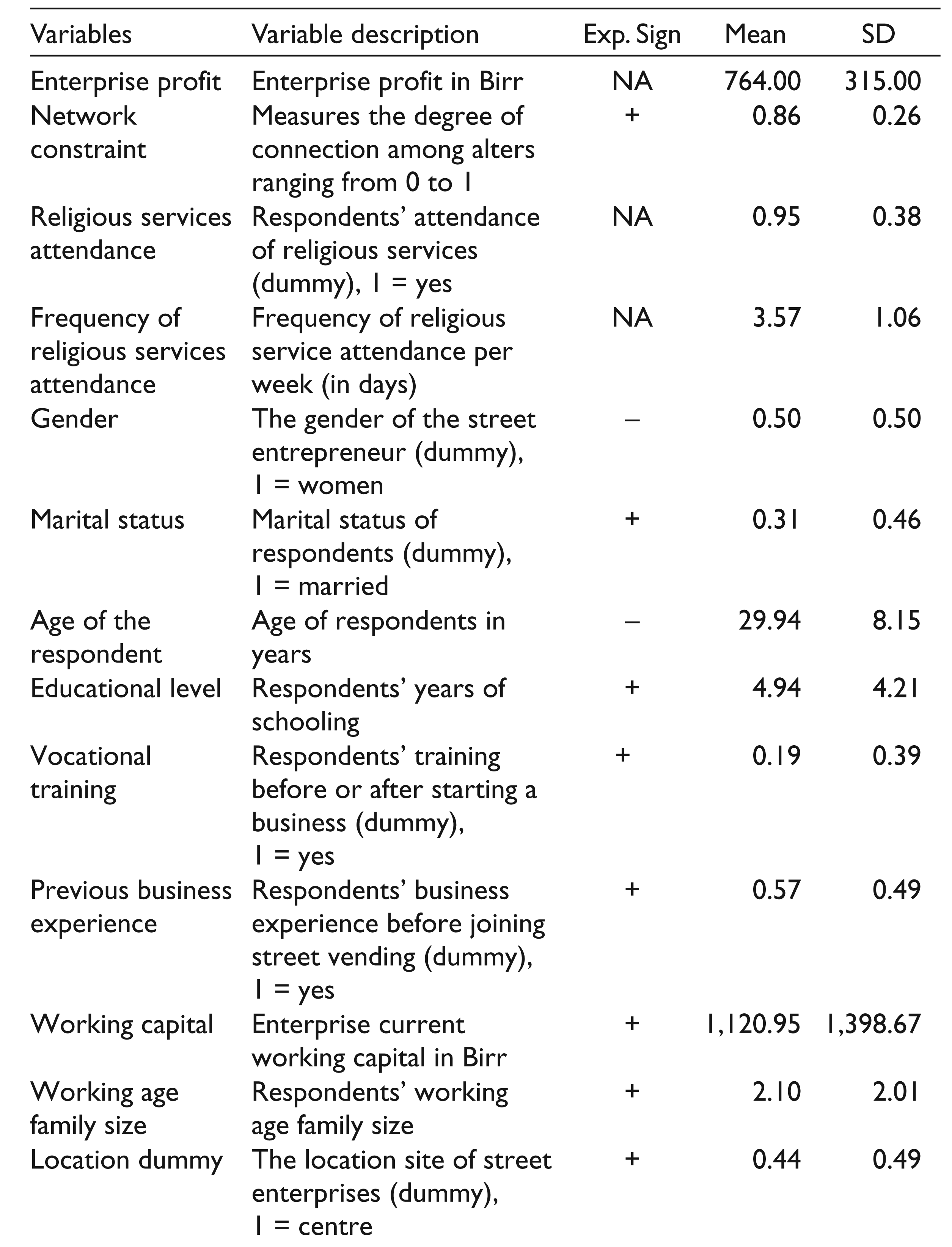
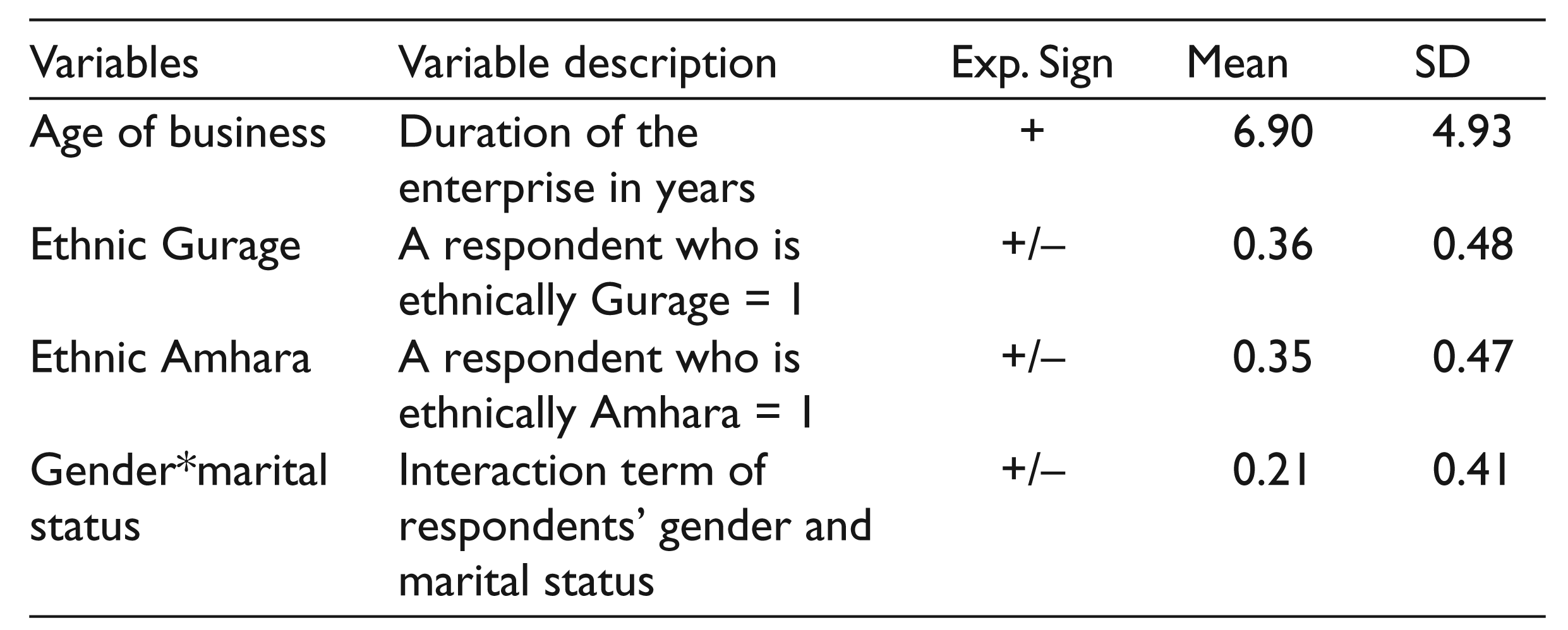
Descriptive Statistics and Expected Signs of Variables Used in the Regression Model
Econometric Model
The OLS regression model was used to determine the causal relationship between network constraint and enterprise profit. The reliability of the OLS regression parameters may be, however, challenged by potential endogeneity bias with regard to the direction of causality (Fafchamps & Minten, 2002). I, therefore, tested whether network constraint can be regarded as exogenous using econometric procedure of instrumental variables (IV) estimation (Wooldridge, 2013). However, obtaining an appropriate IV is problematic due to the absence of precise modelling of IV selection (Durlauf, 2002; Durlauf & Fafchamps, 2004). The selection of IVs has varied from study to study depending on the dimensions used to measure SNs and the nature of the outcome variables. For example, in a study of kinship networks and economic behaviour in rural Ethiopia, Werger (2009) instrumented SN measures with religion and ethnic dummies. He recommends that religion dummy instruments network measures better than ethnic dummies. Getahun and Odella (2014) also used religion dummy to instrument resources embedded in networks.
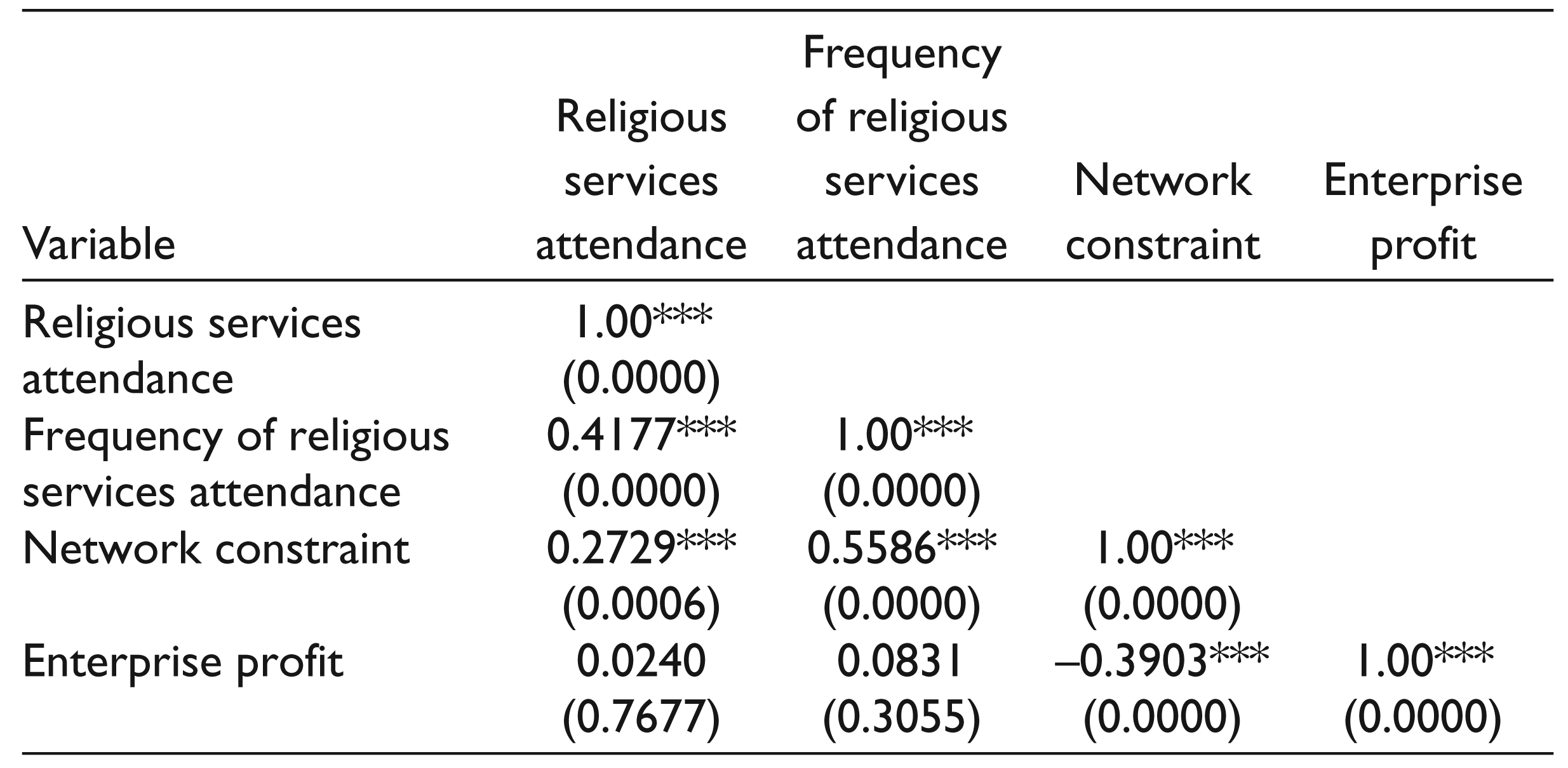
Religion is indeed a good proxy for SC accumulation. However, I believe that it is whether and how frequently an entrepreneur goes to houses of worship rather than whether he/she attends a Pentay, Islamic or other service that determines his/her level of SC accumulation. In this article, therefore, network constraint is instrumented with participation in religious services and the frequency of participation. This is because most people in Ethiopia attend religious services either daily or weekly depending on the respective sect of each religion. Churches, mosques and other houses of worship, thus, provide an institutional base for ‘civic good works’ and a learning opportunity for entrepreneurs (Hopkins, 2011). Indeed, involvement in religious affairs offers opportunities for social interaction among likeminded people, nurtures friendships and fosters social ties (Lim & Putnam, 2010). Religious services through worshiping places and membership in spiritual institutions offer an opportunity to entrepreneurs access business resources (Miguel, 2004). The proposal in this article is that both religious service attendance and frequency of participation are neither directly affected by enterprise profit nor do they affect enterprise profit directly. However, these two variables affect SC accumulation and mobilisation (refer to Appendix II for correlation of variables). The model fit by IV regression is given by:


Where Yi = the dependent variable for ith observation, yi represents endogenous regressors (SN measures), x1i represents included exogenous regressors (endowment of human capital and a vector of individual characteristics and enterprise characteristics) and x2i represents the excluded exogenous regressors (religious service attendance and the frequency of participation). Variables x1i and x2i are collectively called the instruments. ui and v i are zero mean error terms and the correlations between ui and the elements of v i are apparently non-zero.
Results and Discussion
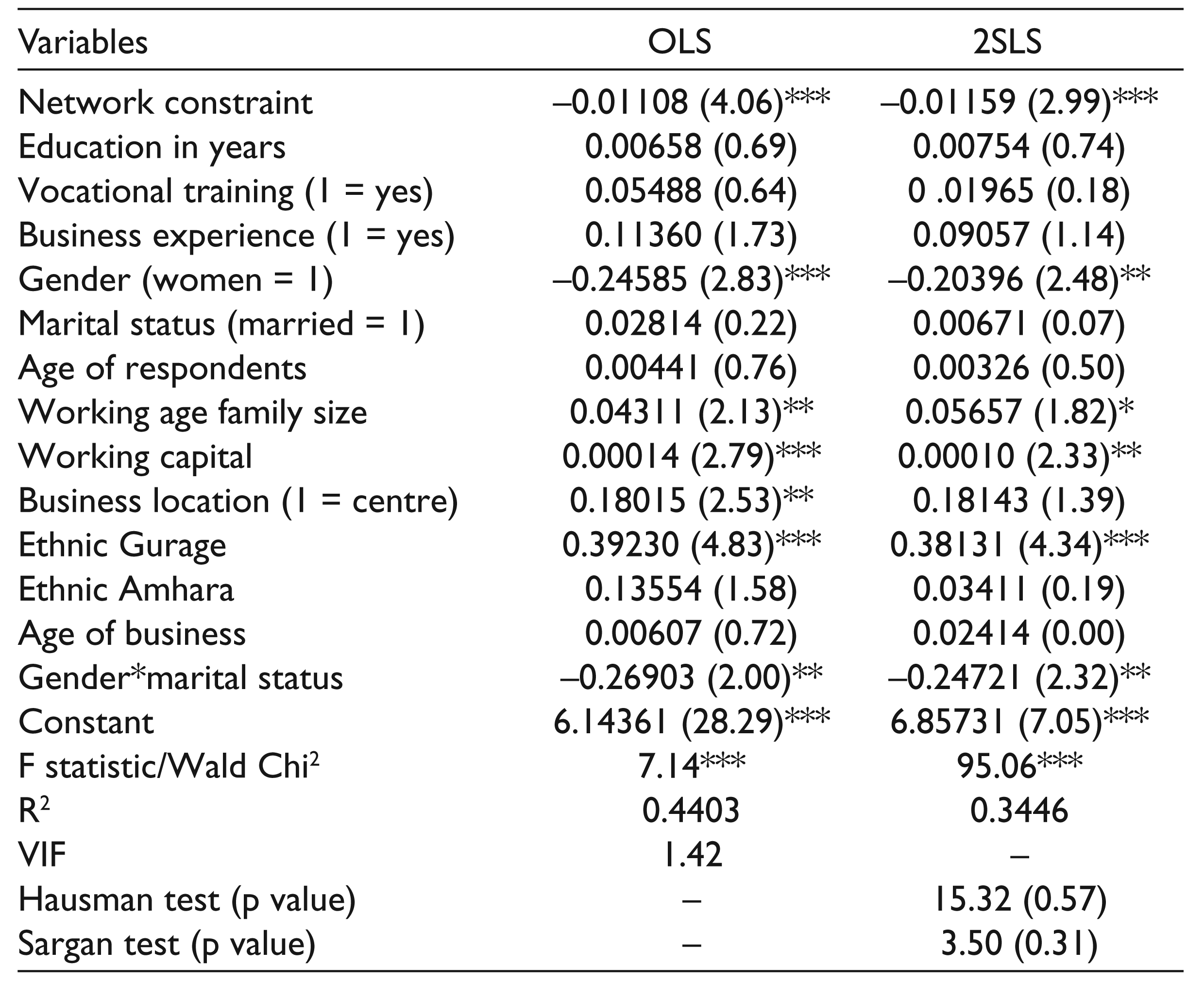
The estimation results of enterprise profit by OLS and 2SLS estimators are presented in Table 3. The models significantly predict enterprise profit. An assessment of variance inflation factor also showed no problematic signs of collinearity with inflation factor of 1.46. After fitting 2SLS, tests of endogeneity were performed to check whether network constraint supposed to be endogenous in the OLS model can be treated as exogenous or not. The result of Hausman test indicates the exogeneity of network constraint. The Sargan test of over-identifying restrictions is also presented in Table 3. The Sargan test result confirms the validity of the two instruments.
Network constrain is used as a SC measure to analyse the relationship between SNs and enterprise performance. The core networks of entrepreneurs were made up of densely connected family and friendship ties. Despite the fact that dense family networks are sources of emotional and material support for street entrepreneurs, network constraint has a significant negative effect on enterprise profit (Table 3). The higher the density of networks, the higher the network constraint and the lower the enterprise profit and vice versa. This result leads to reject the hypothesis that dense networks, which lack structural holes, have a significant positive effect on entrepreneurial outcomes. The result thus corroborates Burt’s structural holes argument.
Regression Estimation Results of Network Constraint Predicting Enterprise Profit
Given that street entrepreneurs depend on dense networks and considering the high uncertainty markets in the informal sector, it is unforeseen that informal entrepreneurs’ networks appear to be inefficient for the performance of enterprises. This can be attributed to a number of causes. The first is related to the limitations inbuilt on dense networks in that entrepreneurs may depend on dense business support networks and become satisfied with what they have. This may damage entrepreneurs’ effort to be successful in their businesses as much as they would if they had no support from dense networks. Second, dense family networks just put entrepreneurs under pressure to sell them products at reasonable prices which reduce profitability. Third, as argued by Nordman (2016), entrepreneurs who are part of dense networks and who achieve enterprise success are often called on to share their achievement with less successful network members. In such cases, adverse incentives arise if concerns about moral pressure for jobs, credit or free business services by family and kinship ties discourage entrepreneurs from dealing with people outside dense networks.
Dense networks do not only facilitate but also hinder the behaviour of individuals due to pressure and normative expectations from family and kinship members (Krackhardt, 1999). In fact, the length and regularity of relationships did not enable entrepreneurs to obtain efficient circulation of resources (access to information, financial support, business partnership, etc.). Previous studies (e.g., Alesina & Giuliano, 2009; Chai & Rhee, 2010) have shown that high level of family embeddedness for entrepreneurs is associated with greater trust in their families and lower levels of generalised trust. This perceived labelling between family and non-family ties can generate suspect, under-appreciation or dismissal of advice given by non-family ties (Nordqvist, 2005). Such dense networks can provide a limited set of information that may not match future business needs thus hindering enterprise performance.
Elfring and Hulsink (2003) note that dense networks have the ‘risk of over-embeddedness’. Studies (e.g., Aral & Van Alstyne, 2007; Brailly, Favre, Chatellet, & Lazega, 2016; Ferriani, Cattani, & Baden-Fuller, 2009; Molina-Morales & Martínez-Fernández, 2009) underscore to the problem of being over-embedded or too central in networks. These studies show that excessive group cohesion hinders knowledge and information accessibility among actors in a network. They showed evidences of diminishing returns associated with being well connected in information-sharing networks. This is because the group’s closure may reduce the opportunities to find new and diverse information outside a given cluster. With more dense social relations, there comes increased coordination costs as more time and energy are devoted to maintain them (Ferriani et al., 2009). Since time and energy are exhaustible resources, increasing the strength of ties beyond a certain limit is likely to result in diminishing returns (McFadyen & Cannella, 2004). Moreover, as entrepreneurs become more central in networks, they are faced with high inflows of information and bear greater ‘cognitive pressure’ associated with processing it (Dodds, Watts, & Sabel, 2003). This potentially result in ‘information overload’ and difficulties in sorting relevant and irrelevant information (Ferriani et al., 2009) leading to poor business decision-making (Schneider, 1987).
As shown in Table 3, control variables, such as gender, working capital, ethnicity and the interaction term between gender and marital status, become significant predictors of enterprise profit. Gender has the expected negative sign and is significant at 1 per cent. This might be attributed to many probable causes. To start with, women do have double responsibility in taking care of household duties and managing street businesses. Most women entrepreneurs are also working in permanent places and their businesses are located near their homes where they cannot get many customers. In addition, women are engaged in very small businesses which are extensions of their reproductive role including cooked and non-cooked food stuffs. These businesses demand low capital and thereby generate low profit.
Ethnicity is presumed to be a factor that influences enterprise outcomes. As indicated in Table 3, being a Gurage is positively correlated with profit and the correlation is significant at 1 per cent level. But being an Amhara does not have a significant effect on profit compared to being an Oromo. This finding is consistent with other studies. For example, a study by Taye (2001) has shown that enterprises owned by the Gurage, despite their low educational level, perform better than members of other ethnic groups, such as the Amharas who have relatively higher level of education. This is probably because the Gurages are known for their hard-work and business skills. The coefficient of the interaction term between gender and marital status is negative and significant at 5 per cent level. This reflects that having a husband makes women to be in an undesirable position because usually women are not the sole decision makers of their businesses. According to the norm in the Ethiopian society, it is usually husbands who make decisions in the household. Even when women are involved in household discussions, the final say is made by husbands. The variable working capital has a positive sign and is significant at 1 per cent level. On the human capital side, contrary to what is expected, the estimation results show that education, vocational training and previous business experience are not significant predictors of profit. This is probably because those engaged in street activities have limited skills, low education levels and low occupational status. They are also engaged in petty businesses that do not need any training and advanced education.
Conclusion and Implications
Social capital constitutes information and resource channels that can reduce the amount of time and investment necessary to gather and process information. It can facilitate learning and the diffusion of innovations. Indeed, the majority of empirical evidences linking SC to economic advantage come largely from large-scale business environments and in developed country settings. Here, I extended the SC and entrepreneurship research to account for the urban informal sector in Ethiopia. Informal entrepreneurs in Addis Ababa are supported by their family and kinship ties to start and carry out micro-businesses. The value of being well-connected in networks is that it provides increased opportunities to capitalise resources to enterprise start-up and obtains information on employment opportunities. Family and kinship networks may reduce transaction costs in business relationships as sanctions may be used to punish uncooperative behaviour and thus to encourage cooperative ones. A central question in this study was ‘Do the dense network structures of informal entrepreneurs positively contribute to entrepreneurial outcomes?’ The findings suggest that being over-embedded in family and kinship networks has a negative effect on enterprise performance in the informal sector, which I argue is due to lack of structural holes in entrepreneurs’ networks. This is indeed against the empirical findings in other developing countries (e.g., Berrou & Combarnous, 2011; Xiao & Tsui, 2007) but corroborates the theoretical construct of Burt (1992, 2000, 2001, 2002), which reflects the condition of developed countries. This study, thus, contributes to the SC and entrepreneurship literature in which the ability to realise the benefits of networks are likely dependent on context under study either in developed or developing economies. The advantages of either being over-embedded in dense family and kinship networks or brokering structural holes depends on context. Thus, it is impractical to prescribe blanket recommendations about the role of SC in entrepreneurial outcomes that work for all situations.
As social relationships are important mechanisms in designing poor targeted programmes, policies aiming at improving the economic situation of vulnerable entrepreneurs should consider the fact that entrepreneurial behaviour is often influenced by the dense network of family ties not only through learning and complementarities but also through social norms and pressure to redistribute earnings. Dense networks provide benefits through risk-sharing and lower transaction costs, but excessive dependence on dense networks can worsen enterprise outcomes as entrepreneurs lack structural holes that can help them to obtain diverse information. Thus, policies should consider the many benefits of social contacts while taking into account the downside of being excessively embedded in dense networks. By creating proper channels, informal entrepreneurs can be linked to peoples of diverse socio-demographic groups to gain the benefits of diversity in networks.
Limitations and Areas of Future Research
Though my analysis is based on data from a single informal economy of street entrepreneurs, I believe that the results of the study are applicable to broader range of settings in the informal sectors of Ethiopia. Yet, this study has limitations. First, measuring and explaining the effects networks on enterprise outcomes are difficult. The name generator and interpreter instruments are newly developed and applied in the Ethiopian informal sector context and needs further examination. As argued by recent studies (e.g., Green, Hoover, Wagner, Ryan, & Ssegujja, 2014; Herz & Petermann, 2017), network research interviewers have an influence on network size and the nature of relationship among actors in a network. Homophilous interviewer-respondent relationships have also an effect on network characteristics. There are also evidences of training and fatigue effects on network size. However, much of the variation in network size caused by the interviewer still remains unexplained and may have an effect on the characteristics of entrepreneurs’ personal networks and thereby their effect on enterprise performance (Herz & Petermann, 2017). Second, analysis is hampered by methodological challenges related to sampling of the hidden population. The random-walk sampling strategy employed in this study is not widely applied in other urban-based studies in Ethiopia. Instead of heavily relying on the commonly used snow-ball sampling techniques, studies that involve hidden and hard to reach populations can experiment the random-walk procedure and improve its validity and application in the Ethiopian context. Third, I have used cross-sectional data to characterise the personal networks of entrepreneurs. But as entrepreneurs’ networks are dynamic in nature, it would have been to observe the dynamics of personal networks across time, using longitudinal information. Thus, other researchers can further conduct a research in the same area by studying the personal networks of entrepreneurs’ overtime. Generally, to establish the importance of networks in the urban informal sector, issues related to sampling, techniques of SN data collection and the dynamic nature of personal relationships should be dealt with. It is thus imperative to conduct further research in a broader scope including other urban areas and other informal activities. In spite of these limitations, collecting a unique set of data in a collectivistic culture of Ethiopia and considering informal entrepreneurs as a case study, this study fills a gap in the SC and economic outcomes literature by providing evidence of the dark side of over-embeddedness in networks.
Declaration of Conflicting Interests
The author declares that there is no conflict of interest with respect to the research, authorship and/or publication of this article.
Funding
The author received no specific grant from any funding agency in the public, commercial or not-for-profit sectors for the research, authorship and/or publication of this article.
Footnotes
Notes
Appendix
Coefficient of Correlation (r) between the Instrumental Variables, Sn Measures and Enterprise Profit
| Variable | Religious services attendance | Frequency of religious services attendance | Network constraint | Enterprise profit |
| Religious services attendance | 1.00*** (0.0000) | |||
| Frequency of religious services attendance | 0.4177*** (0.0000) | 1.00*** (0.0000) | ||
| Network constraint | 0.2729*** (0.0006) | 0.5586*** (0.0000) | 1.00*** (0.0000) | |
| Enterprise profit | 0.0240 (0.7677) | 0.0831 (0.3055) | –0.3903*** (0.0000) | 1.00*** (0.0000) |