




Abstract
The study examines the influences of the global/domestic economic policy uncertainty (EPU) on entrepreneurship in a sample of 23 economies over the period 2006–2016. Employing the two-step system General Method of Moment estimation for unbalanced panel data, our study provides surprising evidence, indicating that EPU may not always be harmful to entrepreneurship. Precisely, in contrast with existing literature emphasising the negative impact of the uncertainty on entrepreneurship, our article suggests that EPU seems to boost pro-entrepreneurial social and cultural norms (i.e., encouraging actions for creation of new businesses). As such, we suggest that uncertainty may serve as an exogenous shock, filtering ‘good’ business ventures from ‘not-so-good’ ones.
The entrepreneurial sector (small and young businesses) plays a vital role in the process of economic growth both, in developed and emerging countries. However, due to their newness and fewer liabilities, new ventures are very sensitive to the surrounding economic conditions and uncertainty (Ahunov & Yusupov, 2017). Meanwhile, the existing literature highlighted that macro uncertainty shocks exert strong negative effects on national outputs, employment and productivity (e.g., Caggiano et al., 2017; Fasani & Rossi, 2018; Karnizova & Li, 2014). In this context, the link with entrepreneurship could be expected as follows: adverse economic outcomes reduce market demands and business opportunities, which subsequently lead to a reduction in the activeness of entrepreneurial activities.
This negative association between economic uncertainty and entrepreneurship has been taken for granted in the literature, either explicitly or implicitly, when scholars criticise the adverse impacts of shocks on the establishment and performance of new ventures (Bylund & McCaffrey, 2017). The mechanisms explaining for the negative effects are typically attributed to the deterioration of the economic conditions, the tightening of consumption markets (Magd & McCoy, 2014) and the shirking of the banking system (Markatou, 2015).
While the indirect effects have been widely investigated and confirmed, the direct relationship between macro uncertainty and entrepreneurship is still under-investigated in the literature. Whereas we agree that stable economic and policy conditions are important to entrepreneurial activities, being inspired by the literature examining the rent-seeking behaviours of entrepreneurs (Torvik, 2002), we also suspect that economic uncertainty might bring about the novel and rare opportunities since economic uncertainty is typically associated with a gradual switching of an economy to a new equilibrium (Strobel et al., 2018). This switching process inevitably creates gaps in the markets and generates new demands, which allow entrepreneurs to seek rents and extract profits (in a contemporary manner until the economy reaches the new equilibrium).
Given that there might be a positive effect of economic uncertainty on entrepreneurship, in this study, we aim at investigating the direct influence of the national and global uncertainty (EPU) on the activeness of entrepreneurship. Specifically, the hypothesis we seek to test is whether EPU always constrains local entrepreneurial activities or not. To be consistent with the literature on the topics, a negative association between the EPU and entrepreneurship is initially expected. However, we do not rule out the possibility that EPU might actually boost entrepreneurial activities.
To test the hypothesis, we examine a sample of 23 economies over the period 2006–2016. Employing the two-step system, General Method of Moment (GMM) estimation for unbalanced panel data to reduce concerns with endogeneity, we find that: (a) EPU is negatively associated with the number of new businesses registered; however, (b) EPU is positively associated with total early-stage entrepreneurial activities (TEA), entrepreneurial intentions and the level of innovation in an economy.
These findings indicate that the average level of fear of failure increases and perceived opportunities decrease in the presence of uncertainty. However, this condition enhances entrepreneurial attitudes in the economy, suggesting that only individuals with excellent ideas are confident to pursue entrepreneurial intentions in such an adverse condition.
These seemingly contrasting findings indicate that in uncertain conditions, entrepreneurs may be reluctant to formalise their venturing activities, presented by the reduction of the numbers of newly registered firms. However, their informal (early stage) venturing activities are indeed evolved and become more active. We thus conclude that economic uncertainty is not always bad for entrepreneurship. In contrast, it may serve as an exogenous shock, filtering ‘good’ business ventures from ‘not-so-good’ ones.
This study makes contributions to entrepreneurial economics literature by showing that a naïve justification, such as EPU is ‘bad’ since it discourages new business formations, is not appropriate. When entrepreneurship is examined using informal early-stage activities, economic uncertainty may actually be a ‘good’ condition that nurtures innovative and productive business ideas.
Literature Review
Economic Uncertainty
Broadly speaking, uncertainty refers to a situation in which there is no basis for forming any calculable probability (Schinckus, 2009). Lawson (1985) suggested that economic agents become more sceptical in times of uncertainty. Economic uncertainty is a complex notion referring to a diversified reality that can take various forms in different countries. In this challenging context, economists work with socially constructed indicators to capture (partly) the feeling generated by economic uncertainty and understand its impact on them. In this article, economic policy uncertainty (EPU) is defined as a policy-related index estimated through an aggregation of the newspaper’s coverage of policy-related economic uncertainty with the number of federal tax code provisions set to expire in future years and the disagreement among economic forecasters (Baker et al., 2016). The new EPU index actually generated much research and increasing attention to the macroeconomic impacts of EPU on economic activities (Canh et al., 2020; Nguyen et al., 2020a, 2020b).
The literature documents EPU’s adverse effects on business opportunities, including entrepreneurial investments (Bloom et al., 2007; Drobetz et al., 2018). Due to the importance of economic uncertainty, Baker et al. (2016) create the economic policy index and find that their new indicator is empirically correlated with a greater stock price volatility, reduced investment and employment in policy-sensitive sectors; like defence, healthcare, finance and infrastructure construction.
Generally speaking, the existing literature supports the idea that a higher EPU would imply a greater uncertainty in the economy and, therefore, a fall in domestic economic activities. Such a reduction in domestic economic activities may then lead to a stagnant domestic economic performance in the future (Caggiano et al., 2017; Creal & Wu, 2017; Junttila & Vataja, 2018); and therefore, to a potential decrease of entrepreneurial activities (Caggiano et al., 2017; Creal & Wu, 2017; Junttila & Vataja, 2018). In other words, one can reasonably expect that an increase in EPU would have a negative impact on the activeness of entrepreneurial activities. This expectation could actually be confirmed by the fact that a higher EPU usually has an adverse influence on the credit supply tightening, thereby entrepreneurial activities (Gissler et al., 2016). Such context, increasing the financial constraints and creating entry barriers for entrepreneurs has been observed in Oman (Magd & McCoy, 2014) and Greece (Markatou, 2015), for instance.
Entrepreneurship and Uncertainty
Entrepreneurship has been studied through diverse lenses: its links to economic development (Li et al., 2012; Toma et al., 2014); innovations (Douglas & Prentice, 2019; Pedeliento et al., 2018); well-being (Bhuiyan & Ivlevs, 2019; Shir et al., 2018); poverty reduction (Halvarsson et al., 2018; Sutter et al., 2019); and even to environmental impact (Heiskanen et al., 2019; Vernet et al., 2019).
Given the significance of entrepreneurship to socio-economic development, it is important to understand the determinants of entrepreneurship. Berglann et al. (2011), in a thorough study, suggest that key determinants of entrepreneurship are the occupational qualifications, family resources, gender and work environments. Meanwhile, Simón-Moya et al. (2014) observed that entrepreneurship is significantly diversified in terms of activities, making the phenomenon quite complex. In relation to that, Castaño et al. (2015) emphasised that the studies dealing with entrepreneurship (and entrepreneurs’ perceptions) should consider a framework of social, cultural and economic factors. Simply relying on a single aspect (e.g., economic conditions) may lead to a biased understanding of the motivation and performance of entrepreneurial activities.
Based on this holistic idea, Dedehayir et al. (2018) propose the concept of entrepreneurial ecosystem which is comprised of entrepreneurs, sponsors and regulator; while the latter includes the government and its policies to support and stimulate activities concerning new venturing activities. Actually, the government and its agents are often considered as important partners in the innovation–entrepreneurship system (Dedehayir et al., 2018); especially in solving externality issues (Lv, 2019; Ma et al., 2019). Recently, governments in both, developed and developing countries started implementing several policies and projects aiming at stimulating entrepreneurial activities as a way of promoting economic development (Li et al., 2012; Szirmai et al., 2011).
Interestingly, Islam (2015) identified two opposite trends in the relationship between entrepreneurship and the government: on the one hand, government spending may crowd-out entrepreneurship activities; on the other, an increase in the share of social and public goods might crowd-in entrepreneurship activities. These opposite trends indirectly refer to a subtle balance between the need for a supporting presence of government (through actions and institutions) and the necessity of flexibility/undefined room for entrepreneurial activities to emerge.
In this context, Bylund and McCaffrey (2017) emphasised that institutions and uncertainty are two vital concepts in the literature dealing with entrepreneurship. While many studies have focused on exploring the association between institutions (both formal and informal) and entrepreneurship, few have focused on the effective link with economic uncertainty. This article aims at filling this gap by investigating the influence of EPU on entrepreneurial activities (both formal and informal).
Macro-economic Context
Our study period (2006–2016) witnessed several shocks in the economic policy, the major one being the 2008 global financial crisis. Figure 1 shows the evolution of the global and domestic EPU for each country (by year).
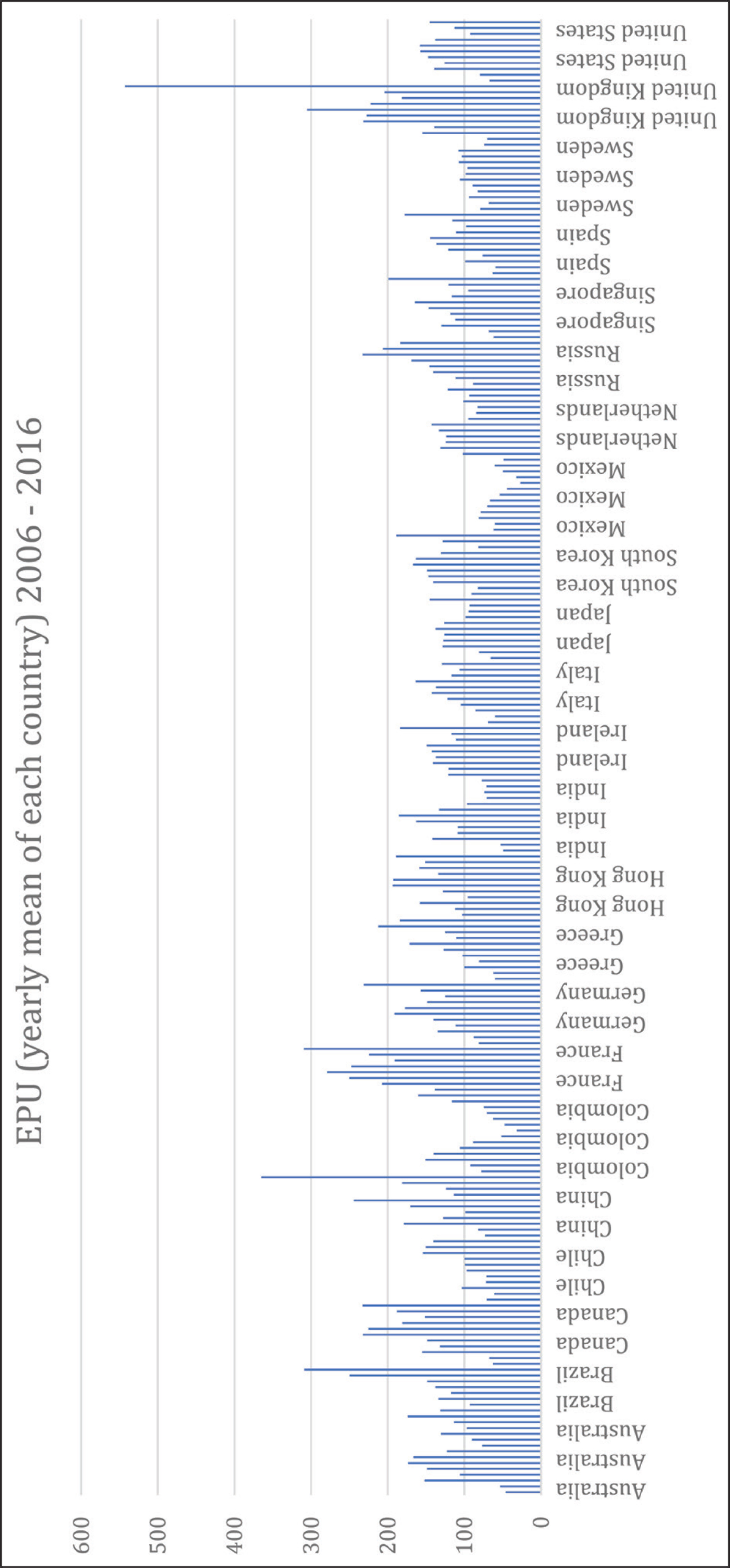
This figure shows that there was high volatility across the world in general and certain countries in particular. The UK, China, France, Germany, Brazil or Canada are among the highest volatile countries in terms of EPU. Meanwhile, global EPU has significantly increased after the global financial crisis. Since our objective is to analyse the impact of this uncertainty on entrepreneurship, it is interesting to compare these numbers with the ones related to entrepreneurial activities, as suggested in Figure 2.
The entrepreneurial activities showed in the figure have evolved remarkably during the period. Figure 2(a) presents the total number of newly registered businesses in each country. One can observe that except for Russia, the countries with the highest numbers are among advanced ones; such as the UK, Australia, Hong Kong. Figure 2(a) also shows that the total number of new businesses is increased in the period of study across the sample, excluding some cases such as France, Brazil, India, Spain, Hong Kong, which witnessed a decrease as an impact of the 2008 Global financial crisis. Figure 2(b) displays the entrepreneurship density (i.e., total new registered businesses per 1,000 population in the age of 15–64) which shows that Hong Kong is the country with the highest entrepreneurship intensity in terms of numbers. Australia, UK, Singapore are the next in line. Interestingly, we also observe an increasing trend in the UK, Australia, Hong Kong, Korea, Chile, Singapore; while it witnessed decreasing or fluctuating trends in Brazil, France, Germany, Greece, Ireland, Japan, Mexico, Russia and Spain. These numbers show that the role of economic uncertainty in supporting entrepreneurialism differs from countries to countries—some cultures may be more supportive of taking the risk in uncertain environments whereas some others may be risk-averse (see Singh et al., 2017 for further information on this aspect).
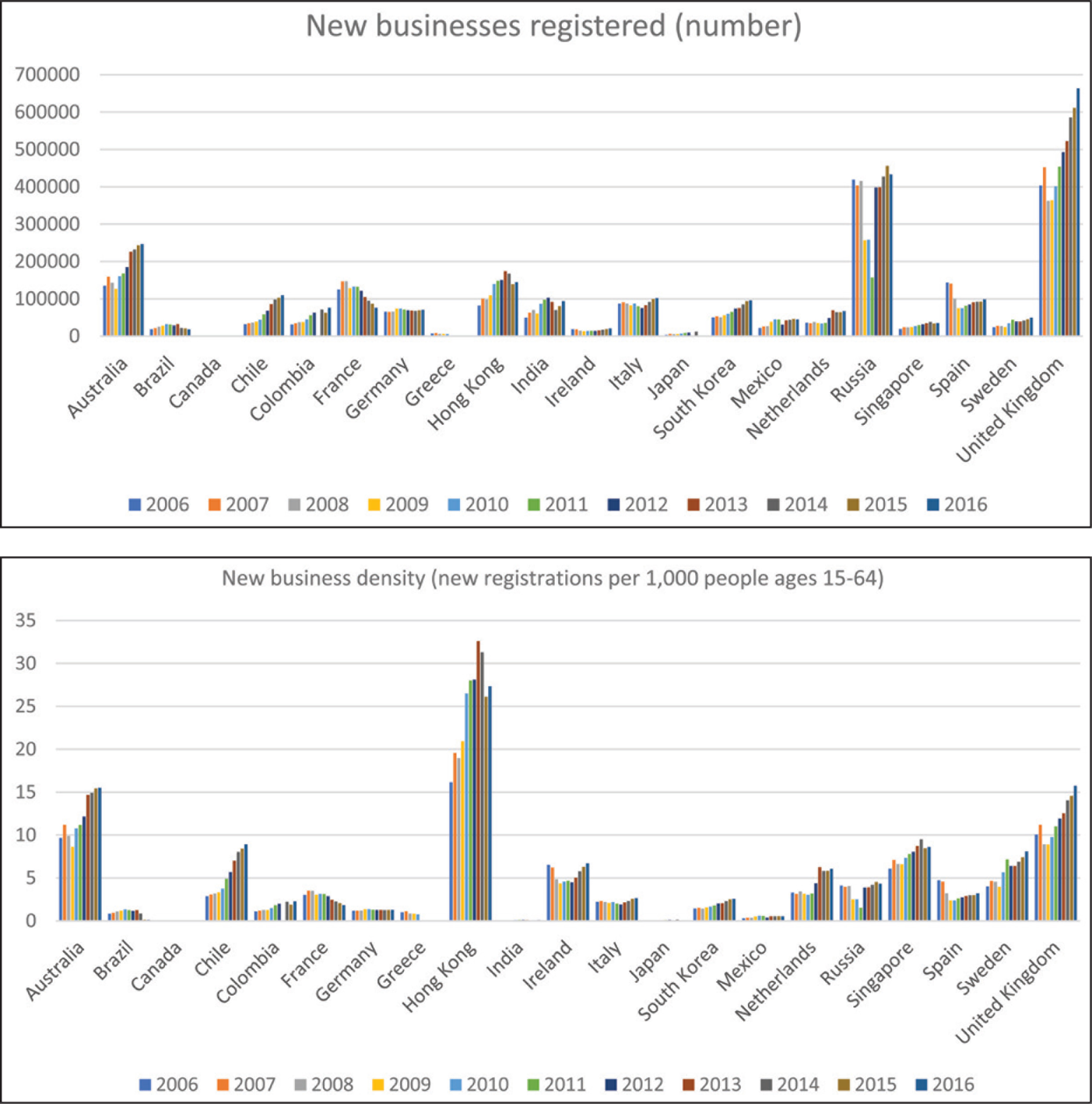
Figure 3 illustrates other aspects of entrepreneurship: the dynamics of total early-stage entrepreneurial activity, innovation index and entrepreneurship as a good career choice, respectively, from the database of Global Entrepreneurship Monitor (GEM) and Global Entrepreneurship Research Association (GEM, 2018). These graphs indicate some differences in terms of entrepreneurship attitudes and conditions between the different countries. Let us investigate these numbers in more detail. The next section presents our methodology and data treatment.

Methodology and Data
Model
The existing literature identified the following important determinants of entrepreneurship (see Sobel, 2008), namely, income level (Income), the population in age 15–64 (Youngpop), urbanisation (Urban), financial development (Credit), industrialisation (Industry), FDI inflows (FDI), trade openness (Trade) and governance quality (Gov) (see Wang et al., 2019). In addition to these key factors, Carlsson et al. (2013) noted that entrepreneurial activity is a dynamic process; thus a dynamic panel estimator should be employed through the following equations:

in which: i denotes a country, t denotes the year and ε is the residual term. Afterwards, we extend this conceptual framework by integrating a proxy of EPU. Precisely, the changes in EPU are added to Eq. (1) as an augmented factor of interest.

In a static perspective, there may be a disadvantage in including nine control variables as determinants of entrepreneurial activities since some of them may have no significant impact. However, our study deals with the dynamics of entrepreneurial activities (described by the dynamic estimate in Eq. (1)) so that the inclusion of these control variables can actually help to understand the evolution of entrepreneurial activities through the way residuals evolve from year to year—in other words, a variable might have an influence on some years, not others, and its inclusion in Eq. (2) would allow us to capture this effect by limiting potential bias due to the omitted variables in our estimations. The following section details our data collection and their estimations.
Data and Estimations
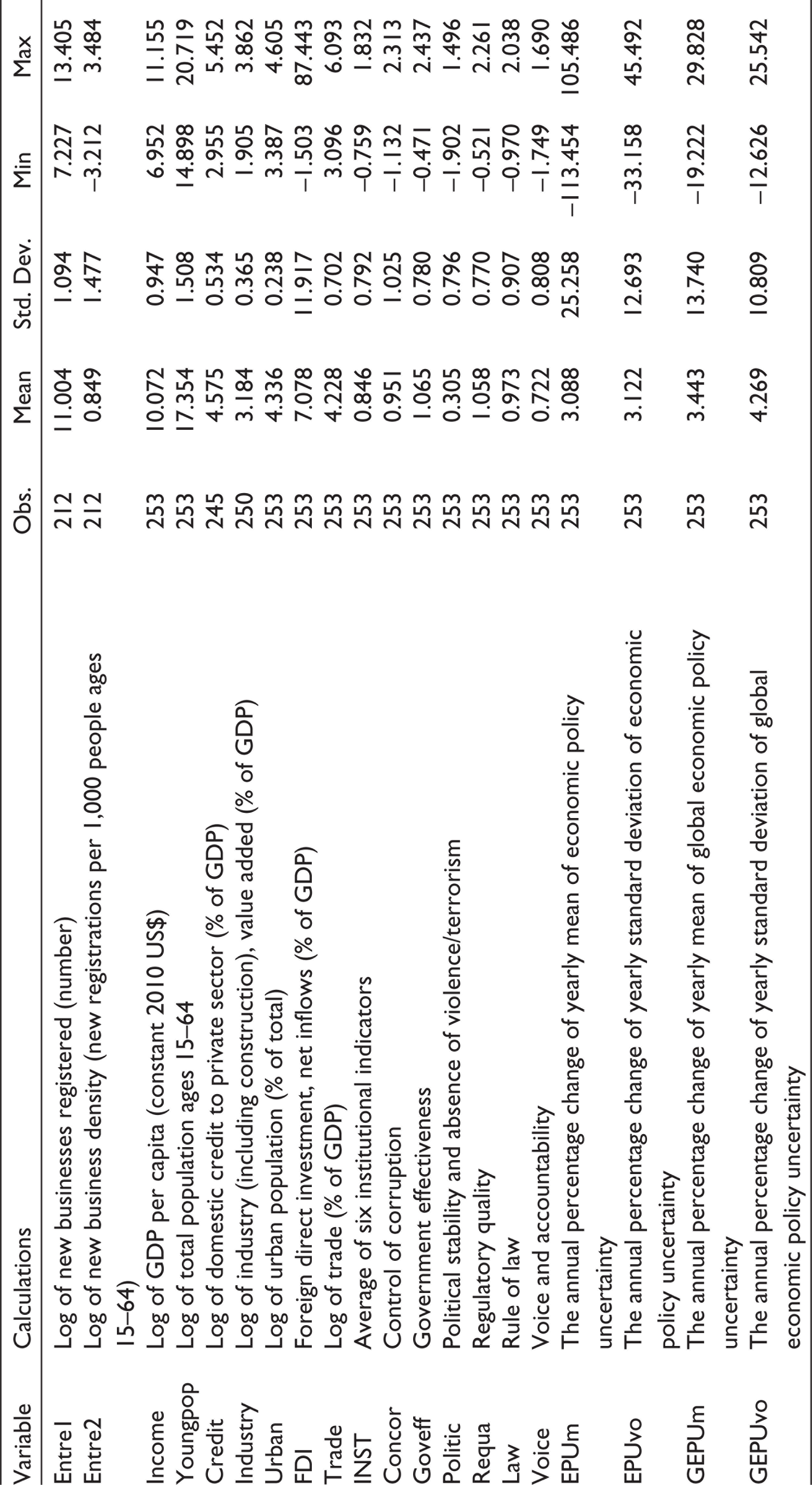
Due to the availability of the EPU variables, an unbalanced panel dataset of 23 countries over the period 2006–2016 is employed. The new business creation is a salient feature of entrepreneurship (Munemo, 2017); thus, the number of newly registered business (Entre1) and the number of newly registered business per thousand population in the age group 15–64 (Entre2, in logarithms) are used as the two main dependent variables. In addition, we also employ a set of 15 indicators of entrepreneurial attitudes (EntreAt1 to EntreAt15) and 12 indicators of entrepreneurial conditions (EntreCon1 to EntreCon12) from Global Entrepreneurship Monitor dataset (GEM, 2018) as alternative measures of entrepreneurship. It is noteworthy that Entre1 and Entre2 are the measures of formal entrepreneurial activities (i.e., business registration). Meanwhile, sub-indicators in the GEM, such as TEA and entrepreneurial intentions are measures of informal (early stage) entrepreneurial activities.
The monthly data of domestic EPU of 23 countries and the global EPU from the EPU website 1 are employed and transformed into yearly mean and yearly standard deviation, and then into annual percentage changes, which serve as a proxy for the changes in level and the volatility of global/domestic EPU.
Our control variables, namely, national average income, population, industrialisation, urbanisation, financial development, FDI and trade openness, are collected from WDIs, World Bank. The governance quality indicators are from WGIs (World Bank). Table 1 presents the variable definitions and summary statistics.
Variables, Calculations, Description
Entrepreneurship is strongly linked to social-economic factors leading to potential endogenous issues related to the reverse effects of the dependent variable on the independent variables. To deal with this potential problem, we use the system GMM estimator, developed by Blundell and Bond (1998) commonly used to solve such issues. However, the system GMM model may produce biases of uncorrected standard errors when the instrument count is high. To solve this, the two-step system GMM estimator developed by Windmeijer (2005) is employed as recommended by the specialised literature.
Results
This section is structured into two steps: an analysis of the influence of EPU on new firm establishments and an analysis of the impact of EPU on entrepreneurship attitudes.
EPU and New Business Creation
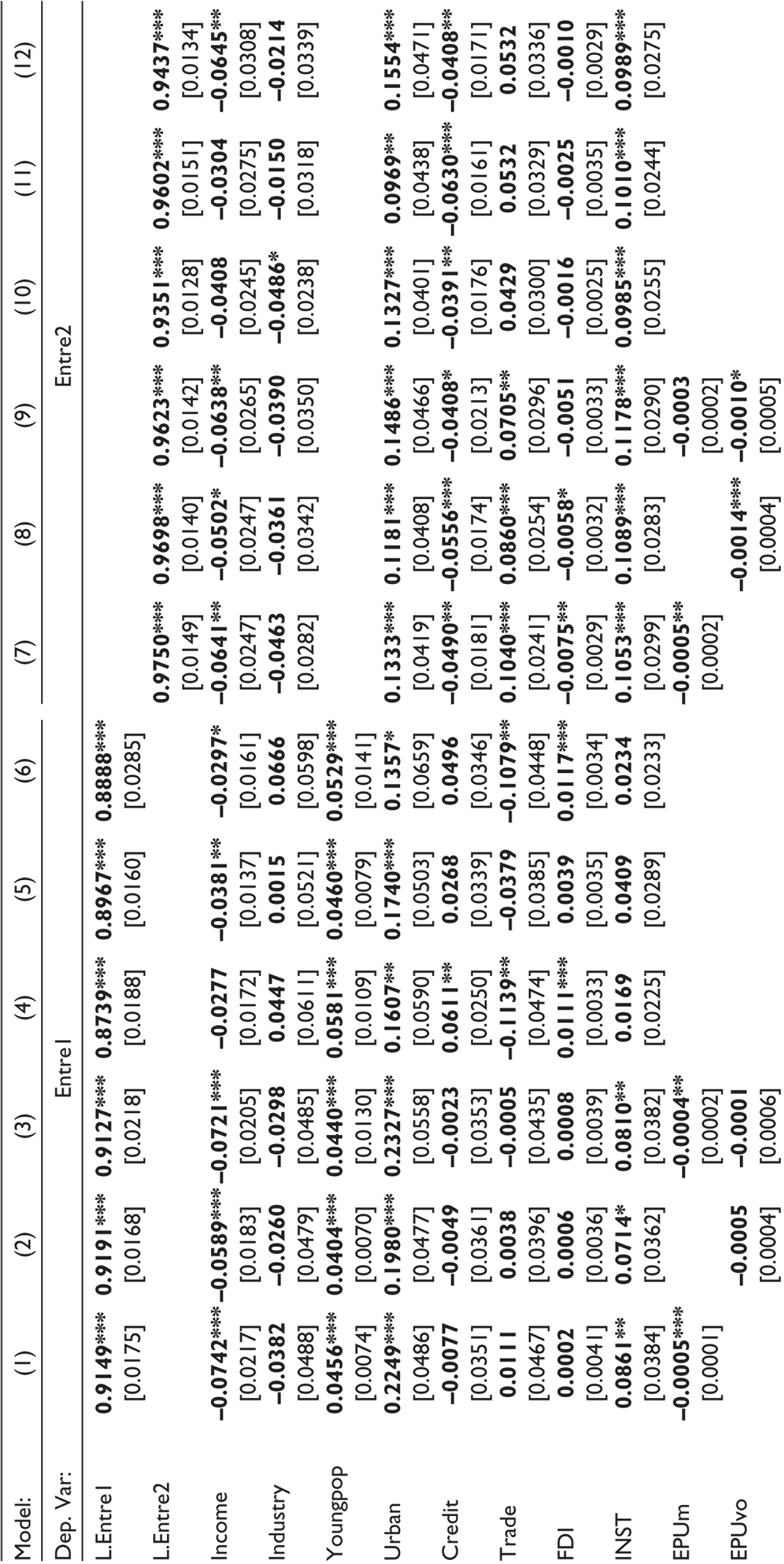
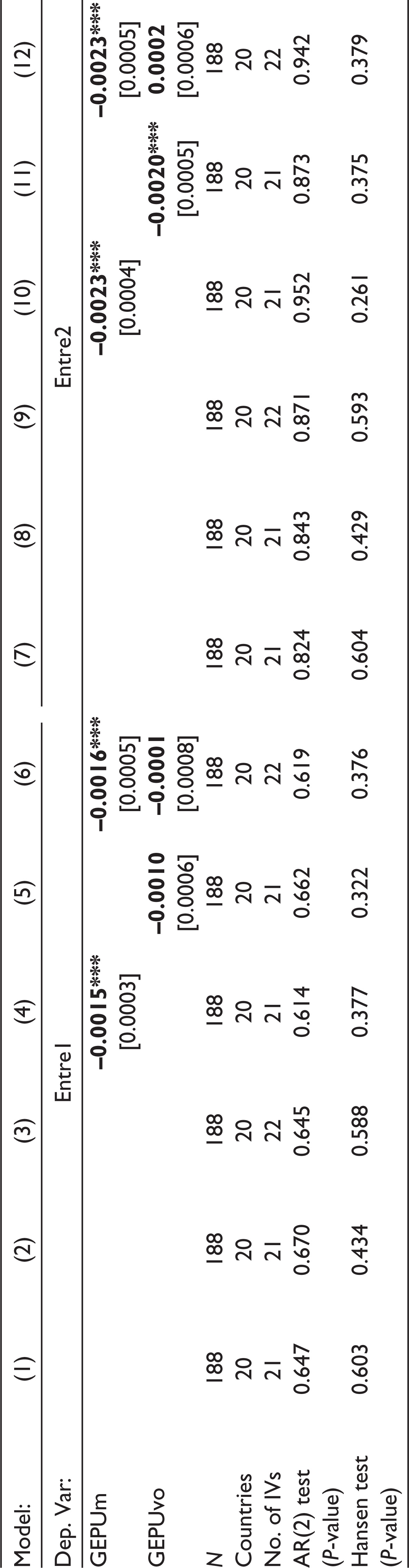
Our full estimation model (2) 2 has been regressed in accordance with the methodology detailed in the previous section. The full model is presented in Table 2. 3
Economic Policy Uncertainty and Entrepreneurship
Control Variables and Base-line Model Performance
Regarding our control variables, the real GDP per capita (Income) has a significant negative impact on both entrepreneurs (Entre1) and entrepreneurship intensity (Entre2). This means that a country with a higher income level would witness less new business creation and less new business creation per 1,000 population in the age group 15–64. The industrialisation (Industry) appears to have an insignificant negative impact on the two aspects of entrepreneurship so that no conclusion can be drawn from these observations. In terms of demographic factors, the population in the age group 15–64 (Youngpop) has a significant positive impact on entrepreneurship, while the urbanisation (Urban) exerts a positive impact as well. This means that countries with a larger portion of the population in the age group 15–64 and a higher level of urbanisation would have higher entrepreneurial activities. Such results are quite expected and intuitive.
Meanwhile, financial development (Credit) appears to have a negative influence on entrepreneurship, implying that financial development cannot be perceived as a positive catalyst for entrepreneurial activities. This is an interesting observation since it contradicts the literature claiming that entrepreneurship activities are, by definition, small ventures in need of a credit facility to run their business. Our findings result from the way we defined credit and our sample. Precisely, our sample is mainly composed of advanced and developing countries, where large corporations have significant market power and where the development of the financial sector is often associated with the development of financial markets. As such, to some extent, our findings indicate that the latter tend to favour large firms and do not provide enough support for entrepreneurship activities (Behr et al., 2013; Meltzer, 1960).
Globalisation including FDI inflows (FDI) and trade openness (Trade) appears to have mixed results: FDI inflows have a positive impact on the number of new business creations (Entre1), but a negative influence on the entrepreneurship intensity (Entre2). This result can be understood as follows: FDI inflows increase business opportunities for inhabitants while they reduce the diversification of business opportunities for existing entrepreneurs because FDI is usually associated with more regulated and therefore well-defined activities. Interestingly, trade openness has the opposite effect simply because it is associated with significantly more products\services, thereby enlarging entrepreneurial opportunities. However, a higher degree of trade openness does not bring fresh capital into the country and therefore, does not contribute to the creation of new entrepreneurial activities.
Finally, institutional quality (INST) has a positive impact on both entrepreneurship and entrepreneurship intensity as expected since entrepreneurs feel more confident to start a business in a well-defined context in which they have a channel to interact\complain.
Main Results
Our main explanatory variables including the annual changes in yearly mean and yearly standard deviations of domestic EPU (EPUm and EPUvo) as well as the global EPU (GEPUm and GEPUvo) were added into the equations, one by one, to examine their marginal influences on entrepreneurship.
First, the increase in the yearly mean of domestic EPU (EPUm) has a significant negative impact on both, entrepreneurship (Entre1) and entrepreneurship intensity (Entre2). This observation implies that an increase in domestic EPU reduces entrepreneurial activities. In other words, domestic uncertainty keeps potential entrepreneurs far away from the implementation of their ideas. This observation confirmed the other results that we found: the increase in the yearly standard deviation of domestic EPU (EPUvo) has an insignificant negative impact on entrepreneurship but a significant negative impact on entrepreneurship intensity. These findings are in line with our previous remark. Interestingly, when both changes in level and the volatility of domestic EPU are added together into the estimations; they have a negative influence on entrepreneurship, confirming that an increase in either level or volatility of the domestic EPU exerts adverse impacts on entrepreneurial activities.
Second, an increase in the yearly mean of global EPU (GEPUm) has a significant negative impact on the entrepreneurship and entrepreneurship intensity. Meanwhile, the increase in the yearly standard deviation of global EPU (GEPUvo) has an insignificant negative impact on entrepreneurship and a significant negative impact on entrepreneurship intensity. Consistently, when we add both changes in level and volatility of global EPU into the model, both variables have a negative influence on the entrepreneurship and entrepreneurship intensity. These findings were expected and confirm the existing literature on the topic. The following section will offer more interesting and unexpected results.
EPU and Entrepreneurship Attitudes
We estimate here the effects of EPU on entrepreneurship attitudes. The summary of regression results is presented in Table 3. The full regression results are available in the Appendix, Tables A5–A8.
Economic Policy Uncertainty and Entrepreneurship Attitudes (Summary from Tables A5 and A6 in the Appendix) and Entrepreneurship Conditions (Summary from Tables A7 and A8 in the Appendix)

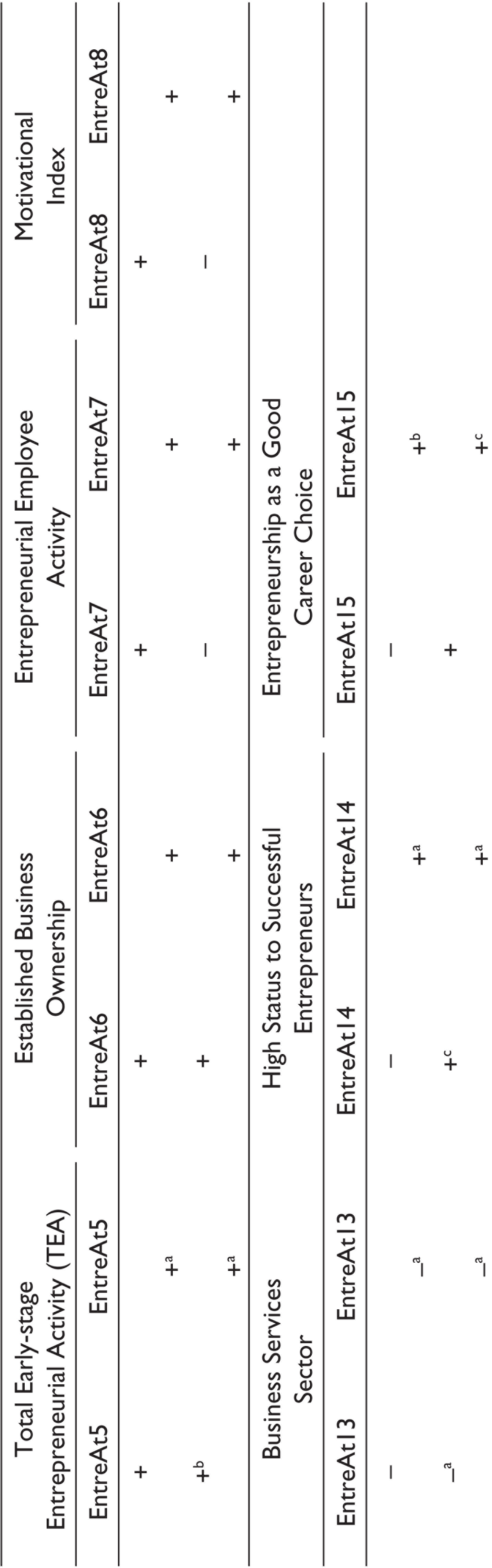

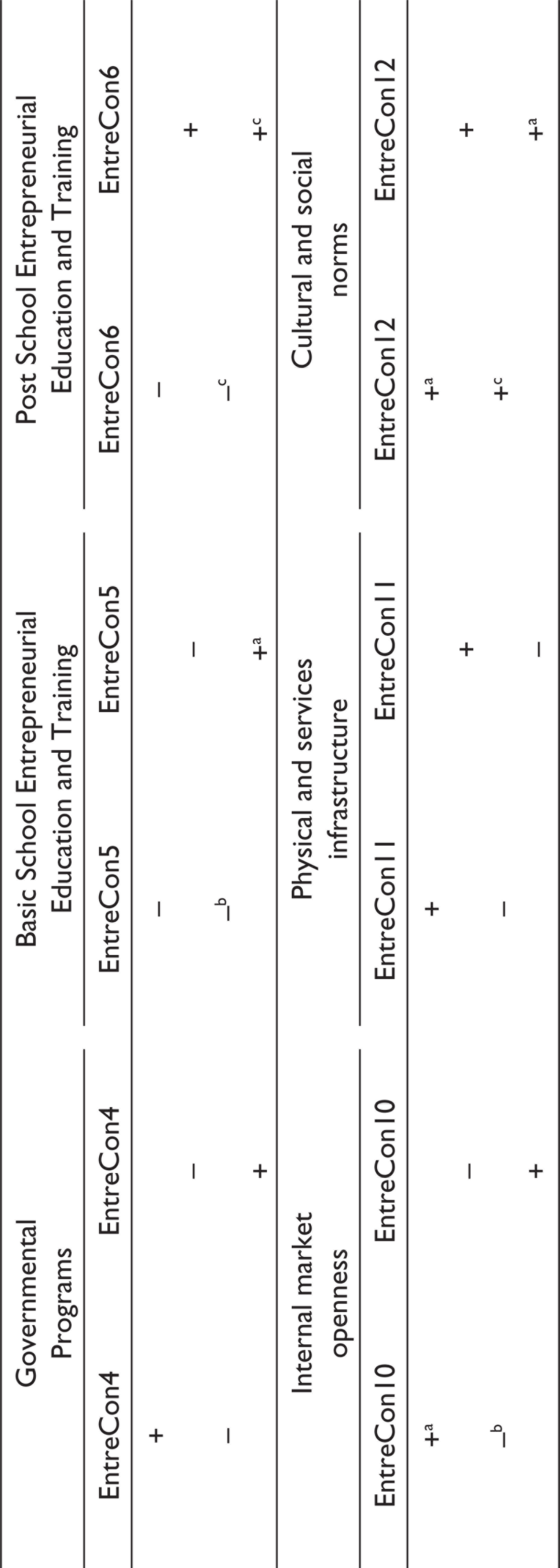
First, an increase in the yearly mean of domestic EPU (EPUm) has a significant negative impact on the perceived opportunities (EntreAt1), while it has a significant positive impact on the fear of failure rate (EntreAt3). This implies that the higher domestic EPU would induce the fear of failure in entrepreneurial activities and reduce the perceived opportunities for entrepreneurship. Other aspects of entrepreneurship attitudes are impacted by an increase in the level of domestic EPU with mixed signs and insignificant statistics.
Interestingly, although an increase in the yearly standard deviation of domestic EPU (EPUvo) has a significant positive influence on the fear of failure rate (EntreAt3) suggesting that entrepreneurs would not dare to start a new business; this volatility of the domestic EPU might also encourage entrepreneurship in some other ways since it has significant positive influences on entrepreneurial intentions (EntreAt4), the Total early-stage Entrepreneurial Activity (TEA) (EntreAt5), High Status to Successful Entrepreneurs (EntreAt14) and the Entrepreneurship as a Good Career Choice (EntreAt15).
Our findings imply that an increase in the volatility of domestic EPU (or an increase in the risk of the uncertainty) generates a schizophrenic context in which, on the one hand, domestic EPU induces a particular reduction of formal entrepreneurial activities. However, on the other hand, it might create more informal, early-stage, risk-taking venturing activities through the pathway of entrepreneurship with a higher probability of success.
The influence of global EPU on entrepreneurship attitudes is consistent with the influence of domestic EPU with more significant impacts. Specifically, an increase in the yearly mean of global EPU (GEPUm) has a significant negative impact on the perceived opportunities (EntreAt1), Female/Male TEA (EntreAt9) and business services sector (EntreAt13).
Meanwhile, it has a significant positive impact on fear of failure rate (EntreAt3), the total early-stage entrepreneurial activity (TEA) (EntreAt5) and high status to successful entrepreneurs (EntreAt14). Interestingly, an increase in the yearly standard deviation of global EPU (GEPUvo) has a significant positive influence on most of the variables indicating informal entrepreneurial activities such as entrepreneurial intentions (EntreAt4), the total early-stage entrepreneurial activity (TEA) (EntreAt5), high status to successful entrepreneurs (EntreAt14), entrepreneurship as a good career choice (EntreAt15) and especially innovation (EntreAt12). These findings confirm the stronger influence of global EPU on entrepreneurial activities than the domestic EPU.
What is surprising in the influence of (global and domestic) EPU on entrepreneurship is that uncertainty seems to boost pro-entrepreneurial social and cultural norms (i.e., encouraging early-stage actions for the creation of new businesses). Specifically, the coefficients associated with high status to successful entrepreneurs and entrepreneurs as a good career choice variables are positive and statistically significant, which are consistent with the increase in entrepreneurial intentions and the total early-stage entrepreneurial activity (TEA).
In light of these findings, we conclude that while EPU reduces the number of newly (formal) registered businesses, it significantly boosts entrepreneurial intentions and early-stage entrepreneurial activities. The negative association between uncertainty and the number of registered businesses is probably due to the unfavourable formal institutions under highly uncertain situations (e.g., higher taxes, less government support). Meanwhile, the positive association between uncertainty and entrepreneurial intentions is attributed to the development of favourable informal institutions (e.g., social acceptance of entrepreneurship as a good career under economic uncertainty situation).
Implication and Conclusion
This study provides robust and consistent evidence showing that EPU may not always be harmful to entrepreneurship. Precisely, in contrast with the existing literature emphasising the negative impact of uncertainty on entrepreneurial activities, our study suggests that global and domestic EPU seems to boost pro-entrepreneurial social and cultural norms (i.e., encouraging actions for creation of new businesses). In other words, uncertainty may serve as an exogenous shock filtering ‘good’ business ventures from ‘not-so-good’ ones. Indeed, the average level of fear of failure increases and perceived opportunities decrease in the presence of uncertainty. However, this condition enhances entrepreneurial attitudes in the economy, indicating that only individuals with excellent ideas are confident to pursue entrepreneurial intentions in such an adverse condition. Therefore, the reduced number of registered firms under the presence of uncertainty does not necessarily indicate a shirking of entrepreneurship. Uncertainty leads to soft support—informal institutions (e.g., social acceptance) associated with challenging conditions, which may nurture innovative and cutting-edge business ideas.
This study has some important implications for policy-makers concerned with boosting entrepreneurship in the situation of economic uncertainty. It is noteworthy that uncertainty serves as a generator of novel and innovative ideas that match new demands and changing market structures. Many of these ideas may not find a chance to be formalised due to the lack of resources and government support during the economic uncertainty period (Berg, 2019). As such, governments should maintain their support to the entrepreneurial sector as a way to reduce the negative impacts of economic uncertainty on the economy as a whole. When being properly financed and assisted, entrepreneurs may successfully realise their business ideas, which may provide more efficient ways to allocate resources and help stabilise the shocks created by the uncertainty.
This study has limitations that should be acknowledged, and at the same time, they also provide potential avenues for future research. First, the study period is limited due to the availability of the economic uncertainty variables. Moreover, the degree and types of economic uncertainty may be different from country to country in the covered period, as well as from time to time. As such, one should not take this as one and an unproblematic variable as if that would exert the same effect at all circumstances. Future studies, therefore, should extend the proposed theoretical framework and re-test it using a long-term dataset and in different contexts. The long-term effects of economic uncertainty are currently largely unexplored. Second, the dataset employed in this study is quite small. Future research should thus re-test the validity of our findings using a larger dataset with more observations. Finally, this is a country-level study which may suffer from aggregation biases. Future study may design questionnaires that capture other dimensions of economic and policy uncertainty and test their association with entrepreneurship at the firm level or individual level, which would allow a deeper understanding of the impact of uncertainty on socio-economic growth.
Footnotes
Declaration of Conflicting Interests
The authors declared no potential conflicts of interest with respect to the research, authorship and/or publication of this article.
Funding
The authors received no financial support for the research, authorship and/or publication of this article.
Appendix
Global Economic Policy Uncertainty and Entrepreneurship Conditions
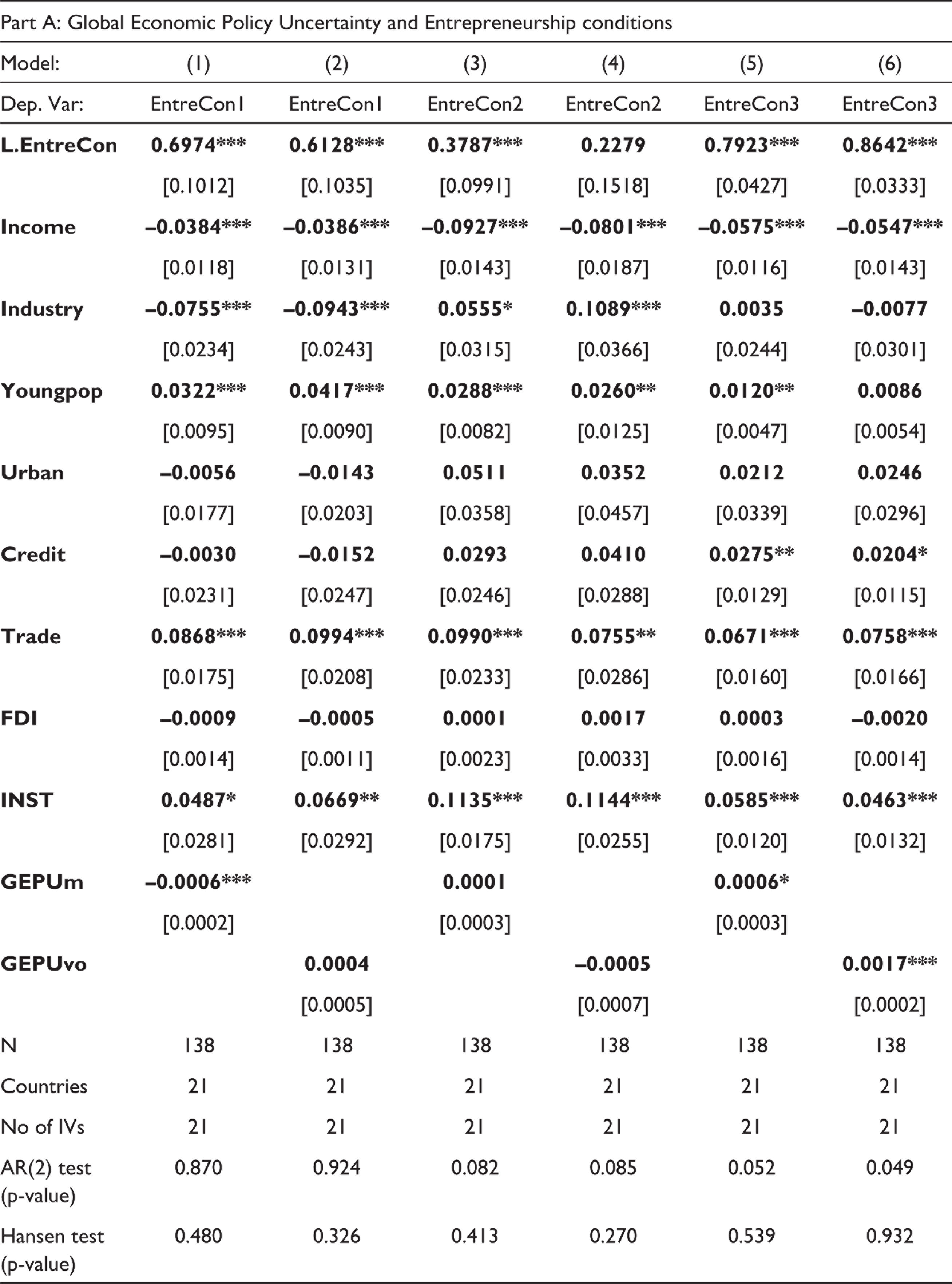
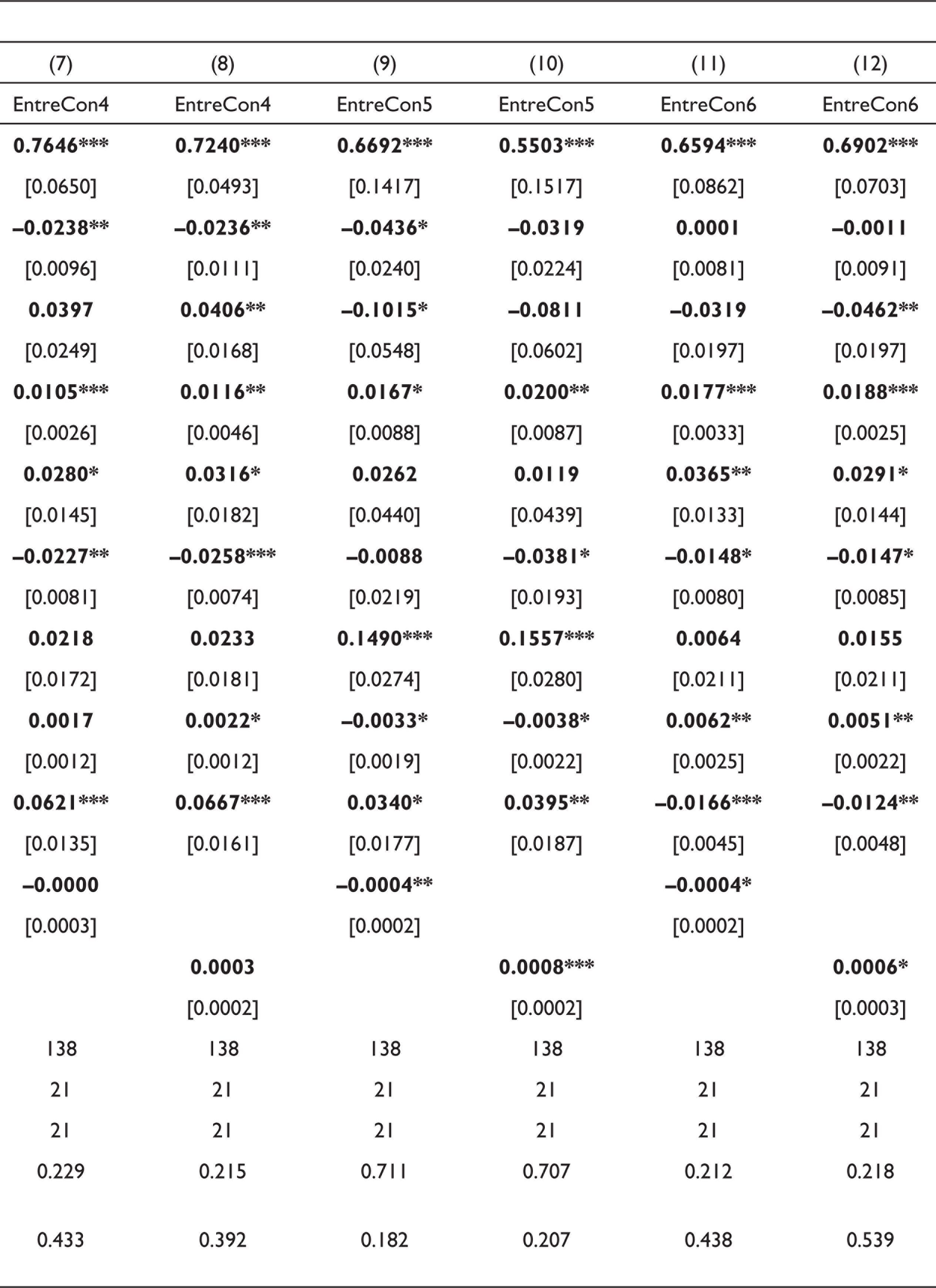
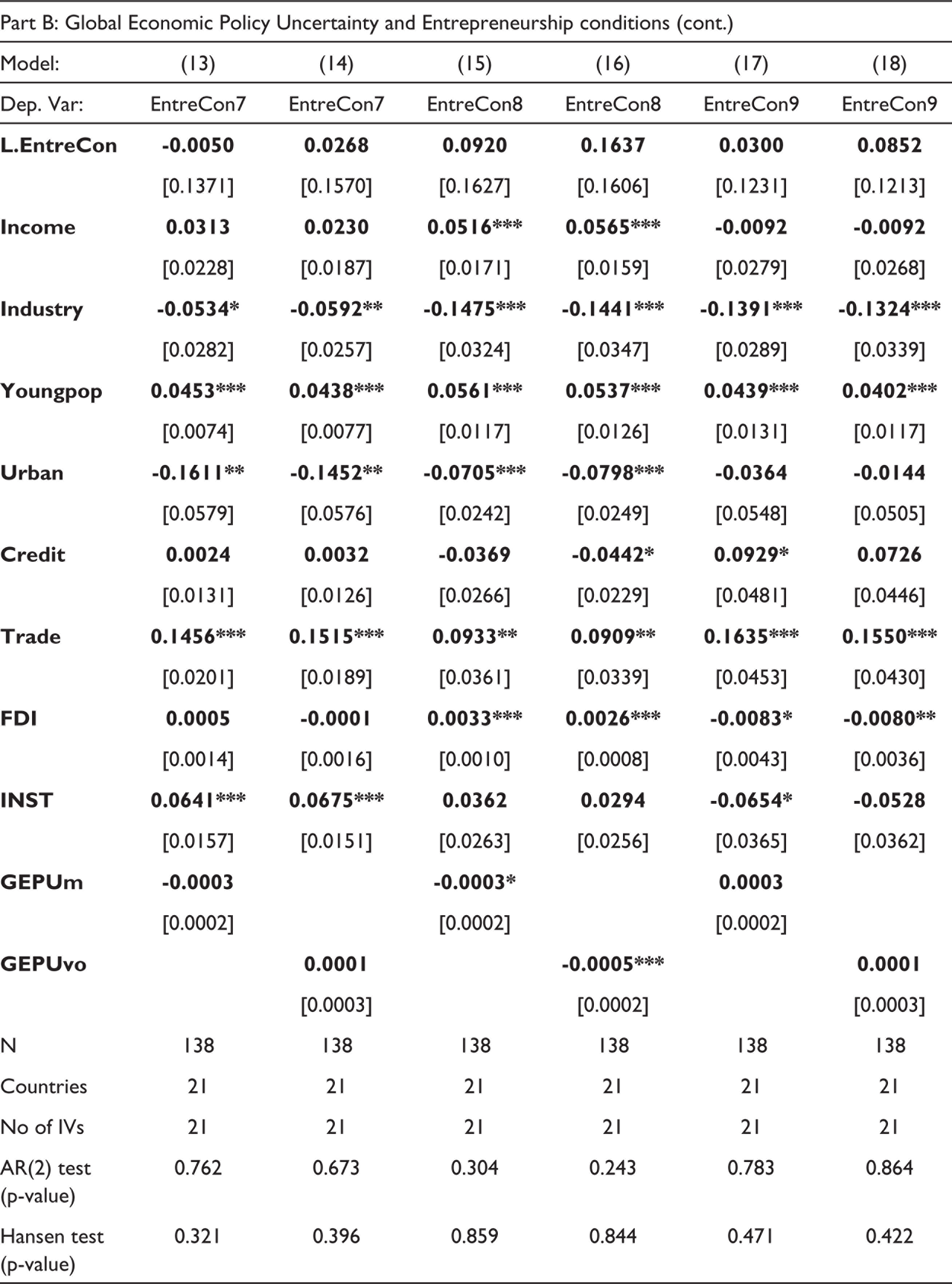
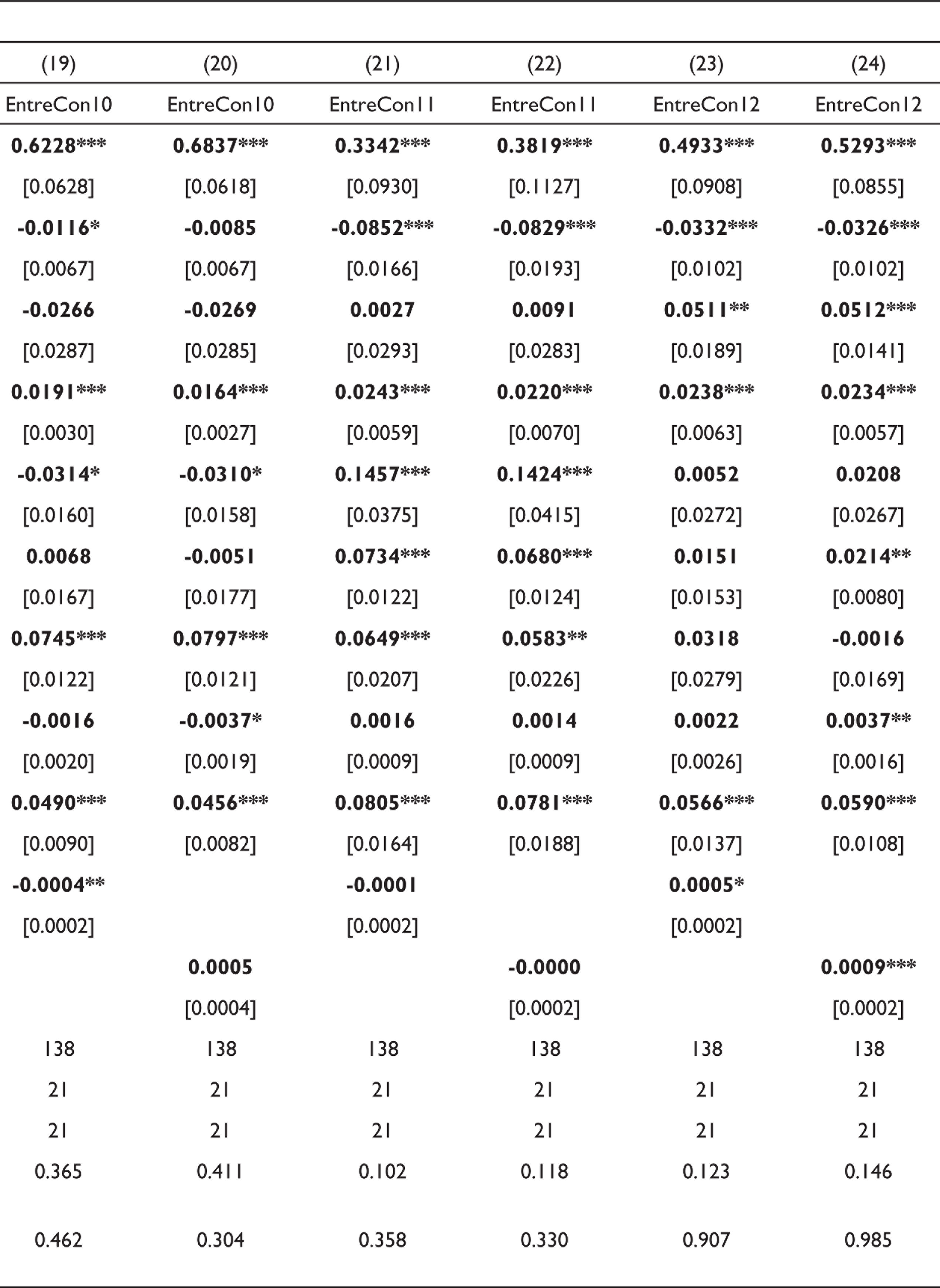
| Part A: Global Economic Policy Uncertainty and Entrepreneurship conditions |
|||||||||||||
| Model: | (1) | (2) | (3) | (4) | (5) | (6) | (7) | (8) | (9) | (10) | (11) | (12) | |
| Dep. Var: | EntreCon1 | EntreCon1 | EntreCon2 | EntreCon2 | EntreCon3 | EntreCon3 | EntreCon4 | EntreCon4 | EntreCon5 | EntreCon5 | EntreCon6 | EntreCon6 | |
|
|
|
|
|
|
|
|
|
|
|
|
|
|
|
| [0.1012] | [0.1035] | [0.0991] | [0.1518] | [0.0427] | [0.0333] | [0.0650] | [0.0493] | [0.1417] | [0.1517] | [0.0862] | [0.0703] | ||
|
|
|
|
|
|
|
|
|
|
|
|
|
|
|
| [0.0118] | [0.0131] | [0.0143] | [0.0187] | [0.0116] | [0.0143] | [0.0096] | [0.0111] | [0.0240] | [0.0224] | [0.0081] | [0.0091] | ||
|
|
|
|
|
|
|
|
|
|
|
|
|
|
|
| [0.0234] | [0.0243] | [0.0315] | [0.0366] | [0.0244] | [0.0301] | [0.0249] | [0.0168] | [0.0548] | [0.0602] | [0.0197] | [0.0197] | ||
|
|
|
|
|
|
|
|
|
|
|
|
|
|
|
| [0.0095] | [0.0090] | [0.0082] | [0.0125] | [0.0047] | [0.0054] | [0.0026] | [0.0046] | [0.0088] | [0.0087] | [0.0033] | [0.0025] | ||
|
|
|
|
|
|
|
|
|
|
|
|
|
|
|
| [0.0177] | [0.0203] | [0.0358] | [0.0457] | [0.0339] | [0.0296] | [0.0145] | [0.0182] | [0.0440] | [0.0439] | [0.0133] | [0.0144] | ||
|
|
|
|
|
|
|
|
|
|
|
|
|
|
|
| [0.0231] | [0.0247] | [0.0246] | [0.0288] | [0.0129] | [0.0115] | [0.0081] | [0.0074] | [0.0219] | [0.0193] | [0.0080] | [0.0085] | ||
|
|
|
|
|
|
|
|
|
|
|
|
|
|
|
| [0.0175] | [0.0208] | [0.0233] | [0.0286] | [0.0160] | [0.0166] | [0.0172] | [0.0181] | [0.0274] | [0.0280] | [0.0211] | [0.0211] | ||
|
|
|
|
|
|
|
|
|
|
|
|
|
|
|
| [0.0014] | [0.0011] | [0.0023] | [0.0033] | [0.0016] | [0.0014] | [0.0012] | [0.0012] | [0.0019] | [0.0022] | [0.0025] | [0.0022] | ||
|
|
|
|
|
|
|
|
|
|
|
|
|
|
|
| [0.0281] | [0.0292] | [0.0175] | [0.0255] | [0.0120] | [0.0132] | [0.0135] | [0.0161] | [0.0177] | [0.0187] | [0.0045] | [0.0048] | ||
|
|
|
|
|
|
|
|
|||||||
| [0.0002] | [0.0003] | [0.0003] | [0.0003] | [0.0002] | [0.0002] | ||||||||
|
|
|
|
|
|
|
|
|||||||
| [0.0005] | [0.0007] | [0.0002] | [0.0002] | [0.0002] | [0.0003] | ||||||||
| N | 138 | 138 | 138 | 138 | 138 | 138 | 138 | 138 | 138 | 138 | 138 | 138 | |
| Countries | 21 | 21 | 21 | 21 | 21 | 21 | 21 | 21 | 21 | 21 | 21 | 21 | |
| No of IVs | 21 | 21 | 21 | 21 | 21 | 21 | 21 | 21 | 21 | 21 | 21 | 21 | |
| AR(2) test (p-value) | 0.870 | 0.924 | 0.082 | 0.085 | 0.052 | 0.049 | 0.229 | 0.215 | 0.711 | 0.707 | 0.212 | 0.218 | |
| Hansen test (p-value) | 0.480 | 0.326 | 0.413 | 0.270 | 0.539 | 0.932 | 0.433 | 0.392 | 0.182 | 0.207 | 0.438 | 0.539 | |
| Part B: Global Economic Policy Uncertainty and Entrepreneurship conditions (cont.) | |||||||||||||
| Model: | (13) | (14) | (15) | (16) | (17) | (18) | (19) | (20) | (21) | (22) | (23) | (24) | |
| Dep. Var: | EntreCon7 | EntreCon7 | EntreCon8 | EntreCon8 | EntreCon9 | EntreCon9 | EntreCon10 | EntreCon10 | EntreCon11 | EntreCon11 | EntreCon12 | EntreCon12 | |
|
|
|
|
|
|
|
|
|
|
|
|
|
|
|
| [0.1371] | [0.1570] | [0.1627] | [0.1606] | [0.1231] | [0.1213] | [0.0628] | [0.0618] | [0.0930] | [0.1127] | [0.0908] | [0.0855] | ||
|
|
|
|
|
|
|
|
|
|
|
|
|
|
|
| [0.0228] | [0.0187] | [0.0171] | [0.0159] | [0.0279] | [0.0268] | [0.0067] | [0.0067] | [0.0166] | [0.0193] | [0.0102] | [0.0102] | ||
|
|
|
|
|
|
|
|
|
|
|
|
|
|
|
| [0.0282] | [0.0257] | [0.0324] | [0.0347] | [0.0289] | [0.0339] | [0.0287] | [0.0285] | [0.0293] | [0.0283] | [0.0189] | [0.0141] | ||
|
|
|
|
|
|
|
|
|
|
|
|
|
|
|
| [0.0074] | [0.0077] | [0.0117] | [0.0126] | [0.0131] | [0.0117] | [0.0030] | [0.0027] | [0.0059] | [0.0070] | [0.0063] | [0.0057] | ||
|
|
|
|
|
|
|
|
|
|
|
|
|
|
|
| [0.0579] | [0.0576] | [0.0242] | [0.0249] | [0.0548] | [0.0505] | [0.0160] | [0.0158] | [0.0375] | [0.0415] | [0.0272] | [0.0267] | ||
|
|
|
|
|
|
|
|
|
|
|
|
|
|
|
| [0.0131] | [0.0126] | [0.0266] | [0.0229] | [0.0481] | [0.0446] | [0.0167] | [0.0177] | [0.0122] | [0.0124] | [0.0153] | [0.0080] | ||
|
|
|
|
|
|
|
|
|
|
|
|
|
|
|
| [0.0201] | [0.0189] | [0.0361] | [0.0339] | [0.0453] | [0.0430] | [0.0122] | [0.0121] | [0.0207] | [0.0226] | [0.0279] | [0.0169] | ||
|
|
|
|
|
|
|
|
|
|
|
|
|
|
|
| [0.0014] | [0.0016] | [0.0010] | [0.0008] | [0.0043] | [0.0036] | [0.0020] | [0.0019] | [0.0009] | [0.0009] | [0.0026] | [0.0016] | ||
|
|
|
|
|
|
|
|
|
|
|
|
|
|
|
| [0.0157] | [0.0151] | [0.0263] | [0.0256] | [0.0365] | [0.0362] | [0.0090] | [0.0082] | [0.0164] | [0.0188] | [0.0137] | [0.0108] | ||
|
|
|
|
|
|
|
|
|||||||
| [0.0002] | [0.0002] | [0.0002] | [0.0002] | [0.0002] | [0.0002] | ||||||||
|
|
|
|
|
|
|
|
|||||||
| [0.0003] | [0.0002] | [0.0003] | [0.0004] | [0.0002] | [0.0002] | ||||||||
| N | 138 | 138 | 138 | 138 | 138 | 138 | 138 | 138 | 138 | 138 | 138 | 138 | |
| Countries | 21 | 21 | 21 | 21 | 21 | 21 | 21 | 21 | 21 | 21 | 21 | 21 | |
| No of IVs | 21 | 21 | 21 | 21 | 21 | 21 | 21 | 21 | 21 | 21 | 21 | 21 | |
| AR(2) test (p-value) | 0.762 | 0.673 | 0.304 | 0.243 | 0.783 | 0.864 | 0.365 | 0.411 | 0.102 | 0.118 | 0.123 | 0.146 | |
| Hansen test (p-value) | 0.321 | 0.396 | 0.859 | 0.844 | 0.471 | 0.422 | 0.462 | 0.304 | 0.358 | 0.330 | 0.907 | 0.985 | |