



Abstract
The study investigates the role of risk perception in mediating the association of certain important cognitive biases such as overconfidence, illusion of control, optimism and planning fallacy with new venture creation. The study collected responses through questionnaires from 375 entrepreneurs in Central India. Partial least squares path modelling has been used to gauge the way these variables are connected. This study finds only the illusions of control and optimism to have lowered the perceptions of risk, and this lowering has resulted in the creation of a new venture. However, contrary to past studies, overconfidence and planning fallacy are directly linked with the decision to start a new project. Careful assessment of the levels of risk perception may enable entrepreneurs to minimise the cognitive biases, and they can constructively get engaged in the performance of the venture.
It is now being claimed that entrepreneurship has gained huge momentum by the Make in India initiative of the Government of India (2015). Entrepreneurship is a multidimensional phenomenon (Bhaskar & Garimella, 2017; Pradhan & Nath, 2012). Therefore, it is no surprise that reviews on the progression of entrepreneurship have not emphasised a unique or conclusive definition of an entrepreneur. For example, past entrepreneurial studies focused on traits namely need for achievement (McClelland, 1961), locus of control (Van de Ven et al., 1984) and risk propensity in finding out the solution to the question of what separates entrepreneurs from non-entrepreneurs. However, while trait is a necessary criterion for such differentiation, there is no sustained empirical support for it being so. For example, even if someone was not a risk-taking personality, they can err due to the sheer weight of cognitive faults and biases and, consequently, perceives lower levels of risk compared to others (Simon et al., 2000). This led researchers to think and unfold the reason for such an occurrence, and progress to include the cognitive approach to entrepreneurship. The cognitive approach unfolded the confusion about whether entrepreneurs are risk takers or there could be some other factors that blind and prevent them from perceiving high risk in a venture. Considering this view, it is later found out that perception towards risk taking is determined by differences in the schemes and ways of cognition in the processing of information and not due to differences in a predisposition toward risk taking (Baron & Markman, 1999; McCarthy et al., 1993; Nutt, 1993; Palich & Bagby, 1995). The intellectual roots of this argument are embedded in ‘categorisation’ which is the basis of the social cognitive theory (SCT) (Rosch et al., 1976). This theory explains that human beings are ‘cognitive misers’ and exert less cognitive effort while engaging in a decision-making task (Fiske & Taylor, 1991; Heider, 2013). Thus, people tend to form several categories to store information that enable them to make predictions regarding the categorised situation and quickly apply heuristics to form opinions about the complex business. This manner of opinion-formation, by definition, involves a constriction of fuller information. The recognition of this phenomenon furthers the scope for parallel interpretations of the comparable situations, depending upon the heuristics each perceiver tends to take. The assessments are likely to be distorted if these classifications have perceptual differences among one or a group of individuals (Krueger et al., 1989; Tversky & Kahneman, 1992) affecting decision processes to venture creation. Though limited studies in the West (Corman et al., 1988; McCarthy et al., 1993; Palich & Bagby, 1995; Schade & Koellinger, 2007) have established that cognitive biases lower risk perceptions towards the creation of new venture, no research in the Indian context has formally tested these relationships on entrepreneurs (Kannadhasan et al., 2014). In order to address the gap, using SCT, we carried out this study on entrepreneurs to empirically investigate the association of the important cognitive biases, that is, overconfidence, illusion of control, planning fallacy and optimism, with the perception of risk and with the creation of the new venture.
While the earlier studies recognised the relevance of these factors (e.g., Kannadhasan et al., 2014; Simon et al., 2000), the current study contributes in two distinct ways. First, it examines the impact of cognitive biases on new venture creation by drawing samples directly from entrepreneurs, unlike previous Indian study where the sample was obtained from the students (Kannadhasan et al., 2014). Second, it explores how cognitive biases influence formation of new ventures via risk perception in the Indian context.
Review of Literature and Development of Objectives
This section briefly examines the theoretical framework, the relationship between cognitive biases and the creation of a new venture. Then, the relationship between perception of risk and new venture creation is discussed. Finally, this section describes risk perception as a mediator in explaining the relationship of cognitive biases and new venture creation.
Theoretical Framework
This article examines new venture creation from the perspective of social cognitive theory (Bandura, 1986). SCT proposes that a person’s behaviour is the function of individual and environmental interaction and not controlled by inner forces or external stimulus (Bandura, 1978). In other words, individuals’ cognitive and physiological aspects determine interaction in the presence of external stimuli resulting in an influence on one another (Bandura, 1999). Thus, SCT focuses on the interactive dynamic associations of determinants of individual action based on personal and environmental factors (Wood & Bandura, 1989).
New Venture Creation and Decision Process
The past studies have attempted to understand the psychology of new venture creation from multiple perspectives of demographic, cultural and individual circumstances (Gartner, 1985; Gnyawali & Fogel, 1994; Reynolds & Miller, 1992). However, these studies did not fully unfold the voluntary and purposively striving nature of entrepreneurship. For example, it would be interesting to ask why only certain people are able to start a new venture and why not others? (Shaver & Scott, 2002). This generated interest in the study of traits to explain the cause of entrepreneurial activity. It was found that entrepreneurs had a greater propensity to take risks compared to others (Brockhaus, 1980; Palich & Bagby, 1995). However, other studies found the propensity to take the risk to be unrelated to the creation of venture (Brockhaus, 1980; Busenitz & Barney, 1997), and the decision to begin a new enterprise depends upon the perception of the individual, rather than factual reality (Krueger & Deborah Brazeal, 1994). More studies supported the argument that those perceiving lower risks than others are more likely to venture in to new business (Brockman et al., 2006; Chen & Dong, 2007; Forlani & Mullins, 2000; Keh et al., 2002; Palich & Bagby, 1995; Panzano & Billings, 1997; Simon et al., 2000; Sitkin & Weingart, 1995). Studying IT firms in the USA, it was found that two out of every three respondents did not perceive themselves to be risk takers (Corman et al., 1988). In a similar vein, focusing on Indian post-graduate business students, Kannadhasan et al. (2014) found that distorted risk perceptions are the reason for venture creation. Therefore, basing ourselves on theoretical justification and on our own data, we propose the following hypothesis:
Cognitive Biases and Risk Perception
Cognitive bias is a faulty mental process leading to judgment and decision deviating from commonly acceptable norms (Montibeller & von Winterfeldt, 2015). If cognitive bias determines decision on venture creation (Simon et al., 2000), then it is equally important to find out why it happens. Hence, understanding the role of risk perceptions in explaining ‘why’ occupies the central position. Because people are complex and heterogeneous, their cognitive ability to form simple, accurate and sweeping generalisations is seldom (Cooper et al., 1995). In order to address these constraints, people engage in simplifying strategies and cognitive heuristics causing the emergence of cognitive biases (Schwenk. 1986). Studies find that entrepreneurs are under the influence of a variety of biases (Busenitz & Barney, 1997; Korte, 2003) because they unconsciously tend to simplify the way they process information to lessen the burden of conflict inherent in the decision to begin ventures (Hansen & Allen, 1992). Therefore, sometimes, certain cognitive biases retard cognitive ability to critically evaluate important business decisions (Barnes, 1984; Hogarth, 1980; Schwenk, 1984) resulting in an underestimation of risk levels (Cooper et al., 1988; Shaver & Scott, 1991). A study by Laibson (1998) notes how an individual’s decision is affected by cognitive biases in a situation that is risky in nature. Therefore, there is a need to describe how cognitive factors relate to a new venture creation mediated by risk perception. While different cognitive biases are likely to influence the perception of risk, four types of cognitive biases are strongly associated with the decision-making process to begin a venture (Simon et al., 2000). The four biases that explain entrepreneurial activity are (a) overconfidence, (b) illusion of control, (c) planning fallacy and (d) optimism. Overconfidence is not knowing what we know and what we do not know (Oskamp, 1965; Russo & Shoemaker, 1992). Optimism relates to a tendency of believing that things will always be positive, the illusion of control is a belief that one can effectively control outcomes and planning fallacy is a propensity to assume that it is possible to obtain more within a given time frame than is actually feasible (Baron & Markman, 1999).
Overconfidence and Risk Perception
Overconfidence is found to be one of the most relevant biases that can change the analysis results which is difficult to correct (Montibeller & von Winterfeldt, 2015; Thomas, 2018). Overconfidence has many forms such as overestimation, over placement and over precision. Overestimation is thinking that you are better than you really are. Over placement is the exaggerated belief that you are better than others. Over precision is the excessive faith that you know the truth. These biases are manifested at different times and in different ways (Moore & Healy, 2008). On the other hand, self-confidence is a positive and encouraging side of one’s mind that enhances performance through higher motivation. However, it can also be self-defeating being overly confident (Benabou & Tirole, 2002). Indeed, business failures have been the resultant of overconfidence bias (Camerer & Lovallo, 1999). Entrepreneurial proactivity and confidence must go together in creating business and boosting confidence (and not overconfidence) (Baron & Markman, 1999). However, when people unknowingly blind themselves with the superficiality of their assumptions such that they start believing they know more than they really do and fail to critically assess possible alternatives to effect certain expected outcomes, then it leads to overconfidence. Moreover, when an entrepreneur perceives the assumptions to be unchallenged, then this viewpoint reduces the need for searching for more information (Zacharakis & Shepherd, 2001). Consequently, decisional uncertainty depending upon those assumptions remains unnoticed. This kind of bias generates a reason for one to form an opinion that one’s decisions are safe, and hence, such a person unknowingly enters the unchartered territory (Tversky & Kahneman, 1973). For example, when entrepreneurs are overconfident, they feel can comfortably control events that are, in fact, out of their control. Then, their tendency and capacity to predict impending changes or assess threats and opportunities gets diminished. Thus, they end up taking huge risks not because they intentionally accept high levels of risk but because their own biases have retarded and reduced their perception of high risks (Simon et al., 2000; Zaiane & Ben, 2018). Therefore, basing ourselves on theoretical justification and on our own data, the following hypothesis is proposed:
Illusion of Control and Risk Perception
‘Control Illusion’ is a category of thinking, wherein one develops a belief that one can effectively control and manage future events, while overconfidence reflects an undue and excessive assessment of one’s certainty concerning currently prevailing factual situation (Simon et al., 2000). The control illusion is linked to confusion regarding skill-and-chance situations. People often make imperfect estimates about their control over situations that are completely chance-driven (Langer, 1975) and where skill does not make a difference. For example, rolling a dice and getting a specific number out of it is purely chance-driven. However, some people think that they can control the outcome, and hence, they prefer to roll the dice themselves, rather than offering someone else to roll it for them (Fleming, 1986). Such illusions of control may be detrimental to the venture because these make people believe they can predict future events that influence the outcomes of the venture (Duhaime & Schwenk, 1985; Mairean et al., 2022) even while they do not even realise the potential risk associated with the venture. Furthermore, entrepreneurs manifesting an illusion of control tend to miscalculate risk as they have a misplaced belief that their abilities are greater compared to others, and therefore, they can comfortably counter the emergence of any negative events (Barnes, 1984; Duhaime & Schwenk, 1985; Hogarth, 1980; Schwenk, 1984). Research finds that entrepreneurs with an illusion of control bias have a tendency to estimate their own performance unrealistically (Barnes, 1984; Duhaime & Schwenk, 1985; Hogarth, 1980; Schwenk, 1984), and they often ignore impediments which result into risky decisions (Staw, 1991). The illusion of control creates inertia or the element of skill complacency in the minds of people, and that results in retardation of their ability to predict risks in the venture (Shaver & Scott, 1991). In another study, it is noted that entrepreneurs often oversee impediments. Entrepreneurs believe their company will be performing better than their competitors’ as venture success depends on personal features and traits (Cooper et al., 1995). Therefore, based on empirical evidence we propose the following hypothesis:
Fallacy in Planning and Risk Perception
Entrepreneurs experiencing this bias tend to presume that one can easily attain more results in a specific timeframe than is required in certainty (Baron & Markman, 1999). This tendency often results in an underestimation of the required time to finish the task or over-estimate the degree of achievement in a given time frame (Baron, 2000). This bias occurs because while preparing an estimate about project completion time, most individuals focus on the future, that is, how they will perform, what steps to be taken and so on. They ignore their past statistics in similar situations. Even if individuals consider past experiences in which the project took more time than originally estimated, due to self-serving bias, they tend to project and falsely label such delays to some or other external causes beyond their control (Baron, 1998). Therefore, they behave overly optimistic and do not consider the need to evaluate the high risks of the venture. Findings reveal that entrepreneurs are more prone to the effects of planning fallacy because they operate in a highly volatile, uncertain, complex and ambiguous environment. Hence, they regard the prevailing circumstances or decisions as novel and are, thus, as being remote and far-out from the statistics from the past (Kahneman & Lovallo, 1993). This cognitive bias is the root cause of under-and-over estimation of risks and success probabilities. As the venture formation is highly futuristic and uncertain in nature, one may be inclined to planning fallacy and may not perceive probable risks associated with the creation of a new venture (Keh et al., 2002). Based on the above discussion, it is hypothesised that:
Optimism and Risk Perception
Optimism is one of the most consistent biases studied in psychology and behavioural economics (Sharot, 2011). Optimism bias is the tendency of believing that things will always be positive. It is often reflected in the form of (a) excessively positive self-appraisal, (b) excessive hopefulness concerned with upcoming plans and developments and (c) overtly optimism as a resultant of illusion of control. Findings reveal that most people are future-oriented and often hold overly optimistic or unrealistic views of the future. Their locus of control is anchored to the external factors as a result of which they tend to believe that the present is better than the past and future will be even better (Brickman et al., 1978). This optimistic view may be attributable to the reason for perceiving low risks. It is found that nearly half of all the new entrepreneurial endeavours collapse due to over-optimism (Cooper et al., 1995). Similarly, Palich and Bagby (1995) find that entrepreneurs often behave like a manager, wherein they focus more on strengths and opportunities and tend to focus less on frailties and threats. Moreover, two-thirds of the entrepreneurs stated that they do not take risks (Corman et al., 1988). Such viewpoints often neglect the merits of evaluating risk perceptions about new venture creation (Chen & Dong, 2007; Simon et al., 2000). Therefore, based on empirical evidence, the following hypothesis is proposed:
Risk Perception and Venture Creation
Past studies have found numerous psychological factors (e.g., need for achievement, risk-taking propensity and locus of control) that help to differentiate entrepreneurs from non-entrepreneurs (Das & Teng, 1997; McClelland, 1961). But the power of these traits to predict entrepreneurs continued to be modest (Hatten, 2015; Shaver & Scott, 1991). Hatten (2015) indicated that ‘The conclusions of three decades of research indicate that there are no personality characteristics that predict who will be a successful entrepreneur’. This confusion necessitated the further exploration of the reality concerning entrepreneurial activity. Consequently, numerous studies came out with intriguing results that opposed the original view that psychological traits unmistakably differentiate entrepreneurs from non-entrepreneurial in creating a new venture (McClelland, 1961; McClelland & Winter, 1971). For example, it is theorised that high risk-taking propensity is one of the strong characteristics of entrepreneurs venturing in to new business (Brockhaus, 1980). These researchers argue that the rate of failure of the new venture is caused by intentional risky actions. However, later it is found that high-risk propensity is not the common denominator to entrepreneurship (Brockhaus, 1980; Busenitz & Barney, 1997), rather it is the individual’s risk perception (cognitive factors) that explicate the decision of starting a new venture (Krueger, 1993; Krueger & Deborah Brazeal, 1994; Wadeson, 2009). If higher risk propensity is the prerequisite in initiating a venture, then it indirectly implies that persons will see the risks that are involved in their venture. However, if persons differ in their capacity to perceive risks, they do not essentially require a high propensity to take the risk to begin new enterprises. It may as well be that they do so simply because they perceive little risk. Hence, it may be risk perception against risk propensity that strongly explains the reason for entrepreneurial venture (Low & Macmillan, 1988; Palich & Bagby, 1995). In other words, low-risk perceptions drive risky behaviour to form a new venture and also reduce precautionary behaviour (McKay & Dennett, 2009).
This discussion suggests risk perception as a mediator. This mediator explains how and why the perception of risk can alter the bonds between the predictor variables (cognitive biases) and the criterion variable (new venture formation). The type of the mediated relationship is such that the independent variable is assumed to cause the mediator, which, in turn, is presumed to cause the criterion. There may not be ‘causal’ associations among them. Before testing for meditated effect, there must be a significant association between the predictor and the criterion (Baron & Kenny, 1986; MacKinnon & Fairchild, 2009). Establishing the meditational role of risk perception implies the following: (a) the predictor (cognitive biases) must be significantly correlated with the criterion (new venture formation), (b) the predictor (cognitive biases) must be significantly related with the mediators (risk perception), (c) the mediators need to be related to the criterion in a significant manner and (d) the predictor need to be inadequate (partial mediator) or insignificantly (no mediation) linked with the criterion when the properties of mediators are controlled (Baron & Kenny, 1986). Based on theoretical reasoning and observed evidence, we propose the hypothesis as follows:
The associations between cognitive biases, risk perception and venture creation are shown in Figure 1. To sum up, this study investigates cognitive biases and their associations with new venture creation via risk perception. Most past studies in the West had included students in their sample for studying cognitive biases. However, this study extends past research findings from students to Indian entrepreneurs. This is replicative research and such replications are necessary to verify the external validity of findings from the earlier studies in different cultural contexts (Tsang & Kwan, 1999).
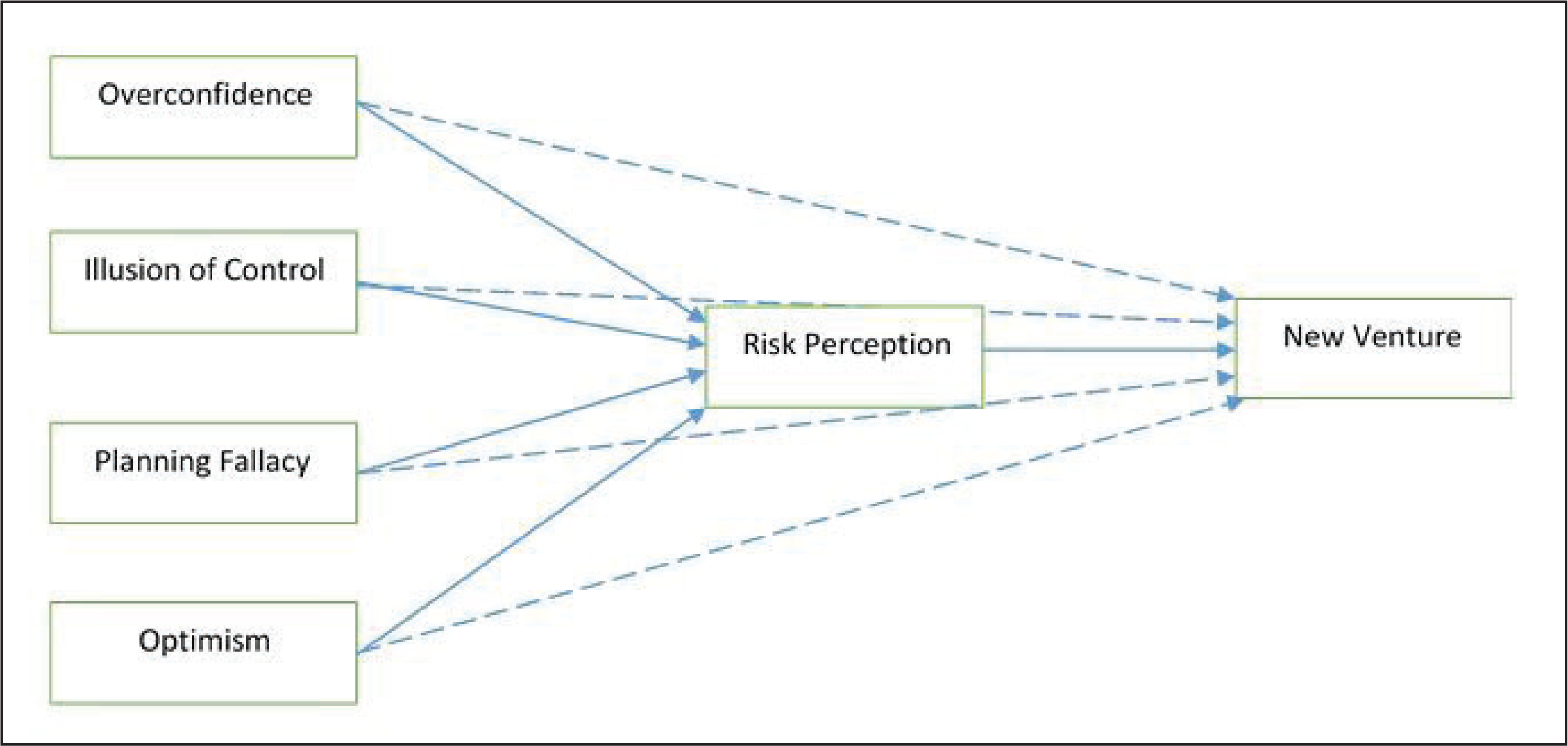
The specific research objective of this article is ‘to understand the the role of risk perception in mediating the association of certain important cognitive biases such as the illusion of control, overconfidence, planning fallacy and optimism with new venture creation’.
Method
Participants
Entrepreneurs were taken from different parts of Central India. The lists of entrepreneurs are prepared based on the source provided by the District Trade and Industries Centre (DTIC) in the month of February 2020. Among the companies registered with DTIC (N = 7,303), 812 SMEs belonging to the manufacturing sector were identified. The manufacturing industries were selected for the study with a realisation that industrial sector is critical and backward and forward integration with other sectors of economy is essential. The Atmanirbhar Bharat Abhiyan (self-reliant India campaign) is aimed at giving thrust to micro, small and medium enterprises (MSMEs) for rebuilding economy in the financial year 2020–2021. This made a surge in the interest of entrepreneurs for new venture creation (Economic Survey, 2020–2021, Volume 2). As the entrepreneurs of source list were spread widely, they were approached both by telephone and email initially seeking their interest and consent to participate in this study. Finally, 375 respondents were selected adopting simple random sampling technique. The respondents were requested to fill in the questionnaire and return it by e-mail or postal service within a fortnight. Out of the total of 375 respondents, male entrepreneurs constitute 87.7% (329) and 12.3% of female. The average age of the participants of our study is 43 years with a standard deviation of 12 years.
Measurement
In addition to the socio-demographic profile of the entrepreneurs, cognitive biases, the consequence and mediators of cognitive biases were also assessed. As the information required to be provided by the participants are of self-experience and belief, a self-reported measure assessing constructs of this study were selected and administered for this study. In order to measure the risk perception, new venture formation, illusion of control and optimism, the study used the scales which were developed by Simon et al. (2000). Overconfidence and planning fallacy were measured using the scales developed by Henry Friedman (2007) and Keh et al. (2002), respectively. These scales are well established and widely considered in entrepreneurial research across cultures. The risk perception was assesses using four-item scale. The sample item includes ‘the probability of failure is high’. New venture formation was assessed using three-item scale. The sample item includes ‘this project is worth considering given the situation’. Illusion of control and optimism were measured with a three-item scale. The sample item for illusion of control includes ‘I can make my business a success, even though others may fail’ and for optimism the sample item includes ‘I believe the economy will expand next year’. Overconfidence was measured using three-item scale. The sample item incudes ‘this business is worth considering’ and planning fallacy was measured with a two-item scale. The sample items include ‘I believe that the key issues of running different types of businesses are similar’.
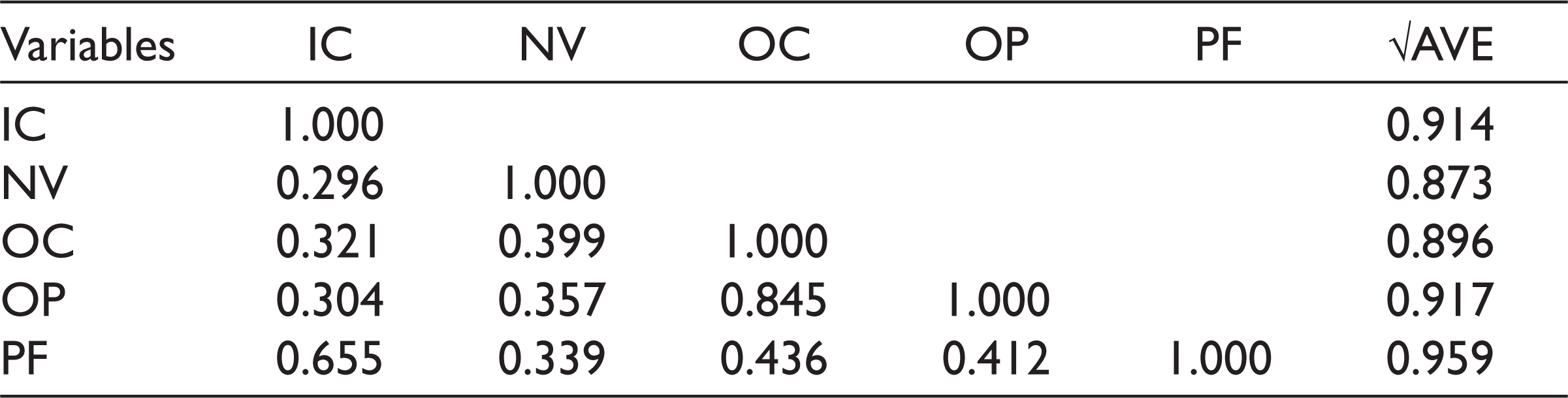
The discriminant and convergent validity were established using average variance extracted (AVE) as an indicator of shared variance of the construct used (Cohen, 2003). The result indicated good convergent validity with an AVE greater than 0.50 (Cohen, 2003), and the construct had discriminant validity as the squared correlation between the constructs was less than the AVE (Hair et al., 2012). The constructs had internal consistency with Cronbach’s alpha value above 0.60 (Nunnally, 1978).
Results
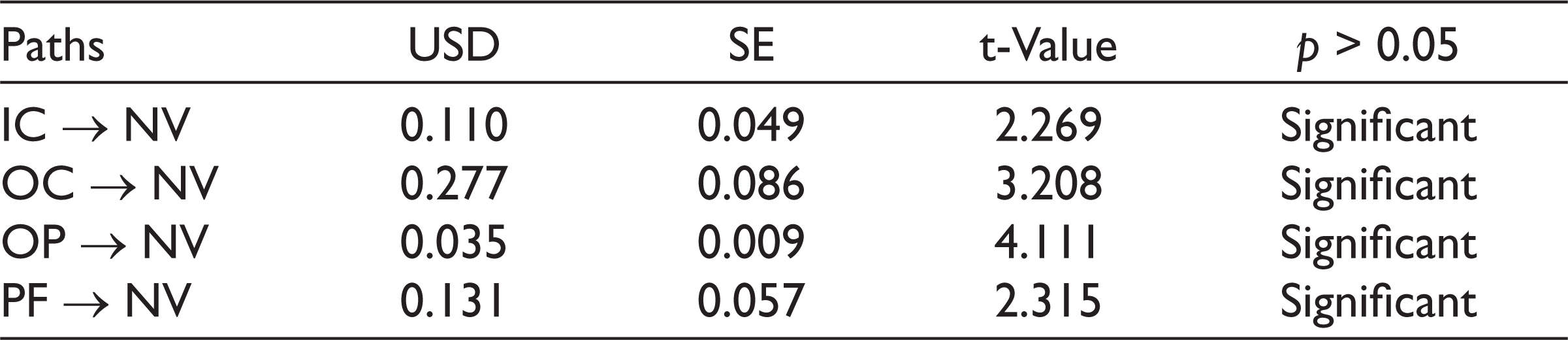
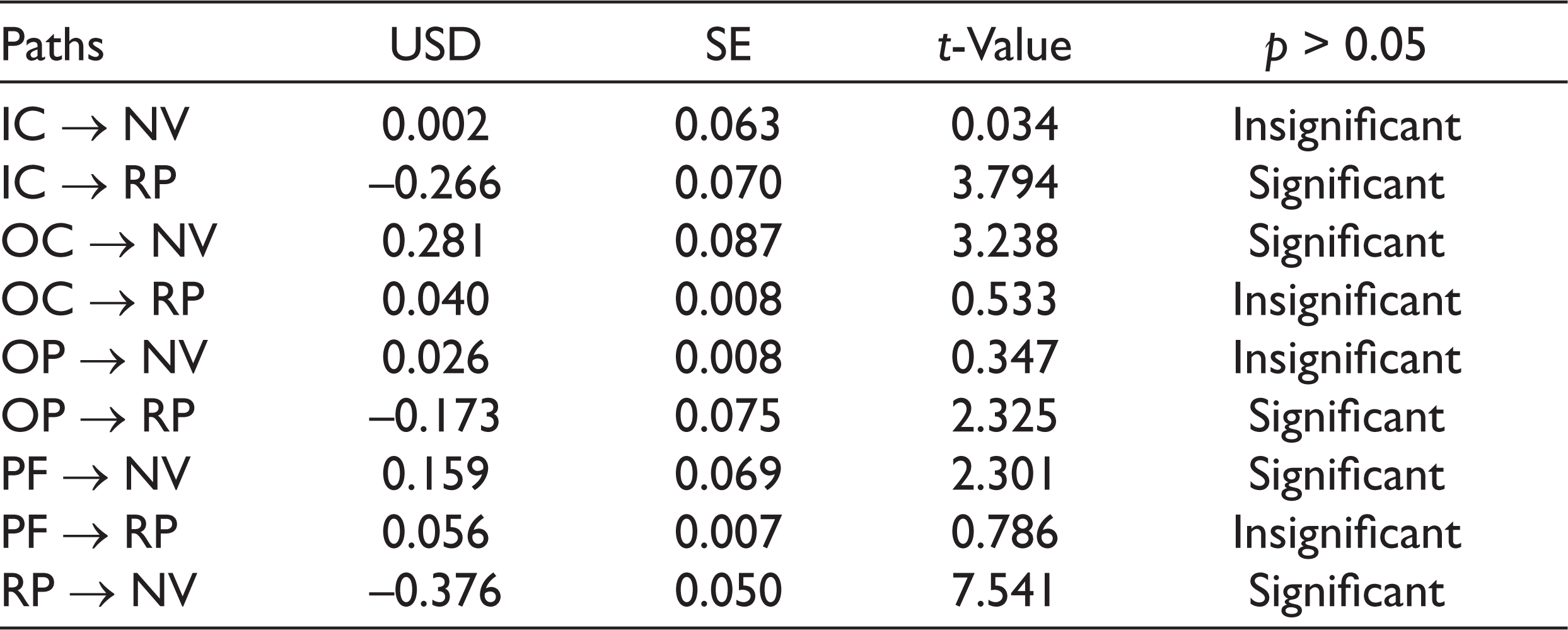
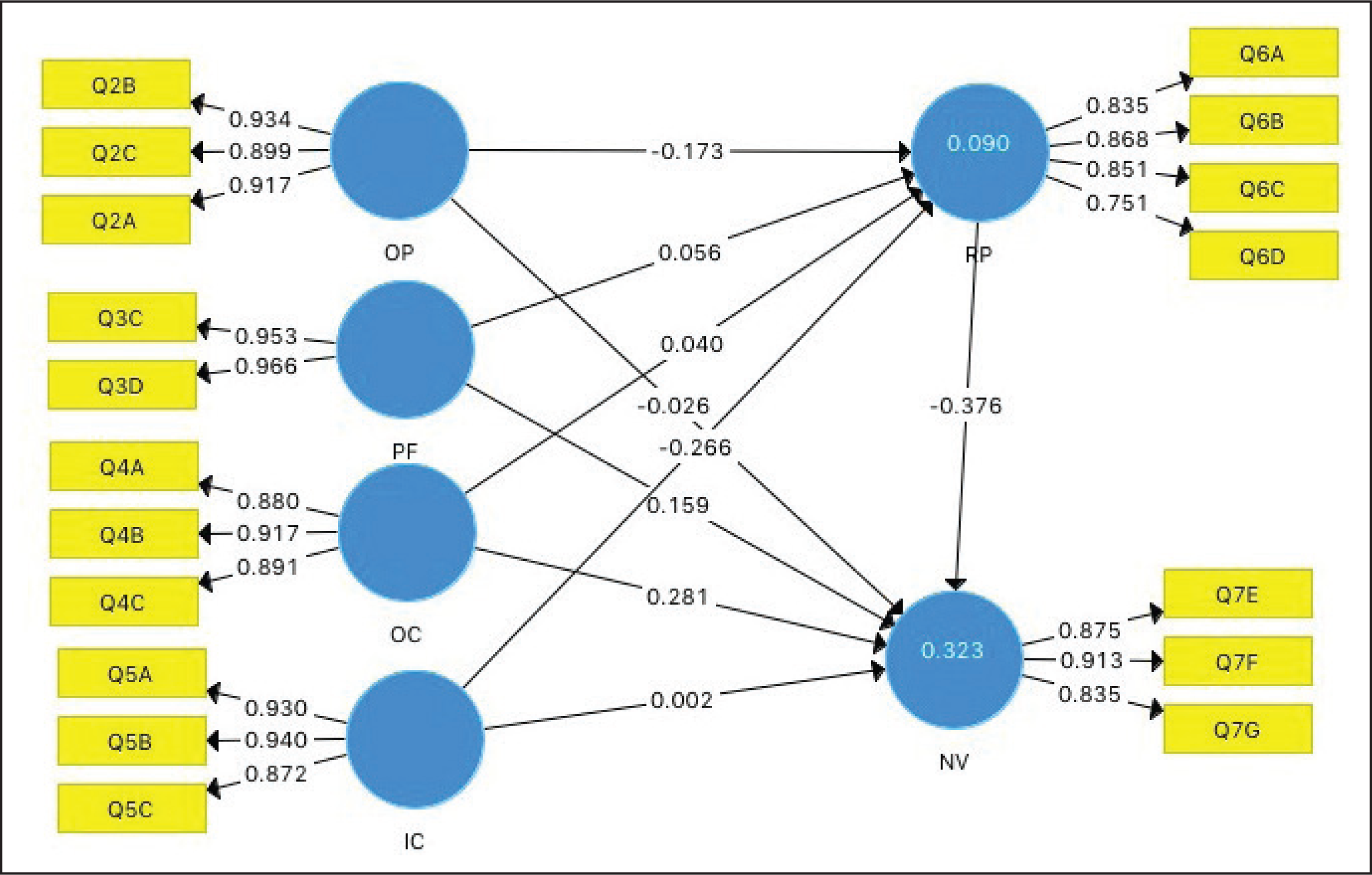
The Partial least squares (PLS) model was applied using PLS 3.0-M3 software to assess the intercorrelation of constructs and estimation. Structural equation modelling as a technique is increasingly used in social science research whenever the model includes latent constructs (Figure 3). SEM technique using PLS algorithm is applied to assess the measurement as well as structural model simultaneously and is complementary to covariance based-SEM. Furthermore, we presume, when sample size is small, the PLS SEM produces more stable results vis-a-vis hierarchical linear model which relies on the OLS algorithm. As our goal was simply not only theory testing/confirmation but also to understand and maximise the variance (R2) in the dependent variable which was effectively possible using the PLS SEM approach with an aim to estimate the measurement model (convergent and discriminant validity) of the latent constructs used in our hypothesised model. The measurement model obtained with its path coefficient value is depicted in Figure 2. Standardised path coefficients indicated that the increase in illusion of control, overconfidence, optimism and planning fallacy gave a fillip to the business decision to start new ventures. It is identified at first that cognitive biases were significantly associated with the formation of a new venture (Figure 2) while assessing mediation effect simultaneously (Iacobucci & Duhachek, 2003). Second, illusion of control and optimism were found to be inversely related to the mediator of risk perception, which suggests that the entrepreneurs experiencing relatively greater illusions of control and optimism had lower risk perception.

However, overconfidence and planning fallacy had no significant association with perception of risk (Table 4). Third, risk perception and venture creation had a significant association (Figure 3). Finally, indirect effect was tested using the Z-test (Sobel, 1982) of cognitive bias, creation of new venture and risk perception and found that Z-value was greater than 1.96, p > 0.05, establishing the indirect effect of constructs under study (Table 5). Moreover, global validation of the model obtained was verified with global fit index (GoF) for path modelling (Tenenhaus et al., 2005). The result showed that the relative to baseline values of power, the GoF value of this study exceeds the minimum cut-off value of 0.35 confirming PLS model global validation (Wetzels et al., 2009).
Quality Review of the Latent Variable

Latent Variable Correlations and Squared Root of AVE
Results of Measurement Model Without Mediator
Results of Measurement Model with Mediator
Results of Indirect Effect

Discussion
This study used a cross-sectional survey of 375 entrepreneurs located in different parts of Central India. It examines associations among certain important cognitive biases, perceptions of risk and venture formation. Entrepreneurs experiencing more illusions of control and optimism are found to have lower risk perceptions about establishing a new venture. In other words, lower risk perceivers likely to decide to establish a new venture (H1). Risk perception was found to be fully mediating against the association of illusion of control and optimism with the new venture creation. Because overconfidence and planning fallacy did not satisfy the second condition of mediation effect, the role of risk perception cannot be gauged (Baron & Kenny, 1986; Iacobucci & Duhachek, 2003).
A past study finds that overconfidence indirectly affects the decision to establish a new venture (Kannadhasan et al., 2014). In another study, it is found that overconfidence is insignificantly associated with risk level perception and new venture creation (Keh et al., 2002; Simon et al., 2000). In yet another study also, it did not significantly relate to the perception of risk (Simon et al., 2000). Our study corroborates these findings. The possible reason may be that individuals tend to self-attest the veracity of their assumptions, and hence, these assumptions may not lead to optimistic inferences (Barnes, 1984; Russo & Shoemaker, 1992; Simon et al., 2000). This refutes H2.
Corroborating earlier findings (Shaver & Scott, 1991; Simon et al., 2000), the illusion of control has been found to have lowered the perceived risk levels to make a new venture (H3). It is so because the entrepreneurs believe that the outcomes of the venture can be controlled, and competitors’ strategy and response will not affect their probability of success. These assumptions resulted in an underestimation of the risk level connected with venture formation. Contrary to past studies, for example, Keh et al. (2002); Kannadhasan et al. (2014), planning fallacy did not significantly relate to risk perceptions. This may be because entrepreneurs tend to perceive their prevailing conditions, circumstances, or decisions as novel and often try to isolate them from the past results (Kahneman & Lovallo, 1993). Consequently, this belief caused them to discount the levels of risks, refuting H4. Studying post-graduate students, Kannadhasan et al. (2014) found that optimism had no significant association with new venture creation. However, the present study contradicts the hypothesis and suggests that optimistic entrepreneurs strongly believe that they can turn things positively, thereby decreasing their risk perception on forming a new venture (H5). The difference in the results may be due to the Indian cultural context and ethos in which the research was carried out as the Indian social structure has different socioeconomic class (Desai & Dubey, 2011; Srinivas, 1996). Moreover, cognitive bias is influenced by social evaluation anxiety created by unequal society (Wilkinson & Pickett, 2010).
Cognitive biases are often discouraged. However, when information and time are inadequate for making a decision, cognitive biases may produce better results (Todd & Gigerenzer, 2000). However, the authors do not clarify if any rule of thumb or intuitive perceptions were being misunderstood as cognitive biases. Nevertheless, it is generally effective to reduce one’s cognitive biases in an ordinary course because inadequacy in decisions may affect the progress of the ventures (Smith et al., 1988). Although it is difficult to completely eliminate the biases (Hogarth, 1980), it is helpful to reduce these to the possible extent through systematic business-related research, identifying the rate of success, the position of the industry, profit range, industry size, product strength, etc. (Kannadhasan et al., 2014).
This research study emphasises that for understanding the effects of cognitive biases on a risky decision, it is imperative to consider the role of risk perception as a mediator (Sitkin & Weingart, 1995). In the current work, risk perception is found to be fully mediating the association of optimism and illusion of control with new venture decisions (H6b and H6d). Discussion with entrepreneurs during the survey unfolds that identifying possible effects of risk perception enables them to effectively counter the adverse consequences of biases on the decisions concerning venture formation. H6a and H6c are not supported as overconfidence and planning fallacy had a nonsignificant effect on risk perception and mediation criterion is not fulfilled (Baron & Kenny, 1986; MacKinnon & Fairchild, 2009; Singh et al., 2012).
Conclusion
This study is a kind of the first attempt to find out the relationship of cognitive bias, perception of risk and decision to start a new venture logically. This study examined ‘risk perception’ and its role as a mediator in explaining the relationship of the illusion of control, overconfidence, planning fallacy and optimism with new venture creation. The findings indicate that only the illusions of control and optimism to have lowered the perceptions of risk, and this lowering has resulted in the creation of a new venture. Thus, careful assessment of the levels of risk perception may enable entrepreneurs to minimise the cognitive biases, and they can constructively get engaged in the performance of the venture. Entrepreneurs exhibiting biases cannot offset the risks after the venture is established. Thus, a thorough assessment of the levels of risk perception may enable entrepreneurs to minimise these biases and sustain the performance of the venture.
Managerial Implications
The potential benefits of understanding the risk perceptions would be tremendous. Carefully weighing risk perception levels may enable entrepreneurs to minimise the cognitive biases, and they can constructively get engaged in the performance of the venture. For example, recollecting failures would reduce the illusion of control. The recollecting of earlier events leads to a belief that the same may happen again. This study advocate the heuristic approach enables the entrepreneurs to understand not all situations can be predicted and such is beyond one’s control, aligning with the findings of Simon et al. (2000). For minimising optimism bias, the entrepreneurs can focus on the ‘availability heuristic’ approach for the retrieval of unpleasant events from the memory and practice loss aversion. Incorporating these two concepts helps diminish the risks of this bias. Another understanding that emerges from this study is that the success of a venture is determined by the quality and process of decision making. If the decision making is not well comprehended, it reduces the performance of the venture (Smith et al., 1988). For instance, entrepreneurs exhibiting a high degree of biases before the beginning of the venture may not counter the risks once the venture is in progress leading to lower performance of the venture and subsequently, deter the intention of starting a new venture. We expect that more studies investigating possible ways to counter biases. This is an area of research with high practical and policy importance.
Limitations/Future Research
This study investigated three important cognitive biases that impact risk perception. Future research needs to unfold further cognitive factors along with a mechanism that predicts the decision for venture creation. No separate analysis was carried out for different age groups because of the disproportionality of the gender representation in the sample. Upcoming studies may investigate and examine cognitive patterns in people of different age groups, gender, experience, performance and size of the establishment. The findings of this study should therefore be replicated in future research with a longitudinal study design. Moreover, entrepreneurship from other states can also be included in the future study to understand the differences between different regions within the country. Entrepreneurial bias research is relatively new area, a lot of other biases (such as confirmation bias, Dunning–Kruger effect and reasoning by analogy to name a few) are unstudied and therefore more investigation is warranted.
Footnotes
Declaration of Conflicting Interests
The authors declared no potential conflicts of interest with respect to the research, authorship and/or publication of this article.
Funding
The authors received no financial support for the research, authorship and/or publication of this article.