



Abstract
This study examines the influence of leadership on social entrepreneurs; specifically, the impact of authentic leadership, compassion and grit on entrepreneurial processes and performance outcomes with a sample of Americans social entrepreneurs (n = 284). Entrepreneurial process dimensions include individual innovation, opportunity recognition and social networks, and performance outcomes encompass social and financial performance, capturing dual mission characteristics of social entrepreneurship. The differing impacts of authentic leadership, compassion and grit are demonstrated, where authentic leadership influences all the dependent variables listed above, while compassion has a lesser positive influence on outcomes, except economic performance. Grit, only has a positive influence on innovation and economic performance. This research highlights that authentic leadership through its meaningful engagement is a more effective driver of multiple outcomes in social entrepreneurship, confirming that this new social business form works well with this newer social entrepreneurship leadership style.
Keywords
Social entrepreneurship has become a significant and impactful aspect of entrepreneurial activity in both developing and developed countries (Zahra et al., 2014). Viewing entrepreneurship as a distinct leadership phenomenon is an emergent theme in the research on entrepreneurship (Renko et al., 2015). Social entrepreneurs harness the business acumen of commercial entrepreneurship with an altruistic motivation typically found in the not-for-profit sector (Dees, 2017; Germak & Robinson, 2014). By combining these two elements, business acumen and altruistic motivation, with a third element, which is innovation, social entrepreneurs can make a unique leadership contribution (Dees, 2017). Since this new entrepreneurial approach is unique, it becomes a fertile area for inquiry, application and examination of emerging leadership research constructs applied in this entrepreneurial phenomenon. Perhaps this new and distinctive, modern, entrepreneurial phenomenon can be best explained using latest approaches to understanding leadership.
There is a counter argument that suggests social entrepreneurship should not be considered as a distinct phenomenon from traditional entrepreneurship same means, just different ends. Process theory and European school of entrepreneurship questions whether the idea of social entrepreneurship is even a valid concept (Cho, 2006). There is a stream of research that does not distinguish the leadership of social entrepreneurship and conventional entrepreneurship (Austin et al., 2006). Hjorth terms entrepreneurial leadership as the ability to make others move in his handbook of organizational entrepreneurship (2012) and this present research argues that the most effective way to achieve this for social impact is through authentic leadership. Authentic leadership can help build community-based enterprise (CBE) where communities, not the individual social entrepreneurs, are the prime movers (Peredo & Chrisman, 2006) and the key is for entrepreneurs to mobilize trust-based social networks.
This present research specifically looks at three aspects of leadership, authentic leadership, grit and compassion to explore the influence each has on social entrepreneurship outcomes, including social networks. Some of these outcomes are in relationship with the entrepreneurial process itself, such as the innovation component, opportunity recognition, and the social network process, all of which have been established as the key to entrepreneurial success (Ardichvili et al., 2003). However, when considering social entrepreneurship, some factors unique to social entrepreneurship are similar to entrepreneurial performance factors seen in the family business literature (Kelly et al., 2000). Specifically, both family businesses and social entrepreneurial enterprises place strong emphasis on social goals, along with financial performance (Dyer & Whetten, 2006). One focal point of this present study is to examine which leadership factors lead to the economic performance and to the social performance (Metcalf & Benn, 2013). A further question is whether relational dimensions of entrepreneurial social networks, opportunity recognition and innovation are influenced by specific leadership factors.
Literature
Social entrepreneurship encompasses social value creation through innovation, opportunity recognition and exploitation, as well as economic value creation, incorporation of risk and effective use of scarce resource (Peredo & McLean, 2006). The dual mission of social entrepreneurship necessitates authentic relations with others coupled with effective profit-building practices. This calls for business acumen and strategic planning, and perhaps, these business dimensions can be achieved through authentic leadership, compassion and grit.
Social entrepreneurship has a deep association in the literature with compassion, to the extent that compassion is associated with alleviating pain and suffering (Davenport, 2015; Kanov et al., 2004) that are outcomes of social challenges known to inspire social entrepreneurs. Social entrepreneurs commit to social processes, not just individual entrepreneurial efforts (Helmsing, 2015); and both compassion and grit could prove to be pieces of the social entrepreneur’s process puzzle. Upon closer examination, compassion and grit may form key pieces of a triad, in association with authentic leadership, which provides social entrepreneurs with the necessary fortitude to persevere, and to succeed in areas where social entrepreneurship calls for creative approaches to resource access and retention, such as venture funding, human capital, legal resources and brand marketing, which traditional for-profit organizations have in ready supply. Additionally, compassion and grit may help to move social entrepreneurs beyond merely achieving immediate and/or long-term goals, toward achieving meaningful lives and building a more meaningful civilization in the process.
Compassion
Compassion is a part of the positive organizational scholarship, which frames business decisions in the tradition of fundamental and timeless contributions to human existence (Kanov et al., 2004). Particularly, in the way compassion speaks to the fundamental calling of social entrepreneurship and opens a new window of social exploration into the advancement of social systems. Compassion helps build a conscience that is ideal for alleviating the suffering (Davenport, 2015) that social entrepreneurs encounter, and which inspires them to address social challenges and direct resources toward significant social change. Compassion that initiates as a state of mind and an abstract idea born in consciousness encourages the social entrepreneur in their desire to help others, often strangers and generates the motivation to persist through any social change resistance.
The rise of social entrepreneurship and individual leadership around compassion has an interesting set of political implications. Although social entrepreneurship is embraced by many with progressive political views, there is perhaps the significant through line of conservative principles in this new business phenomenon. Since social entrepreneurship takes an individual or team leadership position to address social problems that are not in some way adequately addressed by the government; social entrepreneurship does support the narrative that the business sector is better at taking care of social problems than a democratically elected government (Berglund, 2017). This view dovetails with the politically conservative position. It is interesting that the leadership of the social entrepreneur is constrained by the need to generate income to survive. In a sense, the rise of social entrepreneurship could lead to further erosion of the role of a democratically elected government providing for the public good (Sørensen & Torfing, 2005).
The notion of compassion and the agency to act on compassion is shifted from the government to the individual in a way that is aligned with conservative political principles. The social change that comes from embracing individual action around motivations from compassion can support conservative principles of less government more business, with the idea that this mindset will result in a socially subsistent society (Hjorth, 2013).
Relevant to leadership, compassion has been associated with cues of competence, intelligence and superiority (Melwani et al., 2012) and the involvement of moral judgement in efforts to alleviate suffering and misfortune (Perkins, 2017). Therefore, it is mindful for social entrepreneurs to recognize within stresses of uncertain entrepreneurial environments, resulting lower levels of compassion require empathetic leadership practices (Banker & Bhal, 2018). The associated influence of grit and authentic leadership can perhaps balance out any tendency of compassion to convey entitlement or arrogance towards the recipients of social entrepreneurship. Specifically, unchecked compassion can misdirect the social entrepreneur to assume, from a possibly entitled perspective, that it is their duty to bestow their ideals upon their socially challenged constituents, such as seeing a lack of running water in a village and deciding to dig wells, when villagers already have a more efficient plan for water access or restoration. Compassion could potentially misdirect social entrepreneurial opportunity recognition and efforts. However, authentic leadership and grit are perhaps not prone to this type of pitfall.
Creativity has a strong positive relationship to individual innovation (Sarooghi et al., 2014), and leader compassion may shield follower’s negative emotions known to impair creativity (Peng et al., 2017). This connection between compassion and creativity may solve challenges social entrepreneurs face creating individual innovation, opportunity recognition and strengthening social networks through positive relationships with compassion. Psychological empowerment is an antecedent of individual innovation (Audenaert et al., 2017) and positively relates to compassion, so leaders practicing compassion may exhibit high levels of concern for their followers and constituents; thereby, contributing to constructs positively related to compassion in hypotheses and answering the query of how social entrepreneurs can attract early followers to leverage new and smaller emerging ventures. A growing trend sees employees seeking employment with purpose over sole earning power (Sanders & Thompson, 2016); therefore, compassion can indirectly contribute to social enterprise recruiting and by extension, further social impact.
Additionally, the emerging awareness of leadership studies offers the knowledge that follower empowerment and wellbeing are essential components of effective leadership (Avolio et al., 2004); particularly, that leaders lead followers first and the business second, with the functional understanding that without followers there is no business. Social entrepreneurs with few to no followers in the social enterprise unequivocally understand the intrinsic value of followers; and even more, the imperative necessity to empower those followers towards their own wellbeing and the wellbeing of social change constituents.
Grit
Grit is recognized as the tenacious, passionate pursuit of and perseverance toward dominant long-term goals despite and moving beyond any setbacks and obstacles (Duckworth & Gross, 2014). Grit encompasses self-control, evolution of self-actualization and attainment of psychological wellbeing (Duckworth & Gross, 2014; Vainio & Daukantaitė, 2016). Grit is a predictor of retention but not performance (Maddi et al., 2012). The choice to utilize grit comes when social entrepreneurs need visceral and tenable strengths to persevere through roadblocks, setbacks and challenges; particularly, when business resources and human capital are scarce. And since grit has strong relations to goal attainment (Vainio & Daukantaitė, 2016), it sparks drive in social entrepreneurs when exhaustion from pursuing social commitment is eminent. Grit is proposed as a natural motivator for higher potential or self-actualization, and positively relates to all wellbeing factors, specifically, psychological wellbeing, satisfaction with life and harmony in life (Vainio & Daukantaitė, 2016).
Grit can even be used as a screening device for performance and retention (Maddi et al., 2012). Social entrepreneurs may utilize this construct as a determinant for human performance and human retention valuation. Even so, grit is not exclusively aligned to resilience in the face of challenge or adversity, or even reaching a specific goal and ceasing, it is about the fortitude to keep pushing past all goal achievement for the mere satisfaction of the feeling of accomplishment itself (Perkins-Gough, 2013; Vainio & Daukantaitė, 2016; Von et al., 2014). In this mindset, grit becomes more than just a doing behaviour or a resilience motivator, in its essence, grit contributes to transcendent endeavours. Meaning, grit strengthens and elevates the cause of each social entrepreneur and the very purpose of social entrepreneurship because grit contributes to goal achievement towards the wellbeing of others.
The argument against grit in this context is a question of perception. In participant perceptions of natural talent versus grit, in situations where effort was preferred, grit scored higher than in perceptions where natural talent was favoured, such as musical talent or artistry (Useem, 2016).
The proposed positive relationship to social and entrepreneurial outcomes in this present study and the association between grit and well-being in previous research (Singh & Jha, 2008) suggests that grit can generate resilience at the commencement of a process and well-being at the conclusion. Additionally, in this present research, grit is proposed as being positively related to individual innovation, opportunity recognition and social networks, and thereby, supporting the productivity and profitability component of social entrepreneurship. Therefore, grit can help leaders adapt over time to lead a venture during the social entrepreneurial life cycle and can empower social enterprise followers to commit at, in and throughout inevitable challenges of social sector employment. Grit, with its associations to these social entrepreneurial constructs, can provide stamina for risk-taking and confidence in leadership and followership.
Grit helps social entrepreneurs persevere even beyond planned goals, compassion inspires and initiates the social entrepreneurial cause. Yet, without authentic leadership, the potential for social impact may lack solidification.
Authentic Leadership
Above compassion and grit, towers the authentic leadership construct. Authentic leadership in this present research is argued to have even greater impact on social entrepreneurship than compassion or grit. As a relational construct, authentic leadership positively relates to many entrepreneurial outcomes, such as individual innovation, opportunity recognition, social networks, economic performance and social performance.
Authentic leadership represents a significant focus on self-development to the extent individual innovation behaviours and practices can be mirrored within social entrepreneurship and the work in self-awareness that this leadership style employs means opportunity recognition may be revealed at higher levels. Self-leadership, found in authentic leadership, fosters individual innovation, creativity and self-leadership as core factors of team innovation (Pratoom & Savatsomboon, 2012). Social networks can equally thrive under the guidance of authentic leaders who focus on relational transparency, internalized moral perspective and making decisions based on self-awareness. Finally, the construct of balanced processing serves to support behaviours associated with the attainment of the outcome of social performance. This is because these social outcomes are predicated on the ability to have meaningful conversations and exchanges across differences (O’Boyle et al., 2011). The endgame for the authentic leadership, compassion and grit combination is how social entrepreneurs use these collective resources to elevate social impact.
In traditional business, populated with cronyism and hierarchical cultures, followers are rewarded for inequitable, unethical and unscrupulous behaviours and actions with promotions and benefits that send a message to other organizational members to comply or be ostracised. The power of the authentic leader in the social enterprise is to create meritocracies founded in inclusion, diversity and conscientiousness.
Authentic leadership proves an invaluable leadership style for social entrepreneurs. Social sector stakeholders have a growing demand for authentic leadership, calling for self-interest transparency (Sinha, 2013). Authentic leadership fuses with the drive for individual’s ideas, creativity and outside-the-box thinking, steering a course to recognising opportunities through self-awareness and listening to others. It is in this state of genuine openness to others, innovation can be achieved and effective trust-based social networks built.
These three constructs of compassion, grit and authentic leadership help build the social enterprise and frame the foundation for social and economic performance. Authentic leaders are more likely to be transparent about their self-interest and altruism (Sinha, 2013), authentically leveraging the enterprise for stakeholders, followers and conscientious consumers.
Individual Innovation
In the entrepreneurial context, of which social entrepreneurship is a unique subset, characteristics of the founder or founders are, in some ways, indistinguishable from the strategy of the firm (Kelly et al., 2000). This present research argues that leadership choices of the founder of the social enterprise will be a principal driver of the innovation approach of the enterprise (Ridley-Duff & Bull, 2015). Innovation decision, such as which technologies processes, techniques or product ideas should be front and centre in the business of the social enterprise constitute some of the most important leadership choices of the social entrepreneur (Nambisan, 2017).
Although currently, there is limited research on individual innovation (Audenaert et al., 2017; Pratoom & Savatsomboon, 2012), founder innovativeness is positively related to business creation (Bullough et al., 2015). Founded in high performance, individual innovation is positively influenced by creativity, self-leadership and is based in autonomy and competence (Audenaert et al., 2017; Pratoom & Savatsomboon, 2012). Individual innovation, like social entrepreneurship opportunity recognition, is a behaviour of social entrepreneurship leader that when intrinsically and authentically motivated provides a steady flow of ideas for innovation strategies (Phillips et al., 2015). In social entrepreneurial leadership, it may be difficult for social entrepreneurs to fully grasp the power and importance of not only their own innovation, but to identify and engender that energy in their followers. This difficulty can be particularly when there are few followers in smaller entrepreneurial organizations. Individual innovation by the social entrepreneur helps employees see themselves in a meaningful job and role in the organization and gives employees a sense of self-sufficiency based on their idea that they have impact in the organization or team (Audenaert et al., 2017). The complex process of innovation that encompasses an agglomeration of multiple sources, improves organizational competitiveness and fosters long-term success (Pratoom & Savatsomboon, 2012).
In our definition of social entrepreneurship, we distinguish social entrepreneurship from other social sector businesses, such as traditional not-for-profits, by increased emphasis on the innovation component (Dees, 2017). Social entrepreneurs need to generate creative ideas and champion those ideas to various stakeholders, such as investors, suppliers, buyers, governments, other social enterprises and NGOs, and generally, all alliance partners (Kickul & Lyons, 2016). Task completion aspects that increase an individual’s understanding of people, places and timing through organizational knowledge management impact individual innovation (Pratoom & Savatsomboon, 2012). However, innovation is not creativity alone; it also requires implementation (West, 2002). The social entrepreneur mobilizes resources and thereby, funds followers to implement new ideas. The social entrepreneur should plan to roll out sequences of new ideas and ways that support the overall innovation strategy, much like a family business (Ward, 2016). Finally, this social entrepreneur’s innovation serves to model this type of innovative behaviour, so that all employees and those associated with this social venture, such as suppliers, investors, buyers and recipients of social benefits, can embrace innovation through leader-member exchange (Wang et al., 2015).
Authentic leadership plays a key role, whereby the leader models innovation and inspires employees to innovate through positive emotions (Zhou et al., 2014). Knowledge sharing in innovation is another aspect of the effects of authentic leadership on employees (Edú-Valsania et al., 2016). Authentic leadership of the social entrepreneur creates positive psychological capital and opens channels of communication among employees that is further inspired by the individual innovation of the leader, and high social venture innovation positively associates with individual innovation (Audenaert et al., 2017; Wang et al., 2014). Psychological empowerment drives innovation through broad job requirements and modelling individual innovation that can inspire followers in a social enterprise (Audenaert et al., 2017). Social entrepreneurs engaging the self-improvement aspect of authentic leadership, role model characteristics of individual innovation through self-esteem and improved employee engagement. When followers recognise their leaders are demonstrating the honourable values that authentic leadership embodies, follower motivation and idea generation follows. The job complexity in a social enterprise can be empowered by individual innovation of the social entrepreneur, thereby, increasing self-efficacy and intrinsic motivation of followers (Audenaert et al., 2017).
Opportunity Recognition
Opportunity recognition is a cornerstone of social entrepreneurship, guiding entrepreneurs to put their compassion and grit to work identifying new business opportunities, new and better products and services delivery and establishing entrepreneurial organizations that can inspire their followers, constituents and future social entrepreneurs.
Opportunity recognizers are true social entrepreneurs, intrinsically motivated to create, invent, generate and develop something from nothing with their passion for social change. This innovative construct allows social entrepreneurs to dispense with traditional thinking and approaches and launch new strategies through cross-pollination of efforts, multiple novel approaches and combinatorial learning to embrace unconventional thinking, ideas, behaviours and strategies. Opportunity recognition is the soul of the social entrepreneur, and this behaviour is an essential integrative step in the launching and implementation cycle throughout the lifetime of a successful social entrepreneurial enterprise.
Quality of Social Networks
Social entrepreneurs place considerable effort on developing social networks. Without such network benefits, access to trusted advice, varied viewpoints and multiple degrees of alternate viewpoints and insights, success could elude the social entrepreneur. As such, social networks are fundamental in determining a social entrepreneur’s success (Phillips et al., 2015). With often limited resources, social networks help social entrepreneurs develop a collective of professionals with extensive resources beyond the scope of the individual entrepreneur, and these networks essentially fill gaps in any lack of enterprise employees and trusted professionals, which in turn can reduce human capital costs, allowing social entrepreneurs access to a wealth of varied life experiences not accessible to traditional for-profit businesses (Greve & Salaff, 2003) where role structure tends to be less ambiguous.
Additionally, when social entrepreneurs access social networks populated with other social entrepreneurs, constructs of compassion, grit, individual innovation and opportunity recognition can be utilised to cross-fertilise complementary traditional processes. Some social entrepreneurs gain economic and strategic advantage by utilising social networks to affect the quality and flow of information and to build trust through the transactional behaviour of actors (Dufays & Huybrechts, 2014). Trust, built from authentic leadership, creates meaningful dialogue in these social entrepreneurship networks. Where trust flourishes, there is more freedom to be innovative, altruistic, equitable, transparent and to act with integrity.
Social Performance
Preceding and leading to social impact, social performance measures how well a social entrepreneur has translated their leadership attributes into social goal achievement through their enterprise’s products, services and business model, and thereby, delivers greater social outcomes. The various dimensions of social performance include structure, conduct, performance and impact (Clarkson, 1995).
Social entrepreneurs deliver social performance by how they lead in decision making, strategy and implementation. The choice of the social entrepreneur is to advocate for change while aligning and mobilising their social network and other resources to best serve their cause. By these decisions and actions, social entrepreneurs not only lead in alignment with their social values, but they advertently advocate for change.
Although social entrepreneurs may have an advantage in the realm of social impact and social influence, it is necessary through constructs of authentic leadership, for social entrepreneurs to develop and utilise a metric to effectively determine their social performance. These metrics remain elusive both in research and practice (Wilsdon, 2016). The label of social entrepreneur, despite well-intended social efforts, is still without sufficiently refined, nuanced and meaningful performance metrics (Helmsing, 2015). A cue from traditional business and organizational leadership demonstrates how entrepreneurial leaders can insure, through their business associations and acknowledgement, that their constituents and the public unquestioningly know where their values are aligned. When social change occurs because of social entrepreneurial efforts, including through economic performance that ensures viability, the social entrepreneur achieves the metric.
Economic Performance
Economic performance for social entrepreneurs can deliver mixed outcomes, consistent with the dual mission of the social enterprise. Social entrepreneurs need economic success to continue their social efforts and impact; however, economic performance supports the social metric impact when it aligns with the social entrepreneurial mission.
Social Impact
Social entrepreneurship has a dual mission: social responsibility and profit building through conscientious product and service delivery. The ‘social’ in social entrepreneurship requires those designated and self-designating as social entrepreneurs, bringing social relevance through leadership to their entrepreneurial endeavours (Helmsing, 2015). Developmental psychology research in altruism revealed that as early as one year to eighteen months old, children have an inherent tendency for instrumental helping, willing to put forward additional effort to help strangers without any reward-based provocation, a trait of social entrepreneurs (Warneken, 2011). Helping is intrinsically motivated and requires relational capabilities, because to help someone, the helper must possess the ability to decipher intent (Warneken, 2011). Like the children in the study, social entrepreneurs possess inherent abilities to decipher intent, need and the simultaneous drive to act. Social entrepreneurs can build on these inherent traits by engaging in present moment awareness and curiosity. Then, social entrepreneurs, just as the children in the altruism study, can tap into supplementary leadership awareness that aligns with authentic leadership, where this leadership style plays a pivotal role in social impact due to its constructs of integrity and honesty.
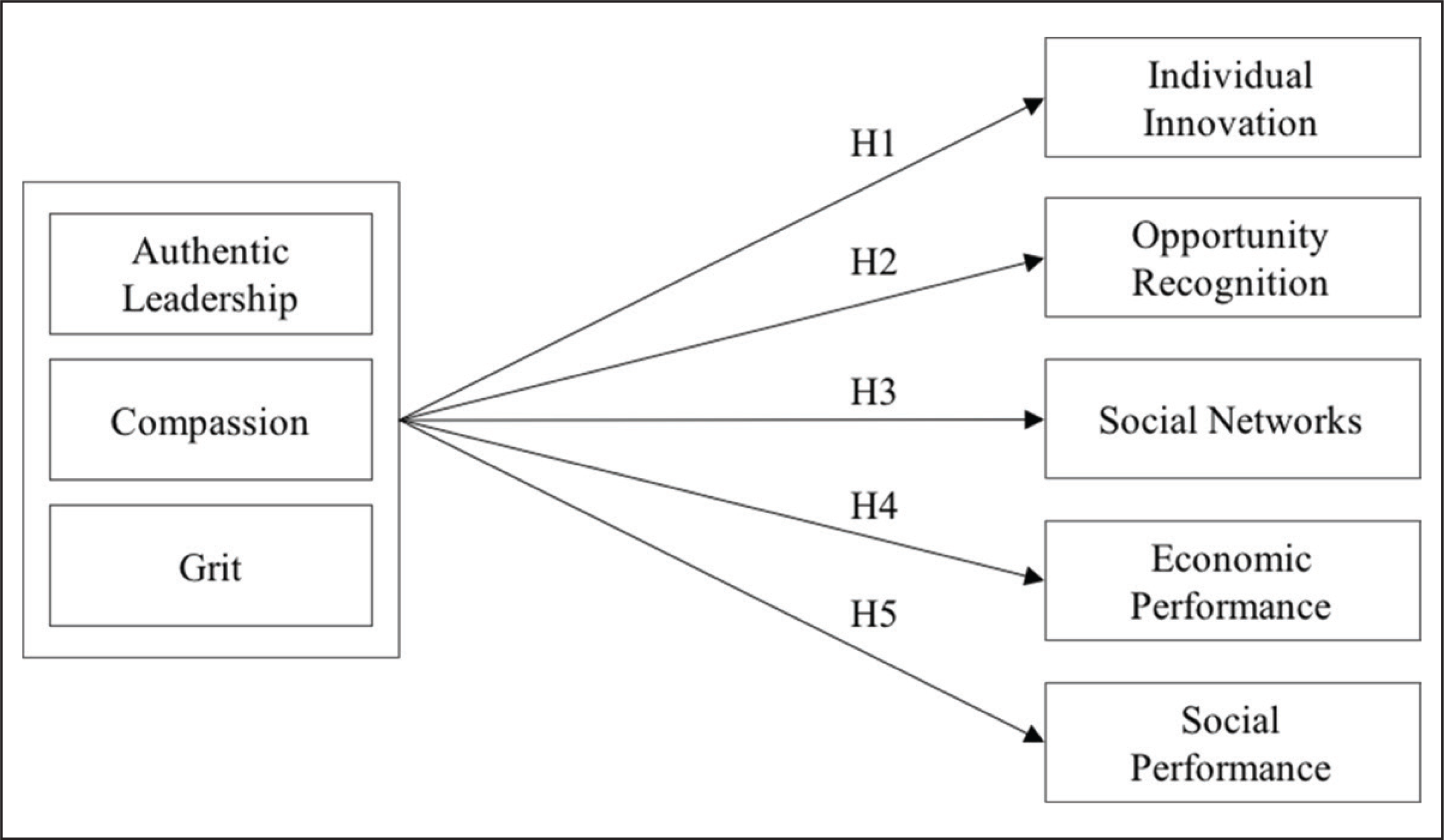
Barriers to social impact are lack of clear purpose (Porter & Kramer, 2018), awareness (Sinkovics et al., 2014), access to capital (Bruton et al., 2015), access to human capital (Lin, 2017), product and service clarity (Epstein & Yuthas, 2017), a metric for strategic and succession planning (Fowler et al., 2017), shared knowledge (Mair & Marti, 2006) and scalability (Dees, 2007). This present research suggests that authentic leadership and compassion are leadership choices and attributes that can drive opening behaviours or expansive entrepreneurial capabilities, such as individual innovation, opportunity recognition and social networks, all in service of the attaining social performance. Grit will have a particular key role in overcoming obstacles to deliver the economic performance so necessary to ensure the social enterprise can deliver on its social mission. The proposed research model is presented in Figure 1.
Research Method
A quantitative approach was used for gathering all the data needed for hypothesis testing. The primary goal of this study was to test whether a social entrepreneur’s authentic leadership, compassion and grit have a significant influence on entrepreneurial outcomes (individual innovation, opportunity recognition and social network quality), as well as performance outcomes (social and economic). A self-report survey was used to obtain data from social entrepreneurs based in the USA. To proceed with the survey, respondents had to respond to a qualifying question that allowed them to identify their companies’ social mission on a seven-point Likert scale and only those who responded 4 or higher could proceed with the survey. There was a follow-up question later in the survey, which asked respondents what percentage of their venture operation is for economic value and what percentage of their venture operation is for social or environmental, with instructions that the total must sum to 100.
Descriptive Statisticsa
Qualtrics is a private research company, based in Utah, was used to distribute the survey questionnaires and collect data from a diverse demographic of the target sample on behalf of researchers. Participants numbering 3,000 from an entrepreneurship panel were approached through email and asked to participate in this study. A total of 303 surveys were collected using a Qualtrics research panel over a 10-day period during November and December of 2017. After removing invalid surveys, the overall sample size was 284. The response rate was 10.1 % and the useable survey percentage was 9.46 %.
Descriptive Statistics
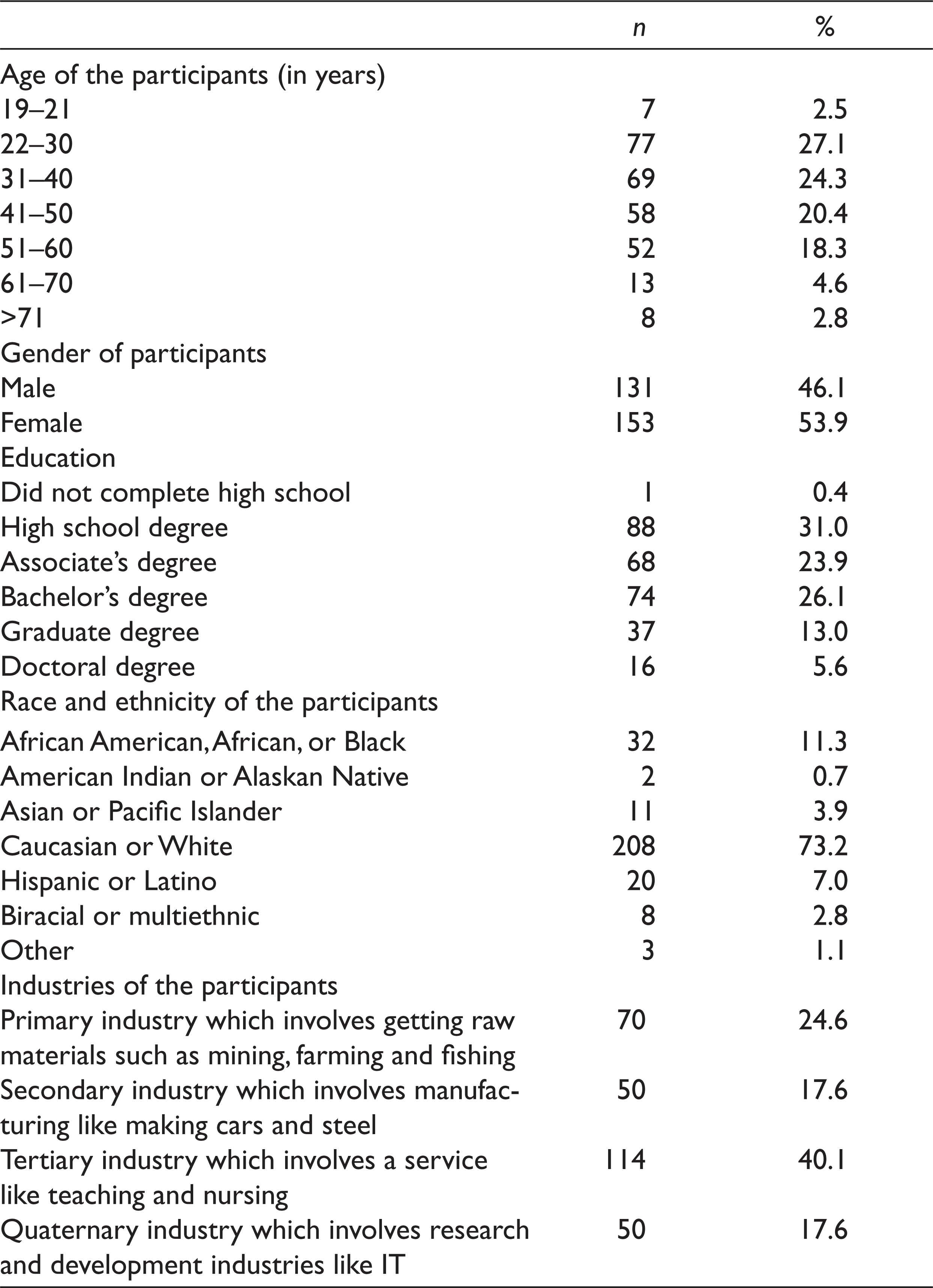
As shown in the descriptive table (Table 1), participants ranged from 19 to 71 years old and older, with the largest group in the 22-30 age range (27%). The sample was ethnically diverse and approximated the relative distribution of race and ethnicity in the US population, except for Hispanic or Latino, which at 7 % of our sample is significantly below the 16.3% recorded in the US Census of 2010. Industries of the participant represented in this study were highest from the service sector (40%). The gender representation at the different organizational levels of the sample varied. A slightly higher percentage of the social entrepreneurs were female (53.9%) versus male (46.1%).
Instruments
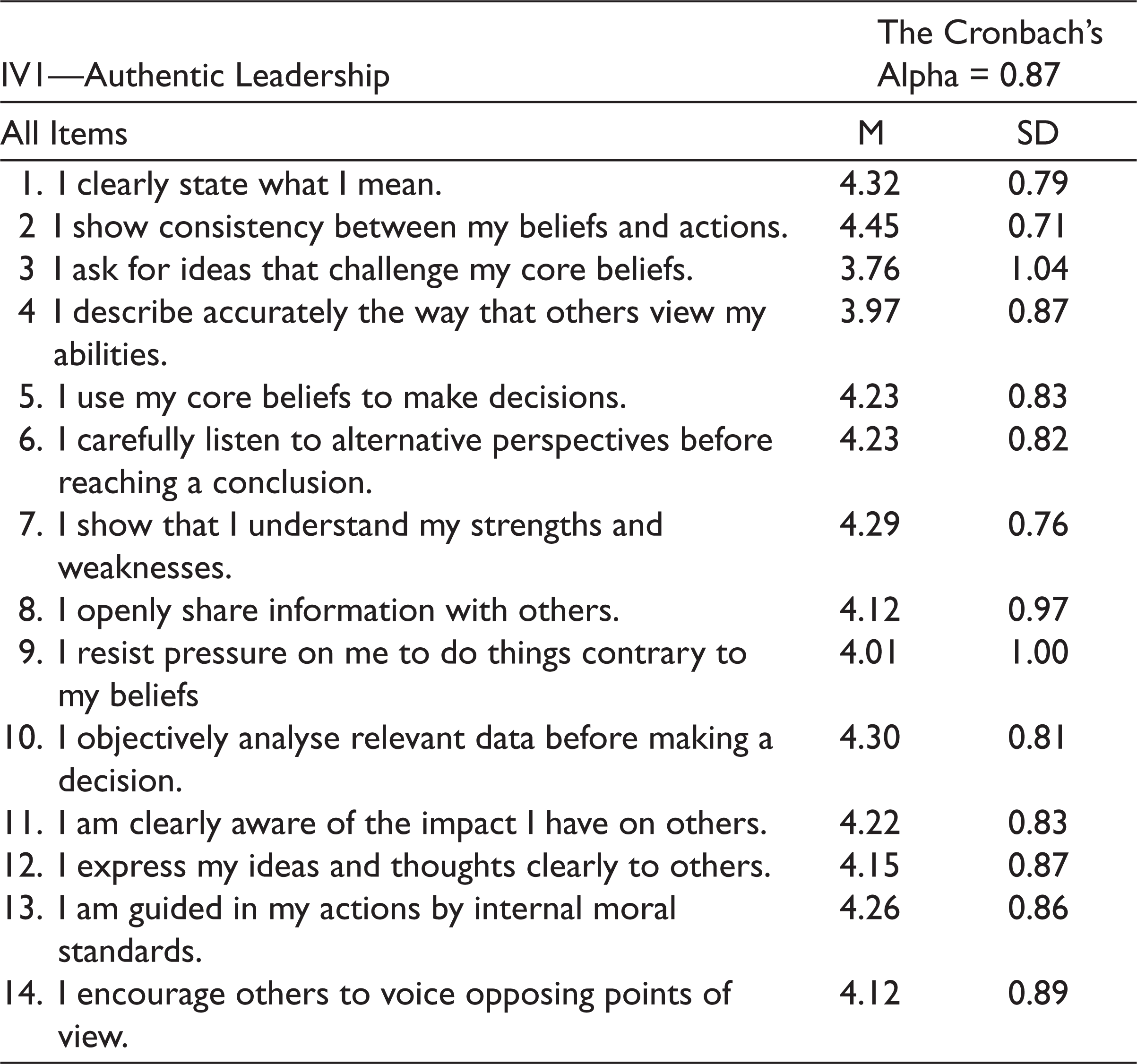
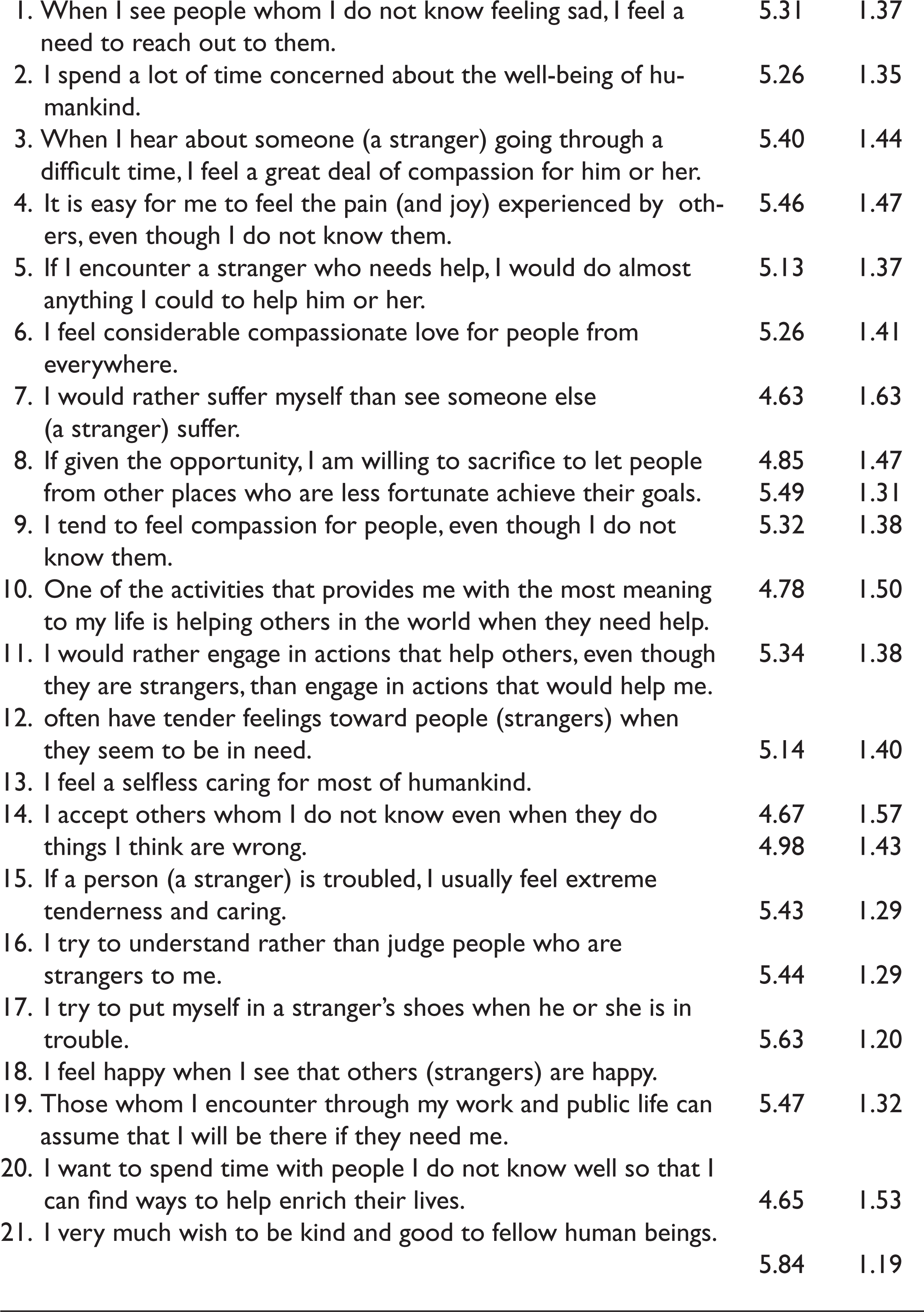
All the instruments are summarized in Table 2 with the questions listed, the mean scores, standard deviations and Cronbach’s Alphas. The reliability of these tests range from 0.81 to 0.96 as shown in Table 2.
Variable Means, Standard Deviations and the Reliability of Instruments

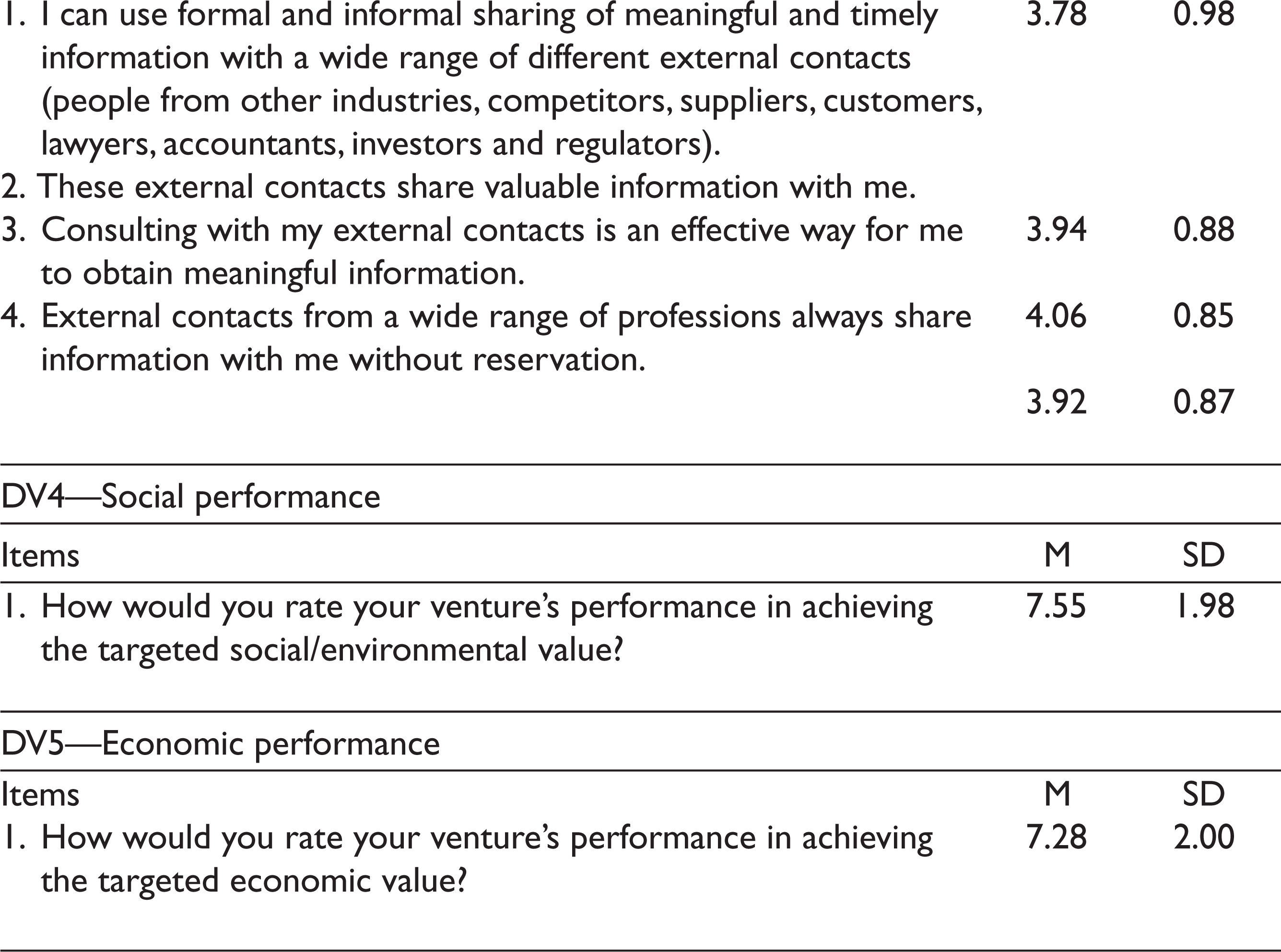
a Items 4 and 5 were removed.
Authentic leadership was measured through the completion of self-reports by social entrepreneurs, with ratings on the 14 authentic leadership items from the authentic leadership questionnaire (ALQ; Avolio & Bass, 2004). Items are answered on 5-point Likert scales ranging from 1 ‘not at all’ to 5 ‘frequently, if not always’. Compassion was measured using Sprecher and Fehr’s (2005) 21-item scale that measures compassionate love for others and humanity. In this research, grit was measured using a 16-item scale developed by Duckworth and Quinn (2009). These items are rated on a 5-point scale from 1: ‘not at all like me’ to 5: ‘very much like me’.
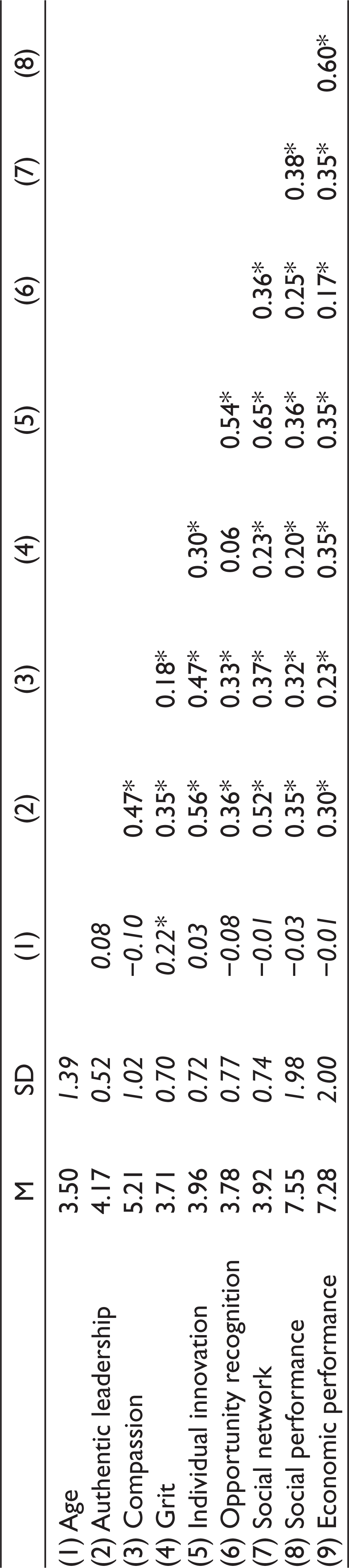
Correlations, Means and Standard Deviationsa
Results of Multiple Regression Analyses: Effects of Authentic Leadership, Compassion and Grit on Individual Innovation, Opportunity Recognition, Social Networks and Social and Economic Performancea.

aStandardized regression coefficients are reported.
*p < 0.05, **p < 0.01 and ***p <0.001.
The dependent variables were individual innovation as measured by the 6-point scale developed by Scott and Bruce (1994). Each item is rated on a scale from 1 ‘strongly disagree’ to 5 ‘strongly agree’. Opportunity recognition was measured using Nicolaou et al.’s (2009) 5-item scale with answer categories ranging from ‘strongly disagree’ to ‘strongly agree’. These scale questions are drawn from the literature on opportunity recognition (Ozgen & Baron, 2007; Singh et al., 1999). The quality of social networks was derived from the 4-item Chang and Lee (2013) partner trust questionnaire. Finally, social and economic performance were measured using an item for each with the following possible responses on a 10-point scale from 1 ‘perform very poorly’ to 10 ‘perform very well’.
Researchers emphasise the use of control variables to help avoid coming up with misleading findings (Bernerth & Aguinis, 2016). The control variable was the age of participants.
Results
Study instruments were subjected to statistical analysis to determine their means, standard deviations and the reliability, which are presented in Table 2.
A multiple regression analysis was used to test whether authentic leadership, compassion and grit relate to individual innovation, opportunity recognition, social networks and both economic and social performance. Table 3 presents correlations between study variables. Table 4 shows results of multiple regression analyses for individual innovation, opportunity recognition, social networks and both social and economic performance. Predictors entered into the multiple regression analysis are age, authentic leadership, compassion and grit. Baseline Models 1 and 2 contain the control variable (age of the individual). Model 2 introduces effects of authentic leadership, compassion and grit.
According to the standardized regression coefficients in Table 4, findings show that the age of participants has no significant influence on any of the study dependent variables (p > 0.05). On the other hand, the proposed relationship (H1) between authentic leadership, compassion and grit with individual innovation performance is statistically supported, (β1 = 0.39, p < 0.001, β2 = 0.27, p < 0.001 and β3 = 0.12, p < 0.05) respectively. The total effect size of this model is large and significant (R2 = 0.38, p < 0.001). The effect size indicates 38% of the variance in individual innovation performance was explained by main predictors, authentic leadership, compassion and grit. Finally, beta (β) weights of predictors confirmed authentic leadership has a major positive influence in driving individual innovation performance (β1 = 0.39) compared to other predictors. While grit is the least (β3 = 0.12).
For (H2), results show the relationship between authentic leadership and compassion with opportunity recognition is statistically supported, (β1 = 0.33, p < 0.001 and β2 = 0.21, p < 0.05) respectively. However, the proposed influence of grit has a non-significant influence on opportunity recognition (β3 = –0.01, p > 0.05). The total effect size of this model is large and significant (R2 = 0.21, p < 0.001). The effect size indicates 21% of the variance in opportunity recognition was explained by main predictors, authentic leadership, compassion and grit. Finally, beta (β) weights of predictors confirmed the authentic leadership has a higher positive influence on opportunity recognition (β1 = 0.33) compared to compassion (β2 = 0.21).
For (H3), findings show the proposed relationship between authentic leadership and compassion with social networks is also statistically supported, (β1 = 0.44, p < 0.001 and β2 = 0.15, p < 0.01) respectively. Results also show the proposed influence of grit has no significant influence on social networks (β3 = 0.05, p > 0.05). The total effect size of this model is large and significant (R2 = 0.30, p < 0.001). The effect size indicates 30% of the variance in social networks was explained by main predictors, authentic leadership, compassion and grit. Finally, beta (β) weights of predictors confirmed that the authentic leadership has a higher positive influence on social networks (β1 = 0.44) compared to compassion (β2 = 0.15).
Finally, for (H4), the proposed relationship between authentic leadership and compassion with social performance is statistically supported (β1 = 0.24, p < 0.001 and β2 = 0.18, p < 0.01) respectively. However, results show the proposed influence of grit has no significant influence on social performance (β3 = 0.09, p > 0.05). The total effect size of this model is medium and significant (R2 = 0.17, p < 0.001). The effect size indicates 17% of the variance in social performance was explained by main predictors, authentic leadership, compassion and grit. Finally, beta (β) weights of the predictors confirmed authentic leadership has a higher positive influence on social performance (β1 = 0.24) compared to compassion (β2 = 0.18).
For (H5), the proposed relationship between authentic leadership and grit with economic performance is statistically supported (β1 = 0.16, p < 0.05 and β3 = 0.30, p < 0.001), respectively. In contrast, the proposed influence of compassion has a non-significant influence on economic performance (β2 = 0.09, p > 0.05). The total effect size of this model is medium and significant (R2 = 0.17, p < 0.001). The effect size indicates 17% of the variance in economic performance was explained by main predictors, authentic leadership, compassion and grit. Finally, the beta (β) weights of the predictors confirmed Grit has a higher positive influence on economic performance (β3 = 0.30) compared to authentic leadership (β1 = 0.16).
Discussion
One of the findings of this research is different aspects of leadership lead to different types of outcomes for social entrepreneurs (Lumpkin et al., 2013). It is not always clear whether the same person could in fact embody and utilise these different leadership aspects or whether the traditional entrepreneurial team concept, that is the Steve Jobs–Steve Wozniak collaboration, representing complementary skills, is required to achieve the dual outcomes necessary for social entrepreneurial success. In this present research, leadership qualities were embodied in one individual social entrepreneur.
This research demonstrates authentic leadership is one of the strongest drivers of social goals, social networks and opportunity recognition for the social entrepreneur. Relational aspects of authentic leadership would naturally lend themselves to the establishment of meaningful and quality social networks. Entrepreneurship literature is very clear and consistent on findings that social networks have a direct impact on performance (Gedajlovic et al., 2013). This present research demonstrates authentic leadership is a clear path towards achieving meaningful and useful social networks for the social entrepreneur.
This present research also demonstrates authentic leadership leads to successful opportunity recognition in social entrepreneurs (Renko et al., 2015). Opportunity recognition is a critical aspect of the entrepreneurial process and by extension of the social entrepreneurship process (Lehner & Kansikas, 2012). The social entrepreneur must see opportunities others may have discarded or not initially noticed. Effective and continuous opportunity recognition is a cornerstone of the entrepreneurship process and by extension also of the social entrepreneurship process.
It has been argued social entrepreneurship research is in the embryonic stage due to a preponderance of conceptual articles over empirical articles, and those that are empirical lack specificity in hypothesis testing. In part, this may be due to the primary focus on in leadership on traditional organizational systems (Bolman & Deal, 2017). This present research addresses some of these limitations in the systematic study and understanding of this important and precious phenomenon of social entrepreneurship (Short et al., 2009). Furthermore, the present research embraces some of the newly established theories in leadership, authentic leadership, compassion and grit, and matches up these leadership constructs with key themes from strategic entrepreneurship, including opportunity recognition, social and financial performance and the integral role of social networks.
This research gives considerable attention to the idea entrepreneurial leaders in the social arena has unique psychological orientations that may impact their success as leaders, as well as impacting their entrepreneurial ventures’ outcomes. This model was developed using some of the original research on entrepreneurial psychological capital and authentic leadership (Jensen & Luthans, 2006) and extrapolated it into the realm of social entrepreneurship. Building on the research that authentic leadership results in greater employee satisfaction, organizational commitment and work happiness (Avolio et al., 2004), this present research further demonstrates authentic leadership also drives positive entrepreneurial outcomes in a social entrepreneurship.
Framed in different ways, social entrepreneurship can be considered a leadership change process, as a managerial innovation to improve the contribution and sustainability of those organizations mostly focused on public and social good, and as a tool for economic and social development that excuses governments from their corporate social responsibility. This present research suggests considering social entrepreneurship as a leadership phenomenon gives significant insight into drivers of social and business outcomes. Specifically, the choice of embracing authentic leadership, along with compassion and grit, seems to be significant drivers of social and business outcomes.
In this present study, compassion positively relates to individual innovation, opportunity recognition and social networks at lower levels than authentic leadership, suggesting that coupled with leadership opening behaviours (Rosing et al., 2010), subsequent action from the construct compassion can support innovation. Opening behaviours are leader behaviours designed to encourage and inspire different approaches, experimentation, outside-the-box thinking and allows for independent thinking and actions (Rosing et al., 2010) that expand upon or unearth the traditional, and often limiting, approaches to accomplishing goals, strategies and plans. Opening behaviours are intangibles, theoretical frameworks, vision, concepts and ideas that social entrepreneurs employ to upsurge their ability to compete in their respective industries and in concert with traditional for-profit businesses.
The notion of compassion would seem to be perfectly in keeping with the passionate mission of social entrepreneurs; however, this present research suggests that it is leadership choices outlined in the authentic leadership approach that have a greater influence on social entrepreneurship performance, rather than the internal attitude of compassion, which also acts as a motivating factor. This suggests that if social entrepreneurs are looking for the most effective method of serving their social mission statement, they would do well to consider developing their authentic leadership.
The idea of authentic leadership is action-oriented and engaged with the world. As a result, authentic leadership has a significant impact on social performance, as well as some of the more innovation-oriented dimensions, such as opportunity recognition and social networks. Authentic leadership seems to take the social entrepreneur to a higher-level, more than the internal attitude of compassion.
The relationship between authentic leadership and social networks is particularly of interest. If we think of this set of relationships when social entrepreneurs are engaged with their employees, investors, suppliers, their buyers, their competitors, government organizations and NGOs, then these dynamic interactions would benefit from authentic leadership.
Increasingly, public confidence in business leaders and organizations has declined (Porter & Kramer, 2018) along with a decrease in employee engagement and commitment (Bolman & Deal, 2017). Social entrepreneurs should overcome this deficit of trust, and merely acting on compassion does not seem to be sufficient to drive desired social and innovation outcomes. The social entrepreneur would do well to develop their authentic leadership to attain these outcomes. The act of developing authentic leadership requires self-awareness and developing integrity and honesty. In addition, authentic leadership is something that can be developed through education training and modelling in the business community.
Limitations and Future Research
With not enough measures of social and economic performance due to only one indicator each, these performance aspects of findings should be treated as exploratory rather than confirmatory. It is intriguing to see that grit contributes to economic performance but not social performance, and that compassion is not related to economic performance. However, a cautionary note needs to be struck on this finding due to the single item indicator for social and economic performance, respectively.
Additionally, the decision to conceptualise the research model in this present research was intended to examine these emergent social entrepreneurial leadership constructs in relation to social entrepreneurship. However, being the first study to consider these relationships, means hypotheses could be rearranged to accommodate mediating variables and to recognize a path analysis in future research. Although this study focuses on the relation of authentic leadership, compassion and grit on social impact through innovation with individual innovation and opportunity recognition as critical constructs for the advancement of social entrepreneurship, a more robust metric for social and economic performance would provide empirical evidence. Future research should utilise entrepreneurial process variables (individual innovation, opportunity recognition and social networks) as perhaps mediating variables between the social entrepreneurial leadership dimensions (authentic leadership, grit and compassion) and the social and economic performance outcomes.
Conclusion
Social entrepreneurship guides the social entrepreneur to improve their leadership skills, which in turn creates the type of environment where individual innovation and opportunity recognition can initiate new insights beyond traditional for-profit business. As consumers and social entrepreneurial constituents can access more shared knowledge, tailoring social enterprises to demands of the public is a successful strategy for social impact.
The future is not about more technology, excessive profit building and being more disconnected from social causes and social enterprise teams; the future is about innovation, transparency, authenticity, resilience and being more of what is best about being human, the capacity to be more socially relevant, maintain the calling of product and service delivery and still be socially impactful.
As with many institutions, including multi-century family firms and not-for-profit organizations, maintaining traditions for the sake of tradition can cause members to believe any changes could dismantle the organizational system and the concept of the enterprise itself. Holding to traditions exclusively for the sake of the tradition diminishes opportunity recognition, individual innovation and impairs intrinsic motivation. If a social entrepreneur finds the enterprise team is lacking team guidance, innovation and accessible resources, the addition of authentic leadership and evolved social networks, may be the solution.
Footnotes
Declaration of Conflicting Interests
The authors declared no potential conflicts of interest with respect to the research, authorship and/or publication of this article.
Funding
The authors received no financial support for the research, authorship and/or publication of this article.