



Abstract
The digital transformation has a profound implication for entrepreneurial innovation. In contrast, scholarly attention is mainly towards entrepreneurial innovation in pure digital businesses at the organisational and individual levels. However, our understanding of its implication at a higher level of aggregation, like the regional and national levels, is limited. Drawing on the national systems of innovation, I conceptualise digital transformation as changes in digital institutional and digitally relevant individual factors and examine its implication for digital business model innovation and entrepreneurial innovation at the country level. Using fuzzy-set qualitative comparative analysis for a sample of 55 countries, I explore the causal configurations explaining the implication of digital transformation. The result indicates that digital transformation fuels digital business model innovation in specific and entrepreneurial innovation in general at the country level. This study contributes to understanding the broader implication of digital transformation and extends the boundary condition of the national systems of innovation in the digital context.
Keywords
In recent years, the emergence of digital technologies, platforms and infrastructures has led to digital transformation in the context of innovation and entrepreneurship (Elia et al., 2020; Matt et al., 2015; Majchrzak et al., 2016; Nambisan, 2017; Nambisan et al., 2019). Accordingly, the scholarly focus on implications of digital transformation is inclined towards pure digital entrepreneurs (Nzembayie et al., 2019) in the technology-intensive environment (Beckman et al., 2012; Elia et al., 2020; Zupic, 2014). Specifically, the extant literature enlightens our understanding of implications from the perspective of digital business model innovation (hereafter DBMI), platform strategies, digital entrepreneurship and digital ecosystem (Hsieh & Wu, 2019; Huang et al., 2017; Rachinger et al., 2019; Rayna et al., 2015; Richter et al., 2017; Srinivasan & Venkatraman, 2018; von Briel et al., 2018) at the individual and organisational level (Bharadwaj et al., 2013; Nambisan et al., 2019). Nevertheless, evidence from recent research in the areas of digital innovation (Nambisan et al., 2019; von Briel et al., 2018), open innovation (Chesbrough & Bogers, 2014; Nambisan et al., 2018), sharing economy (Fournier et al., 2013; Richter et al., 2015), and platformisation (Gawer, 2014; Nambisan et al., 2018; Parker et al., 2016) advocates the broader implication of digital transformation beyond digital businesses. Indeed, the digital transformation enabled entrepreneurs to develop a new set of ingredients combining digital/non-digital resources that facilitate new approaches to discovery and the pursuit of entrepreneurial innovation (hereafter EI) (Amit & Han, 2017; Bharadwaj et al., 2013; Davidsson, 2015; Nambisan et al., 2018; von Briel et al., 2018).
The stream of literature exploring EI at the regional and national levels is focused on traditional antecedents (e.g., regulatory environment, corruption level [Anokhin & Wincent, 2014]; economic freedom, entrepreneurial alertness, education [Fuentelsaz et al., 2018]; finance for new ventures [Djankov et al., 2002]; risk tolerance (RT) [Koellinger, 2008]; and human capital [Kato et al., 2015]). Surprisingly, however, the literature has devoted little attention to understanding the broader implications of digital transformation on EI at a higher level of aggregation like regional and national levels (Nambisan et al., 2019). Certainly, the implication of digital transformation can increase economic growth and regional competitiveness, thus attracting governments and policymakers (Balsmeier & Woerter, 2019; Nambisan et al., 2019; Sussan & Acs, 2017; Zahra & Wright, 2011). However, due to limited knowledge at the regional and national levels (Nambisan et al., 2019), it is difficult for policymakers (Audretsch et al., 2020) to get a broader picture to develop appropriate policy measures intending to boost EI through digital transformation. Therefore, in this article, I seek to answer the following questions: does digital transformation have broader implications for EI? and how does digital transformation shape DBMI in particular and reshape EI in general at the country level?
In order to answer these questions, I build on the micro-macro approach (Garud et al., 2014) where the focus is on the institutional and agency-level antecedents that explain EI. The principles of the national systems of innovation (NSI) proposed by Acs et al. (2017) are consistent with the micro-macro approach for examining EI at the country level. In line with the NSI and digital transformation literature, I conceptualised that digital transformation is an ongoing digital technological evolution that constitutes transformation in digital institutional and digitally relevant individual factors. Precisely, digital institutional factors at the country level include digital infrastructures (Galindo-Martín et al., 2019; Henfridsson & Bygstad, 2013; Katz et al., 2014) and digital regulatory framework (Read, 2016; Toscano et al., 2017). The digitally relevant individual characters of agents constitute digital skills (DS) (Song, 2019) and RT (Fuentelsaz et al., 2018).
Furthermore, following the NSI, I consider institutional and individual factors with complementary importance and intend to study their systemic interaction in shaping DBMI and EI. In order to empirically examine, I designed a two-stage complementary design leveraged by fuzzy-set qualitative comparative analysis (fsQCA) (Ragin, 2008; Rihoux & Ragin, 2009) for a sample of 55 countries. In the first stage, I examine the implication of digital institutional and individual factors in shaping DBMI. In the second stage, I examine the same antecedents against EI. This approach enables a fine-grained comparison of antecedents and the cases to draw meaningful conclusions on the implications of digital transformation on EI.
This study makes several contributions. First, moving beyond the traditional drivers of EI, I reveal the new drivers in the era of digital transformation. The result shows that antecedents shaping DBMI are the primary causes for reshaping EI in general, demonstrating the fundamental transformation from traditional ingredients to a digital set of ingredients fueling EI (Amit & Han, 2017; Nambisan et al., 2018). The parallel rise in disruptive innovations (Kumaraswamy et al., 2018) combined with a digital set of ingredients indicates that the digital transformation is taking centre stage in driving the EI. Second, the application of fsQCA facilitates a fine-grained (Douglas et al., 2020) understanding of the complex systemic interaction of different digital institutional and individual factors. Precisely, the finding highlights that DS among the country’s population are a critical factor in shaping DBMI and EI, which is rarely discussed in the prior literature on EI. Third, in the absence of the established theory on digitisation of innovation at the country level, this study extends the applicability of NSI (Acs et al., 2017) in the context of digital transformation. The results indicate the extension of NSI’s boundary conditions in the digital context. Finally, the study provides critical insights for policymakers, most notably, in understanding the broader implication of digital transformation from the micro-macro perspective (Garud et al., 2014). This insight will enable the policymakers to develop customised policy interventions (Tödtling & Trippl, 2005; Welter et al., 2019) based on countries’ digital institutional and individual factors.
Theoretical Framework
Digital Transformation and Innovation
Digital transformation is one of the major topics discussed by academic researchers (Kraus et al., 2019; Wilk et al., 2021) and policymakers (Laudien et al., 2018; Nambisan et al., 2019) in recent times. The digital transformation leads to innovation, increased productivity and brings more dynamics to entrepreneurial activity (Bouncken et al., 2019; Matt et al., 2015). The digital platform, artefacts and infrastructures enabled EI in various industries (Nambisan, 2017). Moreover, the new digital technologies facilitate open innovation and platformisation, making way for the new form of innovation (Nambisan et al., 2018). Digital transformation has become the new medium of innovation (Amit & Han, 2017; Galindo-Martín et al., 2019; Von Hippel, 2005) and led to a new way of doing business through creative destruction (Richter et al., 2017). Furthermore, digital technologies enable entrepreneurs to innovate and develop new business models (Davidson & Vaast, 2010; Di Domenico et al., 2014; Kuester et al., 2018). The entrepreneurs use digital and non-digital resources to develop a new form of value creation (Nambisan, 2017).
In addition, digital transformation is a larger phenomenon with broader implications for entrepreneurship in general (von Briel et al., 2018). The studies at the regional and national levels provide insight into the broader implication of digital transformation. Galindo-Martín et al. (2019) examined how digital transformation influences innovation and how it generates digital dividends in a country-level study. Katz et al. (2014) and Katz and Koutroumpis (2013) assessed the impact of digitisation at a national level and its impact on society, suggesting the broader implication of digital transformation. Thus, from the past studies, it is evident that digital transformation has significant implications for innovation at the country level. However, there is no clarity on how digital transformation shapes DBMI in particular and reshapes EI in general at the country level.
The National System of Innovation
Theorising the implication of digital transformation at the national level is a challenge. Nevertheless, few noteworthy studies offer theoretical lens, stating Porter’s national competitive advantage (Porter, 1990), NSI (Nelson, 1993), knowledge spillover theory (Acs et al., 2009) and national system of entrepreneurship (NSE) (Ács et al., 2014). These theories were either aligned towards institutions or the agency (Garud et al., 2014). Porter’s national competitive advantage and Nelson’s NSI presented a sophisticated institutional explanation but missed the agency. The knowledge spillover theory aligns with the Schumpeterian entrepreneur where innovation is at the forefront. However, the knowledge spillover theory lacks a detailed explanation of the interplay of institutional and individual factors influencing entrepreneurial activity and innovation. Garud et al. (2014) suggested that institutional and individual or context and agent interact and co-create EI; therefore, the theories conceptualising national outcomes need to consider both with complementary importance. In an attempt to align the institution-individual nexus, Ács et al. (2014) developed NSE with complementary importance to both. The NSE integrates the institution from Nelson’s NSI and agency from the knowledge spillover theory. However, the NSE is intended to measure entrepreneurial activity at the country level. Drawing from the principles of NSE, Acs et al. (2017) extended its applicability to measure EI at the country level and called it a revised NSI.
In sum, Acs et al.’s (2017) NSI balances institutional and individual factors and offers a theoretical lens to study innovation as Garud et al. (2014) suggested. Notably, the NSI is grounded in the systems theory which assumes the country or economy as a system with multiple components, and these components interact to generate the innovation outcome (Acs et al., 2017). In addition, a country’s system of innovation is not created but instead inherited and evolving in nature. Thus, it is inconclusive to develop hypotheses about the interaction of institutional and individual factors. Thus, the NSI is used as a theoretical lens to study digital institutional and digitally relevant individual factors that shape DBMI and EI at the country level.
Digital Institutional and Individual Factors
I revisited the existing literature to explore the prominent digital institutional and digitally relevant individual factors that shape DBMI and EI at the country level. The literature on digitisation (Galindo-Martín et al., 2019; Katz et al., 2014) and digital ecosystem (Song, 2019; Sussan & Acs, 2017) has pointed explicitly at the obligator nature of digital infrastructure in digital entrepreneurship and innovation. Similarly, the freedom and governance mechanism in the digital space (Dong, 2019; Sussan & Acs, 2017) is a vital part of the digital institutional setup. Thus, the study considers digital infrastructure and digital regulatory framework as two digital institutional factors that shape DBMI and EI. A detailed explanation of the relationship and corresponding literature is given in Table 1.
Summary of the Literature: Implication of Digital Transformation on DBMI and EI
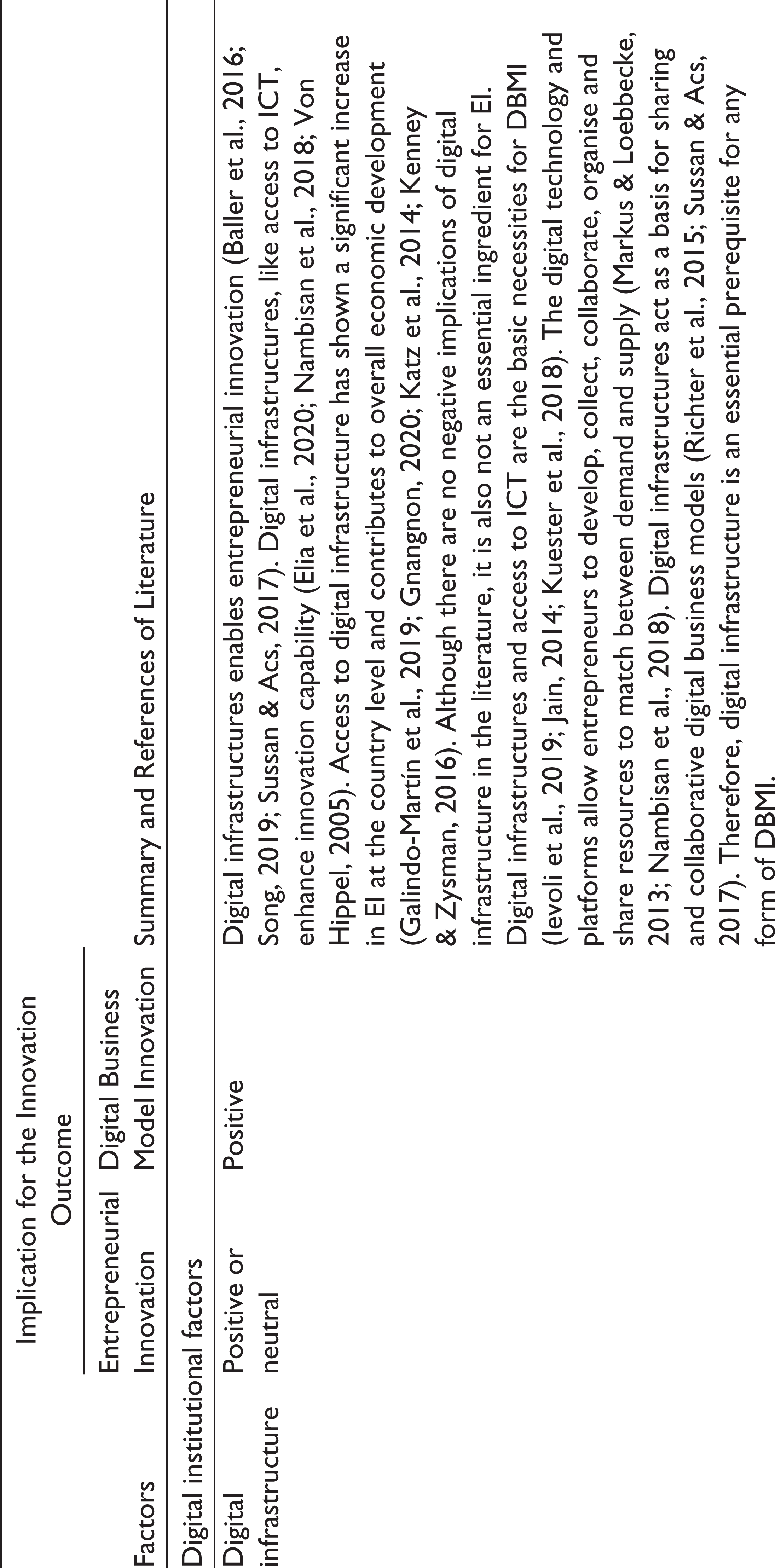
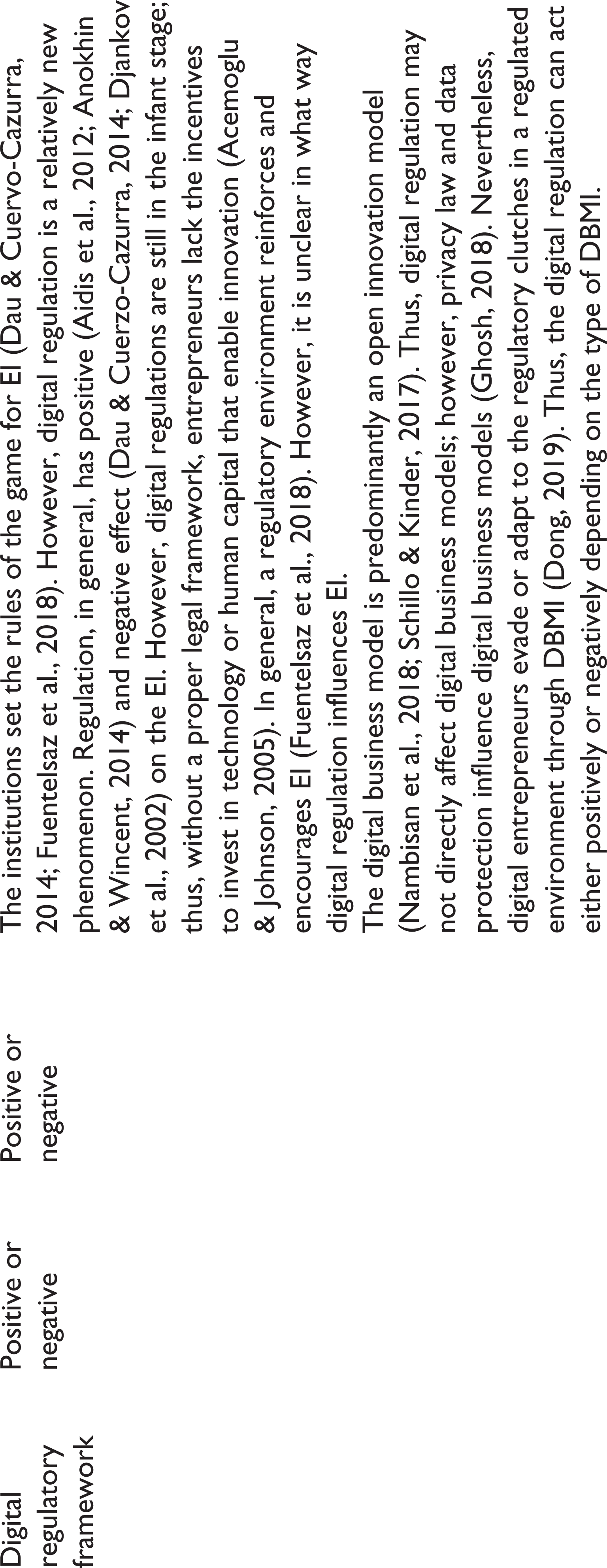
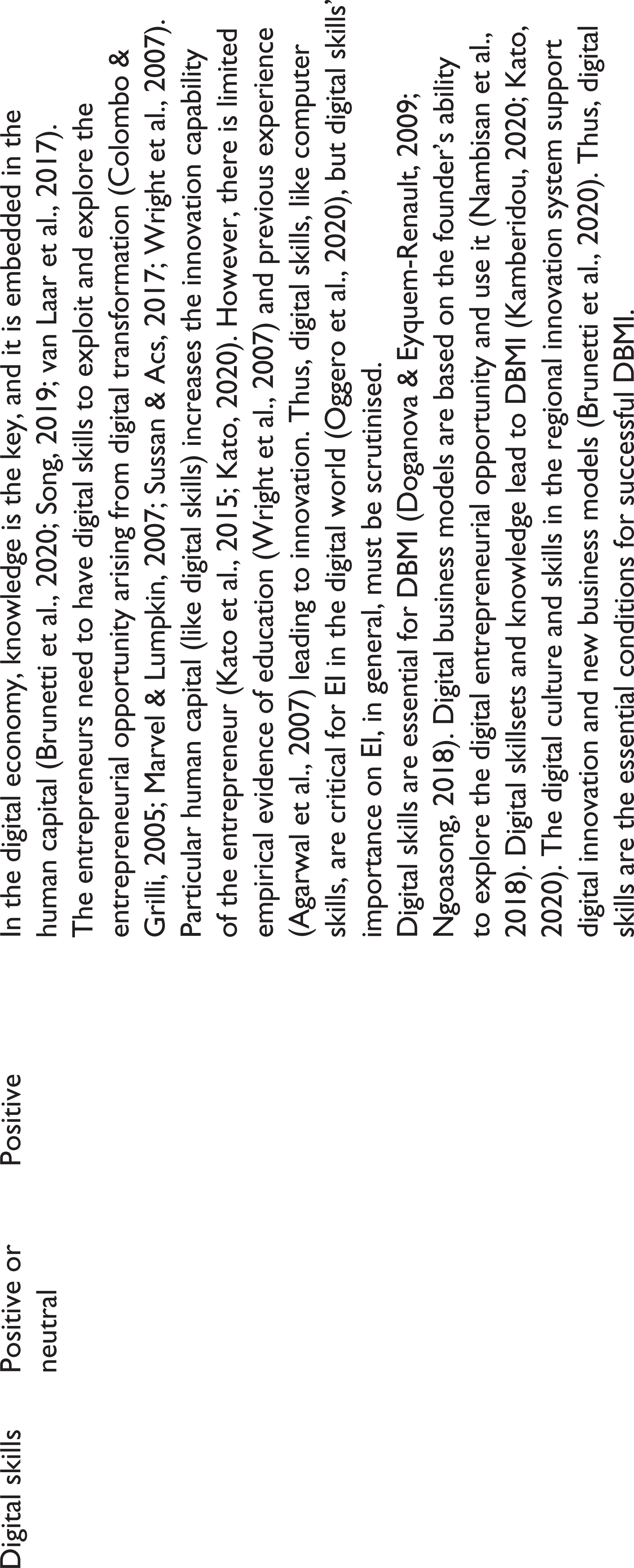
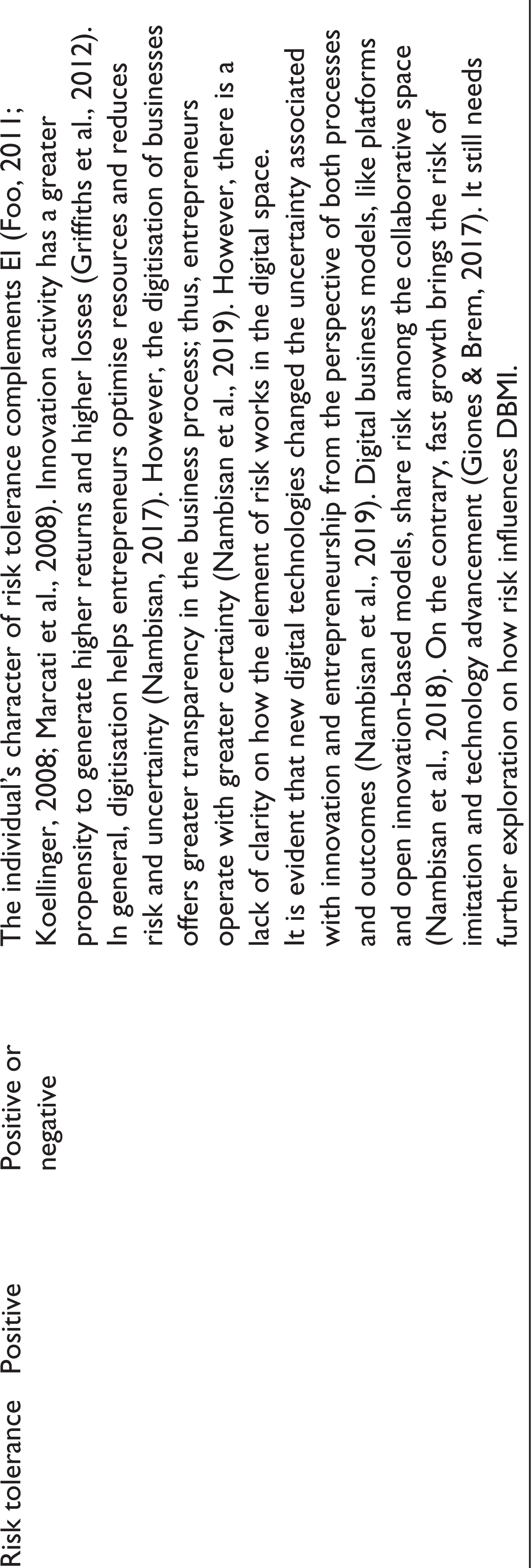
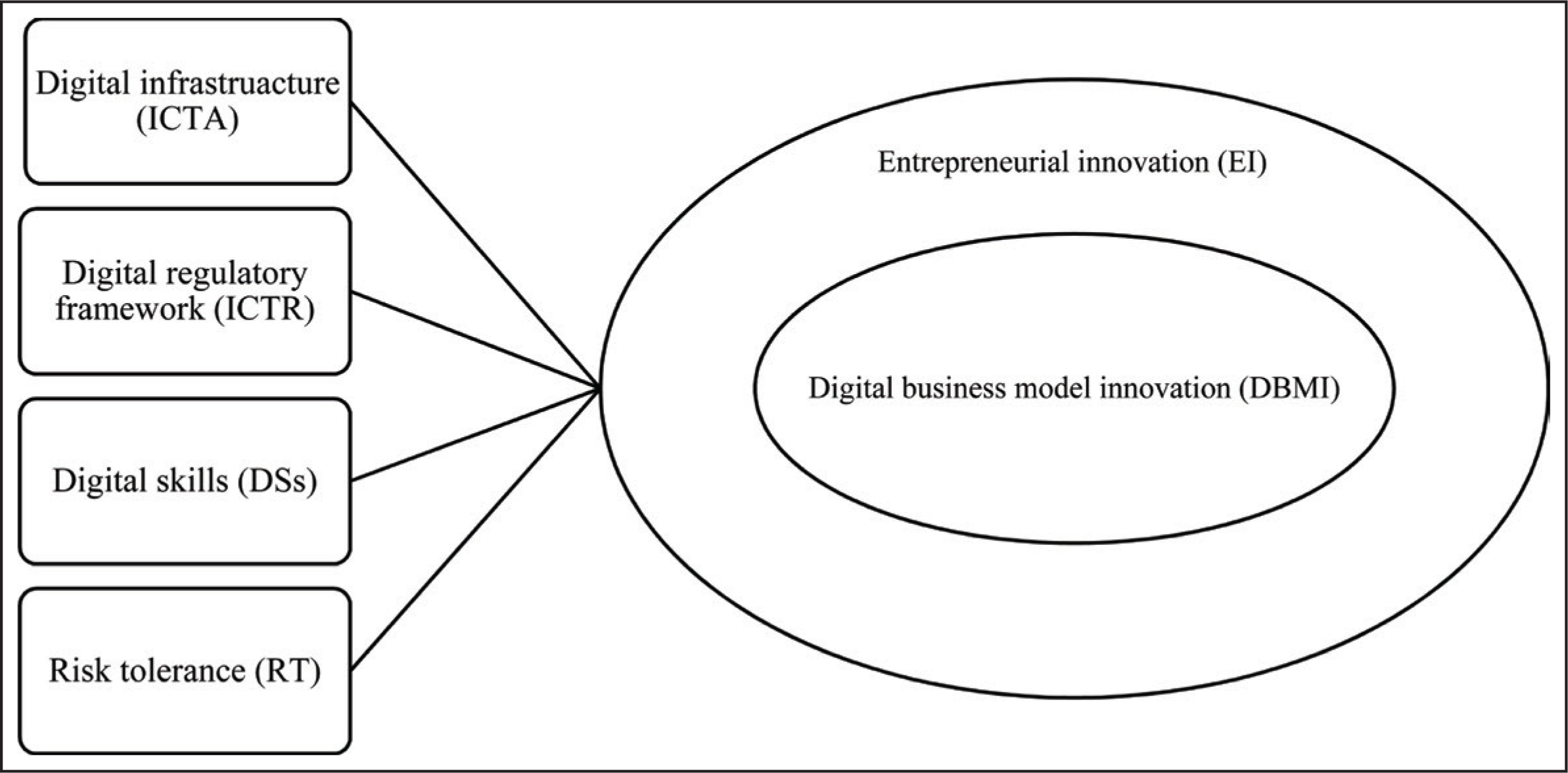
On the other side, the literature on individual factors that facilitate innovation is categorised into psychological (Martins et al., 2015; van Laar et al., 2017) and human capital (De Clercq et al., 2013; Fuentelsaz et al., 2018; Shane, 2000). The psychology-based research has analysed different personality traits, such as RT (Knight, 1921; Miller, 2007; Koellinger, 2008), locus of control (Mueller & Thomas, 2001) and creativity (Sarooghi et al., 2015), that influence innovation. Furthermore, the studies have also focused on the importance of skills, human capital or previous experience (Fuentelsaz et al., 2018; Shane, 2000) in shaping EI. Specifically, DS enable entrepreneurs to explore digital entrepreneurial opportunities (Ngoasong, 2018; Sussan & Acs, 2017). Based on these shreds of evidence, I incorporated RT (Fuentelsaz et al., 2018; Koellinger, 2008) and DS (Ngoasong, 2018) of individuals as psychological and human capital factors that shape DBMI and EI. Figure 1 shows the conceptual framework that explains the relationship between different institutional and individual factors. Furthermore, in Table 1, I summarise the prior studies and the expected implication of single factors (i.e., digital infrastructure, digital regulatory framework, DS and RT) on DBMI and EI.
The previous studies shown in Table 1 indicate the potential implication of single factors on DBMI and EI. However, due to the evolutionary nature of the digital phenomenon and limited studies, some indications about the single factors are contradictory or provide unclear causal relations. Thus, based on the evidence from the literature, I indicated the potential implications as positive/neutral/negative in Table 1. Moreover, at this point, the effect of the combination of factors or how they interact to generate the outcome remains unclear. The underlying theoretical assumption, the NSI, suggests the systemic interaction among the institutional and individual factors. Thus, the innovation outcome (i.e., DBMI and EI) can result from a system of factors in which institutional and individual factors work together to generate the outcome. Understanding how single factors work together to generate different outcomes holds the key to answering how institutional and individual factors shape DBMI in particular and reshape EI in general at the country level. The fsQCA I adopted complements this approach and is equipped to explore the systemic interaction. Furthermore, the fsQCA enables a fine-grained comparison of antecedents and cases, helping answer whether the digital transformation has broader implications for EI.
Method
In order to answer the research question, I utilised the set-theoretic methodology. Specifically, I applied the fsQCA, a set-theoretic approach based on fuzzy logic (Ragin, 2000, 2008; Stokke, 2007). The application of fsQCA has significantly increased in management and entrepreneurship research since 2013, mainly for understanding complex causality, case-specific insight, theory testing (Kraus et al., 2018; Misangyi & Acharya, 2014), theory development (Campbell et al., 2016; Pittino et al., 2018) and for cross-country studies (Beynon et al., 2018; Crespo, 2017; Kimmitt & Muñoz, 2017). The fsQCA uses Boolean algebra based algorithms to classify cases with similar causal characteristics and further explore complex causal relationships (Fiss, 2007; Ragin, 2008). The fsQCA offers three core benefits in understanding the complex causal relationship: (a) conjunction—which implies that the configuration (causal recipe) rarely represents a single condition but rather a result of the combination of independent conditions; (b) equifinality—which indicates the presence of multiple paths for an outcome; (c) asymmetry—means the configuration indicating the presence of the outcome may not be the same for the absence of the outcome. The general details of the fsQCA are provided in Appendix A.
The rationale for applying the fsQCA is based on the analytical flexibility it offers through conjunction and equifinality. Precisely, the underlying theory NSI assumes systemic interaction of individual and institutional factors in shaping the innovation outcome (i.e., DBMI and EI). The fsQCA complements in capturing systemic interaction in the form of a conjunction of individual and institutional factors. Furthermore, the fsQCA is equipped to assess equifinality (i.e., multiple paths for the solution), allowing to examine how DBMI and EI are attained through different paths from different countries’ perspectives. Thus, the fsQCA offers more significant benefits than the conventional regression-based approach to answer the research questions and provides fine-grained details.
Case Selection
The selection of the countries for the study is determined based on the availability of the data. A total of 55 countries that participated in Global Entrepreneurship Monitor (GEM) 2018 (GEM, 2018) and 2019 (Bosma & Kelley, 2018) were analysed. The countries that participated either or in both the years are considered cases. The case selection from the GEM is mainly because the data on EI are available only for countries that participated in the GEM survey. The selected countries represent all five continents, which indicates diversity among the selected cases. The list of countries is provided in Appendix B. However, the representativeness of the selected cases is not an issue from the fsQCA’s perspective (Campbell et al., 2016). Specifically, the fsQCA is a non-parametric approach and does not assume probability distribution.
Measures and Calibration
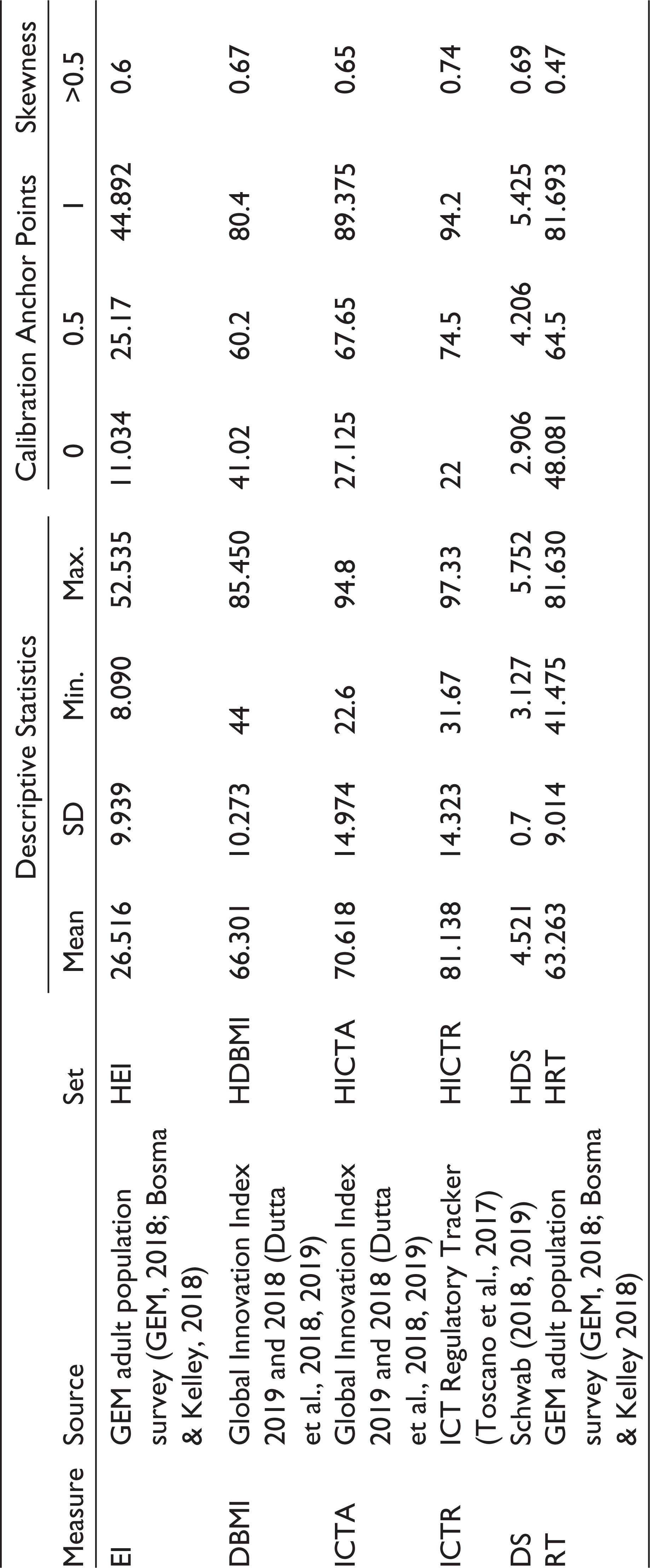
This section discusses the measures, data source and calibration process for digital infrastructure, digital regulatory framework, DS, RT, DBMI and EI. The details of measures, data source and calibration anchors are shown in Table 2. In fsQCA terminology, the independent variable is termed ‘causal condition’ and the dependent variable as ‘outcome condition’. Thus, there are four causal conditions (i.e., digital infrastructure, digital regulatory framework, DS and RT) and two outcome conditions (i.e., DBMI and EI). The fsQCA starts with the calibration of all causal conditions and outcomes. The calibration defines the degree of membership of each case ranging from 0 to 1 (Ragin, 2008). The calibration process classifies the cases in terms of full membership (1), full non-membership (0) and crossover point (0.5). I adopted the direct calibration approach where the calibration anchors of full membership, full non-membership and crossover point are decided based on information from the external sample (Douglas et al., 2020), that is, from the population or a bigger group than the sample. However, to ensure the diversity of cases (Berg-Schlosser et al., 2009) and to crosscheck, the calibration process skewness check was used (Oana et al., 2020). The skewness check measures the percentage of cases above the crossover (0.5) point. The skewness check values ideally need to be between 0.8 and 0.2 to confirm the diversity and accuracy of calibration (Oana et al., 2020). The skewness values for all the calibration anchors are presented in Table 2 and are within the permissible range.
Measures and Sets: Descriptive Statistics, Calibration Anchor Points and Skewness Factors
Entrepreneurial Innovation
The adult population survey of the GEM study measures EI at the national level. It is defined as the percentage of entrepreneurs ‘who indicate that their product or service is new to at least some customers and that few/no businesses offer the same product’ (Bosma & Kelley, 2018, p. 138). The percentage measure is derivative of three questions (Fuentelsaz et al., 2018) to the entrepreneurs. Past studies have used the same measure as a proxy for EI at the country level (Fuentelsaz et al., 2018; Koellinger, 2008; Schott & Sedaghat, 2014). The data for the EI are obtained from GEM 2018 (GEM, 2018) and 2019 (Bosma & Kelley, 2018). The qualitative anchors for calibration of EI are set based on EI data from a larger sample of 652 country observations from the year 2009 to 2019. Accordingly, I set high EI (HEI) at 44.892 (95th percentile of 652 country observations for full membership), 25.17 for the crossover point (50th percentile) and 11.034 for the absence of HEI (5th percentile for full non-membership).
Digital Business Model Innovation
The data are obtained from Global Innovation Index 2018 and 2019 (Dutta et al., 2018, 2019). The data are originally from the Executive Opinion Survey of the World Economic Forum. The information is obtained based on the question as follows: ‘in your country, to what extent do information and communication technologies (ICTs) enable new business models on a seven-point scale from ‘not at all’ to ‘a great extent’? Furthermore, Dutta et al. (2018) in the Global Innovation Index transformed it into 100 points of country-level measure indicating ‘ICTs and business model creation’. I used the country-level measure from Dutta et al. (2018, 2019) as a proxy to measure DBMI. The calibration is based on the external benchmark using a larger sample of 129 countries that participated in the 2019 Global Innovation Index. Accordingly, I set high DBMI (HDBMI) at 80.4 (95th percentile of 129 countries participating in Global Innovation Index 2019), 60.2 for the crossover point (50th percentile) and 41.02 for the absence of HDBMI (5th percentile).
Digital Infrastructure (ICT Access)
The level of digital infrastructure in a county is measured by the ICT access (ICTA), representing the accessibility of digital infrastructure in a country. The data for ICTA are originally published by the International Telecommunication Union (ITU) based on five parameters: (a) fixed telephone subscriptions per 100 inhabitants, (b) mobile phone subscriptions per 100 inhabitants, (c) international internet bandwidth (bit/s) per internet user, (d) percentage of households with a computer and (e) percentage of households with internet access. I used the composite measure of five parameters published in the Global Innovation Index (Dutta et al., 2018, 2019). The calibration anchors of the ICTA are set based on the external benchmark of a larger sample of 129 countries that participated in Global Innovation Index 2019. Accordingly, I set high ICTA (HICTA) at 89.375 (95th percentile of 129 countries participating in Global Innovation Index 2019), 67.65 for the crossover point (50th percentile) and 27.125 for the absence of HICTA (5th percentile).
Digital Regulatory Framework (ICT Regulatory)
The information on digital regulation in a country is collected and computed by ITU’s Global ICT regulatory tracker (Toscano et al., 2017). The ICTR tracker analyses 50 indicators under four categories (Toscano et al., 2017): that is, ‘regulatory authority—focusing on the functioning of the separate regulator; regulatory mandates—who regulate what; regulatory regime—what regulation exists in major areas and competition frameworks in the ICT; sector—level of competition in the main market segments’. I used a composite score measured in the 100-point index published by the Toscano et al. (2017). The calibration anchors of the ICTR are set based on the external benchmark by using a larger sample of 194 countries that participated in Global ICT Regulatory Outlook 2017. The anchors for calibration are set at 94.2 for high ICTR (HICTR) (95th percentile of 194 countries participating in Global ICT Regulatory Outlook 2017), 74.5 for the crossover point (50th percentile) and 22 for the absence of HICTR (5th percentile).
Digital Skills
The DS level of the population in the country is obtained from the Executive Opinion Survey of the World Economic Forum (Schwab, 2018, 2019). The data on the DS are collected based on the question as follows: in your country, to what extent does the active population possess sufficient DS (e.g., computer skills, basic coding and digital reading) on a seven-point scale ranging from ‘not all’ to ‘a great extent’? The exact date is used for the analysis. The calibration anchors for DS are set based on the external benchmark using a larger sample of 141 countries participating in the Executive Opinion Survey (Schwab, 2019). The anchors for calibration are set at 5.425 for high DS (HDS) (95th percentile of 141 countries), 4.206 for the crossover point (50th percentile) and 2.906 for the absence of HDS (5th percentile).
Risk Tolerance
The data for RT are obtained from the GEM report’s ‘fear of failure’ (Bosma & Kelley, 2018; GEM, 2018). The fear of failure is the ‘percentage of the population aged between 18 and 64 years perceiving good opportunities to start a business who indicate that fear of failure would prevent them from setting up a business’ (Bosma & Kelley, 2018). Past studies (Fuentelsaz et al., 2018; Koellinger, 2008) have suggested that RT is the opposite of the fear of failure. Hence, the fear of failure measure is reversely coded (i.e., 100 minus fear of failure per cent) to obtain RT. A similar approach is used in past studies to measure the RT of the population (Fuentelsaz et al., 2018; Koellinger, 2008). The calibration anchors are set based on a larger sample of 652 country observations of reverse coded fear of failure from 2009 to 2019. The anchors for calibration are set at 81.693 for high RT (HRT) (95th percentile of 652 country observations), 64.5 for the crossover point (50th percentile) and 48.081 for the absence of HRT (5th percentile).
Analysis of Necessity of Single Factors (outcome: EI/DBMI)
Analysis and Results
The fsQCA follows a sequential analytical process starting with calibration of conditions, analysis of necessity and analysis of sufficiency. In this study, the analysis of necessity and analysis of sufficiency are conducted separately for two outcome conditions (DBMI and EI). However, the analysis was conducted only for the presence of outcome conditions. The study’s primary objective is to understand the implication of digital transformation; hence, there was no need to look for the absence of outcome. The analysis for this study is performed in R packages QCA (Dusa, 2019). The R packages QCA runs on R-Studio and contains functions to perform the fsQCA, complementing a graphical user interface.
Analysis of Necessity
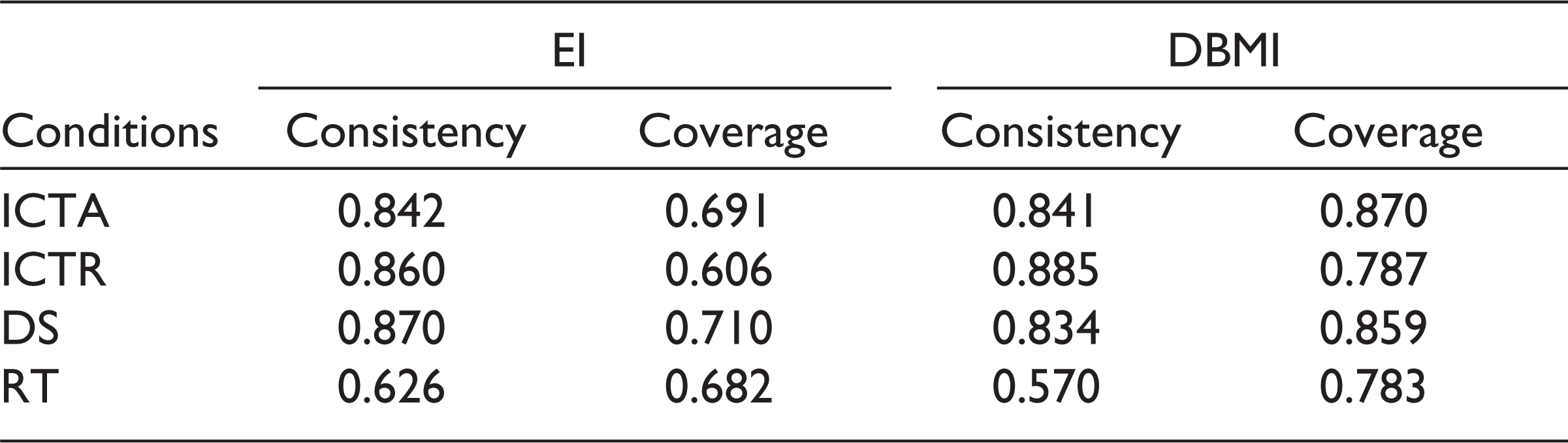
The analysis of necessity computes the individual conditions set membership scores with the outcome (Schneider & Wagemann, 2010). It evaluates the necessity of all the causal conditions for both HDBMI and HEI. The necessity of a condition is identified through the consistency score. Ragin (2000) benchmarks that a condition is deemed ‘necessary’ if the consistency score of the condition is above 0.9. The result shown in Table 3 indicates that none of the conditions is necessary for the outcome. However, the presence of HICTA, HICTR and HDS indicated the highest consistency of above 0.8 for both HEI and HDBMI.
Analysis of Sufficiency for HDBMI
The sufficiency analysis is the main analysis in the fsQCA, and it provides conditions or a combination of conditions associated with the outcome (Ragin, 2008), that is, HDBMI and HEI. The sufficiency analysis starts with the formulation of the truth table. The truth table shows all possible combinations of conditions for the given causal conditions, that is, 2 k (k = number of causal conditions) configurations (in this study, 24 = 16 possible configurations). The truth table also shows the cases under each combination and the corresponding consistency and coverage scores. The truth table for HDBMI is shown in Table B1. A limited diversity of 12.5% is observed in the truth table, that is, only two configurations out of 16 are not represented by any cases. The limited diversity indicates good diversity in case selection.
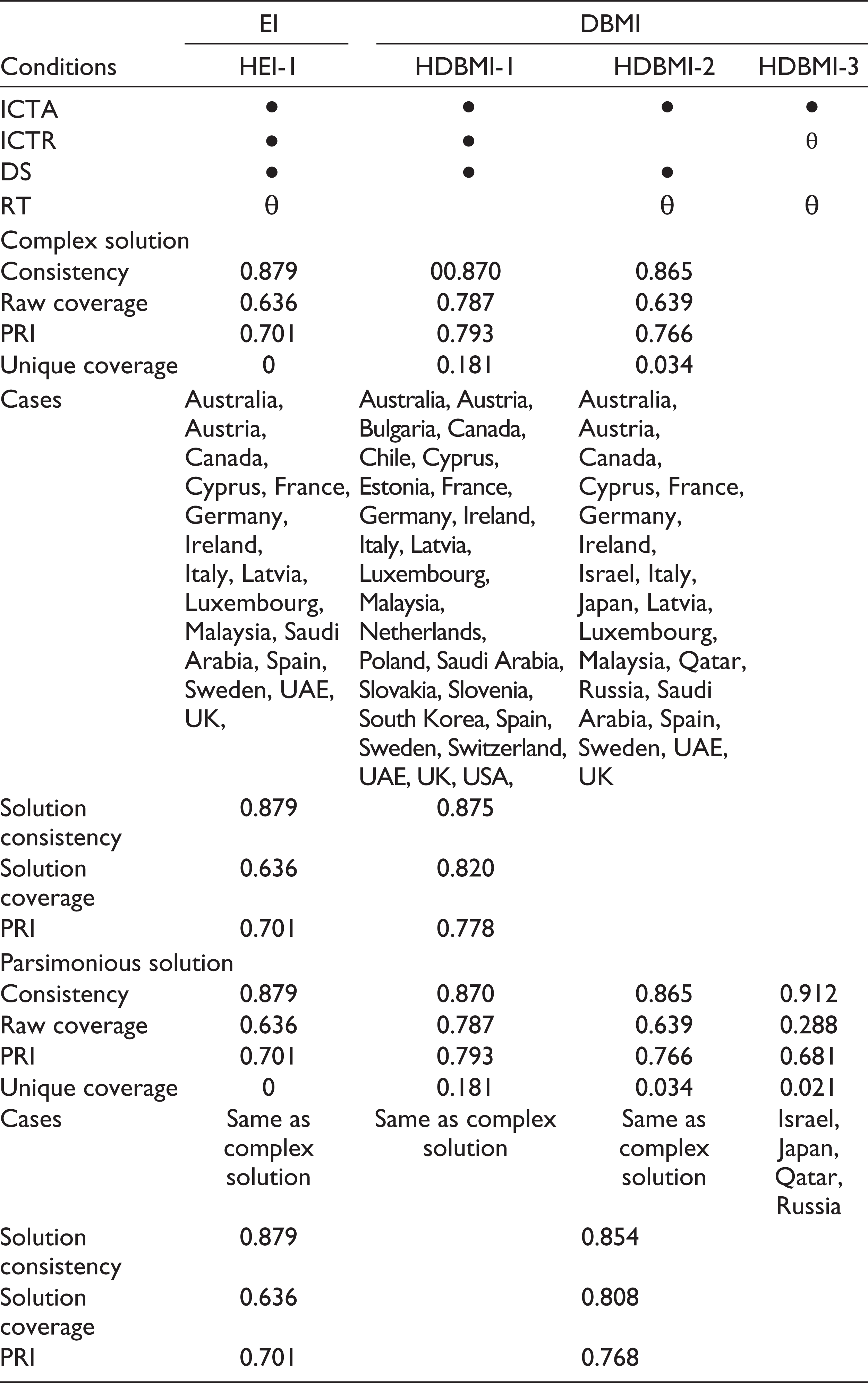
Furthermore, the truth table is reduced through logical minimisation to obtain the solutions. I set the following parameters for logical minimisation—a frequency cutoff of one, a consistency cutoff of 0.8 and proportional reduction in an inconsistency (PRI) cutoff of 0.65 (as suggested by the past studies by Douglas et al., 2020; Greckhamer, 2016; Greckhamer et al., 2018). For more details about the fsQCA, types of solutions and comparison with regression-based analysis, see Douglas et al. (2020). Minimisation generated two complex solutions with a solution consistency of 0.875, a coverage of 0.820 and a PRI of 0.778 and three parsimonious solutions with a consistency of 0.854, a coverage of 0.808 and a PRI of 0.768. Solution PRI values 0.778 and 0.768 (above 0.5) rule out the possibility of the exact solutions for non-occurrence of HDBMI (i.e., ~HDBMI). This is important as the analysis of sufficiency is conducted only for the presence of outcome.
Solution HDBMI-1 includes the presence of HICTA, presence of HICTR and presence of HDS (HICTA* HICTR* HDS => HDBMI) in both complex and parsimonious solutions with a consistency of 0.870 and a coverage of 0.787 and explains HDBMI in 26 countries. Solution HDBMI-2 includes the presence of HICTA, presence of HDS and absence of HRT (HICTA* HDS* ~HRT => DBMI) in both complex and parsimonious solutions with a consistency of 0.865 and a coverage of 0.639 and explains DBMI in 20 countries. Solution HDBMI-3 includes the presence of HICTA, absence of HICTR and absence of HRT (HICTA* ~HICTR* ~HRT => or –> HDBMI) in only the parsimonious solution with a consistency of 0.921 and a coverage of 0.288 and explains HDBMI in four countries.
I interpreted complex and parsimonious solutions (Beynon et al., 2020; Wagemann & Schneider, 2010). Hence, causal conditions Table 4 are classified as core conditions— the ones which are present in both complex and parsimonious solutions—and peripheral conditions—which are only part of complex solutions. The presentation of the result in Table 4 follows Fiss’ (2011) approach of using notation (●) which represents a condition’s presence and (θ) which represents its absence. The larger size notations indicate core conditions and the smaller notation peripheral conditions. The empty space indicates that the condition’s presence or absence will not change the outcome.
Analysis of Sufficiency (complex and parsimonious solutions)
Analysis of Sufficiency for High Entrepreneurial Innovation
The same procedure is applied for the analysis of the sufficiency of HEI. The truth table for HEI is shown in Table B2. A limited diversity of 12.5% is observed in the truth table, that is, only two configurations of 16 are not represented by any of the cases. I set the parameters for logical minimisation as a frequency cutoff of one, a consistency cutoff of 0.80 and a PRI cutoff of 0.65 (Douglas et al., 2020; Greckhamer, 2016; Greckhamer et al., 2018).
The result of minimisations generated single solution HEI-1 with a solution consistency of 0.879, a coverage of 0.636 and a PRI of 0.701 where the complex solution is equal to the parsimonious solution. The results of the analysis of sufficiency for HEI are shown in Table 4. Solution PRI value 0.701 (above 0.5) rules out the possibility of the same solutions for non-occurrence of HEI (i.e., ~HEI). The solution includes the presence of HICTA, presence of HICTR, presence of HDS and absence of HRT (HICTA* HICTR* HDS* ~HRT => HEI) and explains HEI in 16 countries.
Discussion
The direct comparison of fsQCA results with previous findings based on the net effect of single conditions is inappropriate (Beynon et al., 2020). In addition, the combination of conditions indicated in the result alone is insufficient to draw the causal relationship without theoretically backed arguments (Beynon et al., 2020; Douglas et al., 2020). Hence, I examined the results in comparison with the conceptual framework supported by the NSI (Acs et al., 2017) shown in Figure 1, allowing me to navigate previously known facts and findings. Moreover, the QCA approach seeks to generalise through typologies and taxonomies (Douglas et al., 2020; Fiss, 2011); it is in this broader perspective that the results are discussed.
The results showed that all the conditions considered in the study are essential in shaping the HDBMI and HEI at the country level. It also indicates that no single condition will lead to either of the focal outcomes, thus supporting the fsQCA’s application. The three solutions for the presence of HDBMI show the existence of multiple paths. Solutions HDBMI-1 and HDBMI-2 have similarities with the presence of HICTA and HDS in both solutions, and the countries explained by the solutions are identical with few exceptions. The difference between the solutions is the presence of HICTR in HDBMI-1 and the absence of HRT in HDBMI-2. On the other side, the absence of HRT is commonly observed in solutions HDBMI-2 and HDBMI-3. Broadly, the results showed that the presence of HICTA, HICTR and HDS and the absence of HRT are essential conditions contributing to the presence of HDBMI. This finding supports the systemic interaction of digital institutional and individual factors in shaping the HDBMI at the country level (Song, 2019; Sussan & Acs, 2017). The finding also suggests that the digitally relevant institutional and individual factors are the critical contributors to the HDBMI. These findings complement the fact that the emergence of digital transformation contributes to the ongoing innovation in digital platforms and digitally enabled new business models (Nambisan, 2017; Nambisan et al., 2019; Yoo et al., 2012).
The result of HEI does not indicate multiple paths; instead, it showed a single solution where complex and parsimonious solutions are the same. The solution contains all four conditions with the presence of HICTA, HICTR and HDS and the absence of HRT (HICTA* HICTR* HDS* ~HRT). The HEI solution is identical to the broader interpretation of solutions for HDBMI. To further confirm the identical nature of solutions, I examined the cases to understand the countries explained by solutions of HEI and HDBMI. The case showed that all the 16 countries (Australia, Austria, Canada, Cyprus, France, Germany, Ireland, Italy, Latvia, Luxembourg, Malaysia, Saudi Arabia, Spain, Sweden, the UAE and the UK) explained in the solution of HEI are also part of solutions for HDBMI. This finding supports that digital transformation has a major implication for DBMI in particular and has a broader implication for EI in general. This finding empirically supports the past studies’ argument that digital transformation has broader implications for EI (Nambisan et al., 2019; Katz et al., 2014). Thus, this finding contributes to the ongoing debate on the implication of digital transformation by empirically examining its broader impacts on the EI and economy as a whole.
The result indicates that RT interacts with other conditions and negatively affects DBMI and EI. On the contrary, past studies (Fuentelsaz et al., 2018; Koellinger, 2008) on EI noticed a positive influence of RT on EI. This may be mainly due to the way the entrepreneurs perceive the risk in the digital context. Nambisan et al. (2019) suggest that the ‘new digital technologies transform the nature of uncertainty inherent in innovation and entrepreneurship’. The risk perception reduces as digital technologies offer more information for business decision-making and greater transparency in innovation and entrepreneurship.
Theoretical contributions
The findings and discussions presented earlier allow me to elaborate on two significant contributions. First, the findings suggest that ongoing digital transformation not only has implications for the DBMI but also has broader implications for EI at the country level. The use of digitally relevant institutional factors, like ICTA and ICTR, and individual factors, like DSs, as causal conditions reinforce the fact that EI in recent times is mainly fueled through digital transformation. The past studies found a significant influence of traditional institutional factors (e.g., regulatory environment, corruption level [Anokhin & Wincent, 2014], economic freedom [Fuentelsaz et al., 2018], and finance for new ventures [Djankov et al., 2002]) and individual factors (e.g., RT [Koellinger, 2008], creativity [Sarooghi et al., 2015], human capital [Kato et al., 2015], entrepreneurial alertness and education [Fuentelsaz et al., 2018]) on EI. Conversely, in the digital era, innovation is fueled by new ingredients associated with ongoing digital transformation. This finding reflects that digital transformation has ‘transformed both innovation and entrepreneurship significantly’, as Nambisan et al. (2019) stated. Thus, we witness that the digital transformation is taking centre stage in driving the EI. Furthermore, the parallel evidence of the increase in disruptive innovations (Kumaraswamy et al., 2018) boosts the fact that there is a fundamental transformation from traditional ingredients to a digital set of ingredients. The cases explained by the solutions suggest that digital transformation has implications for enhancing the countries’ innovation capability (Acs et al., 2017; von Briel et al., 2018). The policymakers can focus on developing the NSI, as suggested by Acs et al. (2017), that involves well-established digital institutional and individual factors.
Second, the study is conceptualised on the NSI proposed by Acs et al. (2017), which advocates the complementariness and systemic interaction of institutional and individual factors in shaping innovation outcomes (Vega & Chiasson, 2019). The NSI offers a guideline for policy interventions and developing an innovation system. The findings of the study contribute to elaborating NSI’s boundary conditions from two dimensions. (a) The findings empirically confirm that the NSI can be extended to assess DBMI at the country level, moving beyond EI in general. (b) Furthermore, the NSI will also hold well in the context of digital transformation, that is, the principles of NSI will be the same for a traditional and digital set of ingredients in explaining EI. These contributions extend the applicability of NSI in the digital context and suggest that the NSI and its systems view are way ahead for understanding a digitally driven innovation system. Thus, findings support the application of NSI in the digital entrepreneurship ecosystem literature (Song, 2019; Sussan & Acs, 2017). Furthermore, empirical evidence for this study justifies the systemic nature of NSI, which is recently questioned by Cirillo et al. (2019). However, the properties of equifinality in the NSI depend on the context as the finding indicates equifinality in the results of DBMI and absence in the results of EI.
Conclusion
This research empirically examines how digital transformation shapes DBMI and EI at the country level and if digital transformation has broader implications for EI. I consider digital institutional and individual factors that are relevant to the context of digital transformation as causal factors. In doing so, I draw on Acs et al.’s (2017) NSI, which argues that institutional factors interact with individual-level factors in shaping EI at the country level. The NSI is grounded on systems theory and suggests systemic interaction of institutional and individual factors in shaping EI. I used the fsQCA as an analytical tool equipped with conjunction and equifinality, facilitating the understanding of causal complexity and systemic interaction. The findings provide a fine-grained overview of the implication of digital transformation on DBMI and EI. In particular, the digital transformation is not just shaping the DBMI at the country level; rather, it is also reshaping the pursuit of EI. The study indicates the emergence of a new set of digital ingredients that boost EI. Furthermore, the study extends the boundary conditions of NSI in the digital context.
The findings of this study have major policy implications. Switching the focus towards the digital set of ingredients in shaping EI, the policymakers have new directions through which EI can be enhanced. Developing new policy interventions in the line of ICTA, ICTR and DS can be viewed as novel ways to boost DBMI and EI at the country level. Furthermore, in practice, most policies oriented on enhancing EI are directed towards traditional institutional factors with broader policy orientation (Cirillo et al., 2019; Šimić Banović, 2016). On the contrary, the findings of this study suggest narrow and focused policy interventions based on the countries’ merit and status of digital institutional and individual factors, thus advocating context-specific policy directions based on the dynamics of digital institutional and individual factors. In sum, this finding supports the customised policy approach (Tödtling & Trippl, 2005; Welter et al., 2019) instead of best practice models from other countries. Such customised policies need to be driven based on the facts and need to be evaluated and tested before full-scale implementation.
The study has some limitations. First, I have considered only two sets of institutional and individual causal conditions. However, at the country level, many different institutional factors influence DBMI and EI (Song, 2019; Sussan & Acs, 2017). This is also associated with the limitation of the fsQCA to analyse many causal conditions at a time. To overcome this, I have used composite measures for ICTA and indices for ICTR to cover a broader spectrum of indicators. I suggest that future studies use multiple indicators to get a broader coverage of institutional and individual factors. Furthermore, the influence of other factors is not controlled in this study, and the control variables help understand the actual effect of the digital transformation. However, it is evident that the notion of statistical control does not fit in QCA’s context (Douglas et al., 2020). To complement this, the effect size, that is, consistency and coverage values are significantly larger. Future studies can explore the actual effect of digital transformation by statistically controlling the traditional ingredients.
Second, the outcome conditions DBMI and EI are the subjective measures at the country level. The concept of DBMI and EI depends on the point of view of national experts and entrepreneurs. In this regard, the definition of innovation is not universal. However, the past study suggests that innovation need not be globally novel to have an economic impact (Massa & Testa, 2008). I suggest that future studies consider objective measures that can better indicate innovation at the country level.
In conclusion, the study empirically examines the implication of digital transformation on digital businesses and innovation in general. The findings indicate the emergence of a new form of digitally enabled EI. From this perspective, the study shows a new direction for innovation policies in the digital era.
Footnotes
Acknowledgements
The author would like to thank Dr Rajasekharan Pillai, Manipal Academy of Higher Education, for his careful reading and suggestions on previous versions of this manuscript. The author also thank the anonymous referees for their valuable comments to improve the structure and content of the manuscript.
Declaration of Conflicting Interests
The author declared no potential conflicts of interest with respect to the research, authorship and/or publication of this article.
Funding
The author received no financial support for the research, authorship and/or publication of this article.
Appendix A
General Introduction of fsQCA
The fsQCA is from the family of configurational comparative methods. The fsQCA builds upon Boolean algebra and logical minimisation to compare cases and reveal necessary and sufficient (combinations of) conditions for an outcome (Fiss, 2007; Ragin, 2008). Specifically, the fsQCA examines the causal relationship between and among independent variables (in QCA terminology known as ‘causal conditions’) and dependent variables (known as ‘outcome condition’). The causal relationship is explained in a particular combination of causal conditions (known as ‘configuration’). The configurations are causal conditions common to cases that take a particular pathway leading to an outcome. The fsQCA is complementary to traditional regression-based analysis, and in addition, it provides finer-grained details of a causal relationship. The fsQCA combines the benefits of a qualitative research approach with a quantitative data analysis technique. For more information on the fsQCA, see Douglas et al. (2020), Fiss (2007), Greckhamer et al. (2018) and Ragin ( ).
).
There are different pieces of software that can be used to run the fsQCA, for example, fsQCA software
List of Abbreviations
List of Countries
Argentina, Australia, Austria, Bosnia and Herzegovina, Brazil, Bulgaria, Canada, Chile, China, Colombia, Croatia, Cyprus, Ecuador, Egypt, Estonia, France, Germany, Greece, Guatemala, India, Indonesia, Iran, Ireland, Israel, Italy, Japan, Kazakhstan, Latvia, Lebanon, Luxembourg, Madagascar, Malaysia, Mexico, Morocco, Netherlands, Panama, Peru, Poland, Qatar, Russia, Saudi Arabia, Slovakia, Slovenia, South Africa, South Korea, Spain, Sweden, Switzerland, Thailand, Turkey, UAE, UK, USA, Uruguay and Vietnam.