



Abstract
This study examines the relationship between personal dispositions, social entrepreneurial intent (SEI) and the good life in a sample of 2,000 college students in Los Angeles, Manila, Mexicali, Taipei and Yantai. Social cognitive career theory posits that a specific career choice—in this case, becoming a social entrepreneur—affects individuals’ experience of a good life, and SEI mediates the relationship between personal dispositions and the good life. This article presents and empirically tests a broad conceptualisation of the good life—going beyond happiness and satisfaction—to include subjective and psychological well-being, freedom to make life choices, quality of social relations and pathways to reach goals. Extending the previous research, the study finds that the personal dispositions of trust, optimism, generosity and healthy life expectancy were robust predictors of SEI and that SEI mediated the relationship between personal dispositions and the good life. Finally, cultural context mattered; long-term orientation, low masculinity and high indulgence partially moderated the disposition-to-SEI-to-good life relationship.
Keywords
A good life is a life worth living. The good life is manifested in the overall and comprehensive quality of one’s life (Veenhoven, 2000; Wong, 2013). The present study sought to understand how a specific career choice—social entrepreneurship—might affect individuals’ experience of the good life. The study used a broad conceptualisation of the good life, rather than limiting it to happiness or satisfaction, and explored how one’s intent to form or join a social enterprise (SE) might matter, what dispositional factors might lead a person to intend to pursue SE (social entrepreneurial intent [SEI]) as a career possibility, and what cultural context might enhance or diminish the strength of the disposition-to-SEI-to-good life relationship.
Why is there an interest in the relationship between SEI and the good life? While numerous studies have been made about the antecedents of SEI, few have contributed to an understanding of its consequences. SEI, if enacted, certainly affects others and the environment. The present study sought to understand the consequences of SEI on individuals, particularly individuals at the start of their professional careers.
How might a college student’s choice of SE as a career affect the quality of his or her life? Social cognitive career theory suggests that career choices affect happiness, well-being and satisfaction (Kelly, 2009; Lindley, 2005; Schaub & Tokar, 2005). Moreover, researchers have posited that social cognitive career theory can explain entrepreneurship, social entrepreneurship, entrepreneurial intent and SEI (Belchior & Lyons, 2021; Liguori et al., 2018). Liguori et al. (2020, p. 16) called for research on entrepreneurship as a career choice in different ‘regional, educational, or cultural contexts (e.g., Asia, Europe, South America, Africa)’. The present study is not limited to a US sample.
This article presents a brief literature review of the good life and some of its components and then discusses SEI. The first hypothesis is about the relationship between SEI and the good life. The subsequent literature review and hypotheses address personal dispositions that may be antecedents of SEI. The article goes beyond the well-established findings that the Big Five traits and proactive personality predict SEI (Prabhu et al., 2012) by including the personal dispositions of trust, generosity, optimism and healthy life expectancy. Next, the article examines the potential mediation effect of a specific career choice, SEI, by college students in five cities around the globe on the relationship between personal disposition and the good life. Finally, the cultural context enveloping students in the five different places is examined, specifically the degree to which cultural factors enhance or diminish any relationships found. The article ends with a discussion of directions for future research.
Literature Review
The Good Life
What constitutes the good life? There are numerous conceptualisations of what exactly such a life entails.
The ancient Romans would counsel us to live fully each day by indulging our drives and appetites: ‘eat, drink, and be merry, for tomorrow we die.’ Many theologians would […] advise us that the good life is an adequate preparation for the next life. (DiCaprio, 1976, p.196)
Veenhoven (2000) presented an insightful distinction between good life opportunities and the good life itself—the difference between potentiality and actuality. In Veenhoven’s model, the good life includes the objective utility of life as well as the subjective appreciation of life. Researchers agree that a good life means experiencing happiness (Fischer, 2014; King & Napa, 1998; Robbins, 2008; Stein, 1966; Wolf, 1997; Wong, 2013). However, the good life construct is much broader than happiness—it also includes experiencing meaning (Bowling & Windsor, 2001). ‘The theoretical definition of the related concepts of happiness, well-being, and “the good life” and the quality of life attracts much conceptual confusion and preoccupies a wide range of disciplines, dating far back to early Greek philosophy’ (Bowling & Windsor, 2001, p. 55).
While recognising its two facets, Aristotle concluded that the ultimate good was, in fact, eudaimonic. He insisted that a good life, a flourishing, fulfilled and worthwhile life (Macaro, 2005, p. 4) requires ‘goods of the mind (e.g., wisdom, moral virtue), goods of the body (e.g., health, attractiveness) and external goods (e.g., congenial/just communities, wealth, friends)’ (Michalos & Hatch, 2021, p. 144).
Recent studies have focused on ‘happiness’, ‘well-being’ and ‘life satisfaction’ rather than a broad good life construct. Moreover, some studies even used happiness or well-being as synonyms for the good life. This article discusses the good life in broad terms to examine the degree to which social entrepreneurship may have a role in contributing to an individual’s experience of the good life. Next is a review of different constructs that may be components of the good life. Following the literature review and hypotheses, this article discusses the measures used to assess constructs and then the results of the study.
Subjective and Psychological Well-being
Happiness and well-being have been used interchangeably and are essential parts of a good life (Bauer et al., 2005; Dittmar, 2007; Feldman, 2004; Kifer et al., 2013; King, 2001). Although there may be many distinct types of well-being, subjective well-being and psychological well-being are the two main constructs.
Subjective well-being reflects the hedonic view of happiness and is commonly called life satisfaction (Diener, 1984; Diener & Ryan, 2009; Diener et al., 2018). It has been widely used for global, longitudinal and trend studies (Jebb et al., 2020; Ryan & Deci, 2001; Tay & Diener, 2011). Hedonic happiness occurs when one maximises pleasure and optimises self-interest (Ryan & Deci, 2001). Subjective well-being is a construct about people’s evaluations of their experiences and lives (Diener, 1994). These evaluations can be reflective and mainly include three dimensions: overall life satisfaction, positive affect and negative affect (Diener et al., 2018). Researchers have found that the outcomes of subjective well-being include positive social relations, health and societal benefits (Watson et al., 1988). For example, Rego et al. (2010) found that affective well-being (the positive and negative effects of subjective well-being) leads to citizenship behaviour. Life satisfaction (one component of subjective well-being) is positively associated with citizenship behaviour (Lambert, 2010; Meynhardt et al., 2020). Deviant behaviours are norm-challenging or norm-breaking actions that target specific people or the environment (Robinson & Bennett, 1995). Individuals with high subjective well-being are more likely to follow norms (Stavrova et al., 2013) and have good relations with others (De Neve et al., 2013; Zhang et al., 2023). Alternatively, individuals who report low degrees of subjective well-being may exhibit relatively high degrees of deviant behaviour (McGuire, 2023).
Psychological well-being is closely associated with Aristotle’s conception of eudaimonic happiness, which focuses on human flourishing and full functioning (Ryan & Deci, 2001), individual growth and fulfilment (Bryant & Veroff, 1982; Ryff & Keyes, 1995; Ryff & Singer, 2008). Psychological well-being includes self-acceptance, positive relationships with others, autonomy, environmental mastery, purpose in life and personal growth (Ryff, 1989).
Despite their theoretical distinctions, the two types of well-being are often found to be highly or mildly correlated empirically (Chen et al., 2013; Hanley et al., 2015; Joshanloo, 2019). Both are fundamental components of the good life.
Freedom to Make Life Choices
A good life includes, but is not limited to, happiness. For example, based on desire-fulfilment theory, individuals can have a good life if they live in ways that they want to live (Helliwell et al., 2023). Brülde (2007) proposed that self-knowledge and friendship are essential parts of a good life. Accordingly, one needs to know oneself and figure out what one wants to do to progress towards a good life. Fischer (2014) suggested that, in a good life, people demonstrate control over their destinies. To capture this aspect of a good life, freedom to make life choices is included in the model in the present study. Freedom to make life choices has been studied for decades in The World Happiness Report (Helliwell et al., 2023), and therefore the construct has been included in the present study.
Quality of Social Relations
The quality of social relations represents one’s attachment, security and affection in the social environment (West, 1994; West et al., 1987; West & Sheldon, 1988). The World Happiness Report includes ‘Positive Social Relations’, which explains how one determines life satisfaction even in times of difficulty or crisis (Helliwell et al., 2023). When people have high-quality social relationship, they have someone they can count on in times of trouble or need. Moreover, in a good life, counting on people goes both ways. People gain deep satisfaction from helping and caring for others: ‘Caregiving is rewarding, but also difficult and painful and needs social support’ (Helliwell et al., 2023, p. 19). Clearly, the good life is more than short-term happiness, as the discomfort—but also the satisfaction—of caring for others is unavoidable.
Research has found that the quality of social relations and happiness go together; happy people tend to spend more time socialising and have a rich and fulfilling social life (Seligman, 2002). Both freedoms to make life choices and quality of social relations fall into the subjective appreciation of life, which is an inner quality of life results (Veenhoven, 2000). Therefore, these two aspects are essential components of the good life.
Pathway to Reach Goals
A good life is value-driven and meaning-oriented (Robbins, 2008). In a good life, people pursue large purposes, achieve goals and develop themselves (Brülde, 2007; Fischer, 2014). In the study of the meaningfulness of a good life, Wolf (1997) described it as active engagement in a worthwhile project.
In the management literature, goal-setting is one of the most respected and well-supported theories (Latham & Locke, 2006). Motivation, in this theory, is a function of having goals, being committed to them, being capable of working towards them and therefore exerting effort towards their attainment. People have both short-term and long-term goals. The sense of progress towards a long-term goal is what generates a feeling of satisfaction and fulfilment. The achievement of an important goal requires the individual to establish a new goal, for it is the progress towards goals that brings meaning and satisfaction, not necessarily the achievement of the goal.
A pathway to reaching goals is included in the study to capture the extent to which people believe they are planning and achieving life goals they are committed to and are passionate about (Corn et al., 2020; Snyder et al., 1996).
Social Entrepreneurial Intent
Social entrepreneurs pursue social or public values in addition to economic or personal gains through innovative business activities, often by starting and scaling up a business organisation (Zhang et al., 2021). The objectives of such organisations are to ‘provide goods and services that the market or public sector is either unwilling or unable to provide, to develop skills, create employment and foster pathways for the integration of socially excluded people’ (Trivedi & Misra, 2015, p. 38). Social entrepreneurship has been studied at three main levels: individual, organisational and institutional (Gupta et al., 2020; Saebi et al., 2019). This article focuses on individual-level social entrepreneurship. Based on planned behaviour theory, intention is the best indicator of actual behaviour (Ajzen, 1991). SEI is an individual’s tendency to start a SE and use resources creatively for the public good (Bazan et al., 2020; Mair & Noboa, 2006). Researchers have conducted extensive studies to identify the antecedents of SEI in different contexts and cultures (Baierl et al., 2014; Drost & McGuire, 2011; Savitha & Lakkol, 2022; Tiwari et al., 2022; Younis et al., 2021). However, the outcomes of SEI, especially the individual-level outcomes, remain understudied. Wiklund et al. (2019) called for more future research to consider the results of entrepreneurship other than firm performance, such as entrepreneurial well-being.
To contribute to addressing this theoretical gap, the present study examined the connection between SEI and the good life: a life with both subjective and psychological well-being, freedom to make important life choices, high-quality social relations and pathways to reaching goals.
SEI and the Good Life
Social entrepreneurs start SEs to address ‘long-standing social problems, and they develop innovative solutions to do so’ (Trivedi & Mishra, 2015, p. 37). To et al. (2020) found that individuals’ entrepreneurial efficacy, intent and action enhanced their well-being; their finding was applicable to social entrepreneurship. Kibler et al. (2019) found that prosocial motivation enhanced entrepreneurs’ well-being. Nikolaev et al. (2020) found that entrepreneurs tend to achieve a high degree of well-being while simultaneously pursuing personal and social benefits. Together, these findings suggest that individuals with a high degree of SEI tend to experience well-being. Nonetheless, the good life might not necessarily correspond to short-term happiness or work-life balance (Palumbo, 2022). Entrepreneurs are often passionate about their work and feel deep connections with the services and products they provide (Shir et al., 2019). Social entrepreneurs are motivated to help others escape suffering (Miller et al., 2012). With their commitments and motives for the social good, people with high SEI tend to be very dedicated to their choices, feel intrinsically rewarded and have strong social connections and relations. Work can be fulfilling and expressive because it enhances human potential and develops individual talent (Morse & Weiss, 1955; Rosso et al., 2010; Shir et al., 2019; Wrzesniewski et al., 2003). Through social entrepreneurial activities, individuals can find value and meaning not only in their work but also in their lives. Meanwhile, the ongoing value and meaning of work can convince people that they have been making progress towards the achievement of their life goals. Therefore:
H1: The higher the individual’s SEI, the higher the individual’s experience of the good life.
Personal Dispositions as Antecedents of SEI
According to Kernberg (2016, p. 145), personality is ‘the dynamic integration of the totality of a person’s subjective experience and behavior patterns’. Researchers generally agree that personality deeply influences one’s employability and career choices (Păunescu et al., 2024) and SEI (Koe Hwee Nga & Shamuganathan, 2010; Mair & Noboa, 2006; Zaremohzzabieh et al., 2019). For example, a proactive personality has been shown to explain SEI (Prabhu et al., 2012; Zhang et al., 2021). Numerous studies on SEI have used Big-5 personality scales (İrengün & Arıkboğa, 2015; Liu et al., 2021). Findings include, for example, that a high degree of extraversion and openness to experience are associated with a high intent to become a social entrepreneur (Antoncic et al., 2015; Hossain et al., 2021; Luc, 2022). Kruse et al. (2019) encouraged future research to explore how personal differences explain SEI. Following Kernberg’s (2016) broad definition of personality, the present study included some relatively ‘unpopular’ personal dispositions: trust, generosity, optimism and healthy life expectancy.
Trust
Trust is a common word in daily life and is also a critical construct in different scientific fields. In psychology, sociology and related fields, trust is about expectancy and expectation (Hupcey et al., 2001). Rotter (1971, p. 444) defined trust as ‘an expectancy held by an individual or a group that the word, promise, verbal, or written statement of another individual or group can be relied on’. Barber (1983, p. 165) defined trust as expectations ‘of technically competent performance and … of fiduciary obligation and responsibility’. Recent studies have justified trust as a social and emotional act and found that trusting individuals are more likely to receive social support and develop social capital (Adali et al., 2010; Dunning et al., 2012; Hamdi et al., 2016). Social support can enhance perceived desirability and behavioural intentions (Hockerts, 2017; Mair & Noboa, 2006; Tiwari et al., 2017). Trust is therefore a key antecedent of the behavioural intent behind becoming a social entrepreneur. Therefore:
H2a: The higher the individual’s trust, the higher the individual’s SEI.
Optimism
Optimism refers to the general tendency of people to hold favourable views about their future. Optimistic individuals tend to achieve desirable views of their physical, emotional and professional outcomes (Crane et al., 2012; Rasmussen et al., 2009). In addition, optimistic people are more likely to receive social resources, cope with stressful events by using effective strategies and be perceived as models of living and learning by others (Carver et al., 2010). Given the importance of optimism, social entrepreneurship researchers have shown growing interest in the construct. For example, Berzin (2012, p. 188) wrote that ‘the values and the optimism of social entrepreneurs may be a natural source of inspiration for future social entrepreneurs’. Despite a few non-significant findings, researchers generally believe that optimistic individuals are more likely to become social entrepreneurs. Optimists tend to be hopeful about their decisions and actions, demonstrate confidence in their plans and behaviours and receive continuous support from others (Cohen et al., 2019; Urban, 2020). Therefore:
H2b: The higher the individual’s optimism, the higher the individual’s SEI.
Generosity
Generosity is the behavioural tendency to offer good things to others freely and abundantly (Herzog & Price, 2016). Generous people often prioritise the needs of others over their own (Allen, 2018). They tend to be prosocial, altruistic and helpful (Collett & Morrissey, 2007; Park et al., 2017). Engaging in generous acts, such as giving gifts, donating to charitable causes or providing support to those in need, can increase subjective well-being. Moreover, generosity is a predictor of the good life because it involves selflessly contributing to the well-being of others and, in the long term, to oneself. When individuals engage in acts of generosity, they often experience a sense of purpose, satisfaction and a deeper connection with their communities. By helping others and making a positive impact, individuals can enhance their overall well-being and achieve a more meaningful and fulfilling life.
Generosity has received the attention of researchers in entrepreneurship and social entrepreneurship. For example, Hjorth and Holt (2016, p. 51) proposed a definition of social entrepreneurship as ‘generosity of action: the action of opening possibility without known ends’. Toledano (2020) suggested promoting generosity-related parables in the teaching of social entrepreneurship. Generous individuals are more likely to care about the big picture of their communities and are unlikely to be motivated solely by financial returns. Therefore:
H2c: The higher the individual’s generosity, the higher the individual’s SEI.
Healthy Life Expectancy
According to Helliwell et al. (2023, p. 2), ‘a population will only experience high levels of overall life satisfaction if its people are also pro-social, healthy, and prosperous’. While people tend to live longer lives today than they have in the past, a healthy life expectancy is the belief that one’s relatively long life will be free of serious disease and/or impairments to one’s independence. Healthy life expectancy focuses on perceived good health situations (Jagger & Robine, 2011). When individuals are in good health, they have the physical and mental capacity to engage in the activities they enjoy, pursue their goals and maintain relationships with others. A long, healthy life also provides individuals with the opportunity to make meaningful contributions, achieve their aspirations and derive satisfaction from their accomplishments. It allows them to enjoy a high quality of life with few health-related challenges, which, in turn, can enhance overall well-being and contribute to a sense of fulfilment.
Mair (2010) proposed that, with the increase in life expectancy and the improvement of living conditions around the world, people can make different uses of their education and experience and can become powerful agents to support social change through entrepreneurial activities. Similarly, Hakami (2021) and Yujuico (2008) posited a positive relationship between life expectancy and social entrepreneurial activities. It is important, however, to point out that an individual’s disposition is relevant to understanding the good life as a healthy life expectancy, not a healthy life. That expectancy shapes career and life choices. Seligman (2002, p. 58) claims:
[O]bjective good health is barely related to happiness; what matters is our subjective perception of how healthy we are, and it is a tribute to our ability to adapt to adversity that we find ways to appraise our health positively even when you are quite sick.
Therefore:
H2d: The higher the individual’s healthy life expectancy, the higher the individual’s SEI.
SEI as a Mediator Between Personality and the Good Life
Career choice profoundly affects one’s professional and personal life. Social cognitive career theory examines career choice and development with vocational interest, choice-making, outcome expectation, goal setting and contextual influences (Lent et al., 1994; Lent & Brown, 2019). In addition, the decision to become a social entrepreneur can certainly be seen as a career choice (Tran & Von Korflesch, 2016). One’s disposition will significantly affect career choices, including SEI. Applying social cognitive career theory, Schaub (2003) found that personality explained variances in social interest and career outcomes. In addition, researchers have applied social cognitive theory to explain the connections between career choices and happiness, well-being and satisfaction (Kelly, 2009; Lindley, 2005; Schaub & Tokar, 2005). Social cognitive career theory has also been used to explain entrepreneurship, social entrepreneurship, entrepreneurial intent, SEI and so on (Belchior & Lyons, 2021). Liguori et al. (2018) affirmed the importance of social cognitive career theory in predicting entrepreneurial intent, thus contributing a new perspective to the entrepreneurship literature.
Following social cognitive career theory, researchers theoretically proposed and empirically found that personality traits explained one’s intent to become a social entrepreneur (Aure et al., 2019; Munir et al., 2022; Păunescu et al., 2024). Based on the theoretical insights from Lent and Brown (2008, p. 2019) on social cognitive career theory, goals and relevant resources enhance the desirability of, and participation in, goal-directed activities, which can affect both work satisfaction and overall life satisfaction.
Therefore, as explained above, individuals with high degrees of trust, optimism, generosity and healthy life expectancy tend to conceive of becoming social entrepreneurs. Their goal-directed career intent then contributes to their individual experience of the good life. Consequently:
H3: SEI mediates the relationships between (a) trust, (b) optimism, (c) generosity, (d) healthy life expectancy and a good life.
The Contextual Effects of National Culture
Culture is the collective understanding of different norms and values (Doney et al., 1998). Per Hofstede (1980, p. 18), culture is ‘the collective level of mental programming […] common to people belonging to a certain group […]’. Culture can be deeply embedded, unconscious and/or irrational. Culture includes implicit, shared values, beliefs and behavioural norms about how the world works, what human nature is, how activity should be organised and prioritised and what criteria decisions should be made (Kluckhohn & Strodbeck, 1961). Researchers have used culture to explain entrepreneurial activity at the societal and tribal level (Harrison & Leitch, 2005; Pearson & Helms, 2013; Shane, 2003; Williams & McGuire, 2010), and Hayton et al. (2002) proposed that national culture influences both entrepreneurs’ mindset and their functioning environment.
Kedmenec and Strašek (2017) found that countries with high power distances tend to have few social entrepreneurial activities. They did not find a direct relationship between individualism and social entrepreneurial activities or between uncertainty avoidance and social entrepreneurial activities. Similarly, Canestrino et al. (2020) found that uncertainty avoidance played a significant and negative role in social entrepreneurial activities.
It is worth noting that the studies mentioned above focused on country- level social entrepreneurship. Distinct cultural environments influence individuals’ social entrepreneurship journeys and their perceptions of a good life. Therefore, national culture is a contextual factor within which individuals are embedded (rather than a predictor of an individual’s intentions). Below is a description of cultural variables grouped by the expectation of their positive or negative enhancement of the relationship between SEI and the good life.
Individualism
Individualism reflects the degree to which members of society are independent instead of interdependent. In countries with high scores of individualism, people develop their self-identities mainly as ‘I’ instead of ‘we’. Societies with high individualism tend to have low context and explicit communication (De Mooij & Hofstede, 2010; Hofstede, 2001; Hofstede & Hofstede, 2005). The present study examined whether individualism enhances the mediation effects of SEI on the personal disposition-to-good life relationship. In highly individualistic environments, people are more likely to take positive individual actions to address social issues and are less likely to wait for (or depend on) society, government or others. In highly individualistic environments, people may pursue self-actualisation or the good life through the journey of becoming social entrepreneurs.
Long-term Orientation
Long-term orientation indicates the extent to which people in society collectively hold a pragmatic and future-oriented perspective (De Mooij & Hofstede, 2010; Hofstede, 2001; Hofstede & Hofstede, 2005). Long-term orientation may enhance the mediation effects of SEI. In environments with a long-term orientation, individuals are more likely to care not only about themselves in the current moment but also about others and the future good. In these environments, individuals may commit to SEs and find meaning through their involvement in a SE.
H4: (a) Individualism and (b) long-term orientation positively moderate the mediation effects of SEI on the good life.
Power Distance
Power distance represents the degree to which members of society—especially low-power individuals—accept and expect that power is distributed unevenly (De Mooij & Hofstede, 2010). In high-power distance cultures, people follow, obey and respect bureaucracy, authority and rank. In high-power distance cultures, people are unlikely to take individual actions that challenge existing norms, standards and status. Therefore, power distance may negatively moderate the mediation effects of SEI. Consequently, in high-power distance settings, people are less likely to experience the good life by becoming social entrepreneurs and solving social problems.
Uncertainty Avoidance
Uncertainty avoidance demonstrates the extent to which people perceive uncertainty and ambiguity as threats and anxiety instead of opportunities and pleasure (De Mooij & Hofstede, 2010; Hofstede, 2001; Hofstede & Hofstede, 2005). In high-uncertainty avoidance environments, people tend to follow procedures and rules to deal with the future and the unknown. Social entrepreneurs face uncertainty from many different sources. Therefore, uncertainty avoidance may negatively moderate the mediation effects of SEI. In high-uncertainty avoidance scenarios, people are less likely to experience the good life by contributing and dedicating themselves to social problems in the community.
Masculinity
Masculinity reflects the degree to which a society values performance and achievement. In countries with high masculinity, people are more likely to demonstrate (even ‘show off’) their achievements. In countries with low masculinity, people may care more about others and are more likely to pursue quality of life (De Mooij & Hofstede, 2010; Hofstede, 2001; Hofstede & Hofstede, 2005). Being a social entrepreneur and having a good life provide mainly internal, rather than external, status and satisfaction. Masculinity, therefore, may negatively moderate the mediation effects of SEI on the relationship between personal dispositions and the good life.
Indulgence
Indulgence represents the extent to which a society allows the free gratification of basic and natural human desires. Research suggests that in indulgent societies, people have more leisure and perceive more positive emotions (Hofstede, 2011). Empirically, researchers have found mixed effects of indulgence on social entrepreneurship (Canestrino et al., 2020; Kedmenec & Strašek, 2017; Pounder, 2021). Individuals can achieve a good life by committing to a career as social entrepreneurs. Nonetheless, in countries with a high degree of indulgence, people can experience the good life without a social commitment. Therefore, indulgence may negatively moderate the mediation effects of SEI between individual traits and having a good life.
Based on the discussion above:
H5a: Power distance negatively moderates the mediation effects of SEI on the good life. H5b: Uncertainty avoidance negatively moderates the mediation effects of SEI on the good life. H5c: Masculinity negatively moderates the mediation effects of SEI on the good life. H5d: Indulgence negatively moderates the mediation effects of SEI on the good life.
Research Methodology
Sample and Measurements
The study used a snowball sampling method and collected 400 responses from college students in each of the cities of Los Angeles, Manila, Mexicali, Taipei and Yantai (2,000 responses in total). Participants had an average age of 22 and included 1,120 females (56%), 861 males and 19 individuals who described themselves as non-binary or preferred not to say.
Trust was measured with four items adapted from Rosenberg (1965), Rotter (1967) and Scheinkman and Soutter (2000). A sample trust item is, ‘Most people are inclined to help others’. Five generosity items came from Smith and Hill (2009). A sample generosity item is, ‘It makes me very happy to give help to other people in ways that meet their needs’. Optimism was measured with five items from Scheier and Carver (1985). A sample optimism item is, ‘In uncertain times, I usually expect the best’. Healthy life expectancy was based on a single item: ‘I can reasonably expect to live a healthy life longer than my parents’. The study’s SEI measure came from four items from Prabhu et al. (2017). A sample generosity item is, ‘In the coming 5 years, I plan to start my own organisation to solve a social problem in my local community’. The good life construct was measured by the quality of social relations (Crowell et al., 2008; Ravitz et al., 2010), freedom to make life choices (Helliwell et al., 2023), pathways to reach goals (Snyder et al., 1996, 1997), psychological well-being (Ryff, 1989; Ryff & Keyes, 1995; Cooke et al., 2006; Linley et al., 2009) and subjective well-being (Diener & Emmons, 1984; Diener et al., 1985). The values of national culture come from
Descriptive Statistics, Reliabilities and Correlations.
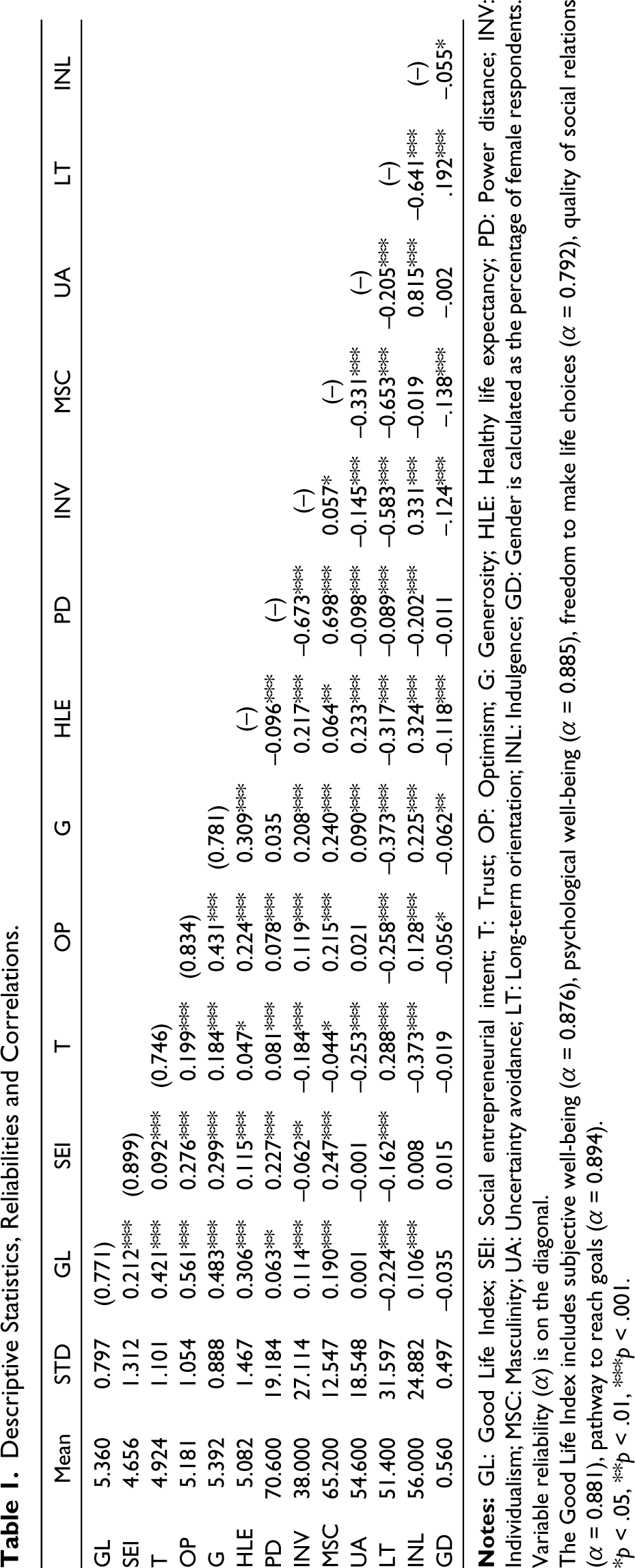
Variable reliability (α) is on the diagonal.
The Good Life Index includes subjective well-being (α = 0.876), psychological well-being (α = 0.885), freedom to make life choices (α = 0.792), quality of social relations (α = 0.881), pathway to reach goals (α = 0.894).
*p < .05, **p < .01, ***p < .001.
Tests of Hypotheses
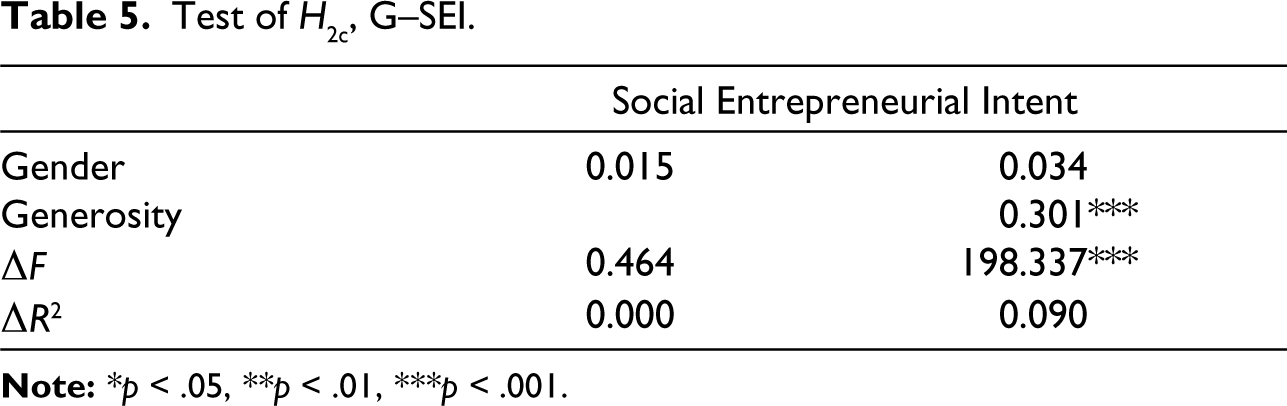
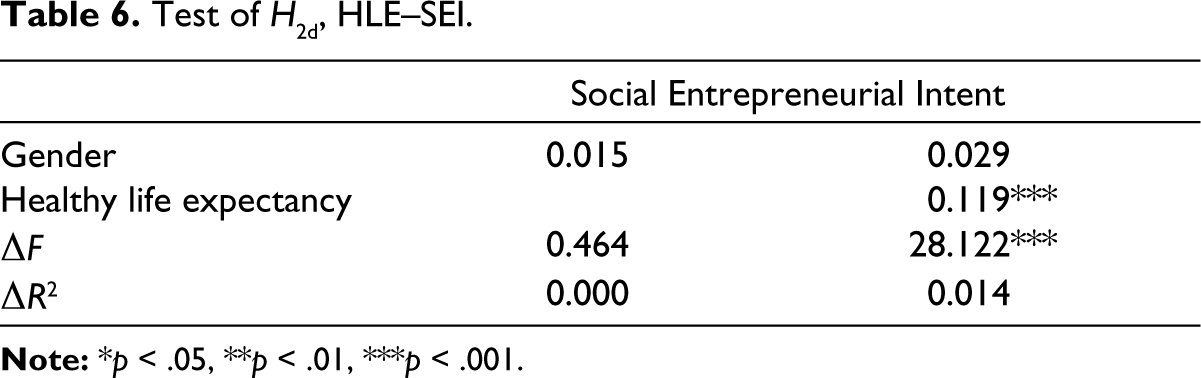
When testing hypotheses, all analyses controlled the effect of gender. As shown in Table 2, SEI explained the good life (β = 0.213***). H1 was supported. Tables 3–6 present the regression results of H2a–H2d. Trust (β = 0.092***), optimism (β = 0.277***), generosity (β = 0.301***) and healthy life expectancy (β = 0.119***) all explained the good life. Therefore, H2a–H2d were all supported.
Test of H1, SEI–GL.
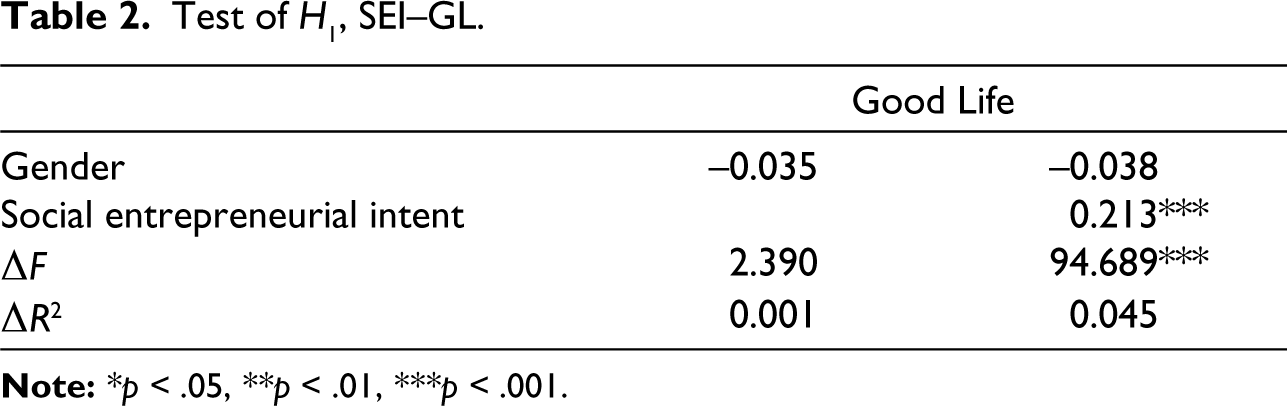
Test of H2a, T–SEI.
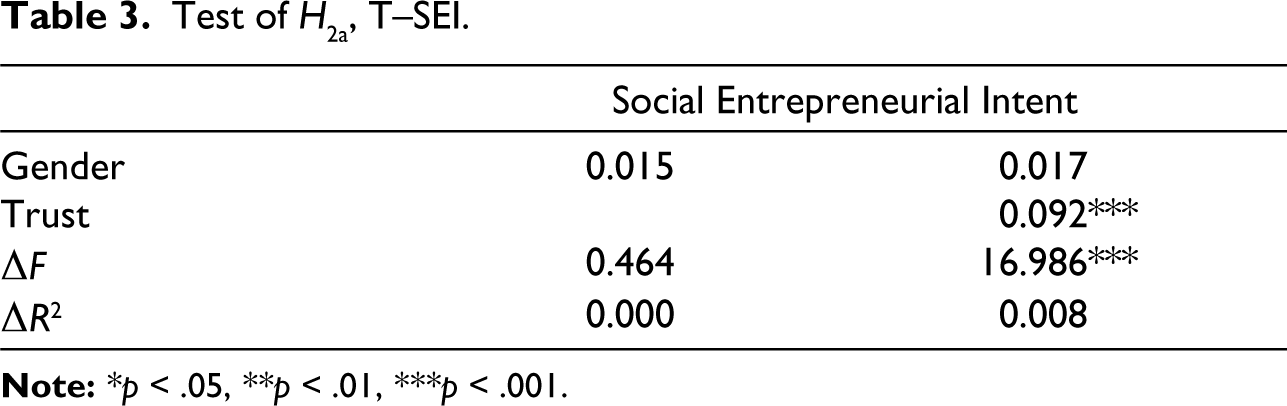
Test of H2b, OP–SEI.
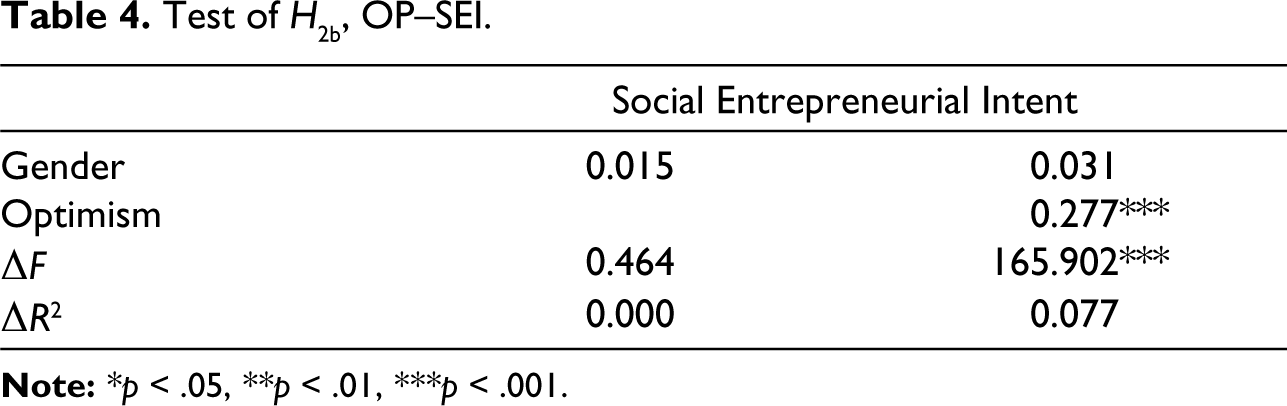
Test of H2c, G–SEI.
Test of H2d, HLE–SEI.
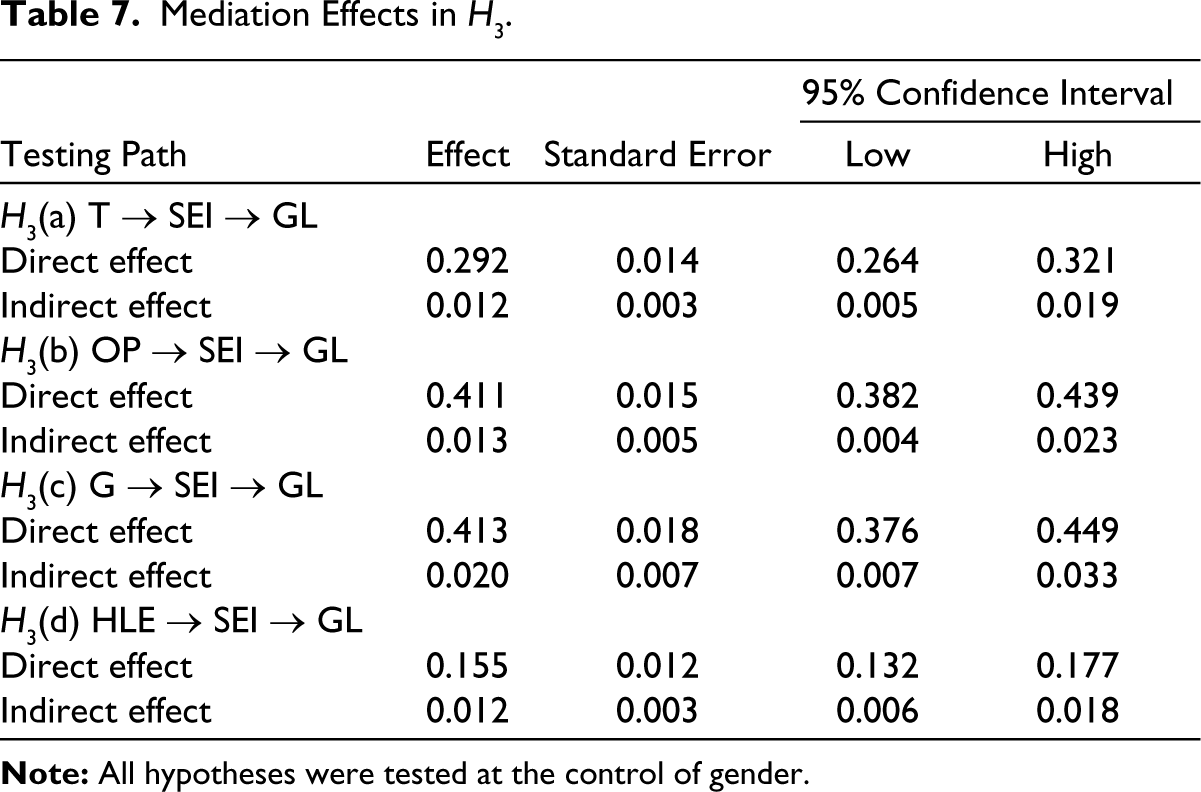
Mediation and moderated hypotheses were tested by the SPSS PROCESS developed by Hayes (2012). Table 7 shows the mediation effects of H3. Results demonstrate that SEI mediated the relationships between trust, optimism, generosity, healthy life expectancy and a good life. H3 was therefore supported.
Mediation Effects in H3.
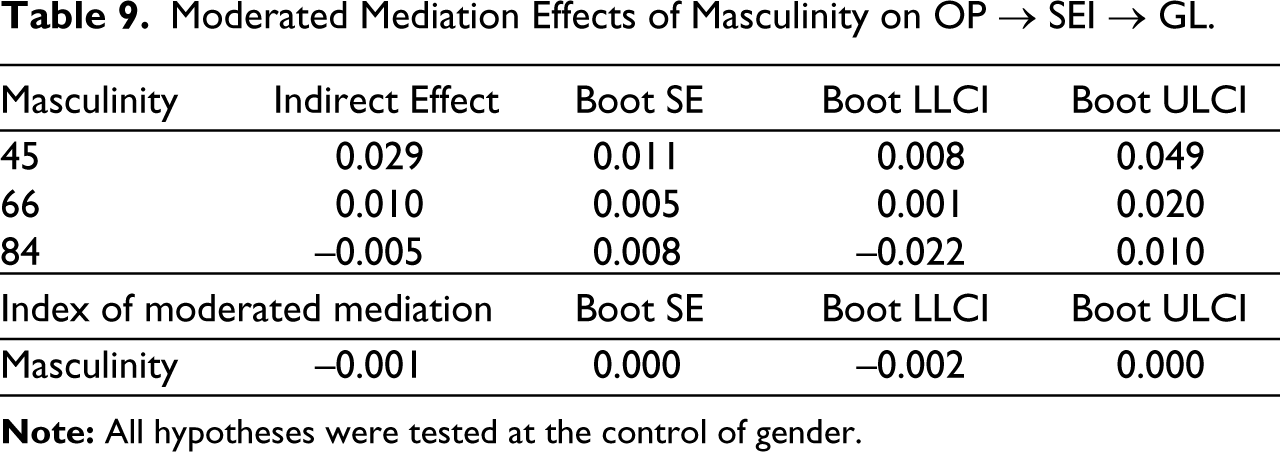
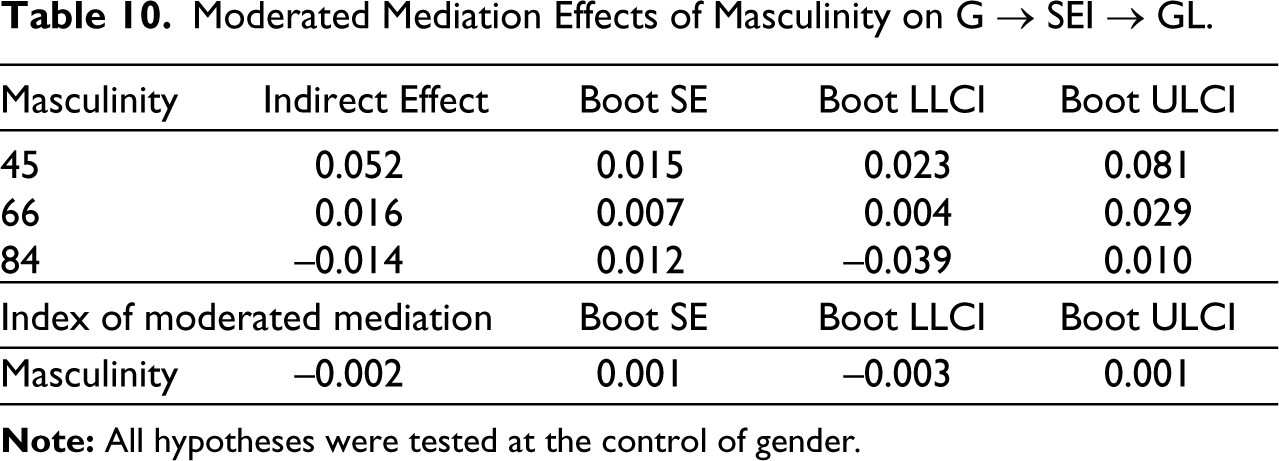
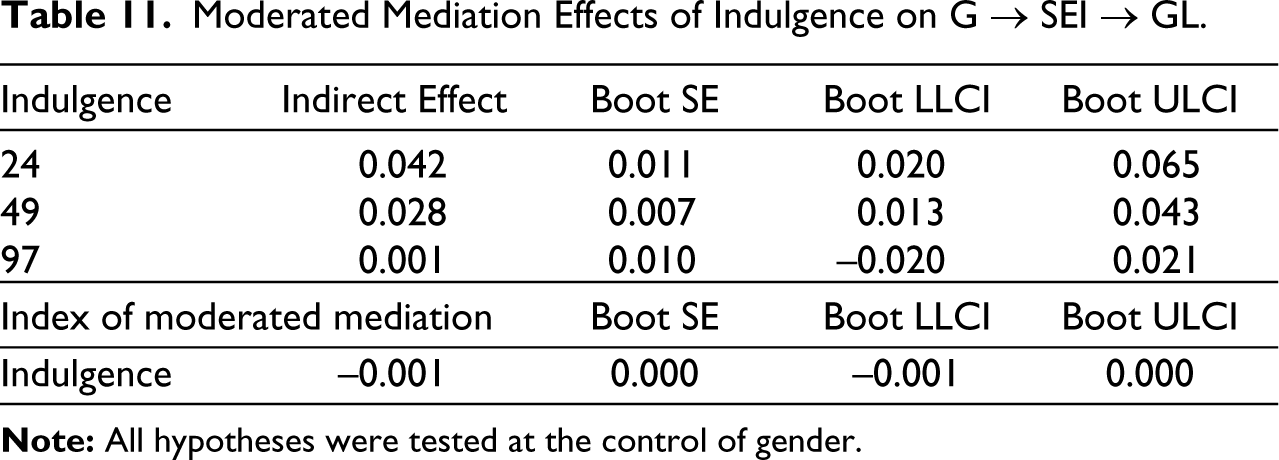
H4 and H5 were partially supported (see Tables 8–11 for details). In contexts with high long-term orientation, low masculinity and high indulgence, the mediation effect of SEI was stronger, especially for individuals with a high degree of generosity.
Moderated Mediation Effects of Long-Term Orientation on G → SEI → GL.
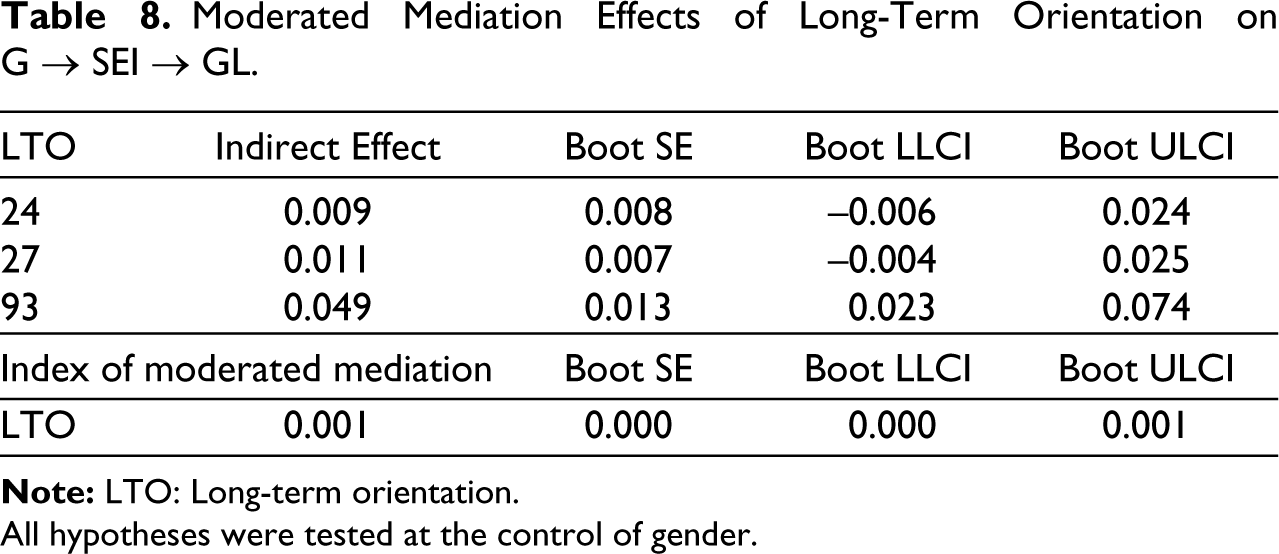
All hypotheses were tested at the control of gender.
Moderated Mediation Effects of Masculinity on OP → SEI → GL.
Moderated Mediation Effects of Masculinity on G → SEI → GL.
Moderated Mediation Effects of Indulgence on G → SEI → GL.
Conclusion
The present study found that SEI explained the degree to which individuals in five different cities around the world experience the good life. Personal dispositions were robust predictors of SEI, namely trust, optimism, generosity and healthy life expectancy, controlling for gender. To explain how personal dispositions affect career choices that result in experiencing the good life, results indicate that SEI mediated the relationship between trust, optimism, generosity and healthy life expectancy and an individual’s experience of the good life. In other words, personal dispositions lead people to certain career intentions, one of which is SE, which has consequences for the degree to which they experience a happy and meaningful life. Finally, cultural context mattered. Some cultural variables enhanced the dispositions-to-SEI-to-good life relationship, while others diminished it.
Discussion and Future Research
Different people—in diverse cultural contexts—pursue the good life in different ways. The present study examined how one career choice, the intention to become a social entrepreneur, contributes to achieving a life worth living. The present study certainly shows that there are many other ways to achieve the good life while addressing an area in the published literature that has been deserving of additional study. Specifically, while much research has been conducted into the predictors of SEI, few studies have examined the consequences or effects on individuals who have such intentions.
First, the present study’s results reinforce and extend the findings of others (e.g., Toledano, 2020; Urban, 2020; Yujuico, 2008) regarding the predictors of SEI, perhaps the most important of which are personal dispositions. Personality has been shown to be a powerful predictor of SEI in empirical studies using proactive personality (Prabhu et al., 2017; Zhang et al., 2021) and the Big 5 personality traits (Hossain et al., 2021; İrengün & Arıkboğa, 2015; Liu et al., 2021). The present study extends the research by including additional dispositions, namely optimism, trust, generosity and healthy life expectancy.
Second, the influence of SEI exists in different aspects. For example, Ney et al. (2014) proposed the social results and the time results of SEI. The social results captured changes related to ideas, structures and practices. The time results represented the dynamic and interdependent nature between social entrepreneurs and their environment in the long run. Wiklund et al. (2019) called for research on the consequences of SEI other than performance. Similarly, in their literature review, Kamaludin et al. (2021) classified the impacts of social entrepreneurship into social, economic, behavioural and governance dimensions. The social dimension includes value creation, networking and community changes. The economic dimension includes innovation, wealth and accountability. The behaviour dimension focuses on changes associated with culture, identity, cognition and growth. The governance dimension is specific to autonomy and power (re-)distribution. The present study examined one of the consequences of SEI—its effect on individuals’ experiences of the good life. The most important finding of the present study is that SEI explains individuals’ good lives in five different cities around the world. College students inevitably reflect on the career choices they have upon completion of school. The study did not measure actual behaviour, but perhaps it is the intention itself that explains the experience of a good life. The students in the sample have many choices and will likely pursue many different paths, but those who intend to use their energy and skills to solve social problems, as the data show, will have a good life. As Confucius said, ‘Choose a job you love, and you will never have to work a day in your life’ (Princeton University, 2016). Much more recently, the entrepreneur Richard Branson said, ‘There is no greater thing you can do with your life and your work than follow your passions in a way that serves the world and you’ (Forbes, 2013). The present study, of course, does not preclude that there are many ways to serve the world in a job one loves, and that may very well come about by working in or starting a for-profit organisation, in government, in a non-profit or as a social entrepreneur.
Third, social cognitive career theory tells us that career choices are affected by dispositions and result in different life outcomes. This theory very well explains how the intention to have a career as a social entrepreneur is influenced by personal dispositions and, in turn, enhances one’s experience of the good life. The present study extends the social cognitive career theory research by specifying how this career choice affects an individual’s good life. As Tran and Von Korflesch (2016, p. 24) noted, ‘[T]he decision of establishing a new social venture is not for entertainment. It rather is a career-related decision in accordance with the magnitude of problems faced around the globe which need sympathetic and realistic solutions’. In the literature, researchers have been applying personality and individual traits to explain career choices. For example, Sajjad et al. (2012) explained the relationship between personality and career choices through opportunity recognition, person-job fit and career success. Usslepp et al. (2020) found that investigative or enterprising educators are more likely to select the general educational track (instead of the vocational track) than social or conventional educators. Future researchers may benefit from integrating social cognitive career theory and personality theory to study social entrepreneurship, SEI and the potential outcomes.
Fourth, the present study was based on a broad understanding of the good life and included the components of psychological and subjective well-being, freedom to make life choices, quality of social relations and pathway to reaching goals. Doing so does not restrict the understanding of the good life to ‘happiness’ or ‘satisfaction’ but instead reflects the thoughts of Aristotle, Martin, Myers, Seligman and others on what truly constitutes a worthwhile life. The present article emphasises that seeking an important goal, such as starting a SE, may be a significant part of enjoying a good life. It is the pursuit of a goal that matters, not necessarily the achievement of that goal, particularly if the goal is ambitious or long term.
Fifth, while an extensive discussion of policy considerations is beyond the scope of the present article, policymakers are certainly stakeholders of social entrepreneurship. According to the World Economic Forum (2024), SEs provide more than 200 million jobs in the world and are mainly led by minorities and/or underrepresented members of society. Despite their salient social contributions, SEs remain under-represented and under- supported. Recently, researchers in business administration, public administration and social welfare have collectively called for more supportive regulations for SEs (Choi et al., 2020; Maksum et al., 2020; Park & Wilding, 2013). Experts in entrepreneurship education have called for a re-orientation of academic programmes to generate more student-driven business start-ups with greater access to resources (Shukla et al., 2022) and, in view of this, these start-ups must include SEs. SEs need favourable conditions to get started, scale and connect with knowledge and resources from the government, universities and other organisations. Policymakers in the different countries of the sample would do well to reflect on how social entrepreneurship can be enhanced. For example, Chinese government incentives for start-ups could be extended to SEs. In Mexico, similarly, where generous incentives for certain types of entrepreneurship exist, it is suggested that social entrepreneurship be included in such programmes. In the United States, there has been explosive growth in non-profit and for-profit B corporations; however, the need to address social problems, such as homelessness, poverty and civil rights, remains vast. In the Philippines, programmes such as the RISE UP initiative generate hope that SEIs can receive support (ISIP, 2024), but the Philippines remains a challenging environment in which to start a SE. Overall, several policies have been shown to positively promote SEI, including but not limited to (a) national and local government purchases of goods and services reserved for SE bidders, (b) encouragement of for-profit corporations to adopt socially responsible procurement processes, (c) financing to help SEs scale up, (d) campaigns, awards and prizes to raise the visibility of successful SEs and (e) facilitating knowledge sharing to and between government and existing organisations, and between existing organisations and pilot projects or start-ups (OECD, 2024). All these policy decisions potentially enhance the incidence of social entrepreneurship, which in turn potentially enhances the good life of the citizens of these countries.
Sixth, in the social sciences, researchers necessarily abbreviate and simplify reality to measure and discuss dispositions, thoughts, attitudes, intentions and behaviours. Sometimes context is ignored or minimised. The present study went beyond examining a direct relationship between personal dispositions and the good life. Results support a model in which SEI mediates the relationship between personal dispositions and the good life, and that mediation is potentially enhanced or diminished by the cultural context. Specifically, long-term orientation, low masculinity and high indulgence enhanced the mediation effect of SEI, especially for individuals with a high degree of generosity.
Additional research is welcome into mediators and contextual variables that explain how individual dispositions affect career choices, which in turn result in a good life. Certainly, many different career choices can result in the enjoyment of a happy and fulfilling life. Future research can explore in greater detail the mechanisms between individual characteristics and a good life; SEI is unlikely to be the only mediator of that relationship. In particular, the role of social entrepreneurial self-efficacy (SESE) (Urban, 2020; Wu et al., 2021; Zhang et al., 2021). SESE in certain contexts may, perhaps, allow an individual to overcome barriers that might otherwise drive another individual to a different career. Additional research into different cultural contexts would, of course, also be welcome additions to the literature, as well as studies with individual measures of cultural values and beliefs (rather than country aggregates). What the present study suggests, nonetheless, is that one consequence of an individual’s SEI is the experience of the good life in some cultures. As Pearson and Helms (2013, p. 43) noted, ‘the importance of cultural heritage are vital components in the pursuit of economic and social goals […]’. Finally, future researchers may consider further validating this study or investigating suggested research directions by collecting both qualitative interview data and quantitative survey data in different time series. Insights and quotes from current social entrepreneurs would be particularly beneficial to the practical and academic fields.
Data Availability
The data that support the findings of this study are available from the corresponding author upon reasonable request.
Footnotes
Declaration of Conflicting Interests
The authors declared no potential conflicts of interest with respect to the research, authorship and/or publication of this article.
Funding
The authors received no financial support for the research, authorship and/or publication of this article.