



Abstract
This study investigates how entrepreneurial inputs and regulatory environments affect the evolution of Lebanese and Jordanian entrepreneurial ecosystems (EE). We attempted to understand how these ecosystems work by focusing on the input configurations that trigger entrepreneurship and how these regulatory environments have been formed. The researchers tested the theoretical model using structural equation modelling (SEM) to investigate EE as a relative construct and the interrelationship between the different factors that impact such systems. This data collection method built a base for a comparative study based on 300 respondents from each country, using Google Forms. These results indicated a strong positive relationship among finance, networks, economic policy stability, innovation, and EE in Lebanon and Jordan. This can give entrepreneurs financial support, social networks, and economic stability to help them thrive and innovate. For further research, a comparative analysis with other regions could underscore the importance of EE in both countries and offer a more comprehensive global perspective for interpreting these ecosystems. This study adds to the literature on Lebanese and Jordanian entrepreneurship by potentially influencing the future development of EE in these countries.
The new vision of entrepreneurial ecosystems (EE) implies contemplating the complex and interdependent processes that provoke entrepreneurship because these systems are constantly moving objects (Mas & Gómez, 2021). This interest in EE is part of a broader movement in entrepreneurship among researchers and policymakers alike, away from the entrepreneurial concept toward more holistic explanations of why some people become entrepreneurs (Van Rijnsoever, 2022). These ecosystems and their firm structures are sophisticated indicators, resources, and institutions that interact to produce environments and nurture innovation infrastructure (Miles & Morrison, 2020) and entrepreneurship (Ogundana et al., 2024). Economic growth is critical for prosperous national economies; therefore, it is necessary to understand the reasons for enhancing EE (Khodor et al., 2024). This study explores the composition of EE in communities in Lebanon and Jordan, thus shedding light on how different entrepreneurial inputs impact EE mediated by regulatory environments.
This study relies on Resource Based View Theory (RBV) because it presents a more supported theoretical perspective, as resources are the central foundation for gaining the advantages explored (Mas & Gómez, 2021). The RBV argues that an SME’s development is successful if resources and assets are used to generate income. According to Van Rijnsoever (2022), entrepreneurs live in EE which allows them to exchange resources with other entrepreneurs who rely on the same resources. If these crucial resources are provided, a dramatic increase in an entrepreneur’s ability to discover and capture economic profits from new product innovations can be expected (Miles & Morrison, 2020). The RBV was employed in this study because it is crucial to investigate the impact of internal capabilities and external factors on entrepreneurial outcomes (Chan et al., 2021; Mira-Solves et al., 2021).
Lebanon and Jordan were selected as study contexts for several reasons. Each exhibits observable needs regarding financial support, social networks, economic policy stability, the regulatory environment, and innovation policies, commonly included in assessing EE (Khodor et al., 2024). In Lebanon, the unstable economy, banking sector, and tight capital controls greatly restrict access to finance, making it impossible for potential entrepreneurs to obtain the required funds. Entrepreneurs endure changes from many governments that bring conflicting policies and laws to the extent that such an unstable environment does not support local investors or encourage entrepreneurs (Nigam & Shatila, 2024). Complex administrative processes are often accompanied by a lack of transparency, complicating commercial operations. Additionally, innovation policies in Lebanon need to be more robust and better implemented, and sufficient support for R&D actions needs to be provided, to avoid undercutting the prospects of innovative entrepreneurship.
On the other hand, Jordan is considered politically more stable than Lebanon. However, it faces several problems, including a lack of access to finance, which is a crucial hindrance for many Jordanian entrepreneurs, especially startups and small and medium enterprises (SMEs). The high lending standards and scant availability of venture funding make it difficult for entrepreneurs to obtain loans or raise capital (Jarrar, 2022). Jordan has a strong social network connecting diverse sectors and demographic groups, which is imperative for cultivating accessible mechanisms for collaboration in entrepreneurship (Kakeesh, 2024). Economic policy stability in Jordan is much better than in Lebanon. However, it remains in crisis, with high unemployment rates and fiscal deficits that can undermine the confidence levels of entrepreneurs and investors. Jordan outperformed Lebanon in designing innovation policies (Alawamleh et al., 2023). Nonetheless, R&D investment still needs to be on a much larger scale, and innovation initiatives must be accompanied by programmes that support entrepreneurship so that the economy can grow sustainably.
While much has been written about EE, few studies have investigated the influence of varying entrepreneurship inputs on a cross-country basis, especially in Middle Eastern countries (Santos, 2022). Research on the development of entrepreneurial dynamics has primarily focused on Western economics. Less attention has been paid to emerging markets, where cultural, economic, and regulatory mosaics may shape the entrepreneurship process differently. This study addresses the gap in the existing literature by comparing how similar resources affect EE in two Middle Eastern economies that have come far from economic diversification and aim for innovation-driven growth (Rocha et al., 2021). Moreover, the literature often needs to account for the complex role of regulatory environments in moderating the relationship between entrepreneurial resources and ecosystem outcomes (Theodoraki et al., 2022). The findings of this study can help entrepreneurs and policymakers develop a more nuanced understanding of the EE and offer a better understanding of the emergent interplay between the policy environment and other survival leads in entrepreneurship. This study seeks to advance the EE body of knowledge by examining essential resources as determinants of their emergence in emerging markets and the regulatory environment as an essential moderator.
The subsequent sections of the article review the literature on access to finance and social networks, economic policies, drivers, public policies, and EE components. This research adopts a quantitative method to collect data and uses SPSS as the assistance analysis software, combined with AMOS, to analyse the structural equation modelling (SEM). Finally, the researchers acknowledge the study’s limitations and offer guidance on how future research could address these constraints from the perspective of legislators, entrepreneurs, investors, and academics.
Theoretical Framework
RBV theory helps to understand the circumstances under which an EE may be a source of competitive advantage. In theory, this concern for internal capabilities is primarily through entrepreneurial inputs (Reuschke et al., 2021), the cornerstone of innovation infrastructure and competitiveness in countries. One of the most critical aspects is SMEs’ access to capital, which defines investment in technology, skilled employees, and new markets (Komlósi et al., 2022). Social networks are similarly helpful in the same way for housing entrepreneurs who need information about many things such as potential business relationships/partners, and access to consumer pools they can influence (Pushkarskaya et al., 2021). Likewise, economic policy stability is seen as a critical resource supporting RBV theory (Pathak & Mukherjee, 2020) and therefore, can be considered an external element. When the former occurs, entrepreneurs can allocate resources adequately, and through disciplined planning, they can have an edge over others in the marketplace. Policy regimes for innovation include capabilities and resources that control, govern, or constrain other typologies (Pittz et al., 2021).
The RBV posits that an EE represents a rich package of resources with which firms can compete. Indeed, the complexity of EE enables them to influence critical organisational outcomes, such as robust firm growth quite robust (Callarisa-Fiol et al., 2023). Ecosystem type and quality significantly influence how entrepreneurs employ resources to foster market success (Bouncken & Kraus, 2022). The regulatory framework is considered a macro factor that can further support more entrepreneurial inputs from which venture companies can benefit from upgrading their social networks and acquiring resources as local economic policy has become stable. This business-friendly environment allows established businesses to use resources and compete (Reuschke et al., 2021; Woo & Jung, 2023). However, a regulatory environment that fails to allow these resources to be employed to the maximum extent would have an anticompetitive effect on entrepreneurs.
Hypothesis Development
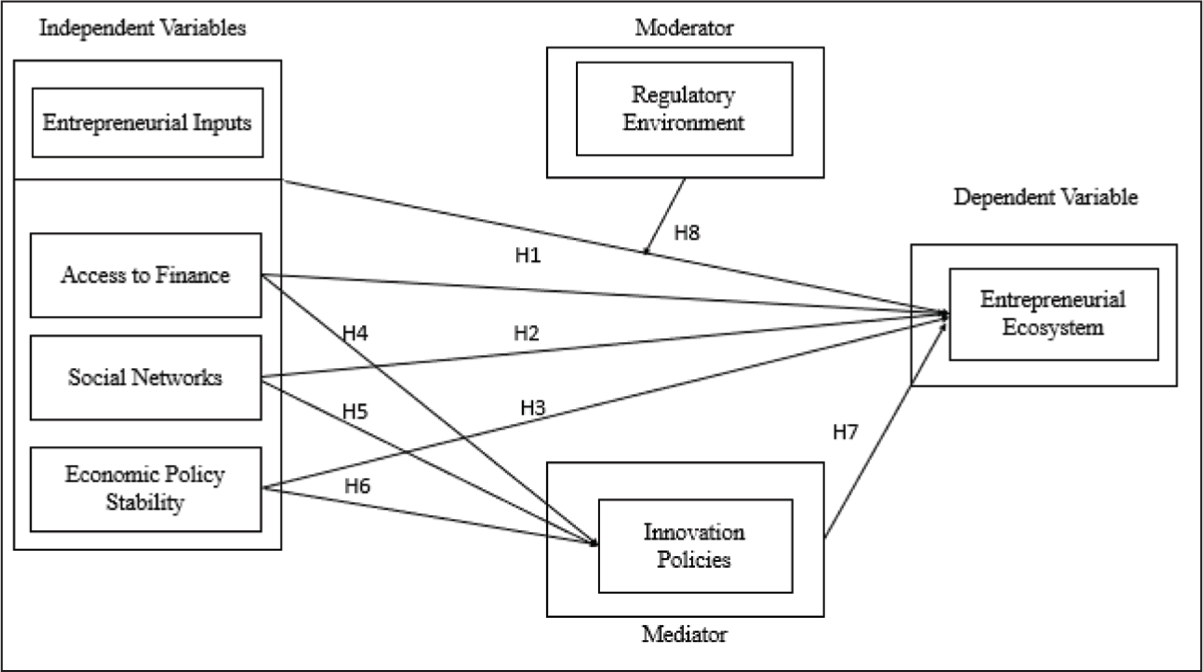
Financial resources are essential to EE and are considered a critical mass of seed and start-up investors who provide funding and practical support (Ushakov et al., 2023). Angel investors, including former and current entrepreneurs as well as executives, are crucial, as are business accelerators and seed financing (De Bernardi et al., 2020; Ushakov et al., 2023). One of the primary goals of government and agency support is to help entrepreneurs become more competitive and increase their operational capacity to tap into new markets (Van Rijnsoever, 2022). Support programmes are available to SMEs, including those that help with their development, training, marketing, and consultancy (Colombo et al., 2019). However, many SMEs require essential financial resources, such as bank loans, to survive and grow (De Brito & Leitão, 2021). These resources help SMEs become more competitive by providing them with monetary credit, management, and advisory services for all their enterprises (Lazzeretti & Capone, 2020). SMEs are also supported through subsidies and training programmes to strengthen their operational bases (Copeland, 2021). Very few entrepreneurs running SMEs have the necessary skills to incorporate technology into their company’s operations (Mas & Gómez, 2021). This is considered a primary barrier to meeting the requirements for obtaining loans from financial institutions (Longva, 2021). This leads to the following hypothesis:
H1: Access to finance positively impacts entrepreneurial ecosystems
Social capital is a vital resource that allows individuals or organisations to overcome the challenges arising from being new or small within a particular ecosystem (Miles & Morrison, 2020). Entrepreneurs rely heavily on interactions within social networks to acquire the essential knowledge and skills required for success (Veleva, 2021). Hence, it is necessary to prioritise the importance of relationships within a social network. Lepik and Urmanavičienė (2022) showed that strong social networks, supported by trust, enhance access to current and shared resources inside an entrepreneurial environment. Conversely, weak networks offer broader resources and encourage innovation (Tang, 2022; Veleva, 2021). These SMEs must adapt to and operate within certain environmental factors, including governmental frameworks, infrastructure, natural resources, and the cultural and traditional aspects of a market while engaging with and exerting influence on each other (Busch & Barkema, 2022). Social interactions within social networks and ecosystems are influenced by social exchange, which occurs via diffuse connections that do not immediately provide trade conditions (Van Rijnsoever, 2022). Ecosystems offer access to various resources, such as trust, which acts as a protective measure that stimulates connections within the social network, enables cooperation, reduces the likelihood of harm, and forces social standards to promote social interactions (Aloulou et al., 2024; Cao & Shi, 2021; Shatila et al., 2024). Successful entrepreneurship is facilitated by high levels of trust within each element or group of an ecosystem (Tang, 2022). This leads to the following hypothesis:
H2: Social networks positively impact entrepreneurial ecosystems
Opute et al. (2021) use EE to better understand the dynamics of entrepreneurship at the regional level. This approach links entrepreneurs with sufficient physical and intangible resources (Cao & Shi, 2021; Scott et al., 2022). On the other hand, a bottom-up governance approach allows for the organic growth of EEs due to internal factors, such as interactions between entrepreneurs, rather than external factors, such as government regulations (Ogundana et al., 2024). From this perspective, government initiatives may negatively affect entrepreneurial dynamics. However, policies alone cannot create an ecosystem that can self-organise; the public sector must be involved in the intricate evolutionary processes of any EE (Khandelwal et al., 2022). According to this integrated vision, a dynamic bottom-up, top-down governance concept in which each player’s role changes as EE progresses seems sensible (Busch & Barkema, 2022). The government’s flexible involvement encompasses prioritising policies to alleviate ecosystem bottlenecks, allocate appropriate resources, encourage stakeholders to engage at several levels, and fill institutional and structural gaps (Miles & Morrison, 2020). The precise type, extent, and intensity of policy interventions are affected by contextual variations that influence the policy functions of EEs (Chan et al., 2021). Emerging countries and those with less established institutional frameworks often emphasise government policy more than mature ones. This leads to the following hypothesis:
H3: Economic policy stability positively affects entrepreneurial ecosystems.
The availability of financial resources may influence innovation because more access to funding can lead to more effective inventive endeavours. Mira-Solves et al. (2021) argue that knowledge of limited access to finance reveals the significance of innovation funding as a current barrier to innovation. They state that a shift in the extent of limited access to finance impedes innovation and changes the category of SMEs that face the most severe financial restrictions. Pushkarskaya et al. (2021) discovered that financially restricted SMEs with significant discretionary accruals have increased capital, substantial R&D expenditure, patents, and improved operational performance. Restricted access to finance limits research- and development-focused companies in the private sector from effectively commercialising their research efforts, leading to less success in innovation. This is primarily because SMEs’ expenses prevent them from acquiring the essential complementary assets required. Audretsch and Belitski (2017) and Reuschke et al. (2021) discovered that limited access to finance has a more noticeable detrimental impact on the manufacturing industry than the service industry. Espinoza-Benavides et al. (2021) examine the primary factors that hinder firms from effectively converting investments in innovation into new products and processes. Komlósi et al. (2022) discovered that demand-side variables, namely, a concentrated market structure and insufficient demand, are as significant as limited access to finance in influencing enterprises’ innovation failures. Santos (2022) examines the impact of limited access to finance on innovation efficiency and the function of political ties in this process. His study shows that SMEs with political connections have fewer financing constraints than those without. Setting away political linkages, they found a negative correlation between limited access to finance and innovation efficiency in listed firms. This leads to the following hypothesis:
H4: Access to finance positively impacts innovation policies
Social capital can also be seen as a network mechanism governing interactions between actors because it represents a more fine-grained form of distinction. Social networks are interrelated connections that facilitate creativity and learning (Callarisa-Fiol et al., 2023). These systems must be improved to achieve a complex understanding or require costly oversight, from court involvement to legal resolution. Other studies have suggested that inter-organisational social networks can catalyse creativity (Bouncken & Kraus, 2022). Increased trust among organisations allows for the safe exchange of confidential data by lowering the opportunities for either party to exploit this information against the other (Pushkarskaya et al., 2021). Trusted environments are delivered through social networks, facilitating trust-based interactions without manual or costly human monitoring (Pathak & Mukherjee, 2020). Thus, entrepreneurs spend more time on beneficial activities and endeavours (Callarisa-Fiol et al., 2023). Recent studies have recognised the importance of social relations in organising economic and social transactions in which trust is present (Callarisa-Fiol et al., 2023). For instance, trustworthiness can reduce the costs of searching for a business partner and deceptive behaviour (Van Rijnsoever, 2022). Social networks are valuable assets because they allow entrepreneurs to build valuable connections, work together, and share resources, which may help them achieve their personal and professional objectives (Pittz et al., 2021). Woo and Jung (2023) concluded that social networks have the potential to foster economic growth at the regional level. They discovered that robust interpersonal networks could boost human capital utilisation, which, in turn, helped the government improve its management efficiency and stimulate economic growth. This leads to the following hypothesis:
H5: Social networks positively impact innovation policies
Veleva (2021) defines economic stability as an additional government service that provides a suitable environment for entrepreneurs to invest. This promotes stability of the economic system and increases the likelihood of economic growth. Mas and Gómez (2021) examine the correlation between political instability and economic development. They found that countries with a tendency toward political instability and government transition experienced decreased economic output. Furthermore, Veleva (2021) stated that political instability has a detrimental impact on economic development. The significant impact of political institutions on a country’s developmental phases is well-recognised (Copeland, 2021). Weerasekara and Bhanugopan (2023) state that economic stability, government policies, laws, and institutions significantly impact long-term innovation trends. The calibre of political institutions may shape a nation’s behavioural reaction to creative endeavours (Theodoraki et al., 2022). A stable economic climate fosters a greater inclination toward innovation (Veleva, 2021) and promotes innovation productivity through patents (De Brito & Leitão, 2021). Mas and Gómez (2021) discovered a favourable correlation between economic stability and the inclination of innovators to engage in innovation, using patent data as a substitute for measuring innovation. Similarly, Theodoraki et al. (2022) examine how economic policy stability affects innovation activity and find a strong positive correlation between stable economic policies and innovation. Economic volatility engenders distrust and ambiguity, impeding a nation’s capacity for innovation and technological advancement (Weerasekara & Bhanugopan, 2023).
Researchers have found that distrust and uncertainty undermine trust among people in civil societies (Callarisa-Fiol et al., 2023). Trust is the foundation of the critical innovation framework known as the triple-helix model. Another contributing factor is the role of formal and informal institutions that reflect triple-helix engagement, making them contingent on success in a particular country (Weerasekara & Bhanugopan, 2023). Politically volatile countries may experience instability, such as civil conflict, social discord, and aggression, leading to the possible unconstitutional replacement of their government. Such conditions discourage potential investors from investing in these countries (Theodoraki et al., 2022). This instability diminishes foreign direct investment and impairs economic activity and human capital (Mas & Gómez, 2021). This implies that innovation rates can be lowered in these countries (Colombo et al., 2019). According to Copeland (2021), economic uncertainty has a negative effect on willingness to invest in innovation. Veleva (2021) they contended that the enduring impact of the previous political administration, scepticism toward scientific advancement, and outdated approaches to research development and innovation led to Croatia’s underperformance and ultimate collapse. Schmutzler et al. (2021) economic instability causes the emigration of highly trained individuals such as engineers, professors, and scientists. Additionally, he emphasised that these migrations may lead to the depletion of skilled experts, scientific expertise, and innovative advancements. This leads to the following hypothesis:
H6: Economic policy stability positively impacts innovation policies
Technological progress, economic development, job creation, innovation policies, and an EE lead to economic development. However, only some entrepreneurs innovate, and most new entrepreneurs require more innovation (Scott et al., 2022). Knowledge exchange between entrepreneurs is essential for fostering innovation (Spigel, 2017). From a knowledge-based perspective, we assert a positive correlation between innovation and EE (Ogundana et al., 2024). Financial resources may provide essential grants and subsidies to facilitate collaboration between entrepreneurs and established companies, enabling them to combine their different skills and undertake intricate technical and product innovations (Spigel, 2017). Thus, entrepreneurs who join government programmes have a more convenient means of accessing external information than those who do not participate in such programmes (Schmutzler et al., 2021). R&D exchange facilitates access to new information institutions and universities (Santos, 2022). When entrepreneurs access national R&D resources, technicians from different companies and universities usually share and combine the information gained through inventions (Mira-Solves et al., 2021). This leads to the following hypothesis:
H7: Innovation policies positively impact entrepreneurial ecosystems
Colombo et al. (2019) found that the regulatory environment significantly moderates entrepreneurial inputs and ecosystems. A regulatory climate is a bundle of policies and laws that affect the environment for businesses or interactions within an economy. Espinoza-Benavides et al. (2021) illustrate the political economy of entrepreneurship, reaffirming that the regulatory climate depends significantly on regulatory quality, efficiency, and transparency. According to Komlósi et al. (2022), encouraging investment, promoting competition, and enhancing entrepreneurship requires legal structures that help conduct business at a low cost to start and operate, protect property rights, and ensure contract enforcement (Pushkarskaya et al., 2021). Regulation and its effect on the supply of entrepreneurial input manifested in regulation affect availability and allocation. Allocations for specific tasks are restricted to being provided only by a particular provider, or it is simply impossible to offer them because of regulations that impose such restrictions (Komlósi et al., 2022). However, according to Pushkarskaya et al. (2021), such laws and complex legal procedures can hinder financial access by stiffening the pace of innovation and intimidating entrepreneurial activities, particularly in highly regulated sectors. Additionally, extensive regulatory uncertainty and volatility can freeze foreign monetary composition to support EE in a venture. Pathak and Mukherjee (2020) found that entrepreneurs input the same information about their development processes into a local EE, but communication organisations regulate this relationship, according to Pittz et al. (2021). Bouncken and Kraus (2022) found renewed attention being paid to regulatory reforms in business environment indicators that affect overall entrepreneurship activity and ecosystem development. This leads to the following hypothesis:
H8: The regulatory environment moderates the relationship between entrepreneurial inputs and ecosystems.
Figure 1 shows the model that was developed based on the literature review.
Research Model.
Methodology
This research analysed the comparative inputs of several SEM models to assess entrepreneurship in Lebanon and Jordan. The researchers undertook this analysis because of the complexity and indirect observation of innovation, financial access, social networks, and economic policy stability influencing EE. Data from Lebanese and Jordanian entrepreneurs was gathered using Google Forms between January 2024 and May 2024. Data collection yielded 600 replies from both regions, facilitating an equitable comparison and compelling comparative study. The researchers gathered data via permission forms using Google Forms. Subsequently, the respondents consented to complete the Google Forms on the basis of the assurance that their personal information would remain confidential, and the findings would only be used for research purposes. Outliers were eliminated by analysing them using SPSS and AMOS to guarantee precise findings. The covariance-based SEM (CB) approach was used because it is suitable for addressing the various manifest and latent variables utilised in this investigation (Hair et al., 2019). SEM analysis may examine the mediating and moderating effects, indicating that entrepreneurial inputs directly and indirectly influence ecosystems (Hair et al., 2019). This study explores how regulatory and innovation policies significantly influence the Lebanese and Jordanian EE. This confirms that the scales for these variables effectively reflect the assessed underlying theoretical entities.
Analysis of Results
Table 1 presents the crosstabulation of age and gender and a detailed view of the distribution of 600 individuals across different age groups (21–30, 31–40, 41–50, and over 50) and genders (male and female). Of the total population, 400 are male and 200 are female, highlighting a more significant proportion of males in the sample. In the youngest age group (21–30), males comprise a significant majority, with 197 individuals, while females account for 136. The trend continues in the 31–40 age group, where there are 162 males compared to just 40 females, demonstrating a sharp gender imbalance. As the age increases, the number of males and females decreases substantially, with 37 males and 24 females in the 41–50 age group. Notably, in the over-50 age group, the presence of both genders diminishes drastically, with only four males and no females represented.
Age * Gender Crosstabulation.
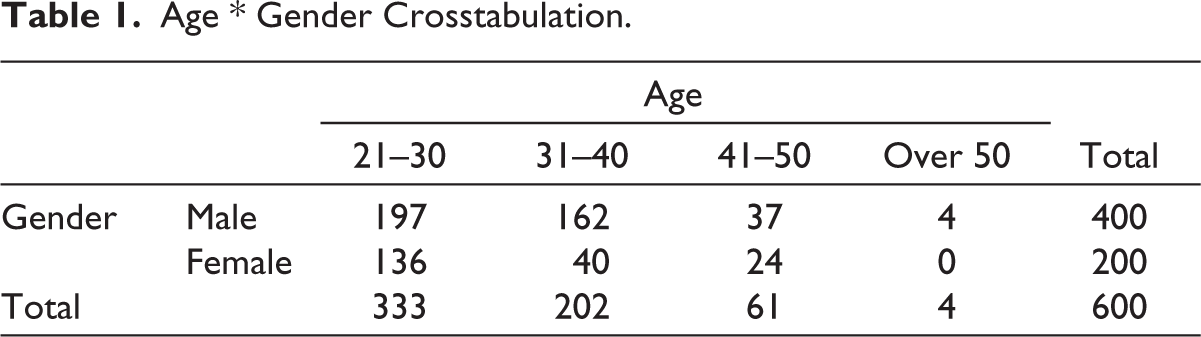
Table 2 provides the crosstabulation of education and age and gives insights into the distribution of 600 individuals across different educational levels (Bachelor-University, Master and Doctorate) and age groups (21–30, 31–40, 41–50, and over 50). Of the sample, 60 individuals have a Bachelor’s degree, 315 hold a Master’s degree, and 225 possess a Doctorate. Most individuals with higher education are concentrated in the younger age groups. Among the 21–30 age group, most have a Master’s degree (177), 125 individuals with a Doctorate, and 31 with a Bachelor’s degree. A similar trend is observed in the 31–40 age group, with 117 individuals holding a Master’s degree, 66 with a Doctorate, and only 19 with a Bachelor’s degree. The numbers drop in the 41–50 age group, where 21 individuals have a Master’s degree, 31 have a Doctorate, and nine have a Bachelor’s degree. In the over-50 age group, educational attainment declines significantly, with only one individual having a Bachelor’s degree and three holding a Doctorate, while no one holds a Master’s degree.
Education * Age Crosstabulation.
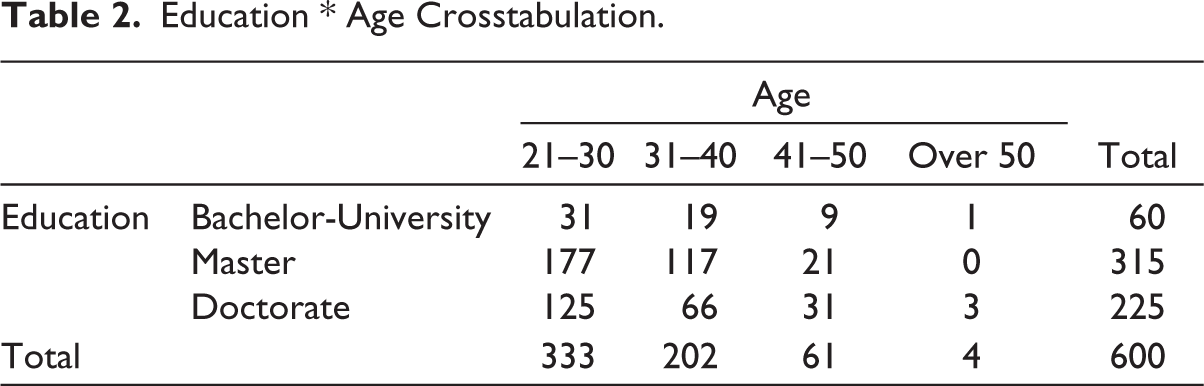
Table 3 illustrates the dimension reduction results through a factor analysis, presenting the factor loadings for the various constructs. For the ‘Access to Finance’ construct, six items (ATF1 to ATF6) are measured, with factor loadings ranging from 0.719 to 0.801. Similarly, for ‘Social Networks,’ five items (SN1 to SN5) exhibit factor loadings ranging from 0.630 to 0.767, indicating their significant association with the Social Networks construct.
Dimension Reduction.

Furthermore, the table shows the factor loadings for other constructs such as ‘Economic Policy Stability,’ ‘Regulatory Environment’, ‘Innovation,’ and ‘Entrepreneurial Ecosystem.’ For ‘Economic Policy Stability’, five items (EPS1–EPS5) demonstrated factor loadings ranging from 0.681 to 0.787, indicating their contribution to the latent factor. Similarly, the ‘Regulatory Environment’ items (RE1–RE5) exhibited factor loadings ranging from 0.689 to 0.789. ‘Innovation’ items (INN1 to INN5) and ‘Entrepreneurial Ecosystem’ items (EE1 to EE5) showed varying factor loadings, suggesting their respective influences on the latent factors. Notably, items with factor loadings below 0.5 are excluded, adhering to the criteria established by Cronbach (1951) to ensure the reliability of the factor analysis results.
Table 4 presents the results of the robustness tests of the variables emphasising their reliability and convergent validity. Cronbach’s alpha values for all variables (ATF, SN, EPS, IP, RE, EE, and INN) ranged from 0.733 to 0.898, indicating good internal consistency, as they all exceeded 0.7. Composite Reliability (CR) scores were also above 0.7, further confirming the reliability of the constructs. Concerning convergent validity, the Average Variance Extracted (AVE) for each construct exceeded the cutoff value of 0.5, compared to Bollen (1989), suggesting that constructs explain a substantial variation in measurements in a preferred way. To confirm the robustness of our model, as a differencing validity check, we calculated the square root (SQRT) AVE for all constructs, indicating that each variable has more share with its indicators than the others. The Kaiser-Meyer-Olkin (KMO) measure of sampling adequacy was 0.854, which suggests that the sample was highly suitable for factor analysis.
Robustness Tests.
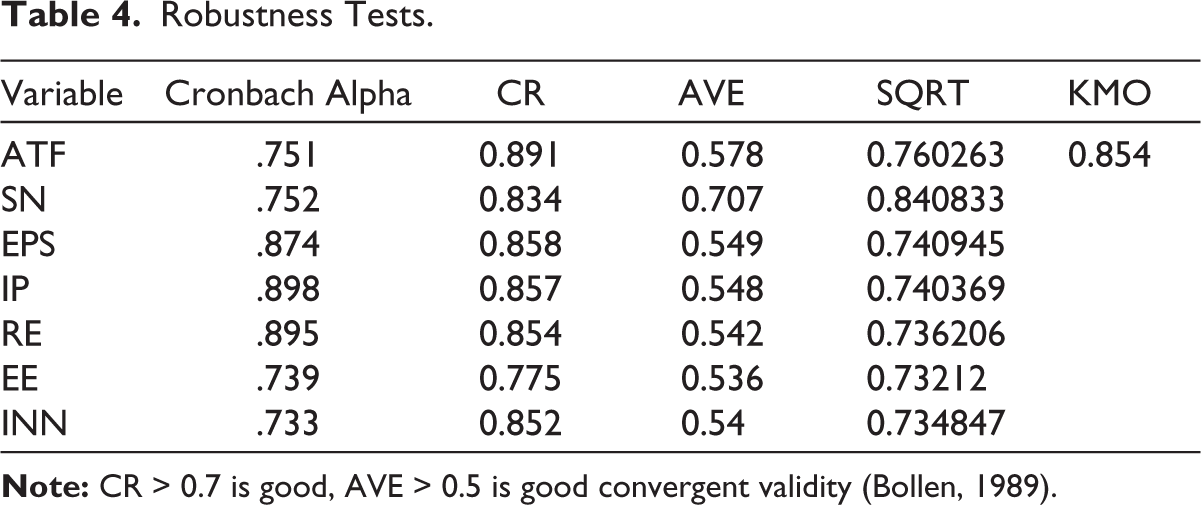
Table 5 presents a correlation matrix among the constructs to provide a detailed examination of discriminant validity within the SEM. The principle for establishing discriminant validity is that the square root of each construct’s AVE should exceed the correlations between that construct and all others, ensuring that each construct is distinct and captures a unique aspect of the model (Hair et al., 2019). The correlation analysis reveals that the highest correlation for ‘ATF’ is 0.368 with ‘SN’ which is lower than the square root of AVE at 0.760. Similarly, ‘SN’ correlated 0.578 with the ‘RE’ below the square root of the AVE of 0.840. ‘EPS’ has a notably high correlation of 0.703 with ‘IP’; however, this is still less than the square root of AVE at 0.741. ‘IP’ and ‘RE’ share a high correlation in the matrix at 0.721, but this value is also below their respective square roots of AVE, 0.741, and 0.736. Finally, ‘EE’ correlated 0.486 with the ‘RE’ under the square root of AVE at 0.732.
Table 6 summarises the model fit indices for the SEM employed in the analysis, providing insights into how well the proposed model aligns with the observed data. The reported indices were the Normed Fit Index (NFI) Delta1, Relative Fit Index (RFI) rho1, Incremental Fit Index (IFI Delta2), Tucker-Lewis Index (TLI rho2), Comparative Fit Index (CFI), and Chi-square divided by degrees of freedom CHISQ/DF. Following the suggestion of Hu and Bentler (1998), a CFI greater than 0.90 indicates a good model fit; between 0.80 to 0.90, a reasonably acceptable fit, lower than or equal to 0.8. In this regard, the reported CFI value was 0.971, which indicated that it is above the suggested cutoff for adequate model fit, meaning it is compatible with the original and hypothetical indices. Furthermore, other fit indices also supported a favourable model fit. Additionally, while the Chi-square divided by the degrees of freedom (CMIN/DF) ratio of 2.572 suggesting a reasonably good fit.
Discriminant Validity.

Model Fit.

The structural model in Figure 2 analyses the influences of various independent variables on the dependent variable, EE, in the Lebanese context. The model incorporates the effects of a moderator, a regulatory environment, a mediator, and innovation policies to examine their roles in shaping the EE. A direct path coefficient of (0.372**) suggests that access to finance significantly affects the Lebanese EE. This finding indicates that enhanced access to financial resources improves entrepreneurship.
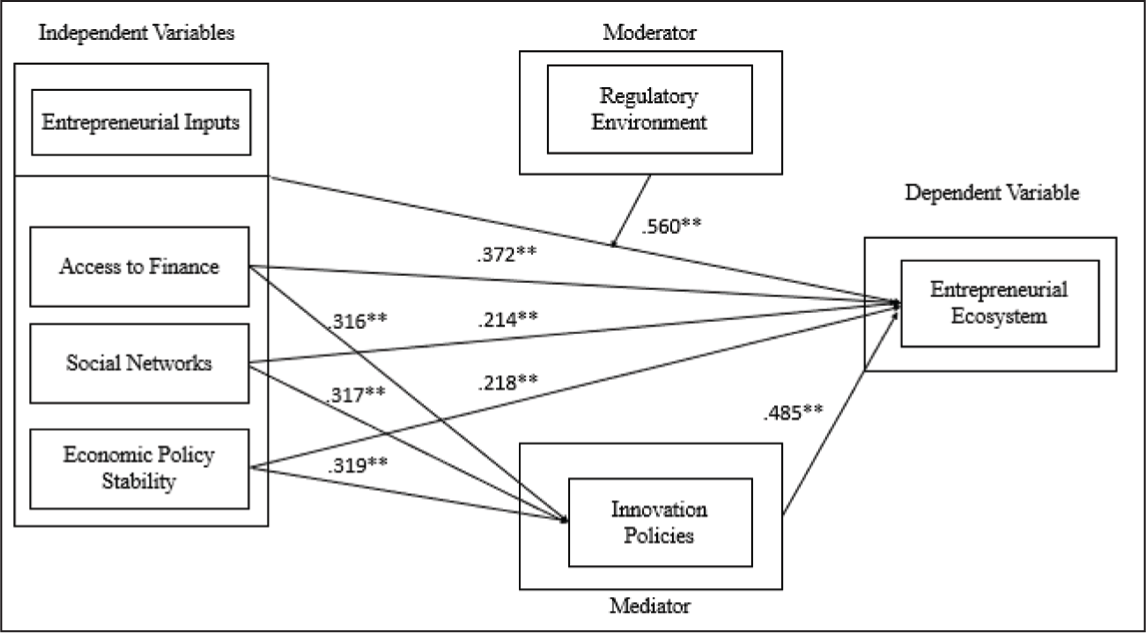
Theoretical data confirm a positive relationship between social networks and EE, with a path coefficient of (0.214**). This is a powerful reiteration of the role of social networks in offering support, resources, and critical information required for entrepreneurial success. However, the findings also showed that economic policy stability tends to have a positive effect on EE with a path coefficient of (0.218**). A coefficient of (0.319**) indicates a positive impact on the relationship between economic policy stability and innovation policy, while access to finance and social networks showed coefficients of (0.316**) and (0.317**) respectively with respect to innovation policies.
With a coefficient of (0.485**), innovation policies significantly mediate the relationship between the independent variables and the EE. This high coefficient suggests that innovation policies are vital to converting resources and stable environments into practical entrepreneurial activities. A coefficient of (0.560**) indicates a powerful positive effect on the relationship between entrepreneurial inputs and EE.
The researchers analysed the factors that influence the EE in Jordan and put them into one structural equation model (see Figure 3). Financial access plays a vital role in Jordanian societies, with a robust positive path coefficient of (0.427**), essential in areas where entrepreneurship is considered an engine of economic expansion. This is significant because the findings suggest financial inclusion efforts can catalyse entrepreneurial activities by delivering start-up and expansion capital. This commitment was highlighted by the significant contributions of social networks (0.334**) and Economic Policy Stability (0.418**).
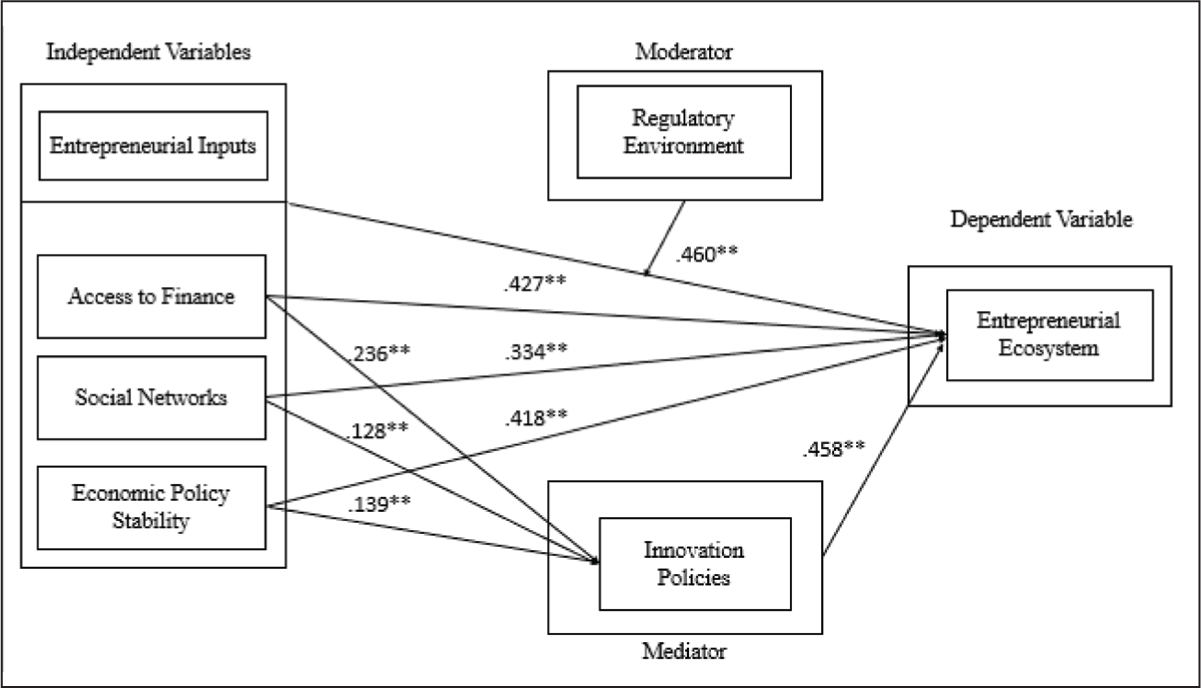
Meanwhile, with a coefficient of (0.236**), the influence of access to finance emphasises their significance in Jordanian communities’ socio-business culture as they provide touchpoints for casual knowledge, mentorship, and investment channels crucial to entrepreneurial achievement. Although weak, the coefficient of (0.128**) affirms the importance of social networks and its positive influence, as the Jordanian government seeks an environment with good economic functioning. Economic policy stability scored a coefficient of (0.139**) in aggregate terms, indicating that Jordanian’s aim to establish an innovative environment is being closely pursued. These relationships suggest that Jordanian strategic initiatives operationalise basic infrastructure, such as finance, networks, and stability, to induce supporting policies across sectors. The considerable mediating effect of innovation policies, with a coefficient of (0.458**), suggests their valuable influence in stimulating Jordanians’ development in EE. However, the regulatory environment has a highly positive effect, with a measurement (0.460**), which means it moderates the relationship between entrepreneurial inputs and EE in the Jordanian community.
Discussion
The results suggest significant positive associations among innovation, access to finance, social networks, economic stability policies, and EE in Lebanon and Jordan. This supports RBV theory, which states that a firm’s competitive advantage and performance are primarily ascribed to its unique bundle of resources and capabilities. EE benefit from access to finance, social networks, and stable economic policy. These push startups and entrepreneurs to lower investment risk and increase access to capital sources, such as financial resources or social networks, for self-sufficiency in the innovation activities on which the economy is built. Second, the regulatory environment that conditions how entrepreneurial inputs translate into ecosystem functions highlights the role of institutional environments, which help determine when and to what extent these resources will be accessed and generate benefits. These results align with the findings of Ogundana et al. (2024), Aloulou et al. (2024), and Ushakov et al. (2023).
The association between financial access and EE supports the first hypothesis. This suggests that as both ecosystems mature and scale, they need access to capital for the health of their ecosystems. Indeed, our findings provide support for the widespread policy recommendations for more start-up loans as a means of easing aspiring entrepreneurs into entrepreneurship and retaining them there, especially in regions such as Lebanon, where this well-worn pathway toward economic diversification has been heavily beseeched by national policymakers. The findings show that confounding continuation requires execution attention regarding startups and small businesses accessing finance for legitimate growth in the Jordanian community, where entrepreneurship initiatives have been built around free zones and innovation hubs by government entities to boost entrepreneurial endeavours. In addition, the positive relationship between access to finance and EE in both communities suggests that financial inclusion is imperative for promoting a conducive, enterprising environment. These results align with those of Van Rijnsoever (2022), Aloulou et al. (2024), and De Bernardi et al. (2020).
The results of this study confirm the second hypothesis, asserting that social networks are positively associated with EE. This finding suggests that strong social networks enable entrepreneurial activities in Lebanon and Jordan. Indeed, the explanatory power of social relationships and entrepreneurial culture in the Lebanese context indicates that entrepreneurs could prove more effective when they capitalise on such networks for knowledge sharing, resource mobilisation, and collaboration (Theodoraki et al., 2022). In a diverse Jordanian community, where many nationalities coexist and many people working in entrepreneurial sectors can also be found, this can aid in accessing advisers, investors, or even customers, thus enhancing one part among others and forming an opportunity for entrepreneurship (De Brito & Leitão, 2021).
These results support the third hypothesis, that economically stable policies develop EE. This provision suggests that stable economic policies facilitate EE. These results speak to the possibility of economic policy stability fostering a sense among entrepreneurs and investors in the Lebanese community that enough faith can be held, even if they fear policy change on one side. Additionally, the Jordanian context is characterised by partial entrepreneurial-friendly policies and regulatory frameworks that, when stable, can contribute to long-term planning and risk-taking among entrepreneurs, enhancing EE growth. These results align with the findings of Longva (2021), Mas and Gómez (2021), and De Bernardi et al. (2020).
The researchers can also confirm the favourable nature of hypothesis four, which states a relationship between access to finance and innovation. This finding demonstrates that the availability of financial resources affects innovation. Our research has shown that in the context of a Lebanese community working on expanding innovative practices and new economic sectors (Ushakov et al., 2023), appropriate access to finance can help startups and entrepreneurs invest in human capital and R&D. In another aspect, the Jordanian community’s desire to become a global innovation destination can allow access to finance among entrepreneurs aiming to start ventures that deal with high-risk, high-reward technological advancements (Weerasekara & Bhanugopan, 2023).
The results for the fifth hypothesis highlight a significant positive relationship between economic policy stability and innovation, suggesting that stable and predictable economic policies foster an environment conducive to creativity and technological advancement. In the case of Lebanon, which is actively seeking to diversify its economy, this finding is particularly relevant. A stable economic policy framework in Lebanon serves as a critical foundation for encouraging entrepreneurs and innovators to develop modern technologies or processes. The Lebanese experience demonstrates that when policies are consistent and supportive of economic growth, they can provide the necessary security and incentives for individuals and businesses to invest in innovative ventures, which can lead to breakthroughs in various industries. These results align with those of Ogundana et al. (2024), Aloulou et al. (2024), and Ushakov et al. (2023). Similarly, in Jordan, the emphasis on a knowledge-based economy requires long-term economic policy stability. By maintaining a stable policy environment, Jordan can ensure that businesses and innovators are more willing to engage in sustained planning and take calculated risks associated with innovation. Stable policies reduce uncertainties, enabling innovators to focus on long-term projects and engage in experimentation, which is critical for fostering a culture of innovation.
The results of this study provide strong confirmation of the sixth hypothesis, which asserts a positive relationship between social networks and innovation, suggesting that robust social networks are critical for fostering innovation. In the Lebanese context, the traditional social structures and close-knit communities, which remain an integral part of society, offer a unique platform for accelerating innovation. These established networks of trust and collaboration provide the foundation for more effective knowledge sharing. As our findings suggest, utilising these social connections to facilitate the exchange of ideas and resources becomes an essential strategy for driving innovation forward. The ability to leverage these networks to rapidly disseminate information and foster collaboration is crucial, particularly in closed or tightly bound communities where traditional values and social cohesion remain strong. In the case of Jordan, a similar pattern emerges, particularly within its vibrant EE. Social networks, especially knowledge-based ones, play a pivotal role in promoting innovation. Jordanian entrepreneurs, operating within these social networks, find a fertile ground for creativity, as collaboration and knowledge exchange enable them to explore new perspectives and refine their innovations. Our findings reinforce the idea that a strong EE—one built on the foundation of dynamic social networks—is vital for sustaining and evolving innovation. The findings are in line with the results of Busch and Barkema (2022), and Ushakov et al. (2023).
Our findings indicate that fostering a culture of innovation plays a crucial role in attracting talent, investment, and opportunities, which in turn enrich the broader EE. This supports the eighth hypothesis, confirming that when innovation is prioritised, it becomes a magnet for creative individuals and external investors who are looking for dynamic, forward-thinking environments. In Lebanon, there is a growing recognition of the importance of innovation and entrepreneurship as key drivers of economic growth and diversification. Similarly, in Jordan, prioritising innovation is essential for the country to position itself as a global innovation hub. The findings highlight the importance of a deliberate focus on creating an environment that not only fosters new ideas but also provides the necessary support for turning those ideas into successful ventures. As Jordan aims to be recognised on the global stage, its commitment to innovation will be key in driving long-term economic growth, enhancing its reputation as a leader in technological advancements, and strengthening its overall EE. The validation of the eighth hypothesis underscores the transformative power of innovation in shaping the future of entrepreneurial environments in both Lebanon and Jordan. This aligns with the findings of Mira-Solves et al. (2021), Ushakov et al. (2023) and Aloulou et al. (2024).
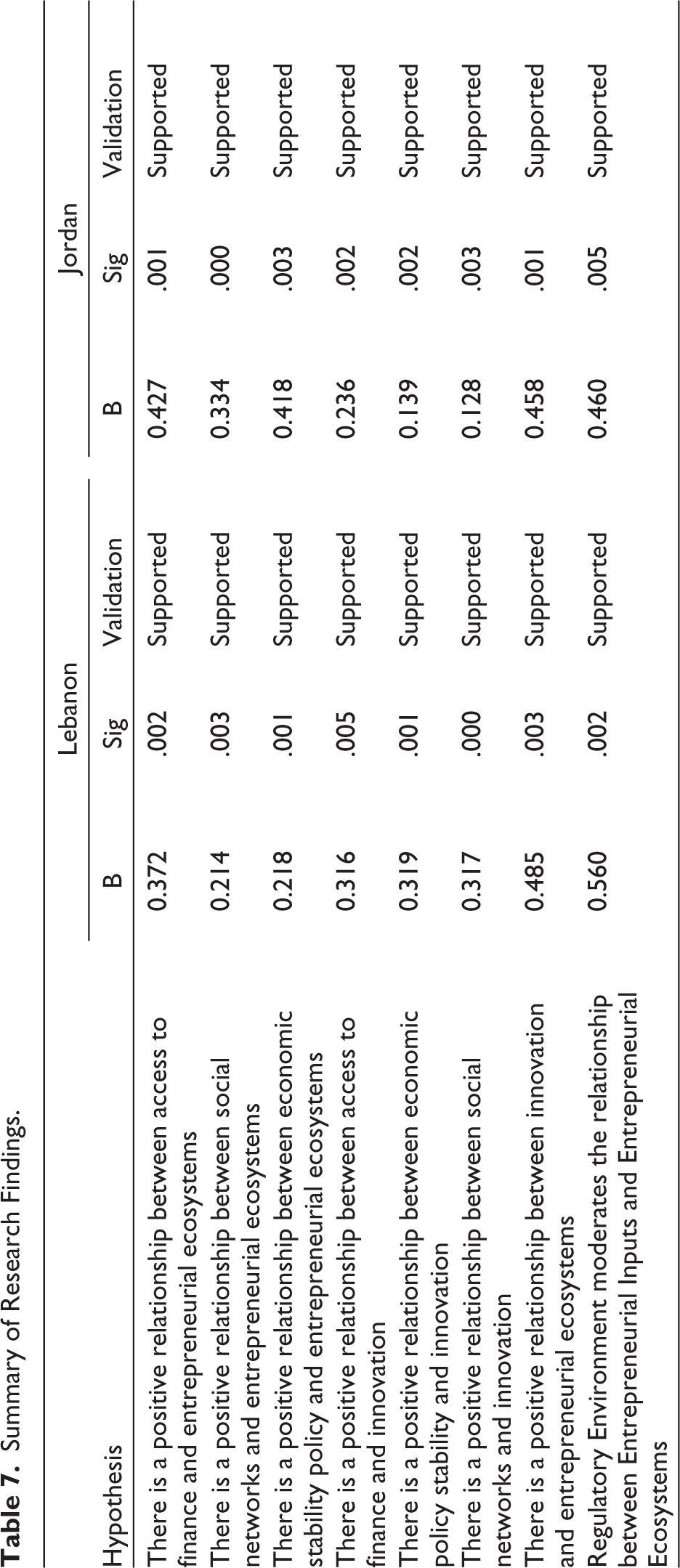
The results of the study also validate the last hypothesis, which is consistent with the idea that the regulatory environment moderates the relationship between entrepreneurial input and ecosystems (Mira-Solves et al., 2021). This result indicates that the regulatory regime dramatically influences the effectiveness of entrepreneurial input in promoting an EE at regional and community levels. Our findings are particularly relevant in Lebanon, where recent regulatory reforms to improve the entrepreneurial climate and encourage new ventures suggest that a conducive motivational setting can translate entrepreneurial inputs (access to finance and social networks) into flourishing ecosystems. Similarly, this reactive regulatory structure could be adapted to a more beneficial one for all parties that are part of an EE, which is expected to appear more dynamic (Chan et al., 2021). The results are summarised in Table 7.
Summary of Research Findings.
Conclusion, Limitations, Recommendations and Further Research
To better understand these interconnections and their impact on EE, this study examines how entrepreneurial inputs, including access to finance, social networks, and economic policy stability, influence the critical variables driving entrepreneurship in Lebanon and Jordan. This research further validates that these inputs are strongly related to the vibrancy of EE by controlling regulatory environments. These results confirm the benefits of RBV theory and emphasise how critical internal resources drive more innovative entrepreneurship and make them competitive. These inputs are combined in both countries to support an environment that encourages entrepreneurship and spillover into economic growth and diversification.
In this study, SEM yields interpretive solid power, which comes at a cost: it assumes linearity and normality that may have occurred under nonlinear dynamics among the variables. Additional theoretical frameworks, including alternative approaches to complex systems, nonlinear dynamics, and interactions should be considered in future research. Policymakers need tailor-made financial policies to cater to the demands of entrepreneurs in all areas. The digital infrastructure for e-commerce and mobile banking would also enable better access to finance. More formal mentorships and cross-functional business sector collaborations could help support their growth through less traditional social networks. Further research could explore the impact of emerging technologies, such as Artificial Intelligence and blockchain, on EE, examining how these technologies influence the regulatory environment and access to resources. Comparative studies in other regions have highlighted the unique elements of EE in both countries, thereby providing a global context. Additionally, longitudinal studies could offer insights into the evolution of these ecosystems over time, especially in response to global economic change and crises.
Footnotes
Authors Contribution Statement
Khodor Shatila worked on the methods and data analysis, Nirjhar worked on the introduction and literature review, and Sondes worked on discussing the findings, contributions, and limitations of the research.
Consent Form
The researchers obtained consent from all study participants after explaining the reasons for this study. They also obtained consent from the participants to publish the survey results anonymously without mentioning any personal details, and to use the data collected only for academic purposes. Consent forms were collected digitally using Google Forms.
Data Availability Statement
Anonymized Data are available upon request of the author.
Declaration of Conflicting Interests
The authors declared no potential conflicts of interest with respect to the research, authorship and/or publication of this article.
Funding
The authors disclosed receipt of the following financial support for the research, authorship, and/or publication of this article: The study was funded by the authors.