




Abstract

This photo essay is the outcome of an exhibition, with the same title, that was held at Jadunath Bhavan Museum and Resource Centre (JBMRC, a unit of the Centre for Studies in Social Sciences, Calcutta), from 24 February to 31 March, 2022. 1 Drawing on their family archives, the exhibition presented a selection of photographs taken by the remarkable twin sisters, Manobina Roy (1919–2001) and Debalina Mazumder (1919–2012), to show how their passion for the camera image opens up new vistas in the field of art, salon and family photography of that period. Pioneers among early women photographers in India, their work stands testimony to the many documentaries and aesthetic uses of the camera within the domestic worlds they inhabited. The exhibition used their photographs to both reconstruct their life stories and to reflect on an undeterred commitment to photography as a creative vocation.
In 1931, on their twelfth birthday, the two sisters were gifted their first Brownie cameras and began to learn photography from their father, Binod Behari Sen Roy. An educationist, Freemason and amateur photographer, who had become a member of the Royal Photographic Society of Great Britain in 1908, Binod Bihari Sen Roy was then serving as Head Master of the Meston High School in Ramnagar, capital of the princely state of Banaras. He gave the twins the gift of solid home education, initiated them in both indoor and outdoor photography, and even set up a dark room at home to train them in developing their own photographs. The girls soon moved on to using a Rolleicord, a double-lens camera with the viewfinder on top, making composition easier. While growing up in Ramnagar, the kind of freedom and encouragement that their father provided them in pursuing their passion for photography, laid the strong foundation for careers in photography. The magic of the medium, through the alchemy of light and silver halides, enthralled them and sparked an engagement that spanned almost six decades. Even after colour photography arrived, they preferred the tonalities of black and white photography and brought out the best in the medium through their technical expertise, artistic vision and aesthetic sensibility.
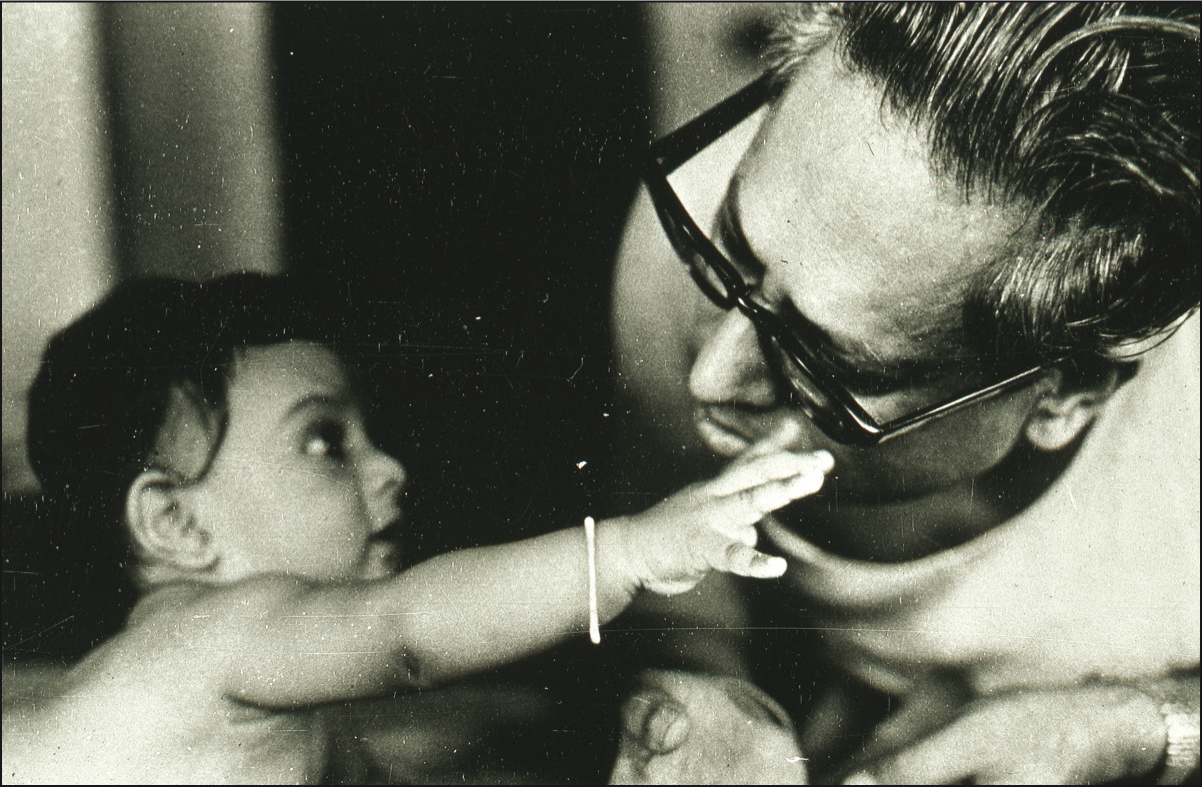
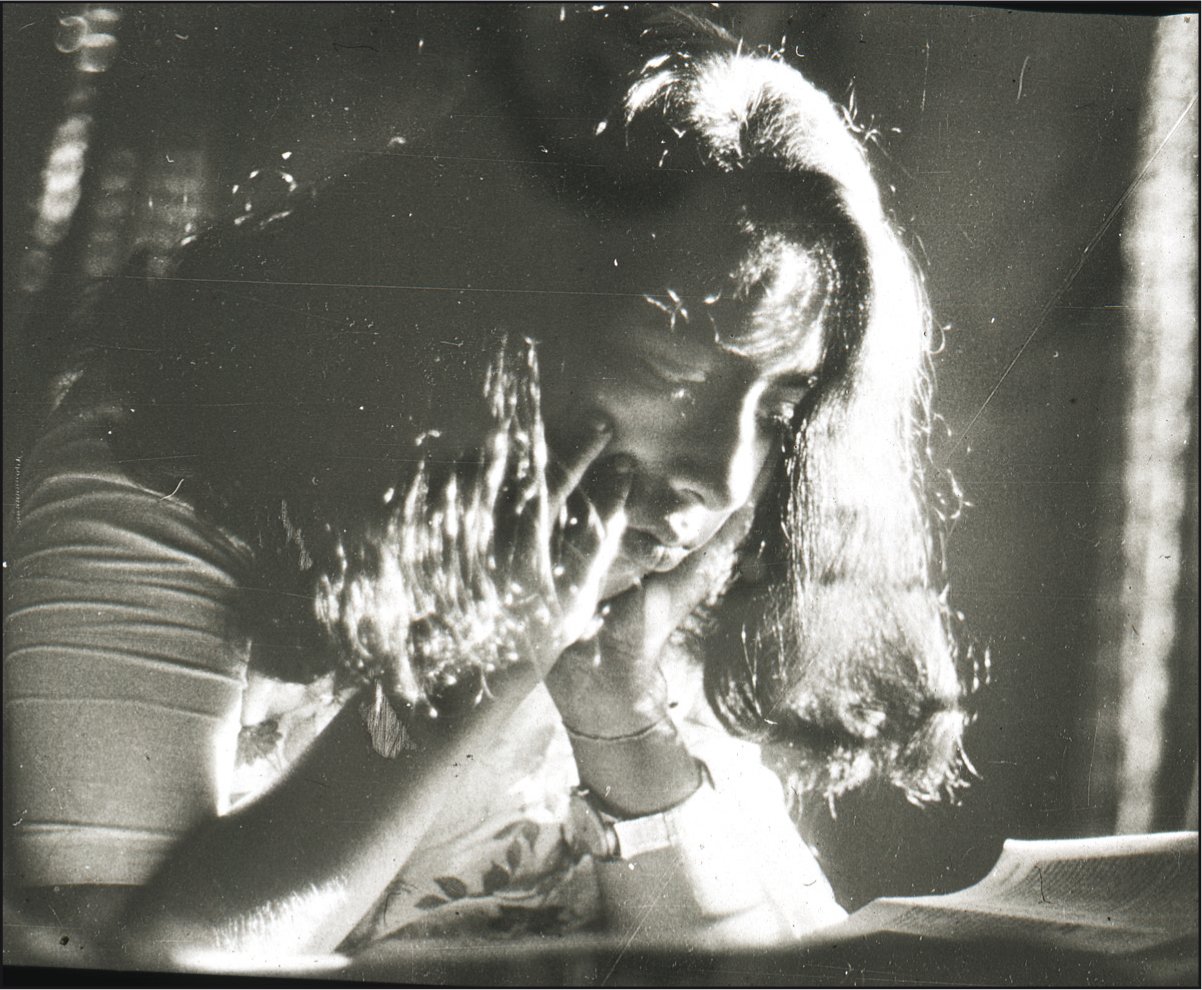
When the sisters began taking photographs, ‘staged’ and ‘posed’ photographs were the norm, and their early works reveal their proficiency with this approach. However, over the 1940s and 1950s, they became adept at taking strikingly composed candid pictures (Photos 3 and 4). If one were to reflect on the range of themes of their photographs, it is the space of the home and the family that all along took centre place in their practice and allowed them to nurture a distinct genre of intimate domestic photography. The women of the family—aunts, cousins, the sisters themselves, their daughters and friends—emerge as some of the most important subjects in the photographs of Debalina and Manobina. From their teenage years at Ramnagar into later married lives, they lavished their photographic attention on older and younger women of the family, whom they portrayed in the freedom of home and family environments and in carefully framed outdoor settings. Both the sisters’ works were an open resistance to the strictures of studio photography, especially to the forced and humiliating practices that women had to undergo for matrimonial photography. The sisters believed that the best photographs were created in natural light and in surroundings where the subjects were comfortable and unselfconscious. In the process, they succeeded in making their act of photography the reverse of the studio experience.
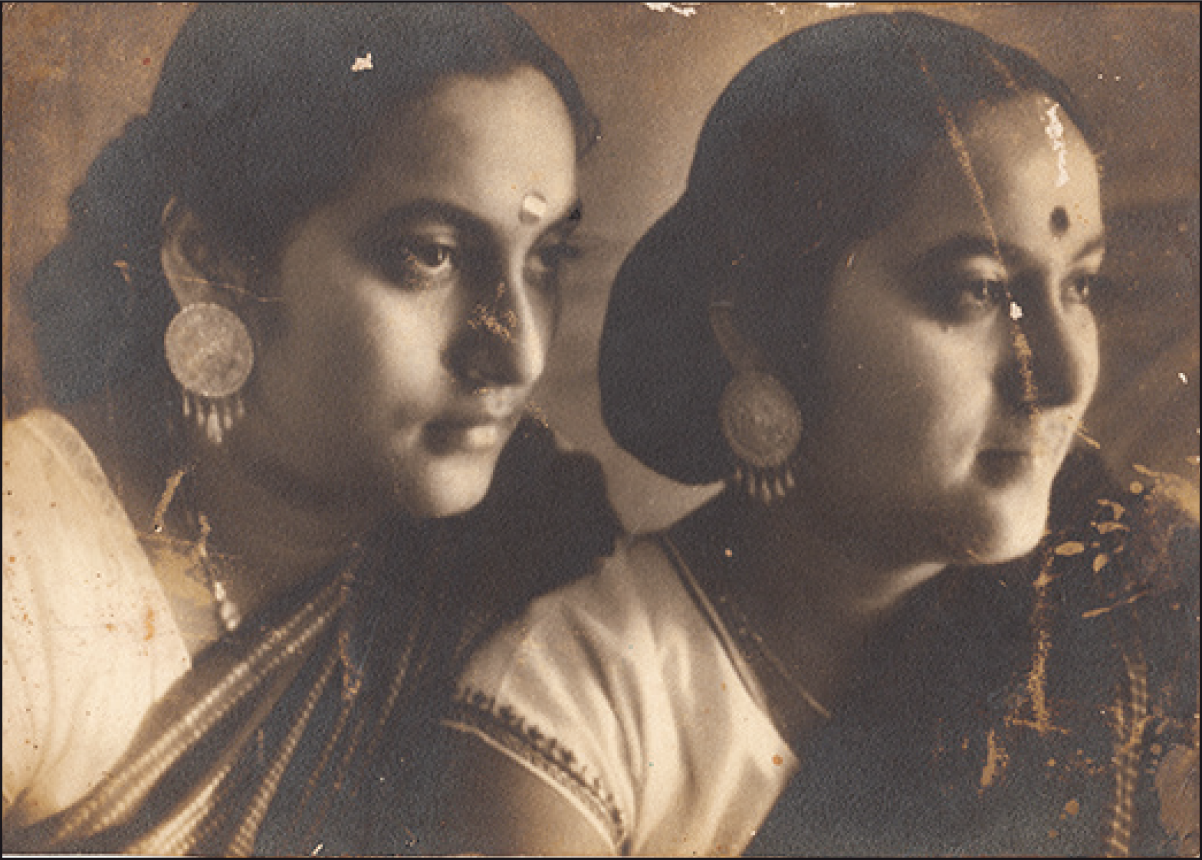
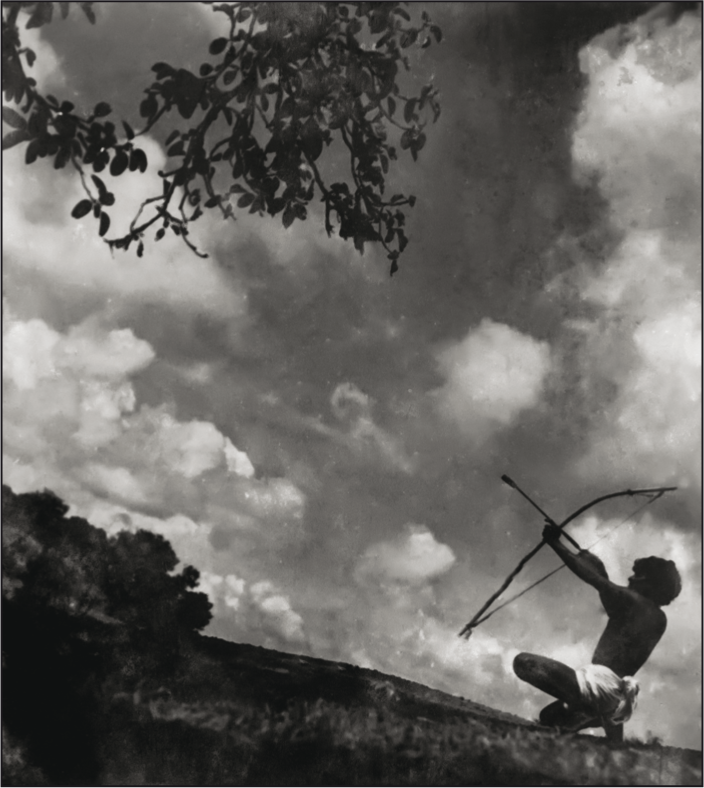
Over time, their cameras moved through generations, from their daughters, nieces and nephews to the next generation of grandchildren, and also came to embrace a larger family of pets, whom they often photographed in close bonding with children. Within this genre of domestic photography that they perfected, each image reflected their skills in composing in natural light, dexterity in capturing the right moment as well as the patience required in waiting for it. After they got married—Manobina in 1937, and Debalina in 1946—their photographic pursuits had to be accommodated within growing responsibilities as wives and mothers amidst new households in Bombay and Calcutta. This is when the home and the family emerged even more as the key site of their photographic practice. At the same time, the few opportunities that came their way for outdoor photography were put to full use, whenever they travelled within India or abroad. From the time before their marriage to the decades after, both Debalina and Manobina displayed a special flair for playing with light, shadows and silhouettes, where the subjects (whether they be an unknown tribal archer (Photo 7) on the outskirts of Santiniketan, or the women and children of the family) become the props within these carefully crafted and calibrated compositions. Looking over this corpus of their photographs, what is particularly striking is how the twins (identical in appearance, see Photo 1) often deliberately blended their identities into each other and chose to subtly double each others’ compositions and frames. This is evident both from the time of their growing up together at Ramnagar, where one of the photograph albums carries their composite names, ‘Lina-Bina’ and the authorship and identity of many of the images from these years become impossible to ascertain, and from their later post-marriage years, when many of their compositions continue to play out this conscious act of doubling. Never travelling anywhere without their camera and seldom missing an occasion to photograph, even as they went about their everyday domestic lives, the sisters also mirrored each other in combining photography with their work as meticulous archivists, selecting, cataloguing, captioning and preserving an expanding body of images.
In different periods of their lives, we can also notice attempts at bringing their work outside the home and family into the public domain. From the Ramnagar years, Debalina and Manobina began publishing their work in magazines (one of the earliest publications was in the Bengali journal, Sachitra Shishir, in 1940) and shared images through networks like the Postal Portfolio movement to reach out to a peer group and a larger audience. At a time when organised education in photography was non-existent, the Postal Portfolio movement offered photography clubs a new platform of outreach, exhibitions and critical peer evaluation. Started in 1940 by the United Provinces Amateur Photographic Association (UPAPA), under the enthusiastic direction of Syed Hyder Hussain Razavi, the idea of the Postal Portfolio was taken up eagerly by salons and clubs all over the country. Debalina and Manobina’s official entry into the domain of salon photography came with their joining the Portfolio Club of the UPAPA. Due to her relatively late marriage, Debalina had the opportunity to actively pursue her contributions to Postal Portfolio prints and exhibitions in different parts of the United Provinces, and had become a known name in these circles. In a more limited way, Manobina, during the first years of her marriage in Calcutta, also kept going her associations with these amateur photography circles and continued to send some of her photographs of children in the family as titled compositions for exhibitions. However, from the 1940s, the demands of marriage and growing families took over both their lives and pushed their photography more firmly into the inner spaces of the home and family.
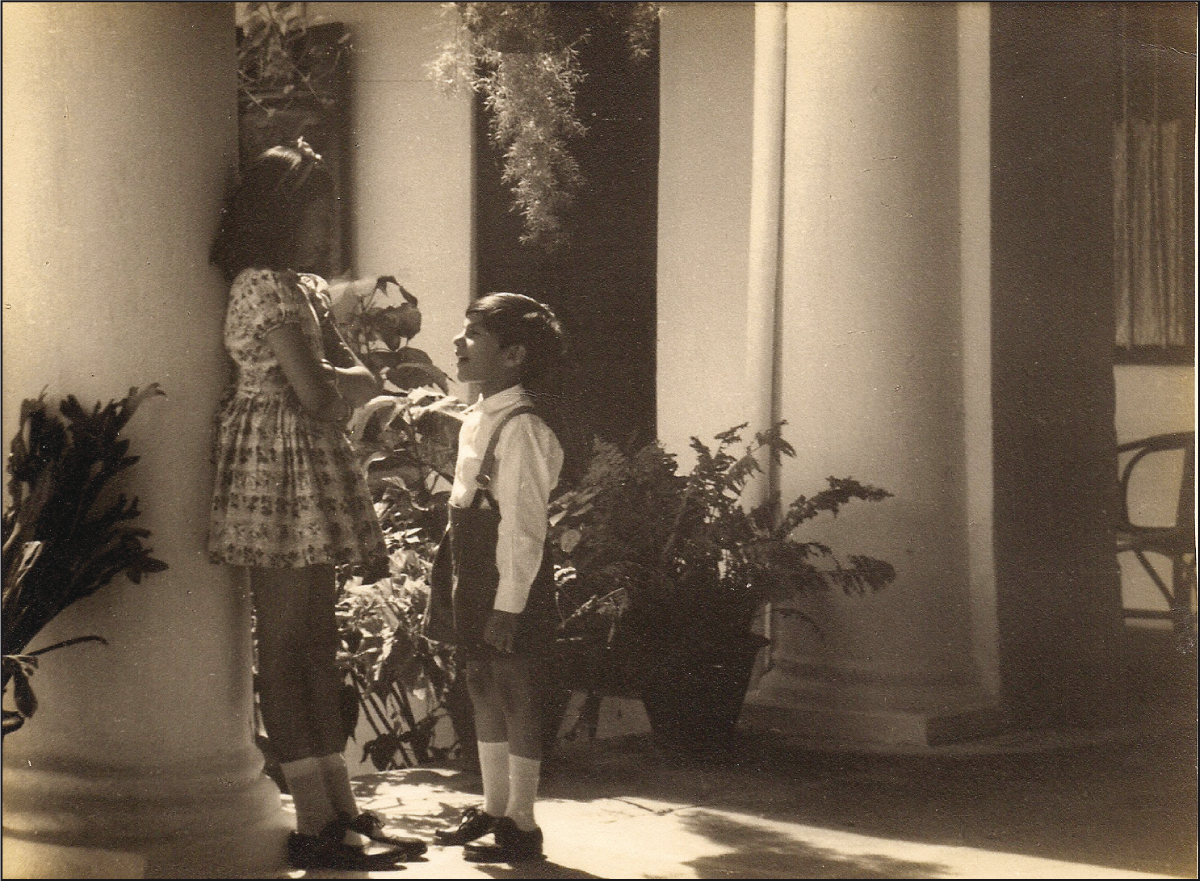
Manobina Roy was married when she was only seventeen to the famous filmmaker, Bimal Roy. After their marriage, during the 1940s, they lived at different homes in south Calcutta when her first two daughters were born. After Bimal Roy’s move to Bombay, the family home became the beautiful Godiwala Bungalow on Mount Mary Road, Bandra. The interiors and outer porch of this home became the chosen setting for some of Manobina’s finest photographic compositions, with her younger two children becoming favourite subjects (Photo 2). Bombay marked a different phase in her photographic oeuvre. This is where she created endless posed studies of babies and family pets, and of groups of children on different family occasions. She also documented the childhood and growing-up years of her children, photographing them as they reached adulthood and began to have children of their own. As Sabeena Gadihoke writes, ‘Manobina’s primary interest was to explore and experiment with light and shadows. At times, subjects seemed less important than her desire to stage them against a larger mise-en-scene she wanted to capture’ (Gadihoke, 2020).
When Debalina moved to Calcutta in 1946, after her marriage with the industrialist, Nitish Chandra Mazumder, the sisters spent some years together in the city until Manobina moved to Bombay around 1950. Similar to her sister, Debalina was busy caring for her family but she managed to make a niche for herself with her photography. Living initially in a joint family, she found herself in constant demand as a skilled photographer, among the older generation, many of whom had never before been photographed, and for every small and big family gathering. Her daughter Kamalini remembers how her ‘mother stepped in with her camera and fulfilled many a dream…. All of a sudden, friends and family had weddings and other social occasions well documented, with aesthetic candid moments captured for posterity’ 2 (Photo 5). She also recalled how her father supported his wife’s passion for photography by buying her cameras from his trips abroad—a Yashika, a Rolleiflex and later even a Canon movie camera—and making it a point of taking the family out on holidays once a year, where Debalina could indulge her love for landscape photography.
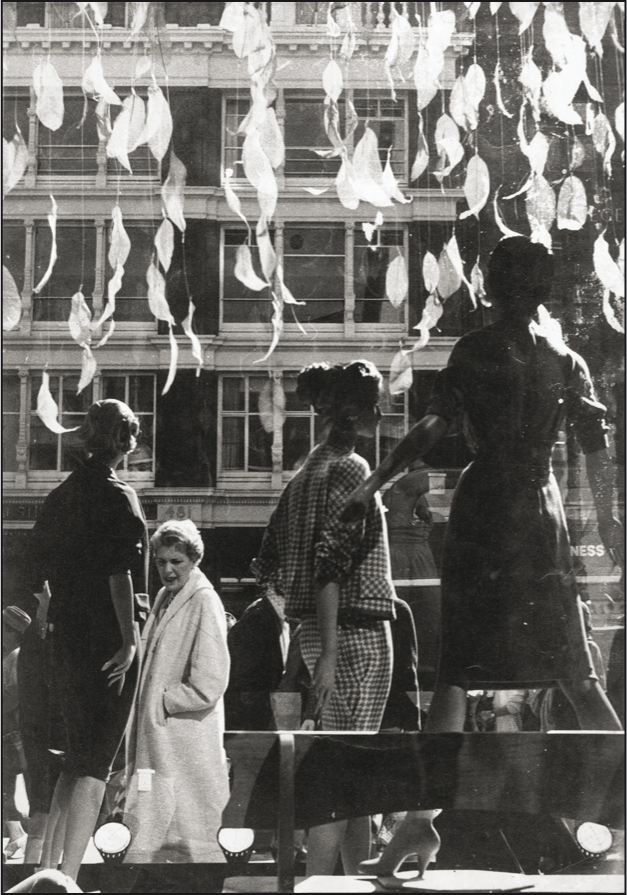
Constrained by their family and social lives in Calcutta and Bombay, in 1959, the twins had the occasion to immerse themselves in a more spirited jaunt of outdoor photography. The opportunity came when Manobina Roy with her entire family accompanied Bimal Roy to a film festival in Moscow and then joined Debalina and family in London, where they had come for her son’s medical treatment. With a total of eight children, they rented a home in London for six months, before travelling on to Paris and Geneva, spending every minute of their free time in parks, theatres and shops, with cameras hanging, ever-ready, over the twins’ saris. Their London stay of 1959 would be etched out in their memory as the most rewarding time in their lives as photographers—this is when they took to the full liberties of street photography, capturing public gatherings and crowds at the Speakers’ Corner, Hyde Park, contrasting these with the isolation of the elderly in the same park. They also closely followed the exchange of gazes between shop window mannequins and women staring at them (Photos 8 and 9). In doing so, they were able to engage with the street and with experiences not limited to their own lives. When she had interviewed them in the late 1990s, Sabeena Gadihoke recalls that the sisters both said that, in another time, they would have chosen to be photojournalists. Manobina took a short step in this direction in the 1960s when she published a few photo essays of her London and Moscow trip in the Illustrated Weekly of India.
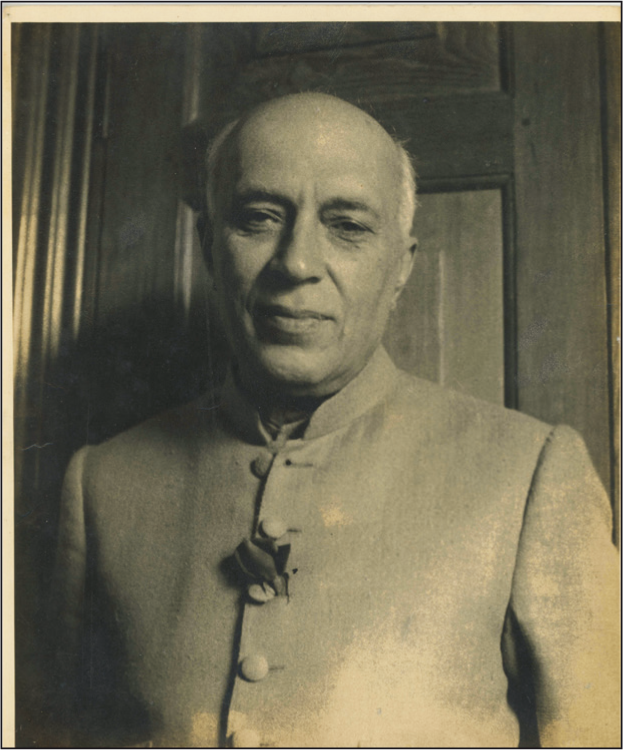
There were occasionally other dimensions too in their opening out into the field of public photography. For instance, the sisters, from a very young age, had the opportunity of seeing many eminent people of those times. There was one occasion, in the late 1930s, when they had gone with their parents to attend a convocation at Banaras Hindu University, where they encountered stalwarts such as Annie Besant, Sarojini Naidu and Pandit Madan Mohan Malaviya. Manobina’s photograph of Sarojini Naidu speaking at this meeting merges with her recollection of being mesmerised by her speech and voice. Later, in the 1950s, as Mrs Bimal Roy, she did not miss the chance of photographing famous public figures she had the privilege of meeting, like Jawaharlal Nehru (Photo 10), Vijaya Lakshmi Pandit or Krishna Menon. Her portraits of these figures stand out as among the best in the genre of portrait photography of these years.
Manobina and Debalina, 1940. Photographer: Bimal Roy. Copyright: Joy Bimal Roy.
Aparajita and Joy at the porch of the Godiwala Bungalow, Bombay, c.1960. Photographer: Manobina Roy. Copyright: Joy Bimal Roy.
Shakha-Prashakha, grandfather and grandchild, Calcutta, 1975. Photographer: Debalina Mazumder. Copyright: Kamalini Mazumder.
Portrait of youngest daughter Ranjini reading, Calcutta, 1984-85. Photographer: Debalina Mazumder. Copyright: Kamalini Mazumder.
Bridal make-up for a family wedding, 1960s. Photographer: Debalina Mazumder. Copyright: Kamalini Mazumder.

A Santhal Archer, Santiniketan, 1936. Photographer: Manobina Sen Roy. Copyright: Joy Bimal Roy.
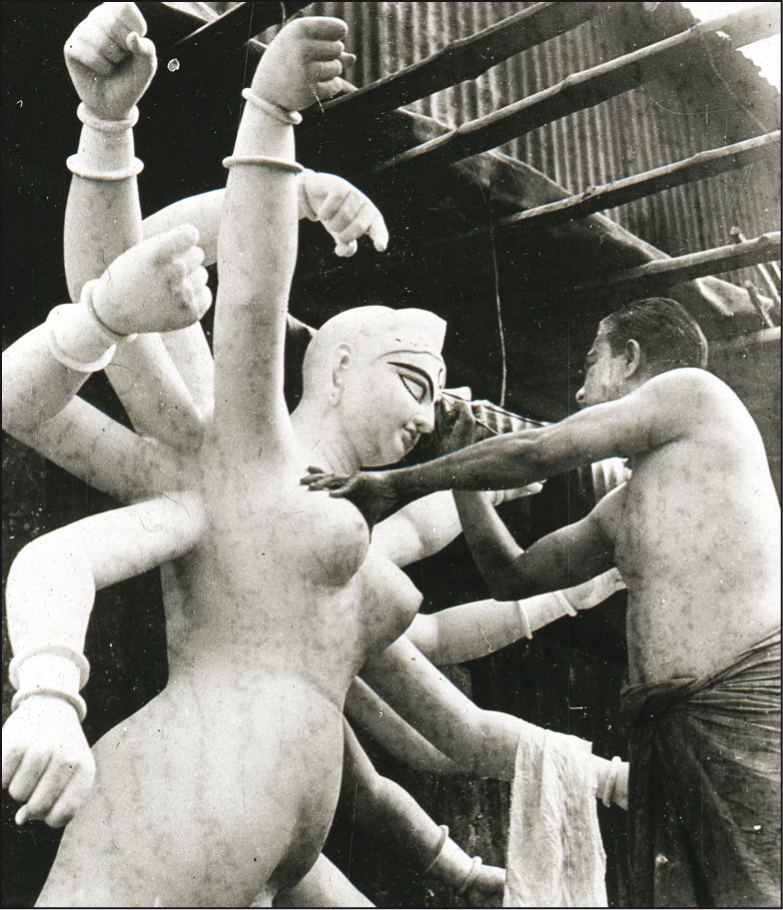
Making of Durga idol, Kumartali, Calcutta, 1960s. Photographer: Debalina Mazumder. Copyright: Kamalini Mazumder.
Speakers Corner, Hyde Park, London, 1959. Photographer: Manobina Roy. Copyright: Joy Bimal Roy.

Temptations, London, 1959. Photographer: Manobina Roy. Copyright: Joy Bimal Roy.
Jawaharlal Nehru, c.1960. Photographer: Manobina Roy. Copyright: Joy Bimal Roy.
During the 1950s, the other twin, Debalina, was also attempting to chart her own path in public photography. From this period, we have a large set of her photographs of Calcutta’s Durga Puja, where we find her closely documenting the festival, following the process from the creation of the image of the goddess to the immersion. One of these photographs appeared in a piece she wrote in the Sunday Statesman of Calcutta (Photo 6). Debalina’s Durga Puja article became so popular that it was later reprinted for an English school primer. Her wish to make a full book out of this series, however, never materialised. Of the two sisters, it was Debalina who came to later take up professional positions within public bodies. Some years after she married and moved to Calcutta, she was sought out by some of her fellow photographers in the UPAPA circle but had to turn down an offer to join the Photographic Association of Bengal (PAB). She returned to the organisation only at the age of 60, when her children were grown up and became its President for three years. Some of her contemporaries at PAB were photographers such as Stanley Jepson, T. Kashinath, Dr Thomas, Sunil Janah and Shambhu Shaha. She was also a member of the Ladies Forum of the Federation of Indian Photography (FIP), which brought out a magazine called The Viewfinder. Debalina even tried to organise a salon ‘by women for women’ with the 20 or so who had signed up for the Ladies Forum, but the venture failed to take off.
There is much more scholarly research to be done on these remarkably gifted and strong-willed women, exceptional for their times, when it was a rarity to have women photographers taking pictures on such a wide range of themes and subjects. Their sensitive compositions and aesthetic sensibilities were as good as or even better than those of their male counterparts and could vie for the same attention in a national and global circuit. That, despite their accomplishments, they never received the recognition they deserved was largely due to two factors. Not only were they amateur photographers (the amateur was always considered inferior to the professional) but were also women in a heavily male-dominated field of public photography. Now, looking back on their work that had long remained unseen in their family collections, we see how Debalina and Manobina stake a place for themselves in the history of twentieth century Indian photography, not just as the equal of men, but as women celebrating their domesticity and revelling in the differently gendered lens they brought to the cameras which became their inseparable, life-long companions. The exhibition Twin Sisters with Cameras and this essay are but small tributes to these pioneering women and their gifted ways of seeing with the camera.