




Abstract
The socialization process in knowledge management (KM) has been in discussion for more than a decade, and most research has focused on socialization among employees in developing organizational knowledge. But this article tries to explore the socialization aspect in customer knowledge management (CKM) in a customer-centric industry, retail using social media. The case study of a leading Indian retailer is implemented using netnography, a research technique that draws data from computer-mediated communication channels. The communications of the retailer to and from customers through Facebook, Twitter and Foursquare are collected, codified and analysed. The findings explored the customer knowledge gaps (CKG) in the social media interactions, based on which a CKG model was developed. The study gives a new insight for retailers which can be used to evaluate their strategies using customer knowledge from social media apart from customer relationship management (CRM) and personal interactions. The information that customers share via social media is substantial and important for organizations like retailers, and it is high time to appropriately value this customer knowledge as it can be effectively used for enhancing future marketing strategies.
Keywords
Introduction
All organizations are striving hard to have a competitive advantage in the concerned industry in terms of products, processes, people and technology, and how they effectively manage them depends on the knowledge created, stored, transferred and disseminated with regard to the products/services and processes. Hence, knowledge management (KM) is believed to be the key driver of performance in organizations. Knowledge resources are the only resources to consider if one wishes to differentiate oneself from the competition (Drucker, 1964). The KM has undergone explicit research since the early 1990s, most of which focused on KM processes and enablers. Nonaka and Takeuchi (1995) defined the ‘tacit’ and ‘explicit’ forms of knowledge and scope of creation and transfer of the former to latter. Knowledge is information combined with experience, context, interpretation and reflection (Davenport & Prusak, 1998).
In organizations, knowledge often becomes embedded not only in documents or repositories but also in organizational routines, processes, practices and norms (ibid.; Natti & Ojosalo, 2008). Nonaka and Takeuchi (1995) also explained the four-stage spiral model of KM that included socialization, externalization, combination and internalization (SECI). Socialization is a very important process in KM as far as the creation, sharing and dissemination of tacit knowledge is concerned, and the concept of customer knowledge management (CKM) actually originates from the socialization aspect of KM. Although KM is discussed widely from the employee perspective, the customer knowledge is also equally important for industries especially retail, which are highly customer-centric. The CKM basically focuses on three main aspects—knowledge for customers, knowledge about customers and knowledge from customers. These aspects can seriously influence the strategic decisions, which can bring changes to the products/services and processes resulting in a positive impact on sales. Customer knowledge can be obtained from the databases and customer relationship management (CRM), but the personal interactions at the shop floor and online communications are more important in terms of knowledge creation as such real-time information is more valuable in identifying the present and future trends rather than past data (García-Murillo & Annabi, 2002).
Customer knowledge is important for a more timely design of new products and services, competitive intelligence and customer loyalty (ibid.; Yung-Hsin & Chao-Ton, 2006). The CKM can also result in strategic customer knowledge outcomes such as customer satisfaction, increased sales, improved customer retention, revelation of new customer knowledge needs, firm acquisition of knowledge specific to customers and patents with intellectual capital (Davenport & Klahr, 1998; Gibbert, Leibold, & Probst, 2002; García-Murillo & Annabi, 2002; Zack, McKeen, & Singh, 2009). However, customer knowledge does not constitute a strategic advantage by itself; it needs to be managed (Hollebeek, 2013; Taherparvar, Esmaeilpour, & Dostar, 2014).
The growth of web 2.0 technologies has led to a colossal quantity of information posted by consumers on media such as forums, blogs and product reviews. This type of consumer-generated information gives opportunity to the firms to identify customer tastes, preferences and responses on their products and services (Urban & Hauser, 2004).This study is based on the online communication of customers of a leading Indian retailer, Shoppers Stop. Shoppers Stop is one of the top retailers in India focusing on both traditional and online sales and they are active on social media from 2006. The study has made a genuine attempt to analyse the online interaction of Shoppers Stop with their customers from a KM perspective. The findings identify the existence of customer knowledge gaps (CKG) in the CKM process via social media.
Customer Knowledge Management
There are several sources of customer knowledge. Some pertain to structured data that is gathered from transactions, while others come from interactions with customers. With personal interactions, firms can ask customers directly to acquire an idea of the source of problems, preferences and needs (Chua & Banerjee, 2013; García-Murillo & Annabi, 2002). The implementation of CKM is based as a strategic process in the contribution from Gibbert et al. (2002), where one can turn passive product receiver customers into active ‘empowered’ knowledge partners (Stefen et al., 2013). But, practically, this strategic dimension is often neglected and an operational dimension focusing on the customer knowledge flows is derived (Wilhelm, Gueldenberg, & Güttel, 2013) based on Salomann, Dous, Kolbe and Brenner (2005), Gibbert et al. (2002), García-Murillo and Annabi (2002) and Gebert, Geib, Kolbe and Brenner (2003). This basically includes three customer knowledge flows:
Knowledge for customers: A continuous knowledge stream from the company to customer is necessary to support the customer’s buying cycle (García-Murillo & Annabi, 2002; Salomann et al., 2005). The company can give information on various attributes and features of products/services that can positively influence the customers’ buying decision. Both continuous relationship management and a constant flow of knowledge between companies and customers are necessary. This includes, for example, the company sharing information with the customers concerning their product, market and distributors (García-Murillo & Annabi, 2002; Wilhelm et al., 2013). Knowledge about customers: Customer relationships need to be maintained as a result of increased competition and decreasing customer loyalty (Gebert et al., 2003). These pieces of information are often managed and analysed in CRM systems. Knowledge about customers is primarily used when trying to determine what motivated and which sales strategies initially urge the customer to come to the company. It not only includes the demographic customer data (such as their name, contact address, etc.) but also provides the company with information concerning previous customer transactions (Wilhelm et al., 2013). Knowledge from customers: The customer acts as the idea generator, which is referred to as ‘prosumerism’ by Gibbert et al. (2002). The customer’s needs and complaints can be integrated into the value-adding process. This enables the company to think about new strategies and positions based on the customer’s knowledge streams (Wilhelm et al., 2013). This is achieved after a set of CKM processes such as knowledge revealing, knowledge sorting and knowledge levelling (García-Murillo & Annabi, 2002). These processes are more relevant in situations of ‘personal interactions’ with customers on the shop floor. Knowledge revealing can be referred to as the continuous process of knowledge sharing where the customer reveals the information that s/he knows about the product, brand, competitors, shopping experience, tastes, preferences, satisfaction and so on. The interactions in online communities also reveal a large amount of such information. In the Knowledge sorting process, the salesperson sorts the knowledge relevant to that particular individual regarding product characteristics, functional attributes, information about common problems, substitute products, maintenance information, quality records, competitive products and options (ibid.). The third step, knowledge levelling, involves reaching an understanding of the needs and perspectives of both parties after completely sharing mutual information needs. This can be achieved during the shop floor interactions but is rather difficult in the case of online interactions. But this can be achieved up to a certain level where the negative responses and complaints could be completely handled until the customer shows a positive attitude towards the products/services.
With advances in online media and technologies, customers are increasingly sharing their opinions about products on various online platforms such as product reviews, bulletin boards and social networks (popularly referred to as user-generated content (UGC; Tirunillai & Tellis, 2012). Therefore, the role of social media is critical in managing customer knowledge flows. The most important challenge lies in knowledge sorting and knowledge levelling, as the CKGs are high in online CKM process.
Customer Knowledge Gaps
CKG can be defined as the gaps between existing customer knowledge and the customer knowledge a firm expects to have (Parasuraman, Zeithaml, & Berry, 1985; Tseng, 2016; Zeithaml, Berry, & Parasuraman, 1988). Challenges in regard to CKG are common in many firms, where they do not have sufficient levels of current customer knowledge, and such challenges are especially prominent in online CKM as the information is unstructured and substantial. In order to bridge these CKGs, firms should primarily focus on acquiring customer knowledge in order to understand the reasons why customers buy the products they offer because customers possess a wide range of skills, experiences and interests (Blazevic & Lievens, 2008; Davenport, Harris, & Kohli, 2001; García-Murillo & Annabi, 2002; Wayland & Cole, 1997). Organizations can learn through collaboration with their customers and thus make it possible to meet customer’s expectations and eventually improve corporate performance (Prahalad & Ramaswamy, 2004). The CKGs are more significant in social media marketing, as the knowledge flow is unstructured and many organizations are still at the nascent stage in effectively managing customer knowledge via social media.
Social Media
Kaplan and Haenlein (2010) defined social media as ‘a group of internet-based applications that build on the ideological and technological foundation of Web 2.0, and that allow the creation and exchange of User Generated Content’ (Ngai, Moon, Lam, Chin, & Tao, 2015, p. 771). Using these applications, people can create, share and exchange information in a virtual community, which has helped to shape people’s connections with others via different social media platforms (Colliander & Dahlen, 2011; Ngai et al., 2015). This resulted in one-to-one mass customization, replacing the one-to-many marketing promotion model in business transactions, creating entirely new business models (Hanna, Rohm, & Crittenden, 2011; Ngai et al., 2015; Peters, 1998). By observing what consumers write in the online communities about products in a category, the firm could gain a better understanding of marketing opportunities, market structure, competitive landscape and features discussed about its own and its competitors’ products (Feldman, Goldenberg, & Netzer, 2010). Moreover, in this digital age, online customer reviews have become an important yardstick by which marketers formulate their marketing strategies. Various qualitative research methods such as text mining, opinion mining, network analysis and netnography are used to explore and analyse the rich content of social media for marketing research.
Objectives of the Study
The literature review gives a clear understanding of the importance and role of social media for generating, sharing and using relevant customer knowledge which can be used by business to enhance their processes especially in the area of marketing and sales. Shoppers Stop—being a leading Indian retailer—has a strong presence in social media through various services such as Facebook, Twitter, Pinterest, Instagram and Foursquare. The objectives of this study are
to analyse how Shoppers Stop uses Facebook, Twitter and Foursquare for providing knowledge for, about and from customers and to identify the major CKGs that hinder effective CKM via social media and conceptually develop a CKG model based on the findings.
Viewer interaction with Shoppers Stop is significantly low on Pinterest, Instagram and YouTube, and so these three platforms are not considered for analysis in the current study.
About Shoppers Stop
An Indian retailing company promoted by the K. Raheja Corp Group, Shoppers Stop, started in 1991 with its first store in Andheri, Mumbai. Shoppers Stop began by operating a chain of department stores under the name ‘Shoppers Stop’ in India. Specifically, Shoppers Stop stores retail clothing, accessories, handbags, shoes, jewellery, fragrances, cosmetics, health and beauty products, home furnishing and decor products. Shoppers Stop launched its e-store with delivery across major cities in India in 2008. The website retails all the products available at Shoppers Stop stores, including apparel, cosmetics and accessories.
On 10 April 2008 in Barcelona, Shoppers Stop was awarded ‘the Hall of Fame’ and ‘the Emerging Market Retailer of the Year Award’ by World Retail Congress. Shoppers Stop always sets benchmarks, achieves new records and celebrates success. Their customer centricity and relentless pursuit to set new benchmarks in retail have arguably made them the leading chain of department stores in India. Shoppers Stop also launched its mobile application in February 2016. In 2016, Shoppers Stop operations expanded to 81 stores in 38 cities that is Ahmadabad (two stores), Aurangabad, Amritsar, Bengaluru (ten), Mangalore (two), Bhopal, Chennai (three), Coimbatore, Agra, Delhi (five), Chandigarh, Durgapur, Gurgaon (two), Ghaziabad (two), Hyderabad (five), Indore, Jaipur (three), Jalandhar, Ludhiana, Kolkata (five), Kolhapur, Goa, Latur, Lucknow, Thane, Mumbai (nine), Panvel, Meerut, Mysore, Noida (two), Pune (six), Surat, Siliguri, Vadodara, Vijayawada, Raipur, Raipur Airport and Visakhapatnam.
Shoppers Stop is selected for the study since it is rated as the best retailer in India for the year 2015 and is also very active in social media for the past several years. Shoppers Stop is among the first retailers in India to acknowledge and use the potential of digital and social media to connect and engage with its customers. Over this past year, the brand has increasingly focused on social media and the digital space to market its products. Indeed, Shoppers Stop has a well-entrenched presence on major social media platforms such as Facebook, Twitter and YouTube.
Methodology
The article uses the method of netnography, a qualitative research technique that draws data from computer-mediated communication channels proposed by Kozinets (1998). As a marketing research technique, netnography uses the information publicly available in online forums to identify and understand the needs and decision influences of relevant online consumer groups. Because it is both naturalistic and unobtrusive—an unprecedentedly unique combination not found in any other marketing research method—netnography allows continuing access to informants in a particular online social situation (Kozinets, 2002). Netnography provides the means for accessing, gathering and interpreting computer-mediated textual discourse between anonymous or pseudonymous participants on a public forum (Lugosi, Janta, & Watson, 2012). Unlike methods such as interviews or focus groups, netnography is used to represent a context not confounded by the researcher’s presence (Sigala, 2012). For tracking the marketing related behaviours of online communities, netnography is a standalone method. Kozinets (2010) suggests that researchers should look for online communities that are (a) relevant, they relate to your research focus and question(s); (b) active, they have recent and regular communications; (c) interactive, they have a flow of communications between participants; (d) substantial, they have a critical mass of communicators and an energetic feel; (e) heterogeneous, they have a number of different participants and (f) data-rich, offering more detailed or descriptive rich data. Kozinets suggests that the researcher should take a cautious position on the issue of whether the online environment is a private or public medium and should also contact community members and obtain their permission (informed consent) to use any specific postings that are to be directly quoted in the research (Bowler, 2010).
Considering all the aforementioned factors, the study has identified the social networking sites, such as Twitter, Facebook and Foursquare. Shoppers Stop is also active on YouTube with their promotional videos, but viewers’ comments are too low for meaningful use in the current study and the scope of identifying the three dimensions of CKM would be low.
Specifically, therefore, the collected data consist of the following:
100 conversations (tweets and replies) of Shoppers Stop from Twitter ( 100 posts contributed by Shoppers Stop for customers ( 100 visitors’ posts on Facebook ( 100 tips submitted by Shoppers Stop customers in Foursquare (
These posts are considered either information provided by Shoppers Stop to the public or the feedback of customers on various aspects of products/services at Shoppers Stop. It was found that, on average, the number of posts contributed by Shoppers Stop for a period of 6 months is 100 with an average from 15 to 20 posts per month. The response from customers is mostly based on these posts. On the other hand, visitors’ posts on Facebook and conversations on Twitter exceed 100. But as the information for, about and from customers is compared, it was deemed best to stick to maintaining a common number of data units (100) for methodological consistency. Due to ethical concerns, data are collected purely from public forums without collecting any personal information about the participants in the community, and none of the postings is quoted in the research. The analysis is thematic in nature, where the basic content of posts/conversations/tips is analysed. This is performed based on the customer knowledge aspects specified in the existing literature. Frequency distributions are used to represent the pattern of the outcome.
Data Analysis
Shoppers Stop on Facebook
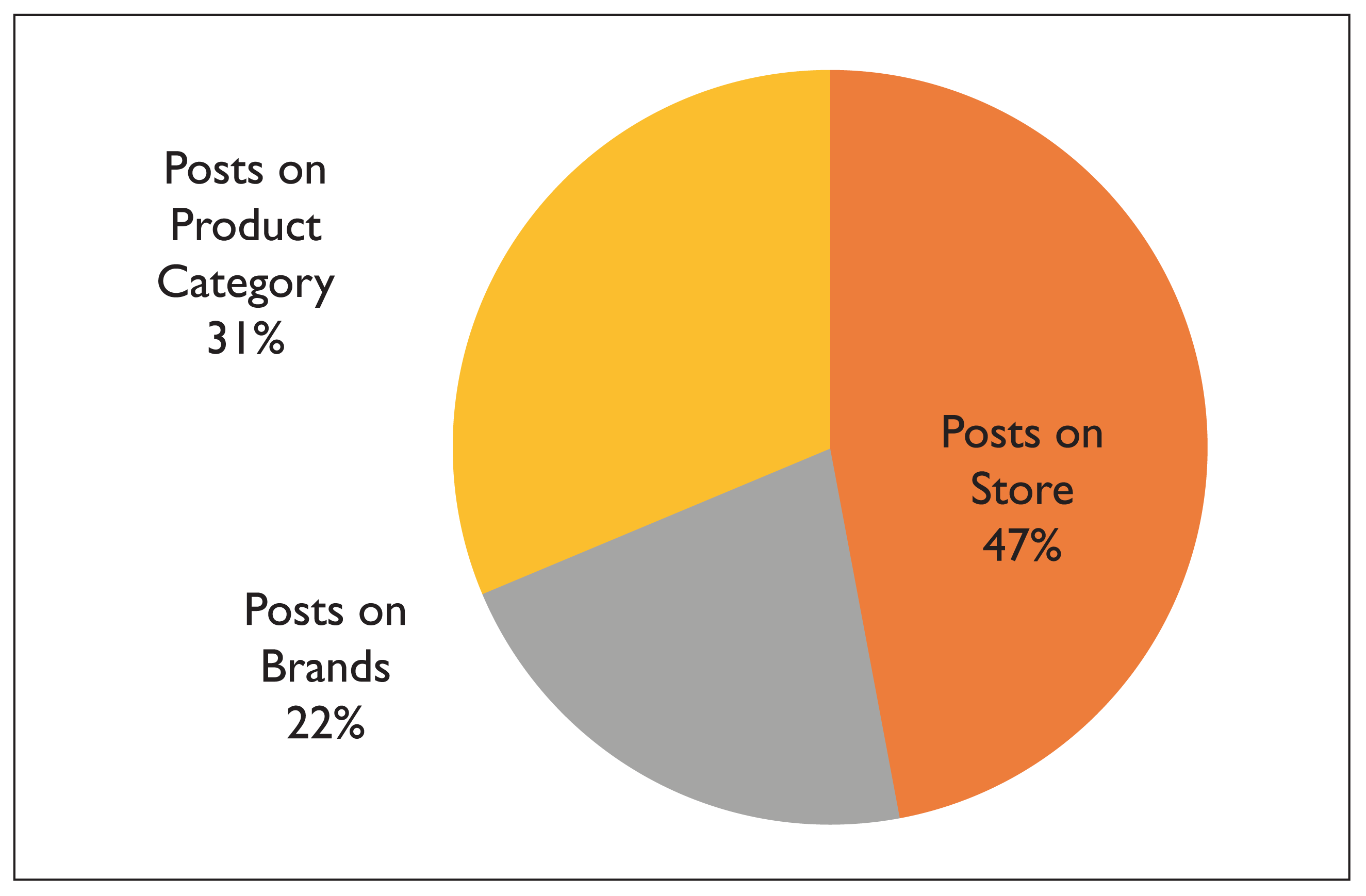
Shoppers Stop uses Facebook to provide knowledge to customers on various aspects of the store, including its products/services through its wall posts. The analysis of posts reveals that they focus mainly on three aspects—the store, particular brands and product categories. The percentage distribution of the number of posts on these three aspects and corresponding subcategories are illustrated in Figure 1.
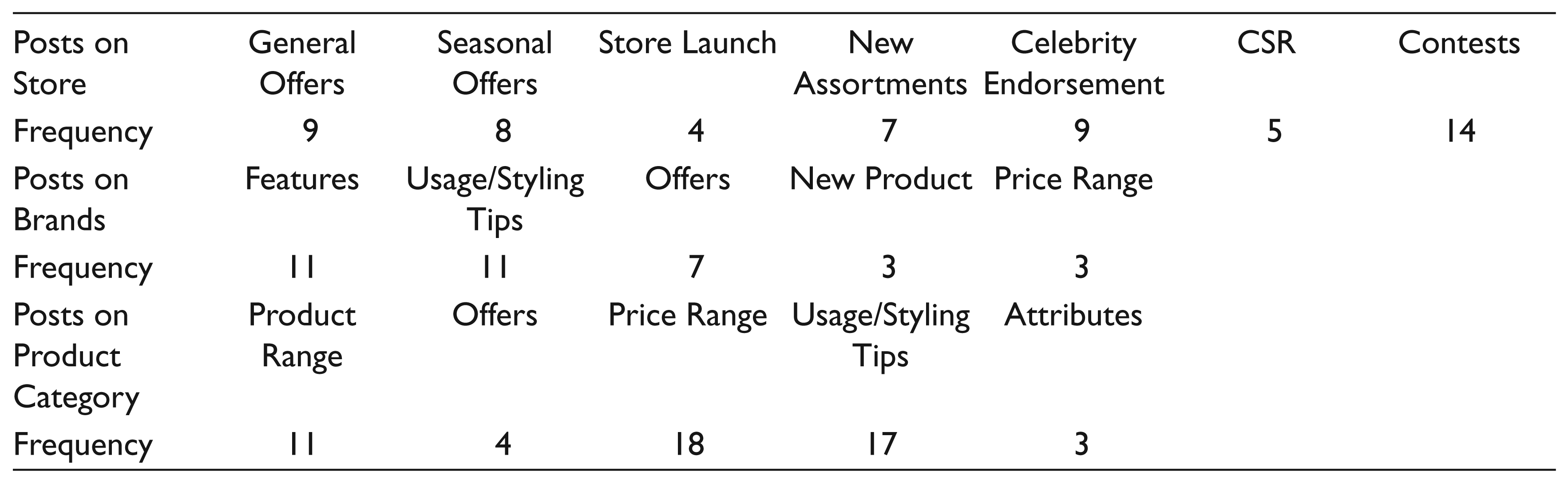
After analysing and segregating the posts, it was found that 47 per cent of the posts are on stores, 31 per cent on product category and the remaining 22 per cent on particular brands. The posts on store include information on general offers, seasonal offers, new store launch, new assortments, celebrity endorsements, corporate social responsibility (CSR) activities and customer contests. Out of this, a plurality of posts (14 posts) are on contests, which shows that contest is a major store promotion tool for the retailer, followed by general offers and celebrity endorsement (9 posts each). The posts on brands include information such as brand features, usage and styling tips, brand offers, new products under the brand and price range. The majority of the posts on brand focus on features and usage/styling tips (11 posts focus on both features and styling tips). Only seven posts focus on brand offers. Now considering the posts on product category, a plurality of posts (18 posts) were on the price range of a product category, followed by usage/styling tips (17 posts) and range of products (11 posts; Table 1).
Apart from the various aspects of store promotion, brands and product categories communicated by Shoppers Stop to the customers, customer preferences towards these posts are reverted through the likes. Table 2 shows customer preferences towards posts on store, brands and certain categories of products. The posts on store promotion have the most ‘likes’, with 15 such posts garnering more than 80 ‘likes’.
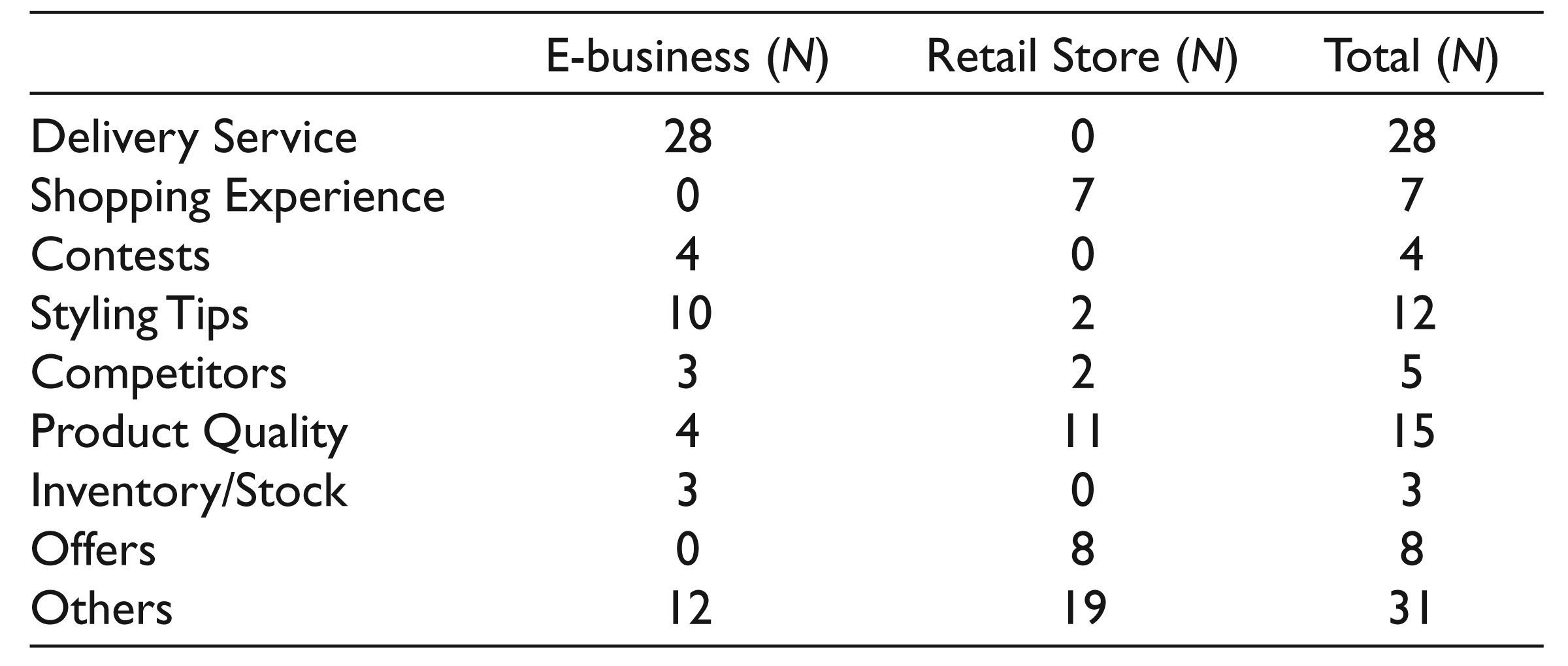
Customer feedback on the shopping experience, both online and offline, is shared through the visitors posts on Facebook. These posts give interesting insights not only on customers’ knowledge on various aspects of Shoppers Stop’s products/services but also on aspects like competitors. Fifty-nine percentage of the visitors’ posts are on e-business while 41 per cent are on retail stores. The posts discuss mainly aspects of retailing such as delivery service, shopping experience, contests, styling tips, product quality, offers and often other aspects, such as ambience, hygiene, customer care and so on. Posts related to delivery service are purely on online business, and posts on shopping experience are purely on offline retail stores. It is interesting to note that the highest number of visitors’ posts is on delivery service of Shoppers Stop online store (28 posts). This seems to indicate that in e-business the greater concern of customers is delivery service quality. Second to delivery service aspects came styling tips for the products mentioned in online sources. On the other hand, with posts on offline retail stores, the focus is mainly on product quality, followed by offers and shopping experience. The posts on unique aspects (such as store hygiene, behaviour of service executive, parking facility and location) are classified under ‘others’ in Table 3. The results show that customers seem keen on even the more minor aspects of the store, which is often not seriously considered by Shoppers Stop themselves. The knowledge of customers thus may be higher than what retailers generally expect (Table 4).
Distribution of Posts on Shoppers Stop’s Facebook
Preference (Likes) on Facebook Posts

Distribution of Facebook Visitors’s Posts

Details of Shoppers Stop Facebook Visitors Posts
Shoppers Stop on Twitter
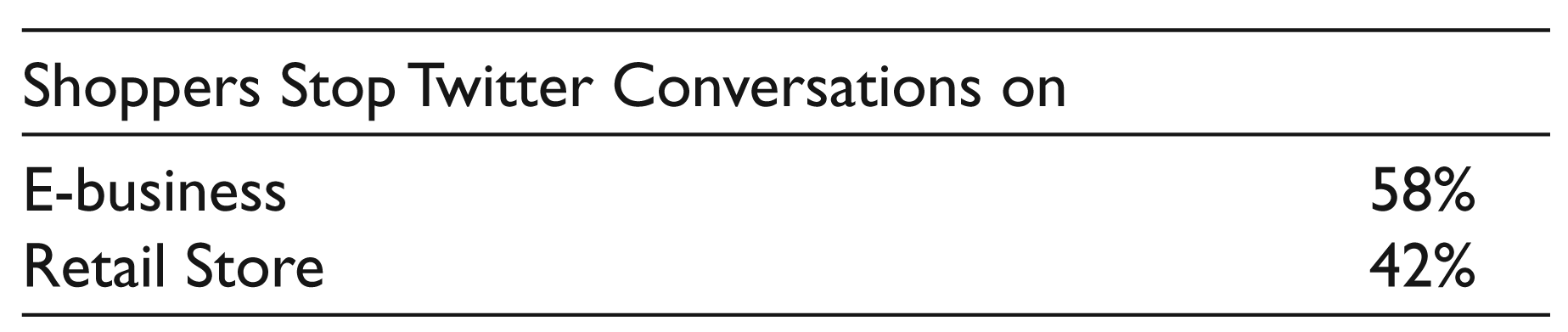
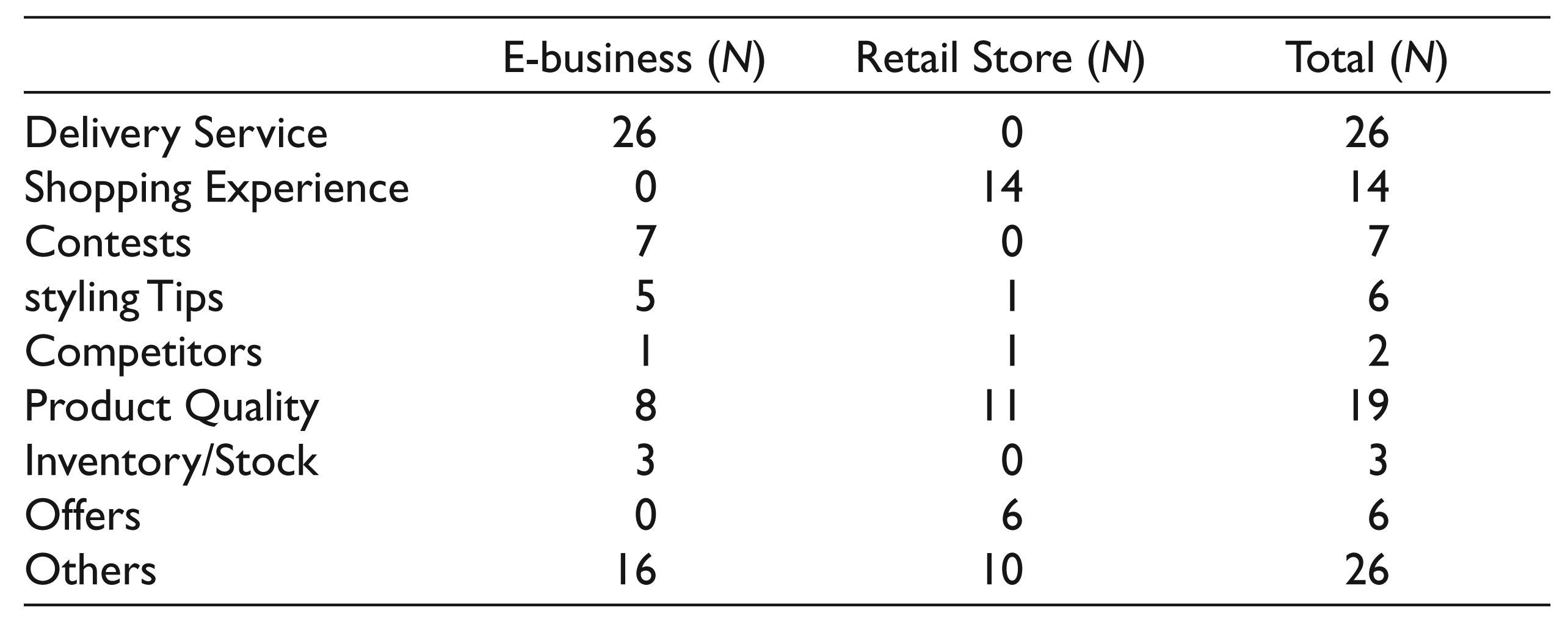
The tweets of Shoppers Stop include both company tweets on the promotion of store, brand and product category and conversations (tweets and replies) between Shoppers Stop and its followers. As the company tweets were almost the same as the Facebook promotional posts, they were not considered in this study so as to avoid duplication. Most valuable knowledge for, about and from customers were received from the conversations. As outlined earlier, 100 conversations were selected and analysed based on the topics that were discussed. As with visitors’ posts on Facebook, posts related to delivery service are purely on online business while posts on shopping experience are purely on offline retail stores (Table 5).
It is interesting to note that the highest number of visitors’ posts are on delivery service of the Shoppers Stop online store (26 conversations), followed by other aspects on e-business, such as inventory management, competitor products, refund and website management (Table 5). There are conversations on product quality as well. On the other hand, with regard to Twitter conversations on the offline store, the major focus was on shopping experience followed by product quality (see Table 6 for conversations on other aspects). The results show that the customers have good understanding on product quality, customer service, delivery of product, stock management, competitors and even minor aspects of billing, refund, website management and so on. The customers expect clear feedback on their queries regarding delivery quality and it is nearly impossible to placate them with excuses, such as lack of stock or unavailability of personnel. The customers are well aware of how e-businesses are managed and they often tend to compare the services and products of many online retail services that are available. These comparisons concern product prices, quality and offers. These are mentioned in some of their conversations and are included here within the ‘others’ category (Table 6), totalling 26 of the 100 selected Twitter conversations.
Distribution of Twitter Conversations
Shoppers Stop Twitter Conversations
Shoppers Stop on Foursquare
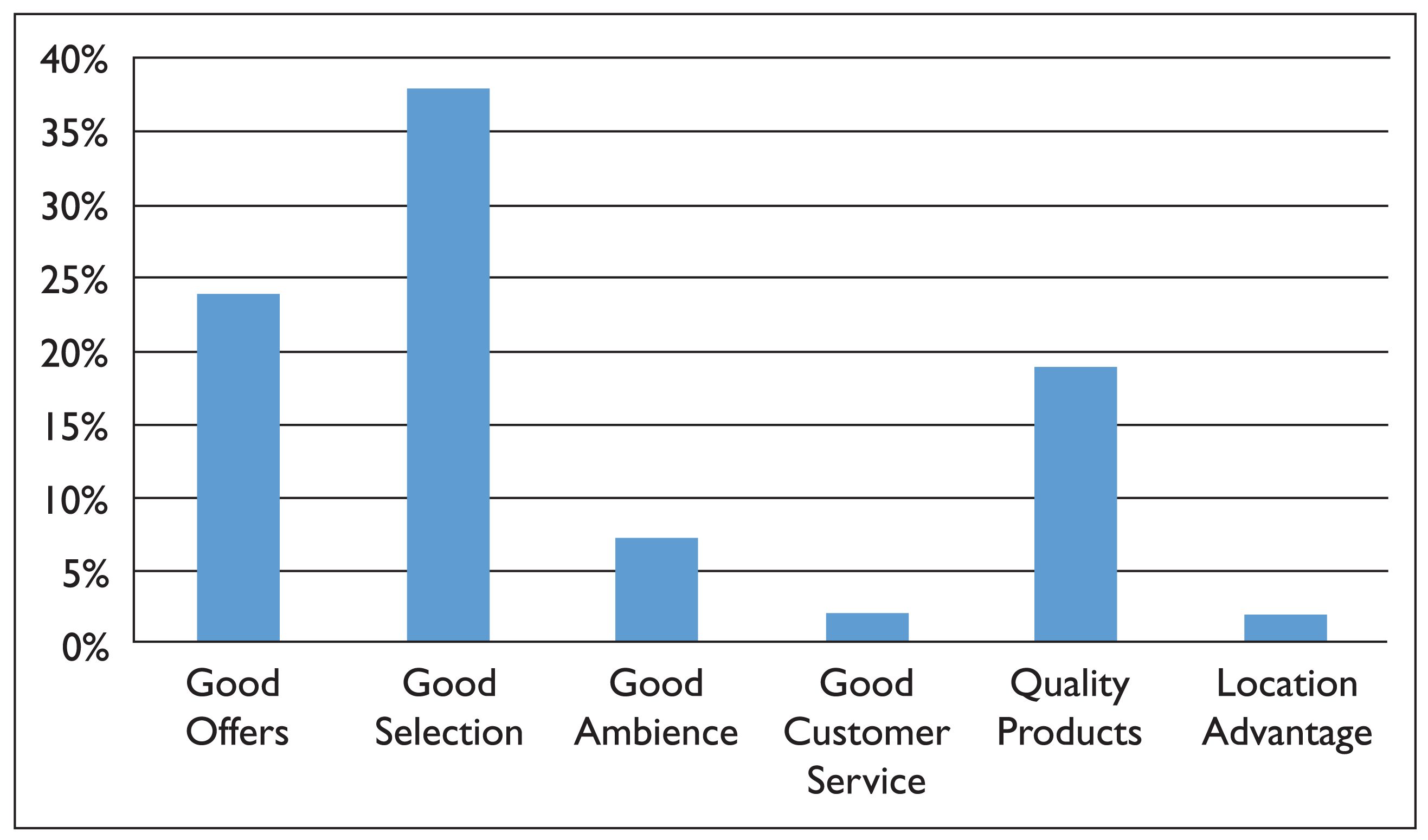
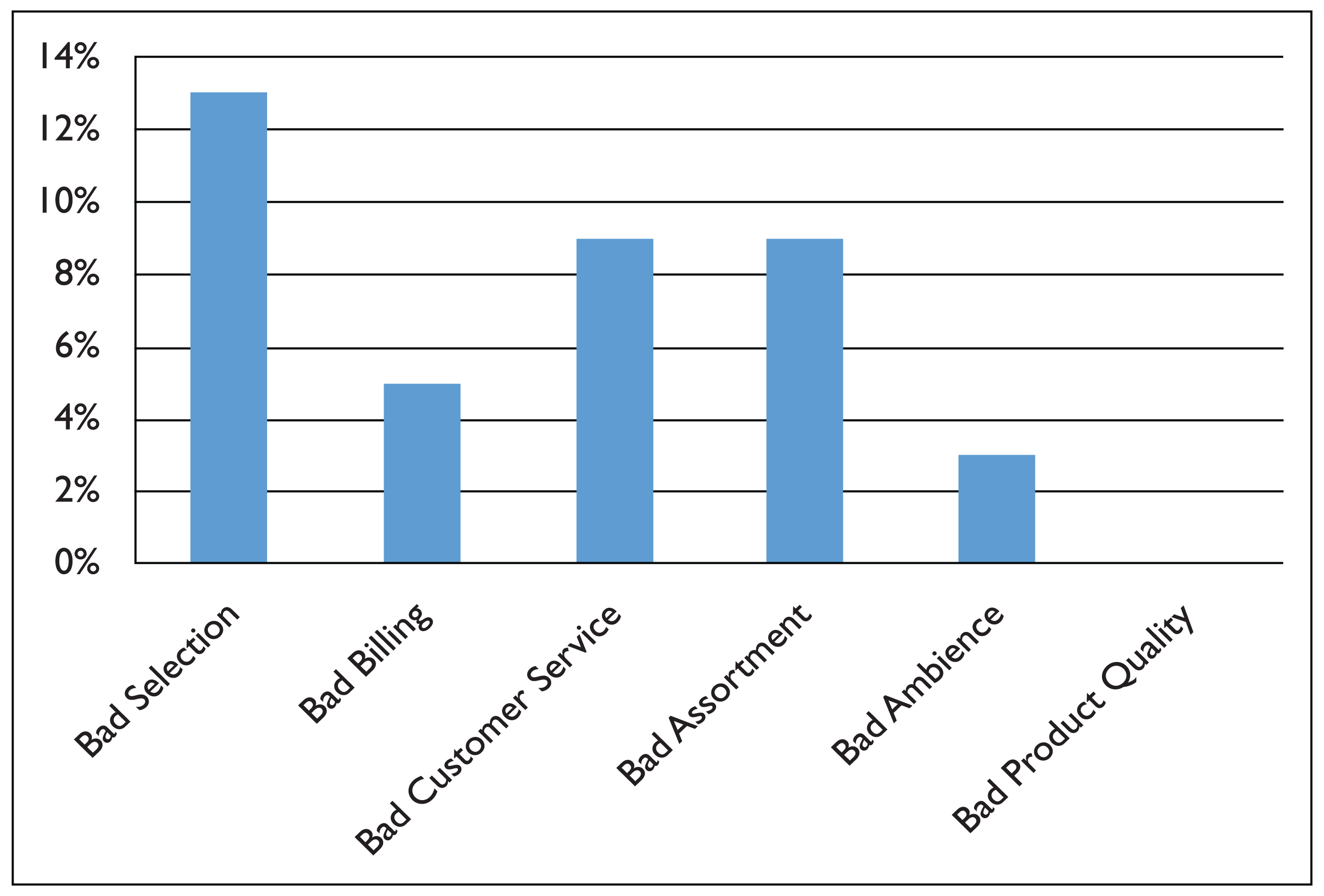
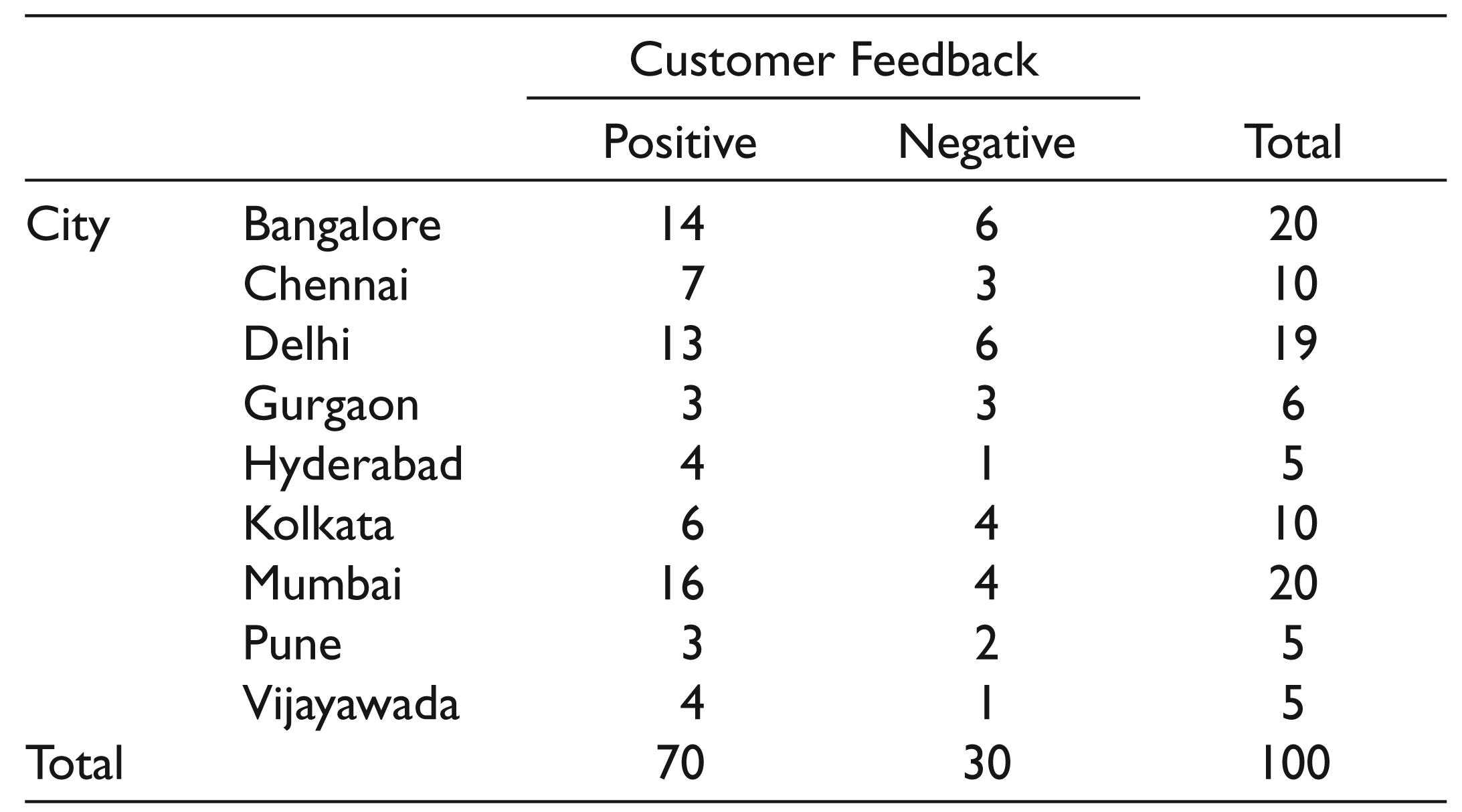
Foursquare provides customers’ responses on the retail outlets of Shoppers Stop located in different parts of the country in the form of ‘tips’. It has also given the rating of each outlet based on the votes cast by experienced customers of Shoppers Stop. Hence, compared to the visitors on Facebook and Twitter, this feedback is considered more genuine and powerful. Although Shoppers Stop has 84 retail outlets in India, Foursquare tips of tier-1 and tier-2 cities were considered for assessing customers’ knowledge on these outlets. This was done by analysing 100 tips given by experienced customers that include both positive and negative feedback. The reasons they provided in their feedback are also analysed (Table 7 for positive and negative feedback by Shopper Stop customers). Out of the experienced customers of Foursquare, 70 per cent provided positive feedback whereas 30 per cent negative feedback.
It can be observed that customers are very keen on aspects such as product quality, assortment, customer service, billing, shop ambience and location of the stores and also the selection range of products. The positive feedback is mostly on product selection, offers and quality, while negative feedback is primarily on selection, assortment and customer service (Figures 2 and 3).
The feedback on 24 retail outlets—including stores at Bangalore, Mumbai, Chennai, Delhi, Kolkata, Hyderabad, Pune, Vijayawada and Gurgaon—was analysed. Per the results (Table 8), the rating of outlets in tier-1 cities (Mumbai, Bangalore, Delhi) is higher than those in tier-2 cities. This is a potential threat for Shoppers Stop, as many competitors have expanded their network to tier-2 cities in India, which could pose tough competition in future.
Distribution of Foursquare Feedback

Customers Feedback Based on Location(Foursquare Tips)
Findings
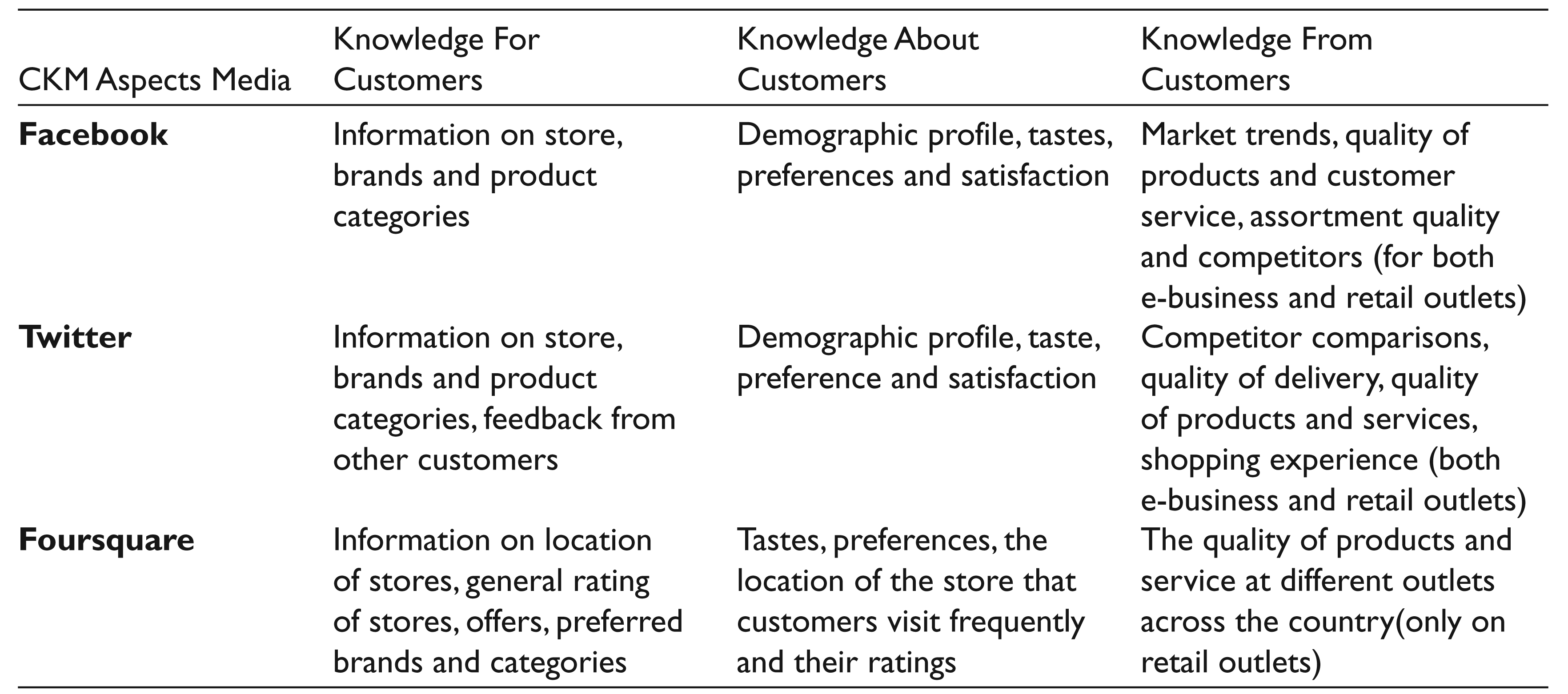
The analyses of communications of Shoppers Stop in social media clearly give insights on the three areas of interest, namely knowledge for customers, knowledge about customers and knowledge from customers. Knowledge about customers mainly includes the demographic profile that can be extracted from various social media sites where customers are active, and hence a separate inquiry on that is in order. More focus was devoted to knowledge for customers and knowledge from customers. It is clear from this study that although Shoppers Stop actively uses social media for promoting the store, brand and product, categories based on aspects such as selection, offers, styling tips and customer contests, the customers are very keen on many other aspects of the store such as quality of product, customer service, cleanliness and ambience, delivery of products, stock and even competitors. It is evident that the kind of knowledge base that can be extracted from customers for better brand building and sales is quite broad. The retailers could very well assess these aspects of customer knowledge to improve their service quality and make better strategic decisions. Social networking sites such as Facebook, Twitter and Foursquare contribute to CKM in unique ways. When Facebook and Twitter prove to be very useful in extracting ‘Knowledge from Customers’, Foursquare provides a better platform for providing knowledge for and about customers. A distinction thus emerges on how Facebook, Twitter and Foursquare effectively contribute to providing knowledge for, about and from customers, as illustrated in Table 9.
Contribution of Social Media to CKM
García-Murillo and Annabi (2002) explained the three-step process in CKM, namely, knowledge revealing, knowledge sorting and knowledge levelling. Although these steps were explained based on the personal interactions with customers on the shop floor, they are equally relevant for online interactions. But as the face-to-face interaction is missing in social media platforms, there is a high possibility of knowledge gaps in the process. The types of customer knowledge such as knowledge for customers, knowledge about customers and knowledge from customers are all revealed continuously on social media platforms, but it often leads to information overload where knowledge sorting becomes a challenge. The information revealed by customers is not often sorted qualitatively, which results in CKG1.
Certain information from customers, such as aspects of service delivery and shopping experience, needs to be given prime importance. The service delivery involves a high degree of interaction with the client because customers’ problems and expectations are complex (e.g., Løwendahl, 2000; Natti & Ojasalo, 2008; Ojasalo, 2001). Natti and Ojasalo (2008) suggest few aspects that prevent the effective utilization of customer knowledge in organization, namely the dominant logic, culture, structure and systems. The dominant logic and culture of organization often prevent knowledge sorting, resulting in CKG1. The organization’s dominant logic potentially utilizes only certain kinds of knowledge that are received and creates a barrier for knowledge utilization between the organization and customer (Natti & Ojasalo, 2008). New knowledge is embedded into a prevailing knowledge base of the organization. The prevailing knowledge base in turn is likely to be strengthened; thus, knowledge tends to be filtered to ‘fit’ into previous knowledge. The rest of the customer knowledge is filtered out. This may indeed result in (a) delayed decision-making, (b) delayed reactions to customer feedback, (c) lacking innovativeness and (d) lacking intensity in interactions and cooperation (ibid.). Of cultural characteristics, if an organization is more individualistic rather than collectivistic, the knowledge sorting would be based on pre-defined individual decisions which would make the knowledge utilization ineffective (ibid.); this would result in CKG1.
Even if the organization sorts knowledge effectively, the revealed data’s prioritization of aspects, such as product quality, customer service, effective sales personnel, effective communication and social compliance (Tseng, 2016; Yeung, Lo, Yeung, & Cheng, 2008)—that is, the step of knowledge levelling—may be hindered by the structural and system-based issues resulting in CKG2. Although a complete levelling of knowledge is not practical via online communities, a majority of the customer queries and concerns can be clarified effectively resulting in knowledge levelling to a greater extent. Organizational structure may further strengthen the fragmentation between individuals and groups. From the findings of the case study at hand, it is observed that the majority of posts are on delivery services (e-business). Effective management of online service requires a rigorous follow-up and continuous communication with the customer, which can be achieved only through proper communication between the professionals in the value chain, which often does not happen, resulting in CKG2. This is often worsened by poor systems management, where customers often get irritated by the messages sent to them, for example, asking for the loyalty card number of the customer during a query, which can be easily accessed by customer relationship executives from the system database.
A professional organization with effective structure and systems could often result in better knowledge levelling, but the end results would be based on how these knowledge bases are utilized for strategic decisions, which results in CKG3. Therefore, firms have to not only develop customer knowledge but also, more importantly, collaborate with their customers to develop this knowledge. Particularly, if customer suggestions can be implemented in the early stages of new product development, this will help reduce development time and also lead to more successful development (Bogue & Sorenson, 2009; Gemunden, Ritter, & Heydebreck, 1996; Tseng, 2016). Through warehouse data and data mining, as well as other techniques that integrate customer and marketing information, the staff can then retrieve valuable knowledge from and about customers (Liao, Chen, & Deng, 2010; Liao, Chen, Chieh, & Hsiao, 2009; Tseng, 2016). Such knowledge will be provided as a reference to employees so that they can develop and promote new products and manage customer relationships. Such strategic decisions could eliminate CKG3, resulting in customer knowledge outcomes.
Based on the conceptual perspective, CKGs in organizations exist when there is an emphasis on the distinction between desired and available customer knowledge configurations (Jarratt & Fayed, 2001; Nath & Newell, 1998; Tseng, 2016). From a practical viewpoint, this distinction is useful because it can be a part of a methodology to guide managers when they have to decide which customer knowledge they should have in order to support a strategy and when they need to compare that particular customer knowledge with the base of the knowledge they currently have (Jarratt & Fayed, 2001; Nath & Newell, 1998). The CKG model pertinent to CKM via social media is illustrated in Figure 4.

Conclusion
The KM is a construct widely discussed since the early 1990s. Most research concerning this area focused on people, process and technology used to manage the internal processes and systems. This study has focused on the ‘people’ dimension, though not the conventional employee’s viewpoint but rather the customer’s viewpoint. The knowledge for, about and from customers is highly significant for a customer-centric business like retail, and the role of social media is significant to CKM. The kind of knowledge that customers are exposed to renders them more powerful in buying decisions and, therefore, organizations (especially retailers) need to be more vigilant in managing customer knowledge via social media.
The information that customers share via social media is pivotal to organizations like retailers, as they can be effectively used for enhancing the latter’s future marketing strategies. The CKGs (identified earlier in the CKM via social media) give insights on future possibilities of utilizing customer knowledge effectively. But in spite of being one of the early successful adopters of social media, Shoppers Stop still faces challenges in CKM through social media. If this knowledge can be effectively used, it would likely result in better sales, brand image and growth of the retailer. The CKG model developed based on the findings provides potential insight into other retailers and businesses with high customer interaction, indeed underscoring that customer knowledge holds great value in terms of strategic marketing decisions.