



Abstract
This article investigates the universal values scale, Schwartz Value Survey (SVS) for its applicability to measure cultural context-specific values. The study establishes a need to construct a new scale by identifying and incorporating Indian culture-specific values in SVS. Deriving data using self-assessment questionnaires from 709 respondents in 2 studies and analysing them using principal component analysis and structural equation modelling, the article reconceptualizes Schwartz’s Portrait Values Questionnaire (PVQ) and the 10 motivational value factors and develops a new 76-item Holistic Values Scale (HVS) to measure Indian values using well-established scale development methods. The article further presents the research and policy implications and future research areas in this domain.
Introduction
Personal values have been measured using different scales in the extant literature. Although Schwartz Value Survey (SVS) (Schwartz & Bilsky, 1987) is the most referred scale in cross-cultural studies, a need to include culture-specific values in SVS has also been identified (Schwartz et al., 2001). This article expands the current understanding of personal values by including Indian-specific values to SVS.
Indian culture is rich in spirituality component, and its value system is based on, and aims at, direct realization of the ultimate reality (Bhajanananda, 1996, pp. 30). The strong point of Indian tradition is its vision of spiritual dimension of the human values and personality (Ranganathananda, 1995, pp. 160). Bhajanananda (1996) comprehensively combined views of Indian researchers and philosophers to define values as the higher normative needs of humanity which are experienced as inner moral or aesthetic imperatives or goal seeking by people.
Rokeach (1973) proposed that elements such as cultural similarities, social system, social class, gender, occupation, education, religion and political orientation drive and determine the value system of people. Thus, variations in individuals’ personal, societal and cultural experiences generate value differences, as well as impact the stability of values and value systems (Xiao & Kim, 2009). We ask questions such as, what are those values that Indians strive for. Are values recognized by Schwartz exhaustive enough to represent Indian values? Do we need to identify Indian-specific values?
The article reconceptualizes Schwartz’s 10-dimensional value structure and the 40-item Portrait Values Questionnaire (PVQ) and develops a new 76-item Holistic Values Scale (HVS), using well-established scale development procedures. The content, face, convergent and discriminant validity of the scale is tested using the recommended statistical methods. Finally, the article discusses important contributions and applications of the new scale and presents the limitations and directions for future research.
Measurement of Values
Even though SVS (Schwartz, 1994) with 57 values is the most referred value scale in the last two decades to study personal values, it has the limitation of too many generalizations, as it does not capture the distinctive characteristics of a culture with rigorous data (Watkins, 2010). Schwartz et al. (2001) identified India as one of the nations where SVS is not supported. Schwartz et al. (2001) developed PVQ with 40 statements to measure the values representing 10 motivational values in SVS. However, PVQ has also been criticized for methodological issues and non-generalizability to specific cultures (e.g., Knoppen & Saris, 2009; Perrinjaquet et al., 2007).
Many researchers and spiritual teachers (e.g., Chakraborty, 1991; Hiriyanna, 1975; Sinha, 1995; Vivekananda, 1958; Yogananda, 2003) have specified the unique characteristics of the Indian value system; for instance, Indian meaning of values is very close to the concept of four purusarthas (values sought after by persons)—artha (wealth) kama (pleasure), dharma (virtue) and moksha (self-perfection)—where kama, artha and dharma constitute the lower tier, governing ordinary people and moksha or mukti, being the upper tier, forms the highest and absolute value (Bhajanananda, 1996, p. 21). Similarly, concepts such as paap (vices) and punya(virtues), knowledge of the ‘self’, simple living and high thinking, non-injury to others, unpretentiousness, etc. are some of those Indian values that are missing in SVS and PVQ.
Scale Development: Methodology
The standard scale development process suggested by Churchill (1979) and Gerbing and Anderson (1988) was followed to construct the new values scale. We have used a theoretical conceptualization that is based on Schwartz’s seminal work (Schwartz, 1994; Schwartz & Bardi 2001; Schwartz & Bilsky, 1987) but takes an Indian values perspective and touches multiple sources of Indian values. Schwartz (1994) suggested a universal organization of human motivations and identified 10 motivational-level value orientations. We have extended Schwartz’s model by identifying its congruence and contradictions with Indian values.
Generation of Value Dimensions and Related Items
The initial set of dimensions was collected from the following diverse secondary sources:
traditional Indian texts explaining the values as envisaged in Indian philosophy; conceptualizations of Indian Values as recognized by modern Indian thinkers and philosophers; views of intellectuals in public domain, who talk or write about Indian values; and values discussed and identified in academic journal papers.
To include a substantial amount of thoughts and contemplations on Indian values, we captured value dimensions from all the major religions of India. We also conducted four in-depth interviews of experts who had a rich knowledge about Indian culture and values that helped us avoid ambiguities in the conceptualizations of value dimensions. Figure 1 presents some of the key literature sources from different religions, which were used to obtain the value dimensions.
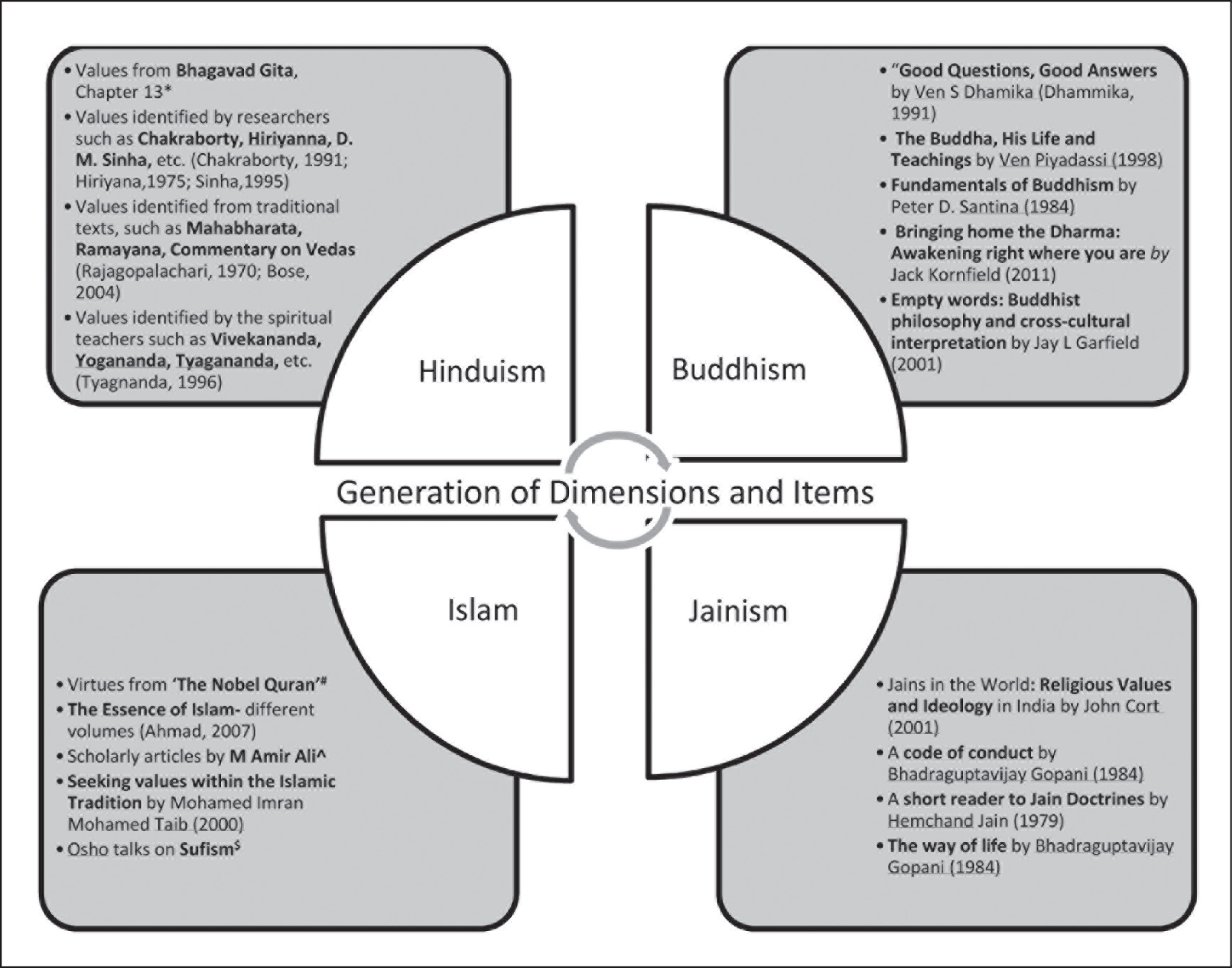
The initial pool contained 128 value dimensions. These values were subjected to sorting and deletion, resulting in 64 dimensions. We extracted brief descriptions of these 64 values, which were compared for overlaps with 57 values from SVS. Four different categories of values emerged in the process:
Category 1—value dimensions that were common in SVS as well as in newly identified values (n = 35). Category 2—value dimensions that were similar but with different conceptualization (n = 12). Category 3—value dimensions in SVS that were not found to be similar to any of the 64 values (n = 10). Category 4—unique value dimensions identified, which were not found in SVS (n = 17).
Twenty-nine values in Category 2 and Category 4 were further subjected to face and content validity. Seven independent judges looked for similarities within these 29 value dimensions as well as with 57 SVS values. A brief description of all the dimensions was provided to the judges.
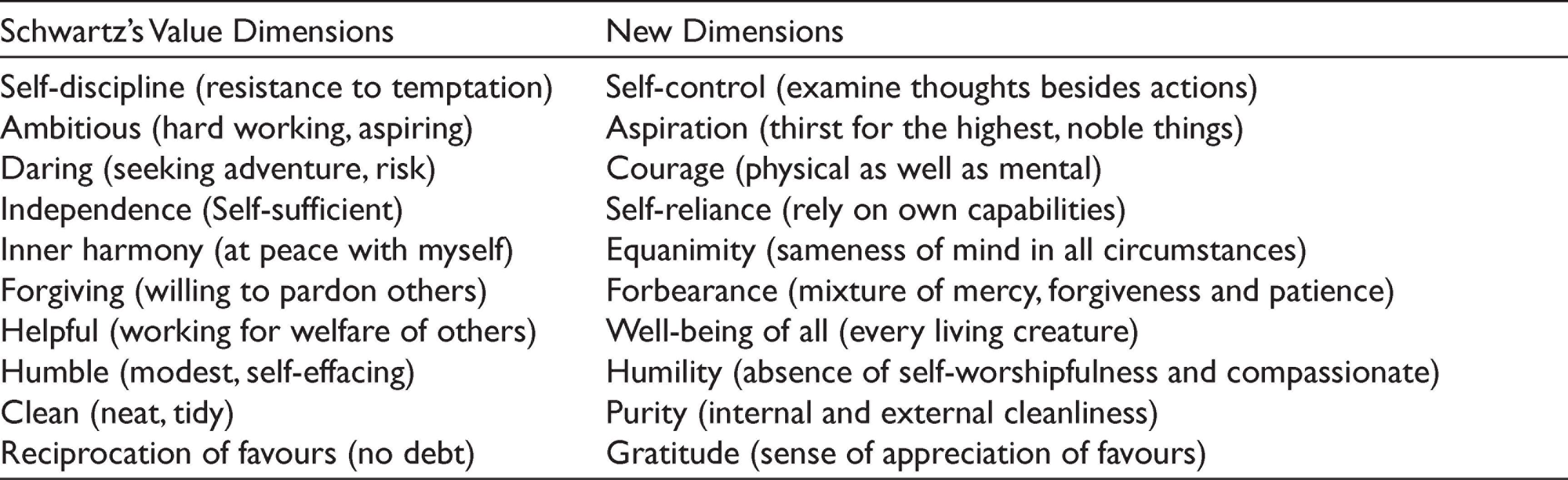
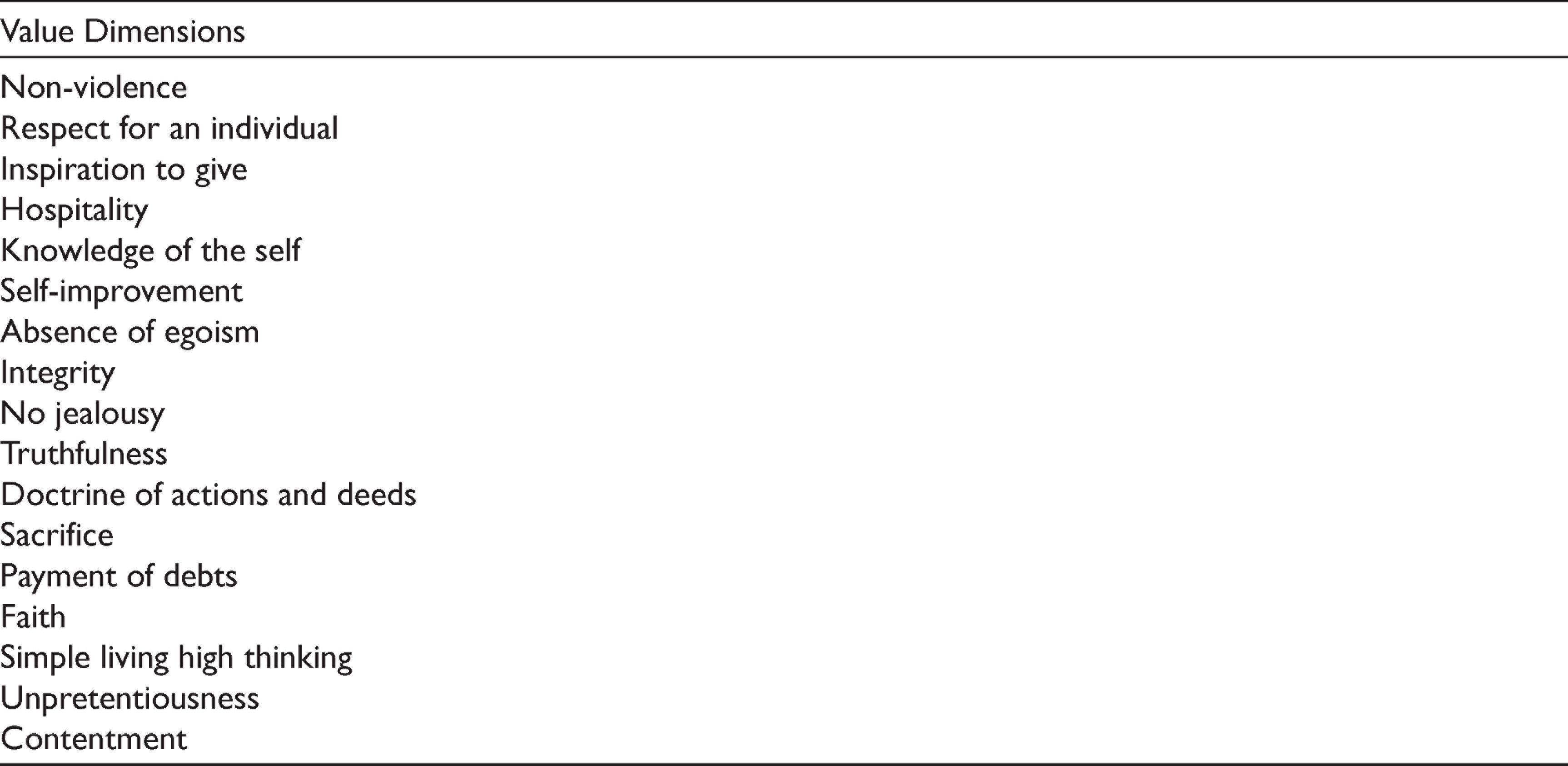
Two dimensions ‘wisdom’ and ‘respecting parents and elders’ were dropped. The remaining 27 value dimensions are exhibited in the Tables 1 and 2.
Values with Similar Dimensions but Different Meanings and Conceptualizations (n = 10)
Unique New Value Dimensions (n = 17)
Next, we generated a relevant pool of 48 items for the 27 values.
Questionnaire Development for Pretesting
In the questionnaire, 48 items were presented as short verbal portraits of a person, and for each portrait, respondents were asked to respond to the question, ‘How much the person in the description is like you?’ on a 6-point asymmetric scale labelled: ‘very much like me, like me, somewhat like me, a little like me, not like me, and not like me at all’. Usage of ‘similar others’ for self-reports is justified by researchers (e.g., Holyoak, 1978) as well as the decision of asking respondents to compare other persons to themselves (Holyoak & Garden, 1983). Three reverse-coded items were added to check response pattern bias (Idaszak & Drasgow, 1987). Lastly, the 40-item PVQ was added to the questionnaire to complete the holistic values items, totalling the number of value items to 91 (40 PVQ items + 48 new items + 3 reverse-coded questions). The questionnaire was then subjected to pretesting.
Pretesting
The questionnaire was subjected to pretesting for potential problems. A total of 37 respondents, who are considered appropriate as per Hunt et al. (1982), participated in the pre-test study (male: 65%, females: 35%). The Cronbach’s alpha value obtained was 0.92. Pretesting resulted in the deletion of eight new items.
Interestingly, the problem of double questions was observed in some of the PVQ items, for example, a question ‘He thinks it is important to be ambitious. He wants to show how capable he is’ has two statements, but it was reported that a person who values himself as ‘being ambitious’ in his life need not show his capabilities to the world. A total of nine statements had problems which were either converted into two different statements or deleted if they were repetitive (Table 3).
Double Statements in Schwartz’s PVQ Questionnaire


The final questionnaire contained 90 items.
Exploratory Factor Analysis
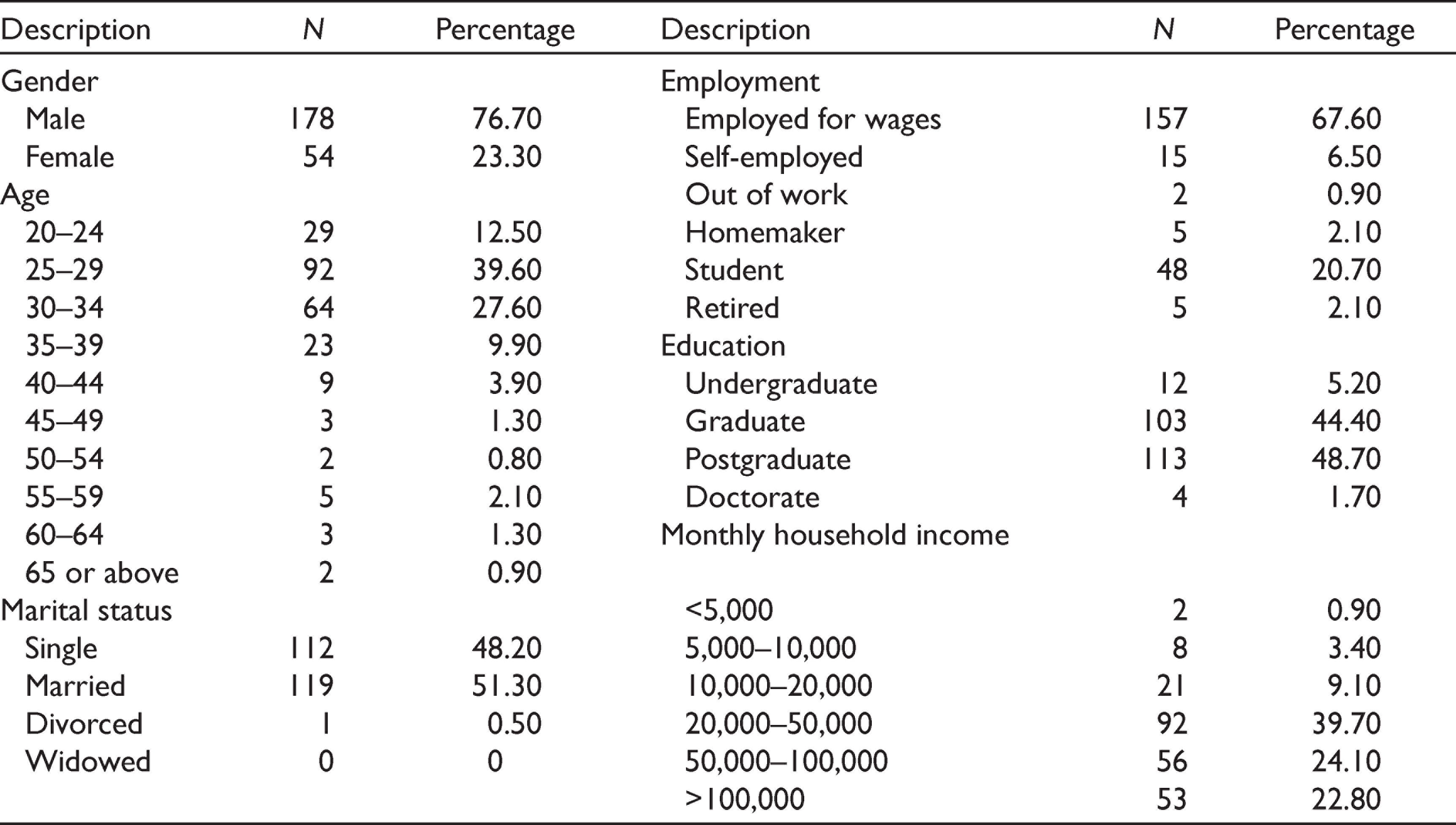
The questionnaire was administered online, resulting in 477 usable responses. No significant outliers were found using the threshold value of z ≥ 4 (Hair et al., 1998). The detailed demographic classification of the respondents is provided in Table 4.
Demographic Information of the Respondents in the First Study


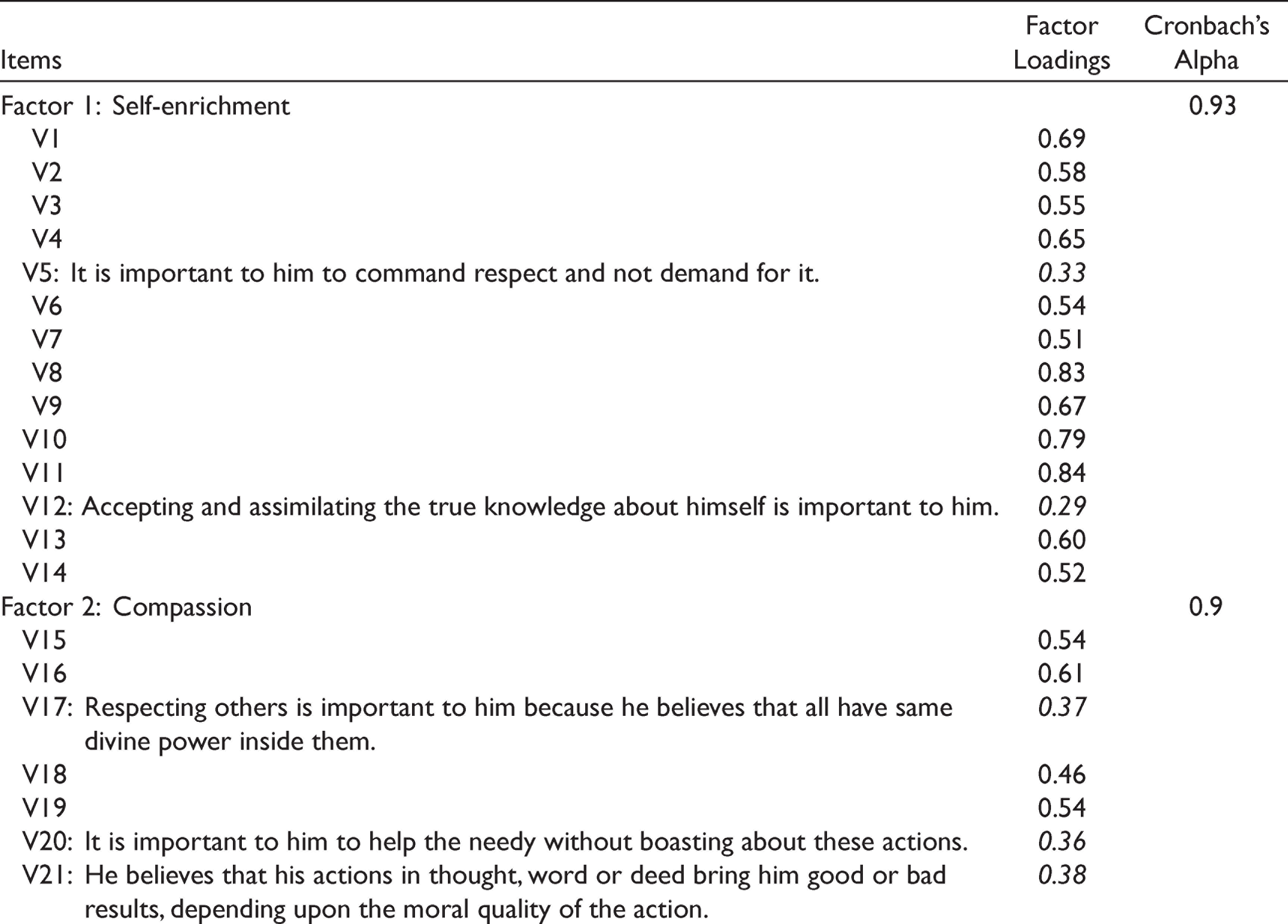
Iterative series of EFA using principal component analysis with promax rotation generated 15 factors. The derived factors had a communality greater than 0.50. The KMO value for the data was 0.89 and in Bartlett’s test of sphericity, the observed significance level was 0.000.
Seventy-eight items were loaded significantly in the iterative EFA process. Nine items with factor loadings less than 0.4 (V5, V12, V17, V20, V21, V22, V33, V38 and V67, in Table 5) were deleted. The value of overall Cronbach’s alpha was 0.96, much higher than the minimum acceptable level. Individual factors, their reliability scores and the items that significantly loaded on each factor are presented in Table 5. Full item statements are presented later in the final HVS in Table 9.
Exploratory Factor Analysis Results


Changes in Portrait Values Questionnaire Value Types
Significant changes were noticed in the items loaded on PVQ values, except for ‘self-direction’, ‘hedonism’ and ‘security’. Items of the value dimension ‘conformity’ loaded on two factors. The other factor was named ‘courtesy’ that contained items for values that represent acts of civility and respect: ‘showing respect to parents’, ‘being polite’ and ‘being non-irritating’. ‘courtesy’ represented politeness, kindness and graciousness.
Two of the items representing ‘tradition’ in PVQ did not load significantly on it. One item ‘He thinks it’s important not to ask for more and be satisfied with what you have’ loaded on a new factor, while the other item ‘It is important to him to be humble and modest. He tries not to draw attention to himself’ had a loading less than 0.4; hence, they were deleted. Rest of the items in ‘tradition’ were close in conceptualization to ‘being religious’; hence, the motivation value was renamed as ‘religiosity’. One of the items in ‘benevolence’ representing the value ‘forgiveness’ loaded on a new factor, which was named ‘acceptance’. The factor ‘acceptance’ had two more items loaded on it. These two items earlier were part of the value dimension ‘universalism’.
₹Interestingly, exploratory factor analysis (EFA) suggested a single factor for all the items under ‘power and achievement’. The common factor was named ‘accomplishment’, a representation of achievements that reflect one’s social power, authority and respect. Furthermore, three items representing ‘stimulation’ in PVQ and one new item representing Indian value ‘courage’ loaded on ‘stimulation’.
New Motivational Value Types
Self-enrichment
Twelve new items loaded on a single factor. These items suggest that people tend to orient their values implicitly or explicitly towards their self so as to enrich their character. Loading of the values such as contentment, purity and aspiration on this single factor implies a preference for spiritual enrichment of the self. Since ‘self-enrichment’ is considered to be a motivation that enables people to enrich their sense of personal worth (Brown & Gallagher, 1992), it seemed to be an appropriate representation of this factor.
Compassion
Another set of nine items for values such as non-violence, sacrifice and payment of debts loaded on a single factor. These items represent the conviction about how a person should treat others, inspire a person to watch his/her actions and thoughts and follow the appropriate behavioural norms. Therefore, the factor was named ‘compassion’, which symbolizes an ability to feel for others.
Self-evolution
This factor represented values that constitute a process of evolution of the mind and the self. These values are self-knowledge, self-control, forbearance, self-improvement and equanimity. The factor was named ‘self-evolution’, which captures the effort and strict discipline required to follow the underlying values.
Uprightness
The final factor, with four items significantly loading on it, represented values: integrity, no jealousy and truthfulness. These values project that a person’s thoughts, words and actions should be in sync. The common motivating factor was named ‘uprightness’, which means to think, say and do what is righteous, what is true and for which a person need not repent later.
Confirmatory Exploratory Analysis: Scale Validation
The aim was to confirm the 15-dimensional structure of the new values scale and to establish its convergent, composite and discriminant validity. A fresh sample of 232 responses was collected. To increase response diversity, a major part of the data were collected from train passengers travelling in different classes (1st class, 2 tier air-conditioned, 3 tier air-conditioned and the sleeper class) between New Delhi and Bangalore in India. The detailed classification of the demographic characteristics of the respondents is provided in Table 6.
Demographic Information of the Respondents in the Second Study
Data Analysis and Results
Partial Least Squares (PLS)-based structural equation modelling (SEM) using statistical package SmartPLS (Ringle et al., 2005) was applied to assess the construct validity of the new scale (Gerbing & Anderson, 1988). SmartPLS has been used for scale validation in the marketing and information systems literature (Hoffmann et al., 2011; Sun & Teng, 2012).
Statistical power analysis was conducted to verify sample size adequacies of our data (Ringle et al., 2012). For a medium effect size at an alpha level of 0.03, to obtain a statistical power level of 0.8, with 15 latent variables and 84 observed variables, a minimum sample size of 148 was found to be appropriate, thus proving the appropriateness of using PLS-SEM for analysis.
Measurement Model
The measurement model based on the results of EFA is shown in Figure 2. Since PLS-based SEM requires a closed path between latent variables, those latent variables that were placed next to each other in the Schwartz’s theoretical model were connected. Four new factors were connected to each other, and compassion was connected to acceptance (nearest in conceptualization) to complete the path diagram.

Reliability and Validity
The model was tested for reliability and validity. Unidimensionality was already assessed using principal component analysis in EFA. The initial cross loadings had some items with loadings less than 0.5. Subsequently, the model was modified and run multiple times, deleting one item at a time till the loadings of all the remaining items were more than 0.5. Two items related to payment of debts_2 (It is important to him to consider paying back his debts as his duty.) and truth_2 (He believes in not speaking truth if it harms or spoils others.) were dropped from the subsequent analysis.
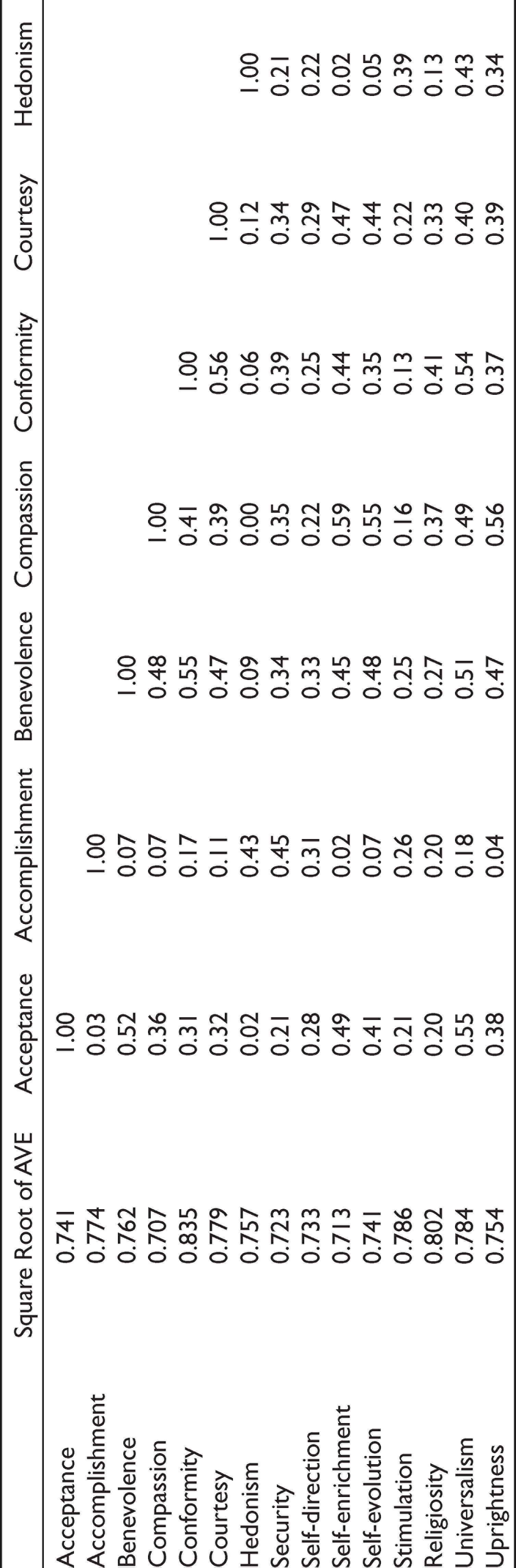
The convergent validity of the factors (Table 7) was established as average variance explained (AVE) value for all the factors exceeding 0.50 (Fornell & Larcker, 1981). Further, the composite reliability of all constructs was equal to or greater than 0.75 (Nunnally & Bernstein, 1994). Cronbach’s alpha for the constructs was also more than 0.6 (Hair et al., 2012). Thus, the construct validity of the model was established.
Reliability and Construct Validity

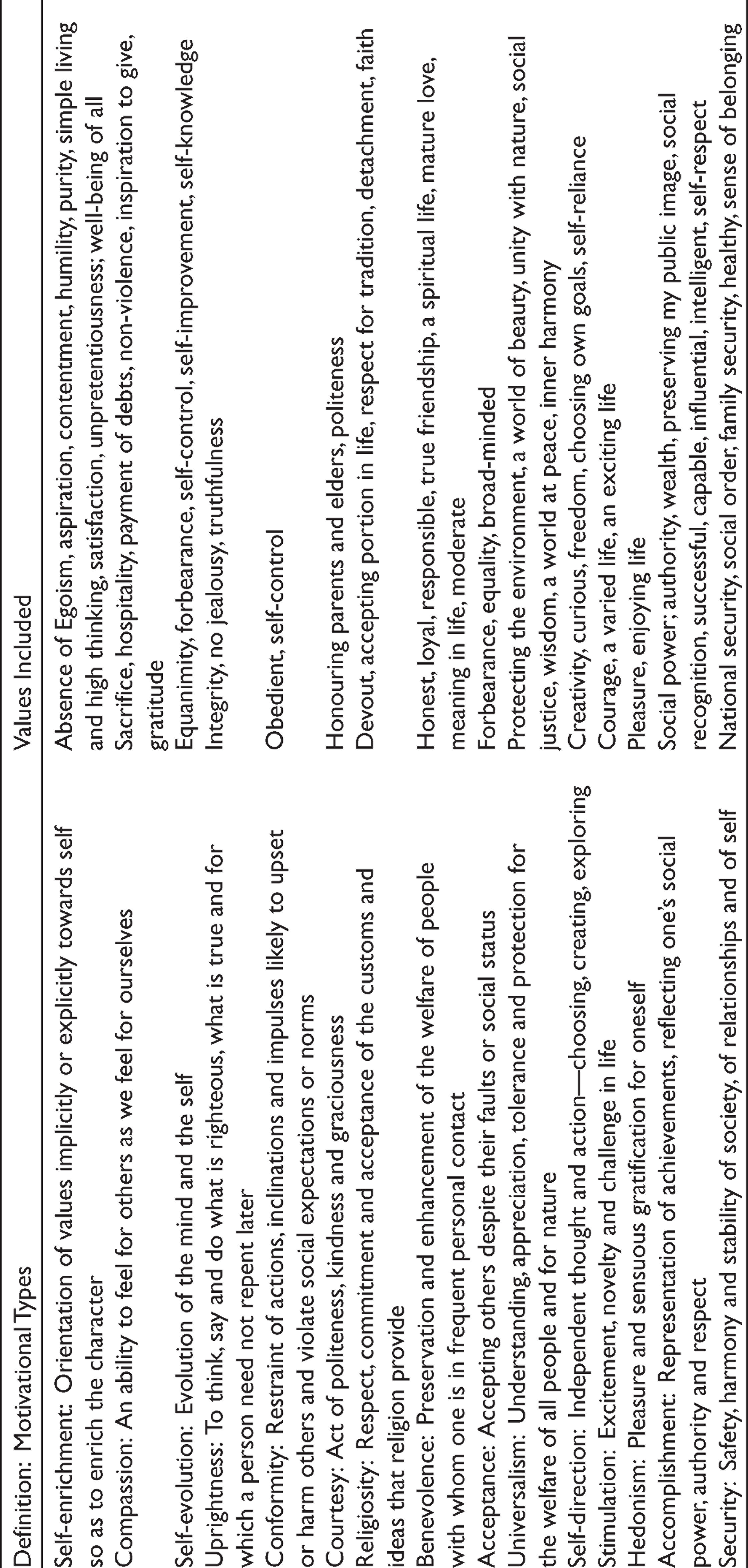
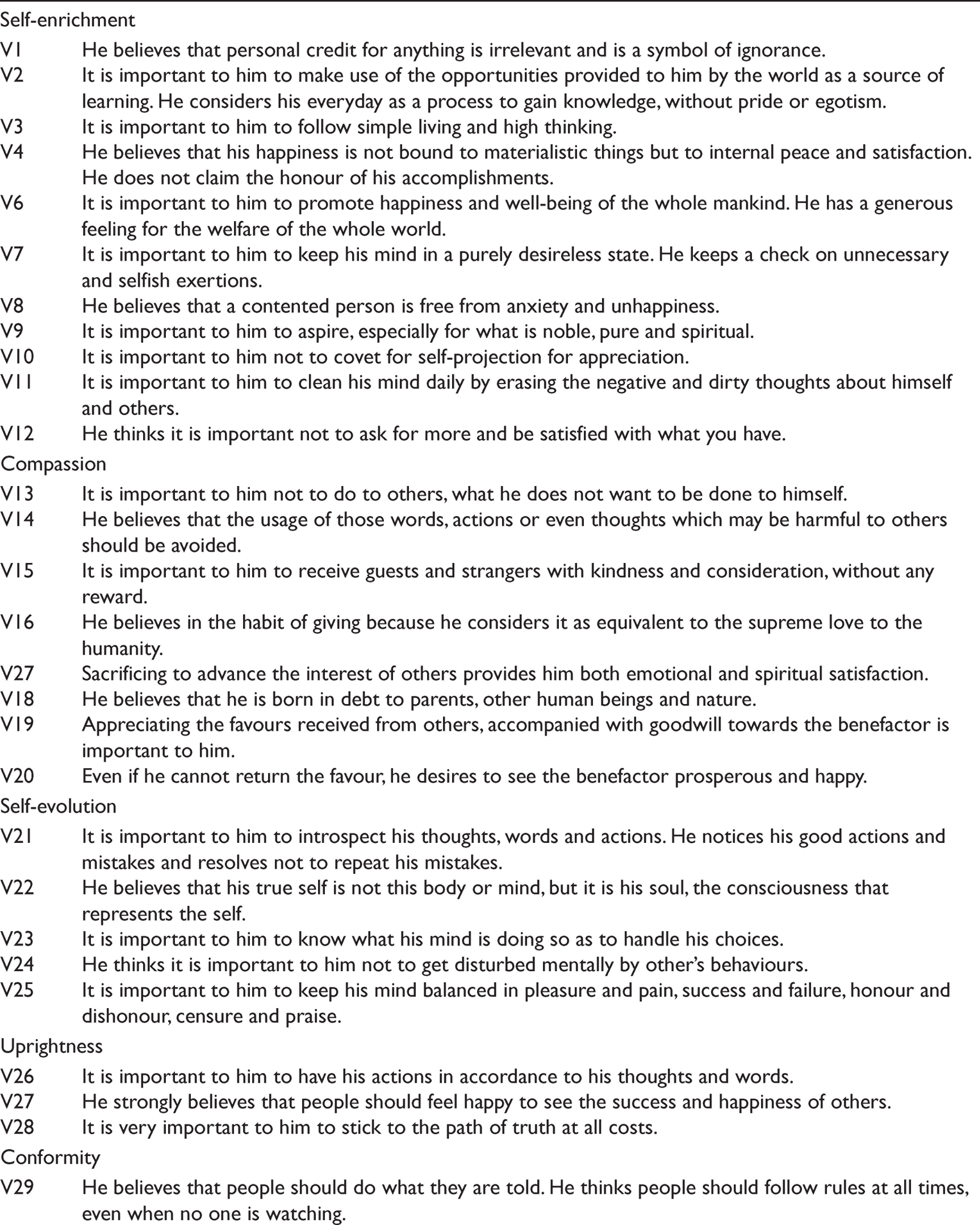
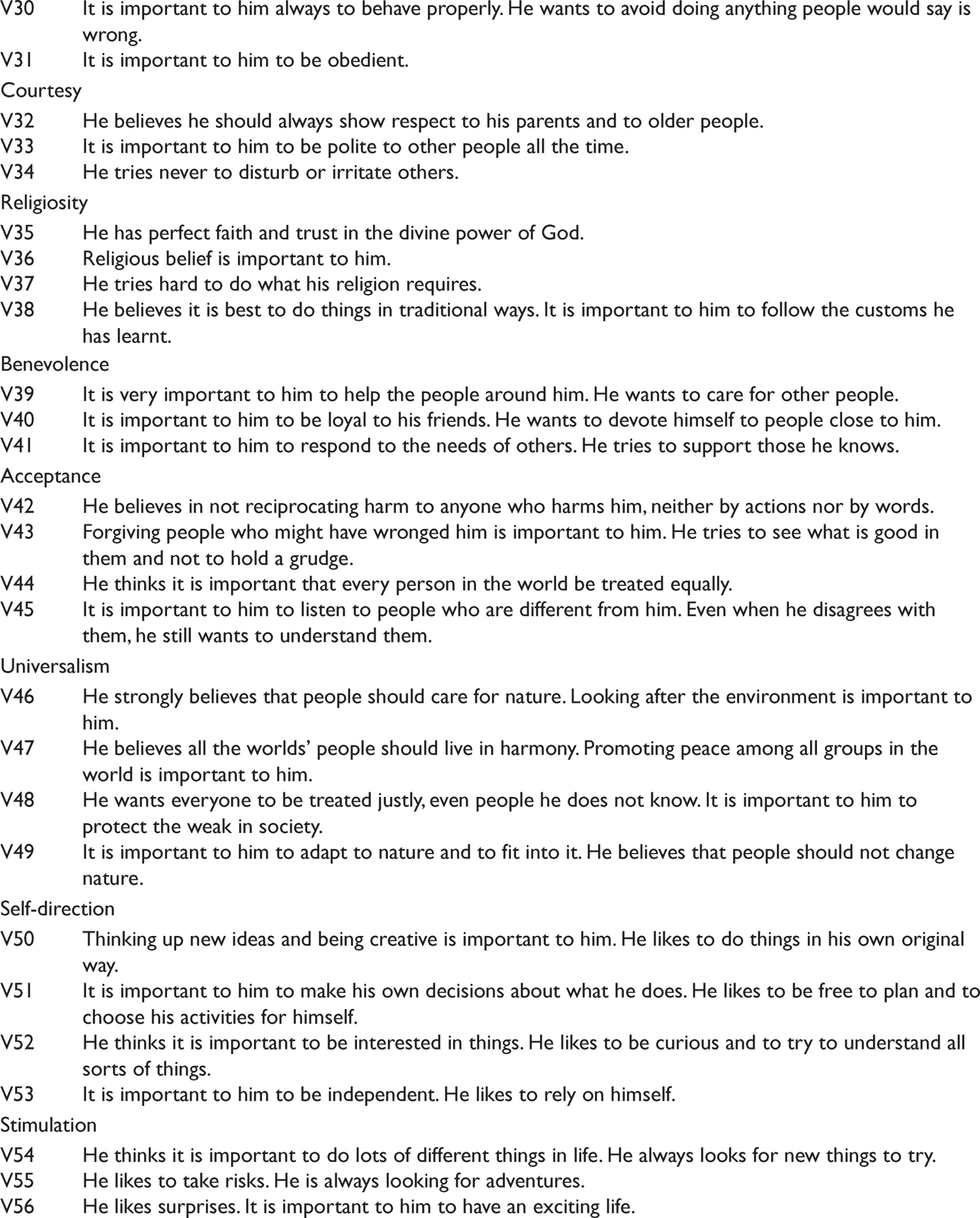
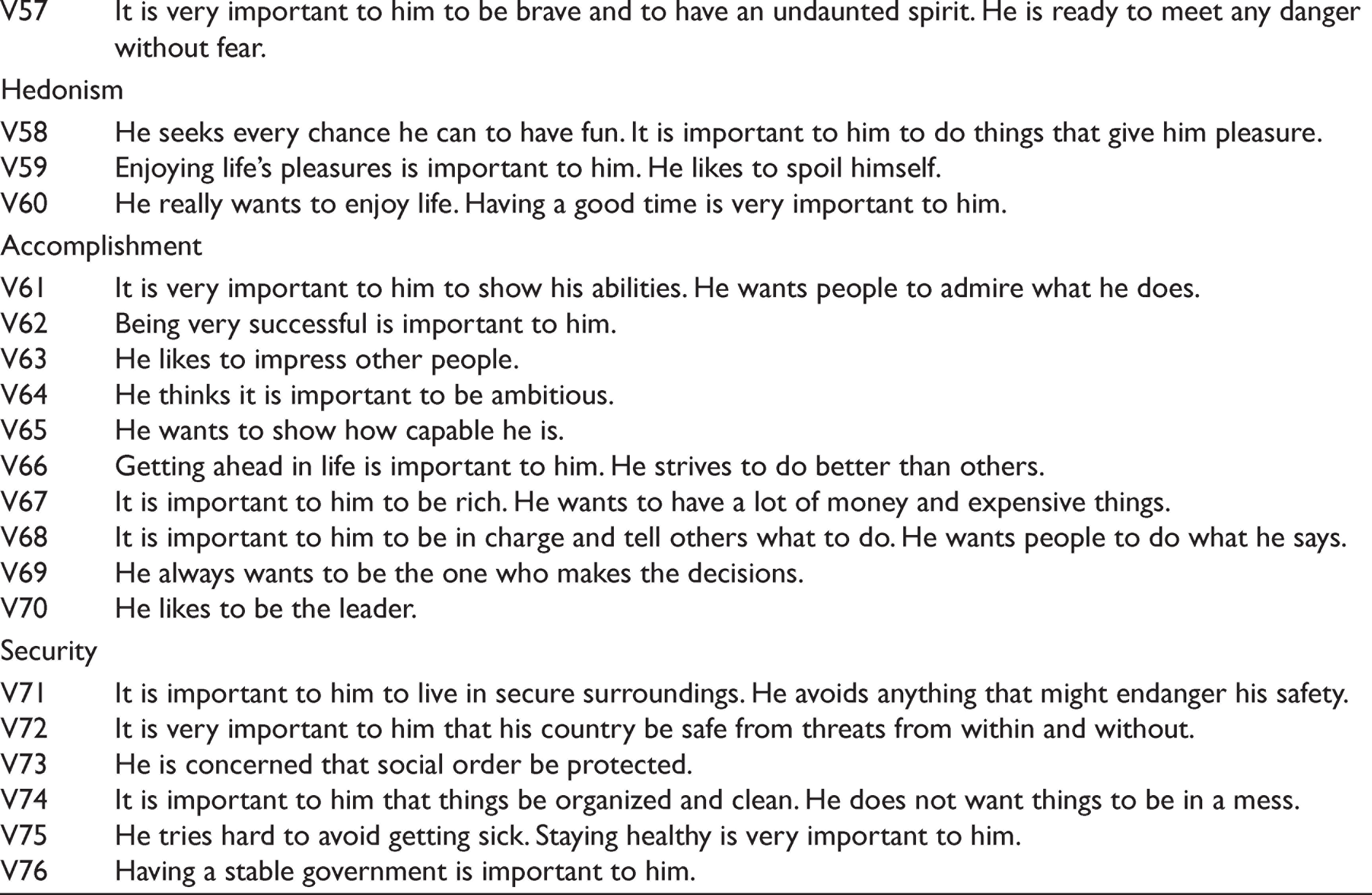
Two approaches were used to assess the discriminant validity of the constructs. Firstly, the cross loading of the indicator items was examined which revealed that no item had a factor loading higher for any other construct, (Hair et al., 2012), thus establishing discriminant validity. The square root of the AVE was also found to be greater than all of inter-latent variables’ correlations (Fornell & Larcker, 1981), therefore showing evidence of sufficient discriminant validity (see Table 8). Fifteen higher-level motivational value types and their corresponding values are presented in Table 9. The final Holistic Value Scale (HVS) containing 76 items is presented in Table 10.
Discriminant and Convergent Validity (Latent Variable Correlation and Square Root of AVE)

Values in Holistic Values Scale in Regions of Their Motivational Types
Holistic Values Scale
Discussion and Contribution
The primary goal of this article was to develop a new values scale that includes unique characteristics of the value structure in India. The value dimensions that emerged in the study were categorised into three groups, including the values that are universal and have already been identified in the Schwartz’s values survey scale (SVS), values that are present in SVS but the conceptualization of the terms was found to be different in India and the values specific to India, not identified in the SVS scale. Relevant items were generated for the Indian values and were added to PVQ at motivation level. This resulted in the development of a new HVS with 76 items.
Indian culture is an amalgamation of diverse sub-cultures and beliefs and so the new motivational values, that is, self-enrichment, compassion, self-evolution and uprightness, may have significant similarities with other cultures of the world. Self-enrichment drives people to seek values that make them feel good about themselves. It is related to good resolves by a person and strengthens them every day by practice. The values associated with self-enrichment such as absence of egoism, aspiration, contentment and humility are not alienated from any culture of the world. Henceforth, similar research in other cultures may test the universal appeal of self-enrichment.
Similarly, compassion symbolizes an ability to feel for others as we feel for ourselves and uprightness motivates a person to be honest and honourable. The argument for the universal applicability of these two values comes from the fact that these values have been appreciated and recommended by all religions in India. The Hindu meaning of ‘compassion’ suggests understanding the sufferings of others, while being ‘upright’ liberates a person from sufferings of guilt, deceit and psychological pain. Compassion or karuna is at the transcendental and experiential heart of both Buddhist and Islamic teachings. In Christianity, an upright person is said to follow the principle of faith and love. Lastly, self-evolution has more spiritual inclination as it begins with superficial understanding of the meaning of self and leads people to a deep, true knowledge about the self.
Thus, HVS is a comprehensive scale which may find applicability in diverse cultures. This research lays the foundation for future investigation of more culture-specific variabilities in the structure of values.
Managerial and Policy Implications
Managers of both Multinational corporations (MNCs) and Indian companies can use HVS for value-based segmentation of Indian consumers. To achieve long-term customer satisfaction, it is important to quantify current levels of customer satisfaction. HVS can help organizations to identify people with different values, so that they can tailor their products and services to appeal to the relevant customers.
One of the greatest challenges that managers face is the positioning of their products and services in new cultures. Product communication requires meaningful proposition that often varies in different cultural contexts. This article has important implications for managers who look to formulate apt communication strategies to cater to the values of Indian consumers. Problems in promotional and communication appeals may arise when consumers from different social and cultural backgrounds and with different values fail to understand the communication message. An understanding of the values and beliefs of target customers, therefore, cannot be ignored while formulating the communication strategies.
Policymakers are required to design their programmes and communication strategies in the way that can be more efficient and effective. The success and failure of policy programmes is commonly attributed to the cultural complexities of the population. Here, application of HVS can be explored as a guide to policymakers for creating and communicating benefits of government policies and programmes.
Further, policymakers need to develop strategies to preserve Indian values, which seem to be declining with the decline in joint families. In joint families, social values are largely internalized and are transferred from parents and grandparents to the children. It is not possible to bring back the culture of joint families, but policymakers can introduce values, such as respect, responsibility, harmony and integrity, in the school curriculum and devise means for reinforcing these values in life.
Limitations and Future Directions
HVS has extended PVQ to make it suitable for Indian cultural context. Future research can test HVS scale in diverse cultures and suitably modify its applicability. Understanding and incorporating perspectives of different cultures shall make the scale more rigorous.
Future research may examine the influence of values on some of the relevant variables such as consumer attitude and behaviour, communications, people involvement and perceptions. In cross-cultural research, understanding the impact of values on these variables is gaining importance, and the values scale introduced in this article should help in better conceptual understanding of various aspects of Indian culture, which shall also pave way for the development of a similar appreciation of other cultures.
Lastly, the number of respondents in the EFA study is 477 and, in CFA, 232. It may be worthwhile to test further application of HVS scale with a much larger and diverse set of respondents. Additionally, since HVS is a comprehensive scale, the applicability of certain value items in different management contexts might change. Hence, context-specific sub-scales of HVS with a smaller number of items can be created for expanding the applicability in managerial contexts.
Footnotes
Declaration of Conflicting Interests
The author declared no potential conflicts of interest with respect to the research, authorship and/or publication of this article.
Funding
The author received no financial support for the research, authorship and/or publication of this article.