



Abstract
Small developing countries in Asia, Latin America and Africa are still struggling with the institutionalisation and professionalisation of science. Many countries in these regions are yet to establish science communities. Singapore case becomes all the more interesting and exemplary as this small country was able to build a small but vibrant science community in relatively a short span of time. As will be shown through the case study on ‘Biopolis’ (cluster of modern biology laboratories and national university), there is indeed a unique Singaporean approach in building science community by attracting global talents. The process of attracting global talents or what may be seen as a case of brain gain was part of Singapore’s national science, technology and innovation (STI) strategy since the 1980s and particularly the 1990s. After exploring the most salient features of STI policies, the essay will focus on two major institutional developments, which were crucial for building Biopolis, based science community. First is on building of world class university and research ecosystem; and second is a empirical research on the structure and composition of scientists in eight major biological labs.
When my peers and I grew up in the 1960s, Singapore was grappling with the many survival concerns of a newly independent state. The opportunities to pursue science as a career were just not there and many of the brightest in the country were guided into more practical pursuits.
This is how Michael Chee, Professor of Neuro behavioural Disorders Programme at the Duke-National University of Singapore (NUS) Graduate Medical School, recalled the situation of science in 1960s (The Strait Times, 25 July 2009). Being under British colonial rule for a long time, Singapore did not benefit or inherit any useful institutional infrastructure in scientific and technical support services. Colonial science enterprises such as Botanical Gardens did not infuse any enthusiasm among practitioners to launch themselves in to the world of science. But the situation is quite different today for thousands of young Singaporeans with an aspiration to develop a career in science in the country. More so, for Michael Chee and several other practitioners who now have an identity beyond universities and scientific research institutions of being part of what has come to be recognised as an emerging Singapore science community (Krishna & Ramakrishna, 2010).
Infrastructure, buildings, money and policy support are quite important but not sufficient conditions for establishing a science community. The intellectual components of advancing scientific knowledge, institutionalisation and professionalisation of disciplines and new knowledge in universities and national laboratories, a system of career prospects for scientists, evolution of professional bodies, journals and a network of communication with relative research autonomy defines a science community (Krishna, 1997). State mediation and public policies on science, technology and innovation play an important part in promoting science and technology institutions. Practitioners share same institutional and educational arrangements and perform research within national settings sharing social and intellectual culture. Advancing knowledge as a community not just contributes to national development but bestows a national identity within the international sphere of science. It takes several decades before a country makes its visibility in the international sphere. When several small countries such as Nepal, Philippines, Indonesia, Sri Lanka and Bangladesh are still struggling with the initial stages of institutionalisation of science, Singapore case becomes all the more interesting as this country was able to build a small but vibrant science community in relatively a short span of time. As will be argued in this paper, there is indeed a unique Singapore way or approach in building science community by attracting global talents. However, this process of attracting global talents or what may be seen as a case of brain gain was part of Singapore’s national science, technology and innovation (STI) strategy since the 1980s. We will explore three main components of this STI strategy, namely, (a) STI policies including foreign direct investment (FDI) in high technology; (b) building research universities and research ecosystem; and (c) a case study on scientists of eight advance biomedical laboratories known as Biopolis.
Science, Technology and Innovation Policies
State mediation through public policies played an important part in the rapid economic growth of East Asian countries. Singapore is very much part of this story. After full independence in 1965, the country made remarkable progress from a ‘Third World to First World’ (Lee, 2000). This period registered an average annual growth rate of 8.7 per cent with per capital income of US$ 20,700 in 2000 (Parayil, 2005). Realising the need to build a strong institutional base in some select science and technology sectors the government initiated a series of science, technology and innovation policies since 1980s. As Table 1 shows, the government through Economic Development Board (EDB) established first ever National Biotechnology Programme to venture into biotechnology as future area of national priority. 2 In 1990 the government established the National Council for S&T to promote R&D institutions. National Technology Policy was launched in 1991, which earmarked S$ 2 billion for research and development (R&D). Ever since the National Science Technology (NST) Plan instituted in 1991 the government had given boost to promote S&T and R&D institution prioritising some strategic areas of innovation. A big boost to public policies in science and technology came with the establishment of the National Research Foundation in the Prime Minister’s Office in 2006. Over the period of two and half decades, Singapore has had five NST plans and the state support was increased from S$ 2 billion in the first NST plan (1991–1995) to over eightfold in the recent Science, Technology and Enterprise Plan (2011–2015) to S$ 16.1 billion. The current Plan (2011–2015) is uniquely earmarked to create a global nexus of scientific talent by building world-class research infrastructure in Singapore and to scale up the level of science research through innovation.
Major Milestones in the Evolution of Policy and Institutes in Singapore
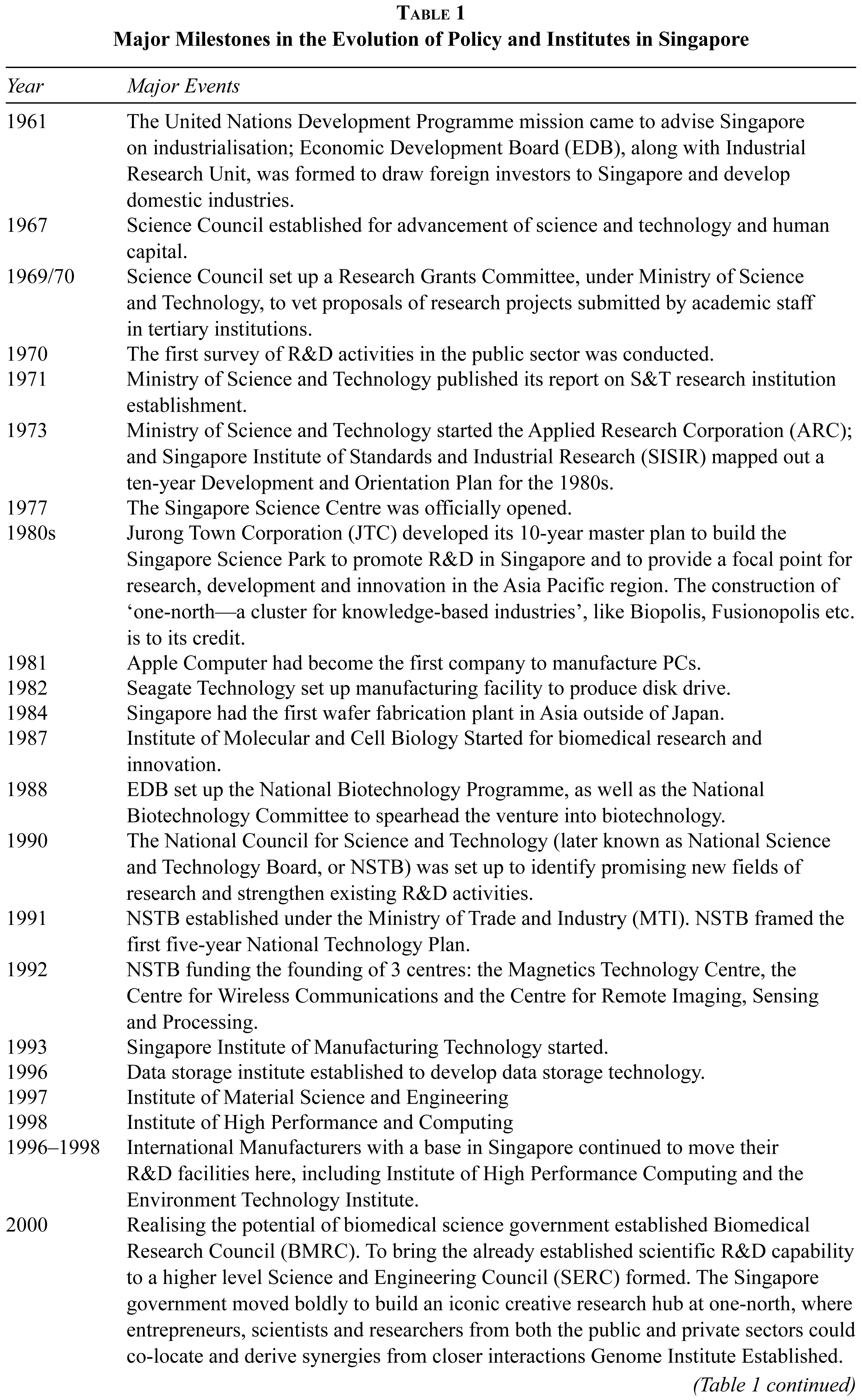
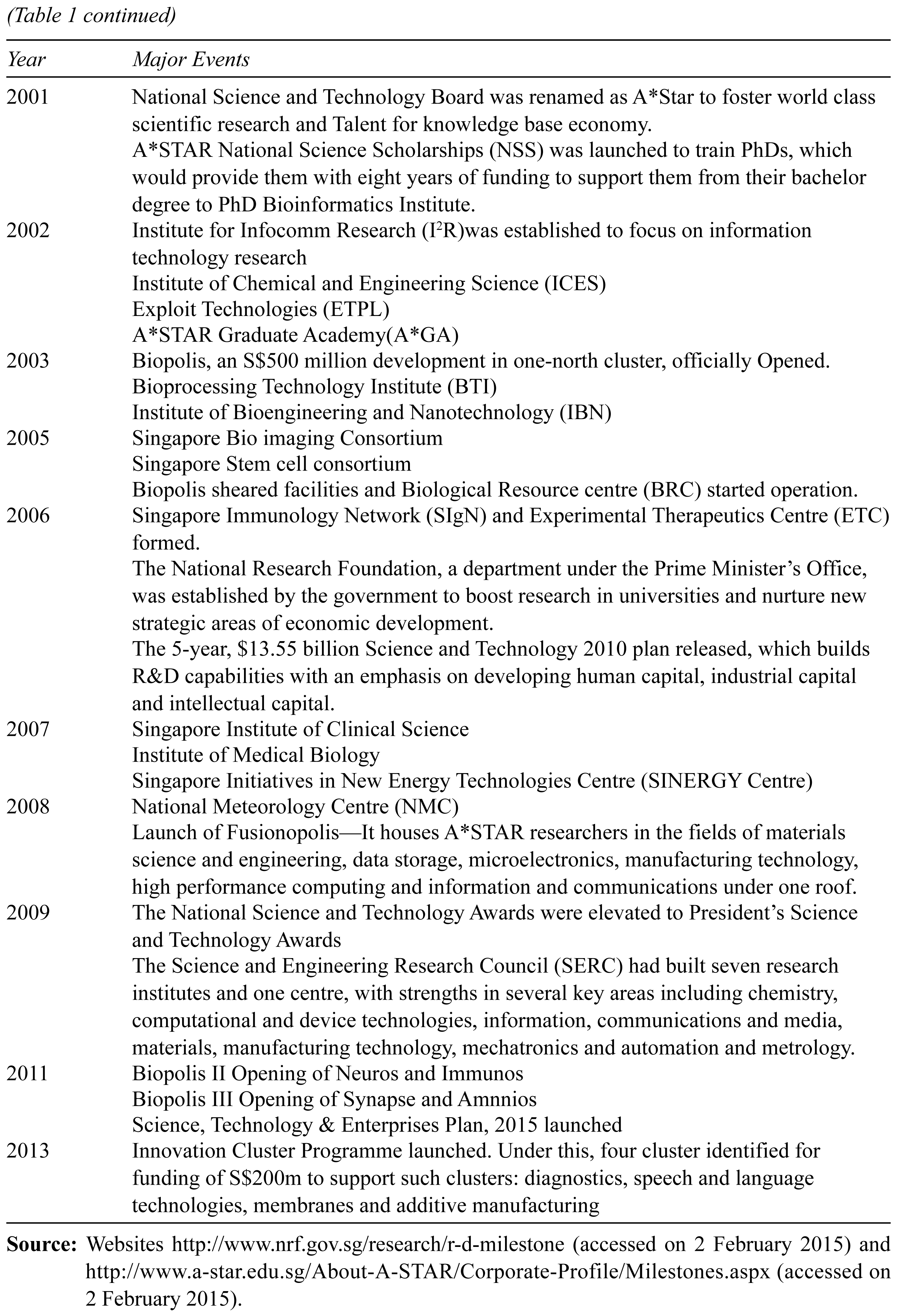
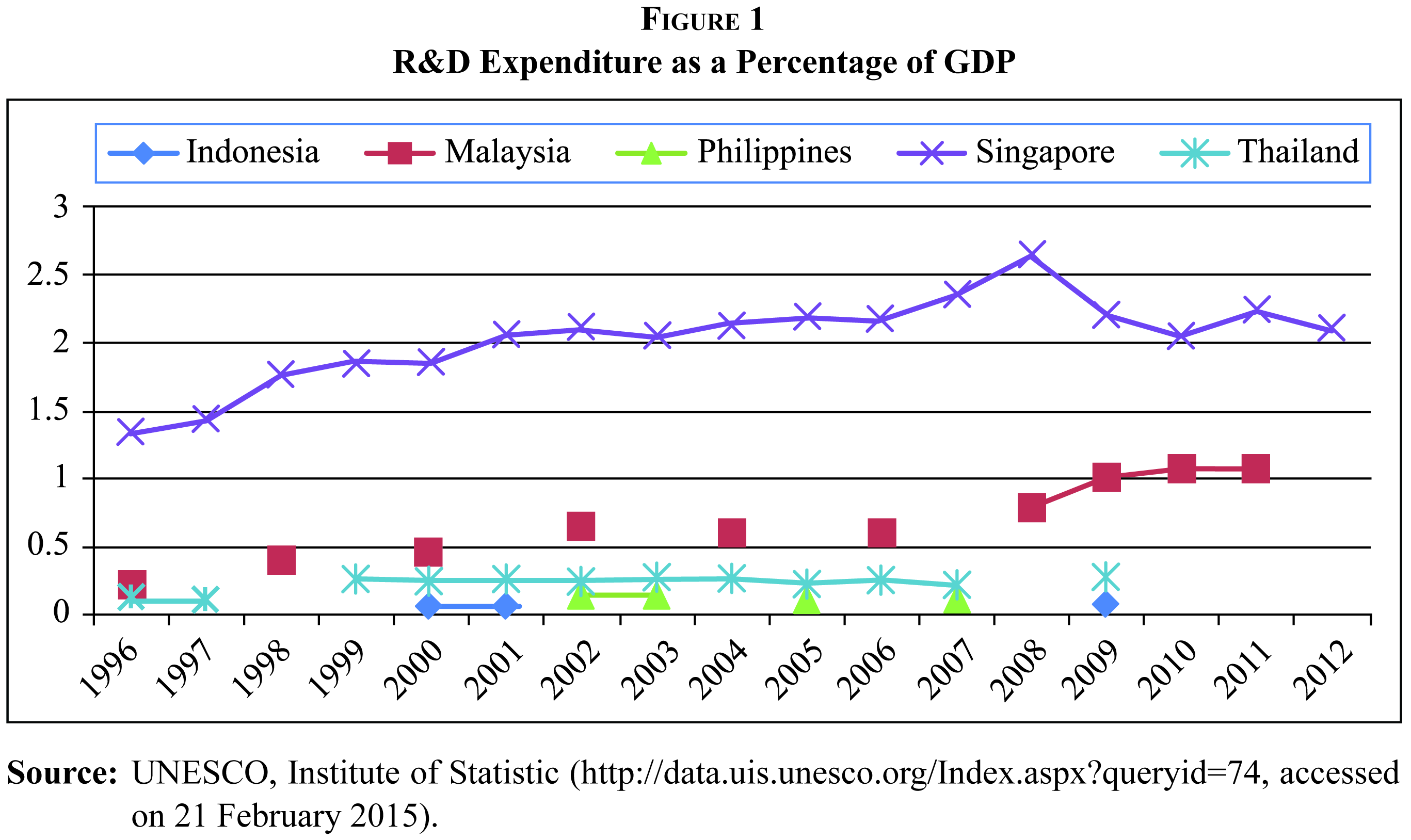
All these STI policies and allocations (see Table 2) followed various expert groups and committees to draw appropriate ‘road maps’ to systematically steer science and technology institutions towards innovation. Competitiveness Report 1998; Technopreneurship 21 (T21) in 1999; Manpower 21 Report; A*STAR special schemes to attract foreign science leaders and research students; and the recent Science and Technology (2011–2015) Plan have all been focusing on this objective since the beginning of 1990s. The government is committed to increase the current 2.1 per cent GDP for R&D to 3 per cent in the coming couple of years that will take Singapore above OECD average 2.3 per cent. These efforts put Singapore in a league of select group of countries in the world. State mediation through initiating science, technology and innovation policies has been a determining factor for the evolution of Singapore S&T system as it exists today. As Figure 1 shows, Singapore increased her R&D as proportion of GDP from little less than 1.5 per cent in 1996 to 2.2 per cent in 2012. None of other neighbouring countries such as Thailand, Indonesia, Philippines and Malaysia could match Singapore in these figures. Only Malaysia registered around 1 per cent of GDP for R&D around 2010–2011.
FDI and Business Enterprises
No less important has been the part played by foreign enterprises. Singapore announced various flagship programmes (see Table 5) through direct state support as well as public–private partnership in S&T by attracting global talents, technology investors and research collaboration with internationally renowned research institutions and R&D firms. Singapore’s rapid technological development in the 1970s and 1980s depended on liberal economic policies of export promotion and open invitation to Foreign Direct Investment (FDI). This has been crucial for the establishment of electronics and chemicals cluster. Quality, efficiency and systematic delivery systems developed as part of organisational innovations boosted exports and at the same time enabled the enhancement of technological capabilities in manufacturing and production of goods and services. According to some estimates there are some 7000 foreign firms operating in Singapore and the most important of the sectors and clusters is the biomedical sector.
Science & Technology Plan of Singapore (1990–2015)

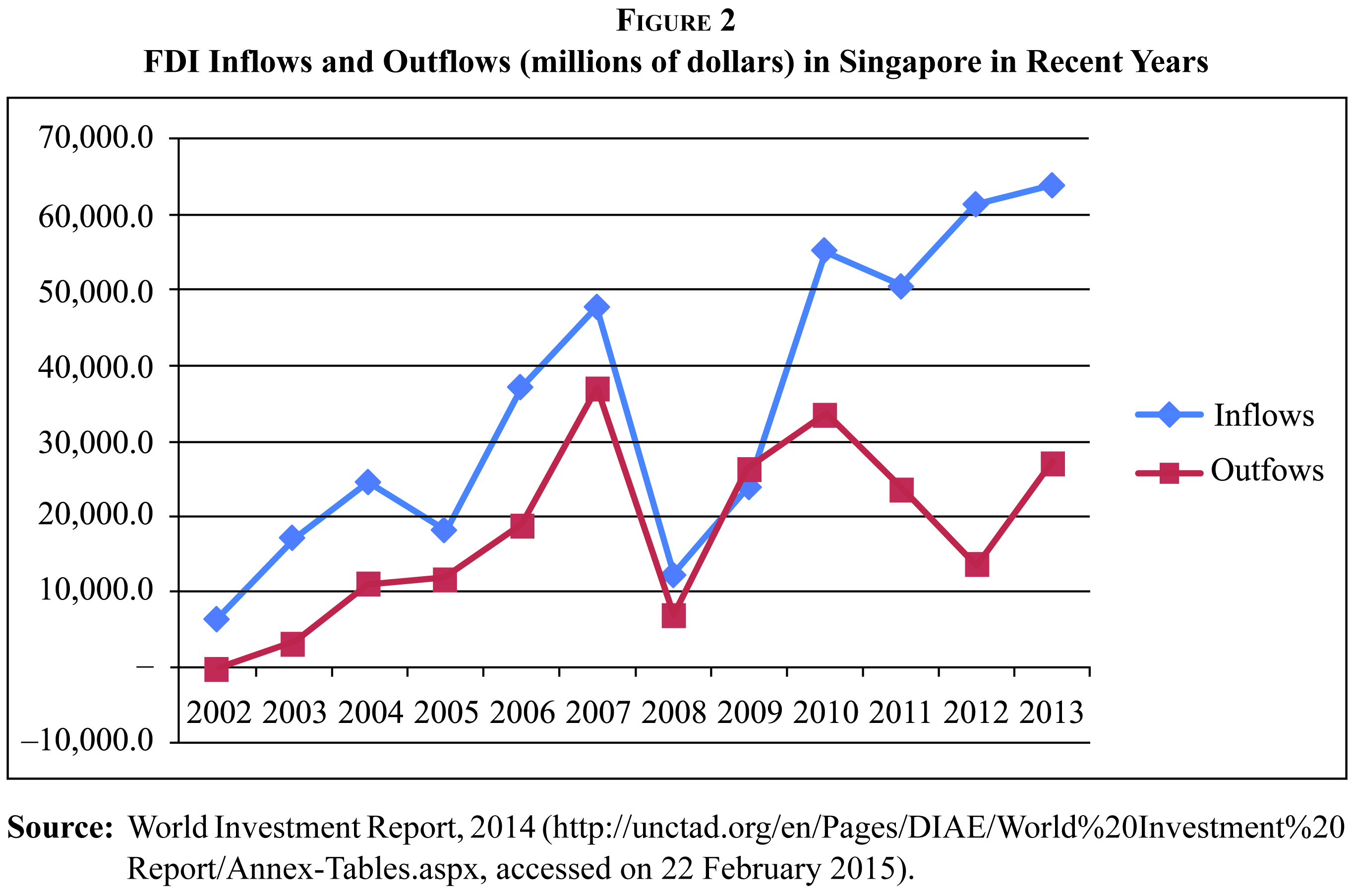
Pharmaceuticals and biomedical sectors (BMS) evolved as dynamic growth sectors since the late 1990s. As a part of growing biomedical manufacturing science sector, the medical technology industry output almost tripled in ten years from S$ 1.5 in 2000 to S$ 4.3 billion in 2011, employed from 4000 to 9000 personnel and accounts for around 9.5 per cent of national GDP due to overall BMS. 3 The tremendous growth of biomedical industry in the last decade is an important demand side link in the Singapore biotechnology innovation system, whereas the Biopolis (which houses both public and top notch private R&D labs as Novartis) serves the role of supply side link in the innovation system. On the whole, FDI created not just a favourable industrial background for S&T system but a source of transnational inflow of talents, technology transfer, skills, experience and capital. In fact, it is a part of the larger research ecosystem through which the strategic policy is to promote by attracting foreign firms as well as nurturing local small and medium enterprises, attract global talents for high-end research and develop local scientific community and lastly by collaborating with international renowned research universities and institutions for building world-class institutions within Singapore (Kam et al., 2003). 4 As Figure 2 shows, Singapore has been one of the top countries for FDI and has been in rising trend, with the exception of 2007–2008 due to global economic slowdown and financial crisis. 5 As per the world investment report ranking of Inward FDI performance and potential index in 2005, Singapore ranked 5th and 2nd respectively among 141 countries. However, the global crisis sharply affected the Singaporean economy more than any other ASEAN economy. It picked up fast with renewed restoration of investment confidence and in 2012 & 2013 Singapore listed in top 20 host economics with more than $60 billion FDI inflow each year. 6 The raking of Inward FDI performance index of Singapore from 2008, 2009 and 2010 significantly improved from 61st, 20th to 9th, respectively. 7
Role of Universities and Research Ecosystem 8
Universities
Education in Singapore always implicitly followed Hobbes and Marx’s orientations where social and economic value of specialised knowledge become paramount to industrialisation and capitalist structure of economy (Kong, 2000). ‘Alongside the goal of enhancing national cohesion through educational policy, economic functionality remains a cornerstone of educational policy in Singapore’ (ibid., p. 1). Singapore has three major universities: National University of Singapore (NUS), Nanyang Technological University (NTU) and Singapore Management University (SMU). For lack of space we will briefly explore NUS. NUS, is the oldest and largest public university of Singapore with the current total enrolment of about 36,000 students in 2014.
In the decade (1997–2007) NUS emerged as key actor of the national S&T system. The R&D budget of NUS on an average accounted for around 35 per cent of total higher education R&D budget for the decade 1997–2007. It increased from S$ 101 million in 2003 to more than threefold to S$ 366 million in 2007. NUS attracted nearly S$ 450 million for three major centres of excellence during 2006 and 2009. Human resources (particularly research scientists and engineers including medical professionals) play an important part in the national R&D effort and towards emerging national science community. NUS contribution to skilled human resources in the tertiary sector has been quite substantial since the last two and a half decades from 1980 to 2006. NUS accounted for 25 to 27 per cent of total tertiary sector skilled human resources and nearly 50 per cent of higher education research scientists and engineers all through the period. The significance of NUS human resource base to the country’s S&T system as a whole is also reflected in the knowledge production. NUS accounted for 45 to 50 per cent of total national R&D output measured in terms of peer reviewed S&T publications for the decade 1997–2013. As Table 3 shows, Singapore emerged as one of the lead science producing countries in the ASEAN region. In 1980 Singapore published 258 science publications measured in terms of Science Citation Index—Expanded Version, compared to Malaysia (452); Thailand (457); the Philippines (241); and Indonesia (182). As the table shows, in little more than two and a half decades, Singapore leapfrogged leaving its ASEAN neighbours far behind. In fact, Singapore’s international peer reviewed publications surged by 214 per cent during the period from 3963 in 2000 to 12440 in 2014. Without much local science and technology base about two decades back, the country built up an enviable national science and technology (S&T) system with top class universities. For instance, according to Times Higher Education rankings, NUS ranked at 21st position in 2014 among top 50 world universities. Singapore in now counted among the six leading Asia-Pacific countries in the world of science.
Advance Research Initiatives and Groups through Foreign Talents 9
With Singapore’s transition into knowledge-driven economy, NUS embraced the role to serve as key engine of knowledge creation and innovation. NUS promotes cross disciplinary collaboration in research. NUS adopted the global and multi-disciplinary research strategy by collaborating with other global institutions. NUS had signed over 130 research collaboration agreements during 2005–2010. NUS’ core research mission is to undertake fundamental cutting-edge research that addresses important questions relevant to Singapore and globally, and to use this research capacity to train quality human resources and skills at graduate and undergraduate levels. From 2000 NUS launched some advance research initiatives in the frontier areas of sciences, 10 engineering and social sciences. Table 4 shows some prominent advance research institutes and centres of excellence established in the last decades.
All these advanced research centres and initiatives are led by professionals and faculty who spent long years in Europe and North America in leading universities and research institutes. All these professionals have very high international reputations in science and technology fields. Dr Joachim Luther, head, SERIS, is an internationally recognised scientist in solar energy. Dr Daniel Tenen, Head of Cancer Research Center of Excellence, moved from Harvard Medical School to NUS. Similarly, Dr Michael Sheetz who spent long years as professor in Columbia University’s biological sciences moved to NUS to head a Mechanobiology Research Center of Excellence.
International S&T Publication Profile of Select ASEAN Countries 1980–2014

Advance Research Institutes 1 and Centres of Excellence
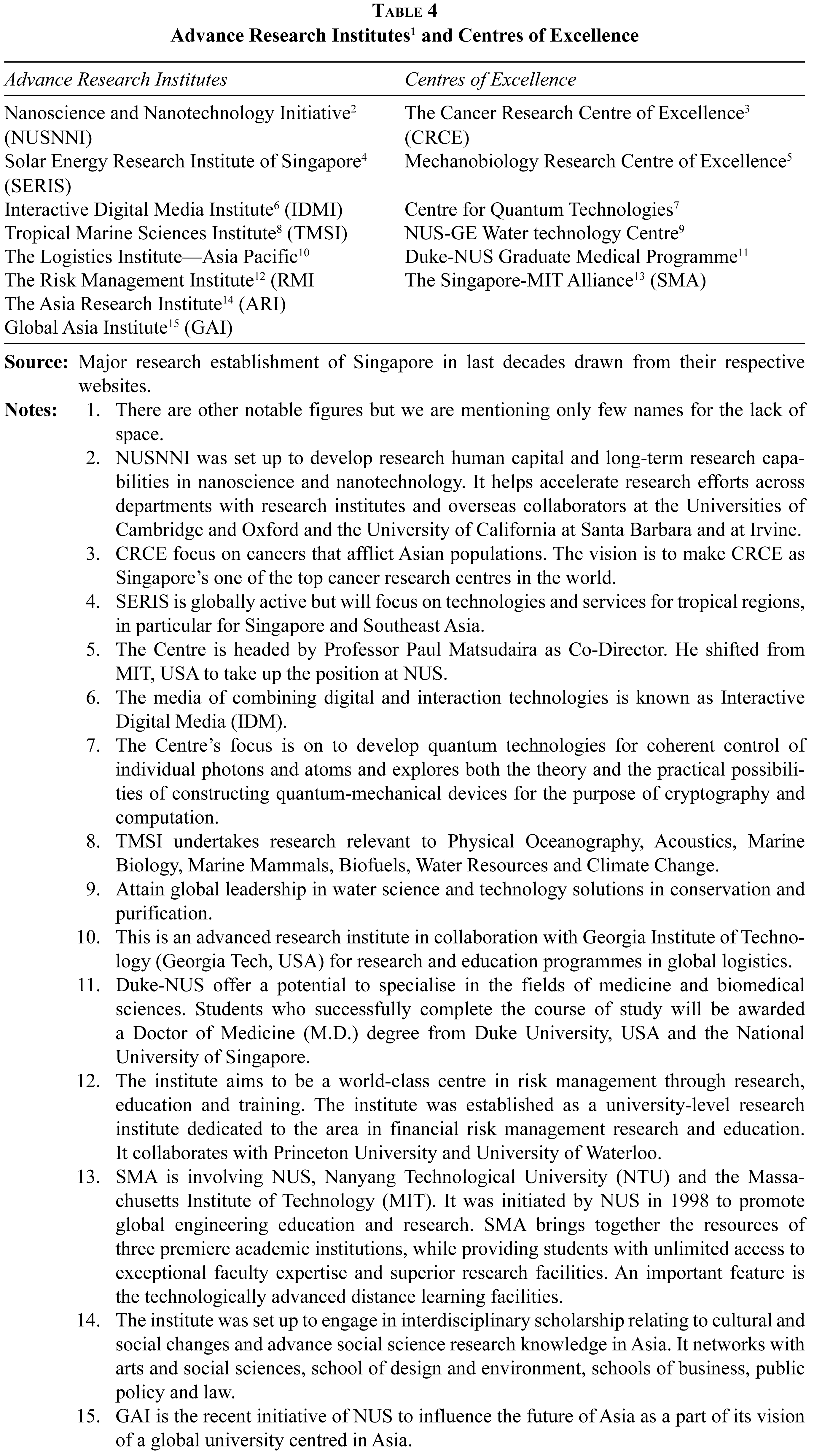
2. NUSNNI was set up to develop research human capital and long-term research capabilities in nanoscience and nanotechnology. It helps accelerate research efforts across departments with research institutes and overseas collaborators at the Universities of Cambridge and Oxford and the University of California at Santa Barbara and at Irvine.
3. CRCE focus on cancers that afflict Asian populations. The vision is to make CRCE as Singapore’s one of the top cancer research centres in the world.
4. SERIS is globally active but will focus on technologies and services for tropical regions, in particular for Singapore and Southeast Asia.
5. The Centre is headed by Professor Paul Matsudaira as Co-Director. He shifted from MIT, USA to take up the position at NUS.
6. The media of combining digital and interaction technologies is known as Interactive Digital Media (IDM).
7. The Centre’s focus is on to develop quantum technologies for coherent control of individual photons and atoms and explores both the theory and the practical possibilities of constructing quantum-mechanical devices for the purpose of cryptography and computation.
8. TMSI undertakes research relevant to Physical Oceanography, Acoustics, Marine Biology, Marine Mammals, Biofuels, Water Resources and Climate Change.
9. Attain global leadership in water science and technology solutions in conservation and purification.
10. This is an advanced research institute in collaboration with Georgia Institute of Technology (Georgia Tech, USA) for research and education programmes in global logistics.
11. Duke-NUS offer a potential to specialise in the fields of medicine and biomedical sciences. Students who successfully complete the course of study will be awarded a Doctor of Medicine (M.D.) degree from Duke University, USA and the National University of Singapore.
12. The institute aims to be a world-class centre in risk management through research, education and training. The institute was established as a university-level research institute dedicated to the area in financial risk management research and education. It collaborates with Princeton University and University of Waterloo.
13. SMA is involving NUS, Nanyang Technological University (NTU) and the Massachusetts Institute of Technology (MIT). It was initiated by NUS in 1998 to promote global engineering education and research. SMA brings together the resources of three premiere academic institutions, while providing students with unlimited access to exceptional faculty expertise and superior research facilities. An important feature is the technologically advanced distance learning facilities.
14. The institute was set up to engage in interdisciplinary scholarship relating to cultural and social changes and advance social science research knowledge in Asia. It networks with arts and social sciences, school of design and environment, schools of business, public policy and law.
15. GAI is the recent initiative of NUS to influence the future of Asia as a part of its vision of a global university centred in Asia.
In a country such as Singapore, the geographical proximity of NUS to research ecosystem is quite convenient for communication and access. Interestingly, NUS is located in the middle of Singapore’s main research ecosystem with over 75 per cent of actors, agencies and institutions that are physically located in geographical proximity of less than 6 to 7 km radius. Other main actors of this research ecosystem are as follows:
Fusionopolis brings together, under one roof, research scientists, engineers and technology experts from the public labs of the Agency for Science, Technology and Research (A*STAR) and those from the private sector. Even though they vary in their organisational goals, they share the common goal of advancing technology in a number of research programmes. They are working together in teams in the different disciplines housed in the Fusionopolis. There are five leading national laboratories here in engineering, chemical information and media technology. 13 The co-location of scientific labs and other organisations are meant to promote public–private collaborations. The proximity of Fusionopolis and Biopolis enables close collaboration between life sciences, physical sciences and engineering and with the faculties at NUS.
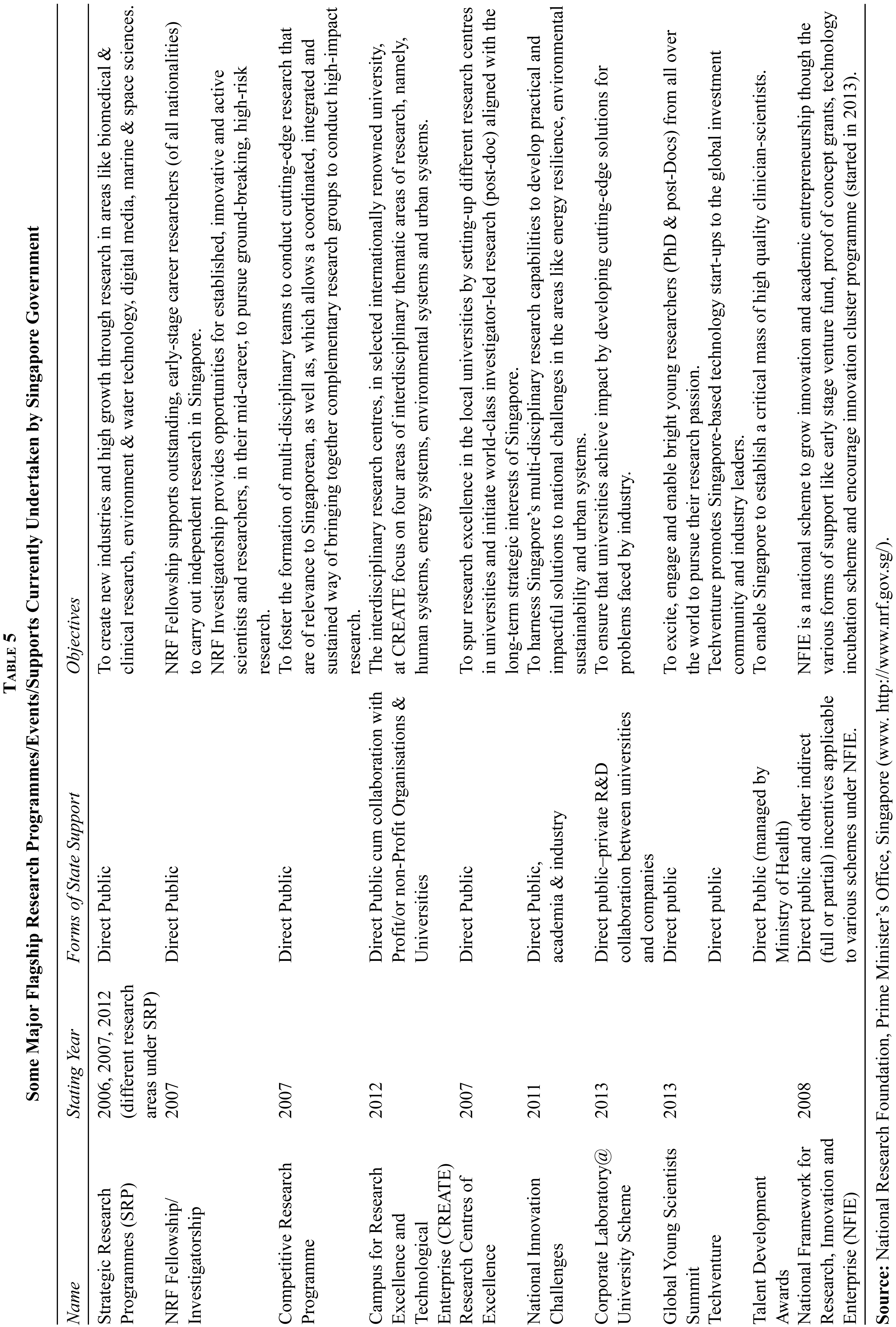
Perhaps, Singapore is the only nation, notably a conservative on most social issues like banning most type of chewing gum, but emerging as the most popular destination for stem cell research, especially during Bush administration in the USA to restrict federal funding. 17 Still Singapore evolved as one of the most dynamic research ecosystem, innovative clusters and various world-class competitive research institutes and successful science, technology & innovation policies/programmes as aforementioned. On the other, Singapore economic strategy needs to diversify from declining rate of return on electronics industry to biomedical research as a ‘fourth pillar of the economy’, which is fast emerging industry in top-notch research intensives areas of innovation. In this regard, Singapore has given a strong signal and sustained commitment to attract globally reputed scientists with liberal funding, organisational freedom and autonomy (Smaglik, 2003). Especially, the establishment of National Research Foundation (NRF) directly under Prime Minister’s Office (PMO) in 2006 with a mission to set long-term direction to research and innovation by ensuring a consistent policies, plans and programme as well as scaling up research capabilities by nurturing research talents from all over the world to Singapore. Table 5 lists out various flagships programmes directly monitored by PMO that plays a significant part to attract reputed scientists and researchers from renowned research institution.
For instance, Table 5 shows that NRF fellowship scholarship programmes does no discrimination on the basis of nationality and so far 63 NRF fellowship granted represent 22 nationalities 18 in NUS, advanced research institutes and centre for excellence, A*Star agencies etc. Likewise, there are flagship programmes through which government promotes academic entrepreneurship and collaboration with public–private partnerships in universities along with facilitating such objectives through other programmes to motivate young researchers like Global Young Scientists Summit and Talent Development Awards to generate critical pool of scientists to do high-end work in frontier areas of research within Singapore.
Biopolis
Biopolis houses some eight national laboratories engaged in biomedical-related R&D activities (Table 6). It can be taken as the vibrant and most visible representative of Singapore science community. Singapore launched Biomedical Research Council (BMRC) in 2000 as a bold move to build creative research hub in 2003 to attract entrepreneurs, scientists, local and foreign companies to establish, co-locate R&D operations to nurture locally the world-class knowledge-based industrial clusters. Over the period biomedical science (BMS) industry grown to become one of the major contributor to national GDP and BMS manufacturing output increased by nearly fivefold from $6 billion in 2000 to $29.4 billion in 2012 and during the same period the employment grew by more than twofold from 6000 to 15700. BMS industry rose to $15.3 billion and it became a largest value added alone by contributing nearly 25 per cent of total manufacturing value added to the overall manufacturing sector of Singapore. 19
Some Major Flagship Research Programmes/Events/Supports Currently Undertaken by Singapore Government
Major Research Institutes at Biopolis, Singapore

*GIS total strength (
**BII was set up by A*Star in July 2001 and re-launched with strong scientific programme and mandate at Biopolis in 2007.
***IMB Center for Molecular Medicine (CMM) reconstituted as IMB in 2007.
****IMCB set up in 1985 and moved to Biopolis as autonomous research institute in 2004.

Together with BMS industry, the government begun to establish Biopolis from 2003. As shown, in Table 7, 848 biological scientists are engaged in six laboratories. 20 More than 70 per cent of scientists working in these laboratories are foreign scientists who are given temporary migration in Singapore. As Figure 3 depicts, all the six laboratories in this empirical case have been active producers of knowledge and advancing the field of modern biological sciences in Singapore. In fact, Biopolis can be considered as the leading actor in advancing biological sciences in the whole of ASEAN region. One of the unique features of Singapore Biopolis is that this microcosm of Singapore science community is built through attracting global talents.
Attracting Global Talents
Perhaps this is the most unique feature of Singapore ‘style’ or ‘model’ in establishing science community through attracting global talents. It is unique because Singapore did not inherit any worthwhile base from the colonial regime on which it could build its modern science institutions as in the case of India. Local R&D institutions such as Singapore Institute of Standards and Industrial Research (SISIR), Applied Research Corporation and GINTIC Institute of Manufacturing Technology which were established during 1970s and 1980s were limited in their scope and the two major universities (NUS and NTU) were evolving as quality based respectable teaching institutions. It was only in the 1990s that these universities emerged as intensive research-based universities. AT NUS and NTU research groups and departments were established and evolved by recruiting faculty with international reputations from outside Singapore. At NUS one key institutional initiative in transformation education was through the internationalisation strategy of attracting best students and faculty from different countries to Singapore. From around 10 per cent in the 1980s, the foreigners among faculty increased to 39 per cent in 1997 and then to over 50 per cent of total in 2007–2008. Approximately non-Singaporean Asian faculty (from Malaysia, India, China and other Asian countries) account for 30 per cent and European and North American account for 20 per cent in 2007–2008. The foreigner’s share of researchers has increased to around 75 per cent in 2007. Among the student population, the foreign students increased from 13 to 34 per cent over the decade 1997 and 2007. Thus among 31,000 total students over 10,000 foreign students from over some eighty countries pursue their studies at NUS (see Ramakrishna & Krishna, 2011).
In the 1990s when the country began to establish front ranking research institutions in advanced biotechnology and material science fields, serious efforts were made and attracted top ranking global talents in science and technology to give a leadership to various institutes. Most science leaders who came to Singapore have had flourishing academic and research careers in top universities of the world. Jackie Ying was a full professor at MIT for 11 years before taking over as the head of Institute of Bioengineering and Nanotechnology; Edison Liu was the Director of the US National Cancer Research Institute for over five years before assuming the charge at Genome Institute of Singapore. It was certainly not only the money which attracted these talents to make Singapore their research ‘life-world’ and home but also the research ecosystem and world class research facilities created in the complexes at Biopolis and at NUS.
As Edison Liu observed,
I am a researcher who gave up the practice of medicine to pursue uncertain future as biomedical researcher … I am a foreigner who decided to make Singapore my home and I brought my family here. The opportunity to do good science in a big way what intrigued me (The Straight Times, 11 March 2007).
Jackie Ying observed that ‘in the US and elsewhere, scientists spend an enormous amount of time and effort raising funds for research. Here, we are blessed with significant resources to pursue the research we want to do and focus our energy on the lab work itself’ (The Straight Times, 13 May 2009). Similar is the case with NUS, which established four advanced centres of excellence for cancer, water technology, mechanobiology and quantum technology research during 2006–2010 with an investment of S$ 600 million. NUS attracted World’s leading scientists in their respective areas to give leadership to these centres. Congenial climate for research is not something, which is completely circumscribed by the world of science. Science is a social activity and a social institution influencing society as much as the latter shapes and influences research and creativity. It is this sub-culture, which has attracted foreign talents to make Singapore their home.
As Table 7 shows, out of 648 scientists in our case study of six Biopolis laboratories only 151 (23 per cent) are identified as scientists, researchers and trainees who obtained PhD from Singapore. Nationality status is not available for 204 (31 per cent) scientists. 293 (more than 45 per cent) are the scientists who had done PhD from abroad and working in biopolis who have made Singapore their home. Our interviews with a number of Singapore citizen scientists show that overwhelming of Singapore scientists are the ones who had taken government scholarships for doctoral and post-doctoral training abroad. Given the vibrant Biopolis and attractive remuneration (Singapore scientist salaries are about 300 per cent compared to scientists in Malaysia and more than 500 per cent compared to most ASEAN countries) and well equipped laboratories made them to return to Singapore. In any case they have indicated that they had to compete with foreign scientists to find placements in various laboratories.
Scientists, Researchers and Trainees at Biopolis
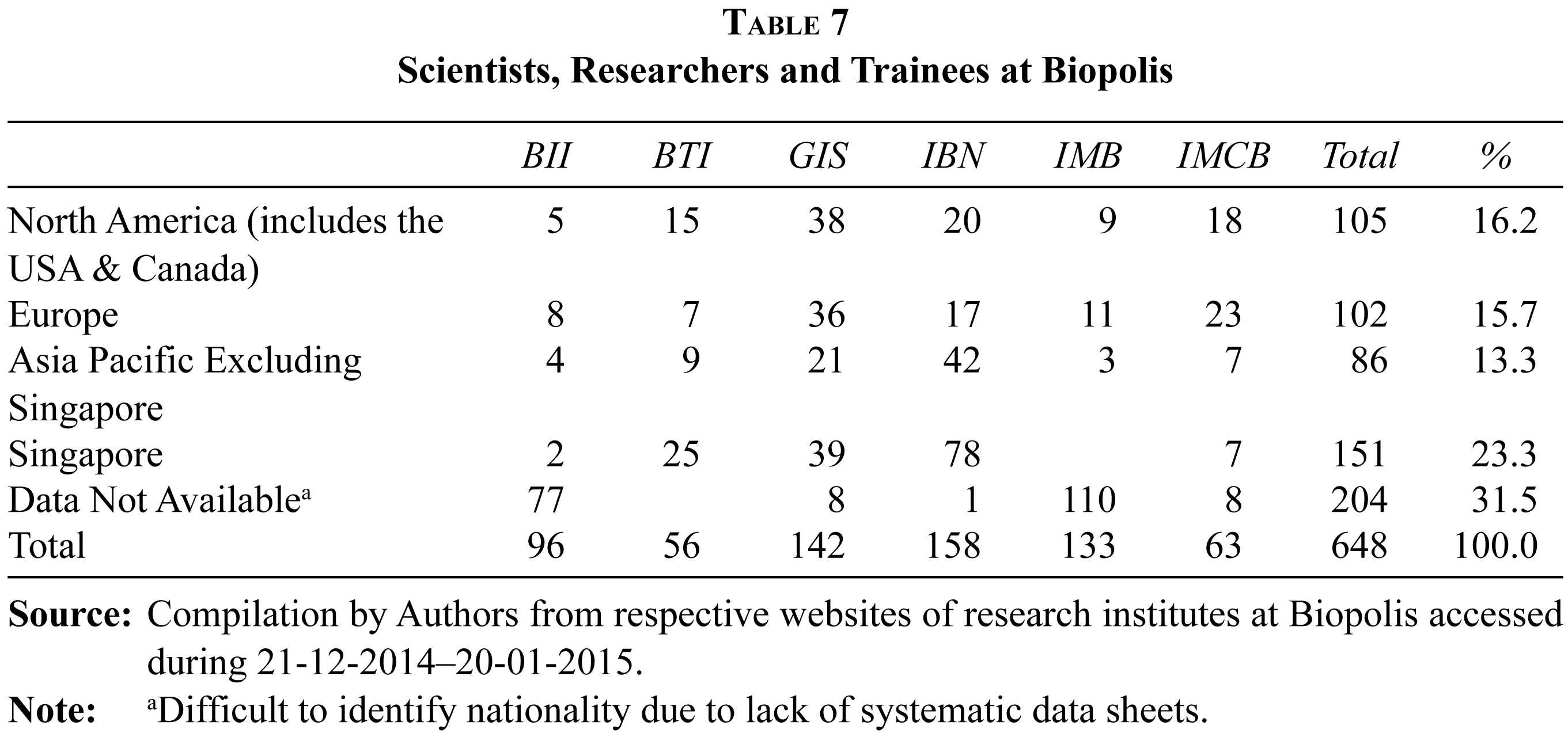
We have observed that nearly 70 per cent flow of scientists, whose data available from six research institutes at Biopolis, are from 26 countries and mostly from developed world. Among these countries the USA, the UK and China constitutes 16, 8 and 7 per cent respectively, except Singapore that alone constitute 23 per cent. If we further analyse the flow of Scientists, we observe that that from the USA, Biopolis attracted scientists from Stanford University, Harvard University, John Hopkins University, MIT, Princeton University and likewise best Ivy leagues scientists and others. From the UK, Biopolis attracted scientists from Oxford University and Cambridge University and others best institutions; from China, Biopolis attracted scientists from Tsinghua University, Peking University and Chinese Academy of Sciences among others renowned research institutes. Over the period, Biopolis became internationally competitive and it is a testament that Singapore government is committed to provide world class research facility and made a massive scientific recruitment ever in the whole ASEAN region.
Similarly, Figures 4 and 5 shows the flow of international students, researchers and scientists have sustained over the period with significant presence in Singapore.


Concluding Remarks
Beyond the top class research infrastructure in the research ecosystem, Singapore evolved as a global city with its cosmopolitan outlook which fosters pluralistic socio-cultural context. There is a conscious and positive globalising vision of developing the city state as a place for transnational flows of business, talents and skills. More than any other aspect, the Island nation has the big reputation of being a safe city where foreigners, men, women and their children feel very safe and secure. Bureaucracy is astonishingly efficient and it is easy to manage various social, legal and business affairs given the close proximity of various institutions which matter in day-to-day practical affairs of life. Multiculturalism, sincerity, religious tolerance and freedom and secular orientations of Singaporeans make the country as the ‘most highly preferred’ place compared to any other neighbouring cities. Complimentary to the culture of a global city is the high degree of internationalisation that is found in the universities and institutions of higher learning. NUS, NTU and SMU have been quite successful not just in promoting internationalisation and cosmopolitanism but have combined them with multiculturalism in building excellence by drawing on faculty and students from over 70 countries in the world. These institutions are comparable to top universities as Yale and MIT in this regard. No other Asian university has the distinction of promoting such a high degree of internationalisation and associated socio-cultural context.
‘Singapore has made an asset of its smallness’, as the Science journal from the American Association for the Advancement of Science once commented, in bringing together a ‘critical mass’ of scientific talents and resources. Singapore case demonstrates a unique experience in the formation of her science community. By all means what is emerging is in fact a ‘nascent’ and first generation science community. It is a ‘hybrid’ science community comprising various multicultural and multinational researchers who have made Singapore their research home. The country has been very successful in attracting global talents and science leaders in building her first generation science community but the important task ahead is the challenge of recurrently generating next generation talents and leaders from within her universities, R&D and S&T institutions. If North American countries such as the US have been able to successfully sustain the global flow of talents and its multinational composition there is little reason to believe otherwise in the case of Singapore. However, what differentiates is the composition of research and PhD students in leading the US and Singapore universities. For instance, whilst in most Ivy League institutions as Yale and MIT, PhDs and research students comprise over 50 per cent of total student population, it was just less than 17 per cent in the case of NUS around 2008–2010. There is a big challenge to build and enhance the doctoral research base in all the universities and institutions of higher education in Singapore. For instance, it is observed from the publication data of five ASEAN countries, the compounded annual growth rate and average annual growth from the period of 1990 to 2014 is 11.93 and 12.22 per cent by Singapore whereas during the same period Malaysia is catching up fast with 15.05 and 15.72 per cent respectively (authors own compilation), especially after 2000 such shift is more visible.
The impetus to the growth of science and knowledge institutions in Singapore has been market and economic factors. As such, R&D and S&T enterprises are conceptualised and evaluated within the perspective of ‘science as an investment’ factor compared to ‘science as consumption’ factor. Science and systematic knowledge builds on its intellectual and cultural foundations. A much more ‘space for science’ devoid of economic overheads is desirable in nurturing young scientific community, which will also foster excellence and creativity.
Promoting science–society relations assumes considerable importance in building knowledge-based societies. Public understanding of science (PUS) is given a very high importance by bodies such as Royal Society of London and in most OECD countries to address issues concerning risk in new technologies and in bridging public mistrust in science. As advances in modern science and technology come to shape our lives in a big way today as never before, it is necessary to build a harmonious science and society relation. There is a generational gap in the way the significance of modern science is appreciated in our society. In the context of Singapore, PUS deserves much more attention and support than it draws currently. Professional bodies and science associations, such as the Singapore National Academy of Sciences (SNAS) and Institution of Engineers Singapore (IES), can play a much larger part in such challenging endeavours.
Closely related is the aspect of science education challenge confronted by most industrially advanced countries. As Professor Lui Pao Chuen, Advisor to the National Research Foundation noted in 2009, ‘the enrolment in physics in junior colleges has declined from 80 per cent in 2000 to 40 per cent today’ in Singapore. This is despite the fact that more than 67 per cent of secondary school children have good math and science foundation. A much more serious concern in a globalised world is the problem of ‘internal brain drain’. The best of high school science students are not so much inclined to taking up science disciplines including physics at tertiary level as much as they are inclined towards more ‘lucrative’ subjects like economics, finance and marketing, media and entertainment, computer science among others.