




Abstract
Video games featuring violent contents have become more and more prevalent among children and teenagers. It is therefore imperative to ponder on questions such as ‘Are violent video games dangerous digital games?’ and ‘What negative emotions do they trigger in gamers?’ As such, this study aims to explore the negative emotions that violent video games trigger in gamers and determine the cause for each negative emotion. For the purpose of this research, Resident Evil, a violent video game, has been chosen as the focus. Taking the gamer’s perspective, the study aims to explore and construct a thorough network structure (game triggered event—gamer’s personal belief—feeling of negative emotions) of gamer’s emotions, the structure of gamers’ emotional cluster and the correlation and level of inter-influence between relevant factors. Results of the study reveal that the overall hierarchical value map (HVM) not only presents a comprehensive gamer emotional network structure but also offers a clear illustration of how key game activating events (enemies, stage mission, BOSS level monsters, horror atmosphere, third-person view) lead to the formation of gamers’ personal beliefs of character death, high difficulty, trigger negative emotion, being frightened, enemy ambush and tough enemies, which ultimately lead to negative emotions such as fear, worry, anger, disgust and frustration on gamers’ part. In addition, among the five gamer emotional clusters, the clusters of fear and anger had the heaviest influence on the gamers. The correlation between factors and influence showed different levels of significance.
Introduction and Research Purpose
W

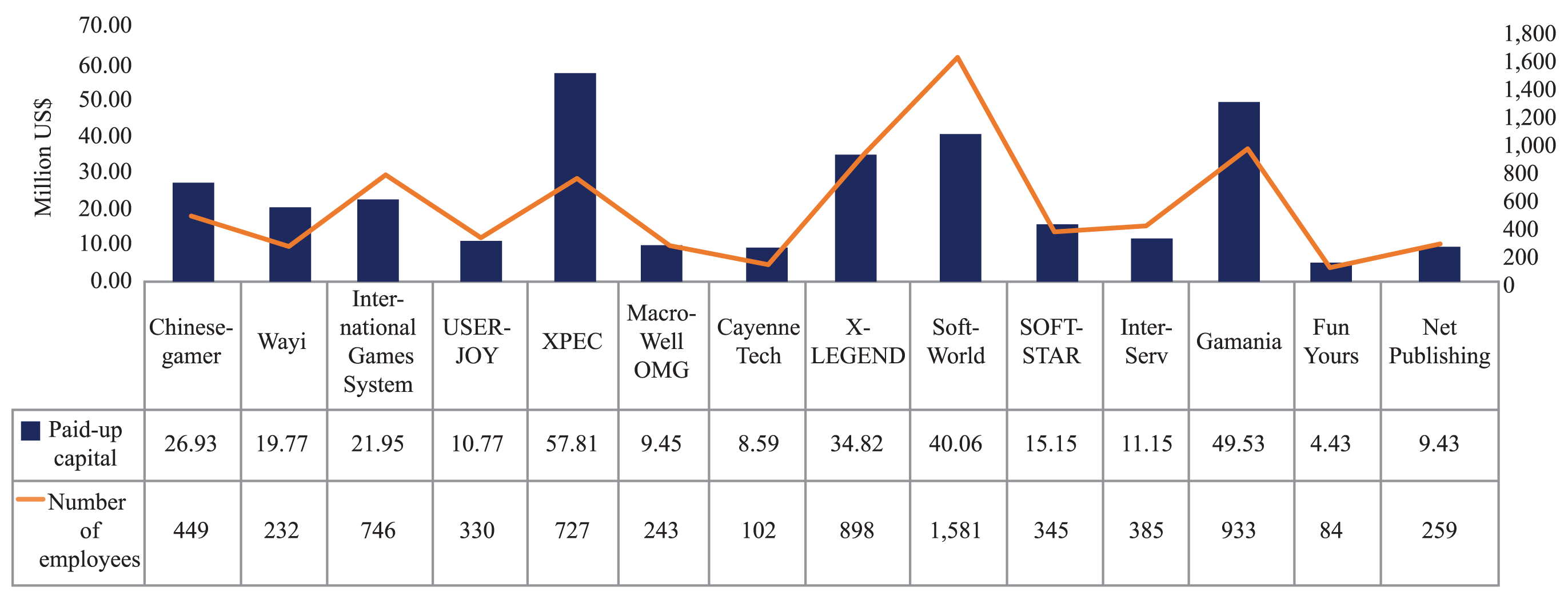
In Asia, the Taiwan government has formulated the ‘Two Trillion and Twin Star Development Program’ in order to speed up industrial upgrading and enhance its international competitiveness, thereby establishing Taiwan’s development core and the emerging industrial policy direction. In particular, ‘Two Trillion’ refers to the semiconductor’s industry and image display industry’s future output forecast, each accounting for over NT$1 trillion. ‘Twin Star’ refers to the digital content industry (including software, digital games, music, animation, Internet services, etc.) and the biotechnology industry (National Development Council, R. O. C., 2016). Taiwan Business TOPICS (2016) further pointed out that Taiwan’s advanced semiconductor technology and outstanding technical talents have not only facilitated sound development in hardware computer equipment but also enabled the successful development of software game development. There are fourteen Taiwan Stock Exchange Capitalization Weighted Stock Index (TAIEX) listed and over-the-counter (OTC) listed digital game companies in Taiwan (Taiwan Economic Journal Co., Ltd, 2017). Among them, International Games System, XPEC, Soft-World, SOFTSTAR, InterServ, etc. not only have self-developed online games, web games and mobile games but also focus on the development of video games. In particular, the more internationally renowned video game ‘Final Fantasy XV’ has been designed and developed by a Taiwanese game company XPEC. The paid-up capital of game companies in Taiwan falls under the range of US$ 4.43–57.81 million, with employees in the range 84–1,581 people (shown in Figure 2).
In 2014, the three most popular video game genres were Social Games (31 per cent), Action (30 per cent) and Puzzle (30 per cent), with action and shooter games being the bestsellers (at 28.2 per cent and 21.7 per cent, respectively) (Entertainment Software Association [ESA], 2015). However, it is important to note that not every game is suitable for all gamers. Numerous video game titles tout violence and gore as their primary selling point (Dietz, 1998). According to statistics from ESA, 69 per cent of the parents would check the Entertainment Software Rating Board (ESRB) rating before buying a game. Although most parents are not worried that their children might be affected by violent video games, they are concerned that other children might be (Kutner et al., 2008).
There are an increasing number of next-gen video games that feature substantial amounts of violence rendered with high realism. Incidentally, popular storylines among gamers involve human criminals engaging in repeated acts of violence with justification. The aforementioned acts of violence usually involve the use of weapon that causes the victims to bleed (Smith, Lachlan, & Tamborini, 2003). As such, violent video game can be defined as games with elements of intentional behaviour that results in bodily harm for specific in-game characters (Pober et al., 2008). Certain designs in violent video games exacerbate gamers’ acts of violence, such as offering direct rewards for feats of violence, use of firearms on targets, enabling gamers to attack other players, rendering acts of violence in highly realistic multimedia presentation and so forth (Paik & Comstock, 1994). There is no doubt that video games with violent contents have become very common among children and teenagers, and this is especially true for boys (Vorderer et al., 2006).
A number of research works indicated that violent video games have almost non-existent influence on gamers. According to Sherry (2001), the aggression generated by violent video games is in fact less than that from watching TV programs with violent contents. Some studies even suggested that exposure to violent video games could mitigate aggressive behaviour (Unsworth, Devilly, & Ward, 2007). It is worth considering while as much as 97 per cent of the youths today have played video games with violent contents, the negative impact on them appears to be negligible (Lenhart et al., 2008). In fact, children who play video games on a regular basis tend to outperform those who do not in the areas of social interaction and civic engagement (Durkin & Barber, 2002). The so-called ‘aggression’ that has been identified in many violent video games has rather limited correlation to acts of aggression or violent behaviour in the real world (Ferguson & Rueda, 2009). Overall, contents of violence in video games do not show significant correlation with responses of actual aggression (Durkin & Barber, 2002). This fact has further debunked the notion that violent video games are dangerous digital games (Sherry, 2007).
On the other end of the spectrum are studies that argued the violent contents of video games could in fact cause aggressive behaviour in gamers. Different theories have been presented to validate the possibility that exposure to violent video games may trigger short and long-term acts of aggression (Anderson, 2003, 2004) and violence among gamers and even impede their inclination to display prosocial behaviour (Anderson & Bushman, 2001). Some research works even go as far as claiming that violent video games not only impede children’s performance in schoolwork, social skills and exercises but also result in negative impact including aggression, loss of environmental attention and social withdrawal (Kutner et al., 2008). These studies also pointed out boys who play violent video games are more likely to show physical acts of aggression on their peers (Krcmar, Farrar, & McGloin, 2010). As for female gamers, due to specific social factors and influences, they are more inclined to be less interested in the presentation of violent contents (Slater et al., 2003). Some scholars have also proposed that as video games emphasise competition and violent contents, female gamers might become intimidated and give up their desire to play (Funk & Buchman, 1996).
Some studies also suggested that violent video games could also cause gamers to experience depression (Ferguson, 2010). There are also studies that identified factors including difficulty, competitiveness, pace of action and complexity of control as important variables for violent video games (Adachi & Willoughby, 2010; Valadez & Ferguson, 2012). Mandryk and Atkins (2007) also regarded the emotional experience as the key measurement of a game playing. Nevertheless, few studies have explored the negative emotions that violent video games trigger in gamers nor examined the elements/characteristics of games that lead to specific negative emotion. As such, this study has chosen the A-B-C model of emotion to illustrate the process of gamer behaviour cognition formation with Resident Evil (the title that aptly represents violent video games) as the topic of the study. This study was conducted in Taiwan which is situated in Asia. Taiwanese people with Resident Evil game experience were adopted as research samples. This study shall be focused on three specific objectives: 1. to examine the game activating events (attributes) in the violent video game ‘Resident Evil’ and personal beliefs and emotional feelings that gamers rarely display to construct the full ‘game activating event—gamers’ personal beliefs—emotional and behavioural consequences’ emotional network structure; 2. to examine the emotional cluster structures constructed by the target gamers in order to shed light on the process of diversified emotional linking from gamers’ perspective; and 3. to explore the correlation and levels of inter-influence among various factors.
Theoretical Background
Resident Evil
Survival horror games are titles that involve players assuming the role of ordinary human being characters in environments that have been populated with demons, zombies or ghosts (Kelman, 2004). Famous survival horror titles include Resident Evil, Silent Hill, Clock Tower, Forbidden Siren, and Fatal Frame. Resident Evil has been classified as an action video game under the genre (Chisholm et al., 2010). In the world of Resident Evil, an artificial virus has been the root of much chaos and destruction as it not only turns the infected into zombies but also mutates a number of the infected victims into horrendous monsters. In addition to fighting and fending off zombies, players will also be required to search for various clues and information as offered during the story plot in order to complete the final objective of the game. As the game creates an eerie and ominous ambiance coupled with gory and frightening images, it has successfully delivered feelings of intense fear and other negative emotions for the player (Zagalo, Torres, & Branco, 2005). In Resident Evil, players are required to use an assortment of skills (Rouse, 2001) and items such as maps, books and diaries to obtain information and take appropriate action. These activities are interspersed throughout the game play, which itself requires the gaining of experience with and control of the joypad. As such, the Resident Evil game player is a highly active and interactive player (Lay, 2007).
The Resident Evil franchise has sold 62 million copies around the world to date (Capcom, 2015a). Recent iterations of the game such as Resident Evil 4, 5 and 6, have sold 2.3 million, 6.8 million and 6.2 million copies across all console platforms (Capcom, 2015b). Despite having been reviewed with ‘perceived violent and gory game-play’, the franchise has not only been critically acclaimed but also heralded as a signature title for the survival horror genre (Lay, 2007).
Early iterations of Resident Evil titles featured static, pre-rendered background with fixed camera as the style of its image presentation. With technological improvements, both the background and camera became dynamic for later titles in the series. Starting from Resident Evil 4, the franchise adopted third-person perspective and enabled players to play in fixed angle perspectives (Lay, 2007). For most of the Resident Evil titles, save function had been presented in the game as a typewriter (Kirkland, 2009). From Resident Evil 5 onward, the system would make automatic saves at specific segments in the game. In addition, to prevent the game from becoming too easy or too difficult that would cause gamers to lose interest in playing, Resident Evil 4 featured a ‘dynamic task difficulty’ concept that makes adjustments based on players’ performance during the game (Orvis, Horn, & Belanich, 2008). This feature will make the system automatically reduces the difficulty of the game when the player has done poorly so that he/she could complete the given mission. Throughout the Resident Evil series, players are usually rewarded with more advanced/powerful weapons for killing zombies (De Simone et al., 2012), thereby immersing players in a game environment that encourage killing. Beginning with Resident Evil 5, the game incorporated Non-Player Character (NPC) partners so that players will no longer be completing missions on their own, but rather go through the storyline with their partner. Should players adhere to their original ‘lone wolf’ play styles as they were accustomed to in previous instalments of the franchise and fail to assist or work with their NPC partners, the game would punish them accordingly (i.e., death of NPC partner would end the game). As such, players of recent Resident Evil titles have learned to actively cooperate and work with their NPC partners (De Simone et al., 2012).
Other studies have chosen different iterations of the Resident Evil franchise for the discussion of different topics. For example, Brock (2011) used Resident Evil 5 as the title for his argument on the subtle race-related issues that were present in the game. Lay (2007) endeavoured to examine the difference between the Resident Evil games and their movie adaptations while Whalen (2004) touched on the atmosphere created by the music and tempo of game progression as featured in Resident Evil: Code Veronica. Nevertheless, none of these studies touched on the negative emotions and behaviours that the game has triggered in players. Therefore, the study has taken the gamer’s perspective to explore the negative consequences that Resident Evil’s game attributes produce and feelings of negative emotions that gamers are less likely to express.
A-B-C Model of Emotion
Rational emotive behaviour therapy’s (REBT) A-B-C model of emotion is a schema model (Ellis, 1973) (as shown in Figure 3). The A-B-C model of emotion functions as the core of the REBT theory (Ziegler, 2001). The REBT proposes that ‘emotions’ are not direct results of activating events (A), but are rather caused by the explanations or comments of specific events that an individual has experienced. The A-B-C model of emotion not only accommodates clients’ diversity by integrating meaningful information from a client’s schema in its interventions (Nielsen, 2001) but also effectively explains the opinions that people may form on objective events and the causal relationship between cognitive behaviour and emotions (Ellis, 1973; Ellis & Grieger, 1977). The major assumption of this model suggests that rational beliefs lead to functional consequences, while irrational beliefs lead to dysfunctional consequences (David et al., 2005; Ellis, 1993).

The ‘A-B-C’ of the model is constructed from the initial letter of the three components. Activating events (A) is the top tier of the A-B-C model of emotion, and it may refer to events that occurred or situations that one may perceive, such as existing facts, time, objects, individual behaviour and attitudes. Beliefs (B) is the second tier of the model, and it refers to the belief (i.e., opinion, explanation or appraisal of the event) that an individual would come to form during or after an event. On a related note, ‘awareness’ refers to the perceptual process that stemmed from external stimulation, and ‘belief’ is a form of awareness that influences an individual’s attitude on an event/object and leads to corresponding behavioural/emotional response. ‘Beliefs’ cover a number of dimensions, such as presumptions of an event, personal wishes, preferences, awareness, emotion and behaviours. Beliefs can be separated into rational and irrational beliefs; the latter usually involve exaggeration and dysfunctional emotions. The third and final tier of the model is emotional and behaviour consequence (C), which refers to the behavioural consequence or emotional response caused by specific Beliefs. Such a reaction may be appropriate or inappropriate.
The A-B-C model of emotion can be summed up with the following five principles: 1. All psychological issues are emotional consequences. 2. The occurrence of issues is always caused by an idea or belief, rather than the activating event. 3. Beliefs and consequences are correlated. 4. Core beliefs are shaped under the influence of early experience. 5. Reducing the rigidity of a belief would in turn reduce the stress from the corresponding emotion (Chadwick, Birchwood, & Trower, 1996). While most clients believe activating events to be the direct trigger of their inner emotional and behaviour consequence, the A-B-C model of emotion has set out to prove that activating events are only indirect causes of emotional and behaviour consequence, with the direct cause being the belief that an individual forms from his awareness, explanation and evaluation of a specific activating incident, thereby resulting in different emotions and behaviours.
Methodological Issues
Procedure
In this research, four steps have been taken for the construction of the ‘game activating event—gamer’s personal belief—emotional and behaviour consequences’ model. The first step of Laddering is as proposed by Reynolds and Gutman (1988), a technique that involves in-depth interviews of direct elicitation to construct complete structure of subjects’ concrete behaviours and their abstract feelings (Peter & Olson, 2010). As such, it is a suitable approach to examine how subjects connect to abstract beliefs and feelings from specific activating event or game attribute. Laddering involves in-depth interviews that are designed to dig deeper into subjects’ inner awareness and abstract meanings. From the most basic and concrete activating events/attributes, the technique would enable the researcher to work through different layers of their conscious mind to the layer of abstract thought (ter Hofstede et al., 1998).
The second step involves the application of content analysis, which is a quantitative technique (Franzosi, 2008) that works effectively for the analysis of data obtained from the ladder interviews (Reynolds & Gutman, 1988). The technique is a systematic method of data analysis that can be used to evaluate and analysis interview contents in an orderly fashion (Kolbe & Burnett, 1991). With emphasis on the consistency between category definition and analytic unit, content analysis allows different researchers to classify their contents using the same category definitions and analytic units to make their findings consistent (Neuendorf, 2001). Referring to the model of content analysis as proposed by Krippendorff (2012), the technique shall include steps of data analysis, unitisation, category coding, data condensing, deduction and description of results. In this study, all utterances of game activating events, personal beliefs and emotional and behaviour consequences made by the subjects have been coded and categorised based on their corresponding tier of abstraction with content analysis.
The third step involves the application of SIM. With its systematic feature, the matrix records the number of connections between variables of various links (i.e., activating event—belief, belief—belief, belief—emotional and behaviour consequence) created by the subjects in quantified figures (Goldenberg et al., 2000). As such, the SIM is an important basis for the determination of major paths and key elements as it not only summarises all the connections extracted from the laddering interviews but also serves as the basis for the creation of the hierarchical value map (HVM; Reynolds & Gutman, 1988). The matrix consists of rows and columns of activating event, belief and emotional and behaviour consequence that make up the connections between different elements, with the numbers in the matrix representing the number of connections made for each link.
The fourth and final step involves the creation of the HVM, which is constructed based on corresponding figures in the SIM. The HVM represents the overall network of emotional connections made by the subjects and adequately illustrates the structure of the subjects’ awareness for ‘game activating event—gamer’s personal belief—emotional and behaviour consequence’ connection. The classic approach for HVM requires all relationships of different purposes to be included in the map (Reynolds & Gutman, 1988).
Sample and Data Collection
Denzin and Lincoln (2012) believes the fitness and richness of data in a qualitative research to be far more important compared to the sample size, while Reynolds, Dethloff and Westberg (2001) pointed out that the number of samples should be no less than twenty for laddering interviews. On a related note, according to statistics from ESA (2015), the majority of video game players fall under the age group between 18 and 35 years old. As such, the study chose sixty gamers who have previously played Resident Evil 4, 5 or 6 through open call as targets of the in-depth interviews, which have been conducted between January and February 2015. The breakdown of the samples is as follows: fifty-two males (86.7 per cent) and eight females (13.3 per cent); thirty (50 per cent) falls under the age group of 20–22, seventeen (28.3 per cent) of them in the 23–24-year group and the remaining thirteen (21.7 per cent) in the 25–29-year group. Forty-four of them are students (73.3 per cent). With regard to their academic background, five of the subjects have master’s degrees (8.3 per cent). Fifty-three (88.3 per cent) of them have undergraduate degrees and the remaining two (3.3 per cent) are high school graduates. Nine of the subjects (15 per cent) play less than 2 hours of video game per week. Thirty-seven (61.7 per cent) play between 2 and 9 hours per week and the remaining fourteen (23.3 per cent) play more than 9 hours of video games on a weekly basis. Among the subjects, twenty-eight (46.7 per cent) have played one or two games in the Resident Evil series while the other thirty-two (53.3 per cent) have played more than three games in the franchise (as shown in Table 1).
Demographics of Participants

The duration of interview for each subject had been controlled at 30–45 minutes. In the interviews, the researcher has followed the structure of the laddering technique by posing the following open-ended questions to the subjects: (1) What game activating event or attribute of the Resident Evil series has left a vivid impression on you? (2) What negative personal belief or consequence did the game activating event/attribute cause? (3) What negative emotions/feelings have you experienced from the aforementioned negative personal belief/consequence? During the interviews, the subjects were guided directly by the interviewer so that they could answer without any restriction until they ran out of answers or respond with utterances such as ‘I don’t know’ or ‘That’s about it’. At this point, the interviewer would stop the interview for the current path of connection and move on to the next path of connection derived from other game activating event/attribute. All interviews have been recorded on tape with prior consent from the subjects and the contents were compiled into transcripts for follow-up content analyses.
Coding
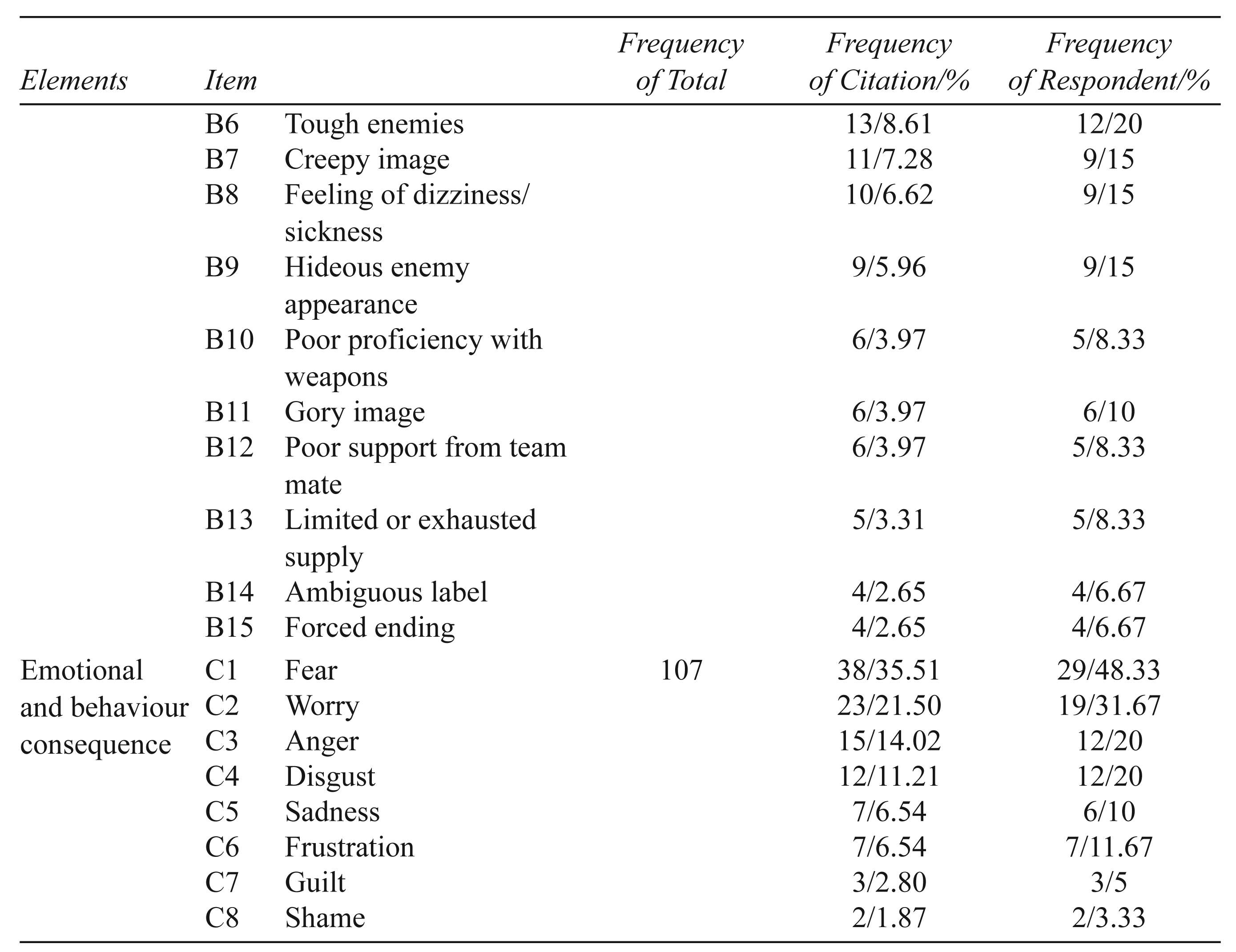
Given that the data extracted from the in-depth interviews involve descriptive abstract utterances, the coders therefore had to be trained and prepped in order to carry out the task of abstract semantics interpretation (Grunert & Grunert, 1995). The trainings also helped to increase their coding experiences, which would in turn enhance their inter-subjectivity during the process of coding. During data analysis, the coders were required to engage in multiple discussions to verify coding category rules and reach consensus. With ‘Appropriate’, ‘Exhaustive’ and ‘Mutually Exclusive’ as the coding principles, the coders extracted various elements at the levels identified by the subjects before naming and coding the elements according to their corresponding semantic classification. Based on the definitions of emotions [such as fear, worry, anger, frustration (Perron, 2005), disgust, sadness, guilt and shame (Goleman, 1996; Izard, 1991)] established in past studies have been chosen as the naming standard for emotional and behaviour consequence. In the end, a total of thirty-three elements were identified, with ten activating events, fifteen beliefs and eight emotional and behaviour consequences (as shown in Table 2).
Item Codes of Resident Evil Data

Validity and Intercoder Reliability
In order to improve coding validity, the team of coders for this study consisted of five members. In addition, three researchers who have had significant performance in qualitative research works and content analysis have been invited to provide their input and suggestions on aspects such as research design, data collection, process of data analysis, coding classifications and so forth in order to achieve effective control and improvement of research quality while enhancing the validity of content analysis.
Concerning reliability, intercoder reliability was chosen as the tool for reliability analysis to achieve effective assessment of the reliability of semantics as categorised during the process of content analysis. First, the five coders were asked to perform internal reliability analysis for the 184 words and phrases selected for the thirty-three variables to check if the coding results were highly consistent. If the reliability reached 0.80 or higher, it would imply high reliability (Russo, Donnelly, & Reid, 2006; Wimmer & Dominick, 2003). Results of the internal reliability revealed that for the individual category of elements, the five coders scored 0.979, 0.972 and 0.986 for game activating event, gamer’s personal belief and emotional and behaviour consequence, respectively, with the overall average of agreement reaching 0.891 and reliability reaching 0.976. These figures reflected the high consistency between the classifications of the thirty-three variables by the coders. The three experts who specialise in qualitative studies and theories were then asked to check the intercoder reliability, which involved them to inspect the classification results without the interference from one another. When they have completed their individual tests, their results were compared to determine the intercoder agreement and ensure consistent coding results (Neuendorf, 2001). The average of agreement for the three experts came to 0.828, with a reliability of 0.935, indicating the coding results to be highly reliable (Intercoder reliability analysis as shown in Table 3).
Results
Overall Emotional Network Structure
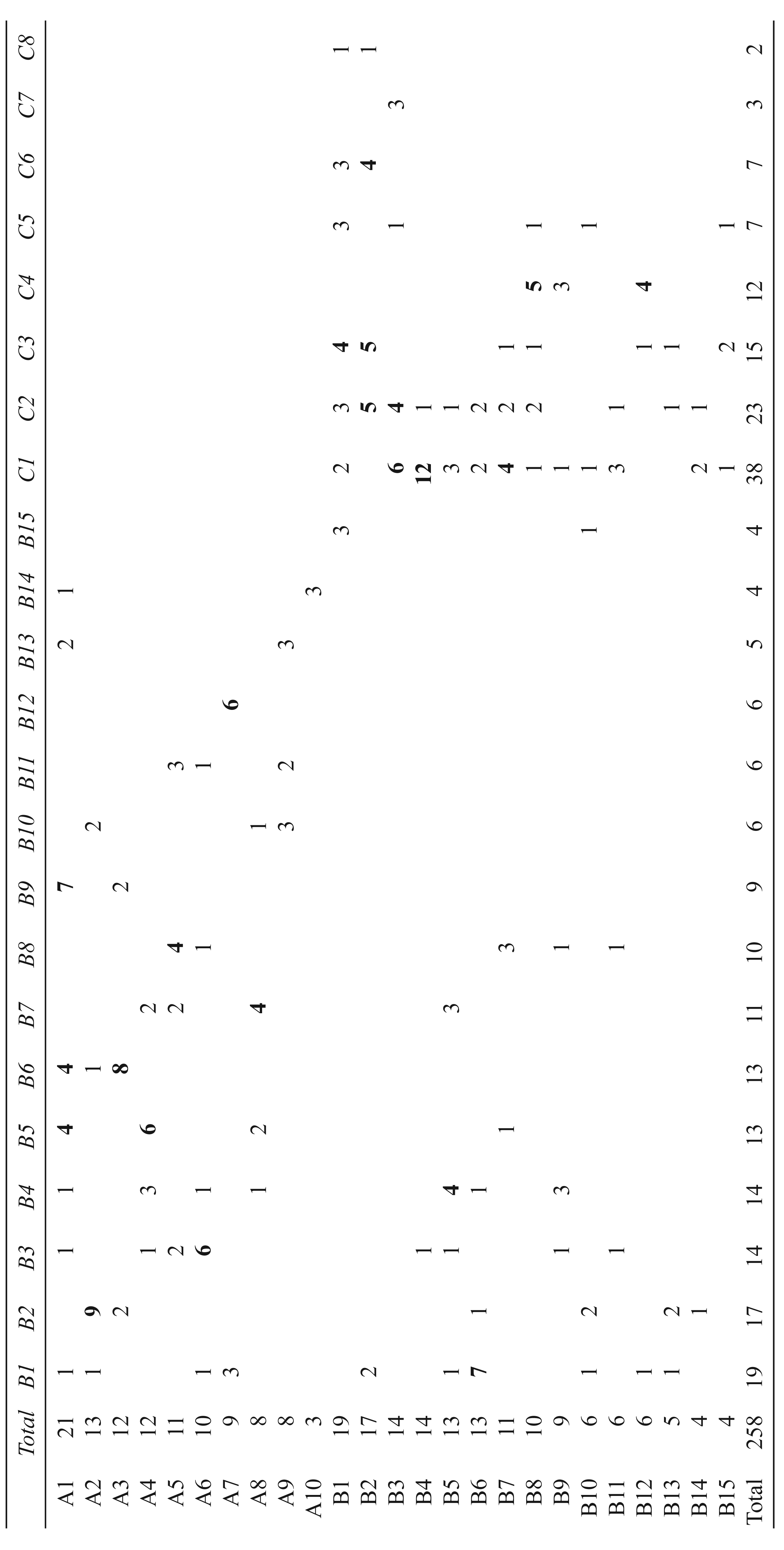
Based on the coding table, the game activating events, gamer’s personal beliefs and emotional and behaviour consequences that have been mentioned by the subjects were structurally linked as variables, with the frequency of connection between variables noted accordingly in the corresponding intersection of the matrix. The sixty subjects constructed a total of 107 complete ladder paths (on average 1.783 paths per subject) with 258 link connections (on average 4.3 connections per subject) (structural implication matrix as show in Appendix A).
Reliability Analysis

While the SIM presented all link connections between all the variables and displayed the varying strengths of those connections, the resulting HVM would be overly complex and fail to offer concise description of links that subjects were truly concerned with should all links be deemed as effective connections. Therefore, it is necessary to set a cut-off value, which is often used to help readers determine the stability of featured connections by means of eliminating chains with connection frequency below the cut-off value to prevent the HVM from becoming too complicated. Cut-off value would not only make an HVM more representative of the findings but also render it easier to understand (Gengler & Reynolds, 1995). As most studies on digital games with ladder interviews have set their cut-off value at 4 (Lin & Lin, 2011, 2014), the cut-off value for this study will also be set to 4 as the basis for the construction of the HVM in order to identify link connections that are most stable. The HVM offers an illustration of the ‘game Activating event—gamer’s personal Beliefs—Emotions and behaviour Consequence’ network structure as constructed by players of the Resident Evil franchise (as shown in Figure 4).

Emotional Cluster Structure
In order to determine which activating event and belief led to the negative emotions and feelings experienced by Resident Evil players, the study has isolated the negative emotions and created emotional clusters with the feelings of fear, worry, anger, disgust and frustration as the main component to offer a clear illustration of the extent of inter-influence between the variables (as shown in Figure 5).

First, the worry cluster (as shown in Figure 5a) represents the negative emotion that was caused by the game activating events of stage missions and plot. Past studies have shown that games of high difficulty or with time constraints tend to create anxiety (worry) for the players (Liu et al., 2009). The subjects have perceived difficulty from the Resident Evil stage missions in Resident Evil and thereby formed the belief of high difficulty belief, which ultimately resulted in the negative emotion of worry when they were unable to overcome the challenges. In addition, subjects also pointed out that games in the Resident Evil franchise featured continuous story plot with recurring themes of viral infection and killing. They have admitted experiencing negative emotions such as paranoia after playing the game, which in turn caused them to feel worried about their own mental well-being.
The disgust cluster (as shown in Figure 5b) represents the structure of negative emotion that came from third-person view and team cooperation. The third-person view camera featured in Resident Evil series moves the player’s view dynamically with the character they control in the game. According to the subjects, they have felt dizzy/sick due to the constantly rotating camera view after extended period of playing and with the physiological discomfort, they would end up experiencing the feeling of disgust. On a related note, later iterations of the Resident Evil series allow players to play cooperatively and work with another character controlled by another player or the game. However, if their teammates offered little help or even wasted resources or demanded more effort on the player’s part for support, poor support from teammates could also lead to feelings of disgust on the player’s part.
The frustration cluster (as shown in Figure 5c) is the only emotional cluster with a single chain structure. Resident Evil’s stage missions involve many elements of puzzle solving and missions that require players to think and figure out solutions to use resources available in the game to complete specific objectives. Some players have experienced frustration when they were unable to solve specific puzzles or fulfil stage-clearing conditions.
The next cluster of fear (as shown in Figure 5d) represents the predominant negative emotion that players of Resident Evil have experienced. Past studies have pointed out that Resident Evil games create intense fear for players (Zagalo et al., 2005). Results of the study revealed that the emotion of fear brought about by Resident Evil consists of three components. For the Plot—trigger negative emotion—fear path, Resident Evil players felt that the plot of the game featured not only descriptive logic but also realistic plots that make the story seem plausible in the real world. This caused feelings of depression or nightmares that in turn led to the trigger of negative emotion and ultimately resulting in the negative emotion of fear. For the path of enemy and horror atmosphere—enemy ambush—being frightened—fear, Resident Evil features specific zombies wielding an assortment of weapons. Not only that, the game also conceals these enemies in inconspicuous locations. On top of that, the game contains soundtracks that were composed to create horror atmosphere to accentuate the tension and stress experienced by the players. Players of the game also tend to be frightened when they were ambushed by enemies at specific points in a stage, resulting in feelings of fear. As for the path of game scenario—creepy image—fear, Resident Evil games feature numerous realistically rendered scenes, including dimly-light tunnels, dilapidated houses, empty ruins, vast forests and so forth. Coupled with the nocturnal time setting and predominantly dark coloured images, the players would be stimulated by the creepy image and experience feelings of fear.
Finally, the anger cluster (as shown in Figure 5e) is also made up of two components. For the path of enemy and BOSS level monsters—tough enemies—character death—anger, a portion of the subjects pointed out that some special enemies required the use of special tactics to defeat and for BOSS level monster, it would also require patience. When players fail to master the required offensive skills or encounter tough enemies in the form of zombie hordes, they might face character death, which would in turn trigger a feeling of anger for the players. As for the path of stage missions—high difficulty—anger, players could end up losing patience when they fail to locate the hidden objective item or clear the current stage. High difficulty of game stages could also result in the feeling of anger in players.
Conclusions and Implications
Conclusions
In terms of the overall emotional network structure, enemies were the game activating event that left the strongest impression on the subjects. Other attributes such as stage missions, BOSS level monsters, horror atmosphere, third-person view and plot were mentioned by the subjects 10–13 times. Character death and high difficulty were the most frequently mentioned personal beliefs by the subjects, while trigger negative emotions, being frightened, enemy ambush and tough enemies were brought up for 13–14 times. Concerning emotional and behaviour consequence, fear, worry, anger, disgust and frustration were the significant emotional reactions that Resident Evil players have identified, with fear being the primary feeling. It is also worth noting that hideous enemy appearance did not connect to any other personal beliefs or emotional consequences due to the fact that its connection to being frightened and the emotion of disgust was limited to three times. With the cut-off value at 4, it failed to become a significant path of connection and turned out to be the only incomplete path in the overall emotional network.
As for emotional clusters, Resident Evil games created five significant emotional cluster structures for fear, worry, anger, disgust and frustration, with fear being the predominant emotional cluster structure for the subjects. Zagalo et al. (2005) argued that Resident Evil games create feelings of intense fear for gamers and the study has revealed that the emotion of fear has in fact stemmed from game activating events of enemies, horror atmosphere, plot and game scenario through the beliefs of being frightened and trigger negative emotions as its primary path. Concerning the clusters of worry and frustration, Resident Evil’s plot has caused players to experience negative emotions that led to the feeling of worry. The high difficulty of stage missions would also lead to feelings of worry and frustration on players’ part. For the disgust cluster, in addition to the third-person view featured in the Resident Evil series that could cause feeling of dizziness/sickness, poor support from teammates could also cause gamers to experience disgust. The anger cluster comprises two major components. When enemies or BOSS level monsters caused players to form the belief of tough enemies and result in character death, players would experience anger. Alternatively, if the stage missions were of high difficulty, the players could quickly lose their patience and experience emotions of anger after repeated failures.
Pertaining the correlation and level of inter-influence among the variables, among the eight games activating events that subjects have identified, with the exception of enemies that formed multiple links, the remaining seven showed independent and distinct link characteristics. This points to enemies as the central component of Resident Evil as perceived by the subjects. Not only were players required to devote significant amount of time and effort to deal with enemies in the game, the paths that stemmed from enemies also resulted in a variety of emotional expressions (such as fear and anger). The frequency of connection between stage missions to high difficulty was nine, which suggests the stage missions designed for the game offered significant challenges to the players. Second, the majority of the belief variables showed singular link characteristic, with the exception of high difficulty and trigger negative emotions that were linked to more than two emotional and behaviour consequences. For example, high difficulty led to negative emotions such as worry, anger and frustration for the gamers. Past research indicated that the failure of video games to offer suitable difficulties for gamers based on their individual characteristics (such as capacities to learn and adapt, skills, and emotional traits) could result in feelings of dissatisfaction with the existing game environment for gamers (Sweetser & Wyeth, 2005). Incidentally, the majority of subjects also admitted that if they were failing persistently in their attempts to complete a given stage, they would consider quitting the game. Trigger negative emotion is also linked to worry and fear for some players. Finally, Fear demonstrated the strongest concentration with its links to trigger negative emotion, being frightened and creepy image, with being frightened having the most number of connections at twelve. The three belief variables are all slanted towards psychological awareness as they result in thorough feelings of fear for the gamers.
Managerial Implications
Findings from the study revealed that through the belief of high difficulty, the stage missions in Resident Evil could lead to the negative emotions of worry, anger and frustration. Since there is no way for gamers to make prior assessments of their competence in gaming skills and determine if they had the skills to beat a game’s difficulty (Koster, 2004), they could potentially experience a number of negative emotions should they encounter obstacles they cannot overcome during the game. Past research works have pointed to ‘dynamic difficulty adjustment’ as an emphasis in the development of the game and associated it as a vital trait for the game as a characteristic as a successful franchise (Spronck et al., 2006). Nevertheless, while Resident Evil 4 offered 5 difficulty settings and a system that automatically adjusts the game’s difficulty according to the player’s performance in the game (Liu et al., 2009), the format of standardised missions also meant that players had no creative alternative of clearing any given stage. Liu et al. (2009) argued that if a game enables players to create multiple solutions to its challenges, it would effectively reduce the level of anxiety (worry) that players would experience. Therefore, it is recommended that game developers incorporate multiple solutions to stages they design in the game to enable players to complete the stages using the skills they are most proficient with in order to mitigate the feelings of negative emotion.
To prevent gamers from experiencing disgust, game developers could strive to achieve game improvement by focusing on the aspects of third-person view and team cooperation. Video games usually involve significant amount of visual input that requires players to make quick and correct decisions. To do this successfully requires a combination of skills including fast hand-eye coordination, quick reflexes, and precision timing (Chisholm et al., 2010). Therefore, it is recommended that game developers avoid or reduce the design of camera rotation at instances where players are required to do substantial amounts of mental work and thinking to prevent players from feeling dizzy/sick. In addition, game designers could also incorporate standards/indices to determine player’s performance in cooperative play so that the system could make versatile decisions on whether to lower the difficulty of the game. This would not only make up for unintended increase in game difficulty caused by poor support from teammates but also prevent players from the negative emotion of disgust.
There are a number of factors that trigger the emotion of fear in gamers, and the horror atmosphere created with eerie soundtracks and music is one of the predominant causes. Morris (2002) pointed out that a successful gamer is expected to navigate a fully 3D game environment with the audio cues from his speakers or headphones. This means that players not only are required to make simultaneous use of their vision and hearing when playing but also must be fully focused in order to do well. However, players in total concentration are most susceptible to becoming frightened by unexpected events in the game. In his study, Whalen (2004) found that when characters in Resident Evil games encounter dangerous situations, the background music would accelerate in tempo and become more intense. In contrast, when the characters are free from threats or danger, the background music would be peaceful, if not silent. Since players’ emotions are susceptible to fluctuation due to the change in background music, game designers could add more safe zones in their game design so that players would be free from threats of enemies (i.e., zombies and monsters) and use pleasant melodies as the background music to relief tension for the players.
Footnotes
Appendix
Structural Implication Matrix of Resident Evil
| Total | B1 | B2 | B3 | B4 | B5 | B6 | B7 | B8 | B9 | B10 | B11 | B12 | B13 | B14 | B15 | C1 | C2 | C3 | C4 | C5 | C6 | C7 | C8 | |
| A1 | 21 | 1 | 1 | 1 |
|
|
|
2 | 1 | |||||||||||||||
| A2 | 13 | 1 |
|
1 | 2 | |||||||||||||||||||
| A3 | 12 | 2 |
|
2 | ||||||||||||||||||||
| A4 | 12 | 1 | 3 |
|
2 | |||||||||||||||||||
| A5 | 11 | 2 | 2 |
|
3 | |||||||||||||||||||
| A6 | 10 | 1 |
|
1 | 1 | 1 | ||||||||||||||||||
| A7 | 9 | 3 |
|
|||||||||||||||||||||
| A8 | 8 | 1 | 2 |
|
1 | |||||||||||||||||||
| A9 | 8 | 3 | 2 | 3 | ||||||||||||||||||||
| A10 | 3 | 3 | ||||||||||||||||||||||
| B1 | 19 | 3 | 2 | 3 |
|
3 | 3 | 1 | ||||||||||||||||
| B2 | 17 | 2 |
|
|
|
1 | ||||||||||||||||||
| B3 | 14 |
|
|
1 | 3 | |||||||||||||||||||
| B4 | 14 | 1 |
|
1 | ||||||||||||||||||||
| B5 | 13 | 1 | 1 |
|
3 | 3 | 1 | |||||||||||||||||
| B6 | 13 |
|
1 | 1 | 2 | 2 | ||||||||||||||||||
| B7 | 11 | 1 | 3 |
|
2 | 1 | ||||||||||||||||||
| B8 | 10 | 1 | 2 | 1 |
|
1 | ||||||||||||||||||
| B9 | 9 | 1 | 3 | 1 | 1 | 3 | ||||||||||||||||||
| B10 | 6 | 1 | 2 | 1 | 1 | 1 | ||||||||||||||||||
| B11 | 6 | 1 | 1 | 3 | 1 | |||||||||||||||||||
| B12 | 6 | 1 | 1 |
|
||||||||||||||||||||
| B13 | 5 | 1 | 2 | 1 | 1 | |||||||||||||||||||
| B14 | 4 | 1 | 2 | 1 | ||||||||||||||||||||
| B15 | 4 | 1 | 2 | 1 | ||||||||||||||||||||
| Total | 258 | 19 | 17 | 14 | 14 | 13 | 13 | 11 | 10 | 9 | 6 | 6 | 6 | 5 | 4 | 4 | 38 | 23 | 15 | 12 | 7 | 7 | 3 | 2 |