




Abstract
This research examines FDI-mediated domestic firms’ technological catch-up by considering institutional differences between home and host countries, the role of marketing capabilities, and the joint effects of institutional differences and the degree of foreign ownership. Using firm-level panel data for Indian manufacturing industries, we find that FDI-mediated technological catch-up in domestic firms is conditional on institutional differences between the home and host country of multinational enterprises and the level of marketing capabilities of foreign-owned affiliates. In addition, we find that technological catch-up in domestic firms is likely to be positively influenced by the presence of wholly foreign-owned firms from institutionally close countries, whereas we find some evidence that the presence of minority foreign-owned firms may have a negative effect on domestic technological catch-up, regardless of institutional differences. We also provide theoretical and policy implications of our findings.
Keywords
Introduction
An extensive literature on FDI-mediated technological catch-up from foreign direct investment (FDI) has emerged in the last few years (Görg & Greenaway, 2004; Wooster & Diebel, 2010). There have been calls for discriminating approaches to identify how and when FDI generates technological catch-up in domestic firms, especially within the context of FDI heterogeneity (Smeets, 2008). Rather than conceptualising FDI as homogeneous capital flows transferred across national boundaries, emphasis is placed on developing models that incorporate FDI heterogeneity, especially at firm level (Fortanier, 2007; Javorcik & Spatareanu, 2008).
Given the scholarly emphasis on a contingency-based approach to investigating FDI-mediated technological catch-up (Meyer & Sinani, 2009; Zhang, Li, Li, & Zhou, 2010), India is an interesting context to study as there are relatively few published studies that have employed such an approach and used firm-level data to investigate technological catch-up (Kathuria, 2002; Marin & Sasidharan, 2010). On the one hand, Kathuria (2002), using a sample of 487 firms (which included 116 foreign firms), found that domestic technological catch-up occurs only in those Indian firms that have sufficient absorptive capacity, that is firms with a threshold level of R&D investments. On the other hand, Marin and Sasidharan (2010), capturing another firm heterogeneity issue, that is technological orientation of foreign firms, and using a large sample (12,443 firms including 273 foreign firms), found that competence-creating FDI had a positive effect, whereas competence-exploiting FDI had a negative effect on domestic technological catch-up. This study builds on Kathuria (2002) research by including absorptive capacity as a control (i.e., firm size and R&D intensity) and tackles few important foreign firm heterogeneity factors to investigate their influence on domestic firms’ prospects for technological catch-up. Thus, by adopting a contingency approach, the research explores domestic technological catch-up by considering three foreign firm heterogeneity factors, namely, the role of institutional differences, marketing capabilities (MCs) and generic foreign ownership modes.
Institutional differences are likely to arise when multinational enterprises (MNEs), the agents of FDI, manoeuvre through host country institutions which can be significantly different from the home country (Kostova, 1999). The effects of such differences on FDI-mediated domestic catch-up are twofold: first, the degree of institutional differences would influence transaction costs because MNEs have to cope with often quite different regulatory rules and administrative and legal systems in a host country (Brouthers, 2002). They may be exposed to political hazards (Delios & Henisz, 2000), which could affect strategic decision-making (Ingram & Clay, 2000) especially in the context of transfer and deployment of knowledge-based assets (KBAs) in foreign-owned affiliates (FOAs). Second, institutional differences may influence the quality of inter-firm interactions and learning opportunities between FOAs and domestic firms in the host country. Higher level of institutional differences may hinder inter-firm collaboration, resulting in weaker linkages between FOAs and domestic firms (Bellak, 2004). These institutional differences are more likely to influence domestic technological catch-up in emerging economies, where domestic firms are highly dependent on foreign technology and know-how of MNEs (Moran, 2006; Perez, 1997).
MCs of FOAs can also influence domestic technological catch-up. MCs reflect the extent to which interrelated organisational routines in FOAs enable engagement in specific marketing activities and respond to changes in market conditions (Kamboj & Rahman, 2015; Murray, Gao, Kotabe, & Zhou, 2007). Capabilities related to deploying effective marketing practices is an important KBA because they enable FOAs to introduce and supply products effectively (Tan & Sousa, 2015), achieve specific customers’ requirements and develop competitive advantages related to market sensing and customer linking (Krasnikov & Jayachandran, 2008). As such, MCs can play a critical role in improving the performance of FOAs (Czinkota & Ronkainen, 2013), especially in the context of challenging market environments of developing economies (Helm & Gritsch, 2014). However, MCs of FOAs are also likely to influence domestic firms through demonstration of the effectiveness of superior marketing practices and routines. These capabilities enable FOAs to increase output radically and exert a market-stealing effect through a decrease in output and raising costs of domestic firms (Aitken & Harrison, 1999). This effect, however, will induce domestic firms to invest in developing marketing channels to respond to foreign competition, especially in highly competitive product markets (Grewal, Kumar, Mallapragada, & Saini, 2013). Thus, this process is likely to enable domestic firms to identify better learning opportunities, innovate and reverse-engineer aspects of the marketing processes in FOAs to mitigate competitive pressures, thereby gradually catching up with FOAs within an industry.
The role of foreign ownership modes is also considered very important in influencing domestic technological catch-up (Abraham, Konings, & Slootmaekers, 2010; Javorcik & Spatareanu, 2008). It has been argued that domestic technological catch-up from the presence of foreign-owned joint ventures (JVs) may be higher than from wholly foreign-owned subsidiaries (WOS). This is because the relatively deeper linkages of domestic partners in JVs to other domestic firms provide an effective mechanism for the diffusion of technology to the latter. It was further found that WOS are used by MNEs to maintain control of their KBAs and limit domestic technological catch-up (Javorcik & Spatareanu, 2008). Within JVs, differences exist between majority foreign-owned joint ventures (MAJVs) and minority foreign-owned joint ventures (MIJVs). The linkages that domestic partners in JVs have to other domestic firms may be stronger in MIJVs than in MAJVs (Ramachandran, 1993). This is because the domestic partner which is locally self-sufficient in relation to foreign partner in an MIJV has frequent and deeper interactions with local agents (domestic firms, suppliers, etc.). As a result, the potential for diffusion of knowledge from MIJV may be higher. MAJVs, on the other hand, may be more likely to receive newer and more advanced technologies than MIJVs. The enhanced transfer of knowledge to domestic partners of MAJVs may therefore permit access to a higher quantity and quality of KBAs than is the case for MIJVs.
These three factors, namely, institutional differences, MCs and foreign ownership modes, combined together provide us with a unique setting to investigate technological catch-up in the context of India. However, higher institutional differences between foreign firms’ home and host country negatively affect their host country performance (Shirodkar & Konara, 2017), and the impact of such institutional differences on domestic firms is yet to be investigated. Moreover, FDI from institutionally close and distant markets may induce different inter-firm interactions and linkages between domestic and foreign firms. The study expands the existing literature by conceptualising how institutional differences will also matter for technological catch-up in domestic firms. Moreover, by including a role of MCs as a distinct KBA of foreign firms in emerging markets and considering the level of generic foreign ownership in foreign firms, we adopt a contingency approach to unpack how they matter for domestic technological catch-up.
This research study, by incorporating the role of institutional differences and addressing two important firm heterogeneity issues that reinforce MNEs’ role in domestic catch-up, attempts to fill an important research gap in the existing literature. An investigation of these three factors jointly will enhance the conceptual understanding of FDI-mediated technological catch-up. The study also provides useful information for policymakers to enable them to better gear FDI policies to achieve development goals and for practitioners to consider means through which vulnerability of knowledge in emerging economies can be better understood and protected.
The next section provides a literature review and introduces the hypotheses of the research study which is followed by the ‘Methodology’ section and ‘Data Analysis’. The study concludes with discussion of some of the key policy implications of the findings.
Literature Review
Definition of Technological Catch-up
The international business (IB) literature on FDI suggests that MNEs are endowed with ownership advantages, usually KBAs, in the form of new or advanced technologies and marketing and management know-how (Dunning & Lundan, 2008). These KBAs can be leveraged by MNEs in host countries to overcome ‘liability of foreignness’. The transfer of KBAs from MNEs to FOAs enhances the existing knowledge stock of the host country and increases catch-up potential of domestic firms in the host country. In this process, technological catch-up is defined as the impact generated from knowledge transfer to third parties (i.e., domestic and other foreign firms) who are not directly involved in an economic transaction with MNEs (Macdougall, 1960). The channels of technological catch-up include demonstration, labour mobility and competition effects (Görg & Greenaway, 2004).
Given our focus on an emerging market context, we conducted an intensive literature review on published studies using firm-level panel data for developing and emerging economies only. The findings are summarised in Table 1 illustrating the mixed evidence.
Summary of Research Findings in Developing and Emerging Economies
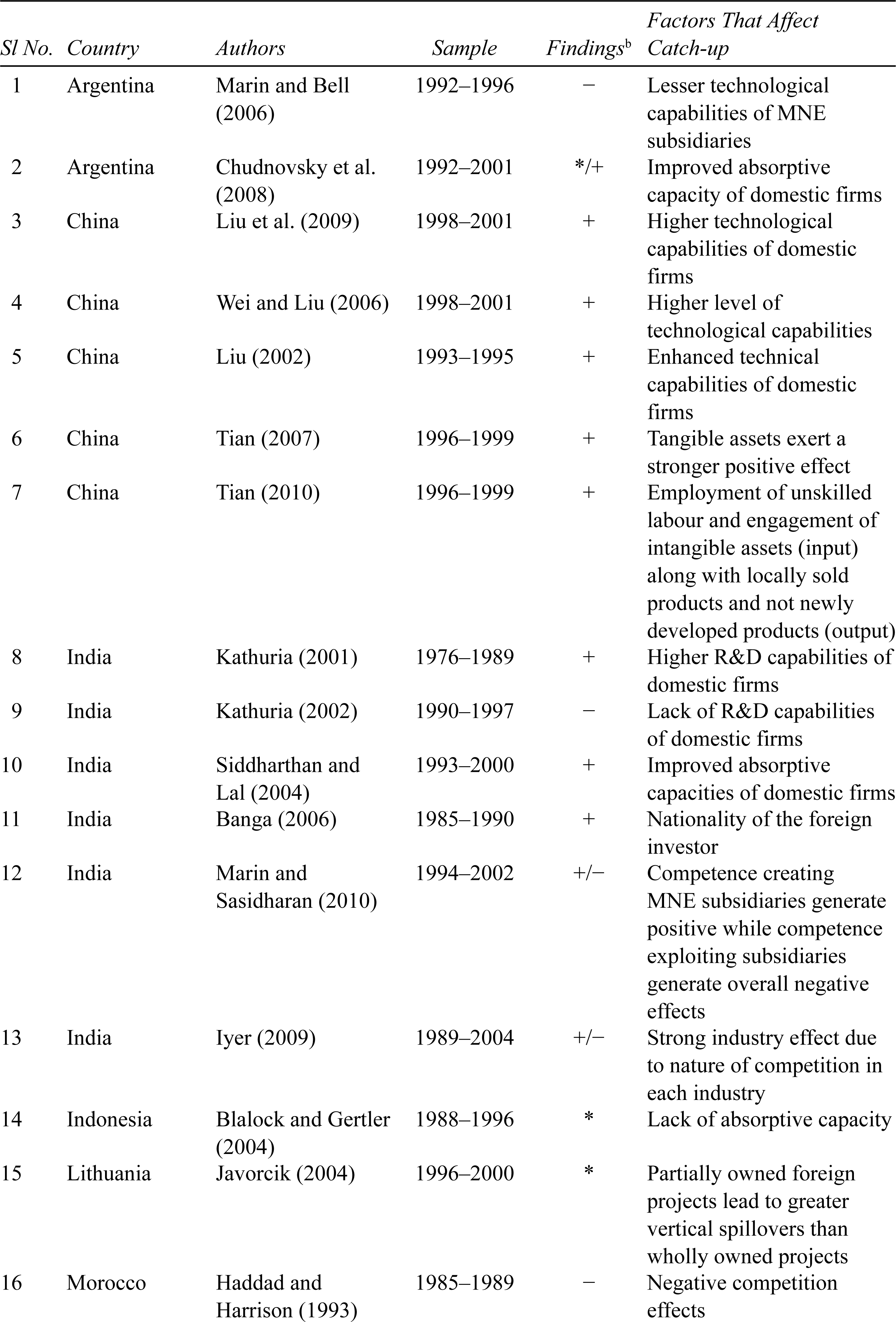
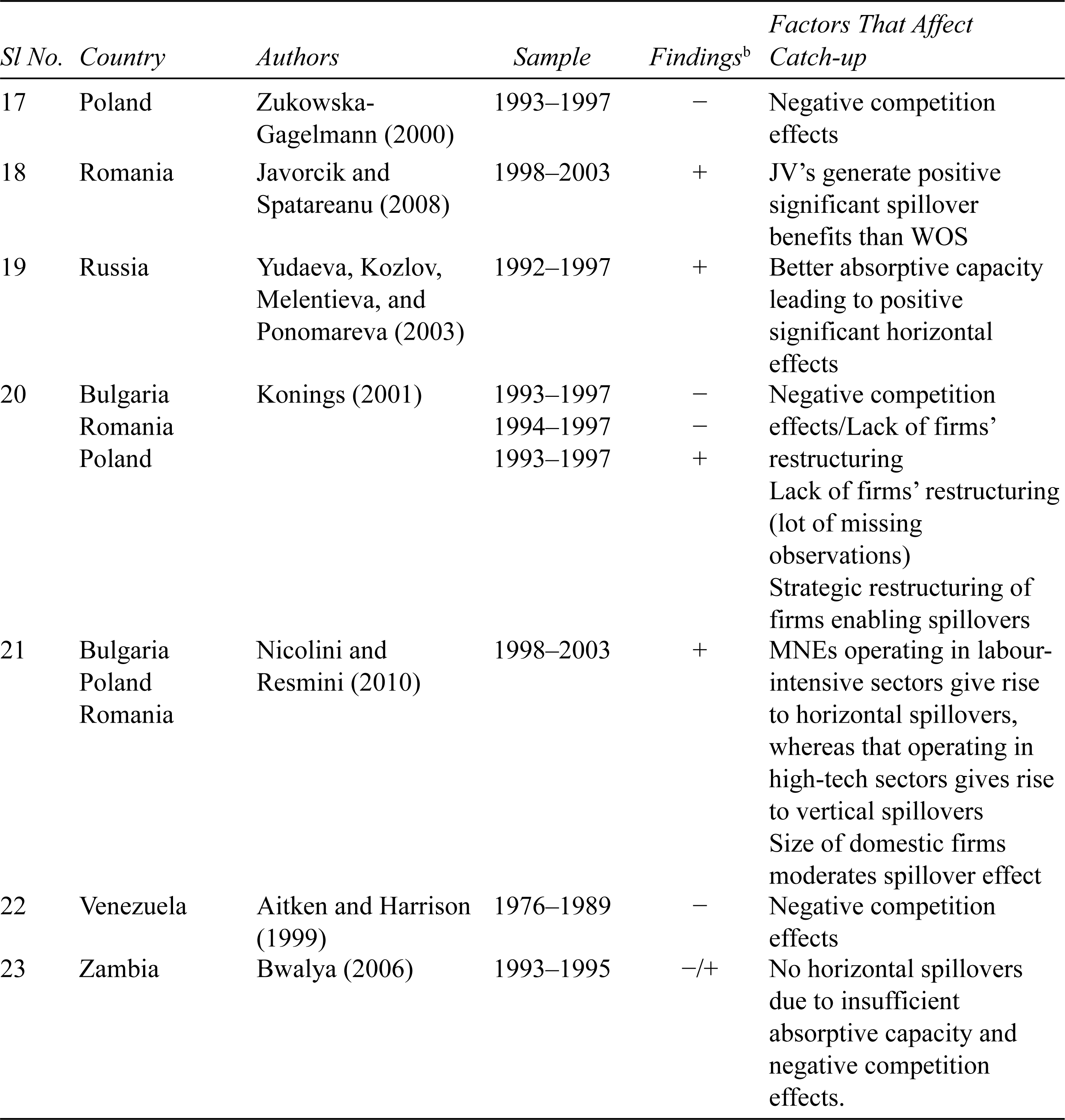
b+, −, and * denotes positive, negative and insignificant effects, respectively.
Institutional Differences and FDI-mediated Domestic Technological Catch-up
Institutional differences arise out of economic, finance, political, administrative, cultural and technological differences between the home and host country of MNEs (Berry, Guillén, & Zhou, 2010). By using the concept of national innovation systems (hereafter NIS) (Lundvall, 2010; Nelson, 1993) in the host country and the likelihood of this being influenced by FDI from institutionally close and distant countries, we capture differences in formal institutional systems (Estrin, Ionascu, & Meyer, 2007) and how this will facilitate technological catch-up.
The level of inter-firm interactions, including network connections between domestic and foreign firms, is likely to be influenced by their embeddedness in the systems of national innovation (Castellacci & Natera, 2013). Domestic firms may benefit additionally as a result of such interactions, especially when the home country NISs of foreign affiliates or FOAs with respect to engineering standards and specifications, technological development and technical educational systems are similar to the host country NISs (Joseph, 2009). Consequently, FOAs will face lower (or higher) institutional differences, depending on their embeddedness in host country NISs, and this will influence their quality of interaction and knowledge transfer in the host country. For example, the prospects for technological catch-up by domestic firms through labour mobility may be higher when home country NISs of FOAs are similar to host country NISs (where domestic firms reside) as both types of firms (employers) and employees are familiar with the formal and informal arrangements that underpin employment contracts. This is also reflected in the approach to problem-solving and management techniques. Demonstration effects or reverse engineering is also facilitated through closer interactions between FOAs and domestic firms within NISs, especially in an industry that exhibits strong linkages of technologies and know-how between firms.
Thus, greater similarities between NIS in which FOAs of MNEs and domestic firms are embedded in will enhance the level of interaction. This will permit domestic firms to be able to better absorb and acquire knowledge resulting from the interaction. Alternatively, when firms from different and relatively dissimilar NIS interact, greater institutional differences are bound to arise, which prevents a deeper interaction between FOAs and domestic firms. Thus, the acquisition of knowledge by domestic firms would be limited.
The transfer of KBAs to FOAs enhances the pool of knowledge that is available for domestic technological catch-up (Dunning & Lundan, 2008). However, when FOAs are embedded in host country NISs that are relatively dissimilar to its home country (i.e., facing high institutional differences), it may impede the transfer of KBAs due to high transaction costs (Gaur & Lu, 2007; Wan & Hoskisson, 2003). Thus, the lack of complementarities between FOAs’ home and host country NISs will result in high administrative institutional differences. Alternatively, the similarities in NISs will promote strategic coordination and governance among firms, both foreign and domestic alike. Therefore, countries with similar NISs can better facilitate firms in appropriating the advantages of these systems (Henisz & Zelner, 2005). Conversely, the possibility of reaping the benefits from strategic coordination and governance is less likely for firms facing high institutional differences, and therefore it will hinder domestic technological catch-up. Based on the aforementioned discussion, we hypothesise that
Foreign Ownership Modes and Domestic Technological Catch-up
The conventional argument suggests that technological catch-up by domestic firms is likely to be higher through the presence of JVs compared to WOSs (Abraham et al., 2010; Javorcik & Spatareanu, 2008). This is because the network connections of domestic partners in JVs provide an effective mechanism for diffusion of technology and know-how from FOAs to other domestic firms. WOS are used by MNEs to maintain control of their KBAs and prevent leakage of know-how (Desai, Foley, & Hines, 2005; Ramachandran, 1993), and this limits technology diffusion from WOS regulating the scope for catch-up.
On the one hand, the pool of knowledge that drives technological catch-up could be richer and deeper in WOS than in JVs because KBAs can be internalised through WOS (Buckley & Casson, 2010). Moreover, the perceived threat regarding leakage of KBAs is lesser in WOS than in JVs (Desai, Foley, & Hines, 2004). As WOSs provide more control over KBAs than JVs, MNEs are likely to transfer sophisticated technologies and know-how through WOS (Mansfield & Romeo, 1980). MNEs may also commit more resources to transferring KBAs to WOS (Blomström & Sjöholm, 1999) with the incentives to protecting KBAs likely to be better in WOS than in JVs, and this will also enhance the pool of knowledge that is available for domestic firms’ catch-up. On the other hand, the linkages that domestic firms have with JVs are likely to be stronger than the linkages that those have with WOSs. These linkages facilitate knowledge diffusion, and they are likely to be the strongest for tacit knowledge (Inkpen, 2000; Kogut & Zander, 1993) because the interpersonal connections between domestic partners in JVs and other domestic firms facilitate the process (Görg & Greenaway, 2004; Javorcik & Spatareanu, 2008). However, there may be differences between MAJVs and MIJVs (Ramachandran, 1993). The linkages that domestic partners have with other domestic firms may be stronger in MIJVs than in MAJVs (Dimelis & Louri, 2004) because the domestic partner in MIJVs has frequent and deeper interactions with domestic agents (suppliers, distributors, etc.). As a result, the potential for diffusion of knowledge externalities may be higher in MIJVs. MAJVs, however, may receive newer and advanced technologies than MIJVs, thereby providing access to higher quality and quantity of KBAs than in MIJVs. Existing studies consider either MAJVs and MIJVs (Dimelis & Louri, 2004) or WOSs and JVs without distinguishing between MAJVs and MIJVs (Abraham et al. 2010; Javorcik & Spatareanu, 2008). A conceptualisation of key factors relating to foreign ownership modes which are important for technological catch-up is provided in Figure 1.

Joint Effects of Institutional Differences and Foreign Ownership Modes
We proposed earlier that lower institutional differences will facilitate effective transfer of KBAs to FOAs in the host country due to lower level of transaction costs and greater complementarities between home and host country institutional domains. WOSs also favour transfer of newer technologies and know-how than JVs as MNEs have a tighter control of their KBAs in WOS (Mansfield & Romeo, 1980). Thus, domestic firms are likely to have better access to higher quality and quantity of KBAs which will permit technological catch-up. Furthermore, lower institutional differences would amplify interactions between domestic firms and FOAs including strategic coordination and governance because of complementary institutions. Thus, domestic firms are more likely to benefit from the high-quality knowledge flows associated with WOSs.
In the case of foreign-owned JVs, domestic partners of these JVs are connected with other domestic firms in the same industry through local market connections in the form of competitors, supply chain and distribution and so on. On the one hand, these local linkages are stronger in JVs than in WOS. Thus, the prospects for technological catch-up in other domestic firms through diffusion of knowledge and proprietary know-how from JVs may be higher than in WOSs (Javorcik & Spatareanu, 2008). On the other hand, relatively older technologies or know-how are transferred to JVs because of the need of MNEs to prevent appropriation of KBAs by domestic firms. As a result, domestic partners in JVs will have swifter access to KBAs, albeit of inferior quality, compared to WOSs. Within JVs, because of the dominant domestic partners in MIJVs, the linkages in MIJVs are likely to be stronger than those in MAJVs; therefore, the diffusion of technology and know-how may be the swiftest. However, as discussed earlier, MIJVs are more likely to be characterised by inferior quality and volume of knowledge (KBAs) as compared to MAJVs. Thus, when compared to JVs, MAJVs are more likely to be favourable for domestic technological catch-up as they benefit from intermediate level of knowledge pool and intermediate level of local linkages.
The indirect knowledge diffusion from domestic partners in JVs to other domestic firms is likely to be improved in the context of lower institutional differences. This is likely to boost an effective transfer of knowledge flows to JVs because there are fewer institutional impediments to transfer, and the foreign partners (through their stake in the JVs) are familiar with the local institutions, thereby promoting domestic catch-up. However, in the presence of lower institutional differences, MAJVs are more likely to contribute to domestic technological catch-up than MIJVs. In line with this argument, we propose that:
Higher institutional differences imply weaker complementarities arising from the NIS between home and host country of MNEs (Meyer, Estrin, Bhaumik, & Peng, 2009). These differences deter MNEs from effectively transferring KBAs to FOAs (Xu, Pan, & Beamish, 2004). This effect is more likely to be significant for WOSs as they are highly dependent on KBAs provided by the parent MNEs. As a result, this will hinder the speed of transfer and quality of knowledge flows, thereby not effectively contributing to the existing knowledge pool in host country. Thus, domestic technological catch-up effects from the presence of WOS, in the context of weaker institutional differences, would be negligible.
JVs, however, are less likely to be affected by higher institutional differences than WOS. The purpose of MNEs in collaborating with domestic partners is often to offset the barriers that emerge from high institutional differences (Chen & Hennart, 2002). It is, therefore, quite possible that high institutional differences may not hinder MNEs in significantly transferring KBAs to JVs in the host country. However, the lack of complementarities between home and host country institutional domains (within a NIS context) may imply that the technology and know-how transferred to JVs could be of intermediate quality than would be in the case of low institutional differences. Thus, JVs will contribute to knowledge stock characterised by low quality but highly relevant local knowledge that may better aid catch-up in other domestic firms. The tighter linkages between domestic partners of MIJVs and other domestic firms make MIJVs even more likely to access locally relevant knowledge, although the flow of KBAs to MIJVS would be lower and of poorer quality than MAJVs. In summary, for domestic technological catch-up in the context of high institutional differences, MAJVs (compared to WOSs and MIJVs) are likely to be more beneficial as they are characterised by the presence of both linkages and intermediate technology and know-how (KBAs). Accordingly, we hypothesis that:
Marketing Capabilities and FDI-mediated Domestic Technological Catch-up
The role of MCs in improving the performance of FOAs is well established in the literature (Kamboj & Rahman, 2015). In the challenging market context of emerging and developing economies, this capability is paramount to improving continuous performance (Konwar et al., 2017). MCs, as an important KBA of MNEs, may enable FOAs to introduce and supply products effectively (Tan & Sousa, 2015), achieve specific customers’ requirements and develop competitive advantages related to market sensing and customer linking (Krasnikov & Jayachandran, 2008). This is because marketing channels in emerging and developing economies are often underdeveloped and necessitate the development of MCs to construct key elements of marketing channels to permit effective systems of delivering products.
However, MCs in FOAs can also influence the extent of domestic technological catch-up. A higher level of MCs reveal how superior marketing practices and routines in FOAs are effectual in their own output maximisation and exerting a market-stealing effect, thereby decreasing output and raising costs of domestic firms (Aitken & Harrison, 1999). This effect will induce domestic firms to invest in developing marketing channels to respond to foreign competition, especially in highly competitive product markets (Grewal et al., 2013). Gradually, this may enable domestic firms to identify better learning opportunities, innovate and reverse-engineer aspects of the marketing processes in FOAs to mitigate competitive pressures, thereby gradually catching up with FOAs within an industry. The superior demonstration of MCs by FOAs of MNEs and its subsequent adoption by domestic firms often occur in an intangible way, which makes it difficult to capture how and where imitation and adoption of marketing practices by domestic firms take place (Blomström & Sjöholm, 1999). We propose that marketing-related domestic catch-up is likely to be driven by a combination of both competition (market-stealing) effect and demonstration effect.
The role of MCs in influencing domestic catch-up is likely to be significant when FOAs and domestic firms compete within the same industry. This is because, as market commonality suggests, the motivation for domestic firms to imitate the marketing orientation of products and marketing processes of FOAs is more likely due to product similarity or close resemblance of product design (Brambilla, Hale, & Long, 2009; Chen & Miller, 2012). In the case of emerging or developing economies, domestic firms are more likely to benefit from adoption of standardised knowledge through imitation because of the existence of a large skill gap between the domestic firms and FOAs (Meyer & Sinani, 2009). In other words, imitation is an important mechanism through which domestic firms could learn to compete more effectively in emerging markets (Lu, Pattnaik, & Shi, 2016). Thus, when FOAs are endowed with higher level of MCs, they will use sophisticated marketing practices to target specific customers and enhance their overall market position which may threaten the competitive position of domestic firms within an industry. Thus, domestic retaliation is likely to include closer observation and imitation of products and processes of the focal foreign firm. As a result, the beneficial effects of observation and imitation are likely to enable them to learn wholly and quickly through adequate responses to foreign competition and improve their competitive market position. We therefore propose that:
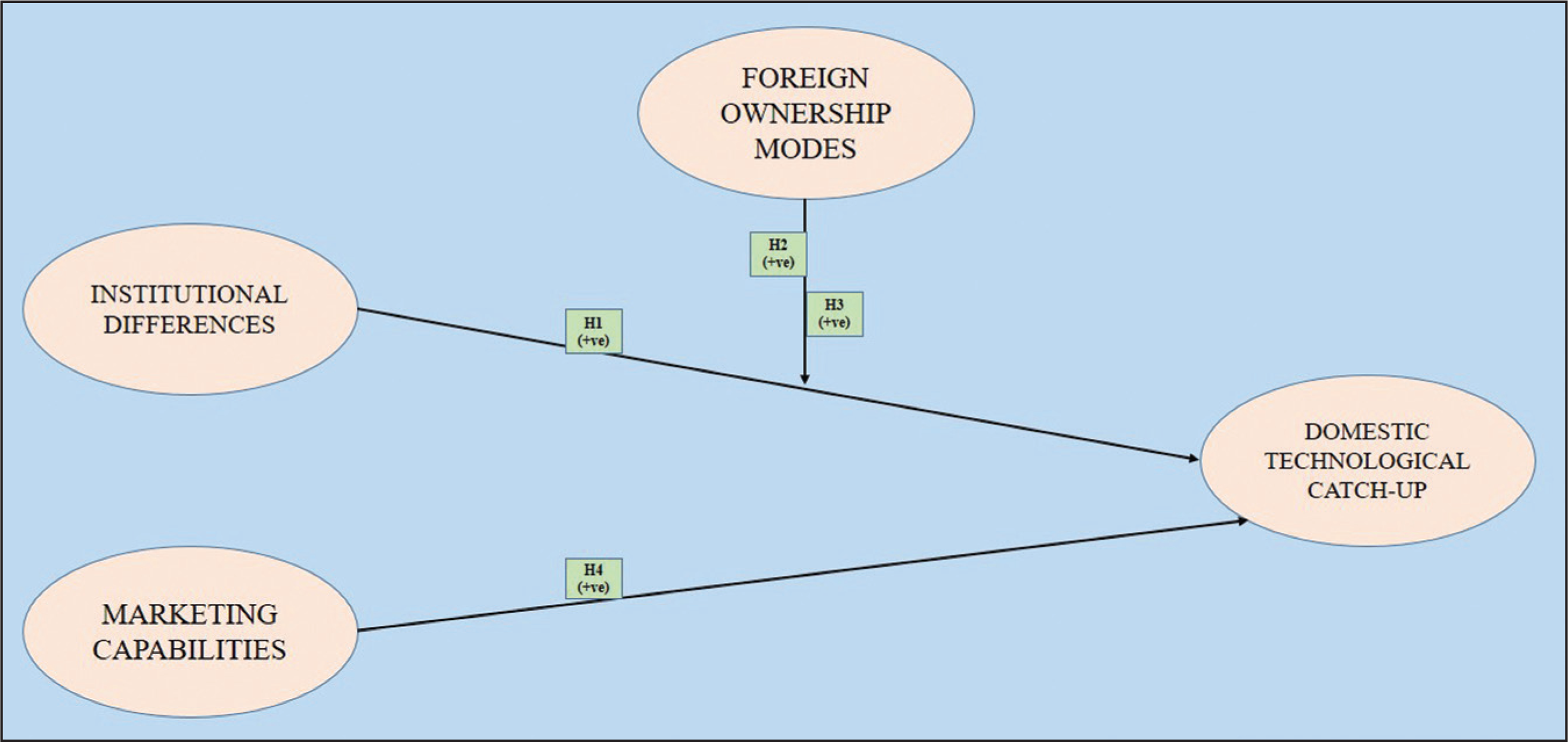
Figure 2 provides a conceptual framework of the key hypotheses (along with predicted sign) developed for institutional differences, foreign ownership modes, MCs and domestic technological catch-up.
Methodology
Data and Variable Measurement
The research uses the Prowess database as it includes mostly large firms that are listed on India’s stock exchanges. Large domestic firms are better at adopting managerial best practices, including the introduction of new production techniques and management of human capital as well as adopting innovations to improve firm’s productivity (Baptista, 1999; Bloom & van Reenen, 2007). National Industrial Classification (NIC) 2008 code for the manufacturing sector is used in this study to categorise industrial groupings. We categorise a foreign firm as such when foreign equity equals to or is greater than 10 per cent of the total equity. We adjust nominal data for sales, assets and expenditures using the GDP deflator and wholesale price index obtained from the Reserve Bank of India.
Overall, there has been a significant increase in growth of FDI in India over the last decade. For example, the aggregate FDI inflows in 2005 was US$6,051 million, increasing to US$37,745 million in 2010 and stood at US$60,082 million in 2017 (DIPP, 2018). This is also mirrored by a significant increase in technological activities of MNEs including the proportion of foreign R&D investment and new product development in India to cater to their global product mandate (Krishna, Patra, & Bhattacharya, 2012). Within this changing industrial context, it is very important to understand the extent to which domestic firms are benefitting indirectly (through technological catch-up process) from the presence of foreign firms.
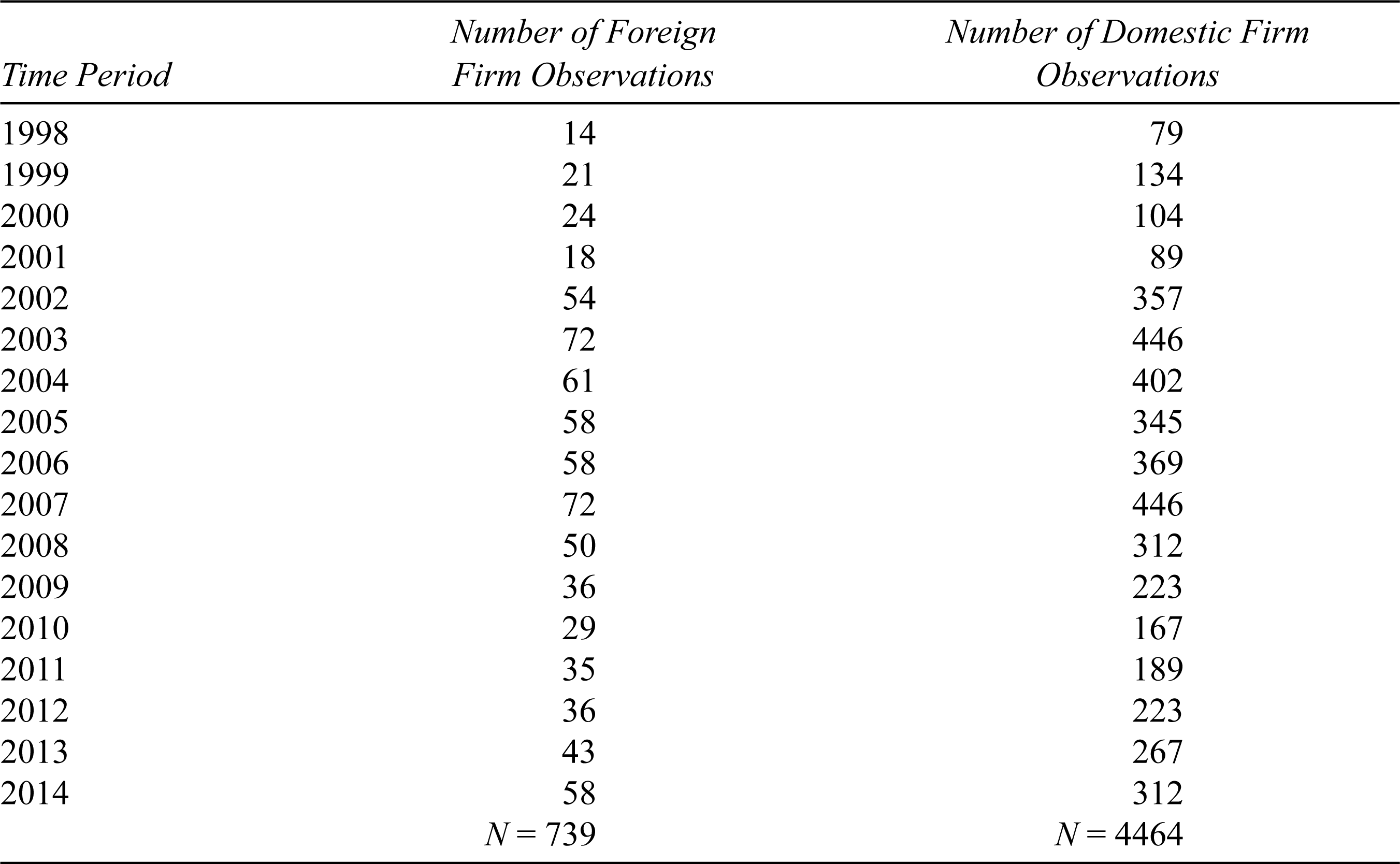
In the data cleaning and inputting process, firms that did not report or provide insufficient information on key economic activities were excluded. The final dataset contains 1,624 firms with 5,203 observations covering the period of 1998–2014. A total of 1,398 firms were domestic firms and 226 were foreign firms. A detailed breakdown is provided in the Appendix. The number of foreign firms in our sample is in line with the findings of Marin and Sasidharan (2010) that included 273 foreign firms from Prowess. For more examples, one can refer to similar studies on the manufacturing sector in Argentina by Chudnovsky, López, and Rossi (2008) and Marin and Bell (2006) which had 145 and 283 foreign firms, respectively, in their samples.
India is a country with unique institutional (colonial and administrative) ties to Anglo-Saxon countries. Although India is catching up swiftly in terms of higher innovation and technology standards, the nature of its NIS is closer to Anglo-Saxon countries because of colonial and administrative ties that drive modern scientific traditions and initiatives in science and technology policies (Arnold, 2005). This is further evidenced from India’s colonial ties with the UK which has created national institutions such as rule of law, legal, administrative, political and financial systems that are similar to other Anglo-Saxon countries (Mueller, 2006). India has a higher education establishment which is a cumulative combination of the British and the US educational systems, such as internal structure of universities, mode of knowledge delivery, classroom learning techniques and assessment methods (Joseph, 2009). In recent years, India has followed a policy of greater integration between technical universities and industrial knowledge-intensive sectors that cater to the demands of the high-skilled workforce. This is similar to the American system of setting up closer ties through knowledge clusters between educational institutions and industrial sectors. Furthermore, language is an important aspect which binds India closer to Anglo-Saxon countries. The medium of instruction in public and private universities is English, and the same is used for administrative purposes, either at the national or regional level. Linguistic similarities can also minimise the difficulties associated with transferring tacit know-how as well as transmitting prescriptive knowledge (Polanyi, 1958). Thus, India in having closer institutional ties to Anglo-Saxon countries is in a better position to reap benefits associated with knowledge flows from FDI. Alternatively, the knowledge flows emerging from FDI from non-Anglo-Saxon countries are less likely to be beneficial because of the dissimilarities of the NIS between these groups and India. In order to capture these broad institutional differences, we categorise our FDI sample into foreign firms from Anglo-Saxon and non-Anglo-Saxon countries. 1
We use marketing intensity (i.e., marketing expenditures as a total of foreign firms’ sales) to capture MCs of FOAs. Marketing expenditures include firms’ commissions, rebates, discounts and promotional sales, expenses on direct selling agents and entertainment expenses (CMIE, 2015). The marketing intensity variable is a good measure to capture the capabilities associated with selling (Griffith, Yalcinkaya, & Calantone, 2010), promotion (Troilo, De Luca, & Guenzi, 2009) and skills associated with segmenting and targeting markets (DeSarbo, Di Benedetto, Song, & Sinha, 2005). Thus, this measure captures the historical dynamics in investment levels in marketing expenditures (Kor & Mahoney, 2005). The IB literature heavily relies on marketing intensity as a proxy for MCs (Kotabe, Srinivasan, & Aulakh, 2002). We split the FDI sample into foreign firms with higher and lower marketing intensity by adopting a threshold. Since we cannot be sure what constitutes a high marketing intensity in the context of India, we experiment with two cut-off points: the top quartile and the top 10 per cent of each distribution following a similar approach to capture high R&D and export intensity in Marin and Sasidharan (2010).
Two-stage Panel Data Estimation
Following highly cited research on technological catch-up in India (Marin & Sasidharan, 2010) and China (Wang, Deng, Kafouros, & Chen, 2012), we use a two-stage estimation process. In the first stage, we compute the dependent variable required for the study. Assessment of technological catch-up in domestic firms requires the estimate of a firm’s total factor productivity (TFP). Using the ordinary least squares (OLS) technique to estimate TFP suffers from simultaneity bias because it treats labour and capital inputs as exogenous and ignores time-invariant and firm-specific characteristics (Levinsohn & Petrin, 2003). Moreover, problems of estimation leading to endogeneity can arise if firms adjust their inputs according to their expectations about economic conditions, leading to the possibility that idiosyncratic shocks in productivity are captured in the error term (Griliches & Mairesse, 1995). The Levinsohn and Petrin (2003) approach, henceforth the LP method, is commonly used to overcome this potential endogeneity problem in estimation of TFP (Javorcik & Spatareanu, 2008; Liu, Wang, & Wei, 2009). The LP technique is easier to implement than the alternate method by Olley and Pakes (1992) because there is no prerequisite for evidence on firm entry and exit and no evidence of loss subsequent from negative tenets in the proxy investment variable. The LP method of estimating TFP for two-digit industry production functions offers the data for the dependent variable, TFP of domestic firms.
In the second stage, we relate the TFP of domestic firms to measures (i.e., proxies) of foreign presence or foreign participation using a fixed effects model estimated in first differences. We control for the competitive characteristics of industries and key conditions in domestic firms that affect absorptive capacity.
The baseline model is:

where lnTFP ijt is the logarithm of the TFP of domestic firm i in industry j at time t. FORFPAS and FORFPNAS are foreign presence from Anglo-Saxon countries and foreign presence from non-Anglo-Saxon countries, respectively.
Following Wei and Liu (2006) and Liu et al. (2009), we use different measures to capture FDI-mediated domestic catch-up effects (FORFP), namely, foreign presence measured through employment, foreign presence measured through domestic sales and foreign presence measured through fixed assets in the industry. Consistent with recent research, this approach enables us to maximise the detection of FDI-mediated domestic catch-up (Wang et al., 2012).
FORFPAS captures FDI catch-up effects from FOAs whose home country is institutionally close to India and is measured by the share of Anglo-Saxon FOAs’ employee compensation in the three-digit industry (employment), the share of domestic sales by Anglo-Saxon FOAs in the three-digit industry (domestic sales) and the share of Anglo-Saxon FOAs’ fixed assets in the three-digit industry (fixed assets). Similarly, FORFPNAS captures FDI catch-up effects from FOAs whose home country is institutionally different from India and is measured by the share of non-Anglo-Saxon MNEs in the three-digit industry (domestic sales, fixed assets and employment compensation). Herfindahl index of concentration (HHI) and import penetration ratio (IMP) are the two industry-level proxies for industry competitive conditions. The domestic firms’ RD (R&D intensity) and SCALE (firm scale) are two firm-level variables acting as proxies for absorptive capacity of domestic firms. All right-hand variables are lagged by 1 year which deals with the impending justification that technological catch-up will not increase instantaneously.
To estimate the role of foreign firms’ MCs in domestic catch-up, we use the following estimation model in Equation (2):

where FORHMC and FORLMC represent foreign presence with both high and low MCs, respectively. As mentioned earlier, three different measures of foreign presence are used, namely, employment, domestic sales and fixed assets of foreign firms.
In this study, we also seek to assess the moderating role of foreign ownership modes which are categorised by (a) wholly owned subsidiaries (WOS), where the MNE has 100 per cent promoter’s equity; (b) majority joint ventures (MAJV), where the MNE has 51–99 per cent promoter’s equity and (c) minority joint ventures (MIJV), where the MNE’s promoter’s equity is from 10 per cent to 50 per cent.
The study measures technological catch-up from WOS, MAJV and MIJV using the same method as used in Equation (1) (catch up through FDI), that is, by shifting the shares of all MNEs to the shares of WOS, MAJV and MIJV in the three-digit industry, respectively. Comprehensive variable measurements are provided in the Appendix. Thus, the inclusion of these variables leads to the following model:

We utilise fixed effects model in Stata to estimate Equations (1)–(3) with corrections for heteroskedasticity and for clustering at the industry—year level to account for correlations between firm observations within the same industry—year (Wooldridge, 2010). We also conducted the Hausman test in Stata and found that the fixed effects estimator is appropriate in comparison with random effects estimator. It is quite possible that other factors might be connected to correlations between foreign presence and productivity. These factors could be assumed to be fixed, such as firm-, year-, industry-, and region-specific factors, and might be connected to more micro-level determinants such as organisational culture, available opportunities regarding technology in an industry or macro-level factors such as external policy shocks and infrastructure conditions. To control for these fixed effects, the year-, industry-, and region-dummies are used in a fixed effects panel data model.
Data Analysis and Discussion
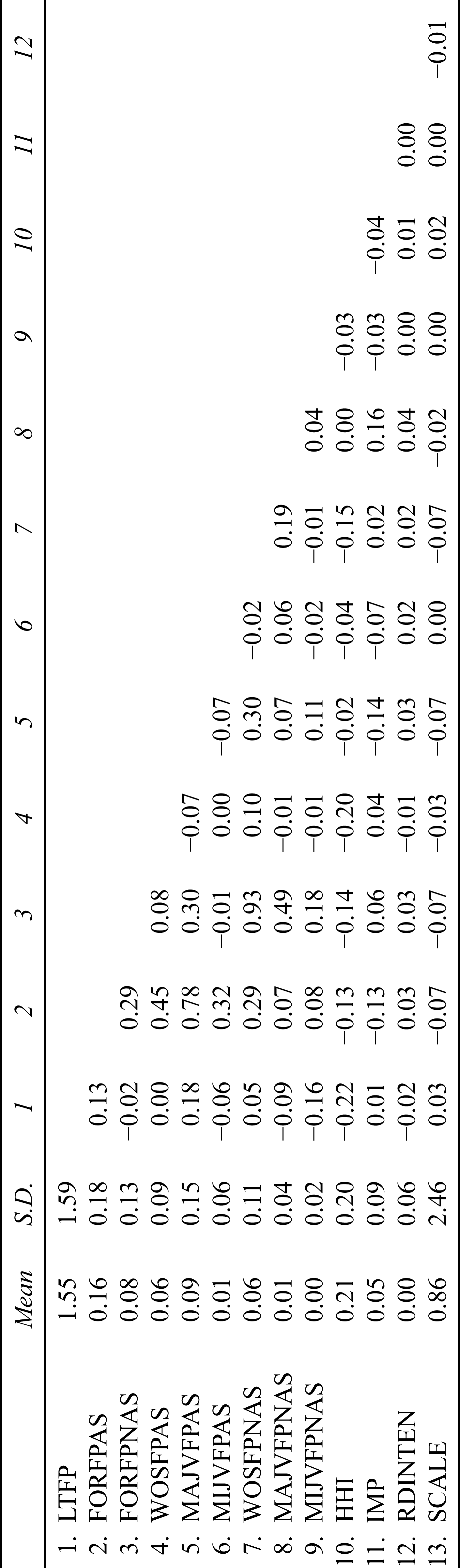
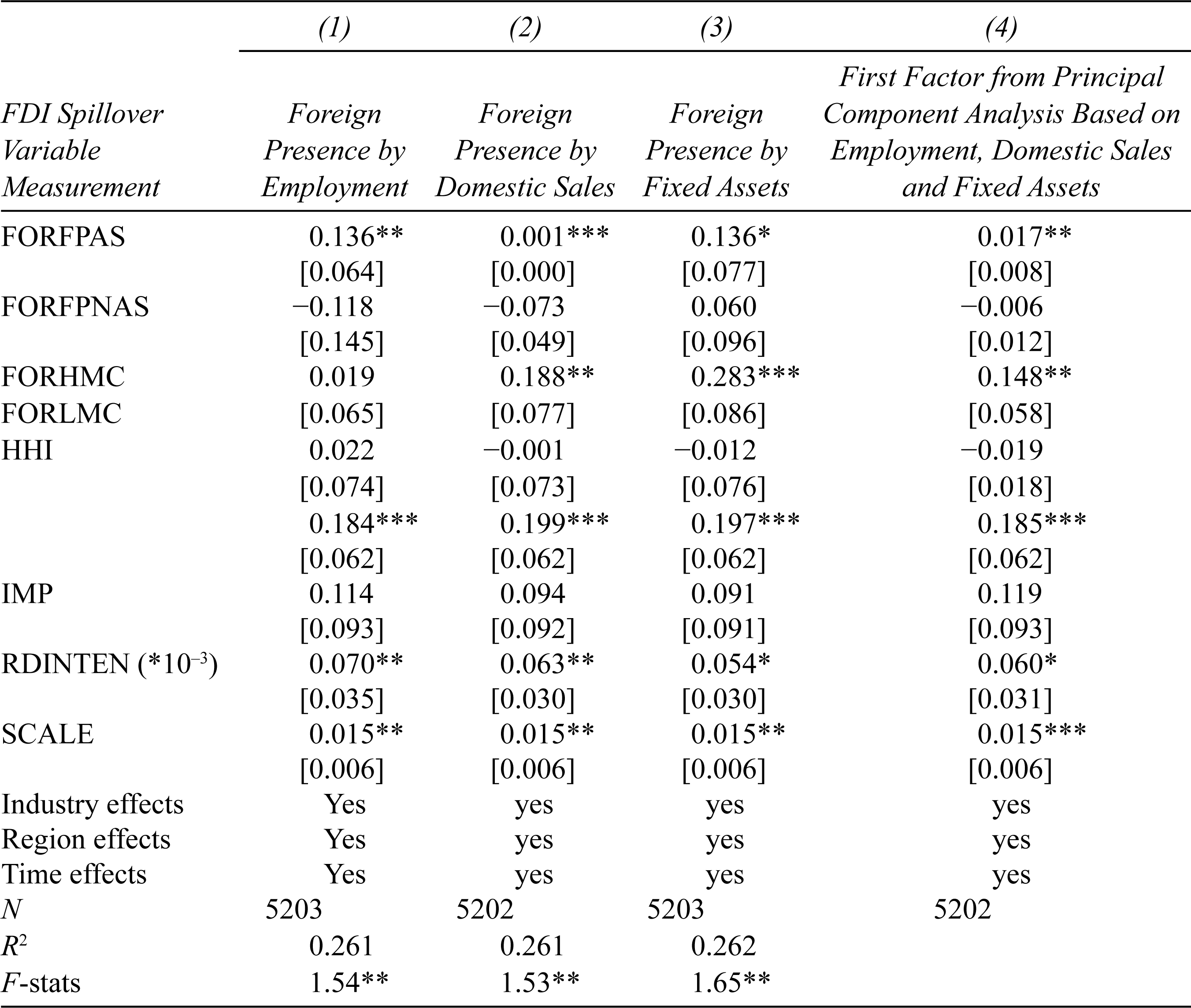
Table 2 provides the key summary statistics and correlation matrix. It is seen that there are no severe issues related to multicollinearity. We also inspected the variance inflation factors (VIF) and observed that none of the variables exceed more than 2.0 (Mansfield & Helms, 1982). The results for domestic technological catch-up estimated in Equations (1) and (2) are presented in Table 3. The difference between each column lies in the use of different measures of FDI-mediated domestic catch-up variable. Column 1 uses the share of foreign-owned firms’ employment in total employment, column 2 uses the share of foreign-owned firms’ domestic sales to total domestic sales and column 3 uses the share of foreign-owned firms’ fixed assets to total fixed assets in the industry.
Correlation Matrix
Domestic Technological Catch-up Effects from Institutional Differences and Marketing Capabilities
*p < 0.10. **p < 0.05. ***p < 0.01.
Table 3 (columns 1–3) reveals that technological catch-up in domestic firms which is driven by the presence of foreign firms entering from institutionally close countries (FORFPAS) are positive and significant for all the measures used. However, FORFPNAS is not statistically significant. This result supports our first hypothesis
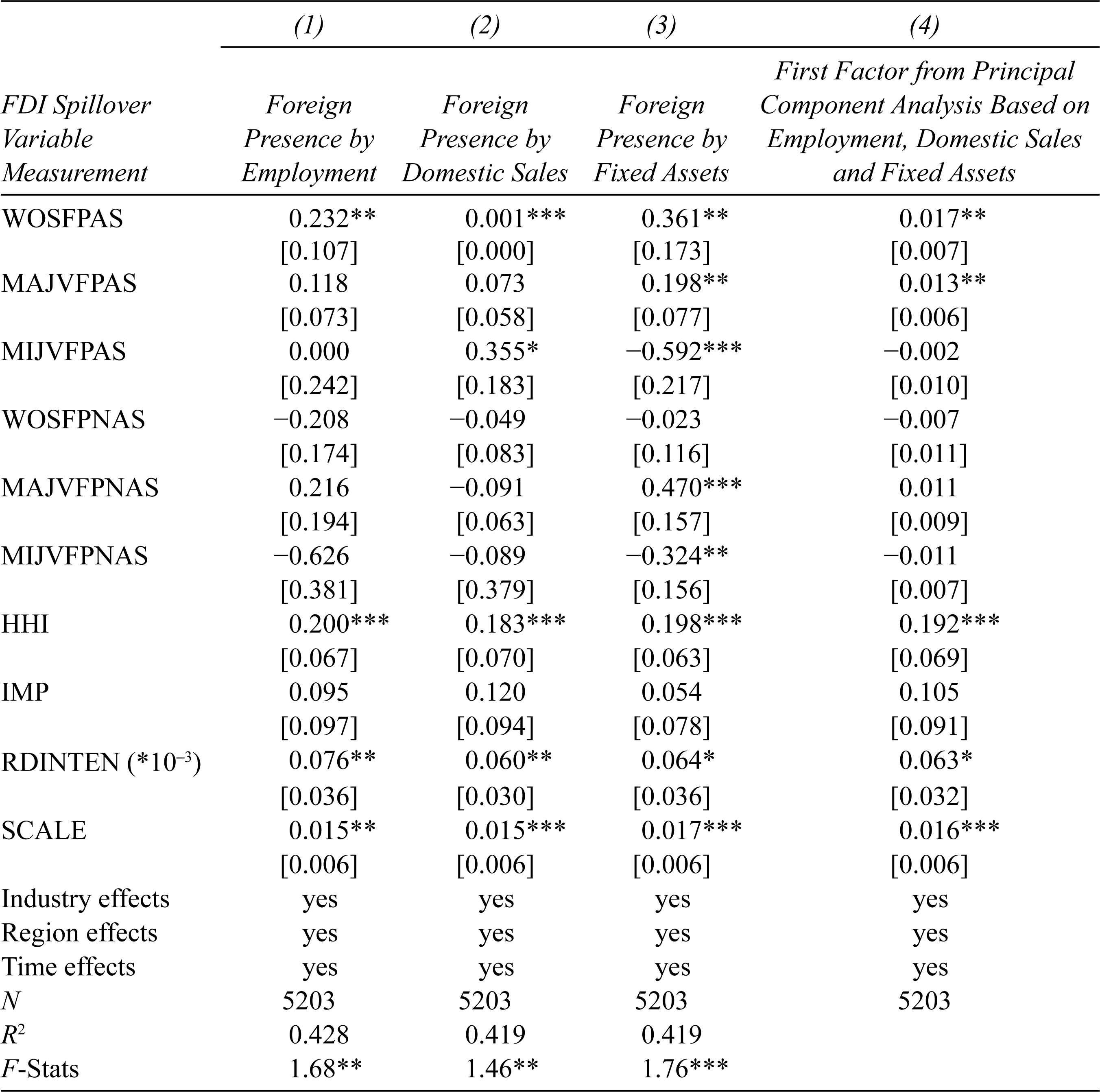
We further investigated the joint effect of institutional differences and foreign ownership modes. Equation (3) is estimated, and the results are presented in Table 4. The coefficients on WOS from Anglo-Saxon countries are positive and significant for all measures (columns 1–3). In contrast, coefficients on MAJVs and MIJVs from Anglo-Saxon countries are positive and significant only for one measure each through fixed assets measure; the coefficient on MIJVs from Anglo-Saxon countries is negative and statistically significant. The latter result may be an indication that when countries are institutionally closer, WOS will provide with the highest prospects for technological catch-up than other FDI ownership modes. Also, MAJVs are more likely to be a better ownership mode for knowledge diffusion to domestic firms than MIJVs as the latter is associated with a negative (and highly significant) effect.
Joint Effects of Institutions and Foreign Ownership on Domestic Technological Catch-up
*p < 0.10. **p < 0.05. ***p < 0.01.
It is seen that when foreign ownership modes are considered under high institutional distance, the significance for JVs is much more compared to WOS. The coefficient for MAJVs has a positive and highly significant effect, whereas MIJVs have a negative and significant effect with the fixed assets measure. This evidence on the moderating effect of foreign ownership modes on institutional distance fully supports the second hypothesis (
Following the method used in Wei and Liu (2006), we adopt a principal components approach to combine all indicators into a ‘grand’ composite index. The rationale behind the use of a grand composite index is that one measure of domestic technological catch-up (e.g., domestic sales) is likely to explore only a distinct aspect or channel rather than technological catch-up from foreign presence (FDI) comprehensively. The first factor from the principal component is identified, and it explains more than 74 per cent of the variance of these three indicators. The results are shown in the fourth column. It shows that, with all other things remaining constant, domestic firms benefit from the presence of foreign firms through technological catch-up.
The current evidence from this article contradicts existing studies which have looked at the role of foreign ownership modes. In the case of China, it was found that JVs are more likely to be associated with positive spillovers than WOSs (Abraham et al., 2010; Tian, 2010). In our case, it is WOS which have relatively higher effects than both MAJVs and MIJVs. The evidence regarding MIJVs in our study is negative and significant which also contradicts earlier studies by Dimelis and Louri (2004). However, our findings are partially in line with Mansfield and Romeo (1980), Ramachandran (1993), Javorcik (2004) and Almeida and Fernandes (2008) which suggest that MNEs are more likely to transfer advanced technologies and know-how to WOSs. Different from these studies, our approach takes into consideration the mediating role that institutional differences can play in technological catch-up from foreign firm with different level of ownerships in the host country and uses data which only covers listed firms whose absorptive and innovative capabilities are relatively high. Our findings assert the importance of institutional ties between the FDI home and host country as well as foreign ownership and demonstrate that the similarities in formal and regulatory frameworks between an emerging host country and its institutionally close countries could bring about positive technological benefits through FDI with high level of foreign ownership.
Conclusion
The findings reported in this article add to the growing stream of literature that suggests that models of FDI-mediated technological catch-up need further development to enable better identification (Crespo & Fontoura, 2007). The evidence from this article points towards the fact that technological catch-up is conditional on foreign ownership modes and MCs of FOAs and institutional distance between the home and host country of MNEs. Positive intra-industry technological catch-up exists only for WOS and MAJVs from Anglo-Saxon firms (i.e., firms facing lower institutional distance), whereas in the case of non-Anglo-Saxon firms (i.e., firms facing higher institutional distance), MAJVs are the most important driver of technological catch-up. Higher MCs in foreign affiliates also play an important role in domestic catch-up, and we find evidence to document this proposition in our study. We also find negative effects from MIJVs from Anglo-Saxon firms, with limited evidence that positive catch-up effects arise from MIJVs as well. The results suggest that a contingency approach, based on a fuller classification of foreign ownership modes than is normally used in the literature, consideration of MCs and the facilitation of catch-up conferred by institutional differences, enables a more detailed identification than seems to be the case in more aggregated studies.
The interpretation of the arguments and results presented in this article require caution. First, our findings draw on a specific sample of firms of the Indian economy, that is, absorptive and innovative capabilities of large listed firms in the manufacturing industry are relatively high. Therefore, any generalisation from this in terms of both sector and firm selection needs caution. Second, our study focuses on analysis of one aspect of institutional differences, that is differences in NIS frameworks, and uses Anglo-Saxon versus non-Anglo-Saxon country classification to capture the institutional differences. However, it could be argued that other institutions, for example, contract enforcement, are also important for catch-up, as they affect MNEs operations, technology transfer and transfer of know-how to its affiliate and domestic firms in the host country. In future, more direct measures of institutional differences could be used in to investigate catch-up effects. Finally, although our study takes measures to mitigate endogeneity, a more effective solution involves using datasets that cover a longer period and contain information on effective instrumental variables.
Despite the limitations listed earlier, we believe our findings could feed well into discussions of FDI and its related public affairs polices. In recent years, these policies attracted FDI in developing countries and presumed that JVs are more likely to be beneficial for catch-up. Our results, however, demonstrate that domestic firms that are large and innovative in nature could benefit more from the presence of WOS in the case of institutional similarities between home and host country. This is not to say that only FDI in the form of WOS and from institutional close countries are welcomed in the host country. Rather, we believe it is important to take into considerations foreign firm heterogeneities in terms of ownership, depth of capabilities (especially marketing related) and institutions in which they embed and domestic firm heterogeneities in terms of size, absorptive capability and consequently design and implement policies which are not discriminating against any types of firms, foreign or domestic. Early liberalised countries including Hong Kong, Singapore and Ireland have showed the way in this regard, and late comers including India and some of Eastern European countries are moving towards this direction.
Footnotes
Declaration of conflicting interests
The authors declared no potential conflicts of interest with respect to the research, authorship and/or publication of this article.
Funding
The authors received no financial support for the research, authorship and/or publication of this article.
Acknowledgements
This article is supported by National Natural Science Foundation of China (No. 71874068), Youth Foundation of Humanities and Social Sciences, Ministry of Education of China (No. 17YJC790129; No.15YJC790152), Jilin Province Science and Technology Development Plan Project (20180418128FG).
Variable Definition and Measurement

| Variable | Definition and Measurement |
| LTFP | Logarithm of total factor productivity (TFP) |
| (FORFPAS/ FORFPNAS) | Technological catch-up variable proxied by share of foreign affiliates from Anglo Saxon/non-Anglo-Saxon countries in a three-digit industry, excluding the focal firm |
| (FORHMC/ FORLMC) | Technological catch-up variable proxied by share of foreign affiliates with high/low marketing intensity in a three-digit industry, excluding the focal firm |
| WOSFPAS/ WOSFPNAS | Technological catch-up variable proxied by share of wholly owned foreign firms from Anglo-Saxon/non-Anglo-Saxon countries to total foreign firms in the industry |
| MAJVFPAS/ MAJVFPNAS | Technological catch-up variable proxied by share of majority-owned joint ventures from Anglo-Saxon/non-Anglo-Saxon countries to total foreign firms in the industry |
| MIVJVFPAS/ MIJVFPNAS | Technological catch-up variable proxied by share of minority-owned joint ventures from Anglo-Saxon/non-Anglo-Saxon countries to total foreign firms in the industry |
| HHI | The sum of squared firm shares of sales in a three-digit industry |
| IMP | The ratio of imports to domestic demand in a three-digit industry |
| RDINT | The ratio of domestic firm’s R&D expenses to sales |
| SCALE | The ratio of domestic firm’s sales to average three-digit industry-level sales |
Distribution of Foreign and Domestic Firms’ Observations (1998–2014;Manufacturing Sector)
| Time Period | Number of Foreign Firm Observations | Number of Domestic Firm Observations |
| 1998 | 14 | 79 |
| 1999 | 21 | 134 |
| 2000 | 24 | 104 |
| 2001 | 18 | 89 |
| 2002 | 54 | 357 |
| 2003 | 72 | 446 |
| 2004 | 61 | 402 |
| 2005 | 58 | 345 |
| 2006 | 58 | 369 |
| 2007 | 72 | 446 |
| 2008 | 50 | 312 |
| 2009 | 36 | 223 |
| 2010 | 29 | 167 |
| 2011 | 35 | 189 |
| 2012 | 36 | 223 |
| 2013 | 43 | 267 |
| 2014 | 58 | 312 |
| N = 739 | N = 4464 |