




Abstract
The establishment of university spin-offs differs across schools as a result of the interactions among different intuitional settings. This study examines the role of institutional factors in the context of state-controlled universities, which are the majority in East Asia, but have not been the focus of the existing literature. The University of Tokyo experienced a significant shift from an anti-industry university collaboration culture to a leading entrepreneurial university in the mid-2000s. This study proposes a chronological investigation of the policies and culture of this state-owned top research university and addresses its significant efforts to create an entrepreneurial environment. First, despite the regulatory constraints, the university has established an incubator and early-stage investment resource, benefiting from prior experimental experiences in an independent research centre. Second, it opened a special non-degree entrepreneurship education programme for students and postdoctoral researchers. These facts show the importance of an organisational initiative even in a state-controlled context. Regarding the reasons why such changes did not cause internal cultural conflict, our case studies suggest that the academic and commercial bicultural system introduced by the University of Tokyo balanced the fulfilment of traditional academic roles with the drive for innovation.
Introduction
The imperfection of knowledge licensing often drives faculty staff and students to establish spin-offs. The USA achieved significant innovations through academic entrepreneurship and the interactions between the government, industry and university following a so-called triple-helix model (Etzkowitz, 2008; Etzkowitz & Leydesdorff, 1995). These authors not only focus on the role of the government in the USA, where, historically, the government has abstained from intervention in universities, but they also address appropriate interdependencies between the university, industry and government for fulfilling their traditional roles.
The difficulty in enhancing university venturing lays in these delicate interdependencies (Siegel & Wright, 2015). All universities have innate relationships with the industry and the government due to their unique institutional settings, academic disciplines, institutional cultures and organisational resources. The differences across these elements generated a large gap in the number of spin-offs generated among universities (Charles & Conway, 2001; Pressman, 2002; Todorovic, McNaughton, & Guild, 2011). The previous literature made a great effort to identify the institutional factors that may help explain such disproportion. Many studies were based on the analysis of research universities in North America (e.g., Di-Gregorio & Shane, 2003; Kenney & Goe, 2004; Kenney & Patton, 2011; Tornatzky, 2001), where private universities have strong influence, while only a limited number of papers examined universities in the UK, where public universities are in the dominant position (e.g., Clarysse, Tartari, & Salter, 2011; Lockett, Wright, & Franklin, 2003). Publicly owned universities tie closely with the government and are likely to face the negative perception of the conflict of interest about their university–industry linkages. Therefore, there seems to be a significant lack of academic investigation of the institutional factors that may determine the frequency of spin-offs in the public university context.
The appropriate interdependencies vary depending on the national contexts. Nevertheless, as Agarwal and Shah (2014) discuss, the vast majority of papers in the field of academic entrepreneurship investigate universities both in the USA and the UK. In the past decade, a lot of universities outside these two nations earned a reputation as leading research institutions, especially in Southern Europe, and Southern Asia, and East Asia. In many of these countries, where governments hold a prominent role, a limited number of national universities lead academic activities to develop national reputation and often display an institutional culture oriented towards academic research. Under such circumstances, an appropriate triple-helix approach might be significantly different from the model applied to the USA or the UK.
This study addresses the institutional factors of academic entrepreneurship in the context of research-oriented and publicly owned universities. Two decades’ experiences in the university venturing in Japan, where the majority of leading universities are publicly owned and the government has a powerful influence, provide several meaningful insights. In particular, the University of Tokyo, one of the top-notch universities in East Asia, experienced a shift from the academic ivory tower to a representative entrepreneurial university. This study investigates the institutional efforts needed to fostering academic entrepreneurship and enhancing spin-offs in national universities, with a special focus on the experience of the University of Tokyo.
Theoretical Basis
Institutional Factors for Academic Entrepreneurship
Studies focusing on the US universities (Pressman, 2002) and the UK higher education institutions (Charles & Conway, 2001) revealed that the intensity of academic entrepreneurship varies by institution. Some papers discovered the following factors that determine the frequency of spin-offs: institutional policies, resources and culture.
Institutional Policies
A tolerant implementation of the spare-time occupation policy (Kenney & Goe, 2004; Tornatzky, 2001) and the flexible application of the conflict-of-interest policy to the use of university resources (Matkin, 1990) are believed to encourage faculty entrepreneurship. This is particularly important at national universities, as faculty members are public servants. Governmental or institutional policies often prohibit any activities for private interest; even otherwise, instructional norms are sceptical about private business occupations.
Intellectual property policies also have a strong influence. Eventually, entrepreneurship drives when inventors have the ownership of their inventions (Kenney & Patton, 2011); however, this is a controversial option for public universities. Institutions reserve their ownership, in line of principle. In this situation, a policy for offering an exclusive license to start-ups may enhance the number of university spin-offs (Hsu & Bernstein, 1997). A very high royalty distribution for faculty members lowers their motive for spin-offs as it promotes a license to existing firms (Di-Gregorio & Shane, 2003).
Accepting equity as a license royalty is another driver of entrepreneurship as it prevents cash drain (Di-Gregorio & Shane, 2003; Hsu & Bernstein, 1997; Lockett et al., 2003; Mowery & Ziedonis, 2001). Notwithstanding its benefit, this policy could result in significant resistance from faculty members. For example, the majority of the US university faculty in the 1990s opposed to this policy (Lee, 1996). This clearly indicates that entrepreneurship enhancement policies may be in conflict with the traditional academic culture.
Institutional Resource
An entire organisation cannot become an entrepreneurial body by only introducing new policies; the shift requires both resources and culture (D’Este & Patel, 2007; Todorovic et al., 2011). Organisational resources are required to implement entrepreneurial routines. Essential resources are early-stage capital (Tornatzky, 2001; Wright, Lockett, Clarysse, & Binks, 2006), practical knowledge of the company establishment accumulated in technology licensing offices (TLOs; Lautenschläger, Hasse, & Kratzer, 2014; Lockett et al., 2003; Shane, 2004), organisational social networks with venture capitalists (Hsu & Bernstein, 1997; Shane & Cable, 2002) and other business professionals, such as business managers, lawyers and accountants (Lockett et al., 2003; Shane, 2004). Academic discoveries often need further development before the commercialisation. This process is expensive and is usually not covered by a research fund. Pre-seed investment facilitates the achievement of certain intermediate milestones. Some US and UK entrepreneurial universities provide financial support for prototype development (Tornatzky, 2001; Wright et al., 2006).
Academic entrepreneurs usually lack business and market knowledge. Fresh spin-offs can complement such knowledge from the TLOs. Several studies found a positive correlation between a TLO’s experience and entrepreneurial intensity (Lockett et al., 2003; Shane, 2004). In addition, financial and knowledge resources can be supplied from their social networks with venture capitalists and business executives. However, the uncertainty of the business of spin-offs could be an obstacle to benefiting from the contribution of those external actors. The reputation of the institution helps to overcome it (Clarysse et al., 2011; Di-Gregorio & Shane, 2003).
Institutional Culture
Entrepreneurial culture influences the establishment of university spin-offs. Prior to the 1990s, a negative attitude towards entrepreneurship was dominant even in the USA, where university-based innovations were encouraged even in the Massachusetts Institute of Technology—MIT (Matkin, 1990; Shane, 2004), which fostered a positive attitude towards entrepreneurial ecosystems. Such a culture is the outcome of significant organisational efforts. The empirical study by Clarysse, Wright, Lockett, Van de Velde and Vohora (2005) emphasises the importance of its intentional incubation.
First, an institutional policy framework strengthens the basis of the entrepreneurial culture. Intense TLO activities orient faculty members on the need and importance of entrepreneurship (Jain & George, 2007). Supporting foundations also send a significantly positive signal (Jain, George, & Maltarich, 2009). Second, successful university spin-offs inspire new entrants and spur the creation of new ventures in the context of the university. As discussed earlier, universities have different roles, structures, missions and policies; thus, the practice of entrepreneurial processes in a certain university clearly has a stronger influence within the same university than in other institutions (Nelson, 2014). For example, some case studies imply the critical impact of role models on faculty spin-offs (Hsu & Bernstein, 1997; Kenney & Goe, 2004). Finally, an educational programme may cultivate the entrepreneurial attitude. Barr, Baker, Markham and Kingon (2009) argue that a theory-based entrepreneurial education contributes towards building a positive attitude towards new business innovation among students, and this attitude spills out into the institutional culture. The indirect effect of education also plays a key role. Business schools that gather entrepreneurially minded faculty and students promote technology transfer and commercialisation efforts (Wright, Piva, Mosey, & Lockett, 2009).
Interdependencies of Factors and Determinants of Entrepreneurial Performance of Universities
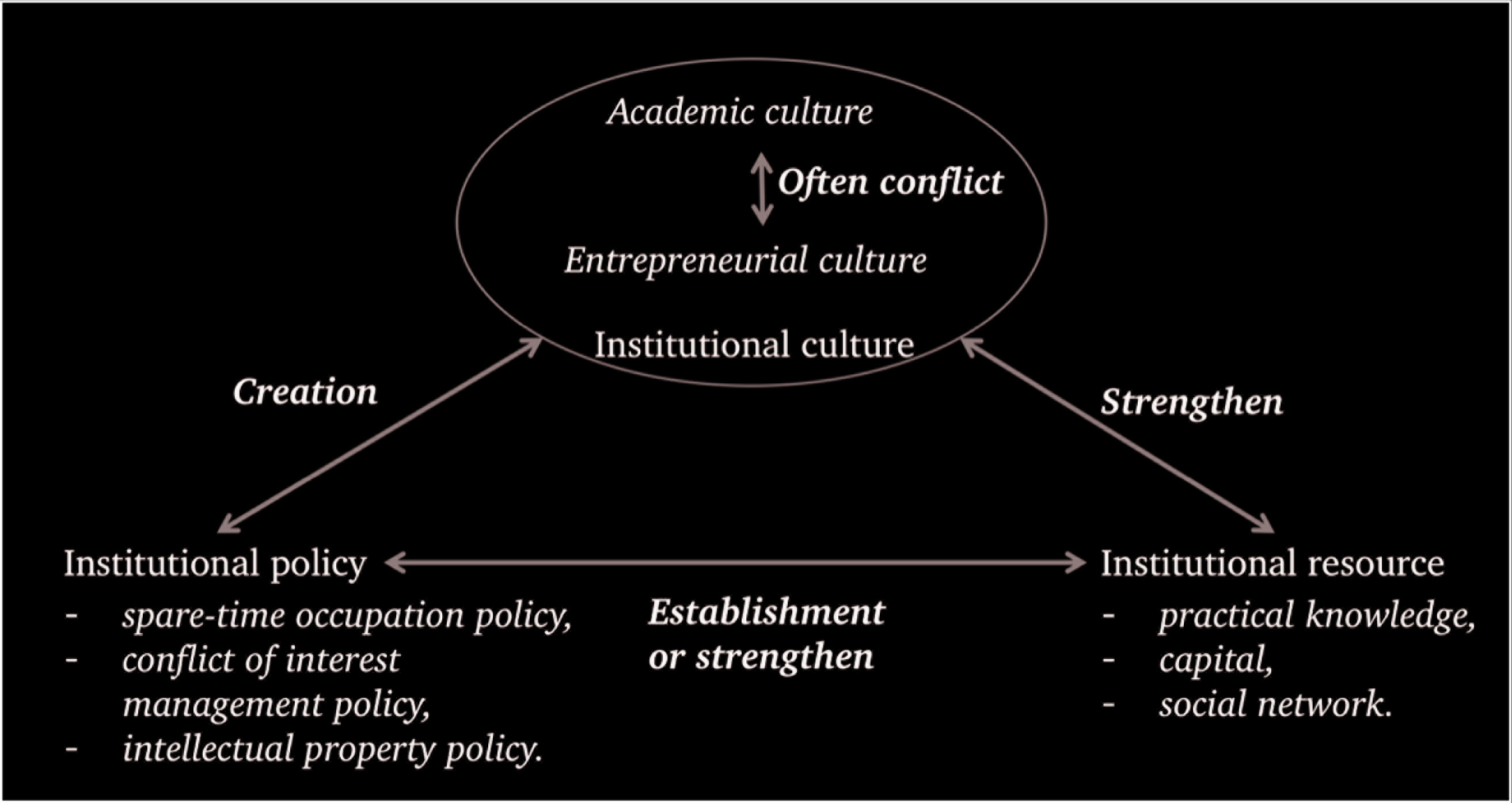
Institutional policies are closely linked to institutional resources. For example, the establishment of an official support team is an institutional decision. Other policies, like intellectual property policies, strengthen the improvement of organisational resources by increasing the possible opportunities. These factors have interdependencies. Institutional policies also contribute the entrepreneurial culture by regularising technology commercialisation activities. Rich organisational resources foster the entrepreneurial culture by providing success cases (Figure 1). In the context of these interdependencies, institutional policies seem to initiate the change of resources and culture, but, in reality, institutional policies, resources and culture often interact with each other (Tijssen, 2006).
Background of the Case Study
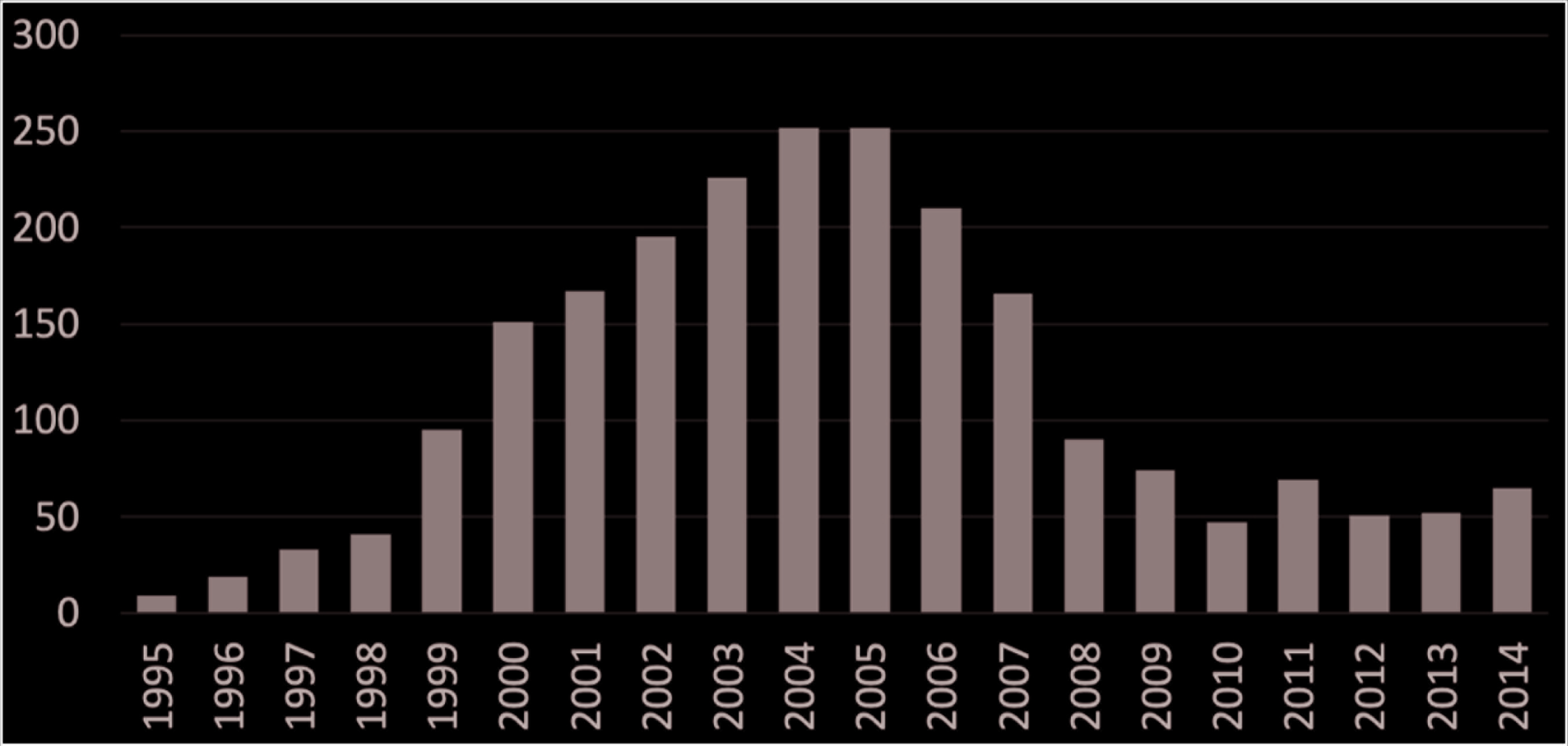
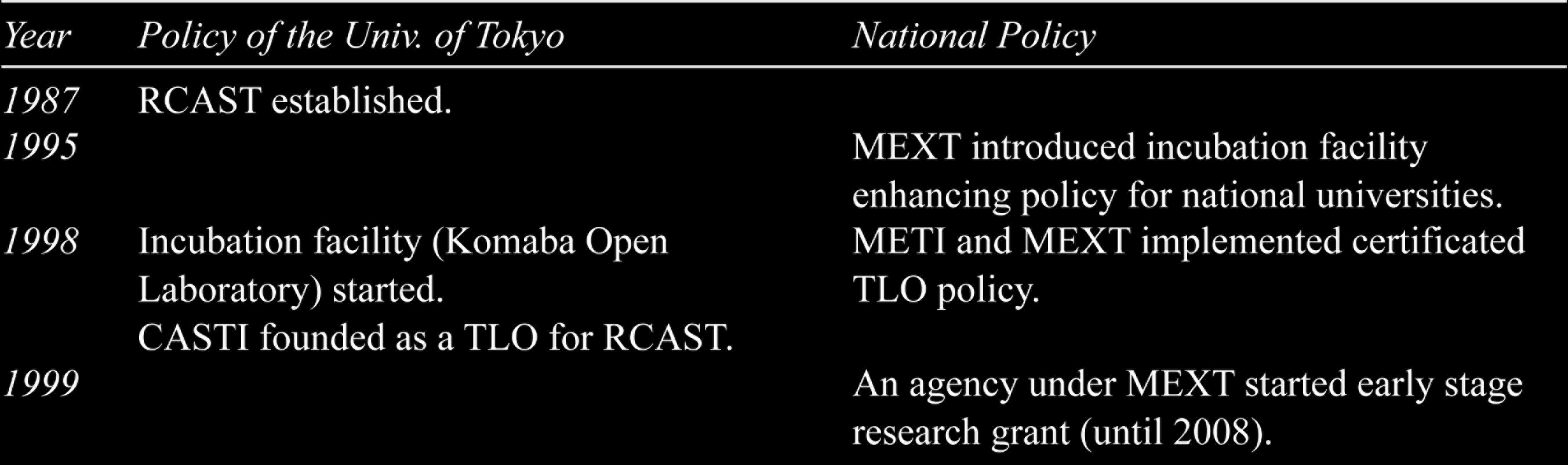
Japan has a two decades’ tradition of university–industry collaboration, with 1,773 university spin-offs 1 active in 2015 (Nomura Research Institute [NRI] & Mnistry of Economy, Trade and Industry [METI], 2016). A survey shows that the number of Japan’s university spin-offs 2 increased around the mid-1990s, peaked between 2000 and 2007 and later flattened out (Figure 2; Ministry of Education, Culture, Sports, Science and Technology Japan [MEXT], 2015). National policy changes have helped foster the increase in university–industry partnerships. From the mid-1990s to mid-2000s, the government actively introduced incubation policies for university spin-offs (Figure 3). For instance, in 2000, the government relaxed its restriction on spare-time occupation for faculty members who aim to commercialise their research progress. In 2001, the minister in charge of the economic policy published an agenda focused on establishing 1,000 university spin-offs. These policies encouraged the establishment of spin-offs, especially biotechnology start-ups (Kneller, 2007). However, Japan has a limited experience in the field of academic entrepreneurship. Its experience seems to provide useful implications for certain emerging countries, which aim at promoting university spin-offs.

The University of Tokyo, a leading research university in Japan, has shifted towards an entrepreneurial university in the past decade. In 2005, the accumulated spin-offs from this university were forty-one, almost half the number of the Waseda University, a leading private research university in Japan (MEXT, 2015). Surprisingly, two years later, the rank reversed, with the University of Tokyo creating 107 spin-offs. According to the NRI and METI (2015), 189 spin-offs constitute 10.6 per cent of all Japanese university spin-offs, and its weight is relatively high compared to the share of its faculty members (1.3%) and graduate students (7.9%).
Hasegawa and Sugawara (2015) report that, among the 245 spin-offs 3 from the University of Tokyo, including ninety one faculty-founded firms (37%) and seventy one students founded ventures (32%), sixteen companies successfully listed on the Tokyo Stock Exchange (7%) and twenty three firms were acquired. Only ten companies wound up. The listed firms had a total market capitalisation of ¥1.7 trillion (JPY; $14 billion) at the end of August 2015. Although the data did not cover all the 245 companies, 2,800 employees were estimated to work for these spin-offs.
Interestingly, both the students and faculty at this university have a little extrinsic motivation to become an entrepreneur. The majority of the faculty members are tenured, and their positions are guaranteed as national government staff. Students are favoured in terms of job opportunities provided by the reputation of the university. Since only 31 per cent of Japanese seem to consider entrepreneurship as a good option (Global Entrepreneurship Research Association, 2016), abandoning stable job opportunities for higher salaries and reputation seems to be an unreasonable choice for many. In addition, limited management executives in the alumni network are a disadvantage for entrepreneurship. The University of Tokyo only has 2,575 chief executive officers (CEOs) within its alumni, while the Waseda University has 10,826 (Teikoku Databank, 2016).
Despite these negative incentives and little social advantages, this university successfully generated a staggering number of spin-offs. The volume of this phenomenon is far larger than that of similar research and national universities, such as the Kyoto University and Osaka University.
Research Questions
The case of the University of Tokyo is characterised by two interesting phenomena. First, they rapidly raised the number of spin-offs after 2008, even though both the governmental university spin-off policies and the actual numbers of nationwide academic spin-offs peaked around 2005. Second, they were characterised by scarce resources and a negative culture towards entrepreneurship, but they achieved a high entrepreneurial performance. Why this university managed to successfully shift towards an entrepreneurial university?
On the one hand, we can assume that institutional policies initiated the change. However, in line with the above-mentioned theoretical arguments, there might have been complicated interactions among policies, resources, and culture. This study investigates the impact of institutional efforts and settings in fostering academic entrepreneurship to enhance the number of spin-offs in national universities.
Methodology
Institutional policies, resources, and culture have a reciprocal effect on each other (Tijssen, 2006). This study explores how institutional policies, resources and culture that encourage entrepreneurship have been formed in the context of the University of Tokyo. We describe the history of culture and policies. At the same time, we follow the establishment of several spin-offs. In this study, we only focus on spin-offs based on research outcomes from universities. In the case of student spin-offs, we limit our analysis to those, based on results that closely relate to the university’s research and to businesses that are not aimed at what lies within the range of personal business.
Our historical descriptions rely on the qualitative dimension. We first conducted interview surveys with three student entrepreneurs, two faculty entrepreneurs and four university administrators (our interviewee’s list is reported in Appendix 1). All the nine respondents have working or education experience at the University of Tokyo. We also complemented the surveys with historical information from the official annual reports, newspapers, magazine and journal articles (representative materials are displayed in Appendix 2). We identified newspaper and magazine articles published between 1980 and 2016 that used terms such as ‘the University of Tokyo’ and ‘spin-offs,’ or other equivalent words and phrases, in several article databases (see Appendix 2).
Historical Analysis of Institutional Factors
Before the 1980s: Entrepreneurial Culture at the University of Tokyo
Historically, the University of Tokyo has been characterised by a negative entrepreneurship culture. The entire academia in Japan shared the prejudice that faculty members should not be involved in commercialisation activities. This notion combined with a particular ‘ivory-tower’ elitism, which regards academic entrepreneurs as ‘vulgar fellows’. For example, according to a microprocessing researcher from a national university in the 1990s: ‘These days, colleagues said academic entrepreneurs doesn’t deserve to be called a scholar if they found their business based on researches conducted in the university’ (Yamaguchi, 2016, p. 2).
The University of Tokyo had an additional negative feature, a scar lingering from the fierce student movement of the late 1960s. Ideology-based student groups censured university–industry collaboration for distorting independent and fair academic research and for strengthening rulers who oppress labor. Their campaign finally turned violent, and the university was compelled to close for a brief period. Their ideological arguments did not gain broad support from the faculty; however, the negative attitude towards a university–industry linkage was a consistent belief among scholars. Consequently, a negative culture continued into the late 1980s. To illustrate this fact, one political scientist at the University of Tokyo recollects: ‘Even at the end of the 1980s, some faculty or students [of the University of Tokyo] resisted university-industry linkage. They put up a signboard to resist university-industry collaboration, although the partnership was regarded as usual activity. It was old-fashioned’ (Mikuriya, 2008, p. 34).
The Late 1980s to 2004: Creation of Entrepreneurial Resource at the Research Centre for Advanced Science and Technology
In 1987, a newly established research centre significantly altered the university culture. The Research Center for Advanced Science and Technology (RCAST), a large complex located near one of three main campuses, was established for collecting industry research grants and fostering interdisciplinary research. Under the initiative of engineering scholars, this centre provided the first sponsored course at the national university. The centre’s bylaws limited a member’s term in office to a 10-year period. This provides extrinsic motivation for faculty to establish spin-offs.
In April 1998, under the initiative of the government, the RCAST opened its first rental office and laboratory space. The office, named Komaba Open Laboratory, enabled spin-offs and collaboration counterparts to conduct development near university researchers.
In 1998, the voluntary faculty of the RCAST founded an independent technology licensing organisation named Center for Advanced Science and Technology Incubation, Ltd. (CASTI). In those days, national universities were not permitted to capitalise; therefore, voluntaries were essential for its foundation. A national policy change assisted the establishment of the CASTI. The government introduced the TLO approval policy to give several advantages for TLOs, such as the compensation of part of the operating costs, and a patent application fee exemption. Despite these provisions, the performance of the CASTI remained modest in the early days. To overcome this tough first corner, a young entrepreneur was invited as the CEO, Takafumi Yamamoto. He had acquired practical knowledge on technology transfer from Niels Reimers, known for his distinguished achievement in establishing a TLO at Stanford University. As Yamamoto had worked for a Japanese advertisement agency that has an entrepreneurial culture and a number of spin-offs, he had also cultivated the technology transfer business as a corporate venture.
In April 2001, an incubation service firm, the Advanced Science and Technology Enterprise Corporation (ASTEC), founded by the voluntary faculty of the RCAST, aimed to provide professional advice for academic entrepreneurs and to make small investments in early-stage technological projects. They raised capital for ¥1 billion (US$8 million), and the group invested the amount in nine projects.
In the same year, the RCAST started a seed technology incubator programme called Technology Business Incubation Program. This programme aimed at supporting research and development of RCAST-originated technology seed investments with very high commercialisation uncertainty. In the programme, venture capitalists and experienced consultants evaluated the technology, offered advice and promoted commercially valuable technology to establish spin-offs. This project was led by a chemistry professor who moved away from the industry. He had the experience to organise a corporate venture in patent licensing business. He also contributed to the establishment of the CASTI, and, later, he became a director of an industry–university liaison office.
While the RCAST set up a technology licensing and venture capital office, the majority of the departments and the administration office were not supportive of commercialisation activities. When the founders arranged a press conference for promoting the ASTEC, the general administration office warned them not to use any university facilities for a private purpose (Miyamoto, 2004). Therefore, both the CASTI and ASTEC located their offices outside the campus.
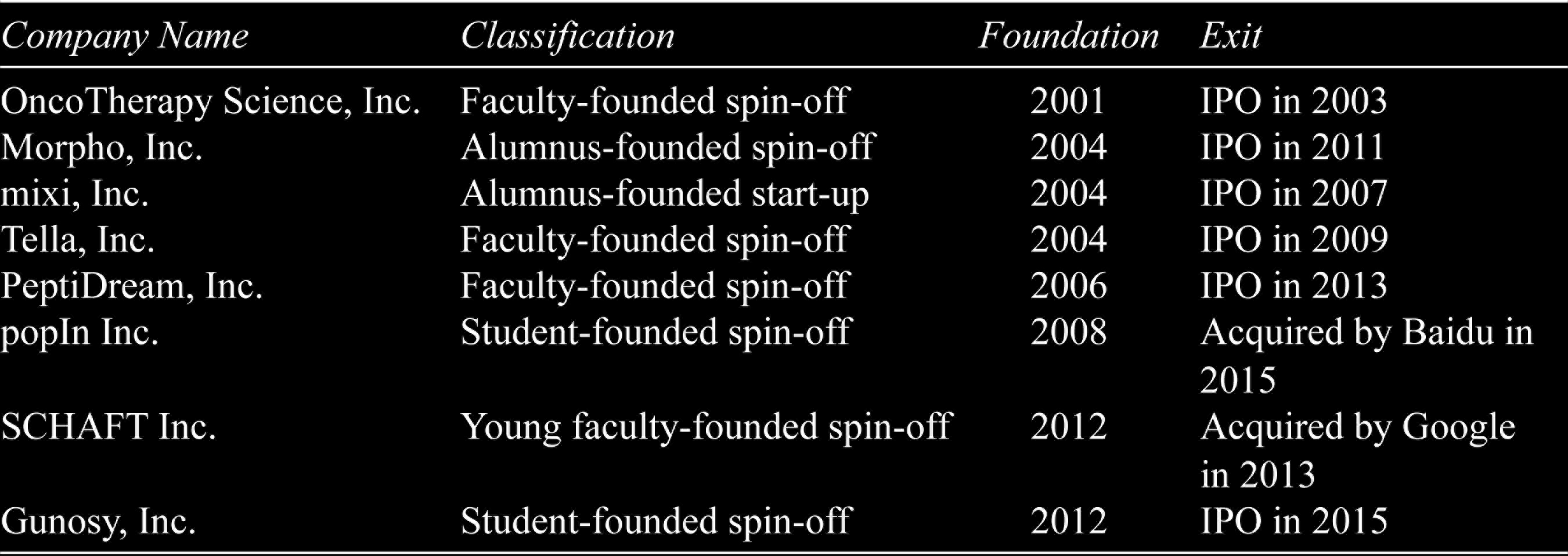
In those days, a very limited number of spin-offs emerged, but a pharmaceutical spin-off saw an exceptional success in its exit. OncoTherapy Science, Inc., based on cancer immunotherapy technology, was established in 2001 and was listed in 2003.
Post-2004: Synthetic Support from Administration Office, Technology Licencing Office, and Venture Capital
A Turning Point
In 2004, the government transformed all national universities into independent administrative institutions. This change expanded their institutional discretion and eased the pressure of collecting external funds. The University of Tokyo soon created a university–industry liaison office, the Division of University Corporate Relations (DUCR), with two teams: one for managing the intellectual property and the other for innovation creation. The latter was led by Shigeo Kagami, a former professional business consultant with a rich experience in business incubation. At the same time, the CASTI was renamed to Todai TLO, Inc. and reached a collaboration agreement with the university. The DUCR worked closely with Todai TLO to commercialise the academic knowledge and supported the creation of spin-off ventures. In 2006, the company became a subsidiary of the university.
In addition, a new venture capital entity was established. Before 2003, independent agencies could not hold any stake in investment funds; thus, a university-related foundation collected funds and established a venture capital firm. This company, the University of Tokyo Edge Capital (UTEC), Co. Ltd., was the first and only national university–related venture capital firm at that time. Several problems arose during the establishment, including legal limitations, but the initiative of the Dean, Takeshi Sasaki, and the strong leadership of Masatoshi Ishikawa, Director of the DUCR, assisted in the establishment. Similar to the DUCR and Todai TLO, the UTEC brought fresh talent on board. Tomotaka Goji, a former policymaker, joined as founder and took office as managing partner in 2006. He had significant experience in drafting the regulation for investment funds and various links with venture capitalists.
The first fund of the UTEC provided ¥8.3 billion (US$80 million) to thirty-four university spin-offs and gained successful returns from the listed stocks of eight spin-offs and six acquisitions. The listed spin-offs include Tella, Inc., an immunotherapy company, and PeptiDream, Inc., a drug discovery technology development firm. By late 2015, the total return was more than ¥10 billion (approximately US$100 million).
The DUCR has been promoting industry–university collaboration and is cooperating closely with Todai TLO and the UTEC. Besides, co-location in the same building of the main campus enables them to support joint ventures. This building also has several rental offices for spin-offs.
Subsequent Expansion of Institutional Support
From 2005, the DUCR started a non-degree entrepreneur education programme called University of Tokyo Entrepreneur Dojo. 4 This programme is open to students and postdoctoral researchers. The programme consists of lectures and intensive business idea competitions, which provides a financial stake for winners. Participants have the opportunity to interact and network with experienced company promoters and executives, including alumni entrepreneurs. Although no credit is given to participants, 5 265 students participated in the programme in the first year. Until 2013, the count for graduates was 1,575 (Kagami, 2014). By the end of 2015, the programme produced more than 100 entrepreneurs.
In subsequent years, the university officially introduced several support policies. In 2006, the university amended its intellectual property policy to accept license fee payments in equities and stock options of spin-offs. In 2007, the Entrepreneur Plaza, a rental office and laboratory of twenty-nine rooms, was established by the munificence of a benefactor. University spin-offs are permitted to rent an office for up to nine years. From 2008, the DUCR provided a management consultancy service called Todai Mentors and invited accountants and business consultants to assist in entrepreneurship programmes.
Achievements
Under this supportive environment, several faculty-founded spin-offs were launched and a couple of them exited successfully. For instance, Tella, Inc., a medical technology development service spin-off that transfers a cancer vaccine therapy to clinics, listed in 2009, and became the first initial public offering among the UTEC-supported spin-offs. Also, some spin-offs were founded by young scholars. Axelspace Corporation, an ultra-small satellite manufacturer, was founded by a young aerospace engineering scholar. The company later succeeded in launching a small weather-observing satellite for a weather news company at the extremely low cost of ¥300 million, one-hundredth of the standard cost.
In parallel with the emergence of university spin-offs that received institutional support, in the mid-2000s, several alumni entrepreneurs, who were academic entrepreneurs in a broad sense, did not receive any institutional support. Especially, the experience of Kenji Kasahara, an economics graduate, produced a large impact. Kasahara started an online recruitment service during his undergraduate days. After stabilising the growth of his first business, he launched a social network service, ‘mixi’, in 2004. It attracted the attention of domestic Internet users, like Facebook did. In 2007, his company listed its stock and its market value soon reached ¥300 billion (US$2.6 billion).
The 2010s: A series of Successful Exits and the Reinforcing of Entrepreneurial Education
Initial Public Offerings and Acquisitions
In the 2010s, a significant number of initial public offerings of the university spin-off appeared. An image processing technology service company, Morpho, Inc., had an initial public offering in 2011. An alumnus founded a start-up based on his PhD research. PeptiDream, Inc., providing a technology platform for drug discovery, listed in 2013 with a market capitalisation of ¥130 billion (US$1.3 billion). A unique functional food manufacturer, Euglena Inc., which produces microorganism-based food ingredients by applying research results from a bioscience scholar, also listed with a market capitalisation of ¥10 billion (US$0.1 billion) in 2012. Similarly, Gunosy Inc., a student-founded spin-off engaged in providing artificial intelligence curation services, saw a market capitalisation of ¥33 billion (US$0.3 billion) in 2015.
Furthermore, several student-founded spin-offs were acquired by giant global companies. A humanoid robot design company, SCHAFT, Inc., was founded in 2012 by two young scholars, who resigned their assistant professor positions. The company nominated a former participant of Entrepreneur Dojo as chief operating officer. In 2013, Google acquired the company for ¥50 billion (US$0.5 billion). A student-founded academic spin-off, popIn, Inc., providing Internet user behaviour analytics services to news media, was acquired by Baidu, China’s top Internet service provider, for ¥1 billion (US$8 million) in 2015. The company was founded by a Chinese master’s programme student. He received various supports from the university in patent, incubation office and investment.
Among the spin-offs, PeptiDream takes insightful managerial norms as a faculty-founded spin-off. The company’s core technology was developed by Hiroaki Suga, an Associate Professor at the RCAST. Professor Suga requested Todai TLO to introduce top manager candidates for the new spin-off. The UTEC, as part of the collaboration with Todai TLO, introduced an experienced biotech company founder. These two experts soon collaborated and founded PeptiDream at the Komaba Open Laboratory. Even though Suga played a core role in the technology development, his involvement in the management was limited, and he remained an outside board member. He retained the substantial role of scientific advisor. He explains that this separation from the management is necessary to avoid the conflict of interest and to protect the freedom of the academia.
Reinforcements of Entrepreneurial Education
With the passing of time, the DUCR aggressively added entrepreneur education programmes and business contests. In 2014, a university–industry linkage entrepreneur education programme, the Enhancing Development of Global Entrepreneur Program, was started with the financial support from the MEXT to allow graduate students and young scholars to practise a business plan development in collaboration with researchers in the industry sector. Training courses and business plan presentations are held in the Silicon Valley. In the same year, the DUCR initiated a business plan contest called Todai to Texas. The contest aims to support students and faculty to demonstrate their novel electric equipment products to South by Southwest, an international entertainment and interactive media festival. The uniqueness of the programme is its operation: voluntary students and alumni contribute to the management and operations. In 2016, the DUCR founded a business plan contest called UTokyo 500k for students and postdoctoral researchers to exercise a business plan presentation.
Discussion
Table 1 describes the significant events and policy changes at the institution and the national government, in a chronological order. Table 2 summarises the major spin-offs.
History of Major Institutional Policies and National Policies

Representative Spin-offs from the University of Tokyo
Institutional Factors of the University of Tokyo
Institutional Policy
The University of Tokyo has expanded its institutional support for academic entrepreneurship, but its basis is still not supportive of entrepreneurs. In particular, its side-job policy is not designed to produce academic entrepreneurs. Before national universities were transformed into independent agencies, the MEXT held authority for faculties’ side jobs. After the criteria were relaxed in 2000, strict limitations were set to faculty members and elaborate documentation was required. Although its mandate moved to individual institutions in 2004, the university did not adopt any significant side-job policy to accelerate academic spin-offs. Faculty members are still not permitted to be chairman of a private business entity. Even today, the conflict-of-interest policy is still negatively oriented towards entrepreneurship. A faculty entrepreneur complains: ‘every year we are requested to submit a lot of pages of documents to the administration office for the approval of the side-position in my startup as a scientific advisor. There is no support from the school or my colleagues. Only the DUCR encourages us’ (Interview carried on by the author).
Intellectual property policies in Japan, particularly in the university, are also negatively oriented towards entrepreneurship. Regarding the national policy, before 2004, developments made by faculty members belonged to inventors, except the outputs from government-funded projects. After 2004, the policy completely changed. Universities had priority in deciding whether they hold ownership of faculty inventions. Considered the arguments of Kenney and Patton (2011), this shift seems to favour licensing activities and to reduce the motivation for entrepreneurship. Turning to the institutional policy, the university circulates its patent royalty revenue back into inventions at a very high rate. While the University of Tokyo apportions at 40per cent of revenue for faculty, the Osaka University allocates 33 per cent for faculty members and 18 per cent for their laboratory, the Kyoto University assigns 33 per cent to faculty (in case of up to ¥10 million JPY revenue, 50% for faculty) and the Waseda University apportions at 50per cent. The benefit sharing rule seems favourable for faculty to license rather than establish spin-offs (Di-Gregorio & Shane, 2003).
Furthermore, there was no significant institutional policy change around 2007, when new start-up establishment showed a rapid growth. Therefore, official policies do not seem to be the primary determinant of the shift towards an entrepreneurial university.
Institutional Resources
The University of Tokyo has accumulated practical knowledge, financial resources and social networks. The TLO was established soon after the national policy framework had changed. However, other universities also created their TLOs.
A significant characteristic of this university is its venture capital programme. Other national universities did not address venture capital before 2013, while only a few private universities, including Waseda, had such a programme. This seems to be a significant advantage for technology seed investment to accelerate commercialisation. The UTEC also contributes towards complementing managerial resources. For example, the UTEC proposed the business director of the PeptiDream. This is consistent with Shane (2004), who argued that venture capitals are important even in terms of non-financial resources.
Another significant factor is the consistency of the key personnel. In our survey interview and literature review, the respondents emphasised the influence of core players, such as Yamamoto of Todai TLO, Goji of UTEC and Kagami of DUCR. They were involved in the commercialisation of academic knowledge for more than 10 years, holding the same position. Being in a representative position, they formulate broad social networks with business professionals. This setup represents a very valuable resource for the standard practices of national universities. All national universities in Japan have a strong convention to rotate the administrative staff in the institution. In contrast, the University of Tokyo established a TLO and venture capital office outside the institution; thus, the convention is not applied. Specifically, Kagami works for the administration office, implying that the university intentionally keeps him in his position. These exceptional management decisions could not be achieved without any cultural support.
Institutional Culture
The culture of the University of Tokyo was negatively oriented towards entrepreneurship, at least until the 1990s, and some negative feelings are still embedded in some faculty members. Resisting entrepreneurship is a natural reaction for a research-oriented university and top educational institution. As Rasmussen and Borch (2010) discussed, the faculty tends to regard a linkage with industry as a hindrance to academic and educational programmes. In addition, the absence of a business school or a management school negatively affected the creation of an entrepreneurship culture (Wright et al., 2009).
An exception is represented by the attitudes of students and young alumni towards venturing. They positively responded to entrepreneurship education programmes even though these courses are part of non-degree programmes. One student and entrepreneur told us: ‘establishing a start-up is an important career option for us. It strengthens our motivation to exert the utmost effort to our degree research. Successful role models encourage us to be an entrepreneur’ (Interview conducted by the author). Indeed, the number of graduates from the University of Tokyo Entrepreneur Dojo reflects the positive culture towards the entrepreneurial spirit. Trials and errors of these young entrepreneurs have been strengthening the institutional resources. Notably, successful entrepreneurs became role models for junior students.
Interaction Between Policies, Resources and Culture
The response to all the above-mentioned background elements is the establishment of positive interactions between institutional resources and culture. In our analysis, we identify three institutional factors that significantly affected these interactions.
The initial factor is the role of the RCAST. This research centre created a positive culture towards university–industry linkages among a limited number of faculty members. The RCAST promoted the TLO, venture capital and rental offices. This experience spread to the whole university after 2004 and created the conditions for implementing innovative organisational routines into existing organisations that have rigid functioning and culture. New routines were first run at a spin-off organisation and later transplanted into the mother organisation (Chesbrough & Rosenbloom, 2002).
Second, the institutional policy change led the university to overcome the institutional inertia. The university paid a great effort to develop the university-related venture capital and technology transfer capabilities. Although it did not accelerate university venturing directly, it was a strong message for the faculty that the entrepreneurship is not ‘vulgar’ (Jain & George, 2007; Jain et al., 2009).
The third factor is the entrepreneurial education for students and young scholars. The direct effect of this factor is the creation of entrepreneurs and business managers for spin-offs. For example, the SCHAFT nominates an alumnus of the Entrepreneur Dojo as a board member. In line with the argument of Barr et al. (2009), these programmes seem to have an indirect effect, namely the cultural shift to entrepreneurship among the young faculty. Founders of Axelspace and SCHAFT started their entrepreneurial career during the early stages of their faculty position. Young scholars are usually motivated to build their academic career and in active commercialisation of their research outcomes (Klofsten & Jones-Evans, 2000). The counter-theoretical academic entrepreneurship in the University of Tokyo implies that young scientists are driven to become entrepreneurs by peer entrepreneurs and by the newly emerged entrepreneurial culture in students and young alumni. Both factors are an outcome of the entrepreneurial education.
A Proposition: Hybridity of Academic and Entrepreneurial Cultures
We have presented collateral evidence of the shift towards an entrepreneurial university; however, one might ask why the shift did not cause a significant conflict with the traditional university culture.
The case of PeptiDream hints at the question. As described earlier, the founder faculty member remains an outside board member. He has been averted for receiving any research funds from the company. His attitude protects academic freedom and its traditional norms and simultaneously realises the practical use of his academic findings by collaborating with entrepreneurs. This attitude does not cause bitter internal conflict. We assume that his entrepreneurial success articulated a role model in the context of this academic institute. As Nelson (2014) debates, the existence of role models in the institutional context significantly influences an entrepreneurial culture.
In the case of the University of Tokyo, the institutional policies and their implementation seem to hold inconsistency to some extent. Although its industry– university liaison office provides formal entrepreneurship–supporting policies, other administration offices and each school do provide little relevant assistance to effectively implement those policies. Similarly, despite the institutional spending for the entrepreneurial education programme, its series of courses has been never treated as official credit courses. The university seems to have an equivocal attitude towards academic entrepreneurship.
Theoretically, this attitude is in line with the finding of the innovation management study by Takeishi, Aoshima and Karube (2010), who revealed, from their case study on innovative product development projects, that the ambiguity or hybridity of the project often leads to an authorisation from the top management, a prevention of internal conflicts and the acquisition of essential resources for the development. Owen-Smith (2003) argues that an entrepreneurial university has a hybrid academic and commercial stratification system, in which academic activities and entrepreneurial pursuits closely interact. In contrast to his argument, the University of Tokyo seems to have established an academic and commercial bicultural system, in which academic research and entrepreneurial actions are outwardly separate but co-exist.
Conclusion
This study investigates the institutional factors that foster academic entrepreneurship, mainly focusing on the cultural factor (see Figure 4). In the interaction between policy, resources and cultures, the University of Tokyo successfully transformed its negative attitude towards entrepreneurship into a culture of entrepreneurship. The transformation is a result of the efforts of the RCAST in the 1990s and the synthetic support from the DUCR, UTEC and Todai TLO from 2004 onwards. This shows the importance of an institutional initiative based on the general wisdom of a state-controlled university. Specifically, the key drivers are education, incubation and investment. However, this study also suggests the need for an academic and commercial bicultural system, which recognises the coexistence of a traditional academic culture and an entrepreneurial attitude. The University of Tokyo did not force its schools and faculties to change their research-oriented attempts into the entrepreneurial culture. Rather, faculty entrepreneurs created a bicultural system. Without this flexibility, publicly owned universities may face a severe ideological conflict between academic-research-oriented scholars and entrepreneurial researchers.

This study provides several implications for science and technology policymakers and university management board members in the country where the government initiates the management of research universities. First, incubation policies and other entrepreneurship enhancement policies often take time to produce their results. As our case study shows, even though the number of spin-offs increased rapidly after the policy change, without sufficient interactions with institutional settings, its effect would saturate. Second, even the incomplete establishment of entrepreneurial policies could change the institutional culture avoiding the intrusion of the traditional ivory tower. Entrepreneurial activities sometimes conflict with typical academic roles. Many publicly owned research universities share the burden of the high expectations of citizens to provide a public good. An academic and commercial bicultural culture is a reasonable solution to fulfil such expectations and achieve innovations. In other words, universities should not change their organisation to only become entrepreneurial universities but let the two cultures coexist.
Footnotes
Declaration of conflicting interests
The author declared no potential conflicts of interest with respect to the research, authorship and/or publication of this article.
Funding
The author received no financial support for the research, authorship and/or publication of this article.
Interviewees and Interview Date


| No. | Interviewee | Interview Date |
| 1 | Three anonymous student entrepreneurs | 1 February 2016 |
| 2 | Anonymous faculty entrepreneur | 30 May 2016 |
| 3 | Anonymous student entrepreneur *Overlapped with No.1 | 18 August 2016 |
| 4 | Prof. Hiroaki Suga (Entrepreneur) | 31 October 2016 |
| 5 | Anonymous assistant entrepreneur support administrator | 15 November 2016 |
| 6 | Prof. Shigeo Kagami (Entrepreneur education) | 17 November 2016 |
| 7 | Prof. Megumi Takata (Entrepreneur education at Kyushu University. Former technology transfer administration at the University of Tokyo) | 18 November 2016 |
| 8 | Anonymous technology transfer administrator | 2 December 2016 |
Representative Primary and Secondary Sources
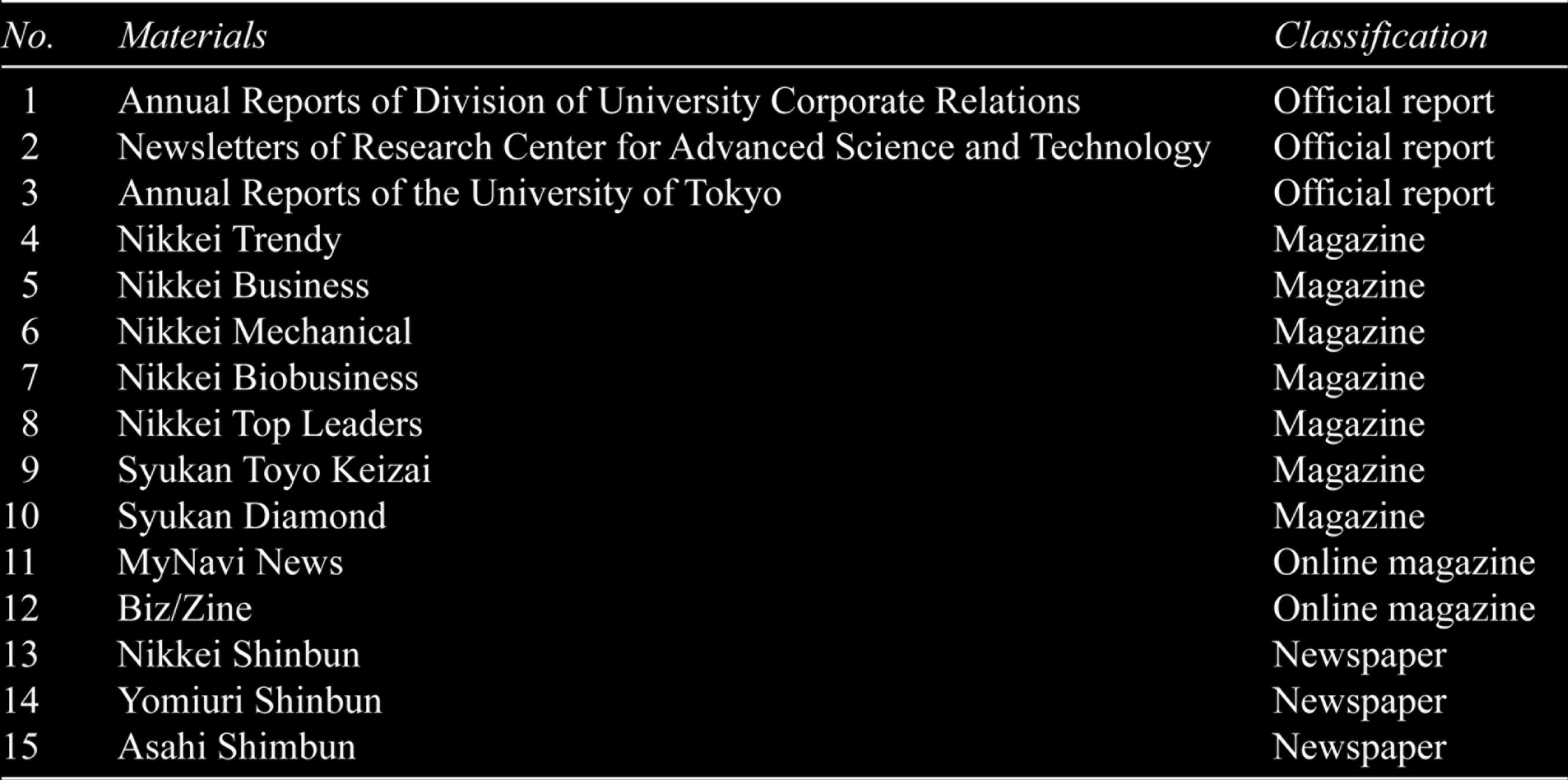
| No. | Materials | Classification |
| 1 | Annual Reports of Division of University Corporate Relations | Official report |
| 2 | Newsletters of Research Center for Advanced Science and Technology | Official report |
| 3 | Annual Reports of the University of Tokyo | Official report |
| 4 | Nikkei Trendy | Magazine |
| 5 | Nikkei Business | Magazine |
| 6 | Nikkei Mechanical | Magazine |
| 7 | Nikkei Biobusiness | Magazine |
| 8 | Nikkei Top Leaders | Magazine |
| 9 | Syukan Toyo Keizai | Magazine |
| 10 | Syukan Diamond | Magazine |
| 11 | MyNavi News | Online magazine |
| 12 | Biz/Zine | Online magazine |
| 13 | Nikkei Shinbun | Newspaper |
| 14 | Yomiuri Shinbun | Newspaper |
| 15 | Asahi Shimbun | Newspaper |
Acknowledgements
The author would like to thank Shigeo Kagami and Hiroaki Suga of the University of Tokyo, Megumi Takata of Kyushu University, anonymous respondents of the spin-offs and the administration office for their contribution to the interview survey, and two anonymous referees for their very constructive comments. All remaining errors are the author’s responsibility.