



Abstract
This study examines the factors that influence pro-environmental behaviour intention (PEBI) in manufacturing small- and medium-sized enterprises (SMEs). The data were collected from 517 executives and chief technology officers of Korean SMEs and analysed using a comprehensive research model. The model includes variables such as awareness of consequences (ACs), ascription of responsibility (AR), personal norms (PNs), extrinsic motivation (EM), subjective norms (SNs) and realistic values (RVs). The results show significant relationships between these factors and PEBI. In particular, ACs and AR have positive effects on PNs, with AR having a stronger effect. PNs are the most important predictor of PEBI. EM has a positive impact on behaviour intention, while SNs do not have a significant impact. Interestingly, RVs have a negative impact. These findings have practical implications for encouraging pro-environmental behaviour in manufacturing SMEs. Policymakers and business planners should focus on increasing awareness of environmental consequences and individual responsibility to reinforce PNs. Moreover, offering extrinsic rewards and benefits can motivate pro-environmental behaviour in these firms. Understanding these factors can help design targeted strategies for promoting sustainability practices within manufacturing SMEs. By addressing these aspects, businesses can contribute to environmental innovation and sustainable development.
Keywords
Introduction
The rapid development of the global economy has been driven by competition among manufacturing companies (Surya et al., 2021; Valdez-Juárez & Castillo-Vergara, 2021). However, this has also resulted in environmental issues such as increased waste production and climate change caused by global warming, which pose serious threats to human society (Asiedu et al., 2021; Liu et al., 2022). Therefore, finding ways to balance economic growth and environmental protection has become a crucial issue worldwide. The negative impacts of environmental problems such as pollution, resource depletion and extreme weather events have been recognised as major challenges for human society, and research on sustainability has been conducted extensively around the world (Cano & Londoño-Pineda, 2020). Therefore, it is essential to find ways to reduce the environmental footprint of economic activity while maintaining economic growth.
Manufacturing has played a key role in economic growth, job creation and overall development, particularly in developing countries. However, manufacturing has also been a major source of environmental problems by generating large amounts of waste and greenhouse gas emissions. As a result, manufacturing companies have faced increasing pressure to adopt more eco-friendly methods to reduce their environmental impact. Consequently, countries worldwide have implemented various environmental policies and regulations to protect the environment and public health (Lee & Mah, 2021; Wang et al., 2021). Furthermore, consumers in countries such as Europe and Japan have demonstrated a strong preference for eco-friendly products, making it harder for export-oriented manufacturing companies to compete as before (Krishna, 2022; Yun et al., 2019; Zhu et al., 2007). In this context, environmental innovation in manufacturing companies is considered more important than technological innovation for corporate survival (Bob et al., 2017; Lee & Kim, 2011).
Environmental innovation refers to activities that enhance product design and manufacturing processes to eliminate or minimise factors that adversely affect the environment, such as energy consumption, pollution and waste production (Tang et al., 2018). Through environmental innovation, manufacturing companies can increase their productivity and efficiency, create new market opportunities, increase their market share and enhance their eco-friendly image. In this way, manufacturing companies can gain competitive advantages through environmental innovation, which will lead to improved corporate performance and sustainability (Choe, 2019). Hence, environmental innovation in manufacturing companies is crucial for national industries to sustain their competitive edge, achieve sustainable development and necessitate research on the factors influencing manufacturing companies’ pro-environmental behaviour (Cojoianu et al., 2020; Valero-Gil et al., 2023).
Korea has experienced rapid industrialisation over the past few decades, which has led to significant economic growth and social development. However, it has also caused many environmental problems such as air and water pollution, waste disposal and natural resource depletion. To address these problems, the Korean government has introduced various environmental policies and regulations. However, there are still challenges to achieve sustainable development, and it is necessary to examine the factors that affect Korean companies’ pro-environmental behaviour.
To promote pro-environmental behaviour, two policy approaches can be distinguished: material approach, which employs regulation or incentive as means, and non-material approach, which fosters self and collective efficacy (Kang et al., 2018). As an example of material approach, The Seoul Institute, affiliated with the Seoul Metropolitan Government, conducted an expert–citizen consultation and proposed a plan for designing an incentive system using various data sources on greenhouse gas emissions and resource circulation (Kim et al., 2021). On the other hand, Samuel Bowles argued that economic incentives cannot substitute for good citizens and that institutional design to minimise negative phenomena is necessary (Bowles & Hwang, 2008; Yamada, 2019). Kang et al. (2018) argued that people with high self and collective efficacy are more likely to overcome the barriers to pro-environmental behaviour and perform it without external rewards or instructions. They also suggested that a policy paradigm shift is needed to promote pro-environmental behaviour, in which material and non-material approaches are combined. The studies on institutional design that balance and harmonise these two policy approaches have continued, and various concepts such as environmental ethics, marketing and inconvenience cost have been introduced to foster sustainable pro-environmental behaviour, and empirical studies have been conducted to apply them (Shin & Lee, 2016).
Research on pro-environmental behaviour has been conducted in various fields. Research on environmental conservation and sustainability in the field of human resource management (HRM) has been attracting more attention, and scholars have derived research findings that HRM can contribute to achieving sustainable environmental objectives (Ansari et al., 2021; Kim & Lee, 2022; Latif et al., 2022). Additionally, a study that combined Hofstede’s cultural dimensions, value–belief–norm theory and social exchange theory was conducted (Moon et al., 2023). Research on pro-environmental behaviour was also conducted on the 100 companies in the Forbes GLOBAL 2000 ranking. Ruban and Yashalova (2022) stated that the location of the company is a somewhat important determinant of regulated pro-environmental behaviour.
Despite extensive research on pro-environmental behaviour in various fields, there is a dearth of studies on manufacturing firms, major contributors to energy consumption and greenhouse gas emissions. While some studies examine the pro-environmental behaviour of manufacturing employees, there is a notable absence of empirical research on the intention of Chief Technology Officers (CTOs), key decision-makers in manufacturing firms.
Approximately 98% of Korea’s manufacturing businesses are small- and medium-sized enterprises (SMEs), constituting a significant portion of the national industry. Despite their significant contribution to the economy and innovation (Yun, 2015), SMEs often encounter various obstacles that hinder their growth and competitiveness. Among these obstacles, the most prominent ones are the scarcity of financial resources, the difficulty in attracting and retaining qualified human capital, the deficiency of effective leadership and the low level of absorptive capacity (Sabando-Vera et al., 2022). Moreover, SMEs often lack the awareness and resources for environmental management compared to larger counterparts (Sung & Jang, 2023). Therefore, it is imperative to analyse the factors influencing the eco-friendly behaviour of SMEs in the context of the national industry’s eco-friendly transition policy. Therefore, this study aims to analyse the factors that influence the intention of SMEs in the Korean manufacturing industry to adopt eco-friendly practices. By identifying these factors, this study will help develop effective policies and strategies to encourage environmentally sustainable behaviours among Korean companies, especially SMEs.
Literature Review and Hypotheses Development
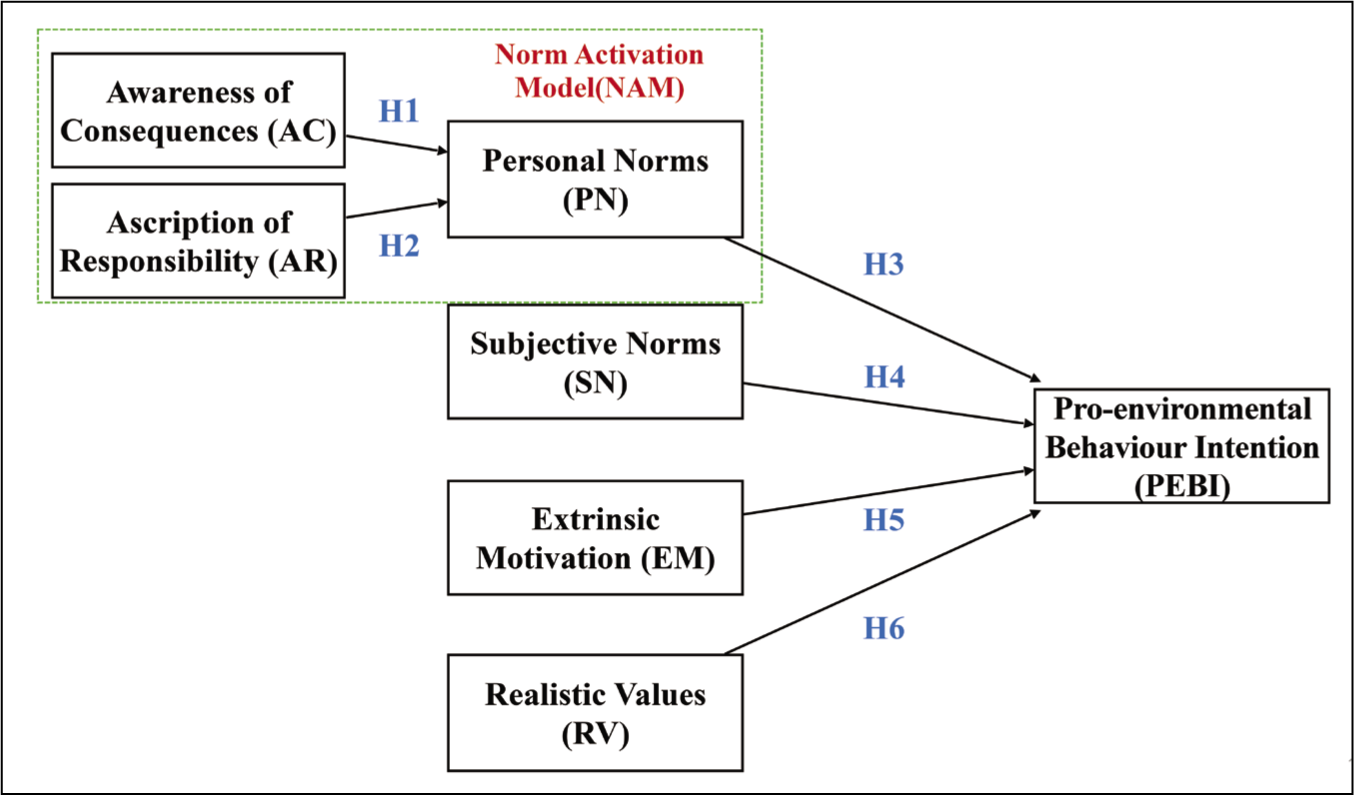
Human environmental behaviour is also influenced by additional factors, such as attitudes, values and perception of environmental behaviour (Bøhlerengen & Wiium, 2022; Bugdol et al., 2023). This study proposes a new research model based on the Norm Activation Model (NAM) and previous research results on pro-environmental behaviour. Figure 1 below indicates the research framework employed in this investigation. Pro-social behaviour, including pro-environmental behaviour, is defined as altruistic behaviour directed towards others (Cialdini, 1991) and is closely linked to individual morality (Batson et al., 2002). The NAM, introduced by Schwartz (1977) in his research on pro-social behaviour, is a model that elucidates the relationship between moral norms and behavioural intention. This model suggests that the level of personal moral norms is influenced by the degree of awareness of the consequences of a specific action. The NAM has been recognised as a useful model for explaining pro-social behaviour (Onwezen et al., 2013; Savari et al., 2023), and recently, it has been widely applied to behavioural research related to pro-environmental or ethical behaviour (Chatzidakis et al., 2016). Personal norms (PNs) have been shown to be useful for predicting various pro-environmental behaviours. Schwartz emphasised PNs and argued that PNs are direct factors that induce pro-social behaviour through moral obligation. According to this model, individuals possess PNs, and when they perceive the adverse consequences of not engaging in pro-social behaviour and feel responsible for those consequences, they become aware of their moral obligation to act in a manner that benefits others and exhibit altruistic behaviour. Previous studies have indicated that the stronger the PNs, the higher the awareness of environmental issues, the sense of responsibility for environmental pollution and the intention of pro-environmental behaviour (Schwartz, 1977). According to this model, PNs are activated by three situational variables: awareness of consequence (AC), ascription of responsibility (AR) and outcome. AC refers to the perception of the negative consequences of not acting pro-socially (Steg & de Groot, 2010). AR means the sense of responsibility for the undesirable outcomes of not acting pro-socially. It has also been suggested that the higher the AR, the greater the interest in environmental and other social issues, and the more consistent the actual behaviour (Schwartz, 1977). In this study, we focused on two of these variables: ACs and AR. According to van der Linden (2015), even in the absence of external rewards or constraints, individuals who perceive their actions as morally right are more likely to engage in pro-environmental behaviour.Thus, we proposed the following hypotheses.
H1: ACs have a statistically positive impact on PNs.
H2: AR has a statistically positive impact on PNs.
H3: PNs have a statistically positive impact on pro-environmental behaviour intention (PEBI).
Pro-environmental behaviour refers to the actions that individuals take to protect and preserve the environment. Behavioural intention is the likelihood of translating one’s subjective perception into action, serving as the immediate determinant and most accurate predictor of behaviour (Wang et al., 2019). Previous studies on pro-environmental topics have consistently demonstrated that pro-environmental behavioural intention is positively associated with actual pro-environmental behaviour (Chen & Peng, 2012; Welsch & Kühling, 2018).
According to Ajzen’s theory of planned behaviour (TPB), subjective norms (SNs) are among the three factors influencing an individual’s intention and behaviour (Ajzen, 1985, 1991). SNs refer to the perceived social pressure or expectations from others regarding the performance or avoidance of a specific behaviour. SNs are based on an individual’s normative beliefs, which encompass beliefs about what others think or desire the individual to do, as well as the individual’s motivation to comply, reflecting the extent to which the individual values those opinions or desires. SNs can be either descriptive or injunctive in nature (Cialdini & Goldstein, 2004). The more favourable the SNs are towards a behaviour, the more likely the individual will form a positive intention and perform the behaviour and vice versa. SNs can also interact with attitudes and perceived behavioural control, the other two factors in TPB, influencing the individual’s intention and behaviour. Recent research on pro-environmental behaviour has indicated that SNs influence environmental responsibility (Shanmugavel & Balakrishnan, 2023) and that endorsing pro-environmental norms as moral norms can enhance their impact on behavioural intention (Perry et al., 2021).
Thus, we proposed the following hypothesis.
H4: SNs have a statistically positive impact on PEBI.
Individual behaviour can be influenced by extrinsic motivation (EM), which is driven by the desire for external incentives. It is a commonly observed form of motivation that often prompts individuals to take action in response to social demands (Legault, 2016). EM can be employed as a strategy to induce or promote pro-environmental behaviour. This can include measures such as imposing fines on individuals who contribute to environmental pollution or providing benefits to those who engage in environmentally friendly behaviour. Previous studies have consistently demonstrated that human motivation to avoid losses and seek gains can facilitate pro-environmental behaviour (Bae, 2021; Kaiser et al., 1999). However, some studies have suggested that EM may not be as effective or sustainable as intrinsic motivation, which is driven by the inherent interest or enjoyment of the behaviour itself (Barszcz et al., 2022; Maki et al., 2019). Intrinsic motivation may foster a deeper sense of environmental values and commitment, while EM may undermine intrinsic motivation or lead to moral licensing (Gholamzadehmir et al., 2019; Lee & Jeong, 2018). Therefore, it is important to investigate the relative impact of extrinsic and intrinsic motivation on pro-environmental behavioural intention.
Thus, we proposed the following hypothesis.
H5: EM has a statistically positive impact on PEBI.
Realistic values (RVs), similar to the dominant social paradigm of industrial society (Dunlap & Van Liere, 1978) of industrial society, differ from traditional values in their prioritisation of wealth maximisation and economic growth over environmental protection. These values emphasise production and consumption over nature conservation and view the notion that humans are damaging nature as an exaggeration. This social value system assigns less importance to preserving the natural environment (Yi, 2009). In a study of pro-environmental behaviour in the United States, the United Kingdom, the Netherlands and Japan, Yi found that RVs influence SNs, environmental problem awareness and pro-environmental intention (Yi, 2009). RVs are not conducive to pro-environmental behaviour as they are often associated with lower levels of environmental concern and ecological worldviews (de Groot & Thøgersen, 2018). Moreover, RVs may conflict with moral norms that support pro-environmental behaviour (Perry et al., 2021). In addition, firms that adopt RVs may face a trade-off between environmental performance and economic efficiency. Dutta & Narayanan (2011) found that firms reported a loss of efficiency due to the additional costs of minimising environmental damage and verified that polluting firms were technically more efficient than those adhering to pollution norms. Based on these findings, we anticipate that individuals who hold RVs will be less likely to develop positive intention to engage in pro-environmental behaviour.
Thus, we proposed the following hypothesis.
H6: RVs have a statistically negative impact on PEBI.
Data and Measurement
This study conducted an online survey of 517 CTOs or executives in the manufacturing sector in Korea. We conducted a direct survey among CTOs of manufacturing companies who are subscribers to the newsletter of the Korea Planning & Evaluation Institute of Industrial Technology (KEIT), a specialized agency for R&D management in South Korea’s industrial technology sector. Table 1 below contains the demographics of the participants. The demographic characteristics of the respondents in this study revealed a low representation of women (thirty, 5.8%) compared to men (487, 94.2%), which aligns with the low percentage of female executives (6.3%) in Korea’s top 500 companies as of 2022. The age distribution of the respondents was as follows: three people in their thirties (0.6%), 141 people in their forties (27.3%), 278 people in their fifties (51.6%) and 106 people aged sixty and over (20.5%). Regarding work experience, the largest group consisted of those with over twenty years of experience (338 people, 65.4%), followed by those with fifteen to nineteen years (100 people, 19.3%), ten to fourteen years (forty-seven people, 9.1%), five to nine (twenty-four people, 4.6%) and less than five years (eight people, 1.5%). In terms of industry, the sector with the highest number of companies was Electronic and Electrical Components and Equipment, with 143 companies (27.7%), followed by Machines and Equipment with 133 companies (25.7%), Manufacture of Chemical Substance and Chemical Products with fifty-five companies (10.6%), Metal Manufacturing with forty-one companies (7.9%), Rubber and Plastic Goods with thirty-five companies (6.8%), Fabrication of Textiles, Clothing and Leather with twenty-seven companies (5.2%), Manufacture of Medical Materials and Medicines with ten companies (1.9%), Manufacture of Paper and Paper Products with six companies (1.2%), Non-metallic Mineral Products with five companies (1.0%), Manufacture of Food and Beverages with four companies (0.8%), Coke, Briquettes and Petroleum Refining with two companies (0.4%) and others with fifty-six companies (10.8%).
Demographic Information on Subjects.

In this research, we conducted a sampling from various manufacturing sectors to explore the PEBI within Korean manufacturing SMEs. The Ministry of Trade, Industry and Energy (2022) in Korea identifies the chemical, steel and electronic (semiconductor/display) sectors as those requiring green policies. Consequently, we deliberately elevated the sample proportion from these sectors to accurately capture the characteristics of Korean manufacturing and to effectively evaluate the impact of green policies. We posit that this sampled group is well-suited for testing the hypotheses outlined in this study, thereby ensuring the representativeness and validity of our sample.
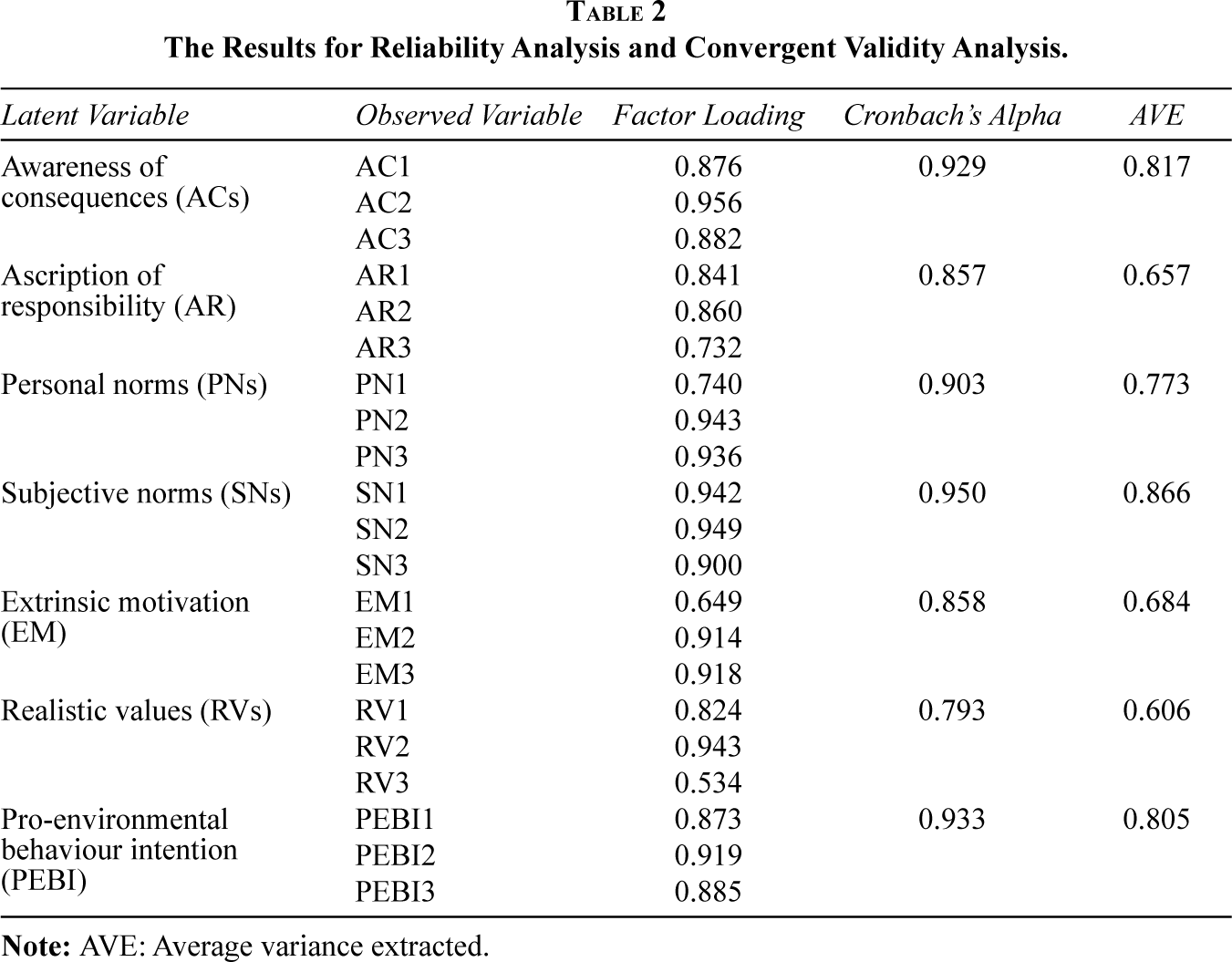
To verify the validity and reliability of the proposed research model, we conducted a validity and reliability analysis. We derived the factor loading values for each variable and assessed the reliability and validity of the proposed research model by examining Cronbach’s alpha coefficient and average variance extracted (AVE). We considered factor loading values above 0.5 (Fornell & Larcker, 1981) to indicate significance. Specific results are presented in Table 2, with all values exceeding 0.5. To assess internal consistency, we computed the Cronbach’s alpha coefficient, a widely used measure in social science research. A reliability value above 0.7 (Nunnally, 1978) was considered acceptable. As a result, all latent variables had Cronbach’s alpha values above 0.7, indicating that there were no reliability issues among the items. AVE is commonly used to assess convergent validity, with values above 0.5 (Carmines & Zeller, 1979) considered acceptable. In our study, AVE values ranged from 0.606 to 0.866, all exceeding 0.6.
The Results for Reliability Analysis and Convergent Validity Analysis.
Discriminant validity analysis examines the extent to which different latent variables are distinct, and it is determined by the presence of low correlation between them. A high value indicating discriminant validity suggests that the latent variables are distinct constructs and not interdependent. To assess discriminant validity, we compared the AVE with the squared correlation between latent variables. Discriminant validity was confirmed when the AVE values exceeded the squared correlations (Fornell & Larcker, 1981). In our study, the squared correlation coefficients between constructs were lower than the corresponding AVE values, indicating that discriminant validity was established. Detailed results are presented in Table 3.
The Results for Discriminant Validity.
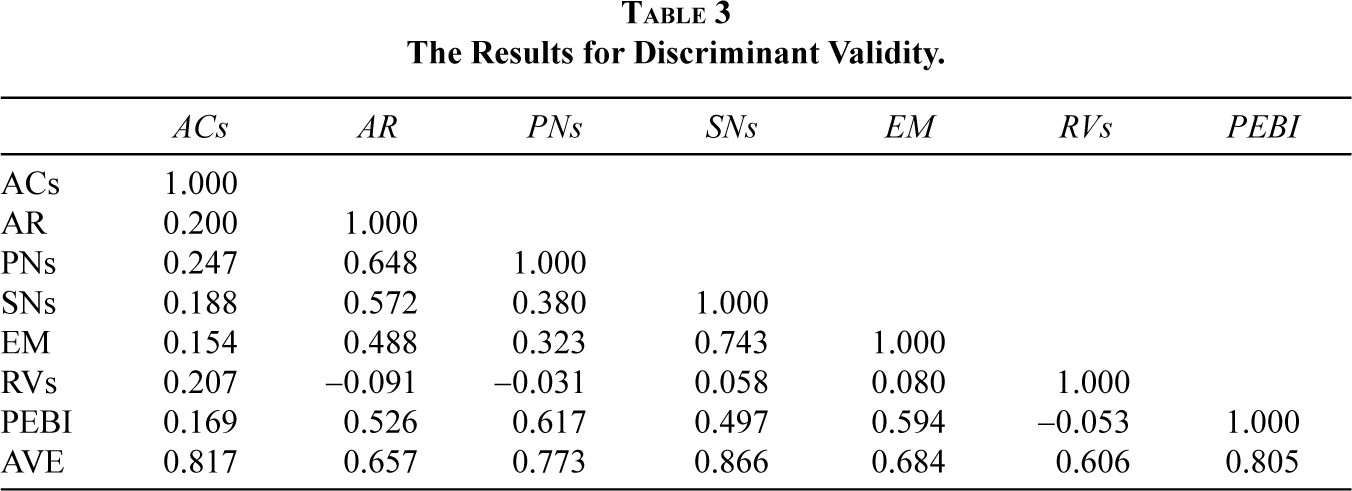
Table 4 shows the outcomes of the goodness-of-fit test. We use absolute fit measures to assess how well the sample data matches the theoretical model. We utilise root mean square error approximation (RMSEA) and goodness-of-fit index (GFI) as absolute fit indices. We use incremental fit measures to evaluate the relative improvement in the fit of the research model. As incremental fit indices, we employ comparative fit index (CFI), adjusted goodness-of-fit index (AGFI). To compare the fit of different models on a common basis, we employ parsimonious fit measures. We utilise the parsimony goodness-of-fit index (PGFI) and the parsimonious normed fit index (PNFI) as our measures of parsimony fit.
The Results for Goodness-of-Fit Test.
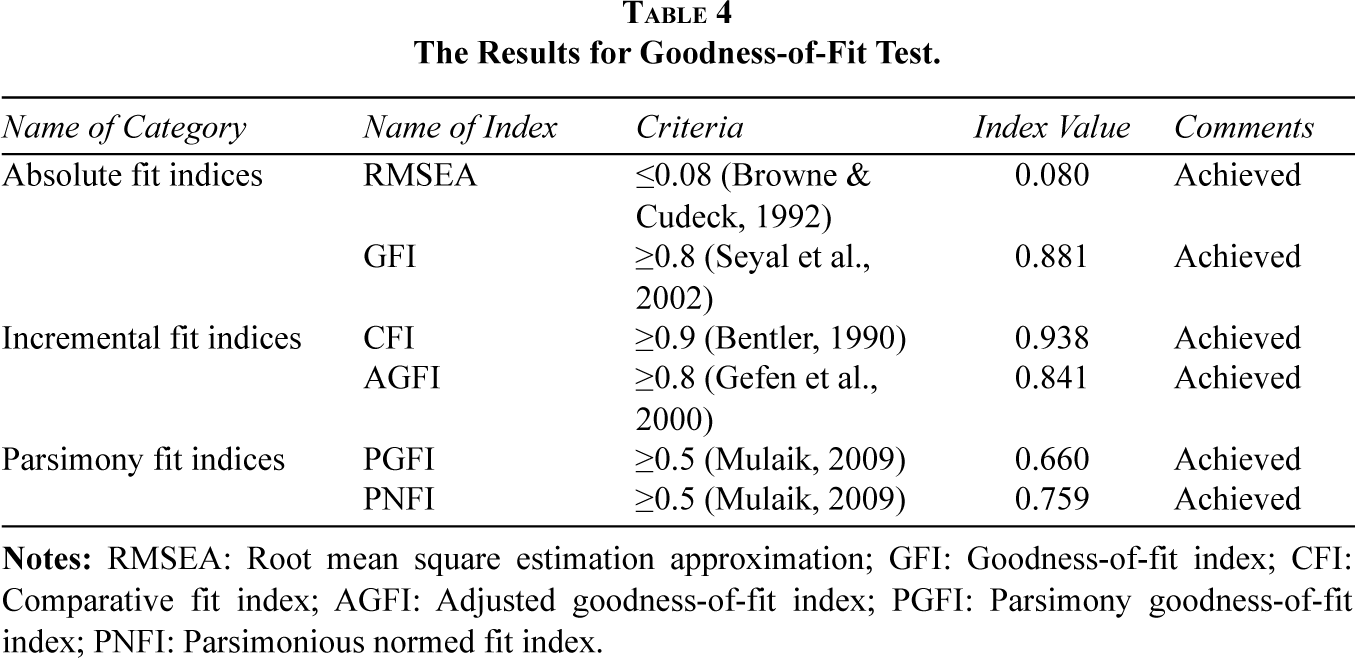
The goodness-of-fit test results demonstrated that the proposed research model exhibited a favourable fit to the sample data. The RMSEA and GFI provided absolute fit measures, indicating how well the observed data aligned with the theoretical model. The incremental fit measures, including the CFI and AGFI, evaluated the relative improvement in the fit of the research model compared to alternative models. These measures provided insights into the model’s incremental contribution in explaining the observed data. Furthermore, the PGFI and PNFI, a parsimonious fit measure, allowed for a fair comparison of the model’s fit across different models on a common basis, considering the model’s complexity. Taken together, the results from various fit indices collectively indicated a satisfactory fit of the research model, providing support for its validity and reliability.
Results
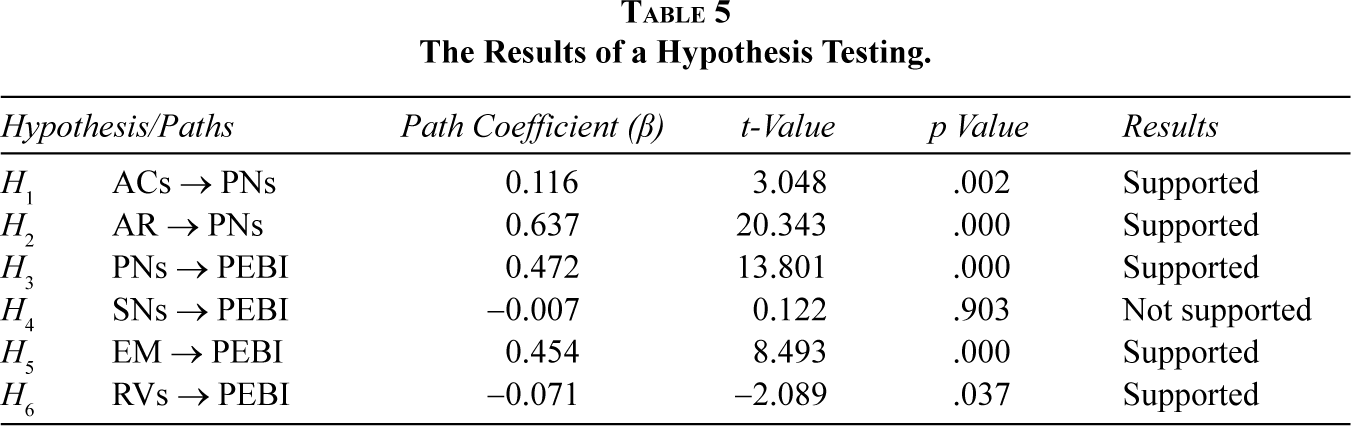
Table 5 and Figure 2 depict the relationships between different variables. The results demonstrate that AC positively influences PNs (β = 0.116, t = 3.408, p = .002), and AR also has a positive effect on PNs (β = 0.637, t = 20.343, p = .000). Notably, the impact of AR is greater than that of AC. Furthermore, PNs positively influence PEBI (β = 0.472, t = 13.801, p = .000), which aligns with previous research findings. Therefore, H1–H3 are supported. These results indicate that both AC and AR significantly predict PNs, which, in turn, affect PEBI.
The Results of a Hypothesis Testing.
Research Framework.
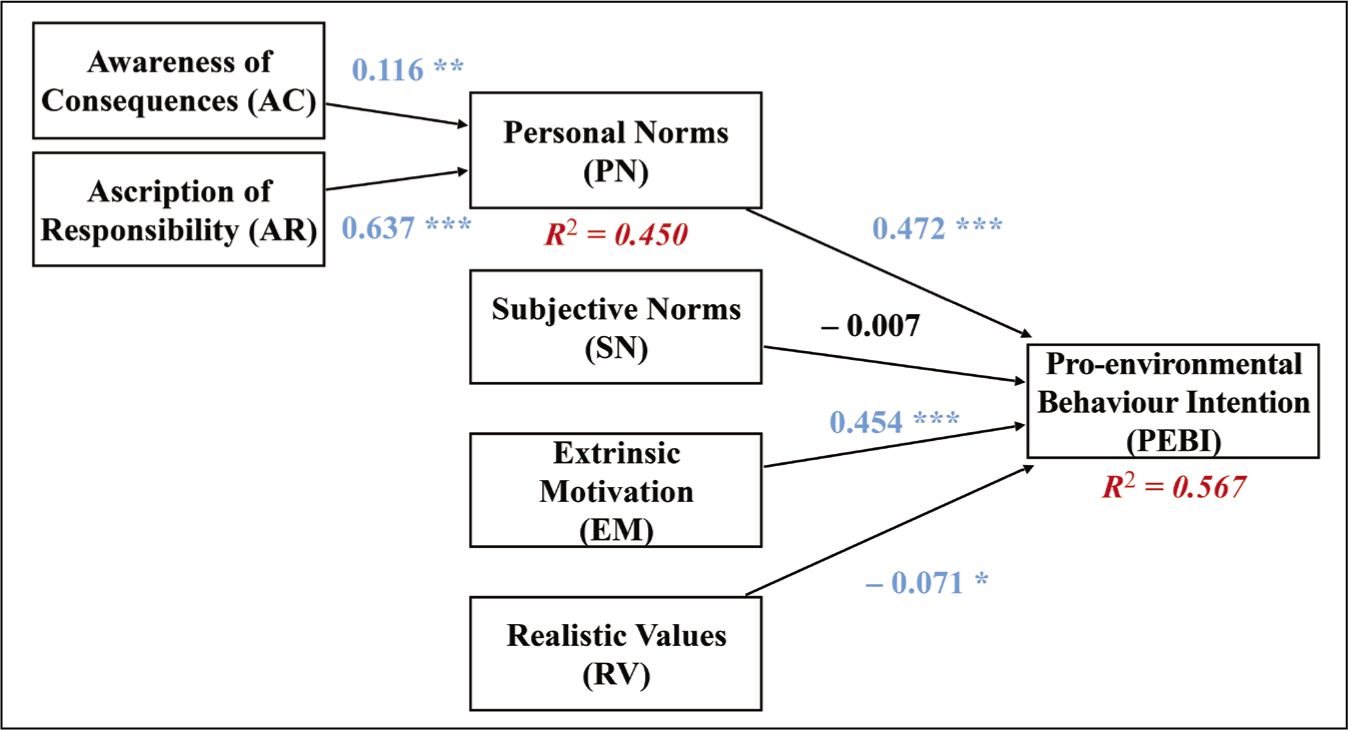
Moreover, EM demonstrates a significant positive influence on PEBI (β = 0.454, t = 8.493, p = .000), while RVs exhibit a significant negative impact (β = –0.071, t = –2.089, p = .037). However, SNs do not show a significant influence (p = .903). These findings provide empirical evidence of the relationship between EM, RV and PEBI. The significant positive impact of EM suggests that external rewards or incentives effectively drive individuals towards engaging in environmentally friendly actions. Conversely, the significant negative influence of RVs highlights the importance of addressing personal beliefs and values that may hinder pro-environmental intention. However, the non-significant effect of SNs suggests that social influences and perceived expectations from others may not strongly determine individuals’ environmental behaviour intention in this context.
Overall, the results demonstrate that AC, AR, PNs, EM and RVs significantly impact PEBI. This indicates that SMEs that are aware of the consequences of their actions and take responsibility for their environmental impact are more likely to adopt PNs prioritising the environment. Additionally, SMEs that value the environment based on PNs are motivated by external factors such as regulations and incentives, and believe in the practicality of pro-environmental behaviour are more likely to have the intention to engage in such behaviour.
Discussion and Conclusion
The purpose of this study is to provide implications for government policies and business planning that support environmental innovation of manufacturing firms. This study tested the hypotheses based on a research model derived from the NAM and previous studies on pro-environmental behaviour using survey responses from 517 executives or CTOs of Korean SMEs. The summary of this study is as follows.
First, AC and AR had a significant effect on PN, and the effect of AR (0.637) on PN was greater than that of AC (0.116). PN had a significant effect on PEBI, and it was the most influential variable among all the variables that affected PEBI. We confirmed that NAM was supported in this study targeting decision-makers of SMEs in the Korean manufacturing sector. This suggests that environmental education and campaigns should emphasise the consequences of environmental problems and the responsibility of individuals to act pro-environmentally. PNs mediate the relationship between AC, AR and PEBI. This means that enhancing PN can strengthen the link between environmental awareness and responsibility and pro-environmental action.
Xu et al. (2022) found that firms’ environmental responsibility significantly influences their green supply chain management practices. This is consistent with the hypothesis that PN influences pro-environmental behaviour. A company with a strong PN will engage in pro-environmental behaviour as long as it believes that its actions are socially desirable.
Second, EM had a significant effect on PEBI, but SNs did not have a significant effect. According to Self-Determination Theory (SDT), EM can vary in the degree to which it is autonomous or controlled. When EM is autonomous, it can have a positive impact on behaviour and performance.
However, according to a study by Lee and Jeong (2018), EM had a negative or no relationship with PEBI. EM had a positive relationship with anthropocentric values, which are human-centred values that advocate using the environment for human benefit. Anthropocentric values had a negative relationship with PEBI (Aviste & Niemiec, 2023). That is, anthropocentric values decreased PEBI. In addition, EM was not related to intrinsic motivation which had a positive effect on PEBI. Jung et al. (2016) argued that intrinsic motivation and public motivation, such as public interest, empathy and altruism, are all important factors that foster innovative attitudes. Therefore, EM tended to have no or negative impact on PEBI. However, these studies were conducted from the perspective of general individuals, and our study was conducted from the perspective of firms that have a greater influence than individual behaviour. In research related to Sweden’s export of environmental technology, public-owned companies such as local governments are mainly motivated by factors such as opportunities to contribute to environmental sustainability, while private companies are motivated by factors such as extra sales (Kanda et al., 2016). This difference may explain why EM had a significant effect on PEBI. The finding that SNs do not have a significant influence on PEBI is unexpected. This may be because SNs do not reflect the social expectations or pressures for pro-environmental behaviour, or because the individual’s beliefs or attitudes have a greater impact.
Finally, RVs had a negative and significant effect on PEBI. Unlike previous studies that showed that EM did not affect PEBI and intrinsic motivation had a significant effect on PEBI, our study showed that EM and RV had a significant effect on PEBI. RVs may be more important factors than human-centred values or intrinsic satisfaction from the behaviour itself for firms whose goal is to maximise profits.
Lee and Lee (2006) found a gap in environmental management performance across different firm sizes. In particular, large firms regarded the eco-friendliness of their production processes and products as a key factor for their competitiveness and implemented proactive and leading environmental management, while SMEs adopted a passive approach through government guidance and supervision. The environmental management violation rate, one of the indicators of environmental management performance in the production process, showed an inverse relationship with firm size, indicating that SMEs’ environmental management in the production process was insufficient. This means that government and social support is needed to recognise and solve the problems of SMEs’ eco-friendly transition. In addition, SMEs themselves need to be aware of the necessity and benefits of eco-friendly management, and make efforts to enhance their environmental management capabilities.
This study has some implications for government policies and business planning that support the environmental innovation of manufacturing firms. First, this study suggests that PN is the most important factor influencing PEBI of SMEs in the manufacturing sector. Therefore, government policies and business planning should aim to activate the PN of the decision-makers by increasing their awareness of the consequences and responsibility of their environmental behaviour. Second, this study suggests that EM and RVs also have a significant effect on PEBI of SMEs in the manufacturing sector. Therefore, government policies and business planning should provide extrinsic incentives and realistic benefits for the firms that adopt pro-environmental behaviour. Third, this study suggests that SNs and intrinsic motivation do not have a significant effect on PEBI of SMEs in the manufacturing sector. Therefore, government policies and business planning should not rely on social pressure or intrinsic satisfaction as the main drivers of the pro-environmental behaviour of the firms.
This study has some limitations that should be acknowledged. First, this study used a cross-sectional design, which limits the causal inference of the relationships among the variables. A longitudinal or experimental design would be more appropriate to test the causal effects of the factors influencing PEBI. Second, this study relied on self-reported measures of PEBI, which may not reflect the actual behaviour of the firms. Future studies should use objective indicators of PEBI, such as environmental performance or certification. Third, this study focused on SMEs in the manufacturing sector in Korea, which may limit the generalisability of the findings to other sectors or countries. Future research should further explore these factors using longitudinal or experimental designs, objective indicators of pro-environmental behaviour and diverse contexts beyond the manufacturing sector in different countries. By addressing these limitations and exploring these future research directions, we can advance our understanding of PEBI among firms and contribute to the development of effective strategies for promoting environmental innovation and sustainability in the business sector.
Footnotes
Declaration of Conflicting Interests
The authors declared no potential conflicts of interest with respect to the research, authorship and/or publication of this article.
Funding
The authors received no financial support for the research, authorship and/or publication of this article.
Appendix
Quantitative Measures and Indicators
Awareness of Consequences (ACs): Three Items Adapted from E.-H. Ko (2019).
Ascription of Responsibility (AR): Four Items Adapted from E.-H. Ko (2019).
Personal Norms (PNs): Four Items Adapted from E.-H. Ko (2019).
Subjective Norms (SNs): Three Items Adapted from J. Kim and E. Park (2015).
Extrinsic Motivation (EM): Four Items Adapted from J. Kim and E. Park (2015).
Pro-environmental Behaviour Intention (PEBI): Five Items Adapted from J. Kim and E. Park (2015).