



Abstract
The study seeks to explore experiences and perceived needs of patients in source isolation and healthcare professionals’ management of COVID-19 patients to inform practice in the event of emerging health disaster. Participants were recruited through snowball and purposive sampling strategy. We conducted semi-structured telephone interviews to understand their subjective evaluations of these events. We applied inductive thematic analysis, which yielded six themes. The health events resulting from COVID-19 varied and shaped patient perspectives. Response to care received and trust in healthcare providers was encouraging, including expressions of gratitude and resilience towards discomfort brought on by isolation. Processing COVID-19 in isolation describes how patients cognitively and psychologically dealt with the illness. Clinicians’ experiences of working in isolation centred around workflow management, maintaining safety, focus on patient-centric approach and expanding roles of health workers, even as complacency towards COVID-19 was on the rise. Effective deployment of resources, efforts of experienced clinicians and staff, along with cooperation and resilience of patients, paves the way for the system to endure through the crisis. These lessons can be preserved for practice as global health entities are pushing for pandemic response, preparedness and prevention through measures such as the pandemic treaty.
Introduction
SARS-CoV-2 virus continues to circulate globally almost three years after its emergence and is regarded as one of the most disruptive events of the twenty-first century, as it has claimed the life of over 6 million people and infected 623 million population. Along with public health interventions such as isolation, quarantine, lockdown, use of personal protective equipment and travel restrictions, increasing levels of vaccine and infection-induced immunity and the availability of effective treatments have been implemented to monitor and substantially curtail the risk of COVID-19 (Massetti et al., 2022).
Despite advancements of modern medicine, infectious diseases continue to strike populations without warning, frequently resulting in debilitating or fatal outcomes fuelling mass panic and attracting intense media scrutiny as well as the spread of misinformation (Bloom & Cadarette, 2019; Coker, 2009). In context of COVID-19, high levels of fear and concern persisted throughout the various waves of infection due to concerns about the severity of the illness, uncertainty surrounding its mortality rate, the susceptibility of younger and healthy people to emerging variants and potential for contagion and stigma not only among the patients as well as in healthcare workers (HCWs) (Gopichandran & Subramaniam, 2021; Lima et al., 2020; Menon et al., 2022).
Around 20% of infected people required prolonged hospitalisation due to respiratory failure, which caused an increase in the demand for primary care, resulting in the saturation of health systems, which necessitated a doubling or tripling of the bed supply, particularly in intensive care (Remuzzi & Remuzzi, 2020; Venturas et al., 2021).
In preceding epidemics, such as SARS, approximately 35% of patients experienced anxiety and depression symptoms (Chung et al., 2004). Recent research by Brooks et al. demonstrates that the quarantine utilised during some twenty-first century epidemics (SARS-CoV, MERS-CoV, influenza A/H1N1 and Ebola) had psychological impacts on human health, resulting in a high prevalence of mental illness (Brooks et al., 2020). Similarly, the current COVID-19 isolation has triggered a wide variety of psychological problems, such as panic disorder, anxiety and depression along with physical exhaustion among the HCWs as well as patients (Liu et al., 2020; Purssell et al., 2020).
Eliciting and examining the perspectives of patients in isolation and their treating clinicians provides a unique opportunity to describe their experience. These experiences may vary based on the severity of the disease and the patient’s hospitalisation journey with COVID-19. We aimed to identify experiences and perceived needs identified by patients in inpatient isolation wards and critical care during the pandemic and to understand the experiences of healthcare professionals treating COVID-19 patients. The information can bridge the gap between the healthcare providers and patients and pave the way for reflective, effective and positive clinical encounters, not just in common practice but for all future challenges to health systems. In addition, these studies will provide the essential and dependable data to change the aspects of current care models in order to provide prompt, structured, safe and evidence-based action in the future.
Methodology
This qualitative study included patients who tested positive for COVID-19, who were admitted to a tertiary hospital and were discharged after receiving full hospital treatment and clinicians who managed COVID-19 patients in isolation wards/ICUs were sought. Participants were recruited through snowball and purposive sampling.
We conducted semi-structured, in-depth telephonic interviews with 13 clinicians and 10 patients between January and February 2021, until data saturation was attained. We opted to give a wide pool of individuals, irrespective of age, gender, the severity of the disease from mild cases to severe cases, the opportunity to share their views. Clinicians from the Department of Medicine were approached in person or by phone with a participant information sheet. Variation in years of work experience from first-year postgraduate students to senior-most clinicians with decades of experience was included to obtain diversity in the experiences of caring for patients with COVID-19.
Using de-identifiers (e.g., patient P1, P2, etc.) and eliminating identifying information from the transcripts ensured confidentiality. We also audio-recorded the interviews with the participant’s permission and received consent for publication by maintaining confidentiality. We followed the SRQR recommendations throughout this study (O’Brien et al., 2014).
Participants’ age, occupation, the severity of disease, number of days the patients were admitted in isolation, comorbidities, department and the designation was obtained before the interview. Interviews were generally held in English and lasted between 30 and 60 minutes. Data collection occurred concurrently with data analysis. Interviews were guided by a flexible interview guide focusing on the views and experiences of patients and doctors. Accuracy of transcripts was confirmed through multiple reviews. Data were then entered into ATLAS.ti Version 7 for comprehensive thematic analysis.
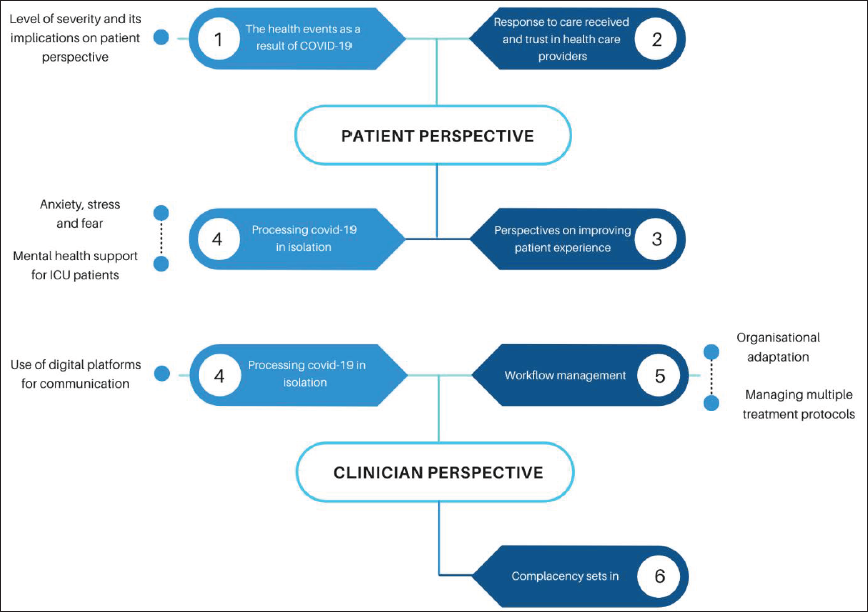
The constant comparative method, that is, authors were divided into two groups to code the data. The codes were then compared among the groups and discussed by the team until consensus on categories was achieved. Through reflexive practice and systematic consultations with the entire team ensured analytic dependability, confirmability and trustworthiness. Using an inductive thematic analysis, researchers arranged the categories into generalisable subthemes and then themes. A summary of the themes, subthemes and illustrative quotes is summarised in Figure 1 and Table 1, respectively. The audit trail was maintained to ensure all analysis steps could be traced back to original interviews. It was not appropriate or possible to involve patients or the public in the design, or conduct, or reporting, or dissemination plans of our research.
Themes and Subthemes.
Quotation Supporting Themes and Subthemes.

Results
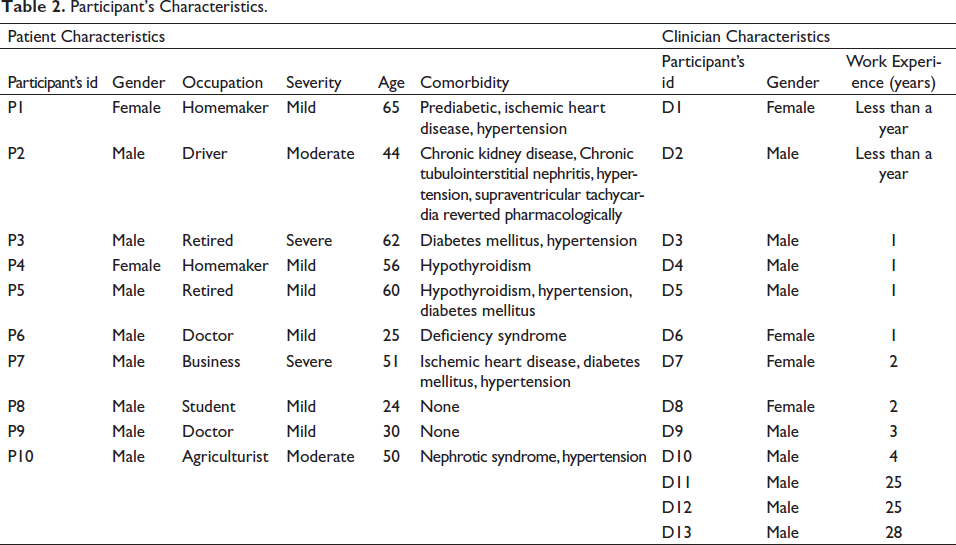
The participants of this study are residents of the South Indian state of Karnataka. The patient participant’s age ranged from 24 to 65 years and the clinician’s years of experience ranged from less than 1 year to 28 years. Relevant demographic characteristics of all participants are given in Table 2.
Participant’s Characteristics.
Patient Perspective
1. Health events as a result of COVID-19
The level of severity of illness is determined by clinicians based on the set of outcomes or health events, which a patient experiences as a result of the disease. There was marked difference in the views of patients in critical and non-critical isolation areas.
Level of severity and its implications on patient perspective
During the early phase of the pandemic, all patients with COVID-19, irrespective of the level of severity, were admitted to the hospital. Patients with mild symptoms were restricted to their assigned room or space in adherence to isolation protocols while being monitored by healthcare workers. Isolation brought inconveniences such as losing access to people or items they had ordinarily relied on. Patients with moderate or serious illness were reporting high levels of satisfaction and deep feelings of gratitude for the services they received at the hospital.
The severely ill individuals remembered their experience as near-fatal. They were heavily dependent on doctors, nurses and other staff for performing basic functions. They were closely monitored and their safety and comfort were maintained by healthcare providers. Several participants bore witness to the hardships faced by other worse-off patients around them and acknowledged the efforts of the healthcare providers to save their lives.
2. Response to care received and trust in healthcare providers
Many seriously ill patients felt reassured when their clinicians and nurses communicated effectively to them. Patients were comfortable and safe within their private rooms in the isolation wards, whereas isolation general wards were noisier, less hygienic and had more individuals sharing the same resources in a dormitory setting.
Some patients had difficulty accepting their COVID-19 diagnosis and one of them was refusing treatment until he was reassured by his family through phone calls set up by his consultant. Some patients in the general ward were uncomfortable with crowded wards.
P8 opined that senior, experienced clinicians were not available in the isolation ward and shared mistrust of ‘junior’ residents. P6, a clinician with comorbidity, expressed satisfaction with the care provided, as his needs were met and proper isolation protocol was maintained. He discussed an isolated interaction that was unfavourable and lacking. He narrated how a nurse made an incorrect comment after inefficiently drawing a blood sample, which caused him considerable discomfort.
3. Perspectives on improving patient experience
Access to specialist care for their pre-existing or non-COVID-19 issues could have been beneficial for some patients. P4, with mild symptoms of COVID-19, complained that she suffered from acidity in isolation and the symptomatic treatment she received did not alleviate her discomfort. It took her almost eight weeks post COVID-19, to get appropriate treatment from a specialist for her non-COVID-19 concern. Patients in COVID-19 isolation wards and ICUs were witnessing or experiencing first-hand, the ravaging effects of this infection on the human body. Participants expressed distress and identified a need for psychological support, especially in instances of ICU delirium. P6 suggested that all healthcare providers should maintain a good balance of theory and practical skills, which they acquire during their course of education and training.
4. Processing COVID-19 in isolation
Dealing with COVID-19 was mentally and emotionally taxing for patients and their families. Isolation brought challenges in communication, as did, complications and uncertainties that surround COVID-19, which left them feeling vulnerable. Cognitively addressing this new reality was demanding on all fronts, for all parties involved. The accounts shared by patients who were critically ill were all the more poignant as they brought into sharp focus the chaos of this crisis.
Anxiety, stress and fear
Being separated from their support system was concerning for patients. When they developed respiratory complications and other issues, they feared impairment or even death. They were distressed regarding their work and/or finances. Patients who ran small businesses were alarmed about the loss of income, days of work and other issues related to their occupation. Patients reported feeling helpless and mentioned that their spiritual beliefs enabled better coping. They focused on their recovery from COVID-19 and hoped to return to their normal life.
Mental health support for ICU patients
Patients in critical units are restricted to their bed, surrounded by fully donned healthcare professionals and critically ill patients needing constant care and themselves suffering from serious complications. The mix gave rise to an anxiety-inducing environment. Patients recall watching others among them who were disoriented, struggling against the tubes, failing to consume food or medicines or harrowingly, in some cases succumbing to the illness. Some seriously ill patients were slow to recover and had a lengthy stay at the ICU which was traumatizing. Older patients also dealt with confusion and disorientation in ICU settings. Support and assurance from family were essential to secure cooperation from some of these patients.
Clinician Perspective
1. Processing COVID-19 in isolation
Clinicians were concerned about the emotional well-being of isolated patients who were separated from familiar surroundings and their loved ones. Innovative steps had to be taken in order to meet patient’s immediate needs.
Use of digital platforms for communication: Clinicians perspective
A smartphone was provided for conscious patients in ICUs to contact their family members. They emphasised that this was a turnabout from ‘no photography’ rules that were often in place to protect the privacy of patients during the pre-COVID-19 period. The benefits of the service far outweighed the disadvantages; therefore, measures were put in place to improve communication of isolated patients through digital platforms for enabling them to cope. This approach was welcomed by patients, healthcare providers and families alike, as it helped patients to cope better with disease and isolation.
2. Workflow management
The peak of the COVID-19 pandemic tested the limits of the hospital in terms of management of patient flow and hospital resources especially in key areas like ICU and emergency departments. A long length of stay was a characteristic of the early phase, as the facts of the disease were still being understood. Workflow management was an evolving and iterative process throughout the various stages of the pandemic.
Organisational adaptation
In order to streamline workflow and ensure efficient disaster management, the chief of COVID-19 operations, apart from the lead administrative team and the COVID-19 task force of clinicians, continued to coordinate with the frontline teams. Manpower limitations were averted by combining eight different units into four teams with four Unit heads. The first 2 weeks of lockdown in late March 2020 were spent on protocols, anticipating likely scenarios and detailed planning. Every case was rigorously monitored and treatment decisions were examined by a moderator to ensure the quality of care. The principle of temporal separation was used in the design of rosters, but as more and more resident clinicians got infected with COVID-19, planning and scheduling the duty rosters became increasingly difficult. COVID-19 posed new challenges to the way clinicians care for patients, work and communicate within their departments and as part of multidisciplinary teams. For frontline clinicians, the initial 4 hours in PPE were bearable, but towards the end of the 6-hour shift, a marked reduction in visual acuity, headaches, etc., became apparent. Their work hours were reduced from 8 to 6 hours and then to 4 hours, to enable quality of care as well as maintaining the wellbeing of the HCW. Doctor’s rounds were limited to two individuals, with a resident and a supervising clinician whenever possible.
The administration needed adequate staff to manage the caseload and supervised residents were the way to navigate the crisis. Residents in critical care units were closely monitoring the patient status round the clock. Senior clinicians quickly arranged hours of online classes for equipping students in ICU management, ventilator settings, proper use of PPE, COVID-19 protocols, COVID-19 vaccine and COVID-19 strains. Both the residents and clinicians agreed that the residents were not fluent with certain procedures, especially with the PPE suit on. Then, the Critical Care Medicine Department (CMD) and anaesthesia department was made responsible for consultation, to lay central lines or perform intubation, to ensure the highest odds of patency.
Managing multiple treatment protocols
During COVID-19, healthcare providers were often frustrated in ICU, as they had limited access to the full history of the patient, especially if the patient is intubated or unconscious upon arrival. Some patients hid their symptoms such as fever and cough or travel history out of fear they would be denied care. Multiple staff members contracted the virus from non-COVID-19 wards, as infected patients slipped through the screening at the reception and triage area.
During the peak, shortage of patient beds became concerning. Ambulance services were stretched thin. Shifting patients became cumbersome due to infection prevention protocol and limited resources. Multiple bottlenecks cropped up and delays were common. Residents stated that they gained valuable experience and independence as medical students.
3. Complacency sets in
Being complacent is feeling satisfied with a situation and not experiencing the urge to do better or try harder. Fiscal constraints, poor oversight, poor implementation, lack of awareness or a false sense of security are all likely to affect safety standards.
The clinicians warned that the instances of individuals neglecting to use masks were on the rise since the end of 2020. Even the masking and social distancing policy were no longer strictly enforced. Complacency towards safety measures invaded every level of society.
Discussion
This article aimed to understand COVID-19 isolation from the patients’ and doctors’ perspectives. We followed the development of the crisis from the viewpoint of frontline staff and the patients in their care. The pandemic disrupted the teaching and practice of medicine, while social distancing and safety concerns distanced health workers from their support system, subjecting isolated patients to a myriad of regulations such as being confined to a single room for 14 days or more.
Patient and Family
The individuals who were most impacted by the pandemic were patients who developed COVID-19 and their families (Farrell et al., 2020). Patients with mild illness were affected by concerns regarding their health, anxiety related to finances or missing work, boredom and concerns about dietary restrictions. Severely ill patients, while experiencing fear of death, were also concerned about the cost of care, felt powerless and were heavily dependent on health care workers. Geriatric patients struggled with feelings of abandonment and disconnection from their families. This continued to cause them distress even after recovery. Longer ICU stays and isolation from family also caused disorganisation of behaviour, confusion and delirium in some of these patients. These outcomes have been described in similar clinical setting in a similar population (Eghbali-Babadi et al., 2017; Mak et al., 2010). Another significant finding was regarding the persistent sequalae that lasted days, weeks or even months for some of the patients, including shortness of breath, fatigue and muscle weakness. These reports were aligned to the later described condition of long COVID or post COVID and scientists are still learning more about how new variants could potentially affect post-COVID symptoms (Centers for Disease Control and Prevention, 2022). Similar studies on patient experience of hospitalisation during COVID-19 revealed that emotional responses included fear, denial and perceived stigma as a response to diagnosis, quarantine and symptoms as well as anxiety and stress resulting from financial burden or increased costs or loss of income due to pandemic. These studies also identified supportive factors that contributed positively which are psychological adjustments, receiving medical care and family and social support (Hsiao et al., 2021; Jamili et al., 2022). A study in India revealed that patients with chronic illness experienced added burden that exacerbated their preexisting chronic illness; challenges in access to health care, limited access to certain medicines due to low stocks, change in diet and exercise routines due to lock down as well as negative impact of stigma and loss of income are some of the factors highlighted (Singh et al., 2021).
A recent study on patterns of workplace violence emphasises the importance of improving doctor-patient relationships and trust through effective systemic change (Kaur et al., 2020). In this study setting, most patients continued to harbour a positive attitude towards the health service provider. Consistently including the family in the communication loop often assuaged anxious thoughts or any mistrust they have towards the healthcare system which is often exacerbated in isolation. None of the interviewed clinicians reported stress related to or incidence of workplace violence. In a study on HCWs in vulnerable environments (such as slums in India), they expressed fear of death, remorse over transmitting disease to their loved ones, worry about potential violence, stigma, exhaustion and anxiety as the main stressors (Chemali et al., 2022; George et al., 2020).
Our study highlights the impact of professional and efficient frontline workers, on the way patients perceive their experience. Resilience to stress, access to communication mediums and support from HCWs as well as the patient’s family and friends were identified as supportive factors in other settings as well (Gammon et al., 2019). Although the health emergency invariable led to negative psychological and social consequences, the knowledge gained from previous outbreaks and pandemics have helped in not only creating strategies for treatment and management of the disease in the affected population and in preventing further transmission but also in ensuring dignity and comfort of patients (World Health Organization, 2014). Understanding the way patients cope in isolation is important, as it helps the healthcare provider to better care for the patients in safe and effective, as well as comforting manner (Purssell et al., 2020).
Organisational Adaptation
The staff and residents reported feeling pressure and stress, due to rapid expansion in scale and scope of their roles and responsibilities as well as their functions, which is seen in other settings such as in the UK (Montgomery et al., 2021). Unpredictable patient outcomes such as unexpected desaturation of their patients often caused high stress among residents. Residents also reported feeling ill-equipped to fulfil their duties in the early part of the pandemic and the additional classes and instructions given to them regarding ICU management, COVID-19 protocol and ventilator settings were key to the improvement in their confidence and performance (Tamang et al., 2020). Recent studies show that even as students lost educational opportunities due to medical efforts being focused on the pandemic, navigating the crisis itself was a unique and important learning experience. Research also indicates that safe space to discuss their concerns, suggestion or innovation as well as acknowledging their emotions is helpful for medical interns and residents (Gallagher & Schleyer, 2020).
In the present setting, utilising group communication platforms enabled student and residents to communicate without hierarchical restrictions. The applications were well used and the residents reported that their feedback was well received and changes were implemented. Driven by the fallout from the pandemic and related restrains, classroom learning had to give way to the use of technology for instruction in an unprecedented way. This new normal required various degrees of adaptation on part of the teachers, students and institutions, but it has essentially brought about a paradigm shift in how medical education is conducted. If any benefits are to be gained from this transition, medical education must be standardised by implementing innovative technology for simulation, communication and feedback so that students gain competency in curative, preventive, palliative, promotive healthcare (Naithani & Vasudevan, 2021).
Clinicians reported strain when informing families of poor patient outcomes, especially over the phone, and felt their time and mental energy stretched thin as they provided informal grief counselling and support. The standard practice of transitioning a family hoping for a miracle to accepting the reality of their loved one’s death is entirely lost in isolation settings. Additionally, rising death rates during the pandemic distress the health workers as they experience compassion fatigue due to feelings of powerlessness (Schnaper, 1965). Positive interactions among colleagues with shared experiences, practicing yoga, self-reflection or reading are some of the activities the clinicians and residents utilised in order to recharge (Khasne et al., 2020).
Management of cases during the peak strained the workforce and other resources, but the subsequent drop in cases provided a much-needed reprieve. Cases continued to drop during November 2020 and normal functioning of the hospital was restored. Healthcare workers in this setting were working with patients with COVID-19 when vaccines and effective antivirals were still being developed. The availability of PPE and other resources, the committed actions of the management to ensure the safety of their staff, behavioural characteristics and training of medical professionals are key factors that enable them to battle this pandemic. Studies also show that the interpersonal relationships of healthcare personnel were crucial to their psychological wellbeing as well as at the institutional level, robust decision-making process, good organisational elements, availability of support and assistance emerged as key factors (Chemali et al., 2022). Additionally, the profound impact of personal experience or loss as an outcome of pandemic must be considered when developing programs to assess and support HCWs through and after health crisis (Lamiani et al., 2021).
The unanticipated rise in caseload at the nearby designated COVID-19 centre triggered a 72-hour window to prepare for COVID-19 patient inflow. The strategy adopted in COVID-19 management was safety-oriented and focused on training and equipping all healthcare providers with tools and resources to adapt to COVID-19. The risk of infection among health workers was reportedly three times greater among frontline workers than the general public, even with adequate PPE (Nguyen et al., 2020) Expanding the roles and functions of the residents, liberal technological innovation, ensuring an adequate supply of all essential materials, tele-consultations for non-COVID-19 patients and creating an open and highly active feedback system were some of the changes adopted in this and other settings globally (Grimm, 2020). Critical care capacity was overwhelmed in short time in the smaller makeshift centre, so regular wards at the tertiary hospital were converted to ICUs almost overnight (Vijayaraghavan et al., 2020). Shortages of critical supplies, staff and logistical support led to systemic collapse reported in parts of India and worldwide (Bisht et al., 2020). Staff was expected to go beyond traditional functions through specific training (especially in ventilator management), adopting new modes of communication as well as converting common wards to isolation units (Tamang et al., 2020). Our study adds evidence to the critical role of healthcare staff in ensuring health system resilience. Analysing the needs and experiences of healthcare workers during the pandemic, adopting proven resource management techniques as well as ensuring preservation of lessons learned in practice form the basis of strengthening and supporting health care workers as well as building a better more resilient healthcare system. To the best of our knowledge, this is the only study that combines and contrasts the experiences and perceptions of the patients and HCWs during COVID-19 pandemic.
The response to pandemic varied for different waves of infectious outbreak. During the first wave of the pandemic, the health facility planned and prepared for addressing surge in patient load and rolled out stringent infection control precautions. Despite the preparation, the second wave of COVID-19 infections nearly overwhelmed the facilities already functioning at full capacity and the prepared plans had to be swiftly adapted and delivered to healthcare workers. Changes in guidelines or protocols as infections surged even among healthcare workers was a source of strain and challenge on the field (Saperstein et al., 2020). Recognising the need for standardised plans and strategies against emerging health threats, agenda setting for global health has now prioritised pandemic preparedness at all levels of governance. These efforts aim to overcome gaps in health security and traditional public health functions by leveraging critical lessons learned from the continuing pandemic (Lal et al., 2022). Therefore, building resilient health systems involve utilisation of evidence of experiences of patient and health professionals to inform guidelines and action plan for pandemic/epidemic preparedness at hospital or healthcare facility level. Successful delivery of resources, efforts of competent physicians and personnel, as well as patient cooperation and resiliency, resulted in system endurance through the crisis. As global health bodies advocate for pandemic response, preparedness and prevention through measures such as the pandemic treaty, these lessons need to be implemented in practice (World Health Organization, 2021).
Conclusion
Even as COVID-19 revealed many areas for improvement in the health system of India, this tertiary hospital overcame many of the challenges posed by the pandemic. Management, clinicians, residents, other healthcare staff as well as patients demonstrated solidarity in efforts to beat COVID-19. The system proved resilient and vastly adaptable. Resource availability and its expert allocation, with the advantage of experienced clinicians and trainable residents, as well as the mammoth efforts of all the frontline workers, laid a foundation for ensuring that the system withstood the crisis.
Footnotes
Acknowledgement
We would like to acknowledge Department of Medicine, Kasturba Medical College, Manipal and Prasanna School of Public Health, Manipal Academy of Higher Education, Manipal, for extending the logistics and administrative support.
Authors’ Contribution
Viola Savy Dsouza and Jestina Kurian contributed equally to this article.
Viola Savy Dsouza and Jestina Kurian: Conceptualisation, Methodology, Investigation, Formal analysis, Writing – original draft. Brayal D’souza: Conceptualisation, Writing – review & editing, Supervision. Varalakshmi Chandra Sekaran: Conceptualisation, Writing – review & editing, Supervision. Lena Ashok: Conceptualisation, Writing – review & editing, Supervision.
Data Sharing
Study data collection instruments will be made available from July 20, 2023, to July 20, 2026, upon request to the corresponding author at
Declaration of Conflicting Interests
The authors declared no potential conflicts of interest with respect to the research, authorship and/or publication of this article.
Funding
The authors received no financial support for the research, authorship and/or publication of this article.