



Abstract
This study focuses on the impact of corporate culture on the relationship between efficient technology transfer and a firm’s business performance, emphasizing a firm’s productivity and innovation capacity.
Exploratory factor analysis (EFA), confirmatory factor analysis (CFA) and structural equation modelling (SEM) multi-group analysis are used to analyze structured survey data from 223 Japanese manufacturing subsidiaries in Vietnam. The results indicate that efficient technology transfer has a 40 per cent positive effect on a firm’s productivity and a 29 per cent positive effect on its innovation capacity. Corporate culture produces significant differences in the effects of efficient technology transfer on business performance. The higher value the company places on learning, encourages staff to participate in decision making and accepts risk, the higher the success of a firm’s business performance with the efficiently transferred technology.
Keywords
Introduction
The global economy is changing under increasingly competitive and cooperative business conditions. Business activities continue to thrive because individuals tend to become more cohesive and they gravitate towards each other. They look ahead and understand the trends and forces that create new innovative values within the corporate culture mindset amid changes in the management environment, technology, society and the marketplace.
Vietnam is no exception; the Vietnamese government is making increasing efforts to become an important part of the international market. The country is transitioning from a centralized plan economy to a market economy by attracting foreign direct investment (FDI), which has been recognized as an appropriate approach to synergize the intercultural potential for international integration. Accordingly, Japanese companies have been investing in Vietnam since the early 1990s; they have ranked third in terms of approved foreign investment projects and ranked first in terms of the implementation rate (Fukunaga, 2010). However, the achievement of the management and business performance of Japanese manufacturing companies has been a difficult and complicated process. Although the companies intensified their efforts to transfer technology and management experience from the host country, they were unable to achieve high efficiency in productivity and quality in the early years (Nguyen et al., 2012). Meschi (1997) pointed that most of the obstacles mentioned in international projects can be traced back to differences in national and organizational culture. In reality, during the implementation of international technology transfer, the incoming corporate culture and transferred technology must be integrated into the existing organizational structure and long-term competition strategy in most countries. Actually, corporate culture is not always what the strategic leaders and the chief executives of an organization think or mention in annual reports, and Japanese companies are no exception to these constraints. Therefore, the following questions are raised: What is the role of efficient technology transfer in achieving successful business performance by mainly emphasizing on a firm’s productivity and innovation capacity? Does corporate culture formed through synergizing the intercultural potential of long-term cooperation have any effect on translating efficient technology transfer into the firm’s long-term business performance?
At the same time, few academic studies have been conducted in Vietnam, and problems related to cross-cultural technology transfer are still being discovered. Cross-cultural technology transfer research specifically focusing on Japanese firms in Vietnam is inadequate. Therefore, in order to address the current shortcomings of cross-cultural technology transfer research, this study uses a structured survey to investigate the real-life context of 223 Japanese manufacturing subsidiaries in Vietnam. Exploratory factor analysis (EFA), confirmatory factor analysis (CFA), and structural equation modelling (SEM) multi-group analysis are employed for validating the measurement scales, and testing the hypotheses. The perspective of organizational learning that links the learning process with its knowledge acquisition and knowledge application outcomes is used to underpin the definition of efficient technology transfer. It is defined as changing potential behaviours or potentially using the acquired knowledge within the organization (Huber, 1991), resulting in changed ways of improving performance (Buckler, 1998), developing or acquiring new knowledge or skills to respond to internal or external stimuli and enhancing organizational effectiveness (Sadler-Smith et al., 2001). Correspondingly, the viewpoint of efficiency and effectiveness defined by Bernolak (1997) as cited in Tangen (2005) is considered the proper measure for this study in evaluating a firm’s business performance from learning and execution.
Accordingly, technology transfer is herein defined as a specific knowledge transfer in the context of cultural differences and as the phenomenon of geographic expansion of production activities. Thus, it is the process of transferring technological knowledge and know-how across organizational borders from more- to less technologically developed countries so that the recipients effectively acquire, absorb, and apply the new knowledge to reach the same levels of production activities and management as those at the original organizations (Ando et al., 2005; Bozeman, 2000; Derakhshani, 1984; Williams and Gibson, 1990; Yamashita, 1991).
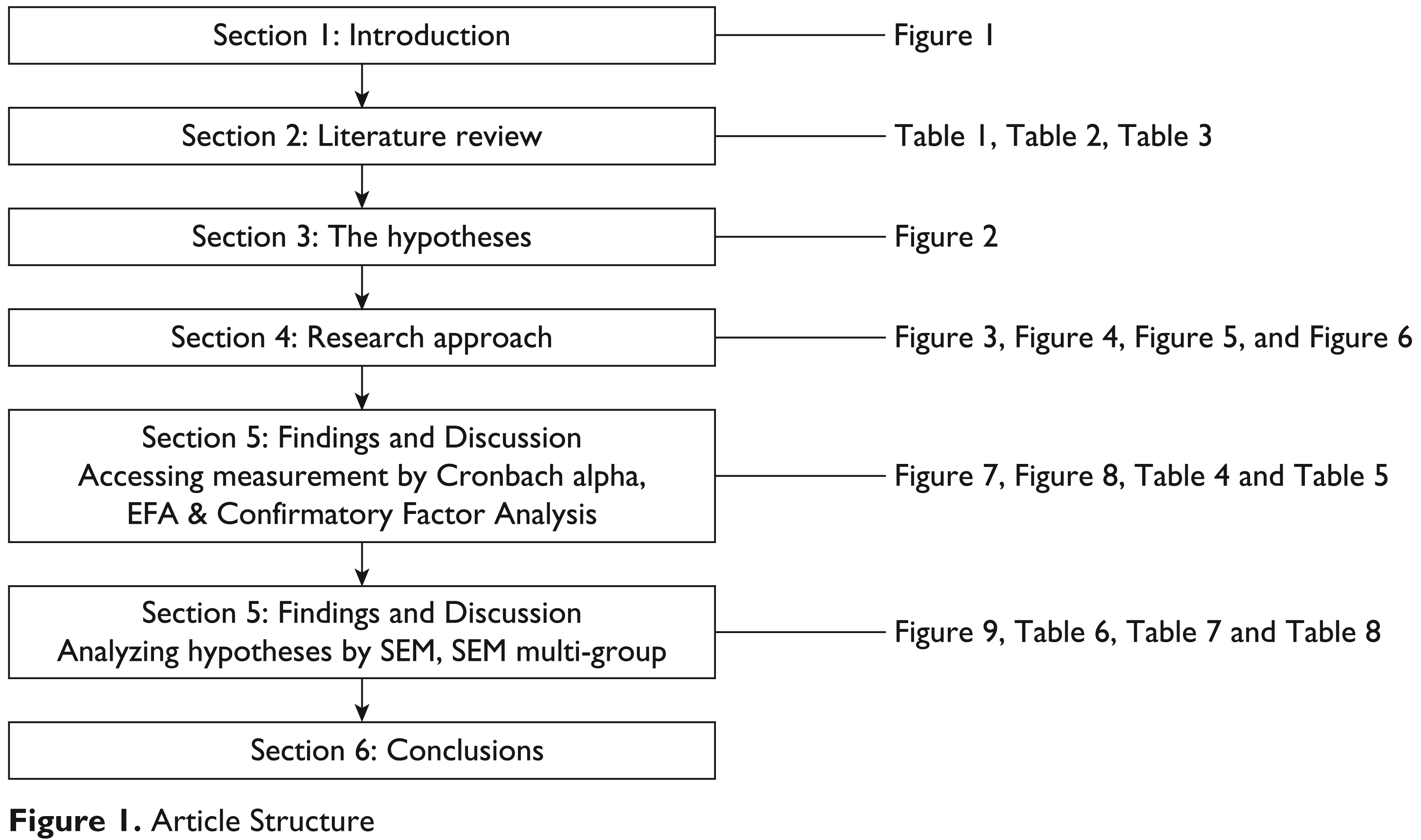
This article is organized as follows (see Figure 1): After briefly offering the prevailing situation in cross-cultural technology transfer in the first section, the second section reviews the research to date about the consequence of technology transfer and defines the operational concepts of corporate culture, efficient technology transfer, and business performance (specifying a firm’s productivity and innovative capacity) and their measurement scales. The third section proposes the hypotheses on the relationship between efficient technology transfer and business performance and on the effect of corporate culture on the above relationships. The fourth section describes the research approach, including survey design, sampling techniques and the methods for analysis including EFA, CFA and SEM multi-group analysis. The fifth presents the findings and discusses the significant differences in the effect of corporate culture on the relationship between efficient technology transfer and a firm’s business performance, emphasizing on the firm’s productivity and innovative capacity. Finally, the sixth section offers practical conclusions.
Article Structure
Literature Review
This section presents the research to date regarding: (a) the consequence of technology transfer; and (b) operational concepts and measurement scales, including corporate culture, efficient technology transfer and firmʼs business performance.
Consequence of Technology Transfer
Previous studies on cross-cultural knowledge and technology transfer have addressed various aspects of operational performance including transferred technology and knowledge, such as organizational learning effectiveness (Cavusgil and Yavas, 1984; Inkpen, 2000; Le and Evangelista, 2007); productivity or revenue and market share (Caves, 1974; Xu, 2000; Yin and Bao, 2006); competitive advantage (Liao and Hu, 2007; Rodriguez and Rodriguez, 2005); operational efficiency, employee productivity, market share, market penetration, product quality and customer satisfaction (Cui et al., 2006; Dhanaraj et al., 2004; Lane et al., 2001; Tsang et al., 2004); technological capabilities (Kumar et al., 1999; Madanmohan et al., 2004); human resources, business and general performance (Lyles and Salk, 1996); and potential for innovation (Guan et al., 2006; Kotabe et al., 2007).
Overall, most studies on operational performance with the transferred technology have insufficiently focused on the effects of efficient technology transfer on the firm’s business performance in terms of the firm’s productivity and innovation capacity. The role of corporate culture on these relationships has particularly received little attention. In addition, technology transfer can be considered as the process of transferring knowledge, which involves understanding the process of how efficient knowledge transfer significantly affects the business performance of subsidiaries, and thus it merits further examination. Therefore, this study takes advantages to address the shortcomings in literature by investigating the impact of corporate culture on the relationship between efficient technology transfer and a firm’s business performance, emphasizing productivity and innovative capacity.
Operational Concepts and Measurement Scales
Corporate Culture Concept
Current literature offers several operational definitions of organizational culture, also called corporate culture, but there is no strong consensus on the definition (Palanisamy, 2007); the similarities and compatibilities among the definitions are aplenty. Corporate culture is mostly considered as one of the primary factors in determining behavioural norms in the workplace and shaping companies’ value systems. Each company has its own specific corporate culture that is rooted in its goals, strategies, structure and approaches to business activities, and this differs from the culture of other companies (Schein, 1996).
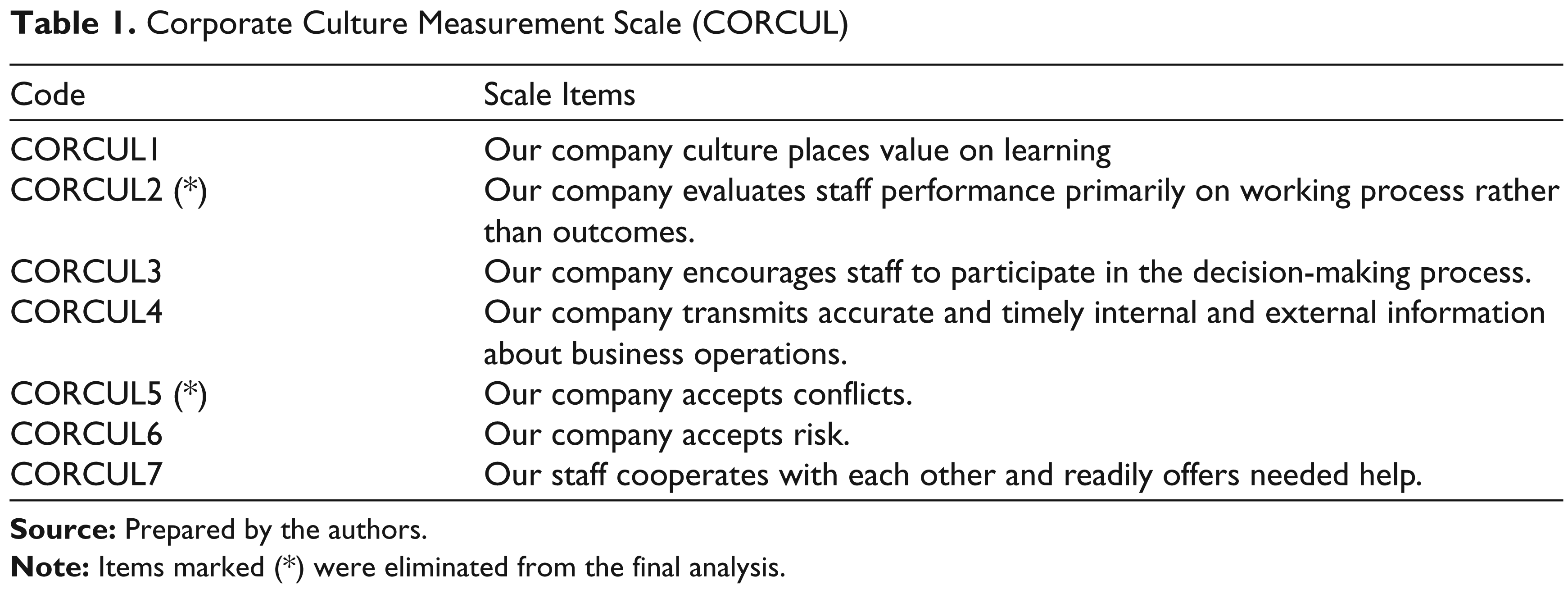
This study defines corporate culture as: (a) the convergence of a company’s management and employee shared practices, core beliefs, attitudes, standards, codes and behaviour models through mutual learning and interactions in the cultural difference context, leading co-workers to think and act similarly (Kilmann et al., 1985; Schein, 1996; Steinwachs, 1999); and (b) the hybridization of intercultural potential to exploit home and host advantages and minimize differences in management practice from the originating cultures (Nguyen and Aoyama, 2012). Indeed, the notions of hybridization and crossvergence are used better in explaining human resource management practices and their diffusion across countries (Mamman et al., 2009). In this study, corporate culture is particularly concerned with the synergy of Japanese and Vietnamese management practices and beliefs. Accordingly, the perspectives of organizational culture and learning orientation provided by Hurley and Hult (1998) are exploited to measure corporate culture concept through five dimensions, as follows: (a) individual learning and development; (b) participative decision making that encourages employees to participate in the process; (c) power sharing (the internal and external information exchange and interaction that reduces focus on turf, politics and status); (d) tolerance for conflicts; and (e) support and collaboration (openness and collegial support, helping employees cooperate and readily offering needed help). Then, the expression of these original measurement scales is finally modified to fit the characteristics of Japanese manufacturing companies in Vietnam through in-depth interviews for easily understanding and answering the survey questions (see Table 1).
Efficient Technology Transfer Concept
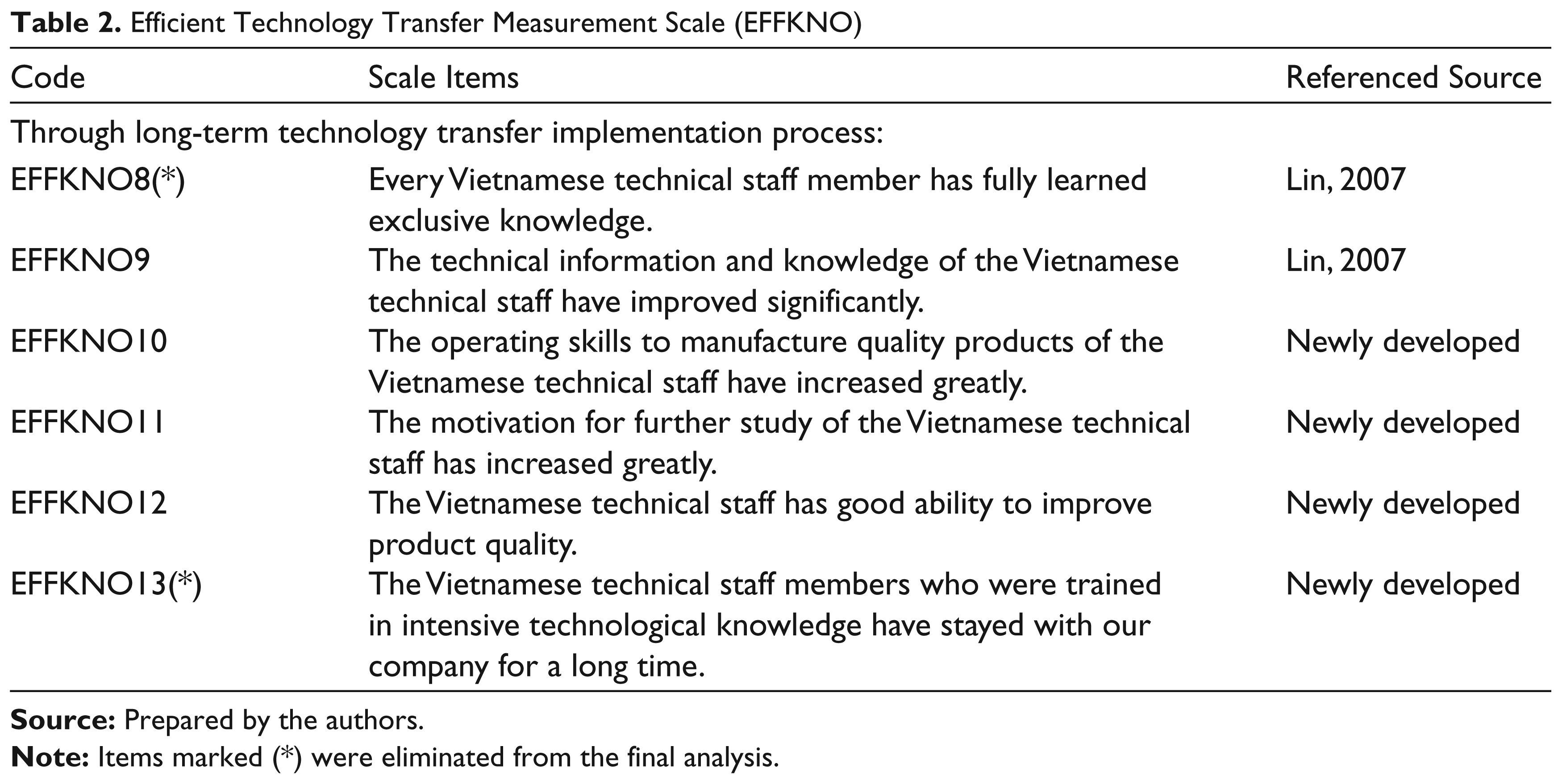
The concept of efficient technology transfer is addressed from various perspectives. Technology transfer herein is particularly viewed through an organizational learning lens as the process of acquiring, accumulating, and applying technical knowledge by efficiently transferring technology into production activities, which requires concise measurements to properly evaluate the efficiency of the transfer. Therefore, this study considers the viewpoint of product development skills (Mansfield et al., 1982), knowledge acquisition and application, and professional standards improvement (Lin, 2007) to be the most applicable factors; these were adjusted based on the interviews with Japanese and Vietnamese managers to fit the actual situations of Japanese manufacturing subsidiaries in Vietnam.
Corporate Culture Measurement Scale (CORCUL)
As a result, efficient technology transfer concept mastered in this study is concentrated on acquiring technological knowledge from a partner, enhancing knowledge application, increasing the motivation for further study and improving innovative capacities to provide process and product quality (see Table 2).
Business Performance Concept
Measuring organizational performance is a considerable task, because it is strongly related to the behaviour of managers and employees (Lee and Choi, 2003). The ultimate operation of any business usually leads to measurable performance.
Efficient Technology Transfer Measurement Scale (EFFKNO)
This study aims at the view of efficiency and effectiveness, which the definition of Bernolak (1997) as cited in Tangen (2005) is considered as the proper measure to evaluate an efficiency of company’s business performance achievements resulting from learning and execution. They closely relate to the efficient use of resources where performance decreases when resources are not used optimally and strongly entails meeting customer requirements effectively. Accordingly, the aspects of business performance specifying at firm’s productivity and innovation capacity are addressed.
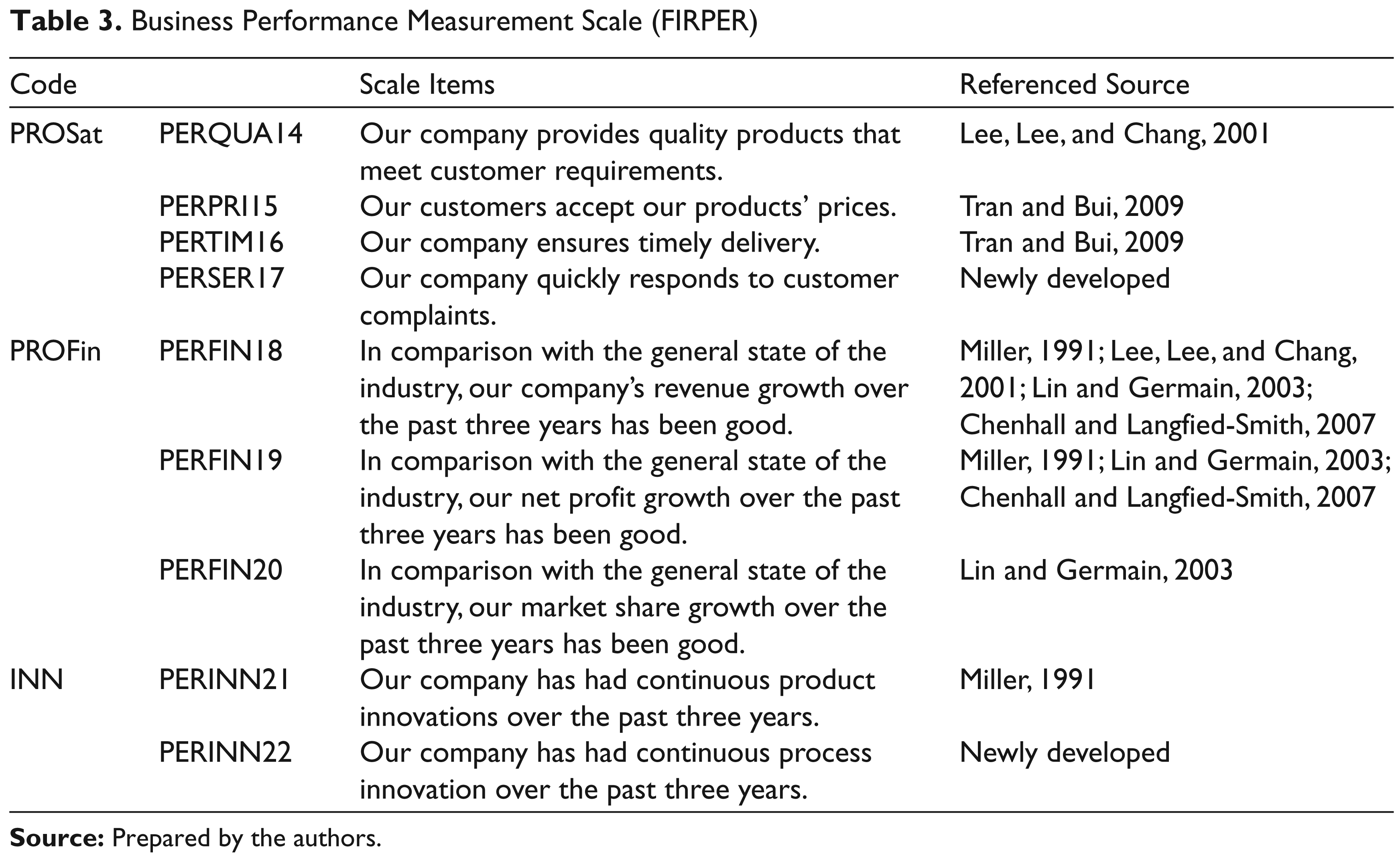
First, in the context of globalization, the competition in quality, on-time delivery, and price is tight (Golhar and Deshpande, 1999; Kaplan and Norton, 1996); therefore, firm’s productivity is assessed not only through financial performance but also through the firm’s ability to meet customer requirements, specifically on: (a) the level of a firm’s response to customer requirements for quality products (Lee et al., 2001), price, timely delivery (Tran and Bui, 2009) and quick response to customer problems; and (b) financial performance in terms of revenue growth (Chenhall and Langfied-Smith, 2007; Lee et al., 2001; Lin and Germain, 2003; Miller, 1991), net profit growth (Chenhall and Langfied-Smith, 2007; Lin and Germain, 2003; Miller, 1991), and market share growth (Lin and Germain, 2003). Then, the view of a firm’s innovation capacity (INN) is captured from the idea of Miller (1991) regarding a company’s ability to frequently bring innovative products to the market. In addition, the continuous process innovation ability is newly developed to measure this aspect.
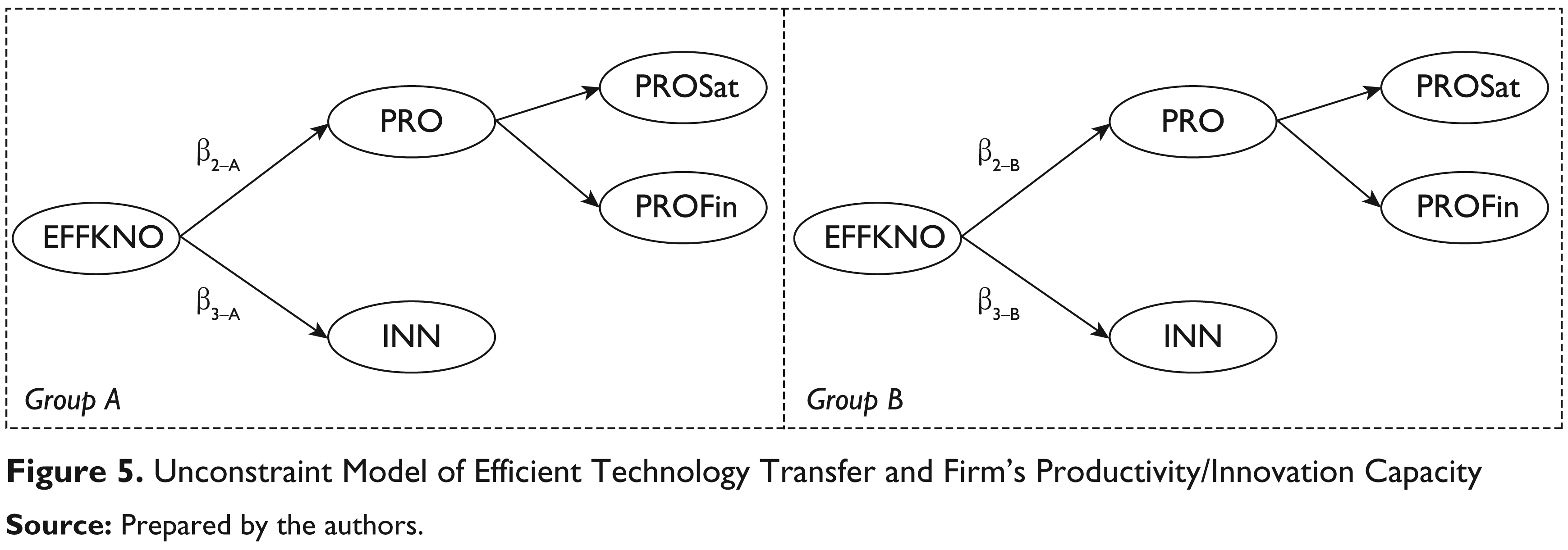
Briefly, this study divides business performance (FIRPER) into three features (see Table 3): (a) level of response to customer requirements (PROSat); (b) financial performance (PROFin); and (c) innovation ability (INN). Among these, the first and the second features form the operational construct of a firm’s advance productivity (PRO).
Business Performance Measurement Scale (FIRPER)
Framework of Analysis
Efficient Technology Transfer and Firm’s Business Performance, etc.
Based on the organizational learning view, acquiring knowledge is closely related to the outcomes of using the knowledge. Technology transfer that specifically includes knowledge transfer is considered one of the factors contributing to a firm’s business performance. Accordingly, a substantial transfer of technology can enhance the competitive advantage (Liao and Hu, 2007; Rodriguez and Rodriguez, 2005), influence company productivity (Caves, 1974; Xu, 2000), increase the local industry’s capacity for technological development (Kumar et al., 1999; Madanmohan et al., 2004; Markusen and Venables, 1999), increase innovation potential (Guan et al., 2006; Kotabe et al., 2007) and facilitate the economic growth of the host country (Blomstrom, 1990). In addition, intra- and cross-firm knowledge transfer and acquisition have a significantly positive effect on human resources, and both business and general performance (Lyles and Salk, 1996) affect operational efficiency, employee productivity, business performance in terms of market share, product quality and customer satisfaction (Cui et al., 2006; Dhanaraj et al., 2004; Lane et al., 2001; Tsang et al., 2004) and increase the recipient firms’ productivity (Yin and Bao, 2006).
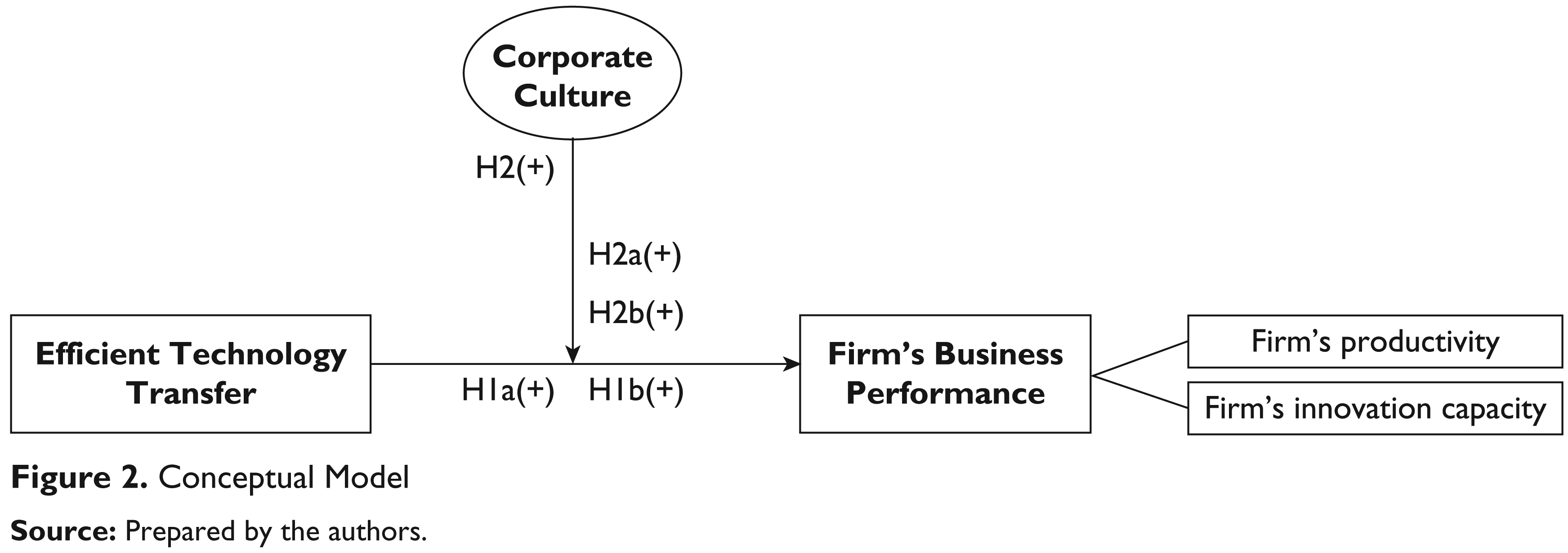
Consequently, the following hypotheses are proposed (see Figure 2): Efficient technology transfer has a positive effect on business performance in term of a firm’s productivity (H1a) and innovation capacity (H1b).
The activities of cross-cultural knowledge transfer and technology transfer always take place in the context of corporate culture. Because corporate culture promotes an active exchange of ideas, information transfer has happened in a general atmosphere of inventiveness, creativity and willingness to pursue new opportunities (Miles, 1978 cited in Menon and Varadarajan, 1992). Therefore, corporate culture is considered as one of the factors that shape managerial behaviour and contribute to efficient technology transfer. Moreover, knowledge-oriented corporate culture is pointed out as the most important factor contributing to successful knowledge transfer and knowledge management (Davenport and Prusak, 1998). In addition, strong corporate culture can have a significant impact on a firm’s long-term economic performance (Heskett and Kotter, 1992). Thus, higher-level innovativeness connects with an organizational culture that emphasizes learning, development and participative decision making (Hurley and Hult, 1998). Particularly, corporate culture works toward the process of minimizing cultural differences and their impact on technology transfer through management practices that directly convince local behaviour and address the mindset of the home and host staff (Nguyen and Aoyama, 2012; Nguyen et al., 2012).
Research Approach
Survey Design
The survey questionnaire was divided into two main parts.
The first part consisted of two cover letters, in both Japanese and English, written by a research supervisor and primary researcher. The letters provided organizational leaders information such as: (a) the study’s focus, managerial implications and long-term benefits of the expected outcomes; (b) extreme significance of their contributions in ensuring this work’s success; and (c) strong commitment of presenting collected data in statistical form solely for academic research purposes and of briefly reporting the results upon request on the completion of the study.
The second part included brief instructions to answer the questions; that is choosing any of the numbers in between 1 and 5 according to the strength of feelings and the best represented perceptions about the mentioned issues. The options of returning the response, a list of questions consecutively written and carefully translated in English, Vietnamese and Japanese, and the expected deadlines were referred. The questionnaire’s wording, structure and configuration were checked by academic professionals and presented to three university academics in the cross-cultural technology transfer field. Next, the pre-test version was exchanged with seven key Japanese and Vietnamese executives who were each fluent in all the three languages and had an average of 11 years’ experience in international technology transfer. The final version was sent to the Japanese subsidiaries in Vietnam in the form of a hard copy, a soft copy and a Google online survey for optimal convenience in feedback. In cases of discrepancies, explanations of all questions was provided through email, phone calls and face-to-face conversations. The key informant approach, one representative production manager or other relevant executive of each investigated company, which is more popular in organizational research than the use of multiple informants, was appropriate to apply in this study (Wilson and Nielson, 2000). Therefore, production managers or other relevant executives who know their companies’ technology-transfer activities very well were preferably targeted.
The questionnaire was rated on a five-point Likert scale, the most commonly used question format for assessing participants’ opinions (Dumas, 1999) and one that has also been recently applied in other organizational research in Vietnam (for example, Tran and Bui, 2009). The key informants were required to choose their level of agreement with each item.
Sampling
This study focuses on the impact of transferring technology on the business performance and on the role of corporate culture on the above correlation for Japanese companies invested in manufacturing activities in Vietnam. Therefore, the sample population was Japanese manufacturing subsidiaries in Vietnam, and the unit of analysis was the organization. The investigation of each focal unit was aimed at the engineering production department, the primary interest area of this study.
The sample framework was identified from Mori’s (2010) 2010–2011 Japanese Companies in Vietnam and HEPZA’s (2009) 2009–2010 Enterprises Directory. Among more than 1,000 companies, 905 companies were targeted.
Sampling techniques and methodologies of mailing surveys follow the phone, mail contact and follow-up methods recommended in Dillman’s Total Design Method (1978). First, the survey was sent out nationwide via express mail. Then, three–five days after the mail was sent, direct phone calls were placed to confirm that the survey had been received, to answer questions, to express hope that the contact would contribute to the research and provide either the online survey link or the survey file, depending on the company’s preference. At the same time, personal information such as e-mail or cell phone number was requested to further build the relationship. In particular, managers were asked to send the survey to other executives to increase the number of responses. In many cases, the primary researcher or a manager selected business cards from close contacts for immediate photocopying and obtaining the phone contacts. The official thank you letter was written carefully and it contained a promise to report the aggregated findings once the study was completed. A reminder letter with a replacement survey questionnaire was mailed three weeks after the initial mail was sent. Direct phone contacts helped to increase the feedback.
The survey was conducted from February to May 2012. A total of 223 companies responded (response rate of 24.64 per cent): 70 electric and communication companies (31.39 per cent); 73 machinery/transport companies (32.74 per cent); 27 companies manufacturing daily necessities (12.11 per cent); and 53 chemical treatment companies (23.77 per cent). Among which, 84 responses (37.67 per cent) came from companies in the key northern industrial zones such as Nomura-Haiphong, Que Vo, Tien Son, Thang Long, Noi Bai, Dong Van and Quang Minh,; and 139 responses (62.33 per cent) came from companies in the key southern technology parks and export processing zones, such as Amata, VSIP, Bien Hoa-Dong Nai, My Phuoc, Tan Thuan and Linh Trung. These companies have an average experience of 8.96 years of operating with transferred technology and an average of 915 employees. Key informants are between 40 and 50 years of age and have an average experience of 8.15 years in international technology transfer.
Overall, the study’s sample size of 223 companies 1 exceeded the expected 200 cases from the research method based on experience; and therefore, the sample size was considered to be large enough to obtain reliable analysis while employing an SEM approach, a method employed in large-sample distribution theory (Kline, 1998). Moreover, this sample size is considered reasonable and manageable because low response rates are common in surveys.
EFA Method
EFA is first used to assess and refine the preliminary scales. The principal axis factoring in EFA with Promax rotation with the criterion of eigenvalue ≥1 is employed to appropriately determine the number of extracted factors. Next, Cronbach’s alpha coefficient is exploited to assess the reliability of the scales. In addition, various supplementary assessments are also conducted on the data: (a) no item is allowed to load too high or low on more than one factor as to indicate a unidimensional measurement (Anderson and Gerbing, 1988); (b) all items comprising a scale must load highly on one factor to indicate good discriminant validity (Hair et al., 1998); and (c) factor loading ≥0.50; item-total correlation ≥0.35; Cronbach’s alpha ≥0.60 (Hair et al., 1998); and total variance extracted ≥50 per cent (Gerbing and Anderson, 1988).
CFA Method
CFA is conducted to finalize the scales validity with the considered criteria: (a) scales achieve unidimensionality if the corresponding measurement model has overall fit, including the latent construct and its designated items (Steenkamp and Van Trijp, 1991). A chi-squared statistic with a p-value >0.05 is a key required indicator of overall model fit (Hair et al., 1998); (b) the scale values demonstrate convergent validity if the regression coefficients of all standardized variables ≥0.60 and have statistically significant p-values of < 0.05 (Anderson and Gerbing, 1988); (c) the composite reliability of scales is satisfactory at CR ≥0.60 (Hair et al., 1998); and (d) the scale achieves discriminant validity between concepts when the measurement model achieves overall fit and correlation coefficients among concepts of r < 1 with statistically significant p-values (Steenkamp and Van Trijp, 1991).
SEM Multigroup Analysis
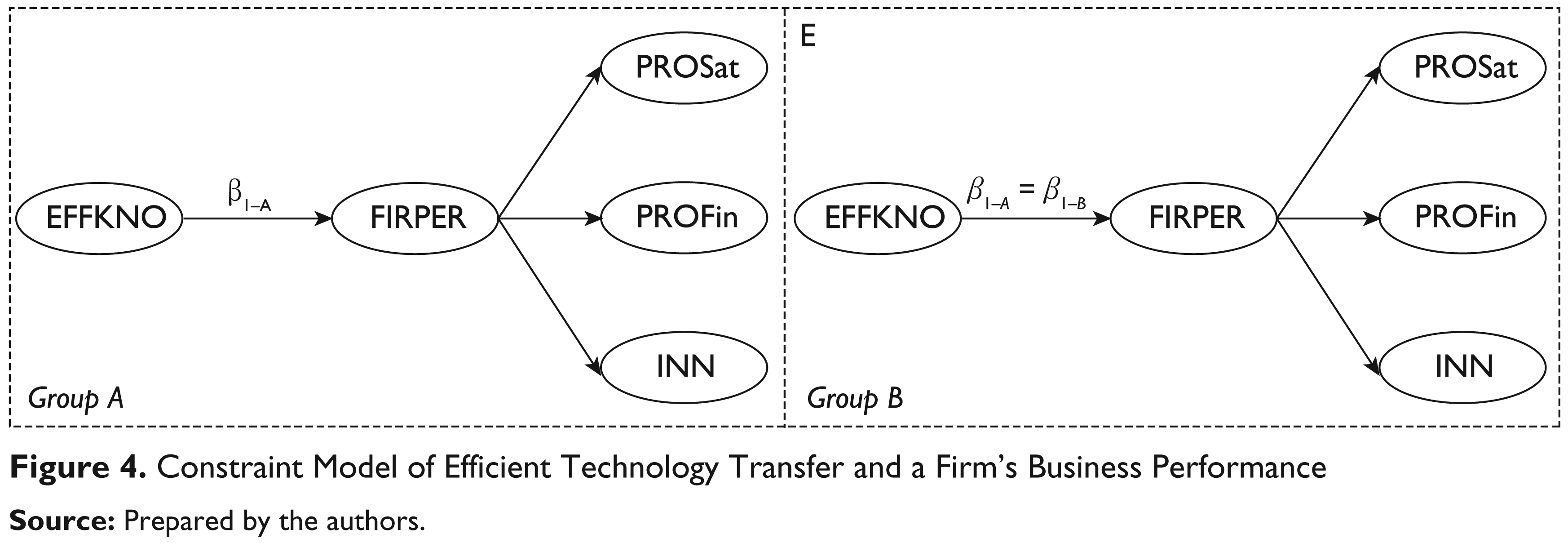
SEM multi-group analysis is applied to determine the moderating effect of corporate culture on the relationship between efficient technology transfer and business performance. The multi-group analysis method used in this study includes both unconstrained (measurement components, and the relationships between the research concepts in the theoretical model are not bound) and partially constrained structure models (measurement components are not bound, but the relationship between the research concepts in the theoretical model is set equally for the two groups). In Figures 3 and 5, the model path coefficients were freely estimated for each group, whereas in Figures 4 and 6, the coefficients were partially constrained to be equal across the two groups. A comparison of these two models showed significant differences in corporate culture in the hypothesized path coefficients between efficient technology transfer and a firm’s business performance in terms of productivity and innovation ability.
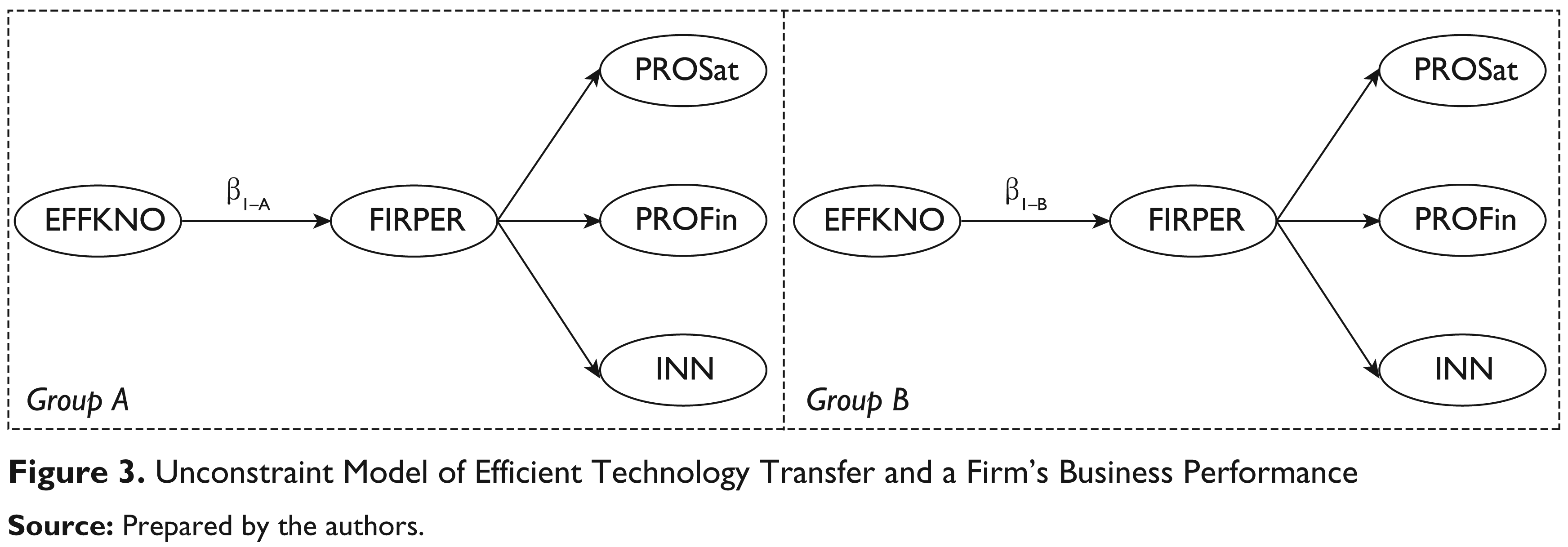
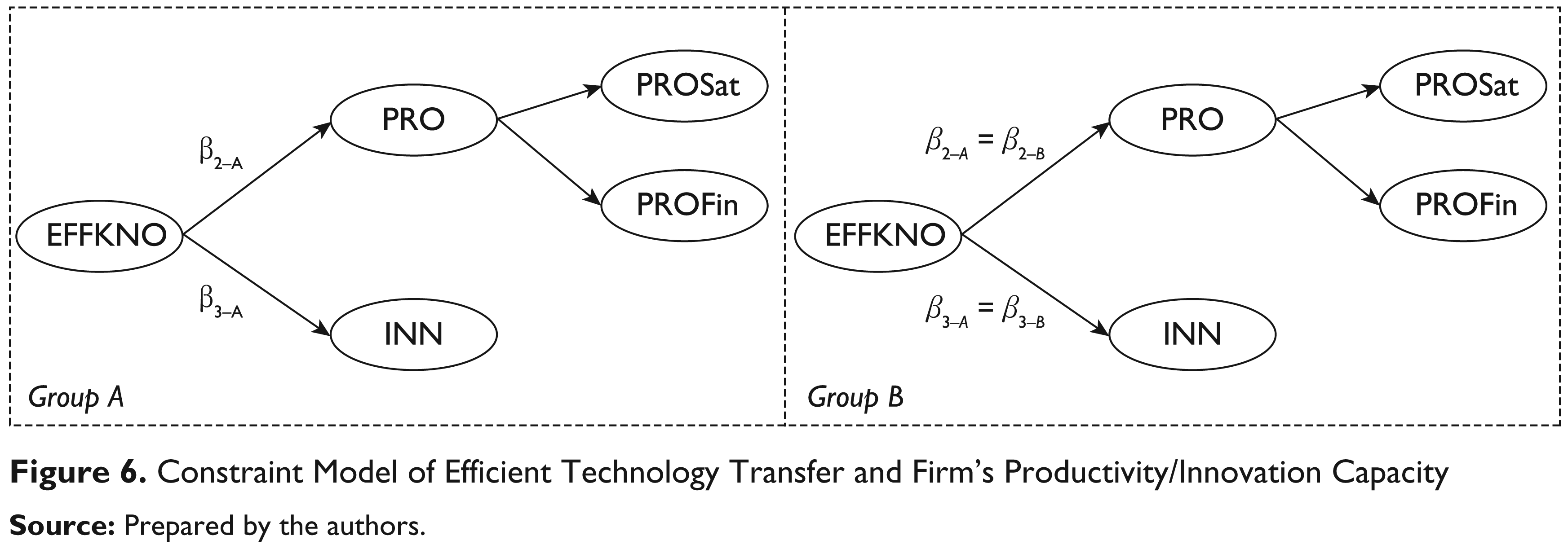
The sample is categorized into high and low corporate culture groups, Group A and B, based on their ratings on this construct. Those with ratings above the median form the high-corporate culture group while those below the median form the low-culture group. To ensure measurement invariance between the two groups, variables that do not meet the criteria of EFA and CFA evaluation are eliminated.
Findings and Discussions
This section presents the results and discussions on EFA and CFA scale assessment and hypotheses test.
Assessing the Reliability of Measurement Scales by the EFA Method
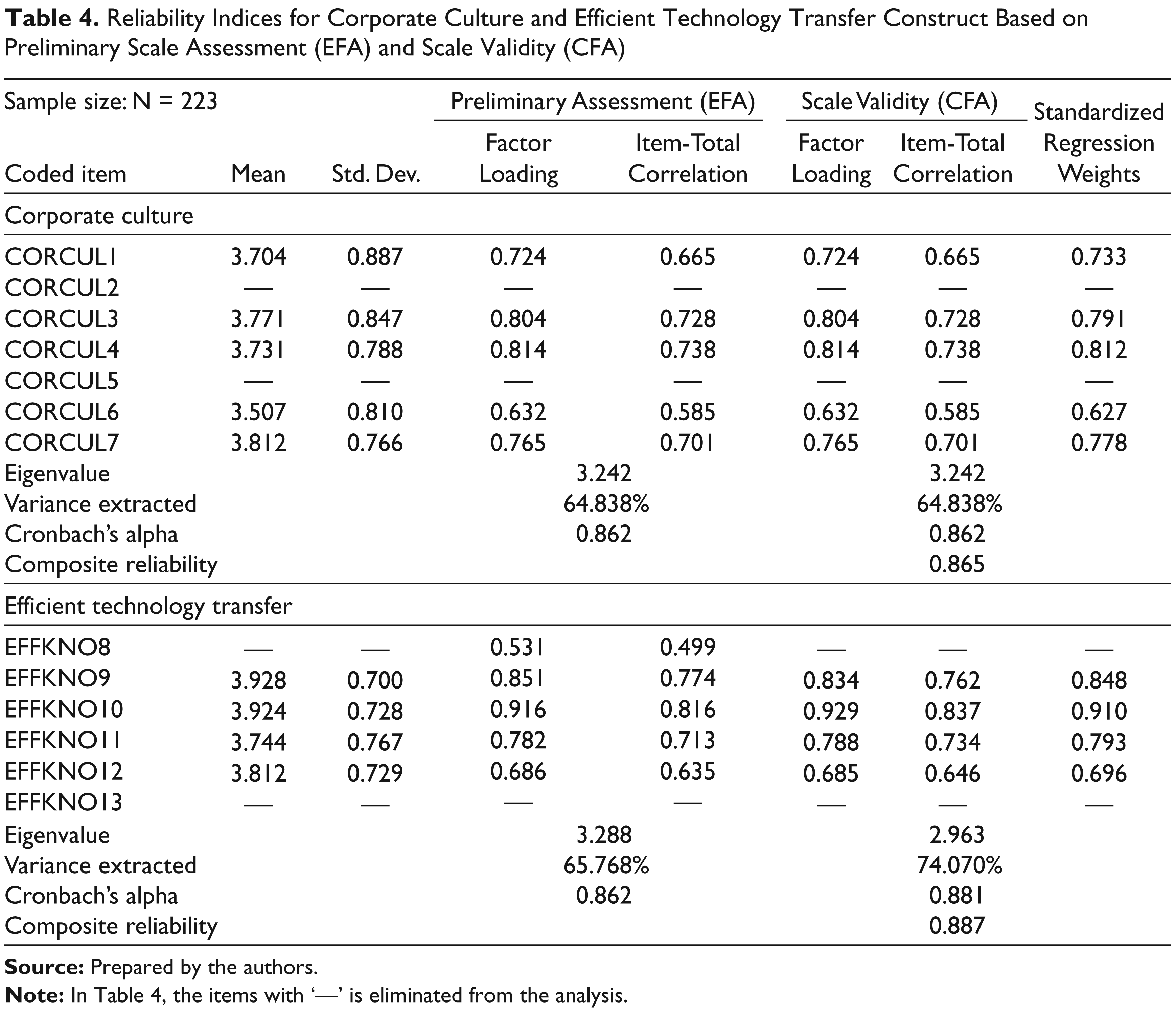
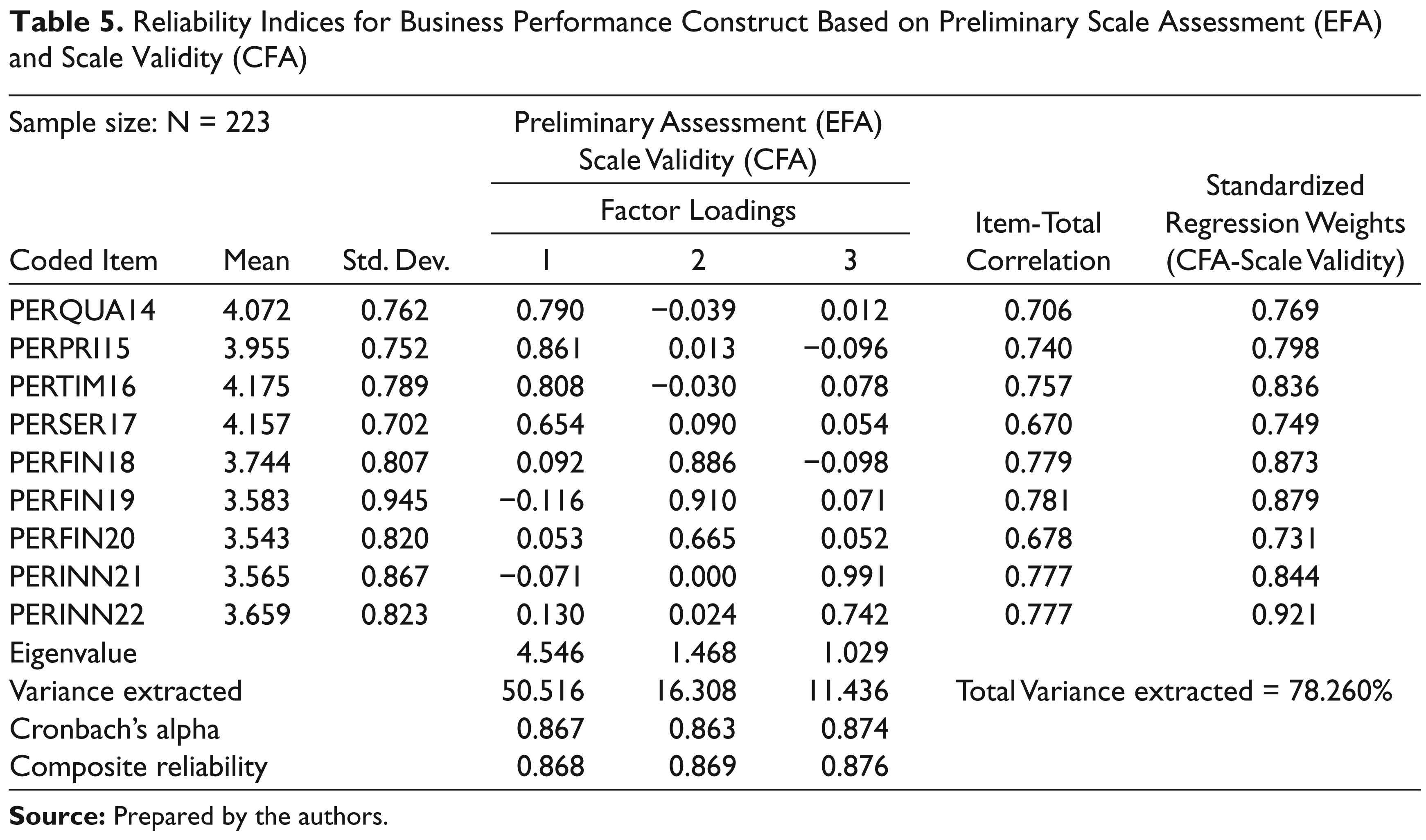
By preliminary assessment of the measurement scales of corporate culture, efficient technology transfer and business performance, the following items that were unsatisfactory with EFA’s criteria had to be deleted from the original scale: two items in the corporate culture construct, regarding evaluation primarily on working process rather than outcomes (CORCUL2) and accepting conflicts (CORCUL5), and one item regarding long-term employee tenure with the company after intensive technology training (EFFKNO13) on the efficient technology transfer scale. The reliability indices of constructs in the conceptual model are presented in Tables 4 and 5.
Reliability Indices for Corporate Culture and Efficient Technology Transfer Construct Based on Preliminary Scale Assessment (EFA) and Scale Validity (CFA)
Assessing the Validity of Measurement Scales by the CFA Method
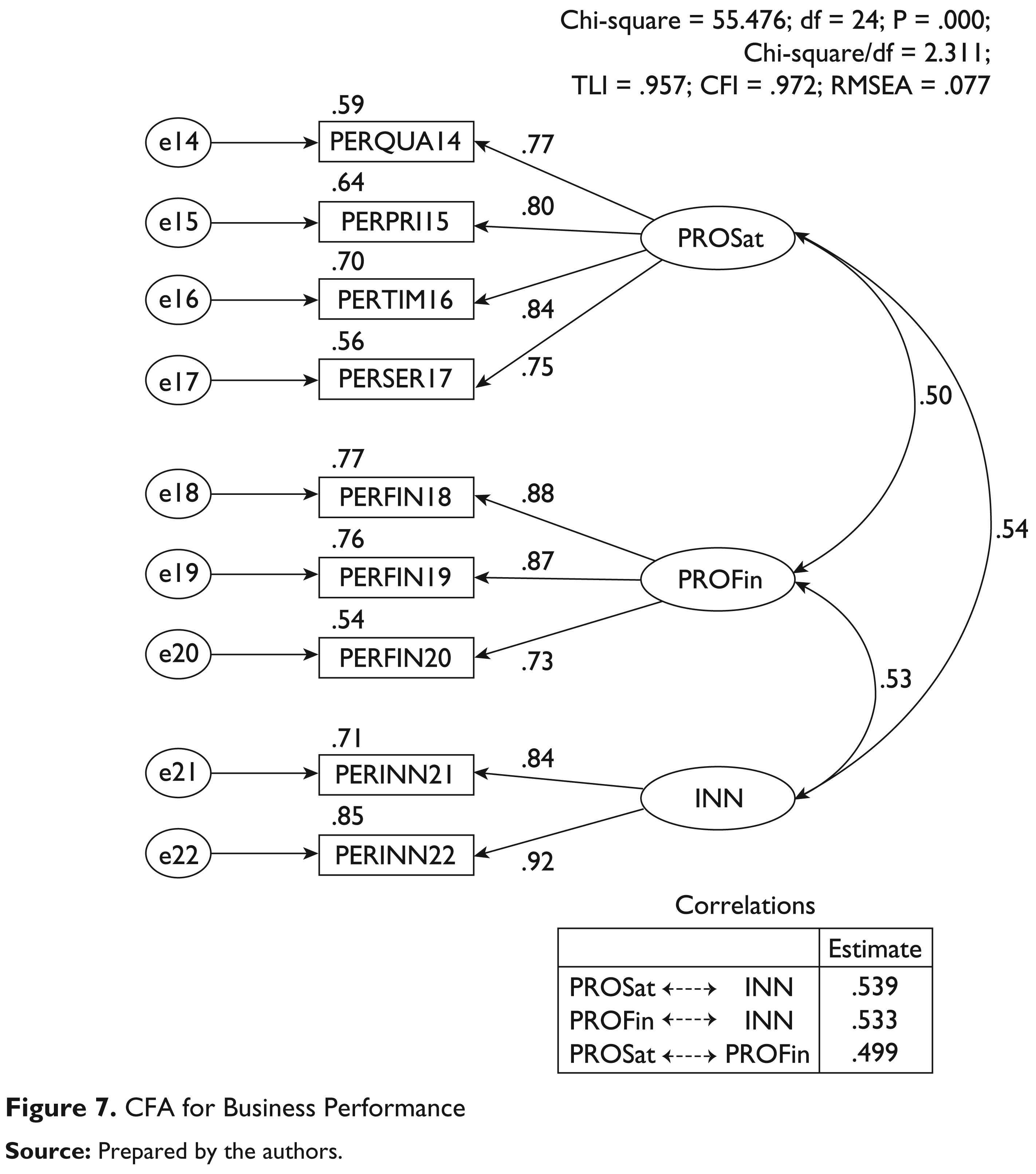
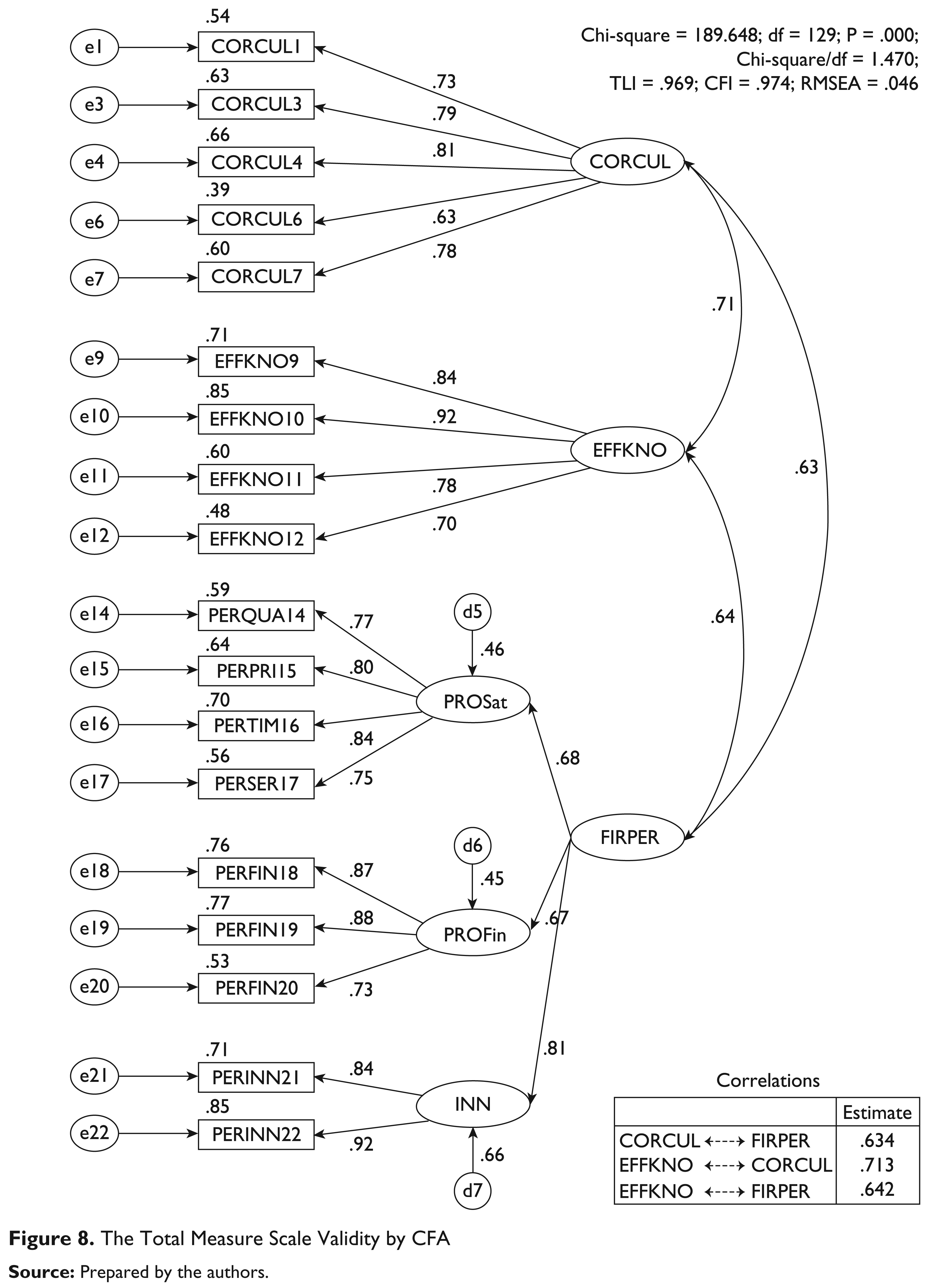
In line with the CFA’s criteria, the business performance measurement scales satisfied the evaluation criteria for a multidimensional scale and yielded at chi-square = 55.48 (p = 0.00); TLI = 0.96; CFI = 0.97; RMSEA = 0.08; df = 24, reflecting the validity of each scale (see Figure 7). The final overall measurement model yielded the following measurement indices: chi-square = 189.65 (p = 0.00); TLI = 0.97; CFI = 0.97; RMSEA = 0.05; df = 129, showing the adequate overall fit (see Figure 8). One item in the efficient technology-transfer construct, fully learned exclusive knowledge (EFFKNO8), had to be eliminated from the original scale to improve the overall fit of the model.
Reliability Indices for Business Performance Construct Based on Preliminary Scale Assessment (EFA) and Scale Validity (CFA)
Efficient Technology Transfer and Firm’s Business Performance
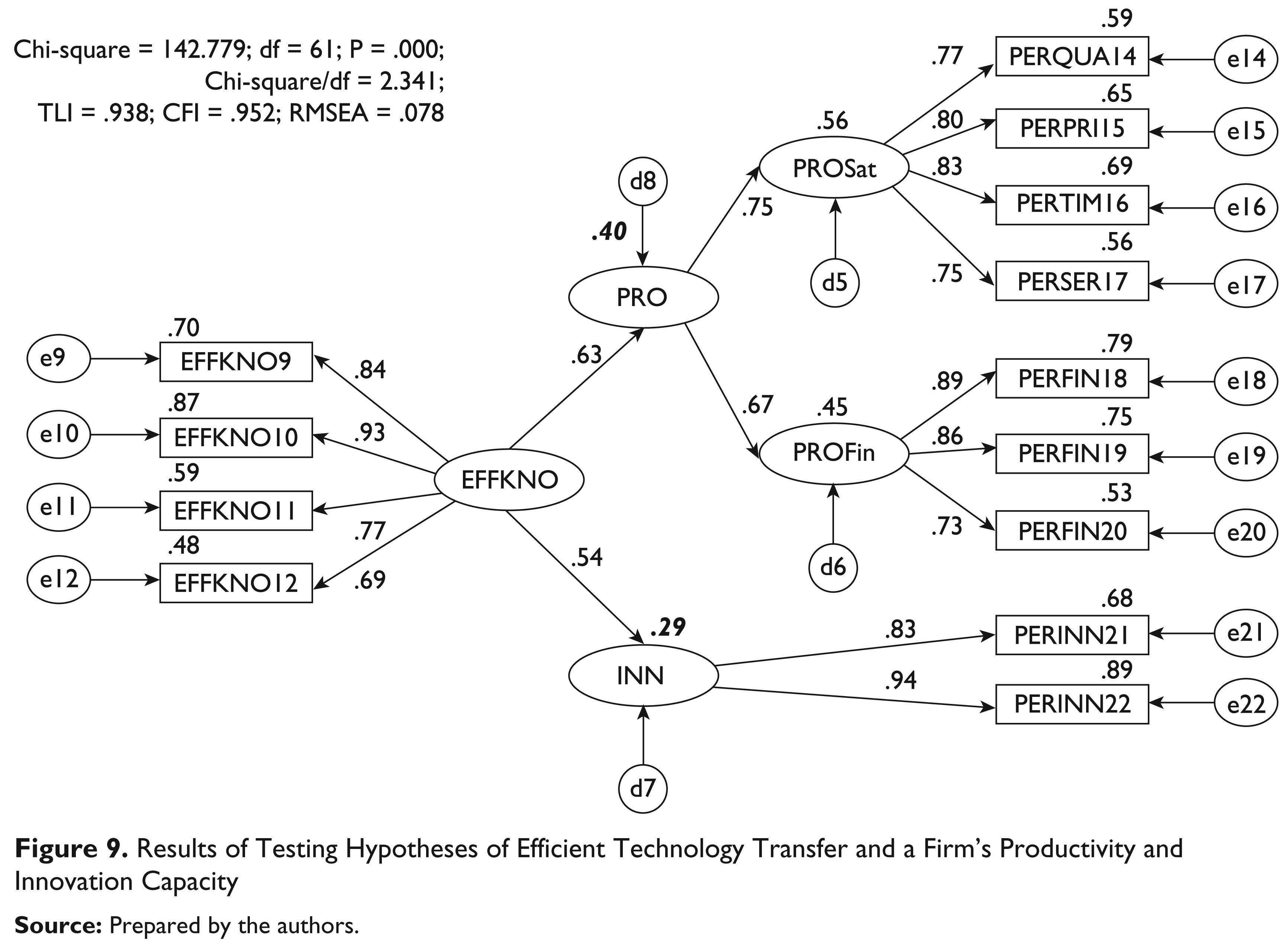
First, the standardized regression coefficient between efficient technology transfer and firm’s productivity is 0.63 (p = 0.00), which supports the hypothesized relationship between efficient technology transfer and business performance in term of a firm’s productivity (H1a). Then, the standardized regression coefficient between efficient technology transfer and a firm’s innovation capacity is 0.54 (p = 0.00), validating the positive correlation between these concepts (H1b). Overall, the results of the path analysis on the structural model and the hypotheses indicate that efficient technology-transfer performance contributes to 40 per cent of a firm’s productivity and 29 per cent of a firm’s innovation capacity (see Figure 9). These results provide interesting additional information compared with the work of Tran and Bui (2009) on manufacturing enterprise in Vietnam, which revealed that managerial factors contribute to 55 per cent of a firm’s productivity.
Therefore, to achieve successful business performance, international managers should focus on executing methodical, efficient practices. They must then create a new learning culture that promotes sharing the intercultural values of Japan and Vietnam in successful business performance. Managerial activities should focus on improving Vietnamese technical staffs’ knowledge, operating skill, ability to manufacture quality products, meet customer requirements, ensure timely delivery and quickly respond to customer complaints. The challenge for Japanese and Vietnamese executives is to motivate the staff through the spirit of learning and working. Efforts should directly affect growth in revenue, net profit, and market share as well as product and process innovation ability, all of which contribute to maintaining the competitive advantage of Japanese manufacturing subsidiaries in Vietnam.
The Effect of Corporate Culture on the Relationship between Efficient Technology Transfer and Firm’s Business Performance
To assess the effect of corporate culture on the relationship between efficient technology transfer and a firm’s business performance, the sample is categorized into high and low corporate culture groups based on their ratings on this construct: above the median (n = 170 companies) forms the high corporate culture group, and below the median (n = 53 companies) forms the low corporate culture group.
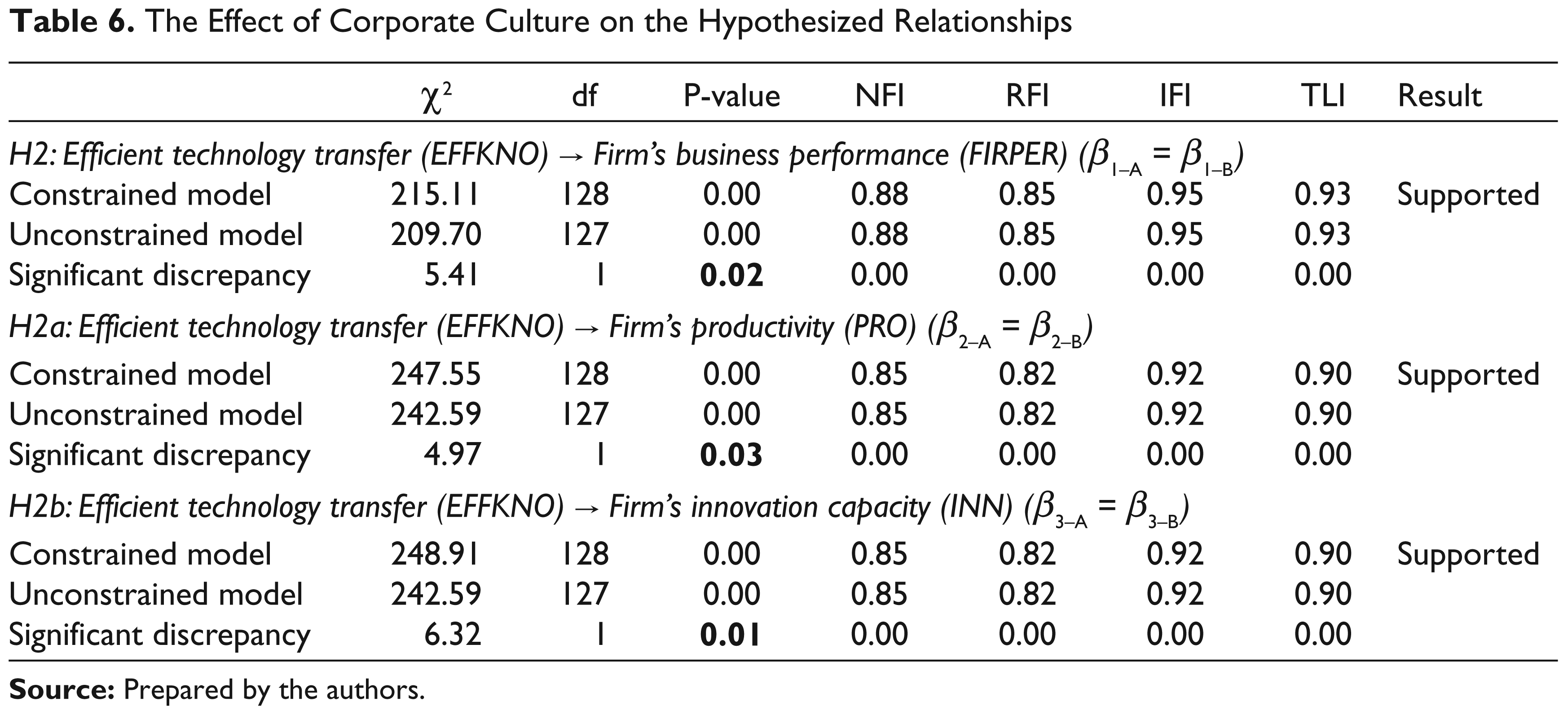
On the moderating variable of corporate culture, when binding the regression coefficient b from efficient technology transfer performance to firmʼs business performance in the theoretical model (β1–A = β1–B); to firm’s productivity (β2–A = β2–B); and to firm’s innovation capacity (β3–A = β3–B), equally across both two business groups, the value of df increases one degree of freedom (from 127 to 128) and the chi-square also increases. Chi-square tests between the partially constrained and unconstrained structure models, using the Maximum Likelihood estimation method, show results of p (D|2 corresponding with Ddf) 0.02 for business performance; 0.03 for firm’s productivity; and 0.01 for firm’s innovation capacity (see Table 6). The discrepancy meets the statistically significant p-value of < 0.05 (Byrne, 2001). Therefore, hypothesis of corporate culture producing significant differences in the effects of efficient technology transfer on a firm’s business performance (H2) is supported..
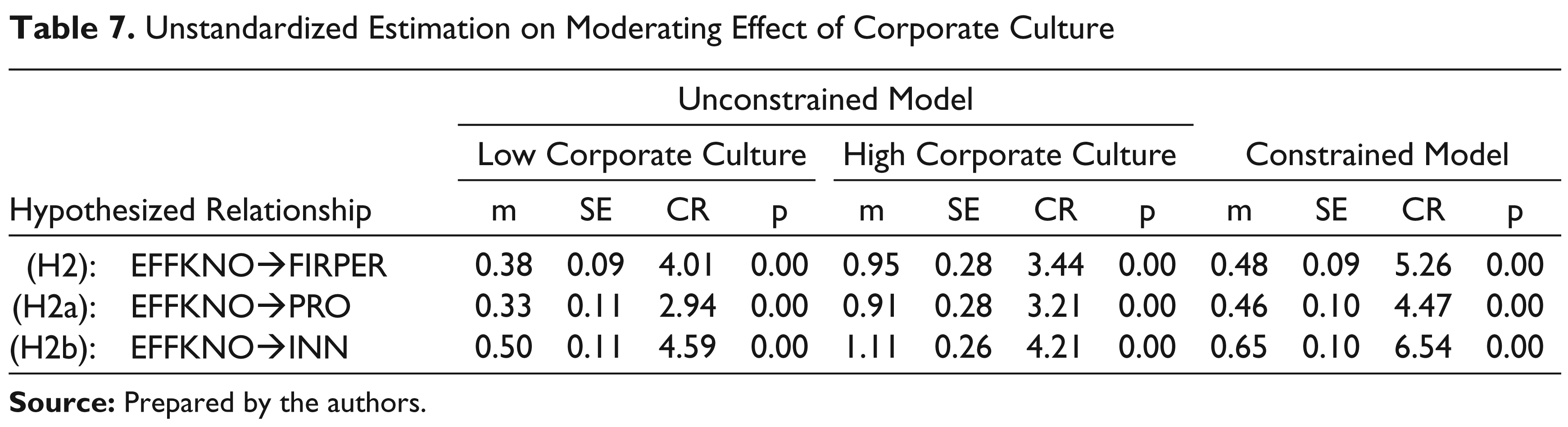
In addition, based on the results of unstandardized estimation on moderating effect of corporate culture on the relationship of efficient technology transfer and firm’s business performance in Table 7, there are significant discrepancies meeting the statistically significant p-value of < 0.05 among groups high and low corporate culture. Therefore, the hypothesis of higher corporate culture, higher positive effect of efficient technology transfer on firm’s productivity is supported (H2a). Similarly, the hypothesis of higher corporate culture and a higher positive effect of efficient technology transfer on a firm’s innovation capacity is also supported (H2b). Thus, the higher corporate culture, the more the company can use efficiently the transferred knowledge for achieving business performance on both firm’s productivity and innovation capacity.
The Effect of Corporate Culture on the Hypothesized Relationships
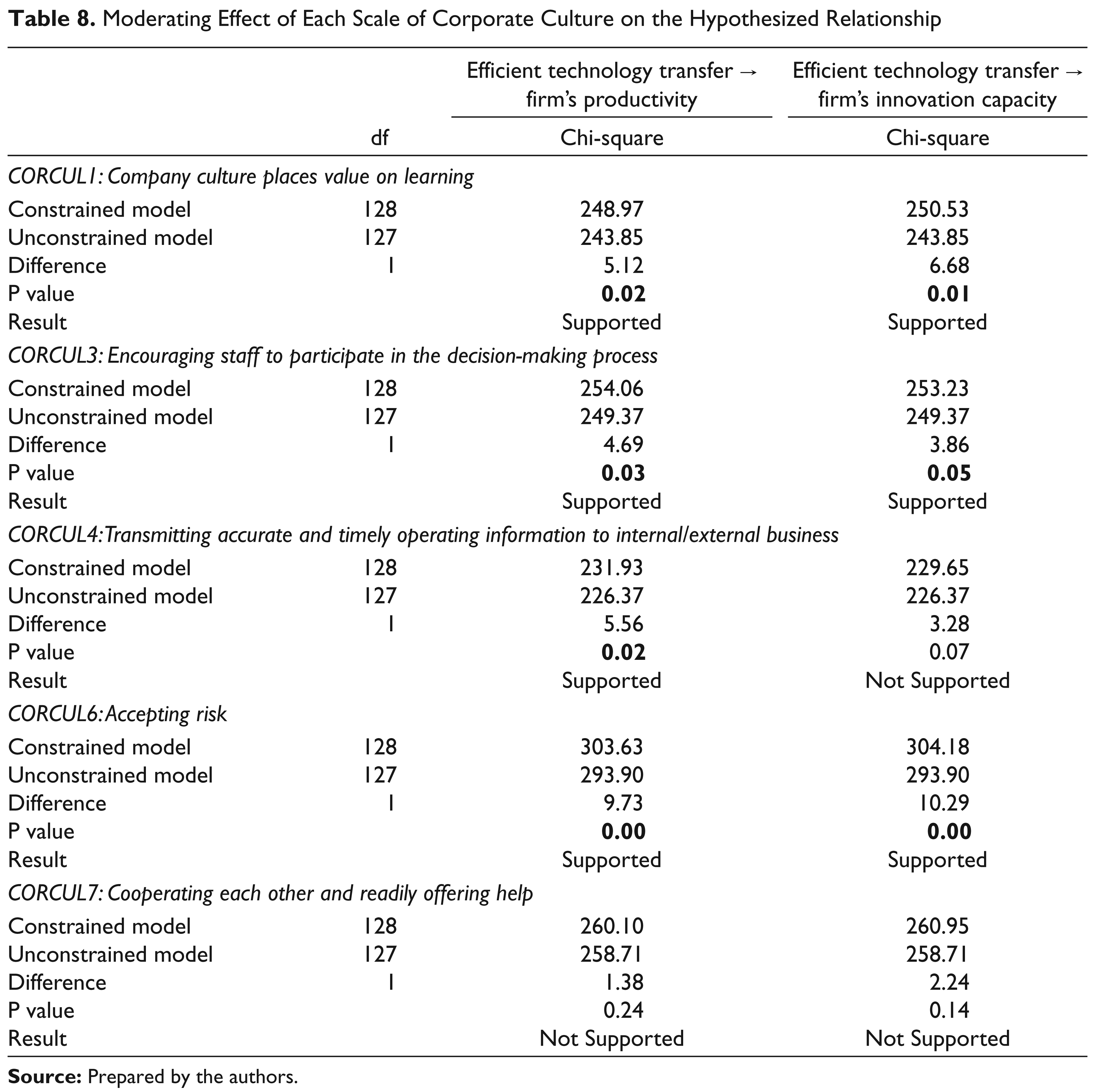
Furthermore, by analyzing the moderating effects of each scale item of the corporate culture construct on the hypothesized relationships, the findings presented in Table 8 support that: (a) the more the company places value on learning, encourages staff to participate in the decision-making process and accepts risk, the higher the firm’s business performance in terms of firmʼs productivity and firmʼs innovation capacity with the efficiently transferred technology; (b) the more the company transmits accurate and timely internal and external information about business operations, the more the company achieves the firm’s productivity from using the transferred knowledge efficiently, though, the significant discrepancy in achieving the firm’s innovation capacity has not been statistically perceived; and (c) the more the staff cooperates with each other and readily offers help, the more the positive changes in achieving a firm’s productivity and innovation capacity with the efficient transferred technology, but the discrepancy does not meet the statistically significant. These outcomes can be explained by cultural difference traits between Japanese and Vietnamese management styles from the perspectives of collectivism and power distance in leading technology transfer and business performance (Nguyen et al., 2012).
Unstandardized Estimation on Moderating Effect of Corporate Culture
Indeed, once efficient technology transfer is achieved, the corporate culture is created and facilitates technology transfer performance; of course efficient technology transfer leads firm’s productivity performance. Interestingly, corporate culture herein has ability enhancing the positive relationship of efficient technology transfer and firm’s business performance. In fact, companies have the corporate culture highly emphasizing on learning culture, they exploit effectively the advantages of Vietnamese culture with high attention on learning to have distinguished individual initiative and take the chance of high power distance in management. At the same time, the learning culture is also supported by Japanese culture in high in the masculinity dimension which stressesd on training. Even though technology is successfully transferred and the company can manufacture with manual, guidelines, acquired knowledge and skills and, etc., but in the actual operating process, some troubles and innovative matters need to be handled for fitting in with local manufacturing conditions. The workers have to learn more and try to make experiments, accepting risks in changing at once,; but those workers can make invaluable decisions for better operational management along with their minds. Therefore, a learning culture promotes a higher firm’s higher productivity and firmʼs innovation capacity performance. Furthermore, once the accurate internal and external information about business operations is transmitted quickly, the corrective action and preventive action is timely conducted in a timely manner and adjusted; the higher firm’s attains a higher productivity performance is reached. However, the information about business operations, especially, the exclusive technological information which needs to be protected for competition is transmitted more; though, there has not been found the significant change in firm’s innovation capacity. Furthermore, another point could be that the important root driving firm’s innovation capacity is the wisdom in the co-workers’ mindset. The knowledge and skills through learning process and practices are absorbed into the employee’s wise mind, were continuously lead process innovation and frequently bring innovative products to the market. In addition, although the both Japanese and Vietnamese cultures share the same collectivism spirit which especially devotes to given help; but the more the focus on offering the needed help is, the more the individual’s creativity is limited.. Actually, the cultural collectivism dimension provides both positive and negative impacts on efficient technology transfer and business performance (Nguyen et al, 2012; Nguyen and Aoyama, 2012), that are eliminated each other, and balanced their impacts on business performance. Therefore, although the more the staff cooperates with each other and readily offers help, possibly, the lesser the firm’s productivity and innovation capacity significantly obtain with the efficient transferred technology.
Moderating Effect of Each Scale of Corporate Culture on the Hypothesized Relationship
Consequently, corporate culture produces significant differences in the effects of efficient technology transfer on business performance in general and on a firm’s productivity and innovation capacity in particular. Therefore, to shift from a low- to a high corporate culture, companies must place value on learning. Organizational learning and knowledge-sharing and management are a prerequisite for promoting innovation and creation of new knowledge (Dasgupta and Gupta, 2009). Besides, encouraging staff to participate in the decision-making process and openly transmitting accurate, timely internal and external information about business operations are very important. After recruitment, staff should be trained carefully and managers must carefully monitor the work in detail. International executives should be aware of the benefits of corporate culture and transmit its spirit and know-how to their staff so that they thoroughly understand why a corporate culture is crucial for efficient business performance. An organization which lacks a corporate culture for knowledge learning, sharing, creation and dissemination has a serious situation for the competitiveness at the firm, industry and country level (Pillania, 2006). In addition, although there are many techniques for creating corporate culture—including assessing which features should be copied from Vietnamese culture, which aspects should be kept from Japanese culture through technology transfer, and which angles should be newly created to fit with intercultural cooperation—all are considered to be intelligent strategies of organizational management.
These strategies challenge the vision and the ability of professionals and expatriates to evaluate opportunities based on which cultural differences bring conflicts and which can provide synergy benefits.
Conclusions
This study obtains statistical evidence about the role of corporate culture on two aspects of cross-cultural technology transfer: (a) efficient technology transfer has a 40 per cent positive effect on business performance in terms of a firm’s productivity, and a 29 per cent positive effect on business performance in terms of a firm’s innovation ability; and (b) corporate culture produces significant differences in the effects of efficient technology transfer on a firm’s business performance, particularly on firmʼs productivity and firmʼs innovation capacity. The higher the corporate culture, the higher the success of a firm’s business performance (in terms of firmʼs productivity and firmʼs innovation capacity) with the efficiently transferred technology; especially: (a) the higher the company places value on learning, encourages staff to participate in the decision-making process, and accepts risk, the higher the success of a firm’s business performance (in terms of firmʼs productivity and firmʼs innovation capacity) with the efficiently transferred technology; (b) the more the staff cooperates with each other and readily offers help, the more the positive changes in achieving firm’s productivity and innovation capacity with the efficient transferred technology, but the discrepancy in changing is not large enough to meet the statistically significant; and (c) the more the company transmits accurate and timely internal and external information about business operations, the more the company achieves firm’s productivity from using the transferred knowledge efficiently; though, the significant discrepancy in achieving firm’s innovation capacity has not been statistically perceived.
Furthermore, in this study, the advantages of the powerful multivariate technique with structural equation modelling (SEM) (Alavifar et al., 2012) are utilized as the means of data analysis to focus mainly on analyzing the impact of corporate culture on the relationship between efficient technology transfer and a firm’s business performance, emphasizing firm’s productivity and firmʼs innovation capacity. Based on a conceptual approach and statistical technique, the meaning of structural equation modelling (SEM) and multiple regression analysis basically have similarities, and parameter estimates will be identical or very close in testing the relationships of independent and dependent variables. However, the conceptual model in this study is built on three latent variables with several indicators―corporate culture construct, efficient technology transfer construct and business performance construct; that are measured on the basis of the strength of feelings and the best representing perceptions for self-assessment methods. In order to measure, and assess the hypothesized relationships, these measurements cannot be measured and validated without the contamination of measurement error. Additionally, for latent variables with several indicators, especially, the firm’s business performance construct which is the latent variable with multiple indicators of the same construct, structural equation model analysis approach helps to naturally handled measurement errors. In this case, with regression analysis, multiple indicators cause collinearity problems and small increments in variance also accounted for. Therefore, the two-phase approach of both exploratory factor analysis and confirmatory factor analysis in SEM and SEM multiple analysis are properly used to derive reliability of measured variables and internal consistency measures of reliability and to result the construct validity of measurement and hypotheses assessment.
Accordingly, the above results through the SEM analytical method in this study shape the following comprehensive issues. First, based on the discovered discrepancy value of corporate culture in efficiently translating technology transfer into business performance, company executives, including those of Japanese manufacturing subsidiaries, should exploit the powerful advantages of corporate culture in developing sustainability. Although minds cannot be managed, they can be transformed by inspiring leaders who spread new visions that advocate new meanings and lines of thinking (Browaeys and Price, 2008). Therefore, Japanese and Vietnamese executives should proactively engage in developing appropriate management interventions, mastering employee beliefs, and values, and moving the company forward. Second, international expatriate managers and corporate practitioners should pay attention to evaluating current corporate culture and practicing hybrid management to set the goals for timely improvement. They will then benefit from the value of using transferred technology to achieve efficient business performance within their specific cross-cultural contexts. Third, although there are many ways of creating corporate culture, it is considered intelligent management strategy for each company to consider which features should be copied from Vietnamese culture, which should be retained from Japanese culture, and which angles should be newly created to fit with intercultural cooperation. These strategies challenge the talent of professionals and expatriates in evaluating opportunities based on considering which cultural differences bring conflicts and which can hybridize to provide benefits. Fourth, management practices that emphasize on corporate culture can help gradually alter staff behaviour and mindset, the foundation for improvement and innovation activities. This calls for managers and executives to be open-minded and have a strategic vision to lead the company in the globally competitive arena. Finally, all things considered, even though this study makes an effort respond to the lack of understanding regarding the impact of corporate culture on the relationships of efficient technology transfer and a firm’s productivity and innovative capacity; however, further research should extend the investigation on (a) how corporate culture affects business performance; (b) which management practices help to form corporate culture; (c) whether corporate culture controls the effect of management practices on efficient technology transfer; (d) how corporate culture can reduce the impact of cultural difference on technology transfer; and (e) during technology transfer, which managerial elements from the host country’s national culture should be adjusted and which should be maintained. Accordingly, the alternative technique of both qualitative comparative analysis and quantitative analysis applied successfully in recently cross-cultural research could be appropriate for examining corporate cultural values.
In addition, Vietnamese companies, particularly Japanese companies in Vietnam, are sensitive about openly providing financial information; thus, this study applies perceptual self-assessment methods to measure business performance. Even though objective and subjective financial assessments showed close relationships and gave similar results (Chenhall and Langfield-Smith, 2007; Dess and Robinson, 1984; Geringer and Hebert, 1991; Lyles and Salk, 1996); the objective assessment of performance is the most practical and provides the ideal measurement of performance. Likely, the measurement of the variables in corporate culture, efficient technology transfer is based entirely on the perceptions of possibly just one key informant from each of the 223 participating organizations. The validity of such subjective data is also questionable. Also, the key informant approach as representative agent of the investigated company, which is more popular in organizational research than the use of multiple informants (Wilson and Nielson, 2000); though, the number of respondents is the same as that of the 223 companies, the unit of analysis is not just the organization but also the individual. Therefore, researchers conducting organizational studies in Vietnam face the challenge to conduct further studies with an objective approach and useful outcomes to add more empirical evidence to the regional understanding of Japanese management practices regarding technology transfer.
Footnotes
Acknowledgements
We gratefully acknowledge the generous grant in aid for international research activities provided by the Ritsumeikan Kokusaiteki research fund, and the Japanese Ministry of Education, Science and Culture. We would also like to express our deep gratitude to the Vietnamese production managers and Japanese executives of Japanese manufacturing subsidiaries in Vietnam. We sincerely thank to Prof. Atsushi Abe, Prof. Bui Nguyen Hung and Dr. Tran Thi Kim Loan for their kind support. Last but not least, we are grateful to the anonymous referees of the journal for their extremely useful suggestions to improve the quality of the article.