



Abstract
The objective of the present study is to identify which are the risk factors that influence the intention to continue using Internet banking in Malaysia. The primary participants are personal Internet banking users in Peninsular Malaysia. Data was collected through a self-administered questionnaire which employed the drop-off and pick-up (DOPU) technique. The questionnaires were distributed through this method to the respective bank branch managers who were willing to distribute to their customers. A total of 413 respondents completed the questionnaires as requested. The SPSS statistical analysis package and partial least squares were used for data analysis and hypothesis testing. The results show that social risk, time loss risk, opportunity cost risk and perceived usefulness are significant factors influencing attitude towards intention to continue using Internet banking. Attitude is a significant factor that influences the intention to continue using Internet banking in Malaysia. Other relationships hypothesized are not significant. The total numbers of respondents were 413 and may not represent the whole population. Furthermore, the profiles of respondents were confidential and not disclosed by the management of the banks. As such, the total number of Internet banking customers for each bank was unknown. The findings of this study are expected to be of great use to the Internet banking providers. An understanding of the factors identified in this study allows Internet banking providers to enhance the services in the most effective and efficient way to increase bank business in the long run and encourage their bank customers’ to continue using Internet banking.
Introduction
A new market for Internet-based services, such as Internet banking, offered to the global Internet users who exceeded 2267 million people in December 2011 (IWS, 2012). Traditional banking practice has transformed to Internet banking growth in many countries, since the new millennium. Lower operational costs, improved consumer banking services, consumers retention and expansion of their share of customers can be offered by Internet banking services (Sharman & Kirsty, 2006). Operating costs would be saved by encouraging customers to use the Internet banking services. Banks are required to offer Internet banking due to competitive pressures. Online banking market would be interested to enter by new players such as software and telephone companies (Hagel & Eisenmann, 1994; Hagel & Lansing, 1994). Therefore, the expectation for Malaysian banks would not just be to be fast in providing Internet banking services but also to encourage customers to migrate to this form of delivery of bank services. The articles by Bikram and Sunpreet (2011) mentioned that website design factors like navigation structure and information content are important antecedents to customer service quality, which further influences customer satisfaction and the trust of Internet banking web sites. The study by Dhananjay (2012) shows the key attributes of electronic payment and its use by consumers. Many newer payment products are offered by banks to take advantage of lower costs associated with the newer payments.
Internet is an open environment and it has brought the information superhighway to our doorsteps. Therefore, online applications are exposed to security threats such as scams, phishing and password-sniffing. According to Madan (2006), the only way consumers can stop the collection of their personal data is to ‘opt-out’ or configure the browser to reject ‘cookies’.
Sathye (1999) highlighted that the security concern and benefit of the system awareness are the main obstacle in Australia. The electronic banking community recognized the security needs. A number of technologies have been developed to ensure the security of electronic transactions. According to Scarle et al. (2012), the full implementation of virtual transactions currently need to go through a number of hurdles especially all based on problems of trust. Some suggestions for those online enterprises in China based on the study by Ma, Meng and Xiao (2010), since China lacks network ID authentication and an online transaction credit system, online enterprise need to increase the security and reputation of their websites. However, a study by Gupta and Sareen (2001) regarding consumer concerns and issues of electronic payments in India show that market for electronic money products could offer merchants, financial service providers and government entities the opportunity for greater cost efficiencies and consumers the opportunity for greater convenience and security.
Review of Literature
The Malaysian banking sector is under the supervision of Bank Negara Malaysia and is licensed under the Banking and Financial Institutions Act (BAFIA) 1989. The banking sector is being transformed by developments in telecommunications and information technology. Electronic banking has become the ultimate service delivery system to fulfil the needs of banking customers due to the explosive expansion of the Internet and computer usage. The Malaysian Central Bank authorized domestic commercial banks on 1st of June 2000, to offer Internet banking services. Maybank, the largest locally owned commercial bank, launched its own portal (www.maybank2u.com.my) on 15 June, 2000. The list of the services offered via the Internet banking including customer enquiries, fund transfer, payment of bills, credit card payment, checking services, fixed deposits and summary of accounts transaction. A review of the Malaysian banking websites on the Internet revealed that other banks such as Alliance Bank, Ambank, Bumiputra-Commerce Bank, Hong Leong Bank, Public Bank, RHB Bank and Southern Bank are following suit in offering online banking services (Suganthi, Balachandher & Balachandran, 2001).
Mohiuddin, Ramlah, Rashidah and Rafikul (2007) mentioned in their studies the major reason for not buying online because of the concern on security and privacy of customer’s personal information. The cyber security issues not only happen in Malaysia, according to Kshetri (2013) cyber-attacks originating from China arguably have caused substantial economic damage to the Western economies. The study stated that Chinese firms have increased investments in IT security products, which can be considered as a positive sign. However, there is little empirical research conducted in Malaysia to assess the acceptance of Internet banking amongst Malaysian. Adoption of Internet banking in Malaysia and slow growth due to security and personal preferences factors (Suganthi et al., 2001). There are a few security issues occurring in Malaysian Internet banking such as online identity fraud or phishing. Phishing or online pilfering of identity is the malevolent attempt of baiting mass audiences into misleading websites by thousands of emails sent by fraudsters. Criminals create websites that appear to be from trusted organizations and blast deceptive emails to random email addresses in an attempt to commit online identity fraud or phishing. Suganthi et al. (2001) conducted a study which found that security concerns were one of the important factors influencing Internet banking in Malaysia. This finding was also supported by another study in the country whereby most individuals were found to be reluctant to apply Internet banking due to security and privacy issues (Ramayah, Ismail & Koay, 2002).
Presently, Bank Negara Malaysia has registered 22 commercial banks consisting of nine Malaysian banks and 13 foreign banks (BNM, 2009). Internet banking subscription in 2002 for the two leading banks offering such services in Malaysia, Maybank and HSBC, amounted to 25,000 and 10,000 customers respectively (Yu, 2002). In Malaysia, adoption of Internet banking is comparatively low and the main determinants for adoption have not been researched much. Hence, Internet banking development is still at the early phase though the electronic transformation has begun in Malaysia. Furthermore, the banking industry is finding it difficult to improve the dissemination of Internet banking (Ndubisi & Sinti, 2006).
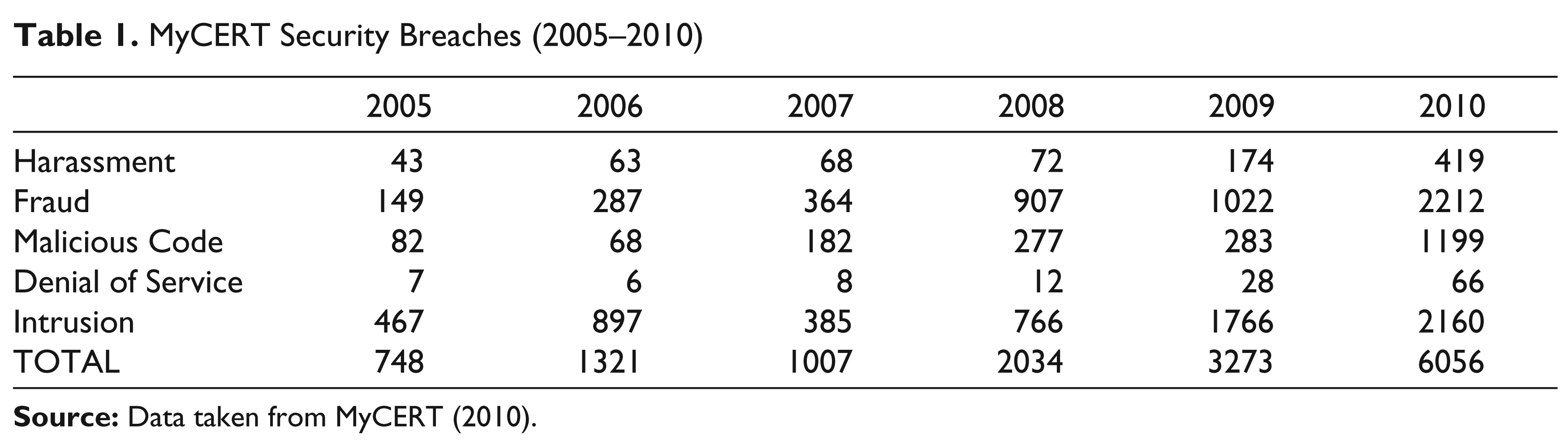
MyCERT or the Malaysian Computer Emergency Response Team operates a public service in the form of the Cyber999 help centre which provides emergency response to computer security issues in addition to support in management of incidents such as computer abuses, hack attempts and other security breaches related to confidential information. According to MyCERT (2010), all categories of cyber security incidents including harassment, fraud, malicious code, denial of service and intrusion showed sharply increasing pattern from year 2005 to 2010 (see Table 1).
MyCERT Security Breaches (2005–2010)
Ramayah et al. (2002) identified the following six external variables that influence Internet banking adoption among Malaysian consumers, namely, prior experience, training, perceived risk, awareness, cost and external pressure. This study highlighted the fact that the majority of respondents are still not using Internet banking. Another study by Rouibah, Ramayah and Oh (2009) found that there was a direct positive effect relationship between five factors (perceived ease of use, perceived usefulness, attitude, subjective norms and perceived behavioural control) and behavioural intention to use. Mohammad Hanif (2001) reveals the fact that profitability, trade financing, following the clients, diversifying the risk and market size are important factors for the presence of foreign banks in the Pakistan.
Thomas, Kellermann and McNevin (2002) highlighted the fact that value is added by the electronic security to an open network. Infrastructure, both soft (policies, processes, protocols and guidelines that protect the system and data) and hard (hardware and software needed to protect the system and data) constitutes the structure of electronic security. The main issues regarding Internet banking in Malaysia are the weak security in adopting internet banking applications. Therefore, this study seeks to investigate risk factors that impact Internet banking continuance usage.
Objectives of the Study
The main objectives of this study are as follows:
To investigate the influence of risk dimensions on the attitude towards the use of Internet banking. To investigate the influence of perceived ease of use on the attitude towards the use of Internet banking. To investigate the influence of perceived usefulness on the attitude towards the use of Internet banking. To investigate the influence of attitude towards the use of Internet banking on intention to continue using Internet banking.
Rationale of the Studies
The key factors influencing consumer intention to continue Internet banking are examined in this study. Before customers consider using Internet banking, banks have to attract their attention and promote Internet banking services. Internet banking will be compared by customers with other method of banking to find out if perceived benefits outweigh the perceived risks and costs. In addition, the decision to continue using Internet banking will be considerably influenced by the execution of a sound security system is required in Internet banking as it is a financial service of electronic commerce that is continually growing.
Theoretical Background and the Research Model
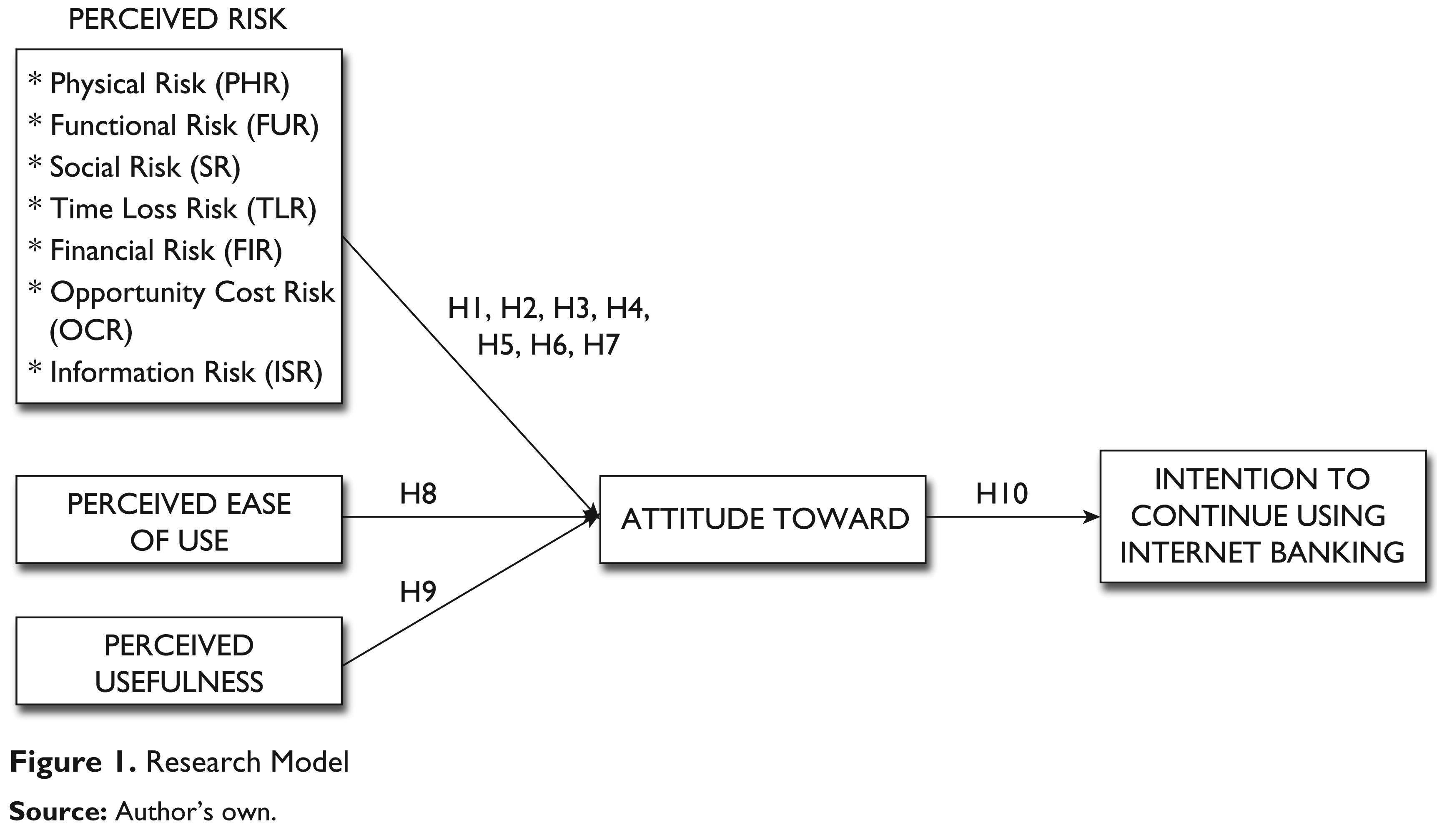
Internet banking systems are considered an innovative information application, previous research on user acceptance models for information systems (IS) can be helpful to understand the success of Internet banking adoption. Figure 1 shows the proposed model for this research, referred to as the intention to continue using Internet banking services. This research used the technology acceptance model (TAM) as the base model for IS acceptance. To provide a solid theoretical basis for examining the intention to continue using Internet banking application, the research framework proposed the extended TAM (Davis, Bagozzi & Warshaw, 1989). Perceived risk as an additional belief can be treated as external variables in TAM which is adapted from Lee (2009) and Lu, Hsu and Hsu (2005). The model develops the rationale for the causal relationship based on these combined theoretical backgrounds and incorporates them with perceived risk dimensions for identifying factors that influence intention to continue using Internet banking.
TAM introduced by Davis (1989), adapted from theory of reasoned action (TRA), was specifically modified for modelling user acceptance of IS. The goal of TAM is to explain the determinants of computer acceptance related to user behaviour across a broad range of end-user computing technologies and user populations. In addition, TAM provides a basis for tracing the impact of external variables on internal beliefs, attitudes and intentions.
In this model, perceived usefulness and perceived ease of use are of primary relevance for IS acceptance behaviours. TAM proposes that external variables indirectly affect attitude towards using, which finally leads to actual system use by influencing perceived usefulness and perceived ease of use. A study by Khalil, Janejira and Nor Hamimah (2010) on intention to use Internet banking among Malay and Chinese ethnic groups shows that perceived usefulness, perceived ease of use and trust have a positive effect on intention to use Internet banking for both ethnic groups. The recent studies by Sanaz and Ali (2013) regarding the Iranian online behaviour on the acceptance of Internet banking reveal that the use of the internet for work or teamwork, selling or buying, finance activities or banking operations and reading news, has significant relevance to the internet banking adoption.
While electronic commerce has become an important issue with the growth of the Internet, there are insufficient empirical studies to explore consumer behaviour in the online banking channel. TAM is one of the most influential and widely used models in predicting the acceptance of new technologies and to provide explanations of usage behaviour of adopting information technology (Li & Huang, 2010). Therefore, Li and Huang (2010) have suggested that TAM is one of the most widely used models in electronic commerce research.
Perceived Risk (PR)
Numerous researchers have recognized the importance of risk to understand trust (Yousafzai, Pallister & Foxall, 2003); however, at the same time, they have emphasized that the relationship between risk and trust is complex. This element of risk is particularly pronounced in electronic commerce as opposed to traditional commerce. Yousafzai et al. (2003) have addressed the notion of perceived risk, which in the context of e-banking is defined here as ‘the potential of loss in the pursuit of a desired outcome from using electronic banking services’. However, the dimensions of perceived risk may vary according to the product (or service) class. Perceived risk in online banking is the subjectively determined expectation of loss by an online bank user in contemplating a particular online transaction (Lee, 2009).
In general, perceived risk is defined as the degree to which a user feels the uncertainty and adverse consequences of using an online application service in areas of financial risk, physical risk, functional risk, social risk, time-loss risk, opportunity cost risk and information risk. The most important categories of perceived risk associated with Internet banking are likely to be financial risk and security risk related to the potential loss because of deficiencies in the operating system or misappropriation of funds through illegal external access (Awamleh & Fernandes, 2006; Littler & Melanthiou, 2006). Hanafizadeh and Khedmatgozar (2012) found that performance, time, security, financial and privacy risk act as mediators in the positive effect of Internet banking awareness on intention to use Internet banking.
The distant and impersonal nature of the online environment and the implicit uncertainty of using a global open infrastructure for transactions can bring about several risks. These risks are either caused by functional defects or security problems in information and communication technical systems (system dependent uncertainty) or are caused by the conduct of actors who are involved in the online transaction (transaction specific uncertainty). Yousafzai et al. (2009) agreed that risk can be perceived as a second-order factor, comprising multiple first-order dimensions, such as performance risk, financial risk, time risk, psychological risk and social risk. Therefore, the following hypotheses are proposed in this study:
H1: Physical risk negatively influences attitudes towards continually using Internet banking. H2: Functional risk negatively influences attitudes towards continually using Internet banking. H3: Social risk negatively influences attitudes towards continually using Internet banking. H4: Time loss risk negatively influences attitudes towards continually using Internet banking. H5: Financial risk negatively influences attitudes towards continually using Internet banking. H6: Opportunity costs risk negatively influences attitudes towards continually using Internet banking. H7: Information risk negatively influences attitude towards continually using Internet banking.
Perceived Ease of Use (PEOU)
Perceived ease of use (PEOU) refers to the degree to which the user expects the target system to be free from effort (Davis, 1989, 1993). In the context of Internet banking, perceived ease of use would be the degree to which Internet banking transactions would be perceived as easy to understand, learn and use (Ramayah et al., 2009). The less the effort that is required to operate a system the more it can lead to an increase in the job performance by regular use of the system (Davis, 1989; Venkatesh & Davis, 2000). Moreover, with less complexity in operating a system, positive attitude could be developed subsequently towards intention and behaviour.
H8: Perceived ease of use positively influences attitudes towards continually using Internet banking.
Perceived Usefulness (PU)
Perceived usefulness (PU) is the individual’s assessment of the utility offered by using new information technology in a specific context (Davis, 1989, 1993). Perceived usefulness in the TAM model reflects task-related productivity, performance and effectiveness (Davis, 1989). Davis defined PU as ‘the degree to which a person believes that using a particular system would enhance his or her job performance’ (Davis, 1989). According to Ramayah et al. (2009), perceived usefulness is the degree to which an individual views Internet stock trading as offering more advantages over previous way of performing stock trading transactions. In the context of Internet banking, 24-hour access on Internet banking transactions and convenience would give an individual relative advantage compared with the traditional ways of banking transaction through face-to-face contact in the banking hall.
H9: Perceived usefulness positively influences attitudes towards continually using Internet banking.
Attitude towards Use (ATT)
The theory of planned behaviour (TPB) underlying the effort of TRA has been proven successful in predicting and explaining human behaviour across various information technologies (Ajzen, 1991, 2002). In TRA, attitude is an important variable that predicts behavioural intention directly and the behaviour itself indirectly (Fishbein & Ajzen, 1975). Fishbein and Ajzen (1975) classified attitude into attitude towards an object and attitude towards specific behaviour. In the TRA, attitude towards object is the function of the individual belief towards the object and the individual implicit evaluation of the beliefs he or she holds (Fishbein & Ajzen, 1975). Meanwhile attitude towards behaviour is the function of perceived consequences of performing the behaviour of interest and the subjective evaluation of the individual towards the consequences (Fishbein & Ajzen, 1975). Recently, some studies viewed individuals form positive attitude towards e-learning, they will have a stronger intention towards adopting it, and thus they are more likely to use it (Lee, 2010). In the context of Internet banking, the more favourable the attitude towards computer and World Wide Web (attitude towards object), the more favourable will be the attitude towards performing online banking transaction (attitudes towards behaviour), and more likely is the behavioural intention and thus the performance of the behaviour.
H10: Attitude positively influences the intention to continue using Internet banking.
Intention to Continue Using Internet Banking (INT)
Behavioural intention is a measure of the strength of one’s willingness to exert effort while performing certain behaviours. Many researchers have proven that intention to use is a close antecedent of wilful behaviour, and there is high correlation between wilful behaviour and intention (Ajzen, 1985). Intention to use is the perception of individuals that a particular behaviour will be performed (Fishbein & Ajzen, 1975). Thus, a specific behaviour is performed, and individual will form intention, which is assumed to capture the motivational factors that exert the degree of impact on the behaviour (Ajzen, 1985). Most existing theories of adoption use intention as an antecedent of behaviour. This is the case of TRA model (Fishbein & Ajzen, 1975), TPB (Ajzen, 1991) and TAM (Davis, 1989; Davis et al., 1989).
In the context of consumer perceptions, researchers found that perceptions regarding data security, inconvenience use, stability of the system, satisfaction with previous purchase, usefulness, ease of use, website quality, time saving, empathy, assurance and shopping enjoyment were significant predictors of channel satisfaction, intention to revisit, switching and attrition (Chen & Hitt, 2002; Devaraj, Fan & Kohli, 2002; Han & Noh, 1999; Koufaris, Kambil & LaBarbera, 2002). Chen and Teng (2013) indicate that trust in the online store brand did not directly affect purchase intention and usefulness mediates the relationship between trust and purchase intention.
Post adoption behaviour includes repurchase, repeated usage or replacement with upgraded products after the initial adoption (Liu & Forsythe, 2010). On this basis, it is expected that shoppers who have successfully purchased products online especially experience products, will be more likely to continue making online purchases.
Methodology
Data Collection
The primary participants are Internet banking users in Peninsular Malaysia (such as Penang, Selangor, Kuala Lumpur and Johor). Data was sourced from respondents who were Internet banking users (individuals who had conducted banking related transactions on the internet). Data collection of this study was through a self-administered questionnaire. In this research, drop-off and pick-up (DOPU) technique was employed. The questionnaires were distributed through this method to the respective bank branch managers which were willing to distribute to their customers. A total of 413 respondents completed the questionnaires as requested. The questionnaire consisted of two sections. The first section collected the demographic data, the second section elicited information about perceived risk dimensions, perceived ease of use, perceived usefulness, attitude and intention to continue using Internet banking. The sampling method used in this research is purposive sampling because this method is confined to specific types of people who can provide the desired information which are Internet banking users.
Measures
The measures were all adapted from published literature (see Table 2). The measures for perceived risk dimensions were from Lu et al. (2005), Featherman and Pavlou (2003), Lee (2009), Metani (2009) and Yousafzai et al. (2009). Perceived ease of use and perceived usefulness were adapted from Suh and Han (2002) whereas attitude was adapted from Cheng, Lam and Yeung (2006) and intention to continue using was adapted from Bhattacherjee (2001) and Chung and Skibniewski (2007).
Questionnaire Items Used in This Study

Sample Profile
Table 3 shows the demographic profile of the respondents. There are eight demographic characteristics, specifically, gender, age, race, highest academic qualification, occupation, total years of working experience, total years of Internet usage and total years of Internet banking. The proportion of male (41.4 per cent) and female (58.6 per cent) respondents were almost equal. The majority of respondents were young and middle aged adults, with almost 78.50 per cent in the range of 20 to 39 years old. As expected, the respondents were highly educated and the majority of them had academic qualifications, namely, certificate or diplomas (16 per cent), degrees (43.6 per cent) and postgraduate qualifications (22.5 per cent). Majority of the respondents were of Malay or Bumiputra ethnicity, as 72.2 per cent of respondents were from this category.
Profile of Internet Banking Respondents
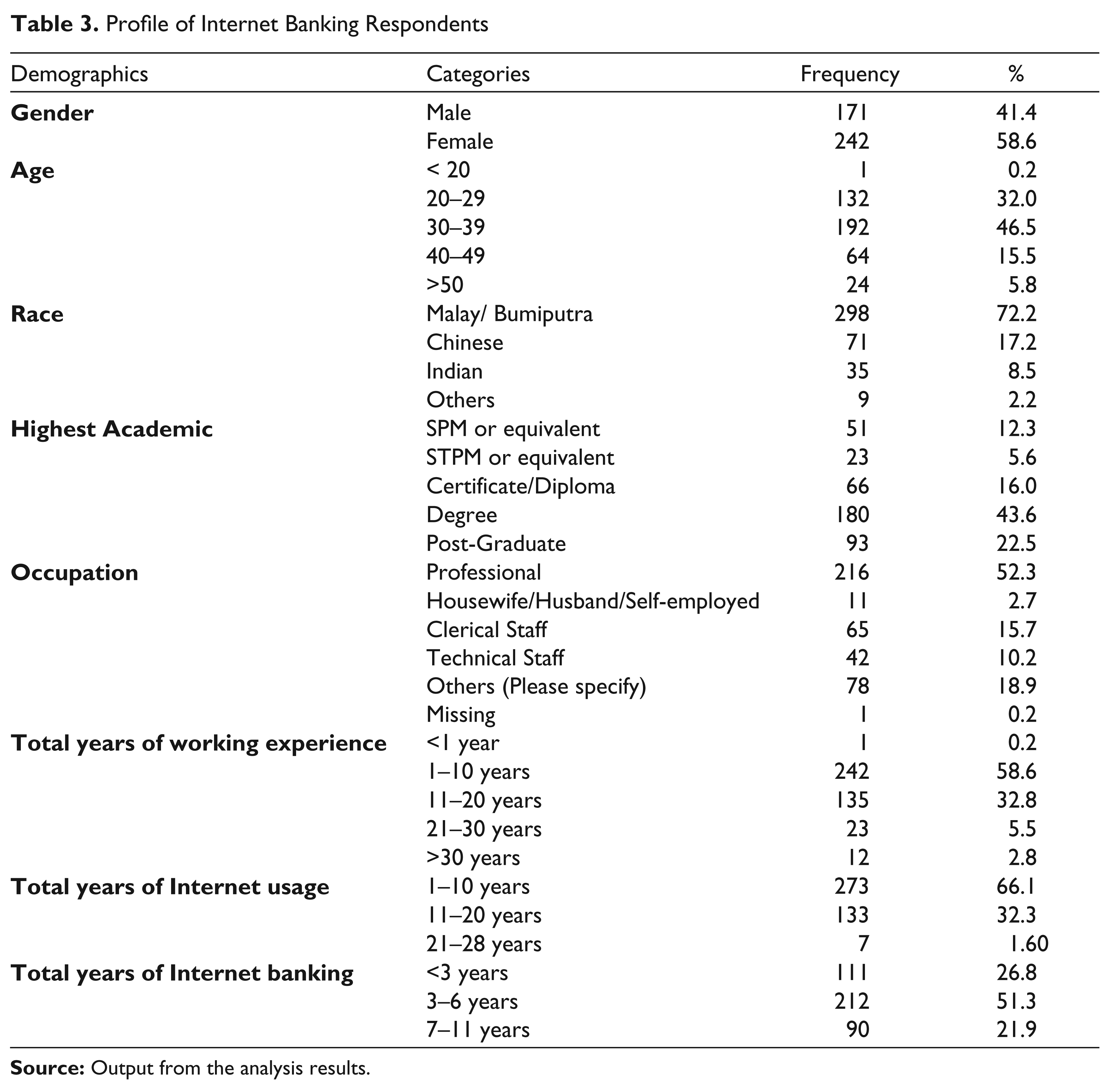
Respondents were mostly professionals (52.3 per cent) while 18.9 per cent of respondents were under the category of ‘others’ as they held executive level positions (for example, marketing executive, auditor, bank executive, finance officer, HR officer). Almost all respondents had work experience and most of them had worked for at least 1 to 20 years (91.40 per cent). The fact that 98.40 per cent of respondents had used the Internet for a period of 1 to 20 years suggests that this could be due to the fact that most of them were working with access to the Internet. However, 73.2 per cent of respondents had only used Internet banking for more than three years.
Analysis
The SPSS statistical analysis package (version 19) and partial least squares (PLS) with SmartPLS M3 2.0 were used for data analysis and hypothesis testing. The SPSS statistical analysis was used for data entry, data cleaning, missing value imputation analysis and descriptive analysis. To assess the model, this study has used the SmartPLS M3 2.0 software (Ringle, Wende & Will, 2005) to estimate the parameters in the outer and inner models.
Measurement Model
Convergent validity is examined to further support construct validity. According to Hair, Black, Babin and Anderson (2010), the factor loadings, composite reliability and average variance should be extracted to assess convergent validity. As suggested by Hair et al. (2010), the loadings for all items in this study were significant as the recommended value of 0.5 was exceeded. The average variance extracted (AVE) reflects the overall amount of variance in the indicators accounted for by the latent construct. These were in the range of 0.655 to 0.886, exceeding the recommended value of 0.5 by Hair et al. (2010). Composite reliability (CR) values (see Table 4) depict the degree to which the construct indicators indicate the latent construct. These ranged from 0.800 to 0.965, exceeding the recommended value of 0.7 by (Hair et al., 2010).
Results of the Measurement Model
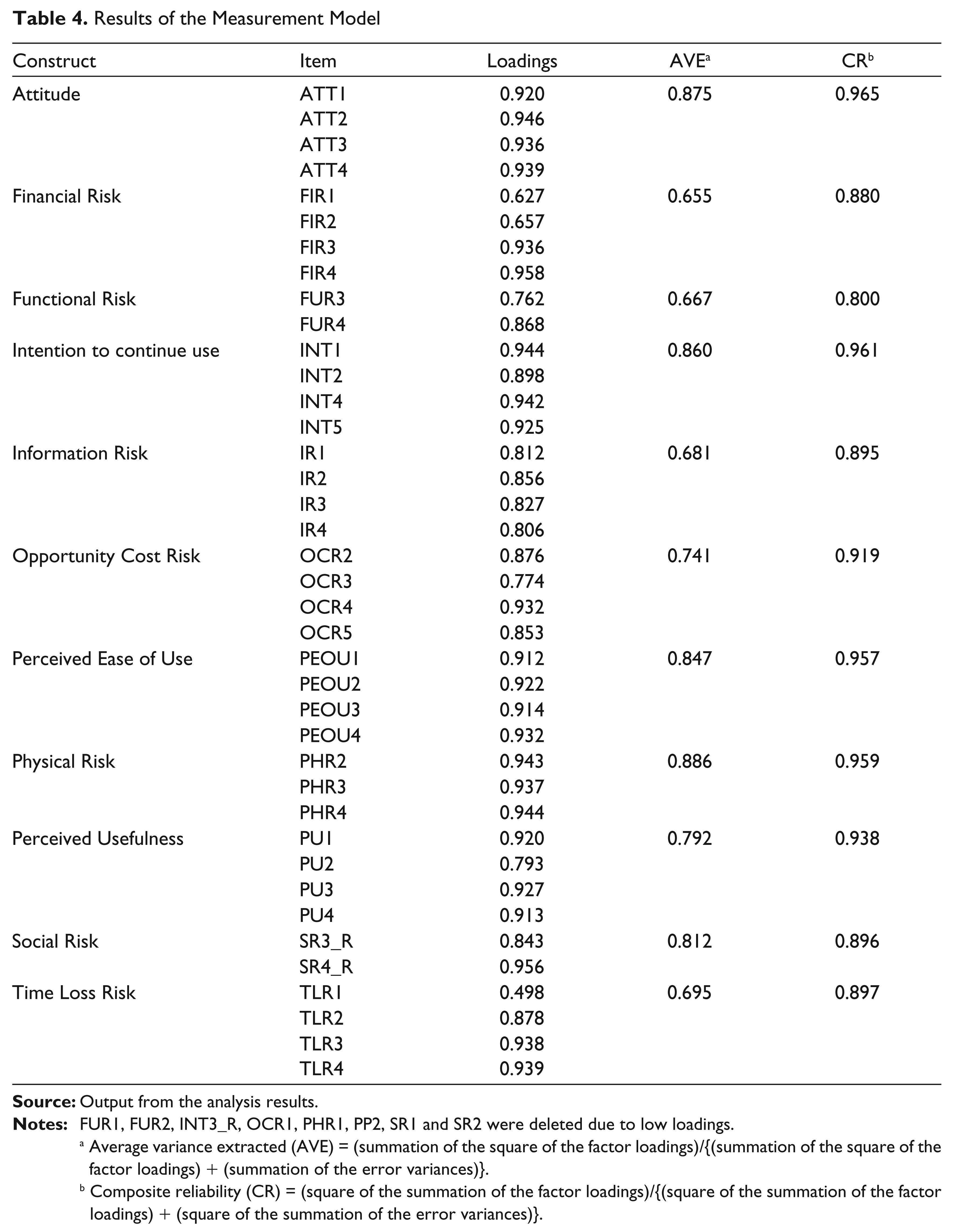
a Average variance extracted (AVE) = (summation of the square of the factor loadings)/{(summation of the square of the factor loadings) + (summation of the error variances)}.
b Composite reliability (CR) = (square of the summation of the factor loadings)/{(square of the summation of the factor loadings) + (square of the summation of the error variances)}.
Discriminant Validity of Constructs
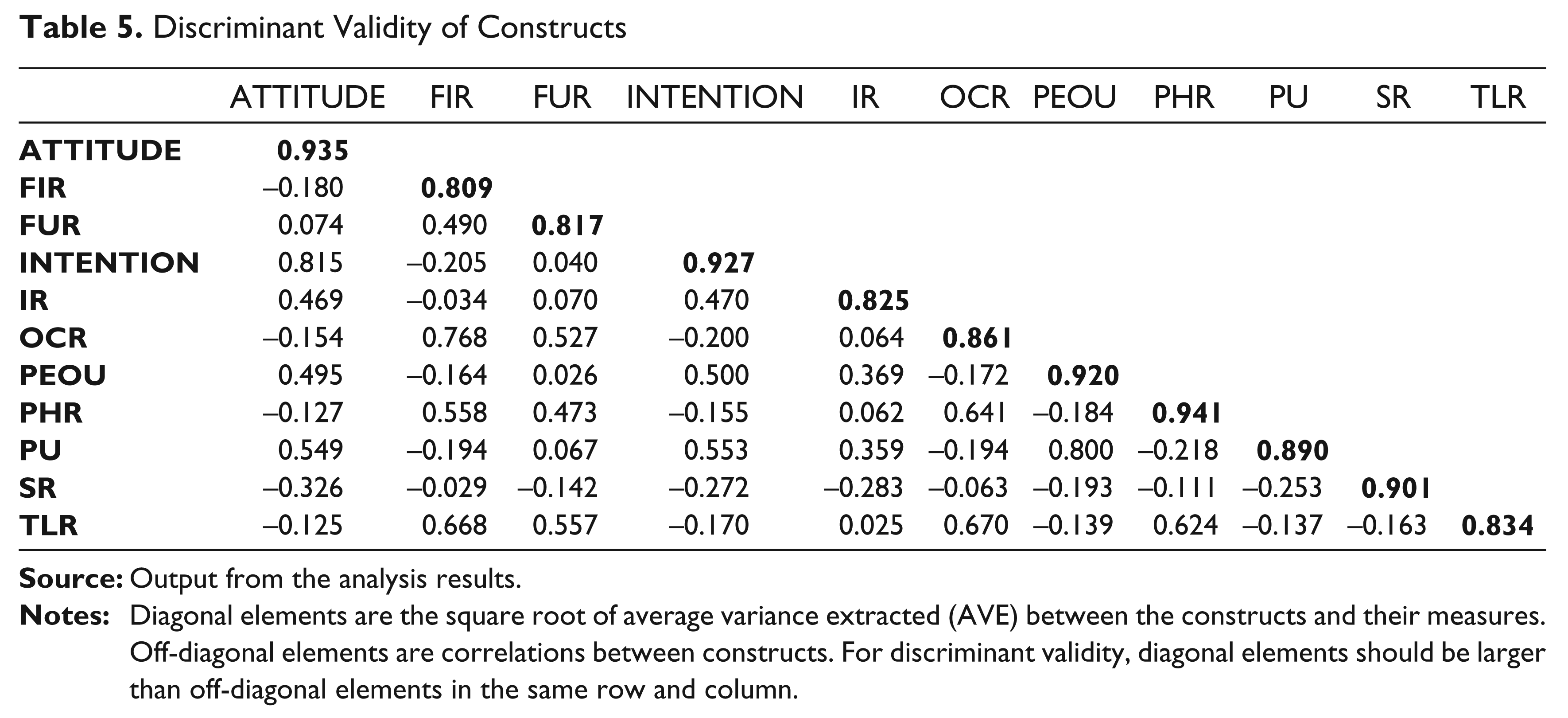
Next, the discriminant validity is the extent to which the measure is not a reflection of some other variables and is indicated by the low correlations between the measure of interest and the measures of other constructs (Cheung & Lee, 2010). According to Fornell and Larcker (1981) the square root of the AVE exceeded the inter-correlations of the construct with the other constructs in the model. Thus, the measurement model demonstrates adequate convergent validity and discriminant validity (see Table 5).
Structural Model
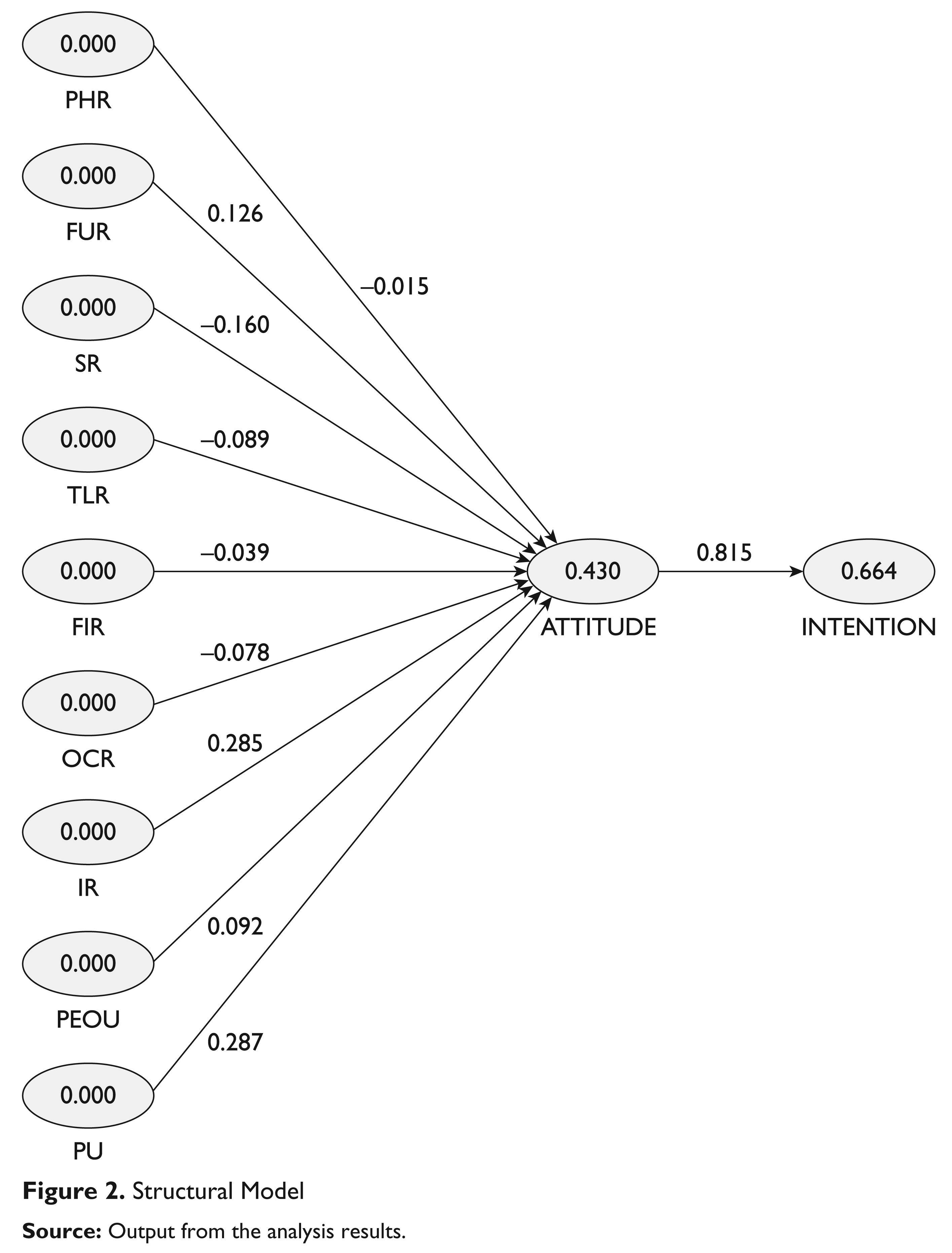
The structural model was evaluated to test the hypotheses generated. Figure 2 presents the results of this analysis. The model accounts for 43 per cent of the variance explained in attitude and 66 per cent of the variance in intention to continue using Internet banking. The result shows that perceived usefulness (β = 0.287, p < 0.01) was positively related to attitude and attitude (β = 0.815, p < 0.01) was positively related to intention. A closer look at the detailed result shows that social risk (β = –0.160, p < 0.01), time loss risk (β = –0.089, p < 0.1), opportunity cost risk (β = –0.078, p < 0.1) were negatively related to attitude. Thus, H3, H4, H6, H9 and H10 of this study were supported. Physical risk, financial risk and perceived ease of use were not significant predictors of attitude. Whereas, functional risk (β = 0.126, p < 0.05) and information risk (β = 0.285, p < 0.01) were hypothesized as being negatively related to attitude and also a significant predictor of attitude. However, the hypotheses were not supported as the beta value showed a positive relationship. Therefore, H1, H2, H5, H7 and H8 were not supported (see Table 6).
Predictive Relevance
Other than the size of R2, the predictive sample reuse technique (Q2) can be effectively used as a criterion for predictive relevance (Chin, 2010; Fornell & Cha, 1994; Geisser, 1975; Stone, 1974). Q2 evaluates the predictive validity of a large complex model using PLS, based on the blindfolding procedure which estimates the parameters for the model. A Q2 greater than 0 means that the model has predictive relevance whereas a Q2 less than 0 means that the model lacks predictive relevance (Fornell & Cha, 1994). Using an omission distance of 5, the study obtained a cross-validated redundancy Q2 of 0.367 and a cross-validated communality Q2 of 0.771 for attitude (ATT), a cross-validated redundancy Q2 of 0.564 and a cross-validated communality Q2 of 0.748 for intention (INT). This model, with a Q2 greater than zero, is considered to have predictive relevance (Fornell & Cha, 1994) as shown in Table 7.
Summary Results of Hypotheses Testing in This Research Model
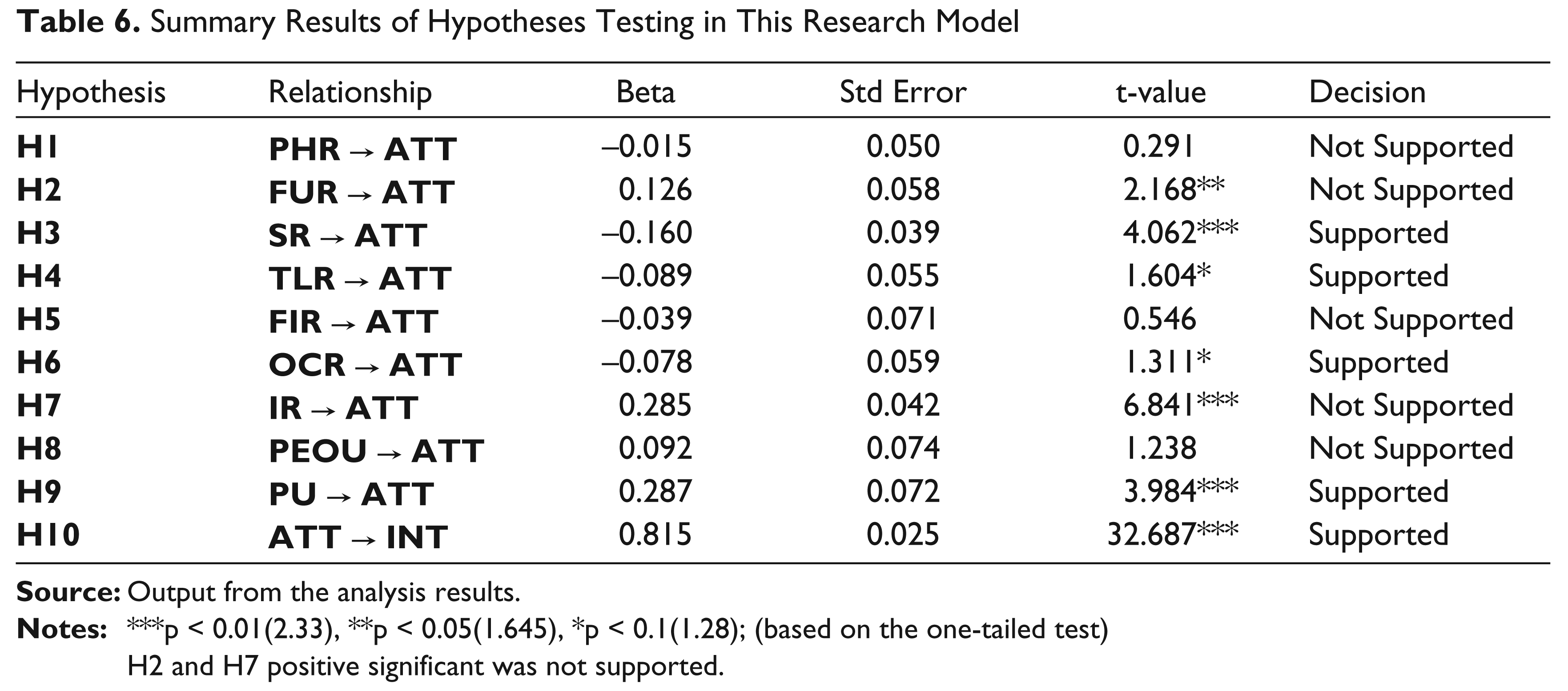
H2 and H7 positive significant was not supported.
Blindfolding Result: Cv-Communality and Cv-Redundancy

Goodness of Fit Measure
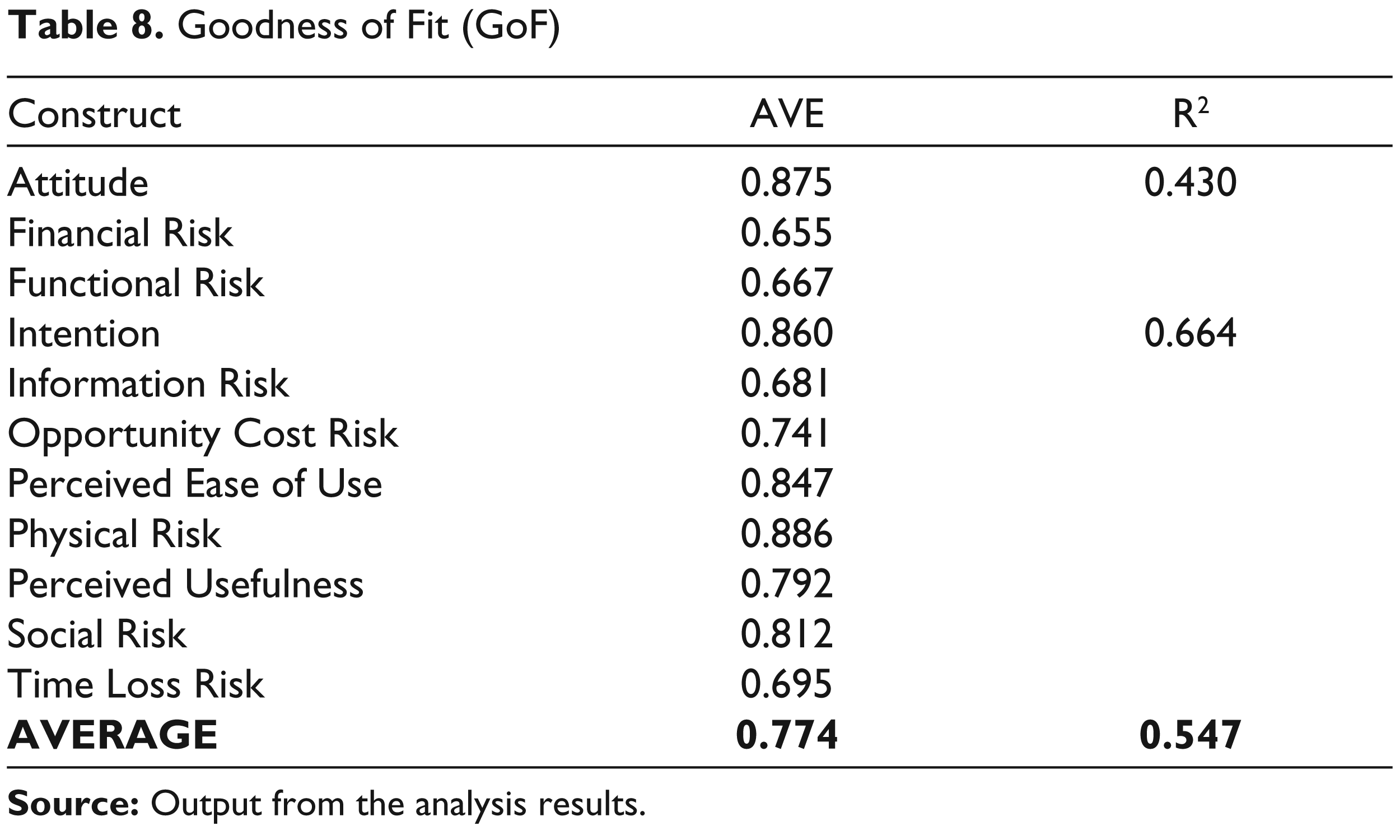
Goodness of fit used to define the overall prediction power of the large complex model by accounting for the performance of both measurement and structural parameters. Referring to Chin (2010), the focused is to account for the PLS model performance at both the measurement and the structural model with a focus on overall prediction performance of the model. The analysis below shows the goodness of fit (GoF) for the PLS path model, which is defined as the geometric mean of average communality and average R2 (for endogenous constructs; [Tenenhaus et al., 2005]). Following the guidelines of Wetzels, Schroder and Oppen (2009), the study estimated the GoF values, which may serve as cut-off values for global validation of PLS models. In this study, the GoF value of 0.651 was obtained for the complete (main effects) model, which exceeds the cut-off value of 0.36 for large effect sizes of R2. As such, it indicates that the model has a better prediction power in comparison with baseline values (GoF small = 0.1, GoF medium = 0.25, GoF large = 0.36). It also provides adequate support to validate the PLS model globally (Wetzels et al., 2009) as shown in Table 8.
Goodness of Fit (GoF)

Findings of the Study
The purpose of this study was to investigate the risk integration with TAM on consumers’ intention to continue using Internet banking in Malaysia. This study also examined the relationships between risk dimensions, perceived ease of use, perceived usefulness and intention to continue using Internet banking.
The results of the PLS-SEM analysis show that hypotheses which represented the effect of the risk dimensions on attitude towards the use of Internet banking had mixed results. The perceived risk dimensions (H1 to H7) hypothesized that there were negative relationships between risk dimensions and attitude towards the use of Internet banking. The results revealed that there are negative relationships between social risk (H3), time loss risk (H4) and opportunity cost risk (H6) on attitudes towards the use of Internet banking. These hypotheses were supported in this study. On the contrary, although a negative relationship was hypothesized for functional risk (H2) and information risk (H7) a positive effect of respective risks were eminent instead. The negative relationship between physical risk (H1) on attitude towards the use of Internet banking was not supported in this study. H9 was supported indicating that perceived usefulness positively influenced attitude towards the use of Internet banking. Perceived ease of use (H8) had no notable effect on the attitude towards the use of Internet banking. H10 encapsulated the positive impact of attitude on intention to continue using Internet banking. This hypothesis was supported in this study.
In this research, it has been clearly shown that social risk (H3) has a significant negative influence on attitude towards the use of Internet banking. This also seems to contradict the results obtained by Lee (2009). An explanation of this finding might be that customers do care about social pressure from their friends, family or work group with regards to Internet banking. A supplementary explanation is that the descriptive analysis for customers’ demographics (see Table 2) clearly shows that the respondents were Malaysians. The Malaysians way of life is one that is community minded; as such Malaysians often care about friends, family and work group. Furthermore, the majority of respondents were from Malay background, which is a community that is highly concerned about social perceptions.
Time loss risk (H4) has significant influence on attitude towards the use of Internet banking. This seems to support the results obtained by Featherman and Pavlou (2003). The rational justification of this finding might be that Internet banking customers in Malaysia may possibly be using Internet banking for the sake of convenience and even though the time saving aspect was still a secondary issue. The explanation of this findings could be due to Internet banking websites in Malaysia that have unstandardized interfaces and menus which derived difficulty understanding and use for Internet banking services by the customers. Therefore, time loss risk relationships influence attitude towards the use of Internet banking.
Opportunity cost risk (H6) has significant influence on attitude towards the use of Internet banking. This seems to support the results obtained by Lu et al. (2005). An explanation of this finding might be that Internet banking customers in Malaysia may believe that choosing to use Internet banking is good for banking needs; however, some of the transactions need to be done via traditional banking. Therefore, both methods of banking are still being used by Internet banking customers in Malaysia due to some restriction in this service. Thus, opportunity cost risk influences attitude towards the use of Internet banking.
Unexpectedly, it has been found that functional risk (H2) has no significant influence on attitude towards the use of Internet banking. This seems to contradict the results obtained by Littler and Melanthiou (2006) and Lee (2009). Instead, the finding of this study has shown that functional risk has a significant positive significant, which influences attitude towards the use of Internet banking. The rational justification of this finding might be that Internet banking customers in Malaysia may possibly believe that Internet banking websites are stable in terms of system functionality. Functional risk is associated with problems related to website server downtimes and unsuccessful processing of transactions. The respondent profile (Table 1) confirms that most customers are not new to Internet banking but instead are experienced customers, understanding how Internet banking websites operate and knowing when Internet banking providers conduct maintenance of the systems. This highlights the grounds that contribute to the positive influence of functional risk on attitude towards the use of Internet banking in Malaysia.
Surprisingly, it has been found that information risk (H7) has strong positive influence on attitude towards the use of Internet banking. This seems to contradict the results obtained by Lu et al. (2005). An explanation of this finding might be due to the fact that the customers’ information in Malaysia is protected by the Internet banking providers’ policies on information confidentiality. Personal information of Internet banking customers in Malaysia are not disclosed or accessible by the public as it is secured by the Internet banking security systems. Therefore, information risk has strong positive influenced attitude towards the use of Internet banking based on the results of this study.
Physical risk (H1) was found to have no significant influence on the attitude towards the use of Internet banking. This seems support the results obtained by Quintal, Lee and Soutar (2010). The rational justification for this finding might be that once Internet banking users in Malaysia perceive Internet banking not to be physically risky, they might have positive feelings about using Internet banking. Accordingly, Internet banking customers found that using Internet banking not harm their physical part of the body. Therefore, physical risk has no influence on attitude towards the use of Internet banking for banking customers in Malaysia.
Financial risk (H5) has no significant influence on attitude towards the use of Internet banking. This seems to go against the results obtained by Featherman and Pavlou (2003). An explanation of this finding might be that Internet banking providers offer good recovery systems when online transactions fail. Issues such as wrong account numbers or names can be corrected before further processing of the transaction is done. Furthermore, when completed transactions are unsuccessful due to error or misinformation; the money will be transferred back to the customers’ source account. As the recovery functions of transactions have been enhanced in Internet banking systems, it is comprehensible that Internet banking customers still use Internet banking applications. Therefore, financial risk would not influence attitude towards the use of Internet banking.
Perceived ease of use (H8) has no significant impact on attitude towards the use of Internet banking. The result of this study is in line with the findings of Malathi and Rohani (2011) on the nature of an engineering course that requires participants to be exposed to more complex technologies than just e-books. Another study by Lee and Chang (2011) also shows an insignificant direct effect of Perceived Ease of use on attitude towards online mass customization. An explanation of this finding might be that Internet banking customers in Malaysia may possibly believe that complicatedness in using online systems is becoming less of a concern as these systems are increasingly user friendly.
Perceived usefulness (H9) has a significant positive impact on attitude towards the use of Internet banking, which is in line with previous studies (for example, Fahad, Rami & Mumtaz, 2010; Lee, 2009; Ramayah et al., 2009; Suh & Han, 2002). Thus, this finding supports the TAM model that predicts the relationship between perceived usefulness and attitude (Kim, 2012). Therefore, it could be deduced that the perception of customers about Internet banking enhancing the outcome of their banking experience would have a significant positive impact on their attitude towards the use of Internet banking. In other words, this finding has shown the significant positive relationship between Internet banking customers’ perception of the benefits of using Internet banking and their feelings towards using Internet banking in Malaysia.
H10 proved that attitude towards the use of Internet banking has a significant positive impact on intention to continue using Internet banking. This is consistent with prior studies conducted by Cheng et al. (2006), Yong and Jing (2009), Eunil and Angel (2013), Fahad et al. (2010), Lee (2009), Kim, Lee and Law (2008) and Ramayah et al. (2009). It is clear that when attitude (feelings) about Internet banking use is significantly positive, Internet banking users will have pronounced intentions to continually use Internet banking.
Implications
The contribution of this study can be appreciated from two perspectives: theoretical and methodological. The theory used in this research was an extended TAM (Davis et al., 1989) with perceived risk is an additional belief variable which was adapted from Lee (2009) and Lu et al. (2005). In addition, the theoretical contribution of this study is the extension of the TAM theory, which may add to literature by providing an in-depth understanding of the characteristics of perceived risk and their influence on Internet banking usage by looking at the multi-dimensional construct of risk (such as physical risk, functional risk, social risk, time loss risk, financial risk, opportunity cost risk and information risk). As a methodological contribution, considerable interest has been devoted to methodological research in the identification and treatment of heterogeneous data structures within a PLS-SEM framework. Methodologically, there are a few reasons for choosing PLS-SEM based on the results of the findings. First, when assumptions regarding indicator distribution are not met, it is reasonable to use PLS-SEM. Second, the study is based on prediction and theory development. Third, there are fewer requirements on sample size. Besides basic PLS-SEM analyses, research can also take advantage of a much larger set of methodological extensions when using the PLS-SEM method, ranging from evaluation techniques. Several important implications arise based on the results of this study. The importance of identifying risk dimensions that influence the attitude towards the use of Internet banking hold the key to help banking institutions in Malaysia to reduce the possibility of the customer risk using the services and develop a good marketing strategy that promote online banking applications in the future.
Limitation and Suggestion for Future Research
The research design is tailored to meet the research objectives and focuses on the critical elements of the study while this research is still not spared from certain limitations. One of the limitations is that only Internet banking customers from Peninsular Malaysia were used for testing. Thus, the findings of this study have a limited generalizability to the overall population of Internet banking users. In addition, the respondents of this study were Internet banking customers, whereby the profiles of respondents were private and not disclosed by the management of the banks. As such, the total number of Internet banking customers for each bank was unknown. Although the response rate is quite acceptable for the study, nevertheless it is still relatively difficult to make generalizations because of certain unknown factors. Future research on the topic of Internet banking in Malaysia should be conducted in a wider geographical area. This will enable the results to become a greater representation of the Internet banking environment in Malaysia compared to results from only one or a few regions. Besides that, respondents from different countries can be surveyed and cross-cultural comparisons carried out.
Conclusion
In this study, social risk, time loss risk, opportunity cost risk and perceived usefulness are significant factors influencing attitude towards the use of Internet banking. Attitude is also found to be a significant factor influencing customer intention to continue using Internet banking. The finding outcomes provided by the study would enable the Internet banking providers to think seriously on these factors that will affect customer intention to continue using Internet banking. In addition, this study may provide a direction as to how minimize the risk to encourage the Internet banking customers to continue using Internet banking. The findings may give contribution to the Internet banking providers to develop strategies to enhance their Internet banking system’s quality by focusing on the factors influencing the Internet banking usage. In short, further research is needed to improve this study and to address its limitations.
Footnotes
Acknowledgements
The authors are grateful to the anonymous referees of the journal for their extremely useful suggestions to improve the quality of the article. Usual disclaimers apply.