



Abstract
‘Greening’ of business has gained attention across industries and academia. Green information technology (IT) is a critical domain of green information systems (IS) as utilization of environmentally sustainable information and communication technologies (ICTs) facilitates informed decision-making. Green IT and IT for green are at the growth stage among developed countries and at the infancy stage among developing countries. The absence of an established theoretical framework that anchors present and future studies necessitates an examination of peer-reviewed journals and proceedings that are published online. With reference to 10 organizational theories, this study presents an overview of Green IT/IS applications and discusses noteworthy research questions that may guide forthcoming empirical investigations to identify determinants or prospective outcomes of Green IT/IS. Frameworks of a firm’s readiness to go green via eco-sustainable IT practices are discussed from diverse theoretical viewpoints to ground implications, in pertinence to heterogeneous approaches towards the adoption of Green IT/IS. The review also presents practical business opportunities to IT managers of socioeconomic-oriented organizations. As journals and conference papers are the foremost source of reference, emerging developments of this study may also appear in books and white papers. This article establishes linkages between organizational theories and Green IT/IS implementations and presents suggestions on further extensions for those who wish to investigate this field.
Keywords
Introduction
The integration of environmental concerns into information technology (IT) has encouraged manufacturers and product designers to innovate and develop green information technology (Green IT). In recent years, the environmental impacts disseminated throughout the life cycle of IT-related equipment have gained global-level concerns. According to Gartner Inc. (2007), the amount of carbon emissions released by the manufacture and use of information and communication technologies (ICT), that is approximately 2 per cent of global emissions, is comparable with the emissions generated by the aviation industry. Although Huang (2009) proclaimed that the emission from the energy consumption of computing systems is equivalent to 10 per cent of total CO2 emissions released from an automobile, ICT is believed to facilitate reduction of the remaining 98 per cent of global carbon equivalent emissions. The operating expenditures of data centre facilities rise as much as 20 per cent annually, significantly outpacing the annual increase of overall IT spending, which is 6 per cent (World Economic Forum, 2009). Despite a substantial increase in the cost of utilities, Daly and Butler (2009) pointed out that executives were not receptive and committed in reducing a firm’s energy demand by means of self-regulation. The adverse impact of IT infrastructure is reflected by the escalating size of carbon footprints. This phenomenon translates to the rise of global temperature and may affect rapid loss of biodiversity. Due to poorly designed systems, obsolete technologies and uninformed behaviour (Jenkin, Webster and McShane, 2011), the development of environmentally responsive computing technologies requires conscientious considerations from the aspects of sustainable design, manufacturing, use, maintenance and disposal (Bose and Luo, 2011; Huang, 2009).
Sustainable development is an issue for academic researchers and practitioners from diverse disciplines. At present, issues related to global warming, industrial waste management, greenhouse gas (GHG) emissions and clean water supply are creating heavy pressure for manufacturers from the IT industry to develop greener equipment (Chou and Chou, 2012).This industry has experienced exponential technological progress and may have neglected the negative impact on environment to some extent (Huang, 2009). The imminent pressure to use Green IT is growing as firms are required to purchase carbon offset to compensate for failure to reduce CO2 emissions. Other than the introduction of National Green Technology Policy (NGTP) to guide developments and innovations in pertinence to green technology, the Ministry of Energy, Green Technology and Water (KeTTHA) is working on Green Technology Roadmap and Green IT is one of the focus sectors that contributes to the national transition towards low carbon green growth economy (Chin, 2011). Several researches emphasized on sustainable development of IT from the perspective of resource consumption, emissions intensity and energy efficiency. Greener IT and information system (IS) are distinct but mutually dependent on developing computing power that is harmonious with economic, environmental and social components outlined by sustainable development. Green IT addresses the use of hardware and software including energy efficiency of servers and data centres, power management and proper disposal of end-of-life equipment (Jenkin et al., 2011). In contrast, Green IS exemplifies IT management that is the development of information systems to support environmentally sustainable initiatives (Ryoo and Koo, 2013; Watson et al., 2008). Green IS includes, but is not limited to, fleet management systems, environmental information systems and teleconferencing capabilities that improve a firm’s productivity and profitability. In order to develop Green IT capabilities that carefully address triple bottom lines, Ijab et al. (2010) pointed out that the adoption of eco-sustainability practices required designers, developers and users to pay mutual interest in cultivating eco-friendly ‘spirit’, ‘practice’ and ‘impact’ during pre-use, use and post-use phases of Green IT adoption. The pursuit of sustainability oriented capabilities requires the adoption of a green organizational culture and business processes (Dao et al., 2011; Hart, 1995).
Literature Review
This section presents the background for conceptualizing Green IT/IS from the perspective of sustainable consumption. This article reviews the literature on the implementation of Green IT/IS initiatives based on organizational theories. As empirical investigations on Green IT/IS are fairly underdeveloped, the literature on environmental management and green supply chain management are sought as reference disciplines.
Overview of Green IT/IS
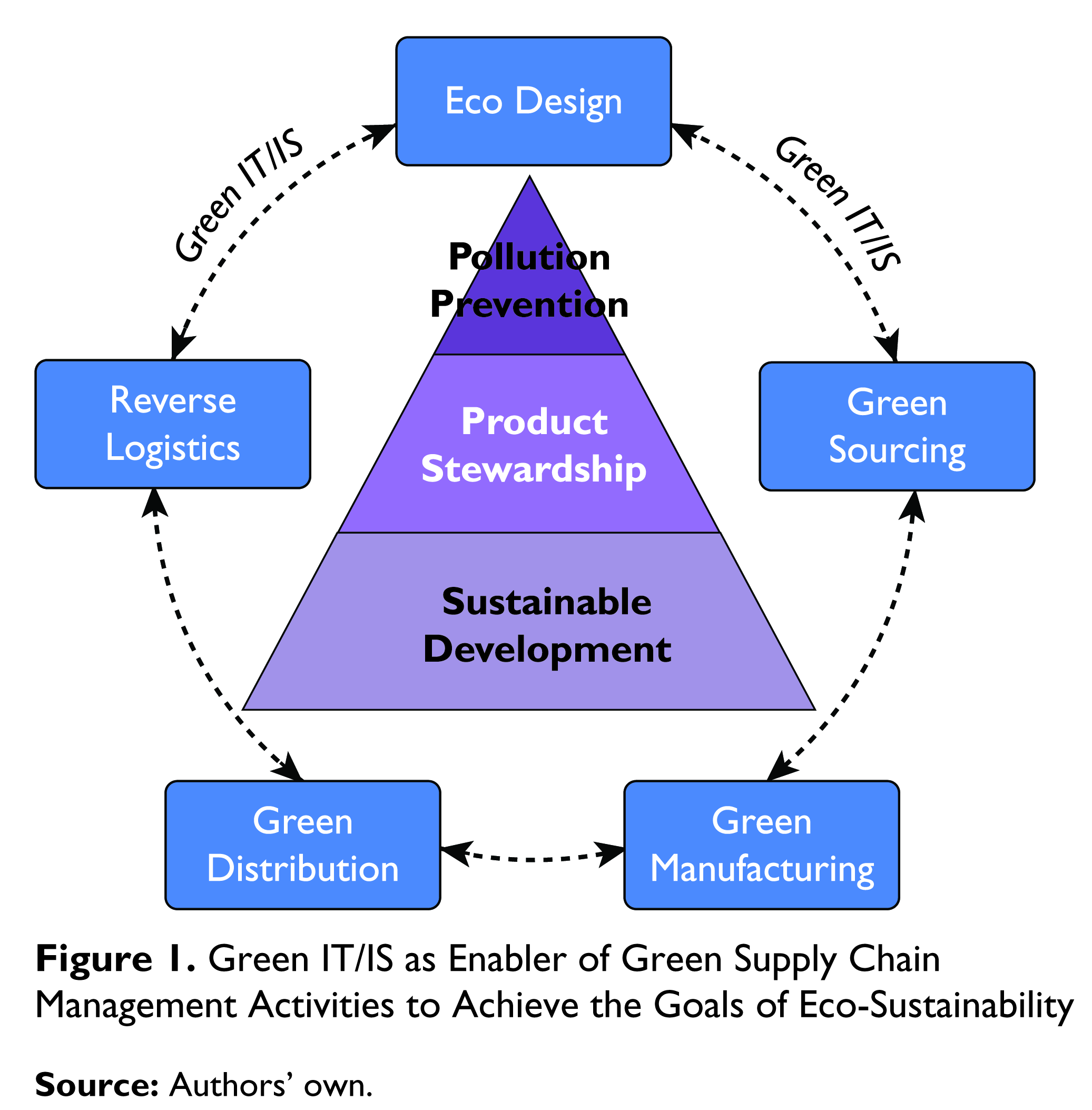
Based on the Brundtland Commission Report published by World Commission on Environment and Development (WCED, 1987), sustainable development is defined as ‘development that meets the needs of the present without compromising the ability of future generations to meet their own needs’. Hart (1997) described three stages of eco-sustainability as pollution prevention, product stewardship and clean technology. Pollution prevention is the containment of pollutants by minimizing the volume of emissions, effluents and waste below permitted levels through continuous improvement on products and production processes (Buysse and Verbeke, 2003; Hart, 1997). As opposed to cradle-to-grave, the cradle-to-cradle concept guides product stewardship strategies by encouraging the use of renewable resources and minimizing the consumption of non-renewable or toxic materials. Product stewardship strategies engage stakeholders’ commitment in becoming environmentally responsive throughout the stages of a products’ lifecycle (Chen et al., 2011; Hart, 1997); for example, green design, green purchasing, green manufacturing, green distribution and reverse logistics (Hervani et al., 2005). Product stewardship from the perspective of Green IT/IS entails the use of IT infrastructure to plan, manage and control the volume of energy, emissions and wastes associated with the movement of products throughout a closed-loop supply chain. On the other hand, sustainable development is the implementation of clean technology as a long-term strategic decision to contain or eliminate ecological burdens that may impede a firm’s growth and development (Chen et al., 2011; Hart, 1997). All three types of eco-sustainability practices are subject to environmental compliance requirements which evolve continuously due to various sources of pressure from regulative or legislative bodies, normative influences and society at large.
Information technology has become a necessity for individuals, businesses and societies to operate effectively. The continuous introduction of newer technologies and steady retirement of IT infrastructure translate to higher demands for non-renewable materials and energy consumed during both the production and product usage phases. This global phenomenon created serious environmental issues, specifically high volumes of hazardous waste and GHG emissions. GHG emission is measured in equivalence with metric tons of carbon dioxide (CO2) emissions (IPCC, 2007). Hazardous gaseous substances or GHGs include, but are not limited to, nitrous oxide, ozone, hydrocarbons, chlorofluorocarbons, black carbon, sulphur dioxide and mercury compounds (Ayres et al., 1997; Chowdhury, 2012). GHGs are heavily released during the extraction of raw materials, manufacturing processes and illicit disposals. During product use, the use of electricity to operate IT infrastructure is generated from heat energy released by the burning of fossil fuels such as coals, natural gas and oils at power plants. Other than concerns over the consumption rate of non-renewable resources which caused rapid dwindling of natural resources, the aftermaths of hazardous emissions are equally alarming. Present practices hardly fulfil the objectives of sustainable development and economic growth is achieved at the expense of natural environment. In fact, the push in price and market for emissions is beginning to steer the global economy to engage in emission trading (Dedrick, 2010). According to Kalpagam and Karimulah (2007), the global carbon market is driven by EU Emission Trading System (ETS) and firms from developing countries such as Japan, China, Korea, India and Malaysia have developed cross-country collaborations to reduce emissions via generation of carbon credits. Clearly, it is necessary to develop a review paper which focuses on the roles of Green IT/IS as an enabler of emissions reduction initiatives.
According to Watson et al. (2008), Green IT focuses on ‘energy efficiency and equipment utilization’ whereas Green IS is dedicated to the ‘design and implementation of information systems that contribute to sustainable business processes’. Information system is designed and developed to process data and information that supports decision-making activities at the individual-, organizational- and societal level. Although Green IS is a credible technological solution, Molla et al. (2009a) pointed out that Green IS is an emerging field of study whereas Chen et al. (2011) highlighted lack of immediate economic gains as a major inhibitor to the adoption of Green IS. Initially, these terms described environmentally-oriented activities carried out by enterprises’ IT department as part of their contribution to corporate social responsibilities (Schmidt et al., 2010). Since conservation of natural environment has attracted widespread attention, consumers are empowered to take responsibility and this has influenced business organizations to contemplate or adopt eco-friendly standards in electrical and electronic equipment. Firms that prefer greener information technologies are considered environmentally friendlier as soon as they utilize various sources of renewable energy, conduct responsible disposal on IT equipment, implement at least one green technology (that is, mobile technology, telecommuting, etc.), and apply at least one Green IT technology (that is, virtualization, green computing, etc.) that reduces energy consumption at data centres (Sinha, 2011). Table 1 lists more definitions of Green IT/IS. Some definitions focused on the greening of IT/IS infrastructure whereas others focused on environmental objectives of Green IT/IS.
Selected Definition of Green IT/IS Conceptualization

In defining Green IT, attention must be given to consumption of raw material and energy due to the generation of wastes and carbon emissions throughout the lifecycle of IT equipment. Since the level of environmental orientation determines the sustainability of IT-related equipment, the definition considered the perspectives of institutional actors such as internal and external stakeholders in managing the environmental, economic, and social outcome of Green IT. Based on literature, the term Green IT is defined as follows:
Green IT refers to systematic planning, implementing, and controlling the ecologically-friendly and efficient consumption of raw material and energy by IT infrastructure during design, manufacture, use, and disposal to reduce emissions intensity, while maintaining firm’s conformance to the goals of pollution prevention, product stewardship, and sustainable development (WCED, 1987).
In becoming the benchmark for policymakers to develop legislative guidelines on Green IT, Bose and Luo (2012) identified three critical aspects that reduce a firm’s carbon footprints. Based on Green IT researches and practices, they are asset management, energy efficiency and utilization of IT to enable green practices. Although there is a lack of both national and international standards to evaluate and benchmark green practices, this does not mean that attention towards Green IT and IT for Green has declined. Green IT refers to green computing whereas IT for Green refers to the application of IT to conduct environmentally sustainable business processes. Firms can become proficient in several focus areas, for example, energy and power management; server virtualization; data centre design and location; environmentally conscious products; use of renewable energy; compliance with regulatory and/or industry standards; green metrics and audits; responsible recycling and disposal; and others (Murugesan, 2008). Due to the diverse scope of eco-sustainability practices, Table 2 exhibits a list of categories that outline the business objectives of Green IT and IT for Green. The business objectives include energy efficiency, green power, green transport, green industries, dematerialization, green ecosystems, green compliance, green office and waste management (Erek et al., 2009; Lee et al., 2013; Molla, 2009; Park et al., 2012).
The management of data centres takes centre stage in Green IT studies because servers and equipment at data centres require relatively high financial capital (Erek et al., 2009). As data centres and its applications, namely network and auxiliary equipment, are the heart of a firm’s business operations, a large supply of electricity is required to sustain IT infrastructure. The Information Management Division of KeTTHA greens data centres by introducing modifications to server room layout, air conditioning systems, lighting systems and power supply systems. The management of data centres require high recurring expenditures and IS authorities are obligated to optimize the utilization of servers and storage to stall demand for a new data centre. Some IS organizations consolidate operations to minimize the number of physical machines via virtualization, where multiple logical servers are combined within a handful of physical servers to reduce demand for power and financial capital (Velte et al., 2008). Although virtualization (for example, networks, server, storage, applications and services) is important to the deployment of cloud computing, virtualization is different from cloud computing as virtualization enables efficient utilization of IT infrastructure where the latter functions as an Internet utility service. Based on the US National Institute of Standards and Technology, cloud computing is defined as ‘a model for enabling ubiquitous, convenient, on-demand network access to a shared pool of configurable computing resources that can be rapidly provisioned and released with minimal management effort or service provider interaction’ (Mell and Grance, 2011). For instance, cloud-based Green IS optimizes computing and network resources by enabling applications without requiring physical infrastructure, supports dematerialization through digitization of information and minimizes costs of environmental degradation (Chowdhury, 2012).
Categories of Business Objective for ‘Green IT’ and ‘IT for Green’ Implementations

Although most authors have emphasized on energy-efficiency opportunities at data centres and office environment, some IT literature mentioned that Green IT might just be a hyped theme and the absence of concrete results within these couple of years deflates a firm’s interest, or could even result in repulsion towards a greener environment. Therefore, literature also pointed out the importance of government incentives, environmental policies dedicated to Green IT and environmental monitoring agencies to induce the commitment of stakeholders who are directly implicated to reduce negative environmental impact. The dimensions that came together to define G-readiness, also known as capability to adopt Green IT strategies and practices, are elements of IT human infrastructure (attitude and practice), IT managerial capability (policy and governance) and IT technical infrastructure (technology) (Molla et al., 2009b). Although these elements guide the sourcing, operations and disposal of IT infrastructure, to what extent eco-sustainability issues were resolved by the use of IT remained a question. Other authors argued that the impact of Green IT could be significantly reduced by accommodating technological and behavioural changes (Bose and Luo, 2012). Technological changes include IT upgrades and innovation to enhance material and energy efficiencies of physical assets and enterprises’ business activities. On the other hand, behavioural changes refer to champions or managerial commitment in becoming environmentally responsive such as the development of policies that focus on energy conservation and material consumption. The coalition of distinct components: (a) the acquisition of high-performance equipment; and (b) the attitude applied to utilization of IT capabilities, are important to nurture a firm’s environmental orientation as they create high-impact results. Nevertheless, behavioural changes are inevitable as governments of emerging economies will introduce IT-related regulatory policies to guide technical requirements and standards of ICTs, present green incentives to encourage the acquisition of up-to-date technological infrastructure and/or establish carbon caps to control industrial emissions (Lee et al., 2013).
Nishant et al. (2013) pointed out the importance of sustainable IT applications as informative tools to support decision on issues in pertinence to reducing GHG emissions disseminated by production processes, transportation and machinery. Figure 1 depicts the attainment of eco-sustainability goals through the implementation of green supply chain management activities. The dotted line represents the interactions across supply-chain players to: (a) develop greener IT infrastructure that consumes material and energy efficiently, and (b) make informed and sustainable decisions through the use of information systems. Overall, the development of organization-wide greenness through eco-efficiency and eco-effectiveness goals is driven by eco-sustainability benefits. The benefits are promising as empirical studies have recognized the economic and environmental performance from integrating greenness into a firm’s supply-chain practices (Eltayeb et al., 2010; Sroufe, 2003; Zhu and Sarkis, 2007). The presence of visible outcomes among competing firms is important to new adopters as evidence of success reduces uncertainties in making investment-dependent decisions (Chen et al., 2011). Further discussions on the influence of institutional pressure in making greener decisions will be discussed in the theoretical background section.
Theoretical Background
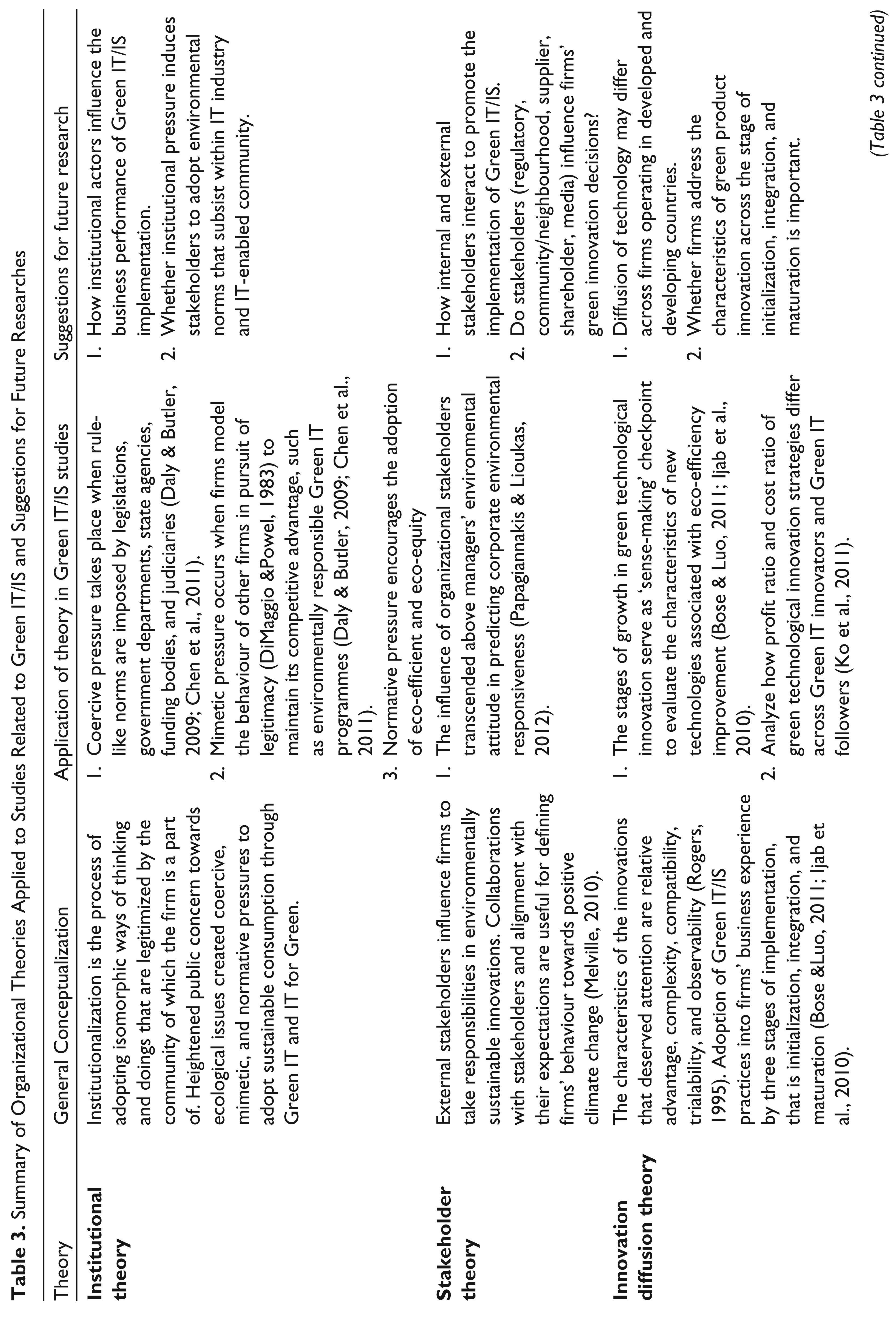
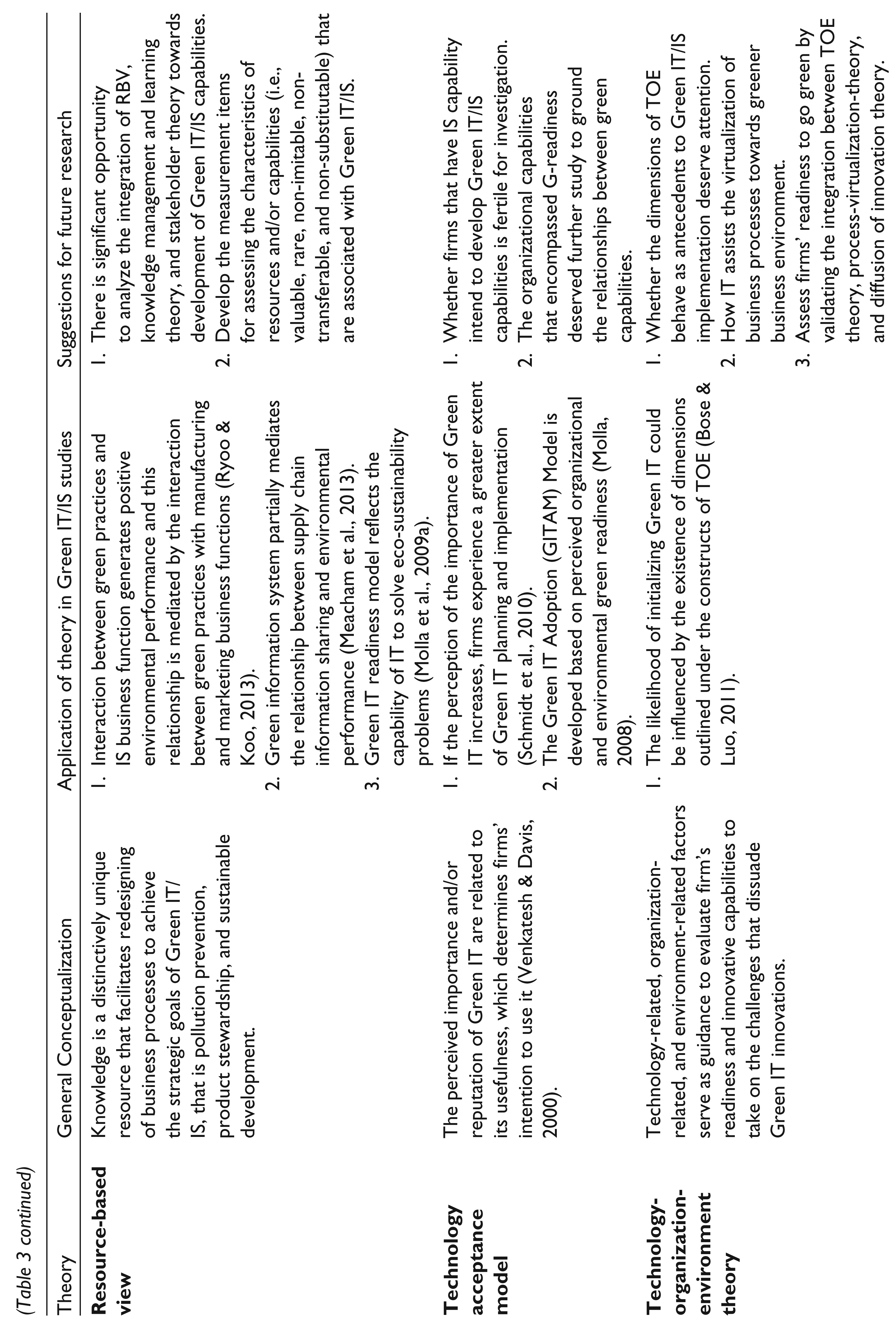
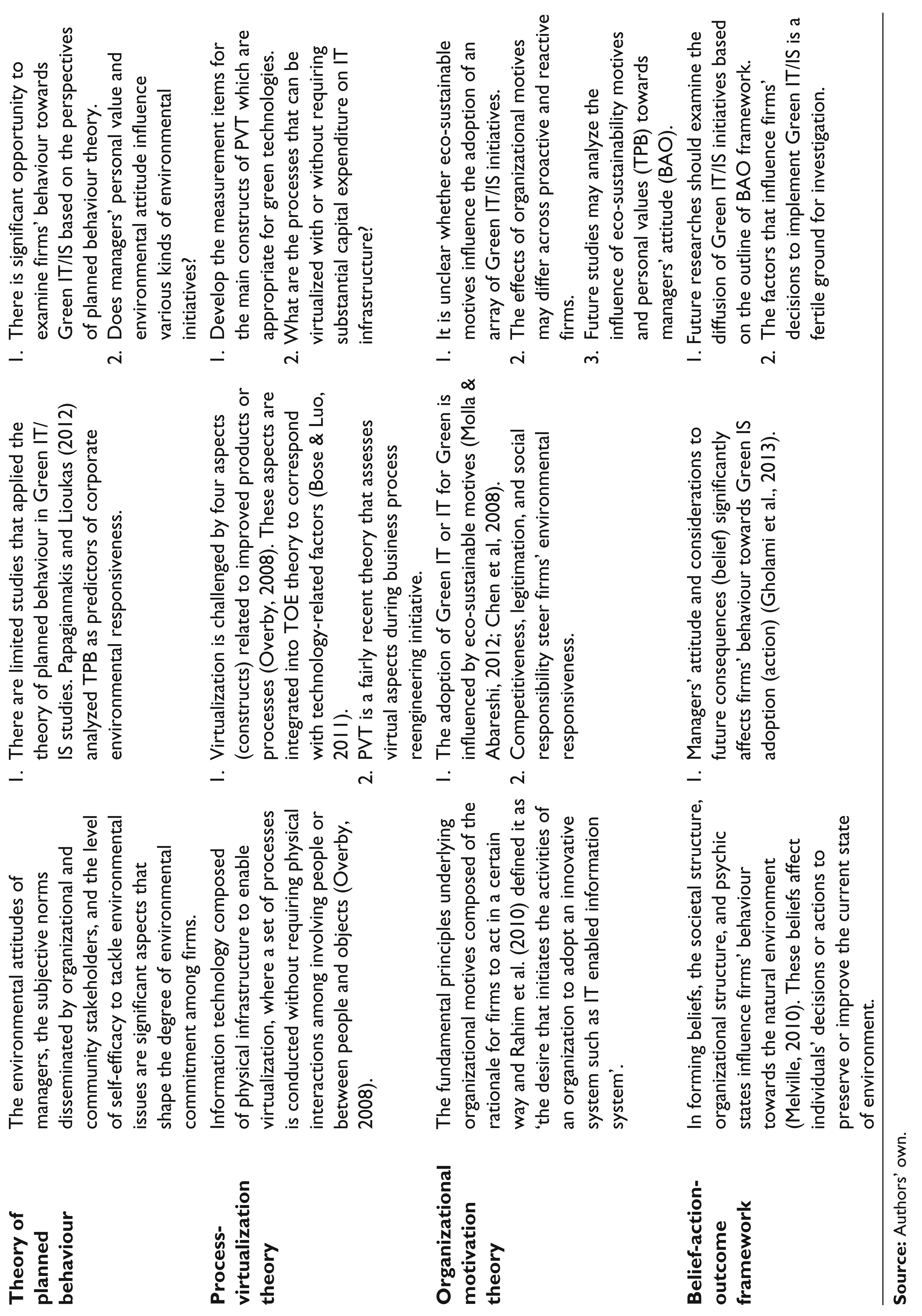
Archival journal publications have applied a number of organizational theories which served as the basis to explain the implementation of Green IT/IS, green innovations, social responsibility and environmentally sustainable activities. Prior to discussions on multiple applications of organizational theories, this article presents a brief introduction to the underlying perspectives of each theory, framework or model. The order of theories reviewed is as follows: institutional, stakeholder, innovation diffusion, resource-based view, technology acceptance, technology–organization–environment, planned behaviour, process-virtualization, organizational motivation and belief–action–outcome. Table 3 presents a summary of the review where we explain the theoretical perspectives of respective organizational theories, discuss the application of theories and suggest the directions for future Green IT/IS researches. Since theories have been applied in empirical, conceptual and review studies related to Green IT/IS or sustainable practices, an overview of the organizational theories is made available in the following sub-sections.
Summary of Organizational Theories Applied to Studies Related to Green IT/IS and Suggestions for Future Researches
Institutional Theory
Many studies have applied institutional theory to explain or influence organizations’ reaction in making strategic business decisions that embrace eco-sustainability goals. Institutionalization, also known as isomorphic behaviour, is the process of adopting certain ways of thinking and doings that are being accepted or legitimized by the community of which the firm is a part of. This theory focuses on more resilient aspects of the social structure that surrounded existing firms and the conformance to schemas, rules, norms, values, routines and/or assumptions that develop isomorphic institutions (Chen et al., 2008). Some firms define such conformance as an approach to gain social approval or legitimacy that benefits continuity and competitiveness of business (Darnall et al., 2008). Although firms do not unquestionably react in accordance with pressures exerted by inter-organizational fields, it is also unlikely that firms operate heterogeneously and observe absolute ignorance towards the influence of external bounds (Delmas and Toffel, 2004; Hoffman, 2001). Alternatively, pressure exerted by organizational fields is often derived from firms’ culture and shared belief system that exist within the plant and/or parent company. From a broader perspective, institutional theory explains the organizational behaviour through the lens of coercive, mimetic and normative pressure (DiMaggio and Powell, 1983).
Coercive pressure induces social actors to conform to rule-like norms outlined by regulative institutional carriers such as legislations, government departments, state agencies, funding bodies and judiciaries (Chen et al., 2011; Daly and Butler, 2009). As IT products are electrical and electronic equipment, IT manufacturers are susceptible to adopt sustainable manufacturing practices outlined by the European Union regulations, for example, Directive 2002/96/EC on Waste Electrical and Electronic Equipment; Directive 2002/95/EC on Restriction of Hazardous Substances; Directive 2009/125/EC on Eco-design of Energy-Related Products; and Regulation (EC) No 1907/2006 on Registrations, Evaluation, Authorization, and Restriction of Chemicals. In the case of Malaysia, KeTTHA introduced NGTP to conserve natural environment and resources by facilitating the development of products, equipment and systems or their applications. Since the energy sector is one of the four focus areas outlined by NGTP, KeTTHA acknowledged the need to supplement the government’s energy utilization initiatives with a regulatory approach. At the point of writing, the development of regulations dedicated to energy efficiency is still at the stage of formulation. Additionally, some existing regulations such as the Renewable Energy Act 2011, the Sustainable Energy Development Authority 2011, the National Renewable Energy Policy and Action Plans 2009, have indicated a lack of enforcement framework to roll out, standardize and control the implementation of renewable energy initiatives. From the perspective of Green IT, the Malaysia Administrative Modernization and Management Planning Unit (MAMPU) has published a ‘Guideline on the Usage of ICT towards Green ICT in Public Sector’ to facilitate efficient consumption of energy when operating ICT equipment. As the guideline did not require radical transformation and strict conformance to the outlined standards, researchers have proposed that the establishment of governance and power systems will induce firms to develop protocols and procedures that shapes the behaviour of managers towards greener IT (Daly and Butler, 2009; Molla, 2009). In some instances, supply chain partners are compelled to comply with the standards or demands of focal organizations by means of incentives (or disincentives), including contract renewals or long-term collaborations (Chen et al., 2011). Although the option to go ‘green’ is still in the hands of business organizations, the ongoing imposition of rules and laws on IT manufacturers are bound to diffuse proactive and reactive responses towards engaging environmentally friendlier design, production, and performance of IT equipment. In future, it is no longer feasible to bear the cost of inefficient energy use because energy audits, carbon taxes and purchase of carbon credits are threats to a firm’s economic performance.
Mimetic influence takes effect when decision-makers mimic other organizations to minimize the uncertainties of a business strategy. In the pursuit of legitimacy, mimetic isomorphism occurs as soon as organizations implement taken-for-granted strategies in maintaining its competitive position among leading manufacturers (Chen et al., 2011). Normative pressure differs from mimetic pressure due to the difference in the level of legitimacy. The desire to attain social legitimacy requires members who experience identical external environment to adopt uniform practices in controlling undesirable risks. Some instances of mimetic influences include the adoption of green washing strategies in IT products that slightly improve products’ eco-efficiency and eco-effectiveness aspects to obtain better sales performance. Generally, the Green IT practices adopted by first-mover firms do not go unnoticed by other firms that co-exist within a particular organizational field (Daly and Butler, 2009). As first-mover firms spend substantial investments in research and development to develop barriers to new entrants and existing firms, they are bound to affect the behaviour of adjacent institutional environment to develop isomorphic practices. Greenpeace International is a leading environmental campaigning organization who ranks the ‘greenness’ of electronic corporations with respect to existing policies and practices. Firms’ environmental performances are compared and ranked based on the aspects of clean energy, green products and sustainable operations. The influence of mimetic institutional pressure is at its best when firms compete to outperform one another. Gradually, the promotion of sustainable IT consumption becomes a cross-cultural practice or norms of the larger society. This influence is particularly important to new entrants as specific product attributes become the cultural expectation of consumers. Henceforth, firms have to behave according to precedent requirements to compete with the constantly evolving market expectations. According to Chen et al. (2008), the heightened public concern on ecological issues such as global warming, biological diversity and toxic emissions have created normative forces. Due to this, manufacturing firms are socially-driven to publicize sustainable initiatives that are parallel with objectives of pollution prevention or product stewardship.
There is a relatively limited research that examines the role of institutional factors which may (or not) induce stakeholders' to adopt environmental norms that subsist within the IT industry and IT-enabled community. From another perspective, Orlikowski and Barley (2001) argued that human agency is embedded within institutional contexts and this element maintains the status quo despite continuous emergence of new technological innovation. Institutional actors have the capability to either constrain or trigger firms’ behaviour in response to ever-evolving techno-social phenomena.
Stakeholder Theory
There have been numerous studies which analyzed the role of stakeholders in influencing the adoption of environmentally responsible business practices. Of late, firms that belonged to carbon-intensive sectors are inclined to adopt morally legitimate strategies due to risks of disclosure associated with carbon footprint reduction (Papagiannakis and Lioukas, 2012). It is of utmost importance to understand that although organizations do not simply react to stakeholders’ requirements, they do not operate autonomously without considering the view of external factors. Henriques and Sadorsky (1996) argued that the formulation of environmental plans is not only driven by regulatory and consumer pressure, but also positively influenced by neighbourhood or community pressure and shareholder pressure. As a matter of fact, the subsistence of stakeholders’ pressure such as regulations (Buysse and Verbeke, 2003; Zailani et al., 2012), customer pressure (Yang and Rivers, 2009), community stakeholders (Henriques and Sadorsky, 1999; Papagiannakis and Lioukas, 2012), supplier (Lin et al., 2014), shareholder pressure (Darnall et al., 2008), and media (Dao et al., 2011) influences green innovation decisions and environmentally sustainable practices. As greener innovations related to products and service systems are shaped by sustainable values, collaboration with stakeholders and alignment with their expectations are useful for defining firms’ behaviour towards positive climate change (Melville, 2010).
A firm’s commitment to environmental practices can be distinguished into several categories and they, from the highest to the lowest dedication, are proactive, accommodative, defensive and reactive approaches to the conservation of the natural environment (Henriques and Sadorsky, 1999). Despite the influence of regulatory influences, their study showed that firms that belonged to the first three categories are concerned with organizational stakeholders such as customers and suppliers (external stakeholders) as well as shareholders and employees (internal stakeholders). In fact, Kumar et al. (2013) recommended that country specific studies should be carried out since the amount of pressure exerted by regulatory bodies differs across developed and emerging countries. When firms experience varying intensity towards environmental wellness, the expectations of various stakeholders call for stakeholder integration to institute environmental commitment through: (a) the capability to influence stakeholders; and (b) the capability to mitigate sources of pressures (Sharma and Vredenburg, 1998). For example, suppliers holding deliveries due to concern over misuse of supplies, dissatisfaction among environmentally conscious customers affecting sales targets and stockholders selling off stakes due to negative environment-related news are some indicators that drive firms to respond to environmental calls. In a study on corporate environmental responsiveness, the influence of organizational stakeholders transcended above managers’ environmental attitude to indicate that managers’ strategic decisions are influenced by the expectations of key stakeholders who held critical resources important to business continuity (Papagiannakis and Lioukas, 2012). Therefore, the enforcement of organizational policies that aligns with Green IT strategies is important to foster behavioural change and communicate environmental goals related to the utilization of IT to existing stakeholders.
Innovation Diffusion Theory
Sarkis et al. (2010) rightfully pointed out that innovations arise from the need to address organization and technological challenges associated with eco-efficiency improvement. Based on diffusion and innovation theory, the characteristics of the innovations that deserved attention are relative advantage, complexity, compatibility, trialability and observability (Rogers, 1995). These characteristics are addressed during the implementation of innovative Green IT, which are sub-divided into three stages: pre-adoption, formal adoption and post-adoption. According to Bose and Luo (2011) and Ijab et al. (2010), the adaptation of Green IT practices into firms’ business activities is identified as: (a) initialization—the evaluation or formulation of eco-sustainable Green IT; (b) integration—the acquisition, diffusion, and assimilation of green technology; and (c) maturation—realizing the impact of Green IT upon full-scale deployment. These ‘stages of growth’ not only reflect practices of a firm’s level of maturity, but also help identify critical issues that challenge the development of greener IT infrastructure. A firm’s innovation capability should pass through the growth phases to survive the test of time and operational issues raised by companies’ culture, staffing and skills as well as organizational structure (Bose and Luo, 2011). The ‘stages of growth’ in green development strategies do not prescribe solutions but serve as a ‘sense-making’ checkpoint for the adoption of new technologies as different groups or actors of an organization have varying perceptions towards the same technology (Weick, 1990).
Innovation diffusion theory focuses on internal alignment of firms’ resources with its environment to accelerate the adoption rate of new technological innovations through five distinct stages, namely knowledge, persuasion, decision, implementation, and decision (Bose and Luo, 2011). Ultimately, this theory is one of the foundations that consider a firms’ organizational and environmental context as drivers to initialization of Green IT. Irrespective of simple green measures or green technological leap, Dedrick (2010) recommended the assessment of IT-enabled management processes to determine the prospects of capital substitution prior to adopting new methods in doing business. The innovation diffusion theory is not to be confused with organizational innovation theory because the former theory focuses on characteristics of an innovation that lead the diffusion and adoption of Green IT whereas the latter theory focuses on determinants of innovativeness experienced by adoptive organizations. Based on organizational innovation, the impact of green innovation on firms’ performance is equally important. According to Ko et al. (2011), green technological innovation strategies are viable as they generated significantly higher profit ratio and lower cost ratio to Green IT innovators than Green IT followers. This implied that technological innovation and diffusion allows firms to adopt innovative technology without substantial increase of pressure related to higher cost.
Resource-based View
Resources of the firm are defined as ‘…all assets, capabilities, organizational processes, firm attributes, information, knowledge, etc. controlled by a firm that enable the firm to conceive of and implement strategies that improve its efficiency and effectiveness’ (Barney, 1991). Resource-based view (RBV) is the utilization of resources to develop dynamic capabilities in firms’ operating practices. According to Barney (1991), these resources ought to be valuable, scarce, difficult to imitate, and non-substitutable to harness sustainable competitive advantage. The categories of resources that are acquired to develop environmentally-oriented capabilities such as practices and technologies include tangible resources; knowledge resources, skills and experience; system and procedural resources; cultural resources and values; and network resources (Mills et al., 2003). As resources are interdependent and distributed across members of the supply chain, the promotions of inter-organizational learning facilitate the implementation of Green IT/IS. Alternatively, Chen et al. (2011) indicated that the capabilities to engage green economic activities are a significant source of competitive advantage. The extension of RBV to incorporate the interest of natural environment develops the natural-resource-based view (NRBV) (Hart, 1997). Hart (1995) carefully distinguishes the business goals and foci of three inter-connected green strategies: pollution prevention, product stewardship and sustainable development.
The resource-based view recognizes the vital roles of resource commitment in acquiring Green IT infrastructure as well as greenification with IT. Based on the perspective of RBV, knowledge is a distinctively unique resource as they are subtle, difficult to understand, and difficult to imitate (Miller and Shamsie, 1996). The knowledge of IT among top managers drives the cognitive development of the business–IT strategic alignment, namely the transformation of business activities into appropriate technologies and systems (Kearns and Sabherwel, 2006). Environmental management, also known as green management, could be a unique capability as Hart (1995) rightfully pointed out that this management field is an enabler of firms’ environmental strategies. The incorporation of green practices in conventional business culture requires redesigning of business processes. For example, information exchange is an IT-enabled capability as IT infrastructure is applied to accommodate timely and relevant data exchange within cross-functional teams (Dao et al., 2011). Ryoo and Koo (2013) showed that coordination of respective goals and activities of manufacturing and marketing functions with green practices, played important roles in generating significantly positive environmental performance from the interactions between green practices and IS business function. The empirical results showed that the application of IS across the supply chain is bound to generate optimal environmental performance provided that upstream and downstream processes embrace the greener way of doing things. Concurrently, Chang and Chen (2008) indicated that corporate social responsibility (CSR) and environmental consciousness can be constituted as a resource or capability that potentially develops superior green intellectual capital across the contexts of human, structural and relationships. Other authors identified green capabilities with green innovation such as green product and process innovation (Chen, 2008; Lin et al., 2014). Indeed, the development of CSR is promising due to its capability in contributing positive impact to the profitability of business (Kapoor and Sandhu, 2010). Following these insights, future studies should expand this theoretical perspective by analyzing knowledge management and learning theory since inter-organizational learning and knowledge sharing are enablers to sustained competitive advantage. From another viewpoint, Lin et al. (2014) suggested that RBV theory ought to be complemented with stakeholder theory since the fulfilment of stakeholders’ demands requires substantial commitment of resources.
Technology Acceptance Model
With reference to the technology acceptance model (TAM), the intention to use a particular technology is influenced by the perceived importance or perceived usefulness of the technology (Venkatesh and Davis, 2000). Hence, the rise in perceived importance and/or reputation of Green IT enhances the extent of Green IT planning and implementation (Schmidt et al., 2010). Green IT/IS adoption depended on higher perceived importance and lower perceived uncertainty on Green IT/IS. Schmidt et al. (2010) indicated that the importance of Green IT is elevated by corporate management, environmental engagement, and experience with Green IT, whereas uncertainty about Green IT is contributed by existence of standard, ease of measurement, experience, hype and initiative from IT staff towards Green IT.
The TAM theory focuses on the perceived critical needs of current businesses and firms’ environmental orientation to adopt sustainable technological advancement that improves economic, social, and environmental legitimacy. Building on elements of TAM, the perceived e-readiness model (PERM) was developed and applied for the conceptualization of Green IT Adoption Model (GITAM), where perceived organizational (awareness, commitment and the stock of human, business and technological resources) and environmental green readiness (market forces, government and other supporting industries) are essential in businesses’ decisions for adopting green IT (Molla, 2008). More research on the formalization of Green IT is required to clarify ambiguities that withheld the shift towards greener operating practices. Despite forthcoming issues related to (un)sustainable consumption, some organizations require substantiated benefits from selected green initiatives to make informed decisions, particularly gross estimation in return on investment, so as to reduce risks of incurring losses.
Technology–Organization–Environment Theory
The technology–organization–environment (TOE) theory posited that organizational adoption and execution of technological innovation are influenced by three classifications of factors: technological context, organizational context, and environmental context (Depietro, Wiarda and Fleischer, 1990). Technology-related factors (that is, internal and external technological knowledge), organization-related factors (that is, firm size, structure, corporate culture and resource slack), and environment-related factors (that is, government regulations, financial incentives and environmental uncertainty) may facilitate or inhibit the adoption of green technologies (Lin and Ho, 2008; Molla, 2008; Tornatzky and Fleischer, 1990). TOE helped to recognize static and primary contextual variables (Molla, 2009) that formed the broader context to ease the complexity in which innovation takes place. However, Bose and Luo (2011) pointed out that TOE framework does not specifically set down the factors that influence organizational adoption decisions but presents taxonomy of contexts to distinguish interrelated factors. TOE serves as a guidance to evaluate firms’ readiness and innovative capabilities to take on the challenges that dissuade Green IT innovations. Based on a study conducted by Lin and Ho (2008), the elements that fulfil the contexts of TOE in adopting green-oriented innovations are explicitness and accumulation of green practices (technology), organizational encouragement and quality of human resources (organization), and environmental uncertainty and governmental support (environment). Researchers can extend this theory by investigating the effects of TOE as adoption factors of: (a) Green IT (Molla, 2009); and (b) Green IS (Meacham et al., 2013). In assessing the extent of Green IT implementation, the significant roles of extrinsic motivational factors, managerial support, and complexity of IT infrastructure are perceived as tacit applications of TOE framework (Kuo and Dick, 2009).
Theory of Planned Behaviour
According to the theory of planned behaviour (TPB), firms’ environmental intentions and behaviours within and outside the firms can be predicted based on three factors outlined by TPB. They are: (a) attitude, also defined as ‘learned predisposition to respond in a consistently favourable or unfavourable manner with respect to a given object’; (b) subjective norm, where tacit comprehension of the current social pressure dictates to behave or not to behave decisions; and (c) perceived behavioural controls, referring to perceived ease or complexity when engaging in a particular behaviour (Fishbein and Ajzen, 1975). Based on this theory, Papagiannakis and Lioukas (2012) developed the corporate environmental responsiveness model to evaluate firms’ response towards natural environment. TPB appeared to be robust because environmental attitudes among managers, subjective norms disseminated by organizational and community stakeholders and the level of self-efficacy to tackle environmental issues were significant aspects in shaping the degree of firms’ environmental commitment. Following the insights of Taylor and Todd (1995), which showed that the perceived usefulness of information system is strongly related to attitude, it is relevant to suggest that future studies analyze the influence of perceived usefulness of green information system towards managers’ attitude.
Process-Virtualization Theory
Process-virtualization theory (PVT) discusses the success factors which enable the virtualization of physically operated processes. Based on Bose and Luo (2011), this theory was developed to explain and predict whether an actual process is flexible in its transition to a virtual process. Information technology is composed of physical infrastructure to enable virtualization, where a set of processes is conducted without requiring physical interactions involving people or between people and objects (Overby, 2008). Overby outlined four independent variables that work against process virtualization and they are: (a) sensory requirements, the ability to engage full sensory experience; (b) relationship requirements, the ability for social and professional interactions between participants; (c) synchronism requirements, the ability to execute process activities with minimal delay; and (d) identification and control requirements, which concern the extent to which human contribution is required to identify and control a process. Bose and Luo (2011) identified all four factors in defining the technological context of TOE theory as predictors of Green IT initialization. IT infrastructure is applied to facilitate the realization of eco-sustainability goals, particularly sustainable energy consumption and reduction of carbon footprints. Therefore, the application of IT infrastructure for virtualization of processes ought to be incorporated with: (a) a representation attribute, to which IT has the capacity to present information related to a process; (b) a reach attribute, where IT has the capability to transcend beyond the barriers of time and space; and finally, (c) a monitoring capability, to which IT can be relied on to authenticate participations, track actions and control the virtual process (Overby, 2008). Since PVT theory serves as a framework that guides practitioners in the migration to virtual environment, more empirical studies would benefit theoretical development. For example, examining the generalizability of PVT theory in societal and business processes, and identification of other constructs that weigh down process virtualization are valuable to cater to the needs of IT dependent society. With reference to Table 2, some of the Green IT applications that fit the contexts outlined by PVT theory include, but not limited to, cloud computing, server and storage virtualization, thin clients, teleconferencing or videoconferencing, e-commerce, e-government, intelligent transport systems and others.
Organizational Motivation Theory
The organizational motivation theory theorized that the fundamental principles underlying organizational motives composed of the rationale for firms to act in a certain way. These motives can be distinguished into public-serving and organization-serving motives (Terwel et al., 2009). The former motives serve the interests of public relations such as societal welfare whereas latter motives are driven by financial gains or self-centred benefits. From the perspective of IS adoption, organizational motive is defined as ‘…the desire that initiates the activities of an organization to adopt an innovative system such as an IT enabled information system’ (Rahim et al., 2010). Rahim et al. (2010) proposed that internal and external locus of motives drive organizational behaviour. These motives are comparable to institutional intervention, where internal rationalization or behaviour towards demands extended by external environment induces organizational innovations to address specific goals and develop new practices (DiMaggio and Powell, 1983). Firms that intend to improve market and organizational performance are driven by techno-economic motive whereas firms that desire to attain social and political legitimacy are driven by socio-political motive (Rahim et al., 2010). Generally, organizational motivation theory is seldom applied in IT-based research. In order to accomplish ecological sustainable standards under the influence of institutional pressure, Chen et al. (2008) are among the few authors who proposed to leverage the IS capabilities with myriads of eco-motive goals such as eco-efficiency, eco-equity and eco-effectiveness. Alternatively, eco-effectiveness and eco-efficiency motives were significant predictors towards the implementation of Green IT technologies, policy and practices that align with pollution-reduction goals (Molla and Abareshi, 2012). Future research may investigate the effect of eco-motive goals on corporate environmental responsiveness (Papagiannakis and Lioukas, 2012) and adoption of Green IT/IS initiatives outlined in Table 2. Apart from addressing CSR to pursue social legitimacy, the existence of environmental consciousness fuels the development of green intellectual capital for the purpose of environmental protection (Chang and Chen, 2012).
Belief–Action–Outcome Framework
The Belief–Action–Outcome (BAO) framework is an extension of Coleman’s (1986) model of micro–macro relations. The societal structure (that is, cultural and social norms within individuals), organizational structure (that is, organization and coordination of tasks among human resources) and psychic states (beliefs, desires, opportunities, etc.) towards the natural environment form the belief component of the BAO framework (Melville, 2010). Beliefs affect individuals’ decisions and actions to preserve or improve the current state of environment. Consequently, the behaviour of society and organizations is influenced by the coexisting effects of macro beliefs such as social and organizational consciousness, and individual human behaviour (Melville, 2010). For instance, Huang (2009) pointed out that limited users are aware that not-in-use computers consume significant amount of energy as some activities such as automatic updates, backup and other reasons alike function out of convenience. Due to heightened awareness towards issues in pertinence to sustainable development, macro beliefs are highly influenced by coercive and mimetic pressures exerted by institutional actors. In regard to the role of IS on energy efficiency and reduced carbon emissions, managers’ attitude and considerations to future consequences (belief) significantly affect a firm’s behaviour towards Green IS adoption (action) (Gholami et al., 2013). Additionally, the utilization of Green IS for sustainable development influences firms to achieve better environmental and economic performance (outcome). Molla et al. (2009b) pointed out that greater IT efficiency and opportunities for cost savings from improvised IT operations influence firms to undertake greener IT-related practices. In fact, the carrot is more important than the stick in encouraging the use of environmentally friendly products as consumers will respond positively to exemption or reduction of the value added tax and/or import duties (Nath et al., 2013). Kumar et al. (2013) pointed out that sustainable marketing strategy deserves greater attention since sustainable practices provide firms with competitive edge. This is consistent with the BAO framework, which posited that evidence of success from sustainable actions shifts the behaviours of social and organizational systems. More studies should look into factors that influence the psychic state of managers (or individual’s actions) in generating desirable performance from the implementation of Green IT and IS applications. Since Nishant et al. (2013) showed that investment in IT and IS capabilities significantly reduces GHG emissions, their study presents an assurance (belief) that adoption of Green IT/IS (action) may generate desirable environmental performance (outcome).
Conclusion
For this article, we reviewed the literature on green information technology, green information systems and environmental management to identify the organizational theoretic perspectives that have been applied to explain the implementation of green technology. Results of some empirical researches have presented valuable insights on the status quo of Green IT, from conception to adoption, to justify organizations’ intentions to become environmentally responsive. A number of conceptual papers also discussed the applications of theories, strengthened their appropriateness and created future possibilities for theoretical extensions in this field of study.
Despite heightened awareness on green initiatives, the development of Green IT and IT for Green among developing and developed countries is at the infancy and growth stage, respectively. There are quite a number of major observations that can be derived from peer-reviewed journals and proceedings. First, this study outlines a range of Green IT/IS strategies and firms can pick low-hanging fruits to generate small-scale savings from pollution-prevention initiatives. Second, numerous organizational theories are applied to underpin managements’ practices and they enable further investigations on Green IT/IS towards greater breadth and depth. Third, recent literature linked Green IT/IS with organizational theories such as institutional, stakeholder, innovation diffusion, resource-based view, technology acceptance, technology–organization–environment, planned behaviour, process-virtualization, organizational motivation and belief–action–outcome. Fourth, although a number of literature present comprehensive analyses on the phenomenon of Green IT adoption, some theoretical developments, thus far, are conceptual in nature and require further explanatory analysis. Fifth, other theories such as complexity and legitimacy should be considered for examining how Green IT/IS contributes to the realization of corporate environmental agendas. Finally, as the challenges associated with implementing and utilizing Green IT/IS are perceived as daunting, more empirical researches are required to substantiate positive business performance outcome.
The organizational theories highlighted by this article put forth a bird’s-eye view for firms that seek to address Green IT/IS issues based on perspectives of market leader–follower and potential environmental impacts. Management personnel who are mitigating environmental and economic issues due to growth of energy consumption should find this study useful to justify investments on green technology projects. Besides peer-reviewed journals and conference papers, other resources such as books and white papers should also be referred to for state-of-the-art developments in this area. Nevertheless, this review did not discuss the methodological aspects that were applied for developing theories in Green IT/IS and future empirical studies should validate the applications of organizational theories based on the proposed model.
Footnotes
Acknowledgements
The authors would like to thank Universiti Sains Malaysia for funding this research under the Research University Grant 1001/PMGT/816219. The authors are grateful to the anonymous referees of the journal for their extremely useful suggestions to improve the quality of the article. Usual disclaimers apply.