



Abstract
This article aims to propose an extended technology acceptance model–technical–organization– environment (TAM–TOE) framework and to develop its measures for cloud-computing adoption in organizations. Information technology adoption literature based on the TAM model and the TOE framework was reviewed to identify a set of variables relevant to cloud computing adoption. A conceptual framework was developed to integrate the TAM model and the TOE framework. Further, cloud-specific variables (security and third-party control) were also incorporated in the framework. This extended TAM–TOE framework was qualitatively analyzed using an interview method which resulted in 12 of the variables relevant to cloud-computing adoption. Further, a questionnaire was designed, pre-tested and surveyed to develop reliable measures of cloud-computing adoption. It resulted in conceptualizing an extended TAM–TOE framework for cloud-computing adoption and in developing its reliable measures. This study has a smaller sample size and is limited to cloud-computing adoption. On the other hand, it contributes towards the cloud-computing adoption literature. Managers can use measures identified to analyze their suitability for implementing cloud computing in their organizations. This article has a strong contribution in integrating the TAM model and the TOE framework, and developing measures for cloud-computing adoption.
Introduction
Information systems have provided organizations effective means of data management, collection and mining at low cost of hardware, software and cost-efficiently conducting their IT operations using better tools and technologies (Misra and Mondal, 2011). In this direction, adoption of cloud computing has grown significantly for its service-oriented architecture, virtualization, utility and autonomic computing as well as economic benefits that cut expenses for existing applications (Sandhu et al., 2010; Subashini and Kavitha, 2011). Compared to similar technologies, it is a much more reliable platform, has flexible and dynamic scalability and can serve as an efficient medium during the transformation of software to a service. This has raised a need for understanding business-related issues for cloud computing adoption (Marston et al., 2011). Though, some studies have focused upon the opportunities and risks of adopting cloud computing, it is needed to identify important factors, and their role in IT practitioners’ decisions (Arnott and Pervan, 2008; Benlian and Hess, 2011). Consequently, based on reviewing the literature on information technology (IT) adoption and technology adoption models, this paper aims to focus on developing an extended TAM–TOE framework and effective measures for adoption of cloud computing in companies.
Technology Adoption
Khasawneh (2008) defines the technology adoption as ‘…the first use or acceptance of a new technology or new product’. As a voluntary individual behaviour (Musawa and Wahab, 2012), technology adoption is explained by various theories and models such as the technology acceptance model (TAM) proposed by Davis (1989); innovation diffusion theory (IDT) proposed by (Rogers, 1983); theory of reasoned action (TRA) proposed by Fishbein and Ajzen (1975); theory of planned behaviour (TPB) proposed by Ajzen (1991); the technology–organization–environment framework (TOE framework) proposed by Tornatzky and Fleischer (1990); and, Unified theory of acceptance and use of technology (UTAUT, which combines eight theoretical models including the TAM and TPB) proposed by Venkatesh, Morris, Davis and Davis (2003).
Liu, Min and Ji (2008, pp. 1–5) categorized adoption at three levels: individual, group/team and organization. Studies have argued that TRA, TPB and UTAUT were originally developed for predicting individual adoption and there are lesser studies in organizational context (Liu et al., 2008; Oliveira and Martins, 2011). On the contrary, TAM and TOE are widely used in studying technology adoption at organizational level. Most of the studies have found TAM as the valid, robust and most dominant model to explain the technology adoption at organizational levels (King and He, 2006). Critical reviews of studies on TAM by several researchers have yielded that TAM and its modified versions have gained substantial theoretical and empirical support over a period of time; and hence are most widely used by IS researchers over alternative models (Amoako-Gyampah and Salam, 2004; Carr et al., 2010; Hong et al., 2006).
On the other hand, TOE framework has emerged as a widespread theoretical perspective on IT adoption and hence, several authors have tested its variables for the adoption of several technologies (Thiesse et al., 2011; Wang et al., 2010; Zhu et al., 2004). According to Oliveira and Martins (2011), IDT constructs are identical to the technology and organization context of the TOE framework, and TOE framework is found superior to IDT to explain technology adoption as it includes new constructs as well (that is, environmental). The TOE framework is more significant than IDT as per theoretical analysis of Rogers (1983) as well (Zhu et al., 2003). Hence, considering the high significance of the TAM model and the TOE framework over other theories and models, we have considered the organization-based studies based on TAM and TOE in this article.
Technology Acceptance Model (TAM)
Among the many theoretical models, TAM is a widely accepted model for understanding IT adoption and usage processes. It predicts a user’s acceptance of IT and its usage on the job (Au and Zafar, 2008) and explains the determinants of user acceptance of a wide range of end-user computing technologies (Davis, 1986).
Determinants of TAM Model
TAM seeks to explain the relationship between individual’s technological acceptance and adoption and subsequently, their behavioural intention to use it (Autry et al., 2010). It poises perceived usefulness (PU) and perceived ease of use (PEOU) as primary determinants of system use (Au and Zafar, 2008; Chen and Tan, 2004). PU is defined as ‘the prospective user’s subjective probability that using a specific application system will increase his or her job performance within an organizational context’, and PEOU refers to ‘the degree to which the prospective user expects the target system to be free of effort’ (Davis, 1989). The model also suggests that perceived ease of use influences perceived usefulness, because technologies that are easy to use can be more useful (Schillewaert et al., 2005). To examine firm-wide acceptance and adoption of IT, the extension of the basic framework (that is, TAM2 and TAM3) has included broad categories of antecedents to the perceived usefulness and perceived ease of use.
Limitations of TAM
Nevertheless, TAM has been found with certain limitations. Studies on TAM have generated conflicting findings and have led to the confusion over moderating and external variables (Chen and Tan, 2004). Further, TAM measures perceived adoption and self-reports on future behaviour rather than measurement of actual behaviour (Wu, 2011). TAM contains restricted constructs and thus cannot handle the issue of adopting new services or solutions (Wu, 2011). Also, TAM is known for its limited possibility of explanation and prediction, triviality and lack of practical value (Garača, 2011). Legris et al. (2003) highlighted that TAM-based empirical studies do not produce totally consistent or clear results; hence, significant factors are needed to be identified and included in the models. Hence, there is a scope of investigating role of other variables specific to technological influences, innovativeness of the firm, firm’s level of technology readiness, security and trust (Autry et al., 2010).
Technology–Organizational–Environmental (TOE) Framework
The TOE framework was developed by Tornatzky and Fleischer (1990) to examine firm-level adoption of various IS/IT products and services. It has emerged as a widespread theoretical perspective on IT adoption (Zhu et al., 2004). Inclusion of technological, organizational and environmental variables has made TOE advantageous over other adoption models in studying technology adoption, technology use and value creation from technology innovation (Hossain and Quaddus, 2011; Ramdani et al., 2009; Zhu and Kraemer, 2005). Also, it is free from industry- and firm-size restrictions (Wen and Chen, 2010). Hence, it provides a holistic picture for user adoption of technology, foreseeing challenges, factors influencing business innovation-adoption decisions and to develop better organizational capabilities using the technology (Lin and Lin, 2008; Wang et al., 2010; Zhu et al., 2005).
Elements of TOE Framework
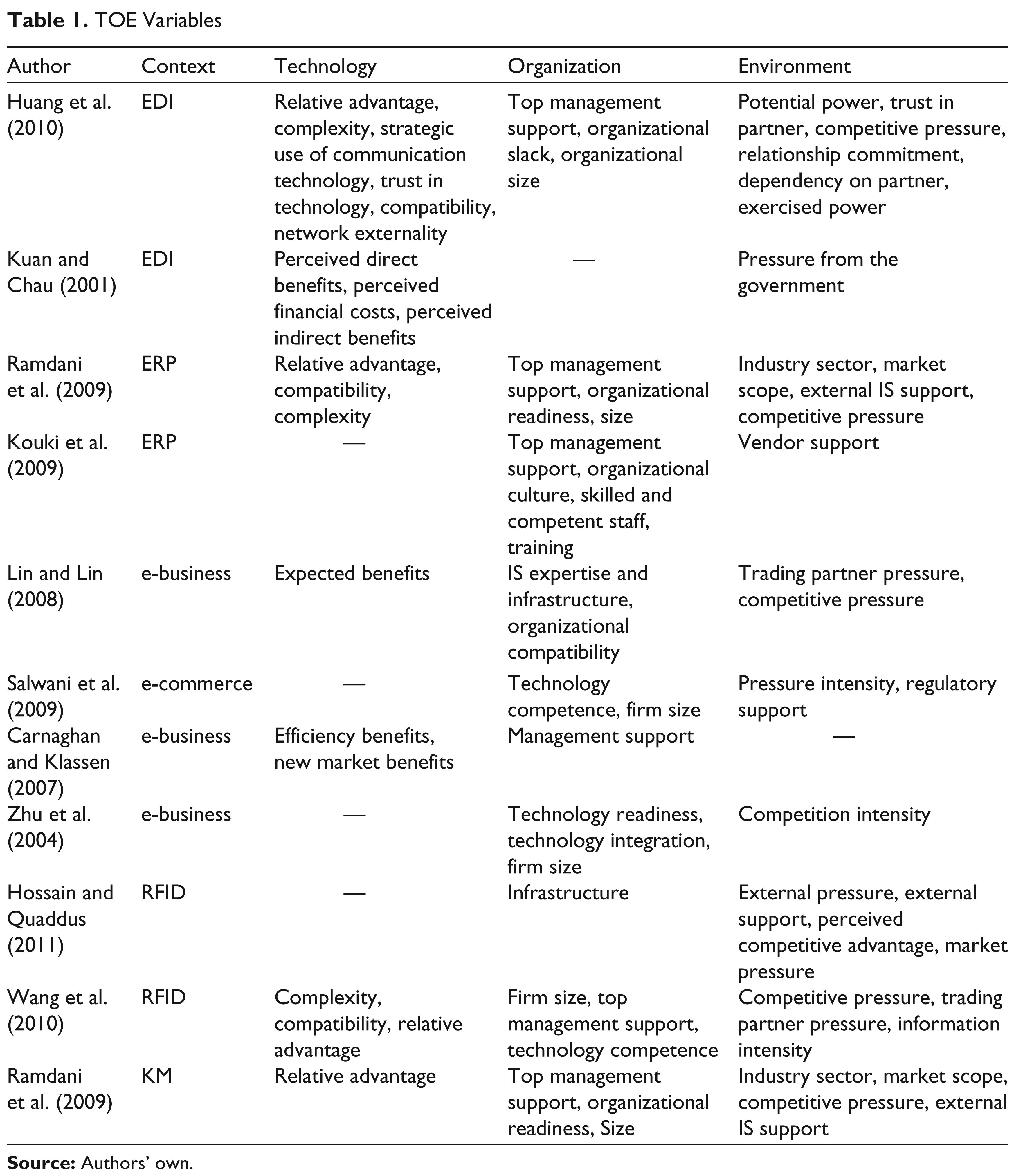
According to Tornatzky and Fleischer (1990), there are three types of contexts that may influence technological innovation adoption and implementation process. Some of the major studies on TOE are highlighted in Table 1. These three contexts of TOE framework are explained as follows:
TOE Variables
Technological Context
The technological context comprises the variables that influence an individual, an organization and an industry’s adoption of innovations (Claycomb et al., 2005; Huang et al., 2008). It includes five innovation attributes (from IDT) that influence the likelihood of adoption (Dedrick and West, 2003; Rogers, 1983). Researchers have also included several other variables such as system assimilation, compatibility, trailability, observability, complexity, perceived direct benefits, relative advantage, perceived indirect benefits and standardization (Hossain and Quaddus, 2011; Huang et al., 2008; Jang, 2010; Musawa and Wahab, 2012; Raymond and Uwizeyemungu, 2007; Thiesse et al., 2011).
Organizational Context
It refers to descriptive measures related to organizations such as firm scope, firm size and managerial beliefs, etc. (Salwani et al., 2009). Adoption propensity is influenced by formal and informal intra-organizational mechanisms for communication and control; along with resources of firms (Dedrick and West, 2003). Variables in organizational context include financial resources, firm structure, organizational slack, innovation capacity, knowledge capability, operational capability, strategic use of technology, trust, technological resources, top management support, support for innovation, quality of human capital, organizational knowledge accumulation, expertise and infrastructure and organizational readiness, financial capacity and technology competence (Carnaghan and Klassen, 2007; Gupta and Shukla, 2002; Lee et al., 2010; Lin, 2009; Musaw and Wahab, 2012). Similarly, role of top management commitment, potential power of the partner, trust in the partner and relationship commitment with a partner are also important (Li et al., 2010).
Environmental Context
It focuses on areas in which a firm conducts its business operations, with the priority given to external factors influencing the industry such as government incentives and regulations (Salwani et al., 2009). It includes variables related to industry characteristics such as rivalry, relations with buyers and suppliers, as well as the stages of the industry life cycle (DePietro et al., 1990, pp. 151–175).
Limitations of TOE Framework
Studies based on the TOE framework have several limitations too. According to Dedrick and West (2003), TOE framework is just a taxonomy for categorizing variables and it does not represent an integrated conceptual framework or a well developed theory, hence, there is a requirement of a more robust framework to study organizational adoption. Low et al. (2011) also highlighted that TOE framework has no major constructs in the model and the variables in each context. TOE framework is limited in its explanatory power of technology adoption (Musawa and Wahab, 2012).
Developing Extended TAM–TOE Framework
This study takes into consideration two of the technology adoption models, that is, the TAM model and the TOE framework which have been widely adopted for studies in an organizational context. Considering their individual limitations, researchers have advocated the need of integrating TAM and TOE so that predictive power of the resulting model can be improved and some of their individual limitations can be overcome.
Integrating the two models (TAM and TOE) is not simple because the external variables of the TAM model and the variables of the TOE framework vary across contexts and their significance as well. Thus, there is a lack of a common set of variables which can be generalized to explain technology adoption and is applicable to any context and technology. To develop an integrated model, this study follows an approach of including all the variables (significant as well as insignificant) of TAM and TOE identified from various studies based on these two models. Further, specific variables to cloud computing, that is, security and third-party control are identified from the literature that describe its technical dimension and they are considered as separate set of variables while integrating the model. These variables are included so that integrated model can be more robust and relevant for cloud computing adoption.

The next issue that arises is related to the approach of integration. This study proposes to consider technological and organizational variables of the TOE framework as external variables of the TAM model while environmental variables of the TOE framework are proposed to have a direct impact on adoption. In the proposed model, cloud computing-specific variables are treated as external variables of TAM. The pictorial view of the proposed model is presented in Figure 1. This approach is based on the foundation that ‘integrating different models, each making up another, has emerged as a new trend in IS related research’ and has proved useful while considering the limitations of various innovation adoption theories and models (Hongjun and Xu, 2010).
Research Methodology
Before testing the proposed integrated model in a practice environment, it is needed to understand significance of the variables in the context of cloud computing and to develop their measures. So, this study is divided in two parts. Study 1 follows a qualitative approach to understand the practical significance of cloud-computing adoption variables and Study 2 develops their measures.
Study 1
Conceptual Development
Based on the findings of the literature accessed, the selection of variables is made and is examined for cloud-computing adoption.
Relative Advantage
Relative advantage means that ‘the degree to which a technological factor is perceived as providing greater benefit for firms’ (Rogers, 1983). Cloud computing has an advantage over other technologies such as reduced cost, scalability, flexibility, mobility and shared resources (Zhang et al., 2010). Using cloud computing, managers can use shared resources (Marston et al., 2011) and rented services on pay-as-you-use basis which lead to adjusting the level of usage according to the current needs of the organization (Feuerlicht and Govardhan, 2010, pp. 1–8) and frees them from administering and maintaining IT infrastructure every year. As the requirements of cloud computing increases, the cloud user should be able to scale up their resources and infrastructure to satisfy the adaptors’ new requirements of storage, number of servers, processing and connection bandwidth (Benlian and Hess, 2011; Kim et al., 2009). Mobility offers users the facility of accessing and working on their documents from anywhere in the world; provided they have a computer access and an Internet connection (Jain and Bhardwaj, 2010). Users need not own a computer for using services of cloud computing.
Compatibility
Rogers (1983, p. 240) defined compatibility as ‘the degree to which an innovation is perceived as consistent with the existing values, past experiences, and needs of potential adopters’. Studies in IT adoption have witnessed valid role of compatibility in technology adoption, as well as in perceived usefulness (Calisir et al., 2009; Chen and Tan, 2004; Peng et al., 2012). It is perceived that more the cloud computing platforms are in align with the Internet platform, the organization will be able to develop more capacity to utilize the benefits of cloud computing and more is the possibility of reducing the degree of uncertainty among the users of technology. In the case of cloud computing, it is needed to take into account the integration (convenience of application import and export) and customization (adjustment of services). Géczy et al. (2012) have also explained that cloud-based services should be compatible with the existing formats, interfaces and other structured data, or else integration and customization services should be provided by the cloud service providers.
Complexity
Complexity is defined as the perceived degree of difficulty of understanding and using a system (Sonnenwald et al., 2001). In terms of IT adoption, it is measured as time taken to perform tasks, integration of computer results into existing work, efficiency of data transfer, system functionality and interface design, etc. Based on these studies, it can be inferred that complexity is inversely proportional to ease of use, usefulness and adoption intentions (Chau and Hu, 2001; Igbaria et al., 1995; Parveen and Sulaiman, 2008).
Organizational Readiness
Tan et al. (2007) described organizational readiness as ‘managers’ perception and evaluation of the degree to which they believe that their organization has the awareness, resources, commitment, and governance’ to adopt an IT. Broadly, it has been described with two dimensions, that is, financial readiness (financial resources for cloud computing implementation and for ongoing expenses during usage) and technological readiness (infrastructure and human resources for cloud computing usage and management, Musawa and Wahab, 2012; Oliveira and Martins, 2010). We argue that firms that have effective infrastructure, expertise in their employees and financial support are more likely to adopt cloud computing.
Top Management Support
The IT adoption literature has recognized the role of top management support in initiation, implementation and adoption of several information technologies (R.K. Singh, 2013). Salwani et al. (2009) explains it as the perceptions and actions of top officials on the usefulness of technological innovation in creating values for the firm. It ensures long-term vision, reinforcement of values, commitment of resources, optimal management of resources, cultivation of favourable organizational climate, higher assessments of individual self-efficacy, support in overcoming barriers and resistance to change (Das, 2003; Jang, 2010; Malhotra, 2010; Ramdani et al., 2009; Teo et al., 2009; Wang et al., 2010). Also, top management support positively affects perceived usefulness and perceived ease of use (Davis, 1989).
Training and Education
Training is described as a degree to which a company instructs its employees in using a tool in terms of quality and quantity (Malhotra, 2010; Pillania, 2006). Since cloud computing is a complex information system, an organization needs to train and educate its employees before implementing it. It reduces employees’ anxiety and stress about the use of cloud computing, and provides motivation and better understanding about its benefits for their tasks. It reduces ambiguity and help employees developing knowledge for effective usage in future. It also improves its perceived ease of use and usefulness.
Competitive Pressure
From the early stages of research in technology adoption, the role of competitive pressure is recognized as an effective motivator (Dasgupta and Gupta, 2009; Lin and Lin, 2008; Lippert and Govindarajulu, 2006). Zhu and Kraemer (2005) defined it as ‘the degree of pressure that the company feels from competitors within the industry’. Competition in the industry is generally perceived to positively influence the IT adoption specially when technology directly affects the competition and it is a strategic necessity to adopt new technologies to compete in the market (Ramdani et al., 2009). This fact is applicable in the context of cloud computing. Adopting information systems is useful for a firm to alter the competitive environment in terms of rules of competition, industry structure and outperforming their competitors (Porter and Millar, 1985).
Trading Partner Pressure
Trading partner pressure can be described as pressure from trading partners to implement and adopt a technology. Many studies have advocated its significant and positive contribution in the degree of intention to adopt and use information technologies (Lin and Lin, 2008; Lippert and Govindarajulu, 2006; Teo et al., 2009; Wang et al., 2010). Support from trading and business partners ensure its effective implementation, market acceptance and value maximization (Teo et al., 2009). A firm’s decision to adopt cloud computing may be influenced by adoption status of its trading partner along the value chain. Keeping in mind the complex architecture of cloud computing, its adoption may require tighter integration of customers, business partners and suppliers.
Security
Security is seen as data confidentiality, auditability, loss of data, data storage security, data transmission security and breach of privacy in the business operations (Armbrust et al., 2010; Bhasin, 2006; Bristow et al., 2010; Gupta and Sareen, 2001). Security concerns are high in the case of cloud computing because the data placed are easy to locate, to send across communication channels of different countries, where data privacy laws are potentially different and therefore there are chances of potentially sensitive data getting exposed to snooping eyes of unauthorized individuals (Tout et al., 2009). Based on the literature review on cloud computing, security can be expressed in terms of:
Threats—A threat is what we are trying to protect against. According to Chow et al. (2009), cloud service providers encounter these threats by matured and tested security measures and processes as well as by preferring to enforce security via contracts with online services providers over via internal controls. Certain other threats include the loss of physical control of the data, lack of standards, security, regulation at the local, national and international level and insufficient uptime for mission-critical applications for large organizations. Risks—SAN Institute defined risk as ‘the potential harm that may arise from some current process or from some future event’. Risks in cloud computing include securing critical information such as protection of intellectual property, personally identifiable information and trade secrets falling into the hands of unethical people (Bisong and Rahman, 2011). Vulnerability—Pfleenger (2006) explained vulnerability as ‘a weakness in the security system’ which leads to causing harm to the system. In case of enterprise cloud computing, the vulnerability includes eavesdropping, hacking, cracking, malicious attacks and outages. Greene (2009) suggested placing the cloud machines on physical machines that can be accessed by them and/or by their trusted third parties but this solution led to a price premium because part of the economy of cloud services is maximizing use of physical servers by efficiently loading them up with cloud machines.
Third Party Control
It is another major concern in cloud computing adoption related to the cloud provider; responsible for managing the cloud services. These cloud services are:
Availability—It refers to the accessibility and readiness of the services. The cloud users want the data to available all the time or rather, at the time when they need to use it. This raises the concerns over the effectiveness of cloud service providers in terms of their availability. Kim (2009) argues that adoption of high availability architecture, and tested platforms and applications provide 100 per cent availability of data. Service level agreements (SLA) and a combination of precautionary measures (backup on on-premises storage, backup cloud, etc) are the main driving factor to ensure desired levels of availability. Support—Support is the key demand for problem resolution in case of cloud computing and on-premises computing for which enterprise as well as end users pay to the cloud service providers. So, cloud computing vendors are expected to hire and train adequate support staff to provide best possible support to their clients (Kim, 2009). Vendor lock-in and interoperability—Vendor lock-in is a concern which users live with and is a prominent concern all the time. Interoperability means ‘easy migration and integration of applications and data between different vendors’ clouds’ (Kim, 2009). This does not seem to have received much press as a major concern yet, probably because the market is in its infancy and not many users have faced the problems yet (Kim, 2009). Compliance—To comply with the various laws, the enterprises are required to maintain business legal documents and to assure their integrity towards the laws (N.P. Singh, 2007). Also, cloud computing vendors have to adopt technologies to ensure that their enterprise users’ data satisfy their compliance requirements. This is an evolving concern area in cloud computing.
There are issues in understanding the complexity, control and transparency according to the regulatory compliance of legal implication of the data being held by a third party (Chow et al., 2009). To avoid such issues, companies have been building private clouds. Other issues are related to proprietary format of locking the data, and related with training and processes. Having no control over frequent changes in cloud-based services which require standardization for cloud related activities. Another concern is related to transitive nature of cloud service providers. Security issues are more prominent to deal with when cloud providers contract some of their services to subcontractors over whom cloud users have even lesser control and less trust.
Perceived Usefulness (PU)
PU is defined as the prospective user’s subjective probability that using a specific application system will increase his or her job performance within an organizational context.
Perceived Ease-of-use (PEOU)
PEOU refers to the degree to which the prospective user expects the target system to be free of effort (Davis, 1989). The TAM model suggests that perceived ease of use influences perceived usefulness, because technologies that are easy to use can be more useful (Schillewaert et al., 2005).
Data Collection
The data was collected from 37 IT professionals conveniently selected from the sampling frame of Indian professionals working on cloud computing implementation in the manufacturing, IT and financial sectors on the basis of geographical location, as the study was conducted in Mumbai. Reliability tests of the scale and sub-scales resulted in developing measures of cloud computing adoption.
Research Design
The objective of Study 1 is first to understand practitioners’ perspective of the variables relevant to cloud computing adoption. The variables identified from technology adoption literature are relative advantage, trialiability, observability, compatibility, complexity, organizational readiness, top management support, training and education, competitive pressure, trading partner pressure, security, third-party control, perceived ease of use and perceived usefulness.
Based on interview guidelines from Alshamaila et al. (2013), a semi-structured interview method was adopted for identifying significance of these variables as seen by middle and senior level IT managers who are currently working on cloud computing adoption in their organizations at strategic levels.
Results
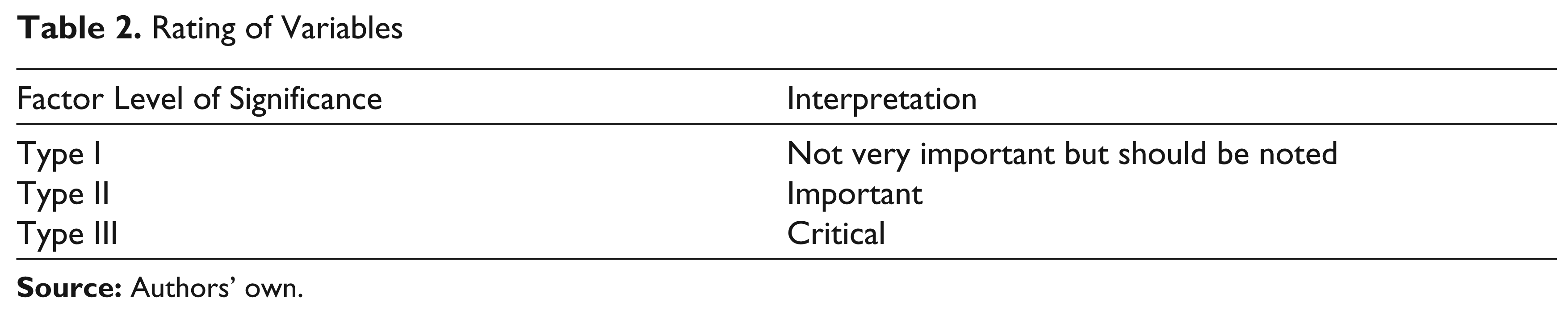
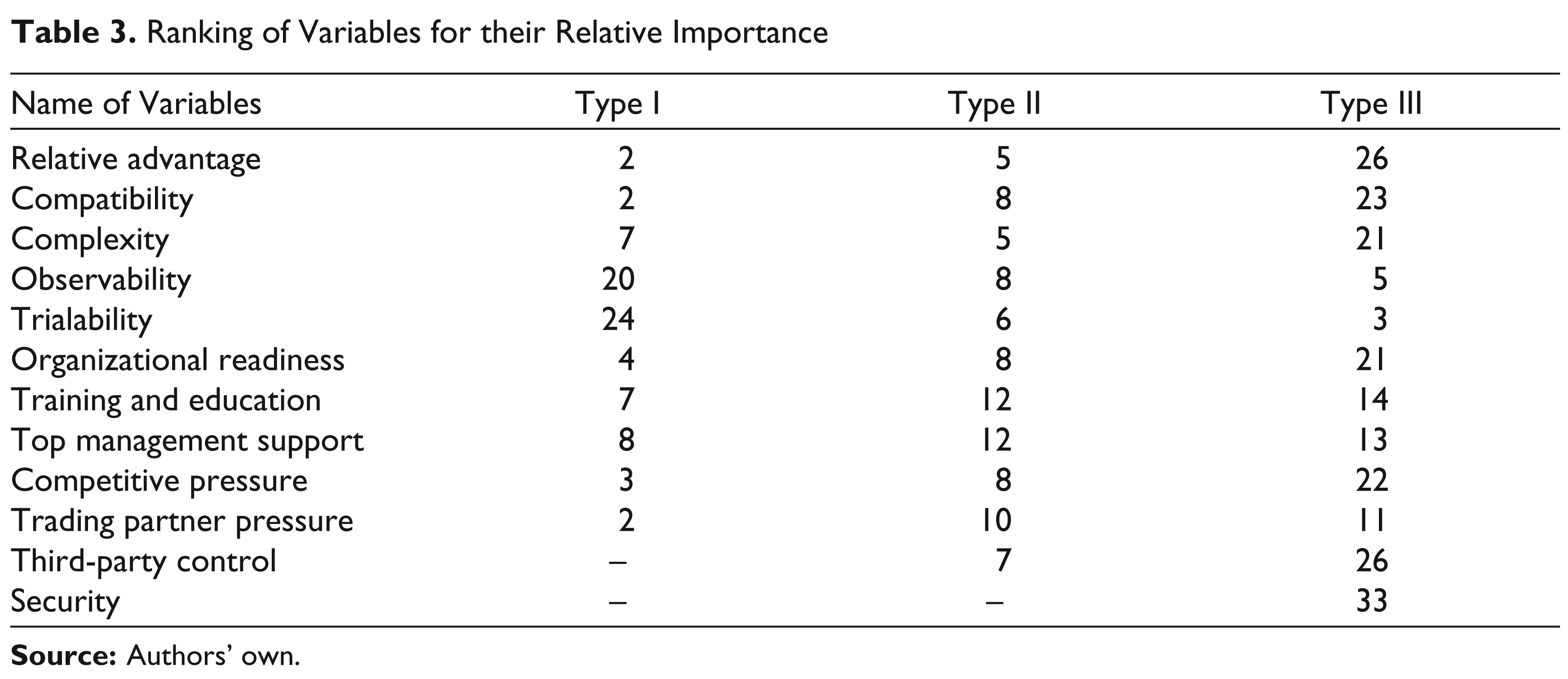
After the interview, each factor was given a rating of Type I, Type II or Type III by the respondents (Tables 2 and 3). The way factors are rated will be in accordance to how the informants responded to them along with what was derived and collected from empirical sources. Moreover, these rates were checked and accepted by the respondents after we sent our interviews’ findings to them. This allows us to categorize each factor according to their importance for companies and present them accordingly. Based on the findings of frequency charts, two of the variables are discarded, that is, trialiability and observability; and rest of them were retained for further analysis.
Rating of Variables
Ranking of Variables for their Relative Importance
Study 2
Objectives and Research Design
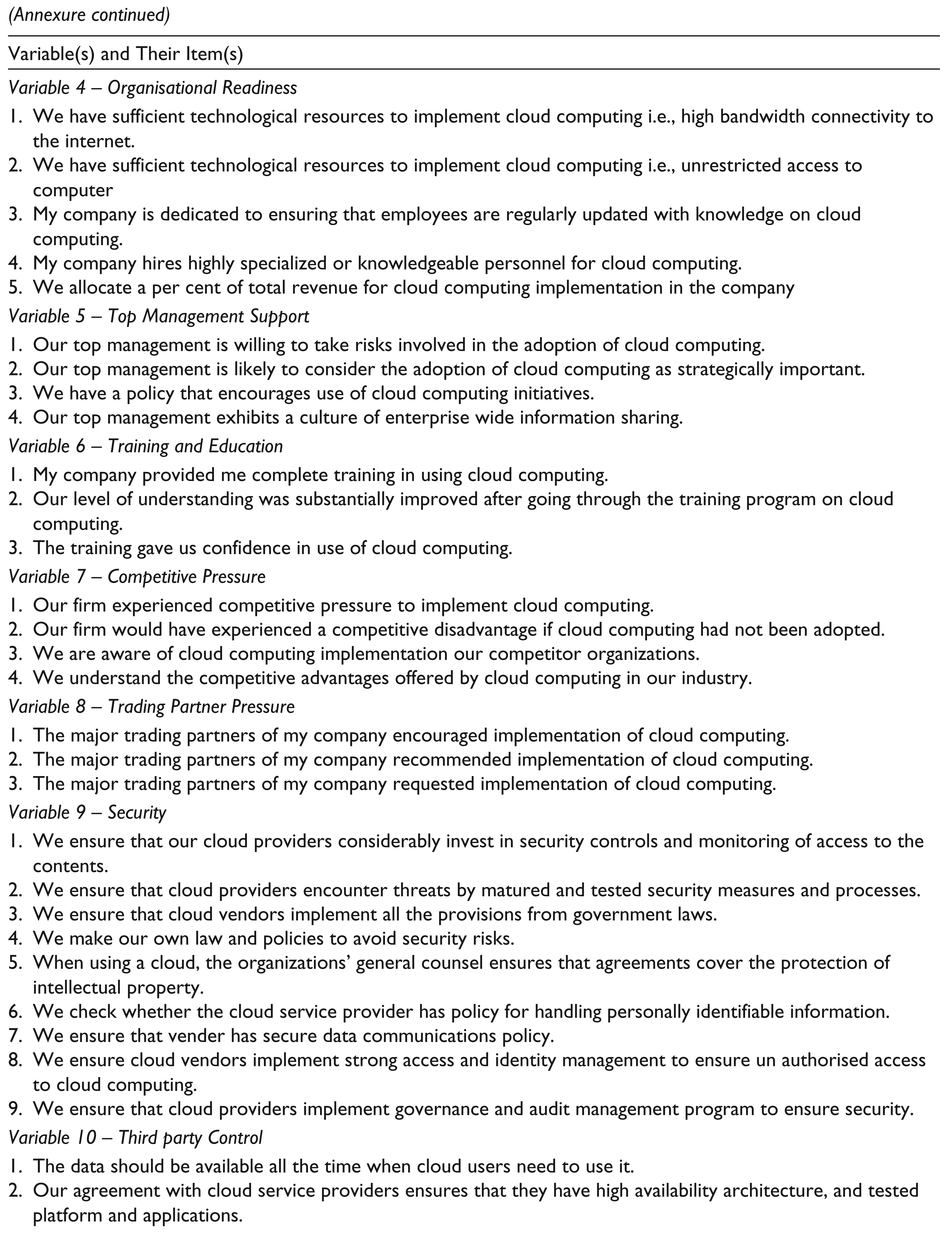
To develop measures for cloud-computing adoption, the Study 2 develops a questionnaire based on the variables identified in Study 1 and guided by the literature (Amoako-Gyampah and Salam, 2004; Bisong and Rahman, 2011; Brandel, 2009; Chow et al., 2009; Feuerlicht and Goverdhan, 2010; Gardner and Amoroso, 2004; Géczy et al., 2012; Hada et al., 2011; Jain and Bhardwaj, 2010; Juengst, 2012; Kerr and Teng, 2010; Kim, 2009; Lin and Lin, 2008; Schillewaert et al., 2005; Sonnenwald et al., 2001; Tan et al., 2007; Teo et al., 2009; Tout et al., 2009; Wang et al., 2010; Wu, 2011; Zhang et al., 2003; Zhu and Kraemer, 2005). Using a five-point Likert-type scale, it is composed of two sections (the Appendix): the first part examines the significance of variables for cloud-computing adoption and the second part collects company and their respondents-related information. It was content validated from a panel of three academicians and three senior consultants working on cloud computing in multinational companies based in India.
Results
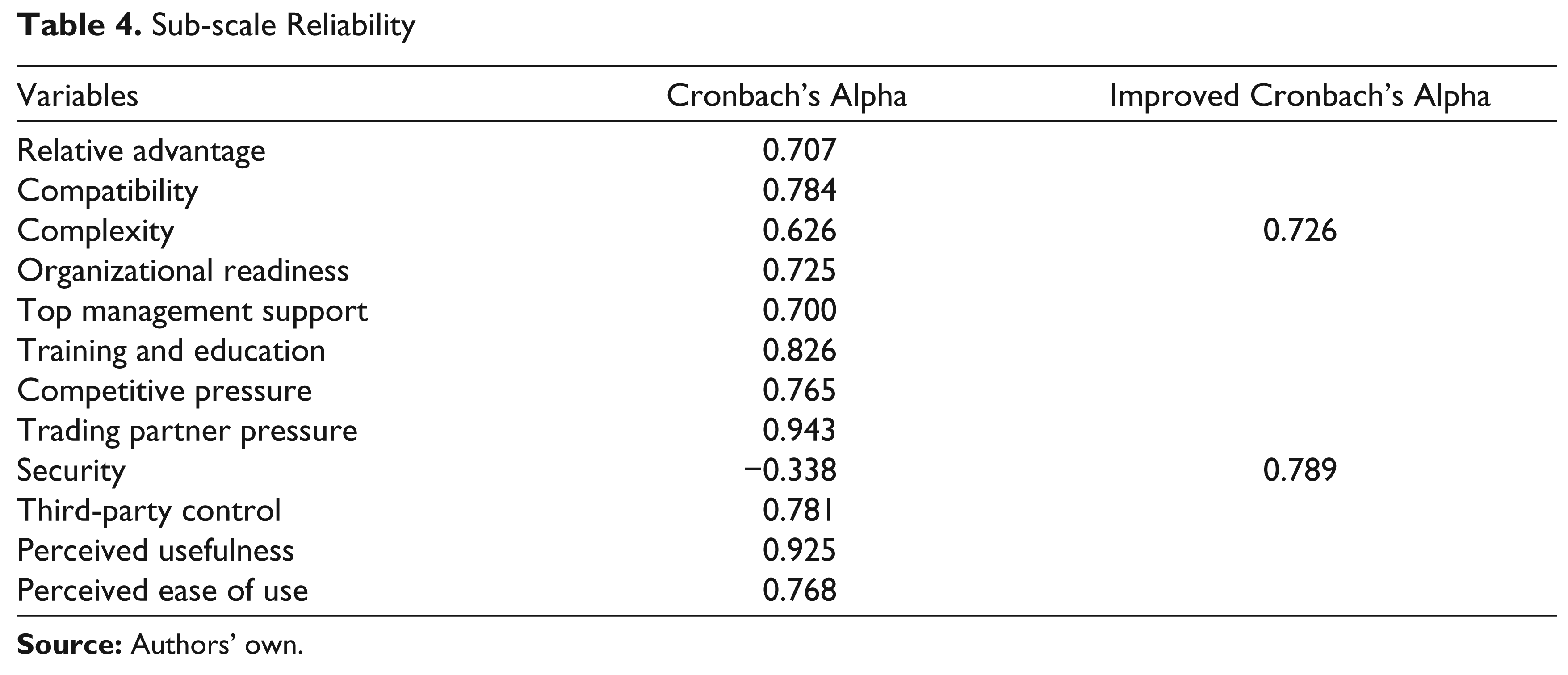
Cronbach’s alpha for the questionnaire was identified as 0.931. Item-to-total and scale reliability estimates were obtained to assess the internal consistency of the scale and remove ‘garbage’ items. Reliability of each sub-scale varied between 0.700 and 0.943 (Table 4). Hence, the resulting 12 measures identified contain 58 items and a reliable score within the sample criterion limits. The questionnaire developed can be considered suitable for full-fledged data collection and to carry further statistical analyses (factor analysis, hypotheses development and testing, and model fit, etc.).
Sub-scale Reliability
General Discussion
After the reliable scale for measuring cloud--computing adoption was developed, some interpretations are drawn from the results of interviews and responses in the questionnaires (mean values of the responses and correlation values between items) for each related to managerial perceptions on cloud computing technology and their adoption related issues. These are explained as follows:
Relative Advantage
Managers consider cloud computing beneficial for their IT infrastructure as they are not bound by the place, time and infrastructure. But they recognize that they need to partially administer these services, and partially maintain IT infrastructure. They witness certain hidden additional costs such as, cloud solution adopters might need to customize these common solutions to fit their specific requirements and consequently they will be responsible for maintaining the customized code and have to pay additional costs. Similarly, performance is also limited by network bandwidth and computing resources allocated to services. On the other side, strong relationship is found between scalability and performance as cloud computing does not need to replace IT infrastructure regularly.
Compatibility
Compatibility of cloud computing with organizational structure is found dependent upon several factors such as organizational culture, organizational system and organizational complexity, etc. For example, for small companies, the size of the IT department is smaller which makes it easier for them to make changes in IT culture. And, integration becomes a real challenge for those who install many complex applications composed of many internal systems and is dealt with by assistance from third-party companies.
Complexity
It takes into account the time taken to perform tasks, integration of computer results into existing work, efficiency of data transfer, system functionality and interface design, etc. Though cloud computing is flexible to interact with, it is found to be complex in structure, time-consuming and poses challenges related to vulnerability.
Organizational Readiness, Top Management Support, and Training and Education
Strong support is evident for the role of technological resources, budget allocation, facilitating effective training, continuously updated knowledge, highly specialized personnel and perceptions of top management on cloud computing in cloud-computing adoption.
Competitive Pressure and Trading-partner Pressure
The study witnessed that uncertainty on competitive benefits of cloud computing is significant in cloud computing adoption. The study also advocate that complex architecture of cloud computing requires tighter integration of customers, business partners and suppliers and is influenced by the adoption status of its trading partner along the value chain. This ensures effective implementation, market acceptance and value maximization of a technology (Lin and Lin, 2008; Teo et al., 2009).
Security and Third-party Control
Managers recognize the role of security and third-party control related issues in cloud computing adoption. Since cloud computing implementation is at an introductory stage in the sample, they are at the stage of developing the company’s own privacy laws and security policies, and implementing them.
Perceived Usefulness and Perceived-ease-of-use
The study advocates the role of efficiency, performance, competitiveness and ease of learning using cloud computing in its adoption.
Conclusions
Thus, this attempt has identified significant variables for a cloud-computing adoption framework using integration of the TAM model and the TOE framework. Using the interview method, two of the variables from the TOE framework were removed. Based on the variables finalized, a questionnaire to study cloud-computing adoption was developed using items adopted from the studies in the literature, and a set of items were newly added. The questionnaire was pre-tested and then, surveyed to access its reliability in a defined sample frame. The reliable sub-scales identified by it is the basis for carrying out a further study for a larger sample in the population; and develops an analytical frame. Thus, this study extends earlier studies on cloud-computing adoption (Alshamaila et al., 2013; Lin and Chen, 2012; Low et al., 2011) from a single model and interview-based approach to an integrated model and questionnaire-based approach and develops reliable measures of cloud-computing adoption.
The study has certain limitations. Though the article is based on extended TAM–TOE framework, the developed measures are specific to cloud computing and they can be used for TAM–TOE integration in a broader perspective. The small sample size leads to generalization with caution. Future research should test these measures with a larger sample size, and also develop and test hypotheses. Application of advanced analytical tools will provide better insights for the topic.
Footnotes
Acknowledgements
The authors are grateful to the anonymous referees of the journal for their extremely useful suggestions to improve the quality of the article. Usual disclaimers apply.
Appendix
Questionnaire
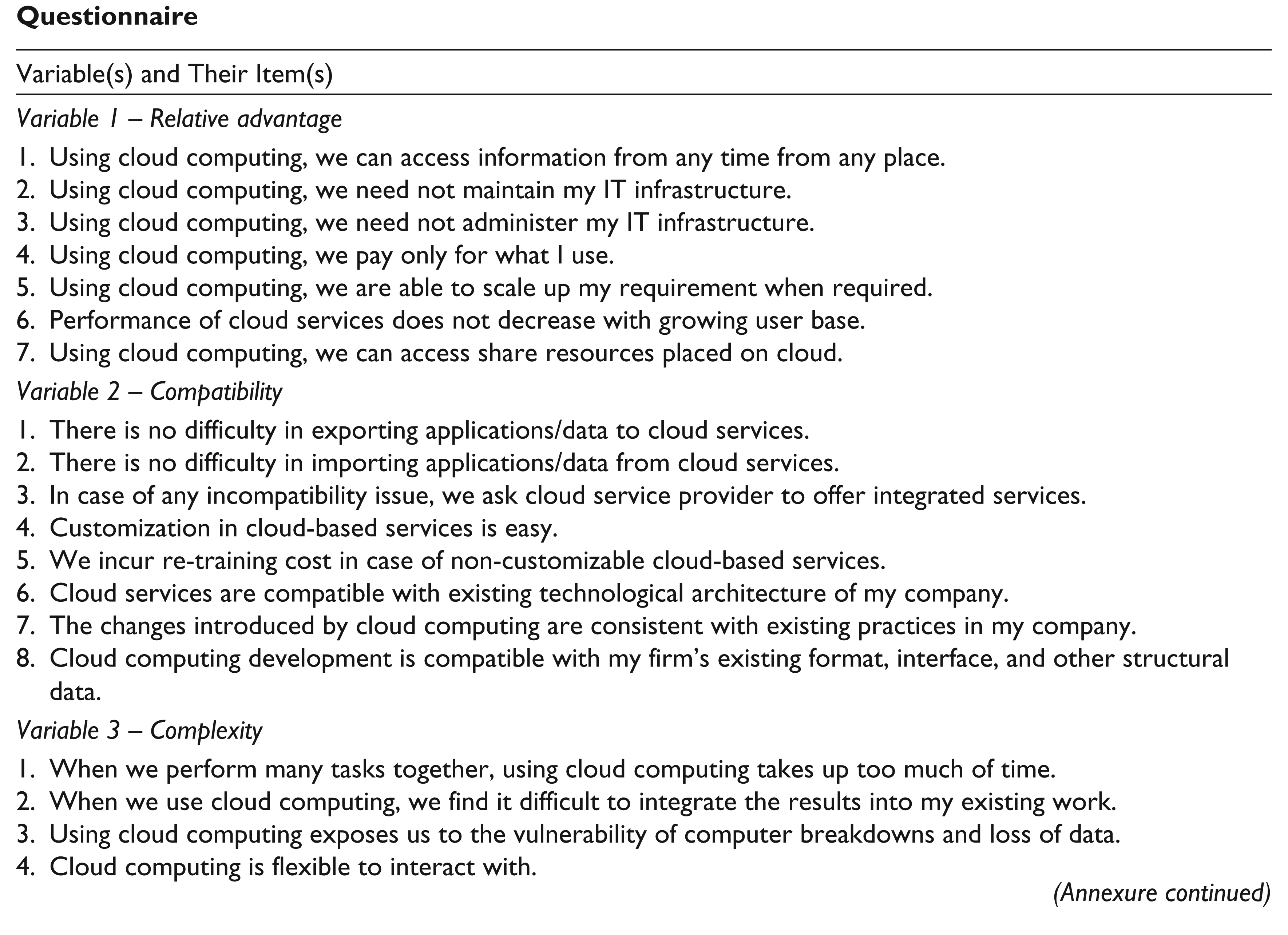

| Variable(s) and Their Item(s) |
| Variable 1 – Relative advantage |
| 1. Using cloud computing, we can access information from any time from any place. |
| 2. Using cloud computing, we need not maintain my IT infrastructure. |
| 3. Using cloud computing, we need not administer my IT infrastructure. |
| 4. Using cloud computing, we pay only for what I use. |
| 5. Using cloud computing, we are able to scale up my requirement when required. |
| 6. Performance of cloud services does not decrease with growing user base. |
| 7. Using cloud computing, we can access share resources placed on cloud. |
| Variable 2 – Compatibility |
| 1. There is no difficulty in exporting applications/data to cloud services. |
| 2. There is no difficulty in importing applications/data from cloud services. |
| 3. In case of any incompatibility issue, we ask cloud service provider to offer integrated services. |
| 4. Customization in cloud-based services is easy. |
| 5. We incur re-training cost in case of non-customizable cloud-based services. |
| 6. Cloud services are compatible with existing technological architecture of my company. |
| 7. The changes introduced by cloud computing are consistent with existing practices in my company. |
| 8. Cloud computing development is compatible with my firm’s existing format, interface, and other structural data. |
| Variable 3 – Complexity |
| 1. When we perform many tasks together, using cloud computing takes up too much of time. |
| 2. When we use cloud computing, we find it difficult to integrate the results into my existing work. |
| 3. Using cloud computing exposes us to the vulnerability of computer breakdowns and loss of data. |
| 4. Cloud computing is flexible to interact with. |
| Variable 4 – Organisational Readiness |
| 1. We have sufficient technological resources to implement cloud computing i.e., high bandwidth connectivity to the internet. |
| 2. We have sufficient technological resources to implement cloud computing i.e., unrestricted access to computer |
| 3. My company is dedicated to ensuring that employees are regularly updated with knowledge on cloud computing. |
| 4. My company hires highly specialized or knowledgeable personnel for cloud computing. |
| 5. We allocate a per cent of total revenue for cloud computing implementation in the company |
| Variable 5 – Top Management Support |
| 1. Our top management is willing to take risks involved in the adoption of cloud computing. |
| 2. Our top management is likely to consider the adoption of cloud computing as strategically important. |
| 3. We have a policy that encourages use of cloud computing initiatives. |
| 4. Our top management exhibits a culture of enterprise wide information sharing. |
| Variable 6 – Training and Education |
| 1. My company provided me complete training in using cloud computing. |
| 2. Our level of understanding was substantially improved after going through the training program on cloud computing. |
| 3. The training gave us confidence in use of cloud computing. |
| Variable 7 – Competitive Pressure |
| 1. Our firm experienced competitive pressure to implement cloud computing. |
| 2. Our firm would have experienced a competitive disadvantage if cloud computing had not been adopted. |
| 3. We are aware of cloud computing implementation our competitor organizations. |
| 4. We understand the competitive advantages offered by cloud computing in our industry. |
| Variable 8 – Trading Partner Pressure |
| 1. The major trading partners of my company encouraged implementation of cloud computing. |
| 2. The major trading partners of my company recommended implementation of cloud computing. |
| 3. The major trading partners of my company requested implementation of cloud computing. |
| Variable 9 – Security |
| 1. We ensure that our cloud providers considerably invest in security controls and monitoring of access to the contents. |
| 2. We ensure that cloud providers encounter threats by matured and tested security measures and processes. |
| 3. We ensure that cloud vendors implement all the provisions from government laws. |
| 4. We make our own law and policies to avoid security risks. |
| 5. When using a cloud, the organizations’ general counsel ensures that agreements cover the protection of intellectual property. |
| 6. We check whether the cloud service provider has policy for handling personally identifiable information. |
| 7. We ensure that vender has secure data communications policy. |
| 8. We ensure cloud vendors implement strong access and identity management to ensure un authorised access to cloud computing. |
| 9. We ensure that cloud providers implement governance and audit management program to ensure security. |
| Variable 10 – Third party Control |
| 1. The data should be available all the time when cloud users need to use it. |
| 2. Our agreement with cloud service providers ensures that they have high availability architecture, and tested platform and applications. |
| 3. We expect cloud service providers to hire and train adequate support staff for offering best possible support to us. |
| 4. A specific person (or group) is available for assistance with system difficulties. |
| 5. We design application interface in a market-based standard format so that switching to different vendors is possible. |
| 6. There is no legal protection in the use of Cloud Computing. |
| 7. We maintain business legal documents to assure our integrity towards the laws. |
| 8. Our cloud service providers are legally bound not to disclose sensitive data to government agencies and court. |
| Variable 11 – Perceived ease Of Use |
| 1. It is easy for us to learn using the cloud computing. |
| 2. The procedure of using cloud computing is understandable by us. |
| 3. It is easy to make use of cloud computing. |
| Variable 12 – Perceived usefulness |
| 1. Using cloud computing allow me to manage business operation in an efficient way. |
| 2. Using cloud computing allow me to increase business productivity. |
| 3. Using cloud computing enables allow me to accomplish my organisational task more quickly. |
| Variable 13 – Adoption |
| 1. Overall, I intend to use the cloud computing in the future. |