



Abstract
Information and communications technology (ICT)-based government service delivery in India is rapidly achieving a stage of maturity. With the increasing teledensity and the penetration of mobile devices, the Indian central and state governments have started to offer government services over mobile devices. As more and more government services are offered over mobile phones, it is important to gain an understanding of parameters determining the quality of mobile government services. The identification of service quality parameters will help stakeholders appropriately prioritize and position mobile-based government service delivery. This article presents the findings of an exploratory study using an online survey of Indian e-government experts on the service quality parameters for m-government in India. The study aims to identify and prioritize the service quality parameters based on similar parameters identified by researchers for e-government and mobile service quality.
Introduction
e-Governance initiatives in India are now gaining maturity and is now well recognized by different stakeholders that information and communications technology (ICT)-based service delivery by the government promotes a more effective interaction and participation by the citizens. Digital India, the flagship programme of the current Indian Government focusses on the holistic integration of IT initiatives into the three broad pillars of digital infrastructure, governance and services and digital empowerment of citizens. One of the important components of Digital India program is e-Kranti, which focuses on electronic delivery of services to citizens. E-Kranti proposes to add 13 new citizen centric mission mode projects. The successful implementation of projects such as Passport Seva, MCA21 and income tax in India has led to the evolution of country-specific business and technology adoption models, which are now being attempted for replication. At this stage, it is also clear that in the future, there will be a big demand for multichannel service delivery, and one of the most promising and emerging channels is the use of mobile devices. Mobile governance is fast gaining pace in India and is being viewed as the next wave for the use of technology in offering the Government-to-Citizen (G2C) services.
The Indian telecom subscription base stands at 1006.96 million (wireless and wireline) as of June 2015. The overall teledensity in India has reached 79.98 per cent in March 2014. The teledensity in urban areas stands at 149.70 per cent and in rural areas at 48.66 per cent (Telecom Regulatory Authority of India, 2015). Given this reach and the penetration of mobile devices, the potential to offer m-government services is being explored by the Indian government. M-government refers to the use of ICTs by government institutions with the help of mobile technologies to deliver electronic services to the public (United Nations, 2008). In the twenty-first century, mobility has become one of the most important technology and communication trends affecting all facets of modern life, including mobile information systems, mobile payments, mobile commerce, mobile television and mobile government (El-Kiki & Lawrence, 2007).
Taking advantage of the technological development, a number of initiatives have been taken up by the Indian state and central governments, including the ‘Mobile Sewa’ (service) initiative of Ministry of Communications and Information Technology, Government of India (
As government services are increasingly offered over mobile devices, it is important to identify the parameters of quality of mobile government services and their relative importance in the Indian context. The present exploratory study aims to explore and identify the service quality parameters of mobile government services. The study takes the service quality parameters identified by researchers for e-governance services as the basis for identification and prioritization of mobile government services in India. The study therefore seeks to answer the primary question: ‘What are the most important service quality parameters for mobile government services in India?’
The article is organized into the following sections. The next section covers the literature review on service quality parameters identified for e-governance and also the mobile service quality parameters; the following section highlights the gaps in literature and motivation for research. Subsequently, the details of the methodology followed for the survey are presented, followed by the results of the survey in the next section. The penultimate section of the article summarizes the conclusions and findings, and the last section suggests the future research areas, followed by acknowledgement and list of references.
Review of Literature
A review of literature on traditional (non-Internet based) service quality suggests that researchers have proposed to determine the service quality by the difference between the expected and the perceived performance levels of services. Parasuraman, Berry and Zeithaml (1991), Parasuraman, Zeithaml and Berry (1988) and Parasuraman, Zeithaml and Malhotra (2005) conducted studies in different industries to develop and subsequently refine the service quality instrument (SERVQUAL). The five dimensions of SERVQUAL are (i) Tangibles: The appearance of physical facilities, (ii) Reliability: The dependability and accuracy of promised services, (iii) Responsiveness: The willingness to help customers and provide prompt service, (iv) Assurance: The ability to convey trust and confidence and (v) Empathy: Care and individualized attention to customers. However, Cronin and Taylor (1992) suggested that the SERVPERF scale based on performance perceptions provides a better measure for service quality, when compared with measures based on the gap between expectation and perception.
Measures of e-Service Quality Parameters
Li, Liu and Suomi (2009) suggest that SERVQUAL is considered problematic and may not be appropriate for e-service (services offered electronically or through electronic modes) quality evaluation. They suggest that the reason for the same is that e-service is different from traditional service in three aspects: the absence of sales staff, the absence of a traditional tangible element and self-service of the customer. Most of the literature on e-service quality is based on studies conducted in the domains of retail, online shopping and website quality. Various researchers have identified several dimensions of e-service quality.
Dabholkar, Thorpe and Rentz (1996) conducted a research on the dimensions of e-service quality focusing on website design, and they argued that the seven dimensions of e-service quality can be illustrated as the basic parameters in the judgement of e-service quality, including website design, reliability, delivery, ease of use, enjoyment and control. Similar to SERVQUAL, Kaynama and Black (2000) have given E-QUAL identifying (i) responsiveness, (ii) content and purpose, (iii) accessibility, (iv) navigation, (v) design and presentation, (vi) background and (vii) personalization and customization as the dimensions of service quality measurements. Zeithaml (2000) gives (i) reliability, (ii) responsiveness, (iii) access, (iv) flexibility, (v) ease of navigation, (vi) efficiency, (vii) assurance/trust, (viii) security/privacy, (ix) price knowledge, (x) site aesthetics and (xi) customization/personalization as the measures of service quality for e-services. Liljander, van Riel and Pura (2001) also identify (i) user interface, (ii) responsiveness, (iii) reliability, (iv) customization and (v) assurance as the service quality parameters. Zeithaml, Parsuraman and Malhotra (2005) have chosen (i) tangibility, (ii) reliability, (iii) responsiveness, (iv) integration of communication, (v) assurance, (vi) quality of information and (vii) empathy as e-SQUAL measures. A few researchers have proposed measurement instrumentation for measuring the website quality (Yoo & Donthu, 2001). Substantial researches providing a generalized scale developed using a variety of industries as well as comparative studies to find the best approach (discrepancy/gap, or, perception based) to measure e-service quality are non-existent (Agrawal, Shah & Wadhwa, 2007). This discussion shows that there is a predominance of perception-based measurement approaches.
Measures of e-Government Service Quality Parameters
Agrawal et al. (2007) have identified the following seven categories of e-service quality and performance for EGOSQ, namely, (i) Information, which includes accuracy, reliability, comprehensiveness, usefulness, timeliness, ease of retrieval and use, ease to comprehend and extent of updation. (ii) An interaction which includes friendly and courteous interaction, availability of online contact options, empathy, timely response, promptness, willingness, knowledge and concern. (iii) An integration which includes customizable features, range of services, ease of use of all features, personalization, payment options and confirmations. (iv) The accessibility, which includes availability, fast navigation without jams, impressive interface, ease of navigation, quick response, quick loading of web pages and stability of websites. (v) Emotional engagement, which includes opportunities to contact other users and fun and enjoyment while using e-services. (vi) Active service recovery, which includes the government accepting responsibility and taking control in the event of service failure, concern shown in case of failure, the ability to raise concern and complaint handling procedures. (vii) An assurance, which includes getting things done right the first time, financial security of online transactions, protection of personal information and privacy, getting things done in the expected time frame and transparency. They have provided a pool of 26 items under these seven dimensions as measures of EGOSQ.
Relationship between Mobile and Electronic Governance
Defined simply, m-government is public service delivery, including transactions on mobile devices, such as mobile phones, pagers and personal digital assistants (PDAs). Kushchu and Kuscu (2004, p. 3) define it as ‘the strategy and its implementation involving the utilization of all kinds of wireless and mobile technology, services, applications and devices for improving benefits to the parties involved in e-government, including citizens, businesses and all government units’. m-Government is an integral part, a subset of e-government (Mishra, 2009). Some call it an extension of e-government, while others call it an evolution of e-government. Mishra (2010) suggests that m-government is of two types: (i) web-based and (ii) non-web. Further, it can be classified as (i) voice and (ii) non-voice. Apart from the convenience of carriage (small size of mobile phone) and mobility (anywhere e-government), an important feature of m-government is that it can be independent of the Web, which is a very attractive feature, due to low Internet penetration in developing countries. The momentum to m-government is provided by the mobile phones and e-government can be facilitated through an SMS. In addition, official portals can be accessed through mobile phone browsers.
Ntaliani, Costopoulou and Karestsos (2008) suggest that like e-government, m-government operates on four different levels, represented by the following interactions, namely, m-government to government (mG2G), referring to the interagency relationships and the interaction between government agencies; m-government to business (mG2B), describing the interaction of the government with businesses; m-government to employee (mG2E), concerning the interaction between the government and its employees; and m-government to citizen (mG2C), which refers to the interaction between the government and the citizens.
Researchers indicate that the service delivery expectation of a mobile government user will be the same or higher than that of e-government services.
Measures of Mobile Service Quality Parameters
Chae, Kim, Kim and Ryu (2002) provided connection quality, content quality, interaction quality and contextual quality as the dimensions of m-service quality. However, Stiakakis and Georgiadis (2011) suggest that these only focus on information quality, rather than service quality. Lim, Widdows and Park (2006) identified five dimensions of perceived quality of m-services, namely, pricing plans, network quality, data services, billing system and customer service. Seth, Gupta and Momaya (2007) categorized the quality of mobile service parameters into two types: technical and managerial. Technical parameters include the network performance of cellular mobile communication network and the managerial parameters comprise functional, as well as internal quality parameters.
Lu, Zhang and Wang (2009) proposed the three dimensions of mobile service quality as interaction quality, environment quality and outcome quality. Stiakakis and Georgiadis (2011) therefore suggest the following parameters of mobile service quality, namely, interaction quality—expertise, problem solving, information, security/privacy and customization/personalization; environment quality—equipment, design and context; and outcome quality—reliability, tangibles and valence. Here, service quality parameters have been identified for e-government (i.e., Internet and personal computer based). E-service quality parameters are the basis of arriving at the e-government service quality parameters. However, to date, it appears that we lack the research foundation for identification and/or prioritization of service quality parameters of mobile (handheld devices)-based government service delivery in India. While researchers have identified mobile service quality parameters, there is a need to identify the mobile government service quality parameters. As Kumar, Agrawal and Sharma (2013) mentioned that different e-supply chains had different driving factors, similarly, the literature review of e-governance literature suggests that the e-government service quality parameters can be more or less generalized across countries. However, the same may or may not be true for mobile government services, given the variety of devices and different levels of maturity and penetration of mobile devices across different regions. It therefore calls for an exploratory study to identify and prioritize mobile government service quality parameters in the Indian context.
Research Objectives
This study aims to identify and prioritize the service quality parameters for mobile government services in India. The specific research objectives are: to explore e-government service quality parameters that can be considered for measuring the service quality of m-government services, to enumerate the parameters on which service quality of mobile-based government service delivery can be measured and to examine which mobile government service quality parameters can be most relevant for Indian conditions.
Methodology
The exploratory study has been designed to use the expertise of professionals involved in mobile and electronic government, namely, telecom companies, information technology companies, consultants, academicians, researchers, and government officials. The study uses ‘experts’ survey’ as a means to identify and prioritize the mobile government service quality parameters in India. It also uses an India-specific extension of the approach adopted by Al-khamayseh, Lawrence and Zmijewska (2006) to identify success factors in interactive mobile government. The purpose behind using an extension of their approach is twofold: first, to start with an initial set of e-government service quality parameters identified by researchers as the basis of identification of service quality parameters for mobile government in India and second, to prioritize the identified service quality parameters with specific reference to Indian conditions.
As the first step, a set of e-government service quality parameters as identified by researchers were studied. The work by Agrawal et al. (2007) in identifying eGOVSQ was found to be most comprehensive, covering almost all the work done by others. The 26 items identified by Agrawal et al. (2007) were further refined to 17 items, based on focus group discussions. Based on the same work, a list of the following e-government service quality parameters was made, which is shown in Table 1.
Service Quality Parameters

The above parameters can be linked to the model proposed by Stiakakis and Georgiadis (2011) on m-service quality parameters.
Based on the initial identified service quality parameters, the next stage of exploratory research involved a web-based questionnaire survey inviting experts to respond. The authors chose a web-based survey given the geographic spread of the respondents. The experts were requested to provide the demographic information along with contact details for future contacts/interviews, if required. The web-based questionnaire survey was combined with a similar study on factors affecting the mobile government services in India (Problems and Perspectives in Management, 2013).
The experts were asked to rank the above service quality parameters in the order of importance, as applicable to Indian conditions. The experts were also asked to identify any other service quality parameters (given that they may perceive mobile government service quality parameters as different from e-government service quality parameters).
Sampling
The present study is based on stratified purposive sampling. The target population of subgroups included experts from academia, research, telecommunication and IT companies, mobile phone suppliers, application developers, government officials, consultants and non-governmental organizations (NGOs). Academic database, journals and publications were referred to identify an expert group from academics and research. Three types of telecom companies, namely, mobile service providers, telecom equipment manufacturers and mobile handset manufacturers, were used as the target population for telecom expert groups. The expert group from the government was drawn from the civil list, the directory of officials of the Ministry of Communications and Information Technology and Department of Administrative Reforms and Public Grievances. The list of empanelled consulting organizations with the National Institute for Smart Government, Hyderabad was used as the sampling frame for experts from consulting organizations. The idea behind using stratified purposive sampling is to get an in-depth, quality response from the selected experts. Out of 130 experts, 73 respondents completed the survey, including telecom professionals, IT professionals, government officials, academicians and consulting professionals.
The Survey Process and Instrument
The survey instrument was an online web-based questionnaire, with a web link to the survey at
Results
The survey has been targeted to seek responses from a cross section of experts involved in e-governance and mobile governance, namely, telecom, IT and consulting companies and also from academicians, researchers and NGOs. Figure 1 shows the age profile of respondents. Nearly 48 per cent of the respondents are in the age group of 35–44, followed by nearly 25 per cent in the age group of 45–54. The respondent percentage reflects that adequate seniority and experience exists in the respondent groups. The percentage of respondents representing the age group of 25–34 was 17.8. The representation of respondents in the age group of 55–64 was 5.5 per cent, while for the age group of 65–74 it was 2.7 per cent and for the age group of 18–24, it was 1.4 per cent. All respondents were only from India.

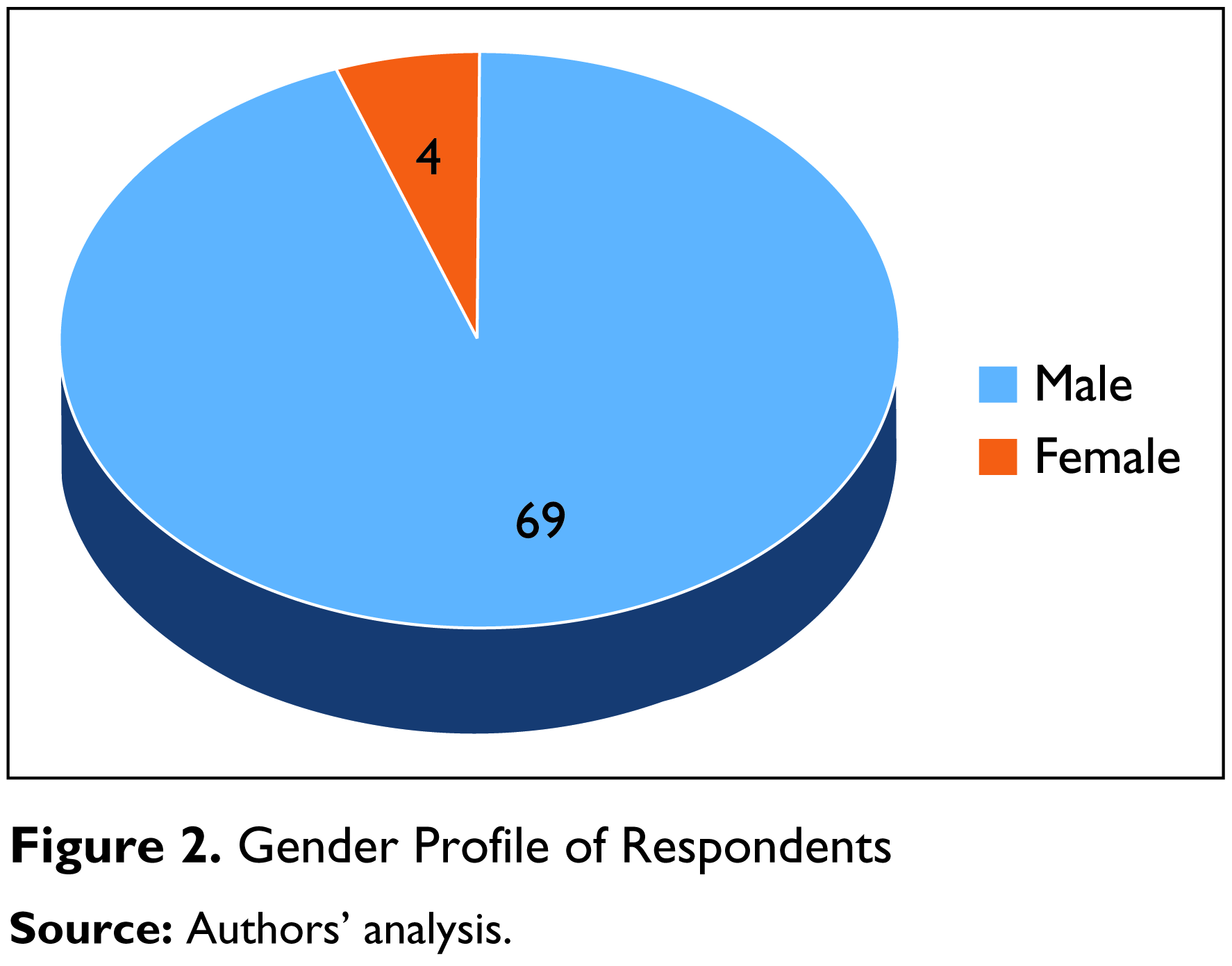
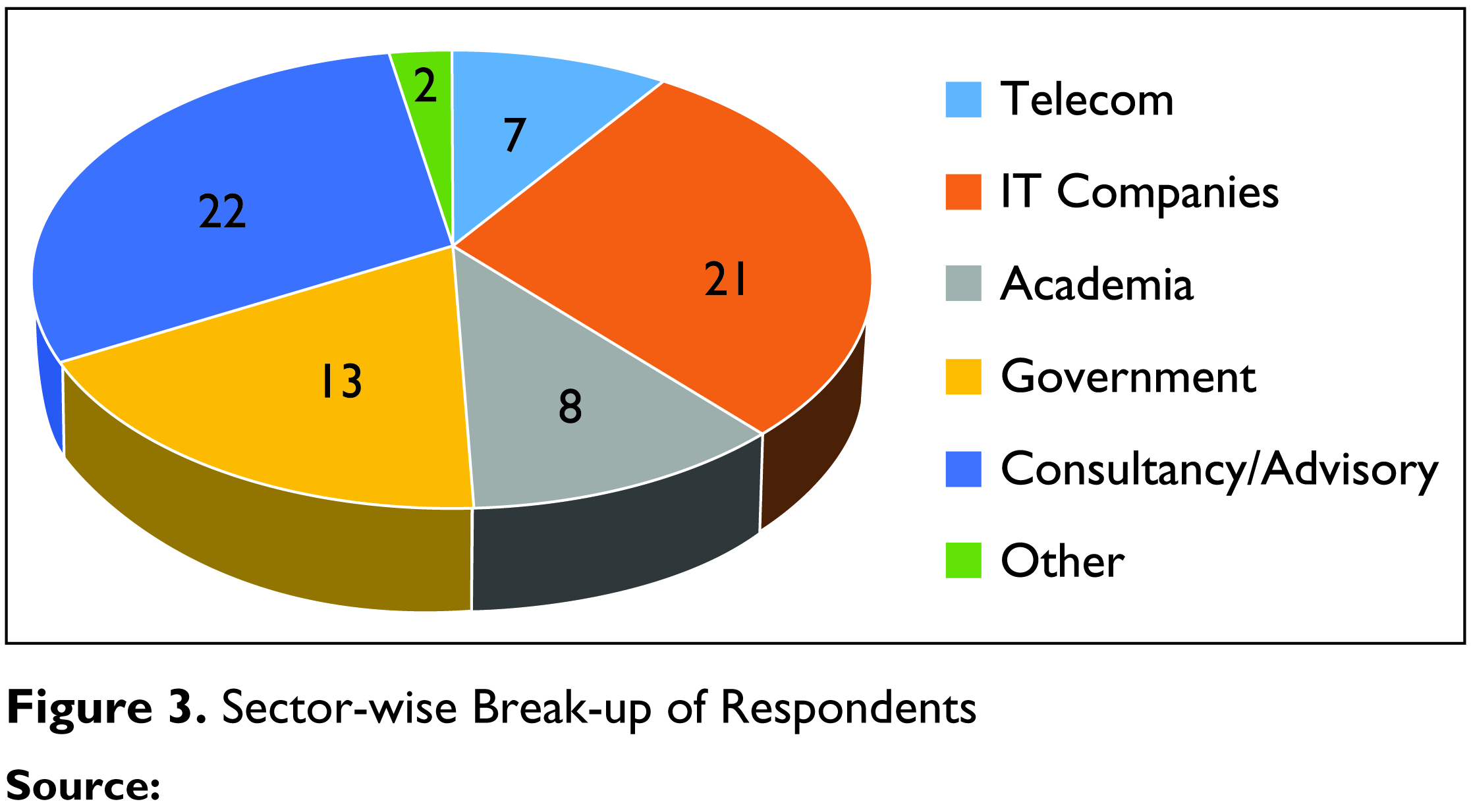
Figure 2 shows the gender profile of respondents. A majority of respondents (95%) were males.
Figure 3 shows the sector-wise break up of respondents. Respondents from IT companies (29 per cent) and consultants (29 per cent) constitute the majority of respondents. This could be due to the extensive working by these groups in the e-governance domain. Government officials represented 18 per cent of the respondents, while academicians and telecom professionals represented 11 per cent and 10 per cent, respectively. The percentage of respondents from other sectors was 3 per cent. Overall, the respondent mix was a healthy one, covering almost all of the sectors expected to be involved in mobile government.
Results of Ranking of Identified Service Quality Parameters
As mentioned above, the users were presented with an initial set of 17 e-government service quality parameters, and asked to rank them in the order of importance, as applicable to mobile government in Indian conditions. The responses have been analyzed based on average ranking assigned to each service quality parameter. The average of ranks assigned by respondents to each service quality parameter has been tabulated and shown in Table 2.
Ranking and Importance
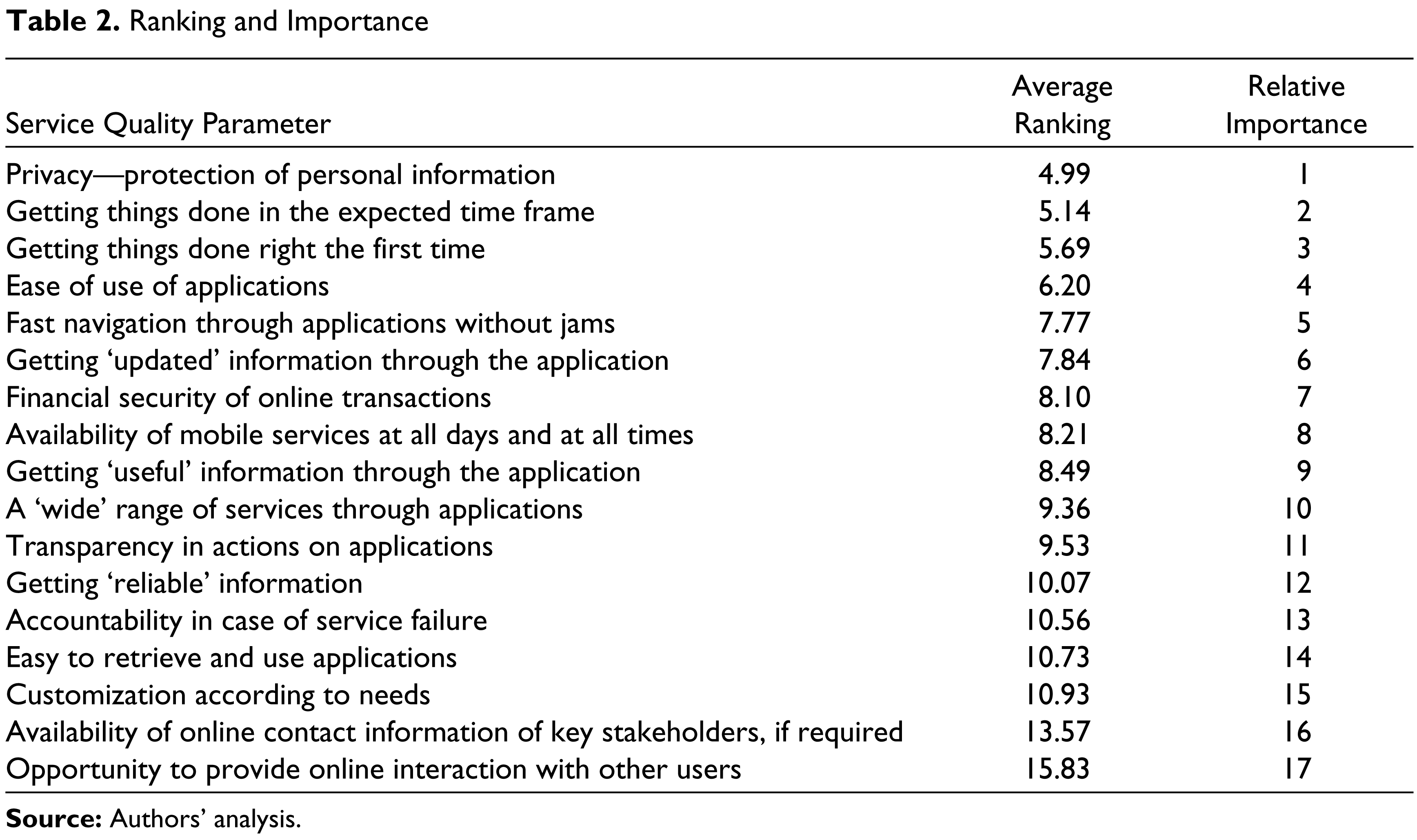
The following service quality parameters have been assigned an average ranking of less than 10 (out of 17), based on experts’ perception of their importance in Indian conditions. These parameters are privacy—protection of personal information, getting things done in the expected time frame, getting things done right the first time, ease of use of applications, fast navigation through applications without jams, getting ‘updated’ information through the application, financial security of online transactions, availability of mobile services at all days and at all times, getting ‘useful’ information through the application, a ‘wide’ range of services through applications and transparency in action on applications.
The protection of personal information and privacy has been ranked as the most important service quality parameter. The experts perceive that as e-government embraces mobile technology, privacy of personal information assumes critical importance. The perception could be due to the portability and transferability of handsets, coupled with number portability in India.
The requirement of getting things done during the first time has been ranked as the next most important service quality parameter. This is in line with the expectation of timely delivery of e-government services. The ranking assumes importance for researchers, considering the fact that mobile-based government service delivery may be dependent on mobile technology, which is still evolving, and hence robust application and functional design could assume importance.
Getting things done right the first time has been perceived as the next most important service quality parameter. This is also in line with e-government service quality parameters. This may be attributed to the importance being assigned by the experts to the requirement of getting the information and/or transactions built right into the applications so that users are able to get their service right the first time itself. Repetitive requests for the same service could be a deterrent to user satisfaction.
The ease of use of applications has been identified as the next most important parameter. This can be attributable to the specific requirements of navigation and handling of application features in a mobile device. Similarly, the speed of navigation has been ranked as the next most important parameter. Besides the above five parameters, getting ‘updated’ information, security of financial transactions, availability of mobile network, getting ‘useful’ information, availability of a wide range of applications and transparency in actions on applications have been identified as important service quality parameters.
It is pertinent to mention that the above survey was conducted as an exploratory survey (done with the same set of experts using the same questionnaire) to identify the factors affecting mobile government in India. The findings explained above have been found to be linked to the identified factors for mobile government success. The experts identified e-government availability as the most important factor for mobile government, and therefore the service quality parameters identified above and related to e-government services have also been identified by experts as important in the Indian context. Similarly, users’ access to mobile governance services has been identified as another important factor. The service quality parameters identified above relate to users’ access.
The respondents were provided with the option of adding any more service quality parameters that they felt were relevant to mobile government in Indian conditions and not covered by the e-government service quality parameters identified above based on literature review. The additional qualitative inputs received from experts for the addition of service quality parameters for mobile government in Indian conditions are service quality parity across devices and networks, assurance of service delivery time, integration with e-government channels and service quality assurance over low-cost devices.
We argue that service quality parity across devices and networks can be seen as a part of ‘ease of use of applications’. Similarly, assurance of service delivery time can be seen as a part of ‘getting services done in the right time frame’.
Conclusion and Scope for Future Work
Service quality parameters as identified for e-government services can also be seen as applicable for mobile government services. The results of the present study show that the most important/priority service quality parameters for mobile government in India are privacy, getting things done in the expected time frame, getting things done right the first time, ease of use of applications, fast navigation through applications without jams, getting ‘updated’ information through the application, financial security of online transactions, availability of mobile services, getting ‘useful’ information through the application, a ‘wide’ range of services through applications and transparency in action on the applications.
The results of this survey can be used for exploring sub-parameters under each of the identified service quality parameters in different geographical and demographic conditions in India to understand the dynamics of mobile government across the country. Further work can be done to consolidate the findings of the survey.
Footnotes
Acknowledgements
The authors are grateful to the anonymous referees of the journal for their extremely useful suggestions to improve the quality of the article.