



Abstract
The research study investigated the interrelationships among employer brand perception (EBP), trust in leaders (TRT) and turnover intentions (TI). In this study, responses from 350 junior-, middle- and senior-level executives working in Indian organizations were collected. The findings of the study indicate that EBP and subordinate’s TRT were negatively associated with TI. Further, Baron and Kenny’s (1986) four-step regression technique was used to test the mediating effect of subordinate’s trust in their leaders in establishing the relationships between EBP and TI. The results indicate that the relationship between EBP and TI was not only direct but also indirectly mediated significantly by the subordinate’s trust in their leaders. In the current study, employer brand perception emerged as a significant predictor of employee’s TI. The implications for future research on employee’s TI, EBP and subordinate’s trust in their leaders are further discussed in light of the findings.
Introduction
Employee retention has always been an important and crucial issue faced by organizations worldwide. Specifically, employee retention has become more crucial for Indian organizations. On the one hand, Indian organizations are struggling with high employee turnover rates, but on the other hand, despite less industrialization in developing nations (Shastri, 2008), India as one of the emerging economies of the world persuaded many global organizations to enter its potential market, making the competition to attract and retain talent more intense (Ready, Hill & Conger, 2008). In addition, the continuously changing expectations of twenty-first century employees has made the task of the employers more complex to design and implement practices that make an organization a great place to work for and an employer brand in itself (Rosethorn, 2009). In the scenario full of intense competition and dynamism, it becomes important and vital for the organizations in India to adopt and continuously build on best possible policies and practices that help employees in the fulfillment of their expectations, which in turn may enhance retention. Apart from following the benchmark practices, a recent trend that is being adopted by the organizations is becoming the ‘employer-of-choice’ and to focus on the development of employer branding strategies. Company’s efforts to build a strong employer brand among their employees can be guided by following the benchmarking practices. Becoming an employer brand has recently gained the attention of the employers as employees want to work for the best employers and this results in lower turnover rates. Acquiring the best talent for the organization, maintaining benefit needs, offering best career development services and ultimately retaining the talented employees are the key pillars for becoming the employer-of-choice (Fitz-enz, 2009). Creating a positive brand image in the minds of existing and potential employees is the key concern for the organizations, as employees feel pride in working for the organizations having positive public image in comparison with the organizations which are not regarded as favourable to work for (Phillips & Connell, 2008).
Building and communicating the employer brand image among potential and existing employees is a key concern for the organizations and also forms a part of their talent strategy (Mathew, 2015). Further, employee’s trust in their leaders also plays a vital role in development of the organization’s brand. An in-depth analysis of the findings (Budhwar & Singh, 2008) revealed that social relations play an important role in the management of human resources in India. This is also supported by the findings of a recent study which indicate that because of relatively less professionalism in Asian countries like India, social relationships were expected to have a stronger influence on employee outcomes such as intentions to quit (Frenkel, Sanders & Bednall, 2013). The above discussion makes it clear that sociocultural environments have significantly influenced the people management practices in Indian organizations where employees rely heavily on their supervisors for guidance, and social and interpersonal relationships are used as motivational tools by supervisors to motivate their subordinates (Saini & Budhwar, 2004). Employee perception of their leaders, such as following fair procedures, open communication and interactions while implementing the employer brand enhancing practices, results in building an environment of mutual trust and strong employee–employer relationships. The mutual trust between employees and their leaders helps in increasing employee retention in the organizations.
The aim of the research study is to provide new insights into the relationships between employer brand perception (EBP), trust in leaders (TRT) and an important organizational outcome, that is, employees’ turnover intentions (TI). Specifically, the research aimed at addressing: How do employees perceive their employer brand? How this perception of employer brand is related to TI of employees? What is the role of subordinates’ trust in their leaders in influencing these relationships? The research study aspires to explore the influence of employees’ perception of their employer brand and subordinates’ trust in their leaders on intentions of employees towards turnover.
In the following sections, we review the literature about employer branding, trust and TI. We describe how trust mediates the relationships between these variables. We then describe the methodology and findings of the survey conducted among a sample of employees workings in public and private organizations of India. We discuss the implications of the findings to the organizations and recommend some areas for future research.
Review of Literature
Employer Branding, Trust and Turnover Intentions
The term ‘employer branding’ was coined by Ambler and Barrow (1996) as a contribution to the field of marketing. The authors (Ambler & Barrow, 1996) defined employer brand of an organization as “the package of functional, economic and psychological benefits provided by the employment and is identified with the employing organizations. The main role of the employer brand is to provide a coherent framework for management to simplify and focus priorities, increasing productivity and improve recruitment, retention and commitment”. Lloyd (2002) defined employer brand ‘as the organization’s efforts to communicate potential and current employees that organization is a desirable/great place to work for’. Mayo (2001) defined employer brand as ‘It is what is communicated—consciously or unconsciously—to every employee or prospective employee.’ Walker (2006) defined employer brand as ‘a set of attributes that make an organization distinctive and attractive to those people who will feel an affinity with it and deliver their best performance within it’. The current research study follows the definition proposed by Lloyd (2002). Mowday, Porter and Steers (1982) defined TI as ‘the subjective estimation of an individual regarding the probability of leaving an organization in the near future’. Most of the research studies examined the behavioural intentions (intention to search, intention to leave, intention to quit and TI) to study employee turnover, as research provides empirical evidence that these intentions are the better predictor of actual turnover than other organizational variables (Carmeli & Weisberg, 2006; Griffeth, Hom & Gaertner, 2000; Steel & Ovalle, 1984). The term employer branding has often being used collaboratively with employer attractiveness, organizational attractiveness and organizational identification. The various researchers described the attributes of the employer branding differently. Lloyd (2002) described employer branding as the ‘sum of a company’s efforts to communicate to both existing and prospective staff that it is a desirable place to work’, but Ewing, Pitt, de Bussy and Berthon (2002) concluded that employment branding is concerned with building an image in the minds of the potential labour market that the company, above all others, is a ‘great place to work’.
Since its inception, employer branding has been studied from the point of view of potential labour market (Berthon, Ewing & Hah, 2005). Little empirical evidence on how EBP among the existing employees affects the important organizational outcomes clearly indicates the gaps in the existing literature (Backhaus & Tikoo, 2004). The following questions are still unanswered: Does employer branding increase retention? Does employer branding change employee’s work behaviour? Is job satisfaction improved? Is productivity improving? It is because of this reason that it is worth studying that how EBP affects the employee’s behaviour in an organization. Another important reason to study the EBP among existing employees is the findings of the study conducted by Kucherov and Zavyalova (2012) which indicates that the companies with strong employer brand (CEBs) have potential advantages in comparison with companies without employer brand (CWEBs). The study also indicates that the CEBs have gained economic advantage due to lower staff turnover rates and higher rates of HR investments in development activities of employees. It was also found that in CEBs, the employees are actively involved in decision making and management processes. The strong employer brand image is predictor of organizational outcomes like employee satisfaction, affective commitment and turnover (Priyadarshi, 2011). Given the state of existing literature, one can conclude that employer branding as a concept has gained much attention in the field of marketing, and it was found that the concept employer branding is still in infancy stage within human resource management field. There are a number of key areas from Organizational behaviour (OB) area such as leadership and motivation that can help add theoretical foundation to the concept and can help understand what makes a successful employer brand (Edwards, 2010). Research studies also revealed the fact that employee’s willingness to stay with the organization increases if employees feel pride in working for that organization (Jiang & Iles, 2011) and are strongly identified with one’s organization. The study also indicates that higher organizational identification reduces the turnover intent of the employees working in that organization. Further, literature highlighted that implementation of innovative practices by the organizations will increase the employee’s trust in their supervisor and the organizations (Whitener, 1997).
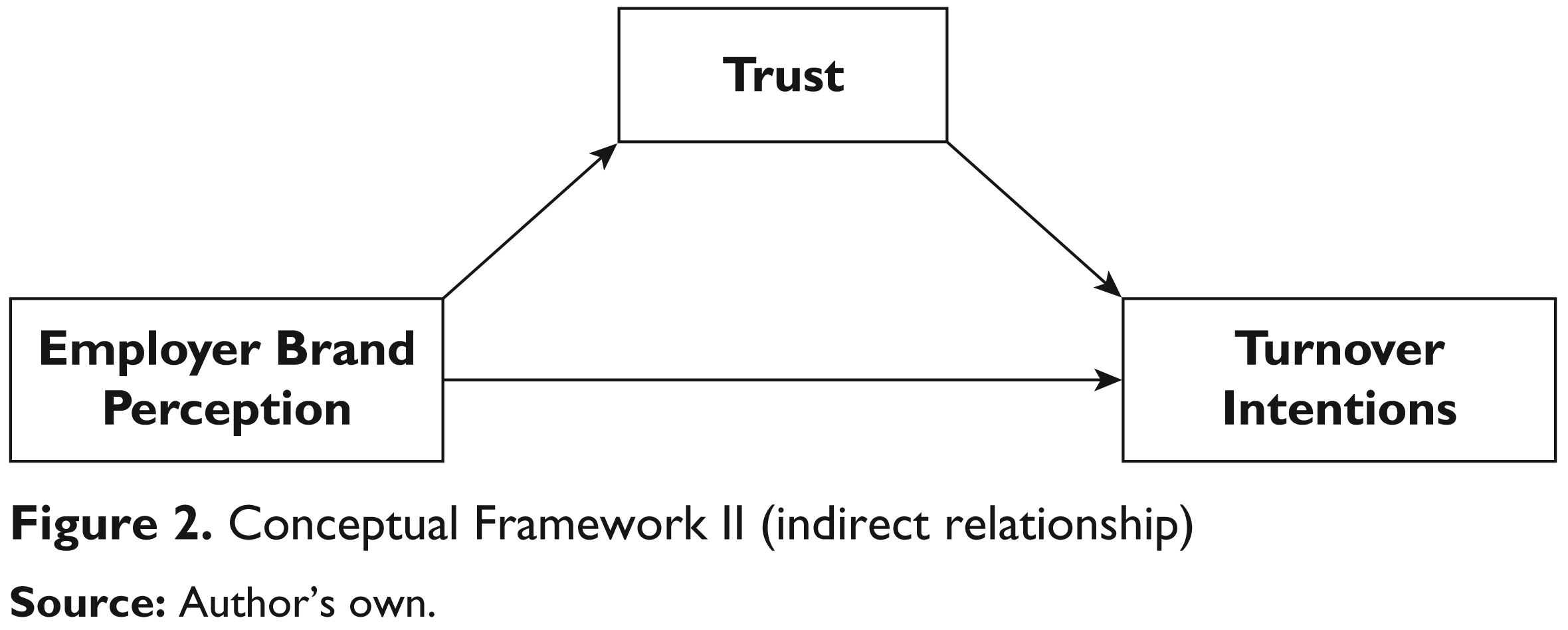
Further, the theory of social exchange relationship (Blau, 1964) provides useful insights on the relationship between employer branding practices and employee’s trust in their leaders. The principle of reciprocity (Gouldner, 1960) demonstrates this phenomenon. Organizational efforts to create and maintain the unique employer brand by following best possible human resources policies and practices convey a message of organizational support to its employees (Whitener, 1997). Employees in return reciprocate this by developing trust and commitment towards the organizations. Continuously meeting the expectations of employees also result in increased employee retention rates which further results in building rare human capital resource of the organization (Wright, McMahan & McWilliams, 1994). While policies and practices are developed by top management and human resource managers, the implementation lies with the leaders. Leader’s behaviour of implementing these activities has a significant impact on relationship with their employees and the trust which employees have in them because of fair outcomes, procedures, open communication and interactions (Whitener, 1997). Although the fair implementation of policies and practices by leaders may not directly result in reducing the turnover intention of employees through TRT, the phenomenon (i.e., TRT) provides the conditions under which high performance and positive work-related attitudes are likely to occur (Dirks & Ferrin, 2002). Thus, the study proposed that TRT is an important mediating mechanism influencing the relationships between perceived employer brand and TI. Building on the arguments presented above, we propose the following conceptual model.
Literature highlighted that innovative practices developed by organizations convey the message of organizational support to its employees. Phillips and Connell (2008) found that one of the key concerns for the organizations nowadays is creating a positive brand image in the minds of potential and existing employees, as organizations having positive public image are more successful in attracting and retaining the employees in comparison with the organizations not regarded as desirable to work for. Leaders in organizations play an important role in portraying positive organizational image. For this to happen, it is important that leaders establish the relationship of trust among their employees. Various researchers have defined TRT differently. This research study follows the conceptualization of trust proposed by Podsakoff, Mackenzie, Moorman and Fetter (1990). Researchers conceptualized trust as faith in and loyalty towards leader. Dirks and Ferrin (2002) in their research study found that employee’s perception of their supervisors as the one who lacks integrity, honesty, fairness and competence results in their tendency of quitting jobs. However, higher levels of supervisory trust resulted in higher level of commitment, job satisfaction and lower level of TI. HeathField (2002) concluded that trust built by the leader forms the foundation for employee retention. Given the state of existing literature and gaps identified above, the authors aim to achieve following objectives.

Objectives
To study employees’ perception of their employer brand and its impact on their TI.
To study the mediating effects of subordinates’ trust in their leaders in establishing the relationships between EBP and TI.
Methodology
Participants
Three hundred and fifty executives working in Indian organizations located in the industrial hub cities/states of India (i.e., New Delhi, Bangalore, Hyderabad, Uttarakhand etc.) participated in the survey. From 350 participants, 291 (83.1 per cent) were males and 59 (16.9 per cent) were females working in public/private manufacturing and service organizations. The majority of respondents, that is, 105 (30 per cent), were less than 25 years of age, followed by 85 (24.3 per cent) between 26 and 30 years, 62 (17.7 per cent) above 45, 36 (10.3 per cent) between 31 and 35 years of age, 34 (9.7 per cent) between 41 and 45 years and 28 (8.0 per cent) between 36 and 40 years of age. The majority of respondents, that is, 147 (42 per cent), were post-graduates followed by 130 (37.1 per cent) graduates, 61 (17.4 per cent) diploma holders and 12 (3.4 per cent) with above postgraduate qualification. The hierarchical level of the respondents were 112 (32 per cent) at the junior level, 195 (55.7 per cent) at the middle level and 43 (12.3 per cent) at the senior level. In terms of experience, most of the respondents, that is, 168 (48 per cent), had less than 5 years of experience, 57 (16.3 per cent) between 6 and 10 years of experience, 25 (7.1 per cent) between 11 and 15 years of experience, 34 (9.7 per cent) between 16 and 20 years of experience and 66 (18.9 per cent) with more than 20 years of experience. Researchers have collected the data through personal visits to the organizations. The data were collected from the respondents during the training programme conducted by the researchers on the theme of the employer branding. The doubts raised by the respondents while responding to the scale were cleared at the time of training resulting in 100 per cent response rate. Some of the data were also collected through online method by inviting employees to participate in the survey through emails. Collecting personal information was not the part of survey to assure anonymity of the respondents.
Measures
The EBP, TRT and TI were measured with the help of standardized scales. ‘EBP’ was measured with 25 items (α = 0.93). Items were adapted from the scale developed by Berthon et al. (2005). Some of the statements have been modified to assess the perception of existing employees regarding their employer brand. The instructions have been modified for the research under study. Respondents were asked to rate the presence of attributes such as ‘Recognition/appreciation from management’ on a five-point Likert scale (1 – to a very small extent to 5 – to a very great extent). The scale developed by Podsakoff et al. (1990) was used to measure ‘TRT’. The items used in the study included ‘I have complete faith in the integrity of my manager/supervisor’, ‘I have a strong sense of loyalty towards my leader’. One of the items was reverse coded in the scale, but for the purpose of this study, the item has been modified to make it positive. The reliability coefficient (α) for trust is 0.85 for this study. To measure ‘TI’, three items have been adapted from the Michigan Organizational Assessment questionnaire by Cammann, Fichman, Jenkins and Klesh (1979). The reliability coefficient (α) for TI is 0.89. All the responses were collected on a five-point Likert scale (1 – strongly disagree to 5 – strongly agree).
Analyses
A series of confirmatory factor analyses (CFA) were performed to test the model fit. In the CFA, all the items were allowed to load on their respective constructs. The measurement model includes seven factors (i.e., five employer branding dimensions as social value, interest value, economic value, development value, application value with TRT and TI). The model was found to be fit with a chi-square of 878.806, p < 0.001, TLI (Tucker-Lewis Index) = 0.915, CFI (Comparative fit Index) = 0.925, RMSEA (Root mean square error of approximation) = 0.048. All the measures were self-reported measures as the data were collected from a single source, so there is a potential threat of common methods variance in the study. Following the methods prescribed by Podsakoff, MacKenzie, Lee and Podsakoff (2003), we have assessed the common method variance by using Harman’s single factor test. While performing the test, all the items were allowed to load on a single factor in principal component analysis, and the number of factors to be extracted was fixed as one. Examination of the unrotated factor solution depicts that a single factor accounts for only 26 per cent variance. The variance explained by single factor solution, that is, 26 per cent, is much lesser than 50 per cent, that is, the minimum threshold for the presence of common method variance (Podsakoff, MacKenzie & Podsakoff, 2012).
The descriptive statistics (mean, SD, inter-correlations) are shown in Table 1. Correlation statistics presented in Table 1 depicted that all the dimensions of the employer brand are positively associated with TRT and negatively associated with employees’ TI resulting in achievement of objective 1 of the study. In order to test the combined effect of EBP in the analysis, a summated scale of employer branding dimensions was used. All the items of employer branding dimensions were bundled into one single variable named: EBP. Prior research studies followed this approach of aggregation of scores to form an overall composite score to test the impact of coverall construct on various outcomes (Guchait & Cho, 2010; Zhang, Kwong Kwan, Everett & Jian, 2012).
Mean, SD and Inter-correlations among Variables under Study
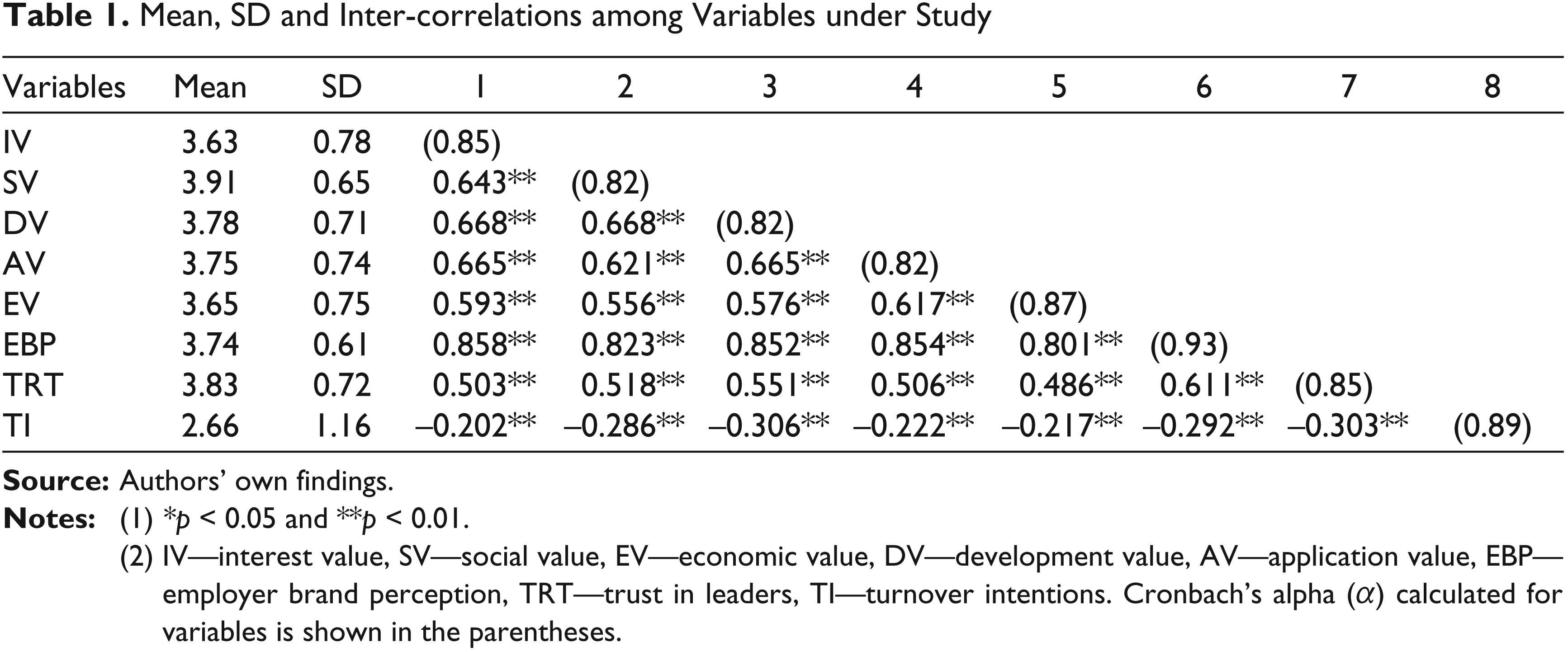
(2) IV—interest value, SV—social value, EV—economic value, DV—development value, AV—application value, EBP—employer brand perception, TRT—trust in leaders, TI—turnover intentions. Cronbach’s alpha (α) calculated for variables is shown in the parentheses.
Results
Construct Validity
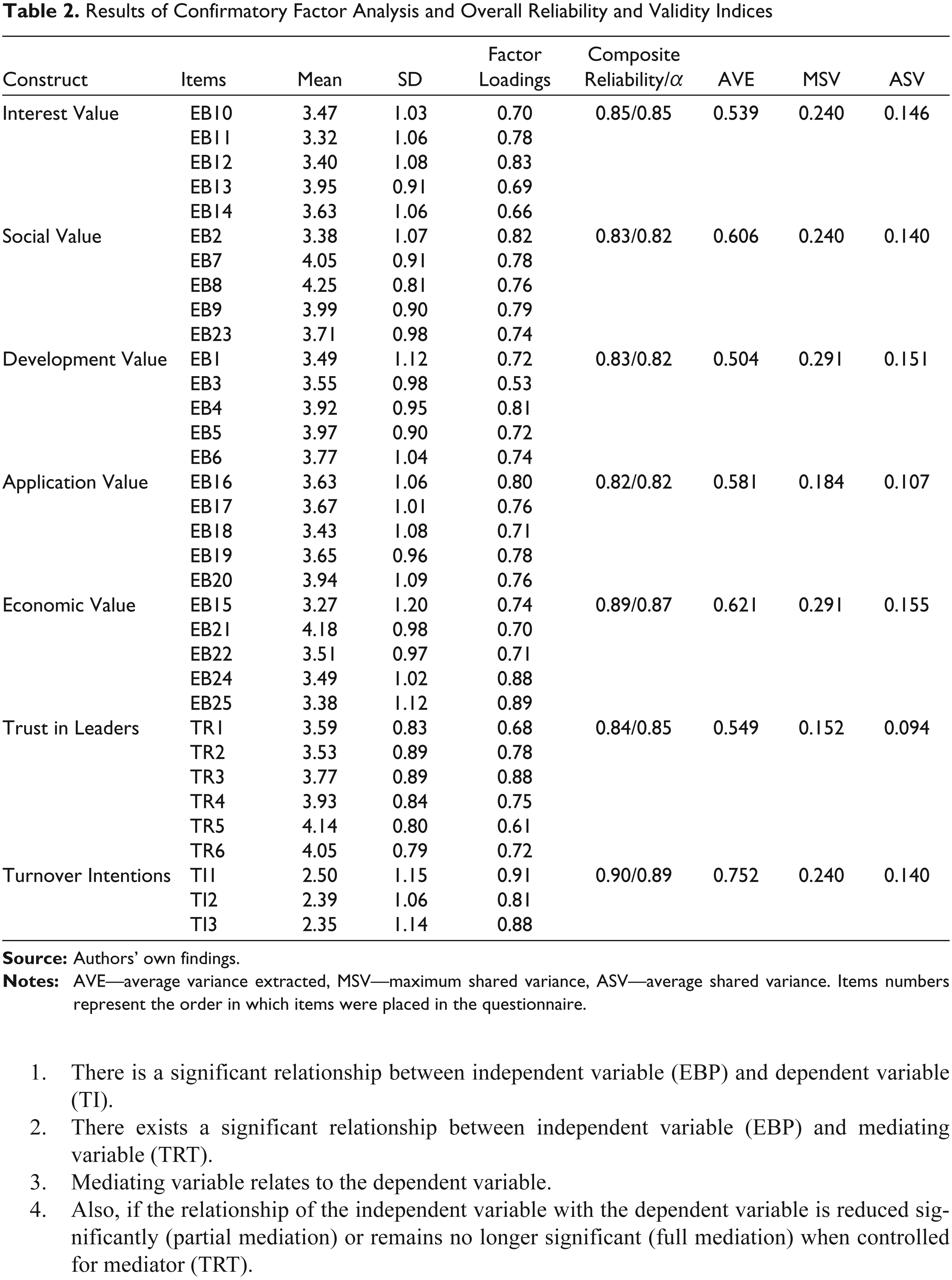
Convergent validity means the extent to which indicators of a specific construct converge or share a high proportion of variance in common (Hair, Black, Babin & Anderson, 2010). We assessed the convergent validity of all the constructs used in the study prior to further analysis. We performed a CFA to test the measurement model with seven constructs (i.e., interest value, social value, economic value, development value, application value, TRT and TI). The model was found to be fit with a chi-square of 878.806, p < 0.001, TLI = 0.915, CFI = 0.925, RMSEA = 0.048. Mean, SD, factor loadings, average variance extracted (AVE), maximum shared variance (MSV), average shared variance (ASV), composite reliability (CR) and reliability coefficient (α) is displayed in Table 2. As shown in Table 2, all the items loaded significantly on its respective constructs, internal consistency reliability coefficient Cronbach’s alpha (α) ranging from 0.82 to 0.89 and AVE for all the constructs range from 0.504 for the development value to 0.722 for TI indicating that constructs are reliable. In addition, as per the guidelines prescribed by Hair et al. (2010), convergent validity of a construct is established if it prevails that CR of the construct is greater than its AVE and AVE is greater than 0.5. CR is greater than AVE for all the constructs and AVE for all the constructs is greater than 0.5 as shown in Table 2, indicating the constructs to be convergent valid.
Discriminant validity means extent to which a construct is truly distinct from other constructs (Hair et al., 2010). Discriminant validity can be established by comparing the MSV and ASV with AVE. As prescribed, discriminant validity exists when the values of MSV and ASV are smaller than the values of AVE (Hair et al., 2010). As can be seen from the Table 2, all the values satisfy these above mentioned conditions. Thus, discriminant validity of the model is confirmed in the study.
Mediation Analysis
In order to test the combined effect of EBP in the analysis, a summated scale of EBP was used. All the items of EBP were bundled into one single variable named EBP. Correlation and regression analysis test were applied to achieve the objectives of the study. Baron and Kenny’s (1986) four-step technique was used to test the mediating effect of subordinates’ trust in their leaders on the relationship between EBP and TI. Correlational statistics were used to achieve the objective 1. Correlation coefficients (r) among variables under study are displayed in Table 1, EBP was positively associated with trust (r = 0.611, p < 0.05) and was negatively associated with TI (r = –0.291, p < 0.05) significantly. Subordinates’ trust in their leaders was found to be negatively associated with TI (r = –0.303, p < 0.05) significantly. This results in the achievement of objective 1. Baron and Kenny’s (1986) four-step technique for mediation analysis was used to test the potential role of trust (TRT) on relationship between EBP and TI. As per the directions of Baron and Kenny (1986), there is mediation effect if:
There is a significant relationship between independent variable (EBP) and dependent variable (TI). There exists a significant relationship between independent variable (EBP) and mediating variable (TRT). Mediating variable relates to the dependent variable. Also, if the relationship of the independent variable with the dependent variable is reduced significantly (partial mediation) or remains no longer significant (full mediation) when controlled for mediator (TRT).
Results of Confirmatory Factor Analysis and Overall Reliability and Validity Indices
Hierarchical Multiple Regression Results for Mediating Role of Trust
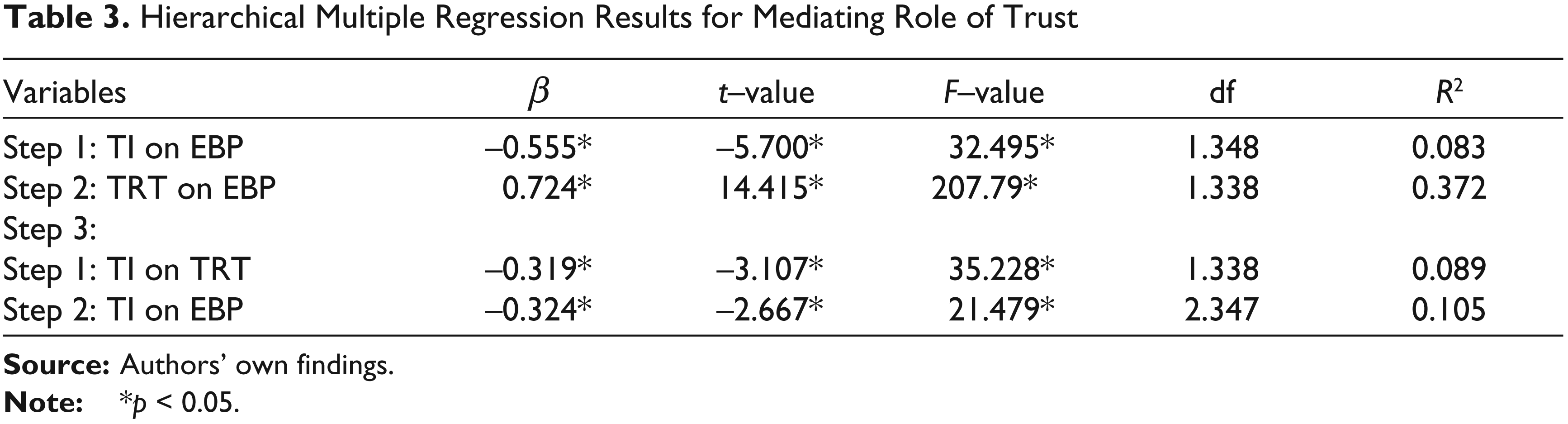
All these above-mentioned conditions were tested by multiple regression techniques. In step 1, turnover intentions (DV) were regressed on EBP (IV). The relationship between these variables was found to be significant and negative with (β = –0.555, t (350) = –5.700, p < 0.05) satisfying the first condition for mediation analysis. In the step 2, trust (TRT) (MV) was regressed on EBP (IV). The relationship was significant and positive with (β = 0.724, t (350) = 14.415, p < 0.05) satisfying second condition for the mediation analysis. In the last step, turnover intentions (DV) was first regressed on TRT (MV) by entering it in block 1 in SPSS regression analysis window and then on EBP which was entered in block 2 of SPSS regression analysis window. Statistics in Table 3 indicates trust which (β = –0.319, t (350) = –3.107, p < 0.05) emerged as significant predictor of TI. Further, EBP and TI relationship became weakened (from β = –0.555, p < 0.05 to β = –0.324, p < 0.05), but still remained significant when the effects of mediating variable TRT was controlled. The mediation model explained 10.5 per cent variance. Hence, this change in the regression coefficients indicates the support for partial mediation of the trust on the relationship between EBP and employee’s TI. Thus, the analysis results in the achievement of objective 2.
Discussion and Conclusions
The purpose of the study was to examine the mediating effects of subordinates’ trust in their leaders in establishing the relationship between EBP and employee’s TI. The negative relationship between EBP and TI among the Indian executives working at junior, middle and senior levels was supported in the findings of the study. The EBP was found to be significant predictor of TI. It means that the employees who perceive their employers as strong brands providing all the support and make the organization ‘Great place to work for’ are more willing to keep a long-term association with the organizations and have high staying intentions in comparison with other organizations which are weak in employer branding activities. It implies that the organizations investing in the implementation of innovative policies and practices to make the organizations a desirable place to work for have competitive edge over the other organizations. Although it is obvious that the higher satisfaction with all these policies and practices will lead to lower TI, the important issue here is to highlight and communicate the policies and practices followed and continuously building on the expectations of the employees and changing market demands. The most cited employer branding expectations were ‘recognition as employer-of-choice’ and ‘ease in attracting talent pool’ (HR Focus, 2006). Therefore, maintaining a positive organizational image as a strong employer brand to work for might work as a solution to handle high employee turnover rates. The result of the study indicated that employee’s perception of their employer brand increases their trust in their supervisors. This finding is in alignment with the results of the study conducted by Whitener (1997) who concluded that an employee’s trust in supervisor and organization would increase with the implementation of organization’s innovative practices as these practices convey a message of organizational support to its employees. Employees perceive that all the support provided by organization is conveyed by the supervisors as they represent the whole organization. It is because of this reason that employee’s trust in their supervisor is more important than their trust in the organizations in dealing with the issue of employee turnover, as employees feel that trust in the supervisor provide them emotional support which in turn increase employee retention rates and reduce TI.
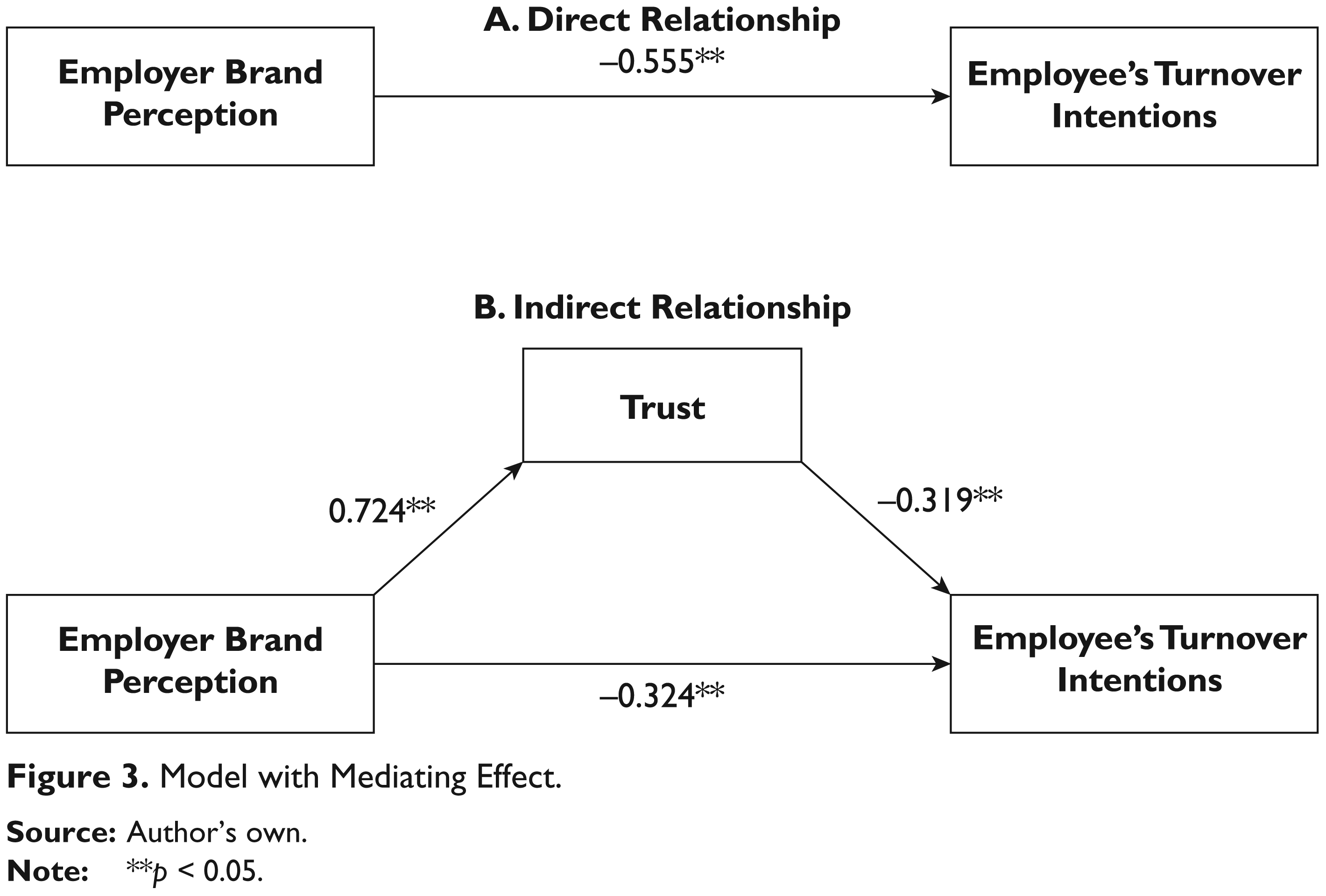
Further perception of employee’s trust in their leaders/supervisors was conceptualized as potential mediator in the relationship between EBP and TI. Findings of the multiple regression techniques provided the evidence of partial mediation effect of employee’s perceptions of trust in their leaders/supervisor. Seeing that the relationship between EBP and TI is partially mediated by employee’s trust in their leaders/supervisors, the EBP and trust both in mutual existence affects employee’s attitude towards TI. This finding highlights that the role of employee’s trust in their leaders is as effective as EBP in altering the employee’s behaviour towards their intentions to work with the current employers. Supervisors are the organizational representatives who communicate the organizational efforts to all the employees and this result in building the relation of mutual trust between employees and their supervisors. This mutual relationship of trust thus influences the employee’s TI. In this view, findings can be used by the organizations to guide the human resource management department to work on the activities that increase the visibility of the organization among potential employees to gain competitive advantage. The organizations can design training programmes for leaders to emphasize on adopting the positive behaviour towards employees to develop the environment of mutual trust and respect for each other. The findings are also useful for the organizations as the findings indicate that innovative policies and practices can help to modify the employee’s behaviour. The organization can devise new policies and practices to make the organization a distinctive brand for which employees feel pride to work with. Hence, it can help organizations to increase employee’s job satisfaction, commitment, loyalty and reduce employee’s TI.
Limitations and Future Research
First, the findings of the study are based upon the respondent’s perception of their workplace variables; hence, it becomes difficult to reach in valid conclusions with a small sample size. Also, the sample chosen for the study is based on the convenience sampling technique; hence, the findings of the study are not generalizable. Second, the inference made in the study could not demonstrate the causal relationship between the variables as data were cross-sectional. Further studies should focus on longitudinal research to investigate the causal relationship between the variables of interest. Comparative studies should be given importance to examine the efforts of public and private sector organizations in building employer brands. It will be quite interesting to investigate which industrial sectors are commanding employer branding initiatives. Instead of examining the behavioural intentions such as TI, actual turnover rates should be considered by the researchers to report more accurate conclusions.
Footnotes
Acknowledgements
The authors are grateful to the anonymous referees of the journal for their extremely useful suggestions to improve the quality of the article. Usual disclaimers apply.