



Abstract
Globally, mobile virtual network operators (MVNOs) are popular among subscribers in established MVNO markets of America, Europe and Asia-Pacific, where regulatory authorities have allowed them to operate. Their revenues and subscribers have grown fast during last few years. Globally, MVNOs had 134 million customers, with a revenue of more than 25 billion USD in 2014. The Indian government intends to allow MVNOs in the Indian telecommunication market. The government’s approval to allow MVNO’s will open up new opportunities for firms which intend to launch MVNOs. Given the impending introduction of MVNOs in India and its importance, this research article focuses on determining the key factors that will influence MVNOs in India. The study also attempts to identify inter-linkages among various factors and develops a model that would be helpful for industry and academia in getting a better understanding of factors that will drive MVNOs in India. Grounded theory was used to identify the key factors and total interpretive structural modelling (TISM) was used to understand the hierarchy amongst various factors and interpret the relationship amongst them. The identified factors were empirically validated using factor analysis. Key managerial insights were obtained by developing a model for the set of factors, specific to the Indian context. The hierarchical model developed during the study provides a better understanding about relationships between various factors of interest. The research findings can immensely benefit potential MVNOs in identifying the areas they should focus on in the Indian context. Findings report that factors, such as reservation of spectrum capacity by the government, spare radio spectrum, differentiated value-added services (VAS) offered by MVNOs, willingness of mobile network operators, competitive intensity, wholesale tariff regulation, MVNOs’ business strategy and retail tariff, will play a key role in MVNOs’ success in India.
Introduction
Mobile virtual network operators (MVNOs) are service providers offering mobile services to their customers, without having their own spectrum and complete mobile infrastructure. They enter into an agreement with mobile network operators (MNOs) to share the spectrum owned by MNOs.
Mobile virtual network operators have a flexible business model. They have been very successful in providing value-added services (VAS) to niche customer segments in many countries where regulators have allowed them to operate. Their service offerings are built around a successful brand, content, existing large distribution network or new innovative VAS for a niche customer segment.
The Government of India intends to allow MVNOs in India. In May 2015, the Telecom Regulatory Authority of India (TRAI) released a recommendation on introducing virtual network operators in the telecom sector (TRAI, 2015b). The entry of MVNOs in India will open up new opportunities for firms and have potential to offer significant benefits to customers. Given the impending introduction of MVNOs in India and its importance, this research article focuses on determining the key factors that will influence MVNOs in India. The study also attempts to identify the inter-linkages among various factors and develops a model that would be helpful for industry and academia in getting a better understanding of factors that will drive MVNOs in India.
This article has been divided into seven sections. The first section provides an introduction to the article and lays down the structure of the article. Review of literature was done to identify findings of research on MVNOs in the international and Indian context. Details from literature review have been mentioned in the second section. Gaps identified in the existing literature led to determining the research objectives of the study. The third section lists down the research objectives. Grounded theory was used for identifying the key factors that will influence MVNOs in India. These were then empirically validated. Total interpretive structured modelling (TISM) was used to develop a model depicting linkages between these factors. The fourth section provides details of research methodology used during the study. The fifth section describes in detail the analysis and insights derived from the research. Conclusions have been summarized in the sixth section of the research article. The seventh section mentions the references used during the study. Questionnaire developed and used during the research has been provided as an annexure in the eighth section.
Literature Review
The Indian telecommunications industry is one of the fastest growing industries in the world. It has witnessed fast growth in the last decade. It is the world’s second largest wireless market after China in terms of mobile connections. According to the TRAI, the total number of mobile subscribers base in the country was 960.58 million as on 28 February 2015, with a teledensity of 76.6 (telephones per 100 people). The unparalleled growth of the Indian telecom sector has been built on the growth of mobile connections, which constitute a large share of total telecom subscribers in India. Wireless subscribers have grown from 33.69 million in March 2004 to 960.58 million in February 2015 (TRAI, 2015a). Despite the tremendous growth in the last decade, the Indian telecommunication market is characterized by low penetration in rural areas, low average revenue per user (ARPU), low profitability and a very diverse set of customers to cater to.
Over the last few years, while subscribers’ base has grown rapidly, the revenue has not increased in the same proportion. Growth in the telecom sector is characterized by low ARPU. The ARPU from wireless services has also come down due to increased competition and reduction in tariffs. As the ARPU declines and voice services get commoditized, the challenge for mobile service providers would be to retain customers, develop alternative revenue streams and create a basis for brand/service differentiation (TRAI, 2011). Globally, MVNOs had 134 million customers, with a revenue of more than 25 billion USD in 2014. By 2019, global MVNO subscribers and revenue are forecasted to grow at a compound annual growth rate (CARG) of 18 per cent to reach 313 million and 43 billion USD, respectively (Ovum, 2014).
Currently, the contribution of non-voice revenue to the total mobile revenues of Indian telecom service providers is just very low. This is significantly lower than the revenue in developed markets. Creation of different VAS meeting the need of the customers could provide an opportunity to overcome the industry challenges and bridge the revenue gap. In order to build successful, sustainable business, the Indian telecom industry will have to revisit its business model and identify new business models which have been successful in international markets. These models should help them in offering a wide range of VAS to a diverse set of customers across the country. This in turn will also help them in increasing the teledensity in rural areas and also increase the ARPU. New business models will help in harnessing the potential of Indian market effectively.
Emerging telecommunication technology has driven fundamental changes in the way the mobile industry does business. There have been significant developments and convergence in information and telecom technologies, leading to realignment of telecom, media and other industries (Kathuria, 2000). Along with benefits, technology has brought along several challenges, including much more sophisticated and better informed customers, as well as lowering the traditional barriers to market entry (Shin, 2010). Along with new technologies, new business models have emerged. These business models had a disruptive effect on the telecommunication market.
An MVNO is a good example of an emerging business model. Globally, MVNOs are popular among subscribers in established MVNO markets of America, Europe and Asia-Pacific where regulatory authorities have allowed them to operate. Their revenues and subscribers have grown fast during the last few years.
An MVNO is a mobile carrier that provides mobile phone services, but does not have its own licensed frequency allocation of radio spectrum, nor does it necessarily have the entire infrastructure required to provide mobile telephone services (Shin, 2008). They offer mobile services without an allotted spectrum by hosting services through commercial agreements with MNOs. They may have little or no network infrastructure of their own. Usually, their services are augmented by product differentiation, brand appeal and existing distribution channels with focused customer segments (Kumar, 2010). According to TRAI, an MVNO is an entity that does not have assignment of spectrum for access services (2G/3G/BWA) but can provide wireless (mobile) access services to customers by sharing the spectrum of the access provider (TRAI, 2008).
As per Shin, MVNO business model is an innovative business model that can provide consumers with great convenience (Shin, 2010). Finegold states that MVNOs are more about customers, community and contents rather than technology (Finegold, 2004). Mobile virtual network operators complement the efforts of network operators who share their spectrum or communication network with them. Mobile virtual network operators in many ways are a great help to the wireless/telecommunications industry. They add to the list of choices consumers have, while at the same time working to the wireless network operator’s advantage by sharing the telecommunication infrastructure through revenue sharing models. Macquire supports the same view and mentions that an MVNO is all about customization (Macquire, 2007).
Mobile virtual network operators’ subscription base is growing across the world and is a popular proposition among subscribers (Singh, 2009). Most economies have allowed the entry of MVNOs with a view to making the market more competitive in providing quality services at affordable prices to subscribers. At end of year 2014, there were 992 MVNOs worldwide. Mobile virtual network operators are more prevalent in mature telecom markets where mobile density is more than 100 percent. Almost 1,000 MVNOs are operating worldwide, wherein Europe, Asia-Pacific and North America have 585, 129 and 107 MVNOs, respectively (GSMA, 2015). These MVNOs target both consumer and enterprise market. An operation of Virgin Mobile as a franchisee of Tata Teleservices in the CDMA segment of subscribers is the only model similar to MVNO model, which has been tried in India till date.
The success of MVNO business model has been mixed in different countries. They have been very successful in countries, such as Sweden, Denmark and USA, while struggling in countries such as Singapore. Academic studies on MVNOs have focused on the different success factors of MVNO business models, such as mobile network infrastructure and competition by Cricelli, Grimaldi and Ghiron (2009), market structure and customer preference by Shin (2008, 2010), government regulations by Lee, Chan-Olmsted and Hui Ho (2008), financial perspectives by Varoutas et al. (2002) and relationship between MNO and MVNO by Ovum (2009).
The Indian government intends to introduce MVNOs in the Indian market. The TRAI has released a paper on the entry of MVNOs in 2008 (TRAI, 2008). In May 2015, the TRAI released a recommendation on introducing virtual network operators in the telecom sector (TRAI, 2015b). The government’s approval to allow MVNOs will open up new opportunities for firms which intend to launch MVNOs in India. Given the impending introduction of MVNOs in India and its importance, this research article focuses on determining the key factors that will influence MVNOs in India.
Research Objectives and Rationale of the Study
A review of literature done during the study explains the fact that there is a large knowledge base of studies on telecommunications industry in both the Indian and international context. Research scholars have done adequate research on different dimensions of MVNOs in the international context. There is adequate research on different dimensions of the Indian telecom industry—including its evolution, policy framework, spectrum allocation, competitiveness and growth of the industry. However, the research on emerging business models in India is in an evolving stage and has a long way to go. Certain research papers have been published on the entry of MVNOs in India (Kumar, 2010; Singh, 2009; TRAI, 2008; etc.); however, there is a lack of significant research on MVNOs in the Indian context. Available research has only studied certain specific dimensions. However, there are gaps in the existing literature to understand the key factors for the success of MVNOs in the Indian telecommunication market. Adequate research to understand the interrelationship between different variables is also not available.
Given the research gap, two research objectives were defined for this research. The research aims to identify the key factors that will influence MVNOs in the Indian telecommunication market. These could be customer-, regulatory-, industry- or company-centric factors. The second objective is to identify inter-linkages among various factors in the Indian context. The study aims to develop a model that would be helpful for industry and academia to appreciate and better understand the key factors that will impact MVNOs in India.
Research Methodology and Analysis
Grounded theory, factor analysis and TISM are the research methods used during the study. Qualitative data were collated through various sources (interviews, observations, literature review, etc.). Grounded theory framework was used to analyze the interviews and identify the key factors. This theory does not necessitate the use of literature review. However, to improve the understanding of the subject and leverage from the research done on this subject, a thorough literature review was done at the beginning of the research. Factor analysis was used to empirically validate the factors that will impact the success of MVNOs in India. Total interpretive structural model was used to develop a conceptual framework and to demonstrate the key factors and linkages among them.
Grounded Theory for Identification of Key Factors and Empirical Validation
Strauss and Corbin (1990) and Glaser (1992) have proposed two different approaches to the grounded theory. Strauss and Corbin’s approach provides researcher flexibility in determining the focus area of interview in advance and allows the data to be collated around the identified focus area during the interview. Glaser’s approach does not allow that flexibility and leaves it to the perception of the interview participants to determine the focus and research issue. Since our research objective was very specific and required identification of key factors for MVNOs in the Indian context, we applied Strauss and Corbin’s approach. The steps followed during the research are listed below.
For identifying the key factors pertaining to MVNOs in the Indian telecommunication market, open-ended, in-depth interviews were conducted with 34 experts and practitioners. The interviewees comprised middle and senior management executives from the industry, academicians, regulators and industry associates. The respondents worked for firms involved in core activities of telecom or related services. The sample also included respondents from firms that can potentially launch MVNOs in India. The sample was fairly homogenous in terms of their familiarity and experience with telecommunication services in general and MVNOs in particular.
As per Eisenhardt, such in-depth interviews require long and involved interviews and extensive data. Hence, when the number of interviews is large, it is difficult to cope with volume of data, and in fewer than four interviews, it is difficult to generate theory from that data (Eisenhardt, 1989). For this reason, a sample size of 34 was considered large enough for the purpose of this study. Judgemental sampling was used and the criteria used were (i) the respondents should be telecommunication industry experts or senior executives from the industry and (ii) the respondents should have at least 7 years of experience in telecommunication industry.
For reliability and consistency, a similar interview protocol was used for all the interviews, as referred by Tandon Bhal and Leekha (2008) and Nicholas, Mark and Davies (2003). In order to maintain data reliability, during all interviews questions were asked in the same sequence. Two rounds of interviews were conducted with each interviewee. First, the interview started by briefly describing MVNO business model and the Indian telecommunication market context. Subsequently, the interview was conducted wherein questions were asked in a predetermined sequence. During the last leg of the interview, respondents were asked for reasons for specifying key factors pertaining to MVNOs in India. After the first interview was completed, facts along with our understanding, perceptions and impressions gathered during the interview were noted. This was followed by second interview with each respondent, wherein clarifications were sought and facts and impressions gathered during the previous interview were validated. The second interview was shorter in duration and lasted around 10 minutes on an average. After the details gathered during the interview were validated by the respondents and confirmed to be accurate, results were deemed suitable for further analysis. Post second round, 30 interviews were left to be considered during the research.
Thought units were grouped into categories after identifying the open codes and using the research steps outlined above. These categories are the key factors for MVNOs in India and have been described as follows.
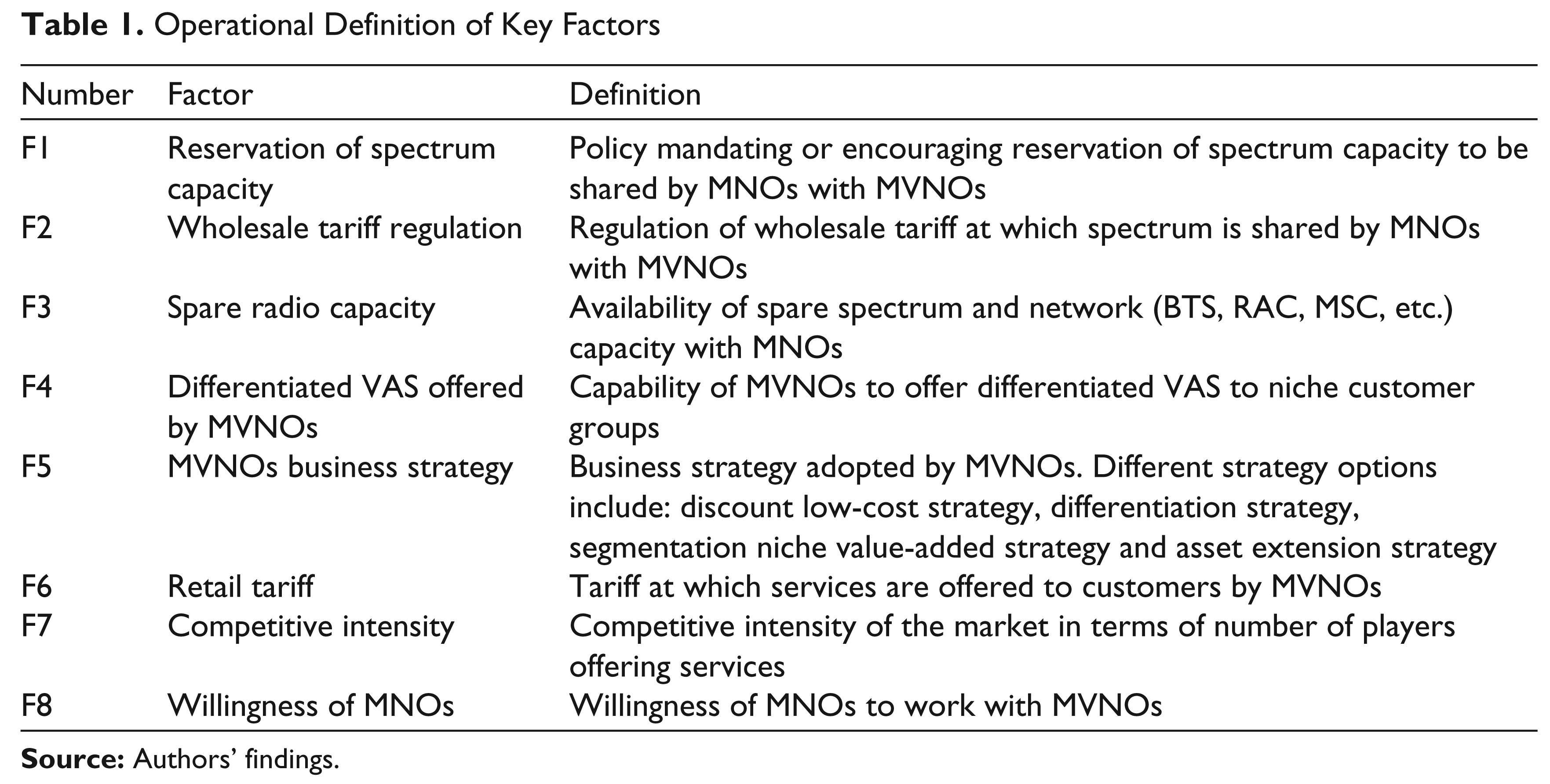
Eight factors were identified and have been symbolized as F1–F8.
F1: Reservation of Spectrum Capacity
The first set of responses were labelled as reservation of spectrum capacity. The need for government policy mandating reservation of spectrum capacity to be shared by MNOs with MVNOs was mentioned by all respondents. Typical responses were:
Government regulation should consider mandating sharing of the spectrum by MNOs or put guidelines that encourage MNOs to share their spectrum with MVNOs. Government should consider reserving a portion of spectrum available with them for MVNOs. Government policies related to reservation of spectrum capacity will have major impact on MVNOs in India. To promote competition, government could intervene and mandate reservation of spectrum capacity for MVNOs. Policy should enable portion of spectrum owned by MNOs to be shared by MVNOs. Regulations should enable sharing, but allow marker forces to determine the retail price.
F2: Wholesale Tariff Regulation
The responses in this category were concerned with regulation of wholesale tariff at which spectrum is shared by MNOs with MVNOs. This was highlighted as one of the prerequisites for MVNOs. Typical responses were:
Government should seriously consider setting guidelines around regulation of wholesale tariff at which spectrum is shared by MNOs with MVNOs. Regulation of wholesale tariff is a key factor for MVNOs in India and will determine viability of MVNO business in India. High wholesale tariff could act as an entry barrier for MVNOs in India.
F3: Spare Radio Capacity
Many respondents quoted this as an important factor for MVNOs in India and emphasized that availability of spare spectrum and network (BTS, RAC, MSC, etc.) capacity with MNOs will be key in determining success in India. Expert responses include:
Existing spare capacity available with MNOs will determine their willingness to share their spectrum with MVNOs. Mobile network operators who have spare unutilized spectrum will be more willing to collaborate with MVNOs.
F4: Differentiated VAS Offered by MVNOs
The responses in this category were concerned with niche value added, customer-group-specific services that can be offered by MVNOs. Some of the typical responses were:
Value-added services would be critical in determining the success of MVNOs in India. There are many niche segments, such as youth, children, old-age people, costal dwellers, farmers, etc., who can be greatly benefited by launching of customized VAS catering to their specific needs. Value-added services for these niche segments could lead to success of MVNOs. The geographical spread and diversity of each telecom circle in India is as large as a European country. It is very difficult for an MNO to cater to diverse set of customers in a satisfying manner. Mobile virtual network operators can help bridge this gap. With the availability of 3G and 4G services in India, the scope for innovation in VAS has increased manifold and offers a lucrative business opportunity to MVNOs. Value-added services will also help in realizing 3G potential to the fullest.
F5: MVNOs Business Strategy
During interviews, many respondents emphasized that business strategies adopted by MVNOs will be one of the most important factors and will have a big impact on their business in India. Experts shared certain international examples wherein in Europe and North America, many companies with existing assets have launched successful MVNOs. Examples include Walmart, Virgin Mobile, TESCO, ESPN and Disney. The set of responses include:
Business strategy adopted by MVNOs could influence the type, quality and price at which service is offered to the customers. Mobile virtual network operators’ strategy should supplement the host MNOs’ services rather than competing with them. However, if their strategy gives competition to the host MNO, it will impact their willingness to share their infrastructure with MVNOs. Strategies that can be adopted by MVNOs can be broadly categorized into discount low-cost strategy, differentiation strategy, segmentation niche market strategy and asset extension strategy. In the Indian scenario, niche strategy MVNOs have more potential in urban areas and low-price MVNOs are suited for rural areas.
F6: Retail Tariff
The set of responses under this category were labelled as ‘retail tariff’. Though there was an overlap between ‘tariff’ and ‘discount low-cost strategy’ option identified in previous category, we focused on words such as tariff and price sensitive. Many respondents highlighted that tariff at which services are offered to customers by MVNOs is one of the key factors and should be considered independently. Some of the typical responses were:
India is a very price-sensitive country and any drop in prices for the same quality of service would be a huge success among the Indian consumers. Alternatively, MVNOs can provide better VAS at the same prices, as is being provided by MNOs. Tariff at which services are offered to customers by MVNOs could play an important role in determining their success in India. Other strategies like VAS should be used by MVNOs in addition to and not in place of offering low tariff.
F7: Competitive Intensity
The set of responses under this category were labelled as ‘competitive intensity’ and the responses in this category were concerned with competitive intensity of the market in terms of number of players offering services. Some of the typical responses were:
In telecom circles where there is less intense competition amongst MNOs, there will be more willingness to share spectrum with MVNOs. There will be limited scope for MVNOs in telecom circles where there are more than eight incumbent operators.
F8: Willingness of MNOs
Many respondents quoted this as an important factor for MVNOs in India. These responses were concerned with willingness of MNOs to work with MVNOs and their impact on latter’s business model. Typical responses were:
Willingness of MNOs to share network and spectrum is a prerequisite for MVNOs to launch their services. Government should mandate MNOs to share their spectrum or put in policy that encourages MNOs to share spectrum. MNOs will be willing to share their network if services offered by MVNOs compliment their services and do not directly compete with them. Smaller MNOs who are currently under tremendous pressure to make their business viable will be more willing to share their network with MVNOs.
Grounded theory framework is very useful in analyzing the data and identifying the key factors. However, it has been criticized for its usefulness in finding the relationship between factors. Given the research objectives and research needs, it was decided to use TISM (Warfield, 1974) to determine how different factors at hand interact.
Before applying TISM, factor validation was done to empirically validate key factors identified using grounded theory. This involved determining empirically whether the identified factors and their sub-items are valid and whether they will impact MVNOs’ success in India.
A questionnaire was developed to collate empirical data for factor validation, wherein respondents were asked to rate the statements on a Likert scale of 1–5, wherein 1 = you strongly disagree (SD) with the statement and 5 = you strongly agree (SA) with the statement. A sample of questions used is provided in Table A1 (Questionnaire Key Factor Validation) of the Appendix A.
‘Reliability test’ was applied to the questionnaire, using data collated through the questionnaire. Reliability test gave a Cronbach’s alpha value of 0.6. Cronbach’s alpha score should be more than 0.5, suggesting that the ‘questionnaire’ is a reliable test instrument. After the reliability test, data collated through the above questionnaire were empirically validated using factor analysis. A sample size of 74 respondents was used. Respondents compromised middle and senior management executives from the industry, academicians, regulators and industry associates. The respondents worked for firms involved in core activities of telecom or related services. The sample also included respondents from firms that can potentially launch MVNOs in India. The sample was fairly homogenous in terms of their familiarity and experience with telecommunication services in general and MVNOs in particular. SPSS software was used to perform factor analysis. All factors and their subcomponents were clubbed together under one column. In the results, factors and their sub-elements which had a ‘factor loading’ of less than 0.5 were dropped.
Table 1 list down key factors and their operational definition. These definitions provide a crisp understanding of each factor, as has been used for the purpose of this research.
Operational Definition of Key Factors
TISM for Modelling of Key Factors for MVNOs in India
This section describes how TISM was used to determine the interrelationship between factors identified using grounded theory. Total interpretive structural modelling is a modified version of interpretive structural modelling (ISM) (Sushil, 2009). Interpretive structural modelling is a proven methodology that enables individuals to map complex relationships between multiple elements in a complex situation (Warfield, 1976). It helps in identifying and summarizing relationships among specific items and provides a means by which a group can impose order on the complexity of the items (Mandal & Deshmukh, 1994; Thakkar et al., 2005, 2007, 2008). In studies which are qualitative in nature, application of ISM research methodology alienates the concerns related to multiple viewpoints, recognizing and incorporating subjectivity (Sage, 1977). This research methodology has been successfully applied in the past by various researchers to determine the relationship between indentified variables. Examples of application of ISM as a research tool can be found in research done by Thakkar, Deshmukh, Gupta and Shankar (2005, 2007), Thakkar, Kanda and Deshmukh (2008), Bell (1998), Saxena, Sushil and Vrat (2006), Sharma, Gupta and Sushil (1995), Ravi and Shankar (2005) and Jharkharia and Shankar (2004). In our research, we applied TISM (Sushil, 2009; Wasuja et al., 2012). Total interpretive structural modelling involves interpreting and incorporating interpretation of the relationship between various factors in the structural modelling. Interpreting the relationship between each pair of two factors helps in determining interpretive logic between them. It helps in clearly defining the logic of an interpretive model and does not keep it ambiguous and open for interpretation by users of the model. Total interpretive structural modelling helps in clearly understanding the relationship between various factors and is a revised form of Warfield’s structural modelling technique (Nasim, 2011; Sushil, 2005, 2009; Wasuja et al., 2012). Total interpretive structural modelling is summarized in a graphical model, wherein interpretation of the relationship between two factors is depicted on the side of link connecting the two factors. In our research, we used TISM to establish the relationship between variables by systematically incorporating inputs gathered from respondents. The key factors that will impact MVNOs in India were modelled to derive insights from the nature of interrelationships existing among various factors.
The process of step-by-step application of TISM during our research is described hereunder.
Step 1: Identifying Elements and Defining Contextual Relationship
Structural modelling starts with identifying and defining elements for relationship modelling. Key elements were identified using grounded theory (as discussed in the previous section). After the key factors were identified using grounded theory, the first step in structural modelling was to identify the contextual relationship between these factors. Factors were compared in pairs to establish relationships between them. For our study, the contextual relationship was identified between factors—‘Factor 1 will impact or influence Factor 2.’ For example, ‘Business Strategy adopted by MVNO’s will influence the “Retail Tariff” at which services are offered.’ Attribute enhancement structure was used in designing the TISM questionnaire and it helped in defining the contextual relationship between different factors based on the inputs provided by respondents. In this step, pairs of factors were compared for contextual relationship through a total interpretive logic knowledge base questionnaire. The questionnaire used during the study is provided in Table A2 of Appendix A.
Step 2: Understanding and Interpreting Contextual Relationship
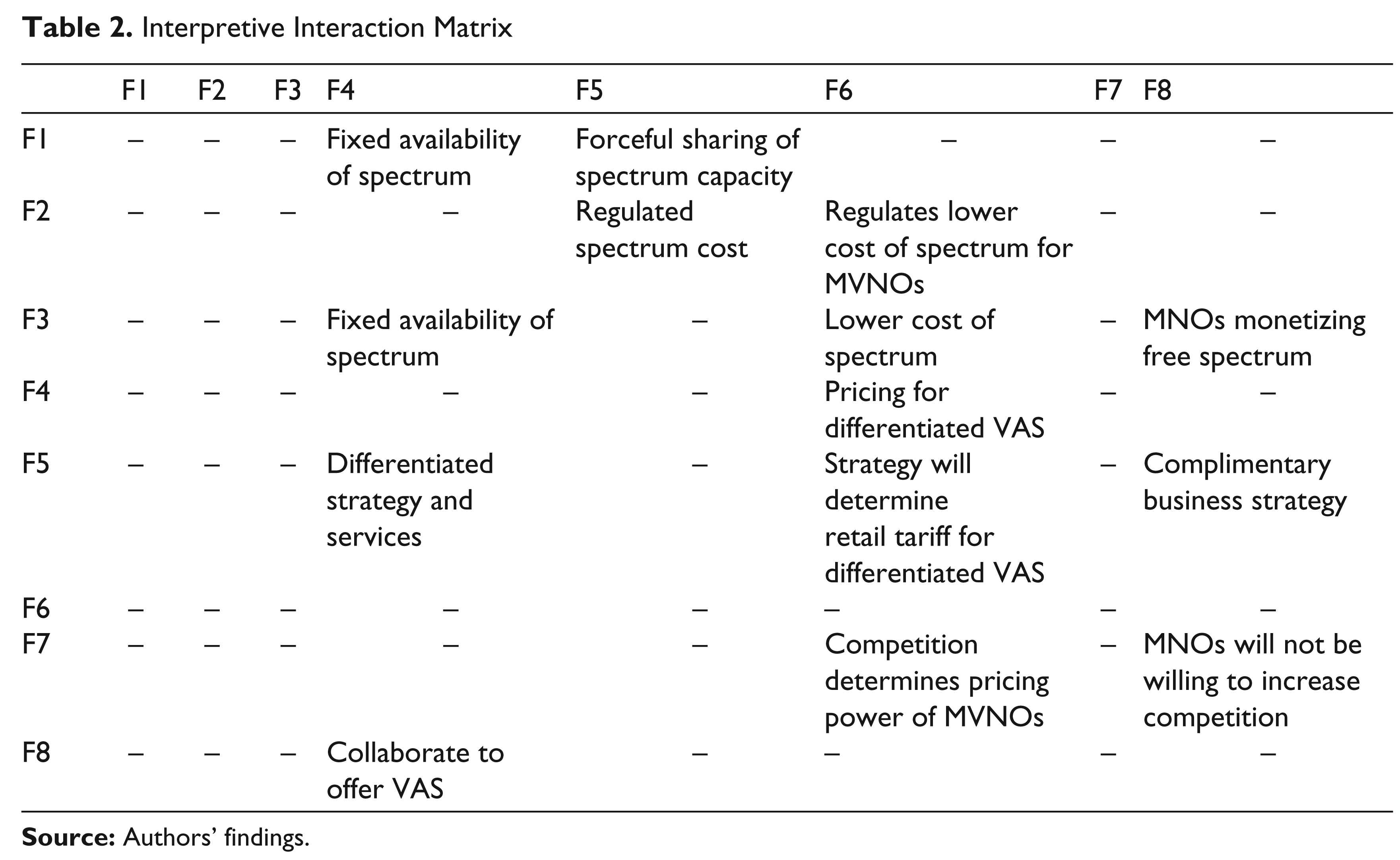
In ISM, a pair of elements is compared to define the self-structured interaction matrix (SSIM), wherein only direction of relationship is interpreted. The SSIM does not provide any insights into how the relationship works. This is the first step where TISM differs from ISM, wherein it helps interpret how a relationship really works between a pair of elements. Understanding of the relationship between pairs of elements was captured during total interpretive logic knowledge base questionnaire (Table A2 of Appendix A). In the questionnaire, two questions were asked for each pair of elements. The first question determined whether one factor will impact/influence the other factor. Where the answer to question is yes, an interpretive query is added to gather further insight on how the relationship works. The respondent is asked to briefly describe as to in what way a factor will influence the other factor. This provides necessary insight about how the relationship works. The insight about the relationship between two factors is specific to that pair of factors and cannot be extrapolated to other factors. The knowledge gained through this questionnaire helped in developing the interpretive interaction matrix (Table 2), as described in the following steps.
Interpretive Interaction Matrix
Step 3: Reachability Matrix and Transitivity Check
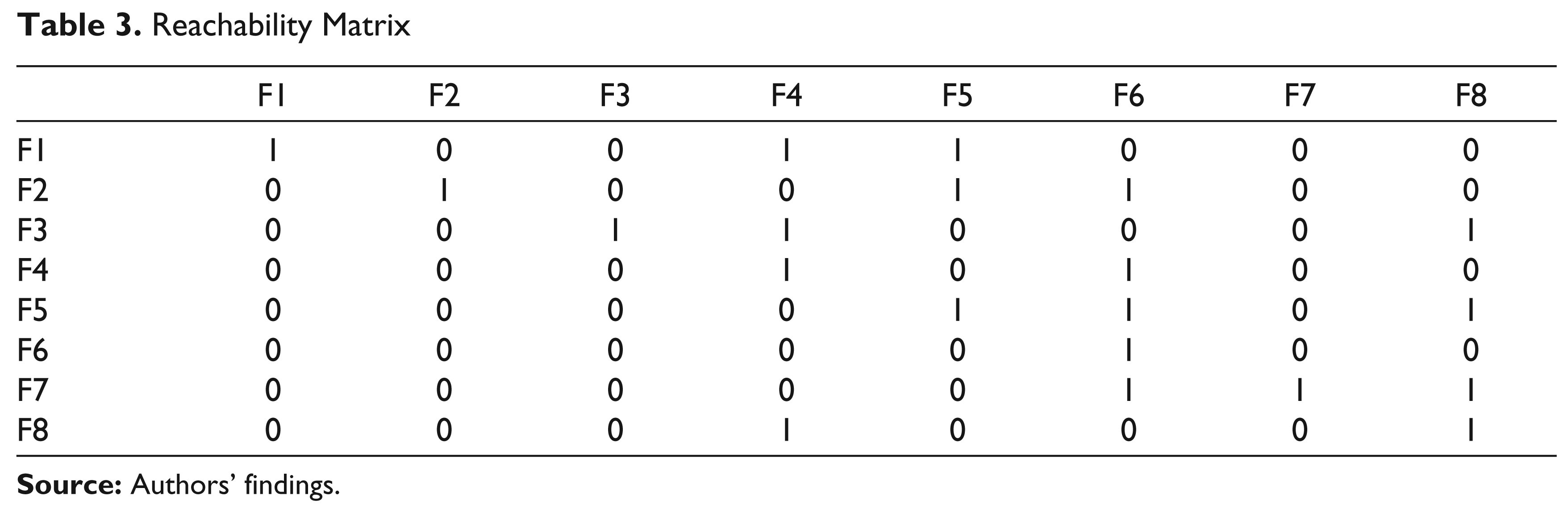
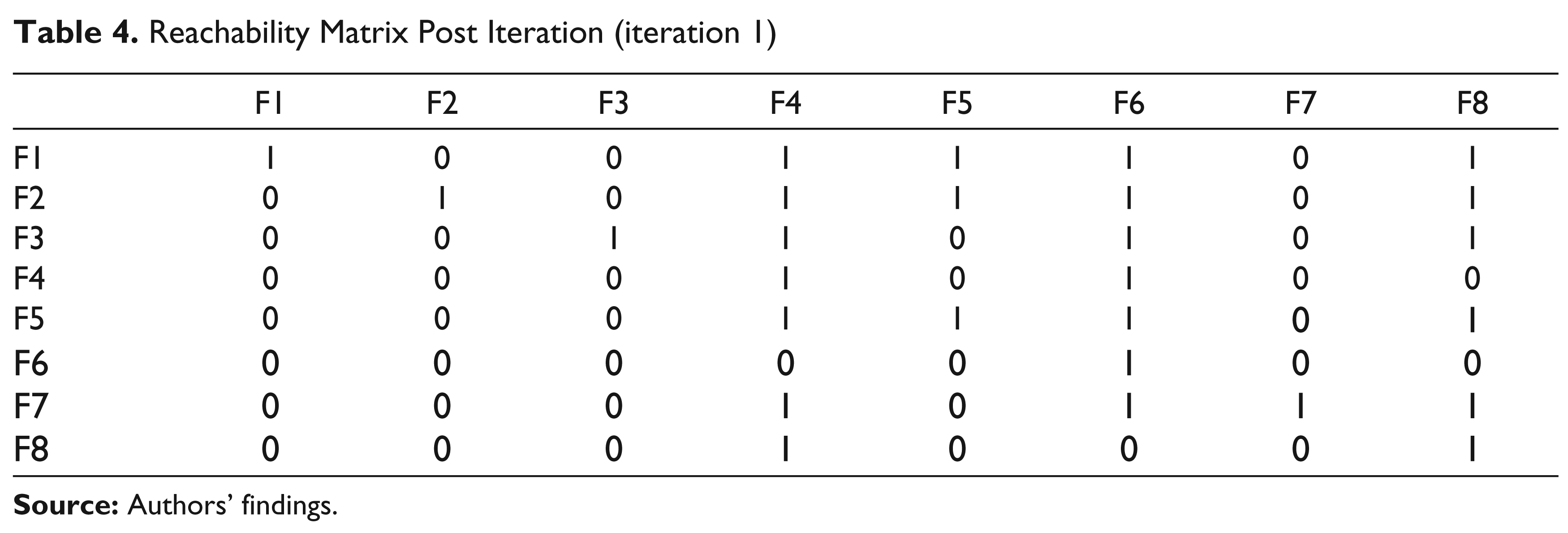
The paired comparison from the total interpretive logic knowledge base questionnaire (Table A2 of Appendix A) was translated into a binary matrix called reachability matrix by substituting ‘yes’ and ‘no’. In this matrix, entry was marked as ‘1’ for corresponding entry of ‘yes’ by majority of respondents. Similarly, it was marked as ‘0’ when the corresponding entry was ‘no’. The reachability matrix was then checked for transitivity rule and was updated till full transitivity was established. For example, if F1 influences F2 and F2 influences F4, then it was inferred that F1 influences F4 transitively. The process of bridging these gaps is known as transitivity check. The reachability matrix (Table 3) and final reachability matrix post iteration (Tables 4 and 5) with transitivity links are presented below.
Reachability Matrix
Reachability Matrix Post Iteration (iteration 1)
Reachability Matrix Post Iteration (iteration 2)
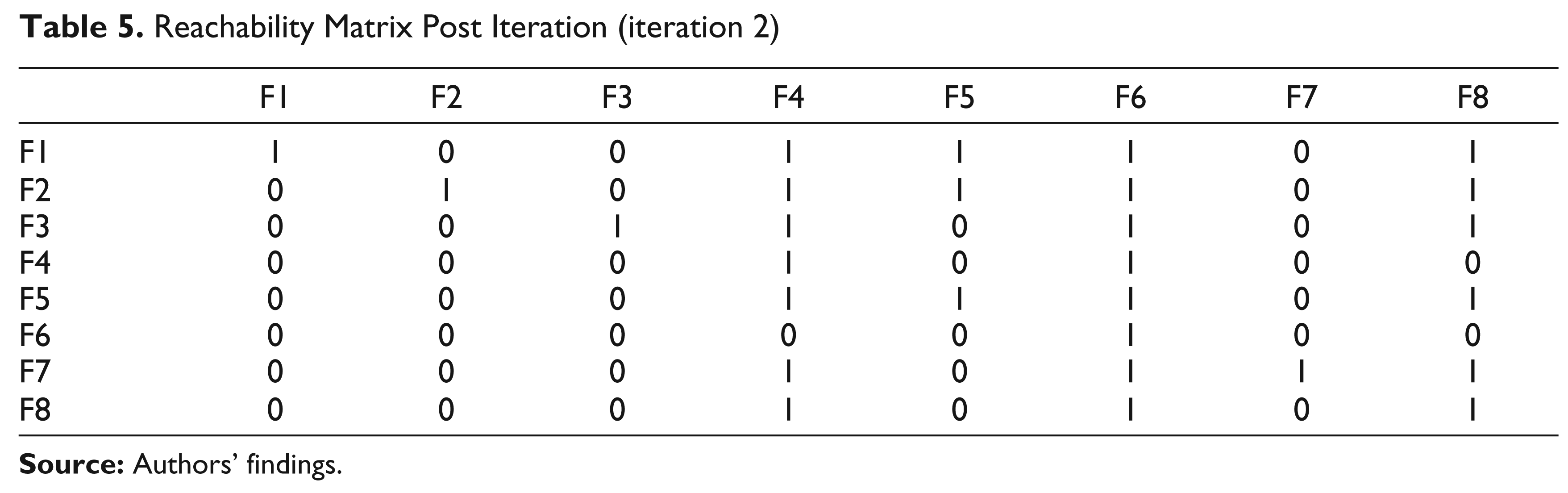
Step 4: Interaction Matrix (Binary and Interpretive)
For a pair of factors which were linked transitively (in reachability matrix post iteration), their relationship was reviewed based on the knowledge captured in the total interpretive logic knowledge base questionnaire. For each transitivity link, if respondents had provided necessary logic to substantiate the relationship between two factors, the knowledge base was updated. In the interpretive logic knowledge base (Table A2), entry of ‘no’ was replaced by ‘yes’ to reflect transitive relationship, along with logic in the interpretation column describing the way a factor will influence another factor. Knowledge gained about the relationship between each pair was analyzed to determine the dominant logic provided by respondents while answering the questionnaire. ‘Significant transitivity’ or ‘insignificant transitivity’ was entered in the interpretation column of Table A2, depending upon whether transitive relationship between two factors can be meaningfully explained as significant. The understanding derived about the nature of transitivity link (significant or insignificant) was used to update final reachability matrix (Table 5) and summarized as binary interaction matrix in Table 6. Interpretive interaction matrix (Table 2) summarizes the dominant logic describing the relationship between each pair of factors, as was inferred from the total knowledge base questionnaire. All direct links and significant transitive links in the binary interaction matrix were replaced by dominant logic from knowledge base (Table A2).
Binary Interaction Matrix
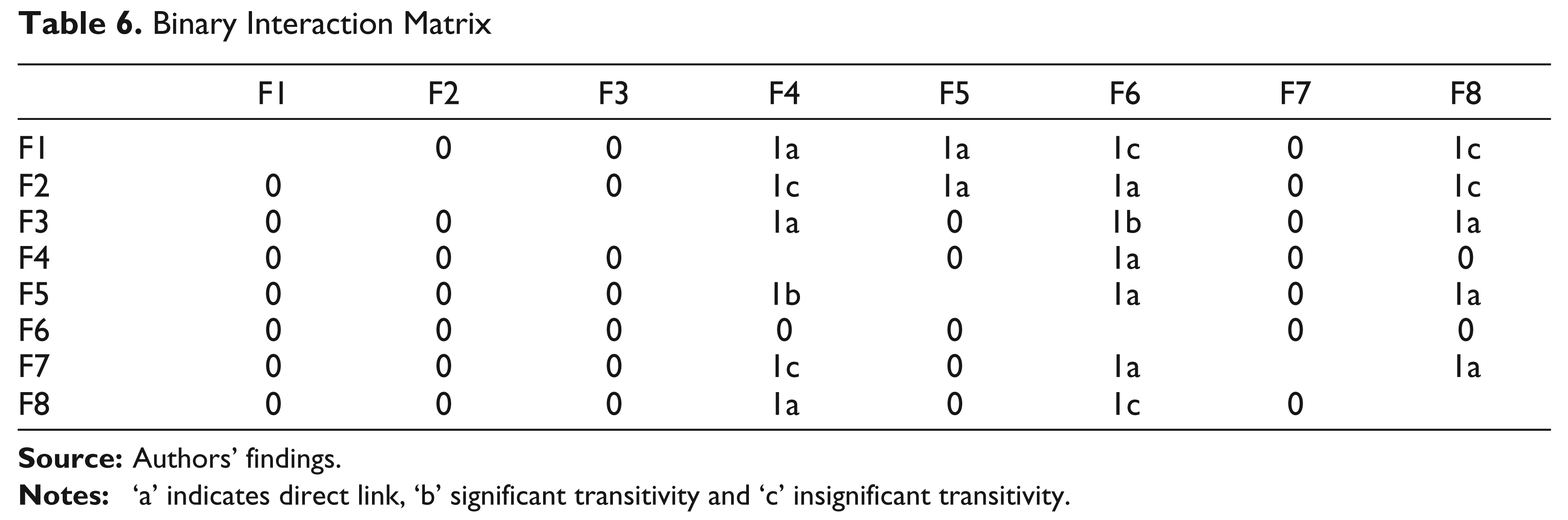
This process has been explained through an example. In the knowledge base (Table A2), it was observed that F3 (spare radio capacity spectrum) will influence/impact F4 (differentiated VAS offered by MVNOs). Therefore, in reachability matrix (Table 3), entry 1 was made to represent the relationship between F3 and F4. From the knowledge base, it was also observed that F4 will influence/impact F6 (retail tariff). Therefore, the relationship between F4 and F6 was represented by 1 in Table 3. Since F3 impacts F4 and F4 impacts F6, it was derived that F3 will also impact/influence F6 transitively. To represent this transitivity between F3 and F6, ‘0’ was replaced with ‘1’ in the reachability matrix. Relationship between F3 and F6 was now analyzed using the responses gathered in the knowledge base (Table A2) to determine if the relationship is significant or insignificant and knowledge base was updated accordingly in the last column of this table.
Step 5: Level Partitioning on Reachability Matrix
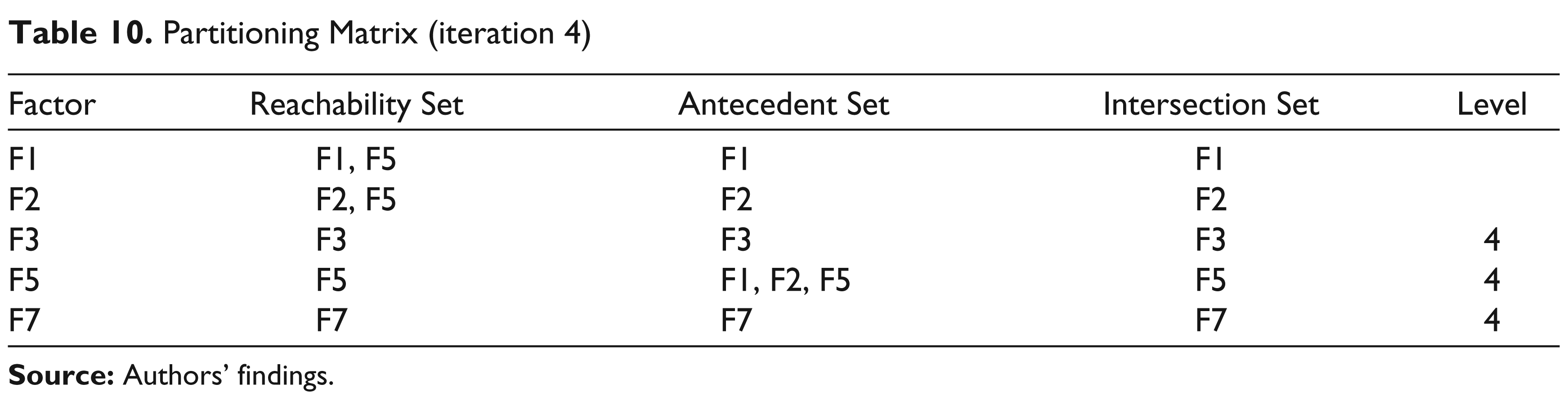
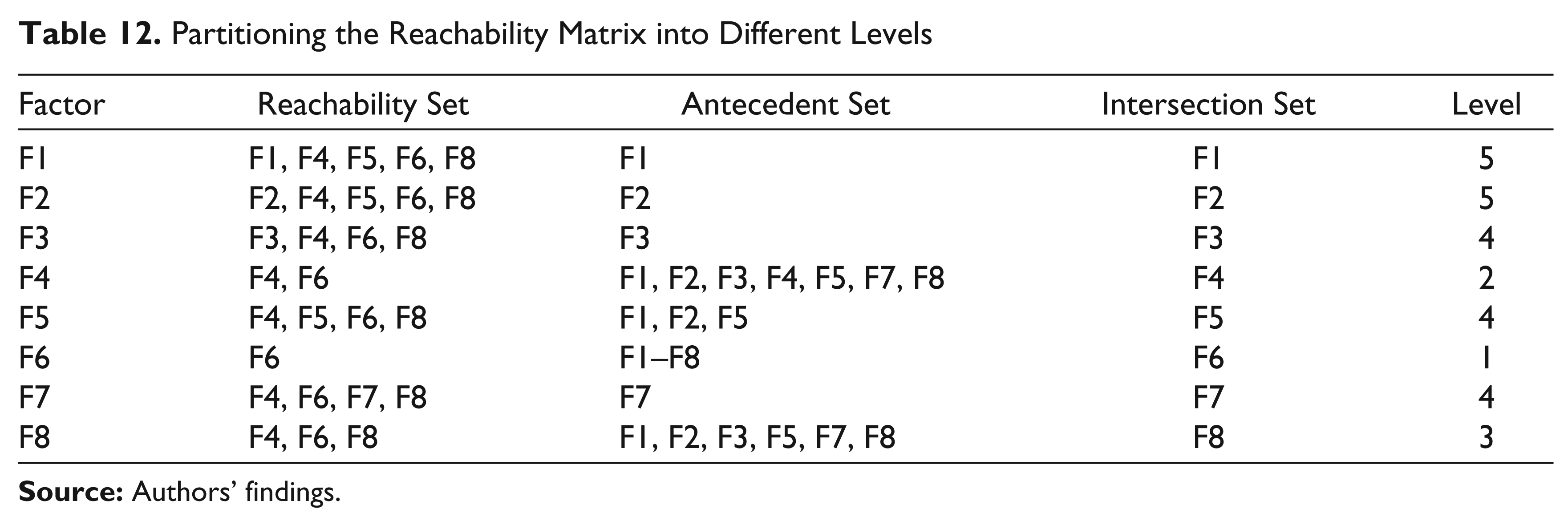
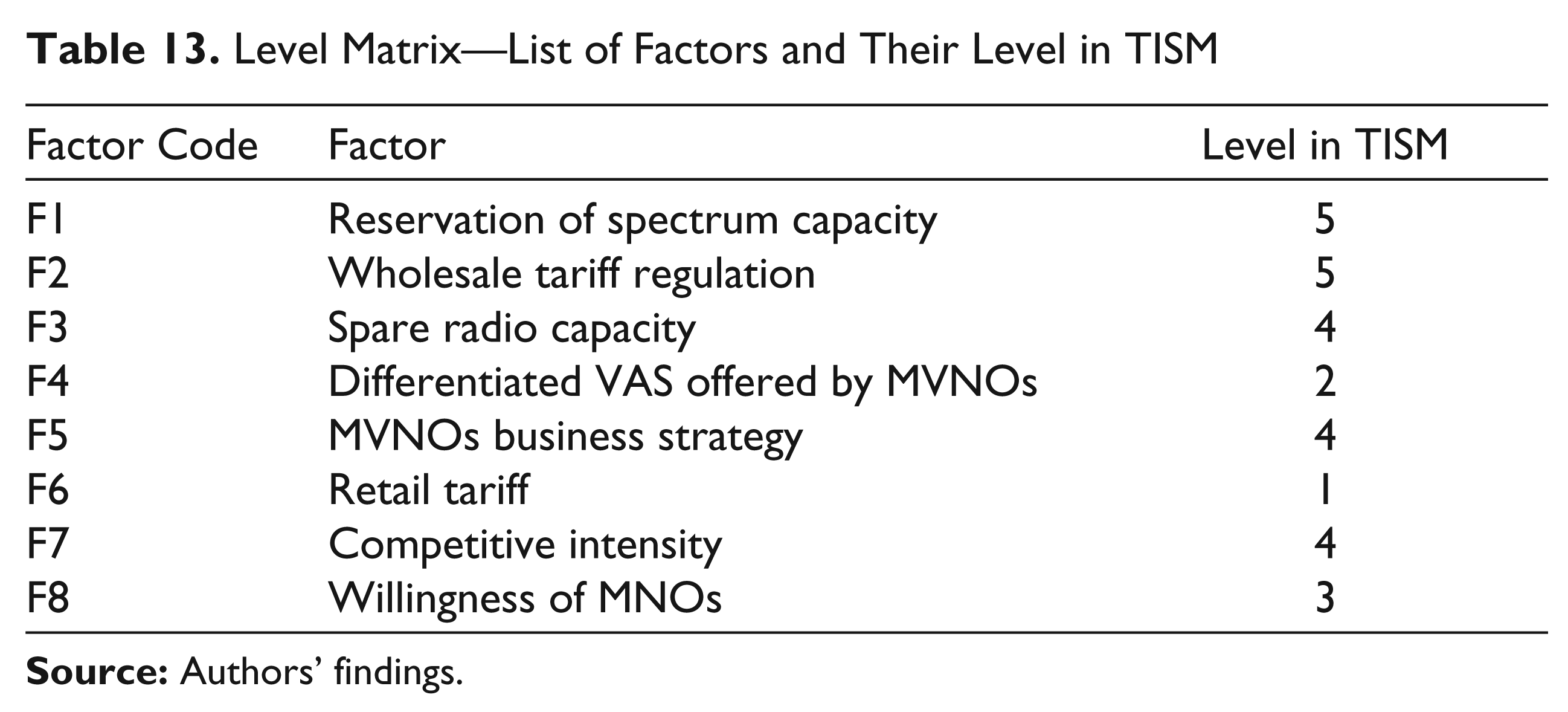
Level partition was carried out to determine placement of factors at different levels during this step. From the reachability matrix post iteration (Table 5), reachability set and antecedent set (Warfield, 1974) for each factor was found out. The reachability set consists of the factor itself and the other factors to which it may reach. Antecedent set consists of the element itself and the other elements, which may reach to it. The intersection of these sets was derived for all factors (Thakkar et al., 2008). The factors in the top-level hierarchy are the ones whose reachability set and intersection set factors are the same. The top-level factors that satisfied the above condition were removed from the element set and the exercise was repeated iteratively until all the levels were determined. Five levels were found using this iterative process of level portioning and five iterations of partition matrix are shown in Tables 7–11. Table 12 summarizes partitioning of reachability matrix into different levels and lists reachability/antecedent set for each factor. Final level matrix derived post iterations is shown in Table 13.
Partitioning Matrix (iteration 1)
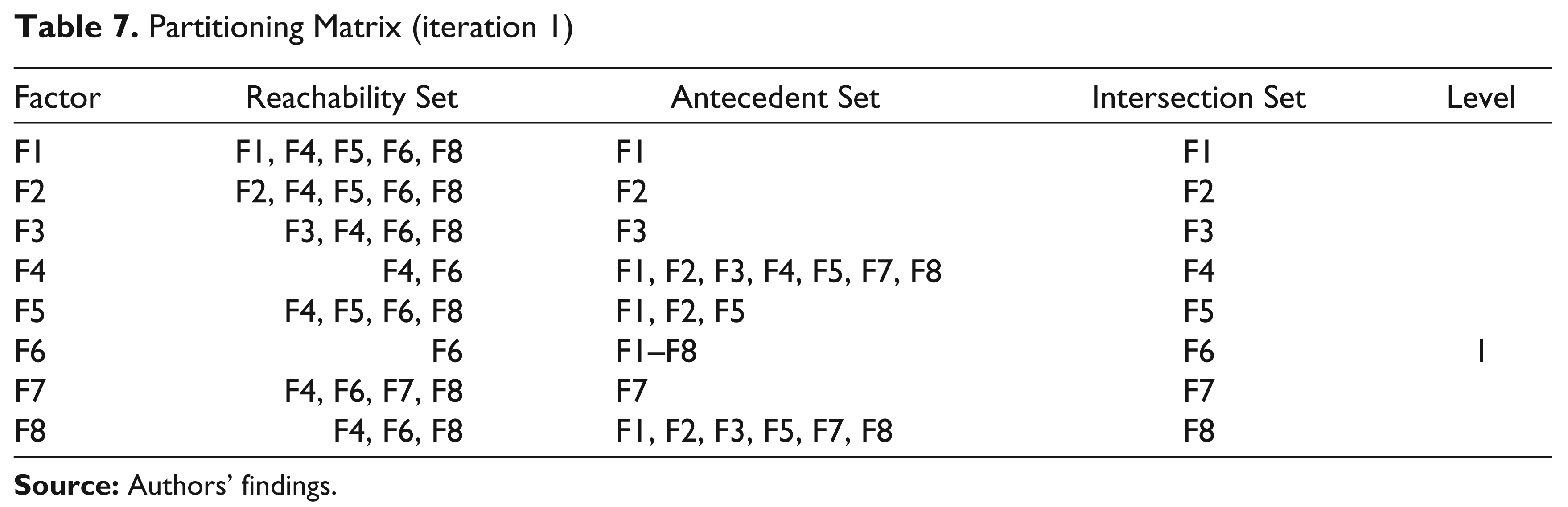
Partitioning Matrix (iteration 2)
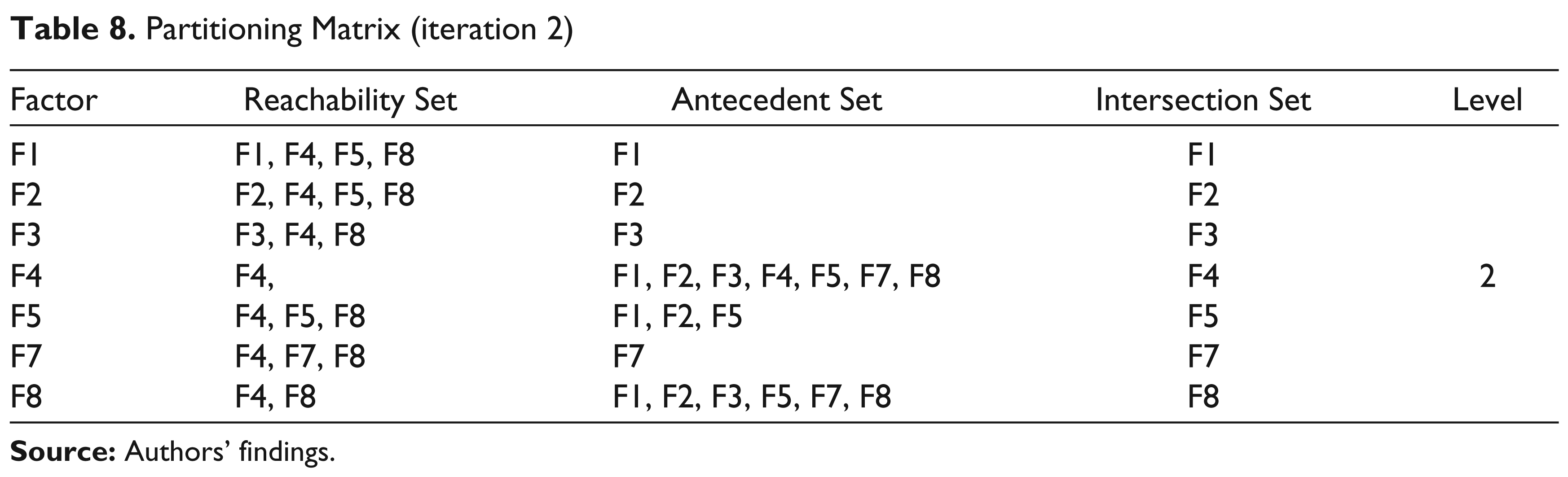
Partitioning Matrix (iteration 3)
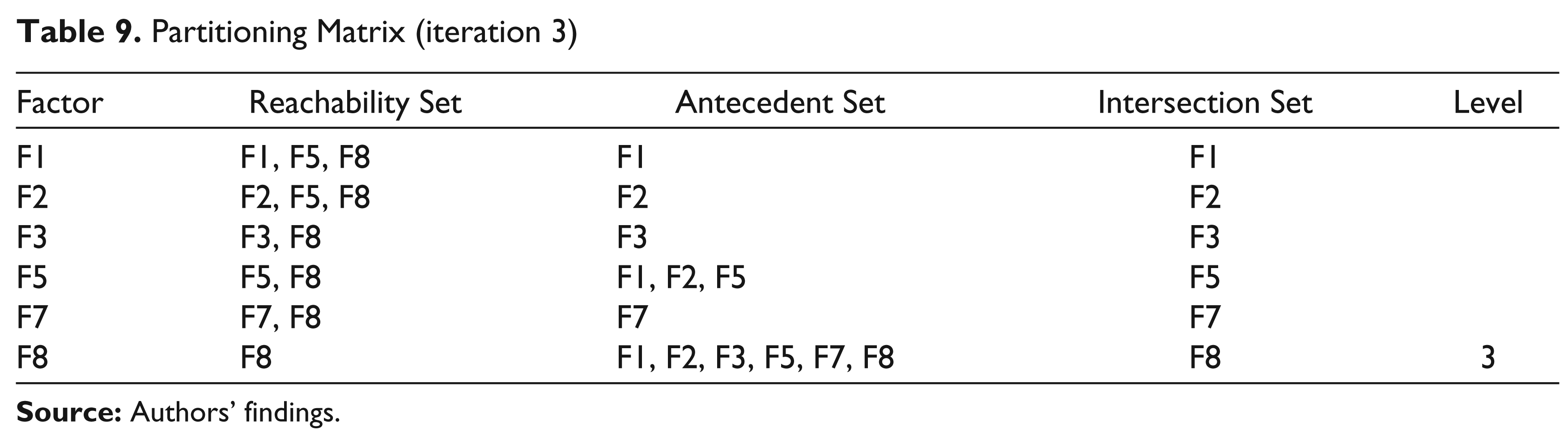
Partitioning Matrix (iteration 4)
Partitioning Matrix (iteration 5)

Partitioning the Reachability Matrix into Different Levels
Level Matrix—List of Factors and Their Level in TISM
Factors were then classified into four quadrants/categories: driver, linkage, autonomous and dependent. Brief definition of the four quadrants/categories is mentioned below.
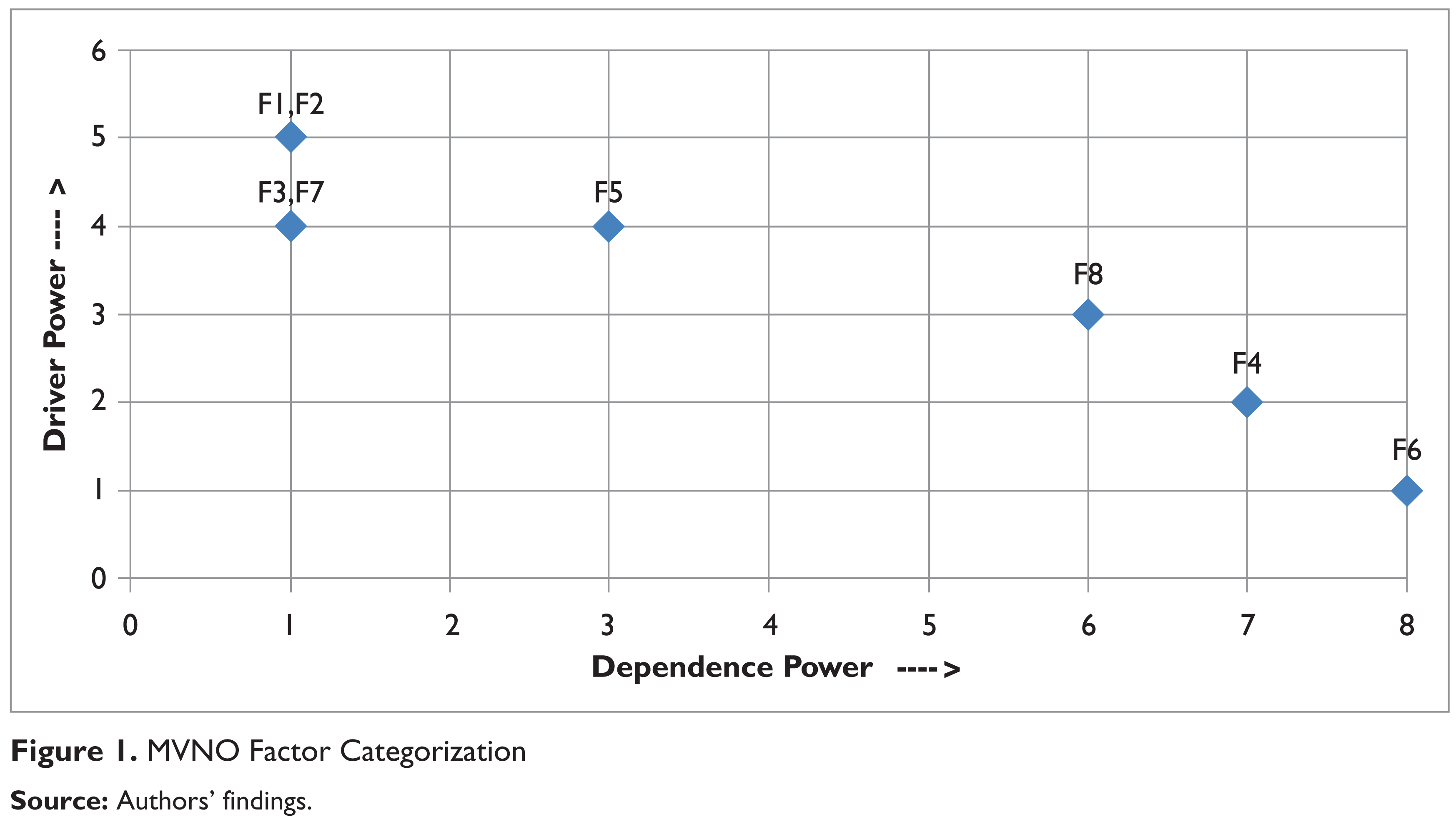
The categorization of factors was done based on their relative driver and driven power. These are depicted in Figure 1. Based on the above definition, F1, F2, F3, F5 and F7 were categorized as driver, F8 was categorized as linkage and F4 and F6 as dependent factors. There are no autonomous factors.
Step 6: Development of TISM Diagram
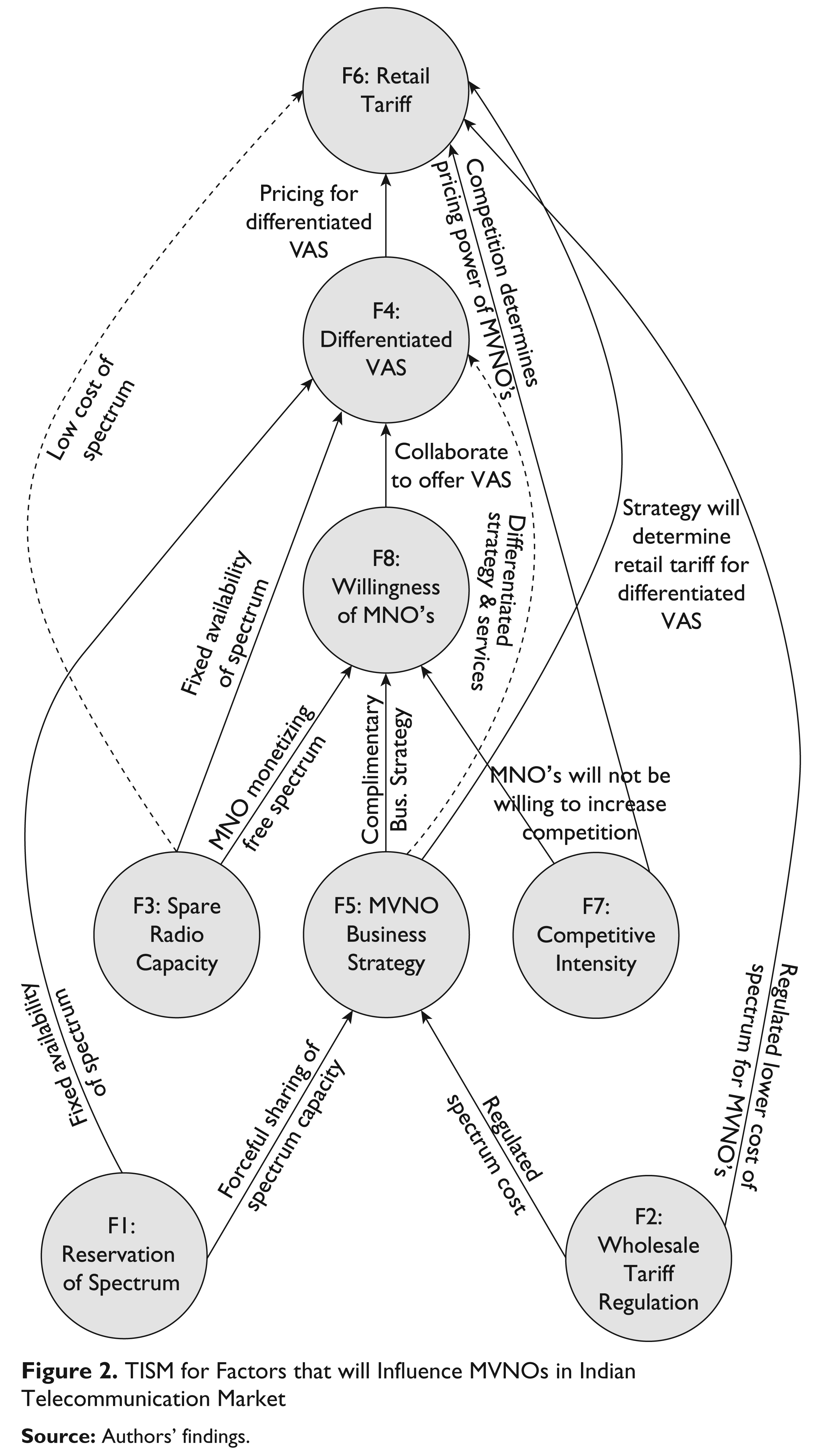
A diagram depicting key factors that will influence MVNOs in India was drawn by organizing factors in a hierarchical form at five levels. Factors with same rank or driver power are placed at the same level. Factors with highest driver power are at the bottom and the driver power decreases as we go up in the diagram. Factor 6 was the only factor at level 1 and at the other end factors 1 and 2 were at level 5. Level 4 included factors F3, F5 and F7. Factors F8 and F4 were at level 3 and level 2, respectively. The directed links between the factors were drawn from the relationships determined through reachability matrix and binary interaction matrix. Straight lines and dotted lines in the diagram were used to represent direct link and significant transitive link, respectively, between the two factors. Insignificant transitivity was not depicted in the diagram. Dominant logic describing the relationship between each pair of factors in interpretive interaction matrix was used to enhance the simple hierarchal diagram into TISM. The dominant logic was depicted on sides of the link connecting each pair of factors. This helps in clear interpretation of the link between two factors and does not leave it open for interpretation by the users of the model. Total interpretive structural modelling for factors that will influence MVNOs in India is depicted in Figure 2.
Analysis, Results and Insights
The above study identified eight factors that will have significant impact on MVNOs in India. Total interpretive structural modelling diagram (Figure 2) summarizes the relationship between the key factors. Based on the study, the following insights were derived.
To help better understand the key factors impacting MVNOs in India, they can be categorized under customer-, regulatory-, industry- and company-centric factors. Regulatory-centric factors (reservation of spectrum and wholesale tariff regulation) highlight an opportunity for the government and regulators to facilitate availability of spectrum at reasonable cost to MVNOs through policy intervention.
Reservation of spectrum, wholesale tariff regulation, spare radio capacity, MVNOs’ business strategy and competitive intensity are five driving factors with high driver power, indicating that these factors will have a significant impact on MVNOs in India and will also impact other factors. Policy mandating reservation of spectrum capacity to be shared by MNOs with MVNOs and regulation of wholesale tariff at which spectrum is shared by MNOs with MVNOs will directly impact the willingness of MNOs to work with MVNOs. Business strategy adopted by MVNOs will also determine willingness of MNOs and success of MVNOs in India. The regulations could enable sharing of spectrum by MNOs with MVNOs. The regulation could also determine if the sharing of the spectrum will be mandatory for MVNOs or will be decided by market forces. If regulators in India decide not to regulate the relationship between MNOs and MVNOs and there are market-driven agreements for gaining access to MNOs’ network, MVNOs will have to work on a strategy that differentiates their services, rather than competing on price with MNOs. Low-price strategy will be more appropriate if MNOs are forced by regulations to share their spectrum and infrastructure with MVNOs.
Availability of spare spectrum and network (BTS, RAC, MSC, etc.) capacity with MNOs and competitive intensity of the market in terms of number of players offering services could be an important factor for MVNOs in India. Incumbent MNOs who have spare spectrum will be more willing to share their spectrum with MVNOs to monetize their spare investment. In telecom circles which have high competitive intensity and there are 7–12 players offering to customers, MNOs will not be very keen to share their spectrum. They will not like to increase the competition in the market. However, MVNOs can mitigate this scenario by adopting a strategy of offering services that are complimentary to services being offered by MNOs. This will help expand MNOs’ market and their revenue and hence they will be more willing to work with MVNOs.
Willingness of MNOs to work with MVNOs is a linkage variable. It has strong driver power and dependence on other factors. Willingness of MNOs would be the prerequisite for any MVNO to launch its services. In case MNOs are unwilling to share the network, government will have to mandate the opening of spectrum for MVNOs which will have its effect on MVNO business strategies. In case the MNOs are willing to share the network, then government can allow market forces to determine the price and terms of the contract between MVNOs and MNOs and interfere only in case of a dispute. Existing assets of MVNOs and their business strategy will also decide the willingness of MNOs. The business strategy adopted by MVNOs is a very important factor. Strategies that can be adopted by MVNOs can be broadly categorized into discount low-cost strategy, differentiation/segmentation VAS strategy and asset extension strategy.
Firms which have existing assets (such as brand, retail network and content) can leverage to gain competitive advantage and launch successful MVNO services. This will determine the MVNOs’ business strategy which in turn will have direct impact on willingness of MNOs, niche VAS being offered and retail tariff. As per various media reports, companies like Big Bazaar (India’s largest retail chain) have shown interest in launching MVNO and they can potentially use their strong distribution channel for launching a successful MVNO. Mobile virtual network operators’ business strategies could influence the VAS offered by MVNOs and retail tariff at which service is offered to the customers. Mobile virtual network operators’ strategy should supplement the host MNOs services rather than competing with the host MNOs. However, if their strategy gives competition to the host MNO, it will impact their willingness to share their spectrum and infrastructure with MVNOs.
Niche VAS offered by MVNOs and retail tariff are dependent factors directly influenced by MVNOs’ business strategy and other driver factors. Value-added services would be critical in determining the success of MVNOs in India. The geographical spread of few telecom circles in India is as large as a European country and it is very difficult for MNOs to cater the niche and faraway customers in a satisfying manner. There are many niche segments, such as youth, children, old-age people, costal dwellers and farmers, who can greatly benefit by the launching of customized VAS catering to their specific needs. Value-added services in these niche segments are bound to be a success, if they are offered at a good price. Also with the launch of 3G and 4G services in India, the scope for innovation in VAS has increased manifold. Value-added services offered through MVNOs will also help in realizing 3G and 4G potential to the fullest for Indian telecommunication industry.
Retail tariff is a dependent factor at the highest level of TISM diagram. India is a price-sensitive market with high competitive intensity. It will be very important for MVNOs to create awareness among customers about their business, their service offerings and ensure that retail tariff is not very high. Retail tariff is influenced by multiple factors, including VAS offered by MVNOs, business strategy adopted by MVNOs, wholesale tariff regulation and competitive intensity. Depending upon the strategy adopted by MVNOs, services offered by them will have to be positioned and awareness created amongst potential customers. Customers will adopt services offered by MVNOs if they are assured about their stability and perceive some value in what is being offered. Tariff has high dependency on other factors. It has the highest dependence power amongst all the factors and is directly influenced by four factors.
These include competitive intensity, wholesale tariff regulation, MVNOs’ business strategy and differentiated VAS that will be offered by them. Tariff will also be influenced by pricing and the terms of contract between MNOs and MVNOs, which in turn is influenced by government regulations and willingness of MNOs to share their infrastructure. Tariff at which services are offered to customers could play an important role in determining the success of MVNOs. India is a very price-sensitive country and any drop in prices for the same quality of service would be a huge success among the Indian consumers. Mobile virtual network operators will have to explore means to offer value-added niche services at low cost.
Conclusions
The study not only identified key factors for MVNOs in the Indian telecommunication market but also identified their linkages and analyzed them to get better insights into their impact and behaviour. The research has resulted into two main deliverables:
Identification of key factors that will influence MVNOs in the Indian telecommunication market. Development of a model to determine inter-linkages among various factors leading to key managerial and academic insights.
Total interpretive structural modelling developed during the study will help in getting a better understanding of the key factors that can impact MVNOs in India and will help MNOs and potential MVNOs in identifying the areas they should focus on. Findings report that driver variables, such as reservation of spectrum capacity, wholesale tariff regulation, spare radio capacity, MVNO business strategy and competitive intensity, could play a key role for MVNOs in India, along with other factors, such as willingness of MNOs, differentiated VAS being offered and retail tariff at which services will be offered. Enabling government policies around reservation of spectrum and wholesale tariff regulation are factors related to regulatory environment that will be key for MVNOs operating in the Indian market. They are important from the perspective of deciding the amount of investment, analyzing associated risks and deciding the business strategy. Industry-centric factors that are important for success of MVNOs include competitive intensity, spare radio spectrum and willingness of MNOs. On the other hand, company-centric factors that are important and which can be controlled by MVNOs include their business strategy, retail tariff and VAS offered to niche set of customers.
Willingness of MNOs to work with MVNOs and MVNO business strategies are connected with each other and also demonstrate strong driver power and dependence of first factor over the second factor. Retail tariff is a dependent factor influenced by other factors in the present decision system. However, it is a key factor for the success of MVNOs in India. Niche VAS offered by MVNOs and tariff have high dependency and are influenced by factors such as MVNO business strategies and their existing assets. Tariffs will also be directly influenced by niche VAS offered by MVNOs. They will have to explore means to offer value-added niche services at low cost, as this will be critical in determining the success of MVNOs in India.
The present research has certain limitations. The key factors for MVNOs were determined based on inputs gathered through literature review and inputs from experts and practitioners. However, these inputs do not consider the effect of changing external environment wherein there are changes in government policies, industry structure and customer preferences. The second limitation pertains to the research tool used during the study. Total interpretive structural modelling is a qualitative technique and does not validate the outcome empirically. The model proposed from this study can be further validated and could be considered for future scope of research. In addition to empirical validation of the model, detailed case studies on MVNOs can also help in overcoming limitations of this study. In the absence of an empirical validation, supporting similar studies and detailed case studies, the results from this study should be generalized with care.
Footnotes
Acknowledgements
The authors are grateful to the anonymous referees of the journal for their extremely useful suggestions to improve the quality of the article. Usual disclaimers apply.
Appendix
Total Interpretive Logic Knowledge Base Questionnaire

| S. No. | Factor No. | Paired Comparison of Factors | Yes/No | In What Way a Factor will Influence Other Factors? Give Reason in Brief if Answer is Yes |
| 1 | F1 and F2 | Reservation of spectrum capacity will impact/influence wholesale tariff regulation | N | |
| 2 | F1 and F3 | Reservation of spectrum capacity will impact/influence spare radio capacity | N | |
| 3 | F1 and F4 | Reservation of spectrum capacity will impact/influence differentiated VAS offered by MVNOs | Y | Fixed availability of spectrum for MVNOs |
| 4 | F1 and F5 | Reservation of spectrum capacity will impact/influence MVNOs business strategy | Y | Forceful sharing of spectrum capacity |
| 5 | F1 and F6 | Reservation of spectrum capacity will impact/influence retail tariff | Y | Transient (insignificant) |
| 6 | F1 and F7 | Reservation of spectrum capacity will impact/influence competitive intensity | N | |
| 7 | F1 and F8 | Reservation of spectrum capacity will impact/influence willingness of MVNOs | Y | Transient (insignificant) |
| 8 | F2 and F1 | Wholesale tariff regulation will impact/influence reservation of spectrum capacity | N | |
| 9 | F2 and F3 | Wholesale tariff regulation will impact/influence spare radio capacity | N | |
| 10 | F2 and F4 | Wholesale tariff regulation will impact/influence differentiated VAS offered by MVNOs | Y | Transient (insignificant) |
| 11 | F2 and F5 | Wholesale tariff regulation will impact/influence MVNOs business strategy | Y | Regulated spectrum cost |
| 12 | F2 and F6 | Wholesale tariff regulation will impact/influence retail tariff | Y | Regulated lower cost of spectrum for MVNOs |
| 13 | F2 and F7 | Wholesale tariff regulation will impact/influence competitive intensity | N | |
| 14 | F2 and F8 | Wholesale tariff regulation will impact/influence willingness of MNOs | Y | Transient (insignificant) |
| 15 | F3 and F1 | Spare radio capacity will impact/influence reservation of spectrum capacity | N | |
| 16 | F3 and F2 | Spare radio capacity will impact/influence wholesale tariff regulation | N | |
| 17 | F3 and F4 | Spare radio capacity will impact/influence differentiated VAS offered by MVNOs | Y | Fixed availability of spectrum for MVNOs |
| 18 | F3 and F5 | Spare radio capacity will impact/influence MVNOs business strategy | N | |
| 19 | F3 and F6 | Spare radio capacity will impact/influence retail tariff | Y | Significant transitive low-cost of spectrum for MVNOs |
| 20 | F3 and F7 | Spare radio capacity will impact/influence competitive intensity | N | |
| 21 | F3 and F8 | Spare radio capacity will impact/influence willingness of MNOs | Y | MVNOs monetizing free spectrum |
| 22 | F4 and F1 | Differentiated VAS offered by MVNOs will impact/influence reservation of spectrum | N | |
| 23 | F4 and F2 | Differentiated VAS offered by MVNOs will impact/influence wholesale tariff regulation | N | |
| 24 | F4 and F3 | Differentiated VAS offered by MVNOs will impact/influence spare radio capacity | N | |
| 25 | F4 and F5 | Differentiated VAS offered by MVNOs will impact/influence MVNOs business strategy | N | |
| 26 | F4 and F6 | Differentiated VAS offered by MVNOs will impact/influence retail tariff | Y | Pricing for differentiated VAS |
| 27 | F4 and F7 | Differentiated VAS offered by MVNOs will impact/influence competitive intensity | N | |
| 28 | F4 and F8 | Differentiated VAS offered by MVNOs will impact/influence willingness of MNOs | N | |
| 29 | F5 and F1 | MVNOs’ business strategy will impact/influence reservation of spectrum capacity | N | |
| 30 | F5 and F2 | MVNOs’ business strategy will impact/influence wholesale tariff regulation | N | |
| 31 | F5 and F3 | MVNOs’ business strategy will impact/influence spare radio capacity | N | |
| 32 | F5 and F4 | MVNOs’ business strategy will impact/influence differentiated VAS offered by MVNOs | Y | Significant transitive differentiated strategy and services offered |
| 33 | F5 and F6 | MVNOs’ business strategy will impact/influence retail tariff | Y | Strategy will determine retail tariff for differentiated VAS |
| 34 | F5 and F7 | MVNOs’ business strategy will impact/influence competitive intensity | N | |
| 35 | F5 and F8 | MVNOs’ business strategy will impact/influence willingness of MNOs | Y | Complimentary business strategy |
| 36 | F6 and F1 | Retail tariff will impact/influence reservation of spectrum capacity | N | |
| 37 | F6 and F2 | Retail tariff will impact/influence wholesale tariff regulation | N | |
| 38 | F6 and F3 | Retail tariff will impact/influence spare radio capacity | N | |
| 39 | F6 and F4 | Retail tariff will impact/influence differentiated VAS offered by MVNOs | N | |
| 40 | F6 and F5 | Retail tariff will impact/influence MVNOs business strategy | N | |
| 41 | F6 and F7 | Retail tariff will impact/influence competitive intensity | N | |
| 42 | F6 and F8 | Retail tariff will impact/influence willingness of MNOs | N | |
| 43 | F7 and F1 | Competitive intensity will impact/influence reservation of spectrum capacity | N | |
| 44 | F7 and F2 | Competitive intensity will impact/influence wholesale tariff regulation | N | |
| 45 | F7 and F3 | Competitive intensity will impact/influence spare radio capacity | N | |
| 46 | F7 and F4 | Competitive intensity will impact/influence differentiated VAS offered by MVNOs | Y | Transient (insignificant) |
| 47 | F7 and F5 | Competitive intensity will impact/influence MVNOs’ business strategy | N | |
| 48 | F7 and F6 | Competitive intensity will impact/influence retail tariff | Y | Competition determines pricing power of MVNOs |
| 49 | F7 and F8 | Competitive intensity will impact/influence willingness of MNOs | Y | MNOs will not be willing to increase competition |
| 50 | F8 and F1 | Willingness of MNOs will impact/influence reservation of spectrum capacity | N | |
| 51 | F8 and F2 | Willingness of MNOs will impact/influence wholesale tariff regulation | N | |
| 52 | F8 and F3 | Willingness of MNOs will impact/influence spare radio capacity | N | |
| 53 | F8 and F4 | Willingness of MNOs will impact/influence differentiated VAS offered by MVNOs | Y | Collaborate to offer VAS |
| 54 | F8 and F5 | Willingness of MNOs will impact/influence MVNOs’ business strategy | N | |
| 55 | F8 and F6 | Willingness of MNOs will impact/influence retail tariff | Y | Transient (insignificant) |
| 56 | F8 and F7 | Willingness of MNOs will impact/influence competitive intensity | N |