



Abstract
Handicraft is one of the many productive sectors for developing countries. It contributes significantly towards economic growth. This study seeks to investigate consumers’ perception towards purchase of wooden handicraft items through e-commerce platform. The proposed extended technology acceptance model investigates the role of website quality, service and product perception on consumers purchase intention towards wooden handicraft items online. Trust acts as a mediator to study its effect on consumer intention. The effect of website quality, service and product perception was analyzed for the technology acceptance model constructs, namely perceived ease of use and perceived usefulness. A total of 234 respondents were surveyed and data was analyzed using structural equation modelling technique. Service perception and product perception determine perceived usefulness whereas perceived ease of use is determined by website quality and service perception. The results show that trust has positive role in determining consumers’ purchase intention. Website quality, service and product perception determine trust, and they build consumers’ confidence in online shopping. Both seller and website should have effective strategies to build consumers’ trust. The research suggests that sellers can significantly surge consumers’ trust by improvising product and service perception, whereas the website can ensure consumers’ trust by increasing the quality of website and service perception.
Introduction
Handicraft is a pivotal segment of the Indian economy. This industry employs conservative manual ways to make a range of items as per the name handicraft (items made by hand). Operational methods and tools differ slightly due to regional gap. Industry utilizes skills of artisans such as carving wood, metalwares, weaving, leatherwork, etc. The strength of handicraft comprises of low investment, availability of cheap labour and unique craftsmanship (Hashmi, 2012). Woodcarving is one segment of handicraft industry which gained fame in recent years, owing to rise in appreciation by customers, seeking for novelty, cheap and skilled labour with large supply of timber types. Wooden handicraft regions are spread in different locations/regions of India by formation of clusters. Cluster is defined as a geographic concentration of units, producing near similar products and facing common threats and opportunities (Sarkar & Banerjee, 2007). Various research and studies show that firms in a cluster greatly contribute at length to economic expansion of a country (Venkataramanaiah & Kumar, 2016). Some well-known centres of wooden handicraft clusters in India includes Saharanpur, Jodhpur, Jaipur, Mysore, Cochin and Ernakulam (Yadav & Mahara, 2016). However, handicraft is an unorganized sector with additional constraints. These include lack of education, labour scarcity due to migration of workers to urban areas, capital deficiency, non-availability of raw materials and lack of marketplace (Jadhav, 2013). With depleting margins, reduced sales and increase in competition of wooden handicraft items, this sector has to find new sales channels to sustain and remain competitive. Study by Paige and Littrell (2003) suggested that handicraft entrepreneurs must strategize marketing and sales activities to increase the reach of their products to their probable buyers. E-commerce promises to change this situation, by providing a suitable selling platform and giving hope to millions of artisans and workers who depend on handicrafts for their livelihood.
Numerous researchers have studied concepts such as retail practices in e-commerce (Batchelor & Webb, 2002), progress of crafts knowledge (Klein, 2000; Nedelcheva, Dogan, Obratov-Petkovic, & Padure, 2011), how to market handicraft products (Nagori & Saxena, 2012), how handicraft products in rural areas empower women (Ericsson, 2001), tourists’ tendencies towards handicraft products (Müller & Pettersson, 2001) and many more. But there is little literature on customers’ purchase behaviour towards handicraft items, especially on Indian customers leading to motivation of this study.
A consumer’s behaviour is resultant of values, motives and attitudes, which may manifest to consumption or purchase behaviour. Shopping motives can be classified as hedonic or utilitarian (Westbrook & Black, 1985) in nature. Hedonic utilization is experience of a product through its taste, sound, scent, tactile impression and visual image (Hirschman & Holbrook, 1982). On the other hand, utilitarian consumption of a product is more cognitively driven, goal oriented and instrumental, and is utilized to accomplish functional work (Strahilevitz & Myers, 1998). Hedonic and utilitarian values are epicentre of much attention and examination (Kesari & Atulkar, 2016; Kim & Hwang, 2012; Teller, Reutterer, & Schnedlitz, 2008). Most of the wooden handicraft items fall under the hedonic product category. Offline stores provide wooden handicraft purchasers ability to feel and touch a product before purchase. This aspect lacks in an online environment. Interactive and synergistic nature of web provides many options to serge efficiency of online shopping behaviour by increasing product information and provide multi-attributes comparison and reduction in buyer search cost (Alba et al., 1997). Thus, an insight into hedonic factors that play a role in customer’s motivation to utilize e-commerce is fundamental for increase in sales of handicraft items.
The current study assesses consumers’ acceptance of e-commerce towards purchase of wooden handicrafts items under mediating effect of trust on technology acceptance model and three other crucial constructs: product perception (PP), service perception (SP) and website quality (WQ). This study helps by gathering more insight into consumers’ purchase behaviour, and thereby suggests that sellers can modify their e-commerce strategies according to customer attributes and behaviour. Findings can help sellers formulate strategies to lure customers to conduct repeat purchase. Results and study will also add to literature of technology acceptance by including additional relevant beliefs to e-commerce context.
Theoretical Framework
As a key motivation driver of human psychology, social psychology emphasizes a lot on cognitive process. This is the reason why social psychology is considered as a fruitful means to gain understanding of consumers’ psychology. To get more understanding regarding individual customer, researchers went ahead and relied on behavioural sciences in place of social sciences. Sheth (1985) stated that individual customers had gotten into limelight of researchers in the 1940s. Eventually, a common belief in regards to consumer buying behaviour became exceedingly famous that ‘a consumer is driven psychologically in place of logic’ (Venkatesh et al., 2014). Technology acceptance model deals with a large variety of behaviour and emphasizes on few psychological elements that can impact (positively or negatively) behaviour (intention and attitude). In consideration of these facts, this study utilizes TAM model.
Technology Acceptance Model
TAM (Davis, 1989) has grown to be a far- and wide-cited method for prediction and explanation of information technology (IT) usage and user behaviour. The origin of TAM is linked back to the theory of reasoned action (TRA) (Fishbein & Ajzen, 1977). TRA is used to evaluate individual’s behavioral change that is dependent upon their pre-existing attitude and intentions. TRA, being simplified to TAM, implies that user’s decision to accept a new IT relies upon two rational assessments of its likely results, which are perceived usefulness (PU) and perceived ease of use (PEOU). PU is simply defined as the degree to which users’ expectation on using a new system will result in better performance. PEOU is defined as the extent to which any person believes that use of any particular system will be effortless (Davis, 1989). Information system (IS) authors and researchers have investigated, studied and replicated/used these two factors and approved on their validity in prediction of individual acceptance and adoption of various types of IT.
The original TAM (Davis, 1989) variables (PU and PEOU) alone do not sufficiently capture the key beliefs that influence consumers’ attitude towards adoption of e-commerce as a medium of purchase. In consecutive studies, extended research of TAM has added variables in the TAM such as perceived enjoyment, social personality, trust, etc. (Gefen, Karahanna, & Straub, 2003; Pavlou, 2003; Wu & Chen, 2005). On the other hand, in addition to these variables, various other variables, as well as personal characteristics (sex, age, income, culture and education), normative beliefs, Internet experience, online experience, shopping tendencies, system quality, safety, psychological perception (perception of benefits and risks), availability, service quality, attitude and online shopping experience were added to TAM for an improved model.
Proposed Extended Technology Acceptance Model
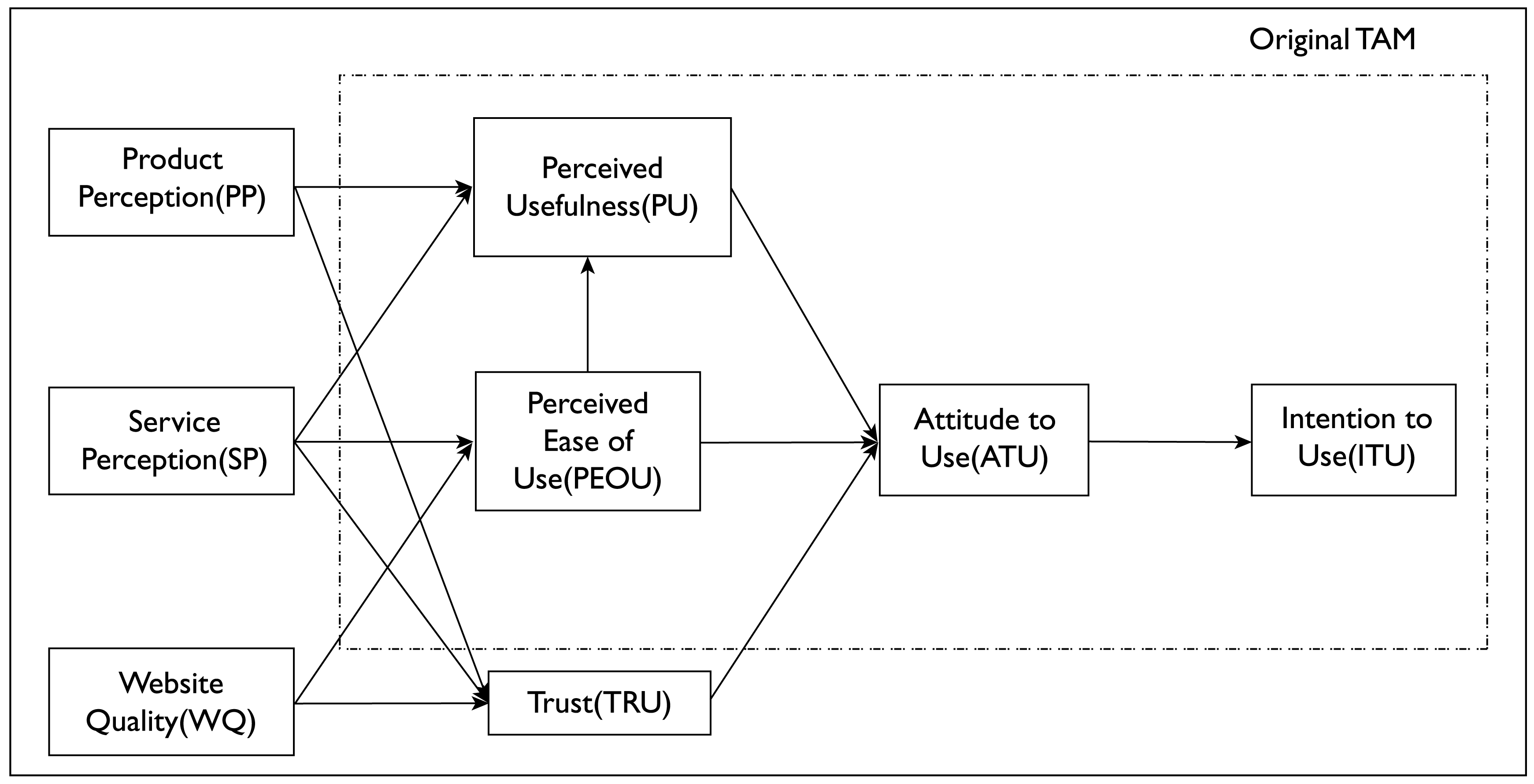
Earlier studies on TAM have focused on its utilization for retail purposes (Gillenson & Sherrell, 2002; O’Cass & Fenech, 2003). None of these studies have used TAM for online purchase of niche products like handicraft items. Therefore, the focus of this article is to apply TAM to a new application: use of e-commerce for purchase of wooden handicraft items. This study investigates the underlying reasons to select e-commerce as a medium to purchase wooden handicraft items by consumers. The proposed conceptual extended technology acceptance model (E-TAM) is depicted in Figure 1. The upcoming subsections explain various constructs and the relations.
Perceived Usefulness and Perceived Ease of Use
PU is the motivational engagement behind usage of IS while PEOU is considered as a referent of PU. More specifically, PU is the extent to which one believes usage of a system would boost his/her task efficiency. PEOU contrarily refers to the extent one believes that usage of a system will be free from effort (Davis, 1989). Prior research validated the impacts of perceived ease of use and perceived usefulness on the intention to use them in various IT contexts, including online booking (Kucukusta et al., 2015), mobile wireless technology (Kim & Garrison, 2009), e-commerce (Hernandez, Jimenez, & José Martín, 2009), mobile banking (Gu, Lee, & Suh, 2009) and mobile commerce (Chong, Chan, & Ooi, 2012).
In the current study, PU is defined as the extent to which a user believes that e-commerce will help to improve the performance/efficiency to purchase wooden handicraft items. PU is measured in terms of time, cost and effort required to purchase wooden handicraft items online. PEOU refers to the degree to which a user believes that using/adopting e-commerce for purchase of wooden handicraft items will be free of effort. It is measured in terms of process easiness to search, compare, make payment and buy wooden handicraft items online. Prior research in the context of e-commerce confirmed the positive influence of PU and PEOU on behavioural intention. PU and PEOU both positively influence attitude towards use (ATU), and this in turn has a positive impact.
Trust
McKnight and Chervany (2001) define trust as the point of reliability and credibility on new technology by people. It remains one of the key effective tools to reduce uncertainty and risks (Pavlou, 2003; Suh & Han, 2003) and generate a sense of safety. Although trust is vital in every business relation and transaction (Dowell, Morrison, & Heffernan, 2015; Sultan & Mooraj, 2001; Warrington, Abgrab, & Caldwell, 2000; Zhao, Mattila, & Eva Tao, 2008), it is even more crucial in online stores than offline stores (Grewal, Lindsey-Mullikin, & Munger, 2004; Reichheld & Schefter, 2000). Due to exclusive environment characteristics in virtual shopping such as failure to directly feel and touch a product and non-existence of in-person interactions, a consumer feels greater uncertainty and risk in their decision to shop online (Corbitt, Thanasankit, & Yi, 2003). Therefore, security, privacy and consumers’ reviews are considered as important factors that affect trust and build consumers perception to shop online (Gefen & Straub, 2003). Previous studies have understood the role of trust in the development of consumer intention and attitude to use technological innovations and inventions (Chen & Tan, 2004; Childers, Carr, Peck, & Carson, 2002; Davis, Bagozzi, & Warshaw, 1992; Gefen & Straub, 2003; Gefen et al., 2003; Pavlou, 2003). Therefore, the present study attempts to examine the direct impact of trust on consumers’ attitude.
Website Quality
It is defined as the degree of user friendliness in using a website (Kim & Lee, 2002) and is considered one of the important factors for online store (Lee & Lin, 2005). Numerous studies have assessed relationship amongst website quality and users’ acceptance. Most studies have agreed that it affects users’ view of site, as it is the gateway through which the transaction can be conducted. In this research, website quality is assessed in terms of the quality of its user interface along with features it provides to search, process and present useful information regarding wooden handicraft items online.
Product Perception
Product perception also termed as product value, comprises of understanding a product in terms of price, product quality and variety (Lee, Huang, Chang, & Chen, 2009). Price is defined as the cost paid for an item by the consumer, and it should be comparable with prices available for the same product at other alternative sources (online or offline). Product variety is the number of alternatives that is available to the customer to choose a product. Long tail phenomenon affects the variety of products available offline, but many options are available online (Hinz, Eckert, & Skiera, 2011). Product quality perception is the product’s ability to satisfy the customer. In an online purchase, a consumer cannot touch and feel the product; hence, quality perception plays a vital role in determining the product perception and trust towards the vendor.
Service Perception
Service perception, also known as e-service quality, is defined as overall customer’s evaluation and judgements, regarding the quality of products/services delivered (Santos, 2003). In this research, service quality is applied to assess the quality of services provided by a website to the consumers. These services include reliability and responsiveness of the website. Reliability is measured in terms of delivery time and ease of return and refund policies, whereas responsiveness measures how fast the website responds to the concerns of a consumer (Kim & Lee, 2002; Parasuraman, Zeithaml & Berry, 1985).
Objectives
The objectives of this study are to investigate application of TAM towards adoption of e-commerce for purchase of wooden handicrafts items, determine if the intention towards usage of e-commerce for purchase of wooden handicrafts is significantly affected by attitude towards use, determine if attitude towards adoption of e-commerce for purchase of wooden handicrafts is significantly affected by PU, PEOU and Trust (TRU), examine relationship significance between PEOU and PU towards adoption of e-commerce for purchase of wooden handicrafts, examine relationship significance between WQ on PEOU and TRU towards adoption of e-commerce for purchase of wooden handicrafts, examine relationship significance between PP on PU and TRU towards adoption of e-commerce for purchase of wooden handicrafts and examine relationship significance between SP on PU, PEOU and TRU towards adoption of e-commerce for purchase of wooden handicrafts.
The present study contributes to consumers’ purchase intention for wooden handicraft items in the context of e-commerce platform.
Methodology
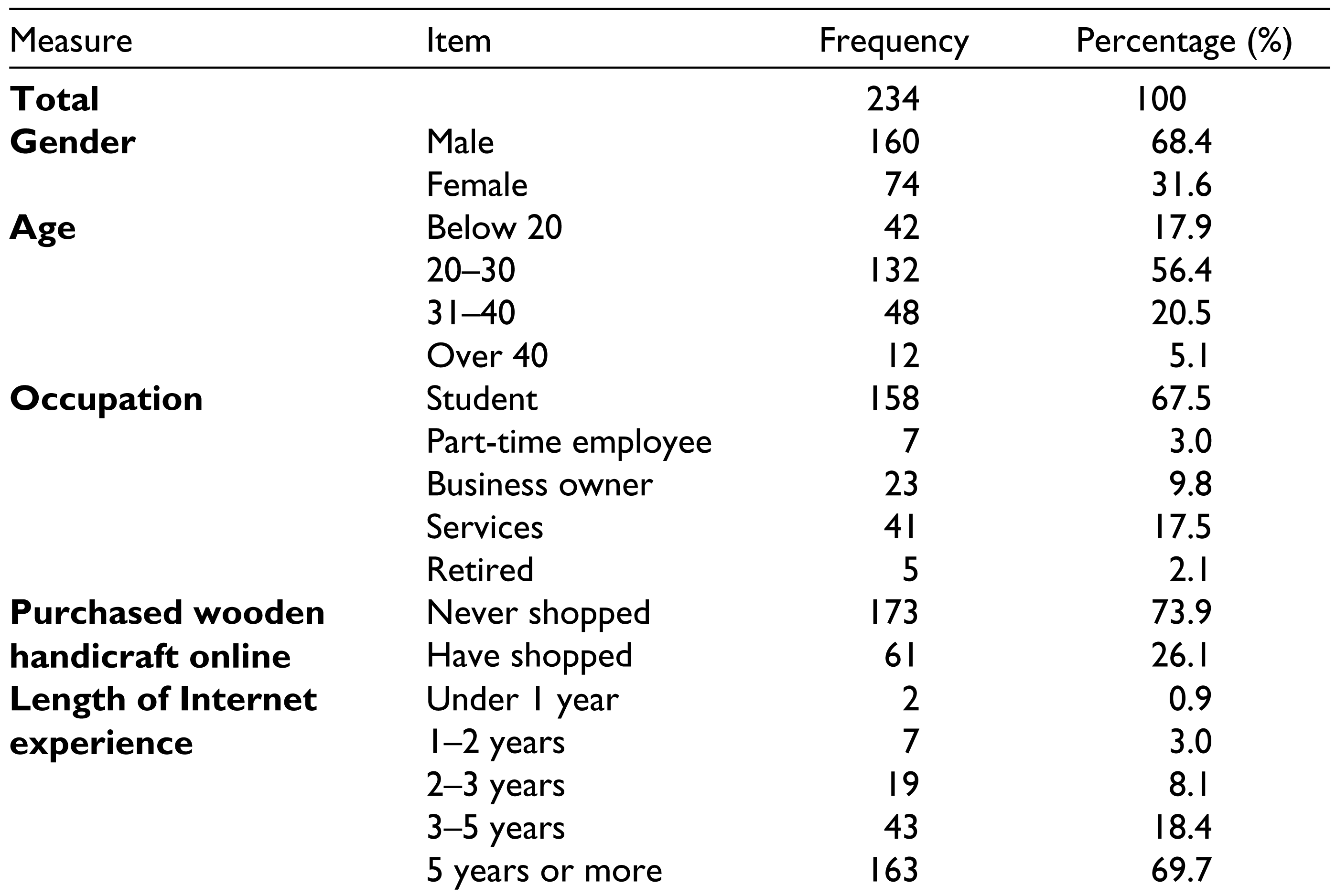
Prior to the development of questionnaire, five wooden handicraft sellers and eight customers were interviewed personally to gather their experiences with wooden handicraft sales and purchases. After taking into account important instructions from respondents, a questionnaire was developed to measure the consumers’ attitude towards use (ATU) and intention to use (ITU) towards online purchase of wooden handicraft items. To validate the proposed model, the questionnaire was distributed to measure the eight constructs (i.e., PEOU, PU, TRU, PP, SP, WQ, attitude towards product purchase and behavioural intention). For the constructs PEOU and PU, original items were adapted from Davis (1989). The other four constructs (i.e., TRU, PP, SP and WQ), along with ATU and ITU constructs, and their items were devised from past studies (Christine, Dewit, & Aubert, 2001; Kim & Stoel, 2004; Schaupp & Belanger, 2005; Wang & Yang, 2010; Yu, Ha, Choi, & Rho, 2005). Online questionnaire to measure the eight constructs and a 26-scale item were developed for the current study to approach a large number of retail consumers. All items were measured on a five-point Likert scale, with end points 1 (representing strongly disagree) and 5 (representing strongly agree). Table 1 gives respondents demographic information.
Respondents Demography

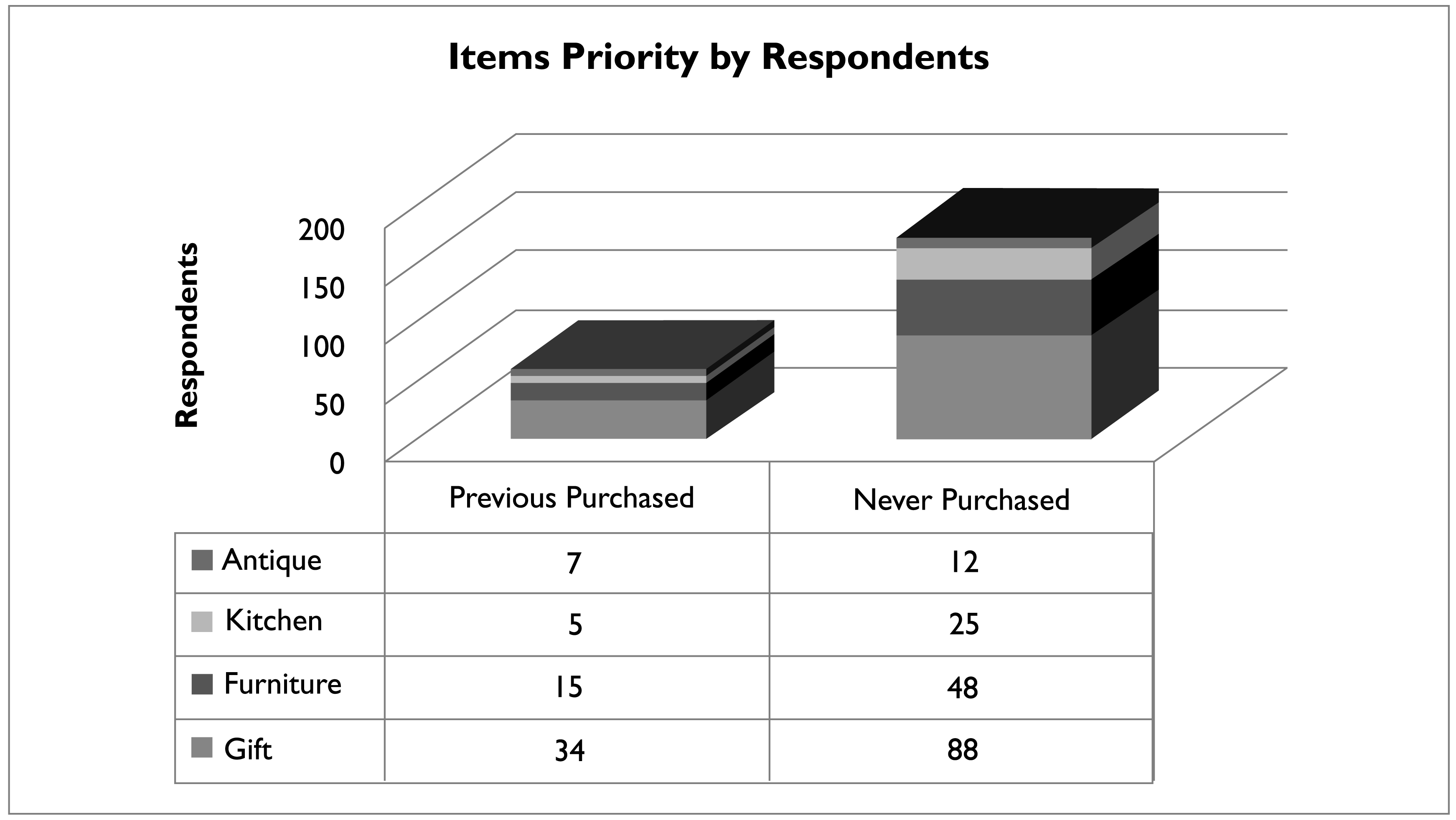
As depicted in Figure 2, inexperienced shoppers (never purchased) of wooden handicraft products from online platform show more perceived interest towards gift items followed by furniture items, kitchen and antiques, whereas experienced online shoppers of wooden handicraft items show interest in gift items followed by furniture, antiques and lastly kitchen items.
Pre-test
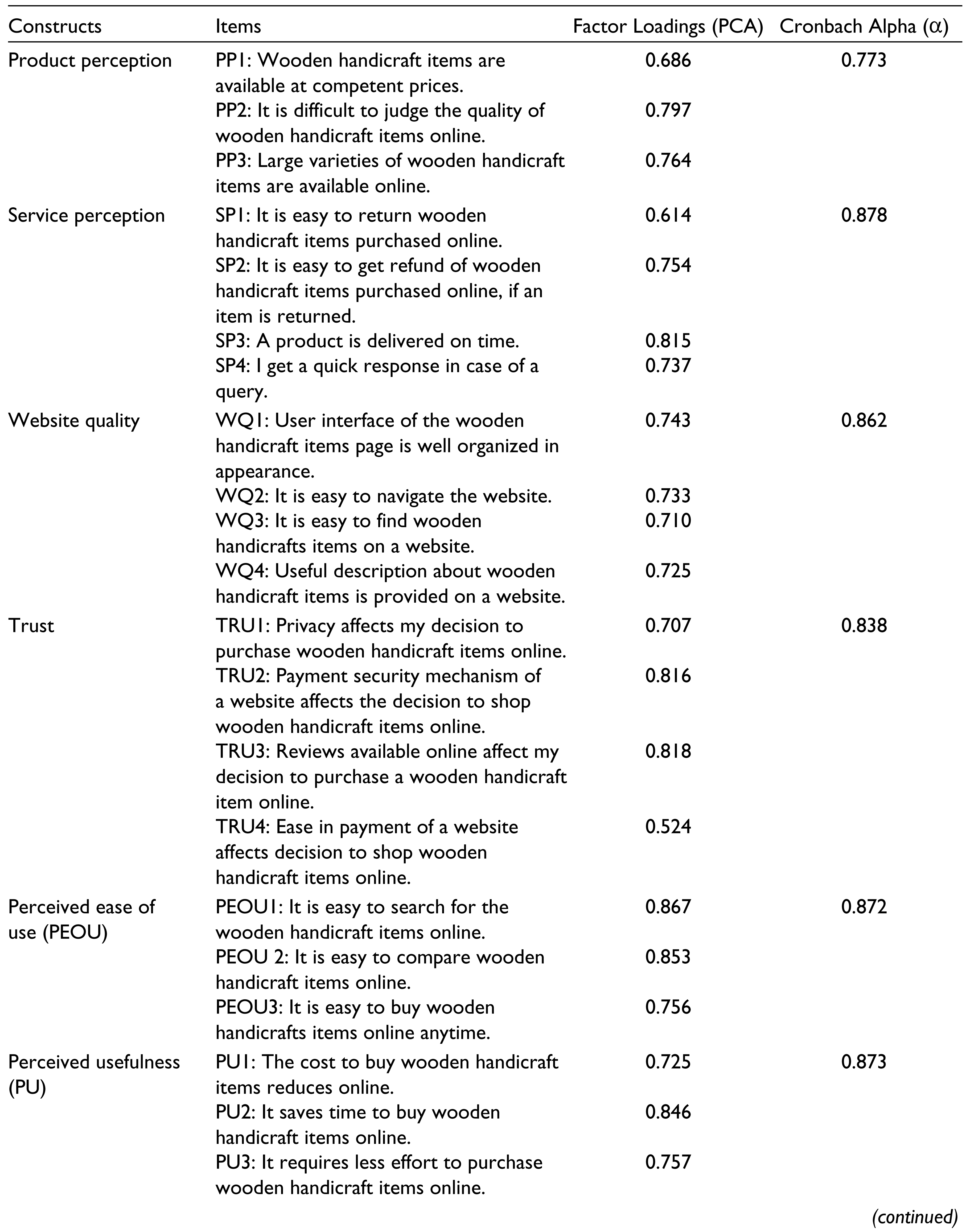
A pilot test was conducted among 50 people to confirm the accuracy and relevance of the questionnaire (Table 2 includes items of the questionnaire). Reliability was measured using Cronbach alpha (α) coefficients for all constructs, and all values were found to exceed 0.7 (Nunnally, 1978). For final data collection, a sample of approximately 1,000 people was targeted through an online questionnaire where all respondents were contacted through e-mails. Only 237 responses were received, which makes response rate of 23.7 per cent. The received response rate is considered acceptable in related empirical studies (Doney & Cannon, 1997; Wu & Wang, 2005). The online survey was created in English, as it was assumed that people using the Internet understand English. After removing three respondents due to non-random missing values, final valid response became 234. Table 2 presents the result of reliability and factor analysis. Cronbach alpha (α) values of 0.7 and higher were obtained, indicating reliability of constructs. Factor loadings of each individual items for the construct have values greater than 0.5, indicating the importance of the item for its factor.
Results of Reliability and Factor Analysis for E-TAM

Measurement Model Analysis
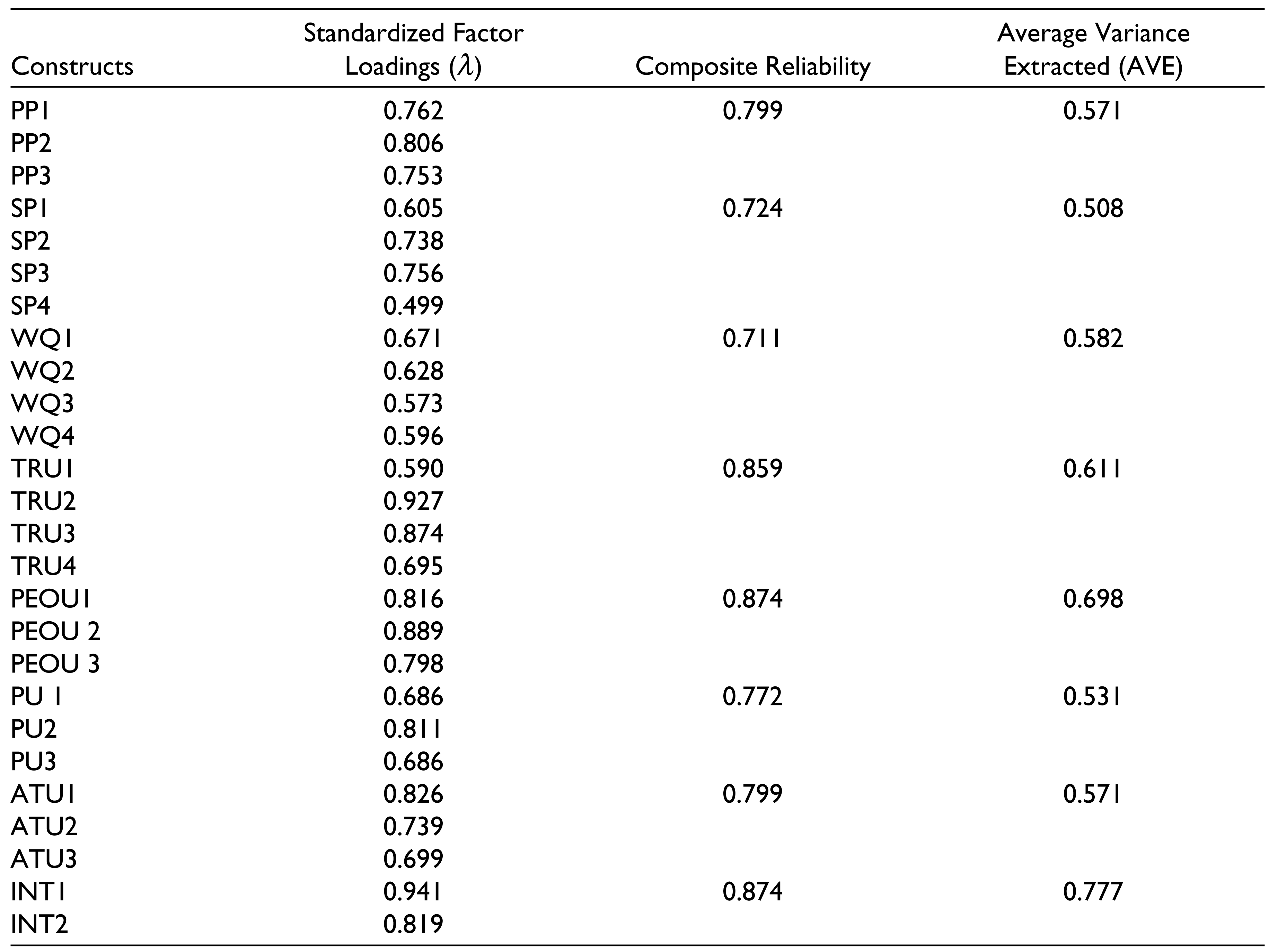
In Table 3, measurement scales were evaluated for convergent validity by three criteria given by Fornell and Larcker (1981) and Hair et al. (2010). According to the criteria, all standardized factor loadings (λ) must be significant and exceed 0.5. The constructs’ reliabilities must exceed 0.8 and the average variance extracted (AVE) must exceed 0.5. All standardized factor loadings (λ) were significant at p < 0.01. Composite reliabilities of constructs ranged from 0.71 to 0.87. AVE, ranging from 0.51 to 0.77, was greater than the cut-off variance of 0.5 and was above the correlation coefficient for each item.
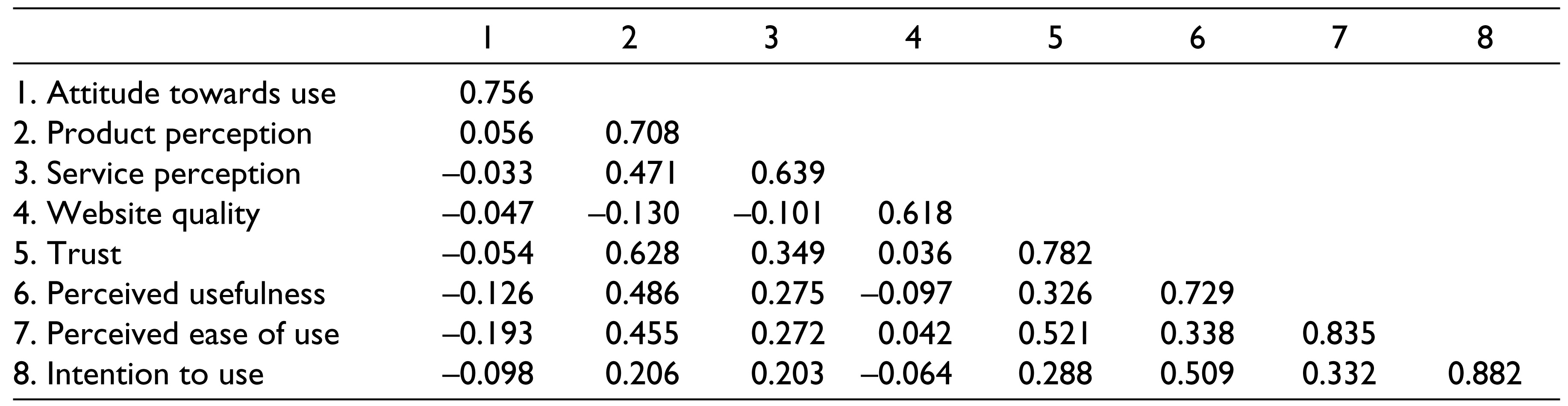
Table 4 provides discriminant validity results which assesses each variable’s AVE (within factor shared variance) to be larger than the squared correlation coefficients between variables (Bagozzi, Yi, & Phillips, 1991). As per Table 4, all AVE values are above squared correlation coefficients, satisfying the condition for discriminant validity.
Analysis of the Structural Model
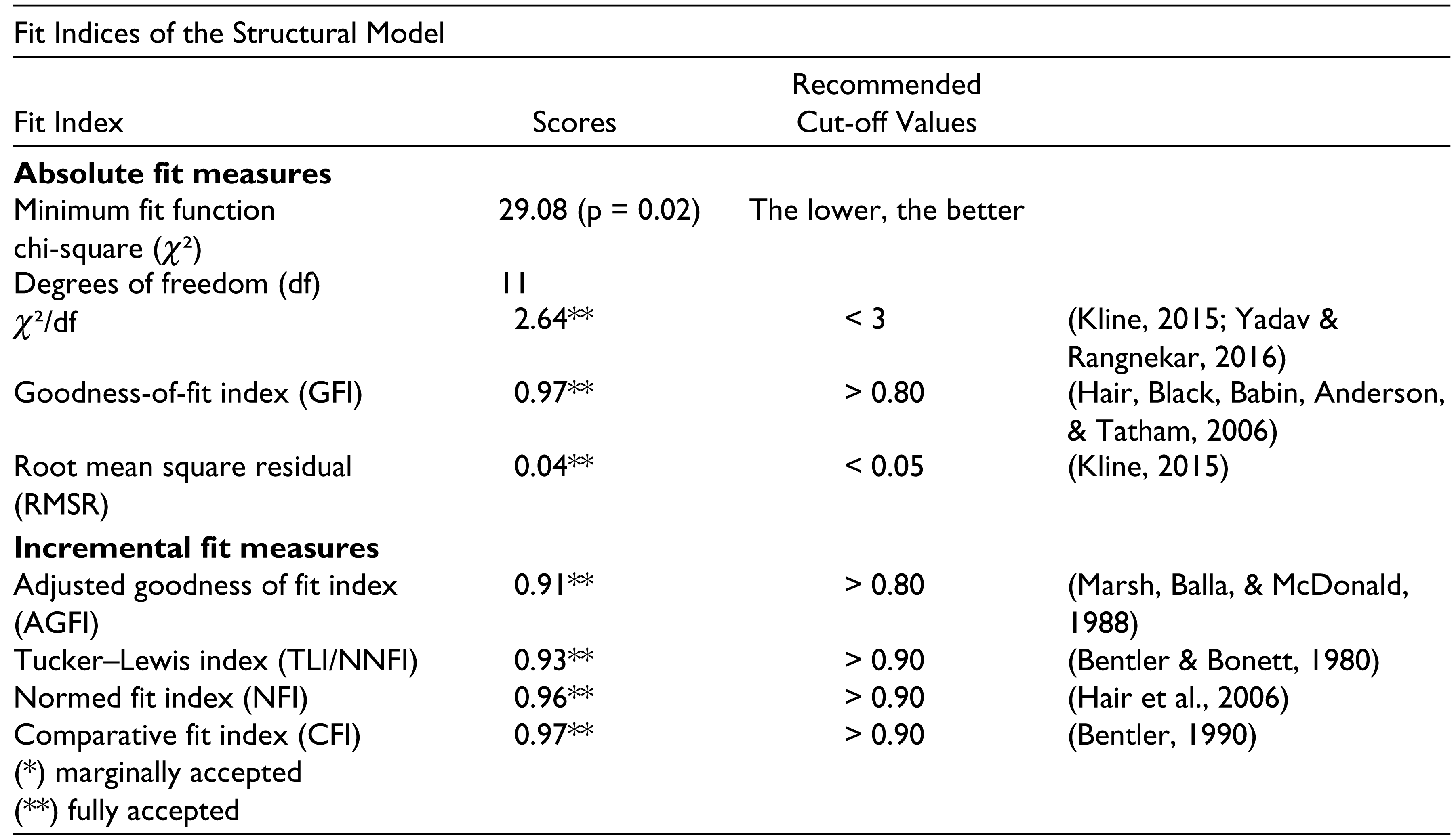
The results of goodness of fit are presented in Table 5. All indices are found to be acceptable indicators of data, fit for E-TAM. This makes the proposed model acceptable for validation purpose. Model is analyzed for goodness of fit, using chi-square test and structural equation modelling (SEM) (Bagozzi et al., 1991; Hair, Anderson, Tatham, & Black, 1998; Moghavvemi & Akma Mohd salleh, 2014).
Model Test
Table 6 summarizes the results of path analysis with t-values using SEM. All relations are significant between the constructs except PU←SP, which is found non-significant. Figure 3 depicts the path model for proposed E-TAM.
Measurement Model Results
Results of Discriminant Validity
Goodness-of-fit Indices
Model Summary
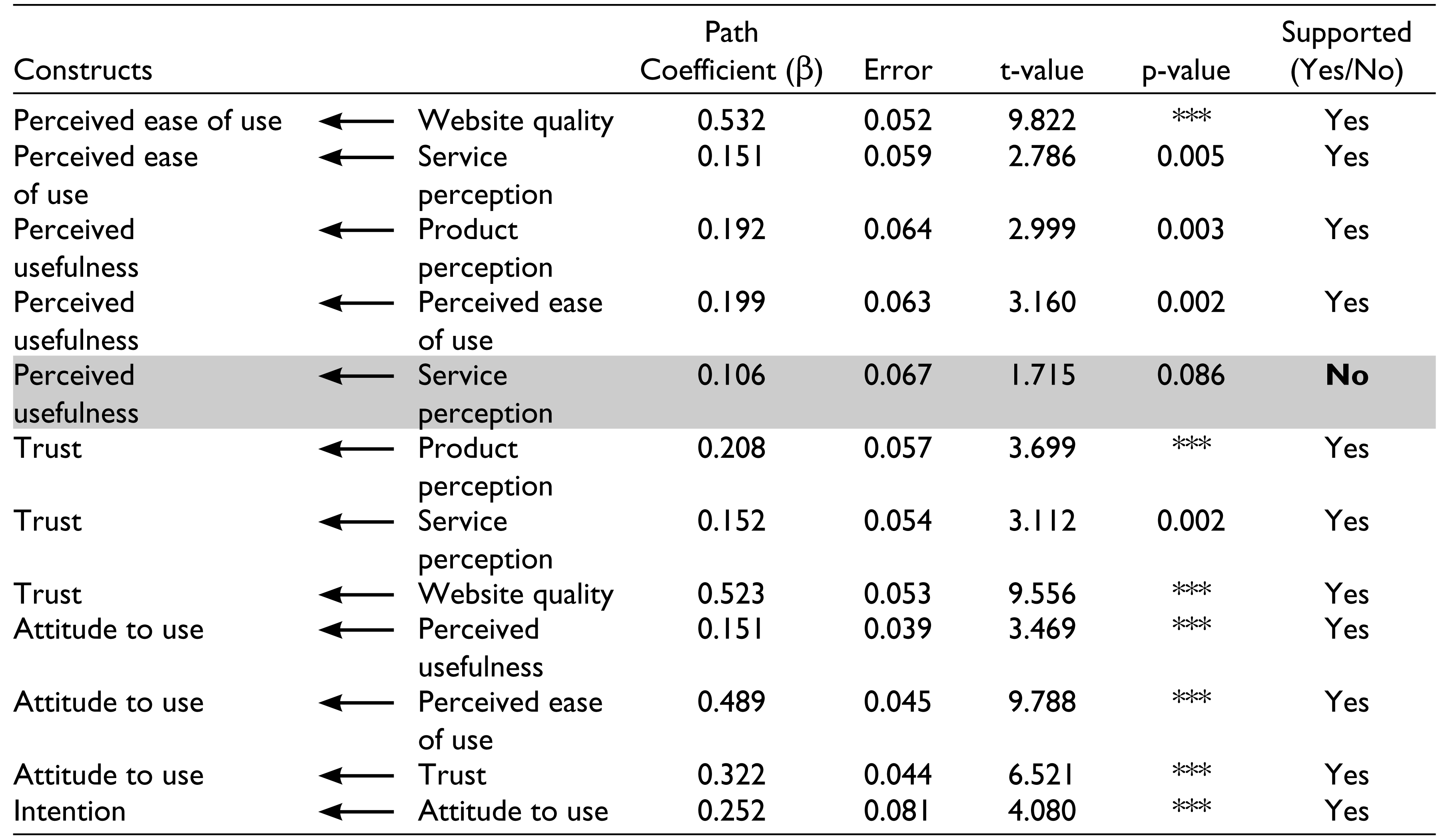
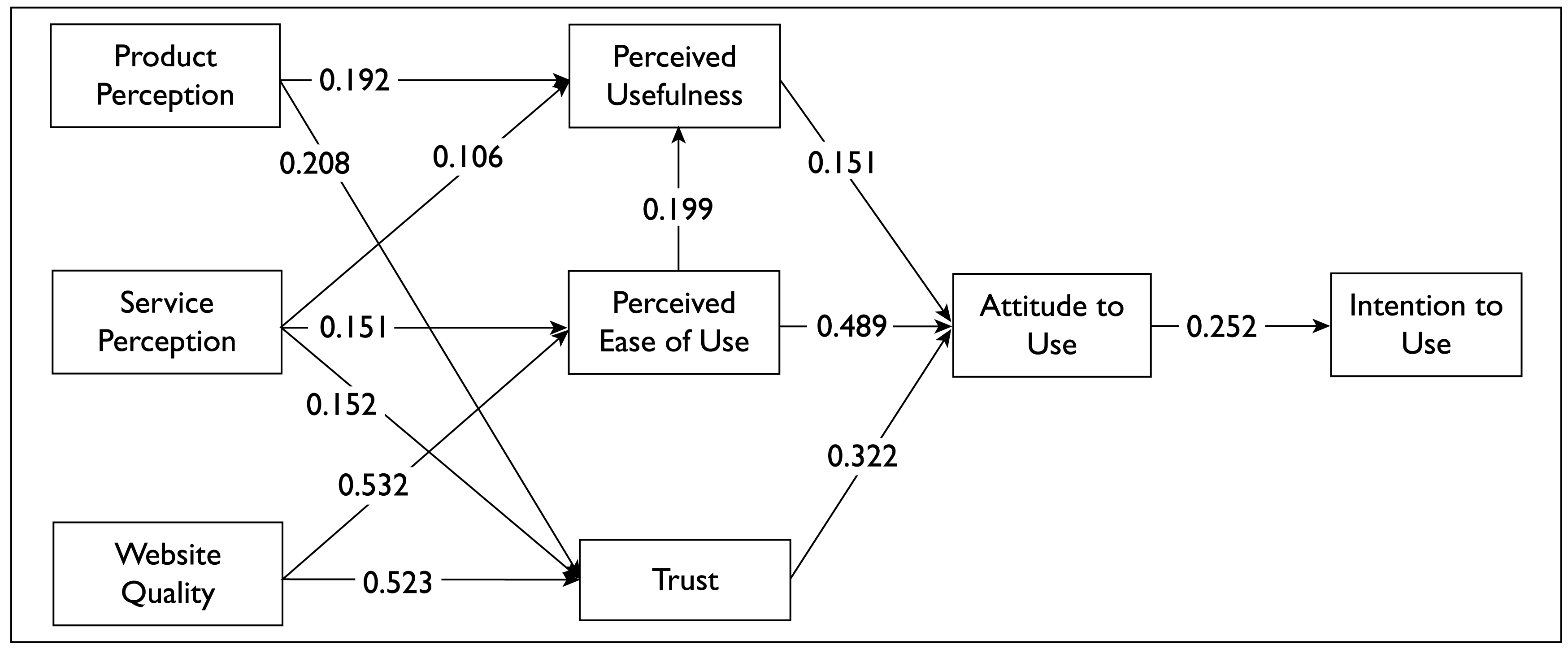
Constructs such as product perception and service perception determine PU; Service perception and website quality together determine PEOU; PP, SP and WQ all together impact TRU for wooden handicraft items. The impacts of strength of SP, WQ and PP on ATU and ITU were significant at p < 0.05. WQ significantly influences PEOU (β = 0.532, p < 0.001) and TRU (β = 0.523, p < 0.001). SP also significantly influences PEOU (β = 0.151, p = 0.005) and TRU (β = 0.152, p < 0.005). Effect of SP over PU is found non-significant (β = 0.106, p = 0.086). PP significantly influences PU (β = 0.192, p < 0.005) and TRU (β = 0.208, p < 0.001). TRU, on the other hand, acts as a mediator to purchase ITU e-commerce platform and affects consumers ATU significantly (β = 0.322, p < 0.001). Results also showed that positive relationship of PEOU with ATU e-commerce to purchase wooden handicraft items is significant (β = 0.489, p < 0.001), and similarly, PU has strong positive relationship with ATU (β = 0.151, p < 0.001) (Davis, 1989; Davis et al., 1989). As per Davis (1989), and various other studies, relation amongst PU and PEOU is crucial, and this study confirms that PEOU positively and significantly affects PU (β = 0. 199, p < 0.003). This implies that attitude towards e-commerce for purchase of wooden handicraft items is determined by services and functions offered by website and vendor/sellers. Hence, it can be concluded that customers use e-commerce for purchase of wooden handicraft items when they feel secure about their information; and identity and trust features and services of website and sellers. Accordingly, ITU of e-commerce for purchase of wooden handicraft items is significantly affected by ATU (β = 0.252, p < 0.001) (Davis, 1989; Davis et al., 1989). Results of the study demonstrate that all three variables, WQ, SP and PP constructs, significantly impacts ITU and are mediated by PEOU, PU, TRU and ATU. Figure 4 depicts the final E-TAM model.
Results from the study confirm that PEOU and PU determine consumers’ attitude towards online shopping for wooden handicraft items. Consumers’ perception of effectiveness and easiness of online shopping indirectly leads to consumers’ acceptance of online shopping through their attitude. It was also confirmed by the study that PEOU significantly and positively affects PU. However, the study did not assess direct relation between PU and PEOU with the intention to use e-commerce for wooden handicraft items. Trust plays a significant role in consumer adoption of online shopping for wooden handicraft items and supports prior research results (Bruner & Kumar, 2005; Childers et al., 2002; Gefen, 2004; Pavlou, 2003). Trust acts as a mediator between adoptions of e-commerce by customers to purchase wooden handicraft items. The effect of trust on adoption increases positively towards future purchase and recommendations to others. Therefore, the role of online shopping quality perceptions in e-commerce adoption towards wooden handicraft items is in agreement with research by TAM (Ahn, Ryu & Han, 2005). This result corroborates the findings of previous research on the need of trust in Internet activities (Gefen, 2000; Lu, Liu, Yu, & Wang, 2008). Majority of people are concerned about their information when using e-commerce, resulting in importance of this variable in the study. According to the results of the study, consumers were most concerned over website quality as it is the interface of website with users that aids in shopping. This study establishes the fact that product perception positively impacts decision-making, and compared to service perception, it has a higher impact. This can be attributed to the hedonic nature of a product.

Conclusion
The study concludes that the need to construct and preserve trust in e-commerce platform is a must. In business to consumer (B2C) relation, trust in seller is crucial for consumer to acknowledge any kind of risk linked with transaction. Trustworthiness in seller has been confirmed as an essential antecedent to online and repeat purchase in previous studies (Gefen & Straub, 2004; Reichheld & Schefter, 2000). Continuous efforts must be made to infuse trust amongst customers in online sellers’ ability to generate first and repeat purchase. Also, wooden handicraft items require higher satisfaction towards hedonic sensory attributes. Abundant information about wooden handicraft products’ features and quality increases customers’ trust in reviews and payment procedures. Therefore, sellers and websites must ensure that a customer feels confident and abundant reviews from previous purchasers and detailed product information are available. Service providers must ensure smooth transactions and ease in return/replace with quick delivery services.
Managerial Implications
The study reveals that there are many opportunities for manufacturers/sellers of wooden handicrafts in all market segments though they are more plentiful for products that fit at ease in consumers’ home and bring out authentic indigenous facet in their lives. Product description, type, availability and price significantly affect customers’ decision towards e-commerce purchase and explain that their decision gets influenced by outlook and quality of handicraft items. A study by Lynch and Ariely (2000) implied that information about product quality is easier to navigate; consumers were found less sensitive towards price and bought more costly goods. Therefore, sellers/marketers must ensure easy and detailed product information on website. This will help consumers gain trust on website services and features, which will ensure future or repeat purchase of wooden handicraft items. Wooden handicraft items require higher satisfaction towards hedonic sensory attributes. Hence, e-commerce websites must evolve and compensate with better services such as return and refund of product, and payment with good and timely delivery of wooden handicraft items. This will lead to greater customer confidence and target repeat purchase.
E-commerce adoption studies have been mostly centred on the usability features of websites. The major barriers that need to be overcome before consumers reach the level of adoption are the concerns for privacy and security. The useful and relevant features of a website can be improved not only on aesthetics but also by addition of better security features. These security features will aid in gaining confidence of consumer. Besides addition of personalization schemes and recommendation agents, these features can help generate favourable attitude in consumers’ mind towards websites. Understandable and clear security and privacy policies must be put on websites. Ease in search, compare and purchase of handicraft products are directly related to basic features of a website and their experience with interfaces. As consumer’s internet and online shopping experience increases, they crave for more privacy and security features that adds to increase in business budget. Furthermore, disability in keeping personal information secure might result in grave consequences.
In an online environment, trust on major services and attributes of sellers and websites are crucial for transactions. Sellers and websites must concentrate on touch points and design better interface for customer. The website interface must be reliable and smooth to ensure trustworthiness and convenience. Privacy and security must be thoroughly ensured and kept; third party verification certificates can be used to ensure safety in transactions. Websites require information of the customers in detail for delivery and other services; therefore, interface must be built according to the convenience of customers. According to the results, constructs such as ease in navigation, search on website, well-built interface and detailed description lays maximum impact out of all.
Sellers should present information that sets correct expectations. As initial step, most websites push customers to write their reviews. Consequently, a lot of firms take benefit of consumers’ reviews as fresh and unconventional marketing instrument (Dellarocas & Narayan, 2006). Different studies show that firms not just repeatedly post merchandise information on forums online (Mayzlin, 2006), as an alternative, but they also proactively encourage customers to spread electronic word-of-mouth (eWOM) of products (Godes & Mayzlin, 2004). Few firms even tactically manipulate eWOM to influence consumers’ attitude (Dellarocas, 2003). Thus, the findings of the article strongly persuade sellers to aspire at attaining a hefty review base, which satisfactorily portrays the performance of a product. Therefore, sellers must actively fuel customers to provide reviews post purchase, for example, by providing customers appropriate incentives or by a simple reminder to write a review. Additionally, sellers can offer added information and tools, which sets right expectations and helps customers assess product fit, according to the needs.
Customer resistance to e-commerce adoption, especially in case of hedonic products, must be kept in mind while designing of strategies. Pre-acquisition strategies must be formulated for consumers to pinpoint all the touch points of customers and increase purchase. These strategies can help in transactions by non-adopters and expand reach. Difference in consumer purchase and awareness towards purchase of wooden handicraft items through the medium of e-commerce websites reveals fundamental issues with interface, marketing appeals and services of sellers. Effective communication and information strategies must be formulated. Service providers can initially target educated and young customers as they adopt new technology easily and do not hesitate to provide their basic information. Marketing plans and strategies must be crafted to promote wooden handicraft items rather than general advertising with other products, as they fall under hedonic product groups.
Thus, knowledge of influential factors of shoppers and effects of factors on consumer’s buying decision for handicraft products can have huge interests for sellers/marketers. In contrast, sellers/marketers will get benefits by the findings of the study to strategize marketing plans for target customers, as marketing is an undermined activity in value chain of wooden handicraft business (Yadav & Mahara, 2016).
Limitations and Future Research
The study claims support for wooden handicraft items model in e-commerce environment. Geographic reach should be increased to gain an understanding of different cultural differences, which helps sellers attain global status. Various studies have explored effects on behavioural intention of usage related to Internet/online shopping and e-commerce. Thus, it is crucial to test the outcome towards actual purchase. Although the study provides an insight into the relationship between website quality, product features and customer attitude towards e-commerce usage intention, there are many different factors (economic, environmental, social, political, etc.) that influence customers’ intentions towards handicraft items. Though the current study was focussed on only one handicraft product category but more literature and research is required on other handicraft categories (home decoration, clothing, ornament, etc.). Every country has a different culture, which has influence over customers’ purchase intentions. Inter-cultural differences based upon nationality, race, religion or ethnicity resulted in the surfacing of diverse subcultures. Therefore, thorough understanding of differences in norms and values across different cultural segments will definitely benefit as digital marketers build up and market their offerings to a diverse marketplaces. Therefore, further research can be conducted to identify relation between culture and intention to purchase over Internet.
Footnotes
Acknowledgements
The authors are grateful to the anonymous referees of the journal for their extremely useful suggestions to improve the quality of the article. Usual disclaimers apply.