




Abstract
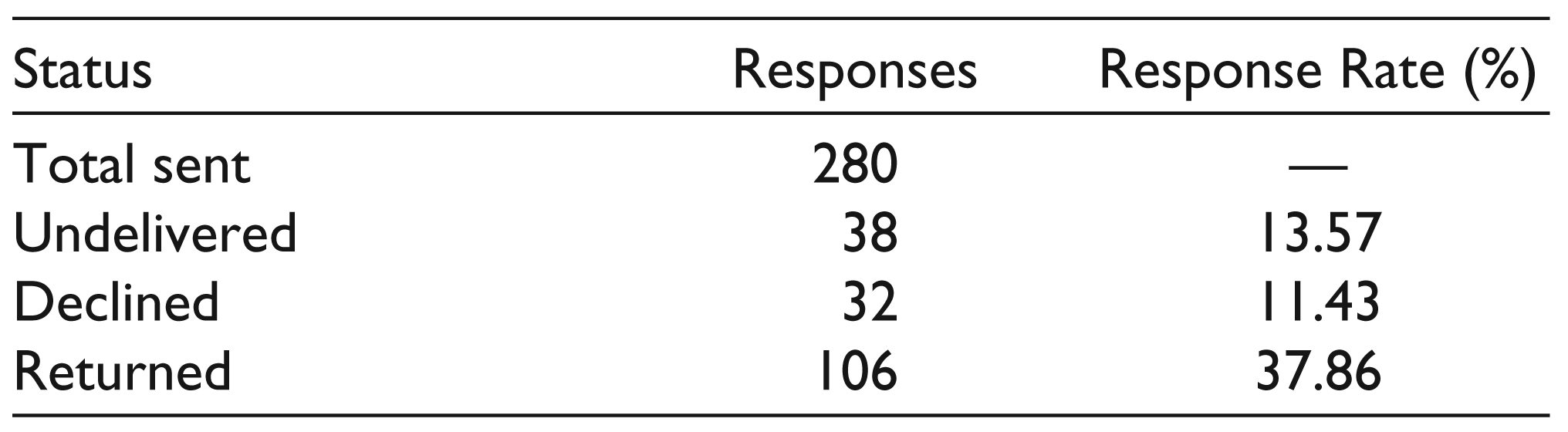
Small and medium enterprises (SMEs) have significantly contributed to growth, innovation and success of several economies across the world. However, SMEs in emerging economies have faced stiff competition in the global market. The purpose of this research is to provide an insight into the status of quality management (QM) practices in Namibian SMEs. This article presents a survey-based approach to evaluate the application of QM practices, the associated critical success factors (CSFs), business performance indicators for quality improvement and the reasons for non-implementation of the quality tools from an emerging economy perspective. An online questionnaire was designed and distributed to 182 Namibian SMEs through stratified random sampling. The overall response rate was 37.86 per cent. Analysis of results showed that the level of application of QM practices was generally low. The main reasons for not implementing QM initiatives were as follows: (a) unknown tools in enterprises, (b) difficulties in data collection and (c) high costs of training. Relative influences of CSFs and the Critical-to-Quality (CTQs) were also evaluated. Intriguingly, top management commitment and support was not a major CSF. Low response rate and context specificity tend to limit the generalization of the results. The study provides insights for policymakers to develop effective policies for QM education and training programmes, hence facilitating effective adoption of QM practices in a developing world context.
Introduction
Small and medium-sized enterprises (SMEs) contribute a significant portion to economies across the world. Not surprisingly, SMEs have become a central driver of most economies in the developing world. The enterprises have significantly contributed to growth, innovation and success of several societies. Recently, globalization and liberalization have opened many business opportunities for business growth, especially for SMEs in the developing economies, including India (Singh, Bhardwaj, & Sachdeva, 2006), Pakistan (Kureshi & Mann, 2009), Nigeria (Olusanya & Adegbola, 2014), Senegal (Suárez-Ortega, García-Cabrera, & Knight, 2016), South Africa (Muyengwa, Mukhuba, Battle, & Mbohwa, 2013; Ntombekaya, 2010) as well as Namibia (April, 2005). However, globalization and liberalization have also brought about stiff competition at regional and global levels (Ihua, 2009). In order to gain a competitive advantage, SMEs have to implement competitive strategies that will enable them to compete in the local, regional and global markets. Among others, quality management (QM) strategies have been used as competitive strategies for performance improvement.
QM practices are tools, techniques and strategies for continuous improvement of quality, usually driven by the need to satisfy customer needs. Examples of QM practices are total quality management (TQM), statistical quality control (SQC) and quality systems (Lakhal, Pasin, & Limam, 2006).
The application of QM practices usually requires total or company-wide involvement, including the top management who should ensure that the practices are effectively adopted across various aspects of products, processes and services of the organization. The company-wide application of QM tools is essential, if enterprises are to stand competition. However, this is often a challenge for most SMEs who have to face global competition against large enterprises that have already been competitive in the market place. QM practices are increasingly becoming influential for continuous improvement and innovation initiatives (Kim, Kumar, & Kumar, 2012).
Literature suggests that SMEs should adopt quality improvement as a journey, continuously striving to improve quality by implementing initiatives such as Lean and Six Sigma, learning from large organizations (Kumar & Antony, 2008). Although there has been some awareness of quality initiatives among SMEs in Namibia, studies on the extent of the application of quality initiatives in Namibia are rare. Research questions arising from these observations include the following:
To what extent have QM tools and techniques been applied? What critical success factors (CSFs) are required for the effective use of quality tools and techniques in developing economies such as Namibia? What are the reasons for not implementing QM tools and techniques?
In addressing these gaps and voids, the article seeks to analyse the context of Namibian SMEs and provide empirical evidence related to quality initiatives in the context of a developing economy. Therefore, the aim of this research is to investigate the current state of the application of quality initiatives in the Namibian SMEs.
This research offers significant contributions to knowledge and practice in the field of QM in SMEs. First, the article explores the implementation of quality tools and techniques in Namibian SMEs. Second, the article provides empirical evidence of the application of QM practices in Namibian SMEs. Third, the article provides useful insights for policymakers and top management for effective adoption of quality initiatives in order to prepare the enterprises for regional and global competition.
Review of Literature
Quality Management Tools and Techniques
Due to the realization of the potential of QM initiatives, much attention has been focused on research into the adoption of QM tools and techniques in SMEs, for instance, cause-and-effect analysis, control charts, Pareto analysis, brainstorming, statistical process control and design of experiments (Kumar & Antony, 2008; Kumar, Khurshid, & Waddell, 2014; Zeng, Chi Anh, & Matsui, 2013). QM tools have been found to be crucial to the day-to-day QM and control aspects of industry (Anderson & Sohal, 1999; Badri, Davis, & Donald, 1995; Bamford & Greatbanks, 2005; McQuater, Scurr, Dale, & Hillman, 1995; Terziovski, 2006). For instance, Bamford and Greatbanks (2005) highlighted the benefits of such tools and techniques in contributing to a greater understanding of specific processes in business and industry. Tools and techniques are known to play a key role in enhancing a company-wide approach to continuous improvement by allowing everyone to be involved in process improvement, processes to be monitored and transfer of quality improvement experiences to everyday business operations. Thia, Chai, Bauly, and Xin (2005) conducted an exploratory study on the use of quality tools and techniques in product development, identifying internal factors (e.g., usefulness and monetary cost) and external factors (e.g., organizational culture) which influence the adoption of QM tools in new product development in industry. By discovering the possible reasons behind adoption or non-adoption of QM tools and techniques, researchers could identify critical areas of possible improvement. McQuater et al. (1995) emphasized the need for paying special attention to CSFs for effective and efficient use and application of QM tools and techniques.
Critical Success Factors
As literature suggests CSFs play an important role when QM practices need to be implemented in organizations. Several researchers such as Assarlind and Gremyr (2014), Mendes and Lourenço (2014), Kumar et al. (2014) and Yusof and Aspinwall (2000) have stressed the need to study and understand the role of CSFs in overcoming implementation barriers. Some of the notable comparative studies (Kumar et al., 2014; Lin, 1999) have been done in SMEs to explore the role of CSFs and they found that lack of knowledge and limited resource availability are the implementation barriers which the SMEs need to overcome (Kumar & Antony, 2008, 2009; Srivastava & Misra, 2014). Another study by Ihua (2009) found implementation barriers such as lack of managerial expertise, poor management, low staff training, low technical competencies, quality failures and shortage of resources while comparing SMEs in the UK and Nigeria.
QM Practices in the Emerging Economies
QM practices have been widely investigated in several countries (Ahire & O’Shaughnessy, 1998; Anderson & Sohal, 1999; Kaynak, 2003; Najmi & Kehoe, 2000; Powell, 1995; Sila & Ebrahimpour, 2002; Sun, 2001; Zhang, Waszink, & Wijngaard, 2000). Lakhal et al. (2006) identified 10 distinct generic practices, namely, top management commitment and support, organization for quality, employee training, employee participation, supplier QM, customer focus, continuous support, quality system improvement, information and analysis and statistical quality techniques. These practices are closely linked to quality improvement and firm performance. A significant number of empirical studies in the literature have indicated the influence of customer-driven QM initiatives on quality improvement (Lakhal et al., 2006; Kaynak, 2003; Sila & Ebrahimpour, 2002; Yusof & Aspinwall, 2000). It is evident from these studies that the adoption of QM practices is crucial for business growth and survival (Duh, Hsu, & Huang, 2012; Green, 2012; Herzallah, Gutierrez, & Rosas, 2014; Prajogo & Sohal, 2004).
Past research tends to focus on the adoption of QM practices in industrialized countries and much less on developing economies. Studies on developing nations were done in Malaysia (Talib, Ali, & Idris, 2014), Pakistan (Kureshi & Mann, 2009), Thailand (Jirapattarasilp, 2008), Indonesia (Sukwadi, 2015), India (Basu & Bhola, 2015; Majumdar & Manohar, 2016; Singh et al., 2006, 2016), Portugal (Sousa, Aspinwall, Sampaio, & Rodrigues, 2005), Turkey (Taner, 2012) and Jordan (Ali & Abedalfattah, 2013). A few studies were conducted in the African context. Most of these studies report that SMEs have struggled to penetrate foreign markets (Ihua, 2009; Olusanya & Adegbola, 2014; Ratnawati, Murwani, & Wahyono, 2018; Suárez-Ortega et al., 2016). For instance, Suárez-Ortega et al. (2016) identified challenges faced by Senegalese SMEs when entering the foreign market, including myopic managerial thinking, inflexible managers and absence of a cooperative culture.
Research activities on QM practices are limited in the Southern African region (Muyengwa et al., 2013; Ntombekaya, 2010). April (2005) investigated critical factors that influence the success or failure of SMEs in Namibia, with a focus on the Khomas region, concluding that most SMEs lack entrepreneurial and managerial skills. There is little awareness of business process improvement methodologies such as Six Sigma and Lean. However, most of the SMEs have realized the need for customer focus and satisfaction.
In view of the above, it is apparent that prior studies have scarcely focused on QM practices in emerging economies. Extant studies tend to focus on the diffusion of QM initiatives in industrialized nations. It will be interesting to explore from the context of emerging economies, the application of QM practices, business performance indicators, CSFs and the reasons why the SMEs do not adopt these practices. In addressing this gap, this study attempts to investigate the level of implementation of QM practices and the barriers behind their implementation in the Namibian context. The investigation will provide significant managerial insights and strategies for effective implementation of QM practices in SMEs from a developing world perspective.
Research Methodology
The purpose of the study was to explore and evaluate the implementation of QM practices in SMEs in the context of the emerging economies. Data collection through exploratory survey followed by data analysis enables researchers to validate hypotheses and research questions on the application of QM practices.
Questionnaire Design
While designing the questionnaire, we ensured development of a proper format to safeguard against deviation from what the research exactly seeks to investigate (Antony, Kumar, & Labib, 2008). As such, we utilized a closed-ended questionnaire format to collect quantifiable data for ease of entering, better statistical analysis and enhanced analysis of results. The questionnaire included questions on CSFs, business performance indicators and quality initiatives. Thus, a 5-point Likert-type scale was used to measure CSFs (from 1 = no influence to 5 = very high influence) and quality initiatives (from 1 = never to 5 = always). This fares better than the use of yes/no or true/false questions (Hartley, 2013; Mirowsky & Ross, 1991). Since the format allows the respondents to evaluate and indicate the relative importance of the choices, the rating scale enables the researchers to obtain a better understanding of critical issues and factors (Krosnick, 1991; Saris & Gallhofer, 2007).
Survey Implementation
The survey was initiated by developing an online link. The link was then mailed to the prospective respondents with the details of our study such as the purpose, the objectives and also how the organizations can benefit from our survey findings. In some cases, the questionnaire was directly mailed to the respondents. These additions were intended to improve the response rate of the survey. Participants desire to know why they should provide information, to understand the likely benefits of the research, and prefer surveys that are easy to take and return, as also highlighted by Frohlich (2002). Follow-up emails were sent to those SMEs who did not respond, resulting in increased response rate by about 25 per cent. At the same time, enterprises in close proximity to researchers were visited.
Analysis
Preliminary Analysis
In this section, the details of the respondents are presented. Most of the respondents were from the manufacturing sector (about 63%), with the rest of them from the service sector.
Concerns about bias emerging from a low response rate are frequently expressed in survey research literature. A study of the literature about survey response rate in QM shows that the variation is from 11.5 to 25.2 per cent (Beaumont & Sohal, 1999; Bernardo, Casadesu´s, Karapetrovic, & Heras, 2009; Bhuiyan & Alam, 2004; Kumar et al., 2014). Thus, there is a growing body of knowledge which seems to suggest that a low response rate does not necessarily mean that there is a high non-response bias (Curtin, Presser, & Singer, 2000; Keeter, Miller, Kohut, Groves, & Presser, 2000). Another factor, which connects with low response rates, is representativeness. Kumar and Antony (2008) suggest that representativeness due to low response rate can be mitigated by the samples from different types of companies in the region. Accordingly, this study is able to gather information from SMEs having diverse businesses and thus is representative of the population within the given region.
To increase the response rate of our survey, we distributed our questionnaire online by mailing a link to 220 SMEs from various sectors. Out of the 220 total sent out for the survey, 32 were declined, 38 were undelivered and 106 were returned. Thus, the overall response rate was about 26.5 per cent, which is quite satisfactory for this kind of research survey (Bauly, 2000). Furthermore, results from the returned responses showed that out of the 106 SMEs, only 52 per cent of them had, to some extent, implemented some QM practices, while 33 per cent had not introduced these practices. As such, the rest of the SMEs need further training on QM tools and techniques and the associated competitive advantages. An overview of our survey results is presented in Table 1.
Overview of the Research Survey Results
Organizational Profile
The respondents of our survey are from various sectors. The sectors include agriculture, fisheries, leather, textile, agriculture, retail, food, tourism, mineral water, cosmetics and innovative novel manufacturing such as solar stoves and cookers. Table 2 provides a summary of the demographic details of respondents of our survey. It is observed that most of the respondents were in business for less than 10 years and are yet to establish a QM department in their organization.
Demographic Details of Respondents

Not surprisingly, nearly 73 per cent of the SMEs had less than 50 employees. More than 64 per cent of our respondents were business owners, with the rest being managers and supervisors. We found out that more than 55 per cent of the SMEs had implemented ISO 9000 and were applying quality tools and techniques such as quality control charts, root cause analysis, plan, do, check act (PDCA) cycle and value stream mapping.
Descriptive Analysis
Critical Success Factors
In designing our questionnaire for this research, we followed past survey studies in the literature (Brady & Allen, 2006; Nonthaleerak & Hendry, 2008), with emphasis on surveys specific to QM in SMEs (Kumar & Antony, 2009; Kumar et al., 2014). By exploring the literature, CSFs relevant to implementation of QM initiatives were identified.
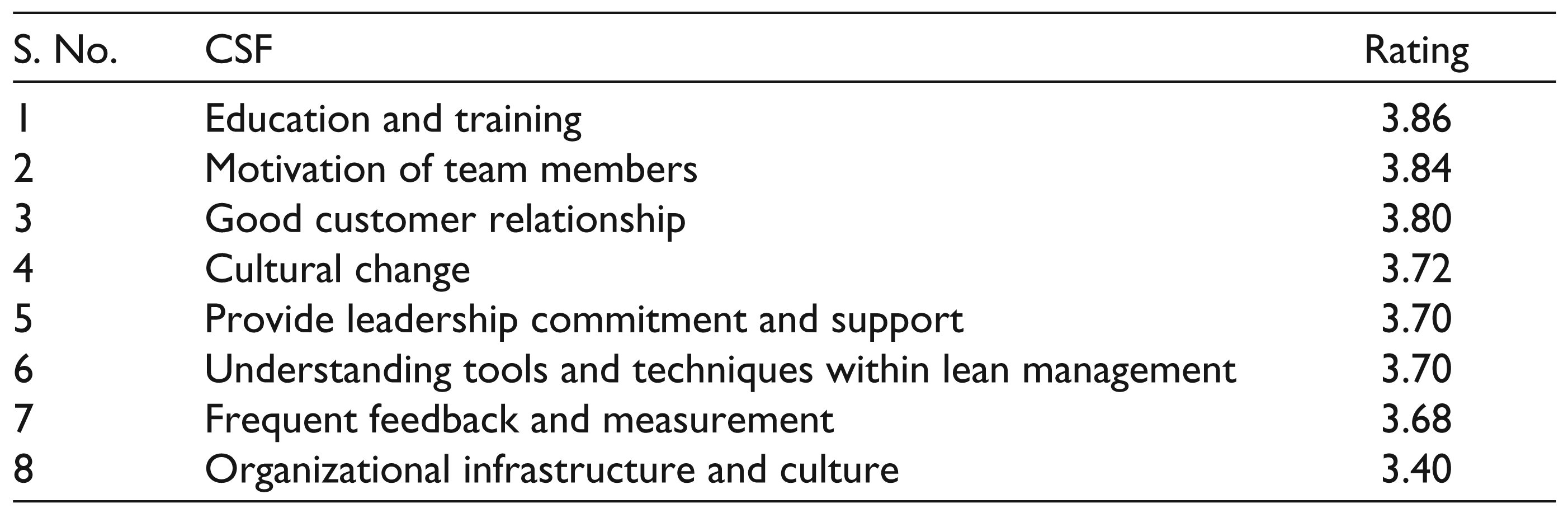
Table 3 shows the relative significance of the influence of the selected CSFs. Past studies have shown that management commitment and involvement are the most important factors. Surprisingly, in this study, management commitment and involvement did not appear to be the most important CSFs. The major CSFs identified are education and training, motivation in team members and good customer relationship. There is increasing competition and better entrepreneurship environment for SMEs in emerging economies which leads to increasing innovations and subsequent increase in productivity. Further increasing competition and customer pressure is helping SMEs to learn and improve practices related to customer relationship management. So in this scenario, the management in SMEs needs to be in the path of continuous improvement by enhancing skills of their employees through continuous education and training for the survival of the organizations in a competitive environment.
Ranking of Critical Success Factors
Business Performance Indicators
Very limited studies have explored the use of business performance indicators that are critical for quality improvement. Basically, business performance indicators are customer requirements translated from the voice of the customer (Nonthaleerak & Hendry, 2008; Terziovski, 2006). In our study, we identified 10 business performance indicators relevant to SMEs (refer to Table 4). Findings from the study indicate that most of the indicators fall into the moderate-to-high relevance categories.
Business Performance Indicators

The markets have become competitive in emerging economies and so SMEs have to focus more on new product development as well as cater to customer requirements (Beaumont & Sohal, 1999; Bhuiyan & Alam, 2004). Further, they have to carefully decide the price of the new product by keeping a view on customers’ sensitivities. Our survey results confirm that some of the most relevant indicators identified are related to on-time delivery, price satisfaction and new product development.
Tools and Techniques
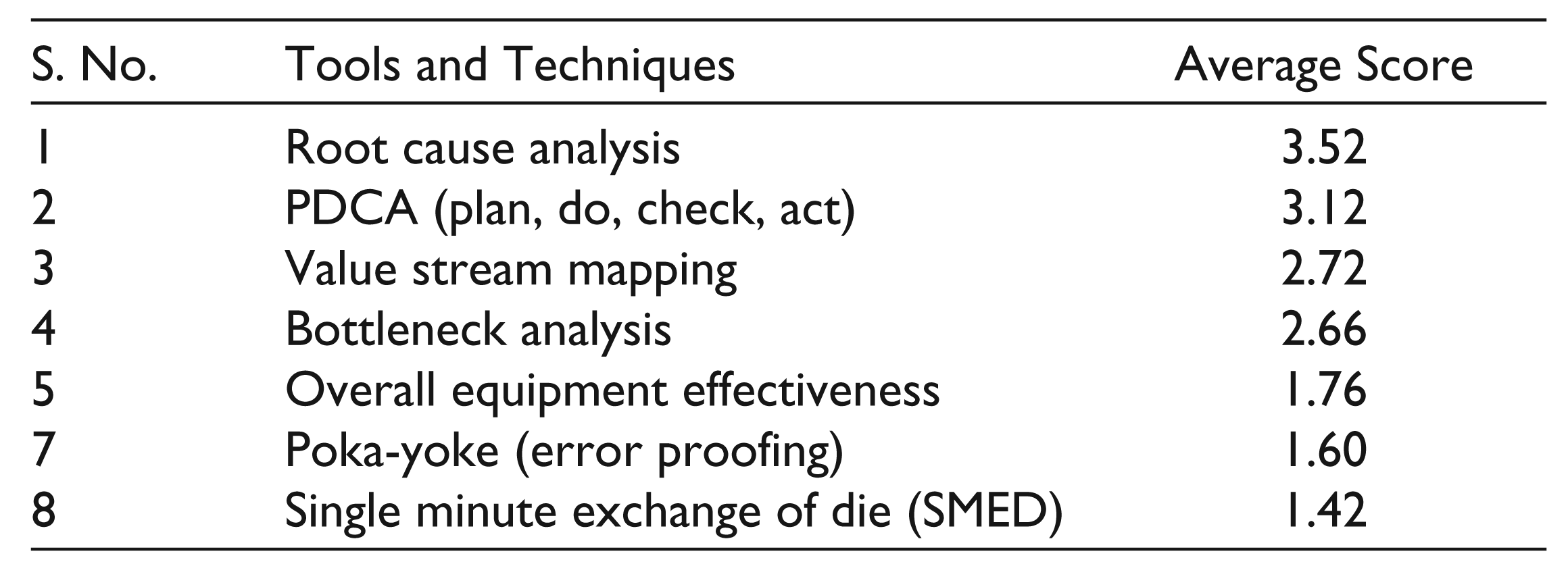
Past studies indicate that quality improvement initiatives such as Six Sigma in SMEs are limited (Antony et al., 2008). Furthermore, SMEs which have adopted quality systems such ISO 9000 are likely to adopt QM practices (Gotzamani, 2004; Kumar et al., 2014; Zeng et al., 2013). Results of the survey showed that the application of QM practices in SMEs is inclined towards basic statistical quality tools, such as check sheet, histogram and control chart. The usage of QM tools and techniques in SMEs is generally limited due to lack of relevant knowledge of the tools.
Table 5 presents the average scores on the usage of QM tools and techniques. Analysis shows that most of the tools are used occasionally to seldom. This is different from tools’ and techniques’ usage in industrialized nations (Antony et al., 2008; Kumar et al., 2014). Most of these tools need knowledge of statistics and thus there is a need for proper training. This demonstrates the need for further education and training to enhance the awareness of the potential gain and benefits from the use of quality tools and techniques.
Frequency of Usage of Quality Management Tools and Techniques
Reasons for not Implementing Quality Initiatives
Limited literature focused on the reasons for not applying quality initiatives, with particular emphasis on theoretical evaluation (Antony et al., 2008; Khurshid, Kumar, & Waddell, 2012; Kumar et al., 2014). Empirical studies on the subject matter are rare. Our survey included the different reasons for not implementing quality initiatives.
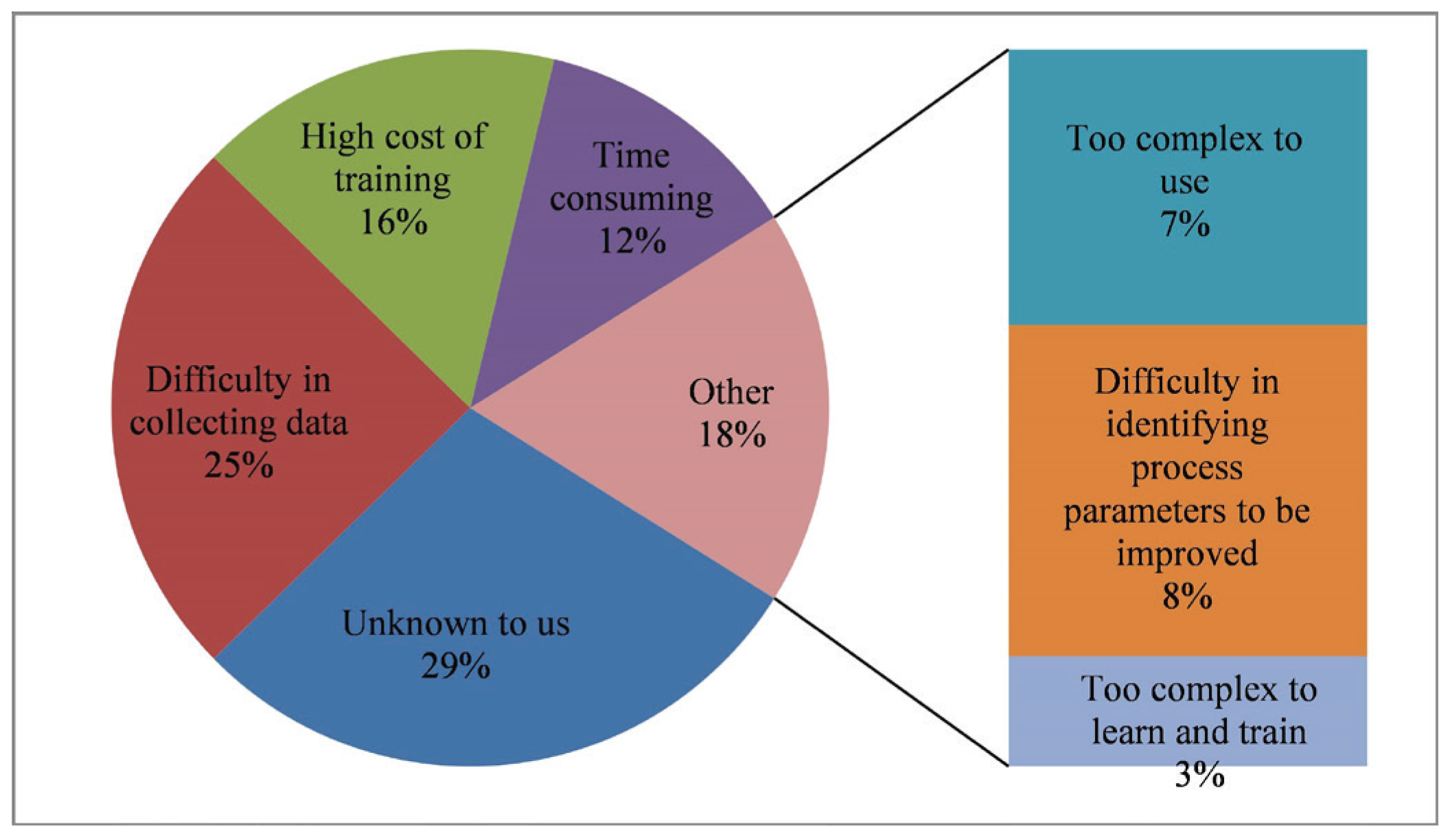
Figure 1 shows the results of investigation on the reasons for not implementing quality initiatives. As evident from the results, the major reasons are unknown tools in enterprises, difficulty in collecting data, high cost of training and that they are time consuming. Largely, the results indicate the need for an awareness campaign to promote exposure on various quality tools and their potential benefits to create and sustain competitive advantage. In addition to this, further training on the use of the QM tools and their potential impact on productivity is essential. However, due to the perceived high cost of training, the government may need to subsidize training services in order to encourage SMEs to engage in training their human resources. However, companies should also consider developing long-term strategies and invest accordingly.
Discussion
Although several studies have focused on the application of QM tools in the developed world (Antony et al., 2008; Kumar et al., 2014; Soltani & Lai, 2007; Timans, Antony, Ahaus, & Solingen, 2011), scarcely did past research focus on the emerging economies in the African context. Education and training, motivation in team members and good customer relationship were found to be the most influential factors. Business performance indicators are key to winning customer loyalty and market share. The main influential indicators for gaining customer loyalty were on-time delivery, price satisfaction and new product development.
A significant number of SMEs used tools such as root cause analysis, value stream mapping and the PDCA cycle. However, the adoption of modern improvement methodologies, such as Six Sigma and Lean, is very low, which is similar to other findings in the literature (Kumar et al., 2014).
The major reasons behind SMEs not adopting quality initiatives were as follows: (a) unknown tools in the enterprise, (b) difficulty in collecting data and (c) high cost of training. The lack of knowledge of the tools by SMEs calls for an urgent attention. The awareness of the quality initiative and their associated competitive gains is generally low. A spirited awareness campaign, continuous education and training are essential to the SME organizations. This requires management commitment and support to ensure that the requisite knowledge is given to their staff, to secure adequate training resources from educational institutions of higher learning, and financial support is received from other stakeholders. As it is widely known that SMEs make a significant contribution to economies, the observed limited usage of quality tools and techniques is a serious concern. According to the observations in this study, limited adoption of the tools is mainly caused by lack of knowledge of the tools and the high cost of training. Similarly, literature suggests the lack of financial resources as one of the major causes of the limited adoption of quality tools (Antony et al., 2008; Kumar et al., 2014; Timans et al., 2011). However, unlike past studies, findings in this study showed that top management commitment was not a major reason for non-implementation of quality tools and techniques. This suggests that the most important initiative is to ensure that the top management obtains the requisite knowledge of quality tools and techniques.
Contribution of SMEs to the economy of emerging economies is immense. The agricultural sector alone contributes support to 70 per cent of the population. A lot more value from the contribution of SMEs can be realized if the issues such as limited access to capital, lack of entrepreneurial skills and the need for a more enabling regulatory environment are addressed. There are several other factors which also limit realizing the full benefits SMEs can derive. The factors include low technical know-how, lack of equipment, limited capacity for control of quality, inadequate space for business, high purchase costs and limited access to credit facilities.
It is crucial for decision makers and policymakers to understand the importance of further education and training for employees to gain more knowledge on various quality tools and techniques, problem-solving skills, data collection and analysis and basic statistical techniques. This is echoed in several related literature (Green, 2012; Herzallah et al., 2014). Thus, government policymakers and institutions of higher learning should work together with senior management in SME organizations in order to develop training programmes for improving employee skills and prepare them for adoption of quality initiatives.
Conclusion
The purpose of this study was to explore and understand the level of usage of the quality initiatives in SMEs in Namibia. The study provided useful insights on emerging economies in respect of application of QM practices in SMEs, CSFs, business performance indicators critical for quality improvement, usage of tools and techniques and the reasons for not implementing quality initiatives. Useful managerial insights were drawn from the study in these respects.
Managerial Implications
The survey though conducted in one of the emerging economies has implications not only for Namibia but also for other emerging economies as well as developed economies. The low awareness about tools and techniques shows the necessity of proper education and training by external agencies to the SMEs. This will help them better understand the need for quality tools and techniques and they can apply them according to the context (Anderson & Sohal, 1999). The research findings about different levels of tools and techniques show that SMEs can be categorized based on their quality maturity and accordingly training can be imparted at levels such as basic, intermediate and advanced. Further, there is a need for the top management to understand their support is essential for any quality initiative to spread in the organization (Antony et al., 2008). It will also be good to educate and train the top management about QM practices so the buy-in at the top will have a trickle-down effect in the whole organization.
Global Perspective
The research findings will also help global businesses understand the maturity of QM practice in local enterprises. They can then impart appropriate education and training to the organizations and thus can build a trusted network of suppliers who have the necessary know-how to deliver quality products and services. This is evident in Indian automobile sector which has seen several quality-conscious ancillary units who have now received global recognition through Deming prize (Fasil & Osada, 2011). As more governments are pushing for manufacturing locally, it will be beneficial if governments promote education and training in QM by offering subsidies to SMEs that opt for training programmes. With such financial support, the adoption of quality tools will be improved;
Overall, it was realized in this study that there is an urgent need to educate and train SMEs on QM practices and the associated tools and techniques.
Academic Contributions
We hope that this study encourages further investigations on QM practices in SMEs from emerging economies. The studies so far are mostly from developed economies where the issues faced by SMEs are different from emerging economies. The finding of reasons such as ‘unknown tools in the enterprise’ definitely shows a wide gap between research and practice. This calls for further investigation into the issues of QM practices in SMEs. The studies can be both quantitative and qualitative. Quantitative studies can include surveys of SMEs from different emerging countries to identify the common themes and this can be complemented through qualitative case studies to understand the practice in depth. This will help in developing frameworks and theories which will have the necessary rigor as well as relevance for practice.
Limitations/ Future Research
In future, further in-depth case-study-based investigations will be carried out as it is necessary for developing customized training programmes. We will focus on conducting longitudinal studies on interested enterprises to further explore and formulate a suitable framework for SMEs aimed at promoting the adoption and implementation of QM practices in emerging economies.
We were unable to conduct rigorous statistical analysis due to limited sample size. This we plan to overcome by using a multi-stage study as followed by Grigg and Walls (2007) or by progressing through different stages of theory as explained by Edmondson and McManus (2007) in our future studies. The study response rate is acceptable based on prior similar studies such as by Zaramdini (2007) and Mandal, Shah, Love, and Li (1999), where the response rate was between 23 and 25 per cent. As discussed by Nulty (2008), a low response rate is acceptable as long as the sample is representative of the population. In our study scenario, we feel the representativeness of our sample and thus we are able to identify the required variables of our study through exploration.
Footnotes
Declaration of Conflicting Interests
The authors declared no potential conflicts of interest with respect to the research, authorship and/or publication of this article.
Funding
The authors received no financial support for the research, authorship and/or publication of this article.
Acknowledgements
The authors are grateful to the anonymous referees of the journal for their extremely useful suggestions to improve the quality of the article. Usual disclaimers apply.