




Abstract
This study analyses the relationship between foreign direct investment (FDI) and economic growth in the presence of good governance system in the Organization for Economic Co-operation and Development (OECD) countries. The dataset comprised of the years 1996–2013. Fixed effect model and the Generalized method of moments (GMM) estimator are used in this study. The result of the study unveils that all the variables have a significant positive association with economic growth. Moreover, the study establishes the interaction terms which also depict a positive effect on economic growth. Further, the Granger causality test shows that the bidirectional causal relationship exists between the FDI and regulatory quality (REQ) on economic growth, whereas the unidirectional causal relationship is found among the corruption control, political stability (POS), voice and accountability (VAC), government effectiveness (GOE) and economic growth. Finally, it can be concluded from the above results that the more the countries maintain their institutional quality the better will be the economic growth and the FDI inflows. This result gives valuable policy implications, which the government should use to improve the economic growth. Further, the result obtained from this study is beneficial for policymakers who can draft effective government policies which will foster the economic growth rate of the country. Last but not least, there is a need to improve the REQ which can only be improved subject to changes in the laws of corruption.
Introduction
The ultimate objective of any country is to achieve and to sustain economic growth both in the present generation and the upcoming generation (Tahir, Khan, Israr, & Qahar, 2015). Economic growth is highly dependent on the efficient utilization of economy’s factors of production. However, the question that which factors affect the economic growth of the country is under investigation since the late 1950s (Lucas, 1988; Romer, 1986; Solow, 1956; Swan, 1956). Several factors have been identified, foreign direct investment (FDI) is one of them. FDI is a way to increase the host country’s physical and human capital which then potentially increases the real GDP (Elkomy, Ingham, & Read, 2016; Qazi, Sharif, & Raza, 2017). Furthermore, FDI helps in the generating technological spillovers, transferring knowledge development of new enterprises, and also provides opportunities for the host countries to integrate into the global economic trade (Jawaid, Raza, Mustafa, & Karim, 2016; Mahembe & Odhiambo, 2016).
Apart from FDI, the institutional quality also plays an important role in the economic growth of the country (Jude & Levieuge, 2016; North, 1990). The weak institutional quality brings in adverse economic problems like low investment, slow productivity and low GDP per capita which ultimately slow down the economic growth process. On the contrary, good institutional quality ensures high investment, efficient factor allocation, minimizes uncertainty and ease economic agents’ coordination which results in economic growth (Jude & Levieuge, 2016). In this regard, Acemoglu and Robinson (2008) reported that accurate institutional arrangements benefit the country because better institutions act like a public good, and all the agents use these factors to get benefited which ultimately upsurge the economic growth rate (North, 1990).
The determinants of institutional quality also play an important role in the FDI inflows (Acemoglu & Johnson, 2005; IMF, 2003). The poor institutional quality impedes the FDI inflows, acts as a tax and consider as a cost to FDI (Buchanan, Le, & Rishi, 2012; Daude & Stein, 2007). The absence of institutional quality in any context, that is, POS, law and order, code of conduct, public policies, and investor protection, brings a negative effect on the FDI inflows (King & Levine, 1993; La Porta et al., 1998; North, 1990). On the contrary, a better institutional quality enhances the FDI inflows (Globerman & Shapiro, 1999). Further, institutional quality is also valued by the foreign investors because it decreases the implementation cost and ensures the ease of doing business (Shah, Ahmad, & Ahmed, 2016).
With an economy, FDI has both direct and indirect effects and the indirect effects are more pronounced because they cause the technology transfer and efficiency gains (Elkomy et al., 2016). The success of these indirect effects of FDI is highly dependent on the levels of institutional development, economic growth, the human capital’s absorptive capacity, financial development and the quality of policy making of the host countries (Jude & Levieuge, 2016). Thus, to generate positive effects of FDI inflows on the economy certain preconditions need to be satisfied. To begin with there needs to be a minimum capacity of human capital followed by good governance and the developed political system. The existence of these conditions will help the disbursement of the FDI benefits to the larger population (Elkomy et al., 2016).
With respect to FDI, economic growth and institutional quality association, three strands of literature are found. The first strand focuses on FDI and economic growth nexus (Pegkas, 2015; Zhang, 2001), the second strand focuses on the institutional quality and economic growth (Afonso, 2016; Chong & Calderón, 2000) and the third strand takes the role of institutional quality with economic factors such as FDI on economic growth (Agbloyor et al., 2016; Buchanan et al., 2012).
Thus, this study assesses the association among the FDI, institutional quality, and the economic growth in OECD countries. The reason for choosing the OECD countries is that they had the major share of the world’s total FDI inflows from the last 20 years (2005–2015). In 2017 the OCED economies accounted for 54 per cent of global FDI inflows (OCED, 2018). Moreover, in 2005 economies received 23.5 per cent of FDI inflows of GDP which has increased to 40.7 per cent of FDI inflows of GDP in the year 2017 (OECD, 2018). Whereas, by region, the FDI inflows in the OECD countries are decreased by 37 per cent in the year 2017 due to significant drop in FDI flows to the UK, USA, Belgium, Luxembourg, Netherlands and Spain. However, the USA was still the largest recipient of FDI inflows (161 billion $) around the globe followed by China in 2017, the major FDI recipients worldwide were the USA (US$287 billion) followed by China (US$168 billion), Brazil (US$63 billion), the Netherlands (US$58 billion), France (US$50 billion), Australia (US$49 billion) and Switzerland (US$41 billion) (OECD, 2018).
Thus, this research work contributes to the literature in a number of ways: First, to the best of our knowledge, this is the first study that has tested this association in the context of the OECD countries. Second, in past studies different proxies of institutional quality have been used, that is, the rule of law, voice and accountability (Jadhav, 2012); corruption (Javorcik & Wei, 2009); quality governance (Ferreira & Matos, 2008); and political instability (Herrera-Echeverri, Haar, & Estévez-Bretón, 2014). This study has used all the five proxies of institutional quality to analyse their impact on economic growth. Third, this study uses the GMM estimator to estimate the association. The GMM estimator technique is used because it provides reliable result in the presence of arbitrary heteroscedasticity (Tiba, Omri, & Frikha, 2016) and also it helps to overcome the endogeneity and non-observable heterogeneity problem (Blundell & Bond, 1998).
The rest of the article is as follows: literature reviews are explained in the second section, the data source and methodology are explained in the third section, data analysis and its discussion are explained in the fourth section, conclusion and recommendations are explained in the fifth section.
Review of Literature
FDI–Economic Growth
Borensztein, De Gregorio, and Lee (1998) concluded that the FDI acts as an important vehicle which contributes to the economic growth of the 69 developing countries. However, the maximum benefit from FDI can only be achieved by the countries when the economies have the minimum stock of human capital. Zhang (2001) studied the FDI and economic growth connection in 11 economies of Latin America and East Asia and reported that the FDI acts as a tool that increases the economic growth, however, the extent to which it increases the economic growth is dependent on the country’s characteristics.
Adams (2009) uses the fixed effects estimation and OLS to study the FDI and economic growth relationship in Sub-Saharan Africa. It is concluded that a significant positive association between the variables is found only in the OLS estimation. Wang (2009) examined the sector-level FDI inflows and economic growth connection in 12 Asian economies. It is reported that only the FDI inflows in the manufacturing sectors affect the economic growth significantly. Similarly, Azman-Saini et al. (2010) reported that the FDI affect the economic growth significantly as well as positively only when the financial market development exceeds a threshold level. Tiwari (2011) reported that the FDI increases the economic growth process in Asian countries. He further mentioned that the capital and labour are also important for the economic growth. Mehic et al. (2013) reported that the positive and significant connection exists between the FDI and economic growth in seven southeast European countries. Omri and Kahouli (2014) reported that the bi-directional causal association exists between the FDI and economic growth in 13 Middle East and North Africa (MENA) countries. Pegkas (2015) reported that FDI is the significant factor that contributes to the economic growth in Eurozone countries. Durmaz (2017) reported that FDI has a spillover effect on the Turkish economy.
Institutional Quality and Economic Growth
Chong and Calderón (2000) studied the institutional quality and economic growth nexus and reported that bi-directional causal association exists between the variables. This implies that institutional quality causes the economic growth and vice versa. Butkiewicz and Yanikkaya (2006) concluded that institutional quality (rule of law) promotes economic growth. Demetriades and Law (2006) examined the link between institutional quality and economic growth in 72 economies. They reported that institutional quality has a significant influence on economic growth. Moreover, for the economic growth, good institutions are more important for middle-income economies compared to high-income economies. Aixalá and Fabro (2008) explored the institutional variables that effect the economic growth and concluded that in the rich countries rule of law is important for the economic growth, whereas, in poor countries control of corruption (COC) is important for the economic growth. Sawyer (2010) reported that institutional quality and total factor productivity (TFP) growth affects the economic growth in Latin America. Valeriani and Peluso (2011) concluded that a positive association exists between the institutional quality and economic growth in developed and developing economies. Abuzayed and Al-Fayoumi (2016) mentioned that in MENA countries, the institutional quality matter for the economic growth. Afonso et al. (2016) also reported the positive association between the institutional quality and economic growth in 140 economies. Olayungbo and Adediran (2017) studied the institutional quality and economic growth association in Nigeria and concluded that institutional quality improves the economic growth in the short run and impedes the economic growth in the long run. The study further suggests that in order to sustain economic growth the anticorruption policies should be initiated. Berhane (2018) used the data of 40 African countries to study the link between institutional quality and economic growth. The study showed that significant positive association exist between the variables implying the institutional quality boost economic growth.
FDI, Institutional Quality and Economic Growth
Wei (2000) examined the corruption and FDI association and reported that the increase in the corruption level minimizes the FDI inflows. Aizenman and Spiegel (2006) reported that the institutional quality has a direct correlation with the FDI inflows. Daude and Stein (2007) studied the FDI and institutional quality nexus and reported that the significant positive association exists between the two. They reported that the government instability, the unpredictability of laws, excessive regulations and policies and the lack of commitment deteriorate the FDI inflows. They also concluded some determinants has a more profound effect than the other. Gani (2007) also reported that the determinants of institutional quality, that is, POS, rule of law, GOE, COC and REQ have a positive impact on the FDI inflows in Asian and Latin American countries. Kandil (2009) also explored the institutional quality, FDI and economic growth nexus in MENA countries and reported the POS, COC, VAC, rule of law and GOE increases the economic growth. Whereas institutional quality has a negative influence of economic growth and FDI. The study concluded that improvement in institutional quality does not attract FDI in the examined countries. Masron and Abdullah (2010) uses the data of ASEAN countries and reported that institutional quality plays a significant role in attracting FDI.
Buchanan et al. (2012) based on the data of 164 countries concluded that institutional quality has a significant effect on the FDI. They further suggested that a 1 standard deviation change in institutional quality improves the FDI by 1.69. Ahmed and Ahmed (2014) also reported that institutional quality helps in attracting the FDI inflows in short and long run in the context of Pakistan. Economou, Hassapis, Philippas, and Tsionas (2016) reported that the institutional variables play an important role in the attraction of FDI in OECD and developing countries. Jude and Levieuge (2016) stated that the FDI significantly affect the economic growth only when the countries have the institutional quality above a certain threshold. They also concluded that the institutional reforms should be given more consideration. Yerrabati and Hawkes (2016) performed a meta-analysis on the governance and FDI inflows relationship and reported that countries that have a low corruption level and good quality regulation get more FDI than other countries. Nguyen et al. (2018) studied the institutional quality and economic growth nexus in 29 emerging economies and reported that positive association exist between the variables. They further concluded that institutional quality impedes the positive effects of FDI on economic growth. The improvement in institutional quality helps in mitigating the competition brought by FDI. Peres et al. (2018) stated that institutional quality has significant and positive association with FDI in developed economies. Thus, a 1 standard deviation change in institutional quality improves the FDI by 0.225.
Methodology
To study the relationship between the FDI, institutional quality and economic growth Cobb–Douglas production function is used. The Cobb–Douglas production function is widely used in the literature to analyse the economic growth in different countries. The function shows the technological association between the two or more inputs (labour and physical capital) and the output produced by using inputs (Cobb & Douglas, 1928). In other words, the Cobb–Douglas function claims that the production capacity of an economy is dependent on the labour force (L) and physical capital (K) and some additional variables (technology) presented through A in the below equation. Thus, the model used to examine the association between the FDI and economic growth is derived using production function. The generalized form of the production function is mentioned as follows:

In Equation 1, GDP represents the economic growth, CAP represents the capital stock, LAB represents the labour force, A denotes total factor productivity. It has been presumed that FDI and institutional quality create an impact on economic growth through A (see Jawaid & Raza, 2014; Kohpaiboon, 2003). Several previous studies have used the Cobb–Douglas production function to examine the FDI and economic growth nexus (Alfaro et al., 2010; Jawaid & Raza, 2012). Similarly, Ketterer and Rodríguez-Pose (2018) uses the Cobb–Douglas function to study the institutional quality and economic growth nexus. Therefore, the estimation model based on the Cobb–Douglas function is as follows:

Equation is written in the time series specification as follows:

The data we have taken in this study is comprised of panel data, so we change Equation (3) in the panel form as follows:

where i represents the number of countries (in our case 35); t represents the time frame (in our case 18); economic growth is represented by GDP; FDI is the foreign direct investment; CAP is the capital, LAB is the labour, COC is the corruption control, REQ is the regulatory quality; GOE is the government effectiveness; POS is the political stability; VAC is the voice and accountability; Ɛ is the error term and β1–β8 represent the coefficients.
We run six different models, at first, we test the FDI, capital and labour relationship with economic growth. And then we tested the individual effect of each institutional quality on this association, so six different models were run simultaneously, the simultaneous equations were:






Moreover, the association between the FDI and economic growth in the presence of institutional quality is estimated by using the following framework:





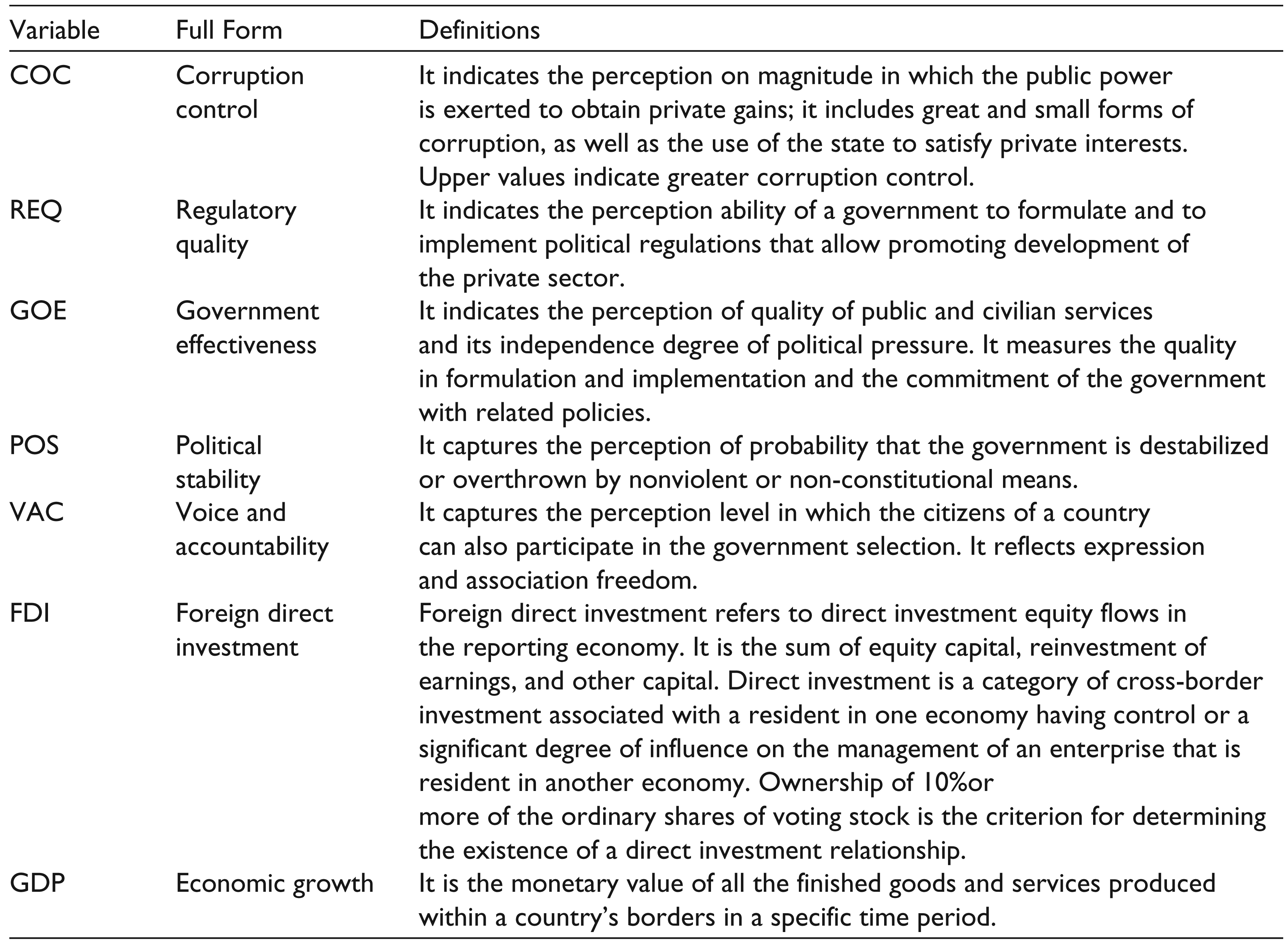
The data related to FDI and economic growth is derived from the World Development Indicators (WDI) database managed by the World Bank, the determinants of institutional quality data are derived from the Worldwide Governance Indicators (WGI) and capital and labour data is derived from Penn World Tables v9.0. These indicators include GOE, VAC, REQ, POS and COC. The scale of these indicators ranges from −2.5 to 2.5, the positive sign shows the high institutional quality and the negative sign shows the weak institutional quality. In this study, we used the five indicators of institutional quality. The detail related to these indicators and the other variables used are explained in Table 1.
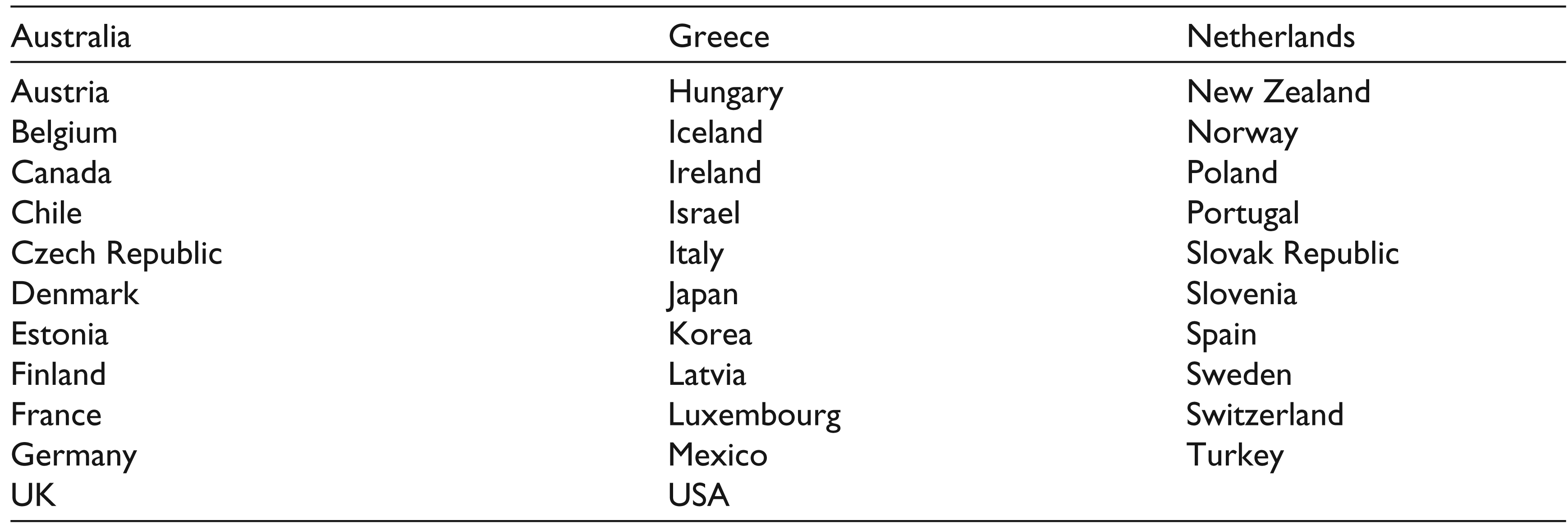
To sum up, the purpose of this study is to examine the connection between the FDI, labour, capital, REQ, government effectiveness, corruption control, POS, VAC and economic growth in the OECD countries by using the GMM technique. The GMM technique is the most commonly used method in panel data and in the complex models (i.e., multiple linkages between certain variables). This technique is preferred over other OLS approaches due to its multiple advantages: (a) this technique provides reliable result in the presence of arbitrary heteroscedasticity and (b) this technique overcomes the potential endogeneity and non-observable heterogeneity problem that may emerge from explanatory variables (Jalilian et al., 2007; Tiba et al., 2016). The list related to the countries is mentioned in Table 2.
Variable Description
List of Countries
Analysis
Descriptive Statistics
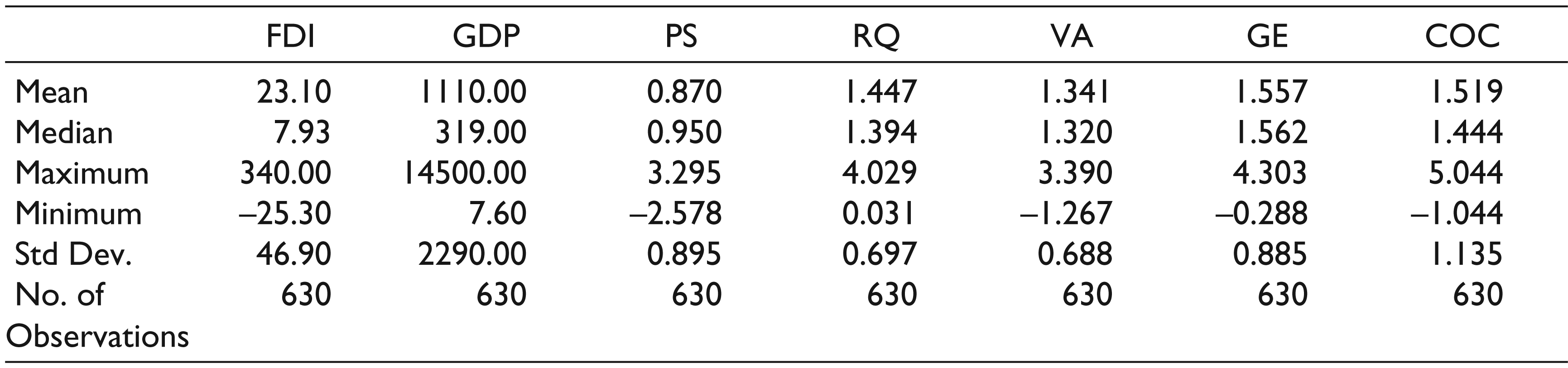
The statistical information related to the variables used in this study is mentioned in Table 3. The result shows that the FDI has the highest value of 340 billion and the lowest value of 25.30 billion with a standard deviation of 46.90 billion and a mean value of 23.10 billion. Similarly, the economic growth (GDP) has the highest value of 14,500 billion and the lowest value of 7.60 billion with a standard deviation of 2,290 billion and a mean value of 1,110 billion. Likewise, the POS has the highest value of 3.295 and the lowest value of –2.578 with a standard deviation of 0.895 and a mean value of 0.870. On the other hand, the REQ shows the highest value of 4.029 and the lowest value of 0.031 with a standard deviation of 0.697 and a mean value 1.447. Further, the VAC has the highest value of 3.390 and the lowest value of –1.267 with a standard deviation of 0.688 and a mean value of 1.341; whereas, the GOE has the highest value of 4.303 and the lowest of –0.288 with a standard deviation of 0.885 and a mean value of 1.557. Finally, the COC has the highest value of 5.044 and the lowest value of –1.044 with a standard deviation of 1.135 and a mean value of 1.519.
Unit Root Test
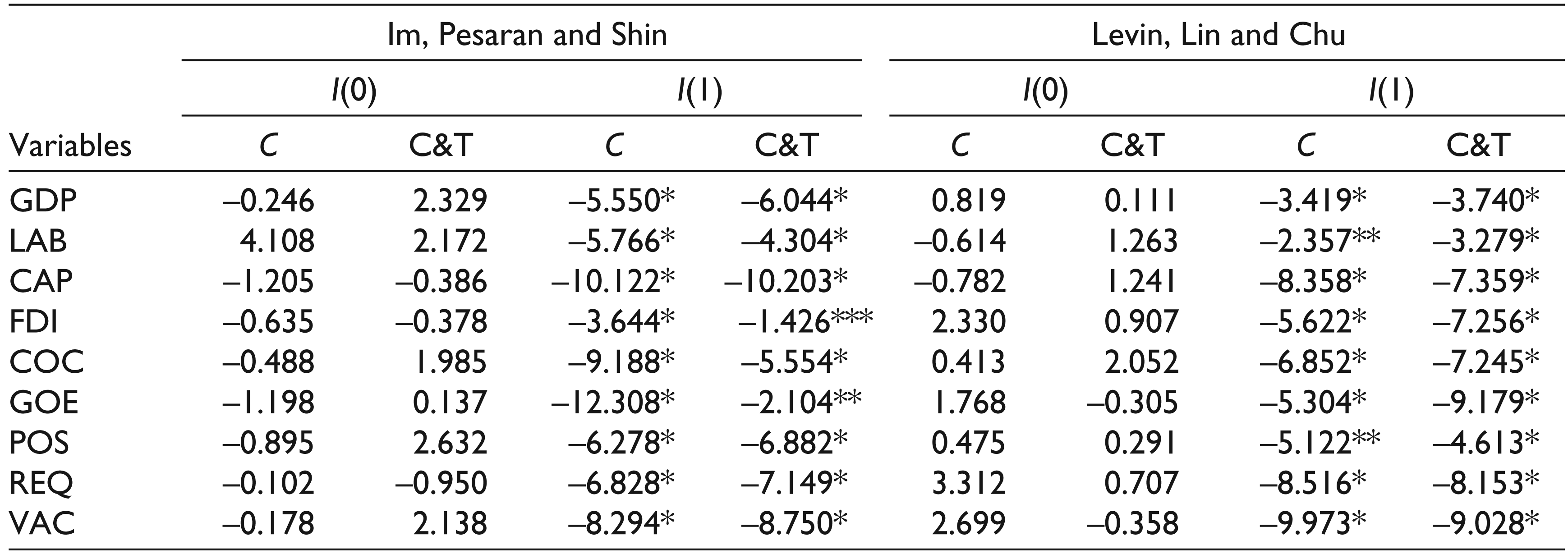
Unit root test is the preliminary analysis that needs to be performed to undertake the data analysis further. This test ensures the stationary properties of the variable used in the study. The Im, Pesaran and Shin (IPS) and Levin–Lin–Chu (LLC) unit root test are applied to the dataset (Raza & Jawaid, 2014) and the results are mentioned in Table 4. The result shows that all the variables are non-stationary at the level and becomes stationary at first difference I(1) which means that the series does not exhibit the unit root problem and can be used for the further analysis.
Descriptive Statistics
Stationary Test Results
Cointegration Test
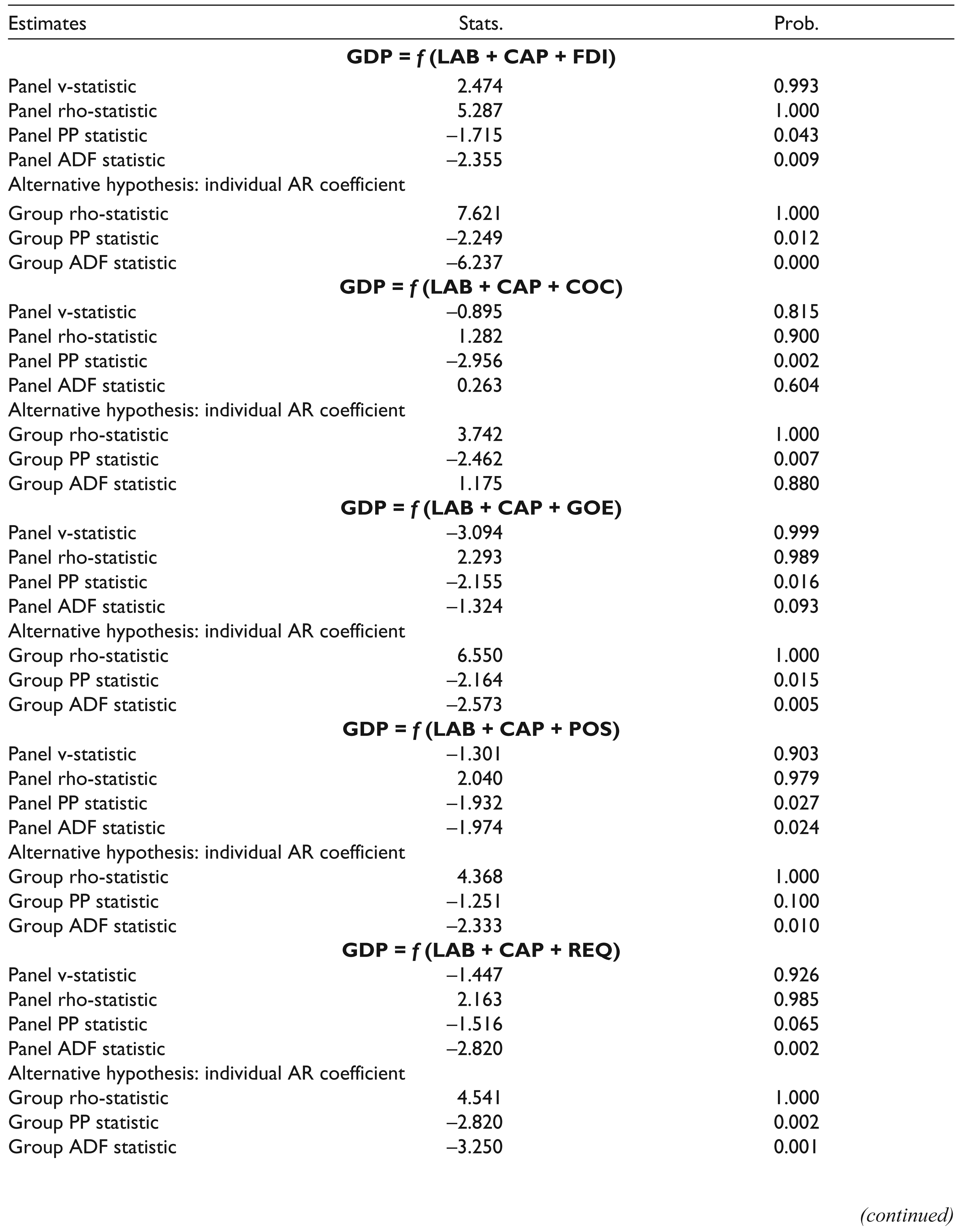
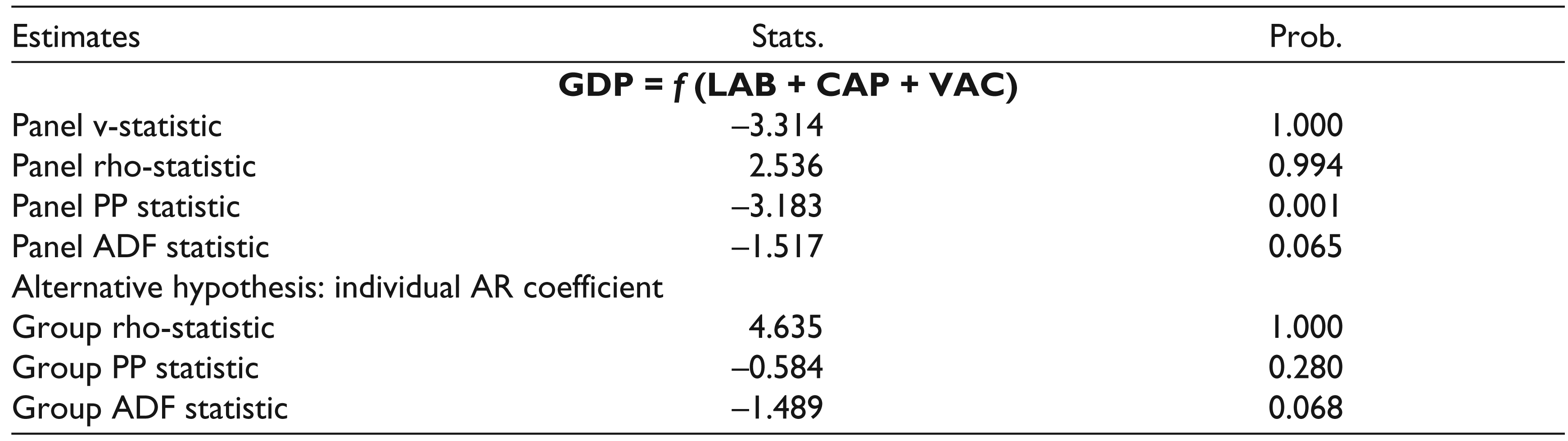
After the confirmation that the variable series are free from the unit root problem, the next step is to assess the long run association among the FDI, capital, labour, corruption control, REQ, GOE, VAC, POS and economic growth. For this purpose, the Pedroni technique has been employed (Raza & Shah, 2017) and the results are reported in Table 5. All in all, the six models, the panel v-statistic, panel rho-statistic and group rho-statistics show the acceptance of the null hypothesis, whereas the rest four models (panel PP statistic, panel ADF statistic, group PP statistic and group ADF statistic) show the rejection of the null hypothesis and accepts the alternative hypothesis which implies that the under-examined variables are co-integrated in the long run.
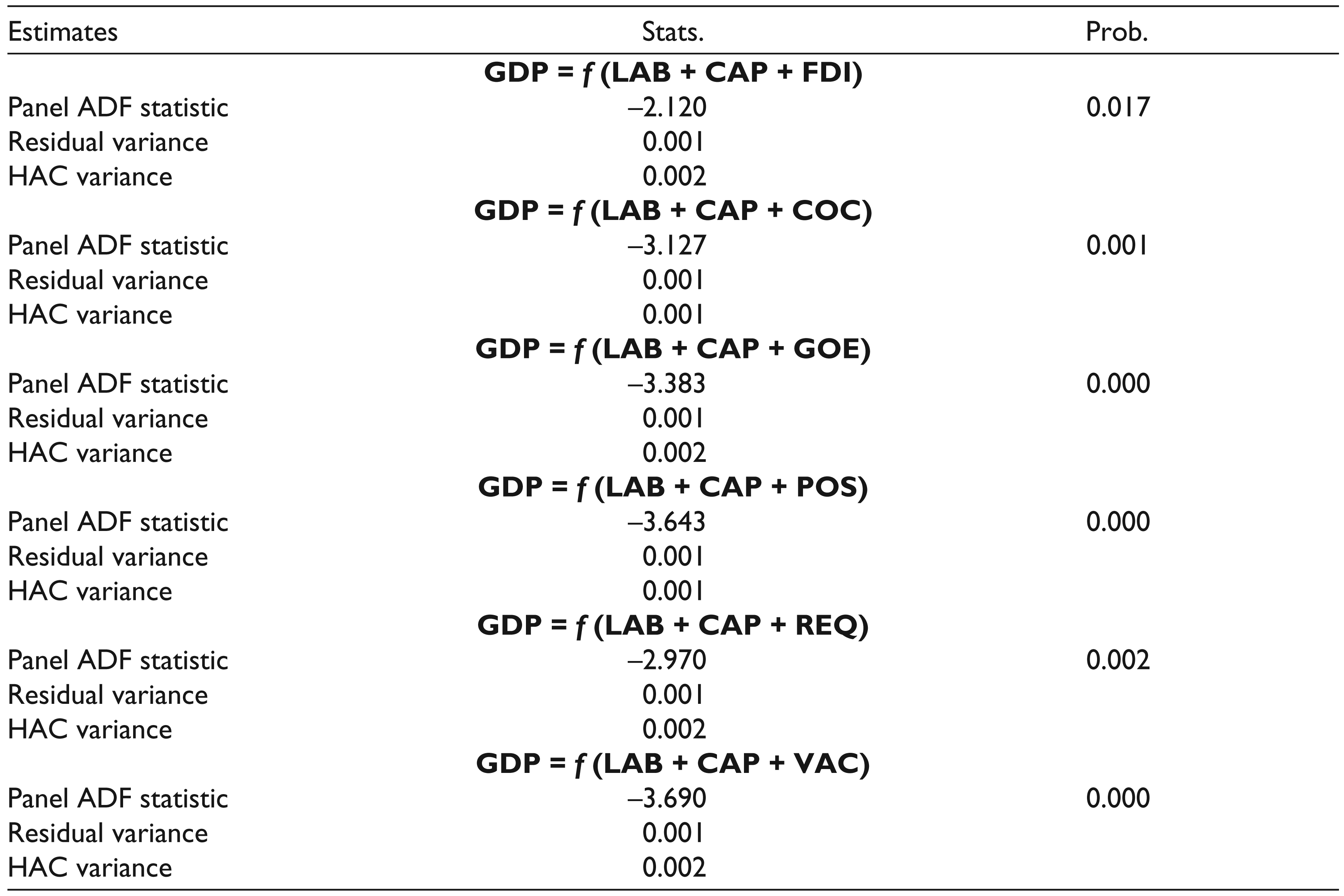
The long run association among the variables is also analysed by using the Kao cointegration test, and the results are mentioned in Table 6. The result also shows the existence of cointegration among all the variables used in this study.
Long Run Estimation
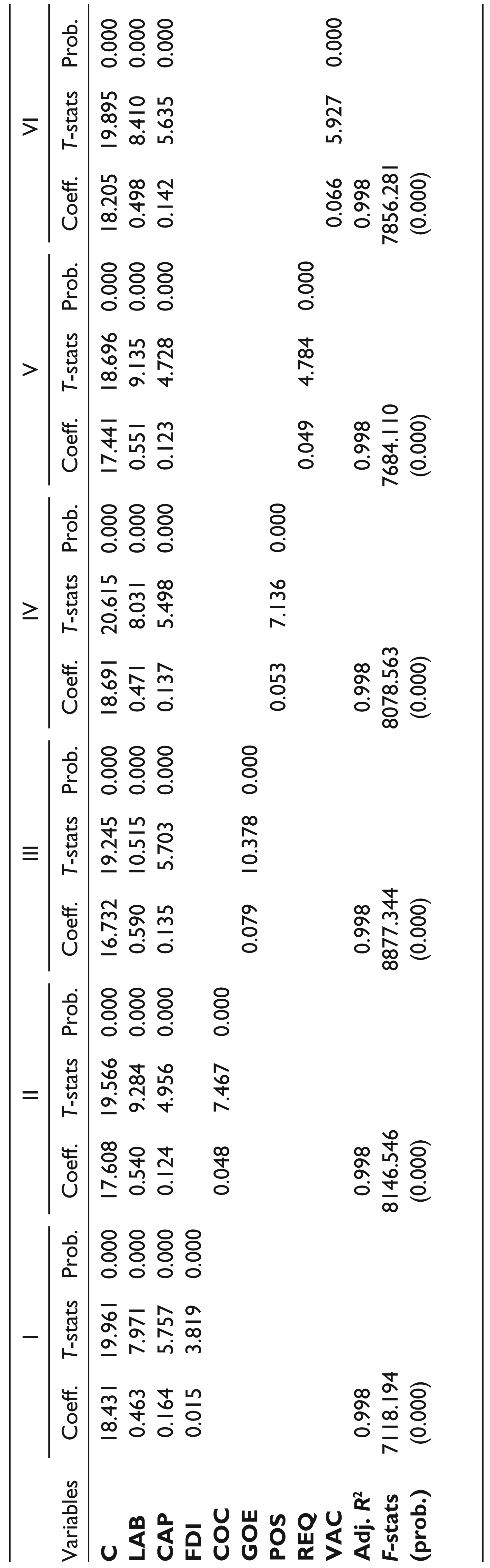
All the six models developed earlier are analysed by using the fixed effects regression model (Azam & Raza, 2018). The result of the Hausman test confirms that the fixed effect is preferred over the random effect model. The result related to all the models is reported in Table 7. In model 1, the nexus between the FDI, labour, capital and economic growth is tested. The result shows that significant positive association exists between the examined variables and economic growth. In models 2–6, along with the labour, capital and the individual determinants of the institutional quality impact are analysed on economic growth. The corruption control, REQ, POS, GOE, VAC (determinants of institutional quality), labour and capital have a significant positive effect on the economic growth.
Pedroni (Engle–Granger based) Panel Cointegration
Kao Residual (Engle–Granger Based) Panel Cointegration
The FDI has a significant positive effect on economic growth, a 1 per cent increase in FDI increases the economic growth by 0.015 per cent. The result is supported by the studies of Elkomy et al. (2016), Iamsiraroj (2016) and Raza and Karim (2018). The FDI brings in new technology, innovative ideas and enhances the knowledge of human capital which improve the economic growth.
Results of Fixed Effect Models of Economic Growth
Results of GMM Models of Economic Growth
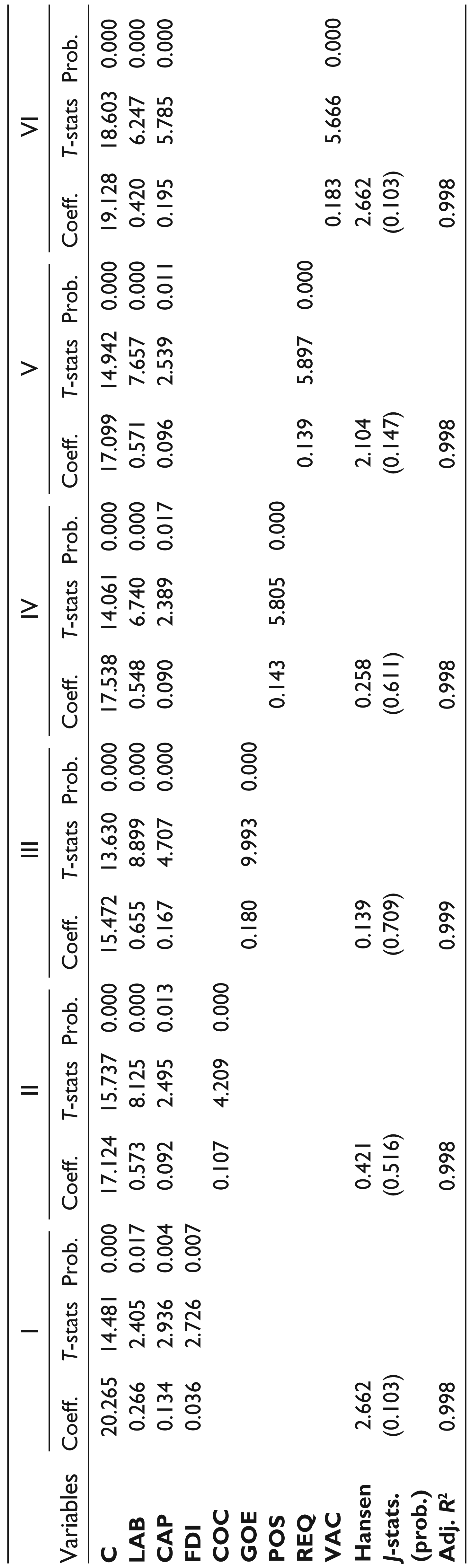
In all, the six models, the significant positive association exists between the labour, capital and economic growth. The results are supported by the studies of Tiwari et al. (2011) and Kizilkaya, Ay, and Akar (2016). This implies that if there is an abundance of competent people in the country, and if they are used efficiently, then the country’s economic position would be improved. Additionally, with the presence of human capital there will be an increase in the productivity which will foster the economic position of the country.
All the determinants of institutional quality show the significant positive association with economic growth, which is in accordance with the study of Afonso and Jalles (2016) who also reported the same result. This result implies that the more organized the institutional quality is the greater will be the economic growth. The economies which are less corrupt, have strong accountability and are politically stable and more prone to economic growth.
Robustness Check
The result of the fixed effect model is analysed by using the sensitivity GMM estimator. The result related to GMM is reported in Table 8. The result is consistent in terms of significance and sign, but different in terms of the coefficient values. The result shows that all the examined variables have a significant positive association with economic growth. An increase in any variable (FDI, capital, labour, corruption control, REQ, POS, GOE, VAC) upsurges the economic growth.
Results of Interaction Terms
The result related to the interaction terms of FDI and institutional quality and its impact on economic growth using a fixed effect model is presented in Table 9. The reason behind this estimation is to explore the impact of institutional quality on the FDI and economic growth association. The result shows that the interaction terms of institutional quality factors (REQ, corruption control, POS, GOE, VAC) with FDI have a significant positive effect on economic growth. The results are supported by the work of Buchanan et al. (2012) and Jude and Levieuge (2016). Thus, it can be concluded that strong institutional quality, strengthen the FDI and economic growth association.
The robustness of the above result is analysed by using the GMM estimator. The result is reported in Table 10 and the result shows the consistent result as shown by the fixed effect model in terms of significance, and sign but different in terms of the coefficient values.
Granger Causality Test
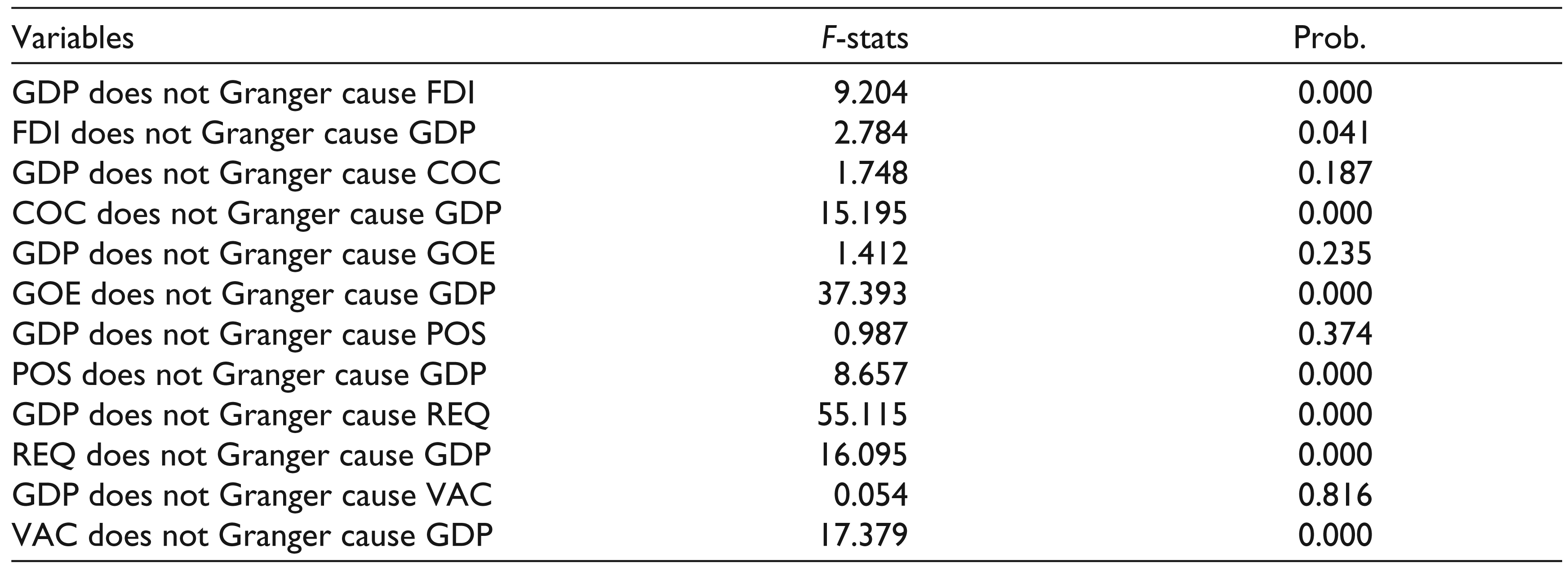
The result related to the Granger causality test is reported in Table 11. The result shows that the bi-directional causality exists among the FDI and economic growth, REQ and economic growth. This implies that FDI and REQ cause the economic growth and the vice versa. Moreover, the unidirectional causal relationship exists among the COC, POS, VAC, GOE and economic growth. This implies that these variables cause the economic growth and not vice versa.
Table 12 shows the Granger causality result related to the interaction terms of FDI and institutional quality on economic growth. The result shows the existence of bidirectional causality between the interaction terms of FDI with COC, REQ, VAC on economic growth. It implies that the countries which have strong corruption and regulatory control with a defined VAC will more likely to have greater FDI and economic growth. Further, the economic growth is more in the countries that are less corrupt and have high accountability. Whereas, a unidirectional causal relationship exists between the interaction terms of FDI with GOE, POS and economic growth. This implies that these variables cause the economic growth, however, economic growth does not lead GOE and POS.
Results of Fixed Effect Models of Interaction Terms and Economic Growth
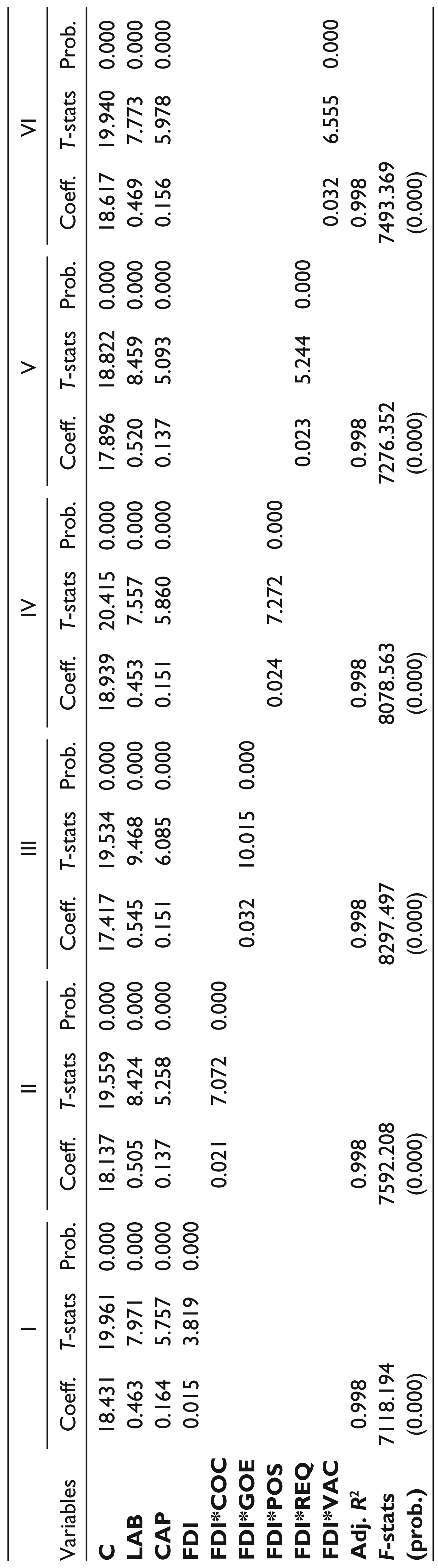
Results of GMM Models of Interaction Terms and Economic Growth

Results of Panel Granger Causality Test
Results of Panel Granger Causality Test (interaction terms)

Conclusion and Managerial Implications
The main purpose of this research is to analyse the association among the FDI, capital, labour and five determinants of institutional quality on the economic growth in the OECD countries. The data taken for the study is comprised of the years 1996–2013. For the purpose of this study, the fixed effect model and the GMM estimator were used. The result concluded that all the variables have a significant positive association with economic growth. Moreover, the interaction terms were also developed which also show the same positive effect on economic growth. It can be concluded from the above results that the more the countries maintain their institutional quality the better will be the economic growth and the FDI inflows.
This result gives valuable policy implications which the government should use to improve their economic growth. The government of the OECD countries should focus on maintaining as well as improving the institutional quality in order to improve the FDI inflows and economic growth. Further, the policymakers should draft effective government policies that can improve the institutional quality measures. The radical changes should also be made in the laws related to the corruption so as to improve the regulatory control.
The corruption can be controlled by making the government spending behaviour transparent. Anybody who is found in the process of corruption should be penalized. Moreover, a regulatory committee should be formed to monitor the regulation quality and to bring the changes as and when required. Further, the government should also improve its VAC by giving rights to its citizens to express their views effectively. When the citizens are free to share their views, they can demand accountability, transparency and they can influence the government priorities and processes. If the citizens of the nation have the power to make their government accountable for their actions, then the government will be more prone to fulfil the demands and needs of their people which will eventually improve the economic performance.
In order to bring the positive effect of FDI inflows, the government should work with the foreign firms and provide them safe and secure business environment. As FDI brings in innovation, the government should also focus on the efficient allocation of the resources because it will help the firms to innovate and ultimately result in economic growth.
Limitations and Future Directions
This research work has some limitations which give direction to the future researchers. First, this research only focuses the OECD countries, so the results are not generalizable. Hence, the future research can be done by using a single country like Pakistan, USA, etc. Moreover, a comparative study can also be carried out. Second, this study takes the data from 1996–2013, so future research can be done by increasing the sample size. Third, this study takes capital and labour as a control variable so future research can be conducted by adding more variables.
Footnotes
Acknowledgements
The authors are grateful to the anonymous referees of the journal for their extremely useful suggestions to improve the quality of the article.
Declaration of Conflicting Interests
The authors declared no potential conflicts of interest with respect to the research, authorship and/or publication of this article.
Funding
The authors received no financial support for the research, authorship and/or publication of this article.
Weblinks