



Abstract
Abstract
In this study, the impact of behavioural finance on investment decision-making using a selected investment banks was investigated. A total of 200 questionnaire items were administered to the respondents of the four surveyed investment banks including Afrinvest West Africa Limited, Meristem Securities, Vetiva Capital and ARM Nigeria Limited, out of which 180 questionnaire items representing 90 per cent were retrieved. The data were analyzed using tables, percentages, correlation and multiple regression analysis. The overall empirical results provided evidence of a positive impact between behavioural finance and investment decision, supporting previous research and contributing to generalization. The other findings of the research are thus: there is a significant relationship between heuristics and individual investment decision; there is a significant relationship between prospect theory and individual investment decision; and lastly there is a strong and negative relationship between heuristics and investment decision. Similarly, the relationship between prospect theory and investment decision is negative and strong. Against the backdrop of the aforementioned findings and conclusion, the following recommendations are proposed to both the institutional and individual investors: investors should be enlightened on the fact that there are many behavioural factors which can affect their investment decision-making process and they should be made aware of these factors including heuristics and prospect theory.
Background of the Study
The financial theory based on Modern Portfolio Theory (MPT) and Capital Asset Pricing Model (CAPM) as postulated by Markowitz (1952) and Sharpe (1964), respectively, had since defined the way in which academics and practitioners analyze investment performance (Kishore, 2005). These theories are founded on the idea that investors behave rationally, meaning that they consider all available information in the decision-making process. Hence, investment markets are efficient, reflecting all available information in security prices. In other words, prices reflect the intrinsic values of the assets. These theories are also formulated on the principle that investors act promptly and faster to new information and update prices correctly within the normatively acceptable process (Kishore, 2005). The market returns on investment are however believed to follow a random walk theory, which postulates that stock market prices evolve according to a random walk and thus cannot be predicted. This is consistent with the efficient-market hypothesis. Underlying all these is the theory of arbitrage, which suggests that rational investors undo price deviation away from the fundamental values quickly and maintain market equilibrium. As such, as posited by Kishore (2005), ‘prices are right’ reflecting all available information and there is no ‘free lunch’. According to Fama (1965), ‘no investment strategy can earn excess risk-free rate of return greater than that warranted by its risk’.
As stated earlier, MPT, CAPM and Arbitrage Pricing Theory (APT) are the quantitative models that underpin the rational expectations-based theories (Markowitz, 1995; Sharpe, 1964). However, this theory is yet to be confirmed in available investment data by a large amount of studies such as Fama and French (1993, 1996). These researchers have many times argued that the basic facts about some market variables such as the aggregate stock market, the cross-section average returns and individual trading behaviour are not easily understood in this framework, hence the importance of behavioural finance. Many researchers in behavioural finance believe that behavioural finance gives convincing answers to the questions left unanswered in the traditional finance models. Researchers have been able to uncover a surprisingly large amount of evidence of irrationality and repeated errors in judgement (Kishore, 2005). The field of behavioural finance attempts to better understand and explain how emotions and cognitive errors influence investors in their decision-making process. Behavioural finance is different in its view from the traditional belief in that investment decisions are not always made on the basis of full rationality. According to Sewell (2007), behavioural finance is the study of the influence of psychology on the behaviour of financial practitioners and the subsequent effect on markets. He further opined that behavioural finance is of interest because it helps explain why and how markets might be inefficient.
The expectations-based models argue that the above-described irrationality will be undone through the process of arbitrage (Friedman, 1953). According to Kishore (2005), arbitrage is an investment strategy that offers risk-less profit at no cost. Traditional finance theorists believe that any mispricing created by irrational traders (noise traders) in the marketplace will create an attractive opportunity which will be quickly capitalized on by the rational traders (arbitrageurs) and the mispricing will be corrected. Behavioural finance argues that there is limits to arbitrage, which allows investor irrationality to be substantial and have long-lived impact on prices. To explain investor irrationality and their decision-making process, behavioural finance draws on the experimental evidence of the cognitive psychology and the biases that arise when people form beliefs and preferences, and the way in which they make decisions, given their beliefs and preferences (Barberis & Thaler, 2003). As such, limits to arbitrage and psychology are seen as the two building blocks of behavioural finance.
The investment behaviours of Nigerians can typically be modelled after the Nigerian Stock market. The Nigerian Stock Market capitalization attained an all-time peak of N13.5 trillion as of March 2008 and began to plunge after the global meltdown occasioned by the sub-prime mortgage crisis in the United States which spilled over to other countries of the world. Ever since then there has been consistent decline in the fortune of the Nigerian investors in the stock market. According to Oke (2013),
a number of reasons have been advanced to try and explain this stock market anomaly, including the seeming collapse of the world economy, withdrawal of many foreign investors from the Nigerian market, banks short-term orientation imposed on long-term capital market, regulatory inconsistencies and pronouncements, poor corporate governance, poor credit appraisal before lending, amongst others. The best of these reasons is not satisfactory, particularly given that a number of them have been addressed yet the stock market crisis remains unresolved.
However, much is unknown even till today about the human psychology and investor irrational behaviour factors that influence their decision-making process. The key question that if this anomaly could be a result of investor irrational behaviour remains. To be more specific, what impact does heuristics and prospect theory (which are the two major components of behavioural finance) have on investment decision?
In conclusion, the first section of this article is the background of the study which introduces and gives a brief background to the study. The second section reviews the literature, which includes the theoretical, conceptual and empirical review of the study. The third section is the study methodology which explains the data source, sample frame and the empirical model employed in the study. The fourth section is data analysis and discussion of findings, while the last section of the article discusses the study conclusion, managerial implications, limitations and suggestions for future research.
Literature Review
Traditional theory of finance is based on belief of the investors’ rationality and efficiency of the market. Rationality implies that any new information is correctly interpreted by all the market agents, while market efficiency means that all relevant information is reflected in the market prices instantaneously and completely. Hence, there is no investment strategy which can earn the investors excess returns consistently. Many traditional finance models such as Capital Asset Model, Modigliani–Miller Model, Modern Portfolio Theory and many others are based on these aforementioned assumptions. These models were said to have revolutionized the finance landscape and still do but at the same time left a trail of unanswered questions in explaining the respective theories. For instance, issues such as ‘why do individual investors trade?’ and ‘why do returns vary across stocks for reasons other than risk?’ are left unanswered by these theories.
While this debate was raging in the financial world, researchers in psychology have discovered that economic decisions are often made in a seemingly irrational manner. This irrationality is based on cognitive errors and extreme emotions, which is the root of behavioural finance. According to Subash (2012), ‘behavioral finance is a branch of finance that studies how the behavior of agents in the financial market are influenced by psychological factors’. This influences affect individual investors in the buying and selling of securities, and consequently affect the stock prices. Babajide and Adetiloye (2012) argued that ‘behavioural finance suggests that investors do not always act rationally when making investment decisions, even if they possess the inputs required to make a rational decision, such as information, knowledge, and understanding’. Huckle (2007) described behavioural finance as that aspect of finance that employs scientific models to describe how people make financial decisions in the real world, rather than in theory. According to Babajide and Adetiloye (2012), ‘behavioural finance shows how our human psychology influences our financial decisions and it identifies the consistent, predictable mistakes humans make when investing’. According to Sewell (2007), ‘behavioral finance is the study of the influence of psychology on the behaviour of financial practitioners and the subsequent effect on markets’. Behavioural finance is the science that deals with theories and experiments focussed on what happens when investors make decisions based on hunches or emotions. Shefrin (2000) defines behavioural finance as ‘a rapidly growing area that deals with the influence of psychology on the behavior of financial practitioners’.
A study by Alquraan, Alqisie, and Al Shorafa (2016) examined whether behavioural finance factors influence stock investment decisions of individual investors using Saudi Stock Market as the case study. The study employed primary data and used Multiple Linear Regression and ANOVA methods to test the hypotheses. The results of the study indicated that behavioural finance factors (loss averse, overconfidence and risk perception) have significant effect on the stock investment decisions of individual investors in Saudi Stock Market, while Herd has insignificant effect. The demographic variables (Gender, Age, Education, Income and Experience) do not make any significant differences in the investor decision, except the demographic variable (Education) makes significant differences in the investor decision.
A study by Babajide and Adetiloye (2012) examined investors’ behavioural biases and the security market using the Nigerian Security Market as the case study. The study employed questionnaire as an instrument and the technique of correlation with the Pearson Product Moment Coefficient to analyze a survey of 300 randomly selected investors in Nigeria security market. The study revealed strong evidence that behavioural biases exist but not so dominant in the Nigeria security market because a weak negative relationship exists between behavioural biases and stock market performance in Nigeria. The study recommends that individual investors in the market should engage the services of investment advisors, which will reduce personal biases in the management of their portfolios.
A study by Kengatharan and Kengatharan (2014) investigated the influence of behavioural factors in making investment decisions on performance using Colombo Stock Exchange as the case study. The study begins with the existing theories in behavioural finance, based on which hypotheses are proposed. Then, these hypotheses are tested through the questionnaires distributed to individual investors at the Colombo Stock Exchange. The collected data are analyzed by using Statistical Packages for Social Sciences (SPSS). The result indicates that there are four behavioural factors affecting the investment decisions of individual investors at the Colombo Stock Exchange which are Herding, Heuristics, Prospect and Market. Most of the variables from all factors have moderate impacts, whereas anchoring variable from heuristic factor has high influence and choice of stock variable from herding factor has low influence on investment decision. This study also tries to find out the influence of behavioural factors on investment performance. Amongst the aforementioned behavioural factors, only three variables are found to influence the investment performance: choice of stock has negative influence which is from herding factor. Overconfidence from heuristics factor has negative influence on investment performance. Anchoring from heuristics factor has positive influence on investment performance. All other variables which are volume of stock, buying and selling and speed of herding variables of herding factor, loss aversion and regret aversion variables of prospect factor and market information and customer preference variables of market factor do not have influence on investment performance.
A study by Kisaka (2015) investigated the effect of behavioural finance factors on stock investment decisions in Kenya. The study employed cross-sectional survey research design with a survey questionnaire to collect data from Nigerian Stock Exchange (NSE) investors within Machakos County as provided by registered stockbrokerage firms operating within Machakos County. The study targeted population of 1.67 million active NSE investors under three stock brokerage firms within Machakos County. From the target population, a sample of 60 respondents was randomly obtained from the three stock brokerage firms to represent the interests of the rest. The behavioural finance factors that the study focussed on of certain-return bias, loss aversion, regret aversion and random walk framing have been found to have an effect on the decisions of the stock market investors though in varying degrees. As such, the study established that these factors explain 26.5 per cent of the outcomes of stock investors on the NSE and as such the remaining 73.5 per cent of the decisions of these investors are explained by other factors, hence the need for further studies that will help in identifying these alternative factors is recommended.
Bashir et al. (2013) investigated the impact of behavioural biases on investor’s financial decision-making. Empirical data have been collected through administrating a questionnaire. Correlation and Linear regression model techniques are used to investigate whether investor decision-making is affected by these biases. The study concluded that the Confirmation, Illusion of control, Excessive optimism, and Overconfidence biases have direct impact on the investor’s decision-making, while status quo, Loss aversion and Mental accounting biases have no impact according to the data collected from financial institutions.
A study by Alalade, Okonkwo, and Folarin (2014) investigated the investors’ behavioural biases and the Nigerian stock market returns. This study was motivated by the fundamental explanations given for the causes of the 2008 collapse of the Nigerian Stock Market. This study adopted a primary data approach based on survey research design to investigate the effects of behavioural biases on stock market return in Nigeria. The study also used secondary data from the Nigerian Stock Exchange and employed questionnaire as an instrument and the technique of correlation with the Pearson Product Moment Coefficient to analyze a survey of 110 randomly selected investors in Nigeria stock market. The study found strong evidence that behavioural biases existed but not very dominantly in the Nigeria stock market because a weak negative relationship existed between behavioural biases and stock market returns in Nigeria. The article concluded that being aware of behavioural biases in the Nigerian stock market was a crucial first step in ensuring that investment decisions were properly controlled to avoid any negative impacts on the individual investors and on the stock market; again, behavioural biases might be of relevant consideration in portfolio construction in order to moderate these biases.
A study by Anthony and Joseph (2017) investigated the influence of behavioural factors affecting investment decision. Five behavioural factors, namely overconfidence bias, representative bias, regret aversion, mental accounting and herd behaviour were some of the behavioural biases of the investors used in the study. The study sample was taken from investors of Kerala, and the analytical hierarchy process (AHP) method was used to analyze the intensity of behavioural factors affecting the investment decision. The result found that the investors of Kerala were highly influenced with overconfidence bias and regret aversion. Herd behaviour had less effect on their decision-making.
A study by van de Venter and Michayluck (2008) was conducted for the purpose of gaining insights into overconfidence in the forecasting abilities of financial advisors. Samples were taken amongst the Australian Financial Planners, and range estimation calibration was used for data analysis. The study found extensive overconfidence in respondents’ ability to make judgements under uncertainty as shown by a narrow range of forecasts and a substantial number of inaccurate predictions. The overconfidence is present when comparing estimates both to the ex-post outcome of a predicted quantity and to an interval based on historical return volatility.
Raut, Das, and Mishra (2018) investigated the behaviours of individual investors in Stock Market Trading in India. This study employs structural equation modelling (SEM) for analyzing the data collected from 396 individual investors scattered across India. The result indicates that the investors are significantly influenced by herding, information cascades, anchoring, representativeness and overconfidence, while contagion shows insignificant result.
Prosad, Kapoor, Sengupta, and Roychoudhary (2017) examined overconfidence and disposition effect in the Indian equity market during 2006–2013. The study employs bivariate and trivariate vector autoregression (VAR) models and the associated impulse response functions on the Indian equity market from NIFTY 50 index and individual security returns. The study arrives at three key findings. First, the presence of the biases, overconfidence and the disposition effect is detected in the Indian equity market for the sample period. Second, the impact of these two biases can be distinctly segregated for 20 companies amongst the companies in the index. Lastly, the overconfidence bias is found to be predominant of the two.
Objectives/Rationale of the Study
The objective of this study is to critically analyze the behavioural finance theory and its effect on investment decision-making. Specifically, this study investigates the impact of heuristics and prospect theory on investment decision.
Theoretical Framework
The two major theories in behavioural finance field are heuristics and prospect theory. Moreover, how these two variables relate to decision-making process will be examined in the following paragraphs:
Heuristics are rule of thumbs which can help in decision-making process. Heuristics make decision-making easier. However, sometimes they can lead to biases, especially when things change. According to Ritter (2003), heuristics can lead to sub-optimal investment decisions. Sub-optimal investment decisions might include selling off a profitable asset. For example, when faced with N choices of how to invest retirement money, many people allocate using the 1/N rule (Ritter, 2003). For example, if there are three funds, one-third goes into each. If two are stock funds, two-thirds go into equities. If one of the three is a stock fund, one-third goes into equities. There are many types of heuristics amongst which are anchoring, framing, herd instinct and availability
According to Phung (2010), the concept of anchoring draws on the tendency to attach or ‘anchor’ our thoughts to a reference point—even though it may have no logical relevance to the decision at hand. For example, it is not coincidence when some investors invest in the stocks of companies that have fallen considerably in a very short amount of time. What the investor is doing in this case is anchoring on a recent ‘high’ that the stock has achieved and consequently believes that the drop in price provides an opportunity to buy the stock at a discount. Salesmen use this tactic when they begin to negotiate with a high price and then work down. The belief is to anchor on high price and when they eventually work down, the consumer will still think that the lower price represents a good price (Fuller, 2000). Framing is of the belief that the way an idea is projected to individuals is important. For example, when individuals are faced with the choice to choose between concepts such as ‘ninety per cent fat free’ and ‘containing ten per cent fat’ people overwhelmingly prefer the first option (Ritter, 2003). Herd instinct is the behaviour referred to as ‘follow the leader mentality’. It is the tendency of an individual to follow the majority because he believes that the decisions made by the majority are always right. This instinct also occurs in investment terrain when an investor bases his investment decisions of buying and selling on the majority, which sometimes create bubbles that might eventually crash the price and lead to market inefficiency (Luong & Thu Ha, 2011). Hirt and Block (2012) argued that herding is more prevalent with institutional investors rather than with individual investors. This happens most times when mutual fund managers buy stocks that other managers are buying (Hong, 2005). In availability, an investor sometimes bases his investment decision on recent happening or occurrence. For example, the way in which an unemployed person and a person who has just landed a great job will see economic recovery will be different. While the latter will see his recently gotten job as a sign of economic recovery, the former will likely not see it that way even though the unemployment rate ticks down. People are most likely to be overconfident about their abilities. Overconfidence manifests itself in diversification. Entrepreneurs diversify because they believe that they can succeed in other ventures if they had succeeded in the current one (Ritter, 2003). Representativeness is evident in people who give too much weight to recent experience. Investors give new information too much weight in forming their expectations about the future (Fuller, 2000). For example, when equity prices have been high for many years, people tend to believe that it is normal. In describing conservatism, Ritter (2003) argued that when things change, people tend to be slow to pick up on the changes. In other words, they anchor on the ways things have normally been. Gambler’s fallacy occurs when investors inappropriately predict that a trend will reverse. According to Shefrin (1999) and Lord et al. (1979) confirmation bias ‘is the tendency of the decision-makers to put too much weight on evidence that confirms their prior views and too little weight on evidence that contradicts or invalidates their views’. This indicates that the investors discount evidence they cannot confirm and select or emphasize evidence they can confirm.
The prospect theory is developed by Kahneman and Tversky (1979). Prospect theory details the second group of illusions which may affect the decision-making process of individual investors. They include loss aversion, mental accounting, regret aversion and so on. Loss aversion illusion was first propounded by Kahneman and Tversky (1979). Simply put, losses loom larger than equal-sized gains (Benartzi, 2012). According to Phung (2010), people do not encode equal levels of joy and pain to the same effect. The average individuals tend to be more loss sensitive (in the sense that a he/she will feel more pain in receiving a loss compared to the amount of joy felt from receiving an equal amount of gain). Psychologically speaking, the pain of losing $100 is approximately twice as great as the pleasure of winning the same amount (Benartzi, 2012). The implication is that people hold on to a losing stock for too long because the realization of a loss brings more pain. On the other hand, people sell winning stock too early because of the fear of loss. Mental Accounting illusion is based on the belief that people sometimes separate decisions that should have been combined. For example, people often have a special fund set aside for a vacation or a new home, while still carrying substantial credit card debt. In this example, money in the special fund is being treated differently from the money that the same person is using to pay down his or her debt, despite the fact that not diverting funds for debt repayment increases interest payments and reduces the person’s net worth. According to Singh (2012), regret aversion arises due to the desire to avoid feeling the pain of regret resulting from a poor [investment] decision. It embodies more than just the pain of financial loss, and includes the regret of feeling responsible for the decision, which gave rise to the loss. This can encourage investors to continue to hold poorly performing shares. The wish to avoid regret can also potentially affect new investment decisions. Investors may tend to avoid sectors/firms which have performed poorly in recent times, in anticipation of the regret that they would feel if they made the investment and subsequently lost money.
Investment Decision-making
Individual investments behaviour is concerned with choices about purchases of small amounts of securities for his or her own account (Jagongo & Mutswenje, 2014). This decision is made by individuals who invest in securities. Anthony and Joseph (2017) considered investment decision-making as a cognitive process since investors make decisions based on many options that are present. Investors usually undertake investment analysis by making use of fundamental analysis, technical analysis and judgement. Fundamental analysis, technical analysis and intuitions are based on the different traditional theories of finance which are anchored on the principle of rationality. However, studies have shown that investors’ market behaviours are based on the psychological principles of decision-making, which can be used to explain why people buy or sell stocks. These psychological principles are based on cognitive biases which deviate from norm or rationality in judgement when investors make investment decisions.
Conceptual Model
Owning to the aforementioned review of literatures, the following conceptual model is developed (see Figure 1):
The model shows that heuristics and prospect theory are the two major fields of behavioural finance with each impacting on individual investment decision-making as shown in Figure 1.
Methodology
The study methodology addresses issues such as the source of the data, sample frame, empirical model and the method of the analysis of the study. Each of these issues is addressed in the subsequent paragraphs.
Data Source
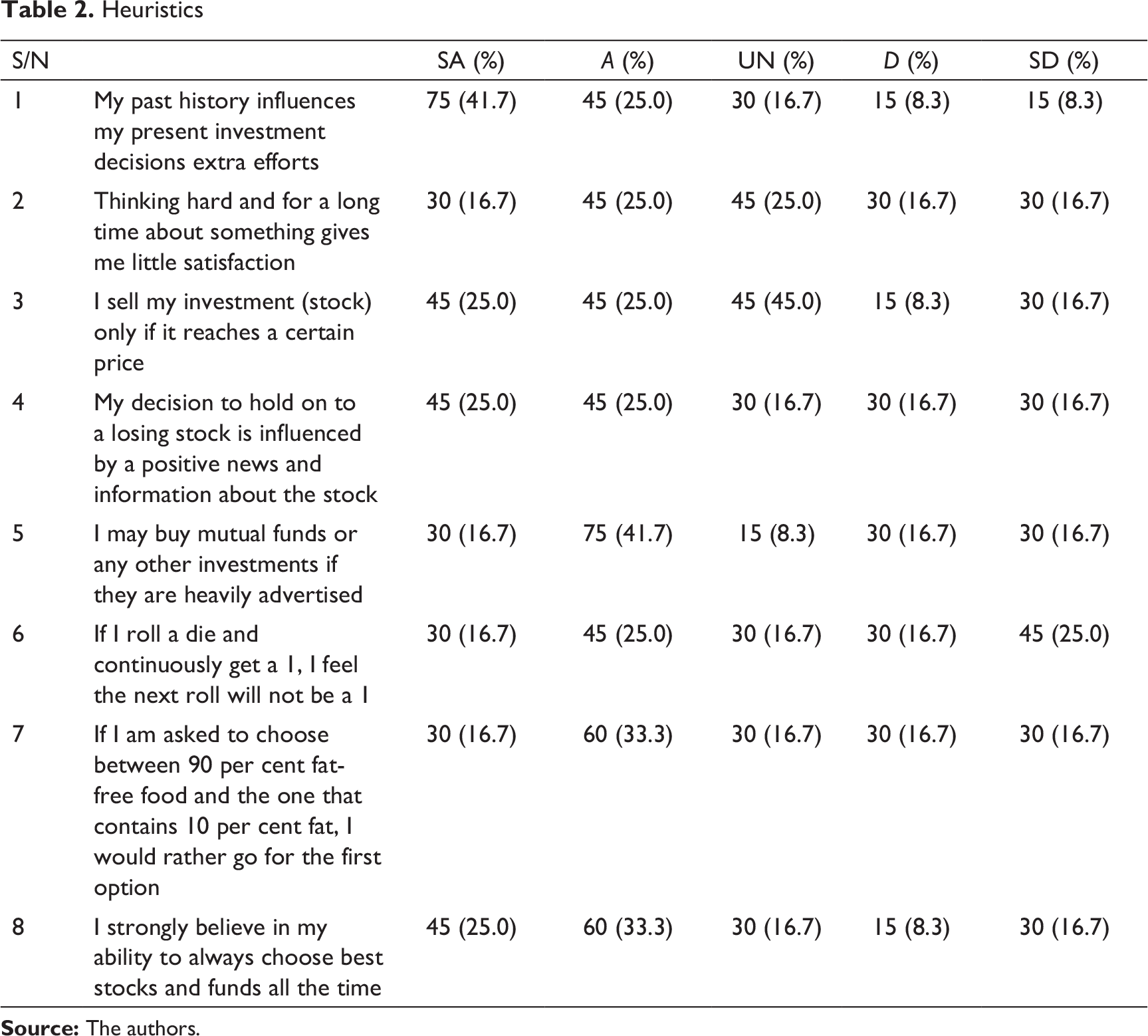
The study employs questionnaire for the data collection. This study utilizes close-ended questionnaires in the collection of primary data from the sampled respondents. Section A of the questionnaire comprises the demographic characteristics of the respondents, which include the gender, age, marital status, educational qualification and so on. Section B comprises the items for measuring heuristics, which are eight question items, while section C contains items for measuring prospect theory comprises three questions. Lastly, section D is for the items for measuring investment decisions, which are five in numbers.

Sample Frame
Methodology describes the details of the research design adopted for the study. The descriptive research design is employed for the study. The population of the study consists of the customers of the selected investment banks, which include Afrinvest West Africa Limited, Meristem Securities, Vetiva Capital and ARM Nigeria Limited. The study targets a convenient sample of 200 clients of the selected investment banks. The 200 samples chosen for the study are based on the discretion of the researcher who thinks that 200 respondents are large enough to get the required data for the study.
Empirical Model
Empirical model involves the derivation of mathematical equation that would be used as the basis for estimation. The model will show the degree of relationship between the prospect theory, heuristics and investment decision.
However, the linear function of the aforementioned notation is hereby modified and estimated as follows:

where
Yt is a dependent variable and it represents investors’ investment decision-making,
Xt1 is the Prospect theory,
Xt2 is the heuristics,
B0 is the intercept on the Y-axis,
B1, …, B2 are the regression coefficients to be estimated and
Ut is the error or disturbance term.
Analysis
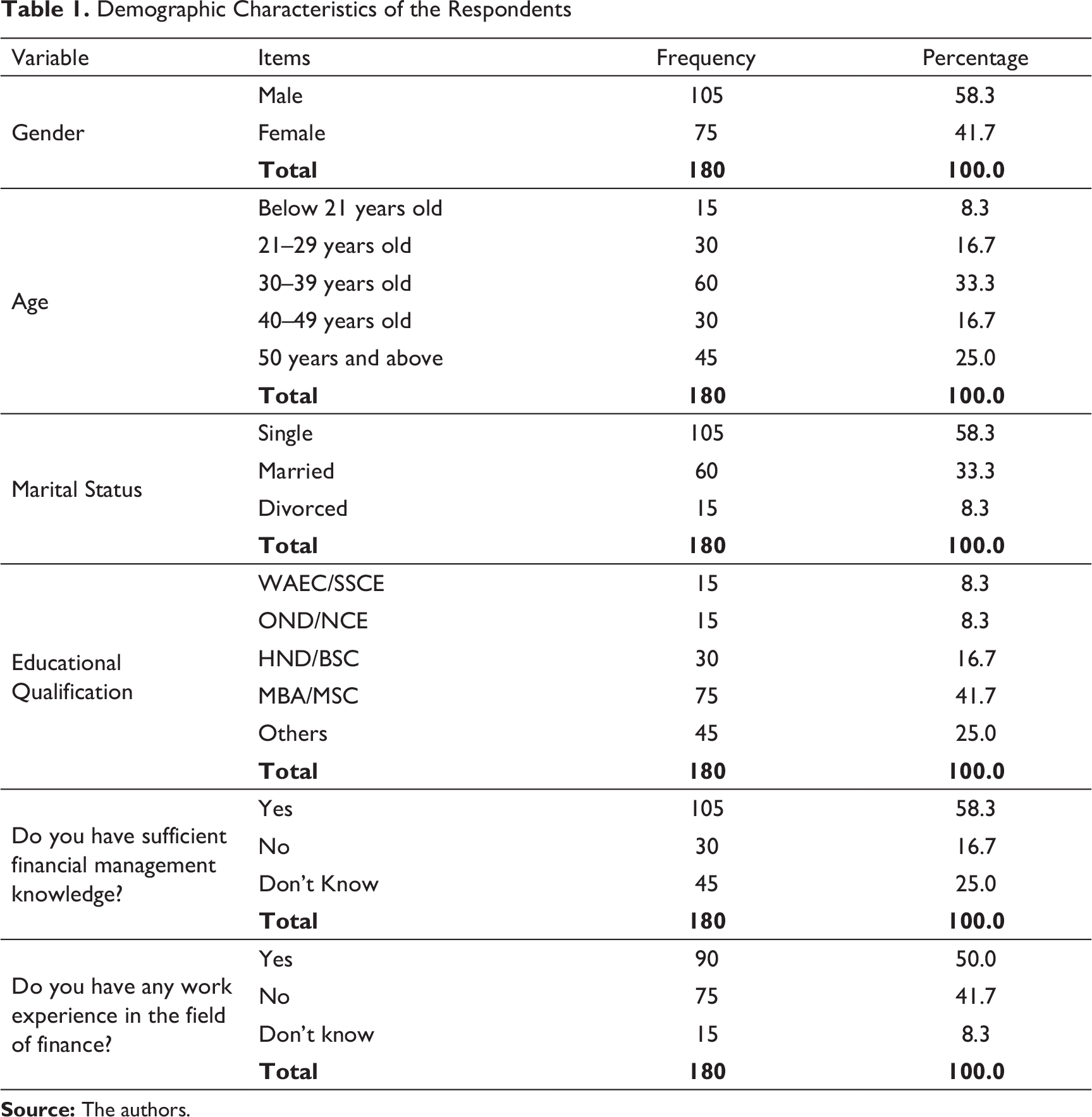
This study aims to examine the effect of behavioural finance on investment decisions. A total of 200 questionnaire items were administered to the respondents chosen from the investment banks using a convenience sampling method. Of the administered questionnaires, 180 were retrieved representing 90.0 per cent of the questionnaire. The retrieved questionnaire items were then analyzed using tables, frequency and percentages, multiple regression analysis and correlation using SPSS version 20.
Demographic Classification of Respondents
Table 1 provides the demographic distribution of the respondents. From the table, it is known that 58.3 per cent of the respondents are males, while the remaining 41.7 per cent of the respondents are females. This shows that the study is not sexually biased. Both genders are equally distributed. The modal age for the study is between 30 and 39 years. This means that individuals within this age range have the highest number of investors. Those within the age range of 50 years and above are also very active investors as they constitute 25.0 per cent of the investor respondents; 58.2 per cent of the respondents are single and 33.3 per cent of the respondents are married. Regarding the educational qualification of the respondents, 41.7 per cent of the respondents are MBA/MSC holders, while 25 per cent of the respondents have other degrees or certifications. Those who have sufficient financial management knowledge constituted 58.3 per cent of the respondents, while the remaining respondents either do not have the knowledge or do not even know whether they do.
Results Based on the Heuristics
Demographic Characteristics of the Respondents
Heuristics
Results Based on Prospect Theory
Table 3 presents the result of the prospect theory. As can also be observed from the table, the majority of the respondents strongly agreed and agreed with most of the statements.
Results Based on the Investment Decision
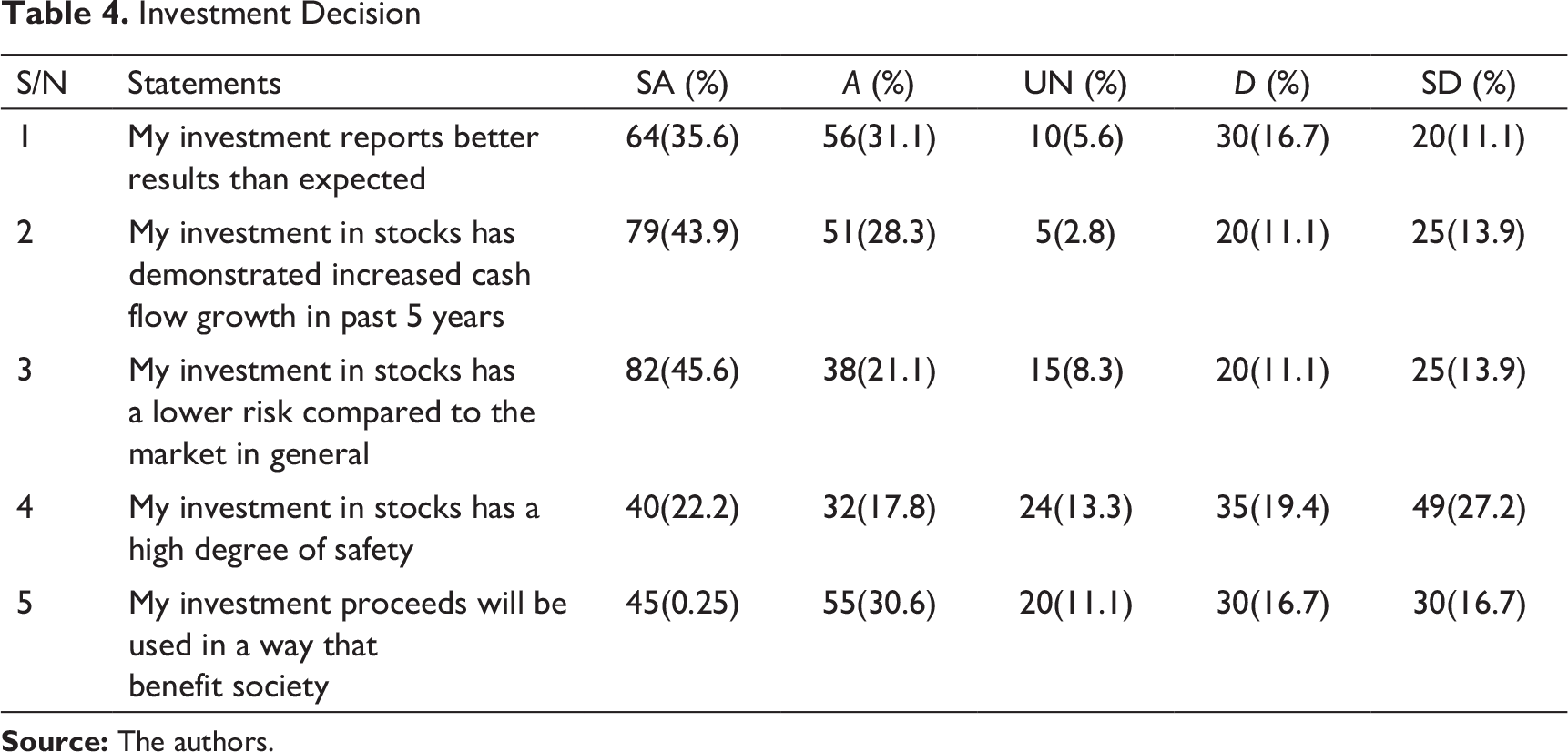
Table 4 presents the result of the investment decision theory. As can be observed from the table, the majority of the respondents strongly agreed with most of the statements.
Correlation Matrix
Prospect Theory

Investment Decision
Correlations Matrix
Model Summary

ANOVAa

bPredictors: (constant), prospect theory, heuristics.
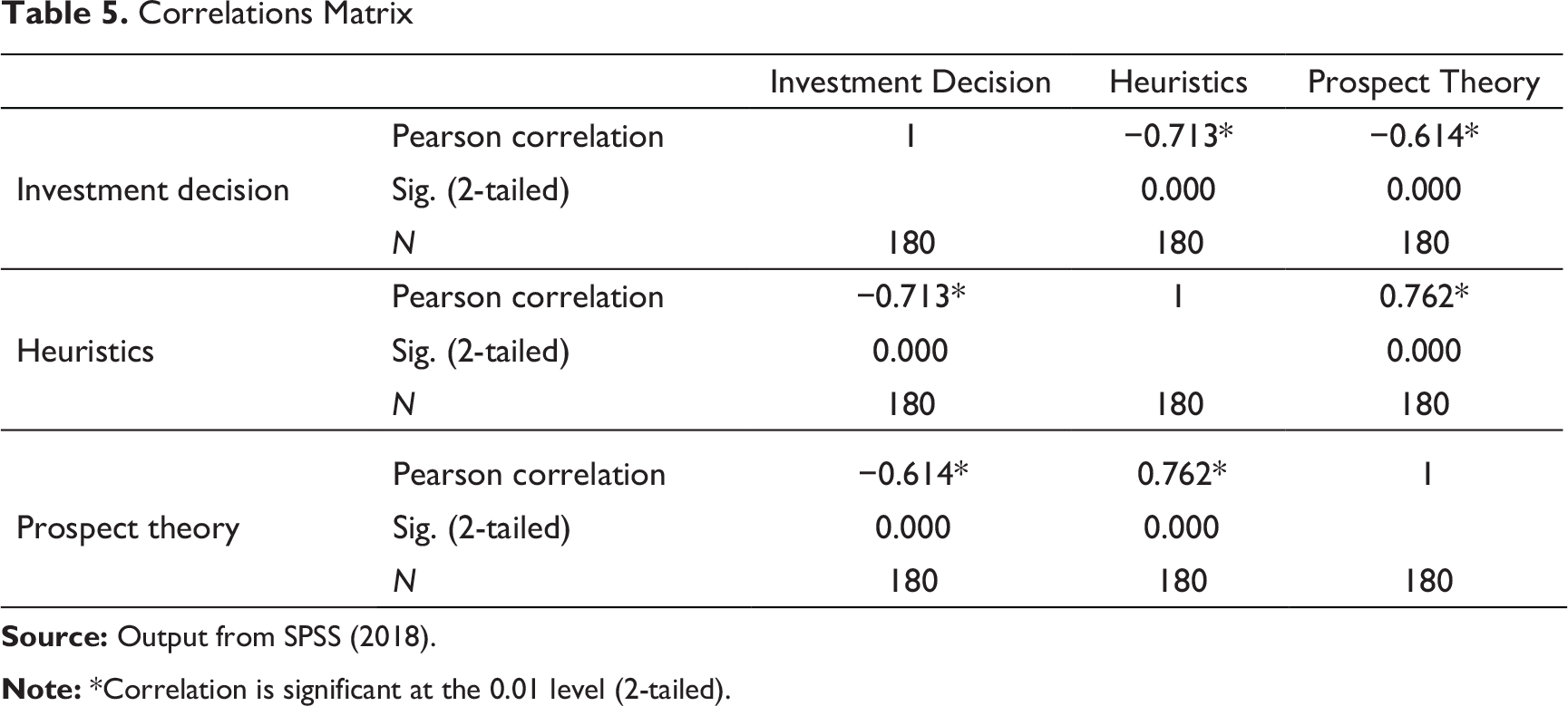
As shown in Table 5, heuristics and investment decision are strongly negatively correlated, r = −0.713, p = 0.000. This shows that the lower the evidence of heuristics, the higher the investment decision. In other words, the more an investor identifies and then alienates heuristics in his decision-making process, the better is his decision-making. Likewise, prospect theory and investment decision are strongly negatively correlated, r = −0.614, p = 0.000. This also shows that the less the prospect theory illusion, the better the decision-making.
Interpretation of Multiple Regression Results
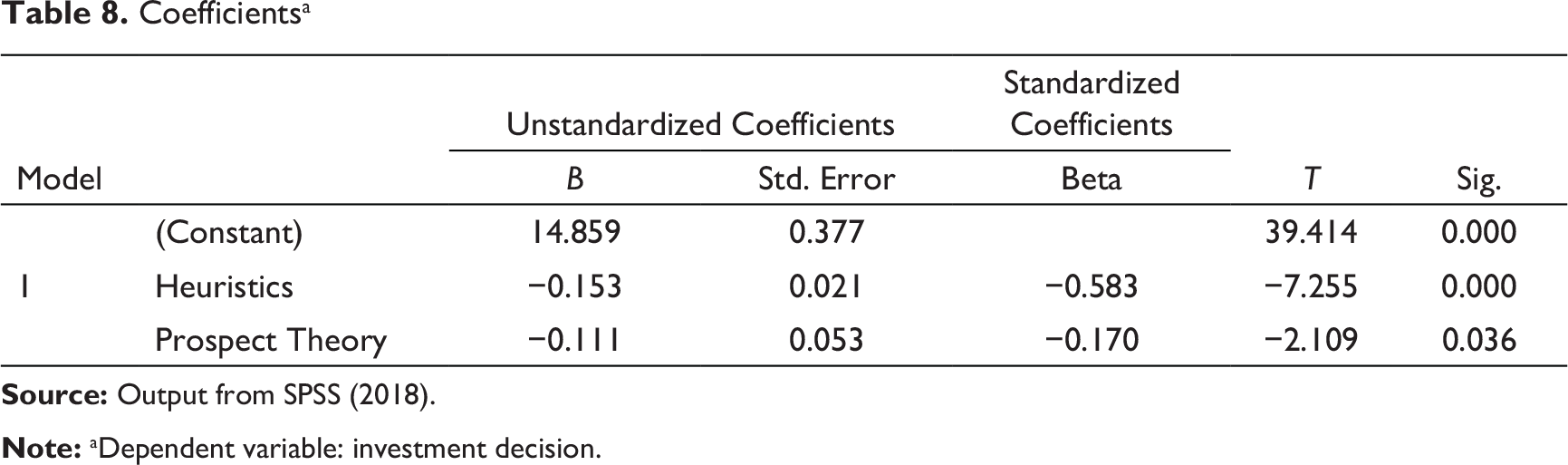
Coefficientsa
Test of Hypotheses
However, the coefficient table (see Table 8) shows the impact of the individual behavioural finance factors on investment decision. According to the table, heuristics and investment decision are significantly negatively correlated with b = −0.153, p = 0.000.
Likewise, the relationship between prospect theory and investment decision is negative and significant based on b = −0.111, p = 0.036.
Discussion
The study reveals a significant negative relationship between heuristics and investment decision. This means that the higher the existence of heuristics, the less effective the investment decision-making of the Nigerian investors. The converse is also true. In addition to this, the study further revealed a strong correlation between the two variables. This, in order word, may mean that the existence of heuristics amongst the Nigerian investors is predominant. The result of this study is in line with the result of the study undertaken by Kengatharan and Kengatharan (2014), which found negative relationship between herding and investment decision. Alquraan et al. (2016) found insignificant relationship between herding and investment decision. Babajide and Adetiloye (2012) found the existence of behavioural finance in the Nigerian stock market, but quick to add that the existence is not dominant because a weak negative relationship exists between behavioural finance and stock market performance. Alalade et al. (2014) also found the existence of behavioural finance, but not very dominant. These are contrary to the result of this study, which revealed a strong correlation between the two variables and found the existence of heuristics amongst the Nigerian investors to be dominant.
The study also reveals a significant negative relationship between prospect theory and investment decision. In accordance with the result of the study, there is also a strong correlation between the two variables. Alquraan et al. (2016) found a significant relationship between loss aversion (prospect theory) and investment decision. A study by Kisaka (2015) found significant effects on loss aversion, regret aversion and random walk framing. Kengatharan and Kengatharan (2014) does not find any significant relationship between loss aversion, regret aversion and investment decision. Bashir et al. (2013) found a significant relationship between heuristics and investment decision-making but not between prospect theory and investment decision. This, however, is contrary to the result of the study which found a significant relationship between prospect theory and investment decision.
Conclusions
This study aims to examine the impact of behavioural finance on investment decision. The result shows an overall significant impact of behavioural finance on investment decision. This study has been able to provide much evidence that heuristics and prospect many times influence investors while making investment decisions. These cognitive mistakes have the tendency to undermine the whole investment processes and objectives if not immediately arrested.
Against the backdrop of the aforementioned findings and conclusion, the following recommendations are proposed to both the institutional and individual investors:
Investors should be enlightened on the fact that there are many behavioural factors which can affect their investment decision-making process and they should be made aware of these factors.
Investors should try as much as possible to avoid these behavioural biases when making investment decisions.
Investors should avoid overconfidence biases while making investment decisions. Noting that good times will not be permanent.
Managerial Implication
Having proven from the study the existence of behavioural finance in the Nigerian Stock Exchange, it is important for the policy makers as well as the industry practitioners to take practical steps in checking the existence of this anomaly, since failure to do so can create unnecessary panic and eventually crash the exchange. It is important for the practitioners in the industry to create awareness about some of these biases and find a way of helping investors to reduce their impact. Although a little bit of these biases could be beneficial but too much of them could be disadvantageous and damaging to the exchange.
Government agencies such as the NSE and Securities and Exchange Commission (SEC) overseeing the exchange should come up with policies in addressing some of these biases since this will help in checking them.
Footnotes
Acknowledgements
The authors are grateful to the anonymous referees of the journal for their extremely useful suggestions to improve the quality of the article. Usual disclaimers apply.
Declaration of Conflicting Interests
The authors declared no potential conflicts of interest with respect to the research, authorship and/or publication of this article.
Funding
The authors received no financial support for the research, authorship and/or publication of this article.