



Abstract
In response to certain discrepancies prevalent in the debate on global advertising, we have identified important gaps in the global advertising literature. The focus of this inquiry is an investigation of the operational aspects of the standard advertising strategy by multinational companies (MNCs). Specifically, the authors attempt to identify the path to strategic implementation of standard advertising strategy through network analysis, with the determinant factors that play an important role in determining the degree of advertising strategy. The findings suggest that the extent to which multinationals can standardize their international advertising strategies will depend on the level of similarity among the countries in the network. The authors highlight that, given the inconsistency that exists in observation, it is evident that a single distinctive strategy for standard advertising may be followed by MNCs which can be the optimal solution of standardized global advertising for sustenance in the presence of steep competition. The authors discuss and highlight the various implications of the findings for business practitioners. The authors conclude the study by showing the scope for future research along with the limitations of the study.
Introduction
Standardized global advertising is one of the most researched topics in the field of global advertising and has received considerable attention in academic literature. It has been observed that the approaches towards advertising standardization have evolved over the last 50 years (Agarwal, 1995; Harvey, Lusch, & Cavarkapa, 1996). Ideas relating to consumers and markets have undergone multiple modification and reinterpretations. A consistent issue cited by most of advertising literature is the cost-benefit factor associated with advertising standardization (Buzzell, 1968; Cavusgil & Zou, 1994; Cavusgil, Zou, & Naidu, 1993; Fatt, 1967; Hite & Fraser, 1990; Killough, 1987; Levitt, 1983; Sorenson & Weichmann, 1975; Tai & Wong, 1998; Van Mesdag, 2000). Despite this attention, only a few studies (e.g., Leeflang & van Raaij, 1995; Okazaki, Taylor, & Zou, 2006) have pointed out the possibility of standardized advertising in homogeneous countries. Solberg (2000) has rightly pointed out that, given the differences in two perspectives among the researchers and dissimilarities among nations have led multinational companies (MNCs) to view and design its marketing plan in each country strictly as a local problem in the past. But today, Olson and Sharma (2008) and Sharma and Sheth (2004) noted that the world is becoming homogeneous as a result of the dynamic concept of tastes’ and preference convergence in distant parts of the world which assumes relevance. Harris (1994) pointed out that most of the studies have given too much emphasis on whether firms should standardize or not, whereas very less emphasis has been given on ways to operationalize advertising standardization.
Prior study on standardization also overlooked the related issue of standardized advertising and measures of operationalization. Despite the cost advantages as argued by (Buzzell, 1968; Elinder, 1961), MNCs would be better served if they standardized advertising. However, attempts to develop ways for standardizing global advertising for MNCs have been considered as more of a necessity rather than an opinion. Papavassiliou and Stathakopoulos (1997) have rightly pointed out that the issue pertaining to the way towards advertising standardization is rather more complex. It is evident that standard advertisement by multinationals will help to formulate a strategy to ensure sustainability in their operation, but the likelihood or the way of attaining total uniformity is rather complex. MNCs trying to fulfil the choice of demand from heterogeneous customers and economic rationale can be the trade-off (Solberg, 2000). Walters (1986), Szymanski, Bharadwaj and Varadarajan (1993), and Duncan and Ramaprasad (1995) are of the view that the twentieth century is characterized by the increased level of international marketing research, and the possibilities for worldwide uniformity cannot be denied.
The premise of advertising standardization is to develop a uniform marketing strategy for the global markets and the endeavours on advertising standardization are convincing for managers for its sensitivity in the direction of economic benefits. Business managers see standard global advertising as a direct connotation of improving competitive position and improvement in financial performance for long-term viability in a highly globalized target market. The study begins with an overview of the advertising standardization debate, the rationale behind standard advertising and the significance and practicability of standardized advertising in strategic decision-making by MNCs. Next, we specify the objective of the study. This is followed by an examination of the theoretical base and relevance of standardized advertising, and the various factors that are potentially associated with advertising standardization. Next, we specify the research method employed, and then present and discuss the results of the study. Finally, we highlight managerial implications of the findings and limitations of the study, along with directions for further research.
Review of Literature
The significance of global advertising for practitioners is reflected in the literatures of advertising standardization (Buzzell, 1968; Elinder, 1961; Fatt, 1964; Roostal, 1963). Conceptually, advertising standardization implies uniformity in its strategic implementation across different countries’ market with only small modifications or simply translating its language, while the aim is to minimize cost, maintenance of brand image consistency and financial benefit (Buzzell, 1968; Das, Prakash, & Khattri, 2016; Doley & Sharma, 2016; Fatt, 1967; Hite & Fraser, 1990; Levitt, 1983; Sorenson & Weichmann, 1975; Tai & Wong, 1998; Van Mesdag, 2000). For example, Melewar and Vemmervik (2004) point out that standardized advertisements have more perceived advantages than the disadvantages in terms of reduction of cost, which is governed by agencies and client’s interest relationship. Contradicting to this observation, for example, Onkvisit and Shaw (1989) point out that standardized advertising is based on the assumption of homogeneous market segments and the aim is reduction of cost and profit maximization, but, for instance, the standardized advertisement may end up unappealing to the target market which may lead to breakdown of communications, in turn, decreasing sales. See, for example, Backhaus et al. (2001) study from the derivative of Cutler and Javalgi (1992) that usage of identical portrait followed by the design, advertising theme and language are more vital for standard advertising.
The integration of the world economy in a multi-layered relational network is corroborated, but the lack of an integrated approach to test the practicality of advertising standardization in different countries is always absent. Most of the literature on advertising standardization identifies the dissimilarity of markets in various countries, which work as impediments to the mechanism for effective use of advertising standardization in marketing operations across nations (Agarwal, 1995; Harvey, 1993; Rau & Preble, 1987; Tai & Wong, 1998; Tse, Belk, & Zhou, 1989). The recent resurgence of interest in standardized advertising for the international market is attributed to such influences as increase in purchasing power parity, gross domestic product (GDP), education level, TV coverage, extensive travel and telecommunication, technological advancement and convergence in the taste and preference in different parts of the world. These factors fundamentally alter the boundaries between MNCs’ marketing operations, technology and customer’s value propositions across nations.
Pioneers of standardization are of the notion that world markets are a complex arena of competitors stimulated by globalization and technological advancement, the growth of demand and supply, rivalry among competitors and increasing economic activities (Hu & Griffith, 1997; Zou & Cavusgil, 2002). For example, Levitt (1983) and Teece (2010) have rightly pointed out that world markets are being homogenized by the advancement of technology and convergence of taste and preference. Dissimilarities among nations lead MNCs to view and design its marketing planning in each country strictly as a local problem in the past (Solberg, 2000). Companies with a common aim to sell their products to as many consumers as possible are intensifying consistently (Solberg, 2000). For example, Walters (1986) and was of the opinion that companies today cater to a varied target group of clients with different languages and cultures, and consumers respond best to marketers who invest in relationships and listen to customer needs and communicate on their terms. However, the call for the practice of standardized advertising is based on the emerging trend of convergence generated by integrated communication networks.
Firm’s primary objective is to build a sustainable strategic advantage over its rival and to a new geographic domain, which is based on the theory of competition, and this is often cited as the reason behind the search for advertising standardization (Barney, 1991; Hunt & Morgan, 1996; Viswanathan & Dickson, 2006). The attempt by Kanso and Nelson (2002) to define advertising standardization by a firm in terms of the proportion of the time spent on the strategy seems inconclusive. For example, Onkvisit and Shaw (1989), Kumar and Pathak (2016), and Bardhan and Dangi (2016) have rightly pointed out that advertisement qualifies for standardization only when it is put into practice across countries. Harris (1994) pointed out that the concern pertaining to advertising standardization issue is that it revolves around the process of fostering and analysing relationships and whether advertising can be standardized or not. As noted by Onkvisit and Shaw (1989), the re-examination of marketing plans for various segments of firm service in the marketing process will help in the validation for the development of standardized advertising for the global market. A company may standardize programmes, process or maybe both (Jain, 1989). Advertising standardization programme refers to various aspects of the marketing mix (Shuptrine & Toyne, 1981). The marketing process is focused on the marketing philosophy, principles and technology that are employed to plan and prepare the marketing programmes (Walters, 1986).
The new and old theories merge giving ways for new theories. Ideas related to consumers and markets have undergone a paradigm shift in the last 50 years or so (Agarwal, 1995; Jain, 1989; Onkvisit & Shaw, 1989; Walters, 1986). It is true that instability and rapid structural shifts are often prime features of advertising; therefore, firms are on relentless lookout to minimize the rise in the level of advertising expenditures (Samiee, Jeong, Pae, & Tai, 2003). Steep competition in almost every industry demands the need for the better understanding of a company’s international marketing mix activities (Cavusgil & Zou, 1994; Lannon, 1991; Lim, Acito, & Rusetski, 2006; Szymanski, Bharadwaj, & Varadarajan, 1993; Zou & Cavusgil, 2002). Marketing behaviour is contradicting; the need to incorporate standardization on their marketing tactics in and across national boundaries becomes all the more crucial for an MNC to be successful in a sustained level of intense competition (Wang & Yang, 2011). The standardized advertising strategy will determine the core competencies of a firm in its international market operation. Identification and implementation of the right standardized approach can be highly beneficial for MNCs (Craig & Douglas, 2000), as it will help them achieve both customer satisfaction and organizational success. Therefore, the study is to investigate the likelihood of operational aspects of advertising standardization in various countries based on economic parameters and to determine the path to strategic implementation of the standard global advertising.
Objective of the Study
The rapid development of standardized products and standard global advertising for consumers should not be of much surprises. However, many researchers suggest that standard global advertising is purely a theoretical exploration in the field of advertising standardization. Others have been more serious about the practical applicability of advertising standardization. The scientific archival literatures also provide an honest evaluation of the viewpoint of these fields of study. Although the study on the standardization of advertising is not new because numerous studies have been conducted from the viewpoint of language, culture, adaptability and so on, but from an economic perspective, studies have not been conducted as of yet.
Notwithstanding the long-standing interest and many research articles published on the topic of advertising standardization, this study is an attempt to gain new insights into the areas of how to operationalize standardization of advertising in various countries. While standardization and centralization of countries associated with each other are expected to be correlated, the bottom line is to find out the way of operationalization in various countries with respect to a company’s marketing programmes.
Rationale of the Study
In spite of the global economic integration in a multi-level relationship network among various countries, the lack of an integrated approach to test the practicality of standard global advertising standardization in different countries has always been missing. Most of the literature on advertising standardization have shed interesting light on the state of standard global advertising and identified the existence of numerous differences between markets of various countries which also work as hindrance to the mechanism for effective use of standardized advertising in marketing operations.
The recent resurgence of interest in the standardized global advertising is attributed to such influence as increase in purchasing power parity, GDP, education level, TV coverage, telecommunication and so on and convergence in the taste and preference of the world. These factors essentially change the limitations between MNCs’ marketing operations, technology and customer’s value propositions among various countries. However, the call for the practice of standardized advertising is based on the emerging trend of convergence in the taste and preference of various customers in the global market. Our current perception on advertising standardization is in accordance to the changing dynamics of the world dictum. Thus, our study aims at resolving the operationalization aspects of standardized advertising of MNCs in various countries based on economic parameters, more specifically to find out the path for the strategic implementation of standard global advertising.
Methodology
Methodological literature review reveals that the logical standard on what meet the criteria of standard advertising that can be applied internationally is conflicting. There are revealing facts where firms attempt advertising standardization practice in different countries based on the sensitivity of the economic state of the countries. In this study, we have isolated the variable elements that act as a determinant to advertising standardization. The current investigation incorporated measures of centrality which are framed based on network mapping. We have selected a sample of 90 countries from across the world as a unit of analysis. We have also selected 30 top brands that appeared in the list of Forbes out of a total of 100 best brands for homogeneity test of significance. Source of data includes inter-temporal secondary data based on the reports from the UN and the World Bank report within a period of 10 years. Empirical evidence suggests that findings are both reliable and valid. For the qualitative study, the study uses purposive sampling method. We have also collected primary data to avoid response bias; as key informant from marketing managers in advertising sector were interviewed. The variable item incorporated for the study is outlined, and it includes four factors—purchasing power parity (PPP), GDP, TV coverage and Education level. The sampling plan is based on non-proportionate quota sampling; the selection is to address the uneven distribution of the countries in the world in seven continents as representatives for the study. The measurement instruments used for the study determinants are confirmed.
The present study investigates the directions of association of various countries through exploration by centrality measures. Centrality measures is one of the elements by which an organization can determine the path of strategic implementation of standard advertising in increased competition among MNCs (Hu, Li, Zhang, & Ma, 2015). Determining the countries which are associated and are central is a natural fundamental task for any strategic decision to cope with the changing circumstances (Jaworski & Kohli, 1993; Johansson & Yip, 1994). With the prevailing market conditions faced by countries and the increased transaction among nations with an open border and free trade agreement, countries align themselves to associations of countries (Laroche, Kirpalani, Pons, & Zhou, 2001).
Centrality measure is not an end in itself, but it simply will facilitate the organization to mobilize its resources in order to reach its target. Here, we have focused on the main aim of the study by examining the trend of the variables more carefully and the relationships between them. One of the fundamental tasks in network analysis is the identification of the important nodes and edges as here it includes countries and economic parameters as the determinant for the investigation. The measurement leans on the graph property to establish any connection in accordance with the importance of the countries’ betweenness centrality, closeness centrality and the degree of the association of the countries. The objective is the comparison between different measures of centrality for different economically similar associated countries that are interlinked from economic commitment, more so for MNCs’ advantages for global advertising.
The use of network analysis is to establish the connected links showing the relationship or flow between the various countries. Here, graph analyst can select from the vast number of centrality for the measured countries in order to determine the route of importance and in establishing the pattern and present the relationship for the possibility of global advertising in these countries under study. The identification of the important nodes and edges is one of the essential tasks in network analysis. Here, countries represent the nodes and the edges representing the connecting link for the countries in this study. To simplify the interpretation, countries are coded in sequential number alphabetically and for establishing the relationship of the countries with a clearer view. The fewer constraints a country faces the more opportunities it presents for advertising standardization, putting them in a favourable position for business operation, and closer relationship among the established linked countries. Graph analysis helped to identify and determine the importance of a country in the network, the countries present in the network, the isolated countries which do not have a close relationship, intermediaries, the peripheral countries and the central of the countries among the closely related countries.
To find the linear relationship between the observed data for determining the path for strategic implementation of standardized advertising; the betweenness centrality (Cbwt), closeness centrality (Ccl), degree centrality (Cd) and eigenvector centrality (Cλ) are determined.
Betweenness centrality (Cbwt) is the interaction between two non-adjacent countries. It is the shortest distance between two countries. Standard notation of betweenness centrality (Cbwt):
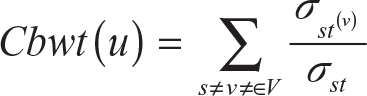
Closeness centrality (Ccl) is the inverse of farness between countries; in our study, it is the sum of the distance to all other countries. It also shows how easily an important country can establish communication with other countries. Standard notation of closeness centrality (Ccl):

Degree centrality (Cd) is the simplest and most straightforward technique for measuring the point of centrality. It shows countries that are in relations with large number of countries. It is to be noted that the values of the countries are normalized by dividing the highest likely degree in the graph with n − 1, where n is the number of nodes in the graph. Although important, degree centrality is not the concrete measure since countries may be involved in indirect relationship with other countries. Standard notation of degree centrality (Cd):

Eigenvector centrality (Cλ), another important measure of centrality, and it is the adjacent matrix of the corresponding graph. Eigenvector centrality (Cλ) shows the contribution of the neighbourhood countries and the subsequent neighbourhood countries. Standard notation of eigenvector centrality (Cλ):

The computation of accurate centrality measures are always a Herculean task on web-scale networks. Normally, one of two alternative approaches are taken to speed up the computation is to focus on finding an approximation of the measure or to use parallel and distributed algorithms. So, we are using parallel machines and their models since it includes the multicore and graphics processing units (GPUs).
The usage of graph theoretical concepts is applied in different branch of studies including computer science, science, operation research, business research, modelling transport networks, supply chain management and so on. Here, while determining the relationship path, the edges may appear only once while establishing a relationship and vertex may appear more than once. The length of the vertices signifies the distance in the relationship among the countries. Therefore, the graph connects a country if it is able to establish any relationship between any pair or more of vertices (the countries). Generally, a graph is any mathematical object involving points (vertices) and links between them. Undirected graph g = (v, e) usually contain a fixed set ‘v’ of vertices and edges ‘e’. Vertices u and v are said to be occurrence if the edge ‘e’ and adjacent to each other and only if edge e = (u, v) establish a relationship between two vertices ‘u’ and ‘v’. The set of all vertices which are nearby to ‘u’ is called the neighbourhood n (u) of ‘u’; here, in our case, we consider the countries which have established a relationship. An intended graph ‘g’ consists of a set ‘v’ of vertices and a set ‘e’ of edges such that each edge of the graph ‘g’ has a path. If no edge connects a vertex to itself a graph is called loop-free. The adjacency matrix of any undirected graph is proportional if an adjacency matrix ‘a’ of a graph ‘g’ = (v, e) is a (n × n) matrix, where aij = 1 or aij = 0. A graph is connected when there is a path between every pair of vertices, we can always find a path connecting any two given vertices ‘v’. A connected graph is easy to see as there is only one path connecting any given pair of vertices. The connecting path can easily be distinguished from the concept of tree developed by Kirchhoff (1847), which has only one path connecting any number of vertices and that if a tree has n vertices, it must have (n − 1) edges.
To ascertain close proximity relationships of various countries, the correlation coefficients between various measures of centralities for different countries’ graph analysis is possible where at least relationships between two variables are involved. Therefore, we also conduct the correlation analysis to find out the correlation of the countries after graph analysis of the various countries although variable factor shows that it is independent of each other but are significant factors in the markets of these countries. The term correlation indicates that the relationship between two such variables in which changes in the values of one variable will also change the values of the other variable. The Karl Pearson coefficient of correlation is given by

The value of r lies in between +1 and −1; where σx and σy represent the standard deviation of the series X and Y, respectively.
Analysis
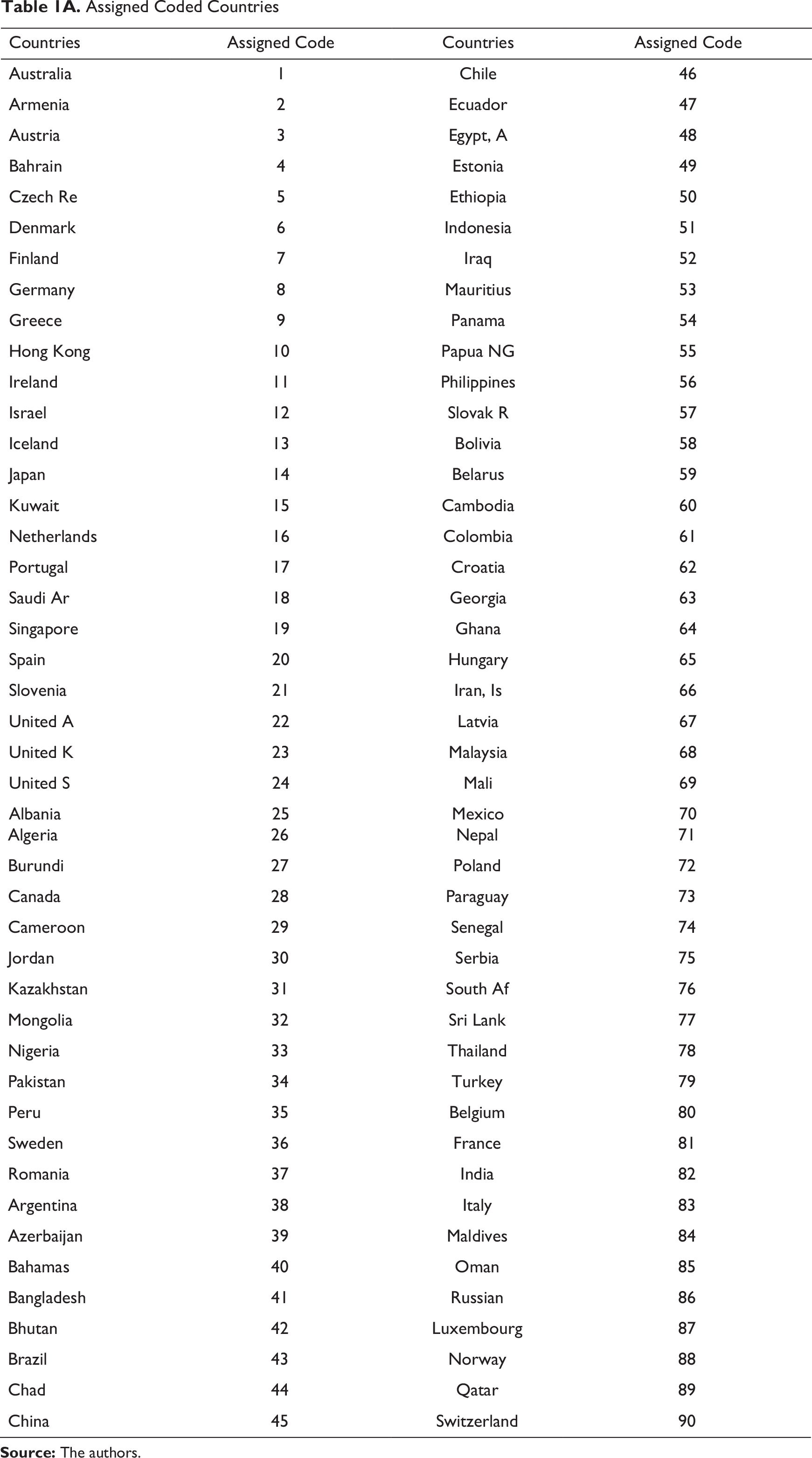
In this study, the programme visualizes the method for modelling the connections among clustered countries. The idea behind this is that we might see connections that we had not predicted. Network analyser for performing topological analysis on undirected networks (containing only undirected edges) is deployed for the determination of the graph. The number of connected components indicates the connectivity of a network. Clustered countries are coded in sequential numbers alphabetically from 1 to 90 as classified in Table 1A for the analysis essentially for its simplification because of its high dimensionality and to make the interpretation easier. The result shows consistency and positive relation to the clustered countries accordingly. Usually, a typical network consists of 10–10,000 nodes.
The graph establishes a relationship of 75 nodes representing the countries and 76 edges which act as the connecting point among the countries which are in accordance to the predicament notion of a close relationship between countries with economic similarity—where there is a positive prospect of implementation of advertising standardization.
Figure 1 shows a particular group of individual countries having a similar characteristic which forms individual cluster set forth with the parameter determined previously. Geographically, based on economic parameters, we can club these countries because of their similar distinctiveness. The graph structure of the second case shows the link between network of countries with similar economic marketing conditions.
Figure 2, that is, the second graph shows the molecular shape cluster network of countries. This was derived by using the Fruchterman-Reingold algorithm. Representation is in molecular shape cutting down the angle corner for better representation in a straight line with all the countries. To analyse the clustered networks of countries (Figures 1 and 2), we have calculated different measures of centrality. In the first case (Figure 1), the graph is divided into certain components with each component having connected as there is no row or column of the upper (or lower) triangular with zero angle. Using Yifan Hu method, we are able to determine the centralized countries that act as a connecting link of countries (refer Figure 3).

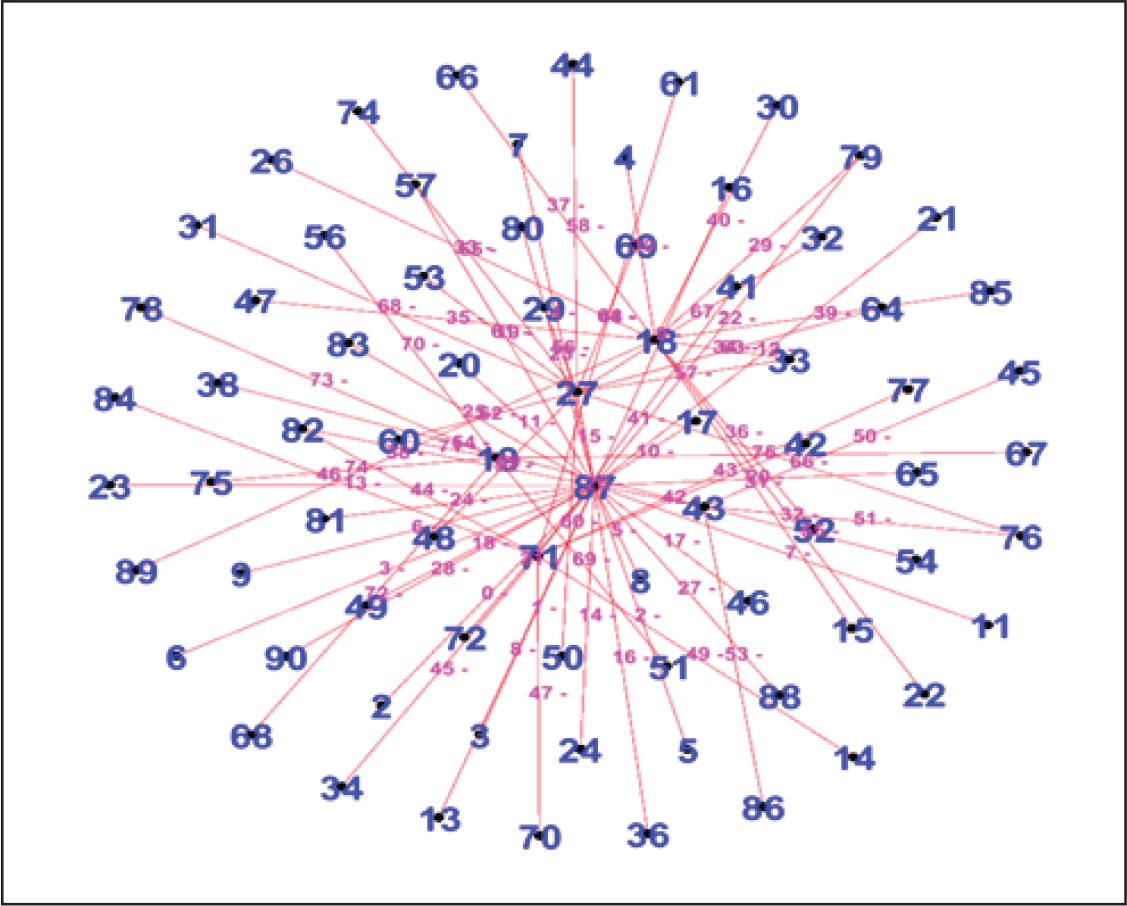
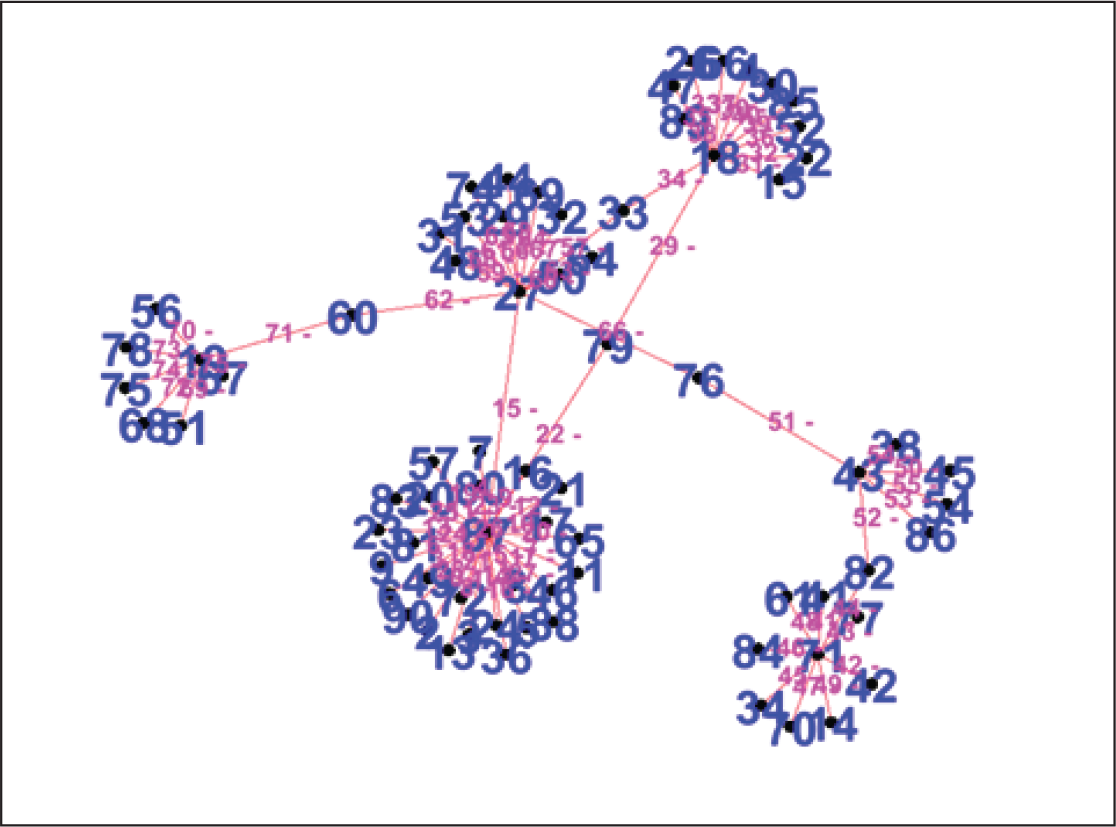
The graphs correspond to the six cluster cases method, and this helped us in establishing the pattern of how the countries are linked based on the economic parameters. This pattern helps us determine the path and select the countries to execute standardized advertisement by taking into account those countries that has highest number of edges. The countries which did not establish a stronger economic relationship or rather which do not have similar markets are filtered out with a range of 2–30, making the interpretation more simplified and help in determining the set objective.
The different centrality values for the clustered countries have determined the degree centrality (Cd) of having the number of relationships, closeness centrality (Ccl) for the countries having the most similar economic condition, betweenness centrality (Cbwt) as the intermediary countries in terms of economic parameter and eigenvector centrality (Cλ) for the countries that are the most influential of all. We have considered three cases. In the first case, we have taken into consideration all the economically better countries. In the second case, we have considered the graph taking into consideration less economically developed countries. In the third case, we have taken into consideration the rich underdeveloped countries. We have also considered a separate graph by separate network establishing the relationship to the rest of the edges’ vertex separately. Since data analysis is crucial to develop new empirical theories and generate new ideas, we conduct graph analysis.
The aim is to look at the pattern of the relational flow of countries. Although the graph analysis is not simple to sequence the process, it helped us to locate and plot the relational flow of various countries that have correlation. Some preliminary analysis of the data was conducted to look at the data in another way to test the hypothesis. This helped in narrowing the scope of the analysis. The graphs corresponding to the three cases show the relational flow of various countries having links.
Adjacency matrix of the third case:
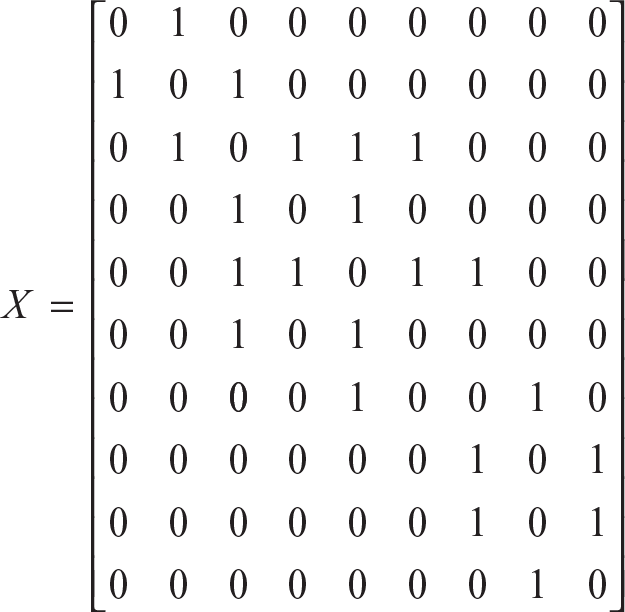
Since there is no row or column of the upper (or lower) triangular matrix with zero, from the above adjacency matrices, it is clear that the countries representing in the graphs (Figure 3) are interconnected. The matrixes have been selected to make the estimate more predictable and we have selected matrix having more than 10 connecting edges.
Correlation Coefficients of Centrality Measures for Country Code 81

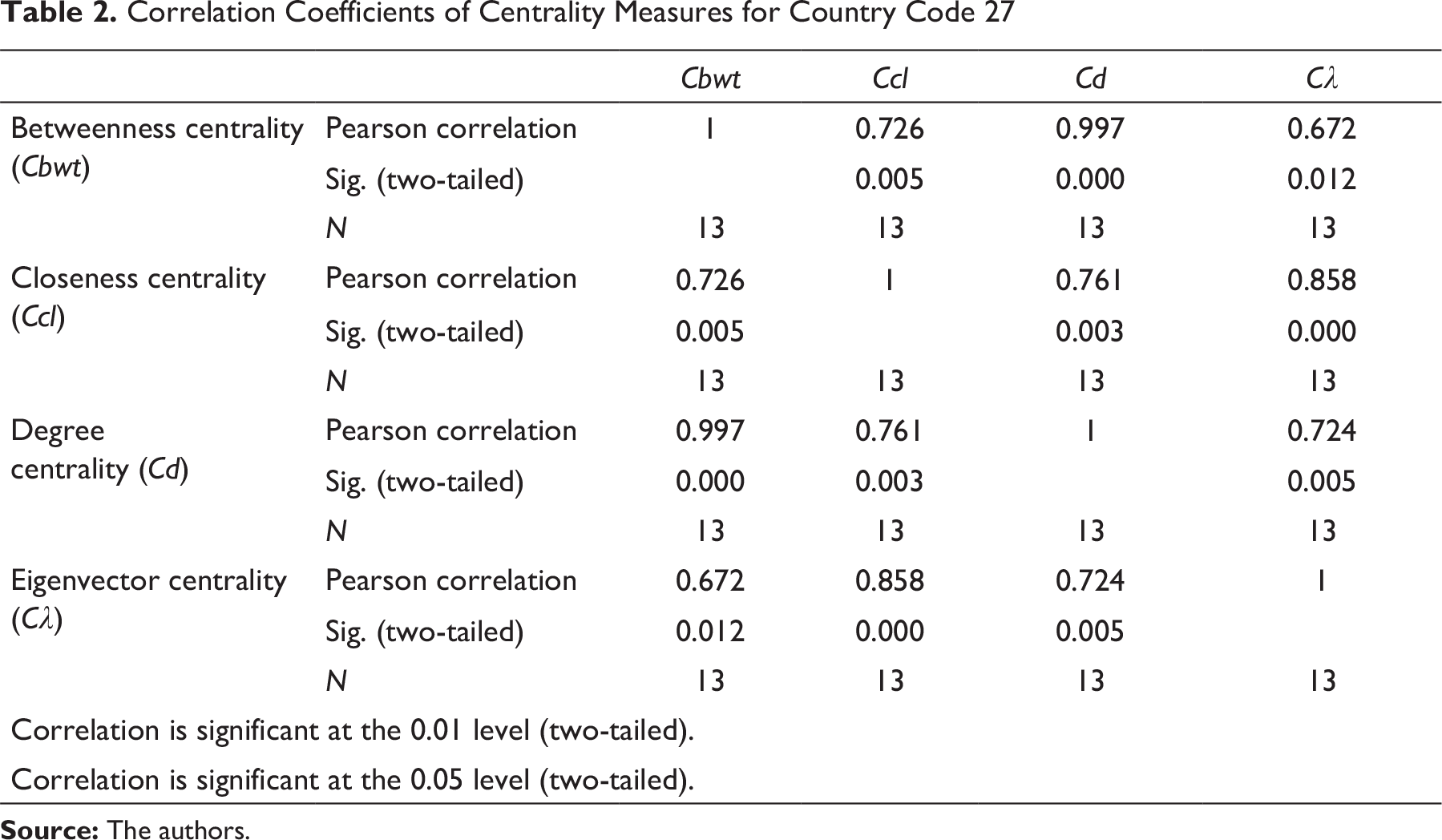
Correlation Coefficients of Centrality Measures for Country Code 27
Correlation Coefficients of Centrality Measures for Country Code 18

In Table 1, country code 81 of the centrality measures for the first case matrix of various countries shows the result of correlation coefficients. The value ranges of centrality measures of various countries range between the highest values of 1 to 0.993 in the correlation table. The significant value ranges between 0.00 and 0.052 for the two-tailed test. The analysis shows that there are 16 countries that have a high correlation with country code 81. The analysis shows that the betweenness centrality (Cbwt), closeness centrality (Ccl), degree centrality (Cd) and eigenvector centrality (Cλ) are highly correlated to the 33 countries with country code 81.
Table 2 shows that country code 27 of the centrality measures for the second case matrix of various countries have high correlation with 13 countries. The value ranges of centrality measures of various countries range between the highest values of 1–0.997 in the correlation table. The significant value ranges between 0.01 and 0.012 for the two-tailed test. The result also shows that in both cases, the correlation is very high in the measures of centrality. The analysis shows a high correlation between the betweenness centrality (Cbwt), closeness centrality (Ccl), degree centrality (Cd) and eigenvector centrality (Cλ) among various countries with country code 27.
Table 3 shows the result of correlation coefficients of country code 18 of the centrality measures for first case matrix of various countries. The analysis shows that there are 12 countries that have correlation with country code 18. The value ranges from the highest value 1 to the lowest value 0.813 in the correlation table. The significant value ranges between 0.01 and 0.087 for the two-tailed test. The analysis shows a high correlation between the betweenness centrality (Cbwt), closeness centrality (Ccl), degree centrality (Cd) and eigenvector centrality (Cλ).
From Tables 1–3 we observed that all the centrality measures for all the clustered network of economically similar countries are highly correlated. Therefore, these centrality measures representing different centrality features of countries are closely associated in these networks. Hence, using any measure is as good as another. It is known that the standardized advertising information can be easily transferred through an assortative network of countries as compared to the disassortative network (Newman, 2001). Also, from the above correlation coefficient, we observed that all the three networks are assortative types (r > 0), and consequently, the standardized advertising information flow of products will be easy with the cost-saving benefit. From Tables 1–3, we observe that among the coded countries 87 has the highest value in all the centrality measures and followed by 27, 18, 71, 19 and 43 among these countries.
The country coded as 60 acts as the vertex, establishing a direct link to countries coded as 19 and 27 in establishing the relationship with itself and the rest of the countries; 82 acts as the vertex connecting countries coded as 71 and 43 with the rest of the clustered countries. The codes 79 and 76 act as the vertex establishing a direct link to country codes 27 and 43 with the rest of the clustered countries.
Centrality Measures Cumulative Path Distance for Clustered Countries
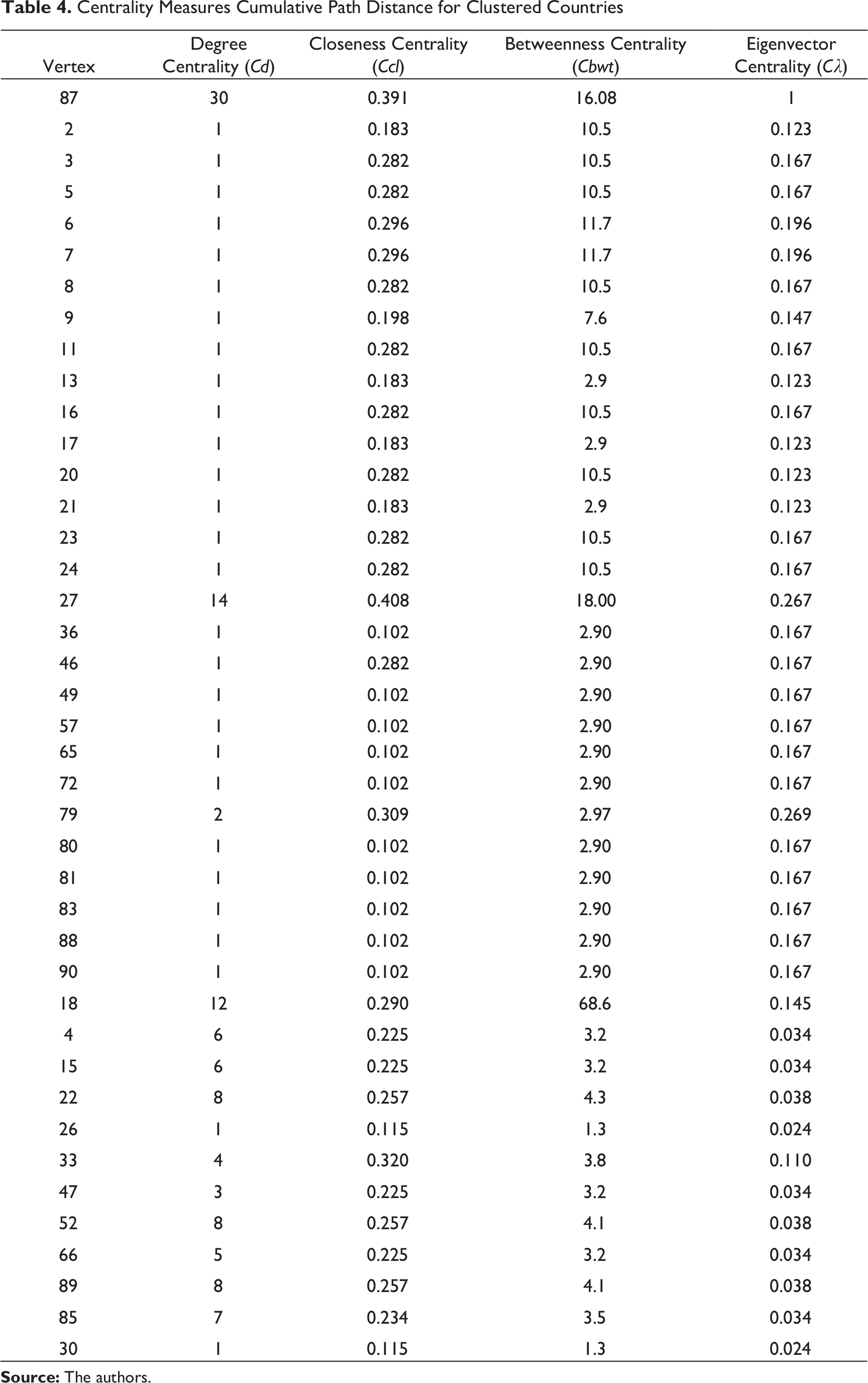
From the degree of centrality point of view as shown in Table 4, we observe that 27 has the highest degree of centrality, and it also has the cumulative shortest path distance. As it does not depend upon the indirect linkage of the rest of the clustered countries, we cannot identify what parameters contribute to its degree of centrality. As eigenvector centrality depends on direct as well as indirect link, and as indirect link of any of the countries, we have observed from eigenvector centrality that 87 and 27 have maximum eigenvector centrality because the sum of direct and indirect link of the county with the rest of the countries having a maximum value with positive prospective of adverting in standardization in these clustered countries.
Discussion
One of the important observable facts established from the analysis is that the countries mostly belong to a certain association of countries. Mostly, the centrality of the countries lies in economic similarity with similar economic condition and life pattern with similar distinctiveness. These countries lie in certain region where regional growth depends on spending of the advanced countries in their help to develop their market environment. Improved lifestyle depends largely on factors like PPP, GDP, TV coverage and education level and is mostly at par with their neighbouring countries. Investment can be the decisive solution to bolster the economies of the developing countries, and the solution to the problem can be a single standardized approach. Mostly standardized multinational advertising for consumer products depends on the international operation of the business (Gunthern & Andrea, 1998; John & Marta, 2013).
The analysis successfully manages to create a solution for clusters of countries where the implementation of advertisement can be implemented with similar economic market. Country code 87 represents the advanced countries with 20.6 per cent significantly higher revenues, earnings and stable growth rate and mostly industrialized with developed communications network, manufacturing and provide significantly higher lifestyle (Elinder, 1965). These countries with similar economic distinctiveness mostly belong to the Organisation for Economic Co-operation and Development (OECD). Country code 27 represents countries with 33.6 per cent with relatively smaller revenues and earnings and underdeveloped market compared to the first type lower than the country’s average of the developed countries. Country code 18 represents the countries of Organization of Petroleum Exporting Countries (OPEC) and country code 71 and 27 with an aggregate of 33.6 per cent of the countries belongs to the association of countries, including African nations and Asian countries and with similar economic countries and are geographically connected lies in the same region with close proximity (Sundaram & Black, 1992). Country code 19 constitutes 18.7 per cent having slightly higher revenues and earnings with similar economic marketing and healthier condition than 71 groups. The last group represents 23.4 per cent with country code 43 belonging to BRICS nations and is characterized by developing similar marketing and economic conditions. These findings are useful because they mainly provide the general structure of the economically similar clustered countries. For the potential foreign MNCs’ investors, this analysis is an insight for standardized multinational advertising for consumer products in those countries (Andrey, Rajshekhar, Galina, & Michel, 2009).
Conclusion
The study addresses the issue of standardized advertising in the worldwide market associated with cost savings and its functionality. The dominant strategic thrust to determine the marketing condition with similar distinctiveness is broadly based on the centrality measures in establishing the network of countries. It materializes to agree with the deliberation that there is a positive potentiality of standardized advertising strategy for consumer product in economically similar countries because there are several products which go well with universal common needs (Harvey et al., 1996). One of the important dimensions of the study from a theoretical perspective is that the findings of the study are consistent with the previous research investigating the effects of the product and services. Global marketing behaviour is dynamic and is governed by the individual country circumstances which are often different from what was expected and disparities in the attribute of the countries in terms of economic difference with varying variables and the scheme of effects which reveal a consistent pattern between the economically similar countries (Duncan & Ramaprasad, 1995; Griffith, Hu, & Ryans, 2000).
Implications
The findings reported in this study attract the attention of the issue of standardized advertising strategy in emerging markets. In relation to the sample for the development of a more uniform strategy for advertising standardization in these countries, greater stress is pressed on the variables than the countries attributes because it is more concerned with variables than the countries as sample capacity (Moorman, Deshpandé & Zaltman, 1993). The research also confirms that standardized advertising messages with similar appeals to standardized communication will hold good when engaged in economically similar countries (Hu & Griffith, 1997). The literature on advertising standardization also provides insights into how the essential product may serve essentially the same need in each of the coded countries. Several factors influence the distinctiveness of the product that people emphasize in its purchase (McAlister, Srinivasan, & Kim, 2007).
The study also demonstrates the impact on managerial perceptions and objectives deserve more attention in a relatively low level of per capita income countries, education level and awareness the emphasis could be on the operational traits of the product and durability, while countries with high level of income can impress upon the hidden aspects of the product benefit (Griffith, Chandra, & Ryans, 2003). From a manager’s point of view, the companies that are going global should also evaluate the degree of threat, which is intrinsic for any business operations which serve as a standard for any companies. The decision of the major companies in implementing standardized advertisements based on purchasing power of consumers should be relaxed because the statements of people around the world are increasingly becoming similar, underpinning the prospect of implementing standardized advertisement in economically similar markets (Solberg, 2000).
Limitations
This study is exploratory in nature and contributes to the knowledge base by demonstrating that the advertising standardization is possible in economically similar countries. This study, however, is not without its limitations. It is based on resource-based analysis of the available data and the findings do not provide the ground for generalization to multiple countries, while the connection between standardized advertisement of products of MNCs and economic similarity among nations is dynamic. The sample consisted is relatively based on the influential variable factors and it follows the influence on the economy of a country and international marketplace. The findings are, therefore, tentative with respect to whether or not the implementation of standardized advertising strategy. For instance, the variable factors included for the subjects of this study should also be extended to replicate its findings with a large group of variable factors other than a small set.
The study materializes to agree with the notion that advertising standardization is possible in economically similar countries. It is true that want for uniformity in advertising is mainly driven by awareness of the possibility of saving and standardized products that can be more globally marketed. Therefore, the findings of this study are limited and centrally focused on economically similar countries. Overgeneralization of the findings is not in agreement, and it does equate common ground for standardization. It will be exciting to look into the consequences of implementing the results of the study with standardized advertising strategies by the firms.
Appendix
A.1 Centrality Measures Table for Determining the Network Links of Clustered Countries
Assigned Coded Countries
Footnotes
Acknowledgement
The authors are grateful to the anonymous referees of the journal for their extremely useful suggestions to improve the quality of the article.
Declaration of Conflicting Interests
The authors declared no potential conflicts of interest with respect to the research, authorship and/or publication of this article.
Funding
The research was supported by UGC RGNF Scheme vide grant reference number (RGNF-2013-14-ST-ASS-53615).