



Abstract
Strategic alignment of information technology (IT) is required to be included in the firms’ core activity in today’s business environment. The purpose of this study is to understand the impact of ‘IT connectivity, IT infrastructure and IT human resources’ on ‘IT business strategic alignment’ by developing a model, in public and private organizations in India. A questionnaire was used to measure the constructs after its validity and reliability. The findings discovered that firms’ IT strategic alignment was significantly impacted by three IT dimensions, that is, IT connectivity, IT infrastructure and IT human resources (combined as IT capability). The IT investments and expenditures of a firm are aligned with its business objectives and priorities. Furthermore, the significant role of these dimensions in public and private organizations in India was examined.
Keywords
Introduction
Information technology (IT) plays a vital role in the success of any organization. To get the competitive advantage, it is important to align the IT with organization’s strategic plans. The goals and objectives of an IT are required to be in line with the goals and objectives of an organization. The three dimensions of IT, that is, IT connectivity, IT infrastructure, and IT human resources (combined as ‘IT capability’), have a significant impact on IT business strategic alignment. Although this impact may vary in public and private organization.
IT alignment with business strategy has a high importance for top management from many years (Street, Gallupe, & Baker, 2017). For competitive advantage, one needs to understand the importance of IT strategic alignment and the business needs (Renaud, Walsh, & Kalika, 2016). Business environment is ever changing, and one needs to be vigilant to adopt those changes. It becomes challenging to maintain the IT strategic alignment with these rapid changes even when strategic alignment gives so many benefits (Giannakis et al., 2014). The concept of strategic alignment has become more difficult and complicated with an increase in change dynamics.
In today’s ever-changing business scenario, it is difficult to align IT with organization’s corporate strategies (Chowdhry, 2010). In a survey of top executives and IT managers, this has been identified that there are problems in the IT alignment with business strategies. Many a times, these problems are overlooked which further creates an overall mismatch of IT with organizational goals (Turban, Leidner, Mclean, Wetherbe, & Volonino, 2009). Mostly these problems of IT and business strategies mismatch are reported by the developing countries like Iran (Abdolvand & Sepehri, 2016; Faryabi, Fazlzadeh, Zahedi, & Darabi, 2012).
Therefore, this study seeks to identify the factors of IT, which influence the IT business strategic alignment. A comparative study is made to find the gap (if any) between public and private organizations for IT strategic alignment in India.
Review of Literature and Research Gap
Organizations are always identifying the opportunities in which IT can be utilized to achieve a competitive advantage. However, there is still no accordance among researchers on whether IT can provide a sustainable competitive advantage. As IT has become a commodity product, so, it is ubiquitous, affordable and accessible to all firms (Carr, 2003). IT creates the value which is implemented by the companies and the benefits are passed to the customers to gain the competitive advantages (Hitt & Brynjolfsson, 1996).
However, many other studies suggest that although the presence of IT is universal, the way IT is implemented makes it unique and essential, which further leads to the success of an organization. For example, it is important that IT is implemented to gain production efficiencies, if a firm is pursuing low cost strategy, whereas, a firm targeting niche market can gain more by implementing IT efficiently in customer relations (Tallon, 2008). As per ‘Powel and Dent-Micallef (1997) and Luo, Fan, and Zhang (2012)’, IT should be used to develop organizational capabilities that are difficult to copy or replicate by the competitors, with the help of other complementary organizational resources. Over a period of time firms such as Wal-Mart Stores Inc., Harrah’s Entertainment and Dell Inc. have been able to build processes for their IT dependent strategic initiatives to achieve better financial performance and strategic flexibilities (Piccoli & Ives, 2005).
Literature review revealed that, there is less discussion on the dimensions influencing strategic alignment from the Resource-Based View (RBV). The resource-based view (RBV) framework is used to determine the strategic resources with the ability to achieve competitive advantage for a firm. RBV defines a clearer understanding of factors influencing strategic alignment by contemplating these factors as capabilities and a set of resources (Khani, Nor, & Bahrami, 2011; Oh et al., 2014). According to Zhang and Tansuhaj (2007),
In isolation many of the aspects of IT resources have been researched for providing support to strategic alignment; however, these factors separately have no underlying value but a combination of these aspects of Information Technology, business and human resources can ensure a greater strategic alignment.
In this regard, we have considered the IT capability as a set of IT connectivity, IT infrastructure and IT human resources.
IT infrastructure includes hardware, data and core information-processing applications, operating systems, network and telecommunication technologies for any organization. It is a critical IT resource because it is supporting daily business processes and activities and enables the firm to share information across departments (Weill et al., 2002).
A high-end infrastructure is essential in IT to join all the IT processes and support services together without any turbulence and enables greater flexibility (Tallon & Pinsonneault, 2011). To achieve the competitive advantage, it is essential that IT infrastructure of one firm is of higher level than the competitor’s firm. Same IT infrastructure will never give an edge and strategic advantage to both the firms (Sambamurthy, Bharadwaj, & Grover, 2003; Tallon & Pinsonneault, 2011).
Factors influencing IT-business strategic alignment have been explored in many of the research studies, mainly in developed countries. The business culture of Western world is always different as compared to the developing countries like India, the findings of these research studies cannot be generalized (Abdolvand & Sepehri, 2016). Therefore, the research is open to investigate the IT factors influencing IT strategic alignment in a developing country like India. The major research gap obtained from the prior literature survey is that, very limited research studies have been done to identify the impact of IT on IT strategic alignment in public and private organizations in India. This research is also a comparative study of IT capability and IT strategic alignment in public and private organizations in India.
Research Model
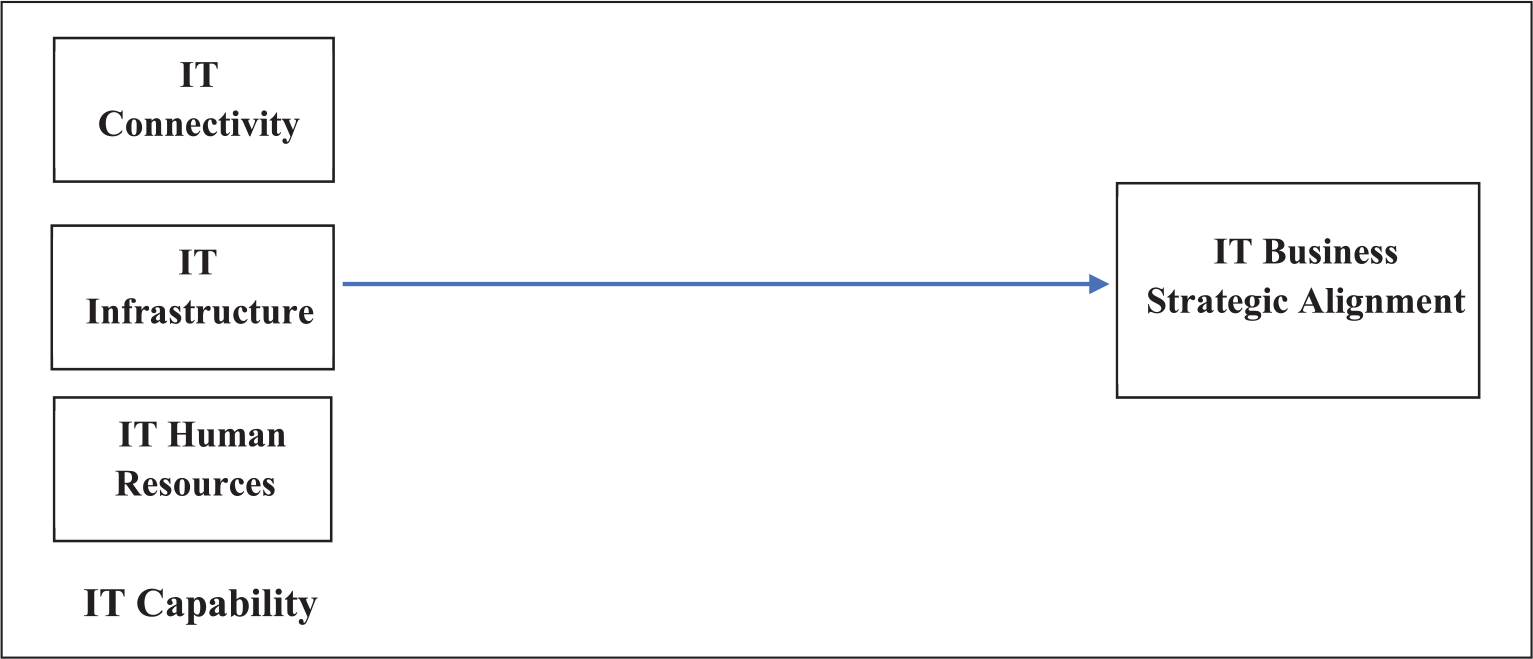
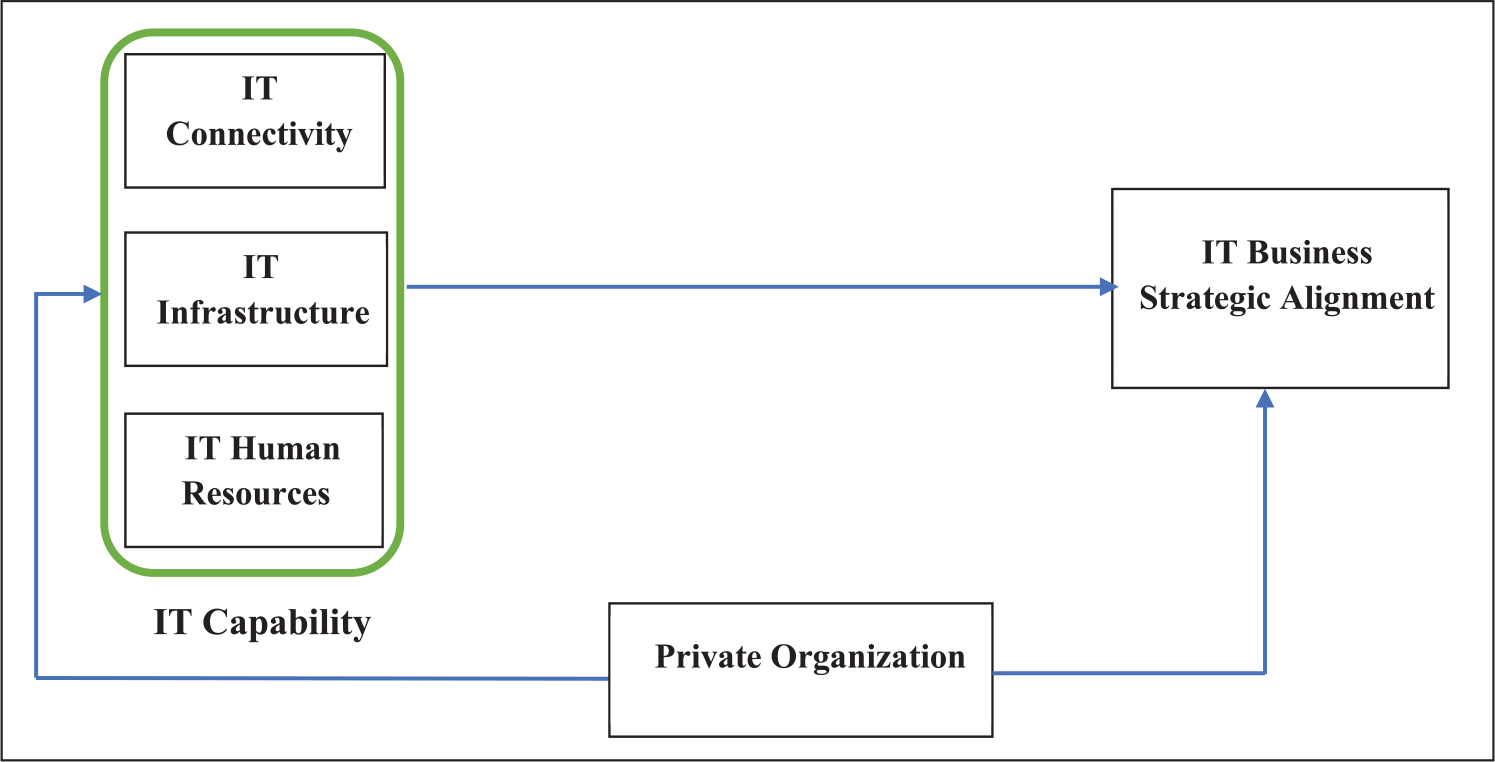
IT connectivity, IT infrastructure and IT human resources (combined as IT capability) play a vital role in private and public organizations to have the better IT business strategic alignment. The representation of the same is depicted as a model in Figure 1.
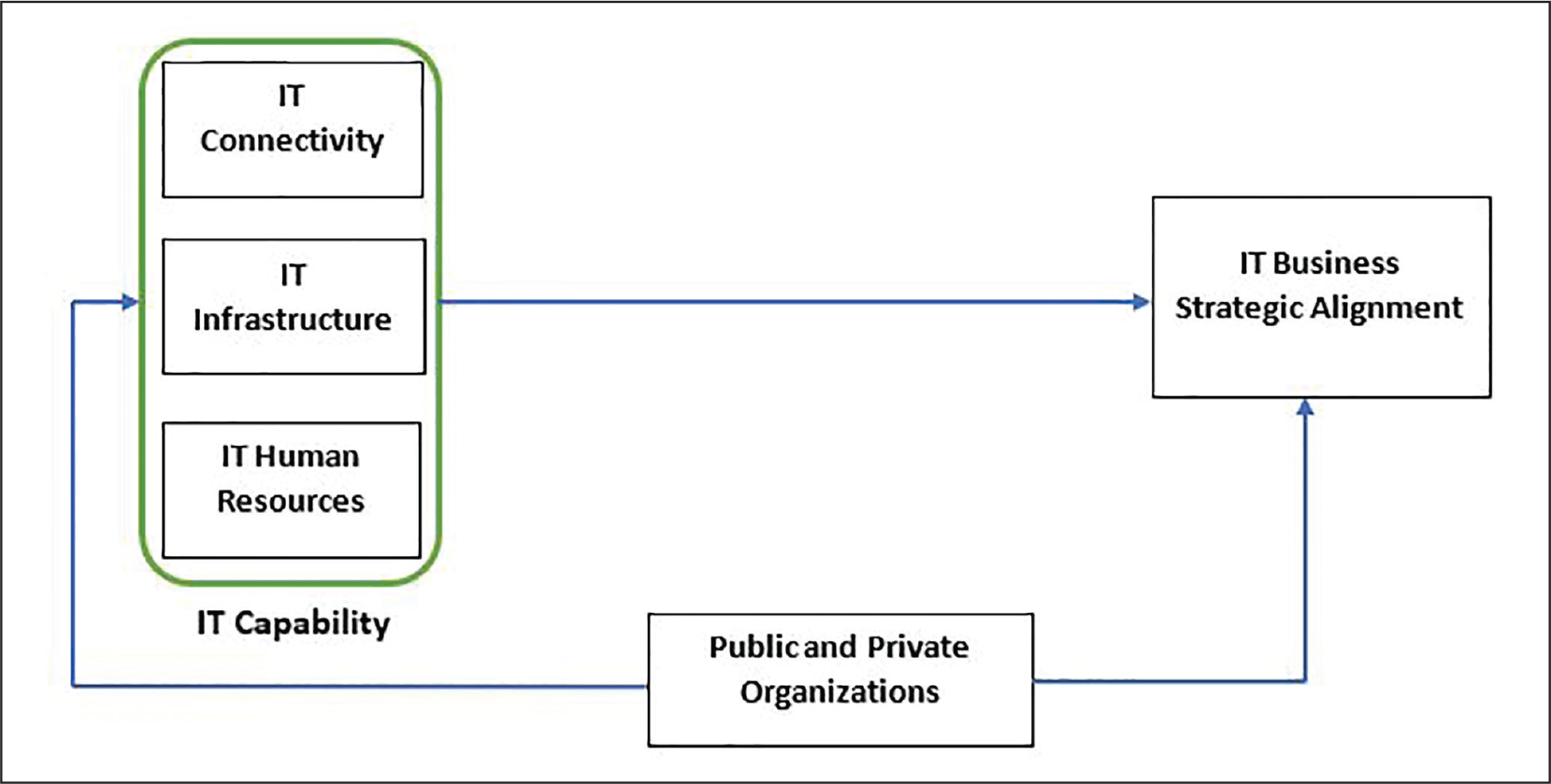
As depicted, this research is going to see the impact of three dimensions, that is, IT connectivity, IT infrastructure and IT human resources to IT business strategic alignment with reference to public and private organizations.
Objectives
Based on the literature review and gaps identified, the objectives of the present study are as follows:
To identify the factors impacting IT strategic alignment (scale). To investigate the construct validity and reliability of ‘IT capability and IT strategic alignment’ scale. To compare the impact of IT capability in IT strategic alignment of public and private organizations in India.
Sampling Technique
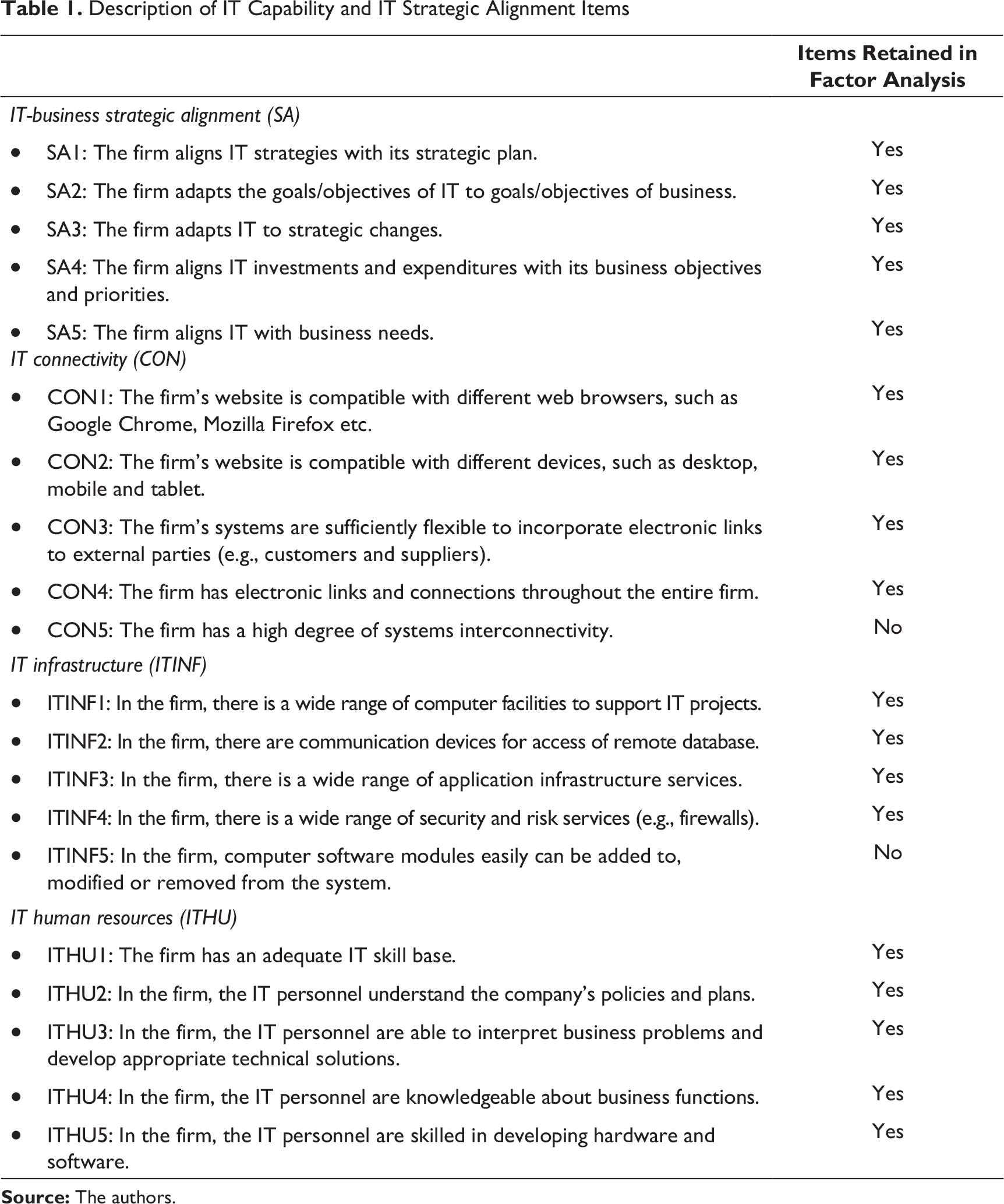
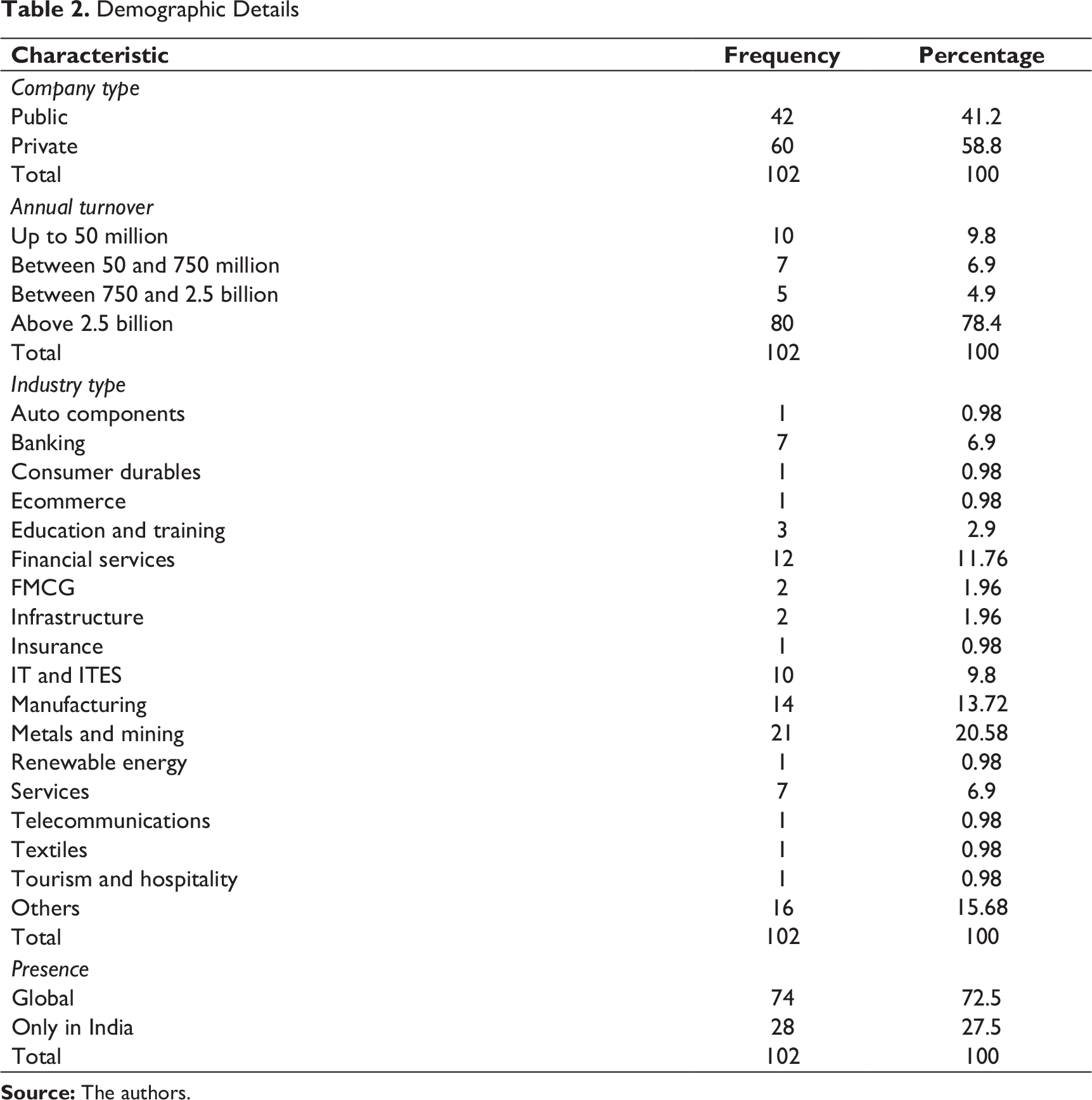
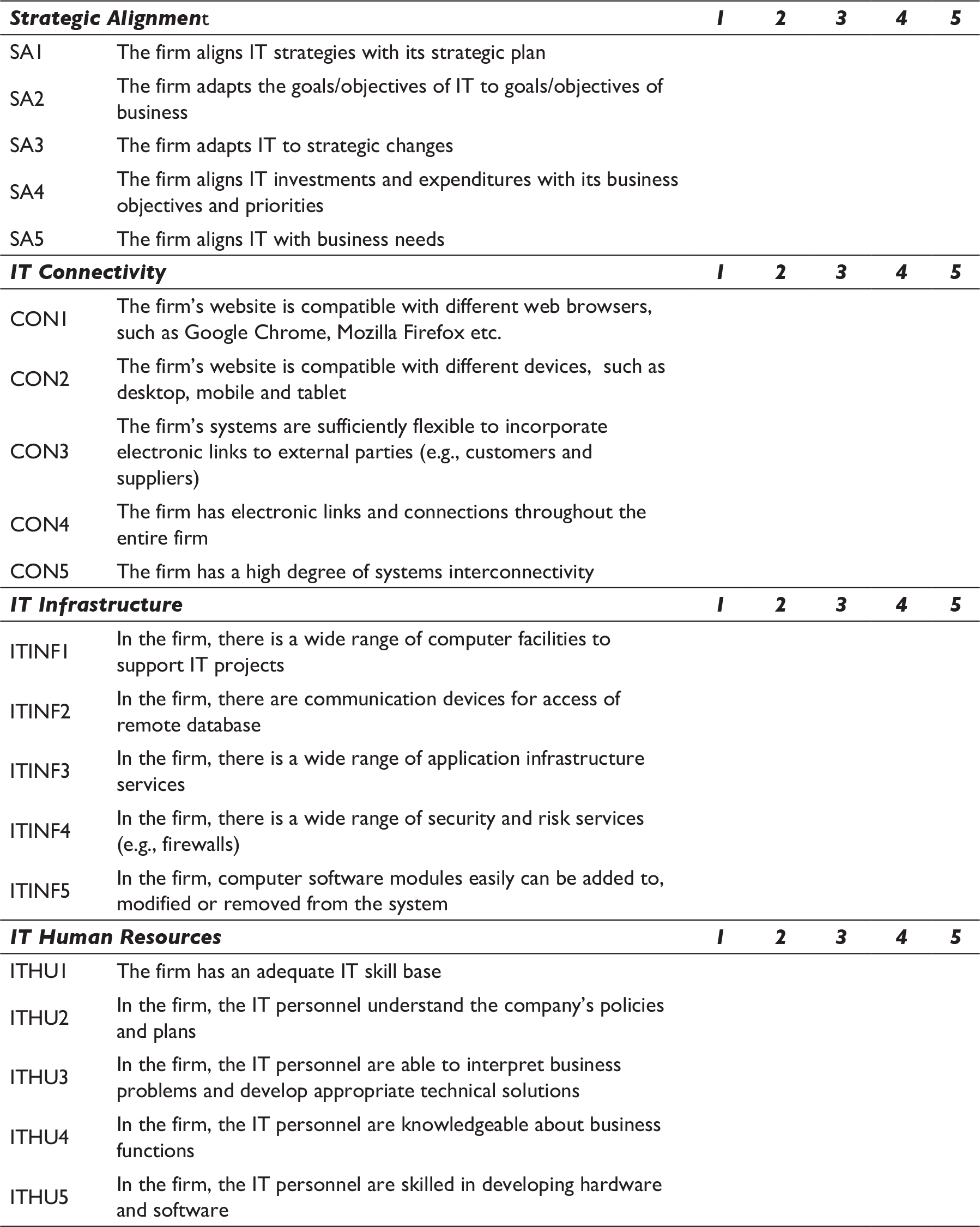
Convenience sampling technique was used for data collection. An online questionnaire containing 20 items of IT strategic alignment under four IT dimensions were circulated among the public and private organization personnel of the level of senior management. In response, the filled-up questionnaires were received from 102 respondents, divided into 42 public and 60 private organizations.
Measure
Objective
To identify the factors impacting IT strategic alignment (scale).
Description of IT Capability and IT Strategic Alignment Items
Data Analysis
Demographic Details
Demographic Details
Objective
To investigate the construct validity and reliability of ‘IT capability and IT strategic alignment’ scale in Indian context.
KMO and Bartlett’s Test

Exploratory factor analysis was performed on 20 items scale of ‘IT capability and IT strategic alignment’. The standard method, that is, principle component method was used to identify the factors for the Eigen values greater than 1.0 (Field, 2005; Sofi, Shakeel, Ahmad, Shah, & Zarger, 2018).
Table 4 shows the results of exploratory factor analysis. The result came in four distinct factors,, that is,, IT strategic alignment, IT connectivity, IT infrastructure and IT human resources. Together these factors explained 68.95 per cent of variance.
The first factor ‘IT Human Resources (ITHU)’ comprised five items and explained 47.13 per cent of total variance. This factor has Eigen value of 9.43. Based on rotated component matrix, items ITHU1, ITHU2, ITHU3, ITHU4 and ITHU5 loaded on this factor.
The second factor ‘IT Strategic Alignment (SA)’ comprised five items and explained 8.54 per cent of total variance. This factor has Eigen value of 1.71. The items, SA1, SA2, SA3, SA4 and SA5 loaded on this factor.
The third factor ‘IT Infrastructure’ comprised four items and explained 7.29 per cent of the total variance. This factor had an Eigen value of 1.46. The items, ITINF1, ITINF2, ITINF3 and ITINF4 loaded on this factor. One item, ITINF5, that is, ‘In the firm, computer software modules easily can be added to, modified, or removed from the system’ is dropped from study due to low communality value.
A Summary of Factor Analysis for ‘IT Capability and IT Strategic Alignment’ Scale
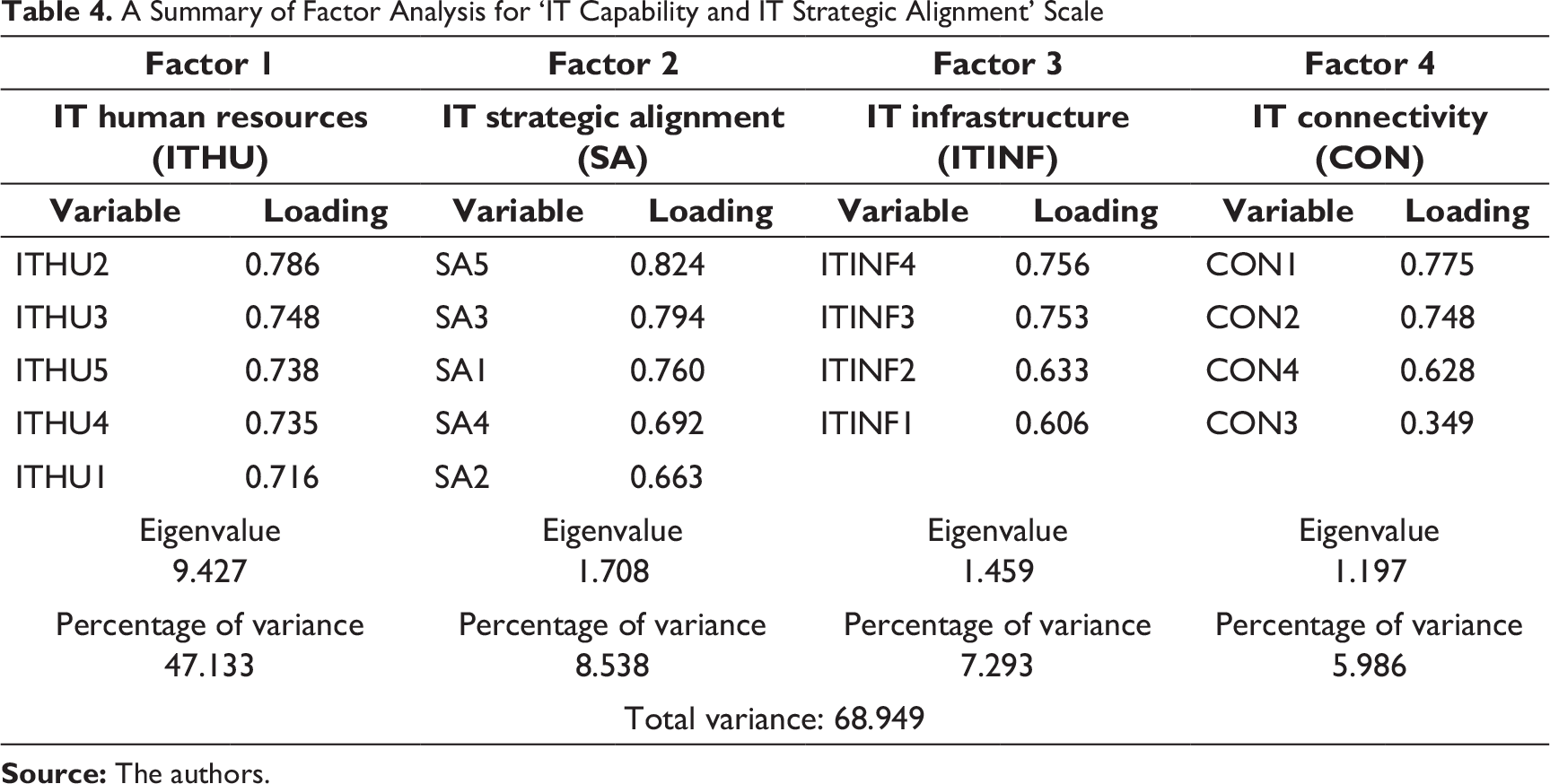
According to Kaura, Prasad, and Sharma (2013), ‘High loading on same factor and no substantial cross-loading confirms convergent and discriminant validity respectively’.
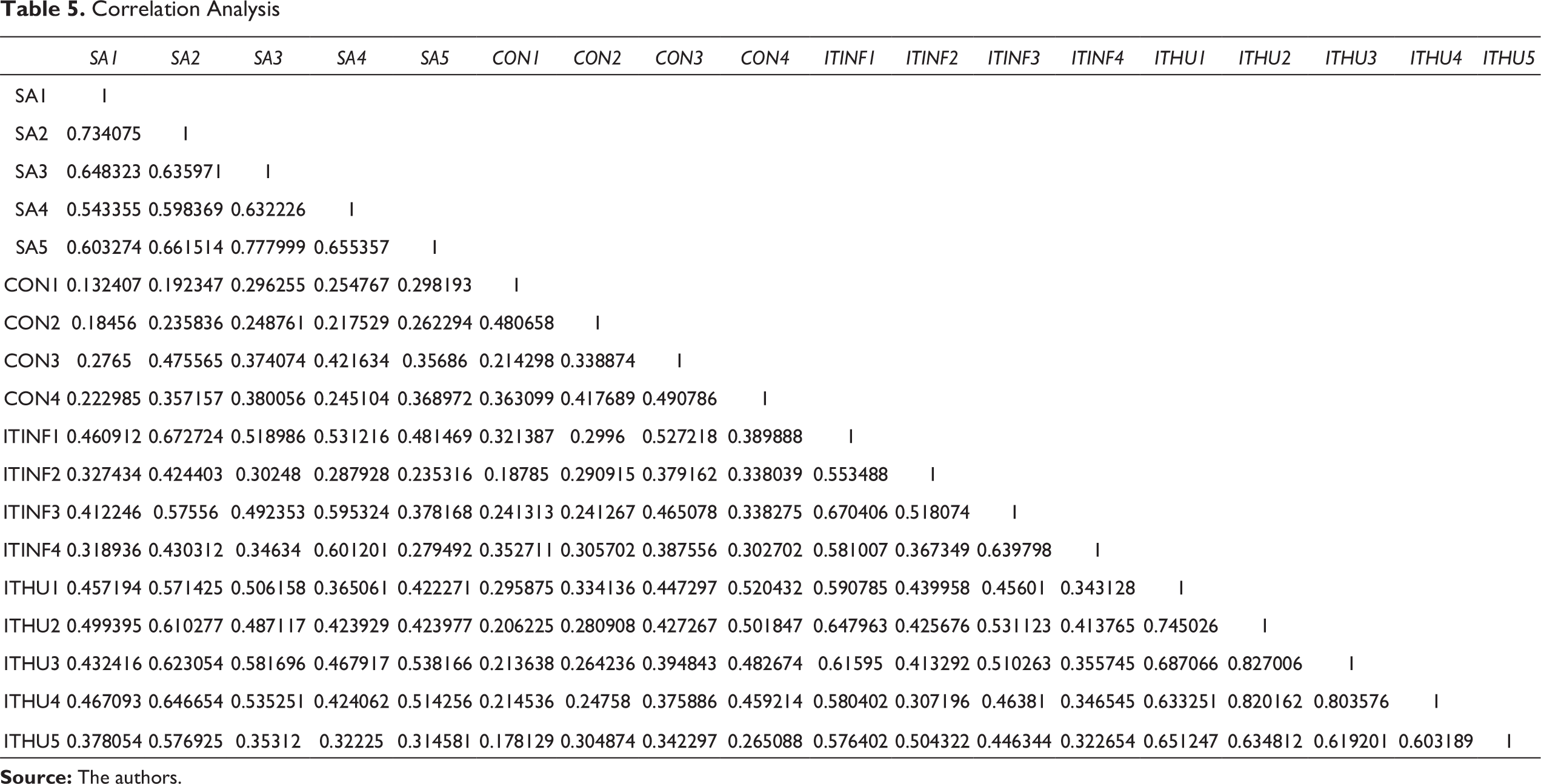
Table 5 shows correlation analysis of ‘IT capability and IT strategic alignment’ scale. Correlation matrix is used to confirm the convergent and discriminant validity. To confirm these validities, correlation in the variables that measure an identical conception is higher than the correlation of the variables that measure a different conception. Park, Robertson, and Wu (2006) used correlation matrix to measure both ‘the convergent and the discriminant’ validity. According to them, the variables that measure an identical conception, usually have high correlation and shows a convergent validity. Discriminant validity is shown, if the correlation of the variable that measure an identical conception is higher than the correlation of the variables that measure the other conception. According to Campbell and Fiske (1959), ‘discriminant validity for each item may be tested by counting the number of times that the item corelates higher with items of other factors than with items of its own theoretical factor’. Here, these criteria are satisfied and confirm the construct validity of data.
Correlation Analysis
Result of Reliability Analysis of ‘IT Capability and IT Strategic Alignment’ Scale
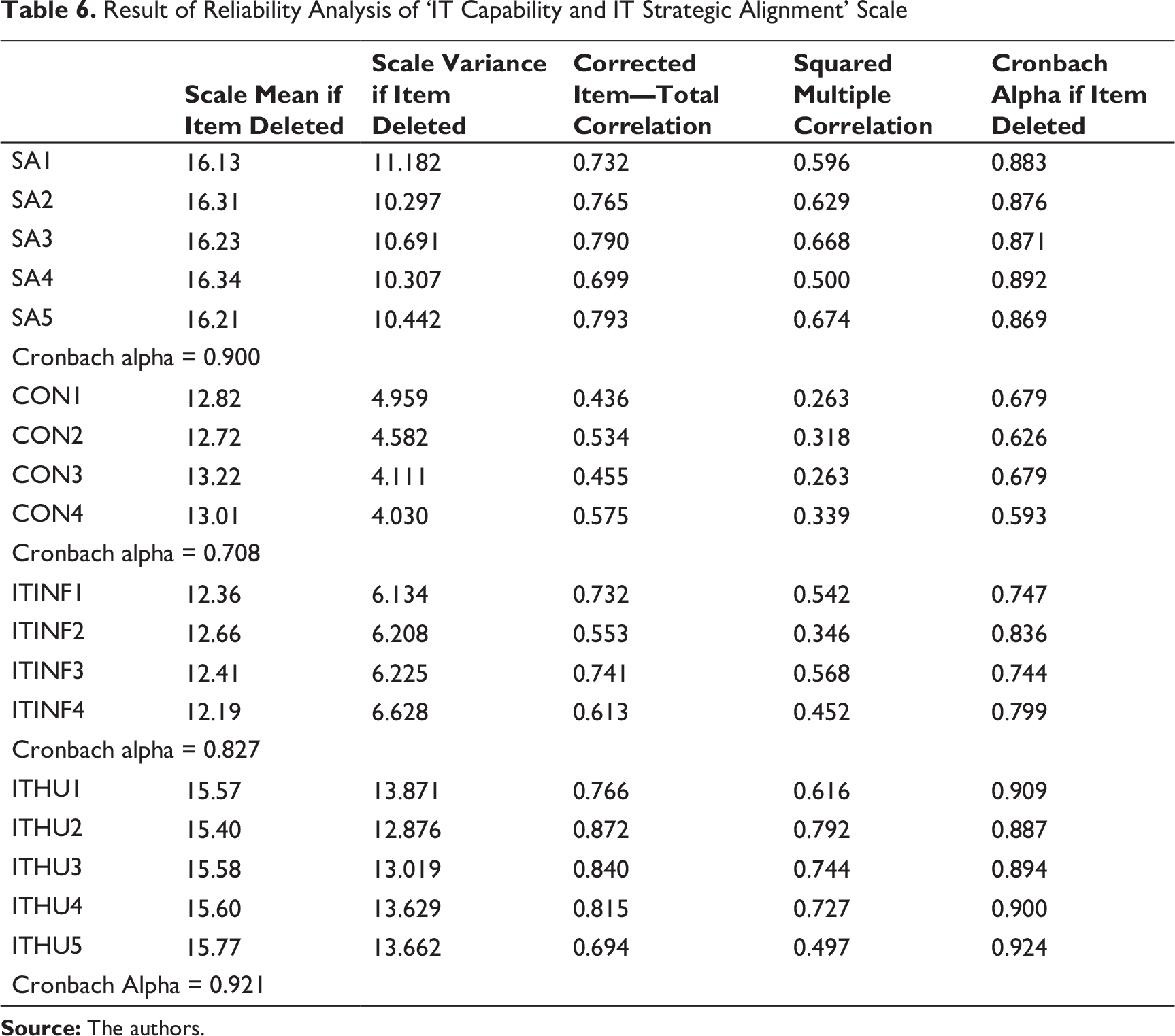
Cronbach alpha for ‘IT Strategic Alignment (SA)’ is 0.900. The values in column labelled ‘Corrected Item—Total Correlation’ are all above 0.3. All the items under ‘Cronbach’s Alpha if Item Deleted’ contain less value than the original Cronbach alpha value, that is, 0.900 and as this value denotes reasonable degree of reliability so no item in this factor is required to be deleted.
The overall Cronbach alpha is 0.708 for ‘IT Connectivity (CON)’. The values in column labelled ‘Corrected Item—Total Correlation’ are all above 0.3 and none of the item related to IT connectivity is increasing the reliability if that item is deleted.
Cronbach alpha for ‘IT Infrastructure (ITINF)’ is 0.827. The values in column labelled ‘Corrected Item—Total Correlation’ are all above 0.3 and none of the item related to IT Infrastructure is increasing the reliability if that item is deleted.
The overall Cronbach alpha for ‘IT Human Resources (ITHU)’ is 0.921. The values in column labelled ‘Corrected Item—Total Correlation’ are all above 0.3. All the items under ‘Cronbach’s Alpha if Item Deleted’ contain less value than the original Cronbach alpha value, that is, 0.921 and as this value denotes reasonable degree of reliability so no item in this factor is required to be deleted.
The Cronbach alpha value calculated in this study for ‘IT capability and IT strategic alignment’ scale shows satisfactory results as values are varying from 0.71 to 0.92.
Objective: To compare the impact of IT capability in IT strategic alignment of public and private organizations in India.
To address this objective, multiple linear regression analysis method is employed. In this process, three separate regression equations are established. First, the independent variables (IT connectivity, IT infrastructure and IT human resources) should be significantly related to dependent variable, that is, IT strategic alignment with reference to the public and private organizations as a whole; Figure 2 represents the same:
Second, the independent variables (IT connectivity, IT infrastructure and IT human resources) should be significantly related to dependent variable, that is, IT strategic alignment with reference to the mediating variable, that is, ‘public organizations’; Figure 3 represents the same.
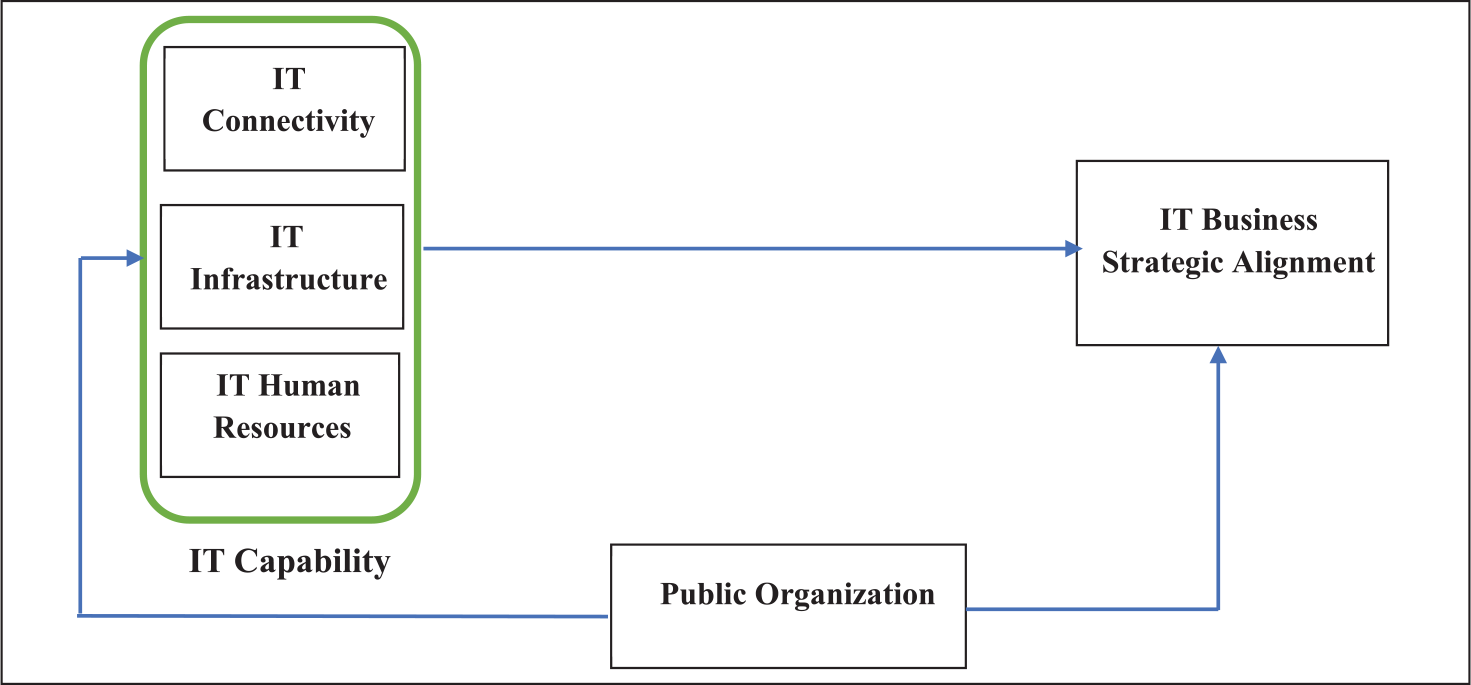
Third, the independent variables (IT connectivity, IT infrastructure and IT human resources) should be significantly related to dependent variable, that is, IT strategic alignment with reference to the mediating variable, that is, ‘private organizations’. Figure 4 represents the same.
Impact of IT Capability in IT Business Strategic Alignment of Public and Private Organizations in India
The results are shown in Table 7. In the first equation, the dependent variable, which is IT strategic alignment was regressed, on the independent variables, which are IT connectivity, IT infrastructure and IT human resources (combined as ‘IT capability’) for both public and private organization to see the overall impact.
Regression analysis for overall impact of IT Capability on Strategic IT Alignment
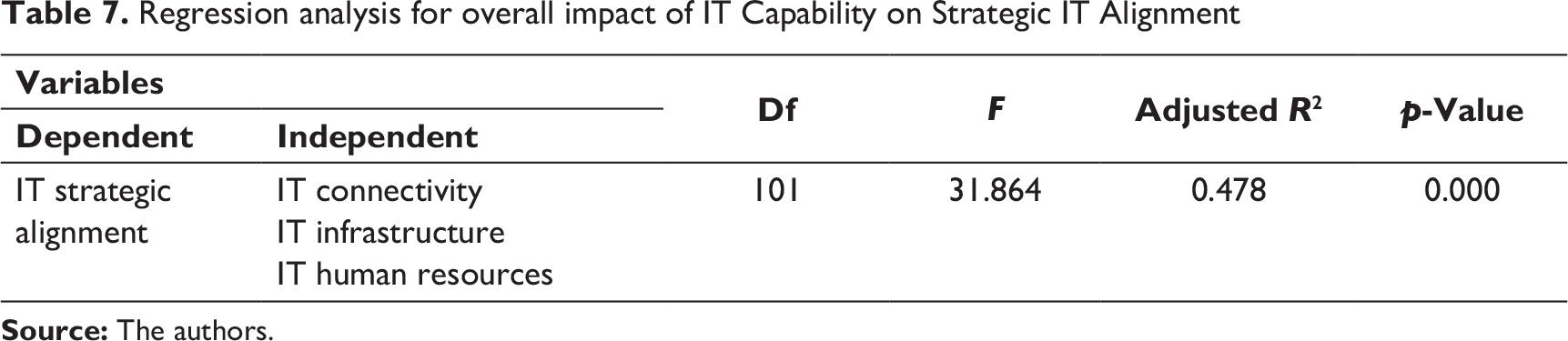
Significant results were found as the p < 0.05 and adjusted R2 is 0.478. So here we may say that there is a significant overall positive Impact of IT connectivity, IT infrastructure and IT human resources on IT strategic alignment in public and private organizations in India.
Now once we have identified the impact of Independent variables on dependent variable, we are further diving deep to compare and analyse the same impact with reference to mediating variables, that is, ‘public and private organizations’ separately.
Impact of IT Capability in IT Strategic Alignment of Public Organizations in India
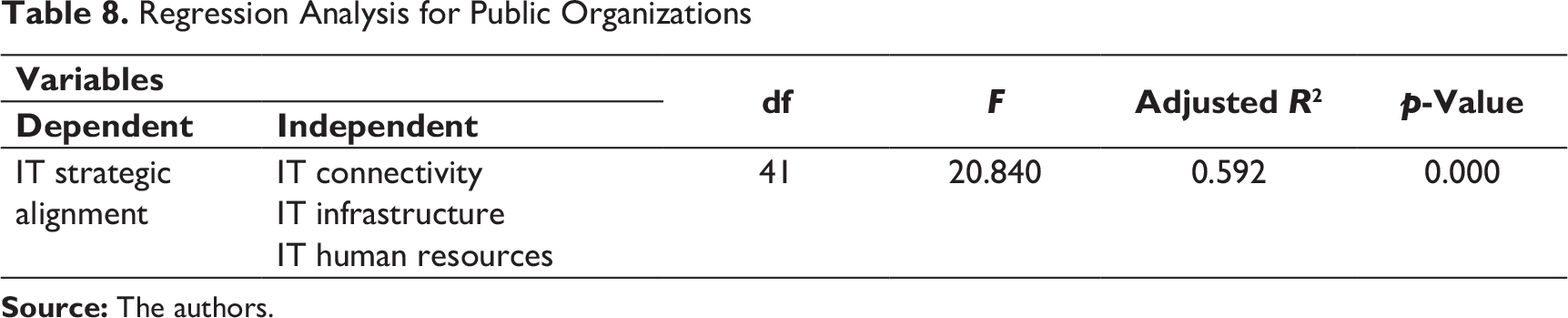
The results are shown in Table 8. In the second equation, the dependent variable, which is IT strategic alignment was regressed, on the independent variables, which are IT connectivity, IT infrastructure and IT human resources for public organizations. Significant results were found as the p < 0.05 and adjusted R2 is 0.592. So here we may say that there is a significant positive impact of IT connectivity, IT infrastructure and IT human resources on IT strategic alignment in public organizations in India.
Each of the independent component is having a significant impact on strategic alignment. The model, we defined earlier in Figure 1 is evaluated for fitness using regression analysis. Here if we see the value of Adjusted R2, that is, 0.592 and p significance value, that is, 0.000, it defines that for public organizations the model is fit therefore we may say that ‘IT connectivity, IT infrastructure and IT human recourses’ are always in line with IT strategic alignment in public organizations.
Impact of IT Capability in IT Strategic Alignment of Private Organizations in India
Regression Analysis for Public Organizations
Regression Analysis for Private Organizations
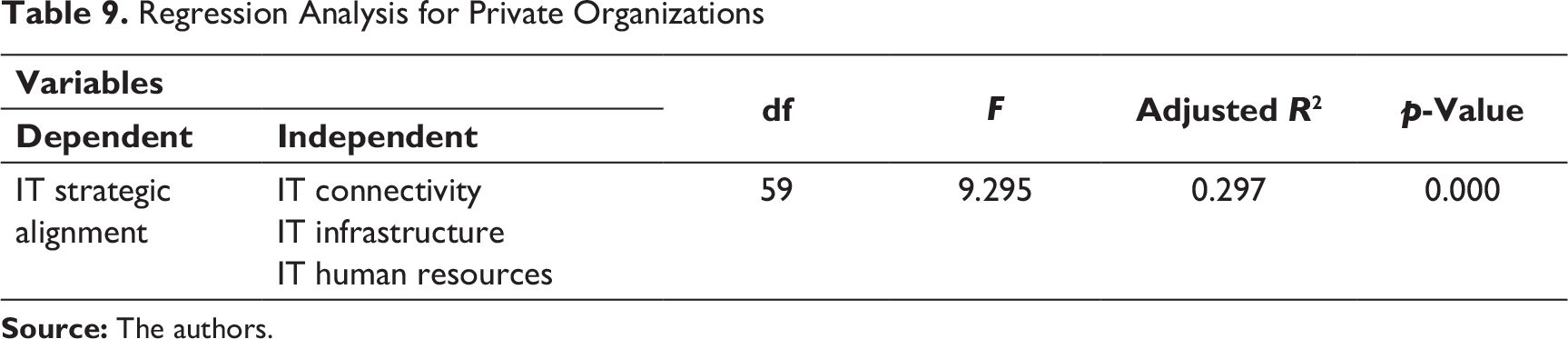
Here the p significance value is 0.000 which is < 0.05. This defines the significance of independent variables on dependent variable. So, in other words we may say that in private organizations the independent variables, which are IT connectivity, IT Infrastructure and IT human resources have significant positive impact on IT strategic alignment. Although here the value of adjusted R2 is 0.297 which is less as compared to the adjusted R2 value of public organizations.
Result and Findings
The purpose of this study was to examine the impact of IT capability and its influence in the IT business strategic alignment of public and private organizations. After reviewing various articles and papers, the core factors which are impacting the strategic IT alignment were identified. The main factors identified were IT connectivity, IT infrastructure and IT human resources (combined as ‘IT capability’). Then, the impact of the identified IT factors on IT business strategic alignment was analysed.
The regression analysis results show that, in all three regression equations, p value is less than 0.05, which means that there is a significant impact of IT connectivity, IT Infrastructure and IT human resources on IT strategic alignment in organizations. In Equation 1, we were analysing the overall impact of independent variable on dependent variables in both public and private organizations. In Equation 2, we were analysing the impact of independent variable on dependent variables in public organizations, whereas in third equation we were analysing the impact for private organizations. Here, once the overall impact was identified in first equation, the second and third regression equations are analysing this impact separately, in public as well as in private organizations to identify the best model fit, with reference to the defined model depicted in Figure 1. Here the adjusted R2 values are different. Adjusted R2 value in second equation is 0.592 which is greater than the adjusted R2 value of equation three, which is 0.297. As per the regression rule, the model with the higher adjusted R2 is the better fit.
So, based on the aforementioned equations, we may say that, the model, where the three independent variables, that is, IT connectivity, IT Infrastructure and IT human resources (combined as ‘IT capability’) are having the impact on dependent variable, that is, IT Strategic Alignment, is more fit for public organizations as compared to the private organizations. Public organizations IT Infrastructure is more robust than the private organizations. Public organizations also invest more to provide better connectivity and organize regular training programmes for the people managing the IT. In all, it aids to achieve the expected goals and objectives.
Conclusion
The present study investigated the IT factors which are important to have the strategic alignment. The identified factors,, that is,, IT connectivity, IT infrastructure, IT human resources and IT strategic alignment were further verified and validated in the Indian context. The research was mainly focussed to analyse the impact of IT connectivity, IT infrastructure and IT human resources on IT strategic alignment in public and private organizations.
Based on the findings, we may conclude that the IT factors are having the impact on IT strategic alignment in all types of organizations be it public or private. Although it also indicates that this impact is more significant in public organizations which means that IT connectivity, IT infrastructure and IT human resources are having significant role in the IT strategic alignment in public organizations as compared to private organizations.
Implications
This study has both theoretical and managerial implications:
Theoretical Implication
This study will be useful for IT managers and management of public and private organizations because the result of this study is going to increase their understanding about the factors affecting IT business strategic alignment. This study will also help management to align IT capability with business strategies and goals. The study has also examined the relationships of the IT capability with IT strategic alignment in public and private organizations. To create significant contribution, the relationship of all dimension of IT capability, that is, IT connectivity, IT infrastructure and IT human resources was analysed with IT strategic alignment and identifies the level of differences in public and private organizations.
Managerial Implication
The first dimension is of IT connectivity, here the research indicates that the public organizations have strong internal and external links in line with the needs of IT strategic alignment. There is some gap of IT connectivity in the private firms which may be filled in by the management. It is important that the management should establish the systems with a high level of connectivity. The IT connectivity may be enhanced using various tools and techniques. For example, the systems should be developed to have a high degree of systems interconnectivity and linked to the external parties (customers, suppliers and other stakeholders). Such connectivity will enhance the capabilities to get a quick response to the required changes and therefore, strategic alignment will be increased.
To support the present and future IT needs and strategic requirements, public and private organizations are going to increase the IT infrastructure by building and implementing several communication devices, application infrastructure services, security and risk services, firewalls, and other computer facilities. IT infrastructure needs to be updated to meet the demands of ever-changing business environment. As per the findings of this research public organizations are investing better for IT Infrastructure in line with the IT strategic objectives and goals.
In developing countries like India, the relationship between IT human resources and IT strategic alignment is significant. Through ensuring that IT personnel have business understanding and appropriate technical solutions to solve business problems, IT human resource can be developed in public and private organizations. The study emphasizes on the training of IT employees in the business areas to increase their understanding and to make them more motivated and familiar with business functions. The same is extensively done in the public organizations. At last, it is important to ensure that IT personnel constantly upgraded their knowledge base and skills as IT skills are changed instantly.
This research is going to help the management to understand the interconnectivity of different IT factors and their importance in IT strategic alignment. The managers can explore the factors like IT connectivity, IT infrastructure, IT human resources and IT strategic alignment, along with a better understanding of their relationships. The results of this study make a significant improvement in the decision-making process of managers in public and private organization towards the alignment of IT with business strategies, especially in the developing countries like India.
Limitation and Future Scope of Research
This study has been evaluated considering certain key limitations. First, convenient sampling technique was used for data collection in this study that is different from conventional methods of data collection and could be a potential limitation. Convenient sampling is not an ideal approach and does not represent the complete population. IT capacity may have many different dimensions, but here in this study only IT connectivity, IT infrastructure and IT human resources were taken into consideration. Using a small sample of only 102 respondents may also be considered a limitation. Therefore, the results cannot be generalized.
So, this study creates several possibilities for future researches. First, this study encourages future researchers to consider more identified firms from both the organizations (public and private) with more diversification in terms of firm size or industry type etc. Moreover, future research studies might try to examine other possible moderators, such as firm size, culture, managerial style and environmental uncertainty etc.
Annexure
Name: _________________________________________________________
Designation: ____________________________________________________
Company Name: _________________________________________________
Company Type:
Public Private
Industry:
AGRICULTURE AND ALLIED INDUSTRIES AUTOMOBILES AUTO COMPONENTS AVIATION BANKING CEMENT CONSUMER DURABLES ECOMMERCE EDUCATION AND TRAINING ENGINEERING AND CAPITAL GOODS FINANCIAL SERVICES FMCG HEALTHCARE INFRASTRUCTURE INSURANCE IT AND ITES MANUFACTURING MEDIA AND ENTERTAINMENT METALS AND MINING OIL AND GAS PHARMACEUTICALS RAILWAYS REAL ESTATE RENEWABLE ENERGY SERVICES STEEL TELECOMMUNICATIONS TEXTILES TOURISM AND HOSPITALITY Others______________________________________
Annual Turnover:
Up to 50 million Between 50 and 750 million Between 750 and 2.5 billion Above 2.5 billion
Presence:
Global
Only in India
Footnotes
Acknowledgements
The authors are grateful to the anonymous referees of the journal for their extremely useful suggestions to improve the quality of the article. Usual disclaimers apply.
Declaration of Conflicting Interests
The authors declared no potential conflicts of interest with respect to the research, authorship and/or publication of this article.
Funding
The authors received no financial support for the research, authorship and/or publication of this article.