



Abstract
This article aims to give a fresh insight into the non-linear relationship between unemployment, governance, and poverty in Pakistan. For the purpose, the study utilizes data from 1984 to 2016 by employing a nonlinear ARDL co-integration approach. The findings provide an insight that poverty responds asymmetrically due to positive or negative shocks in unemployment and governance. Moreover, the results suggest that applying linear models on poverty modelling may mislead the inference. The findings of the study imply that the policymakers and academicians must consider nonlinear behaviour of poverty for better policymaking.
Introduction
Indeed, poverty is still an important economic irritant, specifically for developing nations like Pakistan. It is one of the most important challenges of the twenty-first century to reduce poverty (Alpízar & Ferraro, 2020). Worldwide, approximately 10 per cent of the world population or 700 million people are just striving for basic needs like safe drinking water, food, health and education and facing extreme poverty (United Nations, 2020). 1 About 188 million people are jobless globally (United Nations, 2020). 2 The recent statistics report a very painful fact that that globally almost 821 million people go to bed every night with an empty stomach (World Food Programme, 2020). 3 These alarming statistics have highlighted importance of the issue and pushed international organizations and researchers worldwide to explore the underlying factors, determinants and causes to root out this social and economic disease called poverty.
The issue has grabbed the attention of not only policymakers but also academicians and researchers in the field of economics and finance. International literature has identified some major determinants of poverty including growth, development expenditures, unemployment, direct tax, gender inequality, inflation, private investment, productivity of agriculture sector, charity, literacy rate and governance (Dollar & Kraay, 2002; Grindle, 2004; Holmberg et al., 2009; Kwon & Kim, 2014; Mogale, 2005; Santos et al., 2019; Sarker & Rahman, 2007; Yousaf & Ali, 2014). In Pakistan, various researchers found various factors as a major determinant of poverty. Shirazi (1995) came forward with very interesting findings that Sadqat affect poverty significantly, Chaudhry et al. (2006) report agriculture growth rate, GDP growth rate, trade openness index and unemployment as major determinants of poverty in Pakistan, while Cheema and Sial (2012) found that household size, foreign remittances and education are the major factors affecting poverty. The present study selected unemployment and governance as major factors of poverty. On the flip side, the literature on poverty and unemployment suggest conflicting findings. For example, Gustafsson and Johansson (1999) are of the view that poverty had no relationship with unemployment. Further, Aiyedogbon and Ohwofasa (2012) found the positive and significant association of unemployment with poverty. Likewise, similar evidence of the positive relationship between unemployment, globalization, inequality and poverty was reported by Ukpere and Slabbert (2009). Moreover, Grindle (2004) claimed that good governance can significantly reduce poverty if the government plays its role honestly. It is imperative to mention here that literature reports institutional quality as a gauge of governance mechanism (Torgler & Schneider, 2009). Specifically, in developing countries, citizens, practitioners and academics consider good governance as a critical factor for bringing down the poverty figures as it is for encouraging development. Interestingly, researchers focused their studies more on finding the relationship of poverty with indicators of governance (government effectiveness, rule of law, absence of violence and political stability, voice and accountability, control of corruption, and regulatory quality) mentioned by World Bank (Kaufmann et al., 2013). However, these indicators provide mixed evidence like, corruption has an indirect influence on poverty (Chetwynd et al., 2003), while Khan (2009) claimed the positive relationship between the two. Also, lack of accountability, corrupt government, inadequate infrastructure and political instability aggravate the poverty situation (Rakodi et al., 2000).
An Overview of Poverty Level in Pakistan
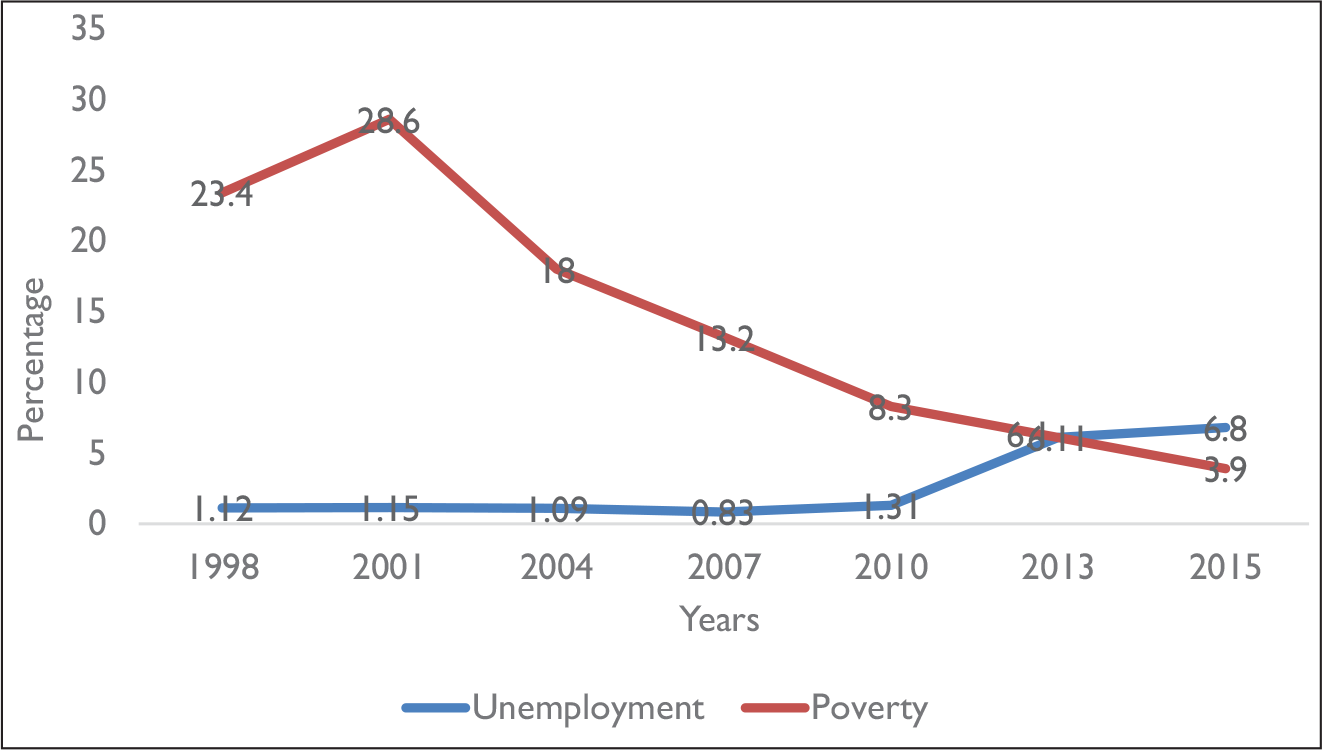
Figure 1 reveals the relationship between poverty and unemployment in Pakistan. Poverty has been measured by the headcount ratio at PPP US$1.90 a day in the percentage of the total population, while unemployment is measured by the International Labor Organization (ILO) modelled estimate (total youth, % inactive population of age 15–64). From Figure 1 it is evident that the rate of poverty increased in 2001 and beyond that year, a declining trend has been observed, while the rate of unemployment remained almost stable from 1998 to 2010. Beyond 2010, the rate of unemployment in Pakistan started increasing and a gradual increase has been observed afterward. An interesting phenomenon is observed here that both the rates were equal in 2013. From Figure 1 it is found that poverty decreases with the increase in unemployment in Pakistan.
After an extensive review of the past literature on poverty modelling, it is found that poverty is one of the major concerns for developing counties like Pakistan. However, to the best of our knowledge, we observed these major studies in Pakistani context (Amjad & Kemal, 1997; Gillani et al., 2009; Jamal, 2006), have taken into account the symmetric behaviour of macro-economic factors affecting poverty. However, recent literature on the issue suggests that macroeconomic factors affect poverty in a nonlinear fashion. Ayala et al. (2011) found that unemployment affects poverty asymmetrically during periods of economic recession and expansion. Saleem et al. (2019) suggest that multi-dimensional poverty is significantly more in rural areas than in urban areas. A recent study carried out by Meo et al. (2018a, b) also claimed that various macroeconomic variables including unemployment affect poverty asymmetrically.
Empirical research provides many credible reasons for existence of asymmetric relationship between unemployment and poverty. Agénor (2002) proposed the Labor Hoarding hypothesis, which suggests that the main reason behind the asymmetric relationship between unemployment and poverty is an economic recession. According to the Labor Hoarding hypothesis, when it comes to an economic downturn, we may observe an interesting phenomenon that firms tend to downsize their labour force. However, skilled labour retains its positions while unskilled labour has to lose their jobs. This hoarding of skilled labour causes organizations to bear high turnover costs such as training and development cost, hiring and firing cost. However, this shock is deemed to be temporary regardless of its magnitude. With the passage of time, when economic activities are restored to their normal pace, firms try to fetch back forgone opportunities and wipe away economic loss during the period when the economy was in bad waters. They may rigorously attempt to reinstate high skilled labour to a state of high productivity. As, there is a greater degree of complementarity between fixed asset investment and use of skilled labour (though, elasticity between the factor is lower than substitution between the factors and unskilled labour), firms are more inclined to invest in tangibles instead of escalating demand for unskilled labour. Ultimately, wages of unskilled labour may fall proportionately more than the skilled labour. This way price of input capital and wages of unskilled workers will adjust downwards. Furthermore, firms’ inclination to hire high skilled labour in good times may be higher if the firm has experienced sunk cost associated with an investment in tangibles prior to the contraction in output. Therefore, this unique combination of low degree of substitution between skilled labour and fixed investment and high turnover costs may result in a formidable degree of relationship between poverty and unemployment, which is expected to continue for a longer period as a consequence of negative shock to output.
Literature also confirms that many of the macro-economic variables exhibit asymmetric properties specifically concerned with the business cycle (Falk, 1986; Neftci, 1984). Therefore, unemployment has been observed to have a non-linear effect on many macroeconomic variables (Cevik et al., 2013; Koutroulis et al., 2016). Furthermore, the current study also considers governance/institutional quality as a determinant of poverty. Kraay and Kaufmann (2002) suggest that institutional quality positively links with per capita income (a proxy of poverty). Moreover, it is observed that institutional quality/governance in the form of a better rule of law and corruption control directly affects people’s income, which ultimately leads to a decrease in poverty. Fosu (2017) examined that governance asymmetrically affects poverty through growth channel in Africa. Likewise, Doumbia (2019) also recently found that governance affects poverty asymmetrically.
One of the major reasons behind the nonlinear effect of governance on poverty is the institutional instability of Pakistan. In the current era, nonlinearities among the macroeconomic variables got huge attention of the researchers worldwide. Previous studies on unemployment and governance are conducted in a linear framework, while many researchers argued that the linear model provides misleading results in the presence of nonlinear relationships among the variables. Kahneman and Amos (1979) highlighted the importance of nonlinearities in variables and suggested to account for the issue. According to Anoruo (2011), one of the limitations of linear modelling is that it assumes the variables to be linear; however, in reality, they exhibit nonlinearity. This implies that if we employ linear methodology for investigating factors of poverty, we may get spurious results. Bildirici and Turkmen (2015) explained that the models with nonlinear functional specifications have more explanatory power as these can incorporate the asymmetric behaviour and structural breaks in time variables. Besides, if negative and positive components of time series are co-integrated, then it may have hidden co-integration (Granger & Yoon, 2002). Furthermore, Po and Huang (2008) found that linear models also are unable to produce valid result in the presence of short-term changes and structural breaks. Therefore, considering the importance of nonlinear relationship among the proposed variables, it is the first study in Pakistani environment, which analysed the nonlinear relationship between unemployment, governance and poverty using Non-linear Autoregressive Distributed (NARDL) model or asymmetric ARDL co-integration approach. Hence, the purpose of the current study is to examine the nonlinear effect of unemployment and governance on the poverty of Pakistan.
The rest of the article is organized into four sections. A comprehensive review of the literature is discussed in the second section. The third section consists of methodology, which is followed by data analysis in the fourth section. The study ends with a conclusion and recommendations.
Literature Review
In recent literature on the determinants that influence poverty, researchers have identified a number of factors including direct tax, unemployment, earning per member of the family, development expenditures, inflation, GDP per capita, education level, social capital, gender inequality, private investment and quality of local governance (Jan et al., 2008; Mogale, 2005; Yousaf & Ali, 2014; Zhang et al., 2017). Past studies applied statistical models by assuming the linear relationship between these variables. The current study is an attempt to make a contribution to the existing literature by focusing on institutional quality/governance and unemployment to scrutinize their impact on the most important socio-economic problem, that is, poverty, by employing asymmetric Autoregressive Distributed Lag Model (ARDL).
According to International Labor Organization (ILO), global unemployment rate for 2017 is expected to be 13.1 per cent, which constitutes 71 million unemployed young people. Particularly for South Asian region, increasing trend of unemployment rate will continue in 2017 by claiming 13.9 million young people suffering from unemployment (ILO, 2016). Poverty and unemployment both have become, at present, a contemporary challenge of social existence for human beings worldwide.
Oduwole (2015) explored the relationship between unemployment and poverty through content analysis. He further identified that these issues have deep down roots in poor governance, leadership and security. Gallie et al. (2003) studied the vicious cycle of social exclusion on EU member states. They presented the strong evidence that unemployment intensifies the possibility of social isolation and poverty and in turn, poverty and social exclusion make it more problematic for people to get back to employment.
There are various studies that examined the relationship between unemployment and poverty. This relationship has been examined in two fashions. First, in current literature, authors explored nonlinear association and secondly, many authors studied relationships in a linear framework. In a recent study, Meo et al. (2018a) examined the asymmetric association between unemployment and poverty in Pakistan using NARDL approach. They found that a nonlinear relationship exists between poverty and unemployment. Aiyedogbon and Ohwofasa (2012) estimated the impact of unemployment on poverty and confirmed that unemployment positively affects poverty in Nigeria. Gillani et al. (2009), using a co-integration approach, also report that unemployment positively and significantly affects poverty. Another evidence of Ukpere and Slabbert (2009) argued a positive and significant relationship between unemployment and poverty. Furthermore, Gillani et al. (2009) confirmed, in Pakistan, that unemployment and poverty significantly correlate with each other in the long run. A study by Saunders (2002) argued that unemployment increases poverty and inequality, while Martínez et al. (2001) also examined the association between unemployment and poverty in OECD. They found that unemployment is one of the major underlying factors behind poverty.
Apart from many other determinants of poverty, researchers have also shed light on the vital role of governance on poverty eradication (Grindle, 2004; Holmberg et al., 2009; Kwon & Kim, 2014; Mogale, 2005; Sarker & Rahman, 2007). Literature has offered several definitions of governance. For example, Kaufmann et al. (2013) expressed governance as ‘Traditions and institutions by which authority in a country is exercised for the common good’. In addition, it involves the procedures through which governments are chosen and replaced; the government’s capability of effectively devising and executing policies; and veneration for the institutions that reign social and economic interactions. Researchers at World Bank have recently reported six indicators of governance quality that incorporate government effectiveness, rule of law, absence of violence and political stability, voice and accountability, control of corruption and regulatory quality (Kaufmann et al., 2013). Grindle (2004) argued that good governance can be an important factor for reducing or alleviating poverty if the role of government is considered sincerely.
Moreover, scholars have also scrutinized some governance indicators with poverty specifically. Like, Gupta et al. (2002) employed OLS and instrumental variable (IV) techniques to investigate the link of corruption with poverty and income inequality. Their results revealed a positive relationship and suggest that growing corruption proliferate poverty and income inequality. Kumar (2019a) used logit model to investigate the linkage between international remittances and poverty. This article revealed that if a household receives international remittances, the probability of that household may be reduced by 28.07 per cent. The same direction of linkage was found by Kumar (2019b).
A study conducted by Chetwynd et al. (2003) contended that corruption has an indirect impact on poverty via economic model and governance model. Governance model claims that increasing corruption firstly induces government institutions for producing high-quality services, promotes capital projects rather than investing in public needs and pulls down the conformity to health and safety regulations. These factors posit severe challenges to good governance practices and hence stimulate poverty. According to the economic model, corruption reduces investment, saddles with the competition, augment the cost of conducting businesses and upsurge income inequalities. The undermining of these economic factors exacerbates poverty. Many researchers (Kaufmann & Bellver, 2005; Kaufmann et al., 2006; Mauro, 1997; Yusuf et al., 2014) contended the indirect link between corruption and poverty and thus validated the above-mentioned direction of the economic model while few asserted the direct link between the two (Khan, 2009).
Also, Rakodi et al. (2000) studied that political instability, lack of accountability and corruption in government, and poor infrastructure played their role in uplifting poverty outlook in Mombasa. In addition, African’s poverty and deprivation were assessed by Mbaku (2014), who professed that a proper constitution and effective institutional arrangements for law enforcement can eradicate poverty.
As reported in the literature, poverty is one of the contemporary issues worldwide and thus researchers are trying hard to dig out its determining factors to develop effective policies. It is observed that time series-based research on this phenomenon in South Asian countries has not gained attention yet. Findings on unemployment relationship with poverty were contrasting in direction and governance variables remain uninvestigated as a determinant of poverty in Pakistan. These reasons make our study more promising and justified to be estimated by filling the gap in existing literature from both theoretical and methodological standpoints. Interestingly, past studies on poverty with its contributing factors assumed their linear relationship that is somehow a restrictive assumption when the relationship is non-linear. Furthermore, the functional forms of the relationships were ignored and focus remained on scrutinizing the causes or factors of poverty. Bildirici and Turkmen (2015) explained that the models with nonlinear functional specifications have more explanatory power as these can incorporate the asymmetric behaviour and structural breaks in time variables. Besides, if negative and positive components of time series are co-integrated, then it may have hidden co-integration (Granger & Yoon, 2002). Hence, for all these reasons, this study applies the asymmetric Autoregressive Distributed Lag (ARDL) co-integration model to estimate the relationship of unemployment and governance on poverty in Pakistani context to satiate the research gap on non-linear poverty modelling.
Methodology
Data Sources
Data Sources and Description

Empirical Model
The functional form of model in linear framework is stated below.

As suggested by the literature, the relationship between two or more variables such as unemployment, governance and poverty is normally explored by a means of the standard time series techniques such as co-integration, error-correction modelling, and Granger causality. Although all these techniques can evaluate both long-run and short-run relations, they assume symmetric relations only. They are not enough to capture potential asymmetries in the relations. Recently, Shin et al. (2014) developed a nonlinear ARDL co-integration approach (NARDL) as an asymmetric extension to the well-known ARDL model of Pesaran et al. (1999) and Pesaran et al. (2001), which captures both long-run and short-run asymmetries. This study adopts this approach for capturing both the long- and short-run asymmetric effects of unemployment and governance on poverty. The specific asymmetric long-run equation of poverty is as follows:

In Equation (1), Pov, Unemp and Gov refer to poverty, unemployment and governance index respectively. While long-term coefficients and error terms are denoted by
Considering the advantages of the ARDL model, this study formulates the following general ARDL equation in a linear framework.

In the Equation (2) 
Equation (3) refers to the long-term coefficients of partial sums of positive and negative changes of unemployment and governance respectively. This article derived partial sums of positive and negative shocks of unemployment and governance as following from Equations (4) to (7).




Equation (2) only provides the long-term and short-term relationship of unemployment, governance and poverty in symmetric (linear framework). However, our concern is to check nonlinear relationships among purposed variables; therefore, this study followed nonlinear procedure advanced by Shin et al. (2014) by incorporating negative and positive shocks of unemployment and governance in Equation (2) to make model nonlinear (asymmetric). The following Equation (8) is a general form of a non-linear ARDL model.

Now in Equation (8) ARDL approach to co-integration is a nonlinear (asymmetric) framework, which produces long-term and short-term asymmetric coefficients.
The empirical implementation of the NARDL approach incurs the following steps. First, the stationarity of all variables is examined by unit root tests through the Augmented Dickey–Fuller and Phillips–Perron test. It is explored to check the order of integration of variables, that is, whether they are integrated by order zero or one, namely, I(0) or I(1). In the second step, Equation (6) is estimated by the ordinary least squares (OLS) method. Also, to arrive at the final specification of the NARDL model by trimming insignificant lags, the information criterion SIC or general-to-specific is adopted following Katrakilidis and Trachanas (2012). In the third step, a test is performed for checking the presence of co-integration among variables using a bound testing approach of Pesaran et al. (2001) and Shin et al. (2014), which involves the Wald F test of the null hypothesis. Finally, with the presence of co-integration, examination of long-run and short-run asymmetries in the relations between unemployment and governance and poverty is made and inferences are drawn. In the third step, a test is performed for checking the presence of cointegration among variables using a bounds testing approach of Pesaran et al. (2001) and Shin et al. (2014) which involves the Wald F test of the null hypothesis,
Results
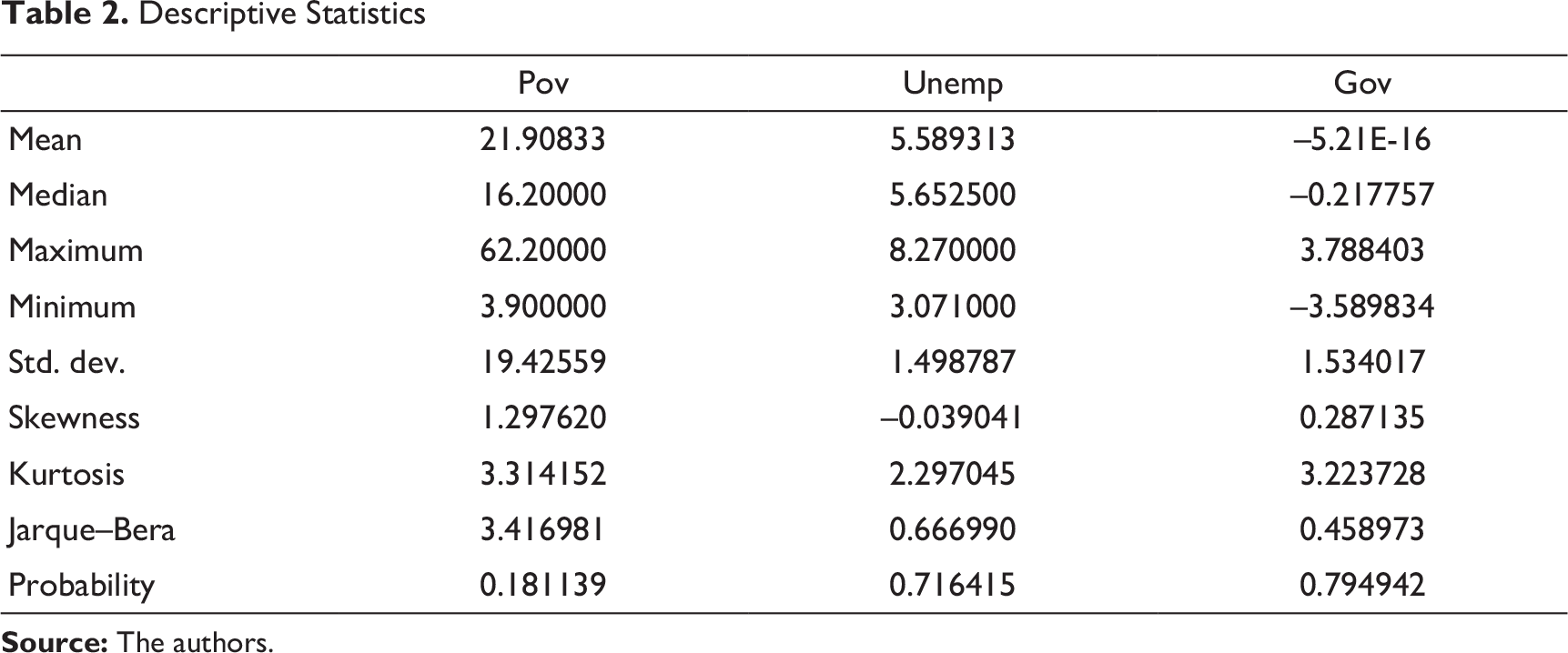
Descriptive Statistics
Unit Root Tests

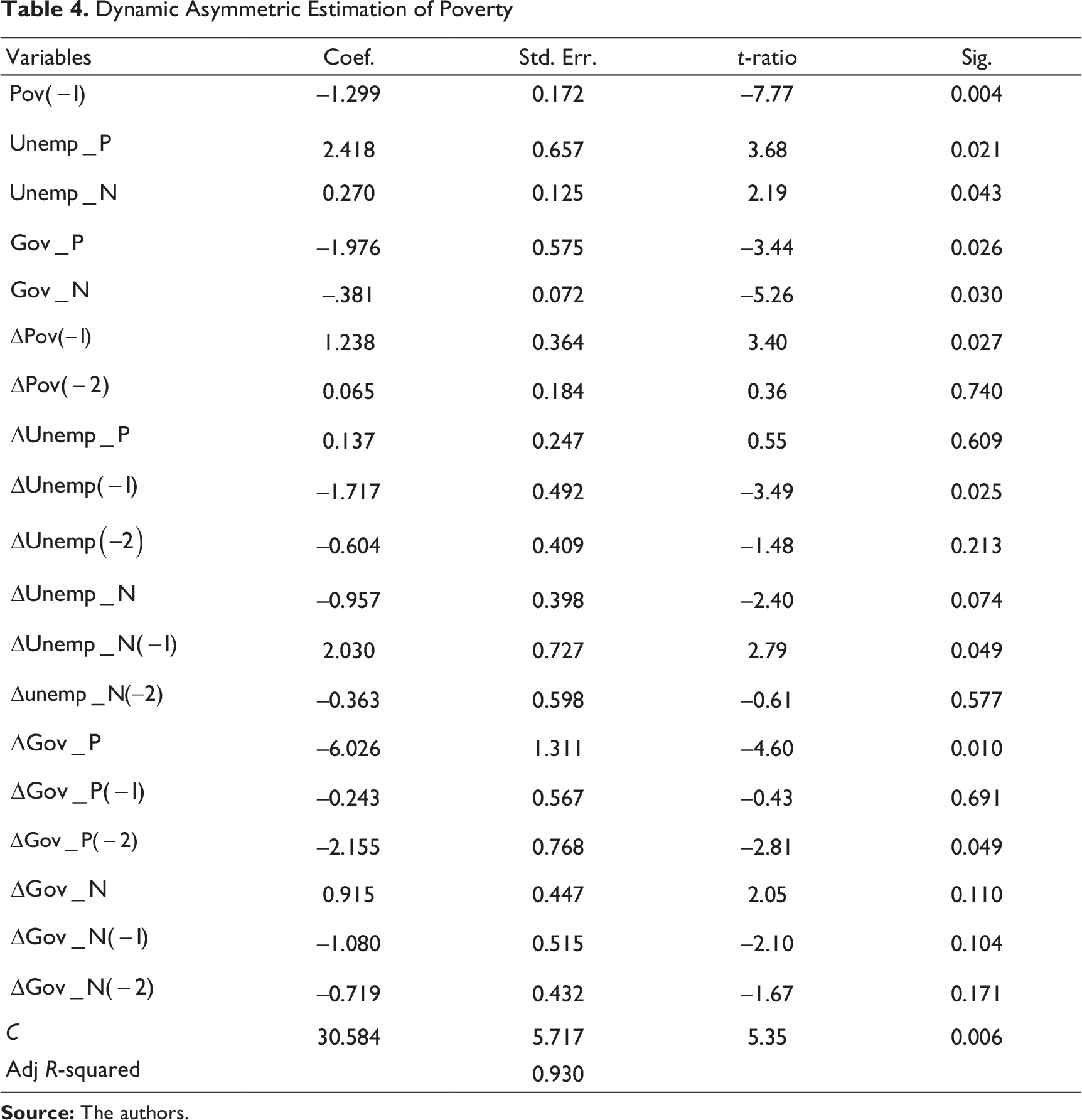
Dynamic Asymmetric Estimation of Poverty
Asymmetric Co-integration Using Bounds Test

Table 5 represents the results of nonlinear co-integration among unemployment, governance/institutional quality, and poverty. The null hypothesis of the co-integration is that there is no co-integration. The F_PSS values refer to the F-statistic value by Pesaran and t_BDM refers to the t-statistic of Banerjee et al. (1998) to test the null hypothesis of no co-integration. However, from Table 5, it is confirmed that there is a long-term relationship between unemployment, institutional quality and poverty. Therefore, this study can move forward for NARDL estimation and examine the long-term asymmetric relationship among the purposed variables.
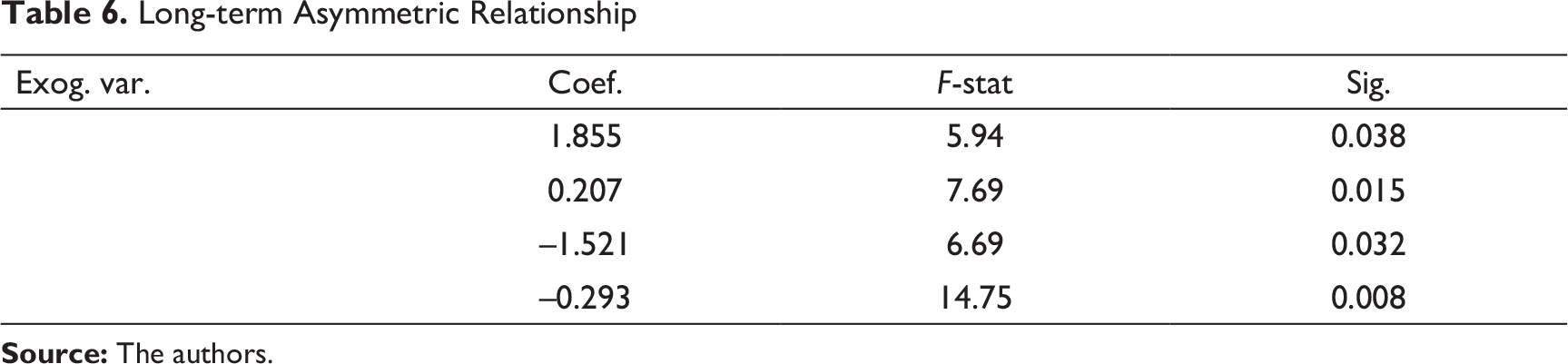
Long-term Asymmetric Relationship
Long-run and Short-run Asymmetry

Dynamic Asymmetric Estimation of Poverty and Long-run Coefficients (robustness checking with population below national poverty line as a proxy of poverty)
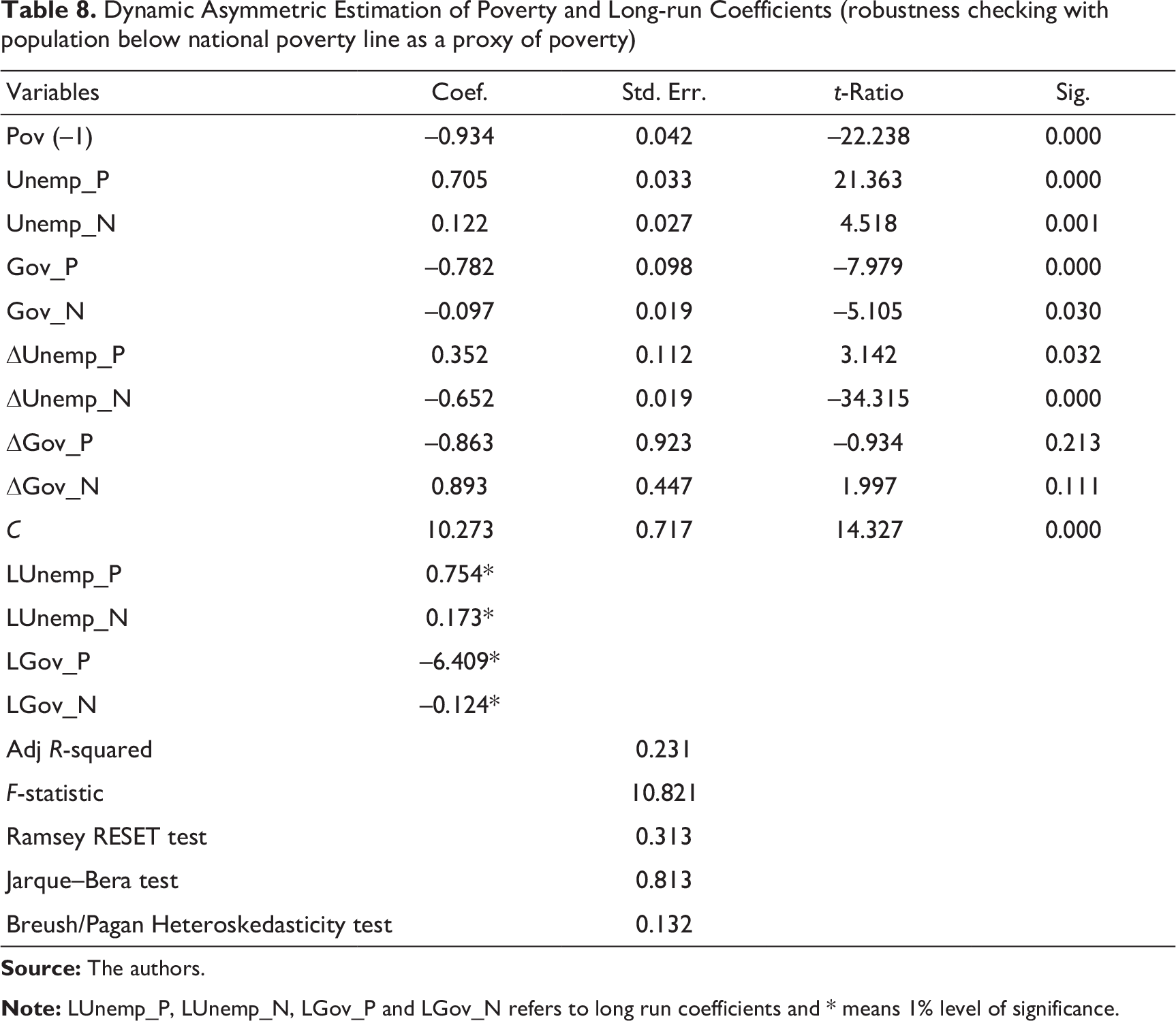
Table 8 shows results of dynamic estimation and long-run coefficients of poverty with a population below the national poverty line as a proxy of poverty. The findings are consistent as shown in Table 4.
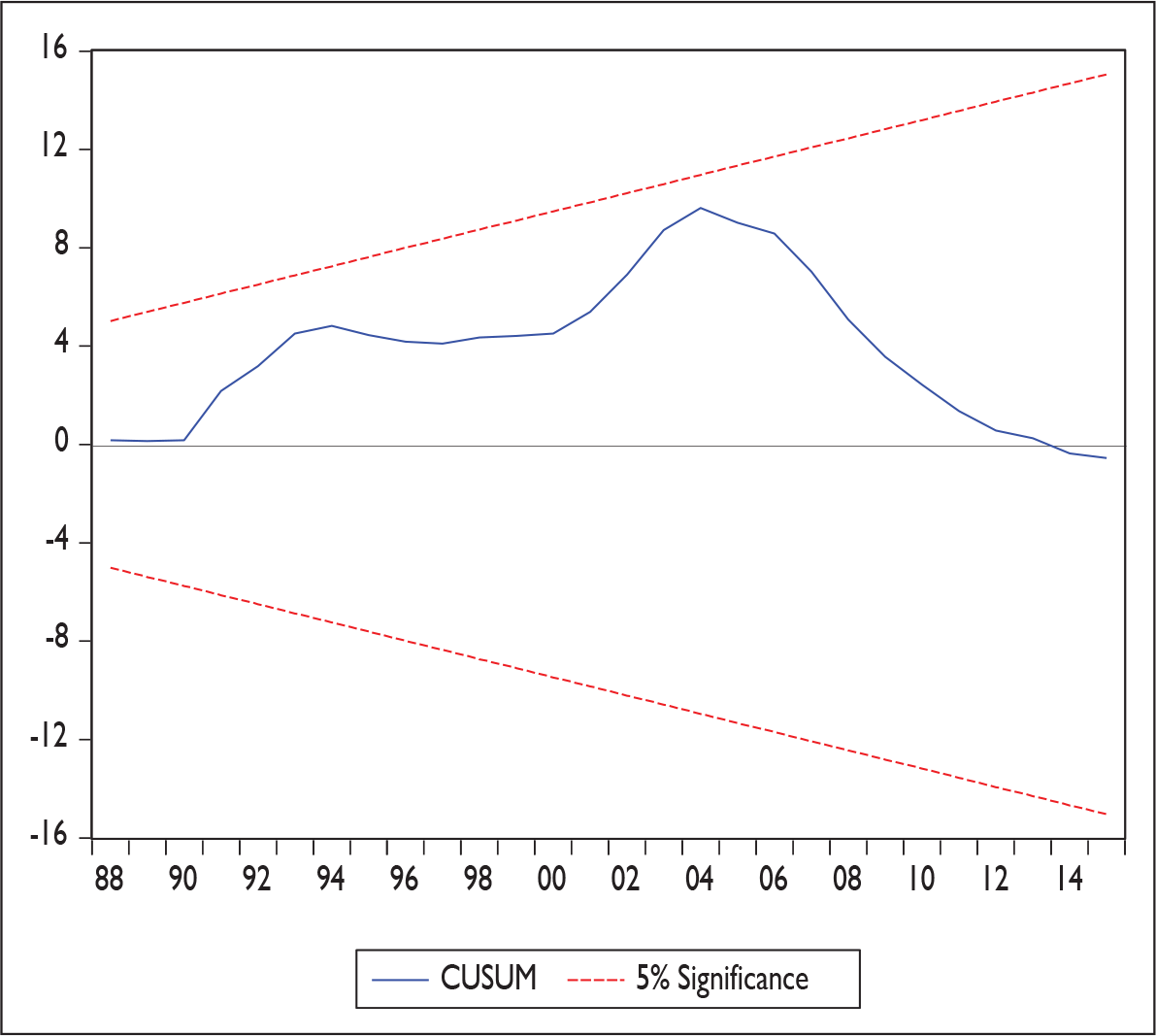
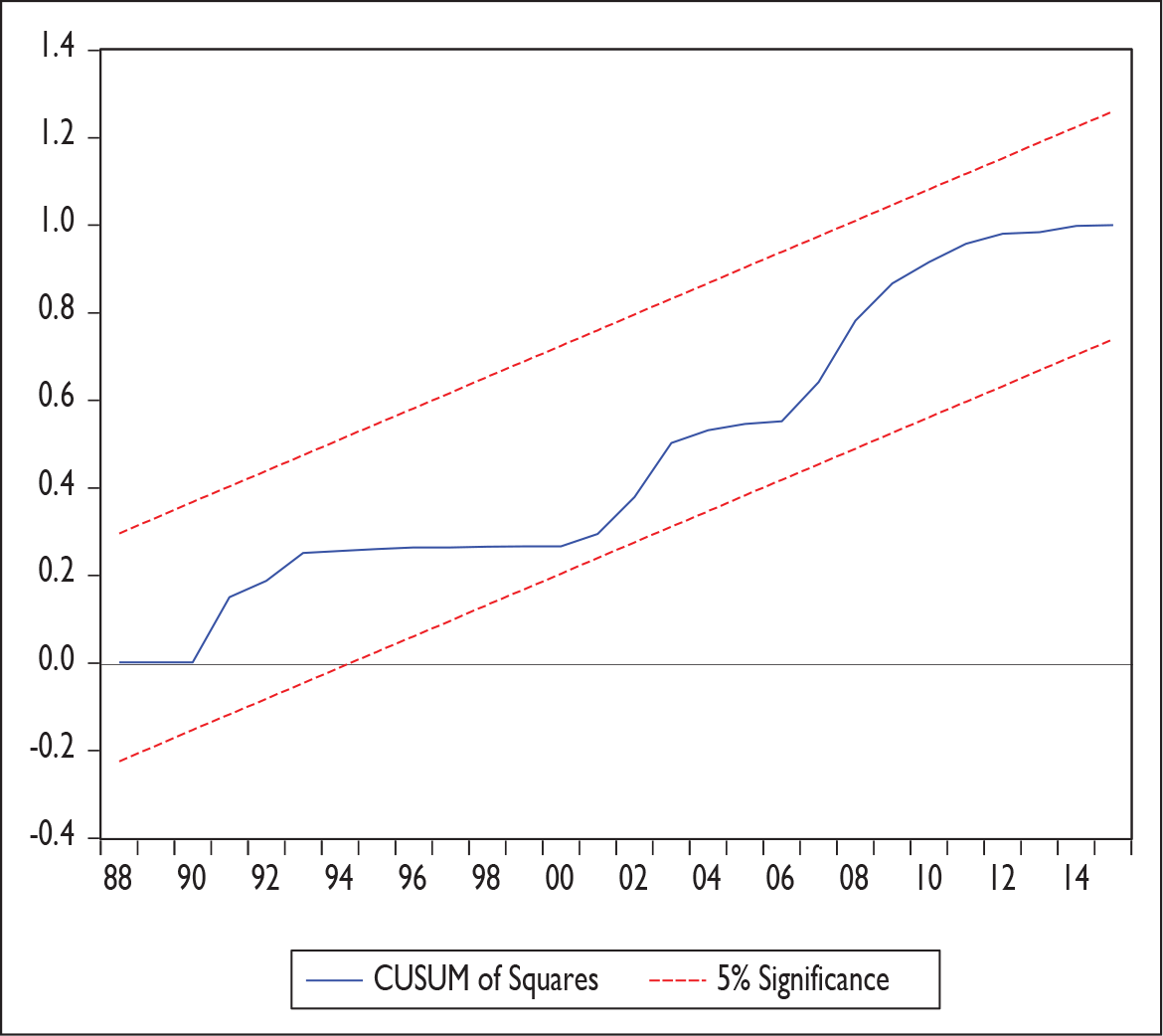
This study has also checked stability of estimated long-run parameters by applying CUSUM (Cumulative Sum) and CUSUMSQ (CUSUM of Squares). 4 Figures 3 and 4 indicate that CUSUM and CUSUMSQ are inside the critical lines, which confirms that model is free from sudden change, or structural breaks.

Conclusion and Discussion
The prime objective of this study is to investigate asymmetric relationship between unemployment, institutional quality and poverty using annual data from 1984 to 2016. The asymmetric relationship is checked using NARDL model recently advanced by Shin et al. (2014). The findings of the study confirmed a nonlinear positive and significant relationship between unemployment and poverty. It is found that positive shocks in unemployment have almost double effect on poverty than negative shock. The core reason of this finding is that Pakistan is one of the poor countries, where unemployment is a major issue. Furthermore, this article also found that quality of governance/institutional quality also has a significant and negative effect on poverty and it is confirmed that positive change in governance has a larger effect on poverty as compared to negative change.
Footnotes
Acknowledgement
This article has not received any funds from any government and non-government organizations. However, authors of this article are grateful to the anonymous referees of the journal for their extremely useful suggestions to improve the quality of the article. The authors are also grateful to BK School of Research for its technical support.
Declaration of Conflicting Interests
The authors declared no potential conflicts of interest with respect to the research, authorship and/or publication of this article.
Funding
The authors received no financial support for the research, authorship and/or publication of this article.
