



Abstract
This study aims to investigate the components of supply chain collaboration, their impacts on firm performance, and the moderation of innovation capability on the relationship between supply chain collaboration components and firm performance in the real world of manufacturing companies in Vietnam.
A two-phase approach, including exploratory factor analysis and confirmatory factor analysis in structural equation modelling with the support of SPSS/AMOS 20 is conducted to verify the proposed hypotheses based on supply chain collaboration activities of 241 manufacturing firms in Vietnam under the extended resource-based view—capability-based approach—specifying innovation capability. The results indicate that six supply chain collaboration components—information sharing, goal congruence, joint knowledge creation, incentive alignment, resource sharing, and collaborative communication—have a significant impact on firm performance, while decision synchronisation has no statistically proven impact on firm performance. Particularly, collaborative communication has the greatest positive impact, and innovation capability can considerably alter the positive relationship between supply chain collaboration components and firm performance. Accordingly, manufacturing companies in Vietnam and their supply chain partners should strategically prioritise resources for supply chain collaboration activities and capitalise on potential networks to foster an inter-organizational learning-oriented culture for improving innovation capability and achieving firm performance.
Keywords
Introduction
The world is full of fascinating and challenging chances for change; the difficulty is that even the healthiest organisations do not have deep enough resources to address them all (Tidd & Bessant, 2021). Typically, international economic integration and participation in free trade agreements have aided Vietnam in establishing trade relations with the majority of the world’s largest economies, signalling a positive trend for the Vietnamese economy (General Statistics Office, 2020; Luu, 2015). Companies in Vietnam challenge the opportunities and threats of a global open market in the industrial sector, which is on the strategic path of industrialization and modernization of Vietnam’s dynamic developing economy. Manufacturing companies in Vietnam, particularly, face numerous challenges, such as low management level, low-end value chain, fragmented operations, and few upward and downward linkages (Herr et al., 2016). Simultaneously, the global prolonged COVID-19 pandemic poses significant risks and may exacerbate global trade tensions (Ministry of Planning and Investment, 2021). In such cases, manufacturers struggle to increase production capacity, reduce costs, improve customer service, and expand markets. Internal operations and short-term exploitation activities are insufficient to help businesses increase profits. Involvement in the global supply chain would be a strategic choice for businesses, allowing them to develop the right strategies to capitalise on opportunities while minimising risks. In practice, issues such as disruptions in global supply chain, raw material shortages, and a decline in the output consumption market, lead to the suspension or inactivity, scale reduction, or even bankruptcy as a result of implementing social distancing policies to limit epidemic spread (Ministry of Planning and Investment, 2021). Consequently, it is critical to concentrate on forming and developing commodity supply chains, as well as attracting and connecting firms to join and become supply chain members (Luu, 2015).
Among supply chain strategies, supply chain collaboration would become a priority strategy for manufacturing companies in Vietnam, even though it is viewed as the common consideration of all members in a dynamic business environment (Soosay & Hyland, 2015). Collaboration is described as joint planning and decision-making on strategic and operational challenges; sharing of resources, processes, information and risk; working towards common goals, and achieving optimal solutions (Kumar & Banerjee, 2014; Soosay & Hyland, 2015). Companies can achieve efficient product design, lean manufacturing deployment, and information sharing throughout the supply chain by engaging in these activities (Ince & Ozkan, 2015). Furthermore, strengthening bilateral and multilateral collaboration is the foundation for reducing risks in the system of supply, production, and distribution of products, allowing Vietnamese products to reach a global audience (Huynh, 2017). As a result, it better meets customer needs by developing and managing value-added processes across organisational boundaries (Fawcett et al., 2008) and achieves higher profits than it would have without the collaboration (Simatupang & Sridharan, 2002; Soosay & Hyland, 2015). However, the matter of whether manufacturing companies in Vietnam should prioritise their efforts in which aspects of supply chain collaboration and how to deploy them to improve firm performance, still remains a challenge for managers. At the same time, they have to tackle the question raised by Tidd and Bessant (2021) as what are we going to do out of all the things we could do?, either way, ‘sooner or later’. In this context, innovative capability is viewed as an essential force for long-term success of the companies (Hofman et al., 2020). Innovation capability has a beneficial impact on business growth (Yang, 2012), and collaborative innovation capability has a substantial impact on innovation performance (Wang & Hu, 2020). Through collaboration, the innovation capabilities provided by supply chain quality improvement enhance supply chain capabilities (Liao et al., 2021). By observation, the senior management in manufacturing enterprises in Vietnam is trying to exploit and explore their innovation capability for firm performance efficiency. Following that, the prevalent query of whether innovation capability has significantly changed the effort of utilising supply chain collaboration components to achieve firm performance remains to be a source of contention for them.
In practice, firms throughout the world are looking beyond their organizational boundaries, collaborating with partners to ensure supply chain efficiency and responsiveness, as well as to leverage partners’ resources and knowledge (Cao & Zhang, 2011). According to an increasing number of studies, supply chain collaboration is critical for maintaining supply chain competitiveness (Soosay & Hyland, 2015). Currently, the previous researches show varied significant topics such as defining the antecedents of supply chain collaboration (e.g., Barratt, 2004; Cai et al., 2016; Min et al., 2005; Panahifar et al., 2018; Salam, 2017); identifying the components of supply chain collaboration (e.g., Cao & Zhang, 2011; Cao et al., 2010; Kumar & Banerjee, 2014; Nagehan et al., 2017; Simatupang & Sridharan, 2005b; Um & Kim, 2019), analyzing the consequences of supply chain collaboration on the operations (e.g., Cao & Zhang, 2011; Salam, 2017; Shahbaz et al., 2018; Ye & Wang, 2013). These studies employ various methods and contexts, including literature review and proposing a research framework (e.g., Chakraborty et al., 2014; Kahn et al., 2006; Simatupang & Sridharan, 2005a); case study (e.g., Scholten & Schilder, 2015; Soosay et al., 2008); regression analysis (e.g., Cai et al., 2016; Shahbaz et al., 2018; Um & Kim, 2019); structural equation modelling (SEM) (e.g., Cao & Zhang, 2011; Panahifar et al., 2018; Pradabwong et al., 2017; Salam, 2017). However, the underlying notion still reveals inconsistency regarding the components of the supply chain collaboration concept. Simultaneously, in the context of Vietnam, scholars attempt to study the factors promoting supply chain collaboration in various industries, such as SEM analysis in the mechanical industry of Luu (2015), a quantitative regression analysis in the furniture industry of Huynh (2017), a case study in textile and garment industry of Ho et al. (2017). These studies, however, only look at supply chain collaboration as a component of supply chain management. Notably, recent research has increased interest in supply chain collaboration about aspects of innovation, such as product innovation (e.g., Pradabwong et al., 2017); collaborative innovation capabilities on collaborative innovation activities and innovation performance (Wang & Hu, 2020); supply chain capability on supply chain collaboration and innovation capability (Liao et al., 2021). However, innovation capability has gotten little attention in the supply chain management process (Octavia et al., 2020). It is unclear if the link between supply chain collaboration and firm performance is affected in dimension or strength by any characteristic of innovation.
Overall, a more comprehensive understanding of the specific components of supply chain collaboration, the level of their impact on firm performance and the role of innovation in these relationships have been insufficient for providing the answers to managers in Vietnam about current difficulties in managing supply chain and firm performance. More research is required to solve the aforementioned questions. As a result, this study employs the SEM—a comprehensive multivariate technique combining factor analysis and multiple regression analysis (Hair et al., 2018)—to uncover statistical evidence for the aforementioned issues upon the extended resource-based perspective—capability-based approach—specifying innovation capability in the real-world context of 241 manufacturing firms in Vietnam.
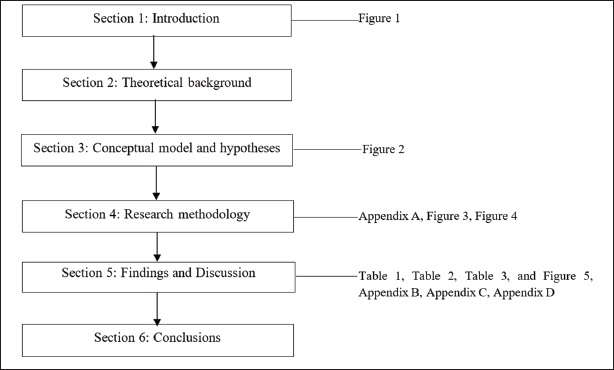
The following is how the article is organised (Figure 1). After presenting the current challenges that manufacturing companies in Vietnam face in supply chain collaboration in the first section, the second section emphasises the theoretical background of supply chain collaboration. The third section presents the conceptual model and hypotheses. The fourth section explains the research methodology, which includes constructing measurement, survey design, data collection, SEM analysis, and SEM multi-group analysis methods using SPSS and AMOS 20. The fifth section discusses the reliability and validity of the measurement scale, the overall measurement model, and the relationship between supply chain collaboration components, firm performance, and innovation capability moderating effects on these relationships. Finally, the article concludes with the key findings, practical and managerial implications, and future research directions.
Theoretical Background
Fundamental Perspectives on Supply Chain Collaboration Research
Currently, research on supply chain collaboration has addressed various aspects based on diverse underlying perspectives. The studies supporting the resource-based view (e.g., Cao & Zhang, 2011; Devaraj et al., 2007; Dyer & Singh, 1998; Pradabwong et al., 2017; Um & Kim, 2019) regard supply chain collaboration as a strategic, valuable, and difficult to imitate resource. They believe that companies must own or fully control resources to create value and competitive advantage for enterprises, but have little interest in supply chain partners. Some studies on the extended resource-based view (e.g., Arya & Lin, 2007; Cao & Zhang, 2011; Cao et al., 2010; Dyer & Singh, 1998; Lavie, 2006; Pradabwong et al., 2017; Um & Kim, 2019) emphasise the competitive advantage gained due to the value and scarcity of all shared resources among supply chain partners; thus, the relationship between the parties exchanging information must be considered. Relational view studies (e.g., Cao & Zhang, 2011; Chakraborty et al., 2014; Pradabwong et al., 2017; Um & Kim, 2019) are interested in connecting core competencies of businesses to gain competitive advantage for the entire supply chain, emphasise the common benefits that can be achieved through collaboration that businesses cannot achieve independently, and may overlook internal enterprise resources. Transaction cost economics studies (e.g., Cao & Zhang, 2011; Williamson, 2008) have over-emphasized reducing the cost of excess inventory, the costs caused by the bullwhip effect, increasing financial performance by selecting an economic structure of governance and market, and limiting the ability to create other value through supply chain partnerships. According to studies on organisational learning theory (e.g., Cai et al., 2016; Opengart, 2015), supply chain collaboration is an effective means of transferring new technical knowledge and skills between supply chain members, but there is a fear of information leakage, which can cause the neglect of other enterprise resources.
Among them, the extended resource-based view merges as the prevailing standpoint. Though other viewpoints deploy solutions to supply chain problems to gain competitive advantages, these perspectives do not focus on both internal and external resources among partners to achieve both private and common benefits across the entire supply chain. As a result, the extended resource-based view demonstrates current strength as a result of utilising external resources in addition to maintaining the enterprise’s resource utilisation to achieve better supply chain collaboration execution.
Main Interests of Supply Chain Collaboration Research
Prior supply chain collaboration research has primarily focused on various approaches to efficient resource utilisation along the supply chain, resulting in highly firm-specific competitive advantages.
First, regarding antecedents of supply chain collaboration, some studies explore the factors promoting supply chain collaboration, such as trust (e.g., Barratt, 2004; Panahifar et al., 2018; Salam, 2017), information technology (e.g., Salam, 2017; Ye & Wang, 2013), and commitment (e.g., Mentzer et al., 2001; Min et al., 2005). Second, some features of supply chain collaboration components are remarkably identified, such as information sharing (e.g., Arora et al., 2021; Badraoui et al., 2020; Cao & Zhang, 2011; Cao et al., 2010; Nyaga et al., 2010; Pradabwong et al., 2017; Shahbaz et al., 2018; Um & Kim, 2019), goal congruence (e.g., Cao & Zhang, 2011; Cao et al., 2010; Nagehan et al., 2017; Pradabwong et al., 2017; Um & Kim, 2019), decision synchronisation (e.g., Arora et al., 2021; Cao & Zhang, 2011; Cao et al., 2010; Nagehan et al., 2017; Shahbaz et al., 2018; Simatupang & Sridharan, 2005a; Um & Kim, 2019), incentive alignment (e.g., Cao & Zhang, 2011; Cao et al., 2010; Pradabwong et al., 2017; Um & Kim, 2019), resource sharing (e.g., Badraoui et al., 2020; Cao & Zhang, 2011; Cao et al., 2010; Kumar & Banerjee, 2014; Nagehan et al., 2017; Um & Kim, 2019), collaborative communication (e.g., Cao & Zhang, 2011; Cao et al., 2010; Pradabwong et al., 2017; Um & Kim, 2019), joint knowledge creation (e.g., Arora et al., 2021; Cao & Zhang, 2011; Cao et al., 2010; Nagehan et al., 2017), joint relationship effort (e.g., Badraoui et al., 2020; Kumar & Banerjee, 2014; Nyaga et al., 2010), joint investing (e.g., Nyaga et al., 2010; Soosay et al., 2008). However, supply chain collaboration components still lack consistency and comprehensiveness. Third, specifying the direct afterwards of supply chain collaboration, some interests are, supply chain resilience (e.g., Piprani et al., 2020; Scholten & Schilder, 2015), supply chain performance (e.g., Kumar et al., 2016; Piprani et al., 2020; Ye & Wang, 2013), supply chain capability (e.g., Liao et al., 2021), operational performance in terms of inventory performance, overall product and supply chain costs, cost of purchased items, responsiveness to customer requests, new product development capability (e.g., Salam, 2017), operational performance in terms of quality performance, flexibility performance, customer service, delivery speed, cost performance (e.g., Shahbaz et al., 2018), firm performance in terms of quality, cost, speed, flexibility (Um & Kim, 2019). Surprisingly, studies determining the impact of particular supply chain collaboration components are scarce and focus on various performance aspects, such as supply chain performance (e.g., Kumar & Banerjee, 2014; Kumar et al., 2016), innovation performance (e.g., Wang & Hu, 2020), and firm performance (e.g., Shahbaz et al., 2018). Fourth, on the relationship between supply chain collaboration on firm performance, some mediating variables are investigated, such as value co-creation between partners (Chakraborty et al., 2014); and collaborative advantage in terms of, for example, process efficiency, flexibility, integration, quality, and innovation (Cao & Zhang, 2011), innovation, quality, business synergy, process efficiency (Yilmaz et al., 2016), and time to market for new product development, product variety, product innovation, quality, volume requirements (Pradabwong et al., 2017). A few research, on the other hand, have looked at the function of the moderator in this direct link, such as information technology capability (Cai et al., 2016), price concentration strategy and quality concentration strategy (Zaridis et al., 2020). Finally, recent research has notably increased interest in supply chain collaboration with aspects of innovation, such as conceptual framework for supply chain innovation based on supply chain collaboration (Solaimani & Van der Veen, 2022), investment-oriented partnership on the relationship between partnership commitment and firm performance in terms of operational, innovation and financial performance (Shin et al., 2019); supply chain capability on supply chain collaboration and innovation capability (Liao et al., 2021); collaborative innovation capabilities on collaborative innovation activities and innovation performance (Wang & Hu, 2020). Above, in the supply chain management process, innovation capability has received little attention (Octavia et al., 2020). Few studies have examined the innovation capability of enterprises in exploiting and exploring resources for firm performance through supply chain collaboration. Whether the relationship between supply chain collaboration and firm performance is altered in dimension or strength by any aspect of innovation, such as innovative capability, is not fully answered yet.
Overall, prior research has not sufficiently identified the supply chain collaboration components and how each component affects firm performance. In the context of fierce competition, to achieve long-term sustainability, effectively using and managing internal and external resources is a competitive approach forcing firms to expand lean effort through their supply chain. Accordingly, organisations devote resources to the development of new products and processes to achieve competitive advantages (Chen et al., 2009), hence improving the firm’s performance. However, a firm can accumulate large resources while still lacking meaningful dynamic capabilities to exploit its resources and acquire external ones that are not readily purchased or sold on the market but must be produced outside the market to a significant amount (Tidd & Bessant, 2021). As a result, this study tackles this shortcoming by determining supply chain collaboration components, their effects on firm performance and the moderation of innovation capability on the relationship between supply chain collaboration components and firm performance using the extended resource-based perspective—capability-based approach—specifying innovation as a dynamic capability.
Conceptual Model and Hypotheses
Based on the literature review, this study investigates the relationship between seven supply chain collaboration components (goal congruence, decision synchronisation, resources sharing, information sharing, collaborative communication, joint knowledge creation, and incentive alignment) and firm performance, as well as innovation capability moderation on these relationships (Figure 2). The extended resource-based view—capability-based approach—specifying innovation capability underpins this investigation, as defined by, for example, Gulati (1999), Lavie (2006), Arya and Lin (2007), and Tidd and Bessant (2021). As a result, the following key concepts are defined.
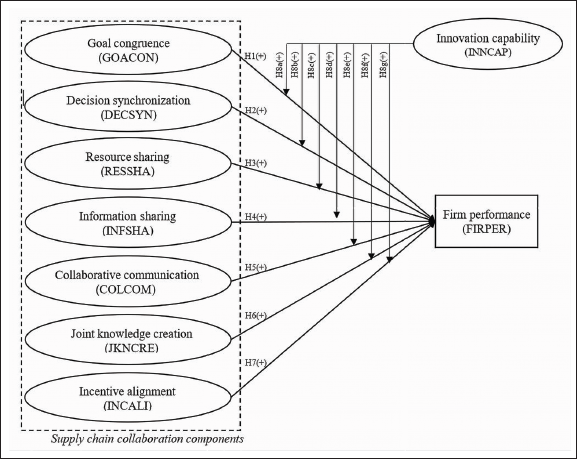
Supply chain collaboration is defined as the process by which two or more autonomous firms collaborate closely to plan and operate the supply chain to achieve common goals and mutual benefits (Cao & Zhang, 2011).
Innovation capability is defined as the capacity of a company to produce new goods, technologies, and other developments that provide it with a competitive advantage over competitors (Adler & Shenhar, 1990; Yang, 2012).
Firm performance is assessed by customer responsiveness, product suitability, product design and on-time delivery (Flynn et al., 2010). The financial metrics are important, but non-financial criteria are equally important for firm development (Wu & Chiu, 2018). Therefore, this study employs non-financial indicators based on respondents’ perceived performance, as in previous studies (e.g., Cao & Zhang, 2011; Li et al., 2006), to measure firm performance.
Goal Congruence and Firm Performance
Goal congruence refers to the extent to which supply chain partners perceive their goals to be achieved by accomplishing the supply chain goals (Cao et al., 2010). Goal consistency entails defining each partner’s roles and responsibilities, setting goals together, measuring results, standardising information technology, sharing information, and implementing the plan to achieve the goals (Min et al., 2005). Furthermore, supply chain members should consider supply chain strategies and operations to improve profitability, cash flow, and return on investment (Ramanathan & Gunasekaran, 2012).
Close collaboration necessitates that the parties share common goals and strive for mutual profitability (Pradabwong et al., 2017). Therefore, each partner must clarify their expectations before beginning to collaborate (Goffin et al., 2006). The nature of collaborative behaviours is the foundation of a well-structured supply chain. Based on these behaviours, stakeholders establish a joint decision-making process to achieve common goals (Wu et al., 2014). When the supply chain’s overall goals are met, the company’s own goals are satisfied as well (Cao & Zhang, 2011). In that case, achieving operational performance is the primary goal of the majority of business organisations. According to these arguments, goal congruence has a positive effect on firm performance (H1).
Decision Synchronisation and Firm Performance
Decision synchronisation refers to the process by which supply chain partners jointly make planning and operational decisions to maximise supply chain benefits (Simatupang & Sridharan, 2005b). The fact that firms make better decisions, leads to stronger relationships with partners (Pradabwong et al., 2017). Each business has its own set of aims and objectives, making it difficult for partners to develop a shared strategic consensus. Strategic planning, demand management, production planning, procurement, inventory replenishment, ordering, delivery, and distribution management are all critical supply chain management decisions (Zhang & Cao, 2018). Therefore, decision synchronisation has emerged as an important strategy for reducing uncertainty at the strategic, tactical, and operational levels (Shahbaz et al., 2018). Partners must collaborate to plan and organize activities, as well as address difficulties, for partnerships to be effective (Salam, 2017). Additionally, partners must agree on an operational and forecast plan to improve forecast accuracy, inventory management, and partner relationships (Panahifar et al., 2018). Accordingly, decision synchronisation fosters a deeper understanding among partners, more effective communication, and early detection of faults in the collaborative process. This contributes to the company’s efficiency. Therefore, it is claimed that decision synchronisation has a positive impact on firm performance (H2).
Resource Sharing and Firm Performance
Resource sharing refers to the process of balancing capabilities and assets with investments in capabilities and assets with supply chain partners (Cao et al., 2010). In terms of partnership relationships, resource sharing promotes more collaboration among supply chain members (Ma et al., 2019). Businesses can take advantage of resources from supply chain partners to save money on unnecessary investments (Um & Kim, 2019). Some resources, such as logistics resource sharing and production resource sharing, may be shared to support the business process and contribute to the firm’s optimization goal (Ma et al., 2019). By resource sharing, supply chain members can improve customer responsiveness, lower operating costs and lead times, and respond quickly to market demand and uncertainties (Simatupang & Sridharan, 2005a). Accordingly, once efficient supply chain management and cost savings are achieved across the entire system, companies that are part of the supply chain system benefit from this system as well (Simchi-Levi et al., 2021). Therefore, it is hypothesised that resource sharing has a positive effect on firm performance (H3).
Information Sharing and Firm Performance
Information sharing refers to the capture and dissemination of relevant and timely information for planning and controlling supply chain operations (Simatupang & Sridharan, 2005a). Recently, information sharing has grown in importance as a component of the supply chain (Cheng, 2010).
Accessing information from the beginning to end of the supply chain is critical because the information is the ‘lifeblood’ that flows throughout the supply chain (Shahbaz et al., 2018). By sharing information, a smooth flow of information in every node of the supply chain is guaranteed (Modgil & Sharma, 2017). Fortunately, some businesses readily share data with their supply chain partners, such as forecasts, inventory levels, sales promotion, and marketing strategies (Zhang & Cao, 2018). It also aids in reducing demand uncertainty and the bullwhip effect (Liu et al., 2013). To deal with uncertainty in the supply chain, firms should share information and coordinate orders (Lee et al., 2000), and pay special attention to the accuracy, relevance, and timeliness of information to have an adequate reaction plan in the case of disruption (Duong & Chong, 2020). With this focus, it is hypothesised that information sharing has a positive effect on firm performance (H4).
Collaborative Communication and Firm Performance
Collaborative communication refers to the contact and message process of regular, open, two-way, multi-level communication and influence strategy among supply chain partners (Cao & Zhang, 2011; Goffin et al., 2006). Communication serves as the glue that holds the supply chain members together by utilising balanced, two-way, multi-level communication and message exchange (Cao & Zhang, 2011).
Currently, communication with partners is increasingly becoming a major concern, particularly with the application of information technology (Salam, 2017). Businesses are increasingly embracing information technology to improve communication quality (Wu & Chiu, 2018). As a result, they can respond to market fluctuations quickly (Salam, 2017). Besides, supply chain collaboration can only be effective if firms receive open, multidimensional, consistent, balanced, multi-level responses from their partners (Goffin et al., 2006; Ralston et al., 2017). Especially effective methods of communication facilitate mutual understanding in supply chain partnerships (Barratt, 2004). Therefore, the efficiency of production activities can be improved. Accordingly, it is proposed that collaborative communication has a positive effect on firm performance (H5).
Joint Knowledge Creation and Firm Performance
Joint knowledge creation refers to the extent to which supply chain partners develop a better understanding and have the ability to respond to the market and competitive environment by working together (Cao et al., 2010).
Faced with a highly uncertain business environment, firms must have a broad knowledge base to respond quickly to changing markets (Volberda, 1998). Supply chain members’ shared knowledge can improve the search and acquisition of relevant knowledge, thereby improving information sharing and avoiding disruptions downstream and upstream of the supply chain. Notably, collaboration among supply chain partners not only aims to accelerate transaction optimization but also to transfer new knowledge and techniques between partners, thereby generating common knowledge (Cao & Zhang, 2011). Decisions will be clearer and more specific as a result of the collaborative processes and thorough understanding of the issues (Shih et al., 2012). Accordingly, joint knowledge creation and knowledge exchange among supply chain partners contribute to the long-term competitiveness of the entire supply chain (Zhang & Cao, 2018). Learning-based relationships between supply chain partners aid in the maintenance of close and long-term relationships as well as the achievement of the firms’ goals. Consequently, it is hypothesised that joint knowledge creation has a positive effect on firm performance (H6).
Incentive Alignment and Firm Performance
Incentive alignment refers to the process by which supply chain partners share costs, risks, and benefits (Simatupang & Sridharan, 2005a). It particularly emphasises the commitment of partners when participating in the supply chain, as well as attitudes and behaviours toward the supply chain’s common goals (Simatupang & Sridharan, 2005b).
In practice, significant changes in the supply chain occur frequently, requiring firms to reposition their interests and problems, as well as find ways to align their individual decisions with the overall goals of the chain (Pradabwong et al., 2017). Furthermore, in a highly competitive market, firms in the supply chain must have mutual trust, collaborate on product design, form problem-solving teams, and propose common solutions to problems (Liao et al., 2021). In this situation, incentive alignment can encourage and reward supply chain members to achieve the supply chain’s common goals (Cao et al., 2010). It is also critical to attract, inspire, and retain operational coordination, with the ultimate goal of achieving overall supply chain efficiency (Pradabwong et al., 2017). Moreover, mutually sharing risks and rewards is also crucial for long-term supply chain collaboration relationships (Mentzer et al., 2001). Therefore, to achieve a successful supply chain partnership, the participating members must fairly share the benefits and losses, with a proportional relationship between profits, investments and risks (Zhang & Cao, 2018). Supply chain decisions are integrated to improve business performance (Simchi-Levi et al., 2021); thus, incentive alignment assists individual firms in increasing their competitiveness (Liao et al., 2021). As a result, the hypothesis that incentive alignment has a positive effect on firm performance has been developed (H7).
Moderating Effects of Innovation Capability on the Relationship Between Supply Chain Collaboration Components and Firm Performance
Innovation capability refers to a firm’s capability to develop new products to meet market needs, apply appropriate process technologies to produce new products, develop and apply new products and production technologies to meet future needs, and respond to competitors’ random technological activities and unexpected opportunities (Adler & Shenhar, 1990), that lead to a competitive advantage over rivals (Yang, 2012). This is a critical aspect in fostering an innovative organisational culture, internal driving activities, and the ability to respond effectively to the external environment (Yilmaz & Akman, 2008). Organisations with a high innovation capability will strive to communicate with supply chain partners to capture changes in the business environment, rather than depending solely on internal innovation capability. As a result, the following sections investigate the impact of innovation capability on the link between each supply chain collaboration component and firm performance.
Recent technological trends such as digitization, advanced analytics, artificial intelligence, and automation are changing the way businesses are managed emphasise the link between customer value and supply chain strategies, flexibility capability allowing the firm to innovate its supply chain strategy, and effective sustainability strategies (Simchi-Levi et al., 2021). Innovation-intensive organisations attempt to pursue integrated activities with supply chain partners, and design systems to encourage their participation and agreement in the innovation process, which will result in achieving innovation goals, improving delivery activities, increasing efficiency, and reducing uncertainty to customers (Afraz et al., 2021). Innovation capability development-oriented firms always find a way to collaborate with partners in establishing strategic goals and frameworks that match product design and supply chain strategies with the characteristics of the development chain and supply chain fulfilment under demand uncertainty (Simchi-Levi et al., 2021; Tidd & Bessant, 2021). Donkor et al. (2018) observed that when strategic goals have the same level of impact, organisations with high innovation capability outperform firms with low innovation capability in terms of financial performance. Unfortunately, in most businesses, separate managers are in charge of different supply chain fulfilment and development chain activities, resulting in a unique set of issues. Therefore, firms need to agree on strategic goals with partners to achieve system advantages from supply chain innovation.
Firms are under pressure to produce differentiated new goods and services (Schilling, 2019), which may provide them with an edge in terms of innovation efforts. Collaboration across functional lines and with other businesses is beneficial to business process management (Pradabwong et al., 2017), which helps organizations achieve strategic goals, translate the company’s strategy into specific objectives, and put that plan into action. Following internal development, firms must engage with supply chain partners to make synchronised decisions (Zhao et al., 2011), not only for immediate implementation but also for long-term innovation and growth. Firms also can accumulate more resources, such as university research endeavours, government laboratories and incubators, or private charity groups. Organisations continue to lack the necessary capacities for innovation (Tidd & Bessant, 2021). The key dynamic of innovation is at firms (Schilling, 2019). Donkor et al. (2018) noted that firms with a high level of innovation capability quickly utilise novelty in product ideas and have a high level of willingness to experiment with ideas and innovative processes. Therefore, firms with a long-term focus on developing their organisation’s innovation capabilities constantly seek system integration, wide networking, and coordinated decisions with partners to achieve continuous innovation. Accordingly, organisations can be prepared for changes in operations and business decisions to efficiently increase firm performance.
The heart of long-term competitive advantages consists of complex bundles of distinctive resources and competencies including innovation and collaboration-related capabilities, since their inherent intangibility, uncertain causality, and complexity may make them more sustainable (Freije et al., 2021). Innovation is a chain-linked model rather than a linear process (Kline, 1985). Firms do not innovate in isolation, according to the fifth generation of the innovation model. It is connected to the notion of an innovation system, which emphasises networking while maintaining a strong focus on R&D and formal knowledge in terms of the usefulness of external sources of information and knowledge (Boehm & Fredericks, 2010; Tidd & Bessant, 2021). Currently, the sixth generation of innovation processes stresses that networks encompass all sorts of information, not just R&D (Boehm & Fredericks, 2010). Therefore, the most innovative company is the one that learns the most quickly, which is determined by organisational innovation capability. The use of knowledge based on resource sharing produces a competitive advantage.
When it comes to firm performance, innovation is fostered by cross-functional teams, information sharing, customer and supplier involvement, and team collaboration (Tidd & Bessant, 2021). Generating, acquiring, sharing and exploiting knowledge are key to successful innovation (Tidd & Bessant, 2021). Depending on the level of significant change in one element, component or subsystem across the whole system and a need to learn new knowledge within an established and clear framework of sources and users, there are different patterns of industrial innovation (Abernathy & Utterback, 1978). Several sorts of knowledge, each of which serves a distinct purpose. The need to disseminate information differs based on the company’s capability to innovate in each innovation zone. Gained value might vary depending on who shares knowledge and the stage of the innovation process (Liao et al., 2021). As a result, one of the most challenging tasks for organisations is identifying the information that needs to be shared with supply chain partners to improve organisational innovation capability for the enhancement of firm performance.
A company’s capability to innovate is a distinct advantage. Based on knowledge about the changing business environment, organisations may achieve business efficiency through product life cycle innovation, quick production expansion, process adoption for specific goods, and attracting partner portfolios that vary as innovation demands change (Liao & Li, 2019). It presents significant challenges and needs different tactics for developing and commercialising novel or complex new products or services to technological maturity and market maturity (Tidd & Bessant, 2021). Notably, in the effort of evolutionary reconfiguration processes at a multi-level perspective from novelty to socio-technical landscape, communication is one of the societal functions that must be performed (Geels, 2002). Following that, the collaboration must promote internal and external communication, cross-functional relationships, partner working groups, and create an innovative organisational culture (Yilmaz & Akman, 2008). Therefore, firms with strong innovation capability generate targeted quadrants among differentiated, architectural, technological, and complex areas that are effectively researched and created, successfully brought to the market, and fulfil current and future customers’ desires and expectations.
Smart businesses have always recognized the value of linkages and connections, such as getting close to customers to understand their needs, collaborating with suppliers to deliver innovative solutions, and collaborating with collaborators, research centres, and even competitors to build and operate innovation systems (Tidd & Bessant, 2021). Surprisingly, the majority of product design suggestions usually come from supply chain partners. Process development and knowledge inputs from a variety of sources both inside and outside the organisation are the sources of innovation capability. Partners in supply chain collaboration are encouraged to share their knowledge and come up with creative ideas outside of their typical ties (Soosay et al., 2008). Indeed, an organisation’s capability to innovate is dependent on its ability to adapt over time as a result of the interaction between internal knowledge and external market needs. It requires companies to reconfigure their knowledge sources and existing information and recombine it in novel ways or to use a blend of new and old knowledge (Tidd & Bessant, 2021). An organisation with a high innovation potential may mobilise and integrate information to create new knowledge. Experimenting, testing, prototyping, and pivoting are all part of the innovation process, and it is via this process that eventually gain capabilities (Tidd & Bessant, 2021). Highly innovative firms quickly prioritise the use of knowledge to improve goods and operations. Then, new knowledge is created not just as a consequence of product or process innovation (Yilmaz & Akman, 2008), but it is also integrated into existing processes and activities (Liao & Li, 2019). As a result, businesses are better prepared to deal with uncertainties, risks, and changes in innovation (Liao & Li, 2019). Accordingly, the organisation’s innovation capability fosters considerable differentiation in joint knowledge creation and firm performance.
Essentially, firms in the supply chain work together to lower the cost, time, and risk of gaining access to new technology or unfamiliar markets (Simchi-Levi et al., 2021). The goals and choices of partners ultimately define the type of collaboration, but intrinsic market and technological factors, notably the degree of complexity and tacitness, limit their alternatives (Tidd & Bessant, 2021). Wakolbinger and Cruz (2011) proposed a paradigm that allows information sharing for the risk-sharing contract, demonstrating how innovations that reduce the cost of information sharing may result in benefits that are shared by all supply chain partners. However, the share of profits from innovation accruing to the innovator compared to its followers and suppliers appears to be unequally distributed; specifically, innovating firms frequently fail to obtain significant economic returns from innovation, while customers, imitators, and other industry participants benefit (Teece, 1986). The appropriability regime, complementary assets, and dominant design all impact a firm’s capacity to extract profit from innovation (Teece, 1986). As a result, an organisation’s efforts to establish innovative capability will encourage incentive alignment across supply chain partners, which will benefit firm performance. Hypothesis H8g: Innovation capability can significantly change the positive effect of incentive alignment on firm performance.
Research Methodology
Construct Measurement
The original scales measuring various constructs in the research model (Figure 1) are identified from the previous empirical research. The measurements (Appendix A) are coupled with the theoretical perspectives of an extended resource-based view—capabilities-based approach—specifying innovation as a dynamic capability. Accordingly, the goal congruence measurement scales include three items from Cao and Zhang (2011) and two items from Pradabwong et al. (2017). Five items adapted from Cao et al. (2010) are used to assess decision synchronisation. Resource sharing construct adapts five items from Cao et al. (2010). The concept of information sharing is measured by three variables from Ye and Wang (2013) and two variables from Sezen (2008). Collaborative communication is a five-item construct adapted from Cao et al. (2010). The joint knowledge creation construct adapts five items from Cao et al. (2010). Five indicators measuring incentive alignment construct are adapted from Cao et al. (2010)’s study. Six indicators from Yilmaz and Akman (2008) are used to measure innovative capability. Furthermore, firm performance construct based on six indicators adapted from Flynn et al. (2010) to assess a company’s ability to quickly modify products based on customer requirements, introduce new products into the market, respond to changes in demand, deliver products on time, fulfil orders with short lead time, and provide a high level of customer service.
Following that, in-depth interviews are conducted with 12 top managers of manufacturing firms to ensure that the items are clear and relevant to the context of Vietnam. Finally, the structure of the calibrated scales presented in Appendix A is confirmed using EFA and CFA techniques before testing the structural model.
Survey Design
The observed variables are measured using a 5-point Likert scale to determine whether respondents agree or disagree with each statement, with ‘1’ indicating strong disagreement, ‘2’ indicating disagreement, ‘3’ indicating neutrality, ‘4’ indicating agreement, and ‘5’ indicating strong agreement. The 5-point scale makes it easier for respondents to read the entire list of scale descriptors (Dawes, 2008), reduces confusion, and increases response rates (Babakus & Boller, 1992; Bouranta et al., 2009).
The construct measurements are formed in English based on literature and research objectives. The questionnaire package is split into two parts. First, the cover letter provides general information about the research, such as the main research objective of evaluating the impact of supply chain collaboration components on firm performance in moderation of innovation capability; the targeted responses by experienced supply chain management managers working in manufacturing companies; commitment to use the information collected only for research purposes; survey feedback guidelines; and the expected deadline. Second, the questionnaire includes general information about manufacturing firms, such as the working industry and firm size; personal information about respondents, such as job title and years of experience; and survey questions about supply chain collaboration, innovation capability and firm performance. The questionnaire is carefully translated into Vietnamese to be suitable for survey respondents in Vietnam. Then, academic professionals in the field of supply chain management check each questionnaire in both English and Vietnamese versions consistently. Following that, the revised questionnaire is adjusted by 12 managers with at least 7 years of experience in supply chain management through in-depth interviews to ensure its suitability in the context of the manufacturing industry in Vietnam. Before it is used in formal research, the questionnaire is pretested with managers from manufacturing companies to ensure its completeness and ease of use. Consequently, the final version is sent in the electronic form to the manufacturing companies in Vietnam via Google Forms.
Data Collection
Unit of Analysis
The objective of this study is to define the impacts of supply chain collaboration components on firm performance and the moderation of innovation capability on these relationships at manufacturing companies in Vietnam, so the organisational unit is the unit of analysis. This study focuses on manufacturing firms in Vietnam, specifically those in Ho Chi Minh City and neighbouring provinces such as Dong Nai, Long An, and Binh Duong.
The key informant approach, which is used in this study, is widely used in organisational-level research to gain an understanding of managerial functioning (Gupta et al., 2000). As a result, survey informants should have at least 3 years of experience in supply chain management and a thorough understanding of their firms’ operations, such as firm directors/deputy directors, supply chain management department directors/deputies, purchasing management department heads/deputies, and production management department heads/deputies. If they have less than 3 years of experience in supply chain management and supply chain collaboration, they are considered inexperienced. Therefore, their responses are then eliminated and not used for further analysis.
Sampling
The sampled enterprises are drawn from the lists of enterprises in industrial zones in southern Vietnam, such as the Ho Chi Minh City Export Processing Zone Authority, the Long An Economic Zone Authority, and the Binh Duong Industrial Zone Authority. Companies with sufficient information (such as company name, email address, and phone number) are chosen from this list. Finally, 1,050 companies are on the final list of targeted companies.
Because of the complicated situation of the COVID-19 epidemic beginning in April 2021, Ho Chi Minh City and neighbouring provinces were forced to distance themselves socially. This situation makes it impossible to collect paper-based questionnaires. Therefore, the survey is primarily conducted in the form of an online questionnaire via Google Forms. The link to the questionnaire is sent via email and shared on social media with groups of supply chain management and production management associations. If the respondents need to refer to the research findings, they can request the researchers. Immediately following the completion of the survey, a thank you letter is sent to each respondent’s email address. Besides, the questionnaire is also introduced to other managers by the respondents.
Sample Characteristics
The survey is conducted between April and September of 2021. A total of 288 manufacturing firms responded, and their responses are then thoroughly checked for completeness. The samples with missing answers or unusual similarities for all items are not used in the study. As a result, 241 valid responses from 241 manufacturing firms are ready for further analysis. Mechanical firms have the highest proportion with 66 responses (27.39%) when categorising by business field, followed by textile/leather/garment and dyeing firms with 50 responses (20.75%), chemical firms with 33 responses (13.69%), material firms with 29 responses (12.03%), food and beverage firms with 22 responses (9.13%), electronics firms with 20 responses (8.30%), animal feed and veterinary medicine firms with 15 responses (6.22%), medical product firms with three responses (1.24%) and stationery firms with three responses (1.24%). Categorising by size, firms with 10–100 employees account for the highest proportion at 51.04%, firms with 101–200 employees at 13.69% and firms with more than 200 employees at 35.27%. The companies’ average operating year is about 8 years.
The sample size of 241 companies in this study is larger than the recommended 200 cases in operations management research (Shah & Goldstein, 2006), and it is also considered large enough to obtain the empirical analysis reliably, especially when deploying the SEM approach—a large-sample technique (Kline, 2016). Furthermore, because low response rates are usually in the survey, the sample size of about 200 cases is taken into account as appropriate and manageable (Nguyen & Aoyama, 2014).
Data Analysis
Following the qualification of the dataset of 241 companies, two major techniques in structural equation modelling (SEM)—exploratory factor analysis (EFA) and confirmatory factor analysis (CFA)—the SEM and SEM multi-group are utilised to refine scales and test hypotheses with the assistance of the SPSS 20 and AMOS 20 software packages.
In EFA, principal axis factoring extraction with Promax rotation in combination with Cronbach’s alpha is used for preliminarily assessing the unidimensionality, reliability and validity of construct measurements. If the inter-item correlation coefficients exceed 0.3 and the Cronbach’s alpha coefficient exceeds the 0.7 threshold, the items in a construct are consistent with each other (Hair et al., 2018). Next, some additional criteria are considered to validate the preliminary scales: (a) no item loaded on more than one factor (Anderson & Gerbing, 1988); (b) eigenvalue ≥ 1 (Hair et al., 2018); (c) total variance extracted ≥ 50% (Gerbing & Anderson, 1988); and (d) factor loading ≥ 0.5 (Hair et al., 2018).
Next, the CFA is conducted to test the overall fit, composite reliability, convergent validity and discriminant validity. To test the overall fit of the model, the study can use the chi-square value divided by the degrees of freedom (Chi-square/df) with a threshold of 2.0 to be good and between 2.0 and as high as 5.0 acceptable in case of complex models with large samples, at least one incremental index and one absolute index (Hair et al., 2018). Therefore, in this study, some criteria are employed to test the model fit: (a) Chi-square/df ≤ 2, two indexes of the incremental index are TLI (Tucker-Lewis Index) and CFI (Comparative Fit Index) ≥ 0.9, an absolute index is Root Mean Square Residual (RMSEA) ≤ 0.08 (Hair et al., 2018); (b) composite reliability (CR) ≥ 0.7 indicates that an internal consistency exists, which means that all measures consistently represent the same latent structure (Hair et al., 2018); (c) convergent validity is achieved when the average extracted variance (AVE) ≥ 0.5 (Hair et al., 2018); and (d) discriminant validity is achieved when the correlation among constructs differs significantly from unity (Steenkamp & Van-Trijp, 1991).
For hypothesis testing between independent–dependent concepts, structural model estimation using SEM—maximum likelihood method was applied to test the research model based on of 241 sample cases. The model must achieve the same overall fit as the CFA. The hypothesis stating the relationship between the two concepts is supported if the p-value is 0.05 (95% confidence level). Otherwise, the hypothesis is invalid. The standardized regression coefficient indicates how closely the independent variable is associated with the dependent variable (Hair et al., 2018).
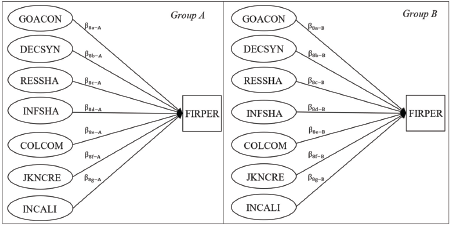
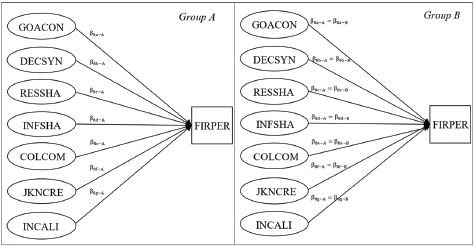
SEM multi-group analysis is used to verify the moderating effect of innovation capability on the relationship between supply chain collaboration components and firm performance. In this study, the multi-group analysis approach is utilised to compare the unconstrained model and constrained model using the Chi-square difference test. A median split is employed to divide the sample into two groups, as shown in prior research such as Innocenti et al. (2011), Nguyen and Aoyama (2014), and Andotra and Gupta (2016). As a result, ratings below the median belong to the low innovation capability group—group A, while ratings above the median belong to the high innovation capability group—group B. Variables that do not fulfil the EFA and CFA assessment criteria are excluded to guarantee measurement in variance between the two groups (Nguyen & Aoyama, 2014). On each moderating hypothesis testing, the model path coefficients are freely estimated for each group in Figure 3; however, in Figure 4, the model path coefficients are somewhat limited to be identical to the two groups. A statistically significant difference between the two models indicates the presence of a moderating influence (Hair et al., 2018).
Findings and Discussions
The Reliability and the Validity of Measurement Scale
The Reliability of Measurement Scale by EFA
In the preliminary test, conceptual scales are tested by Cronbach’s alpha coefficient and EFA with SPSS 20 software. The unsatisfactory items are deleted, including: one item regarding to plan collaborative arrangements for supply chain competitiveness (GOACON5) in goal congruence construct, one item showing jointly work out solution between companies and supply chain partners (DECSYN5) in the construct of decision synchronisation, one item about pool financial resources with supply chain partners (RESSHA5) in resource sharing construct, one item in information sharing construct about sharing production planning information (INFSHA2), one item describing the jointly learn the intentions and capabilities of the competitors (JKNCRE5) in joint knowledge creation construct, two items of incentive alignment construct regarding to co-developing systems to evaluate and publicise performance (INCALI1) and commensuration between incentive and investment (INCALI5), two items indicating the ability to use knowledge from different sources for product development activities efficiently and quickly (INNCAP2) and the ability to adapt to environmental changes easily and in a short time by implementing the suitable product and process improvements and innovations (INNCAP6), two items of firm performance construct indicating the short lead time for fulfilling orders (FIRPER5) and high level of customer service (FIRPER6). The scale set of 37 observed variables of nine concepts with promising preliminary results in terms of reliability and validity is qualified for the next analysis (Appendix B).
The Validity of Measurement Scale and Overall Measurement Model by CFA
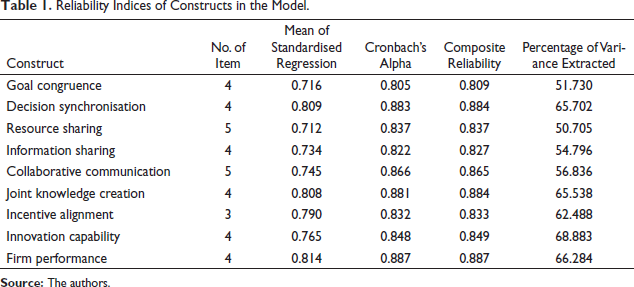
Reliability Indices of Constructs in the Model.
Relationship of Supply Chain Collaboration Components and Firm Performance
To examine the structural relationships between the constructs, the structural model is estimated using a covariance-based SEM—Maximum Likelihood estimation method with the AMOS 20 software support. The fit indices of the structural model are achieved as follows: chi-squared = 853.36; df = 485; p = 0.000; chi-squared/df = 1.760; TLI = 0.900; CFI = 0.908 and RMSEA = 0.056 (Figure 5).
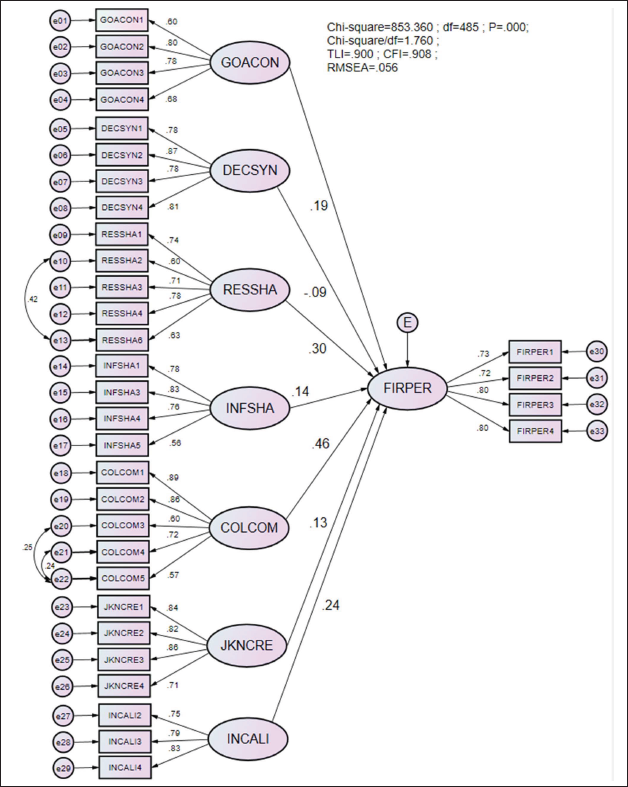
The standardised path coefficients show that six of seven hypotheses were supported at p-value < 0.05 (Table 2). These hypotheses include the positive effects on firm performance of information sharing, goal congruence, joint knowledge creation, incentive alignment, resource sharing, and collaborative communication.
Hypothesis Testing Results.

✓: Result is similar to literature review; ×: Result differs from literature review.
Hypothesis H1 is supported by the finding that goal congruence has a positive impact on firm performance (β = 0.188, p = 0.005). Similarly, Cao and Zhang (2011), Pradabwong et al. (2017), and Um and Kim (2019) support this relationship. Conflicting goals can derail the two parties’ collaborative relationship, making it difficult for the two partners to maintain a long-term relationship. For example, a company may want to produce environmentally friendly products, but its suppliers may want to cut costs. Therefore, when supply chain members are motivated by a common goal, they will work together to benefit the entire supply chain. As a result, the firm’s objectives will be met.
Similarly, the standardised regression coefficient for resource sharing on firm performance is 0.296 (p = 0.000), confirming the positive relationship between these concepts (H3). The findings of Kumar and Banerjee (2014), and Um and Kim (2019) support this positive finding. Concerns about enterprise resources are extended to all resources in the supply chain. Firms can thus optimise their operational activities by effectively combining and utilising internal and external resources.
Information sharing, in particular, had a positive impact on firm performance (β = 0.144, p = 0.023), thus supporting hypothesis H4. This result is also consistent with the findings of Nyaga et al. (2010), Kumar and Banerjee (2014), Pradabwong et al. (2017), Shahbaz et al. (2018). This is consistent with reality because both the firm and its supply chain partners understand each other’s operational situation and respond quickly to changes based on shared information. As a result, the firms’ information sharing becomes simpler and more efficient.
Notably, the new finding in this study is that collaborative communication has the greatest positive impact on firm performance when compared to other supply chain collaboration components (the highest standardised regression coefficient = 0.464, p = 0.000), thereby validating hypothesis H5. This finding confirms previous findings, such as those of Cao and Zhang (2011), and Um and Kim (2019). Communication is such a vital feature of modern collaboration, therefore, the effectiveness of communication with partners is more significant than simply providing the occasional report.
In a similar vein, joint knowledge creation has a positive impact on firm performance (β = 0.129, p = 0.036), thus testifying hypothesis H6. This finding is supported by the findings of Cao and Zhang (2011) and Ho et al. (2019). By working together to find, acquire and apply mutual knowledge, firms respond quickly and appropriately to changes in the business environment’s increasing fluctuations.
Then, the standardised regression coefficient between incentive alignment and firm performance is 0.241 (p = 0.000), validating the positive effects of incentive alignment on firm performance (H7). Similarly, Cao and Zhang (2011), Pradabwong et al. (2017), and Ho et al. (2019) all reach the same conclusion. When a company encounters a problem, its partners commit to working together to solve the problem, maintain partnerships, and maximise benefits throughout the supply chain. Furthermore, when supply chain members receive a fair return on their investments and efforts, they will continue to work with their partners.
The analytical results, however, show that the impact of decision synchronisation on firm performance is not statistically significant due to a p-value greater than 0.05 (p = 0.149). As a result, hypothesis H2 is not supported. Indeed, supply chain partners’ decision synchronisation is demonstrated by jointly planning marketing activities, forecasting demand, managing inventory, and planning product categories. This finding differs from those of Kumar and Banerjee (2014), Shahbaz et al. (2018), and Um and Kim (2019). It should be noted that in the context of manufacturing firms in Vietnam, decisions about demand forecasting, inventory management, and product assortment planning are regarded as highly sensitive. Firms in Vietnam primarily make independent decisions that are not coordinated with their partners.
The Moderation of Innovation Capability on the Relationship Between Supply Chain Collaboration Components and Firm Performance
To assess the effect of innovation capability on the relationship between supply chain collaboration components and firm performance, the sample is divided into high and low-innovation capability groups based on their ratings on this construct. By median split, a total of 151 samples are allocated to the high innovation capability group, whereas 90 samples are assigned to the low innovation capability group.
On the moderating variable of innovation capability, when binding the regression coefficient β from each component of supply chain collaboration on firm performance in the theoretical model, accordingly, goal congruence on firm performance (β8a−A = β8a−B); resource sharing on firm performance (β8c−A = β8c−B), information sharing on firm performance (β8d−A = β8d−B), collaborative communication on firm performance (β8e−A = β8e−B), joint knowledge creation on firm performance (β8f−A = β8f−B); and incentive alignment on firm performance (β8g−A = β8g−B), equally across both two business groups, the value of df increases one degree of freedom, from 738 to 739 and the chi-square also increases (Table 3). The SEM analysis shown in Table 2 rejects the hypothesised relationship between decision synchronisation and firm performance (H2); hence, the moderating effects of innovation capability on this hypothesised relationship (H8b) are not explored. The results of moderating analysis of innovation capability on the relationship of supply chain collaboration components and firm performance by chi-squared difference test between the partially constrained and unconstrained models have a p-value of < 0.05, which meets statistical discrepancy (Table 3, Appendix D).
Moderating Effects of Innovation Capability on the Hypothesised Relationship.
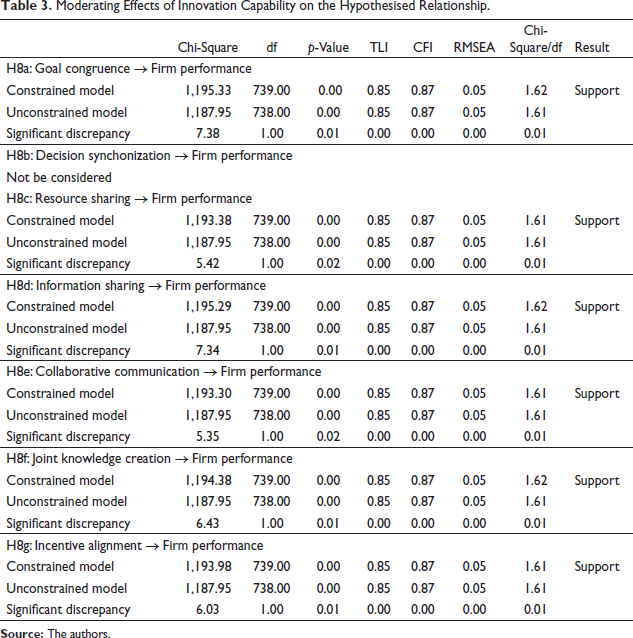
Accordingly, hypothesis H8a regarding the impact of innovation capability on goal congruence and firm performance is supported (p = 0.01). The positive relationship between goal congruence and firm performance changes substantially in the group of low innovation capability, but not in the group of high innovation capability.
Specifically, the link between resource sharing and firm performance is considerably altered by innovation capability (p = 0.02), showing that hypothesis H8c is validated. According to the coefficients, the higher the level of innovation capability, the greater the impact of resource sharing on firm performance.
Next, the p-value of hypothesis H8d is less than 0.05 (p = 0.01), indicating that hypothesis H8d of the impact of innovation capability on the relationship between information sharing and firm performance is supported. There is a significant change in the high innovation capability group on the relationship between information sharing and firm performance, but not in the low innovation capability group.
Particularly, hypothesis H8e has a p-value less than 0.05 (p = 0.02), supporting the significant change in the relationship between collaborative communication and firm performance by innovation capability. It has been demonstrated that when firms have better innovation capability, the impact of innovation capability on collaborative communication on firm performance is stronger.
Next, the positive impact of joint knowledge creation on firm performance is significantly changed by innovation capability (p = 0.01), validating hypothesis H8f. The positive relationship between joint knowledge creation and firm performance substantially changes in the group of strong innovation capability, but not in the group of low innovation capability.
Similarly, hypothesis H8g for the effect of innovation capability on the relationship between incentive alignment and firm performance is supported because the p-value equals 0.01, less than 0.05. In high innovation capability businesses, the impact of innovation capability on the link between incentive alignment and firm performance is significant, but it alters somewhat in low innovation capability businesses.
Above, these findings indicate that there is a difference in the impact of six supply chain collaboration components on firm performance between the groups of firms with high and low innovation capabilities. The results of assessing the moderating effect of innovation capabilities in this study complement Donkor et al. (2018)’s study which only analyzes the influence of a firm’s own strategic goals and performance of small and medium companies in Ghana, and Wang and Hu (2020)’s study which examines the relationship between collaboration innovation activities and innovation outcomes.
Conclusion
This study addresses shortcomings in the studies of supply chain collaboration by identifying supply chain collaboration components, testing the impact of each component on firm performance and the moderation of innovation capability on the relationship between supply chain collaboration components and firm performance of 241 manufacturing firms in Vietnam under the extended resource-based view—capability-based approach—specifying innovation capability. According to empirical evidence, supply chain collaboration components such as goal congruence, resource sharing, information sharing, collaborative communication, joint knowledge creation and incentive alignment have significantly positive impacts on firm performance. In particular, collaborative communication has the greatest positive impact on firm performance and innovation capability can considerably alter the positive relationship between supply chain collaboration components and firm performance. Notably, this study supplements previous studies, such as Cao and Zhang (2010), Pradabwong et al. (2017), Um and Kim (2019), Liao et al. (2021), and others, which did not take into account the impact of each component of supply chain collaboration. Furthermore, the results of assessing the moderating effect of innovation capabilities in this study supplement the other attention from previous research, such as Donkor et al. (2018) and Wang and Hu (2020). Identifying which supply chain collaboration components have a significantly positive impact on firm performance and the role of innovation capability enables firms to devote considerable attention and investment to this activity to maximise firm performance.
As a result, to accelerate supply chain collaboration for innovation capability and firm performance improvement of manufacturing enterprises in Vietnam, supply chain managers and managers of manufacturing firms in Vietnam should pay attention to the prominent aspects as follows. First, under goal congruence, firms must focus on common goals and carry out activities that benefit the entire supply chain rather than focusing solely on their interests. Managers must understand the value of supply chain collaboration and the advantages of setting common goals for supply chain partners. Direct discussions with partners must be held regularly to agree on common goals that prioritise long-term future benefits over short-term goals. Furthermore, managers must discover a way to shorten the supply chain to respond swiftly to changes in market demand, a new trend notified by Simchi-Levi et al. (2021) in global supply chain management. The associations must strengthen their position in the sector by assisting firms in managing demand variations and maintaining consistent demand and supply. As a result, the associations must be conscious of their position and create a vision to offer relevant activities to assist and gain from collaborating with supply chain partners, as well as invest in further research for the next direction. Particularly, when there is no voluntary agreement among firms, the government should compel them to reach an agreement, which helps to balance the market according to the law of supply and demand. Firms either broaden their supply chains by diversifying their business sectors or deepen their supply chains by focusing on research and product innovation. In terms of management, the involvement of the government and associations facilitates goal congruence among partners with high consensus. This assists competitors in moving beyond their own profit goals and toward the general aims of the supply chain. Second, to encourage resource sharing with supply chain partners, firms must be aware of the importance of sharing resources and jointly exploiting resources among the supply chain. Firms should share both human and physical resources such as machinery, equipment, facilities, and technology to capitalise on each other’s strengths and strengthen the supply chain. Furthermore, the companies should form cross-organizational teams composed of members from multiple functions from supply chain partners to carry out improvement projects. Innovation-oriented enterprises seek to collaborate with the companies leading innovation in the industry through experiential learning and collaborative initiatives that take full advantage of each company’s capabilities and bring innovative products to market as rapidly as feasible. In addition, through mergers and acquisitions, they may be able to capture the value of innovation from other top firms. To maximise benefits in the supply chain system, successful innovative businesses must preserve core competencies in-house and outsource others to their partners. To do this, the government must implement policies and mechanisms to support enterprises in alliance networks. Furthermore, associations serve as a link between firms to foster resource sharing. Third, to foster information sharing through supply chain collaboration, supply chain partners should share operational information such as capacity planning, order forecasting, and order status. The type of information shared and the extent to which it is shared are determined by the trust of the firm and its suppliers. Trust is important in the relationship between parties because it promotes greater collaboration and encourages firms to share important information (Salam, 2017). Building mutual trust between partners, particularly strategic partners, is critical (Simchi-Levi et al., 2021). Therefore, supply chain partners must build and maintain mutual trust, as well as increase their willingness to share strategic information effectively. Furthermore, information technology alignment simplifies and improves the process of sharing information (Ye & Wang, 2013). Companies must design mutual data accessing systems to improve information sharing efficiency, for example, the vendor-managed inventory system. Accordingly, suppliers can directly access the enterprise’s inventory management system, and calculate and make decisions to supply goods to the warehouse. Another suggestion is to develop an automatic order tracking system among supply chain partners to track the order status, order processing, shipping, and transfer, notifying early about incidents that affect the progress of the order and tracing the origin of goods. Besides, if partners only participate in one supply chain, information sharing is simple. The fact that a supplier might engage in several supply chains of various organisations, some of which may be rivals, indicates that there will be some dangers when sharing information in supply chain networks. Therefore, enterprises towards innovation should invest in blockchain technology, security systems and data digitization technology, which easily share information, control the security and shared information quality, reduce the risk of information leakage, overproduction and the bullwhip effect, save the cost and enhance efficiency across the supply chain. In addition to organisational initiatives, the government must develop fundamental technological platforms and rules enabling firms to digitally transform and function innovatively. Fourth, communication is critical in collaborative relationships; therefore, firms must pay close attention to improving the effectiveness of communication with partners. In addition to delivering reports, firms must prioritise regular, face-to-face meetings, open communication, especially with strategic partners, as well as flexibility in using various communication channels. The context of the COVID-19 epidemic, in particular, necessitates remote working, and online communication is very important. Besides, online meeting platforms make it simpler to connect businesses in the context of globalisation, thus the government should have rules in place to encourage firms to use the proper platform while avoiding platform licensing limitations. Because some platforms require a business account registration and users must pay a charge to access the whole application package, the companies and their partners should agree on a common platform for scheduling and organising meetings, such as Google Meet, MS Teams, and Zoom. Furthermore, the communication method should combine formal and informal communication, as well as a variety of communication channels such as phone, email, and message. Enterprises must combine innovative managerial thinking to take advantage of information and knowledge from partners to respond quickly to changes while still guaranteeing the protection of strategic information. Fifth, to accelerate joint knowledge creation throughout the supply chain, partners must regularly actively seek, analyse, and synthesize new and relevant knowledge, which is then applied in operational management. Supply chain members can organise experience-sharing sessions and site visits. Firms should then establish programmes that allow partners to discuss and exchange expertise, as well as mutually learn about operational methods, technology, and managerial experiences. Therefore, firms should also investigate and capitalise on potential networks to foster an inter-organizational learning-oriented culture through supply chain collaboration. Instead of just accumulating and investing in facilities, innovative organisations must focus on investing in human resources to create massive assets in the long run, leveraging knowledge capital to innovate in the future. In terms of management, different types of enterprises must focus on appropriate strategies. For example, small businesses should create an environment where employees can share knowledge and learn from one another, whereas large businesses should invest in research and development to develop new businesses in new industries. Following that, to promote incentive alignment in supply chain, partners must ensure fairness and minimise conflicts of interest when sharing benefits, costs, or risks. Firms must develop appropriate approaches for risk identification, evaluation, and response, all of which contribute to reducing negative consequences throughout the supply chain. For successful collaboration, firms must commit to create a long-term and strong partnership with strategic partners for development, as well as to help them in unknown-uncontrolled conditions such as natural catastrophes, epidemics and prevent speculation in the supply chain. Enterprises need to be aware that innovation and business require time and resources, as well as many risks from which to earn lessons, technology know-how and business know-how. Each organisation must have a development direction in line with current technological capabilities, such as followers continuing to invest in other areas of innovation rather than simply seeing advantages from innovators, which may lead to disputes in industry and society. Notably, the innovation capability helps firms to promote the effect of supply chain collaboration components on firm performance. To shift from a low to high innovation capability, firms must primarily build an organisational culture of accepting and learning from failure in innovation, overcoming fear of change, and being driven to execute innovation from tiny things, all of which are features of a successful innovation organisation (Tidd & Bessant, 2021). Particularly, in the face of market constraints following the COVID-19 epidemic, an innovative culture is critical for organisations to preserve and increase their innovation capabilities. Therefore, firms must cultivate an innovative culture in all aspects of their operations, emphasising two key ingredients mentioned by Tidd and Bessant (2021)—technical resources and the capabilities to mobilise them. In which, human resource is a key element of this strategic vision, therefore, firms must constantly develop employee skills and the qualifications of the management team. The roadmap shifting firm from low to high innovation capabilities must be layouted. In the beginning, firms should invest in human resources by recruiting from a business with a high level of innovation in sales, technology, engineering, and R&D. Furthermore, managers must encourage and assist all workers to contribute ideas and actively engage in innovation initiatives. To inspire staff, a mechanism for evaluating and rewarding prospective ideas must be devised. Next, companies should purchase advanced technology and collaborate with top innovation companies to study and transfer technology. Then, strategic alliances or partnerships with innovative firms should be implemented as a way of learning from their experiences. Ideas from supply chain partners such as customers and suppliers should be examined on a regular basis and recognized as a source of ideas for innovation, in addition to internal sources. Finally, companies do their research and development, investing in technology to achieve long-term growth.
Aside from achieving specific results, this study opens up some new avenues in this field, necessitating further investigations to compare, complement, or argue the findings of this study. First, this study only focuses on investigating the impact of supply chain collaboration on firm performance in the setting of manufacturing enterprises in Vietnam. Furthermore, the service sector is becoming increasingly important in the modern Vietnamese economy (General Statistics Office, 2020), and supply chain collaboration could be a major issue. The components of supply chain collaboration in the service industry may differ from those in the manufacturing industry; for example, no shared production information and little shared facilities or devices. Furthermore, differences in the impact levels of each component of supply chain collaboration in the manufacturing and service industries, as well as differences in the impact levels of the components, should be investigated. Currently, there have been few studies on supply chain collaboration in the service sector that have been conducted in a few specialised areas such as healthcare service (e.g., Chakraborty et al., 2014) and maritime logistics (e.g., Seo et al., 2016). More study into supply chain collaboration in the service sector is needed to provide a full picture of the industry, especially in the context of Vietnamese businesses. Next, the supply chain collaboration in this study focuses on firms and major suppliers without considering customer engagement. There are certain differences between downstream and upstream collaboration (Li et al., 2006). Furthermore, from the extended resource-based perspective, supply chain members that concentrate on both upstream suppliers and downstream customers gain competitive advantages (Lewis et al., 2010). Therefore, following up on this focus study, more research should be conducted to evaluate firms’ collaboration with their customers. Thereby, analysis and comparisons are performed to provide a comprehensive view of the supply chain’s upstream and downstream components. Then, numerous prior studies have examined the impact of supply chain collaboration on firm performance through mediation effects, such as those conducted by Cao and Zhang (2011), Chakraborty et al. (2014), Pradabwong et al. (2017), and others. This study investigates the moderation of innovation capability on the relationship between supply chain collaboration and firm performance, addressing the remarkable supply chain collaboration with elements of innovation; nevertheless, other moderation impacts still perceive as insufficient discovery. Whether the relationship between supply chain collaboration components and firm performance is influenced by another moderator factor, such as cultural differences among partners, technological capability, firm size, a firm of ownership, firm age, and key industry, which is called for further investigations. Finally, this study applies perceptual self-assessment methods based exclusively on the perception of possibly just one key informant from 241 manufacturing companies in Vietnam to measure supply collaboration components, innovation capability and firm performance. The subjective and objective assessments have close ties and provide comparable findings (Chenhall & Langfield-Smith, 2007), though, the objective assessment of performance is the most practical (Nguyen & Aoyama, 2014). However, the research relying on subjective measures still is a limitation (Jaworski & Kohli, 1996). A mix of financial and non-financial variables would be the optimal measure of firm performance (Fowowe, 2017). Therefore, further studies should be conducted with objective performance measures to provide additional evidence of the similarity of subjective measures and objective measures, which challenges organisational research, particularly, in the sensitive data context of manufacturing companies in Vietnam. Furthermore, advanced techniques in the multivariate analysis used in this study include potential bias; it is worthwhile to conduct additional qualitative procedures to validate the findings of this study.
Above, this study provides unique insights to help manufacturing companies in Vietnam and their supply chain partners strategically prioritise resources for supply chain collaboration and innovation activities to achieve successful firm performance.
Scale Items and Standardized Loading.
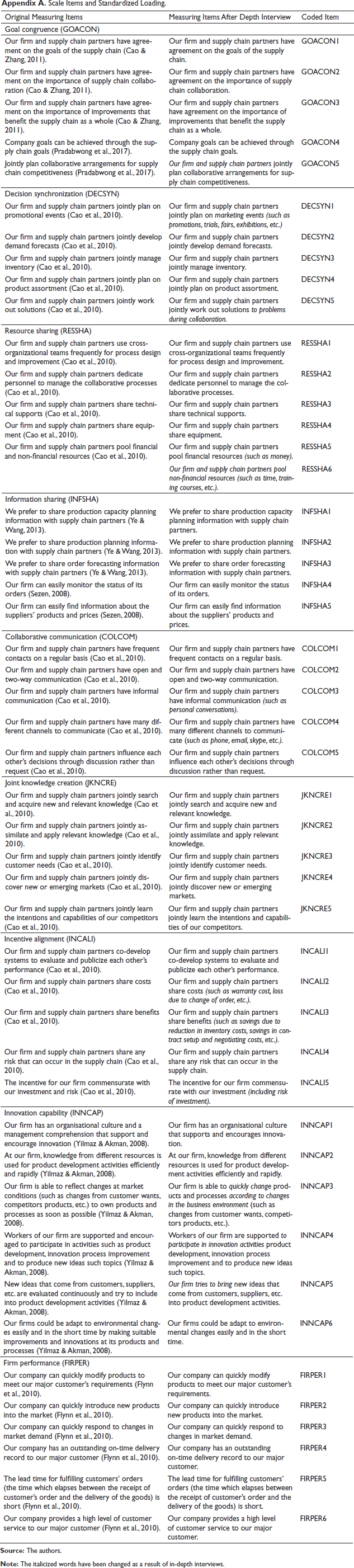
Scale Assessment Results.

Discriminant Validity Between Constructs in the Model.
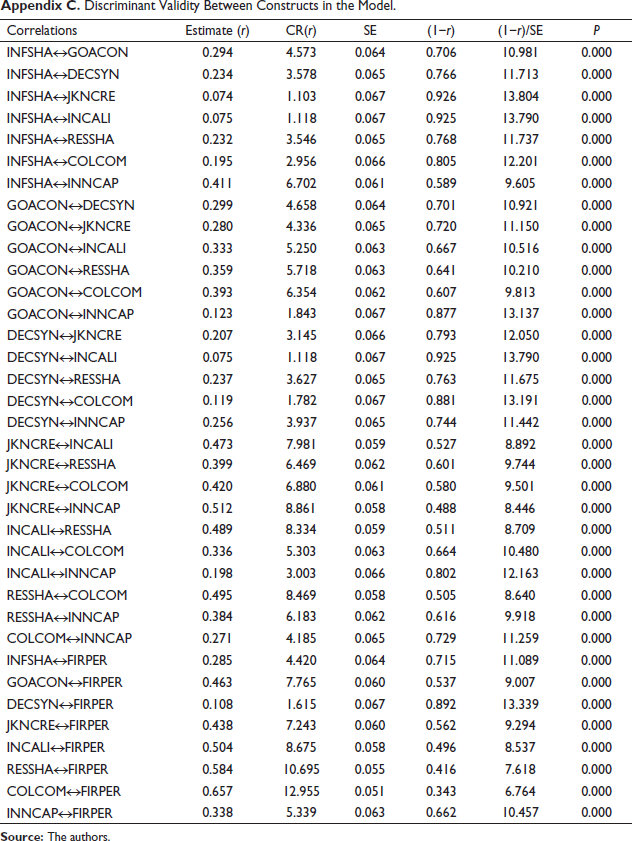
Unstandardized Estimation on Moderating Effect of Innovation Capability.
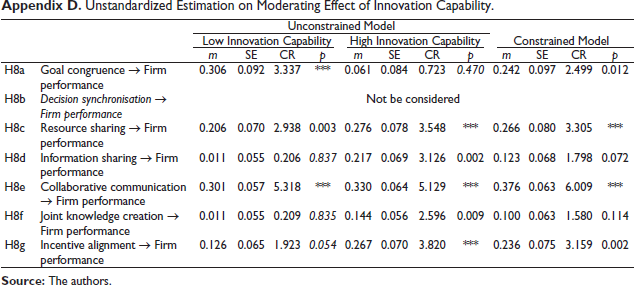
Footnotes
Acknowledgements
This research is funded by Vietnam National University Ho Chi Minh City (VNU-HCM) under grant number C2021-20-45, which is so appreciated. The authors also would like to thank supply chain experts for their valuable and insightful comments in in-depth interviews. In addition, we would like to express our gratitude to the managers of manufacturing firms in Vietnam for their participation in the survey.
Declaration of Conflicting Interests
The authors declared no potential conflicts of interest with respect to the research, authorship and/or publication of this article.
Funding
The author(s) disclosed receipt of the following financial support for the research, authorship, and/or publication of this article: This research is funded by Vietnam National University Ho Chi Minh City (VNU-HCM) under grant number C2021-20-45, which is so appreciated.
