Abstract
Firms view export policies as an external change agent that stimulates international business activities. In the past decades, developing countries have witnessed significant changes in their export policies to reduce financial and infrastructural barriers to international trade. India, with an objective to double its market share at the global level by 2020, has initiated a mix of policy measures in its Foreign Trade Policy since 2009. However, to measure the effectiveness of these policy initiatives on export business, no valid measurement scales or constructs have been developed for empirical assessment. Moreover, there is very little agreement in the literature about a conceptual definition of government export assistance as well as its operational definition. Hence, the objective of this study is to identify relevant policy initiatives and develop sub-dimensional constructs with valid measurement scales. This conceptualization is explored empirically with data from 400 exporters. The data identified four sub-dimensional measurement models that can be considered for future operations. The findings also provide useful practical guidelines and recommendations to exporters, policymakers and researchers.
Keywords
Introduction
Export policies can significantly influence both the pace and direction of a firm, which can either directly or indirectly stimulate business objectives. In the past few decades, there has been a considerable increase in the quality of policy research on international export marketing. Most of these studies dealt with export assistance (Ahmed et al., 2002; Balassa, 1990; Fairchild, 1988; Faroque & Takahashi, 2012; Fenwick & Amine, 1979; Gençtürk & Kotabe, 2001; Guan & Yam, 2015; Roy, 1993; Shamsuddoha et al., 2009; Singer & Czinkota, 1994; Truett & Truett, 1994; Verghese, 1978) on the agriculture, clothing and automobile industries. Though some similarities in policies can be found in support of a firm’s innovation, financial incentives and regulatory provision between developed and developing countries, export policies may differ from country to country in terms of emphasizes, functions and structure.
Timely government intervention in foreign trade policy is very important since export policies are viewed as high priorities for national planning policies in developing countries. Over the past decades, developing countries have witnessed significant changes by reducing barriers to international trade. This has enabled firms to seek better opportunities by shifting focus from domestic to global marketing. Export assistance as an ‘external change agent’ plays a key role in stimulating those domestic firms to participate in international business activities through a number of policy initiatives (Tamer Cavusgil & Czinkota, 1990). The factors and preconditions for firms to export solely depend on the external environmental conditions, and export policy is one such factor that usually defines the parameter for successful export activities of a firm. The first objective of this article, then, is to review India’s foreign trade policy and identify relevant policy measures that can be used for empirical assessment. The second objective is to see the interrelationship between the developed sub-dimensions and variable representations of the constructs. The third objective is to provide an empirical assessment of reliable and valid measurement scales for the identified constructs for future research.
Rational of the Study
Since 2009, the government of India has initiated a mix of policy measures in its Foreign Trade Policy with the objective of doubling its share in global trade by 2020. Moreover, during 2012–2013, the government of India further implemented a certain sectoral scheme for holistic growth and development of exports (Jamir, 2020). However, to measure the effectiveness of these policy initiatives from academicians’, practitioners’ and market researchers’ point of view, there are no valid scales or constructs that have been developed so far. One of the recurring, but relatively unanswered, questions is whether export market research includes the uses and effectiveness of government policy measures. Although previous research has contributed to the development of export assistance as a construct in the export marketing research, they are based on different countries and industries. Hence, to control the heterogeneity of policy and provide a clearer measurement scale to measure its effectiveness, this study conceptualizes and hypothesizes India’s export policy initiatives.
Moreover, an assessment on effectiveness of export policy is an important step forward towards country’s policy development. Despite increasing scholarly attention on improving the effectiveness and efficiency of export assistance programmes, there is no such measurement tools that has been developed or studied conclusively in the past. In such case, this study will make a significant contribution towards the development of export policy initiatives as a valid construct in export market research for empirical assessment.
Conceptual Definition—Export Policy
A conceptual definition of export policy should address both parts: export and policy. Export is defined conceptually as the internationalization of firms’ marketing activities outside of the domestic market. It represents a viable strategic option for firms to internationalize markets with high levels of flexibility and quick cost-effectiveness (Sousa et al., 2008). This conceptual definition is, therefore, inclusive of several international engagements, such that exporting firm does not have control over foreign operations. It either exports directly or through agents/distributors—as the case may be for a joint venture or wholly owned subsidiary (Shoham, 1998). Policy, in contrast, is conceptually defined as an active concept that can initiate or change the characteristics of ongoing management activities (Wies, 1996). Policies are derived from management goals and can influence the behaviour of a manager or business entity. However, policy may be either monitoring or enforcing actions, and therefore the manner in which it is applied may differ depending on its classification and characteristics.
Export policy is a measure undertaken to influence a country’s level and composition of exports (Choudhary, n.d.). They are public policy measures that seek to enhance export activity at the industry or national level (Root, 1971), which involves creating awareness, expansion of markets, reduction of barriers and providing assistance among exporters (Seringhaus & Rosson, 1990). Export policies are wide-ranging export assistance measures developed by policymakers to catalyze export growth. From a government’s point of view, export assistance is intended to improve the competitiveness of domestic firms in international markets, whereas, from a firm’s perspective, export assistance reinforces motivation to export. These motives include improvements in infrastructure, exploitation of technological advantages with an ability to offer unique products, maximization of marketing advantages and the need for market diversification (Seringhaus & Rosson, 1990).
Operational Definition—Export Policy
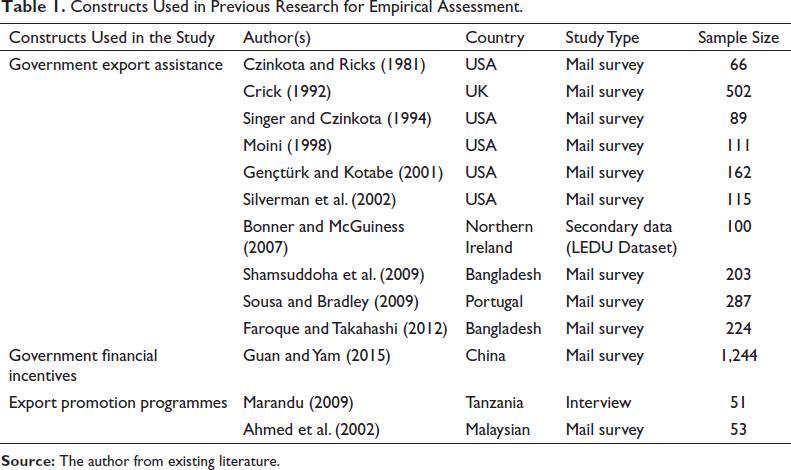
As discussed in the introduction, there are a number of studies that have examined the uses of export assistance and export promotion programmes by firms from different countries and industries (see Table 1). Firms’ export potential can be influenced with greater pace and direction through effective export policies. Hence, there are various objectives and intentions from government when implementing export policies. However, some policies can improve and promote industries, while others can be ineffective or even damaging. In both cases of developed and developing nations, export business ventures require assistance and guidance from the state and national governments to identify potential export markets, locate customers and promote their goods and services in the global market (Ahmed et al., 2002). The government’s policies affect export promotion through various provisions of economic incentives to the exporters (Roy, 1993). These economic incentives can be exchange rate adjustments, lower interest rates, duty drawback schemes and export performance benefits.
Constructs Used in Previous Research for Empirical Assessment.
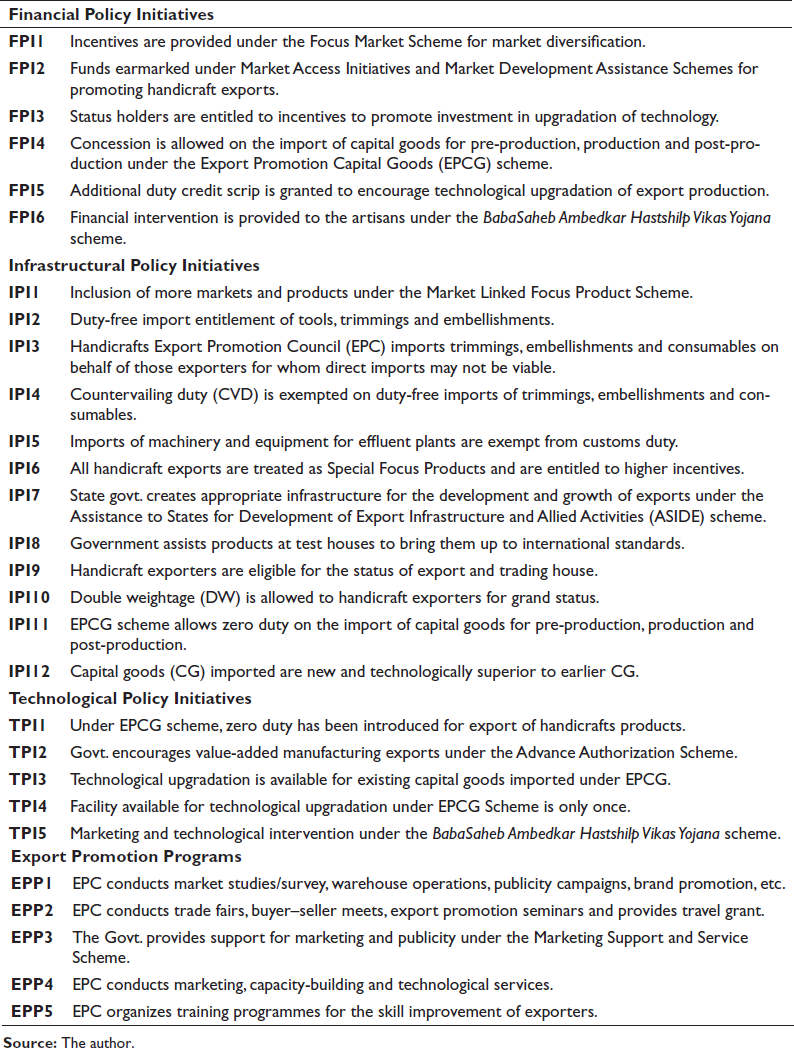
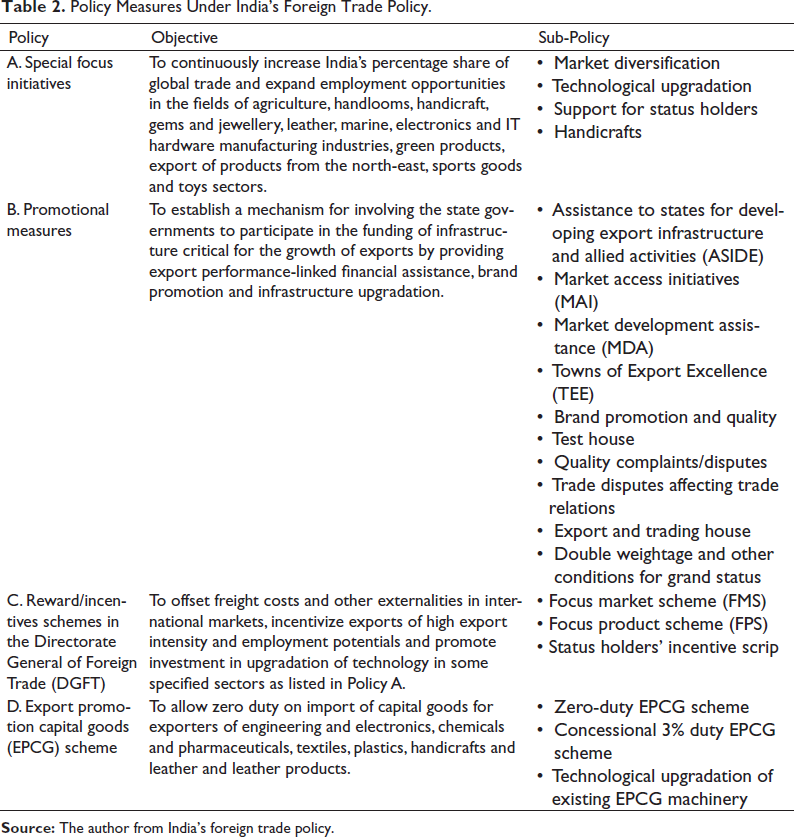
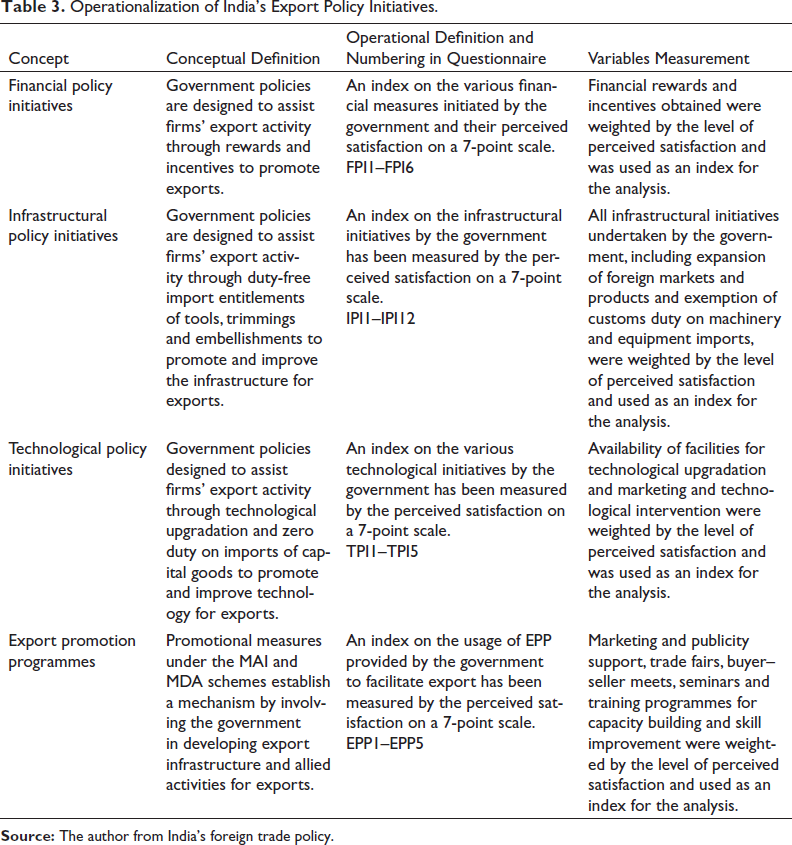
To operationalize India’s export policy initiatives into a new construct, Foreign Trade Policy was thoroughly reviewed to select the most relevant policies for developing an instrument. Based on the category of policy measures taken by the government (see Table 2), these policies were operationalized accordingly into four constructs to fit the requirement. The definitions and measurements of the operationalization of variables are summarized in Table 3. These export policies may differ internationally depending on the emphasis, function, structure and industry. However, there can be some similarities among the developed and developing countries, such as support through financial incentives, regularity and relevancy (Guan & Yam, 2015).
Policy Measures Under India’s Foreign Trade Policy.
Operationalization of India’s Export Policy Initiatives.
Methodology
Questionnaire Development
The questionnaire included three major constructs, each of which had multiple items. However, only the questions and items that pertain to the area of inquiry of this article are discussed here. The original version of the questionnaire was developed through a thorough review of the Foreign Trade Policy and qualitative discussions with practitioners. A widely used Likert rating scale has been used to collect information from the respondents. The rating scale could be anything between two and any higher number, although most researchers prefer using a number between five and nine (Cox, 1980). In this study, a wider range of a 7-point scale has been used to assess the respondents using sophisticated statistical techniques to increase the variability of the data. Givon and Shapira (1984) stated that the correlation coefficient decreases as the number of scale categories decreases and simultaneously affects all statistical analyses based on the correlation coefficient.
Pre-Testing of Questionnaire
The preparation of the research instrument (questionnaire) has been guided by relevant literature, followed by subject experts. Before finalizing the questionnaire, a preliminary test was conducted to determine the suitability of the questions and willingness of the respondents in providing information. The initial questionnaire developed was conducted in two stages. First, the preliminary questionnaire was reviewed by three academicians (subject experts) to assess the item content and the validity of the constructs. The comments, suggestions and any necessary changes to be made after reviewing were incorporated and revised.
The second stage was to test the small sample of the revised questionnaire with the respondents in the field from whom the data is to be collected. The purpose of the trail was to examine whether the revised questionnaire is understood and whether the questions to be asked are relevant to the respondents in the field of exports. It is also important to understand the level of participation and cooperation from the potential respondents. To attain these objectives, a small sample of ten exporters from India were selected for interview. The questions were then administered to experienced export managers (Shoham, 1998), who were asked to provide feedback about the face and content validity, item wording and questionnaire structure. Any editing, inclusion, exclusion, relevance of the questions, constructs and items arrangement, sequence, layout and difficulty of the questions, etc. were taken into consideration as per the instructions. Necessary changes were then made on the basis of the managers’ comments and suggestions. The revised questionnaire based on their recommendations was then used for the main study.
Operationalization of Measurement Scale and Constructs
Export Policy Initiatives: Twenty-eight items under four constructs were developed to operationalize export policy initiatives: financial policy initiatives (FPI), infrastructural policy initiatives (IPI), technological policy initiatives (TPI) and export promotion programmes (EPP). The managers were then asked to indicate their usage and effectiveness of export policy initiatives for the past 3 years (Gençtürk & Kotabe, 2001; Shamsuddoha, 2004) on a seven-point rating scale (1 = Highly dissatisfied; 7 = Highly satisfied). Managers’ perception and attitude (Czinkota & Ricks, 1981; Faroque & Takahashi, 2012; Gençtürk and Kotabe 2001; Shamsuddoha et al., 2009; Singer & Czinkota, 1994; Sousa & Bradley, 2009) towards export policy initiatives were measured through quantitative responses producing an ordinal or nominal scale (Seringhaus, 1986). The assistance used or received by the exporters was weighted by the benefit they perceived, and the sum of these weights was used as an index for analysis.
The Sample
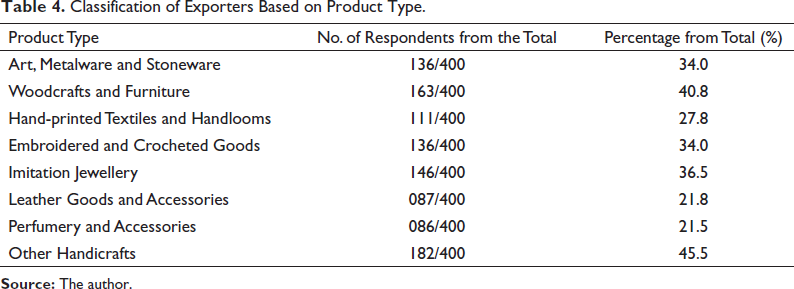
Several factors were brought into consideration while determining the sample for the study. First, since the handicrafts sector was one of those few sectors in India that had insignificant growth after the global economic downturn in 2007–2008 (Jamir, 2020), the government has been following a mix of policy measures to promote and develop this sector as well as to improve the infrastructure related to exports for potential and existing exporters. Hence, the population was restricted to handicraft exporters only. Those exporters who were registered with the Export Promotion Council for Handicrafts (EPCH) were only considered for the study. Second, a single industry was selected to control the heterogeneity of the export policy initiatives across different sectors. Third, those firms which have an export experience of 5 years or more were only considered for study. The population constituted 7,789 exporters from India as of 5 January 2015 (Jamir, 2020), of which a total of 400 samples were determined based on power analysis.
Data Collection
The data for this study were gathered from both merchant and manufactured exporters. Respondents were selected based on a non-probability sampling technique, relying on personal judgement and convenience (Faroque & Takahashi, 2012). During the course of the investigation, it was understood that many registered exporters listed in the directory had not been involved in exporting in the last few years or had stopped exporting due to financial and other constraints. Moreover, few seem to have changed their business locations and addresses.
A mail survey with telephonic follow-up was initiated to gather data from the respondents. The self-administered mail survey approach was considered appropriate given the nature of study (Faroque & Takahashi, 2012; Julian, 2003; Zou et al., 1998). However, due to the lower response rate and potential of non-response bias involved in the mail survey (Churchill, 1999), the respondents were first contacted through a telephone call to take into account if they were willing to participate in the survey.
Mail Survey Results
Basic Descriptive Statistics of the Sample
Classification of Exporters Based on Product Type.
Export Policy Initiatives—Exploratory Factor Analysis
Since the variables of export policy initiatives are self-developed scales to be used as predicting variables for empirical assessment, it was important to explore the underlying dimensions that cause correlations among the observed variables. Exploratory factor analysis (EFA) was used to assist the two main purposes: summarization and data reduction. For summarizing the data, it derived the underlying dimension by identifying a smaller number of items than the original individual variables. Data reduction was achieved by calculating scores for each underlying dimension and substituting them with original variables (Hair et al., 2006).
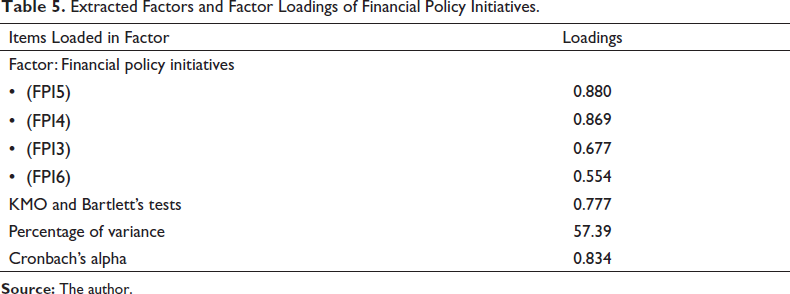
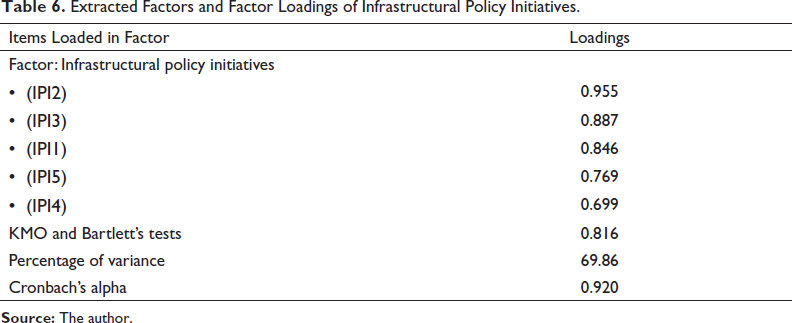
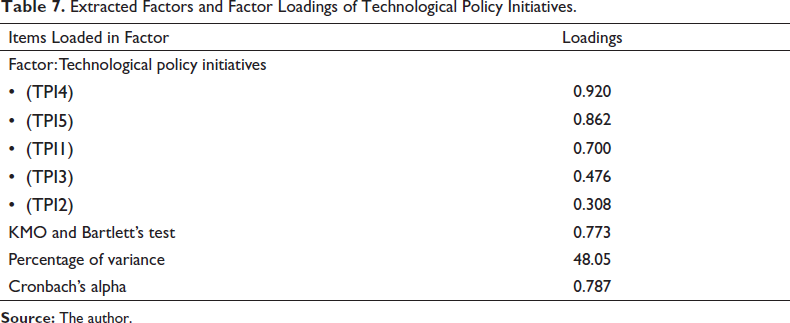
Initially, EFA was run separately for each construct by extracting highly correlated observed variables into a single factor. KMO and Bartlett’s tests were selected from the descriptive box, and then extraction was done through ‘maximum likelihood’ method by selecting Eigen values greater than one and maximum iteration for convergence at 25. In the rotation box, ‘promax’ was selected, and coefficient display format was suppressed to an absolute value below 0.3 in order to reject any loading that is less than 0.3. Finally, the analysis was run to achieve the results. The following are the results presented in detail along with the factor loadings of items and percentage of variance accounted for by each individual factor.
Financial Policy Initiatives
Extracted Factors and Factor Loadings of Financial Policy Initiatives.
Infrastructural Policy Initiatives
Extracted Factors and Factor Loadings of Infrastructural Policy Initiatives.
Technological Policy Initiatives
Extracted Factors and Factor Loadings of Technological Policy Initiatives.
Export Promotion Programmes
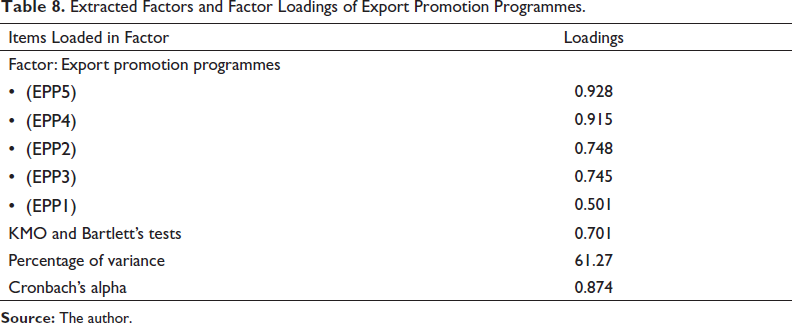
Extracted Factors and Factor Loadings of Export Promotion Programmes.
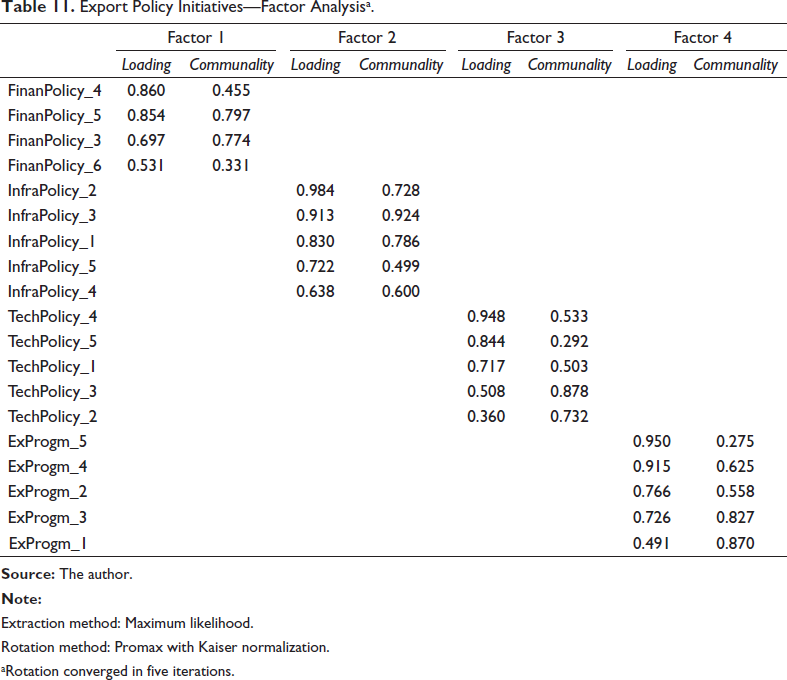
Finally, EFA was conducted on all four constructs of export policy initiatives to identify a smaller number of factors by extracting those variables that gives high correlation among observed variables. In this study, EFA was tested by selecting the initial solution, reproduced and KMO & Barlett’s test in the descriptive box. Extraction was done through the maximum likelihood method by using Eigen values more than one. In the rotation box, promax was checked by taking the maximum iteration for consequences at 25. Coefficient display format was suppressed to an absolute value below 0.30 before running the factor analysis.
KMO and Bartlett’s Tests for Export Policy Initiatives.

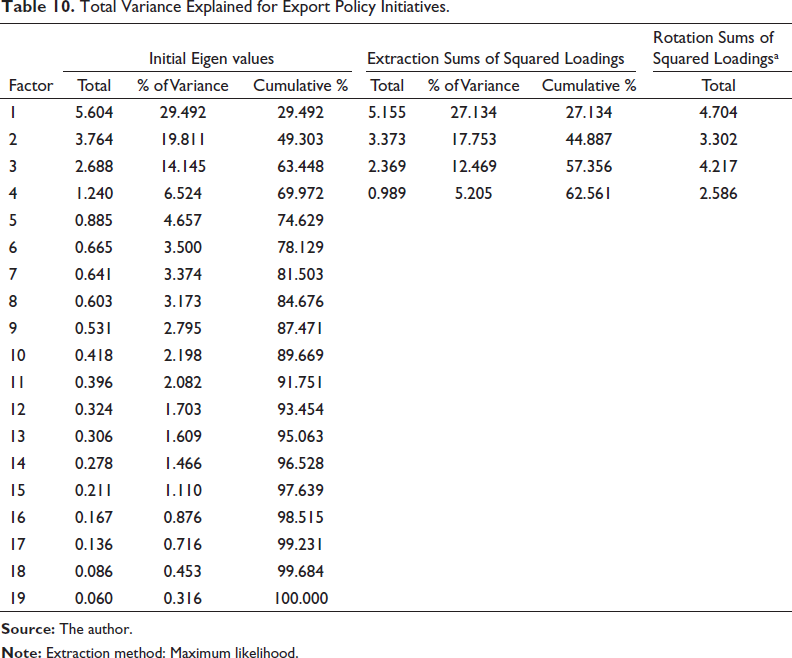
Total Variance Explained for Export Policy Initiatives.
Export Policy Initiatives—Factor Analysisa.
Extraction method: Maximum likelihood.
Rotation method: Promax with Kaiser normalization.
aRotation converged in five iterations.
The set of items included in Tables 5–11, are those items that loaded heavily to the measure constructs, each indicating their respective factor. From Tables 5–8, several items either loading low or having cross loadings were removed in order to indicate convergent validity. The above Tables 9–11 are the EFA results of export policy initiatives, which can be used as predicting variables for future empirical assessments; and hence assessing the adequacy of combined factors and factor loadings was important since they were self-developed constructs.
Validation of the Measurement Scales
Reliability and validity are two important characteristics of any measurement procedure. The purified scale from the factor analysis was further evaluated for reliability and validity.
Reliability
Cronbach’s Alpha Coefficient of the Construct.
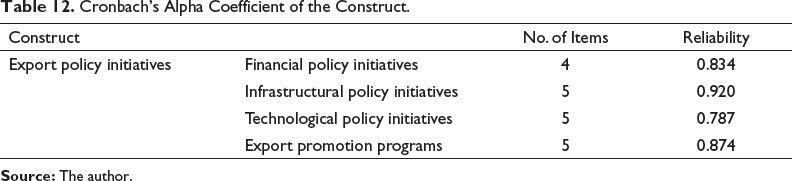
The scales developed for this study were approached for a minimum standard as suggested by Nunnally (1978) for estimating satisfactory reliability. A Cronbach alpha coefficient of above 0.70 is considered a reasonable test of scale reliability (Gaur & Gaur, 2009), and Table 12 shows all four subdimensions are reliable at Cronbach alpha values above 0.70. Hence, content validity is assumed, but the formal validity of each of the measures was tested by examining their construct validity.
Confirmatory Factor Analysis of the Measurement Model
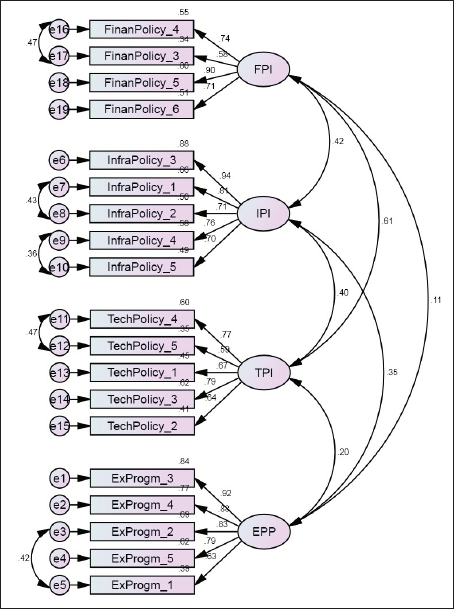
To understand how well variables measured represent a smaller number of constructs, confirmatory factor analysis (CFA) was conducted on four unobserved constructs and each having at least five observed variables except for financial policy initiatives (four observed variables). To validate the measurement model, model fit, reliability and validity tests were performed.
Export Policy Initiatives: Model Fit Measurement.
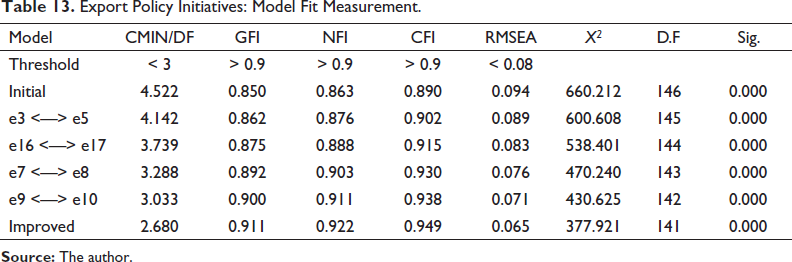
The unmeasured factors of government export policy initiatives were estimated by four constructs and 19 observed variables (see Figure 1). The initial model chi-square statistic was 4.522, GFI = 0.850, NFI = 0.863, CFI = 0.890 and RMSEA = 0.094, with a degree of freedom of 146 and p = 0.000, indicating that the model should be rejected. However, after covariating eight variables, an improved model was obtained where chi-square statistic was 2.680, GFI = 911, NFI = 0.922, CFI = 0.949 and RMSEA = 0.065, with a degree of freedom of 141 and p = 0.000, indicating a good model fit (see Table 13).
Results of the Individual Variable Measurement Model of Export Policy Initiatives.
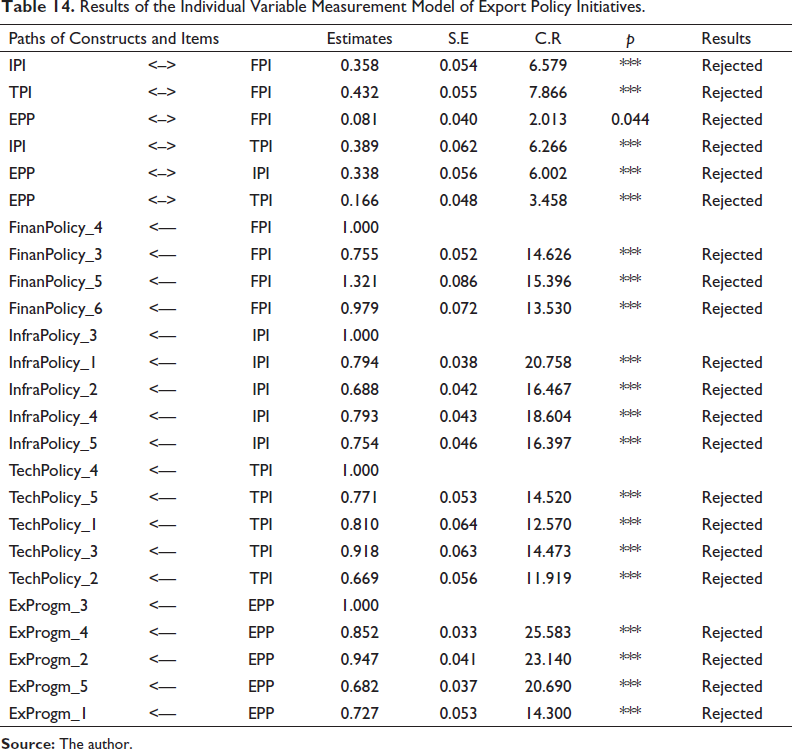
To see the interrelationship between the four constructs developed in the study and to understand how well these variables represent the constructs, CFA was tested. The constructs (unobserved variables) FPI and IFI are interrelated (coefficient estimate = 0.358, critical ratio = 6.579, p = 0.000) and significant at 1% level; FPI and TPI are interrelated (coefficient estimate = 0.432, critical ratio = 7.866, p = 0.000) and significant at 1% level; FPI and EPP are interrelated (coefficient estimate = 0.081, critical ratio = 2.013, p = 0.044) and significant at 5% level; TPI and IPI are interrelated (coefficient estimate = 0.389, critical ratio = 6.266, p = 0.000) and significant at 1% level; IPI and EPP are interrelated (coefficient estimate = 0.338, critical ratio = 6.002, p = 0.000) and significant at 1% level and TPI and EPP are interrelated (coefficient estimate = 0.166, critical ratio = 3.458, p = 0.000) and significant at 1% level. Though all constructs are interrelated, the relationship between FPI and TPI has higher efficiency because of their higher co-efficient value compared to others (see Table 14).
Construct Validity
Construct validity was measured through CFA to assess the proposed measurement theory and to know to what extent this study is correct in terms of the measurability of the construct and its dimensions. It was also measured to identify the set of items that actually reflect the theoretical latent construct for empirical assessment (Hair et al., 2006). The construct validity comprises of two aspects—convergent validity and discriminant validity.
Convergent Validity
Convergent Validity of Export Policy Initiatives.
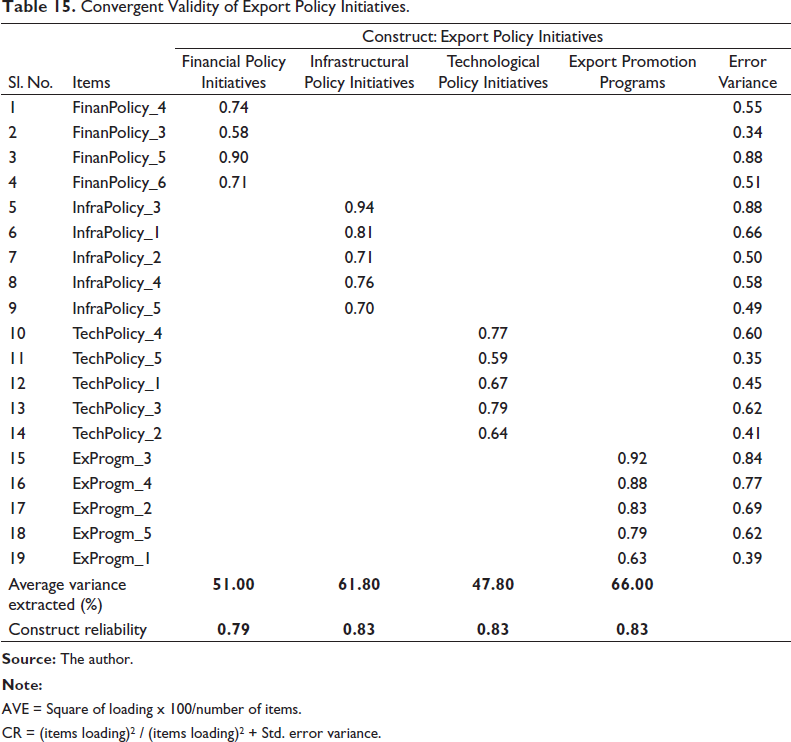
AVE = Square of loading x 100/number of items.
CR = (items loading)2 / (items loading)2 + Std. error variance.
All items in the constructs were loaded highly, that is, 0.5 and above. The average variances extracted (AVE) of the constructs and items were 51.00%, 61.80%, 47.80% and 66.00%, respectively. Moreover, the reliability of these four constructs was 0.79, 0.83, 0.83 and 0.83, respectively (see Table 15), arriving at the minimum threshold limit as suggested by Hair et al. (2006). Therefore, the convergent validity among the latent variables exhibited a high proportion of variance in common.
Discriminant Validity
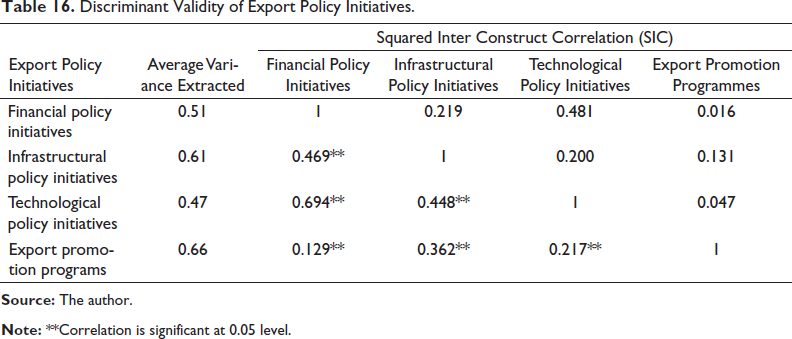
Discriminant Validity of Export Policy Initiatives.
Correlation Matrix
Construct-to-Construct Correlation Matrix, Means and Standard Deviation.
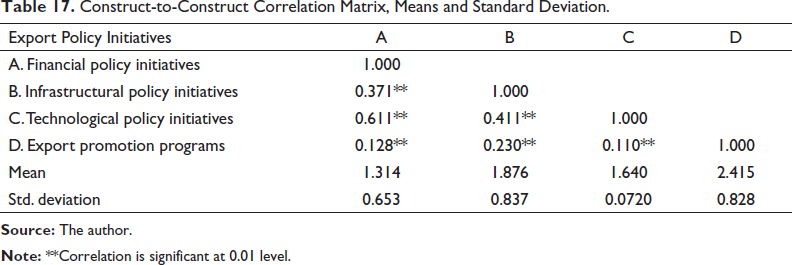
The correlation matrix illustrates the nomological validity of the constructs. The correlation matrix was examined to determine the extent to which the scales are correlated in theoretically predicted ways with the measures of different, but related constructs (Malhotra, 2004). As discussed, Table 17 provided support for the nomological validity of the constructs. The direction and weights of the correlation constructs were similar to the anticipated relationships. All constructs were significantly correlated at a significance level of p < 0.01.
Discussions
The substantive findings of this research are the identification and validation of four sub-dimensional export policy representations. The overall measurement scale was deemed fit to the model, maintaining minimum threshold limits in CMIN/DF (2.680), GFI (0.911), NFI (0.922), CFI (0.949) and RMSEA (0.065). These sub-dimensions were borne out by the survey data and the internal structures are largely supported. The construct reliability of the measurement model’s four sub-dimensions was ‘financial policy initiatives 0.79’, ‘infrastructural policy initiatives 0.83’, ‘technological policy initiatives 0.83’ and ‘export promotion programs 0.83’. Moreover, this study strictly emphasized on ‘Rules of Thumb’ principles while testing the conceptualized measurement model as suggested by Hair et al. (2006). Values of standardized loading estimates, average variance extracted and construct reliability were all taken into account to maintain convergence and internal consistency. This indicates that the latent variables exhibited a high proportion of variance in common. Squared inter-construct correlation (SIC) was also maintained below the average variance extracted (AVE) value, indicating all constructs are distinct from each other.
The conclusion is that this conceptually tested measurement model of export policy initiatives can be operationalized by other researchers for future empirical assessments of a firm as exogenous variables. It is also understood that export managers in the sample do have a temporal perception of export policy initiatives. In other words, the managers may have viewed these policy initiatives as ongoing export assistance from the government. This would be the situation if export managers believe that export policy initiatives directly or indirectly help firms boost their exports to fulfil both short- and long-term goals. The same managers recognize that all four sub-dimensional constructs developed in the study may be interrelated to each other but they do not necessarily always converge. The correlation coefficients between ‘financial policy initiatives’, ‘infrastructural policy initiatives’, ‘technological policy initiatives’ and ‘export promotion programs’ were all significant at 1% level. This correlation coefficient suggests that all four constructs are related.
The fact that the four sub-dimensional export policy initiatives developed in this study contribute to existing empirical knowledge and lend support to some of the arguments made by Styles and Amber (1994) and Sousa et al. (2008) that government policies can be used as determinants of a firm’s export performance. However, given the extent to which a firm’s choice of export policy usage is derived from its choice of overall government assistance, one would expect firms that emphasize financial assistance from the government to also emphasize financial policy initiatives. In addition, researchers and managers within an organization may opt to use different operationalization approaches, as was found here, as the determinant of the firm’s export performance if they hold varying views.
Policy Implications
The findings of this research provide several useful practical guidelines and recommendations. First, no single measure is sufficient to provide a reliable assessment of export policy initiatives. There are several measures and indicators in India’s foreign trade policy; random fluctuations in a specific measure can make vague decisions for managers. If a firm is in a competitive situation where it wants to improve its infrastructure, it may neglect other export policy measures. The advantage of using multiple constructs to capture each export policy dimension helps overcome the systematic or random fluctuations of any given item. As argued here, using combinations of multiple dimensions can go a long way in reducing the impact of such fluctuations on the perceptions of export managers.
Second, each sub-dimension may serve a different purpose for the firms; hence researchers can thoroughly investigate the purpose and usage by the firms. As mentioned in the objectives of policy measures, these measurement scales can be applied only to specific industries. Researchers should systematically adopt these sub-dimensional constructs to only those industries that falls within the scope or firms that have utilized or benefited from using these assistances. It should be noted that the survey was conducted only among those firms with an export experience of at least 5 years or more. Hence, to determine the influence of these sub-dimensional measures on a firm’s export performance, similar guidelines can be followed to derive more significant results.
Third, to test whether the correlation among the observed variables is consistent with the hypothesized factor structure, CFA was used. The decision to use CFA in a structural equation model (SEM) was motivated by the larger sample size considered in this study. Thus, the validity of this conceptualized measurement model is established for future operations. Further, this study also addressed the recommendation made by Shoham (1998) to use a structural equation model for CFA with a larger sample size to validate the findings.
Directions for Future Research
This research is not an exception to having limitations and suggest that the findings should be cautiously considered by the researchers, keeping in mind the type of industry studied, applicability of policy measures and suitable assistance received by the exporters. The question of generalizing arises when extrapolating from samples to populations (statistical generalization); hence it cannot be claimed that the sample is representative of entire exporters from the industry studied.
Considerable efforts were made to identify, contact and get responses from highly experienced export managers in each firm. However, there was limited control over who responded to the survey. Hence, actual respondents may not have been the most experienced managers, but the threat posed by this possibility is believed to be minimal and acceptable. Those managers who participated in the survey are viewed as qualified individuals since they exhibited a high degree of knowledge about their firms’ usage of export assistance and an interest in the results of this research.
Export policy initiatives were conceptualized and operationalized at the firm level in this study. As discussed, the usage of export assistance was conceptualized through the understanding and perception of the export managers alone. The four-export policy initiatives (FPI, IPI, TPI and EPP) constructs that have been developed in this study to measure their direct and indirect effect on other endogenous variables have found high reliability. However, operationalization of new constructs does come with potential problems in social science and management research. Hence, future researchers can test these scales for possible refinement for further usage.
Appendix