



Abstract
This study uses resource-based theory to examine the relationship among parent-subsidiary resource linkages, organizational slack and parent firms’ restructuring behaviours. By using data from 199 Taiwanese firms investing in Greater China and global markets. This study shows that their international strategy decision regarding resource allocation and similarity has no significant effects on the parent firm’s restructuring behaviours unless that firm has sufficient slack resources to support the restructuring. In addition, parent firms are more likely to acquire subsidiaries with dissimilar resources among their group members, than ones having similar resources same as the parent firm. Moreover, there is a U-shaped relationship between organizational slack and the parent firm’s restructuring behaviour decisions. This study constructs the research framework under the resource-based theory and examines the relationships between resource allocation, resource similarity and parent firms’ restructuring behaviour in conditions of organizational slack.
Introduction
How parent–subsidiary linkage shapes a Multinational Enterprise’s (MNE) success has been explored for over two decades in the international business literature (Chen et al., 2022; Kim & Jin, 2017). In the past, it was believed that the parent firms could acquire essential and significant resources through the network established between the parent-subsidiary relationships during the internationalization process (Chen et al., 2022; Harrison et al., 2001). A well-design resources linkage will affect the parent firm’s ability to engage in resource strategy and resource application on subsidiaries (Chen & Lin, 2016; Chen et al., 2022; Harrison et al., 2001; Isobe et al., 2000; Wang et al., 2020).
Most studies of the parent-subsidiary linkage contribute to explaining why a subsidiary’s autonomy and social network with local firms result in different performance in developed countries (Ciabuschi et al., 2012; Kim & Jin, 2017). Some studies have focused on how the headquarters’ role and commitment affect a firm’s performance in developed countries (Chen et al., 2022; Collis et al., 2007; Isobe et al., 2000). Other studies have explored how resource allocation affects performance (Harrison et al., 2001; Hsu et al., 2015; Klingebiel & Rammer, 2014; Wang et al., 2020). However, the existing literature still cannot explain the relationship between parent–subsidiary resource links and parent firms’ restructuring behaviours in emerging markets.
Resource allocation is one kind of strategy of resource arrangement (Chen & Hsu, 2010; Hsu et al., 2008), which is a common strategy to obtain greater power in the market, create financial advantages and facilitate technological developments (Vargas-Hernández et al., 2018). Resource similarity refers to the relatedness of resources between the parent firm and its subsidiaries (Chen et al., 2022). A parent firm can create synergy, new knowledge and core competence by setting up the portfolio form of resource arrangement and linkage with subsidiaries (Harrison et al., 1991). These two factors are closely related to a firm’s strategic application of resources and its performance. Restructuring behaviour was defined as a change in a firm’s configuration of lines of business through the acquisition and divestiture of a subsidiary (Bowman et al., 1999; Kowalska, 2015). For example, if a firm merges and acquires a new subsidiary, then it is defined as a positive restructuring behaviour, otherwise, firm divestiture of an existing subsidiary, then it is defined as negative restructuring behaviour. Restructuring implies the need for deep changes in a firm to adapt to external environmental changes, improve internal efficiency, productivity and effectiveness, as well as increase value and competitiveness (Bowman et al., 1999; Kowalska, 2015). More specifically, parent firms’ restructuring behaviours allow firms to apply organizational resources with greater efficiency and effectiveness since they can reorganize and reallocate resources in the right place and right time (Kowalska, 2015). However, whether parent firms should take a restructuring behaviour decision to rearrange corporation resources around the world? And how to arrange their corporate resources and what kind of subsidiaries they should choice in the internationalization process is still unclear.
In addition, prior studies indicate that the parent firm’s internal resources may influence and constrain firm investment behaviours and resource applications (Chen & Lin, 2016; Chen et al., 2022; Wang et al., 2020). Would firms contemplate how to efficiently allocate resources when they have abundant resources, or are they more inclined towards meticulous investment strategies only when the organization is loose and resources are insufficient? These are significant yet less explored questions. This study argues that resource linkage, in terms of resource allocation and resource similarity between a parent firm and subsidiaries plays an important role in their decision making. Hence, the purpose of this study is therefore to explore the effect of resource linkage, in terms of resource allocation and resource similarity on parent firm’s restructuring behaviour under the context of organizational slack when they internationalization. This study wants to answer the following questions: (a) Do different strategies of resource allocation would all lead to more firms’ restructuring behaviour? (b) Does resource similarity between parent-firm result in more restructuring behaviours? (c) Does resource dissimilarity among subsidiaries results in more restructuring behaviours? (d) Exploring the relationship between organizational slack and a firm’s restructuring behaviour? (e) Exploring how does organizational slack affect the relationship among resource allocation, resource similarity and a firm’s restructuring behaviour?
This study is constructed as follows. It reviews the literature on resource allocation and resource similarity in a parent firm’s performance or resource arrangement. Following the literature review, this study proposes eight hypotheses. The sample selection and analysis methods are then described. After the results are presented, the discussion, theoretical contribution and managerial implications are discussed.
Literature Review and Hypotheses
Research Background
Based on resource-based theory, a firm is a bundle of heterogeneous knowledge and resources, and its competitive advantage draws from possessing resources that are valuable, rare, imperfectly imitable and hard to substitute (Barney, 1991; Chen et al., 2022). Previous studies treat international expansion as an important expedient to acquire complementary resources in foreign markets to seek growth (Collis et al., 2007; Lin et al., 2021; Lu & Beamish, 2004) and foreign subsidiaries act as a critical channel through which parent firms access the valuable, scarce and hard-to-substitute resources (Chen et al., 2022; Dasgupta et al., 2011; Isobe et al., 2000; Lin et al., 2021).
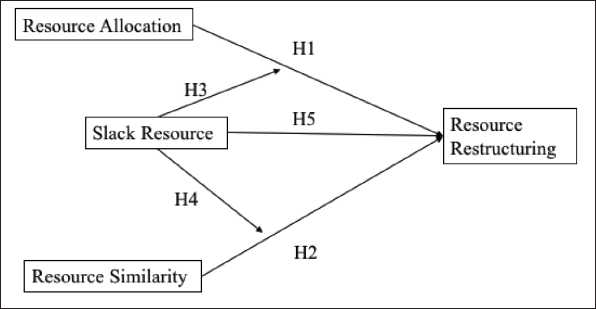
Resource allocation is one kind of strategy of resource arrangement (Chen & Hsu, 2010; Hsu et al., 2008; Nath et al., 2010). Resource allocation strategy can be briefly defined as a portfolio of resources choices and plans that a firm uses to address the market threats and opportunities in its external environment and various value chain activities, thereby increasing competitive advantages (Chen et al., 2022; Dasgupta et al., 2011; Mariadoss et al., 2014). A well-designed resource allocation strategy will influence the performance of innovation projects and market share (Chen et al., 2016; Hsu et al., 2015; Klingebiel & Rammer, 2014). In Table 1, we can see that previous studies focus on different resource allocations on R&D, marketing and operations intensity and their effects on performance (Chen & Lin, 2016; Hsu et al., 2015; Klingebiel & Rammer, 2014; Mahmood et al., 2011; Narasimhan et al., 2006; Wang et al., 2020). Some studies also explore the relationship between the degree of similarity of parent-subsidiary resource linkage and performance (Chen et al., 2022; Harrison et al., 2001; Kim & Jin, 2017). More detail about how parent-subsidiary linkages affect subsidiary performance and parent firm performance can be seen by Chen et al. (2022). However, how resource linkages affect restructuring behaviour decisions is still unclear. Besides, different types of organizational slack give parent firms different abilities to protect their firms from internal and external pressures (Lin et al., 2009) and affect the growth and innovation strategy (Chen et al., 2022; Lin et al., 2011). These imply the intensity of resource allocation strategy and the degree of resource similarity is worth detail exploring. The following provides more relevant discussions on resource allocation, resource similarity and restructuring behaviour decisions. The research framework is shown on Figure 1.
Resource Allocation and Performance.

The Research Framework of This Study.
Resource Allocation on R&D Intensity and Restructuring Behaviour Decisions
R&D capability is one kind of resource for parent firms to create new products, and technology, or improve the existing product process (Helfat, 1997; Hsiao & Chen, 2013; Wang et al., 2020). Based on resource-based theory, this study argues that parent firms with high resource allocation on R&D activities prefer to acquire new subsidiaries during their internationalization since they want to acquire specific and hard to transfer’s knowledge around the world (Nath et al., 2010). More specifically, they want to accumulate innovation capability, which is important for future growth opportunities, strategic renewal and financial performance (Dasgupta et al., 2011; Klingebiel & Rammer, 2014; Lu et al., 2015). Firms invest in R&D activities in pursuit of either explorative or exploitative activities that can enhance their competitive advantages (Chen et al., 2022; Hsu et al., 2015). The former allows parent firms to increase their current knowledge stock and enhance the probability to develop new products and radical innovation capability (Lin, 2014). The latter enhance their ability to improve production processes and product quality, thereby reducing operational costs (Chen et al., 2022; Isobe et al., 2000). This study argues that parent firms that have invested more resources in R&D activities are more likely to engage in restructuring behaviours. The central logic underlying this premise is that building R&D ability is expensive and time-consuming (Abouzeedan et al., 2013; Argyres, 1996; Asmussen et al., 2022; Chen et al., 2022). Asmussen et al. (2022) argue that maintaining a competitive advantage of technology knowledge is costly, as it requires continuous investments in R&D activities to compensate for knowledge depreciation, obsolete and imitation. Abouzeedan et al. (2013) also find that due to the costs of R&D in high-technology have been escalating, high-technology smaller firms will take an open innovation model, in terms of R&D activities and the technical changes that take place outside the firms, to integrate knowledge and expertise from multiple sources. In some countries, such as Taiwan, more than 30% of firms with high R&D capabilities are in the information and communication industry. They not only face a competitive industry environment but also a short product life cycle (Dasgupta et al., 2011; Wang et al., 2020), and different types of network ties will differentially affect the process of R&D capability acquisition (Mahmood et al., 2011). For this reason, parent firms with high resource allocation on R&D activities are more likely to acquire new subsidiaries around the world to acquire licenses and tacit knowledge, thereby extending their R&D capability (Helfat, 1997; Mahmood et al., 2011). Accordingly, this study proposes the following hypothesis:
H1a: There is a positive relationship between resource allocation on R&D intensity and a firm’s restructuring behaviors.
Resource Allocation on Marketing Intensity and Restructuring Behaviour Decisions
Marketing capability is defined as a firm’s capability to use its knowledge, resource, service process and technology to satisfy the needs of its market and customers (Wang et al., 2020). Similarly, drawing from a resource-based theory, parent firms with high resource allocation on marketing activities prefer to acquire new subsidiaries, believing that these subsidiaries can enhance parent firms’ marketing capability by sharing customer needs and operational experiences across global markets, thereby increasing parent firm’s marketing sensing (Chen & Lin, 2016; Narasimhan et al., 2006; Srivastava et al., 2001; Wang et al., 2020). Lu et al. (2015) argue that firms like to take international strategy to acquire ownership advantage, such as brand equity, to enhance their marketing capability. Wang et al. (2020) also find that business group likes to take a high level of industry diversification strategy when they have better marketing capabilities. More specifically, business groups with advanced marketing capabilities can interact with customers across different group affiliates within different industries, thereby increasing their market-sensing ability. Marketing sense is difficult for competing firms to imitate and can create competitive advantages (Lin & Lee, 2011; Narasimhan et al., 2006; Nath et al., 2010). Restructuring strategy creates new markets, value networks and organizational culture and resources, thereby strengthening the firm’s performance (Dasgupta et al., 2011; Tamošiūnas, 2017). Specifically, acquiring these subsidiaries allow parent firms to grasp new knowledge and information about their customers’ current and future needs (Klingebiel & Rammer, 2014; Lu et al., 2015), thereby increasing the benefit of scope and scale of market dynamics (Tamošiūnas, 2017; Wang et al., 2020). Moreover, it is costly and difficult for outsiders to enter a new market; however, acquiring a subsidiary may allow parent firms to enter a new market at a better time and create an entry barrier (Chen & Hsu, 2010; Srivastava et al., 2001). Investing in marketing activities and channels could serve as an isolating mechanism to shape up the entry barrier (Chen & Hsu, 2010; Hsu et al., 2008). Hence, parent firms may develop their marketing capability and shape their brand equity by acquiring a new subsidiary and investing in marketing advertisements and creditable channels in a new country (Chen & Hsu, 2010; Srivastava et al., 2001). A previous study finds that parent firms have higher motivations to invest their resources in marketing advertisements since they believe that resource deployments would convert into capabilities over time (Klingebiel & Rammer, 2014). Based on resource-based theory, this study, therefore, argues that parent firms that focus their resource allocation on marketing capability are expected to have stronger strategic intentions to acquire new subsidiaries (Mariadoss et al., 2014). Accordingly, this study, therefore, proposes the following hypothesis:
H1b: There is a positive relationship between resource allocation on marketing intensity and a firm’s restructuring behaviors.
Resource Similarity and Restructuring Behaviour Decisions
Parent firms that have similar resources to their subsidiaries both enjoy the benefit of the economics of scale and exploitation ability (Chen et al., 2022; Levinthal & March, 1993). According to the resource-based theory, resource similarity with subsidiaries can help parent firms achieve economies of scale in R&D, production and marketing activities (Harrison et al., 2001) and then reduce operational costs by sharing equipment and human resources. More specifically, due to the perceived risks of broader R&D projects, firms prefer a narrow scope of their R&D project in favour of familiar activities of low risk–low rewards (Malik et al., 2022). Wang et al. (2020) also suggest that business groups with a high level of R&D capabilities should take a low industry diversification strategy (resource similarity) to accumulate knowledge of related operational experiences and improve their products. Therefore, resource similarity facilitates parent firms’ exploitation capability, since they are more likely to seek synergies resulting from the repetition of fundamental research improvement and experiential learning (Chen et al., 2022; Levinthal & March, 1993; Malik et al., 2022). Moreover, the degree of resource similarity may influence the efficiency of resource integration and application between the parent firm and its subsidiaries. Kim and Jin (2017) find that firms will combine resources to avoid overlap and inefficient resource applications. Similar resource enables parent firms to have more knowledge of the foreign subsidiaries’ operations; it facilitates the parent firm to coordinate its foreign subsidiaries and integrate valuable resources more effectively (Chen et al., 2022). Hence, parent firms can allocate their resources more correctly to take appropriate strategic activities to respond to market opportunities (Chen et al., 2022; Harrison et al., 2001; Kim & Jin, 2017). In addition, a high level of resource similarity can facilitate the parent firm to recombine the existing resources and increase its depth of search to result in core competence (Chen et al., 2022). Resource similarity enables parent firms and their subsidiaries to facilitate information and knowledge integration since they have shared knowledge of the related businesses (Chen et al., 2022; Isobe et al., 2000), thereby increasing the benefits of specialization (Lin & Lee, 2011). In sum, parent firms are more likely to acquire subsidiaries with similar resources. Accordingly, this study, therefore, proposes the following hypothesis:
H2a: There is a positive relationship between resource similarity between parent–subsidiary links and the firm’s restructuring behaviors.
In contrast, if the parent firms and their subsidiaries all have similar resources, they cannot broaden their range of capabilities and decrease the possibility of new product development (Faems et al., 2010; Wang et al., 2020). Based on resource-based theory, the resource is a key foundation of the competitive advantage of firms (Barney, 1991). Firms often seek access to valuable resources and acquire complementary capabilities in the host countries of their subsidiaries (Chen & Lin, 2016; Chen et al., 2022). Parent firms with resource dissimilarity among their foreign subsidiaries can contribute to the performance by economies of scope and complementary resources (Chen et al., 2022). Firms can capture complementary resources, experience and knowledge across industries or multiple sources (Abouzeedan et al., 2013; Argyres, 1996; Wang et al., 2020), thereby providing innovative products and services to capture marketing opportunities more efficiently than competing firms (Hsiao & Chen, 2013; Wang et al., 2020). In other words, parent firms that have a portfolio of subsidiaries with high resource similarity among group members may take a restructuring behaviour to acquire subsidiaries without similar resources. This can help them cross-fertilize their resources across fields, thereby increasing the probability of breakthrough innovations (Hsiao & Chen, 2013; Kim & Jin, 2017). Besides, parent firms with resource dissimilarity among their foreign subsidiaries can broaden their product lines to reflect their customers’ preferences, thereby increasing market share and performance (Faems et al., 2010; Wang et al., 2020). Scholars suggest that firms should adopt a high level of diversification strategy to capture customers’ future demand; this gives them a greater ability to see potential market opportunities that arise from new product development across industries, thereby in a better position to respond quickly to customers (Wang et al., 2020). Due to parent firms have a close network relationship with subsidiaries and manufacturers. This can assist the parent firms in acquiring resources from different industries (Hsiao & Chen, 2013; Wang et al., 2020). In other words, parent firms are more likely to acquire new subsidiaries with dissimilar resources among group members. Therefore, this study proposes the following hypotheses:
H2b: There is a positive relationship between resource dissimilarity among group members and the firm’s restructuring behaviors.
The Moderating Role of Organizational Slack
There is a positive relationship among resource allocation, resource similarity and the parent firm’s restructuring behaviours. However, the slope of the relationships varies in its magnitude with firm-specific characteristics, such as organizational slack. Organizational slack is defined as the pool of resources in an organization that is more than the minimum necessary to produce a given level of output (Lin et al., 2009). Some studies treat organizational slack as a buffer against environmental turbulence (Lin, 2014; Lin et al., 2009; Liu et al., 2011) and as a cushion of potential resources which facilitates exploration and exploitation activities. The other studies treat organizational slack as a signal of inefficient use of resources (Chen & Huang, 2010; Lin et al., 2009; Tan & Peng, 2003; Tseng et al., 2007). In sum, slack resources have a critical role in influencing a firm’s resource deployment and resource use efficiency (Chen et al., 2022; Huang & Chen, 2010). Therefore, this study proposes that slack resources act as a contingent factor, influencing the effects of resource allocation and resource similarity on the parent firm’s restructuring behaviour.
The Moderating Effect on Resource Allocation and Restructuring Behaviour Decisions
Parent firms who focus on their resource allocation on R&D intensity and marketing intensity have higher strategic intents to acquire new subsidiaries globally since they want to maintain their innovative and marketing capabilities (Mariadoss et al., 2014). Different types of slack give firms dissimilar degrees of discretion in attempting to protect their firms from internal and external pressures (Lin et al., 2009). Parent firms with a high level of slack resources may enhance this positive relationship between resource allocation and restructuring behaviours. In other words, parent firms with high slack resources are in a better position to afford experimental designs and new R&D projects than are firms with limited slack resources, thereby enhancing either explorative or exploitative ability (Hsu et al., 2015; Liu et al., 2011). Because organizational slack could help firms against environmental turbulence and allow more of a buffer for R&D project failure at an early stage (Chen et al., 2022; Lin et al., 2009; Tan & Peng, 2003).
Based on resource-based theory, the parent firm with a high level of organizational slack enabled to explore new investment and collaboration opportunities that potentially bring invaluable resources and knowledge; hence they have more ability to explore new knowledge and build internal capability to maintain its competitive advantages (Chen et al., 2022). In addition, a firm will increase its R&D investment as its unabsorbed slack increases, since organizational slack provides extra resources to respond to the uncertain customer needs and the competitive pressures of a new market (Hsu et al., 2015; Liu et al., 2011). More specifically, organizational slack allows firms to experiment with new resource allocation strategies such as pursuing innovative investments, exploring new market activities and seeking new collaboration opportunities in different industries (Chen et al., 2022; Lin et al., 2009). For these reasons, this study proposes the following hypothesis:
H3: Organizational slack positively moderates the relationship between resource allocation and a firm’s restructuring behaviors.
The Moderating Effect on Resource Similarity and Restructuring Behaviour Decisions
When parent firms have more organizational slack, they are more likely to acquire a new subsidiary with similar resources. Parent firms with highly similar resources to their subsidiaries can enhance their exploitative capabilities (Harrison et al., 2001; Levinthal & March, 1993), since research similarity assists parent firms and their subsidiaries to produce synergy by repetition of fundamental research improvement, experiential learning and reduction of replicative process (Hsiao & Chen, 2013; Wang et al., 2020). Parent firms are also more likely to acquire subsidiaries with similar resources since these subsidiaries have a common knowledge base, thereby reducing the potential communication and coordination cost (Lin & Lee, 2011). In other words, when parent firms have more organizational slack, they are more likely to engage in restructuring to acquire subsidiaries with similar resources. In light of this reasoning, the following hypothesis is developed.
H4a: Organizational slack moderates the relationship between parent-subsidiary resource similarity and the firm’s restructuring behaviors.
The Moderating Effect on Resource Dissimilarity and Restructuring Behaviour Decisions
In addition, resource dissimilarity might be necessary for explorative activity and economies of scope (Chen et al., 2022; Lin et al., 2021). Parent firms with high resource dissimilarity among all group members are more likely to enter different fields and invest in unfamiliar and forward-looking projects (Chen et al., 2022). Firms with high slack are also more likely to develop radical product innovations, as they have more slack resources to buy advanced equipment, hire high-quality employees, invest in R&D activities across different fields and tolerate the risk of investment failure in an unfamiliar industry (Lin, 2014; Lin et al., 2009). Besides, organizational slack helps firms not only profit from international-business opportunities but also buffer and adjust to unanticipated foreign liabilities in the host country (Lin et al., 2021). Therefore, slack resources positively moderate the relationship between resource dissimilarity among subsidiary and parent firms’ restructuring behaviours. In light of the foregoing, the following hypothesis is developed.
H4b: Organizational slack moderates the relationship between dissimilarity resources among subsidiaries and the firm’s restructuring behaviors.
Organizational Slack and Restructuring Behaviour Decisions
Organizational slack can enhance the positive effect of exploitative capabilities and achieve economies of scale (Harrison et al., 2001; Levinthal & March, 1993). More specifically, when a parent firm has high levels of slack resources, it may invest more in purchasing equipment and producing mass products for tracing the benefits of economies of scale and enjoy the benefit of the learning curve (Chen et al., 2022). Besides, when parent firms have high levels of slack resources, they may acquire more unfamiliar and forward-looking projects since the diversification of resources could enhance their exploration capabilities and achieve economies of scope (Chen et al., 2022; Hsu et al., 2015; Lin et al., 2009). In sum, the benefits of economies of scale and scope are maximized at a high level of organizational slack, so parent firms have greater incentives to engage in restructuring behaviours (a positive slope). However, parent firms with little organizational slack may pay more attention to the efficiency and efficacy of their resource allocation, and so are more likely to close the no-profit or no-synergy subsidiaries (a negative slope). Therefore, restructuring behaviours will decrease when there is little organizational slack. This research, therefore, proposes that the effect of organizational slack on a parent firm’s restructuring (acquiring a new subsidiary) is a U-shaped relationship. This study proposes the following hypothesis: H5: There is a U-shaped relationship between organizational slack and a firm’s restructuring behaviors.
Research Methods
Sample
The purpose of this study is to examine the effects of resource allocation and resource similarity on a parent firm’s restructuring behaviours in the context of slack resources. This study uses Taiwan electronic companies investing in Greater China and global subsidiaries as the targeted sample. This study selects the electronic companies that invest in Greater China and the global market are listed in the Taiwan Stock Exchange as the sample setting for the following reasons. Taiwan’s electronic industry is important in the global supply chain and makes the largest contribution to the Taiwanese GDP than other industries. In addition, it showed more portfolio restructuring behaviours after 2000 than other industries. The industry provides more reliable and complete data on financial and other firm-specific information than other industries (Chen et al., 2022; Lin et al., 2021). All observed firms met the same reporting standards and are periodically audited by independent third parties (Chen & Huang, 2010). Except electronic companies have more portfolio restructuring behaviours after 2000 than other industries, from 2004 to 2008, Taiwan’s Financial Supervisory Commission set up regulations and has four main goals for company restructuring: (a) At least three large financial holdings companies, which accounted for more than 10% of the market share by the end of 2005, (b) The number of public equity financial institutions was reduced from 12 to 6 by the end of 2004, (c) The number of financial holding companies will be halved to 7 before the end of 2005, (d) At least one financial holding company will list overseas or introduce foreign investment. After that time, a major reorganization event occurred in Taiwanese companies. Industrial variables regarding industrial ROE are collected from the Taiwan Institute of Research Economics (TIE) database. Firm-level variables such as firm age, firm size, profitability, organizational slack, internationalization and leverage ratio are obtained from the Financial Database of the Taiwan Economic Journal (TEJ). Investment information about resource allocation, resource similarity and the parent firm’s restructuring information is calculated from the Company Database of TEJ.
Measurement
Dependent Variable
Portfolio restructuring was defined as a change in a firm’s configuration of lines of business through the acquisition and divestiture of a subsidiary (Bowman et al., 1999). This study extended Bergh’s (1998) research, which used a portfolio restructuring index to capture the change of a firm’s restructuring of the product line. This study wants to explore the relationship between resource links and parent firms’ restructuring behaviours, hence modifying Bergh’s indexes to meet the need we measure. This index had two components: a change in the parent company’s subsidiary number (CHSN) and a change in company size (CHSIZE).
Portfolio Restructuring Index: CHSNt * | CHSIZEt|
where CHSNt was the number of subsidiaries in the year (t: 2008) minus the number in the preceding year (t: 2007) and CHSIZEt was calculated by company size (log of employees) in year t minus company size in the preceding year. The weighted index with zero value represented no portfolio restructuring behaviours, the negative value represented divesture (closed the subsidiaries) and the positive value represented acquiring new subsidiaries. A higher value reflected parent firms with active restructuring behaviours. These data were incorporated and collected from the Taiwan Economic Journal database.
Independent Variables and Moderating Variables
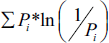
The impact of parent-subsidiary linkage was measured in terms of resource allocation and resource similarity. This study used R&D intensity and marketing intensity to present a proxy for the parent firm’s strategy of resource allocation. R&D intensity was measured as the total R&D expenditure to total sales (Wang et al., 2020; Wu et al., 2022). Similarly, marketing intensity was measured as the total promotion expenditure to total sales, which indicates the influences of firm-specific marketing resources on changes in technological knowledge and resource allocation in international activities (Asmussen et al., 2022; Wang et al., 2020). This proxy was similarly constructed as a proxy for resource allocation pattern, which firm’s resource deployment intensity and has been adopted in prior studies (Filatotchev et al., 2007). According to prior studies (Jiang et al., 2010), this study used a dummy indicator to reflect resource similarity between the parent firm and its subsidiaries. This study coded 1 as the primary three-digit SIC code of the parent company is the same as the primary three-digit SIC code of subsidiaries, and 0 otherwise. To examine the resource similarity between the parent firm and its subsidiaries, this study used the percentage of the same three-digit SIC code as resource similarity (Chen et al., 2022). We also used entropy to measure the resource dissimilarity among subsidiaries (entropy was measured as the degree of resource diversification in a parent firm’s portfolio). A higher score indicated a high level of resource dissimilarity among subsidiaries within a targeted parent firm. Entropy was calculated by the following formula:
Control Variables
This study controlled several industrial and firm-level variables that influenced the parent firm’s restructuring behaviours. This study controlled and used industry ROE as a proxy for industry profitability since the life cycle of an industry would affect a firm’s diversification and divesture behaviours. Industry ROE was the average industry operational return on equality (Chen et al., 2022). This study also controlled industry munificence which was measured as the five-year average growth of sales in one industry (Chen et al., 2017). Munificence refers to the availability of resources to support growth within an industry (Chen et al., 2017). This study controlled for firm age, size, profitability, family ownership, outsider ownership and internationalization. Firm age reflected the firm’s experience and managerial capability in carrying out innovation capability and restructuring performance (Chen et al., 2022; Lin et al., 2021). Firm age was measured as the number of years from founding to observation year. Prior studies suggested that firm size may have direct effects on a parent firm’s restructuring behaviours (Bergh & Lim, 2008). Thus, firm size was controlled and operationalized as the capital of the firm (Jiang et al., 2010). Profitability also influenced the firm’s intention of de-diversification, and hence was calculated by the Logarithm of the net profit of the parent firm (Chen et al., 2022; Lin et al., 2021). The ownership structure also affected the firm’s investment behaviours; thus, this study controlled family ownership, which was measured as the percentage of equity held by the largest individual shareholder, and outside directors’ ownership, which was mainly measured by the proportion of shares held by outside directors (Filatotchev et al., 2007). Internationalization experience is a crucial attribute for a firm’s expansion, restructuring and performance since it will affect the firm’s resource arrangement and accumulation of internationalization managerial capability (Lin et al., 2021; Wu et al., 2022). When the parent firm has a better internationalization experience, it will have a more complete blueprint to lay out its resource allocation strategy. Internationalization was measured by how many years the subsidiary had been established in the foreign market (Chen et al., 2022; Lin et al., 2021). Finally, this study also controls the leverage ratio, which was the short and long-term debt over the net value of firms. The leverage ratio is expressed as a firm’s ability to adapt to risky long-term investments and to implement foreign expansion through debt financing (Wang et al., 2020).
Analysis and Results
Results
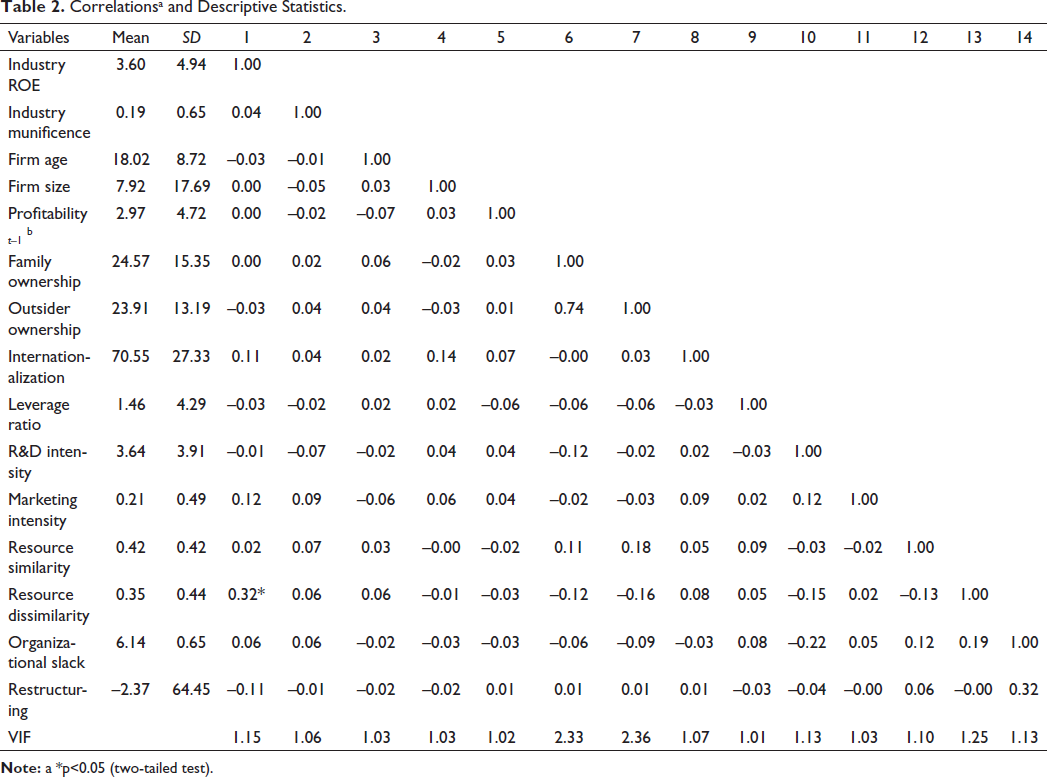
Based on the resource-based theory, the purpose of this study is to explore the role of resource allocation, resource similarity and their interaction with organizational slack in determining a parent firm’s restructuring behaviours. Table 2 presents means, standard deviations and correlations for all measured variables in this study. In addition, the variance inflation factors (VIFs) associated with the variables show a range from 1.01 to 2.36, which falls within acceptable limits (Hair et al., 1998). Hence, there is no potential multicollinearity problem in all models. This study used generalized least squares (GLS) regression to test all the hypotheses since it can correct problems such as heteroscedasticity and autocorrelation (Lu & Beamish, 2004). The study estimates the Hausman test and the coefficient estimates between random-effects and fixed-effects methods are not significantly different. Scholars suggested using random-effects GLS regression to get a more efficient regression model (Jiang et al., 2010).
Correlationsa and Descriptive Statistics.
Direct Effect
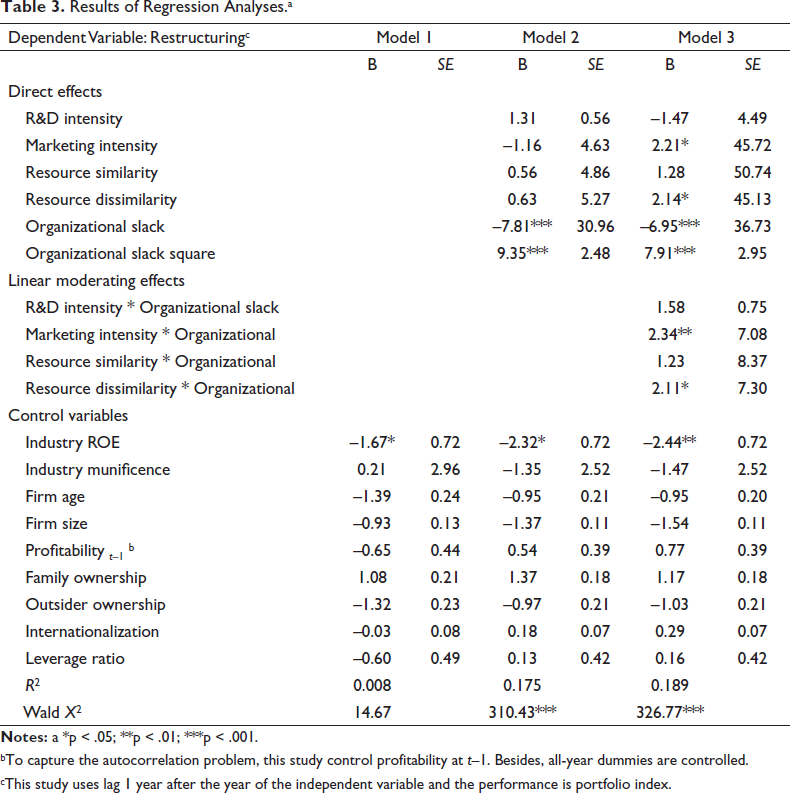
In Table 3, Model 1 (Pseudo R2 = 0.008, Wald X2 = 14.67) is the basic model, which only includes the control variables. This model indicates that the combination of control variables does not significantly impact the parent firm’s restructuring behaviour. Model 2 (Pseudo R2 = 0.175, Wald X2 = 310.43) adds all direct and quadratic terms for capturing the direct effect of resource allocation, resource similarity and nonlinear effect of organizational slack on the parent firm’s restructuring behaviours. The Wald test is a way to find out if the independent variables and moderating variables in a model are significant or not. If the test rejects the null hypothesis (p < .05), this suggests that the new variables are significant to that model fit. If the Wald test could not reject the null hypothesis (p > .05), which implies that removing the new variables will not considerably damage the fit of the model. Hence, the Wald test of Model 2 shows that the newly added variables are important (p < .05). In Model 2, the coefficient of resource allocation on R&D (B = 1.31, p > .05) and on marketing intensity (B = –1.16, p > .05) are both not significant. The findings indicate that resource allocation does not significantly directly affect the parent firm’s restructuring behaviours. Therefore, Hypotheses 1a and 1b are not supported. The coefficient of resource similarity between parent-subsidiary (B = 0.56, p > .05) and dissimilarity among subsidiaries (B = 0.63, p > .05) is not significant. These findings indicate that resource similarity or not does not significantly directly affect a parent firm’s restructuring behaviours. Hence, Hypotheses 2a and 2b are not supported.
Results of Regression Analyses.a
bTo capture the autocorrelation problem, this study control profitability at t–1. Besides, all-year dummies are controlled.
cThis study uses lag 1 year after the year of the independent variable and the performance is portfolio index.
Moderating Effects
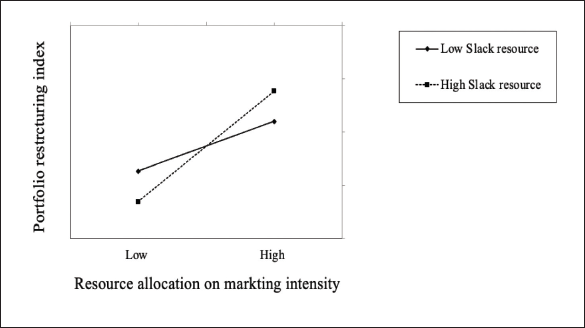
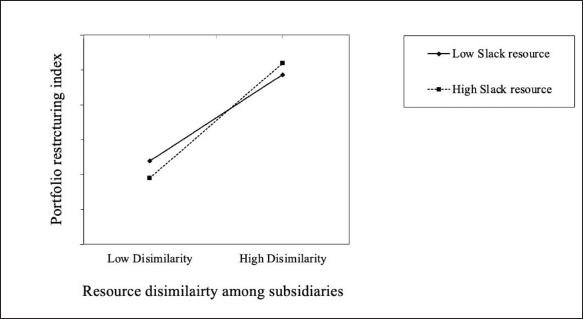
By the same token, this study adds two linear interaction terms in Model 3 (Pseudo R2 = 0.189, Wald X2 = 326.77) to examine the interaction effect of organizational slack. The Wald test of Model 3 shows that the newly added variables are important (p < .05). Hypothesis 3 proposes that organizational slack positively moderates the relationship between resource allocation and parent firms’ restructuring behaviours. The interaction of organizational slack and resource allocation on R&D intensity is positive but not statistically significant (B = 1.58, p > .05), while the interaction of organizational slack and resource allocation on marketing intensity is positive and statistically significant (B = 2.34, p < .01). Hypothesis 3 is partially supported. Hypothesis 4a predicts that organizational slack has a positively moderating impact on the relationship between resource similarity of parent-subsidiary and firm’s restructuring behaviours. The interaction term of organizational slack and resource similarity between parent firms and their subsidiary is positive and not significant (B = 1.23, p > .05), in Model 3. The finding does not confirm the prediction of Hypothesis 4a. At the same time, Hypothesis 4b assumes that organizational slack positively moderates the relationship between resource dissimilarity among subsidiaries and a parent firm’s restructuring behaviours. The coefficient for the interaction term of organizational slack and resource dissimilarity among subsidiaries is positive and significant (B = 2.11, p < .05) in Model 3. Thus, Hypothesis 4b is supported.
To analyse the moderating effects, this study plots a linear regression line in Figures 2 and 3 with the different organizational slack. In Figure 2, the difference in parent firms’ restructuring behaviours between high and low-level slack resource groups is small, as resource allocation on marketing intensity is low. However, the difference in parent firms’ restructuring between high and low-level slack resource groups dramatically increases with the resource allocation on marketing intensity. In other words, the slope of the group with the most organizational slack is steeper than the slope of the group with the least. It implies that a parent firm’s restructuring behaviours increase rapidly in groups with high levels of organizational slack, as resource allocation on marketing intensity increases. As shown in Figure 3, the difference in the parent firm’s restructuring between high and low-level slack resources is large, as resource dissimilarity among subsidiaries is low. The firm with low slack resources has more restructuring behaviour than the firm with high slack resources at low resource dissimilarity. However, as resource dissimilarity among subsidiaries increases, the difference in the parent firm’s restructuring behaviour between high and low-level slack resource groups dramatically diminishes. And the firm with high slack resources has more restructuring behaviour than the firm with less slack resources at high resource dissimilarity. More specifically, the slope of the group with high levels of organizational slack is steeper than that of the group with low levels of organizational slack. It implies that parent firms’ restructuring behaviours increase more rapidly in groups with high levels of organizational slack as resource dissimilarity among subsidiaries increases. Besides, the coefficient of the root term of organization slack resource in Model 2 in Table 3 is significant and positive (B = 9.35, p < .001), and it implies a U-shaped relationship. Hypothesis 5 is therefore supported.
The Moderating Effect of Slack Resource on Resource Allocation and Firm’s Restructuring Behaviour.
The Moderating Effect of Slack Resource on Resource Dissimilarity Among Subsidiaries and Firm’s Restructuring Behaviour.
Robustness Test
To rigorously test the U-shaped relationship between organizational slack and parent firm’s restructuring behaviours, this study followed prior studies and adopted a three-step process to check the U-shaped relationship by using the utest STATA module (Chen et al., 2022; Haans et al., 2016). It needs to contain three conditions: (a) the coefficient of the square term of organizational slack in Model 2 is significant; (b) the slope of organizational slack must significantly steeply both minimize (B = –114.06, p < .001) and maximize (B = 144.79, p < .001) the value of the dataset; and (c) the turning point of organizational slack, –
Estimates of the U-shaped Relationship.a,b
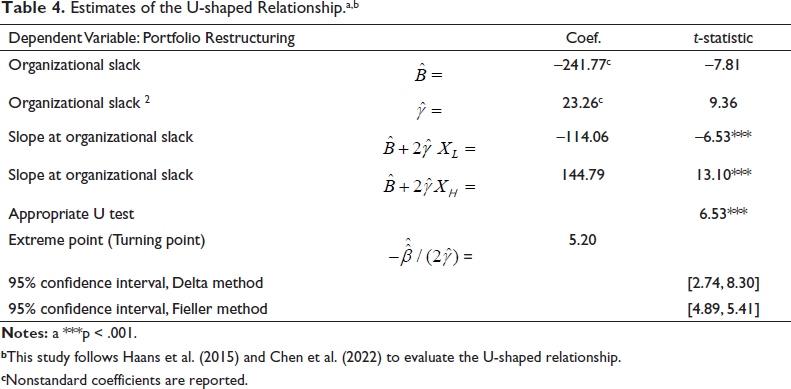
bThis study follows Haans et al. (2015) and Chen et al. (2022) to evaluate the U-shaped relationship.
cNonstandard coefficients are reported.
Discussion and Contributions
Discussion and Conclusions
The purpose of this study is to construct a research framework under the resource-based theory and examines the relationships between resource allocation, resource similarity, resource dissimilarity and parent firms’ restructuring behaviour in conditions of organizational slack. Hypotheses 1a and 1b predict a positive relationship between resource allocation on R&D intensity (marketing intensity) and a firm’s restructuring behaviours separately. Hypotheses 2a and 2b predict a positive relationship between resource similarity (resource dissimilarity) and a firm’s restructuring behaviours separately. Surprisingly, the findings of this study do not support all the direct effects of resource allocation and resource similarity on a parent firm’s restructuring behaviour. This study explains the differences between our results and previous research findings. One possible reason for these disparities is that previous studies primarily focused on the relationship between R&D capability, marketing ability, resource similarity and their impact on innovation or financial performance (Chen & Lin, 2016; Chen et al., 2022; Hsiao & Chen, 2013; Isobe et al., 2000; Klingebiel & Rammer, 2014; Wang et al., 2020). In contrast, our study places a stronger emphasis on exploring how resource allocation affects resource restructuring decisions. This could be a contributing factor to the divergent outcomes compared to previous findings. Moreover, this study argues that these unexpected findings may imply that parent firms that emphasize their resource allocation on building international marketing and R&D capabilities have insufficient incentives to adopt restructuring behaviour since it is costly and time-consuming. In other words, without considering other moderating factors, the benefits of resource restructuring for firms may currently outweigh the potential costs. To furthermore explore the relationship among resource allocation, resource similarity, organizational slack and firm’s restructuring behaviour. Hypothesis 3 predicts organizational slack positively moderates the relationship between resource allocation and a firm’s restructuring behaviours. Hypothesis 4a hypothesis organizational slack moderates the relationship between parent-subsidiary resource similarity and the firm’s restructuring behaviours. Hypothesis 4b proposes that organizational slack moderates the relationship between dissimilarity resources among subsidiaries and the firm’s restructuring behaviours. To examine Hypothesis 3, Hypothesis 4a and Hypothesis 4b, this study incorporates the interactive term into the model, the coefficient of resource allocation on marketing and the coefficient of resource dissimilarity among subsidiaries in Model 3 is positive and significant, but resource allocation on R&D intensity and the coefficient of resource dissimilarity among subsidiaries are positive and not significant. Hence, Hypothesis 3 and Hypothesis 4b are supported, but Hypothesis 4a is not. These findings echo previous studies (Lin, 2014; Lin et al., 2009; Liu et al., 2011), which treat organizational slack as a buffer against environmental turbulence and a cushion of potential resources which facilitates exploration and exploitation activities. These findings indicate that parent-subsidiary linkage with a high degree of organizational slack can facilitate exploration and exploitation capability, thereby increasing the firm’s willingness to acquire new subsidiaries. These findings echo those of studies (Lin, 2014; Tseng et al., 2007) that support the important role of organizational slack when managers make strategic decisions. In addition, these findings provide another interesting insight and support our belief that parent firms will consider developing future capability by acquiring global new subsidiaries only when they have extra organizational slack to support this restructuring behaviour.
From the results of Hypothesis 4a and Hypothesis 4b, this study finds that parent firms prefer investing in subsidiaries that have different resources than those with similar resources. These findings provide empirical evidence to support that when parent firms have more organizational slack, they prefer to acquire diversified resources than similar resources. These findings echo a previous study (Chen et al., 2022), which finds a negative moderating effect of organizational slack on the relationship between resource similarity and the firm’s financial performance. In sum, these findings explain how resource allocation and similarity affect a firm’s restructuring behaviour decision when they internationalization.
In addition, this study finds a U-shaped relationship between organizational slack and a parent firm’s restructuring behaviours. The finding is opposite to the hypothesis and different from prior studies by Tseng et al. (2007) and Tan and Peng (2003), showing an inverse U shape between slack resource and firm performance. The potential explanation is that the main difference between this study and prior studies is the dependent variable: the parent firm’s restructuring behaviours. This study finds that parent firms with low and high levels of slack resources will consider more portfolio restructuring behaviours. More specifically, parent firms might have more incentives to consider the importance of resource allocation since they do without enough organizational slack to help them again in the turbulent environment in the global market and develop new capabilities. Hence, in the beginning, there is a decline curve before the turning point since parent firms may adopt a de-diversification strategy (a negative relationship). After the turning point, the incentives to search for new resources and capabilities increase with organizational slack. Since after that point, the organizational resource is large enough to suffer the cost of investment failure and environmental turmoil. Hence, Hypothesis 5 finds a U-shaped relationship between organizational slack and a firm’s restructuring behaviours.
Theoretical Contribution
These findings contribute to the field of international business, organizational resources and restructuring literature in the following ways. First, this study argues that parent-subsidiary linkage is an important factor of internationalization in a firm’s resource application and arrangement. Previous parent-subsidiary studies have focused on a subsidiary’s autonomy and embeddedness, and the parent firm’s role and commitment to firm performance (Chen et al., 2022; Ciabuschi et al., 2012; Collis et al., 2007; Harrison et al., 2001; Isobe et al., 2000; Kim & Jin, 2017). Scant attention has been paid to the way in which parent-subsidiary resource linkage affects their restructuring decision. This study narrows the research gap by empirically testing the relationship between resource allocation and a firm’s restructuring behaviour. The findings of this study enrich the parent firms’ strategic arrangement and corporate restructuring literature. Second, previous studies focus on exploring how resource allocation on R&D and marketing intensity, and degree of resource similarity affects performance. However, this study cannot support the finding of previous studies, which support R&D and marketing capability can increase restructuring behaviours since the explorative or exploitative, economic of scale or scope (Asmussen et al., 2022; Chen & Lin, 2016; Dasgupta et al., 2011; Klingebiel & Rammer, 2014; Lu et al., 2015). Besides, this study also found no significant relationship between resource similarity (dissimilarity) and restructuring behaviours. This cannot echo previous studies which find that complementary resources can enhance learning opportunities and develop new capabilities, thereby increasing performance (Chen et al., 2022; Harrison et al., 2001). One potential reason for the disparity between the results of this study and previous literature is that we focus on restructuring actions rather than financial performance. As a result, this study offers distinct findings from the literature on resource allocation and capability creation. Third, this study examines how organizational slack influences the relationships among resource allocation, resource similarity and parent firms’ restructuring behaviours decisions. This study discovered that both resource allocation and similarity have an impact on restructuring behaviour. However, this effect is observed only when the firm possesses a higher level of organizational resources. This part gives us a better understanding of the conditions that would cause a parent firm to arrange its resource allocation and acquire a new subsidiary by restructuring global subsidiaries. The results show that these two kinds of resource linkage could facilitate a parent firm’s incentives to adopt a restructuring strategy when it has a high level of organizational slack. Fourth, this study explores resource similarity between parent firms and their subsidiary and resource dissimilarity among subsidiaries. This part provides another explanation for why parent firms engage in restructuring behaviours during internationalization. This study enriches the literature on the parent-subsidiary linkage by simultaneously considering the resource similarity between parent-subsidiary and resource dissimilarity among subsidiaries in a model. This study argues that the effect of resource dissimilarity among subsidiaries is higher than the effect of resource similarity between a parent and a subsidiary. It implies that when parent firms have slack resources, then they will have a higher incentive to acquire new subsidiaries with dissimilar resources since they consider the potential synergy resulting from diversified resources, knowledge and operational experience.
Finally, this study examines the direct effect of organizational slack on parent firm’s restructuring behaviours decisions. The finding shows a nonlinear effect that gives us another explanation of slack resources on a parent firm’s motivation for restructuring. The findings of this study are different from prior studies, which find an inverted U-shaped relationship between organizational slack and performance (Tan & Peng, 2003; Tseng et al., 2007). This study shows a U-shaped relationship between organizational slack and parent firms’ restructuring behaviours. It implies that parent firms with low and high levels of organizational slack have more incentive to adopt restructuring behaviours than firms with medium levels. This study explains that at low and high levels of organizational slack, parent firms have more incentives to rearrange their resources. More specifically, at a low level of organizational slack, firms need to take a well-organized schedule to use their exits resources and create the max profits. Besides, at a high level of organizational slack, it implies the inefficiency of resource allocation and implication. The firms need to rethink their resource allocation strategy, thereby increasing the value of slack resources. The findings of this study provide another insight into organizational slack and enrich the resource-based and restructuring literature.
Managerial Contributions and Implications
This study makes several important managerial implications. The findings of this study have some interesting managerial implications for firms in Taiwan and Greater China. First, it finds no significant relationship between resource allocation on R&D or marketing intensity and a firm’s restructuring behaviours. However, this study finds a positive relationship between resource allocation on marketing intensity and a parent firm’s restructuring behaviours when it has more organizational slack. More specifically, resource allocation is a strategy to examine the allocation efficiency of resources. Therefore, this study suggests that a parent firm with enough organizational slack can rethink its marketing capability by restructuring its resource allocation strategy. Second, this study finds no significant relationship between resources similarly and parent firms’ restructuring behaviours unless they have more organizational slack. This study suggests that parent firms with extra slack can adopt a restructuring behaviour to acquire a subsidiary either with high resource similarity with the parent firm or resource dissimilarity among other subsidiaries. This study suggests they should consider the benefits of explorative and exploitative resources from several subsidiaries. Third, this study finds the coefficient of resource dissimilarity among subsidiaries is higher than resource similarity between a parent firm and a subsidiary. This finding implies that dissimilar resources and knowledge are important for innovation activities, so parent firms have more incentive to restructure their resource with dissimilar subsidiaries. More specifically, it is hard for firms to cultivate some specific resources and knowledge internalization; according to the finding, this study suggests that they need to take a restructuring behaviour to get these specific resources and knowledge from diversified subsidiaries. Finally, the results show a U-shaped relationship between organizational slack and a parent firm’s restructuring behaviours. This finding implies that parent firms have more incentives to take on restructuring behaviours, as they have low or high levels of slack resources. Hence, this study suggests that parent firms with low levels of slack resources can sell the inefficient subsidiary (a negative restructuring relationship) and focus on the profit or operational efficiency subsidiary. Moreover, this study suggests that parent firms with high levels of organizational slack can acquire a subsidiary for specific, valuable, rare, inimitable and non-substitutable resources (a positive restructuring relationship). In sum, this study uses resource-based theory to explore how a firm’s resource allocation and degree of similarity affect its restructuring behaviours, so the findings can make practical recommendations to the managers of these firms in international arrangements. This study suggests that firms should consider the potential benefits and costs of resource restructuring, in terms of resource allocation on R&D or marketing, degree of resource similarity and consider their organizational slack in different international situations.
Limitations and Further Research
Despite the contributions, this study still has some limitations. The first limitation is that this study only considers organizational slack, which influences the relationships among resource allocation, resource similarity and a parent firm’s restructuring behaviours. Other factors, such as corporate governance, ownership and international processes, may also affect these relationships. Future research should explore how other contingent frameworks can influence parent-subsidiary resource links in a parent firm’s restructuring behaviours. The second limitation is that a foreign subsidiaries’ performance may affect the parent firm’s performance. However, the database does not comprise all subsidiaries’ level data. To avoid measurement bias, this study does not control subsidiaries’ performance and consider the heterogeneity of subsidiaries, such as their difference in roles, mandates and abilities. This study suggests that future research should consider this issue. Third, this study only considers industry-level variables, such as industry ROE, industry munificence and industry dummy. In Table 3, the industry ROE is significant. This implies the industry-level variable and environment may play a potentially important role to affect a firm’s resource allocation strategy and restructuring behaviours. Hence, this study suggests future studies can extend our research framework and explore the industry side effects on restructuring behaviour decisions. Finally, previous studies suggest the importance of capability-resource allocation strategy fit issue, this study echoes this topic and explores resource allocation strategy and restructuring behaviour under the context of organizational slack when they internationalization. However, this study argues that restructuring behaviours may play a mediating role. Hence, this study suggests that future research can examine the mediating role of a parent firm’s restructuring behaviours and the mediator-moderator effect of organizational slack since restructuring is a required evolutionary process and managerial tool to link resources and performance.
Footnotes
Acknowledgement
The authors are grateful to the journal’s anonymous referees, the Editor and the Academic Editor for checking the manuscript carefully and providing insightful comments that enhance the quality and readability of the manuscript.
Declaration of Conflicting Interests
The authors declared no potential conflicts of interest with respect to the research, authorship and/or publication of this article.
Funding
The authors disclosed receipt of the following financial support for the research, authorship, and/or publication of this article: This work was supported by the National Science and Technology Council Taiwan, under Grant no. 111-2410-H-029 -007 -MY2.
