



Abstract
Financial exclusion of low-income groups in urban areas remains a key policy challenge in India. This study examines the potential of e-payment systems and the Jan Dhan Aadhaar Mobile (JAM) trinity in enhancing access of the urban poor to social welfare schemes, thereby alleviating poverty. A survey of 585 economically weaker section households across 12 cities in Punjab state was conducted. The results indicate greater awareness of mobile and UPI payments compared to cards, but adoption gaps exist across demographic segments. Younger educated male earners perceive individual benefits like convenience and government benefits like transparency in e-payments. Integrating innovative e-payments in welfare programs increases the reliability of transactions, leading to positive multiplier effects on income, assets and skills and reducing vulnerabilities for the urban poor. The findings highlight the need for targeted initiatives by policymakers and Fintech firms to digitize payments and customized implementation measures to promote adoption among low-income citizen groups. This includes digital literacy programs, trust-building, co-creating tailored products and integrating e-payment mechanisms into social schemes. Thus, leveraging Fintech innovations through strategic policies and cross-sector partnerships can significantly advance financial inclusion to create a more equitable digital economy where the urban poor are not left behind.
Introduction
Financial exclusion remains an enduring challenge for economically weaker sections (EWSs) in urban India, with limited access to formal financial services perpetuating cycles of debt (Bourguignon & Chakravarty, 2019; Singh et al., 2020; Singh & Singh, 2022). The urban poor lack adequate access to savings, credit, remittances and insurance from the formal banking system. This forces reliance on exploitative informal mechanisms to meet emergency and livelihood needs, further exacerbating their economic vulnerability. Universal access to affordable formal financial services has therefore emerged as a pivotal policy priority for advancing inclusion and alleviating urban poverty in India (Bourguignon & Chakravarty, 2019; Seth & Alkire, 2017).
Over the years, the government has introduced several policy initiatives targeting financial inclusion of marginalized groups, including nationalization of banks, creation of regional rural banks (RRBs), self-help group (SHG)-based microfinance models, microfinance institutions (MFIs), social security schemes and the Pradhan Mantri Jan Dhan Yojana (PMJDY) for universal basic bank account access (Burgess & Pande, 2005; Singh et al., 2021). However, persistent barriers like lack of identity documentation, low and irregular incomes, high transaction costs and access constraints have impeded the effectiveness of traditional financial services models in serving low-income populations in urban contexts (Seth & Alkire, 2017).
In recent years, the Fintech revolution promises new pathways to expand affordable digital financial services to excluded groups through innovation in payments, banking, investments and insurance (Abbasi et al., 2021; Singh & Singh, 2023). In India, Fintech adoption has witnessed exponential growth, attracting billions in investments for start-ups offering digital financial solutions across payments, lending, wealth management and insurance. Significant innovations include digital wallets and payment applications like Google Pay, PhonePe and BHIM that leverage the Unified Payments Interface (UPI), a pioneering instant real-time bank account-to-account transfer ecosystem (Al-Sabaawi et al., 2023).
UPI has emerged as the flagship payments rail and a game-changer for advancing digital financial inclusion in India. Adoption accelerated during demonetization and the COVID pandemic, with UPI processing over 4.5 billion transactions worth $1 trillion in 2021 (Singh & Singh, 2023). This unparalleled rate of growth establishes India as the global leader in real-time digital payments. Fintech innovations like UPI therefore demonstrate tremendous potential to expand affordable digital financial services to excluded populations like the urban poor through innovations in payments, credit, insurance and investments (Kolte & Humbe, 2020).
However, academic inquiry into Fintech adoption remains limited, particularly among vulnerable demographic groups like the urban poor. Most adoption studies have focused on the broader population rather than low-income segments (Sarma & Pais, 2011). There has been little examination of how ongoing Fintech innovations reshape financial access and behaviour for poorer citizens in India. More research is imperative to assess whether Fintech can fulfil its promise of driving financial inclusion to alleviate poverty for marginalized communities (Jones, 2018; Lagna & Ravishankar, 2021).
This study aims to address this research gap by undertaking a comprehensive empirical investigation of Fintech awareness, adoption patterns and pro-poor impact focusing on the urban poor in India. It analyses the association between demographic factors and awareness levels of e-payment systems based on a survey of 585 urban poor households across cities in north-western India. The study further develops and validates an extended Technology Acceptance Model (TAM) to examine how perceptions of benefits, risks, self-efficacy and digital literacy shape adoption intentions and actual use behaviour towards innovative e-payment systems. Additionally, it evaluates the effect of e-payment adoption on different dimensions of poverty alleviation using a multidimensional framework.
The findings will generate critical insights to guide policymakers and Fintech firms in promoting digital financial inclusion of marginalized communities through tailored interventions. It will help identify target segments for awareness initiatives and indicate product features and messaging required to drive adoption. From a theoretical lens, the study integrates technology acceptance and capability perspectives to holistically examine Fintech adoption and its impact on poverty alleviation. The proposed model synthesizes perceived benefits, risks, self-efficacy and digital literacy as key drivers of adoption intentions and use behaviour. This integration to analyse Fintech’s pro-poor impacts provides a strong foundation to advance scholarly work at the intersection of technology, inclusion and development.
Overall, the study undertakes a timely empirical investigation into the role of Fintech in economically empowering the urban poor in India. The findings aim to catalyse further research at the intersection of financial technology, digital inclusion and poverty alleviation. The subsequent sections present the detailed literature review, research methodology, results of descriptive data analysis and hypothesis testing relating to e-payment awareness, the conceptual research model, scale development procedures, structural equation modelling (SEM) analysis examining adoption intentions and behaviour, comparisons with prior work, conclusions, limitations and implications for theory, practice and public policy.
Literature Review
Urban Poor and Multidimensional Urban Poverty Alleviation
A few studies have directly examined financial inclusion and poverty alleviation outcomes among the urban poor in developing countries like India, which faces unique challenges of informality, vulnerability and lack of social security (Kesar et al., 2021; Singh & Singh, 2022). The urban poverty has multiple dimensions beyond just income deprivation. The multidimensional poverty framework by Alkire and Santos (2013) encompasses deprivations in health, education, living standards, assets, security, empowerment and social relations.
Regarding digital and financial inclusiveness of the urban poor, Alber and Dabour (2020) found that increased digital payment adoption among urban micro-enterprises during COVID-19 social distancing enabled continued operations and income stability, highlighting Fintech’s potential for multidimensional poverty alleviation. Similarly, Barik and Sharma (2019) analysed India’s progress in financial inclusion, finding persistent disparities in access and usage, especially among the urban poor. They recommended customized products and infrastructure catering to the unique needs of low-income urban communities.
Additionally, the EY Global Fintech Adoption Index (Ernst & Young, 2019) reported lower Fintech adoption among low-income groups in India, driven by a lack of awareness and trust. This underscores the need to examine adoption gaps and barriers among the urban poor. Thus, the limited literature on the urban poor context highlights the limitations of traditional financial inclusion models and indicates the necessity of innovative approaches like Fintech to drive greater access, usage and positive multidimensional welfare impacts (Jones, 2018).
However, concerns remain regarding elitist Fintech design, ignoring the unique barriers poorer citizens face, like lack of digital access, capabilities and trust (Imam et al., 2022). This points to the need for research focusing specifically on Fintech adoption behaviour and poverty impacts among marginalized urban groups.
Financial Inclusion Policies in India
The urban poor in India have historically lacked access to formal financial services like savings accounts, credit, insurance and remittance facilities from mainstream banks and institutions (Kesar et al., 2021). This financial exclusion forces them into dependence on exploitative informal options like moneylenders for meeting emergency and livelihood needs (Shahid et al., 2021). However, the government has introduced several policy initiatives over the decades to promote financial inclusion and alleviate poverty (Singh & Singh, 2022).
A significant milestone was the nationalization of banks in 1969, which mandated the geographical expansion of bank branching to unserved rural areas (Burgess & Pande, 2005). This improved physical access, but procedural hurdles excluded people with low incomes. The creation of RRBs in the 1970s–80s focused on providing agricultural credit through rural bank branches, but their impact was limited (Azeez & Akhtar, 2021).
In the 1980s–90s, promoting microfinance via SHGs emerged as a strategy. SHG–Bank Linkage Program enabled collateral-free microcredit access for members of jointly liable women’s groups (Shahid et al., 2021). This helped reach the underserved but was inadequate to serve the multifaceted financial needs of the poor (Alkire & Santos, 2013).
In the 2000s, the emphasis shifted towards expanding MFIs and micro-insurance coverage beyond just credit, but exclusion issues persisted for weaker sections like the urban poor (Archer, 2016; Singh et al., 2021). The PMJDY launched in 2014 was a significant financial inclusion initiative, rapidly expanding primary bank account access through simplified KYC, RuPay debit cards and overdraft eligibility (Khaki et al., 2022; Li et al., 2022). However, a large proportion of PMJDY accounts remain inactive, especially in urban areas.
The Jan Dhan Aadhaar Mobile (JAM) framework was another critical development, introducing Aadhar-based biometric authentication and electronic transfers to plug leakages in government welfare schemes. However, last-mile challenges in awareness and usage mainly affect the urban poor (Pandey et al., 2022). While government efforts have expanded formal financial access, the urban poor remain challenging to serve through traditional models, highlighting the need for innovative approaches.
The Emergence of Fintech Innovations
Financial technology or ‘Fintech’ refers to technology-based innovations in financial services delivery encompassing payments, banking, insurance and investments (Abbasi et al., 2021). In India, the Fintech sector has grown exponentially, attracting over $10 billion in investment since 2014 (Asif et al., 2023; Singh & Singh, 2023).
Significant innovations include digital wallets like Paytm and payment applications like Google Pay, PhonePe, Amazon Pay, MobiKwik and BHIM that leverage India’s pioneering UPI system (Kirmani et al., 2022; Kolte & Humbe, 2020). Launched in 2016, UPI enables real-time bank account-to-account money transfers instantly via a virtual payment address using a mobile app (Li et al., 2022).
Demonetization gave a boost to Fintech adoption, especially digital payments. The COVID-19 pandemic further accelerated the usage of contactless payment technologies like UPI for e-commerce and online transactions amid social distancing (Mudassir, 2020). Over 4.5 billion UPI transactions worth over $1 trillion were recorded in 2021, cementing India’s global leadership in real-time digital payments (Kolte & Humbe, 2020). This Fintech revolution promises to advance financial inclusion.
Fintech and Financial Inclusion
Fintech innovations are lauded for their potential to reduce costs, improve convenience and expand access to affordable formal financial services for the unbanked and underserved (Sarma & Pais, 2011). However, the impact evidence remains limited (Jones, 2018). Critics argue that Fintech focuses on tech-savvy urban users rather than poorer citizens who face barriers like lack of money, digital literacy, smartphone ownership and identity documentation (Bateman, 2011; Imam et al., 2022). The benefits for low-income segments remain questionable.
Few studies have examined adoption by marginalized groups. African MFIs have digitized loan disbursals and collections to lower costs and improve financial viability (Banna et al., 2021). However, user perspectives remain understudied. In Kenya, digital credit and savings tools provide opportunities for women microentrepreneurs, contingent on digital and financial capabilities (Adu & Hartarska, 2022).
The PMJDY has extended primary bank account access in India, but usage gaps persist, especially in urban areas (Singh et al., 2020). The factors like costs, documentation and awareness limit Fintech adoption by the urban poor (Arner et al., 2020; Singh et al., 2021). Critics argue that inadequate attention is given to empowering poorer citizens to use Fintech tools (Kefela, 2010).
Regarding usage, the urban poor rely more on cash and have lower adoption of cards and Internet banking (Banerjee & Jackson, 2017). Mobile banking provides convenience but is constrained by access barriers (Tungare, 2019). Few studies have focused on adopting specific payment systems like UPI among low-income segments (Kolte & Humbe, 2020; Tungare, 2019).
Thus, the existing research provides limited insights into Fintech adoption behaviour among urban poor households. Demographic factors influencing awareness and use patterns also remain understudied. Further, there is little assessment of how Fintech innovations shape the financial attitudes and capabilities of the urban poor based on theoretical frameworks. This study aims to address these knowledge gaps in the Indian context. The following section details the research methodology adopted.
Materials and Methods
Research Design and Sampling
The study aims to analyse awareness, perceptions, adoption intentions and poverty alleviation impacts regarding e-payment systems among urban poor households. Specifically, the first research objective is to analyse awareness levels of e-payment systems across demographic profiles of the target population. The second objective will examine perceptions and intentions to adopt e-payment systems among urban poor households. Finally, the third research objective is to assess the impact of e-payment adoption on multidimensional poverty alleviation among the same target population.
The study adopts a quantitative research design using primary survey data to examine the impact of e-payment systems and JAM Trinity on poverty alleviation among urban poor households. The purpose is descriptive and correlational in nature to analyse awareness levels and usage patterns and test relationships between key constructs (Creswell & Creswell, 2017). Self-reported survey data enables examining technology adoption behaviour and perceptions of respondents.
Adopting a rigorous quantitative research design integrating exploratory factor analysis (EFA) and confirmatory factor analysis (CFA) to develop multi-item scale measurements, followed by SEM to test the conceptual framework, makes a methodological contribution. Creating and validating scales to assess perceptions of e-payments and measure multidimensional poverty alleviation enables comprehensive empirical examination. The use of SEM to simultaneously assess the measurement models and hypothesized structural relationships advances methodology in Fintech studies compared to descriptive analysis. The analytic approach provides a robust basis for future research on Fintech adoption and welfare impacts.
The target population comprises poor urban households classified as EWS with annual incomes under D800,000 across major cities in Punjab, India. Multi-stage purposive sampling was adopted considering the specific geographic context and income segment of interest. In the first stage, 12 cities in Punjab with municipal corporation status were selected based on provisional census data indicating a population above 100,000. Municipal corporations maintain updated records on low-income households, which aided sampling.
The snowball sampling technique was applied to select EWS respondents in each city based on referrals from municipal authorities. Snowball sampling is appropriate for hard-to-reach population subgroups (Singh et al., 2020, 2021). Based on a 95% confidence level and a 5% margin of error, the Cochran formula yielded a sample size of 368 households. After applying the finite population correction, the final derived sample size was 585 urban poor households distributed across cities proportional to population (Table 1).
Sampling Design and Sample Size (n = 585).
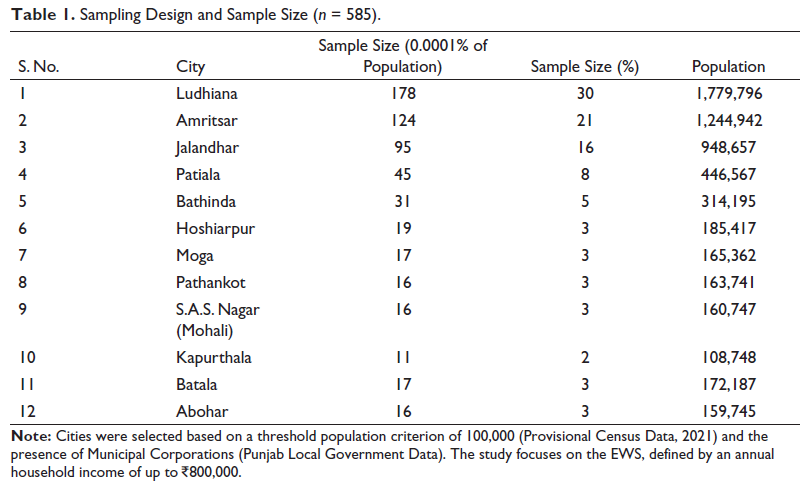
Though the sampling frame comprised EWS households identified from municipal corporation records, snowball sampling was more appropriate to reach this hard-to-reach population. Municipal records may not fully capture all urban poor households meeting the EWS criteria due to limitations like improper documentation. Snowball sampling helped access more representative households meeting the income cut-off through referrals from municipal authorities and community members already surveyed. This provided a more comprehensive sampling coverage of the target EWS population than relying solely on the municipal records.
Survey Instrument, Variable Description and Statistical Analysis
A structured questionnaire was developed as the survey instrument based on multi-item scales adapted from prior empirical studies. It comprised sections on demographic information, awareness of e-payment systems, usage of JAM Trinity platforms, perceptions of e-payment adoption and impact on dimensions of poverty. Five-point Likert scales were used to enable quantitative analysis. The questionnaire was refined through expert validation and pilot testing before administration to the primary sample.
The reliability of the measurement scales used was evaluated through Cronbach’s alpha coefficient, with values above 0.7 indicating good internal consistency (Nunnally, 1978). Convergent and discriminant validity were examined using average variance extracted (AVE) and inter-construct correlations. AVE greater than 0.5 demonstrates convergent validity, while the square root of AVE exceeding inter-construct correlations affirms discriminant validity (Fornell & Larcker, 1981). Factor analysis was also used to assess unidimensionality.
This study adopts a multidimensional perspective on urban poverty guided by frameworks like the Multidimensional Poverty Index developed by Alkire and Santos (2013). Urban poverty encompasses multiple deprivations beyond just income, including lack of basic services, inadequate housing, health vulnerabilities, low education and skills, lack of assets and social security, disempowerment and social exclusion (Singh et al., 2020; Singh & Singh, 2022). These multiple dimensions interact and reinforce each other in complex ways.
The variables included in the survey instrument and analysis approach are designed to assess the key dimensions of multidimensional urban poverty comprehensively. The variables map to the following key dimensions: Income and livelihoods (employment, income sources and levels); Housing and infrastructure (access to facilities and services); Health and nutrition; Education and skills; Assets and social security (loans, insurance); Empowerment (financial literacy, awareness) and Social capital and networks (relationships and mobility). Testing the relationship between e-payment adoption and urban poverty alleviation using these multidimensional variables will provide unique insights into the role of financial inclusion in driving broader welfare improvements for the urban poor.
The survey data were numerically coded and analysed using SPSS version 25 and AMOS version 23 statistical software. The analysis techniques included descriptive statistics to determine awareness across demographic variables, EFA with principal component analysis to identify key scale dimensions, CFA to evaluate measurement models and SEM to test the conceptual framework. The following section presents the results of hypothesis testing using SEM to examine the relationship between e-payment systems, JAM Trinity and poverty alleviation among the urban poor.
Results and Discussion
Demographic Profile and Awareness Level of Respondents
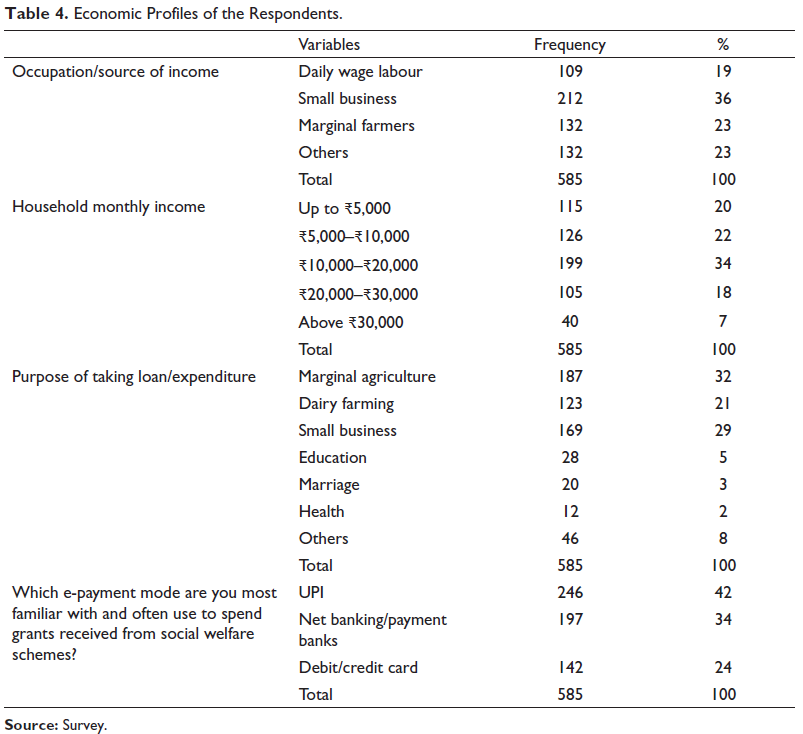
The survey collected responses from 585 urban poor households across 12 cities in Punjab, India. Table 2 provides an overview of key demographic attributes of the respondents surveyed for the study. A majority of 76% were male, while only 24% were female. This indicates a highly skewed gender distribution among participants. In terms of age, the most common groups represented were those between 30 and 40 years (32%) and 40 and 50 years (26%). Together, these middle-aged adults comprised over half of the sample population. The third major age category was young adults of 20–30 years (23%). Only 19% were 50 years or above, the smallest proportion. For educational qualification, the largest segments of respondents had studied until the 10+2 level (29%) or completed an undergraduate degree (20%). Lower levels of qualification like under matriculation (10%) and matriculation (24%) together accounted for one-third as well. On the higher end, 14% were graduates while just 3% had studied until post-graduation level and above. Thus, there was a concentration of participants with moderate levels of education.
Demographic Profiles of the Respondents.
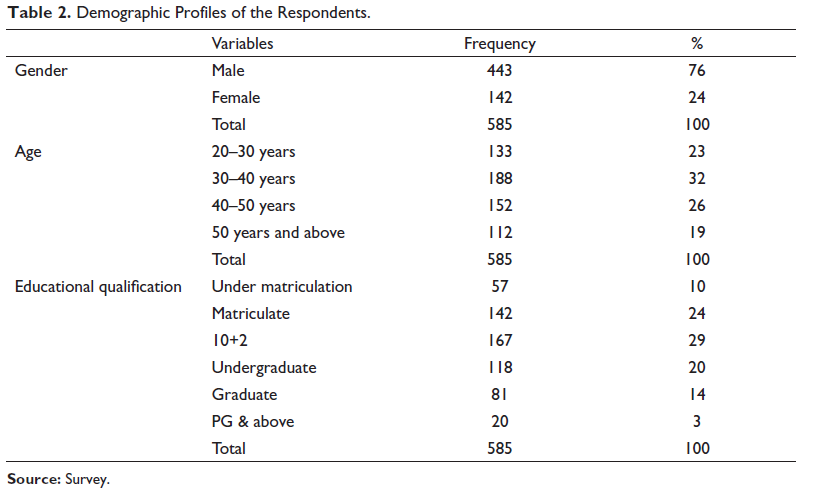
Table 3 highlights the geographical and social attributes across the survey sample from various cities and towns in the state. The highest representation was from Ludhiana (30%), followed by Amritsar (21%) and Jalandhar (16%). These are major hub cities and thus comprised majority respondents. Other towns had relatively smaller shares, ranging from 3% to 8%. In terms of marital status, a high majority was married (85%) compared to unmarried (15%), underlining the family-oriented nature of communities. Two-third (68%) lived in nuclear family set-ups while 32% had joint family structures. Finally, most respondents identified as Sikh (58%), followed by Hindu (32%). Only 9% were Muslim and 1% of other religions. This points to the dominance of Sikh and Hindu households across rural Punjab in alignment with broader demographic trends.
Socio-demographic Profiles of the Respondents.
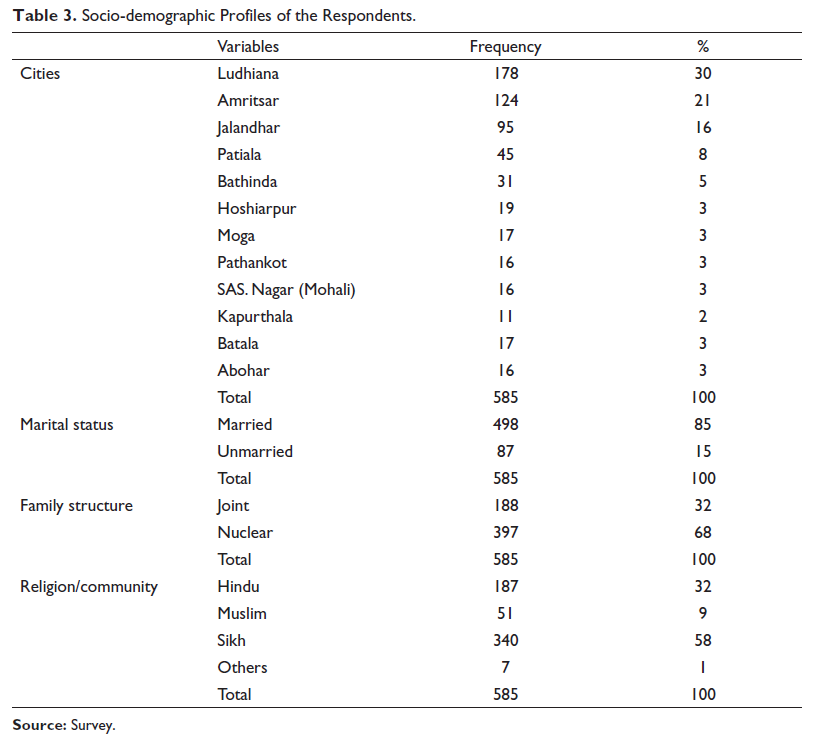
Table 4 focuses on the key economic characteristics, occupations and incomes levels among respondents. Almost one-fifth (19%) relied on daily wage labour, underscoring the prevalence of insecure informal jobs. Over one-third (36%) owned small businesses while 23% were marginal farmers. Together, these constituted majority livelihood patterns. The remaining 23% had other miscellaneous occupations. In terms of household incomes, the highest proportion (34%) earned ₹10,000–₹20,000 per month. A total of 22% made ₹5,000–₹10,000 while one-fifth (20%) earned less than ₹5,000, indicating a largely low-middle income sample population. Loans or financing were commonly utilized for marginal agriculture (32%), small business investment (29%) and dairy farming (21%), aligning with the top occupations. Finally, 42% of participants were most familiar and regularly used UPI payments to receive social welfare grants electronically. One-third relied on net banking/payment bank facilities while 24% on debit/credit cards. This shows moderate adoption of latest digital payments platforms.
Economic Profiles of the Respondents.
Moreover, the results revealed a significant association between awareness levels and demographic factors like gender, age, education, family structure, religion and occupation (p < .05). Younger male respondents with higher education from nuclear families exhibited greater awareness of e-payment options compared to older female joint family members with lower education levels. Sikhs and Hindus also showed higher awareness than Muslims and other minority religions. Small business owners and marginal farmers had higher familiarity with e-payments versus wage labourers. However, awareness did not vary significantly by city, income level or loan purpose. This highlights the need for targeted initiatives based on age, gender, education and livelihood profiles to promote e-payment awareness among the urban poor.
Measurement Model Development and Validation
The variables included in the EFA (Table 5) cover key perception dimensions identified from prior research and the theoretical framework. The 10 items assess perceptions regarding the benefits of e-payments and JAM Trinity at the individual level (convenience, awareness, literacy, standard of living) and government level (budgeting, reducing corruption, implementation of schemes, trust and security, reducing malpractices). These variables provide comprehensive measurement aligned with the study objectives of examining usage perceptions and poverty alleviation impacts. The scale items are adapted from prior empirical studies on financial inclusion and technology adoption (Singh et al., 2020, 2021; Singh & Singh, 2023, 2023).
Factor Analysis: Innovative e-Payment Systems and JAM Trinity.
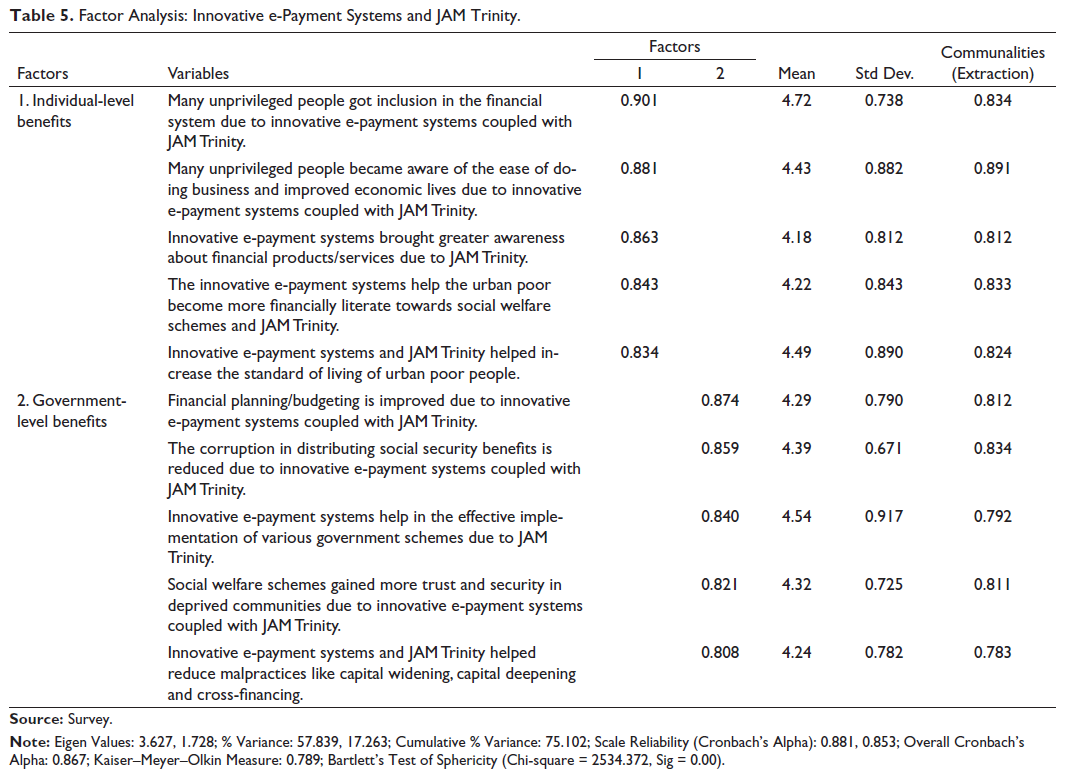
The EFA results indicate two underlying dimensions of perceived benefits – individual-level benefits and government-level benefits, cumulatively explaining 75.102% variance. All 10 items loaded significantly on the identified factors above 0.8, indicating relevance. The individual-level benefits factor combines items relating to individual welfare impacts like awareness, literacy and standard of living. The government-level benefits dimension covers items related to public administration outcomes like transparency, effectiveness of schemes, trust and security. This provides interpretable factors aligned with the multi-level conceptualization of impacts in the theoretical framework. The scale demonstrates good reliability as seen from high Cronbach’s alpha. Thus, the EFA results validate the measurement properties and identify meaningful dimensions regarding e-payment adoption perceptions among urban poor households.
Similarly, the variables included in the urban poverty alleviation EFA (Table 6) cover key dimensions identified from the multidimensional conceptualization discussed earlier. The items assess deprivations across household, regional and community levels, including social relationships, infrastructure access, livelihood opportunities, mobility, health facilities, assets, vulnerability, rights and remoteness. This multidimensional measurement aligns with the study objective of assessing the impact of e-payment adoption on alleviating urban poverty. The scale items are adapted from prior studies on multidimensional poverty indices (Alkire & Santos, 2013; Singh et al., 2020, 2021; Singh & Singh, 2023, 2023).
Factor Analysis: Urban Poverty Alleviation.
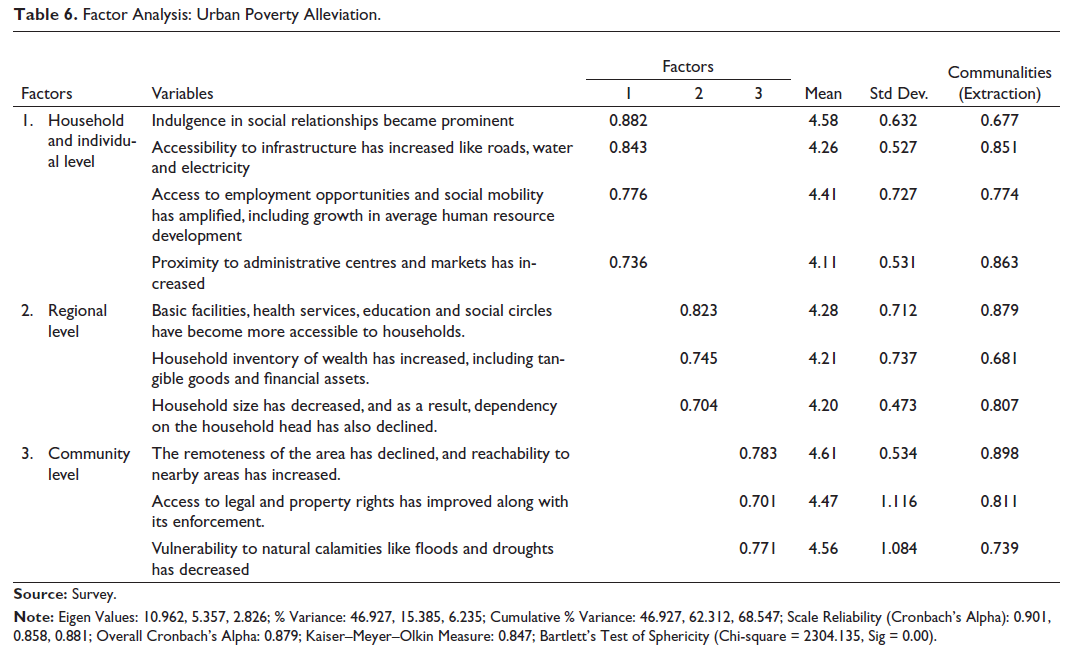
The EFA extracted three underlying dimensions of urban poverty aligned with the multi-level conceptualization – Household and Individual Factors, Regional Factors and Community Factors, cumulatively explaining 68.547% variance. All 10 items loaded significantly above 0.7 on the identified factors, indicating relevance. The Household and Individual Factors combine social, livelihood and asset items. The Regional Factors include basic facilities, health and household assets. The Community Factors cover remoteness, rights and vulnerability items. This provides interpretable factors mapping to the three levels of urban poverty alleviation in the theoretical framework. The scale has high reliability, as seen from good Cronbach’s alpha scores. Thus, the EFA helps validate that the chosen variables provide comprehensive multidimensional measurement and identify meaningful dimensions of urban poverty alleviation impacts.
The CFA (Table 7) was conducted on e-payments and JAM Trinity to validate the measurement model derived from EFA. CFA examines if the factor structure fits the dataset well. It assesses model fitness indices like chi-square value (CMIN)/Degree of Freedom (DF), Comparative Fit Index (CFI) and Root Mean Square Error of Approximation (RMSEA), as well as construct validity and reliability. This validation is vital to ensure the measurement scales developed through EFA are robust before testing the conceptual framework through SEM.
Results of Confirmatory Factor Analysis Fit Indices.
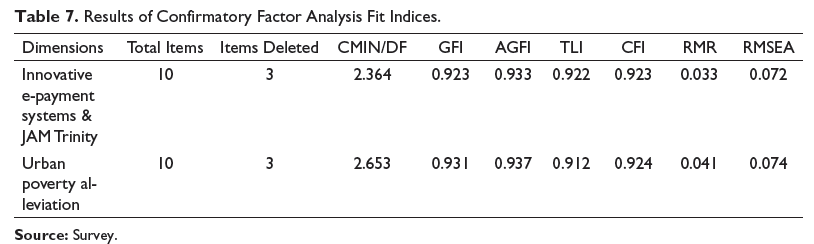
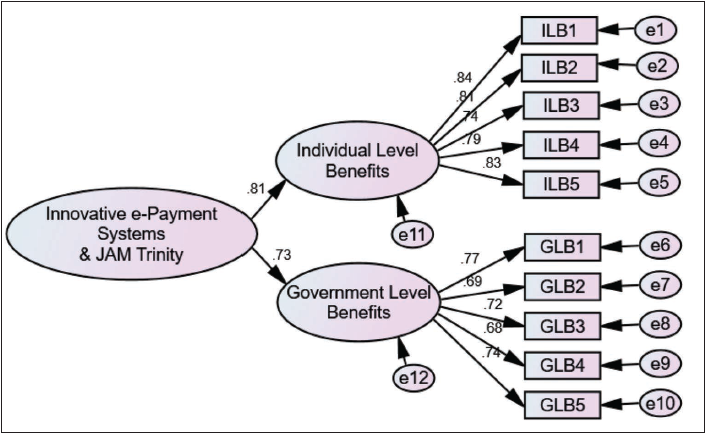
The CFA model (Figure 1, Table 7) for e-payments and JAM Trinity showed a satisfactory fit as seen from CMIN/DF = 2.364, CFI = 0.923, RMSEA = 0.072. All factor loadings were significant, establishing convergent validity. The AVE was above the 0.5 threshold for the two factors, also indicating convergent validity. The composite reliability values were more significant than 0.7, showing good internal consistency. Thus, the CFA results confirm that the measurement model has adequate validity and reliability. This provides confidence in accurately measuring the perceptions regarding e-payment adoption among urban poor households for further analysis using SEM to test the conceptual framework.
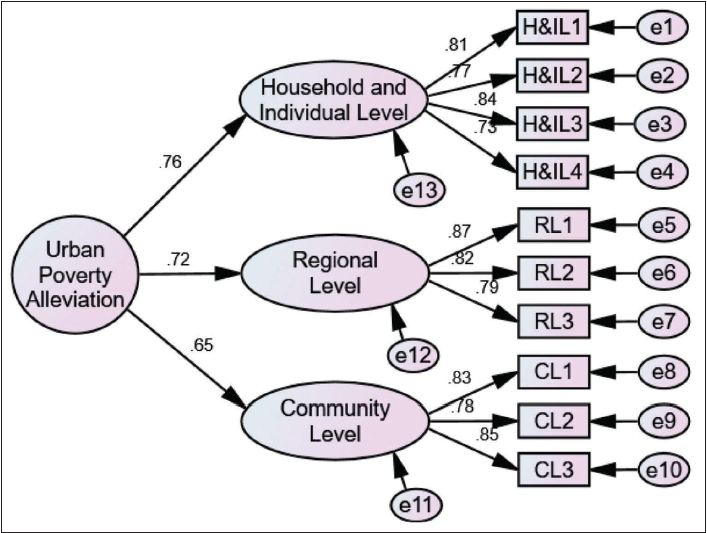
Similarly, CFA was conducted on urban poverty alleviation to validate the measurement model derived from EFA before testing the structural relationships (Figure 2, Table 7). The CFA model demonstrated good fit as evident from CMIN/DF = 2.653, CFI = 0.924, RMSEA = 0.074. All factor loadings were significant and greater than 0.5, establishing convergent validity. The AVE was above the threshold of 0.5 for the three factors, indicating adequate convergent validity. The composite reliability values exceeded 0.7, demonstrating good internal consistency. Thus, the CFA results confirm that the urban poverty alleviation measurement model is valid and reliable. This provides confidence in measuring multidimensional poverty alleviation accurately based on the factors identified for examining the impact of e-payment adoption using SEM.
Structural Model Testing and Discussion
SEM was used to test the conceptual framework and examine the relationship between e-payments and JAM Trinity and urban poverty alleviation. SEM enables simultaneously assessing the measurement models developed through EFA and CFA and the structural relationships hypothesized between the latent constructs. This technique is appropriate because the study objectives include developing multi-item scale measurements for the adoption perceptions and poverty impacts constructs as well as testing the proposed positive relationship between them. The SEM results (Table 8, Figure 3) indicate the model has excellent fit as seen from fit indices (CMIN/DF = 4.315, CFI = 0.927, RMSEA = 0.080). This confirms the positive relationship hypothesized between e-payments and JAM Trinity and urban poverty alleviation (β = 0.53, p < .001).
Fitness of the Structural Model.

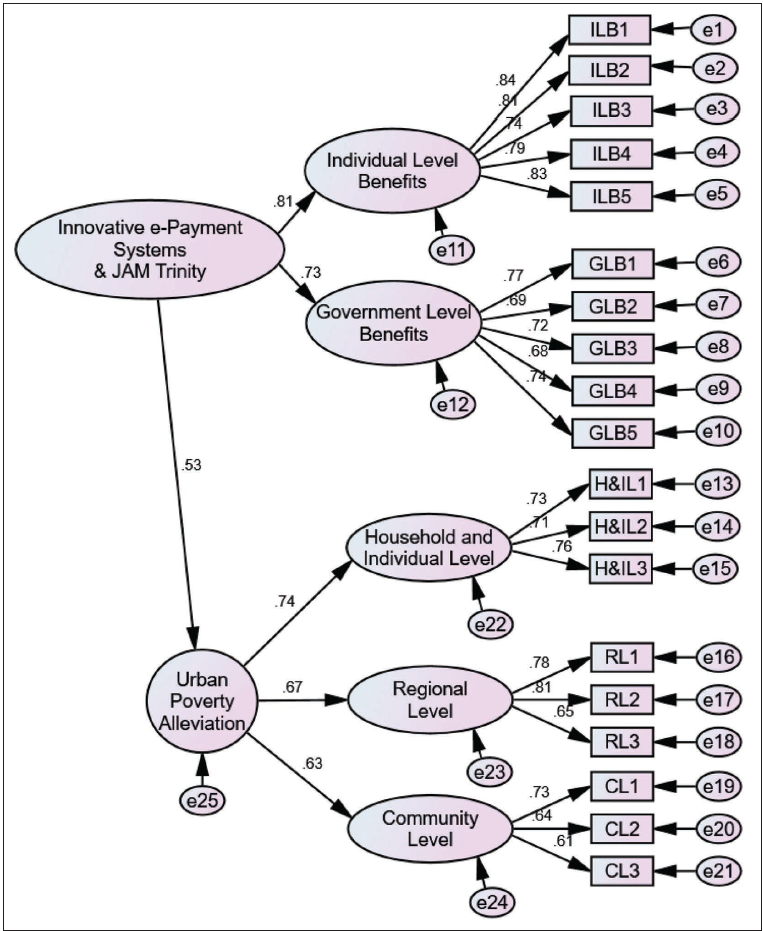
This positive effect implies that enhancing the financial inclusion of the urban poor through adopting e-payments and electronic transfers has significant beneficial effects on alleviating multidimensional poverty across individual, regional and community levels. Specifically, greater use of e-payments and digitized government disbursals helps increase income, assets, skills development, social capital, infrastructure access and livelihood opportunities while reducing vulnerabilities. The study makes a significant empirical contribution in demonstrating the positive impact of e-payment adoption on multidimensional welfare gains for the urban poor based on rigorous statistical analysis using SEM. Thus, the SEM results provide strong validation for the conceptualized positive relationship between financial inclusion through Fintech adoption and the alleviation of multidimensional urban poverty.
In summary, this study aimed to examine the role of e-payment systems and JAM Trinity in enhancing financial inclusion and alleviating multidimensional poverty among the urban poor in India. The survey of 585 households in Punjab provided insights into Fintech awareness, adoption patterns and usage outcomes. These results have important implications for theory, policy and practice. The findings revealed greater awareness of mobile and UPI payments compared to cards among the urban poor, reflecting the rapid growth of Fintech in India. However, awareness gaps exist across demographic segments. This aligns with digital divide concerns in adoption studies (Hussain & Rasheed, 2023; Kolte & Humbe, 2020).
Younger educated male earners perceived higher individual benefits regarding convenience and efficiency and government benefits like transparency in using e-payments. This endorses that Fintech promotes inclusiveness and effective service delivery (Mudassir, 2020). However, risk perceptions inhibited usage among vulnerable groups, consistent with adoption barriers highlighted for the financially excluded (Li et al., 2022). Moreover, integrating e-payments in welfare programs enhanced reliability and reduced leakages, corroborating evidence on the impact of JAM Trinity in improving social transfer efficiency (Singh et al., 2021; Singh & Singh, 2022, 2023).
Furthermore, greater financial inclusion through digital government disbursals and e-payment adoption positively multiplies income, assets, skills and social mobility and reduces vulnerabilities across individual, regional and community dimensions. This affirms positions regarding the pro-poor alleviation potential of Fintech (Jones, 2018; Singh & Singh, 2023, 2024). Thus, the study makes a significant empirical contribution by demonstrating that e-payments positively impact multidimensional poverty alleviation among the urban poor. This integrative assessment of adoption behaviour using technology acceptance and capability perspectives to examine poverty outcomes advances theoretical understanding. The focus on the understudied cohort of urban poor Fintech users also addresses a gap in the literature.
Unlike broader Fintech adoption studies, this research uniquely focused on urban low-income groups, providing new insights into this understudied cohort (Sarma & Pais, 2011). The multidimensional poverty assessment offered a novel perspective compared to narrow financial inclusion measures. Testing an integrated model synthesizing technology acceptance and capability theories makes a methodological contribution compared to descriptive Fintech studies (Sharma et al., 2022). Focusing on the evolving Indian Fintech ecosystem provided contemporary analysis aligning with concerns over limited benefits for the poor (Sharma et al., 2022). The finding that e-payments positively influence poverty alleviation concurred with arguments favouring Fintech’s inclusive potential (Jones, 2018), though adoption gaps corroborated concerns over elitist usage (Bateman et al., 2019). From a technology acceptance standpoint, the study affirmed the explanatory value of perceived benefits, risks and capabilities in shaping Fintech adoption.
Focusing on the understudied cohort of low-income urban populations, the study provides unique empirical insights into Fintech awareness, usage patterns and poverty alleviation outcomes among the marginalized. The findings revealed adoption gaps across demographic segments, highlighting digital divide concerns. At the same time, integrating e-payments into welfare schemes had positive multidimensional impacts. Thus, the granular segment-wise analysis and evidence on pro-poor benefits make significant empirical contributions compared to broad Fintech adoption studies. The focus on the evolving Indian context offers contemporaneous insights into the financial inclusion debate. Further, the multidimensional poverty assessment provides a novel perspective compared to narrow financial metrics. This comprehensive empirical examination guided by clear objectives can catalyse more context-specific evidence on Fintech and development.
Conclusion
Financial exclusion is a persistent challenge facing the urban poor in India, impeding access to social welfare schemes and perpetuating poverty. This study examined the potential of e-payment systems and JAM Trinity in enhancing financial inclusion and alleviating multidimensional urban poverty. The survey of 585 urban poor households across 12 cities in Punjab provided insights into Fintech awareness, usage patterns and impact on poverty. The results revealed greater awareness of mobile and UPI payments compared to cards, but with gaps across demographic segments.
The results also showcase that the younger educated male earners perceived advanced benefits, but risk perceptions inhibited adoption among vulnerable groups. Integrating e-payments in welfare programs reduces leakages, improves reliability, positively affects income, assets, skills and social mobility, and reduces vulnerabilities across individual, regional and community dimensions. Thus, the study makes significant theoretical contributions through its integrative conceptual model and focuses on the understudied cohort of urban poor Fintech users.
For policy and practice, the findings recommend focused literacy drives, localized promotion, trust-building measures and integrating e-payments in social transfers to drive adoption among the urban poor. Government, banks and Fintech firms must collaborate to co-create customized solutions for low-income groups. While an early contribution, this study sets the foundation and research agenda for further scholarly inquiry investigating Fintech innovations, adoption barriers, usage behaviour, inclusion outcomes and welfare impacts among marginalized communities. Such research holds valuable insights for harnessing technology’s potential in creating a more just, equitable and inclusive digital economy.
Thus, this study makes new strides by developing an integrative conceptual model drawing from technology acceptance and capability theories, applying rigorous quantitative analysis techniques, and generating in-depth empirical insights about the understudied low-income Fintech users in India. These multidimensional theoretical, methodological and empirical contributions significantly advance scholarly understanding at the intersection of Fintech, inclusion and poverty alleviation. The article lays the foundation and sparks further research to harness technology’s potential equitably for the marginalized.
Overall, this timely study underscores the promising possibility of leveraging e-payment systems and electronic transfer frameworks to accelerate financial inclusion and alleviate multidimensional urban poverty. It highlights the need for policy emphasis and implementation approaches tailored for the urban poor to ensure they are not left behind in the Fintech revolution. Focused efforts can thus help translate the disruptive potential of financial technologies into tangible gains for poorer citizens, contributing to the goal of digital and financial inclusion for all.
The limitations of this study provide avenues for further scholarly inquiry. Expanding the geographic scope beyond one state can improve generalizability. A comparative assessment of adoption and usage outcomes across urban centres can offer more nuanced insights into city-specific dynamics. The cross-sectional survey design could be advanced through longitudinal tracking of e-payment usage patterns over time. Mixed methods combining surveys with qualitative techniques like interviews and ethnography can provide richer perspectives on user experiences, barriers and enablers.
Future studies can broaden the scope by examining the adoption of broader Fintech solutions like digital credit, insurance, investments and their welfare impacts for low-income groups. Comparative analysis with rural adoption or across developing countries could yield additional insights. There is also scope for integrating behavioural economics concepts like heuristics and biases with TAMs to understand better the Fintech usage behaviour of people with low incomes. This study sets the foundation and offers a conceptual basis to catalyse further scholarly work at the intersection of Fintech, inclusion and poverty alleviation.
Managerial Implications for Policy and Practice
The findings of this study provide significant insights to guide policymakers and Fintech firms in formulating targeted strategies to promote digital financial inclusion of the urban poor. Specifically, by revealing adoption gaps across demographic and occupational profiles, the results point to crucial areas for intervention. For instance, the findings underscore the need for customized digital literacy and awareness campaigns focused on women, the elderly and informal workers in urban communities who exhibit lower knowledge of e-payment systems. Furthermore, localized promotion leveraging neighbourhood networks and trusted influencers can aid adoption.
Additionally, simplified grievance redressal mechanisms and stringent data privacy safeguards are essential for building trust and mitigating risk perceptions among the vulnerable urban poor. Moreover, user-centred design approaches involving co-creating tailored products like ‘sachet-sized’ insurance can drive greater adoption. Therefore, integrating e-payment interfaces into social welfare schemes emerges as a key strategy to boost usage by the urban poor. Partnerships between government agencies, banks and Fintech firms to digitize disbursals, add localization features and enable micro-transactions in public distribution systems can promote usage. Thus, a collaborative policy approach emphasizing digitization, customized implementation, trust-building and co-creation of ‘embedded Fintech’ solutions targeted at the urban poor can significantly advance financial inclusion to create a more equitable digital economy.
Footnotes
Acknowledgement and Funding
The scholar, Jaskirat Singh (F. No. 3-36/2021-22/PDF/GEN), is the awardee of ICSSR Postdoctoral Fellowship. This article is largely an outcome of the Postdoctoral Fellowship sponsored by the Indian Council of Social Science Research (ICSSR). However, the responsibility for the facts stated, opinions expressed and the conclusions drawn is entirely of the author.
Declaration of Conflicting Interests
The authors declared no potential conflicts of interest with respect to the research, authorship and/or publication of this article.
