



Abstract
This study is intended to know the effect of sub-dimensions of social media influencer’s credibility (SMIC) on destination purchase intention (DPI) of visitors, and the mediating role of destination brand trust (DBT) in the relationship. Grounded in the positivism paradigm, the study adopts a quantitative approach. A total of 356 tourists during their Kashmir trip participated in the questionnaire survey. Descriptive analysis using Statistical Package for Social Sciences (SPSS 22.0) software and structural equation modelling to test the proposed model was conducted by using Analysis of Moment Structures software (AMOS 23.0). Results of this study revealed that SMIC (trustworthiness, similarity, attractiveness) significantly impacted DBT and DPI. Additionally, the relationship between SMIC and DPI was considerably mediated by DBT. Further, Meaning Transfer Model is also validated, as the results of this study were in resonance with this theory. The results of this study will facilitate tourism policy makers in framing policies and choosing the most appropriate social media influencer (SMI), as well as guide people who looking forward at influencer marketing as a career and researchers working on social media marketing within tourism.
Keywords
Introduction
Advancement in internet infrastructure at the beginning of the twenty-first century has resulted in significant reliance of people on social media (Ngai et al., 2015). Emergence of platforms like Facebook and YouTube has made content sharing and communication easier (Xiao et al., 2018). It has also opened up new doors for businesses to grow and shifted their attention to social media marketing (Irfan et al., 2022), as social media provides them platform to enhance their relations with customer by becoming more collaborative (Trainor et al., 2014). Like tourism destinations, hotels and restaurants have become active on social media to interact directly, answer queries and resolve tourists’ grievances. As a result of this transition, the share of the internet in the total marketing budget over traditional advertising channels like TV and print media has increased. The ET Bureau report (2023) also anticipates an increment of 200,000 million in advertising budget for financial year 2023, with digital advertising expected to hold a lion’s share of 71% of it. In comparison to previous year, the digital ad expenditure is expected to grow by 20% to 825,420 million in 2023 and TV’s share is expected to drop to 30%.
Increasing spending on digital marketing activities has increased competition for tourists’ attention on online platforms (Rambe, 2017). However, due to its inherent advantages, digital marketing gets more edge over social media marketing (Oklander et al., 2018). But in order to enhance the influence of digital advertising, relying entirely on the vast reach of digital channels is not enough. Advertising has to be engaging (Hanna et al., 2011) and captivating enough so that customers will deliberately become a part of it (Rosengren & Dahlén, 2015). In response to this changing trend, destination marketers have started switching to social media influencer (SMI) marketing, for which they team up with SMIs (Haobin et al., 2020). SMIs can be defined as those people who have got sizable following on single or multiple social media platforms and hold influential power over their followers (Lou & Yuan, 2019).
Collaborating with influencers is beneficial for tourism or destination brands because influencers increase the reach of the content by offering access to new audiences, attracting new targets, increasing brand trust and pushing out people to make a purchase decision (El Yaagoubi & Machrafi, 2021). Genuine content created by SMIs plays an essential role for tourists in mitigating the risk associated with purchasing tourism products as advertisements involving these influencers are seen as more trustworthy by their followers than traditional advertisements (Lou & Yuan, 2019). Since consumers and followers may interact directly with these influencers, who are regarded as more reliable, their chances of attracting attention and influencing consumers are higher than those of conventional marketing techniques (Lou & Yuan, 2019). Also, people perceive social media more credible means of information because they facilitate bidirectional communication, quick feedback and more objective user-created content (Shrivastava & Jain, 2022).
Prior researchers have acclaimed SMIs as essential means for destination brands to create awareness (Lou & Yuan, 2019), generate brand equity (Es-Safi, 2021), drive the message to the target tourists, reach out to new tourists, alter tourist behaviours (Kapoor et al., 2021), induce purchase intention among tourists (Gholamhosseinzadeh et al., 2021; Singh & Munjal, 2021; Yilmazdogan et al., 2021), affect travel decision-making process (Pop et al., 2021) and building trust (Ishani, 2015; Jin et al., 2021; Kemec & Yuksel, 2021). However, prior studies have not studied sub-dimension of credibility in relation to brand trust. In addition to that, researchers have stressed that the relationship between SMIs and brand trust is affected by the characteristics of product under examination (Jin et al., 2021; Kemec & Yuksel, 2021). As tourism products vary significantly from other products in terms of perishability, tangibility and separability (Gronroos, 2007), hence this research delves the relationship between sub-dimensions of social media influencer’s credibility (SMIC), Destination Brand Trust (DBT) and Destination Purchase Intention (DPI) because of which the model is unique.
Therefore, the objectives of the research work are: (a) to study the impact of SMIC as a second order latent variable with trustworthiness, similarity and attractiveness as its first-order latent variables on DPI and DBT, (b) to identify most significant sub-dimension of SMIC for promoting travel-related products and (c) to study the mediating role of DBT between SMIC and DPI.
This research makes a valuable contribution to the current body of knowledge by examining the influence of a SMIC on the persuasive effectiveness of a destination brand’s message. Specifically, it investigates how the credibility attribute of the influencer transfers to the endorsed destination brand, which in turn helps a destination brand to portray itself as a trusted destination brand, thereby enhancing its persuasive impact. The results of this study will assist destination policymakers in using SMIs effectively for marketing tourist destination.
Literature Review
Social-media Influencer Credibility
Recent studies demonstrated that the effectiveness of SMIs is contingent upon their perceived trustworthiness and likability (Vrontis et al., 2021). But how do we define SMIs? SMIs are content generators with expertise in a specific field like travel, fashion, electronics and so on, who share information on social media and have a huge online following, making them important communication channels for businesses (Lou & Yuan, 2019). Keller and Fay (2016) define influencers as consumers who show more curiosity for information and share this acquired information in the form of reviews and recommendations with the rest of consumers. Consumers reference their content for information, suggestions and recommendations because they share their real experiences with products and services (Shrivastava & Jain, 2022).
SMIs might appear similar to celebrities but scholarly works have surfaced significant differences between the two (Kim et al., 2021). For traditional celebrities, the prime reason for fame on social media is their profession, like Virat Kohli, who is famous on social media because of sports. However, SMIs do not inherit fame on social media platforms because of the professions they are already associated with. They work hard on social media, make their followers perceive them as experts in some field and create a brand of their own (Nouri, 2018). In addition to this, SMIs gain massive followings by enthusiastically sharing their own content and engaging their audience (Bharti, 2021). Contrarily, celebrities even after owning vast following rarely follow-back or respond to comments on Instagram (Nouri, 2018). The reason being the organic and authentic appearance of endorsement involving SMIs as they seamlessly blend into their regular narratives (Shrivastava & Jain, 2022). Further, if we take perceived credibility into consideration, the trustworthiness and authenticity associated with endorsements involving SMI exceed over endorsements involving celebrities. This association is contingent upon the influencer’s recognized level of credibility traits like trustworthiness, attractiveness, similarity and expertise (Lou & Yuan, 2019). The greater the extent to which an influencer has adopted credibility traits, the higher the likelihood of their audience being receptive to their messages (Lou & Yuan, 2019).
A source is supposed to possess expertise in a field if it has got enough knowledge and skill (Mattson, 2005). SMIs by usually working within a specific domain like travel, fashion, fitness and so on portray themselves as experts of that specific domain (Schouten et al., 2019). Hence, influencers are more susceptible to impose the product–endorser match on credibility than typical celebrity endorsers. Trustworthiness refers to the source’s honesty, character and reliability as comprehended by the audience (Mattson, 2005). The amount of trustworthiness and authenticity associated with endorsements involving SMI exceeds over endorsements involving celebrities. The reason being the organic and authentic appearance of endorsement involving SMIs (Shrivastava & Jain, 2022). Attractiveness refers to a person’s physical looks and plays an essential part in creating the first impression of an individual. Message delivered by an attractive person about a product or place holds more influence over receivers (Djafarova & Rushworth, 2017). Physically appealing SMIs received more likes from blog readers and have more influence on their followers (Chu & Kamal, 2008). Similarity is conceptualized as the likeness between the influencer and the follower in terms of demographic and ideological factors (Munnukka et al., 2016). Because of this similarity of interest, background and characteristics people are more likely to imitate their behaviour or attitude (Kelman, 2006).
Certain products, such as tourism products, are impacted more by influencers than others and a probable reason as per Persuasion Knowledge Theory is that people doubt information, that they think is trying to persuade them and manipulation signals are more obvious in genres like commercials. However, an influencer who introduces an ad as engaging, fascinating and worth watching, distracts viewers from their pre-conceived notion that all advertisements aim to trap consumers (Jans et al., 2020).
Further, this research seeks guidance from the elaboration likelihood model (ELM) proposed by Petty and Cacioppo (1986) to understand how the credibility of SMIs is important. The ELM posits that cognitive elaboration of a persuasive message varies from person to person because of variation in cognitive efforts (Angst & Agarwal, 2009). Two routes of cognitive elaboration are: central and peripheral route (Petty & Cacioppo, 1986). Tourists who follow central route critically evaluate the quality of information of persuasive message buried in photographs, narrations and videos (Lepp & Gibson, 2008). On the other hand, peripheral path needs meagre cognitive efforts and takes clues such as previous users, visuals or expert endorsements into consideration (Lee & Koo, 2016). When travellers choose a peripheral route, they put less effort into evaluating information about products and instead pay attention to what other people have to say, such as comments ratings made by past visitors and opinion leaders (Filieri & McLeay, 2014).
However, experiential nature and characteristics like intangibility, inseparability and variability of tourism products make customers go for opinion of past users and SMIs (Lasmi et at., 2021) to make informed decision. Hence, mostly preferred route to evaluate tourism products before buying is peripheral. So, the content created by SMIs finds more applicability for tourism products. In addition to this, credibility of influencer guides the followers while finalizing the influencer to follow among the available choices (Cheng et al., 2020). So, credible SMIs are preferred over others.
Destination Brand Trust
In the context of marketing literature, brand trust has been defined as the strength of belief held by a consumer that a product or service brand will accomplish its promised functions (Chaudhuri & Holbrook, 2001). The current study conceptualizes brand trust as tourist’s readiness to depend on a destination brand based on their perceived ability regarding the destination brand that it will deliver its promised functions, activities and experiences. Even though travellers’ readiness to go for a destination depends on their prior knowledge of a destination brand, but still their purchase decision involves an assessment of the risk associated with the purchase. The different types of risks in case of tourism product transactions are ‘financial/economic risk, psychological risk, performance risk/equipment risk, health risk/physical risk and social risk’ (Hasan et al., 2017). Trusted destination brands enjoy competitive edge over other destinations as brand trust reduces uncertainty when transactions involve risk because, for consumers, the trusted brand provides a sense of security (Chaudhuri & Holbrook, 2001).
The perception of tourists towards a destination is affected by involving SMI in advertising campaigns (Femenia-Serra & Gretzel, 2020). Trusted SMIs significantly affect tourists’ decision-making (Pop et al., 2021). A possible reason for this is that the content created by SMIs alters the perceived destination image among followers (Jaya & Prianthara, 2020). Intention to travel to a destination is influenced by SMI following behaviour among millennial travellers (Han & Chen, 2022). SMIs are important agents to induce tourist flow towards a destination (Razak & Mansor, 2022).
Destination Purchase Intention
DPI is the probability that tourists who are at the planning phase of trip will travel to a particular destination (Liu et al., 2018). DPI is the outcome of various motivational forces, which are actually phenomenon that facilitate the tourists to visit any destination (Sengul, 2018), and this likelihood to travel to a destination determines the actual visit of a traveller (Lu et al., 2016). Hence, understanding the factors that motivate a person to travel becomes important.
Brand messages delivered by credible media ensure a significant positive impact on consumers (Roy et al., 2021). Sub-dimensions of credibility, expertise, trustworthiness and similarity, are vital factors on which the effectiveness of the message delivered by endorser depends (Goldsmith et al., 2000). Studies reveal that SMIC significantly affects the purchase decision of the people within their circle of influence (Djafarova & Rushworth, 2017; Schouten et al., 2019). Both source credibility’s sub-dimensions (Pornpitakpan, 2004) and brand trust (Bozbay, 2020) are important factors determining purchase intention.
Many studies have investigated the factors influencing DPI, however only handful of studies have investigated the role of credibility of SMIs. DBT as a mediating variable in the relationship between credibility of the SMIs and purchase intention has not been addressed in prior studies for tourist destinations. In addition to investigating the impact of sub-dimensions of credibility (trustworthiness, attractiveness, similarity) on DPI, the mediating role of DBT has also been explored for the first time, because of this reason the proposed research model is unique.
Underpinning Theory: Meaning Transfer Model
The Meaning Transfer Model (MTM) by McCracken (1986) explains how celebrities boost brands and products value. MTM can also explain how using SMIs to promote hotels, destinations, restaurants and so on adds to the promotional message’s effectiveness. SMIs can better endorse a product than celebrities because of their differences between the two. Celebrity endorsements appear inorganic and are clearly apparent to customers due to the schema of persuasive information people accumulate over time (Friestad & Wright,1994). SMI endorsements, on the other hand, integrate into their daily lives so well. According to Abidin (2016) and Knoll et al. (2017), SMIs create a unique image among their followers and transmit cultural connotations like reputation, status, personality, preferences and living style through their content. For instance, a travel influencer who constantly creates and shares content on off-beat destinations depicts their allocentric trait, and an influencer who always shares content on cultural sites represents their affinity for cultural sites. Similarly, a SMI who always shares honest information about a destination, hotel or restaurant depicts his trait of credibility.
According to McCracken (1989), symbolic meanings like the credibility of SMIs are passed on to the brands they endorse through endorsement. That is, if a credible SMI promotes a destination, the people who will go through the content will also perceive the destination promoted by them as trustworthy. Additionally, this model posits that meaning transfer happens in three stages (McCracken, 1989).
In the first stage, that is, ‘culture’, the celebrity gains several meanings through their public appearances like in the present case, SMIs acquire the trait of credibility by continuously sharing credible content through their profile or channel. During the second stage, that is, the brand endorsement phase, the traits or symbolic meanings transfer to the brand through endorsement. That is, if a SMI who is considered credible by their followers endorses a destination, their trait of credibility will be associated with the destination promoted by them. In the third stage, ‘consumption’, people purchase the product because of the trait transferred from the celebrity to the brand. Hence, if a destination is promoted by a credible SMI, the trait of credibility will be linked to the destination brand, and people will perceive the destination brand as trustworthy and ultimately make a travel intention to that destination.
Framework
SMIs have been acclaimed by several authors as important agents to induce purchase intention (e.g., Kapoor et al., 2021; Pop et al., 2021; Singh & Munjal, 2021). Studies have also validated that SMIs affect the perception followed by the purchase intention of their followers (Schouten et al., 2019; Xiao et al., 2018). Further, the credibility of SMIs is also found to influence purchase intention of followers (Xiao et al., 2018; Yilmazdogan et al., 2021). Cheng et al. (2020) also add that source credibility guides social media users to find the right influencer whose opinion they should consider while making decisions. Further, Yilmazdogan et al. (2021) states that each of the sub-dimensions of a source’s credibility has a significant impact on visitors travel intent. To summarize, credibility of influencers becomes an essential factor in determining travellers’ visit intention. Based on the above discussion, the following hypothesis can be framed:
H1: Social media influencer’s credibility significantly influences the destination purchase intention among social media users.
Trustworthiness is positively related to behavioural intention. If a person trusts someone, they will exhibit positive behavioural intention in their favour (Liu et al., 2019). Research on persuasion effects reveals that trust associated with a distributor (Doney & Cannon, 1997), producer, retailer (Kennedy et al., 2022) or social media platforms (Pentina et al., 2013) results in positive behavioural intention. So, the probability of a positive response from an individual towards the brand they trust is more (Luk & Yip, 2008). Chaudhuri and Holbrook’s study (2001) and Bozbay (2020) found that consumers show stronger purchase intention towards trusted brands. Further, Loureiro and Gonzalez (2008) empirically proved that trust of a traveller towards a rural lodging strongly influences their intention to stay in the lodge. And Rather et al. (2019) discovered a significant influence of brand trust on purchase intention in the hospitality sector. Following the discussion, below-mentioned hypothesis can be framed:
H2: Destination brand trust positively impacts destination purchase intention.
Prior research reveals that credibility and attractiveness are conceived as important characteristics of the information source which influence consumer behaviour, and celebrities possessing these traits prove effective marketing strategies for businesses (Breves et al., 2019). Ohanian (1990) and Pornpitakpan (2004) studies also reveal that celebrity credibility affects purchase intention. Further, Breves et al. (2019) adds that YouTubers’ attractiveness, trustworthiness and credibility affects young consumers’ purchase intention and their trust in a brand. And Shamli (2019) adds that products or brands endorsed by influences on Instagram affects trust of consumers towards a brand and purchase intent. These outcomes were verified for the beauty products on YouTube and Instagram by Sokolova and Kefi (2020). Further, Kemec and Yuksel (2021) has validated the mediating effect of brand trust in the relationship between SMIC and purchase intention for cosmetic and personal care items. Hence, favourable brand perceptions, such as brand trust, could be crucial aspects in determining how SMIs affect DPI. In light of the studies in the literature, following study hypotheses can be proposed:
H3: Social media influencers credibility positively affects destination brand trust.
H4: Destination brand trust mediates the relationship between the influencer’s credibility and purchase intention.
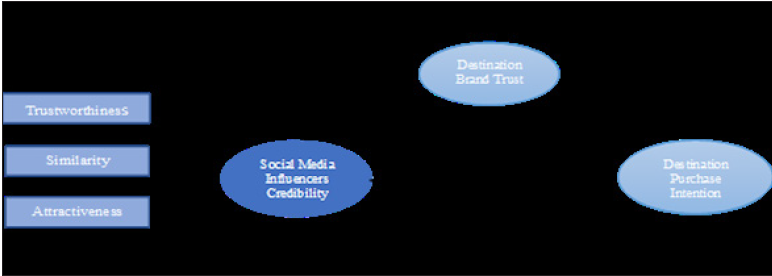
On the basis of above discussion, the proposed model as depicted in Figure 1 consists of three variables, SMIC which is an independent second-order reflective construct measured in terms of Trustworthiness, Similarity and Attractiveness, DBT which is a first order reflective construct and acts as a mediator in the relationship between SMIC and DPI, DPI which is also a first-order reflective and acts as outcome variable.
Proposed Framework.
Rationale of the Study
Kashmir is known for its diverse tourism products like pilgrimage, adventure, pleasure and so on (Mir, 2014). Even after possessing massive tourism potential, the number of tourists visiting Kashmir is stagnant (Habib et al., 2017). And one of the most prominent reasons for that is the ongoing conflict which has negatively affected its image (Najar et al., 2020). So, the Directorate of Tourism Kashmir and numerous destination management organizations are now turning to social media handles (Saqib, 2018) by employing SMIs and organizing trips for them to Kashmir so that they can promote Kashmir through their content (Nomllers, 2021). Despite the ongoing conflict within Kashmir, the number of tourists expected this year (2022) is 17,9970 (Timestravel, 2022 April), which is relatively high compared to 2019 and 2018. Hence, through the present study, we have tried to figure out whether SMIs have contributed to these rising figures.
Methodology
Data Collection Tool
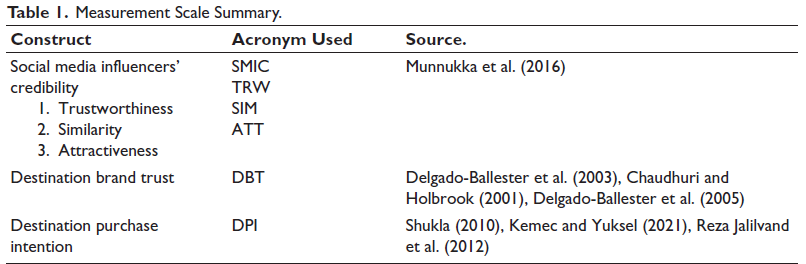
To investigate the perception of tourists about SMIs and their influence on DBT and purchase intent, a self-structured questionnaire was employed which was developed after proper literature review. The questionnaire items were scored on a 5-point Likert scale, with responses as 1-Strongly Disagree, 2-Disagree, 3-Neutral, 4-Agree and 5-Strongly Agree. The questionnaire was split into two sections, with section A consisting of 23 questions concerned with the latent variables of the study and section B consisting of eight questions concerned with the demographic profile of study respondents like gender and age, a question regarding the trip and four questions regarding the social media consumption habit of respondents. Sources of scales used to measure study variables are given in Table 1.
Measurement Scale Summary.
Pilot Study
The pre-test was conducted in the month of March 2022, according to Clark and Watson’s (1995) strategy, for which the sample of 60 tourists (Hertzog, 2008), who are active on social media, was conveniently selected from Pahalgam. The pilot study resulted in the refinement of the research instrument based on the suggestions of the respondents. After collecting data for the pilot test, it was subjected to analysis to calculate Cronbach’s Alpha coefficient for all statements of the scale. The value of Cronbach’s Alpha coefficient was found to be greater than 0.73 for all statements of the questionnaire, which is greater than the threshold value of 0.70 (Kilic, 2016).
Sampling
The examination was conducted from March 2022 to June 2022, and the study population comprised tourists visiting Kashmir who are active on social media. Although the precise count of units within the study population is unknown, but it is assumed to exceed 100,000. So, the sample size can be calculated from the following equation (Yilmazdogan et al., 2021):
where N is the sample size, p is the probability of occurrence of the event, q expresses the chance that the event will not occur, d represents sensitivity and Z represents standard normal distribution’s critical value (at a specific level of significance). After substituting the values for p = 0.5, q = 1–0.5, d = 0.05 and Z = 1.96 in the above equation the sample size is about 384. Therefore, it was intended to reach 400 tourists visiting Kashmir who are active on social media. A total of 400 tourists were approached to conduct a face-to-face survey through convenience sampling at the prominent destinations of Kashmir. Out of the 400 distributed questionnaires, 359 were correctly and completely filled, hence acceptable for further analysis. Additionally, the sample size of 359 is justified by the fact that as per Kline (1998) for structural equation modelling, 10–20 participants for each estimated parameter is adequate. In line with his recommendations, our sample size should be greater than 200. Hence a sample size of 359 is more than sufficient.
Data Analysis and Findings
Descriptive statistical analysis using Statistical Package for Social Sciences (SPSS) ensured data fitness for analysis. To verify data normality, Cronbach’s Alpha (α) was calculated for all study constructs and all components had Cronbach Alphas above 0.70 (Kilic, 2016), indicating questionnaire reliability. Skewness and kurtosis, which should be between ±2.00 (George & Mallery, 2010), were also applied and found to be within the desired range, confirming the data’s multivariate normality distribution assumption (Bonett, 2002).
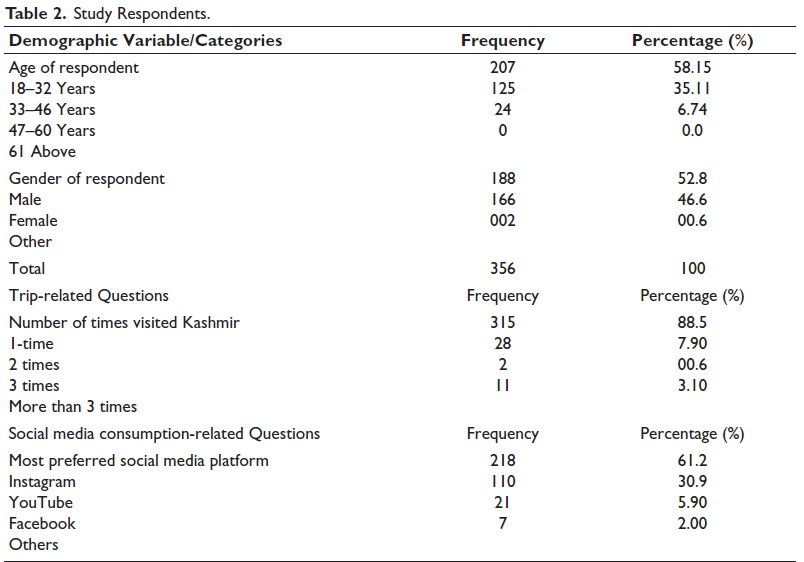
As depicted in Table 2, 52.8% of the study respondents were males, 46.6% were females and 0.6% belonged to third gender category. Most of the travellers belonged to the age group of 18–32 years (58.15%). Most of the respondents were visiting Kashmir for the first time (88.5%). And the most preferred social media platform by the respondents was Instagram (61.2%) followed by YouTube (30.9%).
Study Respondents.
Results of Factor Analysis
To reduce data and determine underlying factors from items from several scales (Yong et al., 2013), exploratory factor analysis was performed on SPSS 22.0 using principal component analysis and varimax rotation with a minimal factor loading threshold of 0.50. Out of the 13 items, EXP1 dropped due to poor factor loading, and EXP2 and EXP3 loaded onto factors other than their underlying factor. Thus, all three expertise items were eliminated from further analysis. The EFA was repeated with 10 items, reducing to three components. The factors were named according to related themes as trustworthiness (TRW), similarity (SIM) and attractiveness (ATT).
The communality of the scale, which shows variance in each dimension, was also considered to ensure proper explanation. Bartlett’s Test of Sphericity ensured that the correlation matrix had significant correlations, while the Kaiser–Meyer–Olkin measure determined sample adequacy.
The value of Kaiser–Meyer–Olkin measure for all the constructs was well above the threshold value of 0.5 (Nunnally, 1978) and the result of Bartlett’s test of Sphericity was also significant (p < .001) for all the three constructs. The three extracted factors of SMIC explained 77.015% of the variance, for DBT the percentage of the total variance with one factor was 67.864% and for DPI the percentage of the total variance was 76.042% with one factor. Table 3 depicts the results of factor analysis.
Results of Factor Analysis.
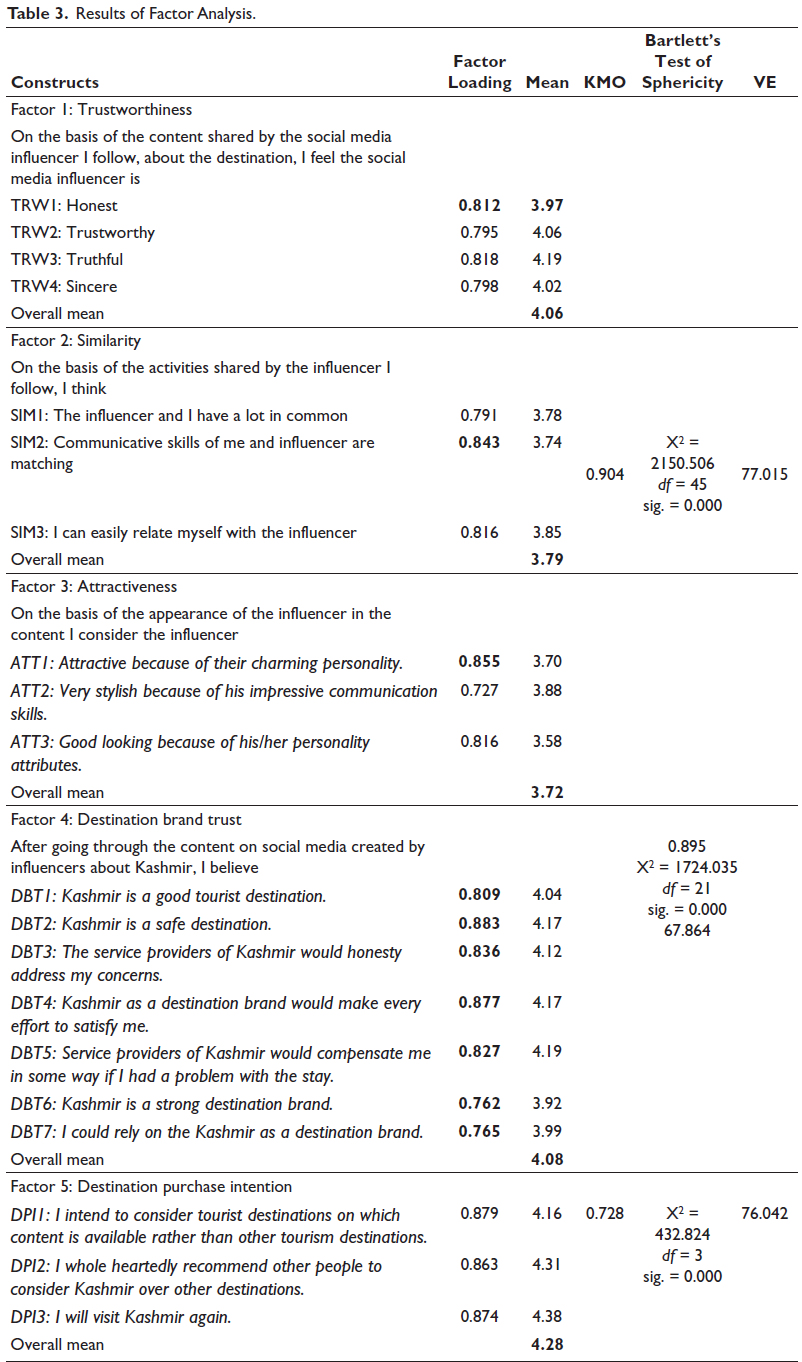
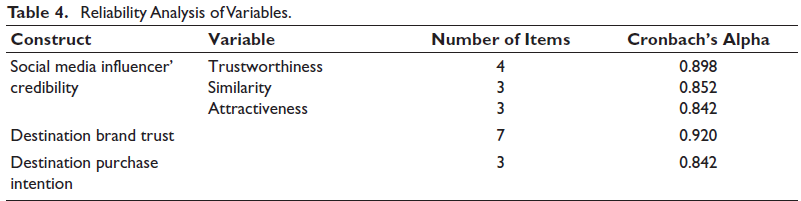
Table 4 displays SMIC, DBT and DPI reliability. Cronbach’s Alpha ranged from.842 to.920, showing that all research constructs are reliable as the acceptable threshold is 0.70 (Hair et al., 1998; Nunnally, 1978).
Reliability Analysis of Variables.
Measurement Model
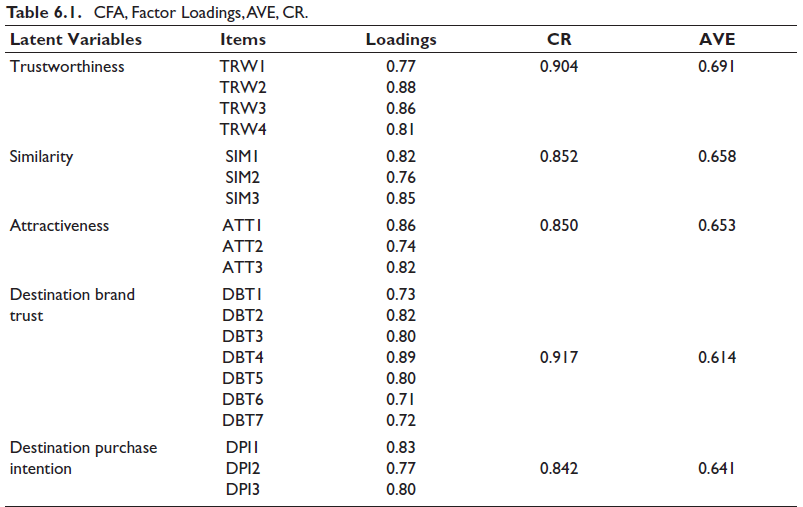
After extracting factors through EFA, second-order confirmatory factor analysis was computed using AMOS to test the three-factor measurement model. In order to test the validity of the three constructs (SMIC, DBT, and DPI) identified in the exploratory factor analysis (EFA), both convergent validity and discriminant validity were evaluated. The initial measurement model’s model fit indices were unacceptable: X 2/df = 3.365, RMR = 0.047, GFI = 0.841, IFI = 0.906, TLI = 0.893, CFI = 0.906, NFI = 0.884 and RMSEA = 0.082. However, the measurement model fits well after co-varying the error factors (e24, e25, e26). As a part of the CFA, loadings were checked against each item, and all items had factor loadings greater than 0.7. As shown in Table 5, the values of all model fit indices were within their respective acceptance levels on the basis of the criteria suggested by Hair et al. (1998) and Kline (2005). The three-factor model with model fit indices as X2/df = 2.921(<3), RMR = 0.045 (<0.08), CFI = 0.936 (>0.90), RMSEA = 0.074 (<0.08), NFI = 0.906 (>0.90) and GFI = 0.883 represents the overall degree of fit but this index is also very much influenced by sample size (Hu & Bentler, 1999). Instead of chi-square, which depends on sample size (Hu & Bentler, 1999), relative chi-square whose value should lie between 1 and 3 (Carmines, 1981) is considered.
Model Fit Index.

The reliability was assessed on the basis of composite reliability, and construct validity was assessed on the basis of convergent and discriminant validity for the 20 items of all constructs and 3 items of SMIC as mentioned in Tables 6.1 and 6.2. These tables reveal that composite reliability (CR) for all constructs is greater than 0.842, exceeding the recommended threshold of 0.7 (Hair et al., 2010). The common variance of a construct with its latent variable is explored through convergent validity. The standardized factor loadings, ranged between 0.71 and 0.89, were well above the threshold of 0.70 (Hair et al., 2014) and AVE for all constructs is less than CR values (Hair et al.,2010) supporting convergent validity.
CFA, Factor Loadings, AVE, CR.
CFA, Factor Loadings, AVE, CR.

After calculating AVE, Fornell and Larcker (1981) criterion was used to assess the discriminant validity of the second-order reflective construct (SMIC) and the first-order reflective constructs (DBT, DPI). To assess the discriminant validity, Fornell and Larcker (1981) approach suggests the comparison between square root of AVE values and correlations between latent variables. While making the comparison in the present case, it was found that the correlations among the constructs is less than the square root of AVE values, indicating that the constructs of the study possess discriminant validity as shown in Table 7.
Evaluation of Fornell and Larcker (1981) Criterion for Discriminant Validity.

Hypothesis Testing
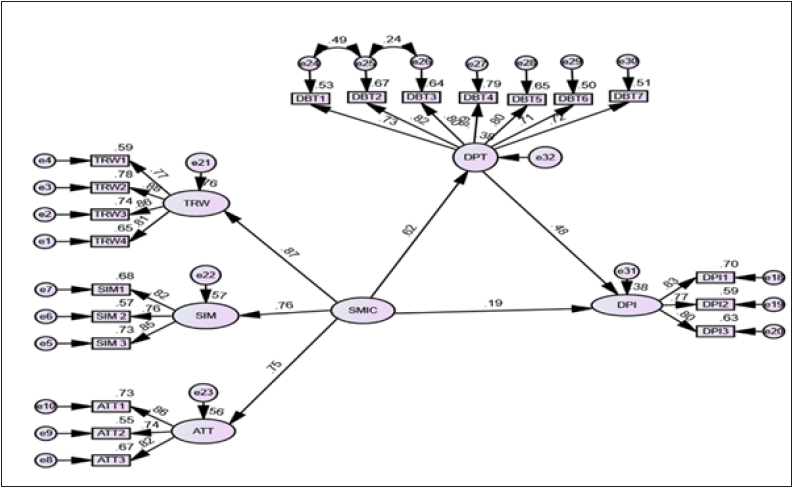
After testing the measurement model by CFA, the suggested conceptual model was tested by conducting a structural equation analysis, as shown in Figure 2. SMIC was operationalized as a second-order latent variable, and its sub-dimensions, trustworthiness, similarity and attractiveness, were operationalized as first-order latent variables. The rest of the constructs, namely DBT and DPI, were operationalized as first-order latent variables. Figure 2 displays the SEM analysis findings. Further, as depicted by Table 4, the structural model’s fit indices obtained after SEM indicate that the data was well represented by the model (X2/df = 2.921(<3), RMR = 0.045 (<0.08), CFI = 0.936 (>0.90), RMSEA = 0.074 (<0.08), NFI = 0.906 (> 0.90) and GFI = 0.883). Given that the parameters and degree of freedom for the structural model and measurement model are the same, the models’ fits are identical for both. The hypotheses were tested on the basis of the estimates of the structural coefficients (paths). As evident from Figure 2, SMIC considerably impacted DBT and DPI (β1 = 0.19, β2 = 0.62), providing evidence in support of H 1 and H 2. Hypothesis H 3 was also accepted as the path coefficient was positive and statistically significant from DBT to DPI (β3 = 0.48).
Results of the Estimated Structural Model.
Assessment of Mediation Effects Using Bootstrapping
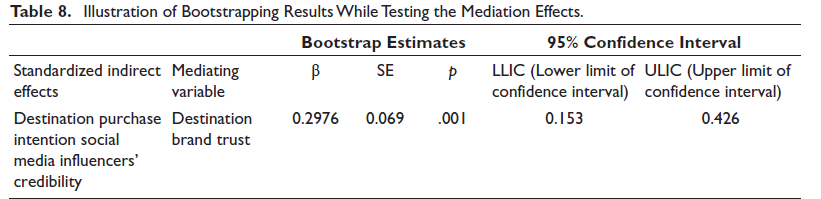
Rising popularity of bootstrapping method was one of the reasons to utilized bootstrapping method to ascertain the mediation effect of DBT (Preacher & Hayes, 2008). A random sample with replacement is taken using the bootstrapping technique, which treats our data as a pseudo-population, to see whether our indirect impact is within a given confidence interval. The bootstrap estimate of β = 0.2976 based on 2,000 bootstrap samples at a 95% bias-corrected percentile shows that the relationship between SMIC and DPI is mediated DBT. The estimated range for indirect effect is 0.153–0.426, and this range should not include zero. At a significance level of p = .001 (two-tailed), which is less than .05 (two-tailed) with 95% confidence, it is evident that the indirect effect significantly differs from zero (Cheung & Lau, 2008; Preacher & Hayes, 2008). As depicted in Table 8, hypothesis is accepted:
Illustration of Bootstrapping Results While Testing the Mediation Effects.
Discussion
The current study broadens our understanding of influencer marketing by revealing the role of credibility of SMI in travel intent of their followers. The primary outcome of this study is that a credible SMI is an important factor that can determine the travel behaviour of its followers on social media platforms. This finding is in line with previous studies (Dutta et al., 2021; Gholamhosseinzadeh et al., 2021; Singh & Munjal, 2021) which conclude that online reviews or digital advocacy or digital influencers play an important role in shaping the decisions of travellers.
This study further unveils that there is a significant positive relationship between sub-dimensions of SMIC and DPI (β = 0.19), thus indicating that 29% of the variance in DPI is explained by SMIC. Amongst the various sub-dimensions of credibility, expertise was not further analysed because of its cross-loading with trustworthiness. However, all the three extracted dimensions contributed significantly to the credibility of SMI but the maximum contribution was shown by trustworthiness.. These results are also in line with previous studies like Pop et al. (2021) verified positive impact of trust associated with a travel SMI at all the steps of travel decision-making process
Kapoor et al. (2021) also supports the findings by suggesting that simple recommendations by influencers regarding eco-friendly hotels are not as effective as attribute valued message, so content quality is of utmost importance for persuasion. In the same vein, Chatzigeorgiou (2017) states that credibility of the influencer is an important attribute that Greek millennials consider before going for recommendations by influencers regarding rural destinations. Further, Yilmazdogan et al. (2021) states that credibility of SMIs affects travel intent and Le and Hancer (2021) states that wishful identification of followers is positively influenced by the physical attractiveness, social attractiveness and credibility of travel vloggers.
The results of this study also depict a positive relationship between SMIC and DBT (β = 0.62). Indirect effects of DBT were also identified by this study’s results using bootstrapping in the relationship between the credibility of SMIs and DPI. With a bootstrap estimate of β = 0.297, the findings show that indirect effects (SMIC to DBT and DBT to purchase intention) are significant. This indicates a mediating effect of DBT in the relationship between SMIC and DPI. It can be deducted that the credibility of social media influencers results in the development of trust in a destination brand. And trusted destination brands are easy to go with for tourists. This result is also consistent with previous studies like Kemec and Yuksel (2021) which also validated a significant relationship of credibility of SMIs, brand trust and purchase intent for beauty and cosmetic products.
Conclusion
The primary purpose of the study was to comprehend the mechanism of influencer marketing for tourist destinations. This study provided empirical evidence for the claim that DBT and SMIC are two important antecedents of DPI. The results of the study reveal that endorsement of a destination by a credible SMI leads people to trust the destination and ultimately pay visit to the destination. The findings suggest that DBT which acts as an important factor under uncertain conditions for tourists to visit destination is predominantly determined by the credibility of the information source like in present case the source is influencers. The study suggests identification of the factors, that lead people to perceive SMIs credible, is important if influencer marketing is used to market a destination.
Theoretical Contribution
The study shows theoretical contribution in numerous ways. First, by studying the role of SMIs in destination promotion, this study adds to our understanding of important and trending marketing channels, that is, SMIs, in the context of tourism products. Second, by studying the credibility characteristic of SMI, this study has acted on the call of researchers like Gomez (2019) and Gretzel (2018) who suggested understanding influencer characteristics for successful implementation of influencer marketing campaigns. Further, prior studies that have addressed the credibility characteristic of SMIs have treated it as a uni-dimensional concept (Sesar et al., 2021). However, this study extends our understanding of the credibility characteristic of SMIs by treating it as a multi-dimensional concept, which will facilitate the destination marketing organization’s ability to effectively evaluate the credibility of a SMI while employing them for a campaign.
The results of this study also support the relationship between SMIC and DBT. By analysing an association between variables that has not been addressed earlier, we discovered that if followers think an influencer is credible, then they also think the destination brands they support are credible. Implying the followers’ trust in SMI extends to the destination brands they promote. Hence, the result of the study is in resonance with the MTM (McCracken, 1989), which states that the traits of a celebrity transfer to brands through endorsement.
Practical Implications
The current study assesses the influence of credibility of SMIs on DBT and DPI. In this study, mediating role of DBT in the relationship between SMIC and DPI has also been studied. The results of this study validated a positive relationship between credible SMIs and purchase intention. An important implication from this result for destination marketers will be that while employing SMIs for marketing campaigns, influencers credibility can serve as a vital parameter for influencer selection. Since influencers credibility acts as an important antecedent for purchase intention among visitors, so for effective results, destination marketers must engage with credible influencers.
On subjecting SMIC to exploratory and confirmatory factor analysis, it reduced to three factors, namely trustworthiness, attractiveness and similarity. Among the three factors of SMIC, trustworthiness, with a standardized factor loading of 0.87, appeared to be a vital factor in shaping tourists’ perceptions. On the basis of this finding, an important implication for destination marketers will be that when choosing an influencer for marketing a tourist destination, the physical attractiveness of the influencer is not as required as in other product categories like cosmetics, apparel and so on. Instead, while employing an influencer destination, marketers should give first preference to the trustworthiness earned by the influencers. On the other hand, when an aspiring SMI is at the stage of creating a ‘culture’, this finding can guide them to become an effective SMI. Instead of running after the number of followers and likes, aspiring SMIs should create credible content that will make social media users perceive them as trustworthy. This earned credibility will help them to gain organic following and they will actually have an influence over their followers. Hence, they will become effective influencers.
The third important implication of the study is that the maximum respondents in the study belonged to the age group of 18–35, and the number decreased while moving to higher age groups. A probable reason for this decrease could be that respondents were asked a preliminary question about whether they follow any influencers, and tourists relatively older in age returned the questionnaire saying that they are not fond of social media. So, the implication that can be derived from this observation for destination marketers is that they should go for influencer marketing only when their target population is young; otherwise, if the target population is older, influencer marketing would not be very effective.
The fourth implication that can be derived for destination policymakers is that the data of the study revealed that the most preferred platform among study respondents was Instagram, followed by YouTube. Hence, when choosing a platform for an influencer marketing campaign, first preference should be given to Instagram because of its rising popularity and unique content format options like stories, photographs, videos and so on.
The results of this study also reveal a significant positive relationship between the credibility of SMIs and DBT, and DBT and purchase intention. And the respondents of the study were mostly first-time visitors. This result of the study can be beneficial for destination policymakers at the time of introducing any new destination to the tourism map of any state. Tourists hesitate to travel to virgin destinations because they do not trust the destination as the risk factor is involved. Just like in the present case, primarily first-time visitors consulted the content of SMIs. Hence, employing social media influencers to disseminate content about a newly identified tourist destination will help reduce the risk that first-time visitors associate with a virgin destination. This will help to reduce the risk of first-time visitors associated with a virgin destination. Thus, destination policy makers can use SMIs for creating destination awareness and destination familiarity among visitors at the initial phase of destination area life cycle.
Further, demonstrating that the endorsement of a credible SMI plays a crucial role in facilitating the development of trust over the destination brand could offer an important implication for destination policymakers working in conflict-ridden destinations. Destination policymakers working on the recovery of conflict-hit destinations can leverage the trust associated with credible SMI to rebuild trust among visitors in a conflict-affected destination.
Footnotes
Acknowledgement
The authors are grateful to the anonymous referees of the journal for their extremely useful suggestions to improve the quality of the article. Usual disclaimers apply.
Declaration of Conflicting Interests
The authors declared no potential conflicts of interest with respect to the research, authorship and/or publication of this article.
Funding
The authors received no financial support for the research, authorship and/or publication of this article.