



Abstract
Human resources with their innate pool of knowledge, skill, leadership, creativity and talent assist companies in achieving their goals. However, the current accounting system is not able to provide the value of human resources. We find human resource accounting (HRA) disclosures to be very low in Indian companies with only five companies reporting HRA in their annual report that is just 1 per cent of the sample set of companies. Furthermore, HRA disclosures that are made by companies are unstructured and inconsistent, and incomparable across companies and industries. Therefore, we examine the extent of HRA measurement and reporting practices of selected Indian companies among the National Stock Exchange S&P CNX 500 companies. We critically analyze these and rank the companies on the basis of the extent of disclosure of HRA information in annual reports of companies.
Introduction
The success of any organization depends on the quality and efficiency of its human resources (HR) apart from other critical parameters. Intense market-driven competition has led many organizations to increasingly appreciate the role of their people and HR policies. In any organization, the most important input is the human element and nothing meaningful is possible without human intervention. The greater the efficiency of HR, the greater is the profit earning capacity of a business enterprise. Generally, corporate performance depends on the behaviour of HR it acquires. But this is not reflected as per the conventional accounting system. The factors that determine the capacity of a business enterprise for development and growth can be classified into two—passive factors of production (capital and natural resources) and the active factors (HR who accumulate capital, exploit the natural resources, build economic organization and carry forward the department). In this way, HR is the most fundamental of all available resources. Non-HR can be made useful only through HR. This certainly places HR at a higher level than non-HR. Likert (1967) stated that every aspect of a firm’s activities is determined by the competence, motivation and general effectiveness of human organization. However, conventional corporate financial reports contain details of physical and financial assets only; investment in HR may be reported in a very limited way by some companies in annual reports. So far, the accountants in the past have not given due consideration to this important asset working in the enterprise. Companies spend a lot of money on training and development, strategies to retain and motivate their employees in order to increase their performance and efficiency.
Therefore, a proper system to valuate HR and measure the effect of various managerial activities on their performance, efficiency and ultimately contribution to the company would help managers to identify the contribution of HR to the company’s profits and frame suitable HR policies. Traditional accounting practices continue to treat amount spent on recruiting, hiring, training and developing people as expenses rather than investment in ‘assets’ without attempting to reformulate the rules that distinguish asset and expense components. This is due to the conventional boundaries of the concept of what constitutes an asset. Traditional accounting statements also tend to violate the accrual principle, matching principle, disclosure principle because of the manner in which they treat HR cost and value. This results in incomplete appraisal and prediction of value of HR of an enterprise and distorts the decision making. This inability of accounting systems to change in accordance with changes in economy has caused information asymmetry among the users and preparers of accounting information. This is evident from the ever increasing gap between the market value and value of companies. The difference between the market value and book value of a company is calculated as the ratio of Standard and Poor (S&P) 500 rating. The ratio was approximately 1 in early 1980s. In 2000, it had risen to 6 times and in some cases even 20 times. The difference exists due to the presence of intangibles such as the brand value, and HR. Evidently, there is a greater need to incorporate such measures in our financial accounting reports which can give a better account of a companies’ worth. Therefore, HRA is necessary to disclose what is happening to HR in a company, its value in terms of productivity and outcome from investment. Although some measures such as balanced scorecard, economic value added and brand valuation have been developed and used by companies for performance evaluation, but its use and reporting are limited in Indian context.
During 1960s, behavioural scientists, economists and accountants became conscious that business and industry had developed sophisticated techniques for managing physical assets. But no similar kind of knowledge had been put to work in regard to HR which in fact is the mother of all resources. In such a backdrop, HR accounting (HRA) has been developed as a measurement tool that generates and reports quantitative control information about that contribution of HR for promoting industrial productivity.
The basic premises underlying the theory of HRA are to visualize people as valuable resources of an enterprise. Usefulness of manpower as an organizational resource is determined by the way in which it is managed and information on the investment and value of HR is useful for decision making in the organization. The notion of treating people as assets and accounting for them is logical and satisfactory considering the expectation of future economic benefit and their measurability.
Human Resource Accounting
HRA, as an approach, originally evolved as a process of identifying, measuring and reporting the HR of an organization not presently accounted for under conventional accounting practices. It is an information system that records the changes over time that occurs to the corporate HR and periodic reporting of these to the management.
The Committee on HRA of American Accounting Association (AAA, 1973) defines HRA as the process of identifying and measuring data about human resources and communicating this information to interested parties.
Flamholtz (1974) considered human being as resources of an organization and stated:
HRA means accounting for people as an organisational resource. It involves measuring the cost incurred by a business enterprise and other organizations to recruit, select, hire, train and develop human assets. It also involves measuring the economic value of people to the organisation.
One more comprehensive definition has been given by Brummet, et al., (1969), which states that:
HRA is the process of developing financial assessment for people within the organisation and society and the monitoring of these assessments through time. It deals with investments in people and with economic results of those investments. It is a means by which managers are encouraged to give more serious consideration to human resources impacts to all of their decisions. It provides a necessary supplement to conventional income measurement and thus broadens the coverage of measure of financial well being and financial success of organisation.
An examination of the above definitions reveals that HRA involves processes such as the identification of data on investment in the HR, measurement and valuation of the economic results of such investment, and presentation of the above valuation in the annual financial statements.
In this way, HRA can be defined as the art of identifying, valuing, recording and presenting systematically the worth of HR in books of accounts of an organization. HRA may be defined as an information system that tells the management what changes are accruing to HR of the company. It is an art of evaluating the worth of HR of an organization in a systematic manner as a whole to the organization and to the society and recording them for presenting the information in a significant manner to communicate their worth with changes over a period of time and results obtained for their utilization to the users of financial statements. As is the case of traditional accounting, HRA has three steps as depicted in Figure 1.
HRA is an important tool in the hands of the management to understand long-term cost and benefit implications of HR decisions, the absence of which may lead to decisions though good for the short term but may have serious repercussions in the long term. HRA can also be viewed as an important tool for investors in judging the investment worthiness of the company.
The Process of HRA

However, very few studies have been conducted to examine the HRA practices of the companies. The present study is undertaken with the objective to examine the extent of HRA measurement and reporting practices among selected Indian companies and to critically analyse them in the light of the some specific objectives such as companies among the National Stock Exchange (NSE) S&P CNX 500 that report HRA in their annual reports, the objectives of reporting HRA valuations, methods of presentation of HRA information in annual reports and methods adopted by the companies to value their HR and other issues involved therein.
This article has been divided into six sections. The second section traces the historical background of HRA. The third section provides the review of the present literature on HR disclosures and their determinants. The fourth section provides research methodology and research design of the present study. Hypotheses to be tested in the present study have been developed in this section along with sample selection, data collection methods and limitations as well as scope for future research. The fifth section presents analysis and findings. The sixth section summarizes our work and implications. Thereafter, the seventh section presents summary and concluding remarks.
Historical Background
First formal attempt to value the human being in monetary term was made by Sir William Petty as early as in 1691. Sir William Petty (1690, 1691) was of the opinion that labour was ‘The father of wealth’ and it must be included in any estimate of the national wealth. Further efforts in this connection were made by William Farr in 1853 (Farr, 1853) and Earnest Engel in 1883 (Engel, 1883).
The real work on this subject was started from 1960. From here on, extensive research was carried out to develop methods for the valuation of HR, and the inclusion of such information in reporting was emphasized. However, sincere efforts in this direction were made during the last three decades, as a result of which only, many accountants and economists all over the world became conscious of appropriate methodology and procedures that need to be developed for finding the cost and value of people working in organization. Over this period, a number of experts have worked on it. Some of them are Shultz (1960), Brummet et al., (1968) and Holtz (1974). In 1967, Hekimian and Jones (1967) emphasized that the information on HRA should be used in the planning process and also in the resource allocation decision.
Likert (1967) pronounced the importance of human asset accounting and the relative consequences of accounting for HR in the organization. The HRA system is found to be applied first in the annual report of R.G. Barry Corporation during 1969 (R.G. Barry Corporation, Annual Reports, 1969–73). In 1974, however, they discarded the system. It was observed that the benefits of the system were not encouraging when compared to the cost involved, maintenance of system being heavy for a company of their size. In other words, the system was not economical to the Barry Corporation by the time they decided to discard it. However, later on various accounting bodies such as the Committee on HRA of AAA and the American Institute of Certified Public Accountant opined in favour of HRA. According to these institutes, this concept would influence the people of both public and private organizations. In this way, the research progressed in the field of developing models for valuation, accounting and reporting of HRA information, effect of such disclosures on decisions of stakeholders in companies and the disclosure status of companies in this regard.
Literature Review
The literature on HRA, as far as measuring and reporting HR is concerned, can be classified in three categories, consistent with Abheysekara and Guthrie (2004). The first category attempts to formulate different methods for measuring and reporting HR value (HRV). Various techniques have been evolved by researchers using cost, value and other components of HR as the basis. However, these methods have got little acceptance due to the subjectivity involved in the process of HRA except for the Lev and Schwartz model as proposed by Lev and Schwartz (1971). This method is followed by most companies for HR valuation with some modification to suit individual needs. The second category attempts to analyze the effect of HRA on investors and management’s decisions. Various studies undertaken to understand behavioural implications of HRA disclosures on investors, managers and employees also come under this category. The third category of research attempts to explore the various ways in which HR and HRA information is being measured and reported by companies through various means such as annual reports, company newsletters and websites, with the content analysis of annual reports being the highly explored source. The research studies here seek to investigate current HRA measurement, reporting practices and trends among companies across industries and countries affecting the reporting practices and attempts to identify the factors/explanatory variables affecting the disclosure practices.
Our study falls in the third category where an attempt has been made to analyze the extent of disclosures of the HRA information of the Indian companies through the content analysis of annual reports. After constructing the HRA disclosure index (HRADI), the study aims to find out whether the companies differ significantly in respect of HRA disclosures or not. The review of the available literature in respect of the application of HRA in companies is given below in Table 1.
Apart from these studies, many other studies have been conducted by researchers such as Gupta (1990), Bhatia and Singh (1992), Rao (1993), Batra and Bhatia (1994), Prakash (1997), Verma (1999), Patra and Khatik (2003), Seth (2009) and Sharma and Shukla (2010) to find out current practices followed by Indian companies for HRA. The studies have revealed that, although the companies are trying to fit available models for the valuation of HR as per their own requirements, they do not deal with the mode of recording and reporting of accounting information relating to HR in the books of accounts of financial statements. This has been left to the accounting bodies, which have to develop a generally accepted basis for the valuation, recording and reporting of information related to HR information. However, no research evidence has been found to examine the extent of HRA application in a larger set of companies. Available studies are limited to select few companies only. Therefore, the present study has been undertaken to assess the adoption of HRA systems in a sample of the NSE CNX 500 set of companies. Further, an attempt has been made to develop HRADI that can be used as a benchmark for framing suitable guidelines for HRA valuation and reporting.
Summary of Literature Review

Research Design
Objective
Our objective is to examine/investigate the extent of HRA application among selected Indian companies. The present study is aimed to achieve the following specific objectives.
Our primary objective is to examine/investigate the extent of HRA measurement and reporting practices among selected Indian companies and critically analyze them in the light of the following specific objectives:
Which companies among the NSE S&P CNX 500 companies are reporting HRA in their annual reports? What is the industry type and sector of the companies formally reporting HRA? What are the objectives of reporting HRA valuations? What is the method of presentation of HRA information in annual reports? What methods are adopted by companies to value their HR and what are the significant deficiencies and discrepancies/inconsistencies in the measurement and reporting of HRA?
To rank the companies on the basis of the extent of disclosure of HRA information in annual reports.
To analyze whether there is any significant difference among the disclosure practices of selected companies.
Research Methodology
For this purpose, the exploratory research design based on secondary data contained in annual reports of the selected set of companies was chosen. The study was conducted for the period of five years from the financial year 2007–08 to the financial year 2011–12. In the first step, the annual reports of the companies were examined to find out those companies which are actually measuring and reporting HRA information. Then a 20-item HRADI was developed to find out the extent of HRA disclosures and to rank the selected companies on the basis of the disclosure index. The items were chosen on the basis of past empirical work on HRA disclosure practices and the content analysis of annual reports of the selected companies. These indicators were divided into three groups: HRA model specifications and reporting; HR variables forming the base of HRA measurements and HRA-related ratios.
Table 2 elaborates the list of HRA disclosure items chosen for the study as forming HRADI, their meaning and significance. Of these, the first seven variables relate to disclosures in respect of HRA valuation and reporting practices. Next seven variables have been included to find out the extent of HR disclosures as forming the base of HRA measurements. Finally, remaining variables relate to the ratios that these companies disclose in respect of HRA measurements.
HRA Disclosure Items Forming HRADI

The HRADI has been constructed to quantify the level of HRA disclosures in annual reports of selected companies. An index of 1 has been awarded to company if it has disclosed the concerned disclosure item in its annual report and 0 otherwise. After completing scoring for each of the items in the disclosure index, the indexes of each company have been added to find the composite index, reflecting the number of disclosure items against which disclosures have been made through annual reports.
The unweighted disclosure method to measure the disclosure index of a company as suggested by Cooke (1992) is as follows:
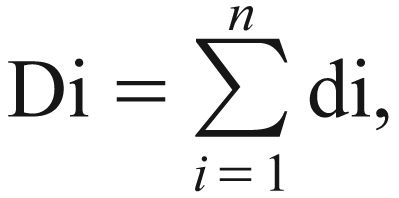
where di is the disclosure index for each item (1 if the item is disclosed else 0) for item ‘i’ and n is the number of items.
The integrated disclosure index so obtained for companies in a sample has been divided by 5 that is the number of years under consideration for study to find out mean disclosure indexes. In this way, the mean index has been calculated as
Mean Disclosure Index = Total Disclosure Index/Total Number of Years that is 5. The same has been used as a basis to rank the companies on the HRADI.
Sample Selection and Data Collection
The set of companies listed on the NSE forming the part of the S&P CNX 500 index has been used as a sample in the study. The CNX 500 index is designed to reflect the behaviour and performance of the top 500 companies measured by free float market capitalization, and it sufficiently represents the overall population of companies. As the purpose of the study is to examine the status of HRA measurement and reporting practices of Indian companies, the annual reports of the sample set of companies from 2007–08 to 2011–12 have been downloaded from the respective websites and thoroughly scanned to examine HRA reporting practices of these companies.
Technique of Analysis and Hypothesis Development
The data have been analyzed from three different angles. First, HRA disclosure practices followed by companies with regard to the year of starting the HRA measurement, the reporting format and its medium have been studied. Thereafter comparative analysis has been undertaken to analyze the industry sector and ownership sector of the companies disclosing the HRA information also. Also, the disclosures relating to the model used for HRA measurement and background parameters being used to calculate values such as the rate of discount used, reason for the selection of rate, determinants of income, category-wise disclosure, supplementary/explanatory statements regarding valuation have been analyzed. Finally, companies have been ranked according to their HRADI as calculated from their disclosures of the selected 20-item index sheet. Through the descriptive analysis, an effort has been made to identify the difference in disclosure practices of companies by classifying them on the basis of selected variables.
In the third step, an attempt has been made to find out whether there is a significant difference among the average disclosure indexes of the selected companies or not. The data have been tested using one sample t-test. This is an important test to find out whether the given data are coming from the same population or not. Furthermore, an attempt has been made to find out whether the companies differ significantly in respect of HRA disclosures or not. For this purpose, the following hypothesis has been formed:
H0: There is no significant difference among the HRA disclosures of selected companies H1: There is significant difference among the HRA disclosures of selected companies
Limitations
The study suffers from some limitations calling for future work to be carried in the following directions:
The study has focussed on only one medium of disclosure that is annual reports. However, the companies disclose information through press releases, websites and media reports. In this way, these can also be included to understand HR disclosure practices. The study is limited to the five-year period from 2006–07 to 2011–12. A longer period of study can explain the trends in HR disclosure practices better. Presently the study has measured HRA Disclosure Index using dichotomous procedure indicating the presence of an item of disclosure. Therefore, a score of 1 is awarded to the company if it has disclosed the concerned disclosure item in its annual report and no score (0) is assigned if such item has not been disclosed. However, the value relevance to each of the items can be further studied from investors as well as management point of view. Voluntary disclosure of HRA requires a great deal of effort and it costs a lot. In such a scenario, companies shall be reporting it only when the benefit of such disclosures outweighs the cost and effort involved. We need to investigate the opposite relationship as well that is the effect of HRA disclosures on the performance of the company. The study has focussed on only one aspect that is HRA disclosures. However, it is crucial to relate it to other financial variables such as profitability, industry type and ownership structure also to understand variations in the HRADI of companies. The study is based on secondary data and there is a need to understand the management viewpoint in respect of the relevance to HRA disclosures through interviews/questionnaires to understand their HRA practices to evolve better HRA systems. Presently, the study has attempted to analyze the effect of HRA application and disclosures on company’s performance through certain ratios such as income per employee, HR cost per employee, HRV created per employee and HR cost as a percentage of HRV only since the sample size is very small. However, in future, an attempt can be made to relate levels of HR disclosures with company’s performance using the Human Capital Index as used by the consulting firm Watson Wyatt in the annual survey of HR practices in the United States. The survey measures organization performance with the following two criteria: TRS
1
and Market premium
2
. However, such an analysis will provide useful results only when the number of companies in the sample is large. Therefore, such a study can be undertaken for HR disclosures as many companies disclose a lot of HR-related information.
Analysis and Findings
The results of the analysis of HRA disclosures of companies are given below.
Descriptive Analysis—HRA Disclosures
A thorough study of annual reports of the selected set of companies revealed that, although most companies shower praises on the excellent HR they possess, their competitive skills and importance of HR in overall success of the companies, the number of companies actually reporting information on HR is very less and the number of companies actually including HRA in their annual reports is even lesser. Only five companies have been found to have been reporting HRA in their annual reports that is just 1 per cent of the sample set of 500 companies. These companies are Cement Corporation of India (CCI), Hindustan Petroleum Corporation Limited (HPCL), Infosys, ONGC and Rolta India Ltd. Of these companies, two companies are from the private sector, namely, Infosys and Rolta India Ltd, and remaining three companies namely CCI, HPCL and ONGC are from public sector. Further these companies are from different sectors except for Infosys and Rolta both of which are from computer software industry. In the absence of a larger sample (as only five companies from the list of NSE CNX 500 companies are reporting HRA), no conclusive generalizations can be made with regard to the ownership and industry sector of the HRA reporting companies.
HRA measurement and reporting practices of the selected companies as observed in their annual reports are as follows.
Cement Corporation of India (CCI). Cement Corporation of India Limited is a wholly owned government company. It was incorporated by the Government of India on 18 January 1965 with the objective to become a pioneering and leading company in the field of exploration of cement grade limestone reserves and to emerge as a dominant leader in cement production in the country. CCI has branded HR as mother resources through the medium of which other scare resources such as material, machine and money are organized, co-ordinated, directed and controlled. CCI has elaborated the importance of HR by suggesting that the maximum realization of the potentials of this mother resource is of crucial importance not only for the success of an enterprise but also for a sustainable increase in shareholder’s value because employees possess value as providers of services resulting in future profits. CCI started reporting HR valuations from 1979–80. In the absence of a clear-cut, well-defined and universally accepted model for the evaluation of the economic worth of human assets of a company, CCI has attempted to assess the same, by working out the present value of the anticipated future earnings of the employees taking into account the present pay scales and promotional policies being followed. The calculations have been based on the guidelines and principles enunciated in the economic models developed by Lev and Schwartz (1971), Flamholtz (1974) and Jaggi and Lau (1974) with appropriate modifications as necessary. The company discloses its HR valuation through a separate statement with the title ‘Our Employees-Our Greatest assets’. Though the company does not incorporate the HR valuations in its balance sheet, it reports its social accounts (social income statement and social balance sheet) wherein it shows HR valuations under the heading ‘Human Assets’ along with other social assets.
Hindustan Petroleum Corporation Limited (HPCL). HPCL is one of the major integrated oil refining and marketing companies in India. It is a public sector undertaking accorded with the status of ‘Navratna Company’ and a Fortune 500 and Forbes 2000 Company. HPCL was incorporated after the takeover and merger of Esso Standard and Lube India Limited in 1974. HPCL considers human dimension as a key to organization’s success. Recognizing the value of its HR who are committed to achieve excellence in all spheres, HPCL started valuing and reporting its HR from 1981–82. HPCL uses the Lev and Schwartz model to compute the value of HR. The evaluations are based on the present value of future earnings of the employees after considering the company policies on superannuation and increments. The company discloses its HR valuation through a separate statement with title ‘Human Resource Accounting’. However, the company does not incorporate the HR valuations in its balance sheet.
Infosys Technologies Limited (ITL). Infosys is a leading information technology company that was incorporated in 1981 by seven people with US$ 250 as Infosys Consultant Private Limited. In 1992, the company was converted into a public limited company. Today it is a global leader in consulting, technology and outsourcing with revenues of US$ 7.126 billion. In 1995–96, it became the first software company to value its HR in India. Infosys recognizes the value of HR as a source of income. Considering the definition of wealth as a source of income, HR can be categorized as one of the several forms of the wealth along with money, securities and physical capital. Previously, Infosys was using the Lev and Schwartz model for the valuation of HR, but from 2011–12 it has adopted the Greenwich in Service Training-Human Capital Externality (GIST-HCX) model for the valuation of HR. The new method is based on the present value calculations of the increase in future earnings of employees during their employment in Infosys. It also accounts for the impact of attrition on our human capital value and, therefore, quantifies the positive human capital externality (HCX) being generated by Infosys. HCX refers to the benefits derived by the society when employees whose human capital value is enhanced due to training and employee development at Infosys leave the company. The company discloses its HR valuation through a separate statement with the title ‘Human Resource Valuation’. The company also reports a separate balance sheet including intangible assets.
Oil and Natural Gas Corporation (ONGC). ONGC was formed as an oil and gas division, under Geological Survey of India, in 1955 with the vision of great leaders to make our country energy-efficient. It was converted into Commission and christened Oil and Natural Gas Commission on 14 August 1956. In 1994, Oil and Natural Gas Commission was converted into a Corporation, and in 1997 it was recognized as one of the Navratnas by the Government of India. Subsequently, it was conferred with the Maharatna status in the year 2010. ONGC is aimed to explore newer avenues for a greener planet, excel in its exploratory endeavours and evolve into a complete energy solution provider. Recognizing the value of its HR who are committed to achieve excellence in all spheres, it started valuing and reporting its HR from 1981–82. The company uses the Lev and Schwartz model to compute the value of HR which is a cost-based valuation of employee expenditure. The evaluations are based on the present value of future earnings of the employees after considering the company policies on superannuation and increments. The company discloses its HR valuation through a separate statement with the title ‘Human Resource Value’ in an annexure to the director’s report. However, the company does not incorporate the HR valuations in its balance sheet.
Rolta India Limited. Rolta is a multinational software development and services company established in 1989. Rolta recognizes employees as the most valuable resource of the companies in the services and knowledge sector. Like all other resources, employees possess value because they provide future services resulting in future earnings. It started valuing and reporting its HR from 2002. Rolta uses Lev and Schwartz’s Economic Approach Model to compute the value of HR. The evaluations are based on the present value of future compensation of the employees including all direct and indirect benefits being earned in India and abroad after considering the company policies on retirement and increments. The company discloses its HR valuation through a separate statement with the title ‘Human Resources Valuation’. However, the company does not incorporate the HR valuations in its balance sheet.
HR and Company Performance Indicators

HR and Company Performance Indicators
Table 3 shows that the companies which practice HRA are reaping immense benefits in terms of the increase in income per employee, reduced HR costs and increase in the value of HR. It is observed that during the five-year period under study, CCI with an increase in HR cost (2.7 lakhs per employee) is able to improve income per employee by 12.3 lakhs. On similar lines, HPCL is able to improve its income per employee by 652.03 lakhs with an increase of 6.17 lakhs per employee. The same is the case with other companies. Over the period under study, the value of HR has also increased many folds and this had resulted in a decline in the ratio of HR cost to HRV. This findings confirm the point argued by many theorists and researchers that HRA is important in improving companies performance not only by altering the management approach from taking employees as cost to an asset/investment to be nurtured and developed but also by creating an awareness among employees that the company is taking so much effort in improving their knowledge and skills. Thus, the whole process of measurement of HRV and its reporting will lead to improved motivation, morale and loyalty of employees, thereby increasing their sense of belonging with the company, and they will show greater interest in their work. Bullen and Eyler (2010) suggested that when managers go through the process of HRA measurement treating HR as capital assets, they are more likely to make decisions that treat employees as the long-term investment of the company. Therefore, the application of HRA in companies leads to improved employees’ performance, thereby improving company’s profitability and growth prospects.
Parameters Relating to HRA Reporting Systems Adopted by Companies

An attempt has been made to analyze various parameters relating to HRA reporting systems adopted by the selected set of companies. These are listed in Table 4. It clearly indicates that the companies report HRA information in a separate section with the only exception being ONGC which reports this information in an annexure to the director’s report, although the HR statement is mentioned in the index of the annual report. Another important observation is that the companies measure the value of their employees and report it too, but it is in the form of the lone statement only and no attempt is made to link this inventory of intangible assets with the tangible assets with the only exception of Infosys which prepares a combined balance sheet showing all assets including HR assets and brand values. However, the values shown under the head HR value has been counter-balanced with capital reserves for intangible assets. Although CCI prepares its balance sheet showing human assets, it is in the form of social accounts and does not qualify to be included in this category.
The findings indicate that even though the companies are measuring and reporting HR as assets, the systems are yet not in place for proper accounting for HR costs such as recruitment, training and development, and their allocation over the period of their use/tenure in a company and these continue to be written off in years of occurrence which is against the basic tenets of HRA and also that of generally accepted accounting principles (GAAP) which suggest that all costs should be written off against their period of use in organization irrespective of their occurrence and payment. In this way, HRA information is not forming the part of the income statement and balance sheet. Not only this, but also the values reported in HRA are shown in supplementary statements and not in main financial statements. In such a backdrop, HRA information is unaudited and lacks authenticity. Hence, the use of this information for investment decision making by the investors or otherwise is highly suspicious. So, there is a strong need to set up proper systems in place to ensure that the HRA information is objective, true and free from the bias in order to make it useful for decision making.
The main reason behind the disclosure of such information is the increased awareness about the role of HR as service providers and as a bundle of competencies which is needed to be continuously nurtured and developed to improve organizational efficiency. Another reason for reporting such information is to improve market worthiness of the company to attract better finances.
Aspects of HRA Measurement Considered by Companies

Table 5 attempts to analyze various aspects of HRA measurement as adopted by companies. On the basis of the examination of HRA measurement and reporting practices, the Lev and Schwartz model has been found to be used by the companies, although certain modifications are being done by the companies to make this method suitable. This method has been found to be used by all companies. In fact, Infosys was also using this method till the financial year 2010–11. It is from the financial year 2011–12 that the company has switched over another method called the Infosys GIST-HCX model which is again based on the same approach of valuing HR on the basis of their present value of future earnings with the assumption of compensation considering incremental basis with the additional adjustment of incorporating the value of externalities in the value of HR. HCX refers to the benefits derived by the society when employees whose human capital value is enhanced due to training and employee development at Infosys leave the company. In this way, the method accounts for the impact of attrition on human capital value and, therefore, quantifies the positive HCX being generated by Infosys. In such a backdrop, it can be said that the Lev and Schwartz model is most preferred in India for the valuation of HR, though it has its own limitations.
All companies have disclosed the rate of discount being used to calculate the present value of future earnings of employees along with the reason for the same except CCI. All of the companies have taken the present value of future earnings (direct and indirect benefits earned in India and abroad by employees) after considering the company policies on superannuation and increments as a proxy to the value of employees. All companies except Rolta provide category-wise HR value information and in most cases the HR have been categorized on the basis of the management and skill levels. All companies have preferred to give explanatory statements regarding the method, rate of discount used, determinants of earning and categories of HR considered.
Table 6 gives a snapshot of HR values, number of employees and HR value per employee of the selected companies—Table 5 reveals employee strength and their values for the selected companies for the relevant period under consideration. This clearly indicates that value of employees is increasing over the years. This is partially due to the increase in benefits provided to employees over the years and partially because HRA, that is, the valuation and reporting of values of HR have instilled awareness among management and employees to strive hard to improve themselves. The value of HR per employee has also increased in all cases.
Now an attempt has been made to measure the HRADI for a given set of companies and to rank them on its basis. Table 7 provides an overview of all items of disclosure and the HRADI of all companies under consideration.
In this way, it is found that all companies are reporting the model used for the valuation of HR and determinants of earnings. The companies are also giving explanatory statements regarding valuations. However, data relating to employees’ education level, experience and attrition are least reported. Furthermore, HRA statements are lone statements and effort has not been made to combine them in financial statements. Figure 2 shows the mean HRADI of the selected companies.
Employee Strength and Value of HR of Selected Companies from 2007–08 to 2011–12

HRADI of Companies

Mean HRADI of the Selected Companies

From the chart, it is evident that Infosys has the maximum index among all companies. It is disclosing as many as 19 items out of 20. Hence, Infosys has been ranked first on the HRADI, followed by HPCL which is disclosing 13 items in all. Rolta has been ranked 3rd with the disclosure index of 10. ONGC has been found to be disclosing the least number of items, that is, eight items only and, hence, been ranked 5th. CCI with the disclosure index of 9 has been ranked 4th.
Test of Significance
Now, it has been analyzed to examine whether these companies differ significantly as regards the HRADI. However, before conducting t-test, data have been checked for normality and randomness using the Shapiro–Wilk test for normalcy and histogram for randomness.
Normal Distribution of the HRA Disclosure Index
H0: HRADI is normally distributed.
Table 8 shows the Shapiro–Wilk test results. The Shapiro–Wilk test has been applied as the size of the sample is very small. As p-value is greater than 0.05, it indicates that the HRADI follows the normal distribution. Hence, t-test can be used for the analysis.
Shapiro–Wilk Test Results of Normality

Randomness of the HRA Disclosure Index
H0: HRADI is randomly distributed. The run test using the median as the base parameter has been used to test the randomness of data. The results of the run test are given in Table 9. The run test shows that the data are random.
Hence, one sample t-test can be conducted to test whether the HRADI is significantly different for the given set of companies.
H0: There is no significant difference in the HRADI
H1: There is a significant difference in the HRADI
The results of the t-test are given in the Tables 10 and 11.
Run Test Results

One Sample Statistics

One Sample t-test Results

Tables 10 and 11 reveal that the p-value of the test is 0.004 which is less than the level of significance (0.05) and the value of t-statistic fall outside the critical values. Therefore, the test fails to accept null hypotheses. Hence, there is a significant difference in the HRADI of companies.
Summary of Findings and Discussions
The main findings of the study are stated in Table 12.
The findings of the study are in conformity with other research studies such as Shah and Khedkar (2006), Narayanankutty (2006), Dalwadi (2010), Narayan (2010) and Joshi and Mahel (2012) which also concluded that measurements and reporting are highly subjective.
Findings of Study

The studies revealed that measurement methods suffer from many limitations such as there is no suitable basis for selecting the rate of discounting of salary. The study also revealed that the companies do not have a system for proper accounting for capital costs relating to HR. These costs continue to be reported as expenses. Therefore, it can be concluded that the companies are trying to fit available models for the valuation of HR as per their own requirements, but they do not deal with the mode of recording and reporting of accounting information relating to HR in the books of accounts of financial statements. HR disclosures are voluntary in nature. In such a backdrop, the HR disclosures that are made by companies are unstructured and inconsistent and incomparable across companies and industries. There is a significant difference among the disclosure practices and average HRA disclosures of the selected companies. Thus, HRA information is not forming the part of financial statements. The findings are in conformity with findings of other research studies such as Sonara (2009) and Narayan (2010).
The study has revealed that the application of HRA in companies has resulted in an increase in income per employee, reduced HR costs and an increase in the value of HR. Over the period, under study, the value of HR has also increased many folds and this had resulted in the decline of the ratio of HR cost to HR value. The findings are in conformity with the results of other studies such as Gul (1984), Steven and Hannie (1993) and Bullen and Eyler (2010). Gul (1984) emphasized HR to be a profit lever of a knowledge economy. According to him, employees of organizations possess knowledge and skills necessary to perform useful functions and achieve the firm’s goals and objectives. Steven and Hannie (1993) in their work placed the argument in favour of HRA that the employees interact together and transform other resources of the firm so as to add value. What results from this transformation through ‘a pool of human resources’ is reflected in the profit of the firm.
Various research studies such as Ansari and Flamholtz (1978), Oliver and Flamholtz (1978), Spiceland and Zaunbrecher (1977), Harrell and Click (1980), Malik (1993), Flamholtz, Bullen and Hua (2003), Tomassini (1997) and Bayes (1978) have focussed on the use of HRA in internal management decisions. The studies have analysed the impact of HRA data on HR-related decisions, such as turnover, lay-off and personnel selection decisions, and found that there was a significant difference between the decisions with and without HRA data. In this way, HRA disclosures help managers in taking improved managerial decisions. Therefore, it can be concluded that HRA measurements and disclosures lead to the improved performance and increase in the wealth of a company.
HRA disclosures are useful for investors as well. Many studies suggest that the management and reporting of HR is positively correlated with the performance and value of companies (Edvinsson and Sullivon, 1996; Bontis, 2003; Anam, Fatima and Majdi, 2011). Garcia-Ayuso, Moreno-Campos and Sierra-Molina (2007) concluded that investors have higher expectations on the future earning potential of firms with a higher quality of HR and vice versa. Huang, Abidin and Jusoff (2008) found that investors particularly institutional those such as fund managers and financial analysts seek information on company management and human capital but most disclosures are qualitative and not uniform which requires them to rely on alternative sources to get the desired information—a costly process for private shareholders. Hence, HRA is important not only for managers but also for investors.
Although not many companies valuate their HR and disclose such information, it has been observed that there is an increasing trend in the reporting of HR-related information by companies. Several research studies such as Christopher and Kong (1998), Epstein and Wisner (2001), Bontis (2003), Pettersson and Rylme (2003), Abeysekera and Guthrie (2004), Abeysekera and Murthy (2007), Huang et al. (2008), Alam and Deb (2010) and Ragini (2012) have attempted to analyze HR-related disclosure practices of companies in India and HRADI abroad. The studies have revealed that most commonly disclosed items relating to HR are employee strength, attrition/turnover rate, training and development, staff distribution, HR awards, employee satisfaction survey, retirement benefits, whistle blower policy, HRA statement, EVA disclosure, health, safety and welfare of employees, employees’ acknowledgement, career development plans, HR policy, management succession plans, cost per employee, employees’ stability ratios, employees’ profitability ratios, equity issues, and entrepreneurial spirit and innovation.
Managerial and Policy Implications of Research
While HRA as a concept has been present in India for more than a decade, with BHEL taking a lead, it is only now that the awareness is being translated into application. However, it has been pointed out that in terms of awareness and acceptance, the level is still low as many companies take little initiative to make the numbers public to shareholders, despite having the data. A major deterrent in this respect is the lack of an industry standard. This means that every company has to evolve its own standard, which can become a tedious process, considering that most of them are still involved in improving their business. Industry bodies like Nasscom can help set a standard. Another aspect working against the acceptance of HRA is the need for extensive research that it entails. Many companies do not want to go into the intricacies of finding the value of their HR. While most big companies (with a large manpower) can afford to dwell into such best practices, it is not an economically viable option for small and medium companies. Furthermore, many people are still doubtful regarding the usefulness of HRA in managerial decision making as Naresh Taneja, the head of HR of HCL Technologies (Mumbai, formerly Gulf Computers), has pointed out that one cannot totally rely on this concept. Considering the dynamism of this industry, it is very difficult to predict as to what is going to be your future requirements and how technology is going to shape in the near future. This only raises the question on benefits of HRA. Besides this, HR disclosures are voluntary in nature. In such a backdrop, HR disclosures that are made by companies are unstructured, inconsistent and incomparable across companies and industries. Even these HRA disclosures offer little help in decision making as these are unaudited and unreliable.
However, in order to overcome these problems, it is necessary that since there is no industrial norm or standard, every company has to evolve its own standard which can become a tedious process. However, industry bodies such as Nasscom and Assocham can help in setting a standard. As there is no law or rule in Companies Act 1956, nor does the Institute of Charted Accountants of India (ICAI) provide any accounting standard on this vital issue, some of the companies have discontinued such practice. ICAI and other regulatory and accounting bodies should come up with some guidelines regarding the valuation and reporting of HR so as to make the disclosures objective, reliable and relevant. The present HRADI can serve as a tool to make HRA disclosures comparable and standardized. The accounting bodies should make efforts to integrate their viewpoints on issue with requirements of decision makers (management and investors) to bring forward a uniformly acceptable method for the valuation of HR and their reporting. In knowledge-based sectors where HR are considered to be the key elements for monitoring the business activities to attend their goals successfully, HRA can help organizations achieve their targets. Hence, considering the great significance of HRA proper initiation should be taken by government along with that other professional and accounting bodies both at national and international levels for the measurement and reporting of such valuable assets.
Summary and Concluding Thoughts
With so many frauds and scandals propping up in the last decade, there is a pressing need to have not just more disclosures but also to have better rules and practices for the disclosure of information to improve trust in accounting. The accounting bodies and academic communities are also aware of this and the importance of issuing guidelines to improve financial and non-financial reporting. However, the study has revealed the sorry state of HRA and its application in Indian companies. The HRA application and disclosures are not only low but also inconsistent, incomparable and unreliable as HRA statements are unaudited. This leaves a lot to be done in respect of HRA disclosures. There is a pressing need on behalf of accounting bodies, government agencies and regulatory bodies to come forward and issue accounting guidelines in relation to disclosures being more objective and user worthy. The HRADI as constructed in the study can be used as a benchmark by companies to improve their HRA disclosures. It can also be used by accounting bodies and company regulators while deciding about standards about HRA disclosures. Investors can also use HRA disclosures made by companies as a basis to understand its financial standing and future potentials.