



Abstract
Social networking sites have transformed interaction and collaboration pattern. Communication and engagement on social networking sites is a social phenomenon that depends on mutual interest and enthusiasm of users. Recognizing the importance of social fabrics of social networking sites, this study aims to identify possibilities of using social networking sites for intentional social action. Using unified theory of acceptance and use of technology, empirical study is conducted on youth to identify determinants and challenges of using social networking sites for intentional social actions. Factor-level study using structural equation modelling showed that effort expectancy, social influence and facilitating condition have significant impact on intentional social action. Implications and scope for future studies are provided for further extension of this study.
Introduction
Emerging communication platforms like social networking sites (SNSs) are narrowing the gap between virtual and physical space. Creation and exchange of information on SNSs provide enormous potential for expression and participation in virtual space which could have far reaching implications for the society in the longer run. Recent social movements in India such as India against corruption movement constitute an example of opportunities offered by SNSs to the common man for large-scale mobilization (Eipe, Varghese & Veranani, 2012). According to Shirky (2008), SNS reduces hurdles of self-expression and ensures participation of public for issues of common interest. SNS provides a communication, connection and relationship-building platform to its users (Ellison, Steinfield & Lampe, 2007). Conventional sources of communications are losing its sheen as people want more control and convenience in consumption of information.
Social networking platforms provide an opportunity to an individual to find people with similar interests (Rolfe, 2005) and to communicate emotions or hope for collective action (Castells, 2012). Traditional communities and virtual communities have many similarities except for the fact that online communities require technological infrastructure to enable users for interaction and communication (Wang, Chung, Park, McLaughlin & Fulk, 2011). Unlike traditional communities where membership may be imposed by place of birth, religion or status, online communities are driven by a volitional choice (Bagozzi & Dholakia, 2002). In virtual communities, people communicate and connect with others having similar ideologies to freely exchange their ideas which improves bonding between them. Thus, a network built by its members through mutual consent and interaction offers opportunity for empowerment to the unheard member of the community and sustainable social change by making its members as agents of their own change through engagement on issues relevant to the community (Figueroa, Kincaid, Rani & Lewis, 2002).
Intentional social action can be conceptualized as user’s intention to participate in social actions on SNSs and regard themselves as an integral part of online social network (Shen, Cheung & Lee, 2013). According to Bagozzi and Lee (2002), there are three different types of decision situation an individual faces—classical individual-based decision where an individual decides for oneself; contingency- and normative- belief-based decision where an individual decides for oneself but also considers social influence; and finally group-based decision where an individual decides with both personal and social influence. In offline media, an individual’s decisions are not visible to others, and thus any decision model can be followed for action. In case of SNSs, actions and reactions of any user are visible to all connected members of the network and hence the role of we-intention increases. Due to communication engagement and participative social behaviour on SNSs, it is appropriate to study intentional social action, its determinants and challenges.
Previous studies on intentional social action used conceptual and logical models to explain we-intention in virtual communities. Bagozzi and Dholakia (2002) used the model of goal directed behaviour to study intentional social action. Cheung and Lee (2010) used compliance, internalization and identification method to examine the impact of social influence on intentional social action. Tsai and Bagozzi (2014) used cognitive, emotional and social determinants to study collective social intention in virtual communities. This study attempts to use unified theory of acceptance and use of technology (UTAUT) for the first time to study the determinant and challenges of intentional social action in virtual communities like SNSs.
This article is structured into six sections. In the next section, literature review and development of hypothesis are presented. The third section focuses on research methodology followed by discussion on data analysis and findings. Last section discusses limitations and future scope of the study.
Literature Review
Kwon and Wen (2010) defined SNSs as ‘website that allow building online relationships between persons by means of collecting useful information and sharing with people’. The relationship builds on mutual interest and consent that improve the chances of better alignment on various issues in future. SNS such as Facebook allows users to find, form or join groups based on common interest and activities by incorporating key information. Originally, SNSs were meant for social interaction (Hoy & Milne, 2010), but recently it is also being used for social activism in different parts of the world. SNSs provide a platform for intentional social action in personal, professional, social and political issues besides successfully connecting businesses to their customers. Ease of connectivity and interaction make SNSs instrumental in creation of groups of members sharing similar ideas and feelings (Bimber, 2008).
Recent research studies have shown widespread use of SNSs by marketers as a tool for integrated marketing communication tool, for building brand image and influencing consumer purchase decisions (Mangold & Faulds, 2009; Verma, 2013; Vollmer & Precourt, 2008). SNSs have also been used by companies to support causes that are important to consumers like environmental issues, right to education, child welfare, woman empowerment etc. (Mangold & Faulds, 2009). As SNS has been successfully used by traditional marketers, it also provides an opportunity to social change agents to achieve the objective of social change by using SNS platform. Inspiring and gathering support for social welfare is a daunting task which require enormous amount of communication and effort. With limited resources available to individuals and social activist groups, SNS can be a feasible and effective choice. Latest developments in the capabilities of SNS in gathering, processing and sharing information can be utilized in influencing intentional social action (Mangold & Faulds, 2009).
According to some authors, social influence and subjective norm are same in terms of individual belief that a person should act in a way as been desired and accepted by others (Lu, Yu & Liu, 2009). Social influence can be informational influence or normative influence. Informational influence occurs when an individual accepts information as evidence of reality and normative influence occurs when an individual conforms to the expectations of others (Bearden, Calcich, Netemeyer & Teel, 1986). According to innovation diffusion theory, social influence has two sources of influence—interpersonal influence and mass media influence (Rogers, 1995). In context of SNSs, social influence comes more from interpersonal influence (Rice, Grant, Schmitz & Torobin, 1990). Mass media influence has limited role in changing times as it is a passive form of information, and social media can prove indispensable by provoking thoughts and engaging others on common social issues. Social influence in volitional environment like SNSs works through internalization and identification with issues. This influence flows in the form of likes, comments or sharing of messages in the form of texts, pictures or videos. Hence, it is proposed that social influence will positively influence intentional social action:
H1: The social influence will positively influence the behavioural intention to use SNS for intentional social action.
Attitude and intention towards a system get affected by their effort expectancy (Davis, Bagozzi & Warsha, 1989). Effort expectancy is the degree of expected effort to be devoted for accomplishment of a certain task. Ease of use of new communication platform such as SNSs may help in its extensive use for various purposes including intentional social action. Effort expectancy has been studied as an important component of various constructs like technology acceptance model (Davis et al., 1989) and innovation diffusion theory (Rogers, 1995). According to Davis et al. (1989), effort expectancy can be measured by perceived ease of use and indicates that a system with low effort expectancy promotes higher usage. Another way to gauge effort expectancy is to check the degree of complexity present in the system (Thompson, Higgins & Howell, 1991). A complex system is difficult to understand and consumes more time, thus increasing the effort expectancy. When a system is clear and understandable, it becomes easy to achieve the expected outcome from it (Moore & Benbasat, 1991). When effort expectancy is less, the users feel motivated to try new technology (Venkatesh & Davis, 2000). Even easier platforms help in building positive attitude and behavioural intention to use new technology (Davis et al., 1989). Effort expectancy plays a significant role, especially when the user does not have previous exposure to new technology or system, and as experience increases the role of effort expectancy reduces (Venkatesh, Morris, Davis & Davis, 2003). Thus, it is expected that effort expectancy may significantly affect the use of SNSs for intentional social action:
H2: The effort expectancy will positively influence the behavioural intention to use SNS for intentional social action.
Improved performance and resultant achievement as a result of performance expectancy act as an extrinsic motivator for constructive engagement in any system (Davis, Bagozzi & Warsha, 1992). Performance expectancy shows the extent to which desired objectives can be achieved by using a system. Performance expectancy has been used as an important component in various constructs like technology acceptance model (Davis et al., 1989), innovation diffusion theory (Rogers, 1995) and social cognitive theory (Compeau & Higgins, 1995). Various authors have used performance expectancy differently. Performance expectancy was used as outcome expectation (Compeau & Higgins, 1995), relative advantage (Moore & Benbasat, 1991) and perceived usefulness (Davis et al., 1989). According to Venkatesh et al. (2003), perceived expectancy acts as an important determinant of behavioural intention in adopting a new system. Hence, it is assumed that performance expectancy may positively influence the use of SNSs for intentional social action:
H3: The performance expectancy will positively influence the behavioural intention to use SNS for intentional social action.
Facilitating conditions act as enabler to control the system and they can be instrumental in predicting behavioural intentions of users (Thompson et al., 1991). Facilitating condition indicates the availability of required resources to make use of the system. Facilitating condition may include physical resource, technological resource or intellectual resource. Many a time, environmental factors also aid facilitating condition. In the context of social media, ease of navigation and control on the system can be a type of facilitating condition. Existing research also supports the view that perception regarding facilitating condition or external control will help the user to accept a new system (Taylor & Todd, 1995). In fact, perception of having resources and support to perform a behaviour can be referred as a facilitating condition (Brown & Venkatesh, 2005). According to the theory of planned behaviour, perceived behavioural control represents facilitating condition and it impacts both intention and behaviour (Ajzen, 1991). Therefore, it is proposed that facilitating conditions will positively influence the behavioural intention to use SNSs for intentional social action:
H4: The facilitating conditions will positively influence the behavioural intention to use SNS for intentional social action.
Method
The present study is empirical where we have collected primary data using a structured questionnaire. Unified theory of acceptance and use of technology (UTAUT) construct proposed by Venkatesh et al. (2003) is used as a measurement tool for collecting data. Data is collected on 28 items covering five major dimensions of interest, that is, social influence, performance expectancy, effort expectancy, facilitating conditions and behavioural intention. All items were measured using a five-point Likert scale, with the anchors ranging between 1 = strongly disagree and 5 = strongly agree. The UTAUT construct has been successfully used in similar studies in various contexts and it has showed consistent reliability and validity (Borrero, Yousafzai, Javed & Page, 2014). Minor changes in words were made in the original UTAUT scale so as to make the current scale relevant to the present study (Figure 1).
Research Scheme
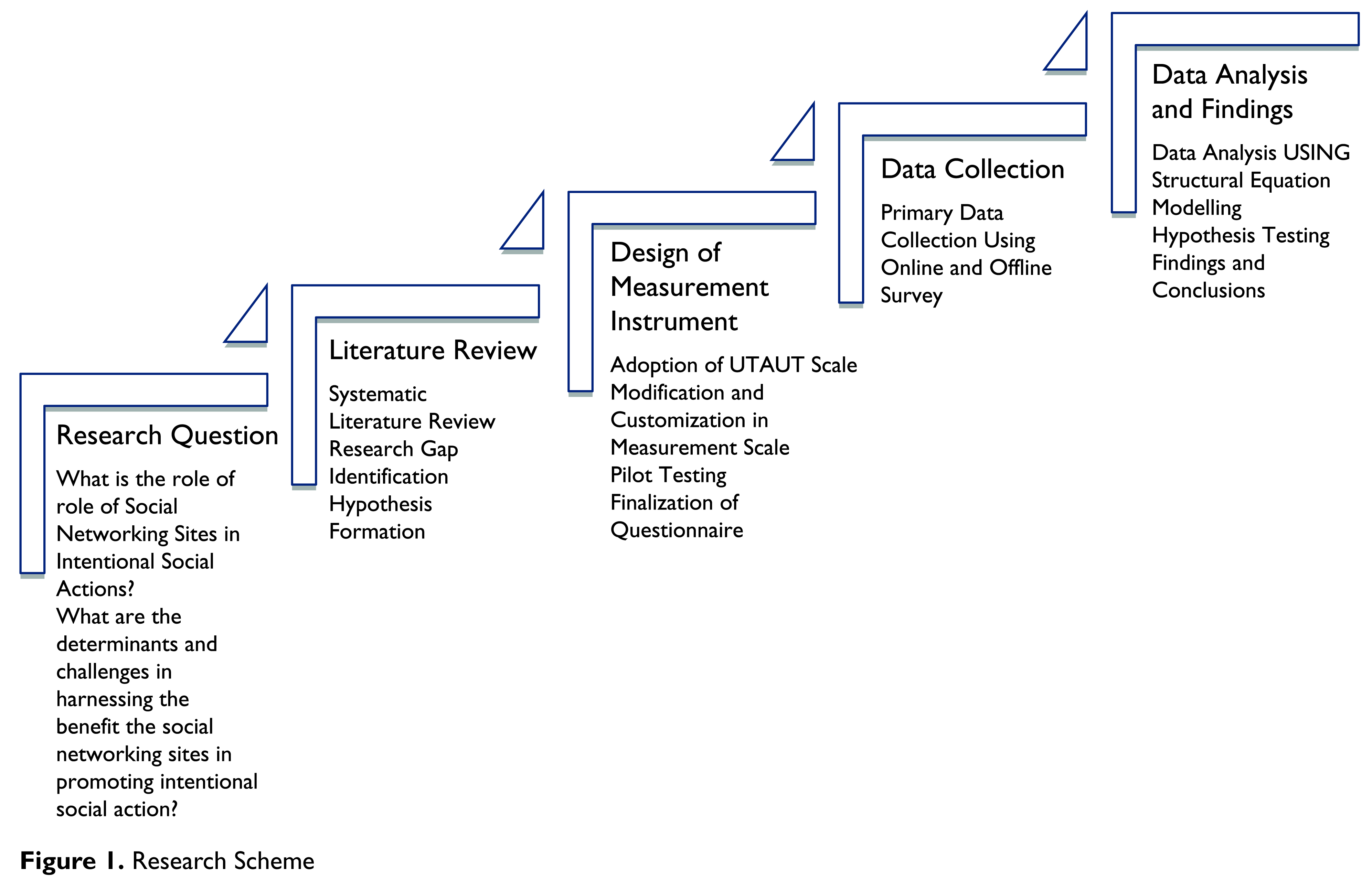
UTAUT was developed by Venkatesh et al. (2003) to explain user intention to adopt information technology and its subsequent use. Later on, the UTAUT model was used by various researchers in different contexts of usage of information technology. Koivumaki et al. (2008) used the UTAUT model to study the perception of consumers towards adoption of mobile technology; Curtis et al. (2010) used the UTAUT model for adoption of social media by non-governmental organizations; and Verhoeven et al. (2010) applied the UTAUT model to study the frequency of computer usage. Keeping in mind the information technology use of SNSs, we intend to use the UTAUT model for understanding the determinants of user acceptance of SNSs for intentional social actions.
Both online and offline survey methods were used for data collection. This mixed method use moderates the biases or coverage issues resulting from data collection method (Wallace, Giese & Johnson, 2004). Youth in the age group of 21–30 years from Mumbai region were taken as respondents in this study. For the selection of respondents, simple random sampling process was adopted. Initial screening questions were asked to identify respondents who have used SNSs for intentional social action. The total number of respondents who were approached was 200 but complete and usable responses received were 162. So the effective sample size of the study was 162.
Structural equation modelling was used to evaluate the hypothesized model. Structural equation modelling was preferred over multiple regression to build causal relationship with inclusion of direct and indirect effect. For detection of model misspecification, residual and modification indices were used. Post-hoc analysis was performed for model re-specification. Iterations were done to get the best-fitting model. Reliability and validity tests were performed on the revised model to check for its robustness.
To take care of common method bias, Herman’s single-factor test was performed (Podsakoff, MacKenzie, Lee & Podsakoff, 2003). With the help of principal component analysis with un-rotated solution, the number of factors accounting for major variance was identified. Results obtained indicated that the variance was not because of any single factor and thus there was no any serious problem of common method bias in this study.
Data Analysis
AMOS 20.0 was used for examination of relationship between effort expectancy, social influence, performance expectancy and facilitating conditions and intentional social action. Two-step analytical procedure was adopted (Hair, Tatham, Anderson & Black, 1998) to ensure structural relationship and was drawn from right measurement instrument. Initially, the measurement model was evaluated and then the structural model was assessed.
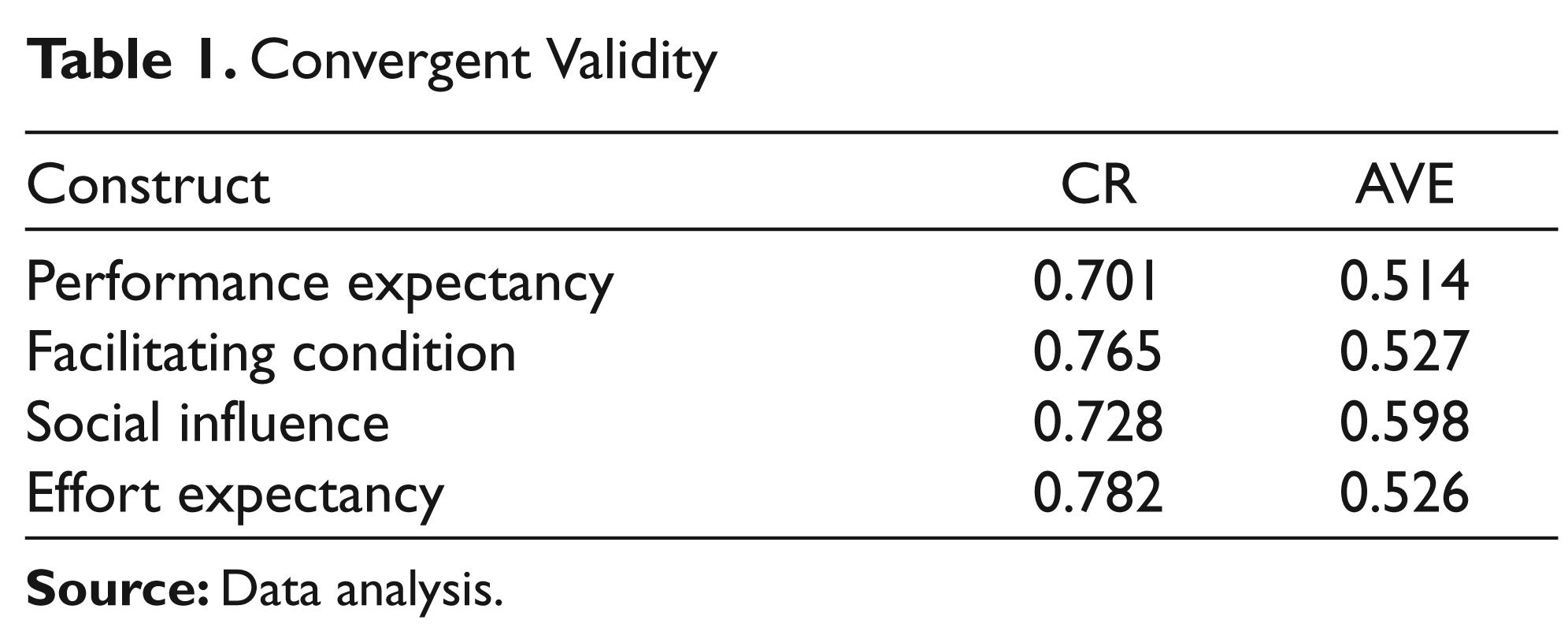
The validity of measurement model was assessed by using convergent validity and discriminant validity. Convergent validity was used to determine the degree of relatedness between theoretical items used in measurement scale and actual related items in reality. According to Hair et al. (1998), composite reliability of 0.70 or above and an average variance extract of more than 0.50 are acceptable. Table 1 summarizes the composite reliability and average variance extracted for the measures of the constructs of measurement model. All measures fulfil the recommended levels, with the composite reliability ranging from 0.701 to 0.782 and the average variance extracted ranging from 0.514 to 0.594.
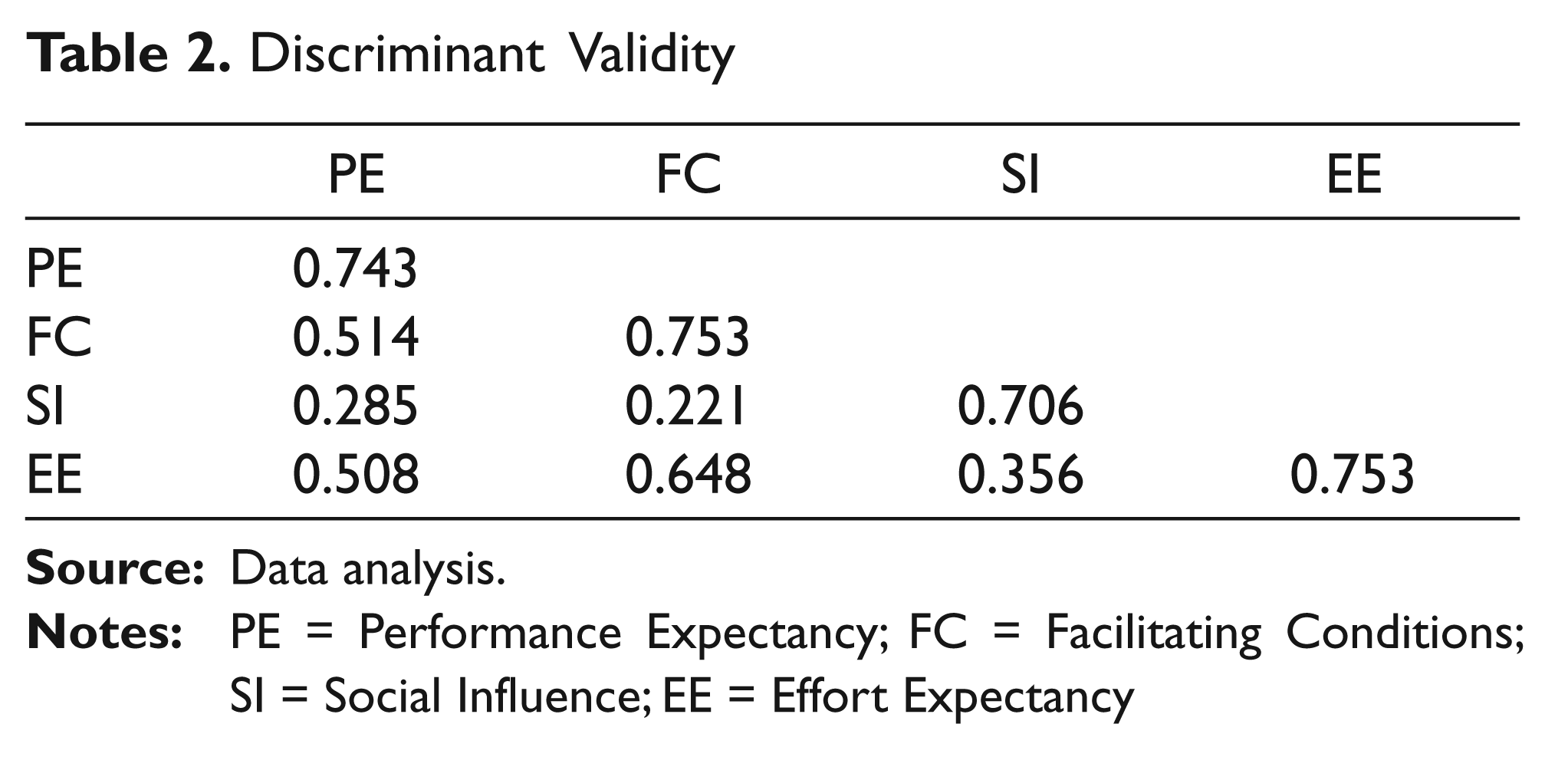
Discriminant value signifies degree of difference between unrelated measurements constructs. According to Gefen and Straub (2005), related construct load high with each other while unrelated construct load low with each other. Thus, square root of average variance extracted for each construct should be greater than the correlations between the constructs and all other constructs (Fornell & Larcker, 1981). The results obtained (Table 2) suggested an adequate discriminant validity of the measures used in the current study.
The number of distinct sample moments used in the model was 406 and the total number of distinct parameters estimated was 66; thus, degree of freedom achieved was 340 with chi-square value of 819.852 at .000 probability level. Parameter estimates exhibited correct sign and size and were consistent with the underlying theory. All the correlations were less than one; positive variance and covariance or correlation matrices were positive definite which indicates that the parameters were exhibiting reasonable estimates. Standard errors reflect the precision with which a parameter has been estimated, with small values obtained suggesting accurate estimation. Based on probability level of 0.05, all the CR values were greater than 1.96 indicating positive association between social identity, effort expectancy, performance expectancy and facilitating condition with behavioural intention to use SNS for intentional social action.
Convergent Validity
Discriminant Validity
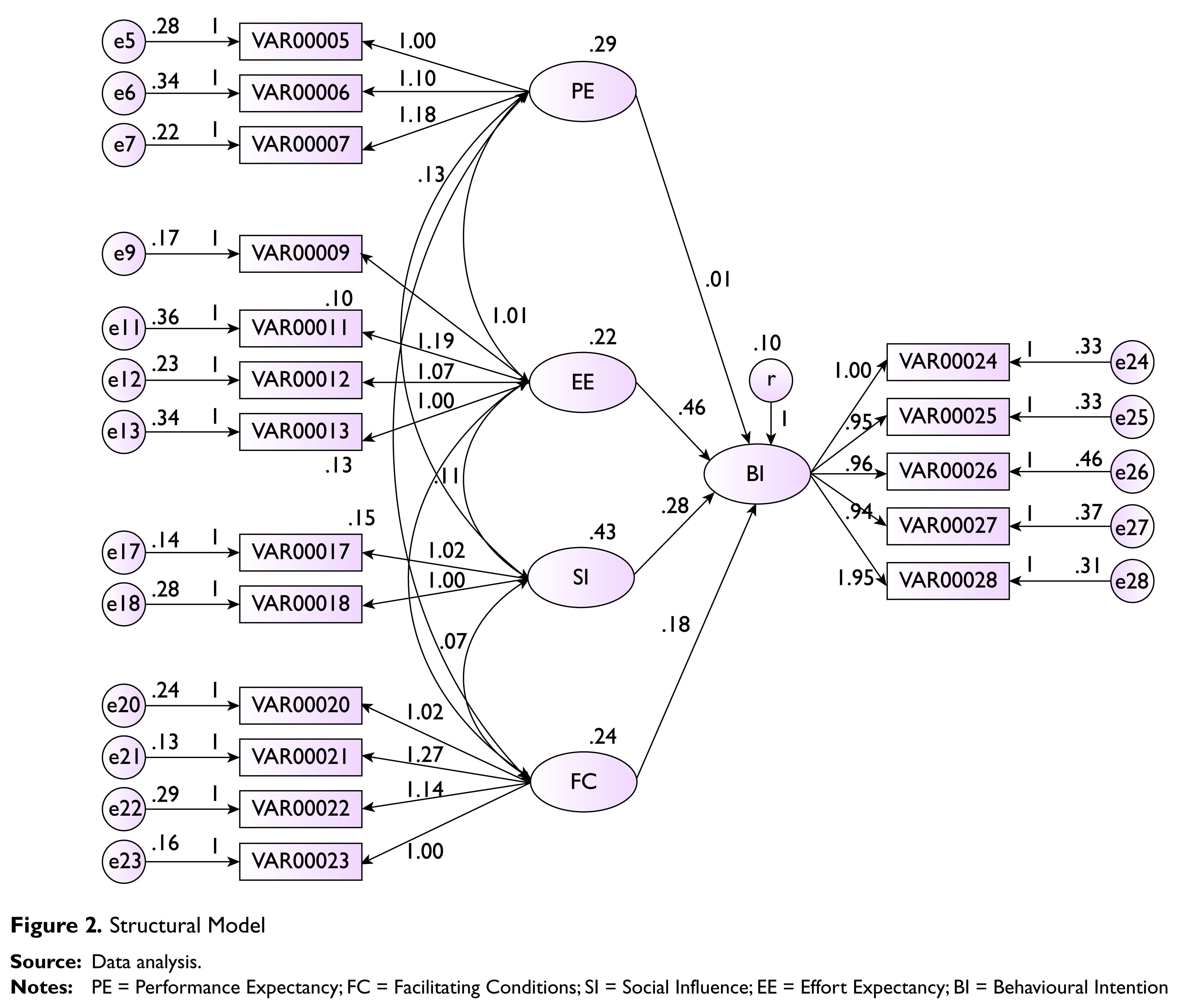
Maximum likelihood method was used for model estimation (Figure 2). Initial data analysis showed poor model fit due to cross-loading between various items of underlying variables. To detect the sources of model misspecification, modification indices were used. Parameters with high value of modification indices present chances of cross-loading with each other and model re-specification with re-parametrization was done to improve the model fit status. Post-hoc analysis was done to decide upon respecification and re-estimation of the model. Turning to high modification indices value pertaining to error covariances and regression weights between variables and factors, the model was re-specified several times with one re-parametrization at a time.
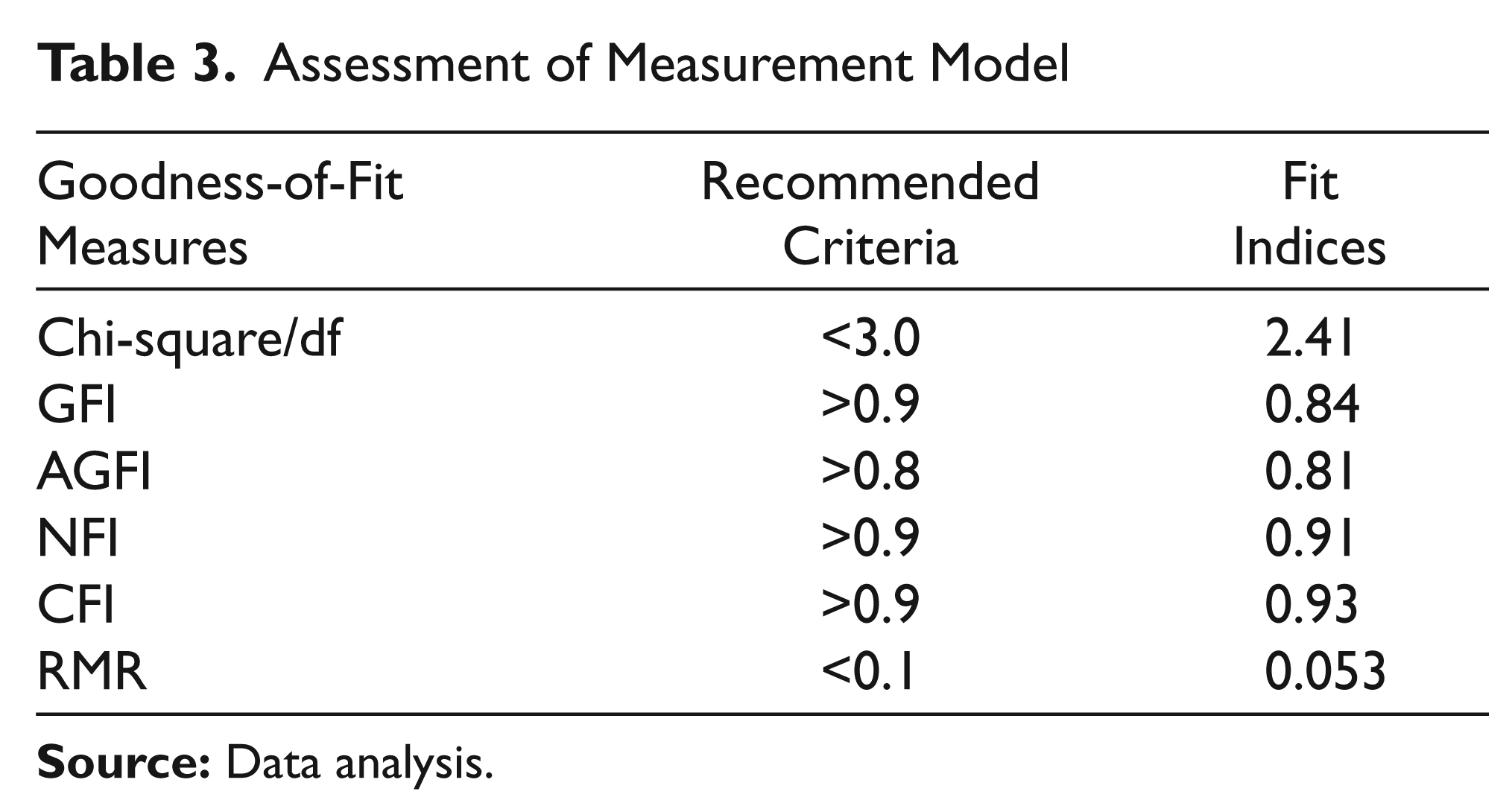
Goodness-of-fit statistics of the revised model revealed that removal of some observed variables having high cross-loading made substantial improvement to the model fit. Goodness-of-fit statistics along with recommended criteria is presented in Table 3. According to Hsu and Lin (2008) and Jiang et al. (2002), value for goodness-of-fit index (GFI) can be greater than 0.80 for accepting the model. In this study, both value of GFI and adjusted goodness-of-fit index (AGFI) fall within the permissible limits as suggested by previous researchers. Thus, value obtained for goodness-of-fit measures indicates acceptable fit of the model to the data.
Assessment of Measurement Model
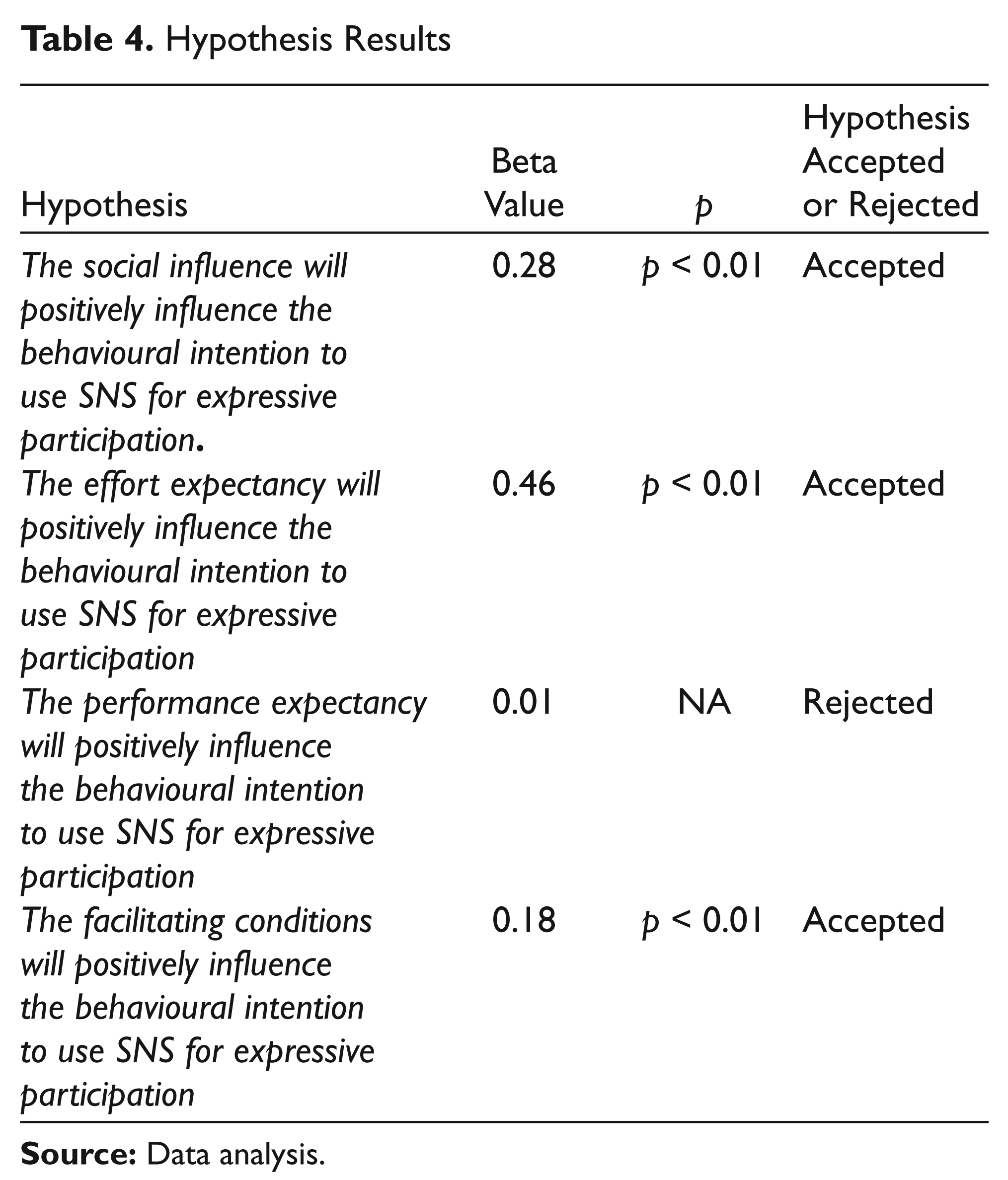
The findings indicate significant impact of all factors (except performance expectancy) on intentional social action. Among all factors affecting intentional social action, effort expectancy exhibits maximum impact (46 per cent), followed by social influence (28 per cent) and facilitating conditions (18 per cent). Performance expectancy is non-significant for influencing social networking users for intentional social action, and thus hypothesis 3 (H3) was rejected in view of the obtained result. Table 4 summarizes the results of all tested hypothesis.
Hypothesis Results
Discussion and Conclusion
The underlying objective of this article was to examine the role of effort expectancy, performance expectancy, social influence and facilitating conditions in adoption of SNSs for intentional social action. Research model was developed with the help of existing literature review and UTAUT model was used to prepare the measurement instrument. It was hypothesized that all four factors—effort expectancy, performance expectancy, social influence and facilitating condition are positively affecting the use of SNSs for intentional social action. Data findings revealed positive impact of effort expectancy, social influence and facilitating conditions in varying degrees. Performance expectancy did not show significant relationship with intentional social action.
Effort expectancy emerged as the strongest predictor followed by social influence and facilitating conditions. Since the participation on topics of social interest is very convenient and hassle-free on social network, the youth find it very easy to express themselves on SNS and use it for intentional social action. The clarity of thought among homogenous groups on SNS makes it easier for them to clearly express their thoughts, make others understand about the nature and gravity of the problem, and thus generate support for social cause. Positive relationship between social influence and behavioural intention suggests that users feel psychologically inclined towards social acceptance of expression on SNS. Discussion on social topic within network encourages users to express volitional support for the cause and propel individuals towards collective action. As online social network is formed by choice of an individual with people having similar interests, chances of gaining support on social issues would be more in comparison to offline channels. Opinions from close-knit people are significant for engagement due to their strong personal connection and affinity. Ability, knowledge, resources and control are important facilitating factors for youth to get engaged on SNSs for intentional social action on issues related to social cause. This finding also supports the fact that internet users have high volitional control over the use of SNSs due to their increased accessibility (Walsh & White, 2007). In previous studies, performance expectancy was accepted as important predictor in adoption of information technology (Venkatesh et al., 2003) and social media (Borrero et al., 2014) but the result of this study does not support conventional thinking. Possibly, performance expectations for intentional social reasons may be different from classical individual reasons. Thus, it raises a question on generalizability of findings of previous studies and offers contingency approach as an alternate.
Previous studies have highlighted the role of social influence, subjective norm and internalization in influencing intentional social action but it is the first time that the role of effort expectancy, performance expectancy, facilitating conditions and social influence have been examined. Previously, UTAUT had been used for understanding behavioural intention to use different forms of information technology, but it never tried to examine its role in usage of SNSs for intentional social action.
Limitations and Future Scope
Besides analyzing data findings, it is also important to know the limitations of the study. First, endogenous and exogenous variables were included in this study. Moderating variables like gender, age, technology readiness stage etc. can bring different dimensions to the findings and future studies may attempt to include moderating variables along with predictor variables. Second, the impact of predictor variable was examined on intentional social action; in future studies, intentional social action and its impact on actual social action should be evaluated. Third, this study is cross-sectional in nature which may give some spurious results; so future researchers may conduct a longitudinal study to identify vivid cause–effect relationship. Finally, this study was conducted on youth in metropolitan area; future research studies may conduct their studies on different segments in multiple tiers of cities.