




Abstract
This article aims to review the literature on customer relationship management (CRM) research. This review article analyses the trends in CRM research, popular research topics and tools used in studies. This study presents how CRM research developed over 21 years in terms of critical areas, type of studies, sources of papers, the origin of articles (country-wise distribution), type of data used, under-researched areas and popular researched areas. The study provides a broad classification and summarizes the last 21 years of CRM research in an organized way. For this review article, research papers were taken from January 2000 to June 2020, that is, 21 years. A total of 104 papers were selected from different journals and conferences. Findings show that most of the articles were published in the year 2009. A total of 95% of articles were published in journals, and 5% were conference papers—most of the CRM research done in the USA and the United Kingdom. Empirical papers were maximum in number, whereas case studies were least. Primary studies were more than secondary studies. In review papers, the maximum times CRM and electronic customer relationship management (E-CRM) were taken as a basis for reviewing. The further article has classifications within primary studies and review papers. It also presents the most frequently used keywords and variables in literature. The study will be useful for researchers, practitioners and academicians for further CRM research. This study also provides the classification within primary studies based on data collection tools used, sampling technique used, sampling country, industry, statistical tests and methods and software used, also it gives a brief view of keywords and variables used in a total of 104 papers. This article provides the first such review on keywords and variables, thus presenting the classification on a different basis, which none of the published research has presented.
Introduction
Every organization is focusing on building a long-term relationship with its customers to maintain stability in the market. Moreover, for it, there is a concept called customer relationship management (CRM). CRM is not a new concept, but it is one of the most exciting research areas for researchers. Over time, it is developing itself as one of the essential ingredients in any business’s success. CRM is a system that strengthens the relationship with customers at the same time, reducing costs and increasing productivity and profitability of the business. There are many CRM definitions given by different authors in their literature; some advocate that CRM is a philosophy of doing business, some state that CRM as a strategy, while others understand CRM as a tool to manage customer relationships (Pedron & Saccol, 2009, pp. 34–49). Research on CRM is rapidly increasing in almost every industry with each passing day. CRM is prominent within service industries, but nowadays, the number of published research articles is increasing compared to that of service industries. Researchers and practitioners are looking into more benefits and pitfalls of the CRM system. A large number of research articles focused on the implementation of CRM. Most of the organizations failed to implement CRM and were unable to implement CRM systems successfully even in developed countries.
In this decade, the emerging popular topic in the CRM area is CRM software and information technology. Wahlberg (2009, pp. 191–208) states that most of the researched area in CRM research belongs to information technology (IT) and information systems (IS). The CRM failure rate is more than 50–55%. Deficiencies in existing methodologies due to the lack of integration of CRM’s strategic and technological aspects lead to failure in CRM project implementation (Awasthi & Sangle, 2012, pp. 445–471). Forecasting about the CRM popularity was already done in 1998 by JP Morgan. He analysed that demand for CRM technology would grow at a double-digit annual rate (Kotorov, 2003, pp. 566–571).
Many works have been published to comprehend the flow of CRM from the last two decades. Soltani and Navimipour (2016, pp. 667–688) have reviewed CRM articles published from June 2009 to June 2015, classified the papers within the categories of electronic customer relationship management (E-CRM), knowledge management (KM) and CRM, data mining and CRM, data quality and CRM and social CRM. They mentioned in their article that the maximum number of papers were published in 2011 and were published in IEEE.
This article’s cornerstone is to review the past and present research behaviour in the area of CRM. This article helps in apprehended the CRM concept, scope and future research directions. The study provides a comprehensive classification of CRM literature, which helps the researchers and practitioners to get an insight into the CRM concept. This study helps bridge the gap between past and future studies that will take place by finding out the under-researched areas in CRM. It also helps managers take up the new strategies and methods to treat their customers best. The study shows the current gaps and provides future research directions as the study provide a clear picture of what topics have been covered by the researchers in the past and what topic remained untouched. Briefly, the contributions of this study are as follows:
A systematic overview of the published work on CRM-related areas helps identify the under-researched yet essential areas. It provides an in-depth insight into the different CRM fields and explains the degree of understanding achieved in different areas.
Motivation of the Study
There were two primary reasons for undertaking this study. First, the rapid growth in the researched work on CRM demonstrates the importance of CRM activities. Second, to find the answer to why there is a high failure rate in CRM projects despite various technologies and software available in the market.
Objective of the Study
This literature review article intends to categorize and present the past studies of CRM in an organized manner so that the academicians and practitioners can access the past work in an organized and summarized way.
This study tries to answer the following questions:
What are the significant areas, themes and topics of research under CRM? What is the current trend of research in CRM? What are the most and least researched areas and gaps in the CRM literature?
This literature review undertakes to reflect the current status of CRM research and the future scope with a comprehensive list of bibliography on CRM.
Methodology
The study follows a systematic literature review (SLR) method for identifying the total papers put in the study. SLR is a method of collecting the data, primarily secondary data, systematically. During this process, data have to be critically appraised and synthesize findings qualitatively or quantitatively.
The article selection process is considered of three main phases as follows:
Phase I: Several keywords were searched on Google scholar. Keywords used, such as CRM, E-CRM, data mining, blockchain, technology in CRM and relationship marketing, to find relevant articles. Also, the following online journal databases were used to search CRM researched work:
EBSCO Open Access Journals Emerald Management Xtra ProQuest Science Journals Science Direct (Elsevier) Springer Link Taylor & Francis Wiley Online Library JSTOR SAGE Research Gate
Phase II: In this phase, the screening criteria were decided. The most irrelevant articles, working papers, reports, editorial notes and book review articles were excluded during this phase. When selecting papers, there were no limits on the specific journal category, but only peer-review work was considered. Only those articles that were written in the English language were considered.
Phase III: In this phase, the authors read full texts of each article separately. Get through the articles’ titles, abstracts and findings to get to know the relevance. Based on the publication year and findings, each article was either included or excluded after refining and selecting the most relevant articles presented in an Excel spreadsheet for further classification and analysis.
The period for this literature review article was 21 years, that is, papers published between January 2000 to June 2020 are account for the study. After filtration, a total of 104 research papers were finalized for the study.
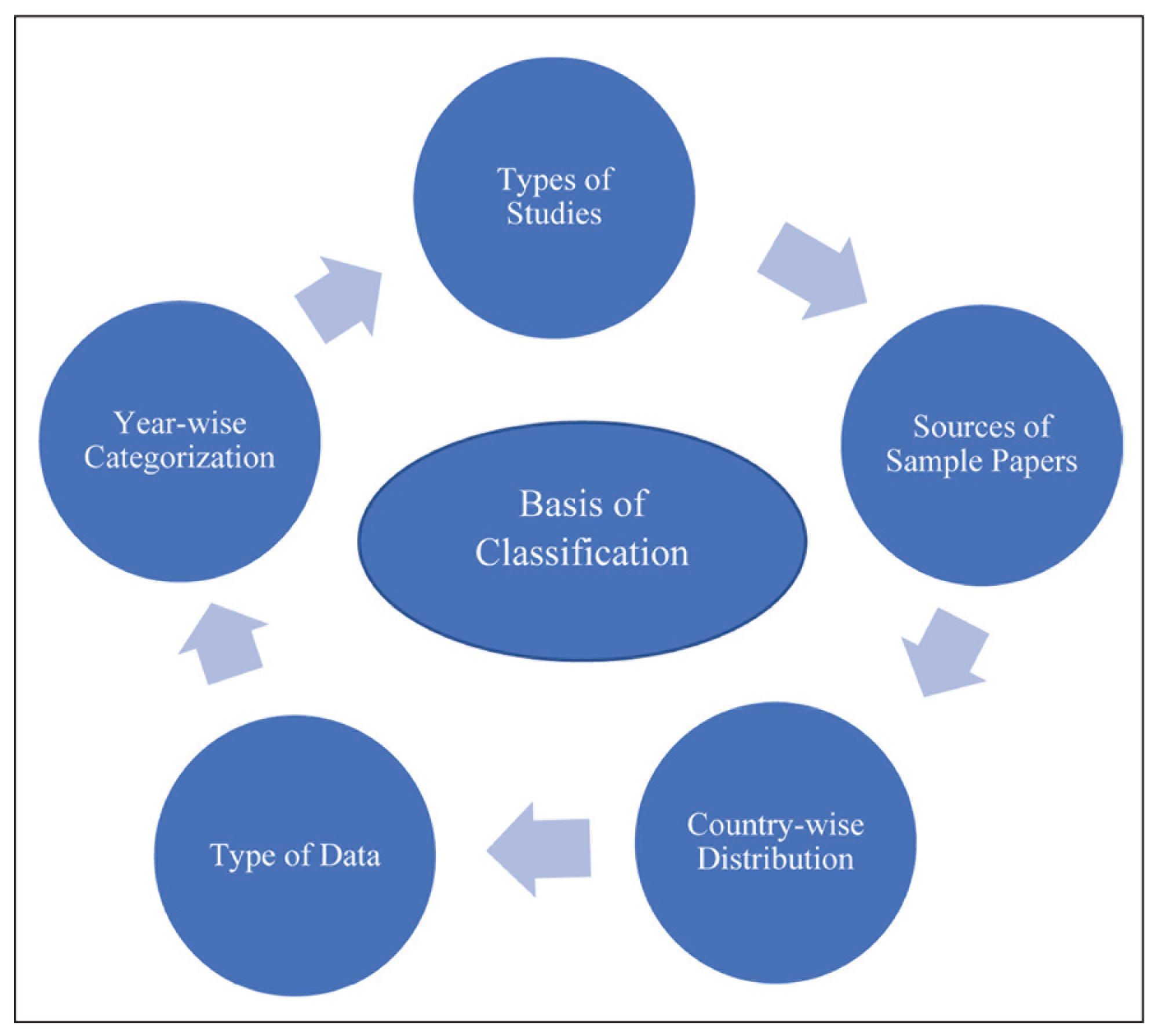
After the finalization of the articles, each article was classified into the following categories:
Type of studies Sources of sample papers Year-wise categorization of studies Country-wise distribution Type of data collection
Further papers based on primary data details were examined on the following parameters:
Data collection tools Sampling technique Sampling country Industry Statistical tests and methods used Softwares used in the analysis
The study presents the most frequently used keywords in articles. Also, variables were segmented into three broad groups.
All the classification showed by tables and through various graphs (Figure 1).
Literature Review
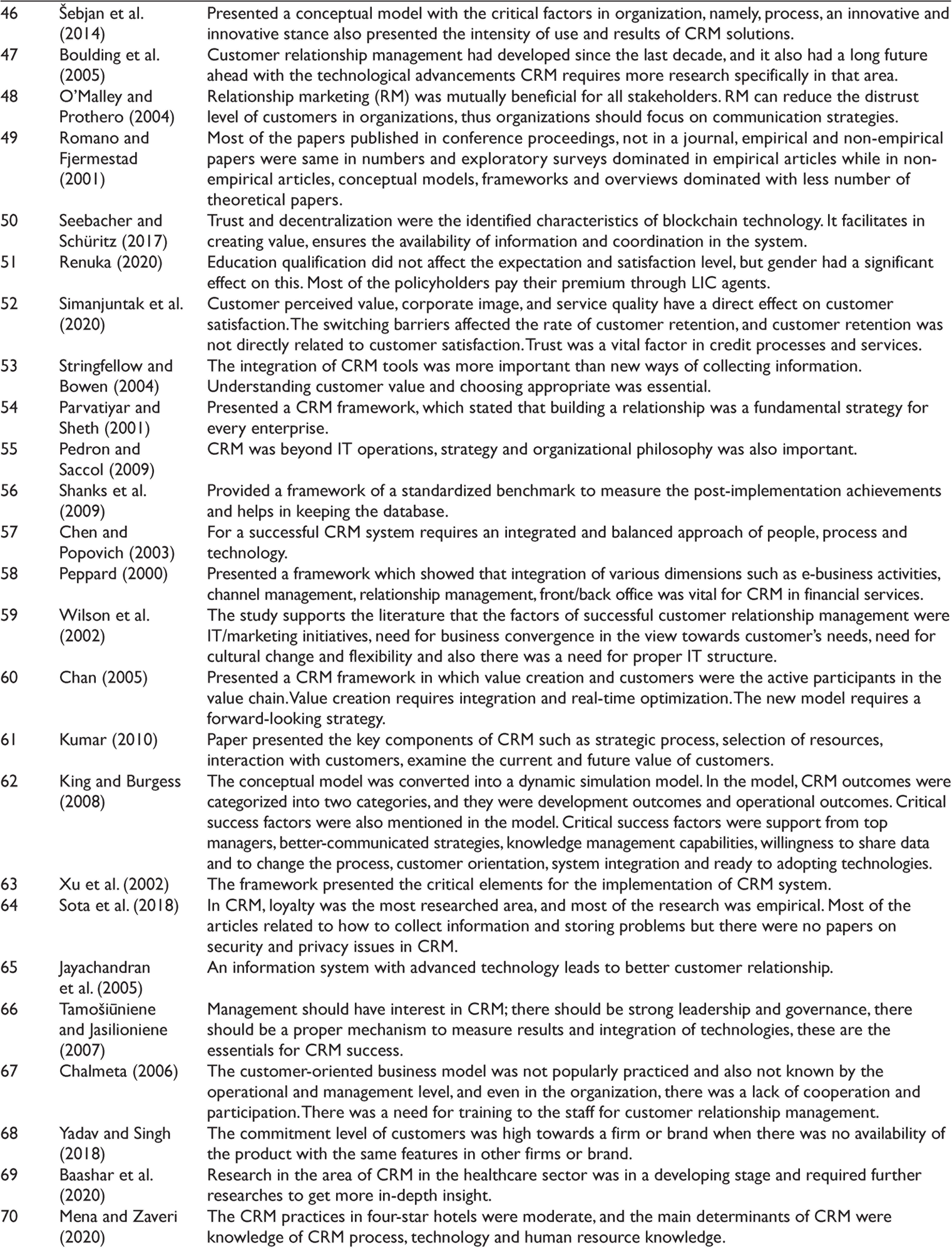
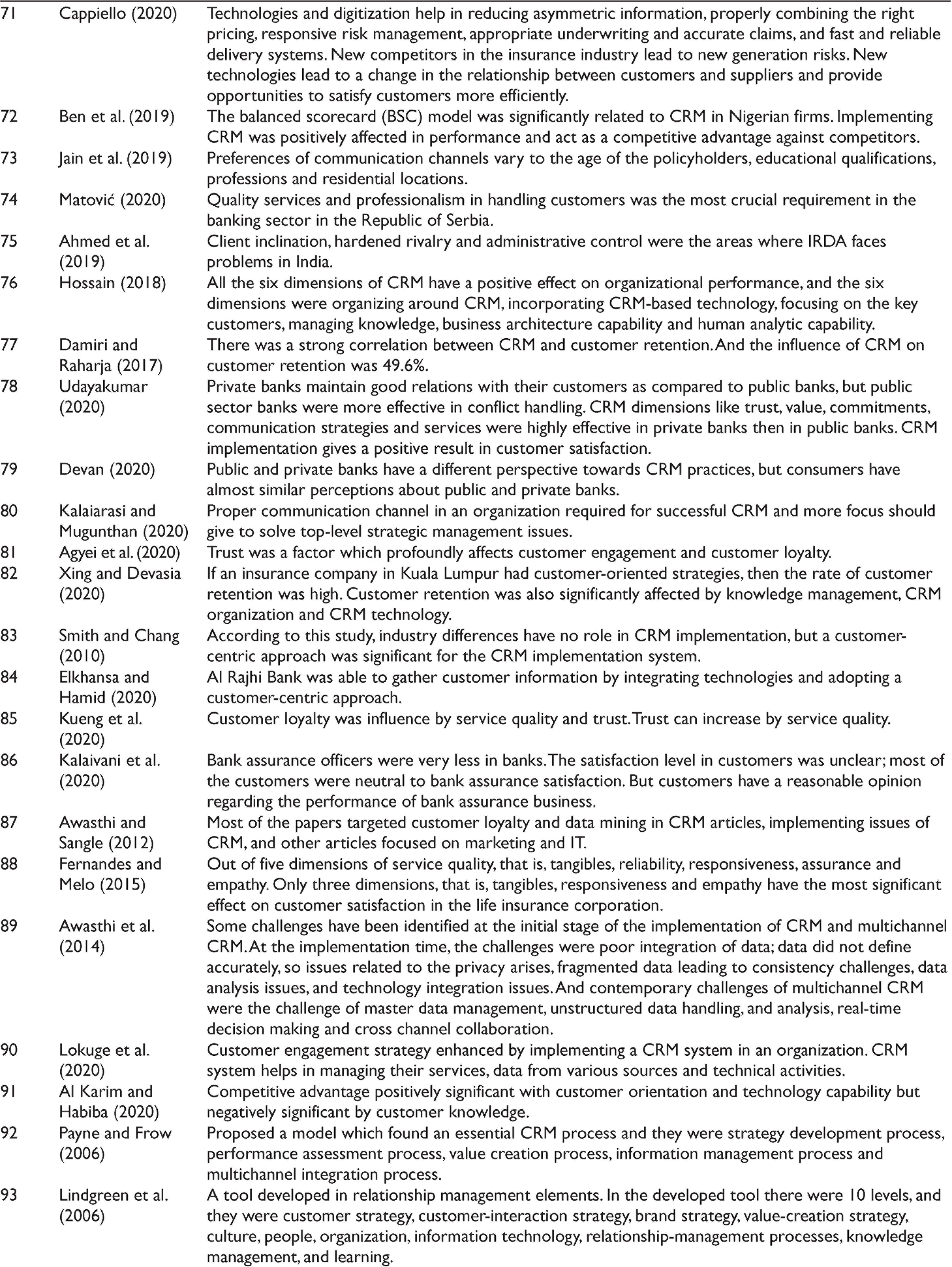
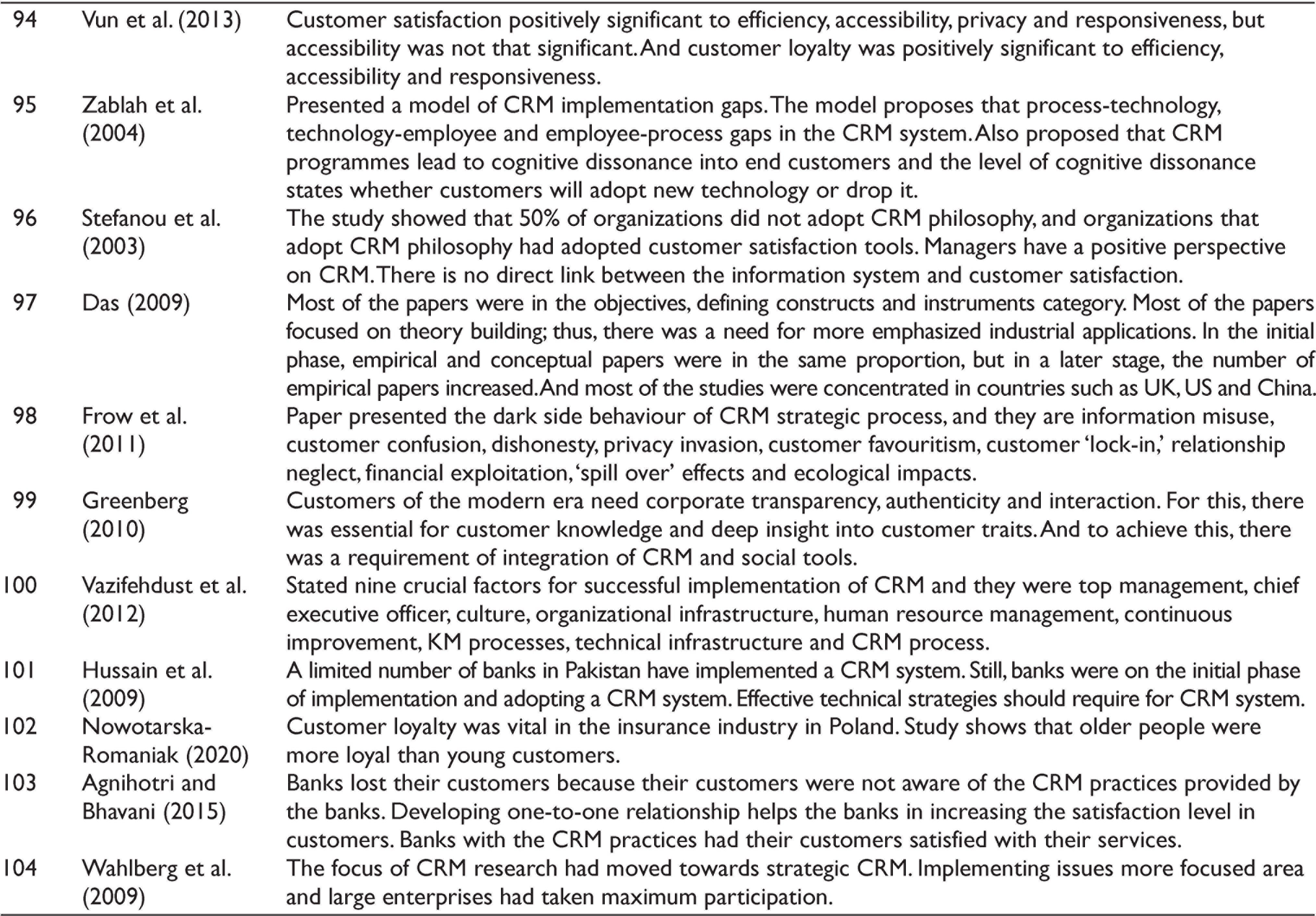
Table 1 presents the literature review of 104 papers.
Literature Review


Classification Results
Selected research articles classified into categories, such as year-wise categorization, sources of research articles, country-wise distribution, types of studies and the last category is the type of data used in research articles. The classification results are as follows.
Classification of Research Articles by Publication Year
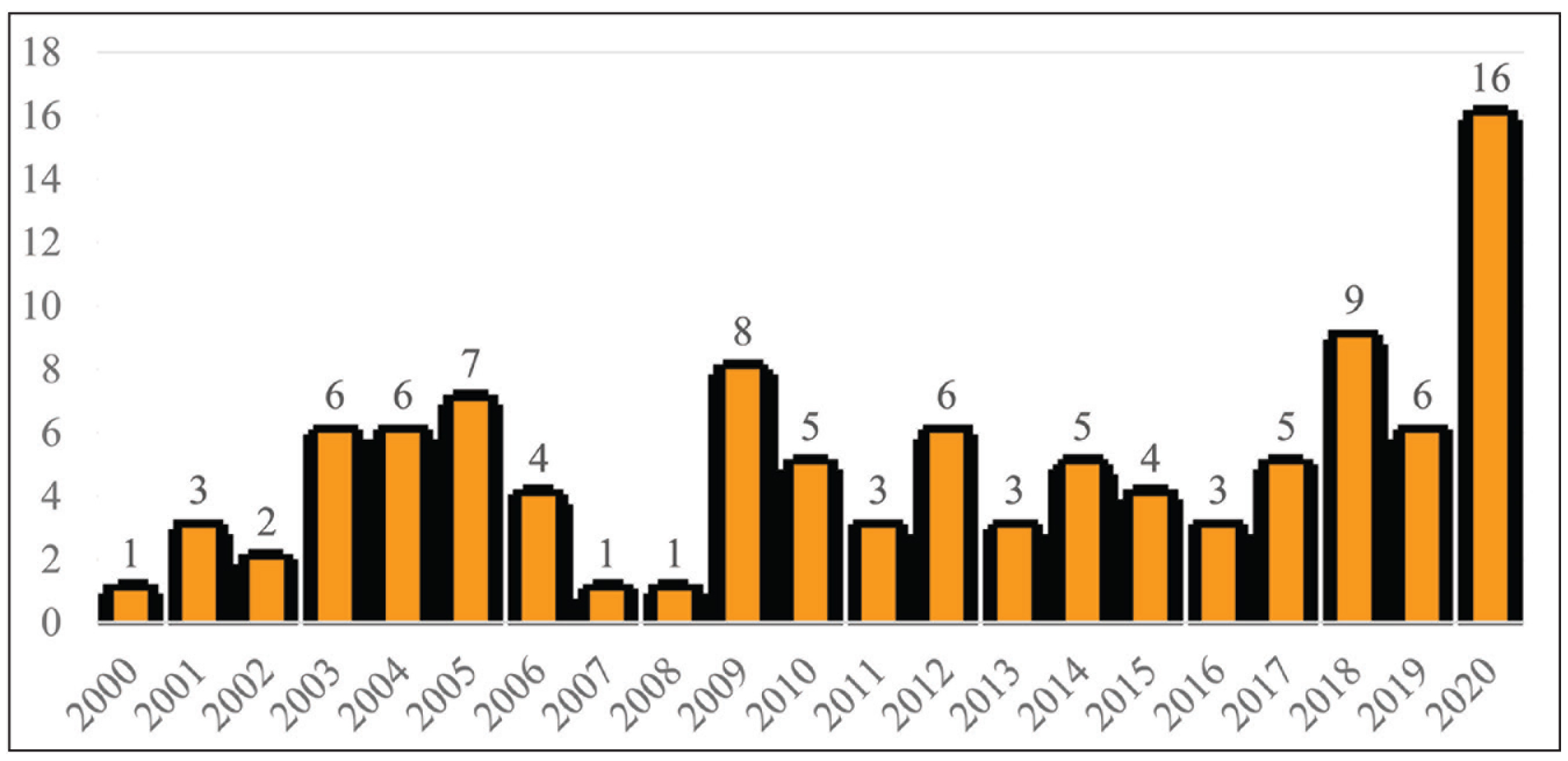
In this classification, the published work on CRM in the last two decades was analysed. The maximum number of articles were published in 2020 with 16 articles, followed by the year 2018 with nine articles, and the minimum number of articles were published in 2000, 2007 and 2008 with one paper each year. It shows that the published work on CRM related areas has increased in the last years of this decade. This classification indicates that CRM’s popularity has increased in recent years, specifically in data mining, CRM software, technology management, knowledge management, artificial intelligence and social CRM fields. Table 2 and Figure 2 show the number of published articles in the last 21 years.
ear-wise Categorization of Research Articles

Classification by Source of Research Articles
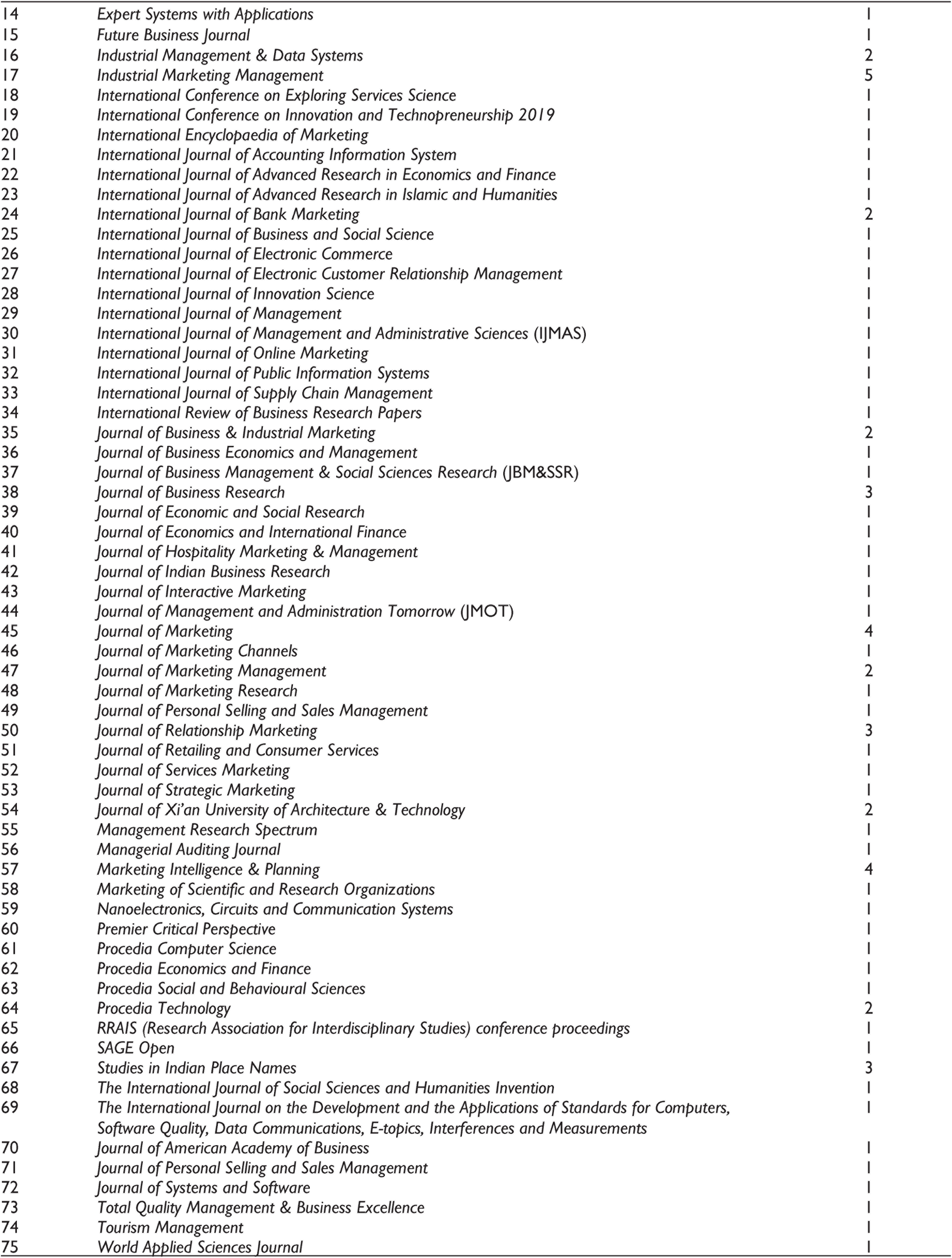
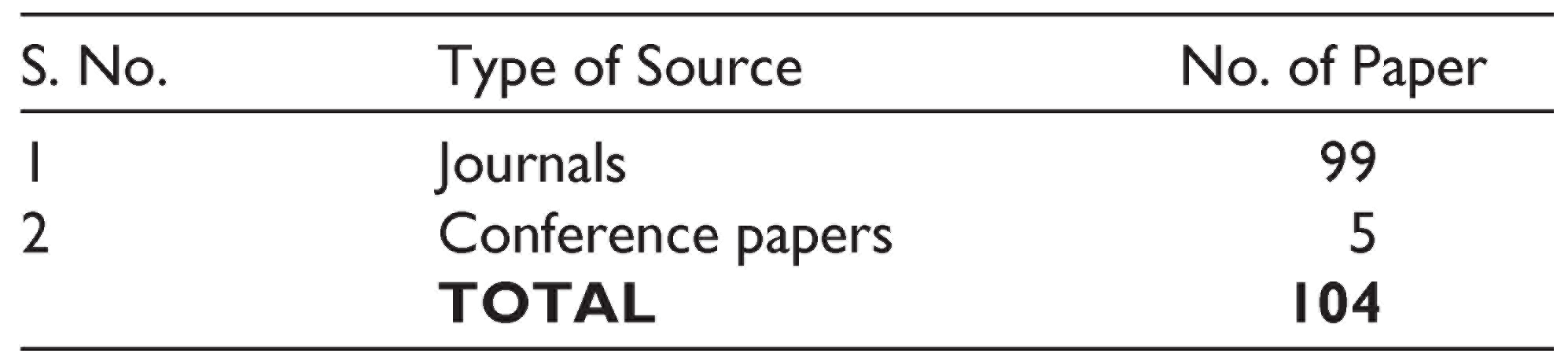
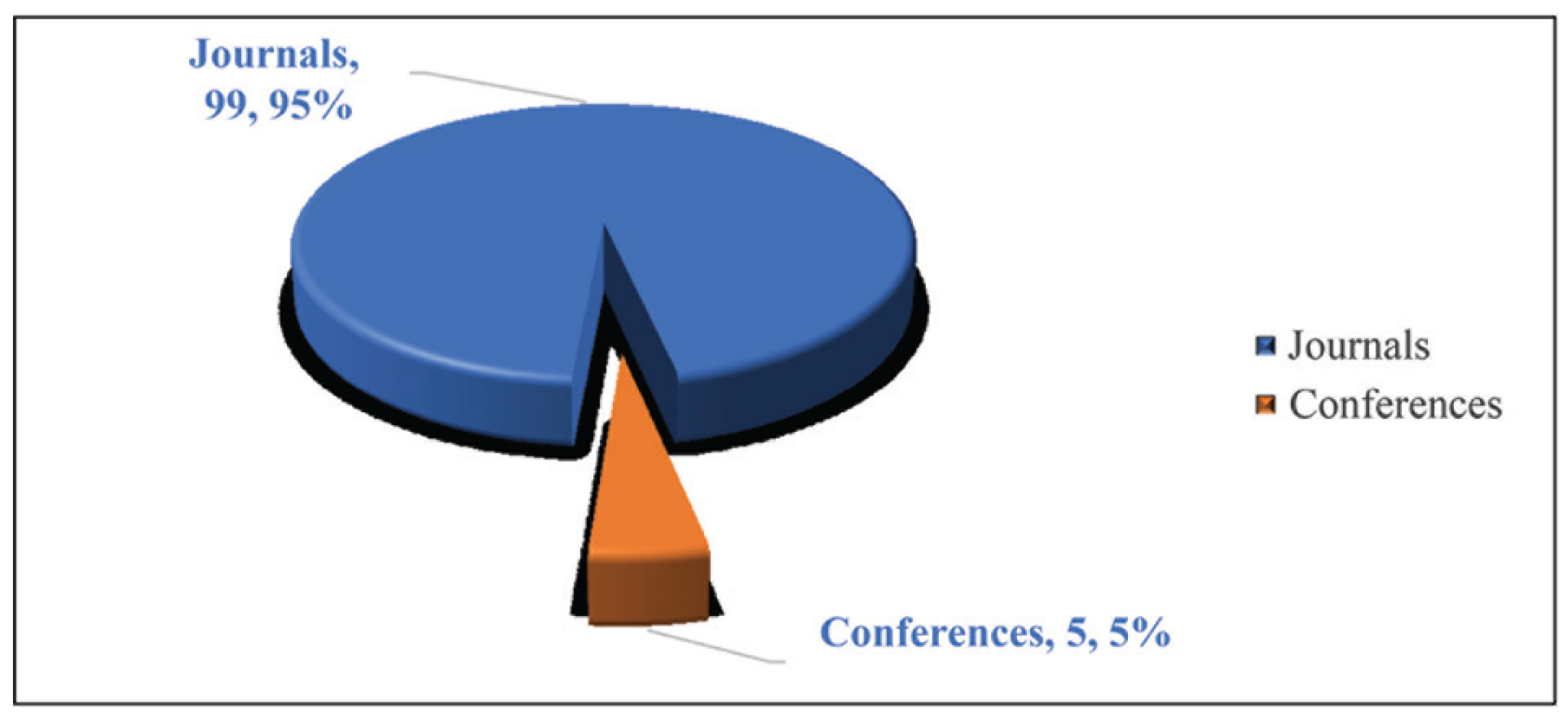
Sample research papers were referred to from various national and international journals. Papers published in conference proceedings were also taken into consideration. The majority of papers were published in Emerald and Elsevier’s journal. These journals are known for their quality work publications in the management field. It indicates that academicians and researchers are referring to the work published in these journals. Out of 104 papers, five papers were from conference proceedings. It indicates that conferences were also held in CRM-related areas. The number of papers and names of the journals and conferences are presented in Table 3. The total number of journal and conference papers are presented in Table 4 and Figure 3.
Sources of the Sample Papers

ype of Sources
Classification by Country-wise (Where the Research Was Done)
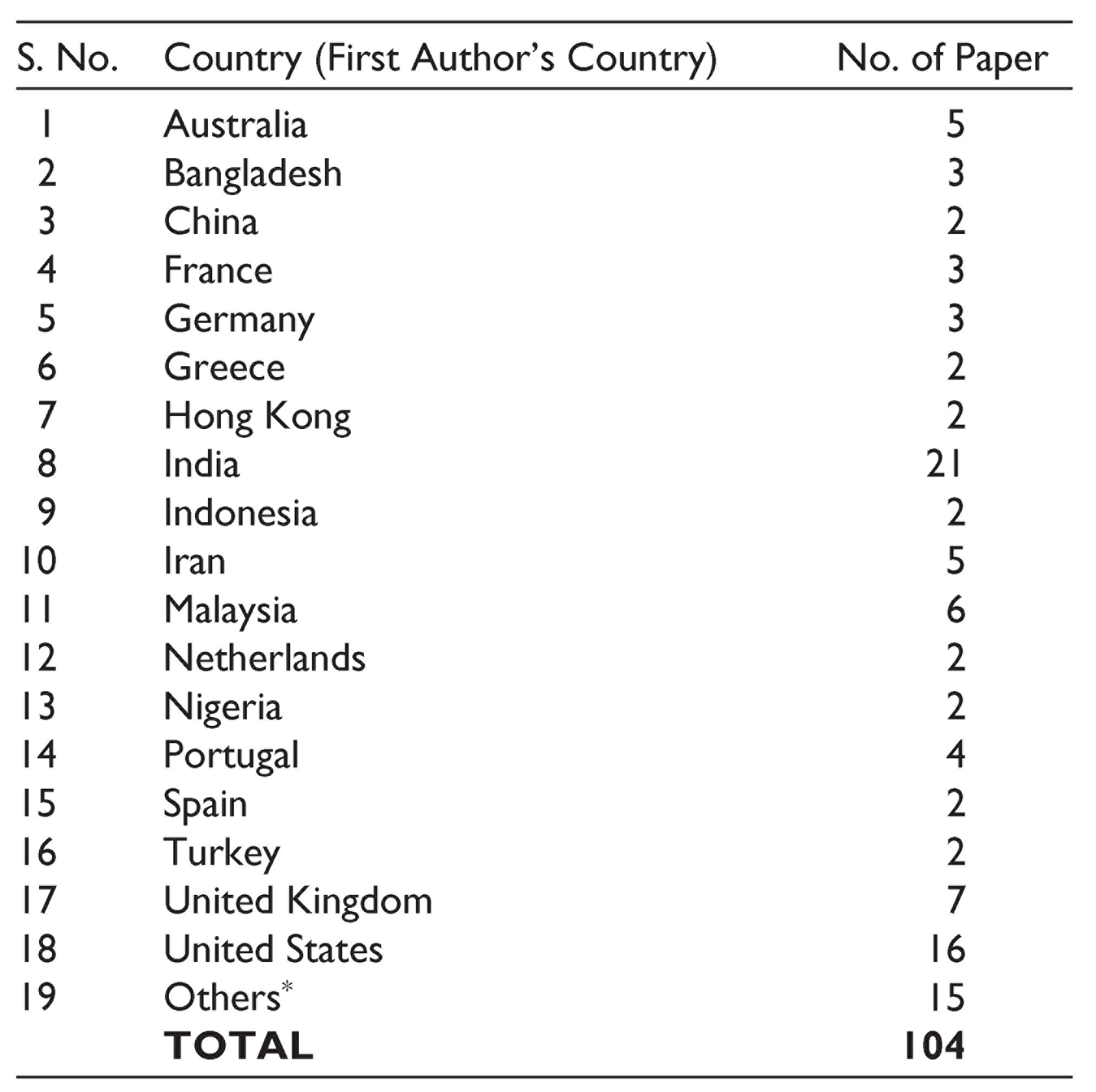
This classification shows how many studies have been done in different countries. The country of the first author was considered a study place. It shows that many articles, that is, 21 articles were from Indian authors, followed by the USA and the United Kingdom with 16 papers and seven papers, respectively. Some countries such as Finland, Ireland, Italy, Lithuania, Mauritius, Poland, Romania, Saudi Arabia, Serbia, Slovenia, South Korea, Sweden, Switzerland, Taiwan and the UAE have one paper each country and thus categorize it into another category, which is present in Table 5 and Figure 4.
Name of Countries Where the Research Was Done

Classification According to the Type of Studies
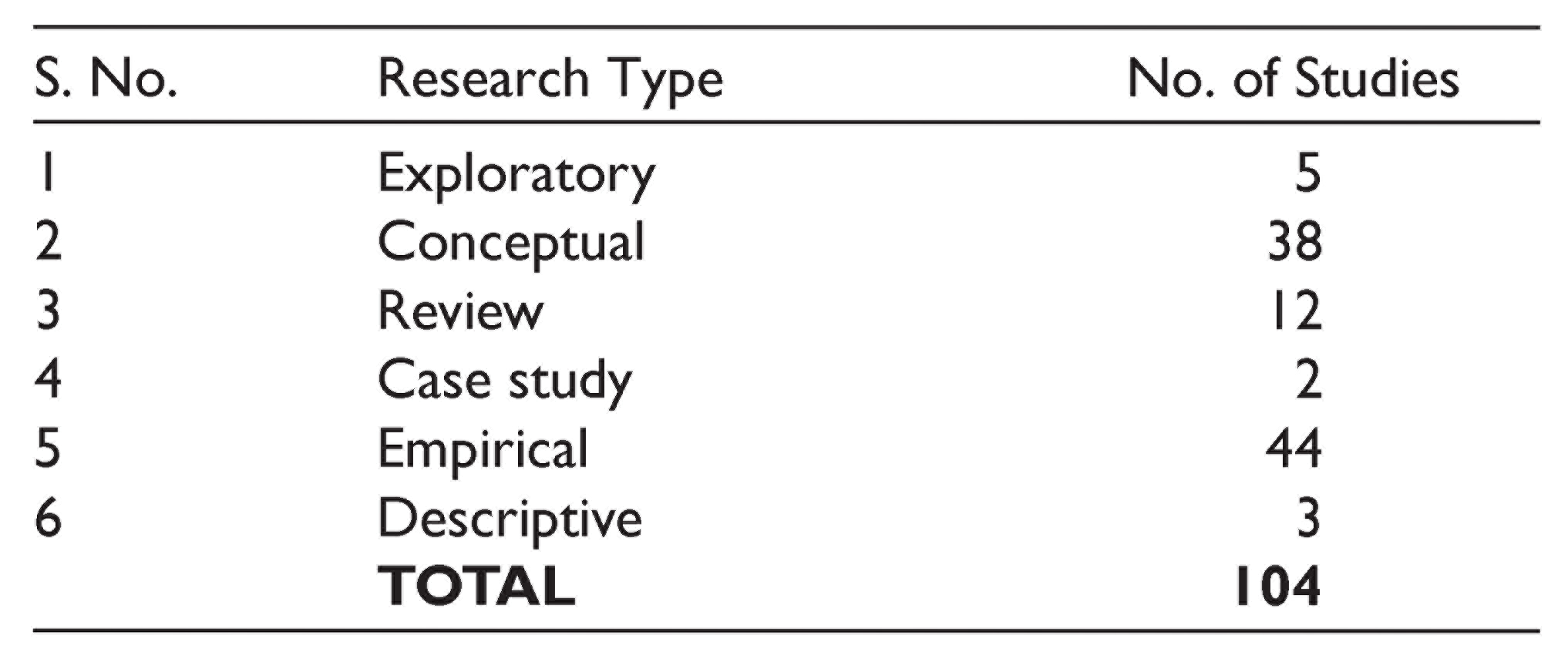
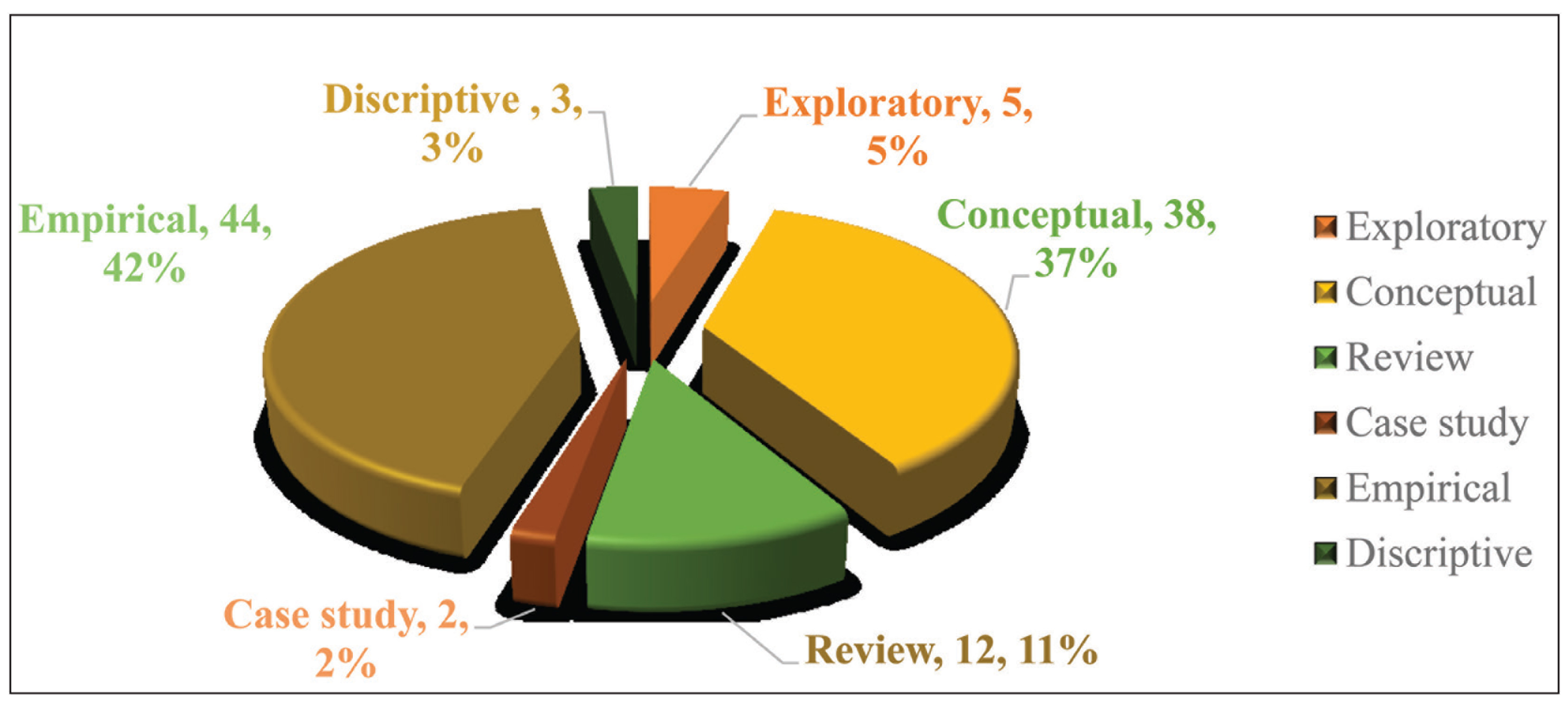
Research articles classified into six categories, that is, exploratory, conceptual, review, case study, empirical and descriptive studies. Empirical research papers were 44 in number; 38 were conceptual papers, and 12 were review papers. It shows that most of the papers dealt with the cause and effect of CRM’s various factors on the effectiveness of CRM practices. Researchers try to identify which technologies and methods are suitable in various industries with the least cost and effort. In conceptual papers, concepts related to CRM were extensively explained, also the new concepts such as data mining, knowledge management and data warehouse. All this classification is presented in Table 6 and Figure 5.
Type of Studies
Classification Based on the Type of Data Used in Research Articles
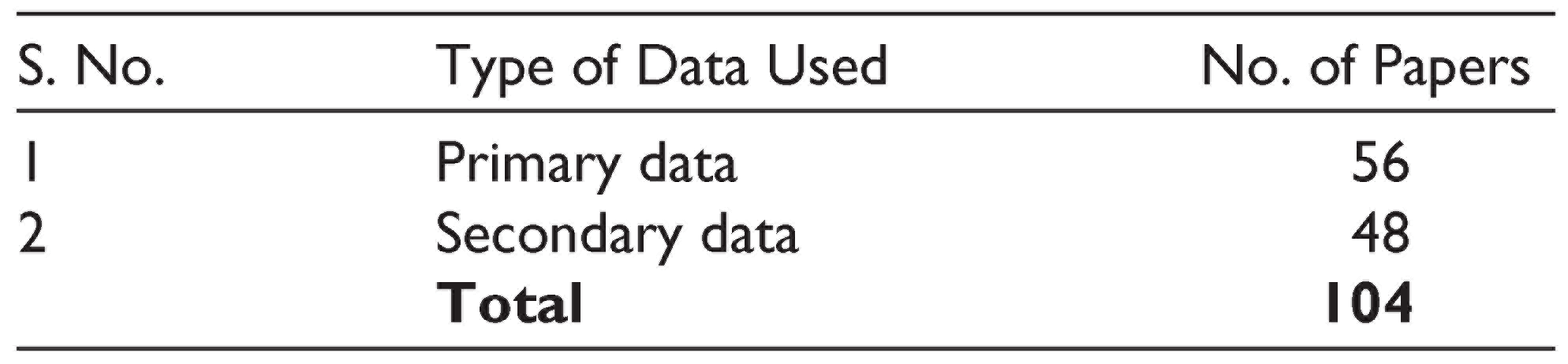
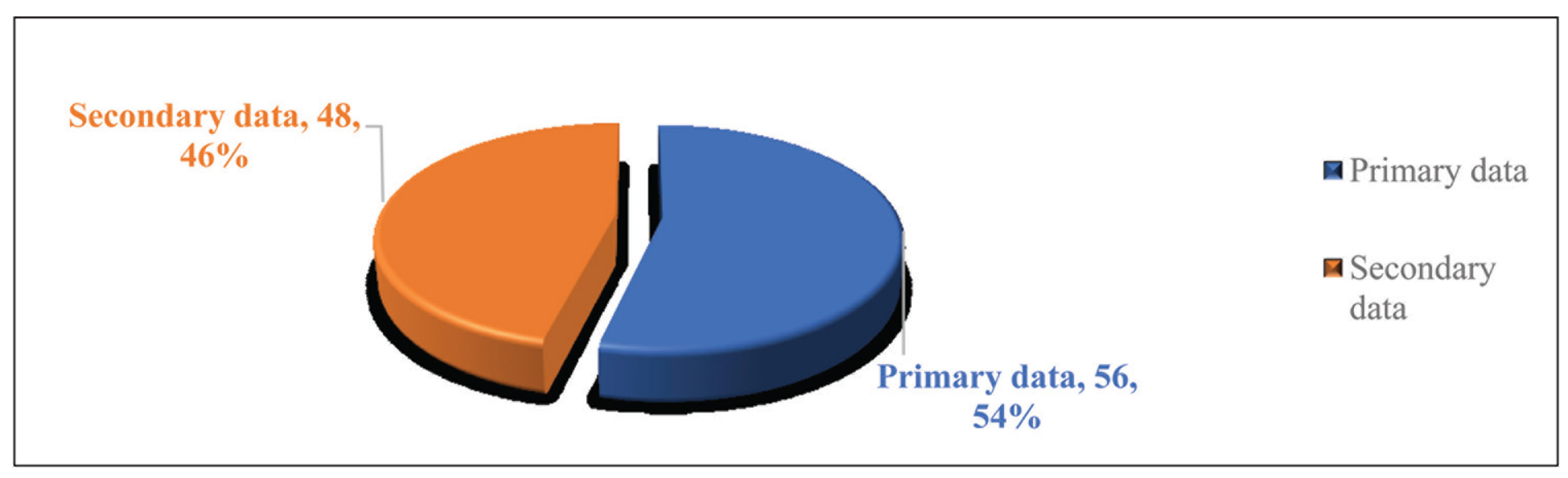
Articles divided into two categories of data type (primary data and secondary data) are used in research articles. Articles that use both primary and secondary data are categorized into the primary study only, whereas papers purely based on secondary data are categorized into secondary data studies. This classification aims to know the keen interest of the researchers towards the type of data. It shows that primary studies are preferable over secondary data studies. Researchers have more trust in first-hand data. There can be many reasons, such as the market changes and the present environment’s requirements have changed from the past. Table 7 and Figure 6 depict the number of papers that used primary and secondary data.
Type of Data Used
Classifications Within the Research Articles Based on Primary Data and Secondary Data
Articles based on secondary data are not further classified as there was not much basis of classification, and also, there was less information available. Majorly, secondary data-based articles were general articles on CRM, presented CRM framework and conceptual models. Articles based on primary data were intensely classified under various brackets. Following are the brackets:
Data collection tools Sampling technique Sampling country Industry (used in primary studies) Statistical tests and methods Softwares
Data Collection Tools
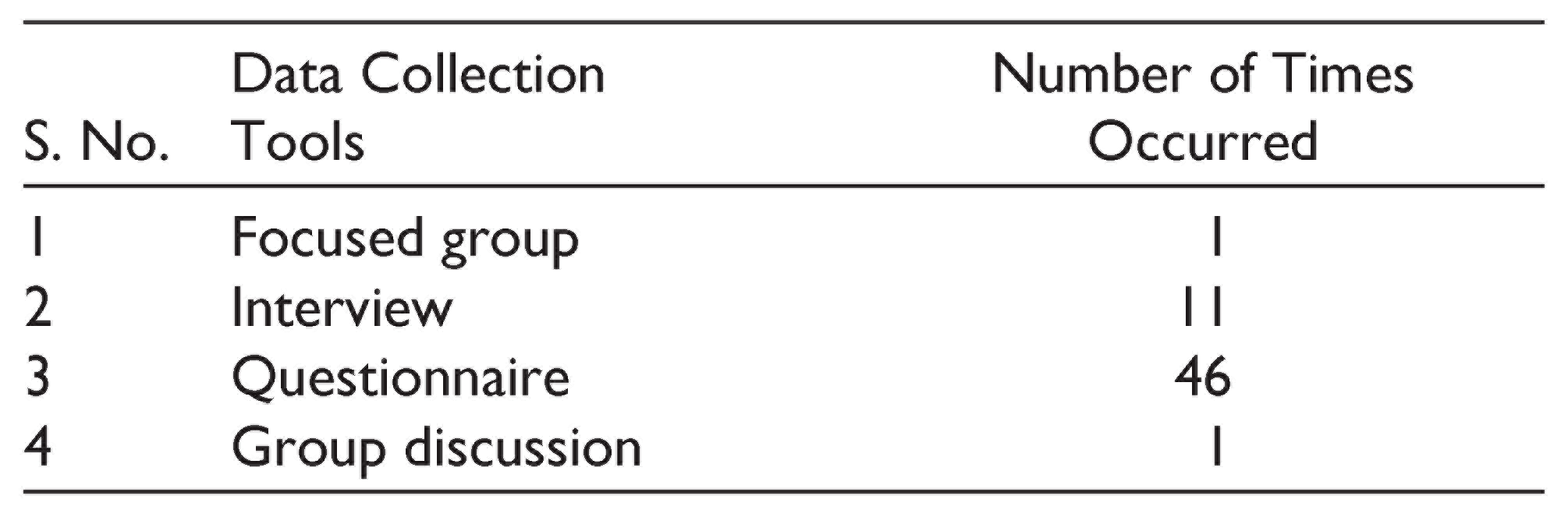
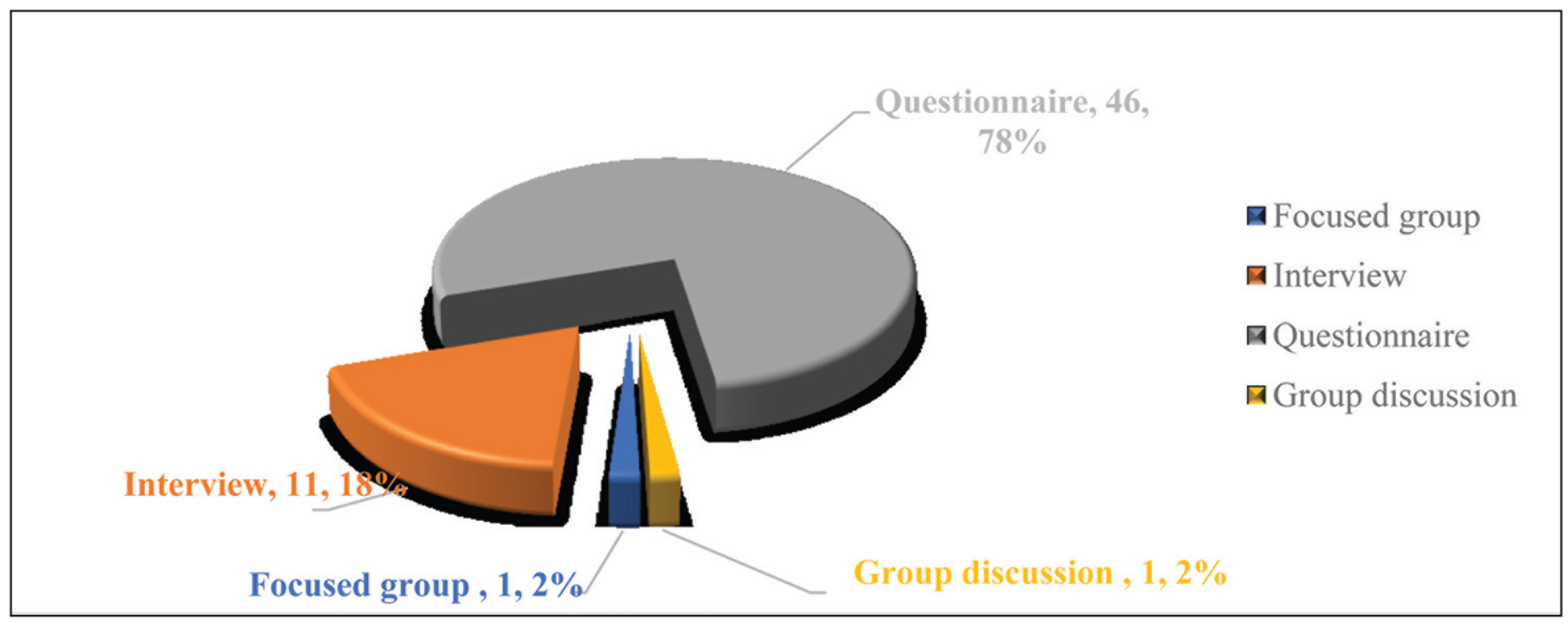
A questionnaire was the most popular tool, whereas a focused group and group discussion were the less used tools for collecting data. Table 8 and Figure 7 show the data collection tools used in primary studies.
Data Collection Tools in Primary Studies
Sampling Technique
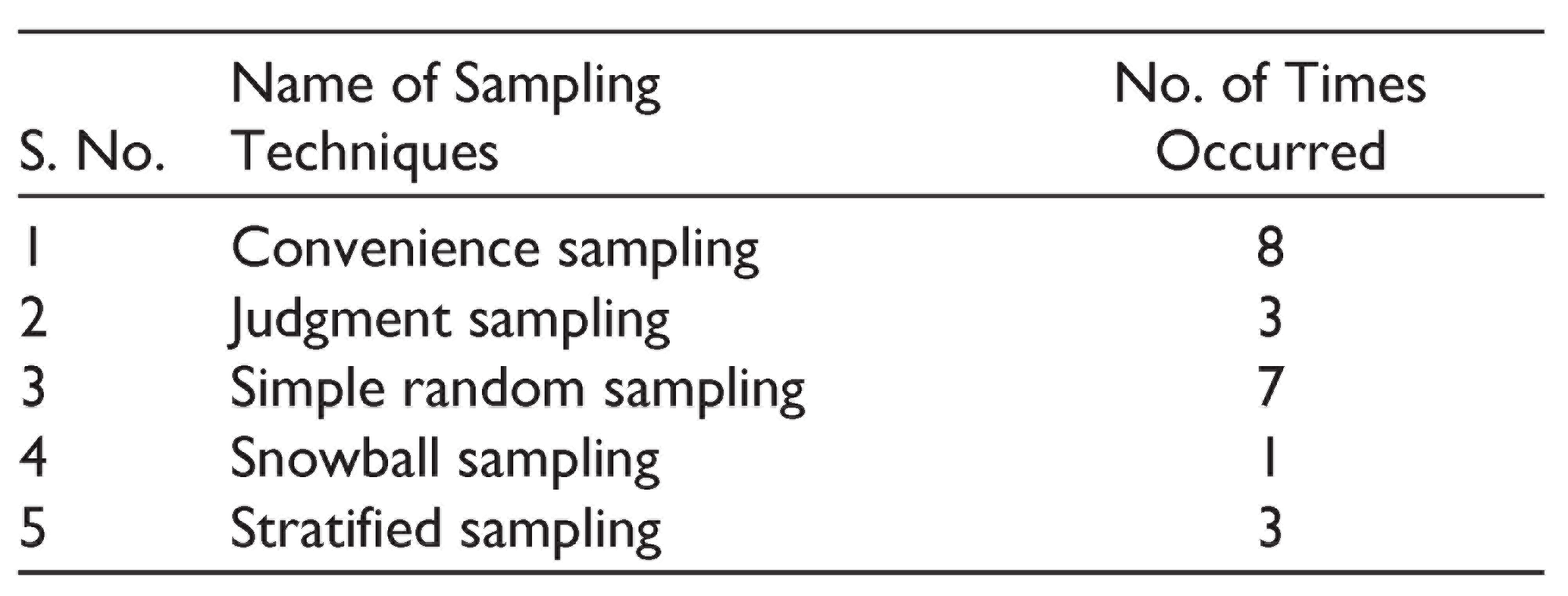
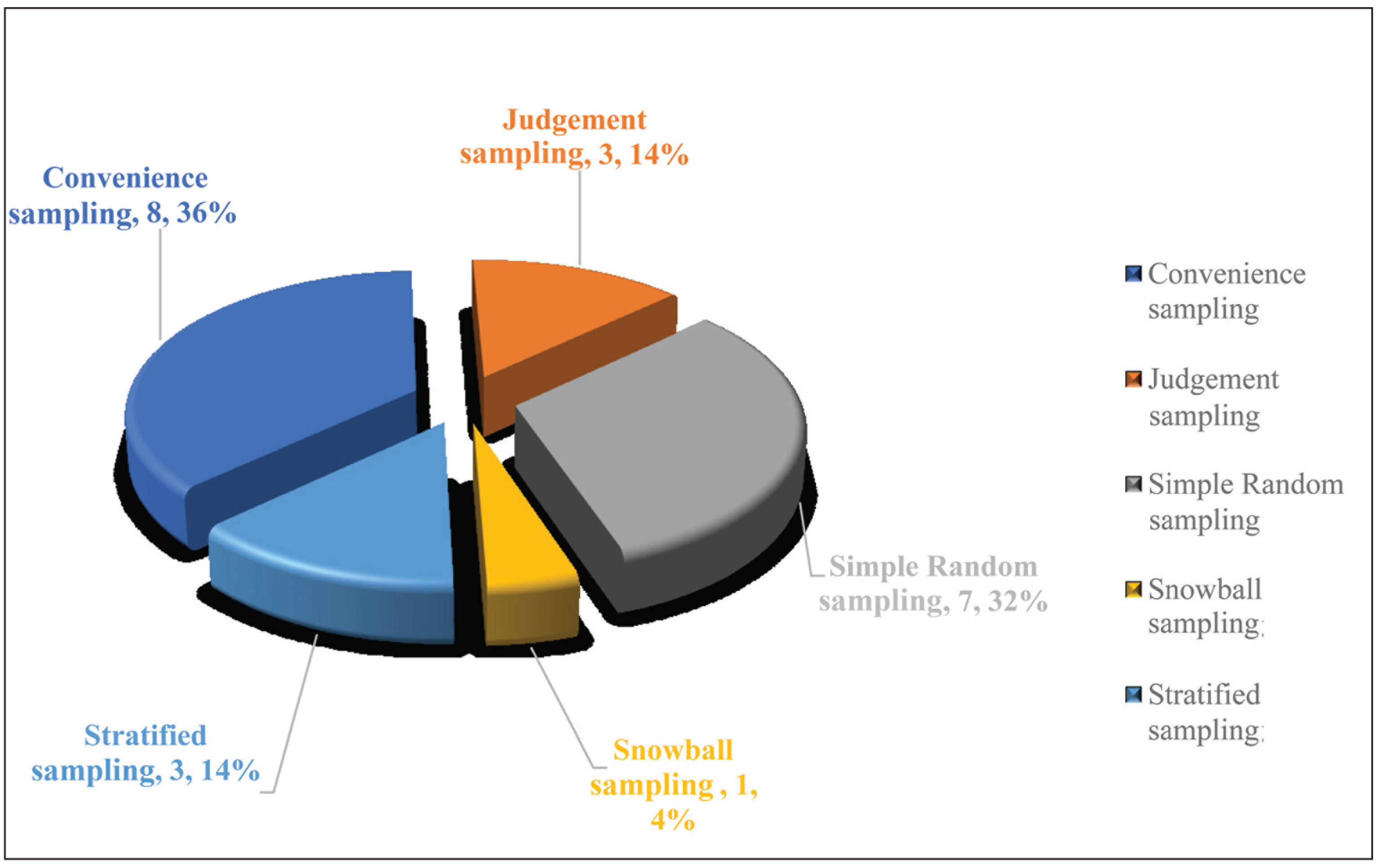
The convenience sampling technique was the most frequently used, whereas the snowball sampling technique was the least frequently used, as shown in Table 9 and Figure 8.
Sampling Techniques Used in Primary Studies
Sample Country
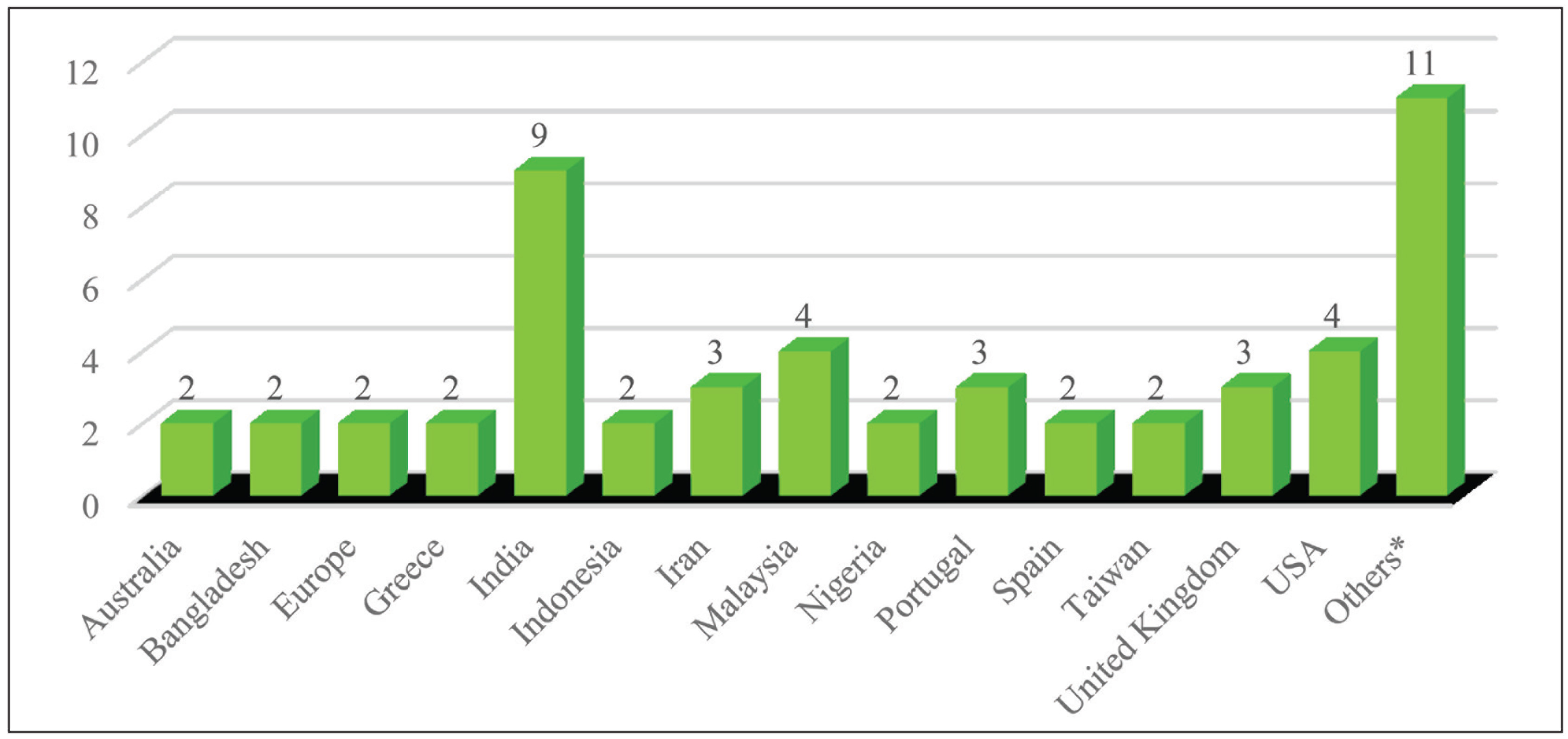
This classification helps in identifying the countries that were taken as samples for the CRM studies. Mostly India took as a sample country in primary studies, as shown in Table 10 and Figure 9.
Sample Countries in Primary Studies

Industry
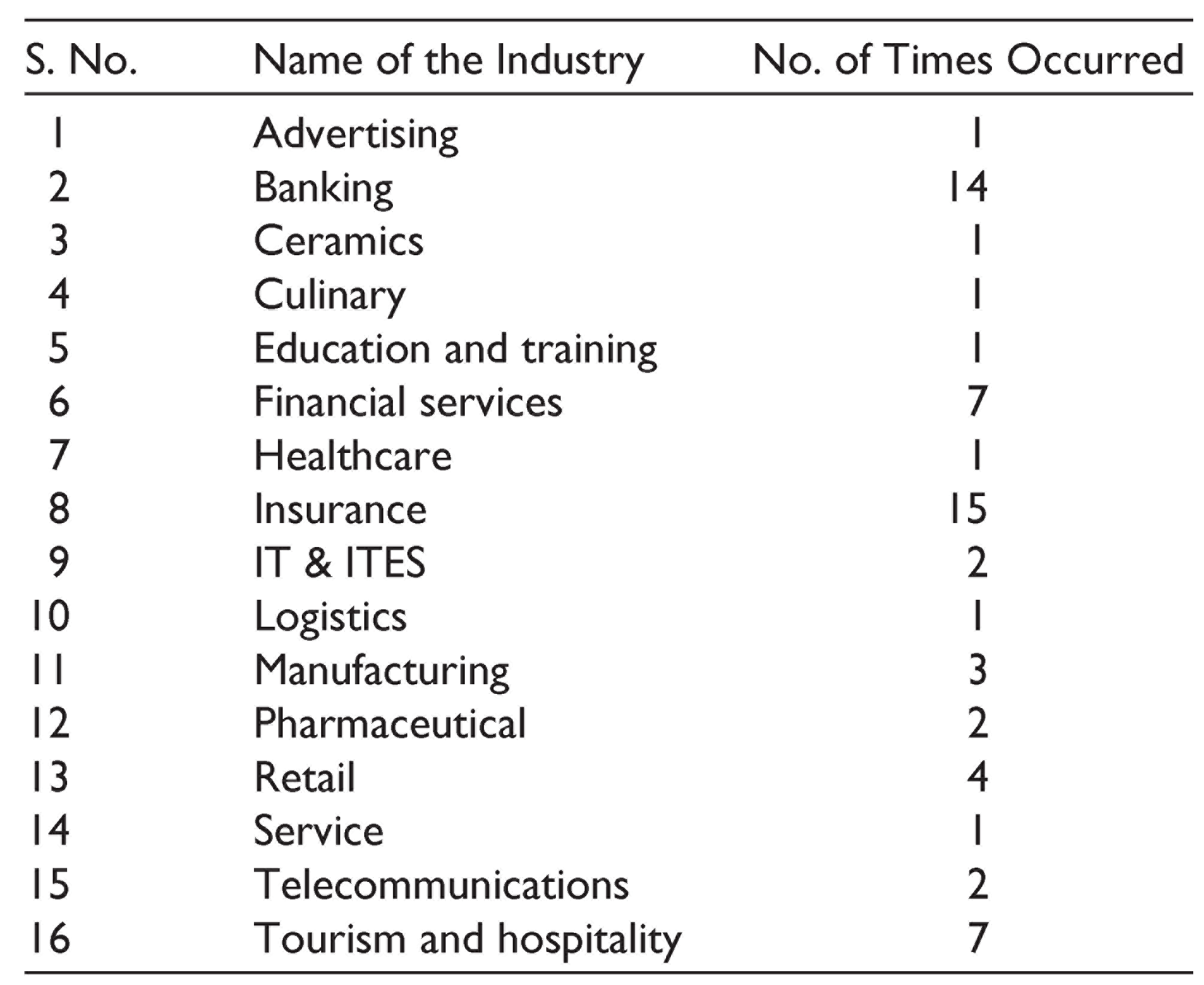
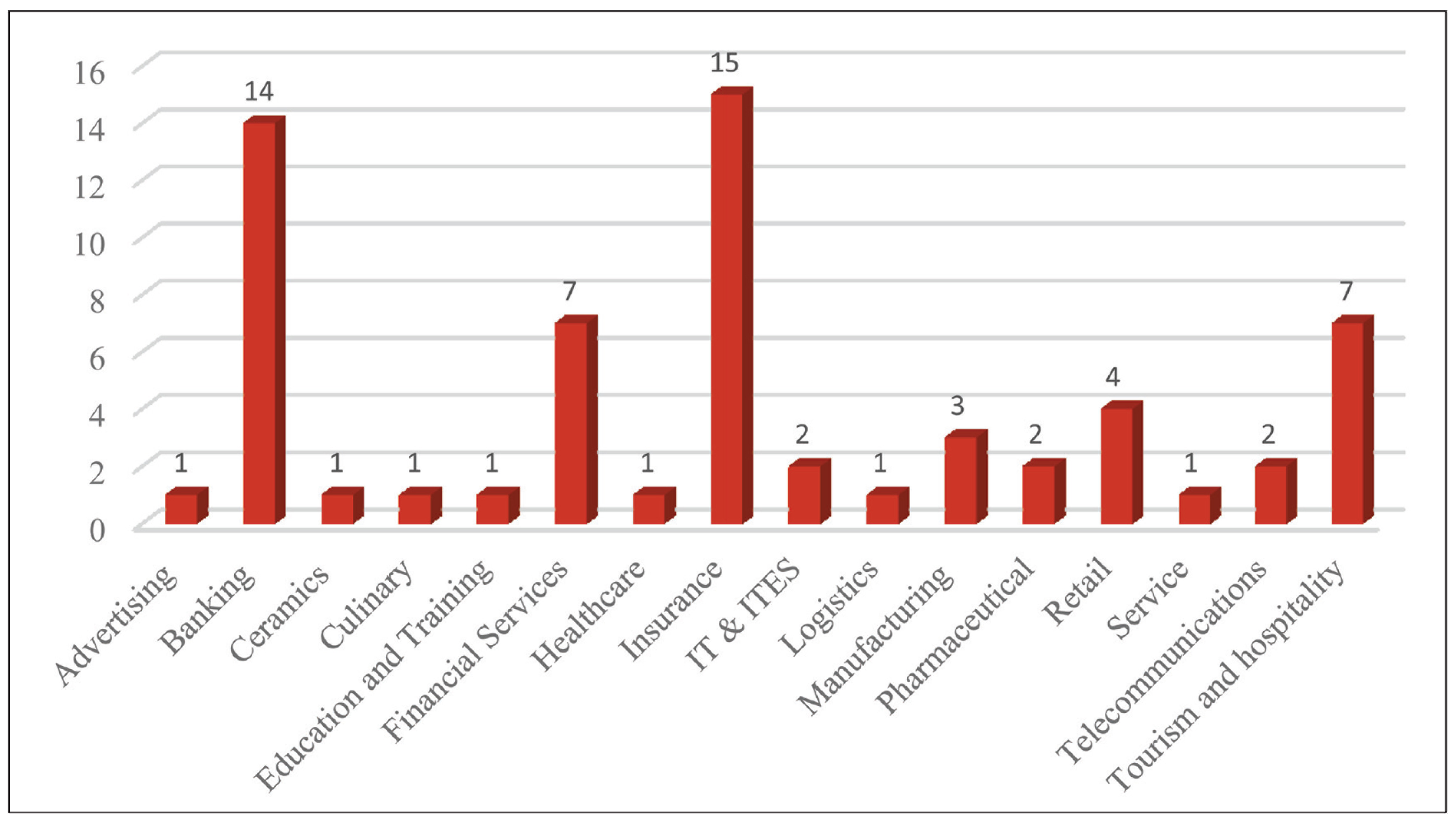
CRM research is widespread in service industries. However, in service industries, insurance and banking were highly dominated. It indicates that the financial and tourism and hospitality industries are also experiencing CRM benefits. They are also investing in CRM activities. There is also the scope of conducting studies on industries such as the advertising industry, education industry, healthcare industry, logistics and telecommunication industry. This classification is shown in Table 11 and Figure 10.
Industries in Primary Studies
Statistical Tests and Methods
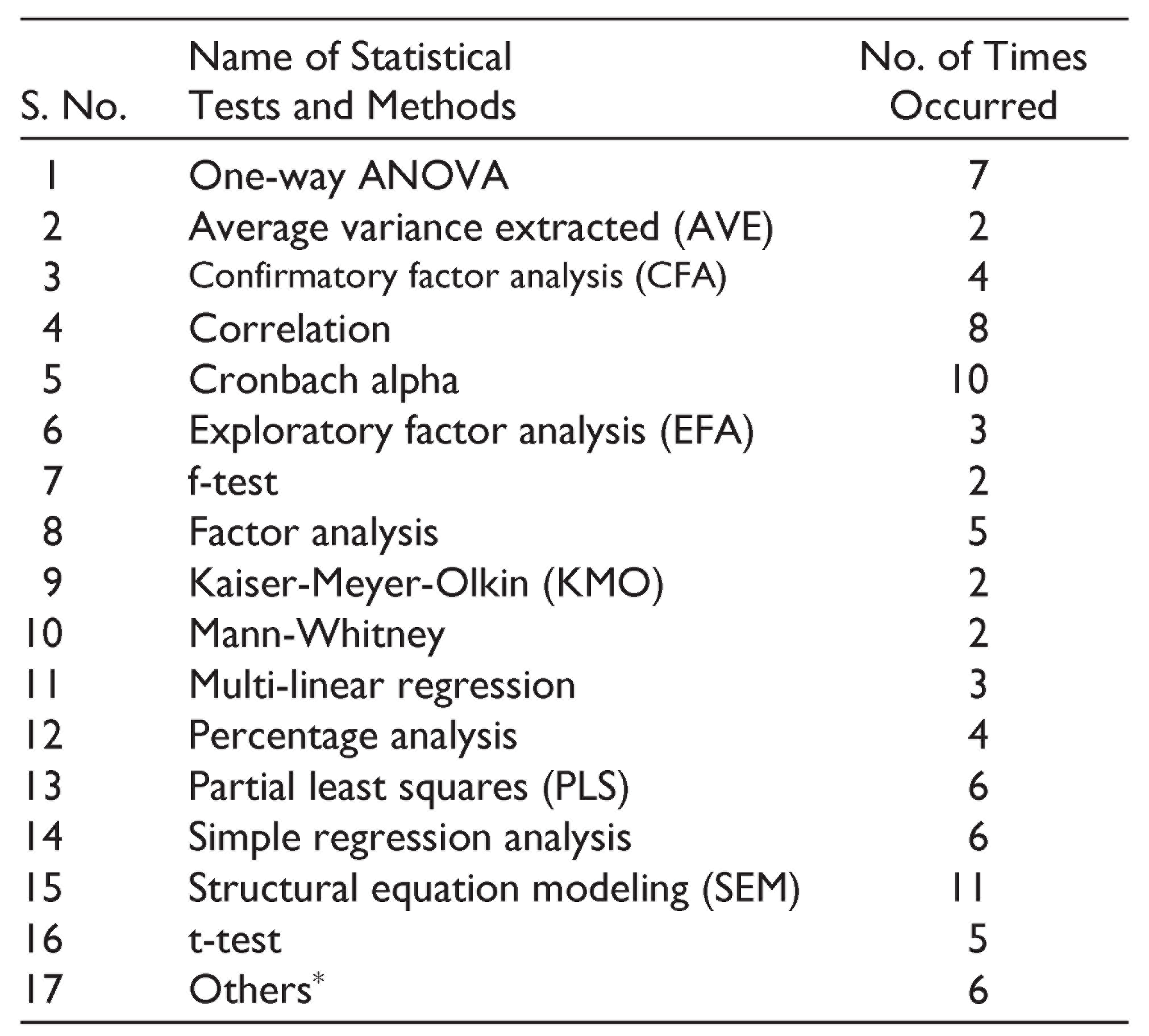
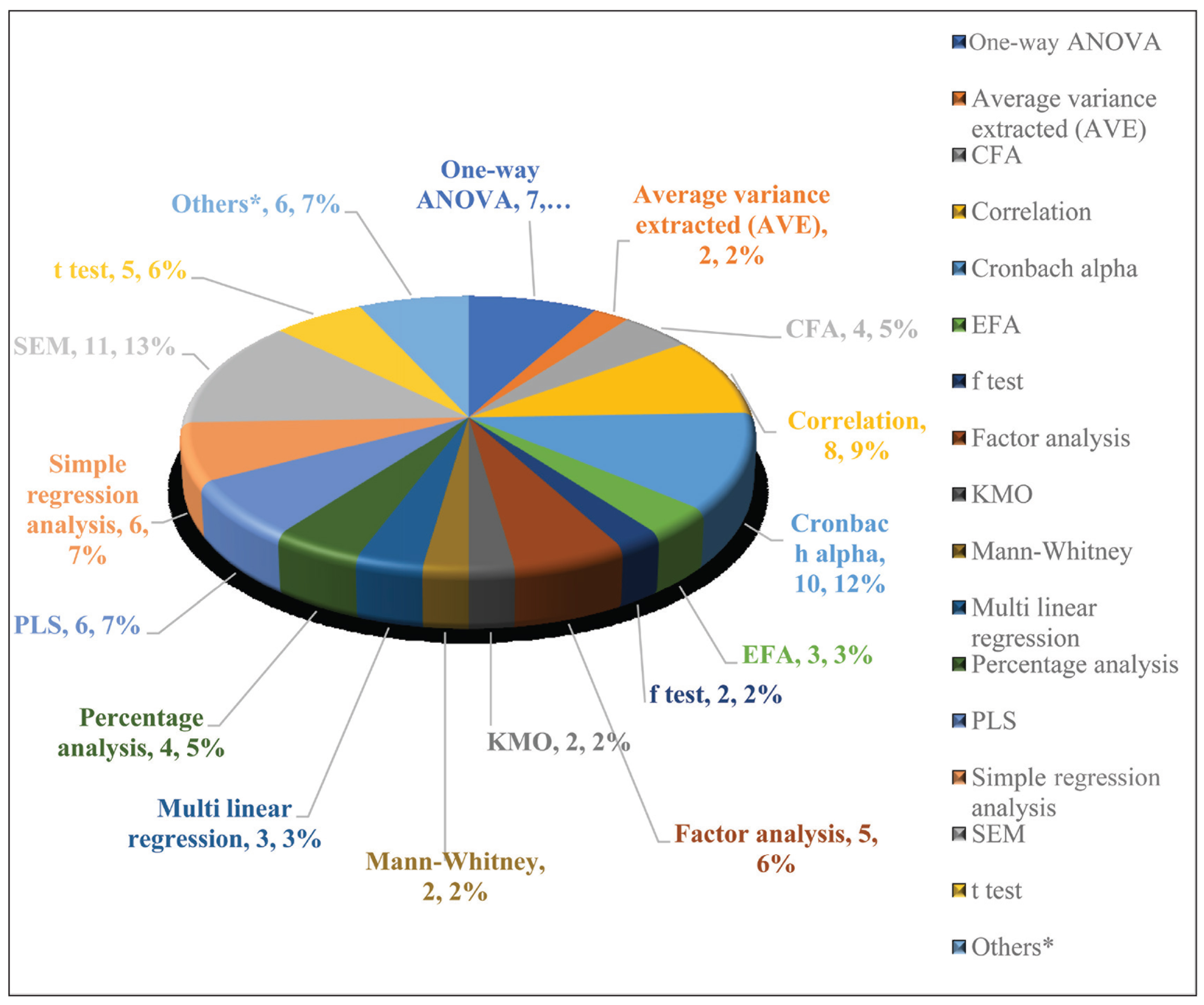
This classification includes both tests and methods used by researchers in primary studies to reject and accept hypothesis and analyses the data. In primary studies, most of the authors used Cronbach alpha, structural equation modelling (SEM), and one-way ANOVA statistical tests to analyse their studies. The classification presented in Table 12 and Figure 11.
Statistical Tests and Methods Used in Primary Studies
Softwares
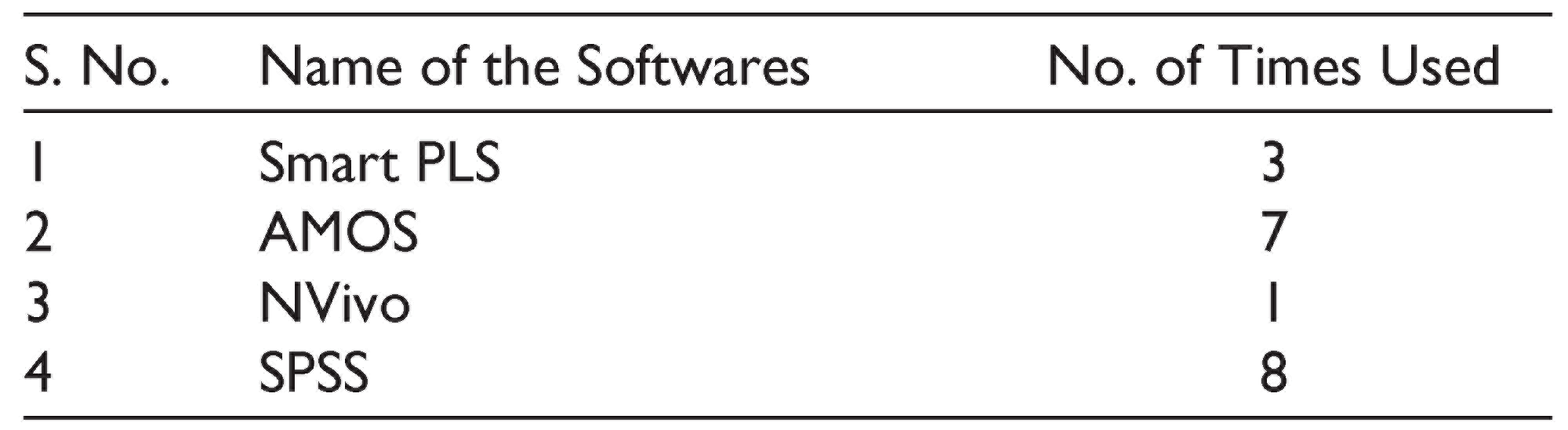
Statistical package for the social sciences (SPSS) and analysis of moment structures (AMOS) were the popular software used in CRM-related research, especially in primary studies shown in Table 13 and Figure 12. SPSS software can analyse big data. That is the reason the authors used this software.
Softwares Used in Primary Studies

Review Papers Analysed Based on Classification Used in Literature Papers
Under this classification, it was analysed that review papers were classified on what basis in history by authors. Table 14 shows the basis of classification and the number of times used in previous studies.
Classifications Used in Literature Review Papers

Keywords
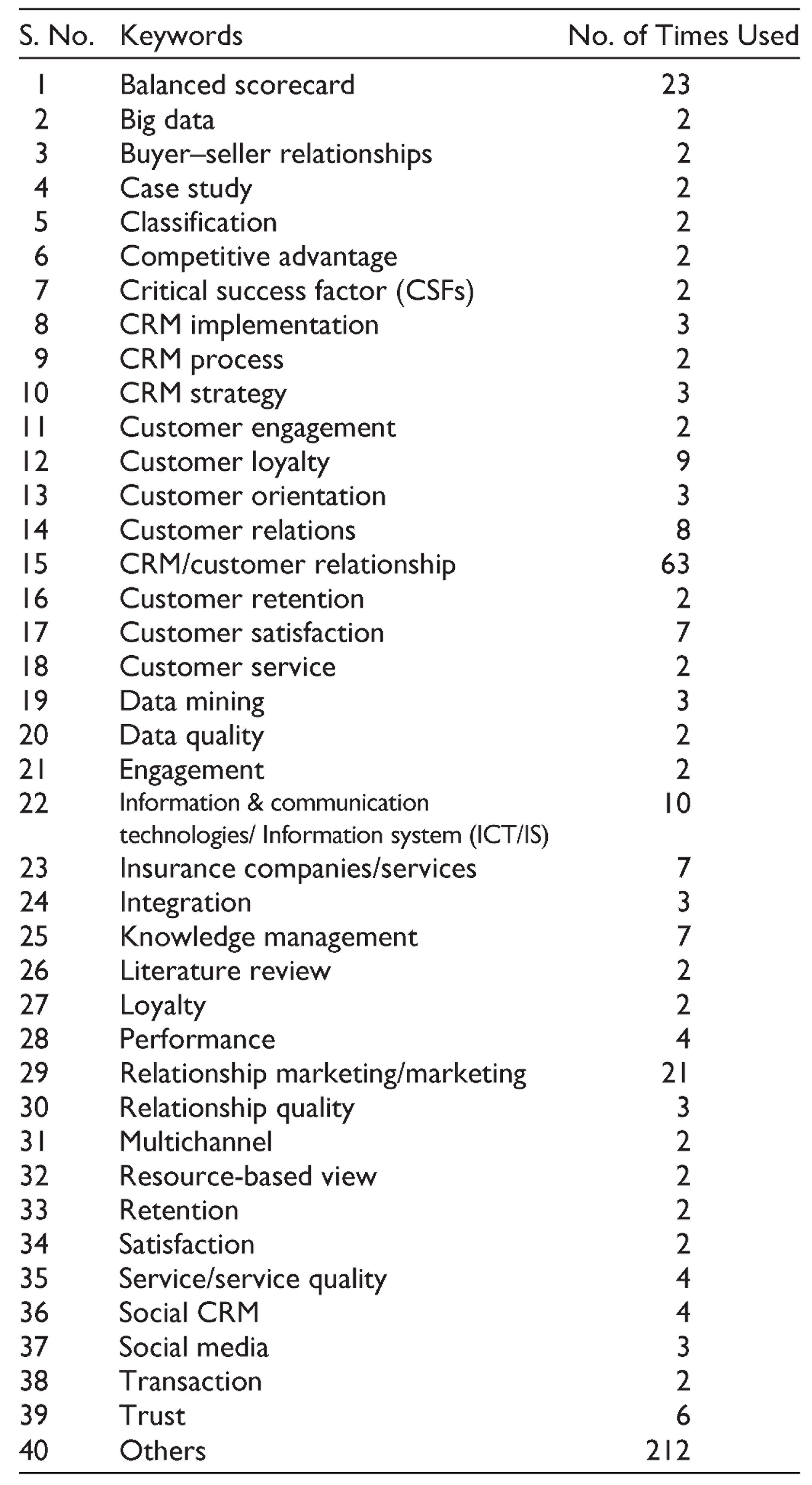
Keywords are the terms or phrases that show the content of the articles. Keywords are useful in searching the research articles. By mentioning the key terms in the search bar, results appeared related to that keyword or phrase.
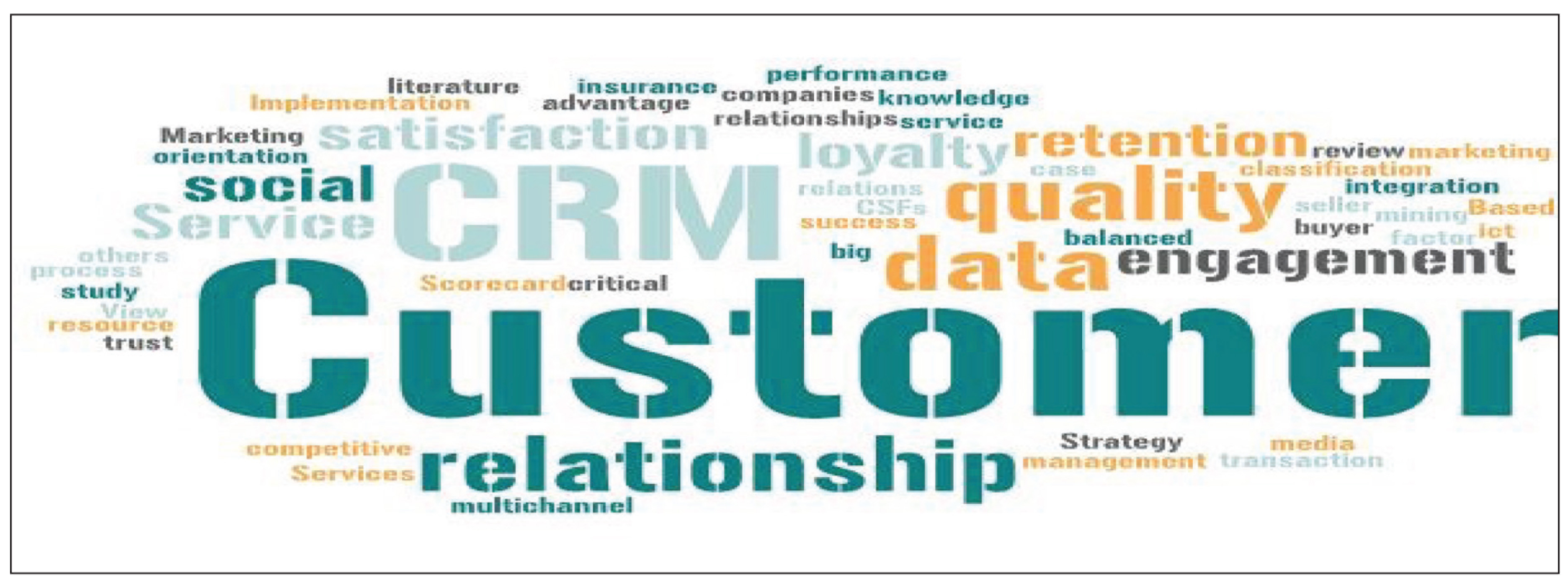
Table 15 shows the keywords used by the authors. Popular keywords were CRM/customer relationship, relationship marketing/marketing, balanced scorecard and words related to information technology/information system. It also shows through word cloud in Figure 13. Word cloud is a diagram that shows similar words in a cloud shape. Understanding of word frequencies is brighter and prominent through the word cloud diagram.
Keywords Used in a Total of 104 Research Articles
Variables
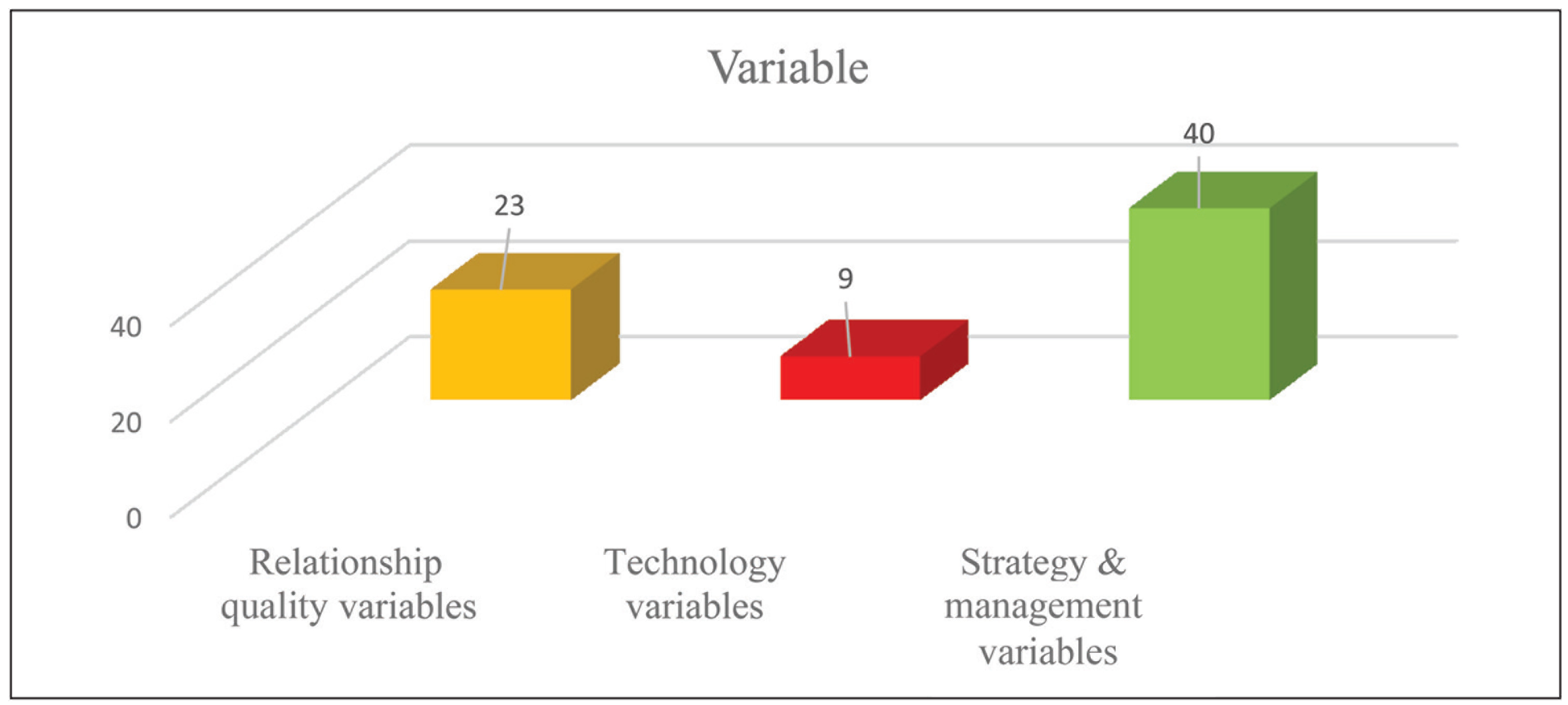
Variables used in 104 research articles were labelled under three categories, and the categories were relationship quality variables, technology variables and strategy and management variables. Most of the variables fall under these three labels. After labelling the total variables number of variables under each label counts, the result shows that variables related to strategy and management were dominated, and variables related to technology were minimum. It indicates that researchers have mostly worked on strategy and management related variables followed by relationship quality variables. Most of the studies emphasized how to increase services’ quality, leading to growth in sales and revenue. It is depicted in Tables 16 and 17 and Figure 14.
Classification of Variables

Type of Variable Categories

Research Implications and Conclusions
Research on CRM and CRM-related areas has attracted attention from several decades ago. New areas of CRM, such as information technology and information system, data mining, knowledge management and CRM-related software, have increased researchers’ and academicians’ interest in CRM research.
The present study included 104 research articles as sample papers for review. Research articles were from national and international journals and conferences, Google scholar and various websites. Only the papers published between January 2000 and June 2020, that is, over 21 years considered for the review study. The following are the conclusions of this article:
From the last 21 years, the number of published papers in CRM has increased, especially from 2018 to 2020. There was a high peak in 2009 also. In 2000, 2007 and 2008, the craze of CRM was low. A total of 95% of articles were published in journals, and only 5% were conference papers. Journals such as Business Process Management Journal, Industrial Marketing Management, Journal of Marketing and Marketing Intelligence and Planning have the maximum number of CRM-related articles. Most of the CRM research took place in India, the USA and the United Kingdom. Sample countries were taken as the first author’s country. The country of the first author was considered the research place. A total of 104 research articles were divided into six types of studies, that is, exploratory, conceptual, review, case study, empirical and descriptive. Empirical articles were 44 in number; conceptual articles were 38, and review articles were 12 in number. Exploratory, descriptive and case studies were less in number. There was not a big difference between primary and secondary studies. Out of 104 research articles, 56 were primary studies, and 48 were secondary studies. In most of the secondary studies, CRM frameworks and models were presented. Primary studies further classified, and it was observed that the questionnaire was the most popular data collection tool; convenience sampling and random sampling were the most frequently used sampling techniques; India and the USA were popular countries used as sample countries for CRM research. Banking, insurance and tourism industry were the industries that most of the time used in research articles. Statistical tests and methods that most of the authors used in their research articles were SEM, Cronbach alpha, correlation and one-way ANOVA. Furthermore, the software was SPSS and AMOS. In the review papers classification, it was observed that authors in their review papers took CRM, E-CRM frequently. CRM research articles have many keywords. However, keywords like customer relationship, balanced scorecard, relationship marketing and information communication technology/information system were the popular keywords used in many articles. Variables used in research articles categorize into three groups, that is, relationship quality variables, technology variables and strategy and management variables. The maximum number of variables falls under the strategy and management variables. It implies that most CRM research focuses on strategies making and how to manage CRM in organizations. Variables related to technology were less in number, but it can be seen that research articles on CRM technology have increased in the last five years.
A few articles focused on customer privacy, management information system (MIS) and information technology and quality. In the future, these issues could study. Conceptual studies could be focused to clear the new CRM concepts, as many stakeholders have partial knowledge of it. Future CRM reviews could also be explicitly conducted industry-wise or country-wise to know the development and growth in a particular industry and country. More studies could be focused on subfields of CRM, such as E-CRM, mobile CRM (M-CRM) and social CRM (SCRM).
This literature review article is an attempt to give a comprehensive view of CRM research. It helps academicians, researchers and practitioners in analysing the trend of CRM. Understanding of CRM helps in reducing the failure rate of CRM projects and also helps in under-researched areas. By analysing the past trends, it can be forecasted that popularity will further increase in the future.
Footnotes
Declaration of Conflicting Interests
The authors declared no potential conflicts of interest with respect to the research, authorship and/or publication of this article.
Funding
The authors received no financial support for the research, authorship and/or publication of this article.