



Abstract
The purpose of this study is to prioritize the challenges of adopting Artificial Intelligence (AI) in the healthcare sector of the United Arab Emirates (UAE). An Analytic Hierarchy Process (AHP) method was used, and the data were collected from the managerial-level executives (n = 27) involved in AI adoption in their respective healthcare organizations. The results prioritized the AI main criteria and sub-criteria based on their priority weights in the healthcare sector. The results also revealed that accuracy, privacy and security criteria are the most important factors to optimize the healthcare sector with AI. The research findings shall help policymakers formulate suitable strategies with current adoption and acceptance of AI in the healthcare sector. The findings will help policymakers utilize this study’s outcomes to create a well-defined picture of AI’s actual adoption and acceptance in the healthcare sector.
Keywords
Introduction
Artificial Intelligence (AI) in the healthcare sector has recently accelerated innovation. Machine learning (ML), a popular AI tool, inspires care providers to create definitive diagnoses, deliver enhanced care for patients, and advance healthcare entrance. Likewise, AI has the potential to innovate the privacy and security of healthcare based on the algorithms that permit monitoring of how users are accessing data (Ellahham et al., 2020). Besides, AI is considered a new approach to enhance medicine and has gained significant attention and extreme concentration that has impacted stakeholders to view AI’s future function and relative concerns in decision-making (Komorowski, 2019). Moreover, AI researchers forecast that AI will be a ubiquitous part of peoples’ lives due to computer power development, including the health sector, where the utilization of AI is rapidly improving (McDougall, 2019). Therefore, AI is witnessing an excessive surge in diffusion. AI applications are seen as factors that enhance efficiency and effectiveness by automating cognitive work, unleashing high-value work, boosting predictive competencies for decision-making, and improving services. However, AI has unpredictable challenges such as job destruction due to automation, privacy violations, and increasing chances for bias (Sun & Medaglia, 2019).
This study aimed to fill the gap of finding potential challenges that impact the adoption of the AI in healthcare in the United Arab Emirates (UAE) to boost its implementation. Notwithstanding the media publicity of AI, there have been few studies about AI in the public sector. Few empirical papers have tested the potential challenges and assumptions and provide governance principles to manage such an emerging AI trend in the public sector. Despite the recent hype, the research field of AI is not new. The ‘Artificial Intelligence’ was introduced in 1956 to specify an emerging research field bringing together researchers from various fields.
Moreover, AI research has gone through ups and downs. AI that started in the late 1950 and that was linked to such technologies’ capability to establish programs capable of proving specific mathematical theories or use in gaming. A disillusion period regarding AI systems that may imitate the human intelligence level replaced the previous enthusiasm due to some technologies’ failure. This is because of the immaturity of computing technology, lack of solutions for the emerging issues, and decline in the interest of AI research that continued until the late 1990s (Sun & Medaglia, 2019). Nevertheless, the healthcare sector is one of the main fields to adopt AI technologies due to its high-rise investments in AI and because of the tremendous use of such technologies in this field. Besides, due to the diverse stakeholders in the healthcare sector, the complexity is requiring AI technologies to deal with additional complications (Sun & Medaglia, 2019).
This study’s key objective is to prioritize the key challenges for AI adoption in the UAE’s healthcare industry to optimize the healthcare sector with AI. According to the study of Lamberti et al. (2019), AI is recognized as a revolutionary approach in the development of medicine. Big data and ML can have an extreme impact on the healthcare sector that might generate a $100 billion annual sales market. ML, as one kind of AI, is applied in a wide range of healthcare areas. It consists of disease identification and diagnosis that produce customized treatments, drug discovery and manufacturing, clinical trial research, radiology and radiotherapy, smart electronic health records, and epidemic outbreak forecasting (Lamberti et al., 2019). Thus, studying the actual and potential challenges of AI by the firms to adapt to the country’s vision and ensure that it is accomplished accurately is considered the main motive of this research paper. Also, significant investments in scientific funding and research have led to increased AI usage by the healthcare industry. It shows some great results at the ophthalmologist-level and different individualized treatment decisions in other areas (Lovejoy et al., 2019). AI was applied at some ICU units, and the results were compared with non-electronic products and showed data accuracy. Patient healthcare data must be secured and kept private as doctors will not obtain data from those patients until they recover (Lovejoy et al., 2019). Thus, greater attention must be taken to apply specific training, especially for AI in this industry (Tizhoosh & Pantanowitz, 2018). The combination of AI applications and big data will significantly impact the healthcare industry (dos Santos & Baeßler, 2018).
Therefore, this research is designed by composing a multi-criteria decision-making framework for AI challenge factors and sub-factors to recognize and prioritize the most significant factors influencing successful AI adoption in the UAE’s healthcare sector. The analytic hierarchy process (AHP) method is a multi-criteria decision-making process suitable to analyse complex and real-world problems. The research seeks to answer the following question:
RQ1. How to prioritize the challenges of AI adoption to manage and deal with them and reach a better adoption approach?
This article is structured as follows: The next section outlines the literature review. The review focuses on the background of AI and the handling of its main challenges for successful adoption. Then, third section describes the research methodology. Fourth section presents the analysis and discussion, followed by the conclusions, implications, and limitations.
Literature Review
Background of Artificial Intelligence
AI represents objects or systems that can perform independent decision-making. It can further be explained as an entity/convergent group of collaborative entities that can receive data, interpret and learn from data and display interrelated and flexible behaviours and actions that aid the object in accomplishing a specific objective over time (Lamberti et al., 2019). Likewise, AI is described as a computer system that can achieve duties that necessitate making observations, assessing information, and reaching decisions (McDougall, 2019). Also, it is an automated procedure that allows different systems to analyse data quickly and then obtain the most needed information, which shall eventually help in the selection of problems (Correia et al., 2013). The objective of AI applications in healthcare is to examine the connection between prevention and treatment approaches and patient outcomes (Ellahham et al., 2020). AI has established new methods such as evolutionary strategies and genetic algorithms. Thus, AI has become a vital growth attraction in developing and developed countries (Lu et al., 2018). AI is a changeable procedure, and different companies from different industries are obtaining AI to support their investment steps. Some AI systems are capable of responding orally after recognizing the speech, while others communicate through text. Based on the fed data, these AI applications can either recommend the course of action to be taken to treat the patient or share the respective information with the physicians (Iliashenko et al., 2019).
Furthermore, AI indicates any computer that imitates humans’ cognitive process, such as thinking, discovering meaning or generalization, and learning from previous experience to accomplish objectives (Bali et al., 2019). Likewise, AI technologies indicate any object that observes the environment and takes actions that enhance the chances of success in achieving specific objectives (Sun & Medaglia, 2019). Stakeholder’s support is imperative for successfully implementing ML in healthcare (Shaw et al., 2019).
Artificial Intelligence and the Healthcare Sector in the UAE
The UAE’s healthcare sector provides a high-level healthcare standard to the people from both the complete government-funded health service and the growing private health sector. Regulatory authorities administer this sector from the Federal (Ministry of Health and Prevention) and Emirate level (like Health Authority-Abu Dhabi), and the numbers of hospitals and healthcare facilities are increasing from year to year (Figure 1). Consequently, this has led to a life expectancy age in the UAE of 76.8 years, which is at the same level as North America and Europe (Embassy of the UAE, 2019).
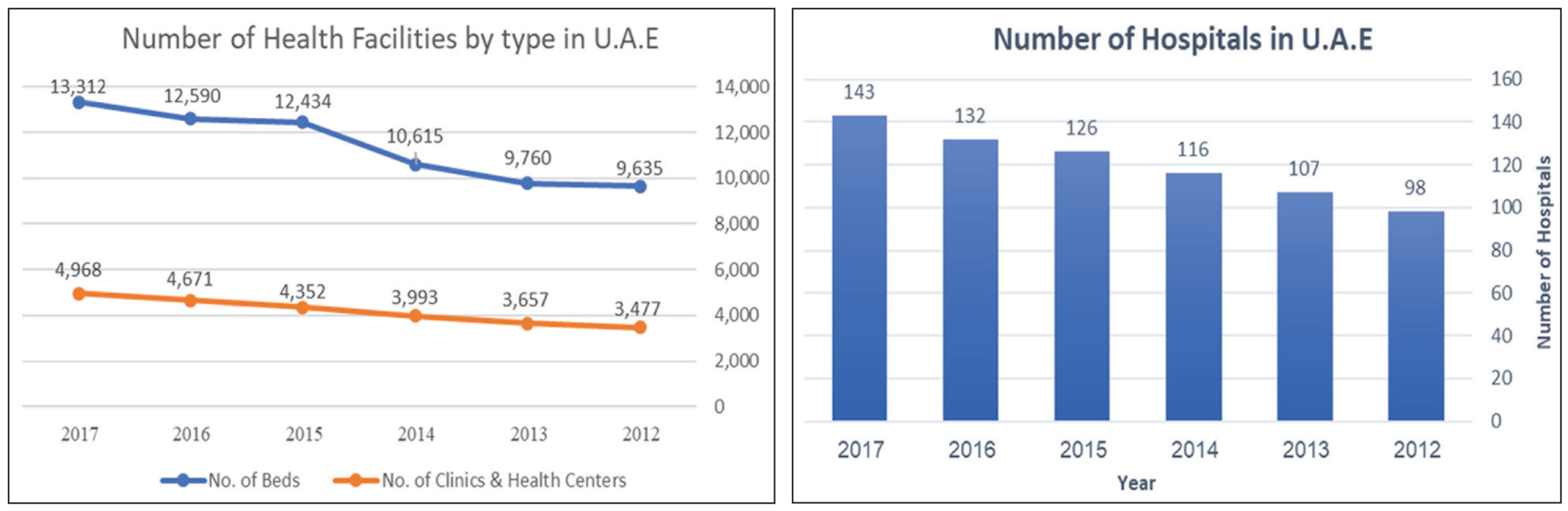
In 2017, the UAE was the first country in the world that established the Ministry of State for AI, which proved that the UAE is always at the front line of the global technological revolution. This ministry’s primary goal is to provide the government with the right investment innovative environment and improve AI adoption in the country and within the different sectors. In the healthcare sector, AI adoption is gradually presented, and careful steps are being taken to ensure its success. Some of these tests provide 24/7 video consultation to patients around the world using Babylon application and by introducing the Health Care and Innovative New Technology neuro band, which helps in sensing strokes before they occur (STA Law Firm, 2019).
Challenges of Artificial Intelligence Adoption
Accuracy
Previous studies found that the accuracy and potential power of AI diagnosis are increasing in many clinical settings (Figure 2). AI improves diagnostic accuracy in healthcare (Guo et al., 2020). Thus, companies such as IBM, Microsoft, and Google have developed AI systems to produce treatment recommendations. For instance, IBM’s tool ‘Watson for Oncology’ is a system that brings together various data, and it can learn, reason, and generate treatment recommendations (McDougall, 2019). In the early 1970s, a comparison study conducted to assess computer-aided diagnosis compared to human physicians found that the accuracy of the diagnosis, decision-making, and patient outcomes of the computer-aided diagnosis systems are higher than senior physicians. Also, ML was found to be beneficial in that it improved the accuracy of cardiovascular disease risk prediction by identifying patients who could benefit from preventative treatment.
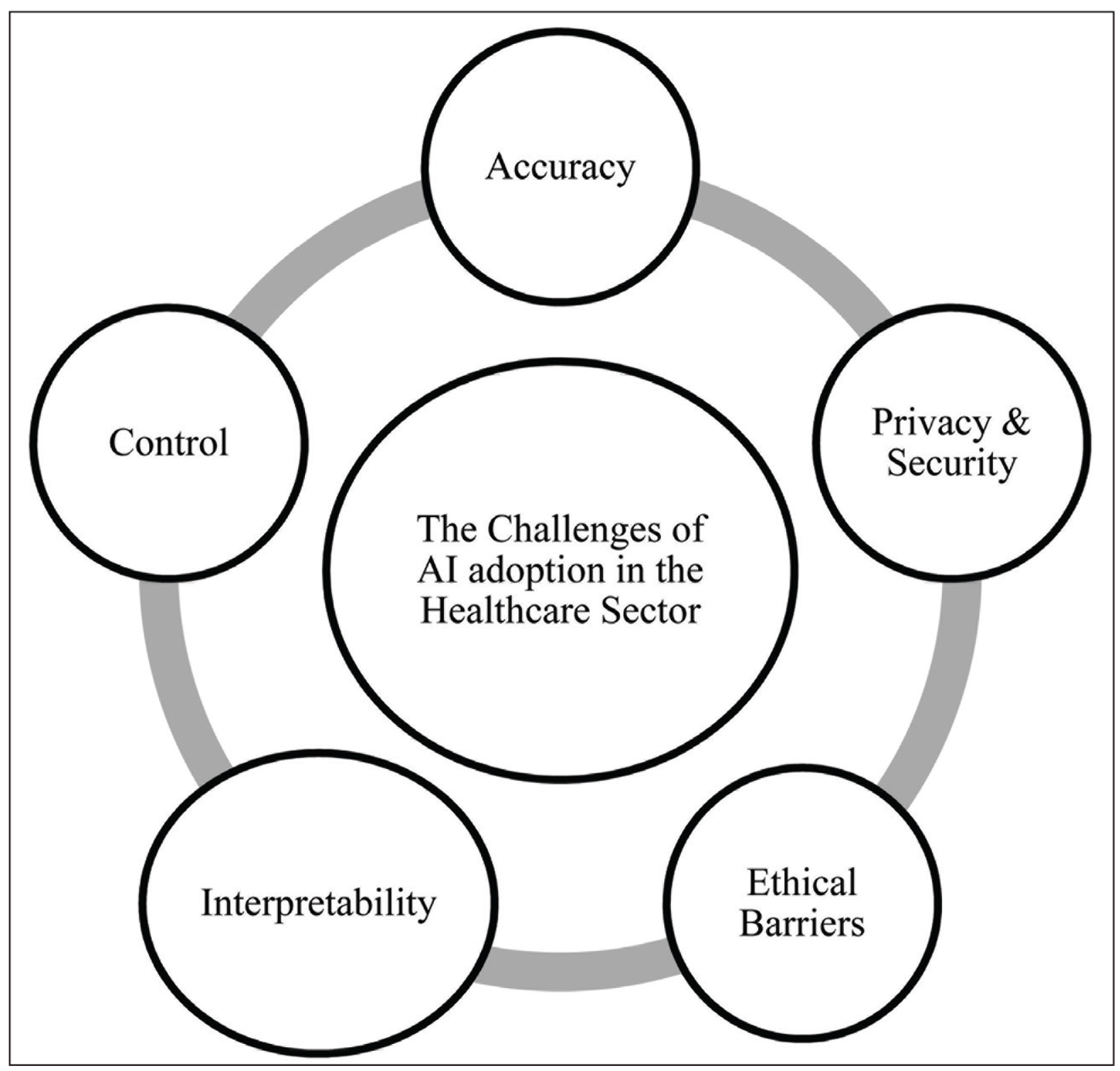
Moreover, the use of AI can help in mitral valve analysis, which can be achieved by automated diagnosis with minimal intervention by a user (Becker, 2019). AI is an efficient tool due to the high accuracy these systems have and their ability to enhance treatment protocols that have a high significance in regenerative medicine (Hassanzadeh et al., 2019). Thus, it is essential to consider the quality and integrity of data that are used to train machines because of secondary data or algorithms that create defective conclusions can remarkably affect the quality of outcomes.
One of the main sub-factors of accuracy is biases and discrimination. Bias represents one of the critical areas in training data since it can correct data by supervised learning. Thus, discovering a good clarification for classifying some subjects or events to reach warrantable concepts is proposed (Arnold & Scheutz, 2018). Also, automation bias happens when people blindly rely on machines and consider them faultless (Lyell & Coiera, 2017). Similarly, biases may occur based on the given data to the AI system. In the healthcare sector, biases in entering data occur through three approaches: a human bias, a bias inserted either by accident or intentionally, and bias in the approaches in which health care systems utilize the data (Becker, 2019). Thus, depending merely and heavily on experts’ knowledge can increase systematic biases and restrain scientific discovery. Therefore, comprehensive research about the AI model’s features to make it transparent and inclusive is essential (Gilvary et al., 2019). Besides, ensuring the accountability of AI by committing to the ethical aspect of AI systems is essential and those who design them through participating in social well-being, being honest, trustworthy, fair and non-discriminative, respecting privacy, confidentiality, and showing continuous improvement and evaluation (Schrader & Ghosh, 2018).
Privacy and Security
Privacy is the protection of sensitive information regarding personally identifiable healthcare information. It focuses on how an individual’s data are used and governed. Security is protecting data against stealing for-profit and destructive attacks (Abouelmehdi et al., 2018). The issues of privacy, safety, and human abuse are getting tremendous attention recently because people understand and admit to the augmented problems by neglecting these issues and their impact on numerous stakeholders. Nevertheless, many incidents that occur because of AI systems have led to social problems. Therefore, concerns are raised about AI regarding the safety and accountability of the structures comprising autonomous decision-making by AI (Lee & Park, 2018). Also, the computer system’s complexity raises concerns regarding patient data that calls for efficient security measures.
As technology continues to improve, and more connected objects are produced, the privacy of patient’s data is becoming more complicated. Thus, a patient’s information is vulnerable to use as a source for firms to be used in breakthrough research (Becker, 2019). For AI teaching and training purposes, deceased data are used, signifying that third parties use the data. Another threat to security is the cyber-attacks, which, if ignored, can cause even deaths. The alarming examples are remote hacking of a cardio stimulator and intentional ‘retraining’ of a diagnostic and recommendation system to offer a deadly drug or procedure, leading to mass murder (Iliashenko et al., 2019). Although AI benefits are undeniable, the risks and threats to privacy, security, and autonomy for individuals are increasing. Besides, the economic benefits of AI should not compromise the ethical conduct of privacy and human autonomy. Thus, developing and implementing fair and transparent algorithmic operations and protecting people’s privacy and security are the most critical ethical protections (Schrader & Ghosh, 2018).
Ethical Barriers
Because AI is in its early stage, it is essential to anticipate the ethical issues that might appear on the surface once it is spread and manage these issues (Lee & Park, 2018). Moreover, recognizing the ethical issues of AI is essential to encourage all concerned parties to identify and admit AI’s role in the interaction between people and technology. This will help acknowledge the ethical concerns around transparency, equity, beneficence, social and human flourishing, and happiness exist (Schrader & Ghosh, 2018). Consequently, safety as the main concept of AI instead of competence, effectiveness, and reliability, contradicts unconstrained, and dangerous AI. Thus, to evaluate AI systems, a verification approach is needed that is transparent with methodical established concepts, commands, and assumptions by which one could anticipate how the system will behave.
Furthermore, it is convenient to have autonomous machines that can make ethical and accurate decisions, which people can trust. The successful deployment of AI tools requires all stakeholders’ trust and agreement (Komorowski, 2019). Also, the ethical engagement between humans and technology is essential for AI development (Schrader & Ghosh, 2018). According to Guan (2019), for the successful application of AI in healthcare, it is essential to establish a fair and balanced relationship between technology, individuals, and society.
One of the key obstacles in AI adoption in the healthcare sector is the fear of change among employees. Considerable transformation in the skills of healthcare employees is a pre-requisite for successful AI adoption. The technical development teams in the healthcare organizations must be well equipped with AI, which will allow them to integrate it well with the applications to improve clinical processes. Moreover, AI must be incorporated into the workflow through an algorithm to reach to every employee to expand and develop the functions within healthcare (McGrow, 2019). Generally, AI that does not engage people is prone to fail. Thus, AI should provide employees with privacy and security and the needed data to enable better decisions, highlight privacy and security initiatives, and increase trust in the firm. Without human-directed ML and decisions, it is hard to attain alignment of values (FairWarning.com, 2018). Thus, the alignment with values must occur side-by-side with transparency. Therefore, software engineers are required to define ethical values and specifications. Therefore, the clarity should mainly be associated with ML for care providers to examine the systems and assure that they are as transparent as possible regarding the data used, the approach they are using for the data, their goals, and the algorithm’s fundamental operations. Briefly, healthcare firms should ensure that the AI systems’ developers rely on various experiences, use different data, and use analytical question inquiry methods regarding how the machine is creating conclusions (FairWarning.com, 2018).
The absence of a reasonable explanation for some biological cases may impact AI systems’ reliability and performance. Thus, issues of verification, the model’s accuracy, or excessive training and preparation can be overcome by approaches like training with dropout techniques and initial discontinuation that facilitate powerful prototypes with high estimation competence (Hassanzadeh et al., 2019). Additionally, awareness is an essential part of the adoption of AI to enhance ethical conduct. According to a study by radiologists and trainees, there is a lack of understanding and learning about AI. The study stated that 36% of radiologists have never read any medical reviews associated with the area of AI (Wong et al., 2019). Thus, improving human awareness about AI is essential for assistance with comprehension and recognition of how AI systems work within machines and how the industry is generating algorithms from collected data, and how to use the data, keep it, secure it, and respond to threats (Schrader & Ghosh, 2018). Another sub-factor of ethical barriers is integrity. The fundamental purpose of sustaining integrity reinforces that AI systems should be of the utmost value, maintain proficiency, and are restricted to the goal for which the technology was established. Thus, AI systems’ usage and advancement should respect law and integrity agreements (Schrader & Ghosh, 2018).
Furthermore, by using AI, knowledge is signified (Correia et al., 2013), and it is vital to obtain reliable labels to validate the given data (dos Santos & Baeßler, 2018; Tizhoosh & Pantanowitz, 2018). AI must be well trained using ideal data with the right references in an organized form. Companies and industries that apply AI without knowing or using these tools will negatively affect their business, and society will not be aware of the negative AI consequences. It will slow down the steps that can be taken to save these businesses. Besides, for a question asked by a human to AI, the answering time results in a big difference, which shows the different intelligence levels between the two (Tizhoosh & Pantanowitz, 2018). Accordingly, the data used to feed the AI can obtain different results and outcomes, like using them to get epidemiological statistics or primary sources for training AI algorithms (dos Santos & Baeßler, 2018). AI cannot replace human reasoning, clinician-patient communication, relationship with patients, and patient care (Reddy, 2018). However, other than imaging, diagnosing, medical device automation, and providing treatment, AI can be taken as a support provider to the healthcare employees in their administrative tasks such as clinical documentation, reaching the patients, and monitoring patients (Bohr & Memarzadeh, 2020). Therefore, more research is required to develop a technologically innovative model and has a patient care element into it (Reddy, 2018).
Interpretability
The importance of AI, especially in the healthcare sector, is interpretability and models that help in the decision process such as treatment and diagnosis (Thesmar et al., 2019). Intelligent interpretation of voluminous data generated in the health process is a significant reason for complexity in healthcare delivery. This can be addressed through AI’s problem-solving approach (Reddy, 2018). The deep learning algorithm used for image analysis is an example (Davenport & Kalakota, 2019). A study by Abbass (2019) noted many costs behind the absence of AI interpretability. People will not understand the logic behind the decision that has been taken, and information complexity will result in surplus people dealing with it. Therefore, people will make wrong and blind decisions.
Many technology vendors are dynamic and always developing new tools to cope with the most recent issues or finding ways to enhance AI (dos Santos & Baeßler, 2018). For any AI system to be successful, the ML component for structured data handling such as images, genetic data, and Natural Language Processing (NLP) for unstructured text mining are a must. After that, healthcare data must train sophisticated algorithms before assisting the physicians in diagnosing the disease and prescribing the treatment (Jiang et al., 2017). For the last few years, AI and robot studies have been widely researched at universities in the United States. The government of the United States is also supporting studies of AI and robots (Lu et al., 2018). In Japan, AI is considered the major procedure needed to advance information communication technology and robot technology innovation. Japan also plans to solve its problems by employing state-of-the-art AI procedures and robots. Some big companies such as Amazon and Facebook are again using AI in their businesses (Lu et al., 2018). Any process in healthcare operations and delivery can be enhanced through AI. For example, AI implementation can lead to much cost saving in the healthcare sector (Bohr & Memarzadeh, 2020)
Control
If the AI chooses needed steps to complete its mission up to a level of satisfaction, then avoiding the required steps and thus preventing it from achieving its mission is a routine task, and this could be a problem. Therefore, some actions can be taken to evade these changes like altering the decision-making process, deactivating the system, or repurposing it (Russell et al., 2015). AI has control over people’s decisions, which could be right or wrong (Abbass, 2019). The negative side effects of AI cannot be ignored. Its societal impact leads to job losses for many people and reduces the number of educational institutions planned to improve education structures. AI adoption is positively affected by rules and regulations. The bureaucratic rules set by regulators lead to increased AI costs and suffocate innovation steps (Lauterbach, 2019). Despite giving significant attention to AI in medical research, its real-life implementation is still a challenge, a major cause of the lack of standards in current regulations in gauging the AI system’s safety and effectiveness (Jiang et al., 2017). Human societies are governed and regulated by legislative bodies (Vellido, 2019). Therefore, it is crucial to define and clarify the AI application system and its users to determine the responsibility centres in case of errors. To achieve this, it is imperative for legal and regulatory authorities to closely consult with health services stakeholders, clinicians, and software developers (Reddy et al., 2019). The continuous growth of AI systems increases the independent work for these systems and asks many legal and ethical questions that affect AI manufacturers and customers. Legal experts, computer experts, ethicists, and political scientists must answer inquiries about areas of philosophical and professional ethics, law, and public policy. Like any new technology, AI can create many benefits and new challenges (Figure 1), and so it is essential to introduce a system that can control and minimize risks and damages (Russell et al., 2015).
Research Design and Setting
Research Context
AI in the healthcare sector has shown considerable importance lately and mainly after the UAE Strategy for AI launch in October 2017. The health sector is tasked with reducing chronic and dangerous diseases (Government.ae, 2019). Although AI adoption is considered remarkable for optimizing the healthcare sector with AI in the UAE, there is a literature gap on this particular topic and within the Middle East. This research paper intends to employ the AHP method, a multi-criteria decision-making method, to prioritize the AI adoption challenges. As the UAE encourages firms to invest and implement in this area to cope with the vision 2021, the healthcare sector will use this research, which could be followed as a benchmark toward better adoption of AI by dealing with various challenges. This study is applied to the healthcare sector to deliver more wide-ranging results and understand that this sector has some AI application in its place.
Overview of AHP
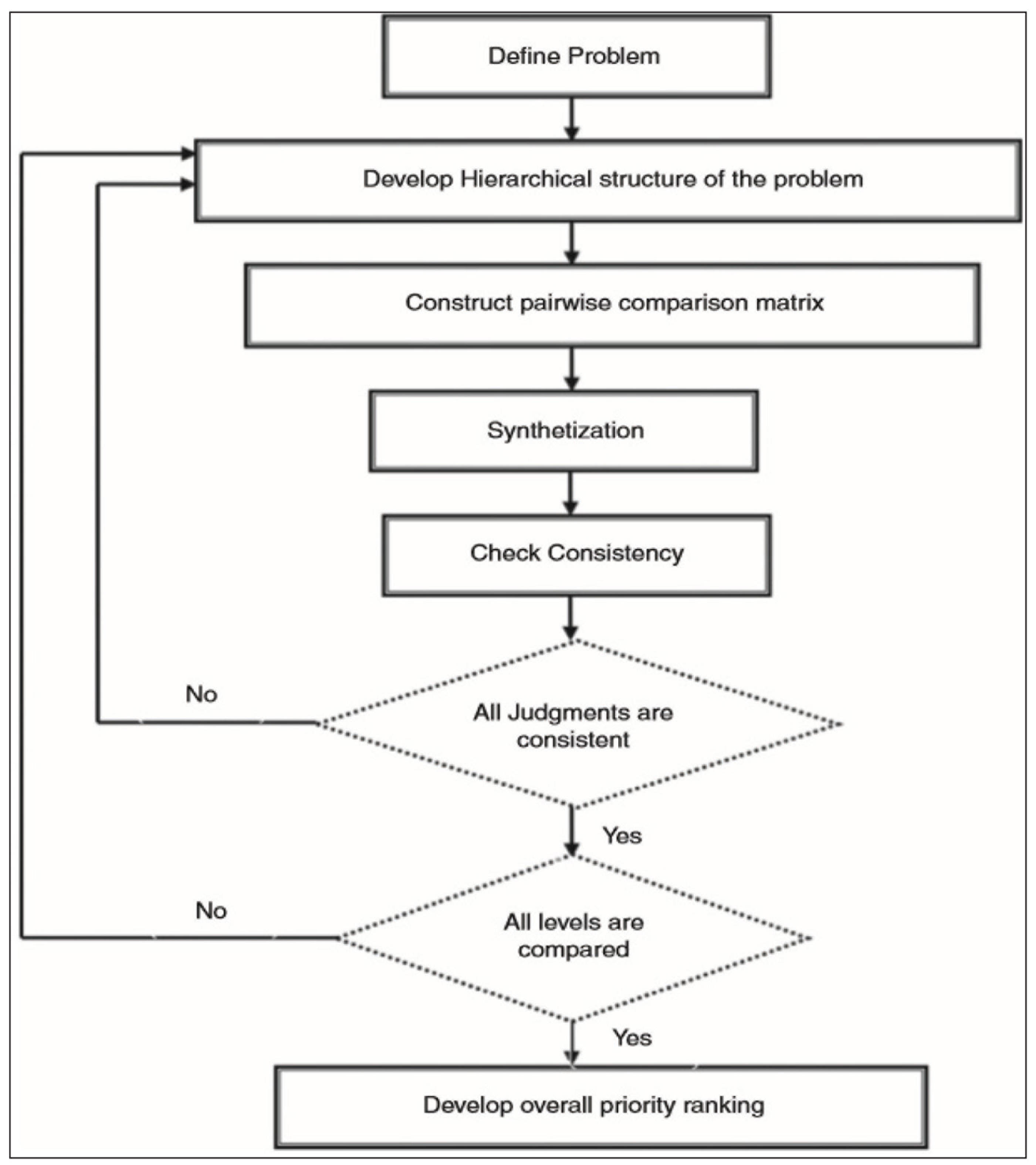
AHP is a multi-criteria decision-making approach that investigates both qualitative and quantitative dimensions to develop appropriate conclusions (Al Suwaidi et al., 2020). The AHP decision-making system organizes the method into a hierarchy practice in where the resulting framework proposes selecting a decision from among diverse options. A matrix can be established through a series of pairwise comparisons at the different points of the hierarchy. Each component’s power in the matrix is categorized from 1 to 9 and compared to another element (Saaty, 1983). Then, a decision is prepared based on a precisely given characteristic. Generally, the AHP method is used to convert the qualitative data into quantitative data for a more simplistic investigation and to deliver a categorized result of the investigated elements.
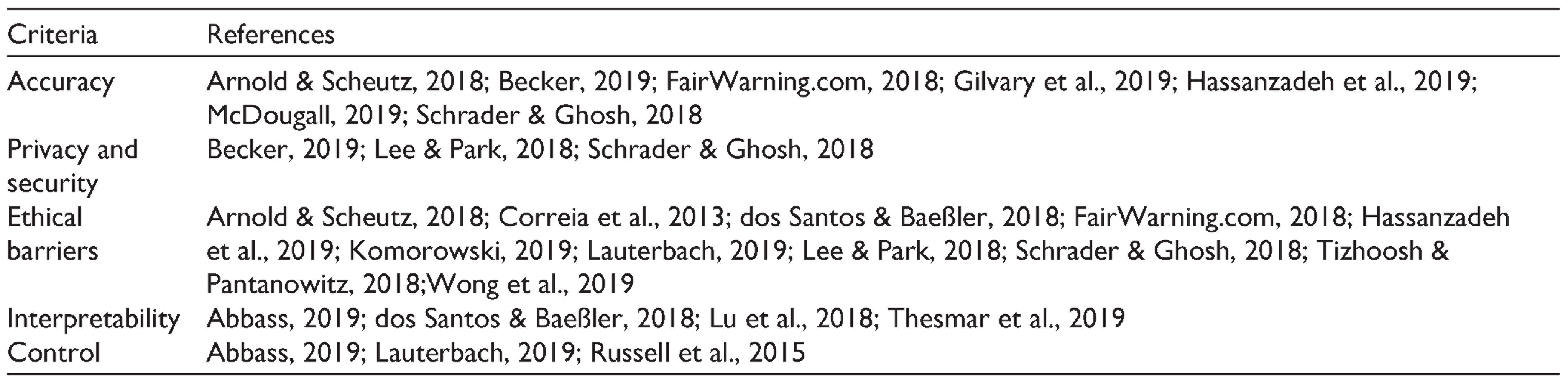
This article applies the AHP method by Saaty (1987), which uses different criteria to help in the decision-making process. Further criteria and sub-criteria were adopted from other sources to assist decision-makers in making the right decision. This method is essential for decision-makers to study the AI role and how they will benefit from it. The main criteria and sub-criteria that affect AI adoption in different sectors were gleaned from the literature (Table 1). Overall, the AHP model, as shown in Figure 3, is a decision-making method that is used to convert the process of decision-making into a hierarchy.
A Summary of Literature Review Syntheses on AI Adoption
Research Model
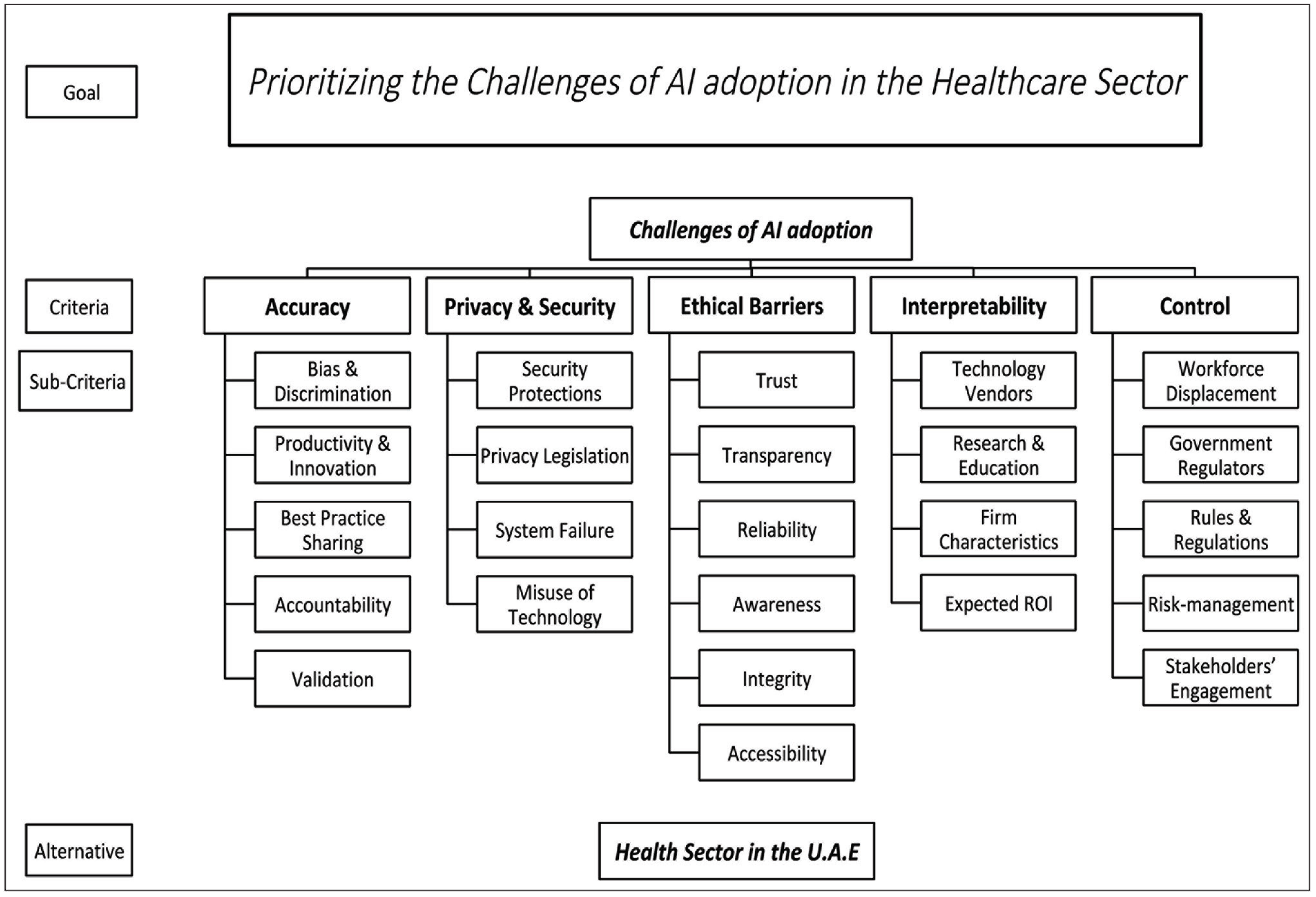
This study uses the AHP method. The highest level of the AHP hierarchy is the main objective, which is the challenges affecting AI adoption. Level 2 represents the five main challenges related to AI adoption, while Level 3 represents the 24 sub-criteria factors used in prioritizing the challenges affecting AI adoption. Next, Level 4 represents the sector that this article aimed to apply in the UAE’s healthcare sector. Based on the literature review and well-known management consultancy and reports, five main factors are identified, and these are the main challenges impacting the adoption of AI. Thus, after the factor groups were completed, the hierarchy of the AHP consisting of 5 main criteria and 25 sub-criteria was prepared, as shown in Figure 4.
Data Collection
After completing the first phase, which is creating the AHP model, the second phase consists of the data collection phase that includes pairwise comparisons and was conducted to evaluate the factors. According to the list of government and private hospitals and healthcare units in the UAE (Pacific Prime, 2019), the top 25 hospitals and healthcare units from both sectors were contacted. Only seven organizations agreed to complete the survey. The respondents were the IT heads in their organizations. The data were collected from interviewing 27 managers from government and private organizations in the UAE’s healthcare sector. As the AHP is a complex method, in-depth interviews were conducted with the respondents to ensure the data collection accuracy. Prior studies (Jabeen et al., 2019; Mehrajunnisa & Jabeen, 2019; Mehrajunnisa & Jabeen, 2020) have affirmed that a sample size 27 is reasonable for the operationalization of AHP. A 9-point scale (1 as equal importance and 9 as extreme importance) questionnaire adopted by Saaty (1987) was used to determine the pairwise comparison between the given factors. It included demographic and job-related information about the respondents such as job title, years of experience and educational level. The interviews lasted between 10–15 minutes, and the name of the respondents and their organization were kept anonymous.
Analysis and Findings
The next step in the AHP is establishing a pairwise comparison among the study’s criteria using the 9-point scale suggested by Saaty (1983), as shown in Table 2.
Nine-point Scale Determining Pair-wise Comparison Criteria

For pairwise comparisons, if an interviewee recognized the accuracy’s main criteria as a very strong and important association with privacy and security, the rating is ‘7’, but if the relationship is opposing, the reciprocal is taken as ‘1/7’ and so on. After the matrix was structured and organized, the consistency index (CI) was computed. According to Saaty (1983), the CI is described as follows:

Where λmax is the maximum eigenvalue of the matrix of the important ratios and n is the number of factors used in the AHP model. Then, the consistency ratio (CR) is applied to recognize and assess if the matrix is appropriately reliable or not:

Once the second phase is over, the final stage is Synthetization (Normalized Matrix), which is data collected through the computation of eigenvalues. The data are analysed using the CI to test the consistency among the comparison. Later, the CR was used to examine if the matrix for each of the given criteria is satisfactorily consistent or not. Using these types of methods can mathematically and realistically help decision-makers prioritize AI adoption challenges in the healthcare sector. Therefore, RI is the random index, that according to Saaty (1983), is known as the number of elements used in the model and as shown in Table 3.
Random Index

The discrepancy is acceptable if CR is found to be smaller or equal to 0.10 (10%), as stated by Saaty (1987). In contrast, if it exceeds 0.10, then it indicates that the collected data dependability is unacceptable. As recommended by Saaty (1983), the geometric mean approach can be applied in place of the arithmetic approach to combine the individual pairwise comparison judgment matrices and to achieve the consensus pairwise comparison judgment matrices for all interviewees.
The following step was used to describe the criteria’ relative priorities by calculating ‘priority vectors.’ Saaty (1990) introduced a ‘consistency principle’ for calculating priority vectors. According to Sachdeva et al. (2015), the consistency principle equation is explained as aik = aij.ajk with the consequent arguments for using the special case of the consistency matrix formed by components aik = wi ⁄ wj, where wi and wj are the components of the priority weight vector corresponding to criteria i and j, respectively.
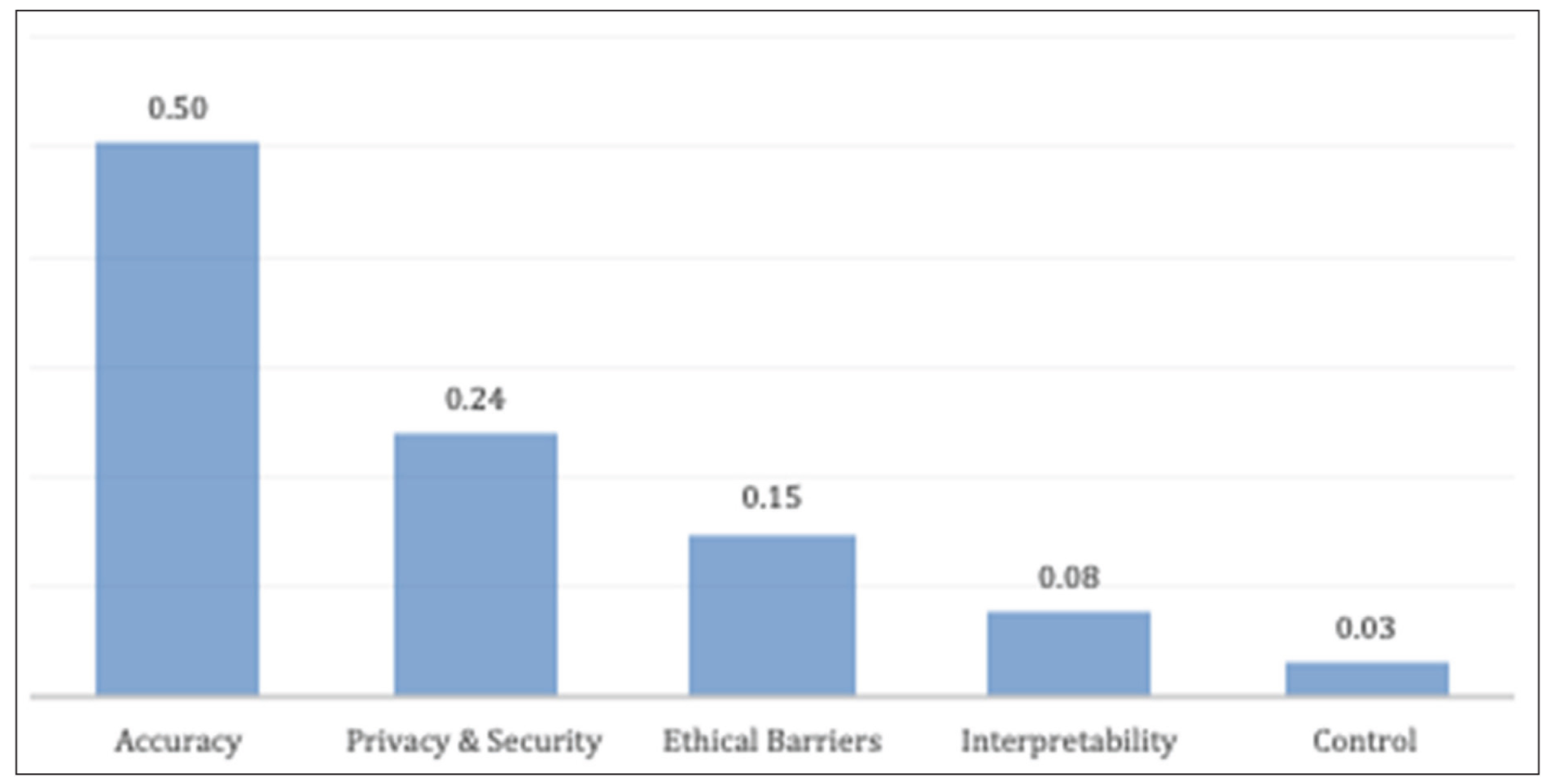
As shown in Table 4, the geometric means of the pairwise comparisons for the five main criteria of the paper are provided. The results show that the highest-ranked criteria were accuracy with a priority weight of 0.50. The privacy and security criteria were the second highest-ranked criteria with a priority weight of 0.24, while the control criteria had the lowest-ranked criteria with a priority weight of 0.03. The CR of the main criteria is 0.06, which is less than 0.1, it is acceptable and sufficiently consistent.
Geometric Means of the Pair-wise Comparisons of the Main Criteria

As shown in Table 5, the geometric means of the pairwise comparisons for the sub-criteria of the paper are provided. The results show that the highest-ranked sub-criteria for accuracy criteria were bias and discrimination with a priority weight of 0.51. Productivity and innovation sub-criteria were the second-highest ranked criteria with a priority weight of 0.24, while validation sub-criteria had the lowest priority weight of 0.03. The CR of the accuracy criteria was 0.06, which is less than 0.1, and therefore, it is acceptable and sufficiently consistent.
Geometric Means of the Pair-wise Comparisons of the Sub-criteria
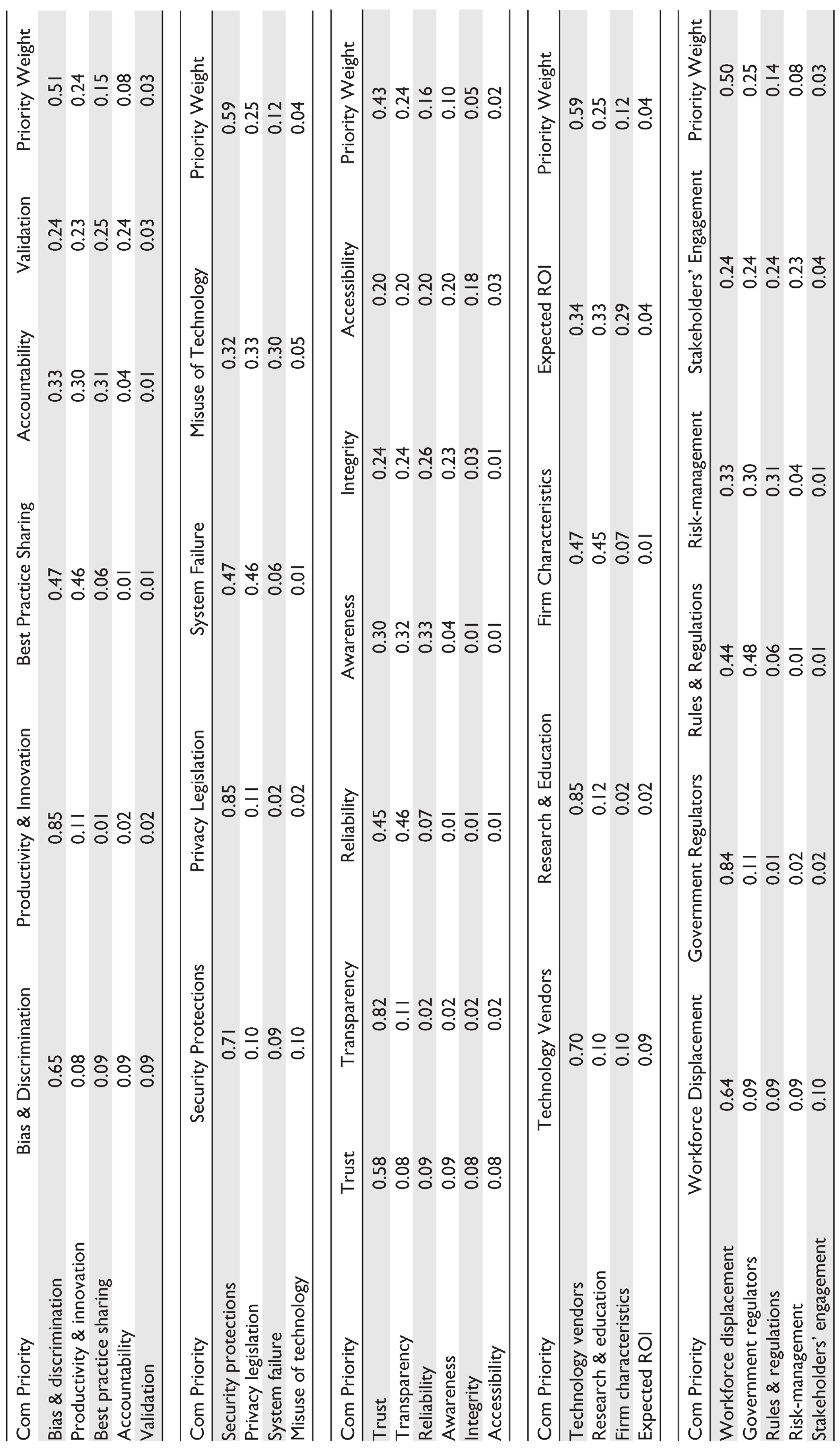
The results also show that the highest-ranked sub-criteria for a privacy and security criterion was security protections with a priority weight of 0.59. Privacy legislation sub-criteria were the second-highest ranked criteria with a priority weight of 0.25, while misuse of technology sub-criteria had the lowest priority weight of 0.04. The CR of the privacy and security criteria was 0.05, which is less than less 0.1, which is acceptable and sufficiently consistent.
The results also show that the highest-ranked sub-criteria for ethical barriers was trust, with a priority weight of 0.43. Transparency sub-criteria were the second-highest ranked criteria with a priority weight of 0.24, while accessibility sub-criteria had the lowest priority weight of 0.02. The CR of ethical barriers criteria was 0.07, which is less than less 0.1, and is acceptable.
The highest-ranked sub-criteria for interpretability criteria are technology vendors with a priority weight of 0.59. Research and education sub-criteria were the second-highest ranked criteria with a priority weight of 0.25, while the expected ROI sub-criteria had the lowest priority weight of 0.04. The CR of the interpretability criteria was 0.05, which is less than less 0.1, and is acceptable and consistent.
The highest-ranked sub-criteria for control criteria were workforce displacement with a priority weight of 0.50. Government regulators’ sub-criteria were the second-highest ranked criteria with a priority weight of 0.25, while stakeholders’ engagement sub-criteria had the lowest priority weight of 0.03. The control criterion was 0.06, which is less than less 0.1, and is acceptable and sufficiently consistent.
Discussion, Implications and Limitations
Discussion
This study has recognized 5 main dimensions and 25 sub-factors to prioritize the main challenges for adopting AI in the UAE’s healthcare sector. The classification of these elements by AHP is specified in Tables 4 and 5. Considering the above result, accuracy has the highest impact on AI adoption in the UAE’s healthcare sector. It comes with more efficient, robust and qualified decisions than people can do because it is fed with each treatment’s needed data. To ensure the successful implementation of AI adoption, bias and discrimination subjects must be taken into consideration. AI has been suggested as a powerful and efficient tool for engineering issues or precision biomaterials due to the high accuracy these systems have (Hassanzadeh et al., 2019).
Privacy and security have the second-highest impact on AI adoption as patient’s data need advanced security procedures using transparent systems because all of the medical decisions are independent. The success of the implementation of such a process should consider security protection issues. Consequently, the patient’s information is vulnerable to use as a source for firms in breakthrough research (Becker, 2019). Thus, developing and implementing fair and transparent algorithmic operations and protecting people’s privacy and security are the most critical ethical protections (Schrader & Ghosh, 2018). Moreover, the ethical barriers effect is medium for its impact on AI adoption because AI is connecting humans with machines. Using verification and comprehensive approach for AI results will be more precise and ethical after considering the influence of trust. Therefore, human and technology’s ethical engagement is essential for AI development (Schrader & Ghosh, 2018).
However, the fourth main factor, interpretability, has a low effect on making the right decision. People need to understand the exact reason behind the decision made by AI because it is the most suitable decision. Technology vendors are considered the main factor that affects interpretability success. The importance of AI in the healthcare sector is interpretability and the suppleness of models that help in the decision process such as treatment and diagnosis (Thesmar et al., 2019). The last main factor is control, and it has the least impact on the decision-making process. As AI may make right or wrong decisions, different regulations must be applied to control data entering and sharing. Workforce displacement is considered the main sub-factor, which must be considered under control. AI can create many benefits and new challenges; however, it is also essential to introduce a policy that can control and minimize risks and damages (Russell et al., 2015). A summary of the main criteria’ priority weights that shows the highest to lowest effects is shown in Figure 5.
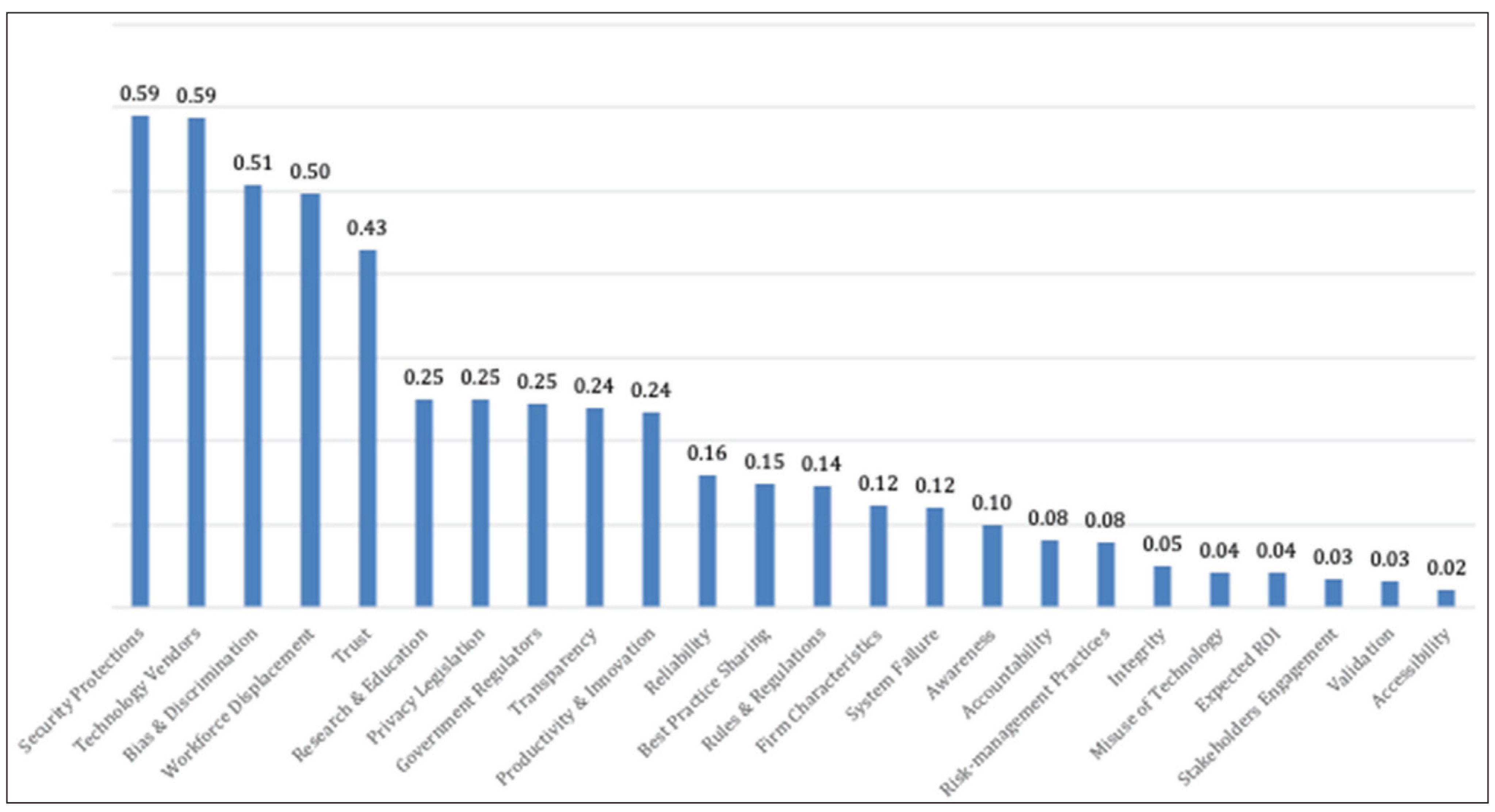
For the sub-criteria effect, security protections that arise under privacy and security criteria have the highest impact on AI adoption in the UAE’s healthcare sector. This is aligned with the previous literature and states that the computer system’s complexity raises concerns regarding the patient’s data and calls for efficient security measures. As technology continues to improve and more connected objects are produced, the privacy of patient’s data is becoming more complicated (Becker, 2019). The technology vendor’s sub-criteria also arise under interpretability criteria and impact security protections (59%). Many technology vendors are dynamic and always develop new tools to cope with recent issues or enhance AI (dos Santos & Baeßler, 2018).
Furthermore, bias and discrimination sub-criteria arise under accuracy criteria. The biases may occur based on the given data of the AI system. In the healthcare sector, biases in entering data occur through three approaches: a human bias, a bias that is inserted either by accident or intentionally, and bias in the approaches in which health care systems utilize the data (Becker, 2019). Workforce displacement sub-criteria that arise under the control criteria affect are the fourth-highest regarding the impact on AI adoption. AI negative side effects cannot be ignored as this leads to job loss for many people and reduces the number of educational institutions that plan to improve education structures (Lauterbach, 2019). However, the least priority sub-factor for the decision-maker is accessibility. Future in-depth exploration is needed to highlight the reasons for such low priority weights for sub-factors such as integrity, stakeholders’ engagement, validation and accessibility. A summary of the sub-criteria’s priority weights that shows the different effects is presented in Figure 6.
Implications
This study’s findings have some theoretical and practical implications that may be useful for academics, practitioners, policymakers, managers, and organizations in the healthcare sector and other UAE sectors. By applying the AHP, the current study identified the main criteria and sub-criteria for decision-makers in the UAE and other regions globally to help them find the roots of the successful adaption of AI in the healthcare sector. The UAE may utilize AI to develop and enhance future principles and policies to strengthen the healthcare sector. Policymakers may use this study’s outcomes to create a well-defined picture of the actual adoption and acceptance of AI in the healthcare sector. It will help the UAE firms enhance AI security and privacy to be more protected and higher in the confidentiality systems that may positively participate in AI adoption. More consideration is required from firms regarding AI accuracy due to its remarkable role and impact in its adoption. Decision-makers and leaders must consider security protections, technology vendors, bias and discrimination, and workforce displacement as the main sub-factors that impact AI adoption. The current article filled a research gap by being the first research that studied the most important factors affecting the adoption of AI in the UAE’s healthcare sector using the AHP model.
Limitations and Future Directions
This research article included only 27 respondents from the healthcare sector in the UAE. Also, the current research studied the effect on one alternative and from one country. Therefore, it is recommended to have more options and compare with a similar choice with other Gulf Cooperation Council (GCC) countries. Future research could add different criteria and sub-criteria to find more results. Furthermore, since this article’s findings were only obtained from the healthcare sector, future studies should also include other sectors to generate additional success factors and deepen the exploration.
Conclusion
This study’s main objective was to find the main challenges for AI adoption in the UAE’s healthcare sector. Also, this article aims to recognize the main challenges of AI adoption that require effective control to assist organizations in the industry to cope with the country’s strategy of AI. A comprehensive literature review recognized relevant and extensive factors related to AI challenges in various fields. This study’s results disclose significant importance for accuracy, privacy, and security, as displayed in Figure 5. This study’s participants in the UAE’s healthcare sector emphasized these two main factors as the most impactful challenges that eventually influence the adoption of the AI approach.
Furthermore, they reinforce these two main dimensions through their sub-criteria: bias and discrimination and security protections with priority weights of 51% and 59%. In addition to these sub-factors, the study found that technology vendors are a sub-factor of interpretability and are of high priority as protection with a priority of 59%. The findings are compatible with the previous literature that confirms these dimensions, which assert these challenges as the main factors to control to boost AI adoption.
Surprisingly, stakeholders’ engagement holds a minimum priority weight of 3% who have a significant influence and roles and responsibilities. AI is a new global trend with a recently issued strategy in 2017 in the UAE, which requires firms’ efforts and determinations to implement and cope with the plan to boost and enhance the economy. Thus, these existing and potential challenges that firms encounter in AI adoption need to be effectively approached. Therefore, this study’s results should be used as a guideline of what to focus on in AI adoption to achieve a higher success rate.
Footnotes
Declaration of Conflicting Interests
The authors declared no potential conflicts of interest with respect to the research, authorship and/or publication of this article.
Funding
The authors received no financial support for the research, authorship and/or publication of this article.