




Abstract
The mineral industry environment is an interlinked chain of activities. Identification of major activities of the mineral industry, termed as critical success factors (CSFs), and their relationship structure will be approachable, productive and efficiency-oriented for the industry to manage. The aim of the article is to develop a relationship structure consisting of CSFs influencing the mineral industry. Sixteen such operational influencing CSFs are identified through a broad literature review and subsequent dialogues held with mineral-field experts. The interpretive structural modelling (ISM) approach is applied for analysing CSFs and finding a relationship structure. The study is carried out in Odisha, Chhattisgarh and Jharkhand, mineral-rich states of India. Identification of CSFs and their relationship is carried out in nine phases sequentially to arrive at the latent structure. This is the only study to develop relationships of CSFs for any mineral industry in India. The findings of the study will provide insights on the relationship structure of CSFs of the mineral industry’s operation and be helpful for improvements in addressing operational difficulties for corporates, as well as academics. Among the 16 CSFs identified, ‘training and skill level’, ‘infrastructure’ and ‘political influence’ have the maximum driving force and are the least dependent. The projected model is helpful in understanding the relationship among CSFs and the business operation as a whole.
Keywords
Executive Summary
The mineral industry contributed around a quarter of the Indian GDP and was the major driving force behind a decade of growth, doubling the GDP to US$2.6 trillion in 2017 from US$1.32 trillion in 2009 (Trading Economics, 2020) in 2010. After the end of 2002–2010, supercycle profitability collapsed. The mineral industry showed an intense interest in reversing all the excesses of 2000s. It was witnessing a struggle with unpredictability and market uncertainty. The industry was experiencing varieties of challenges, such as social, environmental, technological and economical, impacting sustainability and productivity. For a sustainable and productive mineral industry, some work has been done, and still there is wide scope for further improvement. The aim of this article is to develop a relationship structure consisting of critical success factors (CSFs) influencing the mineral industry using interpretive structural modelling (ISM).
43 articles were chosen out of 95 articles published between 2008 and 2020, consisting of research articles, trade journals, expert blogs, technical papers, reports, etc. CSFs were identified considering various research outputs. Political influence is a factor raised by Indian field experts on the author’s field of study, which was included in the study.
ISM is a well-established methodology for identifying relationships among specific items. This model or process helps in relating key success factors or CSFs of an outcome in a structured way. This study was conducted at selected mineral industries of Odisha, Chhattisgarh and Jharkhand with 12 experts rich in exposure and work experience. Many constructed meetings were held to derive the outcomes.
The mineral business operation environment is an interlinked chain of activities. Identification of CSFs and their relationship will be approachable, productive and efficiency-oriented. In this paper, 16 key CSFs of the Indian mineral Industry are identified with inputs from an extensive literature review and field discussions held with experts of this industry. These key factors can be considered for any massively deposited mineral industry with or without minimal change for successful implementation. The ISM methodology is projected for the development of the structural model establishing the relationships among the CSFs. The driving power and dependence level of each CSF is determined to develop the driving power and dependence diagram of relationship structure. It is found that the key factor ‘infrastructure’ has maximum driving power and minimum dependence level among the 16 key factors. Therefore, infrastructure should be designed taking the whole mineral business operation into consideration to create an amicable environment. A benchmarking model is developed on the basis of a structural model for CSFs. The projected model is an excellent tool for understanding the relationship of CSFs and the business operation as a whole. This technique can also be applied to other types of mineral industries and manufacturing industries, capturing their own unique CSFs.
Introduction
The mineral industry was contributing a quarter of the Indian GDP in 2010 and was one of the major driving forces from the perspectives of revenue, employment generation and social empowerment. A decade of growth, which saw the GDP doubling to US$2.6 trillion in 2017 from US$1.32 trillion in 2009, is remembered as the golden era of mining (Trading Economics, 2020).
Problems in the mineral industry started appearing just after the end of the supercycle 2002–2010. The profitability of mining companies almost collapsed after the supercycle got over. The mineral industry had to reverse all the excesses of the 2000s. CEOs (chief executive officers) started to notify their investors that poor productivity performances were prevailing which needed immediate attention (AusIMM Bulletin, 2015). The mineral industry became unpredictable, with an uncertain market. Low-demand clubbed with higher costs delayed in capital projects. Community expectation, government interference, corruption and tax prices all went high. Mineral companies were compelled to start withdrawing or cancelling projects, stopped their constructions and adopting other financial measures, like mergers (Deloitte, 2012). The mineral industry started experiencing varieties of challenges, such as social, environmental, technological and economical, impacting sustainability and productivity (Bearman, 2013; Prior et al., 2012).
After lagging behind in several factors, some strong operating performances were observed in 2019 and some pocket of progress on contemporary factors. However, compared with the progress of other industries, there was no such sign of quantum shift in priorities (PwC, 2019). The traditional risk factors of the mineral industry are remote locations, inhospitable areas and susceptibility to natural catastrophes. In addition to these, the mineral industry still faces many wider challenges, such as new technologies, climatic changes, economic uncertainties and protected delivery of essential consumables, like water, electricity, gas, etc. (Marsh & McLennan Companies, 2020). Most commodities might move back into the global market balance or even surplus, but the mineral sector’s challenges are not yet over. The mineral pits are going deeper, with more complex mineral bodies, social and geopolitical risks and rising energy costs, and mining companies are under exceptional pressure to control costs, heighten efficiency and improve their safety performances (Deloitte, 2020).
Mining companies need to broaden their strategic outlooks. When done well, strategic planning cycles consider a range of issues in addition to producing at lowest cost, including the role of individual assets in the portfolio, the path to value creation, the between risk and return, and how the company is differentiating itself in the eyes of its stakeholders. (Phil Hopwood, Deloitte Global Mining & Metals leader, 2019)
Mineral industry has a window of opportunities in coming years with strong operating fundamentals along with changing & growing expectations of stakeholders (PwC, 2019). In the past, mineral companies had a track record of making continuous improvements in safety and risk governance standards. The professionalism and expertise present within the mineral industry will ensure that any new and emerging risks/challenges are dealt with in an equally determined fashion. Mining companies can effectively identify and mitigate all forms of risks with improved technologies, new managerial approaches and exchange of productive dialogues among company executives (Marsh & McLennan Companies, 2020). In this direction, a managerial approach like interpretive structural modelling (ISM) can be implemented to establish relationship/dependency/direct or indirect link(s) among various critical element(s) to analyse the business environment in a productive way (Mishra & Mohanty, 2020).
The objectives of this article are:
To collect and present attributes from the existing literature and field studies to identify critical success factors (CSFs) of the mineral industry which influence operational matters; and To develop a relationship structure of those CSFs that influence operational matters of the mineral industry of India using the ISM technique.
Literature Review and Search for Critical Success Factors
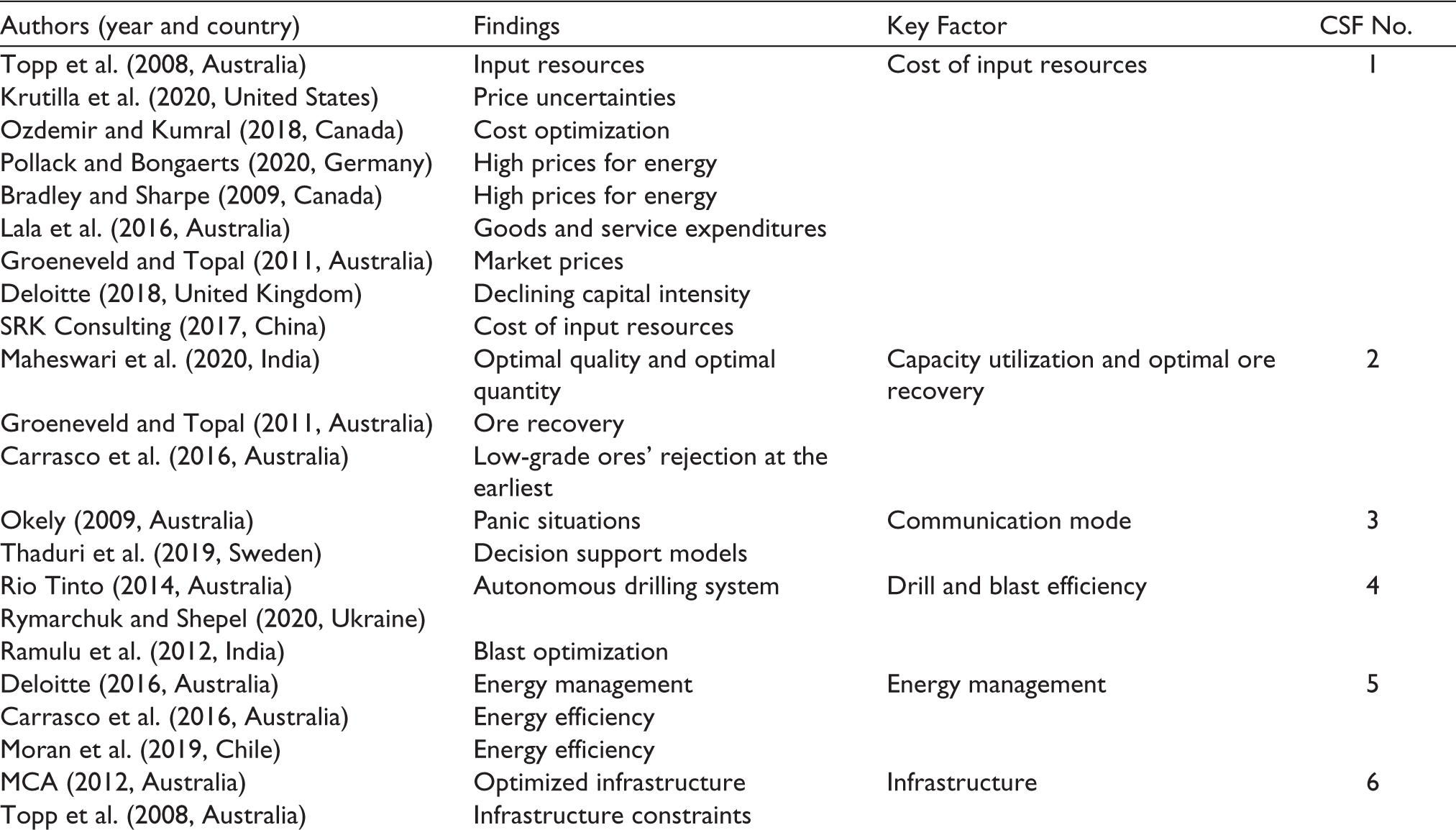
Ninety-five articles were collected from a number of sources, such as search engines, libraries, etc., which were closely related with the mineral operations industry. Out of these 95 articles, only 42 were chosen which were published between 2008 and 2020. These consisted of full research articles, different trade journals, many consultancy and expert blogs, technical papers, etc. The gist of all these selected articles was prepared. Some group findings of articles indicated different key factors, which were later termed as CSFs influencing the mineral business. The following CSFs were identified considering various research outputs:
Gap of the Study
Politics and political actors seem a latent factor of the mineral industry for different reasons. Their influence certainly impacts mineral operations, but on many occasions, it is unrecognized. Finding faults with mining companies has become a habitual practice of these political strata. The gap was discovered through interaction with field experts.
Summary of Findings
Literatures were reviewed from 2008 to 2020 from various sources considered in this study and gap analysis was carried out during field study from experts. Combining all summary of attributes and CFS, this study presenting the summary of study in the Table 1.
Summary of Critical Success Factors of the Mineral Industry

Limitations of Studies Conducted on the Mineral Industry
The top management of mineral industries has to rethink the mineral business as a whole rather than partly focusing on technology, product and process improvement (Mishra et al., 2017). The authors could not locate/find any prevalent model for the mineral industry’s operation. This study has tried its best to establish a basic model of available critical factors influencing the mineral business in India. ISM is one of the most popular modelling techniques used in this study in formulating a basic model.
Research Methodology
This study tries to explore CSFs and establish relationships among these factors that directly or indirectly influence the operations of the mineral industry.
Development of a Model of Mineral Industry Operations Using Interpretive Structural Modelling Methodology
ISM is a well-established methodology for identifying relationships among specific items that define a problem or an issue (Attri et al., 2013). It is used to establish relationships between drivers and dependents in a structured manner. ISM helps in developing and understanding a complex situation for individuals or groups and makes it simpler for understanding relationships among critical success factors, and ultimately makes the outcome clearer in any messy situation. The key success factors/elements of a possible outcome are explored critically to see how these factors are linked to each other by a group decision-making process. This model or process helps in relating key success factors or CSFs in a structured way. The decisions are believed to be more accurate than taking the decision by an individual, being a collective process (Sage, 1977).
‘V’, ‘A’, ‘X’ and ‘O’ mentioned in Figure 1 represent the following:
V—The first variable has the potential to influence the second variable (i influences j);
A—The second variable has the potential to influence the first variable (j influences i);
X—Both variables have the potential to influence each other (i and j influence each other);
O—There is no linkage between the two variables under consideration (i and j do not influence each other).
The flow diagram of element structure using the ISM followed in this study is presented in Figure 1.

Application of Interpretive Structural Modelling for Analysing Factors of Mines
Many constructive meetings were held to arrive at the outcomes, which are noted down in tabular form below. This study was carried out on the guideline set by ISM methodology, which is in stepwise form as explained below.
Table 2 represents a structural self-interaction matrix (SSIM), which was developed by taking the help of 16 CSFs derived from previous studies and expert opinions. ‘V’, ‘A’, ‘X’ and ‘O’ are used to establish the pairwise relationships.
Structural Self-interaction Matrix

Reachability matrix was developed by a binary method from SSIM, which is explained in Table 3 is based on their pairwise relationship, 1 or 0 is assigned based on step-3 of ISM.
Primary Reachability Matrix
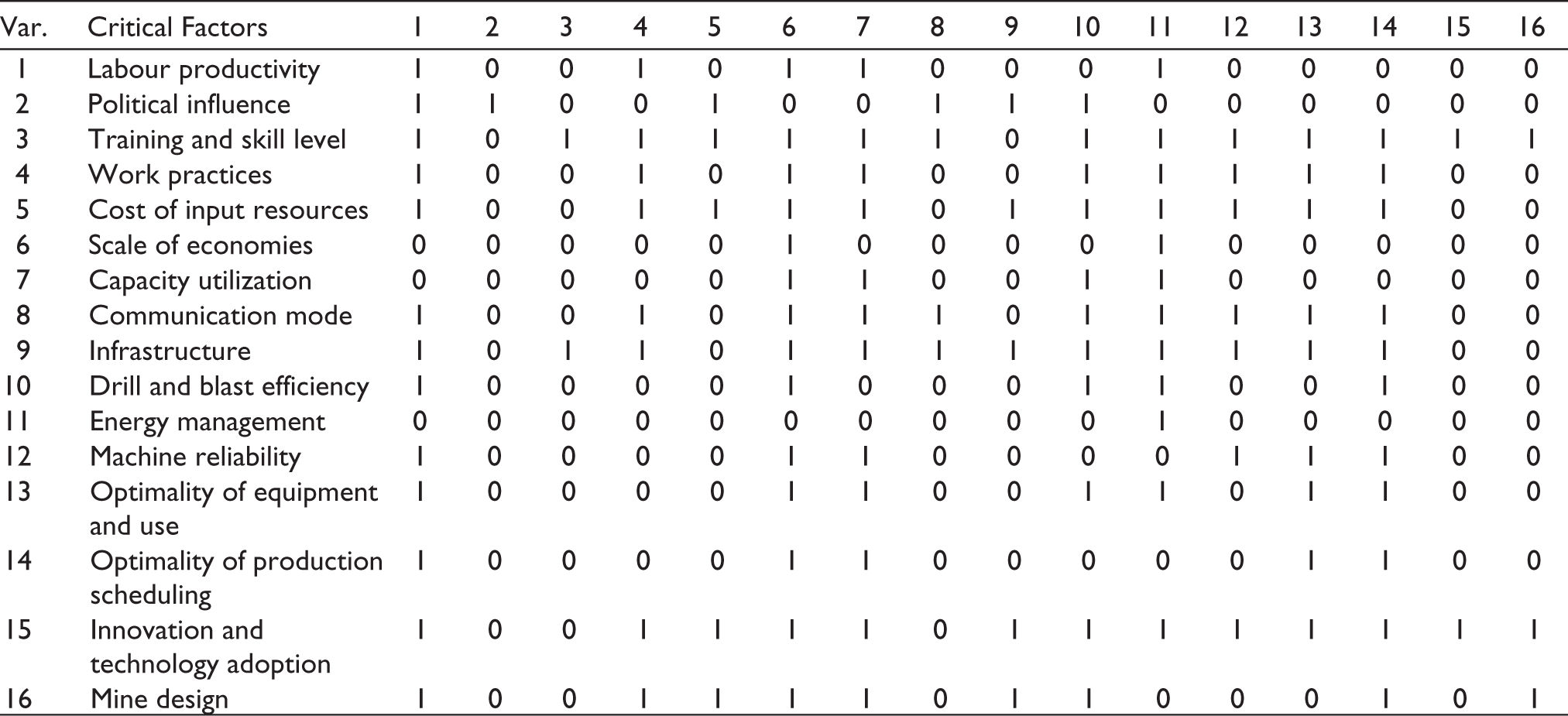
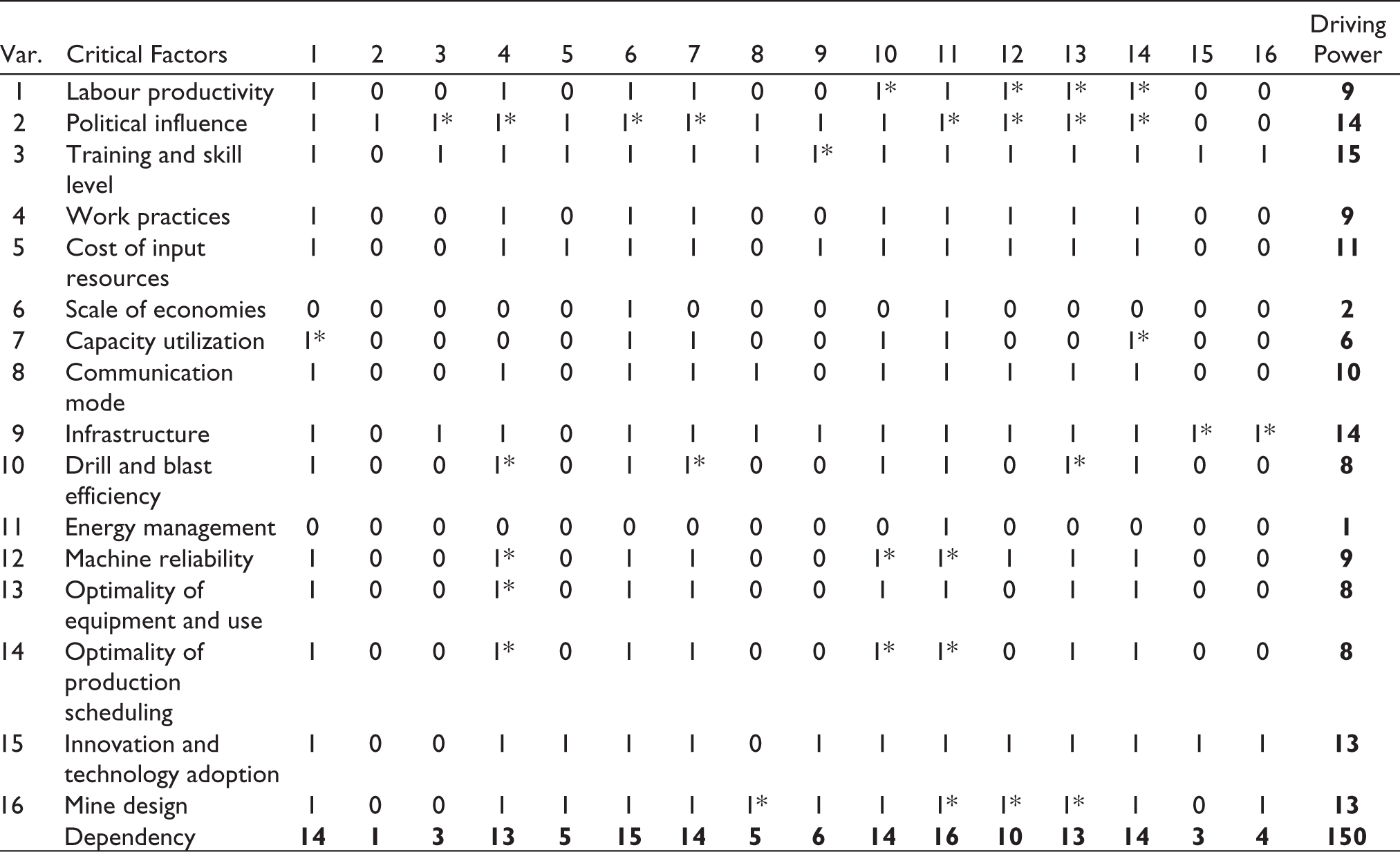
Table 4 is developed after considering transitivity. Changed values are marked with an asterisk (*). In Table 4, the final reachability matrix is developed per step 4 of the ISM guidelines.
Final Reachability Matrix after Considering Transitivity
Level Partition
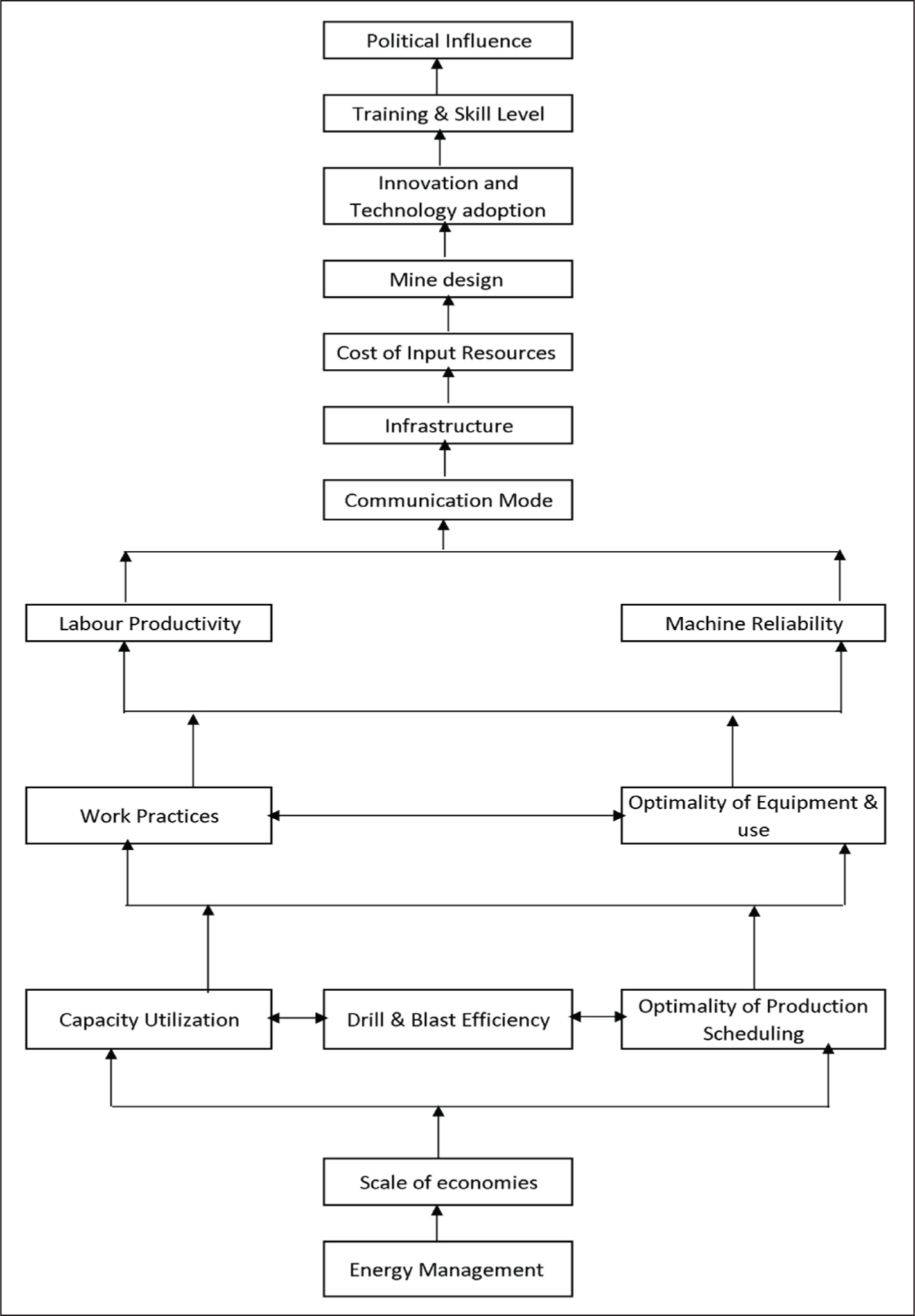
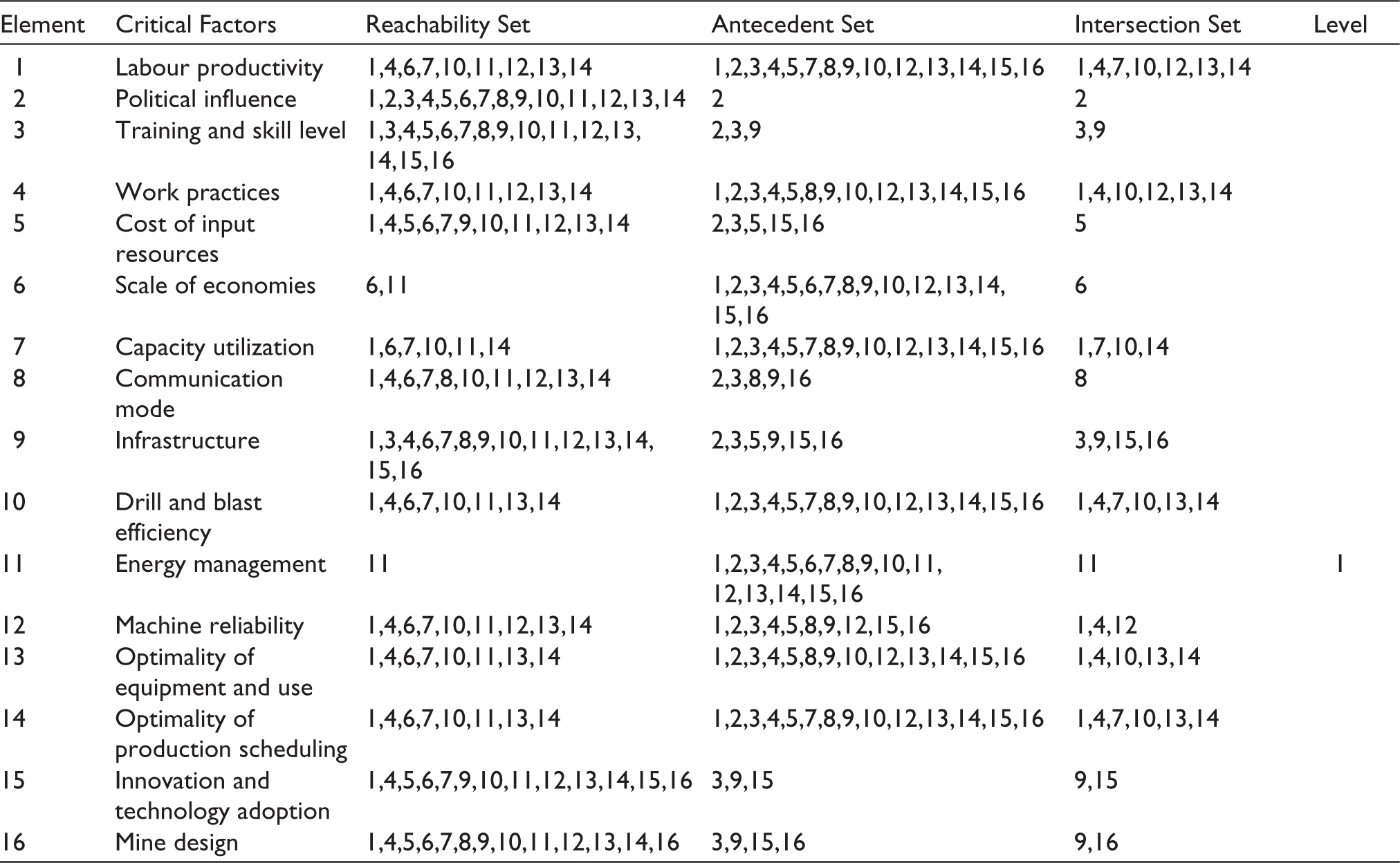
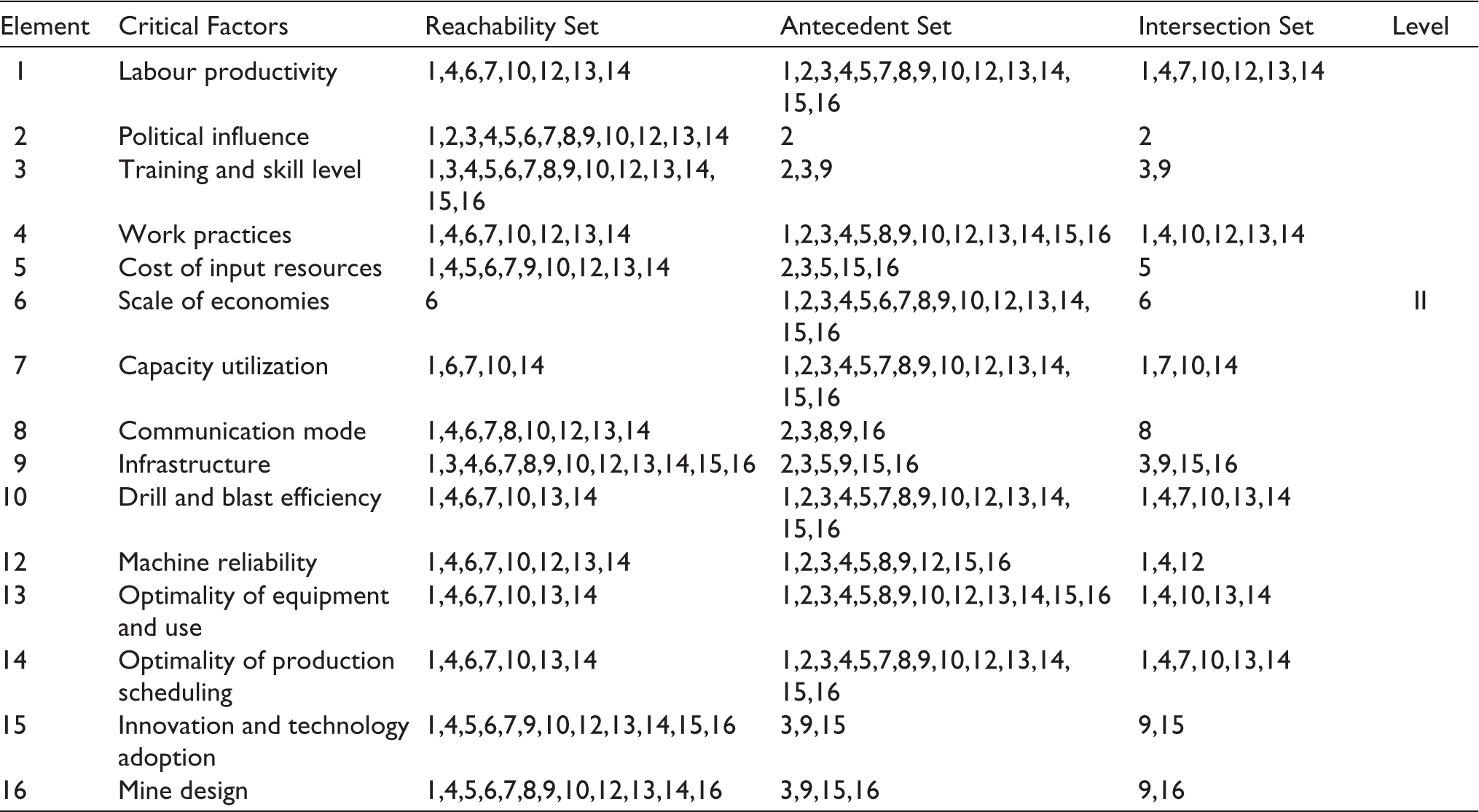
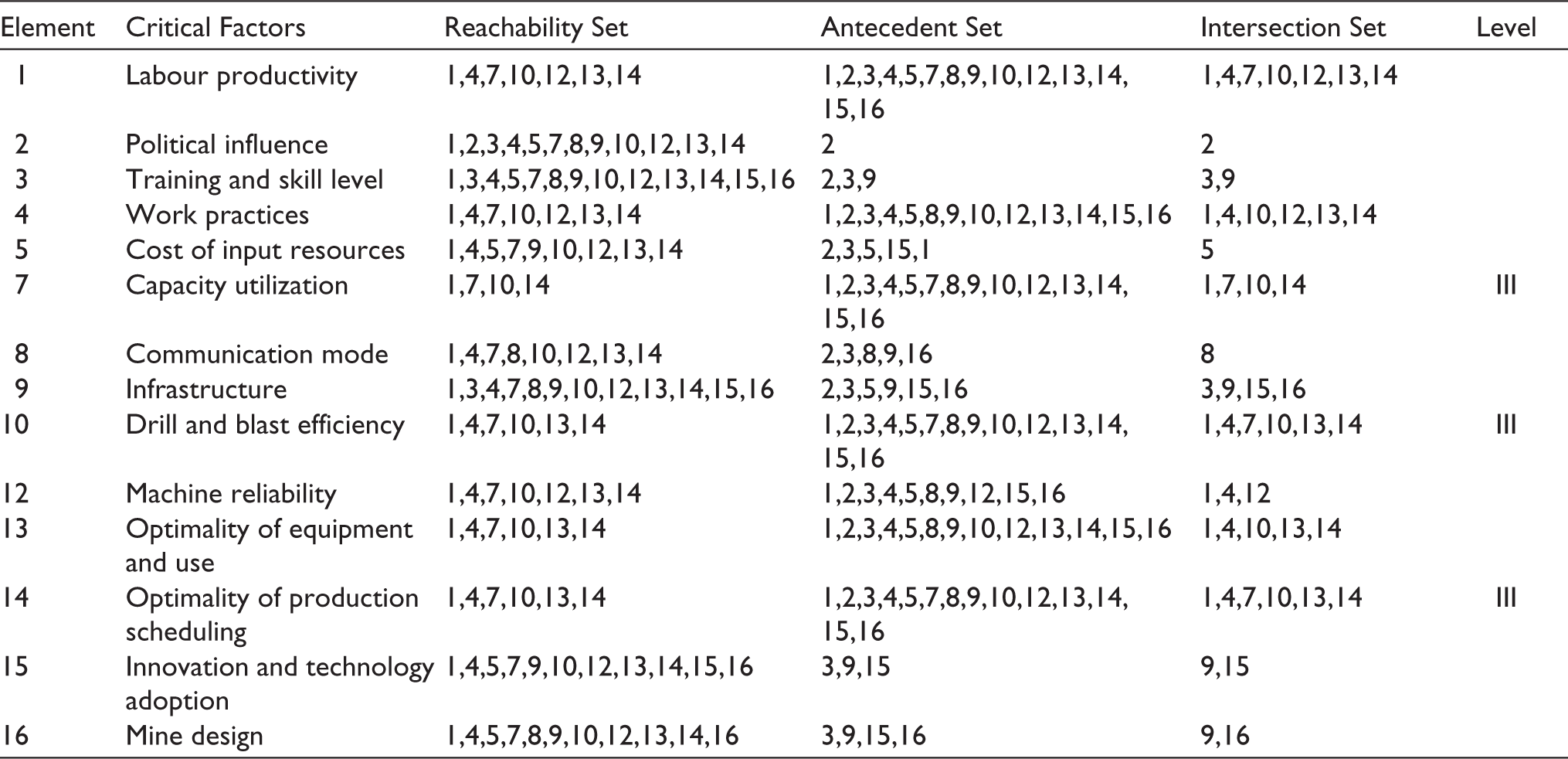
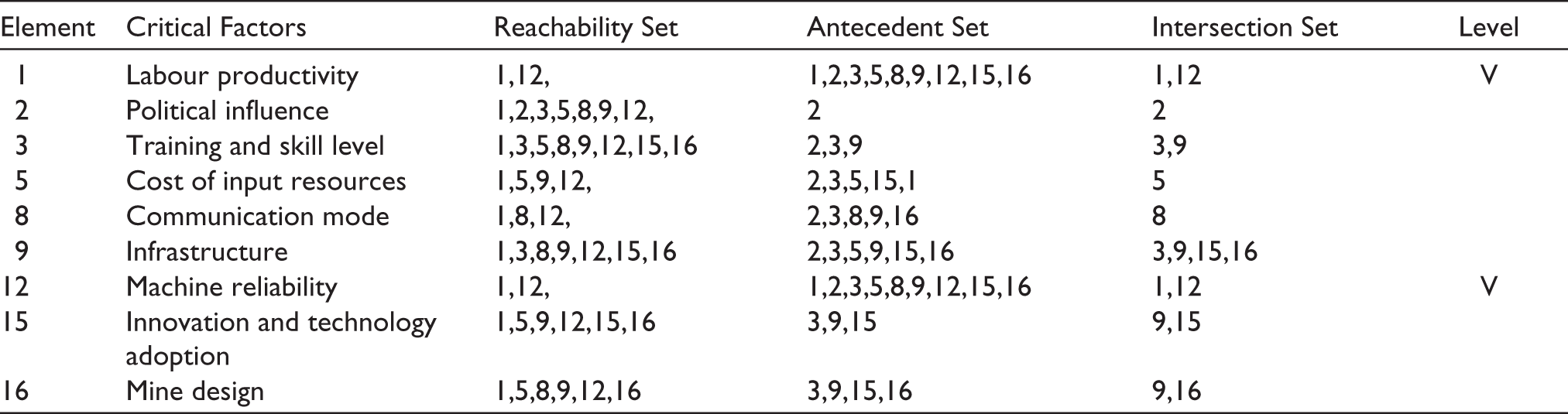
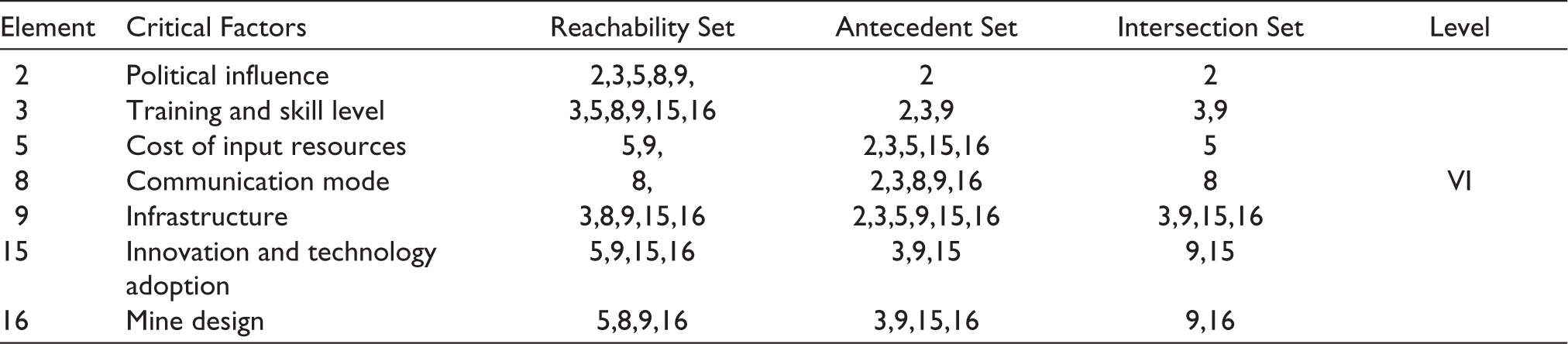
Different levels are derived by number of iterations. Final reachability matrix and antecedent sets are the sources from which levels are decided. Reachability set is a set of elements which content the element itself and those elements which it influences. Similarly, an antecedent set is a set containing the element itself and those elements that influence it. The common elements of a reachability set and an antecedent set form an intersection set. Wherever we find a factor common to the reachability set and the intersection set, we mark that factor as a level. Once a level is identified, that same factor is taken out from the next level of iteration. This process continues till all levels are derived.
From the 12 iterations from Table 5 to Table 16 below, all the levels are derived. In level I, factor 11 is identified. Similarly, factor 6 is identified in level II, factor 7, factor 10 and factor 14 are identified in level III, factor 4 and factor 13 are identified in level IV, factor 1 and factor 12 are identified in level V, factor 8 is identified in level VI, factor 9 is identified in level VII, factor 5 is identified in level VIII, factor 16 is identified in level IX, factor 15 is identified in level X, factor 3 is identified in level XI, and factor 2 is identified in level XII.
Iteration 1
Iteration 2
Iteration 3
Iteration 4

Iteration 5
Iteration 6
Iteration 7

Iteration 8

Iteration 9

Iteration 10

Iteration 11

Iteration 12

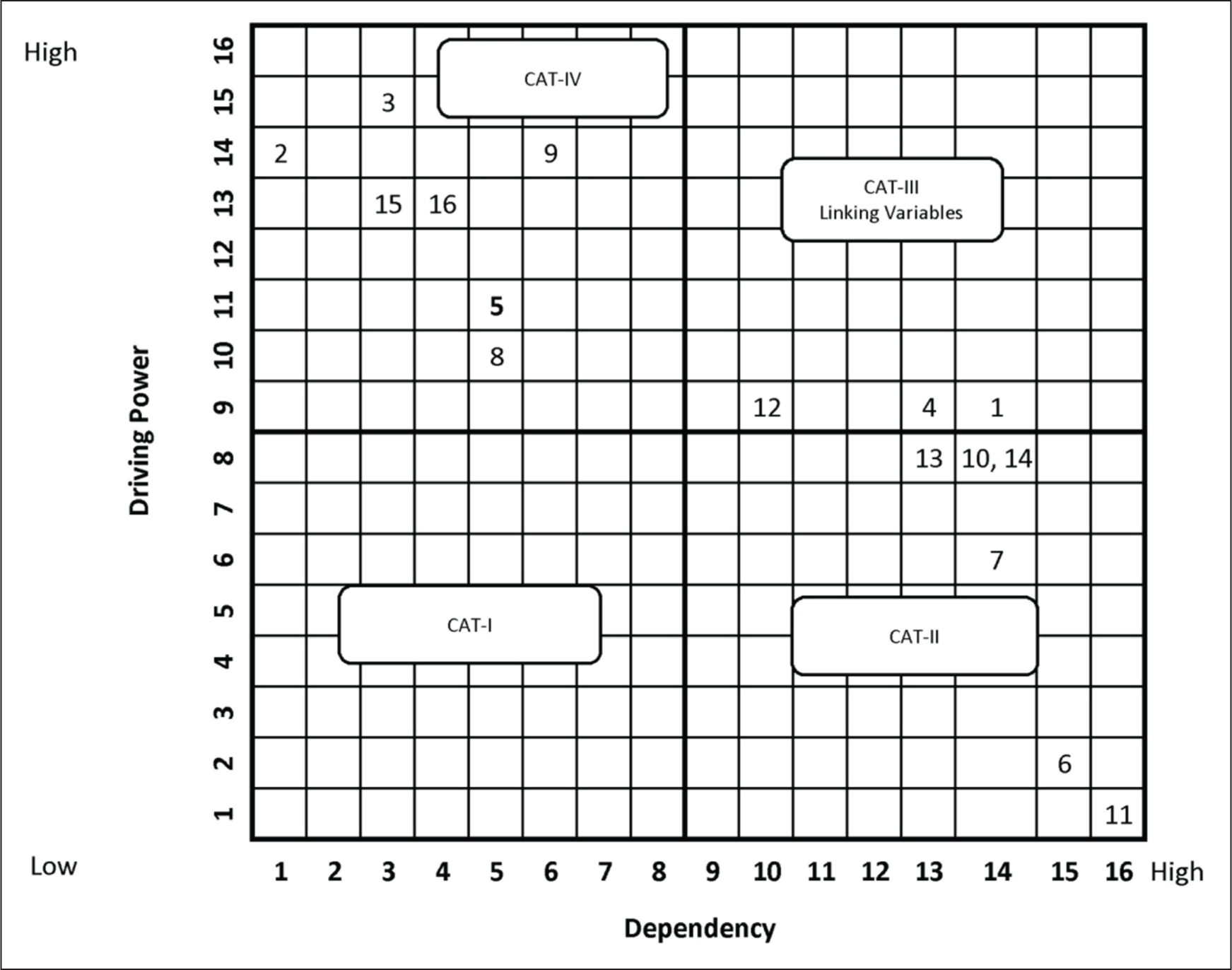
MICMAC is derived from its full form: ‘cross impact matrix multiplication applied to classification’. From this analysis, the driving power and dependency of each factor is assessed or derived. This graph is prepared from the final reachability matrix. These influencing critical factors are divided into four parts: autonomous (first quadrant), dependent (second quadrant), linkage (third quadrant) and independent (fourth quadrant).
Factors falling under the autonomous segment are weak in dependency and weak in driving power too. These variables are more or less disconnected from the system or output. ‘Machine reliability’ is found to be disconnected from the research zone. Dependent factors have strong dependency but are weak in driving power. ‘Scale of economies’, ‘capacity utilization’, ‘drill and blast efficiency’, ‘optimality of equipment and use’, ‘energy management’ and ‘optimality of production scheduling’ are found to be dependent variables. Linkage variables are very strong in dependency and very strong in driving power too. Normally, these variables are unstable. Any influence on these variables can affect the outcome. Special care is to be taken for these variables. In this study, ‘machine reliability’, ‘work practices’ and ‘labour productivity’ are found to fall in this category. The last category is the driving sector. The factors in this segment have high driving power and low dependency. Each variable can influence the outcome but is independent in nature. Those in this category are ‘political influence’, ‘training and skill level’, ‘cost of input resources’, ‘infrastructure’, ‘communication mode’, ‘innovation and technology adoption’ and ‘mine design’.
Discussion
In this article, 16 CSFs of the Indian mineral industry were identified with inputs from an extensive literature review and field discussions held with experts of this industry. These key factors can be considered for any ‘massively deposited’ mineral industry with minimal change (i.e., one or two key factors may be added or discarded) for successful implementation. The ISM methodology was projected for the development of a structural model establishing the relationships among the CSFs. This projected ISM methodology was simply explained, and enough evidence was provided by literatures to validate use of this methodology. To facilitate application of the ISM methodology, Indian massively deposited surface mineral industries were considered here, such as the iron ore-, dolomite- and limestone-mining industries. The dependence level and driving power of each CSF were determined to develop a relationship structure or model. It was established that the key factors ‘training and skill level’, ‘infrastructure’ and ‘political influence’ have the maximum driving power and minimum dependence level among the 16 key factors. Hence, these three key factors should be taken great care of while running mineral-business operations. The operational model so developed on the basis of CSFs is an excellent tool for understanding the relationship of CSFs and the business operation as a whole.
Conclusion and Future Scope
The operational environment of the mineral business is an interlinked chain of activities. This article has tried to establish a relationship among various CSFs of the Indian mineral industry, particularly the iron ore-, dolomite- and limestone-mining industries. Identification of CSFs and their relationships is approachable, productive and also efficiency-oriented. This technique can also be applied on other types of mineral industries and manufacturing industries, capturing their own unique CSFs. Several studies on the mineral industry that have been conducted in the past or are ongoing are based on engineering, geological, environmental and economical points of view but not on any business/managerial approach. There are many popular and effective business management approaches that can be suitably applied in these mineral and industrial fields to analyse relationships among various activities or factors of importance and the impact of an activity on others. Similar studies can also be carried out in other mineral industries, such as the coal, bauxite, chromite, manganese, gold and silver industries. Studies can also be carried out in different deposit types of mines, such as ‘surface-deposit’, ‘underground-deposit’, ‘placer-deposit’ or other types of mines.
Footnotes
Declaration of Conflicting Interests
The authors declared no potential conflicts of interest with respect to the research, authorship and/or publication of this article.
Funding
The authors received no financial support for the research, authorship and/or publication of this article.